




Abstract
Bush kindergartens are a new practice in the Australian early childhood learning context and one that is rapidly becoming part of the kindergarten experience. Children leaving the confines of the bounded space of a kindergarten has been practised through excursions to outdoor places like zoos but the notion of conducting regular, ongoing kindergarten sessions away from the traditional kindergarten setting is one which is gaining momentum in Australian early childhood education, with possible impacts on future policy. In late 2014, a pilot programme titled ‘Sandy Shores Kids Go Bush’ was established across bush kindergartens in a region on the coastal fringe of south-eastern Australia using five existing sites. Each of these sites has differing characteristics impacting upon the experience of children attending the bush kinder programme. This paper reviews the settings of three different interpretations of ‘bush kinder’ and considers how the learning experience associated with bush kinder varies according to ‘place’ and how bush kinder has impact on both local and broader education policy.
Introduction
There is a widespread belief that place-based approaches emphasising direct experience are the best way to nurture children’s relationships with nature (Greenwood and Hougham, 2015, p. 97). This paper considers one example in the context of early childhood education, a place-based approach to learning that provides ‘direct and “unmediated” sensorial contact with non-human others’ (Greenwood and Hougham, 2015, p. 97). Over the last 50 years, there has been an international development known as ‘Forest Kindergartens’, resulting in many hundreds of these around the world (Walden, 2012; Sobel, 2016). Forest kindergartens use natural environments and outdoor play to develop children’s learning (Fjortoft, 2001, 2004) and this is strongly supported through international projects (Elliott and Chancellor, 2014) attesting to the range of learning benefits attributed to children’s play in the natural environment (Honig, 2017). While the research literature reports the benefits of the natural environments for children’s play, consideration needs to be given to the inherent risks of the outdoor play space. Children need guidance in learning the boundaries of risk-taking behaviour, such as stick play, climbing, running in open spaces (trip hazards) or engaging with small animals. This in turn requires that educators involved in these spaces are also fully aware. In most situations, this has required professional learning provision and a revision of localised pre-school policies.
In the Australian context, the forest kindergarten place is located in close proximity to the kindergarten and allows regular contact with the same setting over a set period of time. Weekly or fortnightly visits to the same natural environment all-year round occur in almost all weathers. In Australia, this has translated into the ‘bush’ or ‘beach’ kinder. Those responsible for kindergarten provision see the bush kinder place as one response to the Australian Government's policy directive that four-year-old children had to be provided with 15 hours of ‘quality’ preschool per week (Elliott and Chancellor, 2014). However, the Australian bush has inherent dangers associated with it, with Australia being home to some of the deadliest creatures in the world. Due to safety concerns, local policies need to deal with the introduction of bush kinder in a manner not previously considered or addressed.
In late 2014, a programme titled ‘Sandy Shores Kids Go Bush’ was established to pilot a series of bush kinders with five kinder groups using existing ‘bush’ sites in the Sandy Shores Shire, a local government area on the coastal fringe of south eastern Australia. Since the programme’s launch, the Sandy Shores Shire has implemented the policy that each kindergarten site must adopt a bush kinder programme. As the two researchers involved in the project, cognisant of a policy that was shifting the premises of the early childhood learning experience, we visited different sites then returned from the field to consider how the bush kinder project was operating across those sites. It became apparent that despite the project having the intent of providing kindergarten children with an experience of outdoor learning, each bush kinder site contained different attributes. This made us consider how each bush kinder varies according to ‘place’ and the impact of place on children’s outdoor learning experiences. In applying the notion of ‘place’ to education, Wattchow and Brown (2011, as cited in Kelly and White, 2013, p. 15) note that ‘place’ and place-based learning refers to a ‘participatory and experiential phenomenon’.
The purpose of this study was to investigate, through interviewing educators and parents, as well as observing children at play, what constitutes a normal bush kinder place and to what extent different settings or places impact upon the children’s relationship to nature learning. Consideration was given to how local government policy was changing as a result of bush kindergarten implementation.
The research questions we aimed to consider were:
What are the attributes of a ‘normal’ bush kinder place? What ‘place’ variations exist and how do these impact on children’s experiences? How are children’s experiences of the ‘bush kinder place’ influencing community and local government opinions and policy?
To undertake this study, the researchers conducted three case studies and a cross-case analysis across different situational contexts that included multiple observations and interviews over 3 months.
The Sandy Shores Shire
The Sandy Shores Shire area is a rapidly growing area with over 28,000 residents. At the most recent Australian census (Australian Bureau of Statistics, 2011), children aged from birth to five numbered 1860, and with recent housing expansion, demographers indicate that number will exceed 2200 children by 2026. The Shire is responsible for kindergarten management and they currently manage six kindergartens. The initiation of the programme resulted in changed policies at local government level, with the Safety Policy and the Excursion Policy re-written to include the environments of the bush kinders. All other policies governing the kindergarten management were reviewed in light of the bush kinder programme. Of the six local kindergartens, five participated in the ‘Sandy Shores Kids Go Bush’ programme and three kindergartens were selected as bush kinder research fieldwork sites. This research article considers whether the place of bush kinder matters to children’s experiences. It begins by considering the theoretical understandings of the bush kinder programme in Australia. We then provide a brief review of the literature, followed by methodology and research design and the data gathering processes we undertook to form our findings. Our findings are then applied to determine a framework for the different places in which bush kinder can be facilitated.
Understanding place and nature-based practice
There are benefits and risks associated with nature-based practice and outdoor learning for early years learners (Warden, 2012; Buchan, 2015; Honig, 2017). Acknowledging these, we aimed to understand whether the term ‘normal’ can be applied to settings where nature-based practice occurs. What is this experience of place in both the international context and, more specifically, in the Australian context?
The nature-based practice model is one which had its roots in Scandinavia and Nordic countries (Warden, 2012, p. 7; Buchan, 2015, p. 1) and now grows across the UK and Europe, Japan, New Zealand and northern America. Elliott and Chancellor (2014, p. 45) view the rise of the forest preschool approach as a reaction to children’s reduced interaction with nature and outdoor play opportunities leading to long-term health, wellbeing and developmental concerns. They tie this approach into the benefits of the application of nature-based approaches in the Australian context.
Management of the natural environment due to pollution and destruction remains a major global concern. A solution seems distant with no ‘quick fix or magical remedy’ (Kato, 2015, pp. 7–19). Human engagement in major environmental issues is needed to redress significant negative impact practices. For this to occur, future citizens need to develop global awareness and be active in the sustainable environment management. The notion of exposure to ‘place’ in an Australian ‘bush’ setting is one method of developing children’s connection to nature. A child’s biophilia, or love of, and affinity with nature, underpins the existence of a basic requirement and propensity founded upon genetics for humans to connect with nature and life (Wilson, 1992; Kalvaitis and Monhardt, 2015, p. 1). A child’s negative reaction to nature or biophobia reduces when interaction in nature occurs. Impacted upon by urbanisation, there is a widening gap between humans and nature (Zhang et al. 2014) leading to biophobia (Campbell and Cutter-McKenzie, 2015, p. 150). Bush kinder provides children with that critical interaction with nature. The capacity for a child to touch, smell, and feel while playing in the bush kinder setting draws the reaction of a child to biophilic attitudes to the animal and plant life they experience. This has been shown to enhance a child’s preparedness to support conservation and attuning to nature (Zhang et al. 2014).
The nature of ‘place’ for the purposes of this paper is a setting of repetitive visits ‘that affords safety, harmony and spiritual’ connection (Mohammad et al. 2013, p. 507). ‘Place’ fuses landscapes of the cultural and the human to concentrate on the world and its immediate experiences. The experience of ‘place’ draws upon synthesising natural and human objects, activities and functions; place becomes the experience of the individual and the personal. Bush kinder is an outdoor space and as much as one space differs from another, it is the acknowledgement that the ‘place’ can impact upon the learning experiences that we seek to explore here. In applying the notion of ‘place’ to education, place-based learning refers to the participation and experience with natural phenomenon (Wattchow and Brown, 2011). This extension of the fusion of the cultural and the human into a learning experience connects the learner to an outdoor space. Place-based learning through sensory sensations translates into biophilia, facilitating learners’ development of processes that concentrate on life. The ‘place’ is the means by which the learner-centred curriculum that considers the learner’s identity can be delivered.
Difficulty surrounds a definition of what is ‘normal’ in the bush kinder context. Sandy Shores bush kinder sessions are three to four hour sessions, once a week. These are comparable with UK nature-based programmes where children attend weekly half-day sessions (Buchan, 2015, p. 1). Other examples exist where children attend daily; full-day sessions in the Scottish forest (Buchan, 2015, p. 1) or once a month in the Czech Republic (Robertson, 2011). To argue for what constitutes a ‘normal’ bush kinder, the volume of Australian research reflects the infancy of the bush kinder concept. Our review of the literature indicates that only one bush kinder operation, Westgarth bush kinder, has been reported upon to date (Elliott, 2013; Elliott and Chancellor, 2014; Westgarth, 2015a, 2015b), so we situated Westgarth as the model against which we describe our bush kinder sites. Westgarth bush kinder is located in inner suburban Melbourne and is set in parklands approximately 2½ km from the Westgarth kindergarten premises. While several nature-based play initiatives in the early childhood context exist, the bush kinder concept is a ‘uniquely Australian interpretation of the forest preschools or nature kindergartens of Scandinavia and the UK’ (Elliott, 2013, pp. 113–114). The term ‘bush’ itself has been popularised in Australia in line with the popularly held belief of the rural or ‘bush’ idyll. Much of Australia’s European history has had ‘bush’ as its appellation. Yet, the title ‘bush kinder’ could be interpreted as a misnomer and could be interpreted as a kindergarten set in the rural setting. The Westgarth example confirms that the term ‘bush’ is applied to indicate a place simply that is outdoors and where land replicates a natural environment, as opposed to a place set away from the urban.
In recent times, there has been a considerable migration from urban space to the rural. The Sandy Shores Shire has been one region where inward migration has been a significant factor. Burnley and Murphy (2004) indicate that this migration is occurring as families view the lifestyle benefits of living in coastal, rural places as superior to those of urban metropolitan locations. As part of the flight from the metropolis to the coastal and rural fringes, the added opportunity for early childhood learning to be extended from the traditional four walls of the classroom into the outdoor space has come to prominence with educators and parents. Sandy Shores introduces the idea of bush kinder.
Children’s learning experiences and the role of place
Forest kindergartens have been shown to foster a range of learning experiences (Warden, 2012, pp. 19–21). These learning experiences include creativity and make-believe; sensorial engagement; spirituality associated with wilderness; science and mathematics; cooperation and collaboration; and communication and teamwork. There is a growing body of literature examining the role of nature-based kindergartens with respect to the learning experiences for young children. In recent research, Honig (2017) identified a number of learning dimensions, particularly with young children, which exist in natural environments. She classified these as:
Learning new concepts (mathematics, science, language, environment) Aesthetic understandings, tolerance, relaxation, ethical behaviour Creativity and imagination Sense awareness, self-actualisation, capabilities Enhanced motor skills Process skills – observation, exploring, investigating Cooperation, collaboration.
These are more sharply defined aspects of the normal categories of social learning, physical learning, affective learning and cognitive learning. Fjoroft (2001, 2004) reports on children’s improved motor fitness, balance and coordination through playing in natural outdoor spaces which allow for negotiation of natural landscapes and flexible surfaces. Similarly, less structured environments promote children’s risk-taking behaviour and provide children with the opportunity to manage risk effectively and to gain more personal confidence (Stephenson, 2003). In terms of cognitive learning, the natural environment supports children’s development of knowledge, and concepts and skills from a number of discipline areas (Maynard and Waters, 2007). More recently, Cropley (2014) has indicated how open play, such as is found in natural environments, can provide problem challenges which children find authentic and have multiple solutions. These conditions were found to enhance children’s creativity. Maynard and Waters (2007, p. 256) noted that the natural environment provided children with opportunities to ‘construct on a bigger scale, explore the world at first hand and experience natural phenomena’. We acknowledge that scholarly material in this field continues to develop with the growing practice of conducting regular, ongoing kindergarten sessions in nature.
The bush kinder project aligns with the intent of the Australian Early Years Learning Framework (EYLF) (Department of Education, Employment and Workplace Relations (DEEWR), 2009) as it aims to embed learning with a focus on play-based activities and ‘recognises the importance of communication and language (including early literacy and numeracy), and social and emotional development (DEEWR, 2009, p. 5).’ The EYLF (DEEWR, 2009) was developed in consultation with international research and at the time, represented the consolidation of knowledge and best practice. Embodied within the selected learning outcomes, Table 1 highlights the application of the EYLF to practices children exhibit associated to ‘place’ within the nature-based practice model that bush kinders form a part of.
Australian Early Years Learning Framework (EYLF).
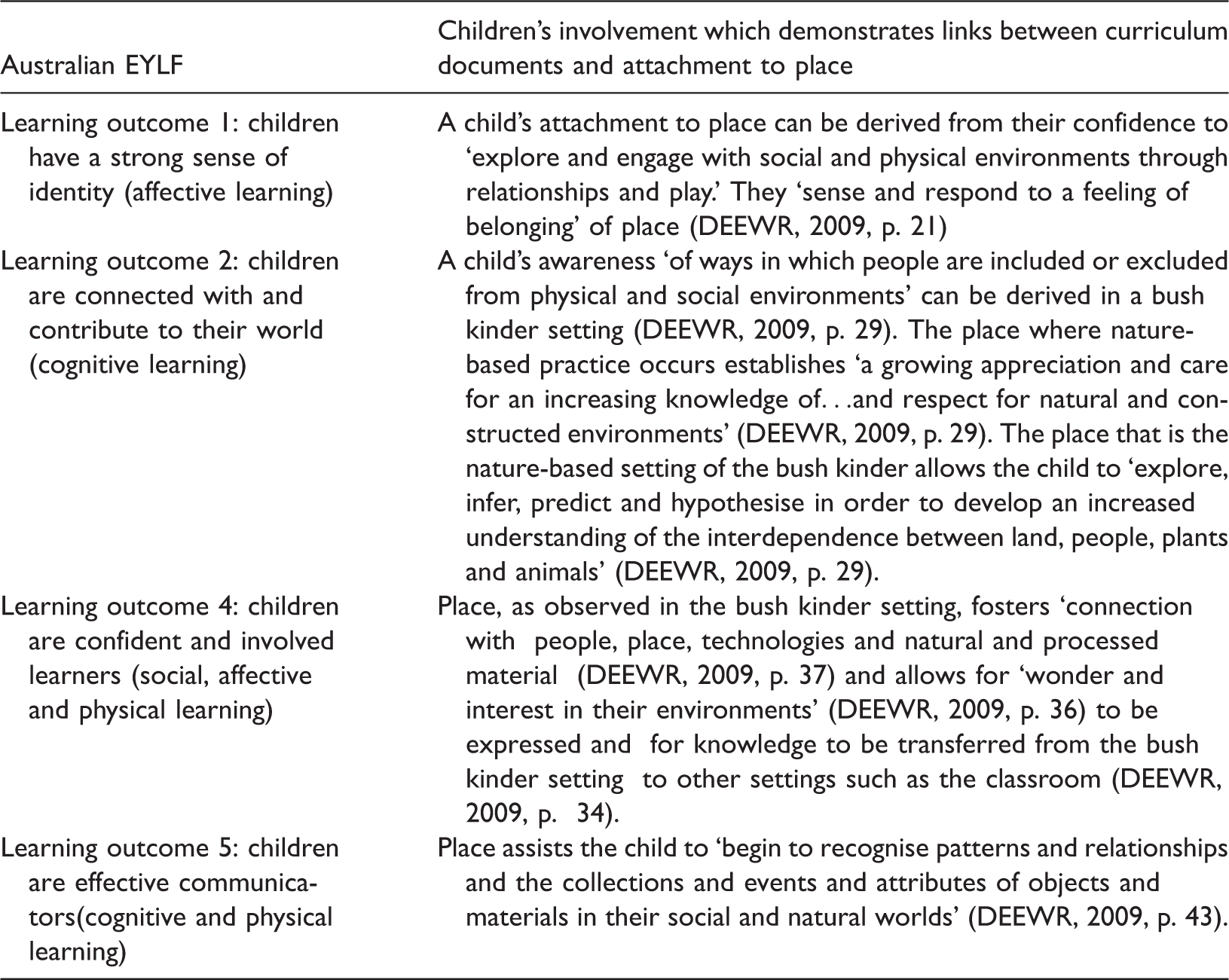
EYLF: Australian Early Years Learning Framework; DEEWR: Department of Education, Employment and Workplace Relations.
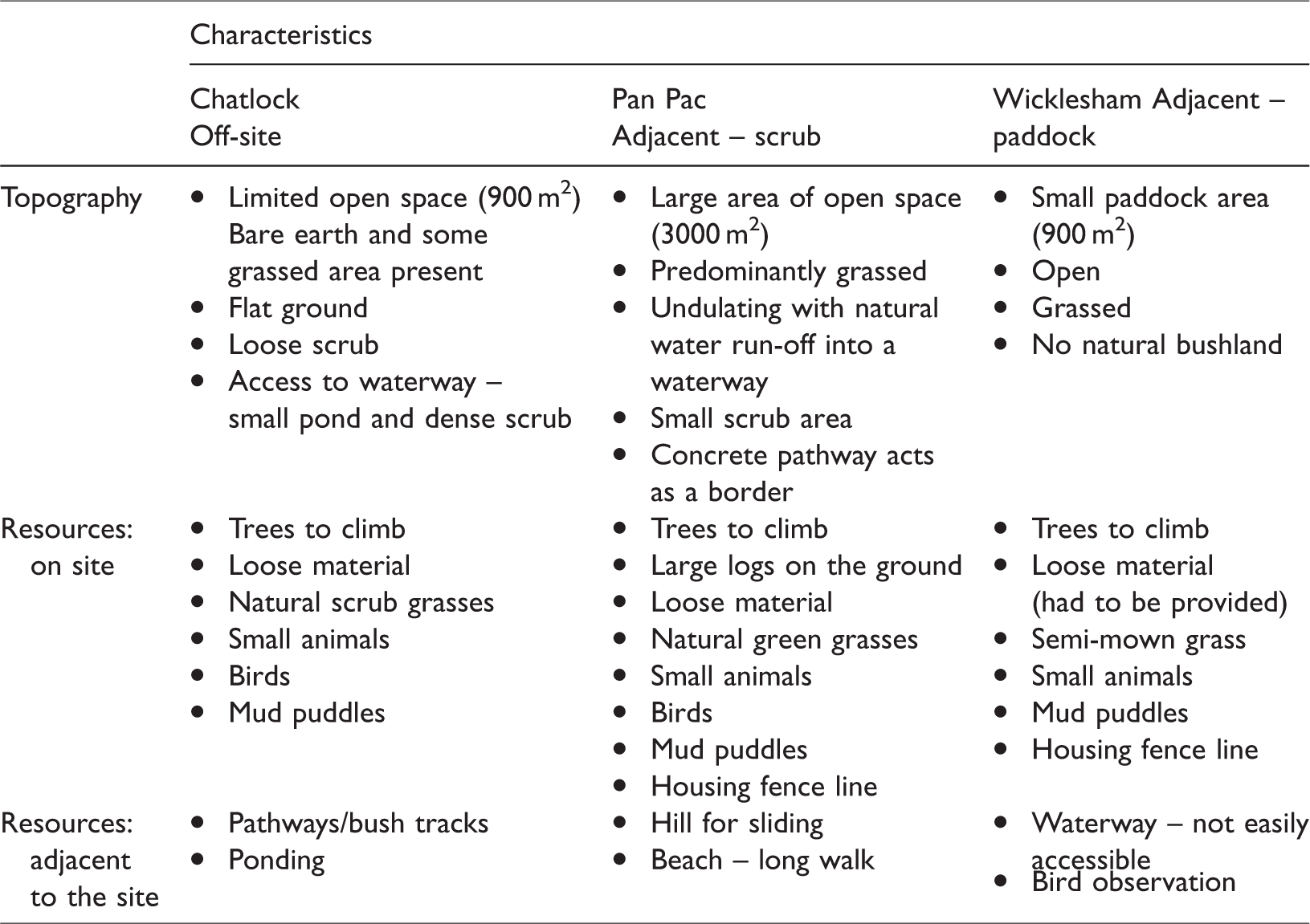
The nature-based practice model as it is experienced by the child can differ, dependent upon the length of time spent in the bush kinder. A search of websites of organisations offering nature-based programmes focusing on the time spent in the nature-based kindergarten was undertaken (see Figure 1 below). This search provided a range of examples which, if applied to a continuum of time in place, indicates that the experience of the child in the Australian bush kinder is one which supplements the overall kindergarten experience. Sandy Shores’ kindergartens provide three to four hours of bush kinder within a 15-hour weekly programme and sites exhibit a variety of characteristics (Table 2). This differs significantly from kindergartens in Scotland or the USA where a child can spend all of their kindergarten education in the nature-based setting or a child in the Czech Republic who may only spend one monthly session in a nature-based setting.
1
Forest Kindergartens and child contact. Site characteristics.
Methodology and research design
Our study applied three cases to a cross-case analysis model. Case study research involves the concentration on the case, ‘defined by interest in the individual case, not by the methods of inquiry used’ (Stake, 2005, p. 443). Case study provides, according to Simons (2009, p. 21) ‘an in-depth exploration from multiple perspectives of the complexity and uniqueness of a particular project, policy, institution, programme or system in a ‘real life’ context.’ Khan and Van Wynsberghe (2008) distinguish how cross-case analysis occurs and identify two forms this analysis can take: the variable orientated approach and the case study approach. The case-based approach follows Ragin’s (1997) notion of distinguishing between variable and case orientation of the analysis. Ragin confirms the emphasis is upon the case rather than the variables. The case-based approach allows a researcher to make sense of an original case being studied. Focused on diversity in the selection of the cases, cases can be categorised through the comparability of patterns or structures. While being cognisant of the variables, we chose to consider differences across three bush kinder settings, adopting a case-orientated approach to understand case diversity.
We were limited in our ability to interact with the children. Ethics restricted our contact with the children to observation, so we determined that interviewing parents to gain the child’s perceptions would supplement the educator’s experience of place. This was particularly so as our informant educators were experienced and had many years’ service as kindergarten teachers, albeit in the traditional kindergarten setting.
For our research, we framed our analysis upon the first site we visited, Chatlock Bush Kinder, then extended this to the remaining sites, Pan Pac and Wickelsham. This cross-case analysis model compares commonalities and variances in events, processes and activities that form the units of case study evaluation (Khan and Van Wynsberghe, 2008). Our choice of the first site was made for us as we made contact initially with an educator who led the pilot programme at Chatlock Kindergarten. Chatlock became the site to base our comparative analysis. With a baseline upon which to consider commonalities and variances drawn from our teacher and parent interviews and observations of children at Chatlock, the cross-case analysis extended our expertise beyond the single case to numerous, to Pan Pac and Wicklesham. This allowed us to delineate a variety of factors that are contributors to the results of a case; to explain why differences and similarities are evident across cases; to understand perplexing or distinctive case findings or; extend concepts, hypotheses or theoretical positions uncovered or developed from an original case (Khan and Van Wynsberghe, 2008). This approach emphasises particular elements of the bush kinder experience, such as the impact of place upon learning and the appropriateness of categorising differing bush kinder places. This form of qualitative, comparative research design allows the distinctive traits of multiple cases to support reflections on contrasting findings (Bryman, 2012). While Stake (2005, p. 457) indicates his belief that the comparison associated with cross-case analysis competes with ‘learning about and from’ one specific case, we sought to focus on particular attributes rather than dwelling upon case knowledge that fails to facilitate comparison. That is, we planned to use directed case knowledge here while acknowledging what Geertz (1973) calls the ‘thick description’ of each bush kinder setting. Other elements of evidence of early childhood learning would be used to support future discourse on bush kinder learning.
Through site observations of children and educators, researcher field notes and interview transcripts (educators and parents), we constructed a profile of a bush kinder allowing us to determine how each place could be differentiated. From previous research and web-based information, we used elements of Westgarth to understand a bush kinder’s operation and inform our understanding of the ‘place’ characteristics. We became aware that these Sandy Shores places had very different characteristics from Westgarth, so were cognisant of not drawing heavily upon Westgarth; rather, using it to inform our understanding of one bush kinder model. We expected to observe children in an outdoor setting but then began to consider what the components of that outdoor setting were and what similarities and differences existed between the three sites.
Data gathering
Data were collected using iPads and voice recorders from June to September 2015. Semi-structured interviews, focus groups and conversations were based upon video recordings and fieldwork observations. Sikder and Fleer (2015) confirm Flick’s (2006) identification of the tradition of using recording devices to supplement data collection in educational settings and collect qualitative data. The research method was informed by Malinowski’s (1922) participant observation and rich ethnographic description as the researchers engaged in the bush kinder experience. It was impossible not to interact with the children, as the observation sessions would occur over full kindergarten sessions lasting three to four hours. The researchers became immersed in the setting and the children’s learning experiences, and children would actively seek to draw the researcher into their play and share their discovery in the bush kinder.
Three kindergartens in the Sandy Shores Shire were selected. Each site was visited weekly for 4 weeks. At the first visit, lead teachers at all three sites were interviewed. During subsequent visits, further interviews were conducted with lead teachers, kindergarten assistants and parents of existing bush kinder participants. Some parents of former (the previous year, 2014) bush kinder participants were also interviewed. In total, 12 educator interviews were conducted and eleven parents were interviewed. The initial questions asked sought to understand how children learn and play in the bush kinder environment. Other questions were posed regarding how kindergarten policy has changed as a result of the bush kinder and, with an understanding of how other bush kinders operate, the beliefs of how different bush spaces impact upon learning.
Preliminary analysis of the transcribed interviews was undertaken to identify what all respondents believed were the benefits to the child of participating in bush kinder. This unexpectedly uncovered differences between the settings. Twenty interviews, three with past parents, two parent interviews and 15 educator interviews along with two parent focus groups, were conducted by the two researchers providing ‘thick descriptions’ of the bush kindergarten operations. The two researchers, upon review of the notes and interview transcripts then considered salient factors pertaining to the bush kinder setting, using a case-based approach. Each case included the site, the resources, the people involved and the data collected from each.
Following data gathering and what we had observed at each site, we began to consider the attributes of a ‘normal’ bush kinder place, how this varies from place to place (case to case) and how this impacts on children’s experiences. Finally, interview data provided input on how children’s experiences of the ‘bush kinder place’ were influencing community and local government opinions and policy.
Categories of bush kinder
Our categorisation based upon bush kinder location formed two sets and one subset. The first type is off-site. Off-site bush kinders are set away from the kindergarten premises. The distance is such that a child is not able to walk comfortably from the normal kindergarten setting to the bush kinder site. We believe that this is a matter of kilometres’ distance apart. The second category is the bush kinder which is adjacent. This is a setting where the bush kinder is closer to the kindergarten premises. This is a short walk of a few minutes to reach the site and does not involve additional vehicular transport to the regular, on-site kindergarten premises. The adjacent site is then broken into subsets dependent upon the setting. One of the sites we visited was scrub with some vegetation; the other site had minimal vegetation. We believe that the notion of both off-site and adjacent could be broken into further subsets, such as a beach setting or a barren setting, or a dense rainforest setting, depending on the natural resources within the setting.
Vignette 1: Off-site – bush
Chatlock Kindergarten have three, 4-year-old groups. Each 4-year-old child enrolled at the kindergarten receives 15 hours of kindergarten education each week over the duration of a year. Daily sessions generally run for 3 to 4 hours across the week. Four of these sessions occur at the Chatlock Kindergarten Centre, one session is run as an off-site bush kindergarten approximately 5 kilometres from the kindergarten premises. The off-site bush area is a reserve, a natural setting (Figure 2). Trees, tree stumps, undergrowth, grass, some paths to more heavily grown bush areas, a small wetlands area and open spaces all constitute the place. The site is well sheltered and protected but in addition, the kindergarten educators set up two defined sites – one for children’s bags, another for children to sit. Children attend the bush site at all times unless there is a severe weather warning issued by the Bureau of Meteorology. Parents are requested to dress children appropriately and outside waterproof gear has been designed for children to wear to bush kinder (not obligatory). Water and sunscreen are carried at all times and vehicles are available to carry children to a medical facility in an emergency.
Chatlock site. 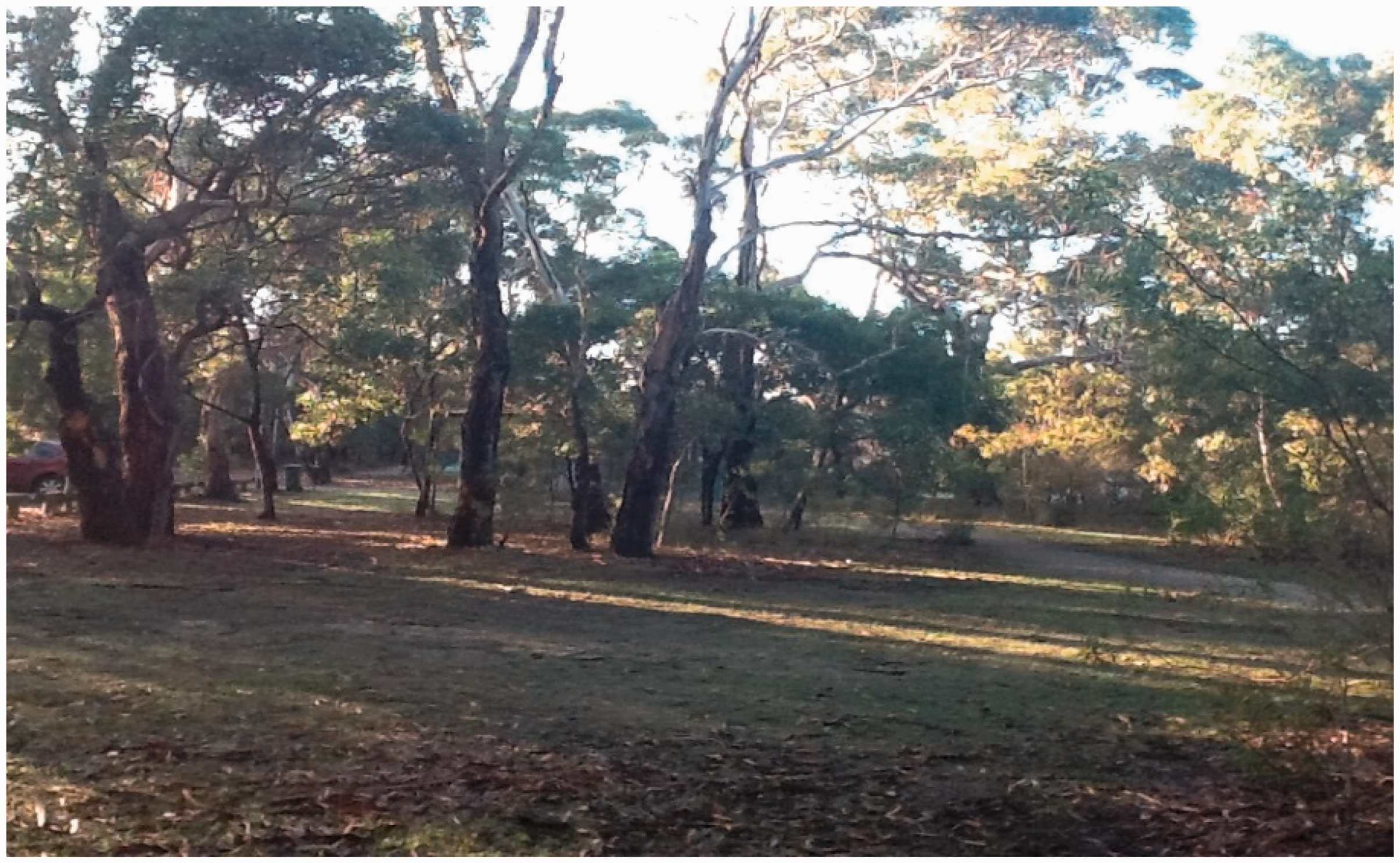
The Chatlock kindergarten cluster employs one staff member who is responsible for the bush kinder programme. Each week, she has a small focal point to add interest to children’s learning environment. Focuses include: bush walk to define changes in flora growth patterns; walk to view different forms of fungi; pond visit to look/listen for frogs; walk to ‘mystery tree’ (different shape, heavy undergrowth – risk elevation). To maintain safety, the bush kinder areas are defined by invisible walls – boundaries which children can only cross with adult supervision. These boundaries were negotiated with the Sandy Shores Shire following an occupational health and safety review of the site and exclude accessibility to parts of the reserve. Children consistently remained within the defined areas.
Vignette 2: Adjacent (natural setting)
Pan Pac is located within a few hundred metres of the kindergarten in an adjacent natural open site. Set on open public parklands owned by the Sandy Shores Shire Council, it is separated by a dense native vegetation standing 3–4 metres high and a small natural water course (Figure 3). The water course is traversed by a bridge and only runs during times of heavy rain. The bush kinder setting is set away from the Pan Pac kindergarten building. The children cannot view the kindergarten buildings, due to the vegetation and landscape.
Pan Pac site. 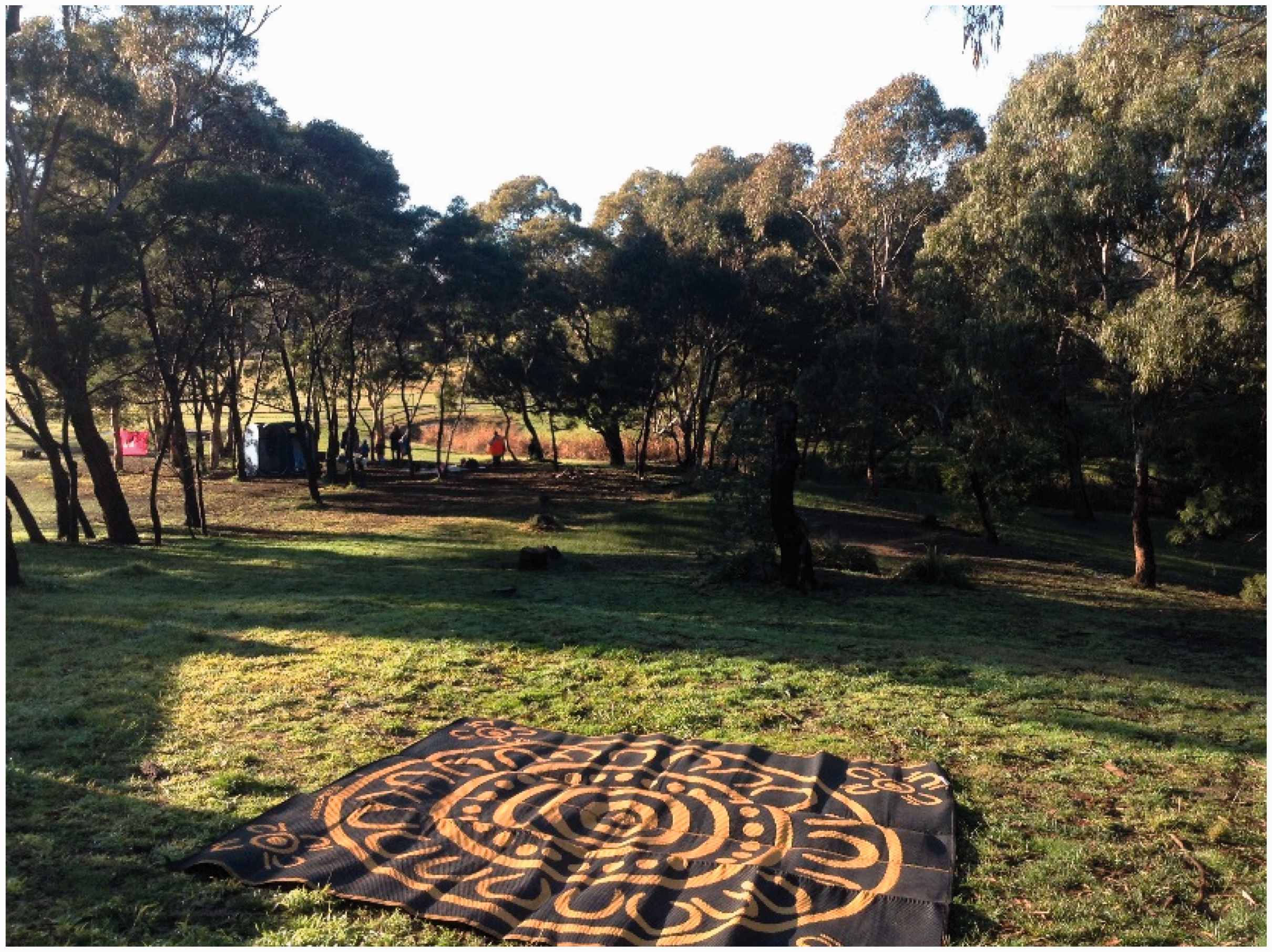
The site is set up by the educators prior to the children arriving. Trolleys transport equipment which includes an outdoor port-a-loo which is situated in a pop-up tent, medical items, water, and administrative documents, for example, an attendance roll. Tarpaulins are laid on the ground and laminated signs are erected around the site to inform passers-by of the session. Three educators are present: one, the regular kinder educator for the group, and two trained assistants. Occasionally, parents act as support helpers during the sessions.
Parents bring their children directly to the setting prior to the commencement of the session. Upon arrival, the first children stay close to the meeting site formed by a tarpaulin, a small folding table, which holds the children’s attendance sheet for parents to sign and other mats placed in the space. The children leave their belongings on the tarpaulin. Once several children arrive, they are free to begin exploring the space. There is no formal beginning to the session, as teachers allow the children to freely roam around the space. The whole session runs without a format or set focus as educators roam the setting and interact with children, supporting them when the child identifies an item of interest. If something is found, the whole group is not alerted by the educators; rather, the children are left to do this themselves – if they wish to include other children.
The only time when the group gathers is towards the close of the session when they have a time for one child to share a special item they have brought from home in a ‘sharing box’. An organised game may be played but only for 5 minutes following the sharing time. The bush kinder session runs from 8:45 to 11:45 am but the kindergarten session continues for a further 2 hours. When the designated time to finish comes, the children gather, are asked to line up and they acknowledge the end of the session by saying ‘Goodbye Bush Kinder’ then return to the Kindergarten on foot as the session for these children runs to 2:30 pm, when they are collected.
Like Chatlock, to maintain safety, the areas of the bush kinder site are defined by boundaries which children are not to cross except when with an adult. Some of these boundaries have physical characteristics like fence lines and pathways. These boundaries were negotiated with the Sandy Shores Shire following an occupational health and safety review of the site. The children are allowed to enter a wooded area as long as an educator is available to supervise.
Vignette 3: Adjacent (cleared setting)
Wicklesham Kindergarten runs three 5-hour sessions. The last session of the week is bush kinder. When children arrive in the morning, they participate in approximately 30 minutes of activities in the kindergarten. These include songs and discussions about interesting things (e.g. science experiments). In wet weather, the children put on their special waterproof gear (provided by the Kindergarten committee) before moving outside.
The bush kinder is held in an adjacent open site, cleared of most natural flora and set on church grounds – towards the back of the property (Figure 4). The property is bounded by fences on three sides and houses adjoin the site. It is a 30 metre walk back to the kindergarten, although when children attend the bush kinder, they take all their belongings with them and do not return to the kindergarten. The site is set up similarly to Pan Pac, with an outdoor porta-loo, plus a trolley for carrying medical equipment, water and other needs. The educator provides tools for site investigation – drawing materials, magnifying lenses, containers for holding small animals and plastic tweezers for picking up small animals. These are available from the trolley and children can freely access these at any time. The educator will often take other material – photographs of natural items for children to identify by comparison.
Wicklesham site. 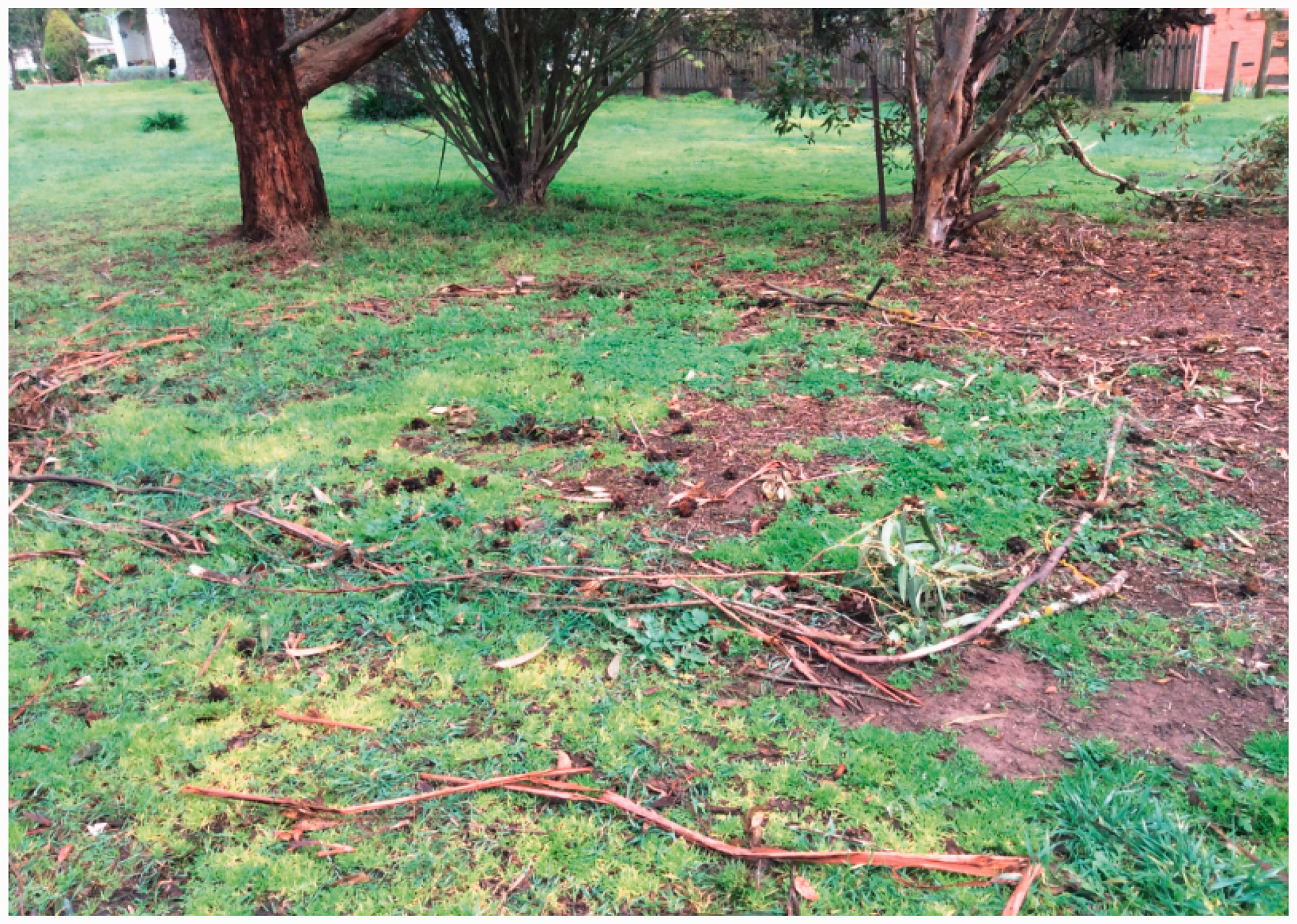
There are no set activities organised, although the educator has taken the children for an organised walk, with additional parent support, to a nearby local waterway. They viewed the natural animals and plants and the educator intends to repeat this walk across the various seasons. At the end of their 3-hour bush kinder session, the children return to the kindergarten for an hour of indoor activities, in readiness to be collected by parents and caregivers.
Interpretation of the vignettes
The vignettes show that each site exhibits considerable difference in characteristics. All provide rich learning experiences for the children. The first point of differentiation is that Chatlock is conducted off-site and Pan Pac and Wicklesham are in close proximity or adjacent to the kindergarten premises. Despite the close proximity to the site, the Pan Pac children demonstrate a clear demarcation between the Bush Kinder site and their home kinder. Chatlock is more typically bush, with most plants being Australian gum trees, and ground coverage is mainly leaf litter and small branches/twigs from the trees. In summer the ground is hard and dusty, whereas in winter, it smells damp and musty. Wet materials become slippery.
The Pan Pac site, due to the creek bed, has lush green grass most of the year and is well protected from the sun. Despite most of the area being open, Australian native trees and medium shrubs provide shelter and niches for children to play in. The soil is soft, enabling children to dig deeply, using natural tools found on site. The grass is extremely slippery in winter and children have been able to slide down wet hills.
The Wicklesham site is open, with little vegetation other than tall pine trees along one border. A few other scattered trees provide imaginative play opportunities. To enhance the environment, the educator has, at various times, arranged for other natural material to be brought to the site for children to play with. For example, as part of its safety site visit, tree branches were lopped, but left on the ground on the site for the children to use as a resource. Grass is sparse but covers most of the ground. Children spend a lot of time climbing the trees which, by the nature of the tree type, are very safe with multiple branches, foot and hand holds.
Educators and parents consideration of the bush kinder ‘place’
Educators involved in the bush kinder programme were very supportive of it, indicating that they saw the need for children to play outside more and become more involved with the local environment.
One educator commented that the Shire Council had supported the idea of the introduction of bush kinder ‘because they could understand the need for it also’.
Other educators commented:
Learning is amplified – it is a slowed-down environment. Just go in and see what the kids come up with …because there’s not been a lot of information about it, we’re all learning as we go.
Educators commented on the learning in terms of children’s collaboration and how children would often group with different children in the natural environment – prior relationships were challenged and changed. They also mentioned children’s enhanced creativity – the way they used natural materials in a variety of different ways – repurposed for their play.
Parents, when asked about the bush kinder and the type of experiences children would be involved in, considered aspects of safety, boundaries, independence, group dynamics and environmental understanding (as being different to regular kinder in a centre). They stated the experiences as:
to get outside and explore the environment more; to learn about outdoor play; an outside learning area; I loved the variety of learning. I loved that they could go out there and they would spend a day there and the set up by the teachers; giving the children a sense of place in their community; learning to play with nature and respect nature and be part of their environment; it’s all just getting back to nature with the sticks, the flowers, the things that fall off the trees, the branches. They’ve got to use their imagination and free play it and; changing group dynamics – whereas out there, it might be a completely different group of kids getting together because you’ve got a completely different environment.
Discussion
Chatlock allowed children to view and interact with sparse vegetation, where the cycles of weather patterns were observable in foliage growth and patterns of leaf litter. Physical interaction was less robust as most trees were not suitable for climbing but improvisation and creative play occurred as a result of the somewhat-limited ground material. Learning experiences were related to learning outcomes 1 and 2, where they ‘explore and engage with social and physical environments through relationships and play’ and ‘begin to recognise patterns and relationships, and the collections and events, and attributes of objects and materials in their social and natural worlds’.
At Pan Pac, the lush growth of plants continued across all seasons, due to the proximity of the creek. Children were able to use the environment to create ‘hide-aways’ and were able to sit and roll on the grass easily. Digging was enabled by the softness of the soil, one aspect that none of the other sites had. The bird life was not as abundant as at Chatlock, so children were not engaging with an extending understanding of ‘bush’ animals. Children at Pan Pac were ‘connected with and contributing to their world’ (learning outcome 2) in that they were developing ‘a growing appreciation and care for an increasing knowledge of … and respect for natural and constructed environments’ (learning outcome 2). They were also developing a sense of feeling of belonging to a place (learning outcome 1).
At Wicklesham, natural material was sparse, with the educators having to supplement the site with additional material being brought in, from time to time. However, the trees on this site were suitable for safe climbing and children learnt to climb to high places in the trees. They also manipulated the growing branches of the trees to create new spaces and new play things. Children exhibited different social groupings to normal and became more effective communicators as they began ‘to recognise patterns and relationships and the collections and events and attributes of objects and materials in their social and natural worlds’ (learning outcome 5, EYLF) (DEEWR, 2009).
For most of the educators, this experience was the first time they had been involved in a bush kindergarten. Initially, some were a little reluctant as they were concerned for children’s safety. However, even after a short time (6 months) they were seeing many benefits for the children in terms of their use of the environment in different ways, group dynamics and increased creativity.
The results are discussed within the context of the three research questions posed. In considering the experiences of children in the different bush settings, we found that place-based learning did occur, but in different ways, enhanced or confined by the sites. In returning to the research questions, we can more closely define the impact of place.
What are the attributes of a ‘normal’ bush kinder place?
There are no ‘normal’ bush kinder places, although they all have similarities and differences in the topography, on-site resources and off-site resources. The educators themselves should be considered resources, as their approaches to children’s play can enhance or enable learning through scaffolding, direct teaching or the provision of further resources. Although closely aligned with Forest Kindergartens of Scandinavia (Walden, 2012; Sobel, 2016), bush kinder places differ in context and in terms of what Greenwood and Hougham (2015, p. 97) describe as the involvement and engagement that children have with the things that make up the ‘place’. The level of children’s participation in, and encounters with ‘experiential phenomenon’ (Wattchow and Brown, 2011) contribute to the learning of the children,
2. What ‘place’ variations exist and how do these impact on children’s learning experiences?
One significant variation across the bush kindergarten places investigated was the amount of space available for running around. One bush kinder (Pan Pac) provided children with opportunities for games related to strenuous physical activity such as running, jumping, dodging and weaving around natural materials. This enabling the development of motor skills through undulating and flexible surfaces (Fjoroft, 2001, 2004). Wicklesham and Pan Pac bush kinders sites were more restricted in size but still allowed for running, although with less opportunity for moving through and around trees and bushes, as both these sites were more sparsely foliated. They did enable motor skill development through climbing, balancing, risk-taking and making judgements about material (branch and bough) strength. The richer foliage at Pan Pac provided more variation in small animals, particularly with ready access to a small waterway where children often saw small animals like ‘water boatmen’ and mosquito larvae. However, at the other two sites, the educators walked the children to nearby ‘wet’ areas for opportunities to engage in ponding and involvement with water animals. Honig’s (2017) seven identified learning dimensions were apparent to some degree across the sites that were observed. All three sites enabled children to experience cognitive development (discipline knowledge) through experiencing changes to weather, observation of and through the environment (Maynard and Waters, 2007).
3. How are children’s experiences of the ‘bush kinder place’ influencing community and local government opinions and policy?
At the commencement of the ‘bush kinder’ implementation, the local governing body, Sandy Shores Shire reviewed all kindergarten policies and vigorously changed local policies related to risk-management (Safety Policy and Excursion Policy) to ensure that they had legally provided a safe environment for the children and minimized risk. Due to its nature as a pilot programme, parents could withhold their children from the ‘bush’ kinder component if they wished. However, since the programme is now a few years old, there have been observable changes in both educators’ and parents’ acceptance of the bush kinder provision. Since the conclusion of the trial period, further policy changes have been enacted, with the development of eight separate ‘bush kinder’ policies. The bush kinder is now an embedded component of the Sandy Shores programme. Parents cannot withdraw their children from the programme and now sign their children up to kindergarten in the full knowledge that they will participate in a bush setting for some of the time. Other indications of change have been in the wording of staffing employment agreements. Any new educator positions will require the educator to agree to participate in a bush kinder setting. Staff not only undertake first aid training, but also specific training on recognising and reacting safely to snakes in the bush. Finally, in consideration of the benefits of bush kinder, the local government is considering increasing the time children participate in a bush kindergarten.
Conclusion
There is comparison with the place of the bush kinder to kinders in international settings and that ‘normal’ is a term which is difficult to determine. All three sites observed show similarities, yet each has differences which translate into different learning experiences and opportunities. Each site, to varying degrees, has trees to climb, puddles to explore and small animals and birds to observe.
With a growing number of bush kinders in Australia and bush kinder becoming part of the regular kinder experience, consideration needs to be given to how the setting and its attributes impact upon the learning experiences of a child. The ‘Sandy Shores Kids Go Bush’ pilot after one full year of operation is now firmly embedded in the teaching practice and part of the kindergarten experience. In considering whether the setting of the bush kindergarten matters to children’s learning, it is apparent that each site has its own characteristics which can provide a varied, albeit similar, learning experience for the child in a bush kinder setting. Each site facilitates children a connection with, and contribution to, the natural environments in the child’s world; it provides a strong sense of wellbeing and builds confidence and involvement in the learner.
At the commencement of the research, the bush kinder was an experiment, a trial to see what would happen. Local policies were changed to ensure children’s safety. However, since then, community opinion, including Shire and educators’ involvement, has seen a bedding in of the bush kinder at all sites, with an increase from five participating groups of children to 11. Expectations are fully supportive of the bush kinder and the Shire and educators are looking for ways to expand and improve the experiences for children.
Implications and further research
There needs to be awareness of the uniqueness of the Australian bush kinder and that the international scene and practices of a nature-based learning model for early childhood learners may inform but not necessarily be replicable in the Australian context. What we have shown here is that ‘place’ in the context of Australian bush kinders can impact upon the learning experience simply due to the diversity of the situation in which the learning experience occurs. As the bush kinder programme grows, different sites of learning will play a role, determining the learning opportunities that are available and providing a very different experience for the child. Concurring with Tesar and Arndt (2017, p. 665) that policy in education does matter, an opportunity exists for bush kinders, regardless of place, as each place provides its own rich experience of learning in the early childhood, to proliferate. The opportunity exists for other governing bodies of Australian kindergartens to adopt the same policy as that of the Sandy Shores Shire in which bush kinder forms a part of the weekly kindergarten experience. This is particularly so as bush kinders have the potential to align with the policies of the Australian EYLF and to be conducted in a broader cross-section of environments: beach locations, rural and urban environments, all which lend themselves to further investigation. This in itself then leads to localised policy implementation determined both by Australian regulations and by risk assessment of the place itself. As an Australian bush kinder programme begins to proliferate, there will be potential for future research into the impact of different bush kinder ‘places’ as sites of learning and how each impacts on education policy adopted by the administrators of Australian kindergartens, local government areas. Along with the ‘place’, other factors such as external resources (the educators and the children) could be investigated in respect to children’s learning experiences.
Footnotes
Declaration of conflicting interests
The author(s) declared no potential conflicts of interest with respect to the research, authorship, and/or publication of this article.
Funding
The author(s) received no financial support for the research, authorship, and/or publication of this article.