



Abstract
The study of the position, status and experience of women academics has in recent decades attracted a great deal of scholarly attention. The literature is characterized by what might be referred to as the ‘absent women’ discourse, namely the underrepresentation of women in the highest positions in the sector, and is dominated by research conducted in the West. It is key, however, to look beyond the Western academy and not make assumptions about the status, position and experience of women academics in other contexts, or to assume that priority is given to gender equity universally. A key aspect from a policy perspective and in relation to supporting the advancement of women as academics is data: the absence of adequate, publically accessible data results in higher education sectors not being open to scrutiny. The purpose of this article is two-fold: first, the issue of absent data in the East Asian context – using Hong Kong as an example – is discussed. Second, the article presents large-scale empirical data generated by the authors to show that women academics are woefully underrepresented in all levels of leadership in the Hong Kong Academy.
Introduction
The study of the position, status and experience of women academics has in recent decades attracted a great deal of scholarly attention. How and why women experience working in higher education (HE) differently to their male colleagues is the focus of analysis. Most of the literature on women academics, however, is dominated by research conducted in the West. This in part can be explained within the context of Western second-wave feminism and the growth of women’s/gender studies resulting from this movement (Chu and Tang, 1997; Coate, 2006; Minnich, 2004).
The literature is characterized by what might be referred to as the ‘absent women’ discourse, namely the underrepresentation of women in the highest positions within the sector. It is key, however, to look beyond the Western academy. This article is positioned theoretically as part of a broader challenge to the norm of using Western experience as the referent for all experience (Mohanty, 1988). We cannot, and should not, assume that the status, position and experience of women academics is similar in other contexts, or that similar outcomes, for example, the lack of women as full professors globally is attributable to the same causes. Moreover, to assume that priority is given to gender equity universally is highly problematic. This is a particularly important point from a policy perspective in ensuring that academic women located in different geographic and cultural locations can benefit from interventions that are grounded in research that is locally relevant. A key aspect from a policy perspective and in relation to supporting the advancement of women as academics is data. ‘Absent’ data is a global issue (Morley and Crossouard, 2015), but it would certainly appear easier in Western contexts to access large-scale data sets, as will be discussed below.
The purpose of this article is therefore two-fold: first, to consider the issue of absent data in the East Asian context – using Hong Kong as an example. Second, to present large-scale empirical data to further understand the position and status of East Asian women in the contemporary sector.
Absent data
Data collection in relation to the gender profile of the academy is internationally variable. Examples of good practice include the publicly available statistics produced by the Equality Challenge Unit (ECU). Using statistical data from the UK Higher Education Statistics Agency (HESA), the ECU over the last seven years has produced a relatively comprehensive profile of the UK sector as it relates to gender and a number of significant variables, such as disability and ethnicity. The aim of the reports is to provide national figures that can be used to consider the diversity and inclusivity of the HE workforce as a whole, to consider change and progress over time and for individual institutions to look at the data for benchmarking purposes. The following types of data are included:
Total number of academic staff by gender over time; Mode (e.g. full-time, part-time) and contract type (e.g. permanent, teaching only, research only); Contract level and academic roles; this incorporates very detailed information with respect to managerial levels (e.g. head of institution, deputy/pro-vice-chancellor, head of department) and academic ranks (e.g. professor); Academic subject areas; Salaries; Destination of leavers (e.g. the gender profile of academic staff going to work abroad).
However, even within a data set that we might consider as relatively exemplary, from a researcher’s perspective there are issues. For example, in reference to academic subject area, philosophy is conflated with English literature. This masks the significant underrepresentation of women in philosophy (Beebee and Saul, 2011; Hutchinson and Jenkins, 2013).
A further example of another more comprehensive data set by a public body, in this case the European Commission, is the SHE statistics, which are collated yearly from 29 European countries, with a particular focus on gender and research and innovation. This focus is particularly important in the research prestige economy of HE, in which an academic’s research profile is privileged as the pathway to promotion and seniority (Abreu et al., 2008; Aiston and Jung, 2015; Baker, 2012; Fitzgerald, 2014; Macfarlane, 2012; Postiglione and Wang, 2009; Skelton, 2005). The gender profiling, similarly to the ECU data, includes heads of institutions, academic ranks and academic disciplines, but also data in relation to the applicants and beneficiaries of research funding and the extent to which institutions have gender equity plans.
In sharp contrast to the above examples, Morley and Crossouard’s (2015) work on women academics in South Asia revealed very few publically accessible statistics in relation to the profession and, where available, either the complete absence of disaggregated data by gender, or disaggregated data that did not provide an insight into women in leadership positions, such as vice chancellor or dean: ‘There is an absence of gender-disaggregated statistics held at country or regional level with which to inform and evaluate effective policy implementation. The absence of gender-disaggregated statistics for staff means that progress is not being monitored or managed’ (Morley and Crossouard, 2015: p.3).
Absent data: The Hong Kong Academy
Before discussing the publicly available data to analysis the gender profile and position of men and women in the Hong Kong HE sector, let us first consider the sector itself. Hong Kong currently has eight institutions publicly funded by the University Grants Committee (UGC). The University of Hong Kong (HKU) is the oldest university, established in 1911, with the most recent being the Education University of Hong Kong Hong (formerly The Hong Kong Institute of Education) in the 1990s. The profile of the eight institutions includes a small liberal arts college (Lingnan University) and the Hong Kong University of Science and Technology (HKUST), with a strong focus on the science, technology, engineering and mathematics (STEM) subjects. Relative to its size, this is an incredibly strong sector in terms of world rankings at both institutional and disciplinary levels. For example, four out of the eight universities are ranked in the QS World University Rankings’ top 100 (2016). The sector is associated with quality.
In beginning to consider the gender profile of the academic body in Hong Kong, the starting point was to look at what data the UGC could provide. Aiston (2014) analyzed the variables of gender and ‘junior’ and ‘senior’ academics on an institutional basis as provided by the UGC. This data enabled a longitudinal analysis of the ratio of junior to senior academics, showing that over a 16-year period the number of junior academic women had increased slightly: between 2% and 10%, except at Lingnan University and HKUST, which had made greater inroads into increasing the number of women at this level. However, the analysis of the number of women in senior ranks over the same time period showed a more complex picture. Three universities made slight gains in the percentage of women classified as senior (3%, 5% and 11% respectively), whilst in the case of five out of the eight universities there was an actual decrease in the number of senior academic women (between 1% and 2%, with the exception of the Education University of Hong Kong that saw a drop of 20%). Women are simply not progressing through the academic hierarchy, thereby refuting pipeline theory in the context of the Hong Kong Academy. Pipeline theory posits that the underrepresentation of women at senior levels will reverse once appropriately qualified women move through organizational hierarchies (Morley, 2013).
However, what does ‘junior’ and ‘senior’ mean? And how is this data collected? Correspondence with the UGC (in 2013) clarified that the data is collected from the UGC-funded institutions by use of the Common Data Collection Format (CDCF). Senior academic staff includes professor, reader, senior lecturer (USS pay scales) and principal lecturer (non-USS pay scales). Junior academic staff includes senior lecturer (non-USS pay scales), lecturer (USS pay scales), lecturer (non-USS pay scales) and assistant lecturer. This classification of academic rank, however, is largely modelled on the British system – a legacy of Hong Kong’s colonial past – and does not mirror the current system, which is now based, for example, on ranks such as assistant, associate and full professor. For the purposes of longitudinal data analysis, comparative data is needed, however, the problem lies in that it is the institutions who are required to interpret the current academic ranks as ‘equivalent’ into the CDCF. For example, what is the equivalent of senior lecturer (USS pay scales) and senior lecturer (non-USS pay scales)? USS refers to the UK pension scheme – Universities Superannuation Scheme. This in turn has the potential to lead to greater inaccuracies in the statistical data. A more robust approach would be for the sector to modify the CDCF to reflect the new academic ranks and decide how these are equivalent with the previous positions. It is important, however, to be cognizant of the climate in HE in Hong Kong at present. Concerns abound in relation to institutional autonomy (Lee, 2014). In this context, the request for data by the UGC or government is potentially a sensitive issue.
And what is missing from the data that is publicly available from the UGC? Importantly, data that provides an insight into the leadership of the eight institutions, data that provides a detailed breakdown of the sector by gender and rank, along with a number of other key variables. In short, data that is essential in order to have a clear picture of the gender profile of the Hong Kong HE sector.
Generating data: The Hong Kong Academy
The central research aim of this project was to provide a gender profile of the Hong Kong Academy, particularly in relation to the leadership of the sector. But where would this data come from? Would the universities be able and willing to provide the data as specified by the lead author? There were a number of factors that suggested that this would not be the most fruitful methodological approach. First, we could not assume that the institutions would readily have such data available. For example, in the case of one of the universities data was available, but not extracted and collated to consider the gender profile of the institution. Second, it was also not clear that the universities would be willing to provide this information; in the Association of Pacific Rim Universities survey of institutional gender profiles in 2013, HKU and HKUST were non-respondents, in fact only three out of the eight Chinese higher education institutions (HEIs) responded (APRU, 2013). The lack of response to this survey itself potentially signalled a downplay of gender as an issue in the region. And third, data provided by the universities would potentially limit the extent to which we might explore the gendered profile of the sector, for example, the analysis of different levels of leadership.
The approach taken was to carry out an extensive mapping exercise, looking at the profiles of academic men and women via their institutional webpages. This generated our own unique data set to establish the extent to which women academics were engaged in leadership positions in the Hong Kong Academy. The mapping exercise began in 2013 and was completed in 2014. Leadership is often equated with holding a formal, senior managerial role, and the first stage of our analysis was to map academic women within these formal senior leadership roles. We firstly considered what we termed 1st-tier administrators/leaders. This level included titles such as president, vice/deputy/associate president, provost, vice provost, dean of faculties and dean of students. Our next level of analysis was what we termed 2nd-tier administrators/leaders and comprised associate and assistant dean of faculties or student affairs, head of department, director of school/division.
Having collated data related to 1st- and 2nd-tier administrators/leaders across the eight UGC-funded institutions, we then wished to explore what we have termed 3rd-tier administration and leadership. This level of analysis explored the extent to which women play a role in distributed and informal leadership roles, which traditionally do not involve formal managerial responsibilities, such as (full) professors and programme leaders. We considered gender profiles by rank, discipline and status. Given the time intensive nature of this mapping exercise, the decision was then taken to focus on those institutions that had the same faculties in common: the case-study institutions were HKU, HKUST, Chinese University of Hong Kong (CUHK), City University of Hong Kong and Hong Kong Polytechnic University. 3rd-tier administration/leadership included associate/deputy heads of departments and those with responsibility for research centres and programmes. With respect to academic position we included both full-time and visiting/honorary/part-time staff and classified them according to their title, for example chair professor, professor, etc.
Absent women: The Hong Kong Academy
1st- and 2nd-tier data
Gender composition of 1st- and 2nd-tier senior leaders in the eight UGC-funded institutions

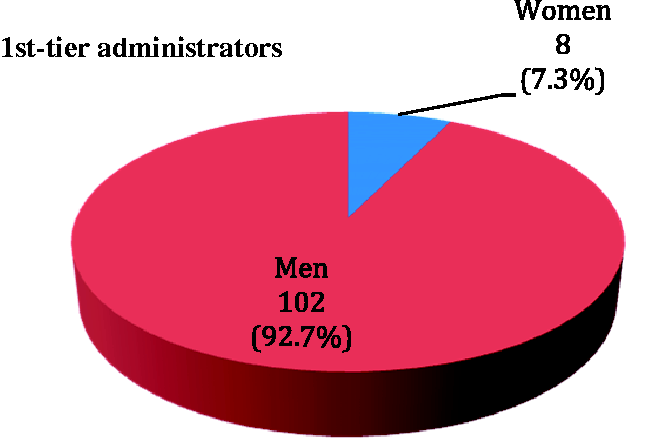
Gender composition of 1st-tier leaders.
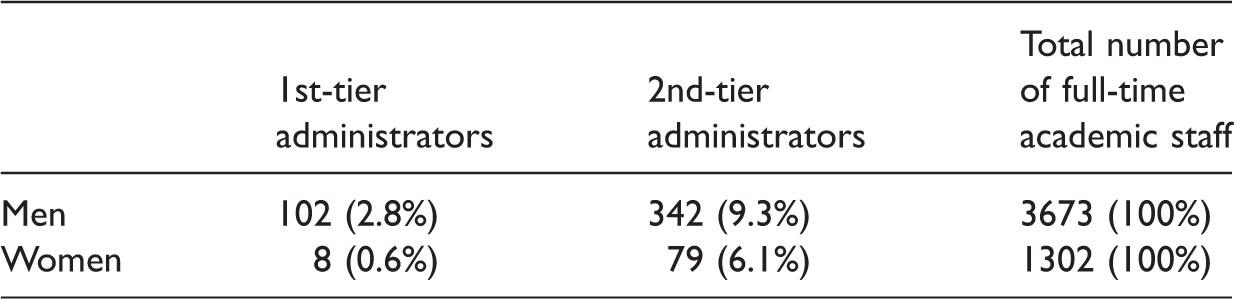
Women academics fair slightly better in their representation as 2nd-tier academic leaders, but still only comprise 18.7% of associate and assistant deans and heads of departments (see Table 1 and Figure 2).
Gender composition of 2nd-tier leaders.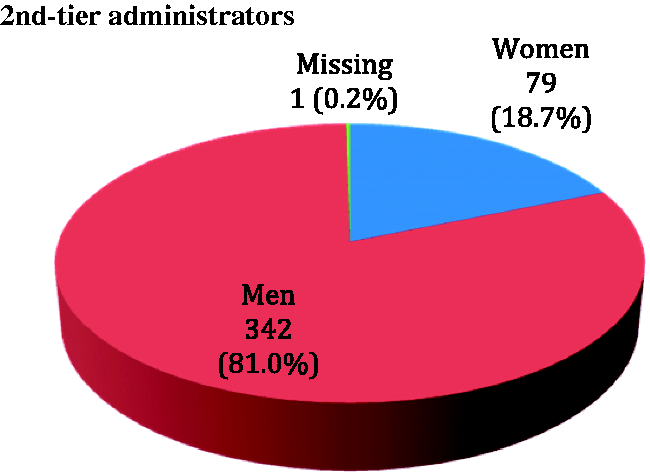
Gender composition of 1st- and 2nd-tier leaders in the eight UGC-funded institutions as a proportion of all university staff
Distributed leadership by gender and role

3rd-tier data
In addition to analyzing the position of women academics in formally designated senior leadership roles, we were also keen to explore the extent to which women were involved in what has been termed ‘distributed’ leadership roles: ‘Modern leadership theory recognizes the fact that leaders can be found across a broader spectrum of individuals within groups and in a variety of contexts and situations not just at the top’ (Macfarlane, 2012: p. 18)
Such roles are important to the functioning of the academy, but are not necessarily equated with leadership as traditionally conceptualized, that is formally designated senior managers. For the purposes of our analysis, those members of staff (in the five institutions discussed above) who had indicated on their web profiles involvement with the management of their department, programmes or research were included. This aspect of the analysis was more heavily reliant on academics indicating the type of roles they were undertaking and therefore resulted in a less complete picture. Nevertheless, the data highlights some interesting gendered dimensions and importantly provides a unique large-scale empirical insight into distributed leadership roles in higher education. As shown in Figure 3, women were far less likely than their male colleagues to be involved in, or at least less likely to indicate involvement in distributed leadership roles.
Distributed leadership by gender.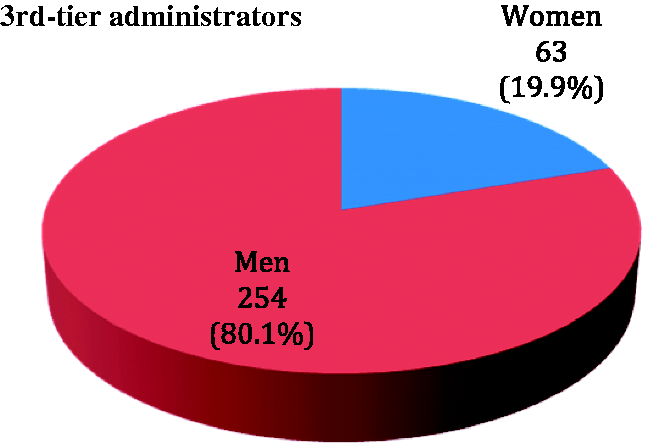
Our next question was to ask how many male academics and how many female academics noted that within these distributed leadership roles they had responsibility for management in a general sense (for example, deputy head of department), teaching (for example, programme director/coordinator) or research (for example, director of research centre, research coordinator).
As is clearly shown (particularly in Figure 4), male academics’ involvement in distributed leadership roles is largely equally split between these three aspects.
Distributed leadership by role: male academics.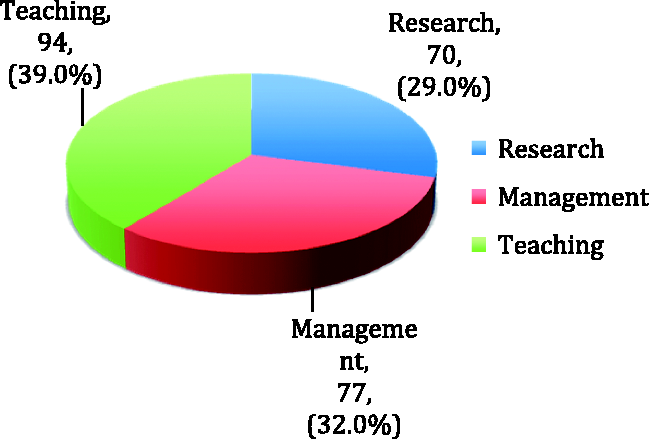
Women academics, however, were more heavily involved in distributed leadership roles related to teaching, less so to management in general and barely any involvement in research-related leadership roles (see Figure 5). Gender stereotyping, or unconscious bias (Bailyn, 2003; Eriksson-Zetterquist and Styhre, 2008) results in academic women undertaking different, less prestigious roles in the academy. Previous research, particularly qualitative studies, has indicated that women academics have a greater involvement in teaching and student welfare (Hughes et al., 2007; Ropes-Huilman, 2000; Schein, 2007; Turner, 2002), rather than research, which as previously noted is privileged in the academy. This data corroborates this previous research and highlights a gendered dimension even at the level of distributed leadership roles.
Distributed leadership by role: female academics. Rank and gender (across the five institutions).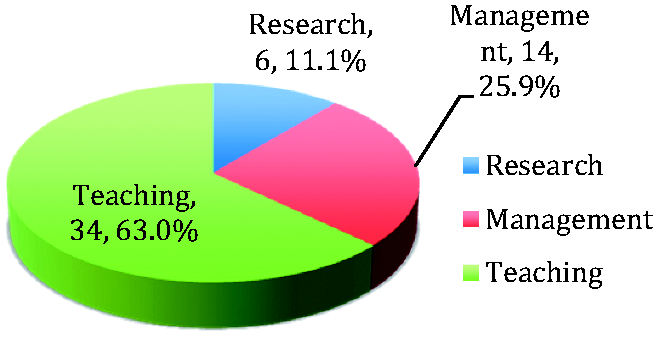
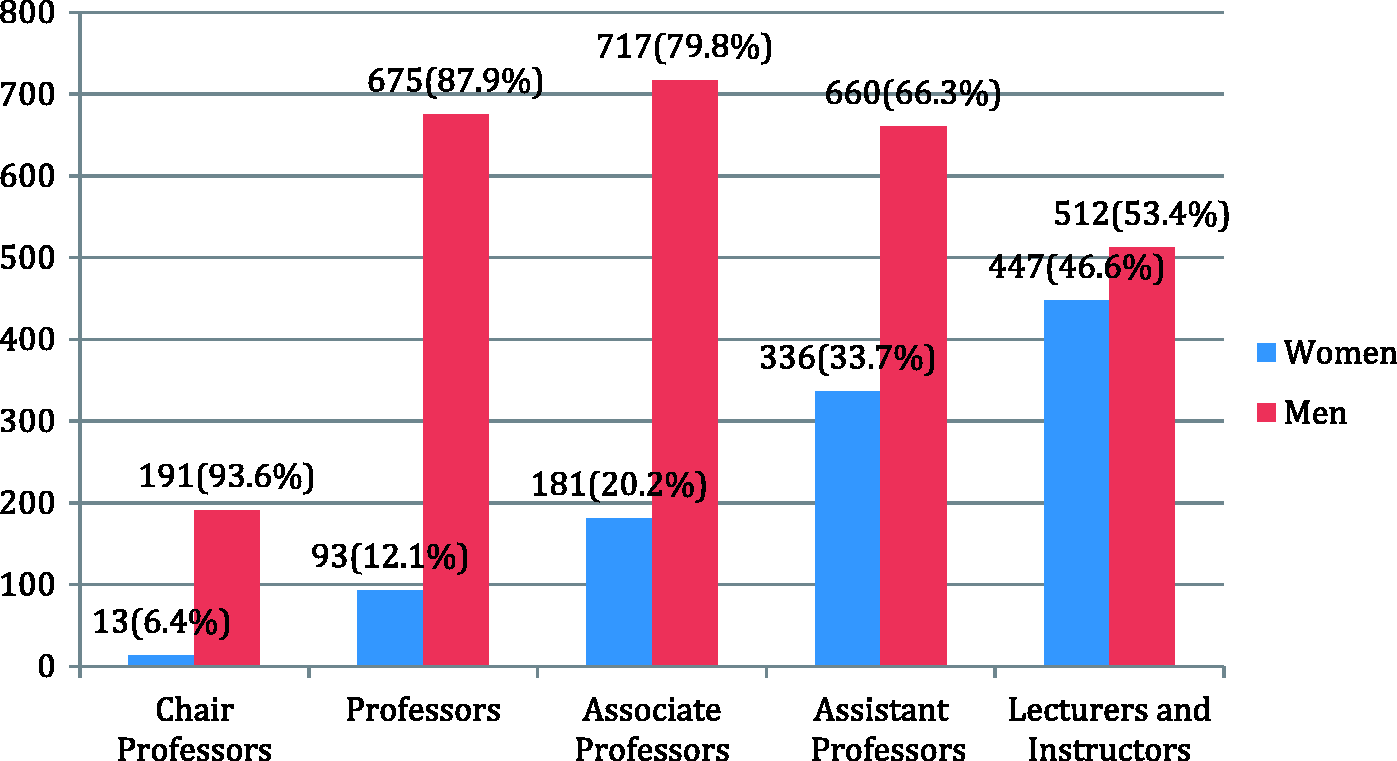
Gender and rank
Having considered the position of academic women in both senior and distributed leadership roles, let us now consider the profile of academics by rank and gender across the five case-study institutions. This data is fundamental to analyze women academics’ transition into senior leadership roles, since a normal prerequisite of such a role is a senior academic rank, particularly the rank of full professor.
Case-study institutions by academic rank and gender
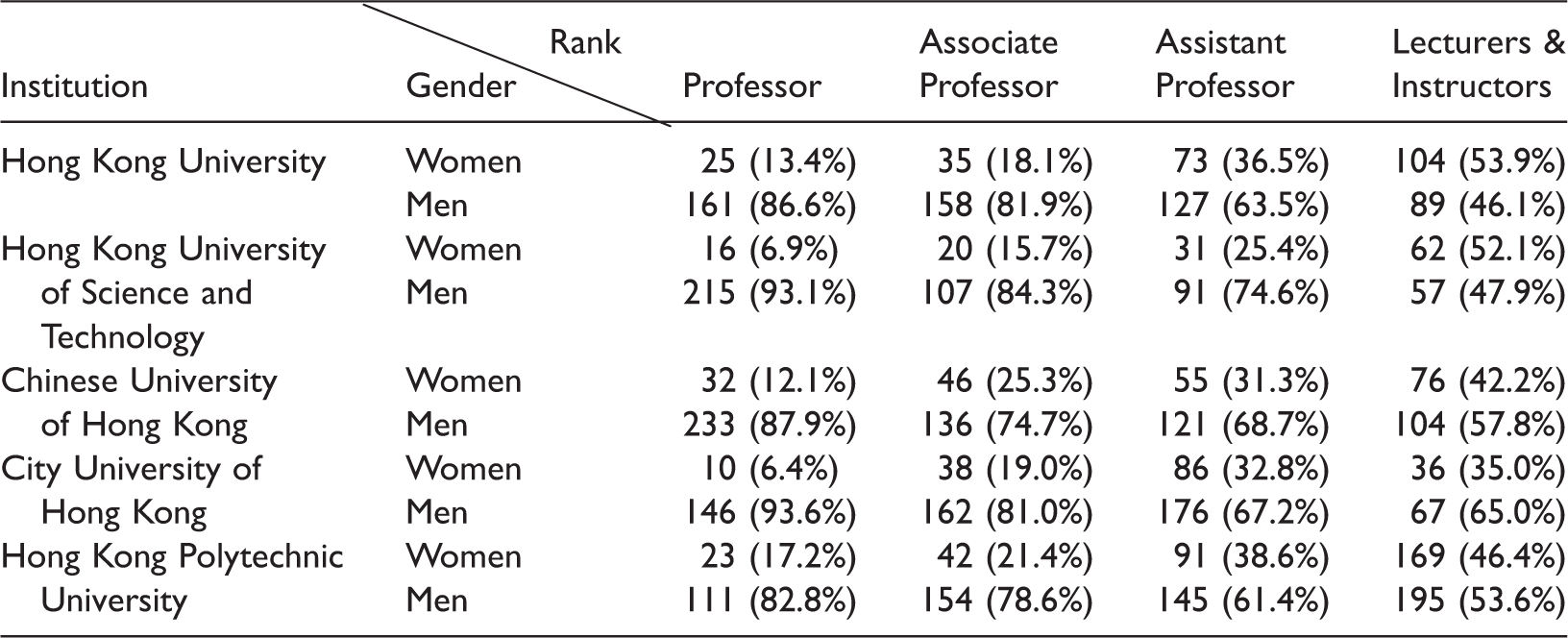
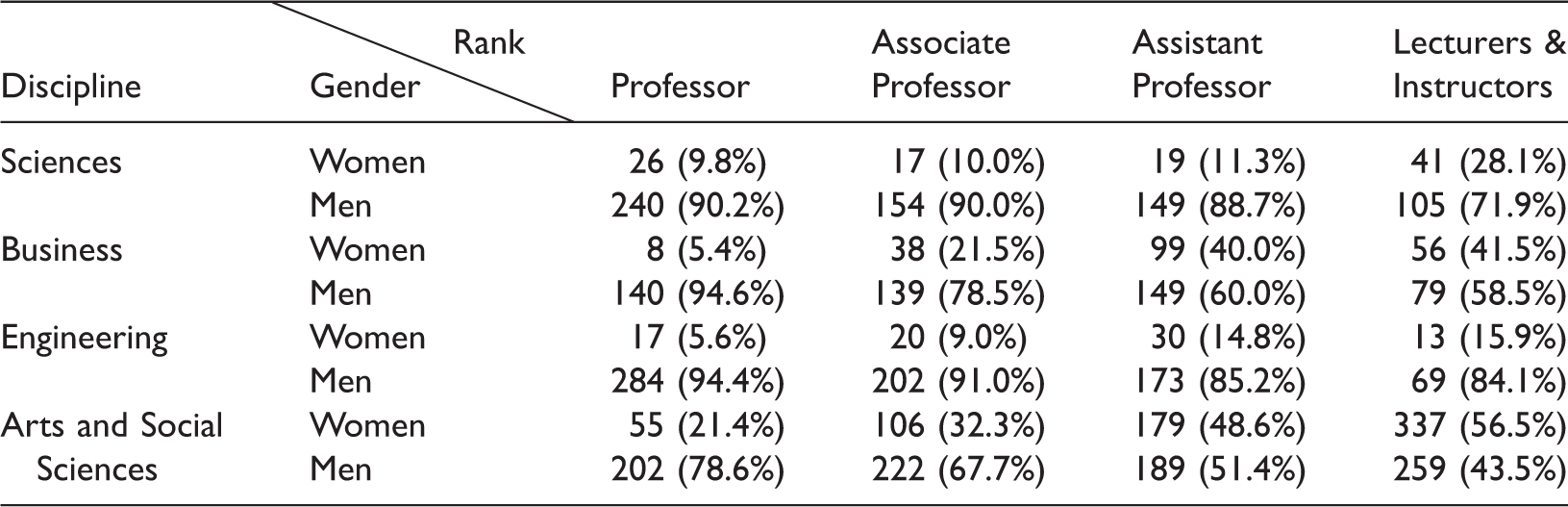
Table 4 shows institutional data by academics’ rank and gender across the four comparative faculties. In looking at this data, it is interesting to note that women academics in terms of their academic rank display a pyramid-shaped composition, with the largest number of staff members at the most junior level and the lowest number at the highest rank. This is almost the exact opposite for male academics, whose composition displays almost an inverted pyramid-shape. As a comparison, HESA data for the UK shows that 22.4% of women and 77.6% of men reach the rank of full professor. The data from this small case-study of the five institutions shows that only 12.2% of women academics have reached the position of chair and full professor. In effect, women in Hong Kong are half as likely to reach the most senior academic ranks. Even accounting for an incomplete disciplinary representation from this case study, it would appear that the Hong Kong HE sector is not in a competitive position with respect to gender equity as compared to other counterparts, for example the UK, which are considered as sectors generally associated with quality. This may well become a significant issue if the much quoted global rankings factor in gender equality and gender equity as a measure of institutional excellence.
Overall data of the five institutions by academic rank and discipline
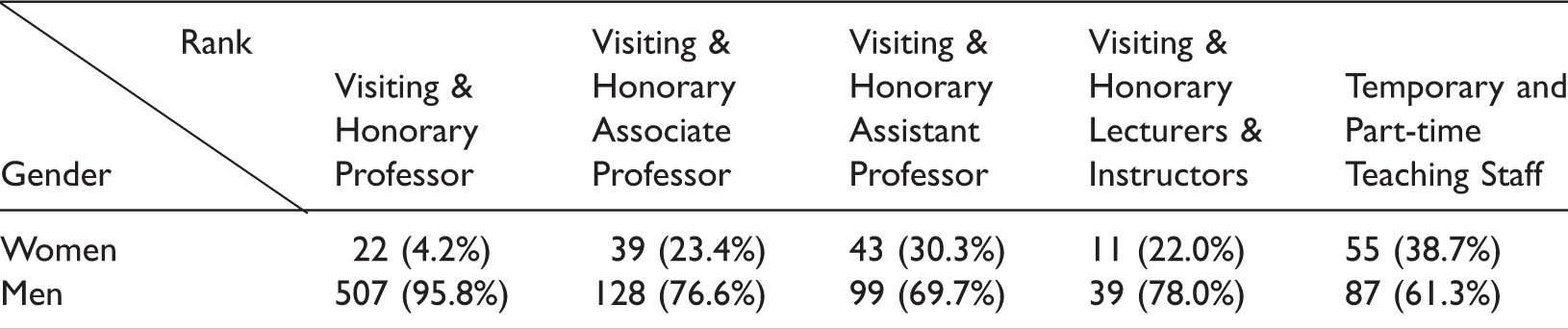
Case-study institutions by honorary/visiting status by gender and rank
Conclusion
This article has shown that absent data is an issue in the context of the Hong Kong HE system. Publicly available data from the UGC is insufficient to carry out a thorough analysis of the gender profile of the sector. The absence of publicly accessible data is problematic because it results in a lack of transparency, denies the opportunity for the sector to be open to scrutiny and for researchers to analyse the position of women in the Hong Kong Academy. Moreover, the lack of publicly available data allows for what the lead author refers to as a ‘dangerous discourse’ to slip in (Aiston, 2015). This dangerous discourse, which has already been referred to in this article, is pipeline theory. Pipeline theory suggests that the more women become suitably qualified, the more women we will see move through organizational hierarchies. The lead author, whilst working in Hong Kong, has witnessed on numerous occasions the following line of argument being put forward: since women as undergraduate students are more than equally represented in higher education in Hong Kong they will simply progress through the system, enter the profession and rise to the most senior roles in the academy should they wish to. However, we already have evidence that this argument is invalid.
The data presented in this article alerts us to a number of significant findings. Women are woefully underrepresented in the most senior leadership roles in the sector (at the level of dean and above). This underrepresentation does not improve dramatically at 2nd-tier leadership. Moreover, male academics are almost five times more likely to be 1st-tier leaders, and half as likely again to be 2nd-tier leaders, when compared with women academics. Academic women are underrepresented in distributed leadership roles, and within these roles we see a gendered dimension; women are more heavily involved with the leadership of teaching, rather than research. This article has also shown that women academics are not progressing through the academic hierarchy. The case study of five of the institutions showed that women comprise only 12% of full professors. Analysis by discipline indicated that whilst women are underrepresented across all ranks in the STEM subjects, we still see a striking drop-off in the number of women at the more senior ranks (associate and full professor) in arts, social sciences and business. Finally, women are even underrepresented in the most marginal positions in the academy.
The authors’ own collation and analysis of the position of women academics in Hong Kong provides a unique and significant insight. The large-scale, empirical data presented in this article provided the impetus for HKU’s commitment to the United Nations HeForShe campaign. HKU was the first university globally to become an impact champion and the authors’ data was presented at the launch of this campaign in April 2015: It was the shocking statistic on the gender balance at the senior leadership level in the eight government-funded higher education institutions (HEIs) in Hong Kong – when surveyed in mid-2014 there were 110 posts at Dean level in these 8 institutions and only 8 [7.3%] were held by women, data from Dr Sarah Jane Aiston – that headlined The University of Hong Kong’s launch and drives the institution’s determination to lead the HeForShe movement by galvanizing others in our field to similar action (UN Women, 2016: p. 54).
Footnotes
Declaration of conflicting interests
The author(s) declared no potential conflicts of interest with respect to the research, authorship, and/or publication of this article.
Funding
The author(s) disclosed receipt of the following financial support for the research, authorship, and/or publication of this article: This project was funded by seed funding, awarded to the lead author by The University of Hong Kong.