




Abstract
Non-formal education and the dissemination of science are increasingly gaining importance around the world. Whilst astronomy in Brazil is no exception, its growth has however been slow and dispersed, institutions and activities across the country are uncoordinated, and no source exists that integrates relevant information and knowledge. To address these issues, this study uses a broad Delphi study, which includes a heterogeneous group of experts from all of the main regions of Brazil, to provide a first step toward integrating the field by mapping its current and future states. The topics that emerged during the study include, for example, working conditions, training and access to financing. A diverse set of problems and possible solutions were also identified, and these offer guidance for practice and educational policy. Opportunities for future research are also outlined.
Introduction
In recent decades there has been worldwide growth in non-formal education (NFE) (Martin, 2004; Tal and Dierking, 2014) and the dissemination and communication of science (Bucchi and Trench, 2008). As it becomes increasingly evident that a substantial portion of an individual's learning occurs outside the traditional school system and throughout life, whether on the Internet, in museums, clubs or associations and in countless other settings (Falk, 2002), the importance of education in other than formal settings has been recognized (Bell et al., 2009).
One area that has managed to achieve wider non-academic attention is astronomy, a science that attracts public interest (Ödman, 2007). With regard to NFE and scientific dissemination (SD) in astronomy, Brazil has a diverse set of institutions, associations and scientific societies, and many national and international efforts have been undertaken to improve the sector (Bretones, 2008). However, despite this positive scenario, the institutions and activities are scattered, and there is no integrated information or knowledge about this sector of education, including its characteristics, problems and aims. In terms of research, while the level of attention from the academic community has been increasing (Langhi and Nardi, 2009a), it remains a poorly studied area (Aroca, 2008). While there is apparent growth in the areas of NFE in and SD of astronomy in Brazil, this growth is slow and dispersed.
In response, this study sets out to provide a first step toward integrating the field by mapping the current state and the future of NFE and SD of astronomy in Brazil. Our vehicle is a Delphi study that includes all of the players in the field – researchers and practitioners, professionals and amateurs, educators and communicators – from all of the main regions of Brazil. Our objective is to provide answers to these key questions.
What are the current situation and dynamics of this area? What are the main problems and concerns? What should be improved and how? What are the greatest challenges?
Our aim is to contribute to the clarification of this area by building a broad panorama of it, by identifying its main problems, and by outlining some solutions proposed by the specialists who participated in this study. The Delphi methodology provides a unique means of structured communication to identify problems and solutions, providing directions for future implementation. It is hoped that this will provide guidance on educational policy – guidance which is grounded because it comes from those who are likely to be subject to this policy. Several policies that provide for extending access to activities and initiatives of NFE and SD in astronomy in Brazil to a larger part of the population across all regions of Brazil are proposed. Finally, while the study was conducted in Brazil, we believe it is relevant to other emerging countries in Latin America, and beyond.
The remainder of the paper is structured as follows. First, the conceptual and empirical background of our study is built by defining NFE and SD, presenting the situation of the formal system in Brazil and by describing the institutions of NFE and SD and their relations in Brazil. The Delphi methodology is then outlined and we describe how our study was conducted. Results are presented, followed by a discussion; and, finally, we offer our conclusions, the limitations of this study, and an outline of possible future research directions.
Conceptual and empirical background
Definitions of NFE and SD
The central concepts of this work are non-formal education and scientific dissemination. NFE (or informal education for some) is ‘a field that has a complex history and remains ill-defined in terms of what counts as informal science teaching and learning’ (Rahm, 2014: 395). For this research, we define NFE in a broader manner, as a type of organized and systematic education which remains flexible in terms of its duration and the locations in which it can occur (museums, science centers, planetaria, non-governmental organizations, cities’ public spaces, associations, etc.). This definition follows the works of Gadotti (2005), Bell et al. (2009), Colley et al. (2002), Eshach (2007) and Marandino et al. (2004). NFE can be guided by a facilitator or educator, but preferably it is centered on the learner because, in this type of education, the student has more autonomy and more freedom to build their individual ‘journey’ of learning. Based on its characteristics, participants in these types of educational activities have varying ages and abilities and different levels of socio-economic and cultural capital.
SD is defined as involving the ‘use of resources, skills, processes/procedures and products (media or channels) for the disclosure of information (scientific, technological or associated with innovations) to the lay public’ (Bueno, 2010: 2). SD is the most widely used term for this kind of education in Brazil (Massarani, 1998; Marandino et al., 2004). Currently, SD can be seen more as a contextualization of information – as a means to promote mutual understanding and an interchange of information that is advantageous both to the public and to scientists (Trench, 2008).
Although in the literature both perspectives are sometimes used in isolation, it is important here to consider both perspectives together, in order to obtain a broad picture of the field of astronomy in terms of its activities and initiatives, demands, problems, weaknesses and strengths.
Astronomy education in the formal system in Brazil
Astronomy has had a secondary and intermittent position in formal education in Brazil. It was a specific discipline only during a brief period and is currently addressed discontinuously in the curricula of other subjects (Bretones, 1999). However, Langhi and Nardi emphasized that ‘there are some official institutions that engage in education in astronomy, aimed at professional training in this area as well as public training, outreach and dissemination projects, and continuing education of teachers’ (Langhi and Nardi, 2009a: 5). This might suggest that there is currently an increase in the attention given to the area, probably because since the 1980s astronomy had begun to appear more prominently in the curricula of some cities and states (Bretones et al., 2006). 1 In 1997, the thematic topic ‘Earth and Universe’ was included in the National Curricular Parameters (PCN) of elementary schools; and in 2002 the structuring theme ‘Universe, Earth and Life’ was introduced in high school physics education, on the complementary guidelines – the PCN + (Schivani, 2010).
However, this increasing presence of astronomy content in formal education has not occurred without problems, as Schivani noted. (…) today research is done in astronomy and astrophysics in several Brazilian universities, and teaching of astronomy is included in the science curriculum of geography and physics, on the other hand, the undergraduate courses offer a very veil access to astronomy, dissolved in few electives. While professional astronomers and astrophysicists are formed, science, geography and physics teachers leave the university having few astronomy knowledge so that they can teach it in schools. (Schivani, 2010: 46)
More recently, the Federal Government launched the National Common Curricular Base (Base Nacional Comum Curricular – BNCC). Although this guideline is still in the stage of collecting suggestions and may therefore be subject to change, it can already be noted that the inclusion of the astronomy content continues to be reduced and dispersed in the disciplines of science and physics throughout the school years of basic education.
We would argue that the reasons for the uneven inclusion, or even the non-inclusion, of astronomy topics in basic education in Brazil are associated with the socio-cultural, economic and political aspects. Access of the population to knowledge, for example in terms of schools and cultural and scientific equipment, is noticeably uneven and unbalanced. The situation is aggravated by high rates of poverty and illiteracy; the gap between rich and poor is very marked in Brazil. In addition, we must recognize that decisions on the implementation of educational policies in school contexts are often at the mercy of political disputes and economic interests. As a result, public education suffers serious structural problems and teaching as a career is very precarious – which affects the quality of education. Families with economic power put their children into private schools that generally offer better quality with regard to preparing students for passing the entry examinations for the most prestigious, and arguably best, universities in Brazil.
Economically the country is very unequal in terms of income distribution throughout its national territory, mainly in the contrasting rural–urban, center–periphery, and North–South areas. There are rich states (such as São Paulo) in which it is easier to access funding for activities and research, where there is greater cooperation between the university and schools with, for instance, possibilities of improvement in school conditions. The quality of a public (state-funded) school is dependent on policies and state and municipal budgets for education, and these vary widely across different states.
There are also differences from a cultural perspective. Brazil is a country with a unique cultural diversity, a result of multiple influences, marked by different regions with different environments and climates. This diversity represents a major cultural wealth of the country, but in addition it raises difficulties with regard to planning a curriculum for basic education and, specifically, for the teaching of astronomy. Regional differences are substantial regarding values, practices and even content of interest. Simply thinking about the different latitudes – the territory of Brazil extends from south of the Tropic of Capricorn to north of the equator – it can be appreciated that the population does not observe the same constellations or experience even the same seasons.
Such a situation shows, in our view, the importance of non-formal education in astronomy in Brazil, not only as an independent subject area but also as a complement and support to formal education, helping and training teachers, and reaching students and the rest of the population.
NFE and SD of astronomy in Brazil
With regard to NFE and SD, Brazil has a diverse set of institutions, associations and scientific societies. First, there is the Brazilian Astronomical Society (SAB), founded in 1974, which includes a teaching and dissemination committee formed in 1993 (Bretones, 1999) and another committee responsible for the Brazilian Olympiad of Astronomy (OBA), a national-level activity of wide scope, mobilizing thousands of students and schools, teachers, museums and associations.
In addition to the SAB, we also single out the Observational Astronomy Network (REA), which has a similar mission of facilitating communication, collaboration and the exchange of experiences between non-professional astronomers. Brazil also has a Planetary Association (ABP), founded in 1996.
Meanwhile, in the wider context of Latin America, the Astronomy Ibero-American League (LIADA) also includes a section for teaching and dissemination (SEDA). Finally, a Brazilian Network of Astronomy (RBA) was created during the International Year of Astronomy (AIA2009), which facilitated communication between the various institutions, established contacts and promoted dialogue between promoters, disseminated and centralized information about activities, and offered resources. At the end of AIA2009 this network was dissolved, the reason for which could not be identified by the present authors.
These societies and associations add up to more than 250 clubs, local groups and associations of amateur astronomers and astronomy enthusiasts, committed to astronomy research, teaching and dissemination. Distributed throughout the territory of Brazil, although not uniformly (p.e. in the North region there are four times fewer educational and dissemination equipments per inhabitant than in the Southeast region), there are more than 100 observatories, 50 planetaria and more than 30 museums and science centers, with related activities or exhibitions about astronomy (Marques and Freitas, 2015). In addition there are astronomy blogs and Web pages, Internet videos and radio shows, and astronomy-themed events, amongst other activities. It can be confidently concluded that NFE and SD of astronomy is an active sector in Brazil. The country possesses a growing network of institutions dispersed across the national territory and an active community of educators, researchers and amateur and professional astronomers, as well as associations and scientific societies, which engage in education and in dissemination of astronomical subjects (Langhi and Nardi, 2009b).
Research design
The vehicle for our research is a Delphi study. The Delphi methodology was chosen because it provides for the anonymous participation of people scattered across a national territory, uniting different sensitivities and different specialties (Linstone and Turoff, 2002). It is a technique developed in the USA at the beginning of the 1950s (Grisham, 2009) for military purposes (Boberg and Morris-Khoo, 1992); thereafter it became widely used and accepted in various fields (Yousuf, 2007; Blanco-López et al., 2015), including ‘various areas of the educational sphere (program planning, needs assessment, policy setting, use of resources, etc.) and with different ends’ (Blanco-Lopéz et al., 2015: 171).
Delphi is essentially a research method for finding consensus among a group of experts relative to a particular subject or issue (Fahey et al., 1981). The process of construction of the group response occurs in several phases or rounds of successive questionnaires (Cohen et al., 2010; Osborne et al., 2003). In each phase the panel of experts is contacted (in our case, via e-mail) and asked to answer a set of questions. The results are then analyzed by the researchers between each round. Trends and opinions are observed, and their justifications are taken into consideration. The information is compiled with anonymous statements from the participants and results from quantitative analysis of the responses and is resubmitted to the group. The participants then have the opportunity to refine, change or defend their answers and resubmit them to the researchers. Based on these suggestions, the researchers redesign the questionnaire. The process is repeated until ‘either consensus or stability of responses has been achieved’ (Osborne et al., 2003: 698).
Osborne et al. (2003) and Rowe and Wright (1999) stated that the main features that distinguish this technique from other group interview methods, and which provide for achieving structured communication, are: (i) interaction and anonymous responses; (ii) multiple iterations of group answers with feedback between them; and (iii) presentation of the statistical analysis of the results of the responses of the group.
The different parts of the method as applied will be discussed in the following five sections. First we describe how the original panel was selected. The first, second and third (final) rounds of our Delphi survey are then discussed, followed by a presentation of a characterization of the final panel of experts.
The starting expert panel
A heterogeneous group, varied in terms of experience, areas of expertise and perspectives about the subject and composed of academics and practitioners, is important for enhancing the quality of the results (Powell, 2003). Therefore, for this study, we consider experts in NFE and SD of astronomy to be individuals who carry out research in this area and/or develop and engage in education activities in institutions such as universities, museums and science centers, astronomy associations and clubs, planetaria or observatories, in addition to communicators in the different media and participants in the OBA. As already stated, the NFE and dissemination of astronomy constitute a very heterogeneous area.
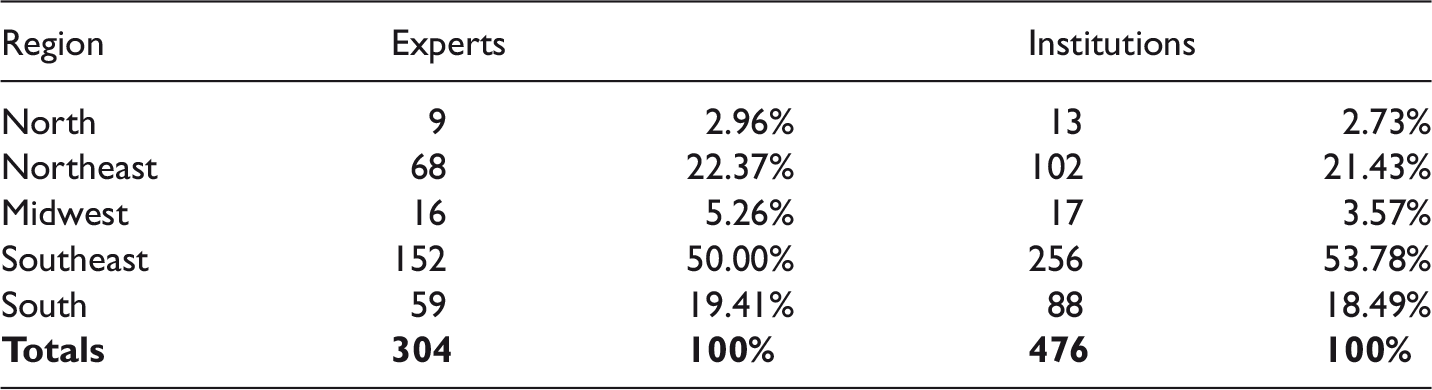
Furthermore, Brazil is a large and diverse country. Its territory is divided into five regions (North, Northeast, Midwest, South and Southeast), which in total comprise a set of 26 states and one federal district, with a total population of around 200 million inhabitants. In order to have a representative group, we searched for experts in all five of the regions, using different profiles. The search for potential participants (and e-mail contacts) was executed using different channels, mainly:
web pages of the RBA, the SAB and the OBA: all of these pages had lists of contacts, names of participants or names of institutions; institution websites, which involved first the creation of a list of all institutions: in this search, we found 50 planetaria, 126 astronomical observatories, 32 museums or science centers with astronomy activities or exhibitions and 268 groups, clubs or associations of astronomy educators, amateurs and enthusiasts (Marques and Freitas, 2015); and publications in journals, conferences and theses: these materials were scanned for researcher contacts.
Distribution of expert contacts and institutions by region.
Round 1 of the Delphi study
For the first round, we developed a questionnaire with open questions, as is common in Delphi studies (Powell, 2003; Osborne et al., 2003), and some closed questions, designed for characterization of the participants. Because we were interested in expert opinions about the current and future panorama of the areas of NFE and SD of astronomy, the three open questions were as follows.
Question 1: Please reflect, based on your experience and knowledge of the area, on the current situation of non-formal education and dissemination of astronomy in the Brazilian context. Question 2: How would you like to see the non-formal education and dissemination of astronomy in Brazil change in the future? Question 3: What do you believe are the contributions of non-formal education and dissemination of astronomy, if any, to society, particularly Brazilian society?
E-mails with the invitation to participate, the questionnaire, and a brief explanation of the project were sent to each specialist individually. We allowed the experts a period of approximately two months to reply, and three reminders were sent during that period. 86 responses were received, a response rate of 28.3%. We confirmed that the responding experts were representative of the original sample in terms of geographical distribution and roles (i.e., academics, practitioners, etc.). The contents of the replies to the first questionnaire were analyzed using content analysis (Bardin, 2013; Krippendorff, 1980); the questionnaires were also discussed between the authors and reflected upon within a research group.
We isolated 836 different statements about the present state and future of astronomy. During this process, the main ideas in the statements were identified, and themes were created to group these ideas and opinions. For the first two questions, 41 themes were created. Because we obtained a large volume of data, we decided not to analyze Question 3 any further, focusing instead on Questions 1 and 2 which addressed the present and future situation of astronomy. This choice was made because the opinions on Question 3 were the least controversial; almost no contradictory answers were identified in the 38 themes related to Question 3. Moreover, Question 3 relates more to the importance and value of the area than directly to its characterization. For the analysis of the 41 final themes of Questions 1 and 2, the ideas within each theme were coded as a ‘fact’, a ‘problem’ or a ‘solution’. Competing or contradictory ideas were also flagged. This final list of themes and ideas was later grouped in seven main categories:
(1) activities and initiatives; (2) working conditions; (3) financing; (4) educators; (5) research; (6) astronomy in the formal [educational] system; and (7) the public.
Round 2 of the Delphi study
For the construction of the second questionnaire, in addition to deciding not to address the issues related to the third question of questionnaire 1, it was necessary to omit two of the seven categories from the discussion. The volume of information still remained very large and would have resulted in the second questionnaire being too long. We chose not to address the issues relating to categories 6 (astronomy in the formal system) and 7 (the public). Category 7 was omitted on the basis of not being a subject mentioned by many experts. In contrast, the exclusion of category 6 was a difficult decision. The connection between formal and non-formal education is very strong, and most actions are related to schools. In addition, almost all of the experts mentioned this issue. However, we chose to leave this discussion for development in the future, because it goes beyond the main theme of this present study.
All five remaining topics were addressed in questionnaire 2 (activities and initiatives; working conditions; financing; educators; research). The questionnaire was divided into the five main topics to obtain a clear structure. For each topic, the discussion was centered on the problems and their possible solutions, presented by the panel of experts. In all of the questionnaires, selected citations from different experts were used to exemplify the statements and opinions presented. Most of the questions were closed, using a five-point Likert-style scale, in order to build and evaluate group consensus on the subjects. Closed questions were interspersed with some open questions in order to deepen and focus the reflection. Small summaries about the general results of the analysis of the topics covered were also made available throughout the questionnaire. The end result was an extensive questionnaire, with 20 questions distributed over 14 pages: Figure 1 presents an example of one of its pages. This questionnaire was sent to the 86 participants. As with questionnaire 1, a period of two months was allowed for the experts to respond, and three reminders were sent. A total of 44 of the initial 86 participants responded to this questionnaire, a response rate of 51%. Analyses were then performed separately for each of the 5 topics/categories. Closed questions were analyzed quantitatively. To evaluate the level of agreement we calculated the total percentages of concordances (the highest two levels in the scale combined: A [Agree] + TA [Totally Agree]); disagreements (the lowest two levels in the scale combined: D [Disagree] + TD [Totally Disagree]); and neutral responses (NAND [Neither Agree nor Disagree]).
Example page from questionnaire 2, translated into English.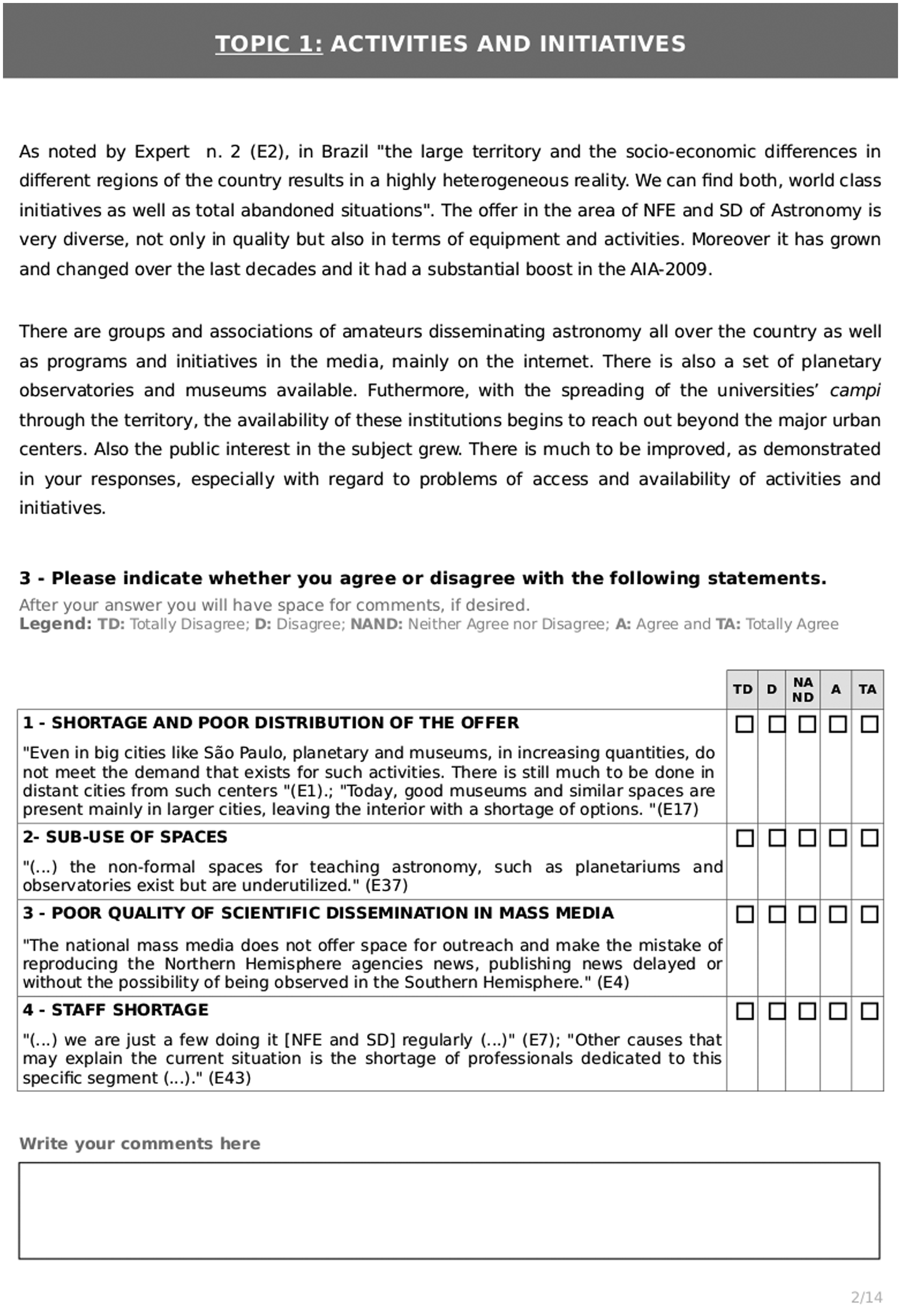
For the qualitative data, that is, the comments throughout the questionnaire, content analysis was performed and statements were grouped into either general or specific comments on each of the items of the topic concerned. Those comments that presented new views or dissenting ideas to those derived from questionnaire 1 and presented in questionnaire 2 were then included in questionnaire 3. The open-ended questions were also categorized, and the results were summarized and presented in questionnaire 3.
Round 3 of the Delphi study
For the preparation of questionnaire 3, we again had to make some choices and trade-offs so that the questionnaire would not be too lengthy. We chose to omit topic 5, concerning research in the area, because it had become more of a characterization of the panel of experts and their research habits than a discussion about research in the area. Questionnaire 3 served mainly for the presentation of the group response. Therefore, in addition to the new issues raised, this document was also a type of progress report on the conclusions and reflections obtained thus far by the panel of experts. For example, summaries of the opinions of the panel were presented throughout the questionnaire. In addition, for each of the issues and items of the closed-end questions, the response of the group was presented. For each of these items, we also indicated the particular answer of each expert, and thus we created 44 different questionnaires, one for each particular expert who participated in questionnaire 2, in order to ensure anonymity. This step was crucial because the participants were asked to respond to the group opinion by changing or maintaining their particular responses, justifying or defending them and/or adding additional comments. As mentioned above, these responses were also accompanied by representative (anonymous) comments of the experts, chosen to present dissenting points of view or to bring in different perspectives. An example page of questionnaire 3 is presented in Figure 2. This third Delphi questionnaire was answered by 34 of the 44 experts (a 77% response rate).
Example page from questionnaire 3, translated into English.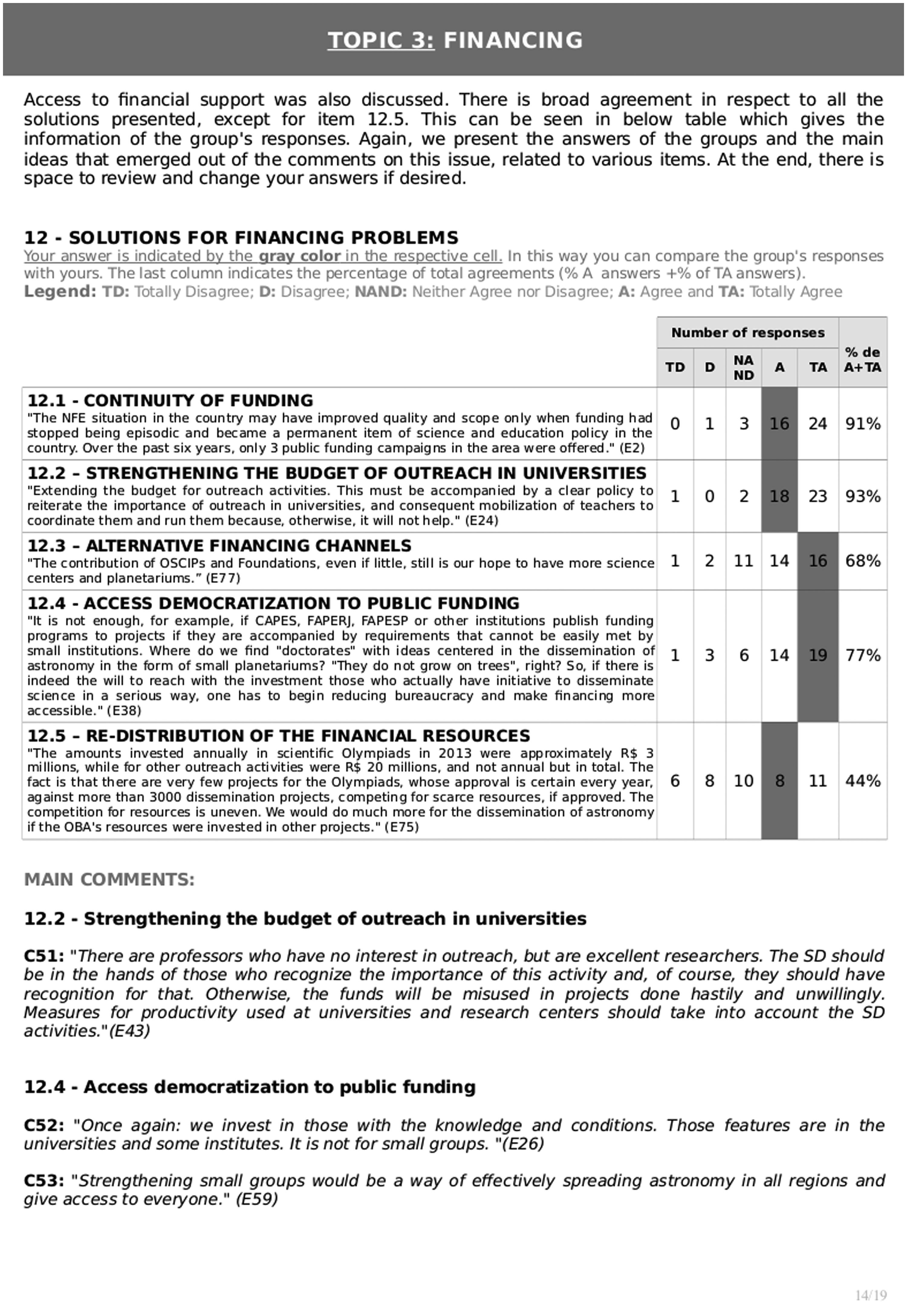
In the literature, there are no well-defined rules for the establishment of the consensus and stability criteria to stop the Delphi (Powell, 2003). Osborne et al. (2003) reported that consensus is reached when at least two-thirds (66%) of the participants rated an item 4 or 5 (in our case an A or TA) on a Likert scale of five points, and stability was indicated when less than one-third (33%) changed their responses between rounds.
In our case, from questionnaire 2 to 3, only 12% of the participants changed their answers and consensus, following Osborne et al.'s (2003) definition, was reached for 37 of the 48 items. Given the high level of consensus and stability of the opinions of the group, it was decided to terminate the Delphi study in this third round.
Characterization of the final panel of experts
The literature argues for a panel of between 10 and 30 experts (Osborne at al., 2003); while panels with more than 30 can be impractical, a panel with fewer than 10 would limit the confidence of consensual results and generate insufficient information. This Delphi study was concluded with 34 experts, which is at the upper bound but is justified by the size of the study conducted, covering the whole of Brazil. We started with 86 participants, so that 40% made it through all three rounds. To confirm that the final sample is representative of the initial population, we will present not only the characteristics of the final expert panel but also, when possible, its evolution throughout the three rounds.
Starting with the geographical representation, throughout the Delphi study we had experts representing all regions, as seen in Figure 3. The relative representation between regions was also, in general, maintained, and the percentage relationship with the number of institutions in each region (refer to Table 1) was also consistent throughout the three rounds, so all of the regions remained represented in the sample.
Evolution of the regional distribution of the number of participants in the Delphi study.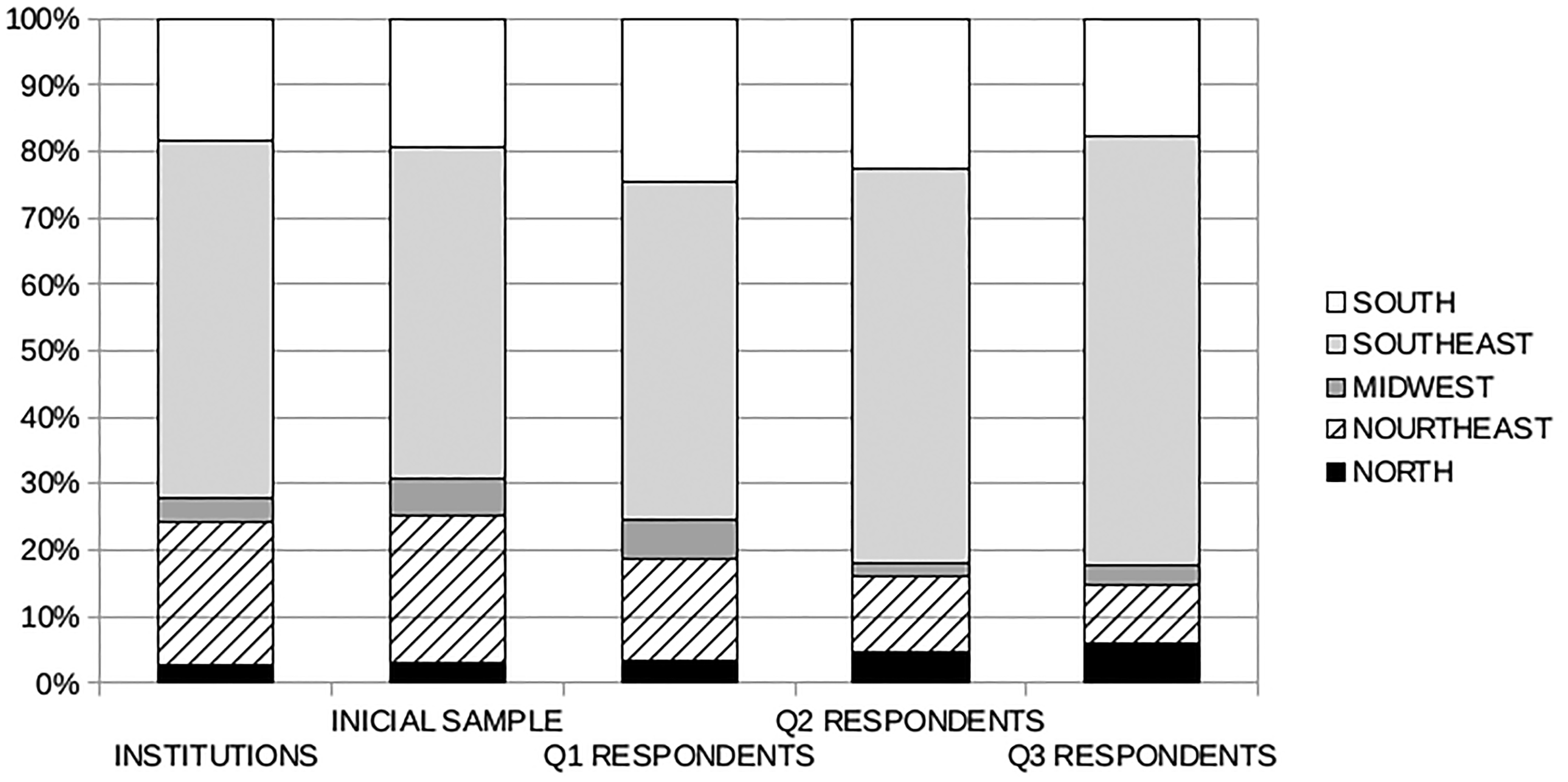
The level of experience of the panel is shown in Figure 4. It can be seen that it is high, with an average of nearly 18 years of experience, which is slightly higher than the average for questionnaire 2 (17 years).
Experience in NFE and SD (in years) of the expert group for questionnaire 3.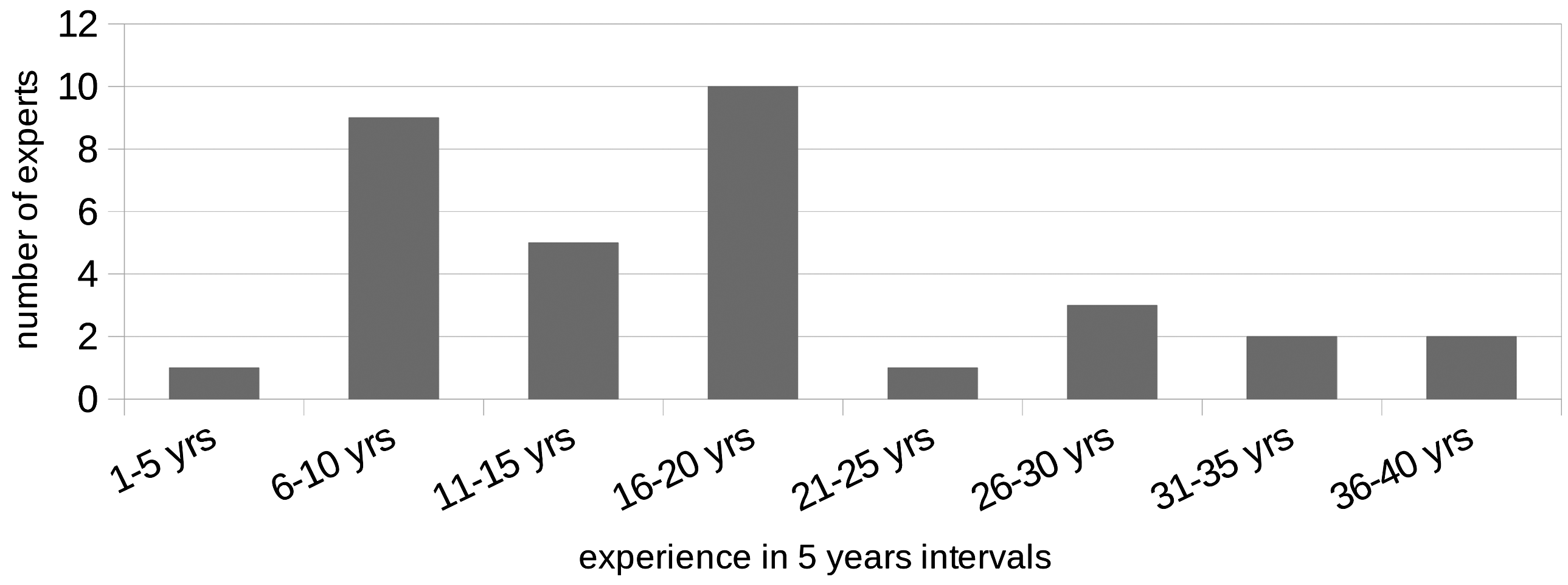
The activities in which the experts were engaged are shown in Figure 5. We noted that, throughout the three questionnaires, although some activities grew or shrank in representativeness, variations were small, and the proportionality between activities remained equal in most cases. As a result a heterogeneous panorama was maintained: this provides assurance that we are ‘listening to the voice’ of the majority of the sectors involved in this complex and heterogeneous area.
Activities of NFE and SD developed by the respondents to the three questionnaires.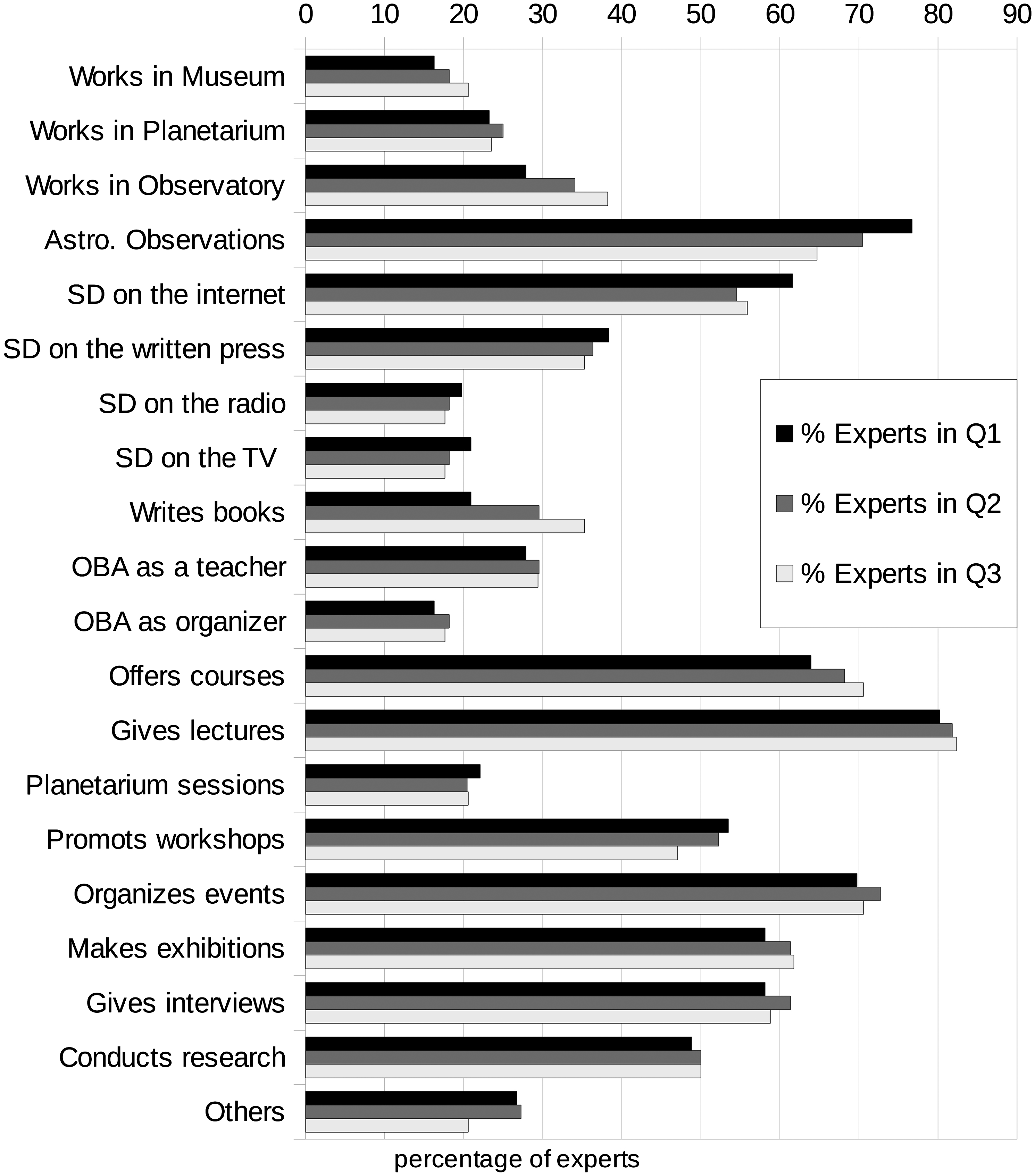
On questionnaire 2 we also asked about the main occupations of the respondents – whether it was NFE and dissemination of astronomy, or other (and, if so, what?) – and how many years of experience in this area the experts had. Using data from the final group of experts only, approximately 30% worked in NFE and SD of astronomy as their main occupations. The remaining 70% reported another occupation. Of these, the majority (58%) were connected to universities (teaching and/or research), and the remaining 42% were associated mainly with school teaching. Only three had occupations not related to teaching or research. Thus, in general terms, we had a panel of experts that was experienced and diverse, both in terms of occupations and in terms of the activities developed, and it was representative of all of the regions of the country. In other words, our final sample reflects the size and diversity of Brazil.
Main results
When asked to describe the current state of the area and to predict the future, experts reported a diverse set of problems and possible solutions. These responses were organized into four topics to allow for more systematic reflection, as is intrinsic to a Delphi study, as follows:
(i) activities and initiatives; (ii) working conditions; (iii) training and profiles of educators; and (iv) access to financing.
In the following sections, we will discuss each of the four categories separately before presenting an overarching discussion. Each of the sections presents the main results of each of these four topics, combining the analysis of the closed-ended and open-ended questions and the comments of the expert panel. The results of all of the closed-ended questions, both on questionnaires 2 and 3, will also be provided together with the analysis.
Topic 1: activities and initiatives
Results for Topic 1 (activities and initiatives) of the closed-end (Likert scale) questions in questionnaires 2 and 3.
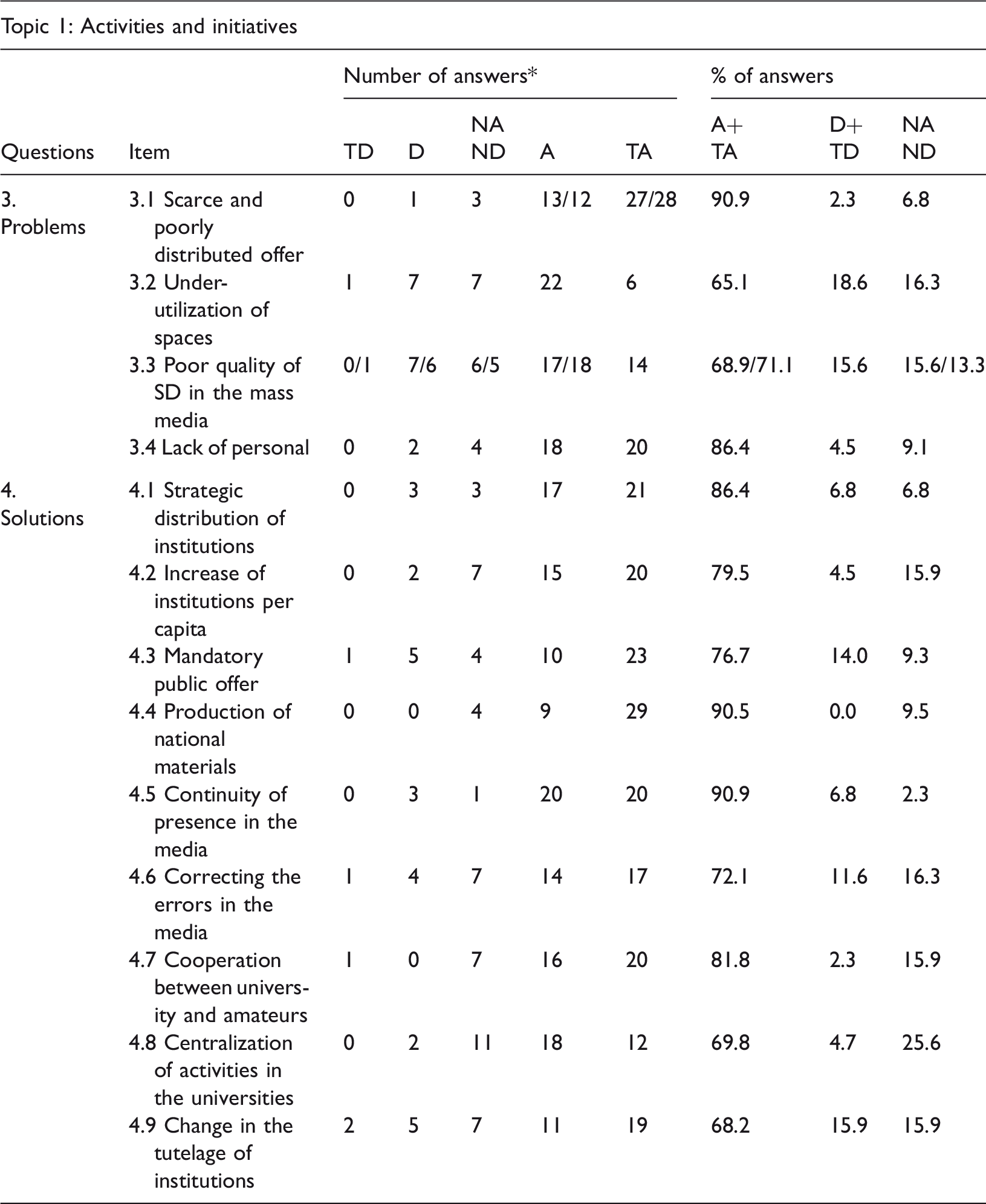
Likert scale options: TD – Totally Disagree; D – Disagree; NAND – Neither Agree nor Disagree; A – Agree; and TA – Totally Agree. In the cases in which there were changes in the response frequencies and percentages from questionnaires 2 to 3, both values are represented (value in Q2/value in Q3)
The item that raised the most discussion and comments on questionnaires 2 and 3 was communication in the media: ‘The national mass media doesn't offer space and makes the mistake of reproducing news of Northern Hemisphere agencies, publishing delayed news or without the possibility of being observed in the Southern Hemisphere’ (E4, Q1). However, the main comments were about the accountability of the individuals and institutions of NFE and SD involved, rather than the responsibility of the media, as was initially argued. Some voices defended the dissemination by national media of astronomical topics, saying that the quality had increased, despite it still not being high. However, more than 70% of the experts agreed that the quality was poor. At the same time, some of the experts reported cases in which the offers had decreased in the mass media. One of the possible causes related to this reduction that was reported was the lack of demand from the public. In addition to these responses, there were some more general comments related to the offerings, recalling that there were also good examples of quality activities in the country.
In general, it was stressed that ‘these problems have a political cause, linked to funding for formal and non-formal education, for example. The social contrasts are also reasons for the existence of a context that generates a lack of interest and lack of access to scientific knowledge’ (E3, Q2).
The participants were also invited to reflect on the solutions to the problems presented by their colleagues. We identified a total of nine solutions that were submitted to a vote and discussion. Some of the solutions proposed were:
an increase in and continuity of the activities; better distribution of the activities and institutions; cooperation between different agents; centering control on the universities; or promoting the national production of materials and activities.
Analyzing the problems, solutions and respective comments throughout the three rounds, we were able to relate them and put them together graphically, as represented in Figure 6, as a summary of the opinions of the experts regarding this topic. The agreement range is indicated in the gray-scale coloring in Figure 6.
Results of Topic 1: Relationship between the problems and solutions discussed concerning the activities and initiatives of NFE and SD in astronomy in Brazil.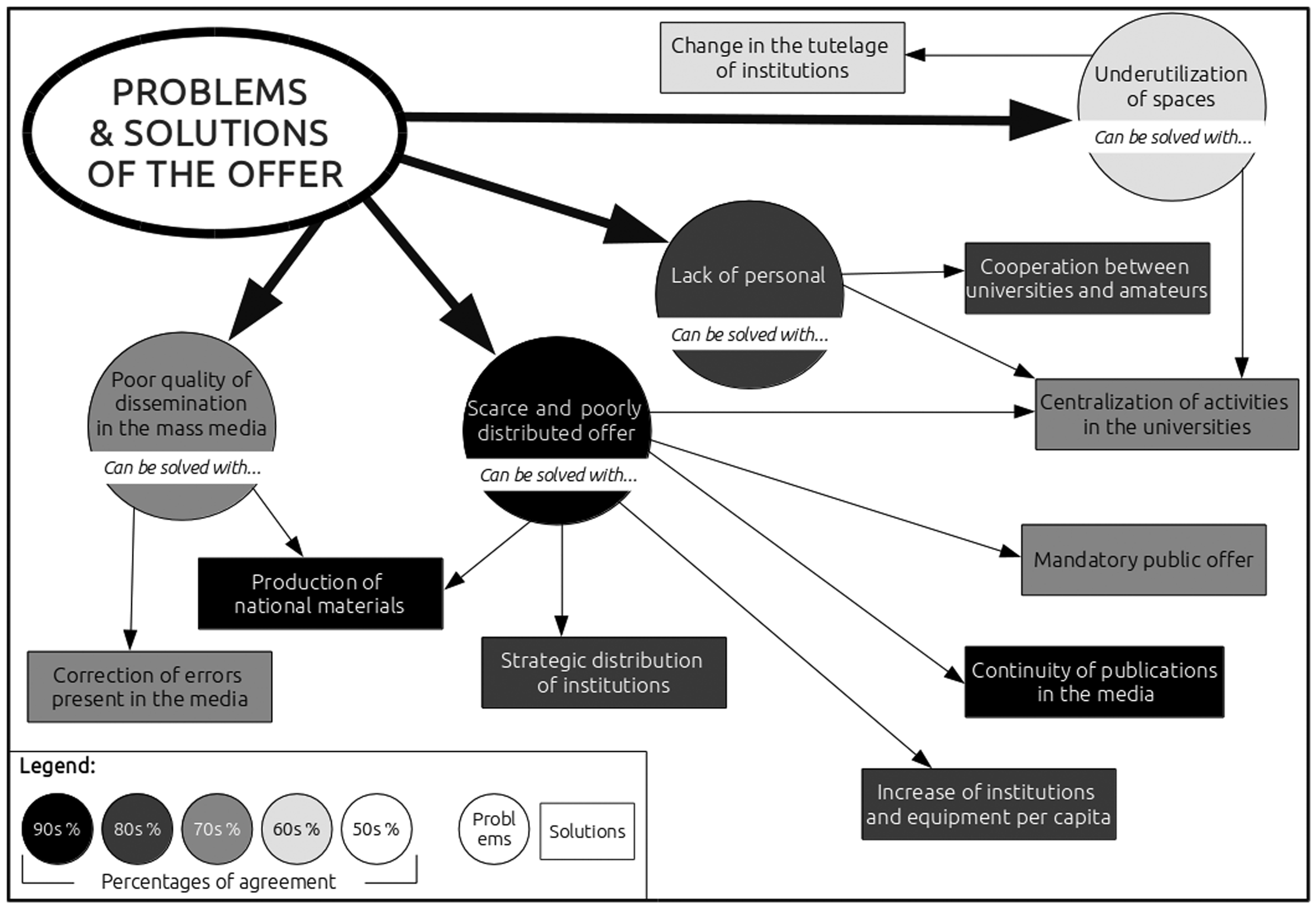
Topic 2: working conditions
Results for Topic 2 (working conditions) of the closed-end (Likert scale) questions in questionnaires 2 and 3.
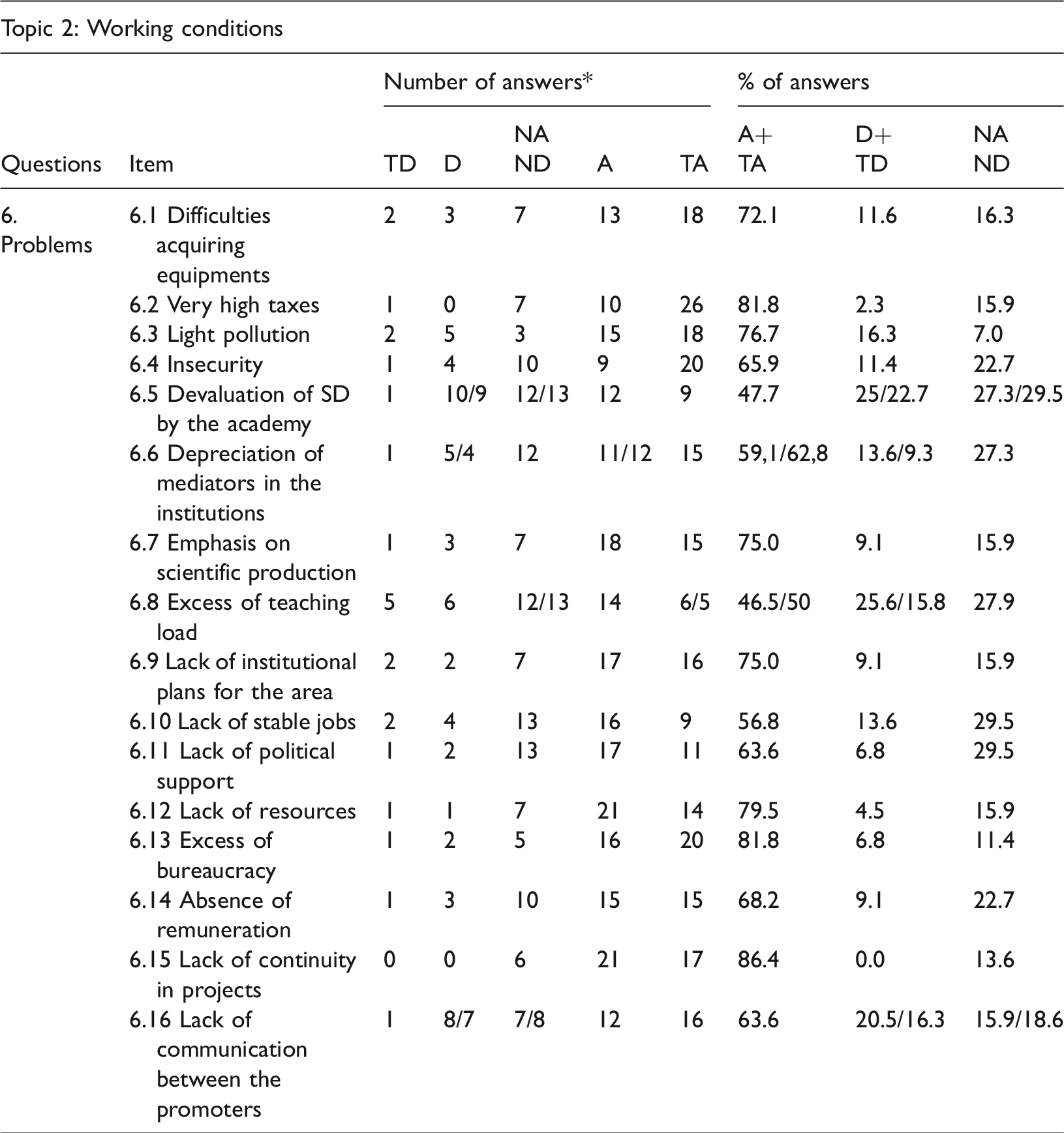
Likert scale options: TD – Totally Disagree; D – Disagree; NAND – Neither Agree nor Disagree; A – Agree; and TA – Totally Agree. In the cases in which there were changes in the response frequencies and percentages from questionnaires 2 to 3, both values are represented (value in Q2/value in Q3)
When asked about solutions to the problems discussed, the panel offered several ideas: from different solutions for financial resources to forms of political incentives or democratization of the training resources. These ideas were not pursued because the questionnaire was already too long. They were only presented in the third questionnaire for comments. They are thus presented in Figure 7 with no scale of agreement because they were not presented as closed-ended questions with Likert scales. However, they yielded several comments from the experts: these focused mainly on the idea that issues related to infrastructure were secondary compared to questions of qualified personnel. It was noted that what exactly these qualifications are (or the lack of them) should also be included among the listed problems. Meanwhile, it was suggested that the introduction of payment for activities could help to solve some of the financial problems: There is a tendency for people to believe that all activities should always be offered for free to the public, which I think is a mistake. (…) Rather than simply stand still waiting for government funds fall in the lap, seek sponsorship of the private initiative.' (E82, Q2)
Results of Topic 2: Problems and solutions presented in working conditions: all of the solutions presented by the panel are represented with the rectangles but were not put to a vote, so they have no agreement scale.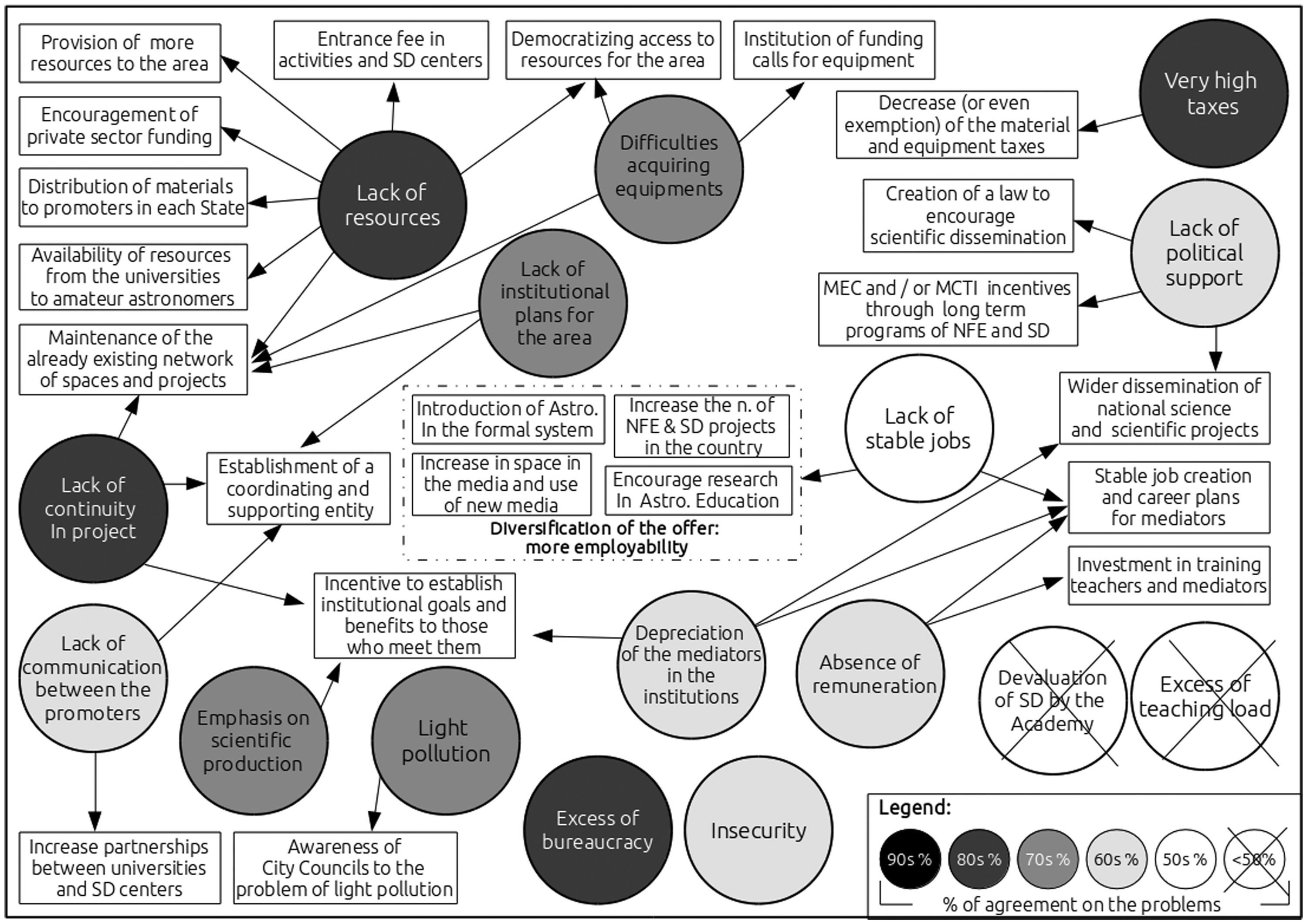
In addition to financial problems, it was also agreed that lack of continuity of projects and excessive bureaucracy were major concerns. However, there were always dissenting voices of some experts who, throughout all the questionnaires, stated that, It is still in fact a mistaken idea that for dissemination to be of good quality it takes a sophisticated infrastructure or material: good buildings, expensive equipment etc. The truth is that it can be made of good quality and with efficiency, even with modest material resources. In the case of astronomy, a lot can be taught even to the naked eye. The most important are always human resources: people with knowledge, with a lot of motivation, and with great communication skills. So, I put all the difficulties to obtain material and infrastructure in the background. (E16, Q2)
Topic 3: financing
As noted, funding was a problem that was quite commonly encountered and so it was separated into an independent category. Within this category, there were two questions about solutions – one closed, for rating the solutions presented by the panel, and another open, providing space for other solutions to the problem and as an attempt to focus on more specific solutions. The results of the consensus on the solutions are represented in Figure 8; and the results of all of the closed-ended questions, both on questionnaires 2 and 3, related to the topic are provided in Table 4.
Results of Topic 3: Solutions for the funding problems. Results for Topic 3 (Financing) of the closed-end (Likert scale) questions in questionnaires 2 and 3. Likert scale options: TD – Totally Disagree; D – Disagree; NAND – Neither Agree nor Disagree; A – Agree; and TA – Totally Agree. In the cases in which there were changes in the response frequencies and percentages from questionnaires 2 to 3, both values are represented (value in Q2/value in Q3)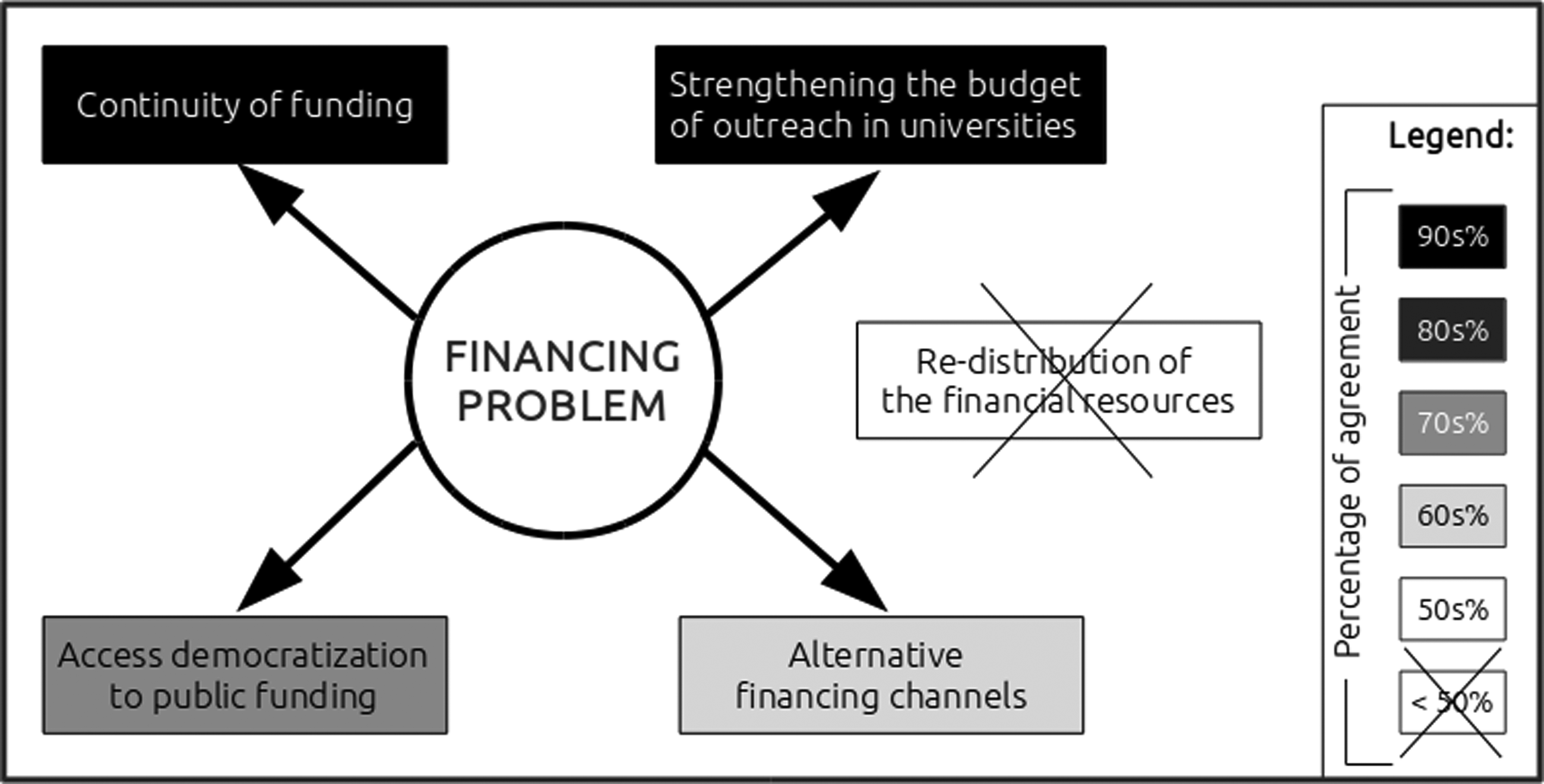
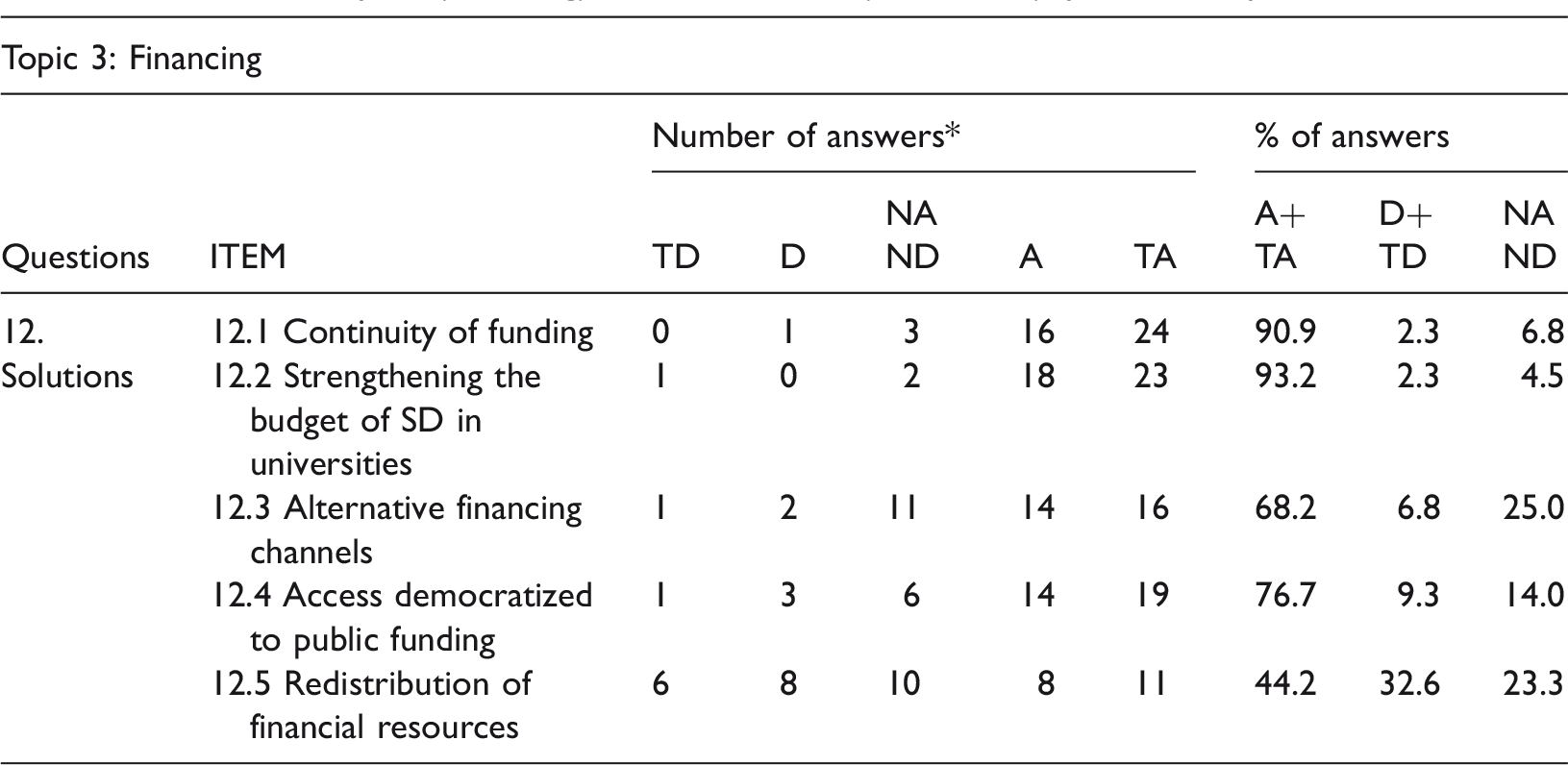
Once again, the gray scale represents the agreement level (A+TA). Concordance with the solutions proposed can be seen, with the exception of item 12.5 – ‘changing the distribution of financial resources’. The disagreement with this solution was widely justified with comments arguing that ‘taking from one side to give to another’ is not a solution. The resources conquered by the OBA must remain and others must be obtained for other projects. We should not ruin what was achieved the hard way but expand what we already have.(E68, Q2)
Among the four solutions with clear consensus, the one that polarized more opinions and yielded the most comments was the topic of democratization of access to financial support (12.4), with experts asserting that investment should be made in universities: ‘One needs to invest in whoever has the knowledge and the conditions. This is in the universities and some institutions. It's not for small groups’ (E26, Q2). Others advocated that the strengthening of small groups would be positive and would bring astronomy to more regions of the country: ‘Groups of small and medium size must also have access to resources. In my opinion, there is intelligent life outside the university’ (E82, Q2); and, further, What causes me difficulty, too, is that there is no possibility of access to financing if you are not connected to academia. There are resources that are made available to schools for samba, sports, the circus, theater schools, etc., without the academic world participating. Scientific dissemination projects should be granted in the same way. (E82, Q2)
Topic 4: educators
Results for Topic 4 (Educators) of the closed-end (Likert scale) questions in questionnaires 2 and 3.
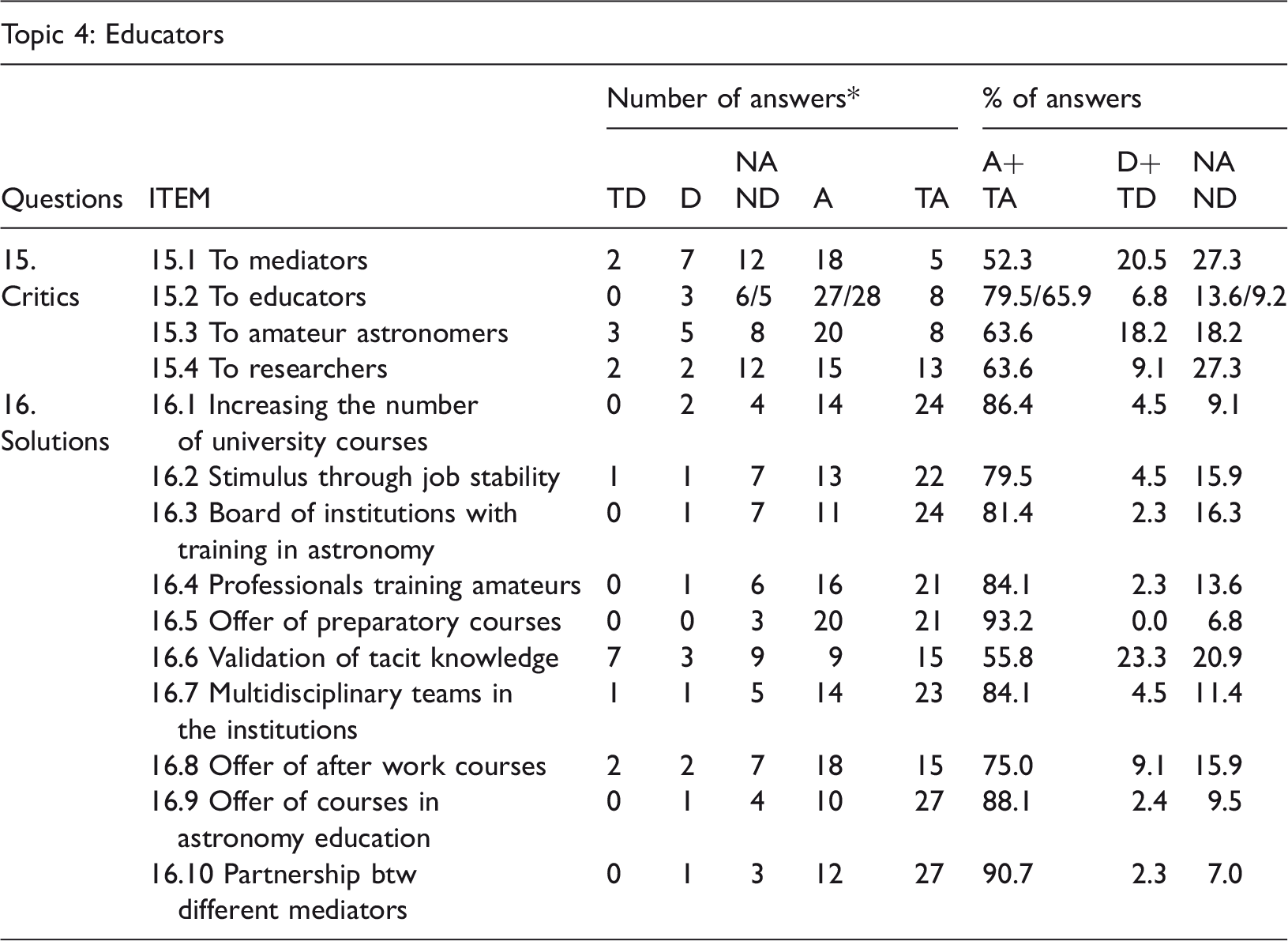
Likert scale options: TD – Totally Disagree; D – Disagree; NAND – Neither Agree nor Disagree; A – Agree; and TA – Totally Agree. In the cases in which there were changes in the response frequencies and percentages from questionnaires 2 to 3, both values are represented (value in Q2/value in Q3)
Experts' citations presented in question 15 of questionnaires 2 and 3.
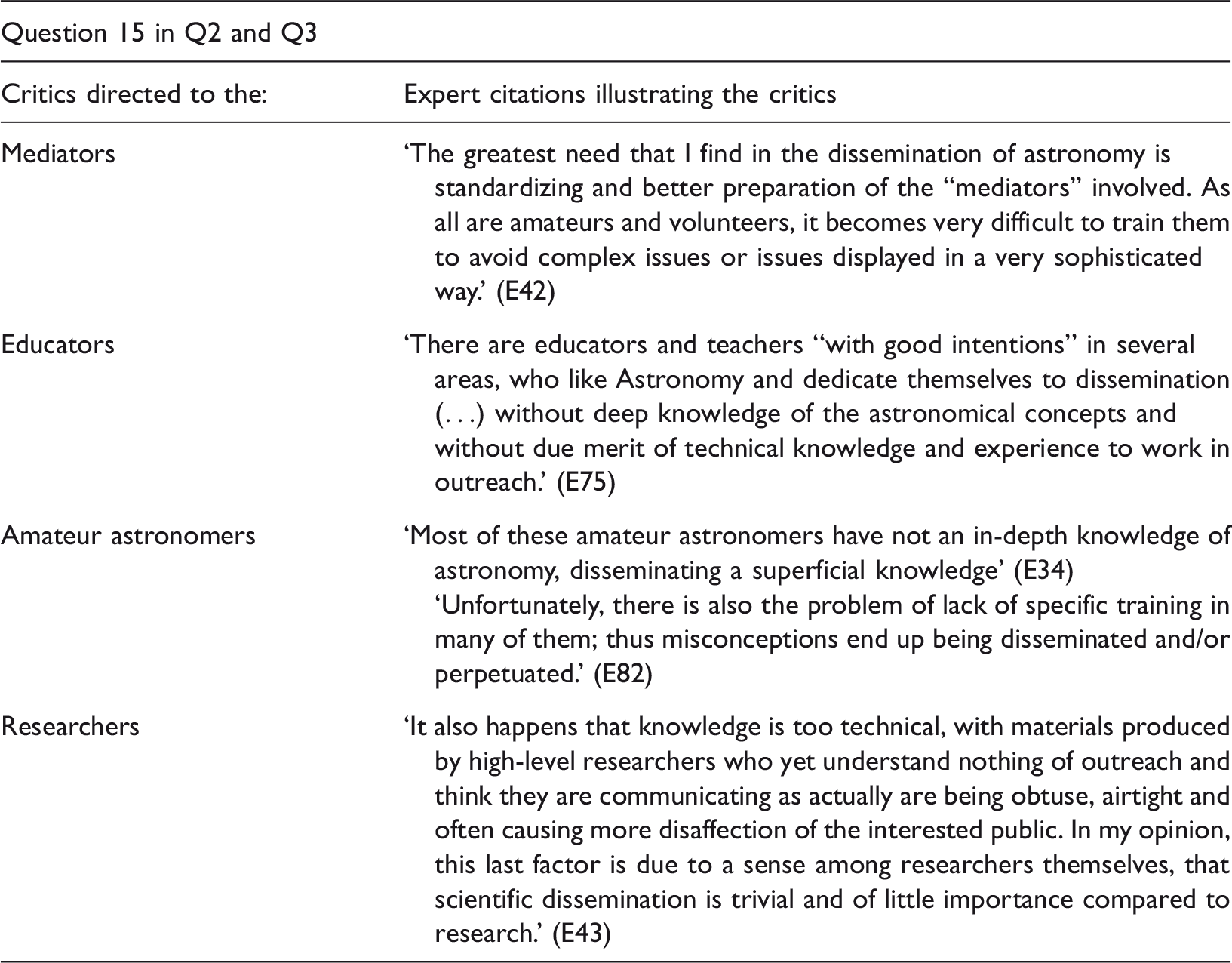
The existence of these criticisms and the percentages of agreement of the group provide evidence that there are stereotypes, although there are also many exceptions that deserve deeper reflection; for example, many drew attention to the care needed with generalizations and to the difficulty in ‘undertaking a single trial of all mediators, all educators, all amateurs and all researchers when each of these categories forms a highly heterogeneous set’ (E16).
In the answers to questionnaire 1, it was noted that there are very good, dedicated, enthusiastic, and scientifically accurate practitioners in all sectors. Individuals or small groups strive to bring astronomy to schools, universities, teachers and the general population, often with no incentive to do so or no support from political powers or institutions, and without funding. This is an area that is not professionalized and systematized and which is put into action by a very heterogeneous community and, in many cases, it is not the main activity of the practitioners. These factors, as well as the broader national context in science and education, raise difficulties and problems of practice and training.
Experts noted problems and gaps in the training of educators and in issues related to education and communication content, astronomy contents, and others. In contrast, the experts also provided some solutions to improve the training and, consequently, the quality of the activities. These practical solutions are presented in Figure 9 and, as can be seen by the predominance of dark gray color, they had the broad agreement of the panel. The exception was solution 16.6, concerning the validation of existing tacit knowledge of educators. The main comments justify the positions regarding this controversial solution. For example, one opinion that summarizes the justification of disagreement to this solution is from expert E37, who noted, (…) it is not enough to know the content; it is necessary to know how to pass it along with clarity, avoiding misinterpretations on the part of the public. This, among other skills, is part of the profile of a good communicator. The greatest difficulty is related to the evaluation form, and that's what prompted my response. I don't think it's an easy task to assess the knowledge of a popularizer primarily through an examination (as would probably be done). This certainly would allow many bad ‘popularizers’ to be approved, and good communicators could be disapproved. Moreover, many communicators are volunteers (and they are essential to the popularization of astronomy) and might not be amenable to validation of their knowledge. (E37, Q2)
Results of Topic 4: Solutions to enhance the quality of educators of NFE and SD of astronomy.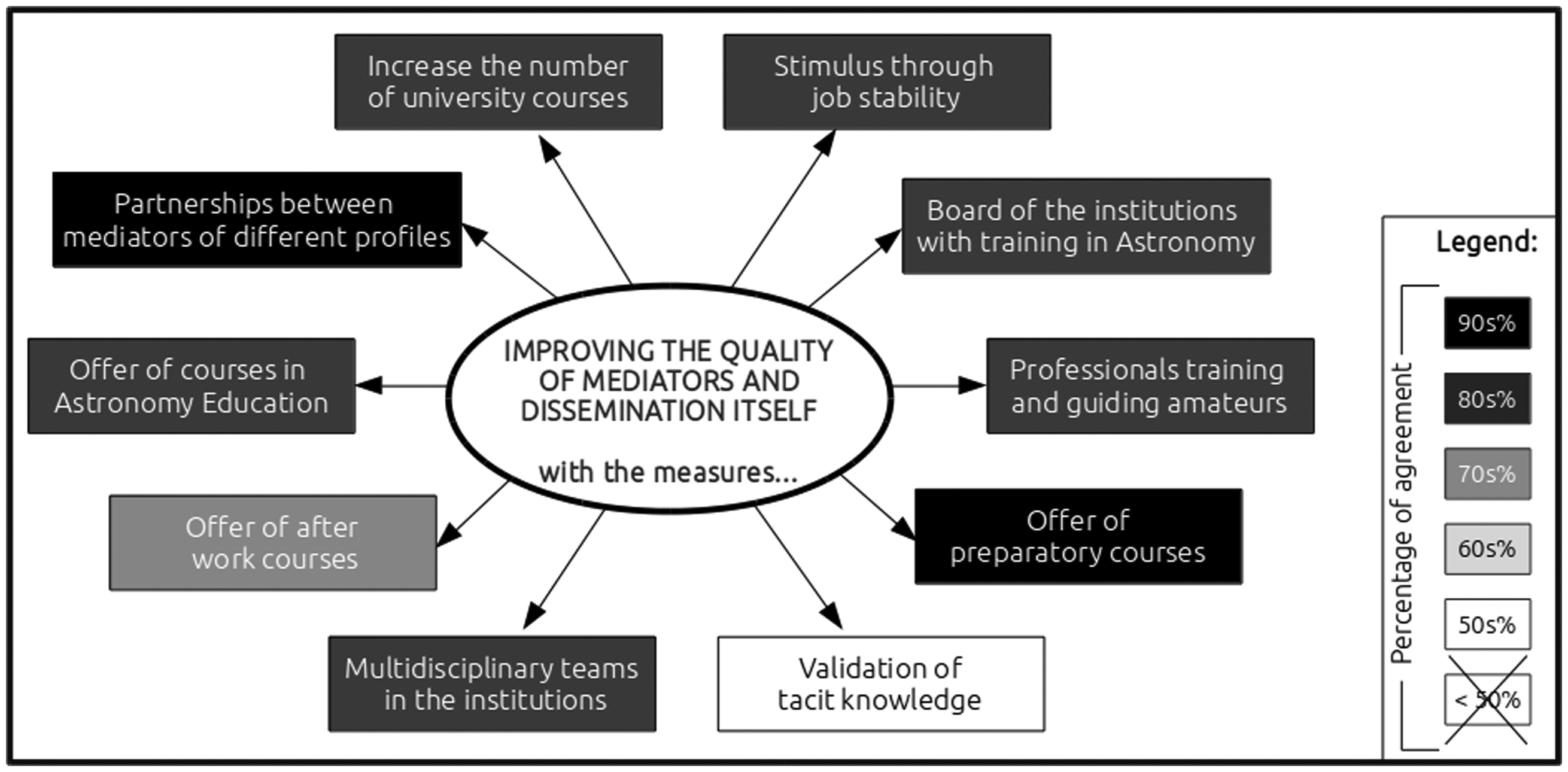
Discussion
In this section, some trends that were observed during the analysis of this joint reflection with the expert panel are discussed with a special emphasis on possible contributions to public policies. Some of the problems recurred throughout the questionnaire, showing that there are areas of concern where action needs to be taken. The most recurrent of these areas are the financial constraints and lack of financial support. The training of educators and communicators was another of the main concerns.
Despite the consensus in most of the items discussed, the dichotomies are sharp when experts list the problems, consider solutions and criticize postures, which should, at least in part, be related to the experts having spoken from very different positions and, therefore, having different views of the area. We identified a set of antagonistic positions that emerged from the responses and expert commentaries throughout the study.
The first is related to the role of universities in the NFE and SD of astronomy and also the distribution of funding. Many believe that universities should centralize the bulk of activities produced because they are structured entities and the privileged locus of research, where higher education and much of the production of knowledge occur. Funding should continue to be channeled there, and universities should also be in control of training, as knowledge authorities in the area. However, another group of experts were of the opinion that this situation must change. NFE and SD are also conducted by a group of entities and individuals, with no connection to universities, that has great difficulty in obtaining finance and other types of support, and that are thus devalued. As one participant in the study said, ‘The groups of small and medium-sized associations must also have access to resources. In my opinion, there is intelligent life outside the university’ (E82, Q3).
The second dichotomy was concerned with opposition to the public and private sectors. If, on the one hand, there are experts who believe that decisions, maintenance, financing and initiative should be mostly public, other voices argue that the focus on solutions should include the private sector.
Looking for possible contributions to policies in the area we realized that the suggestions of specialists tended towards decentralization. Possible solutions included the empowerment of small associations all over the country, which can be done through training and funding of small groups. To this end some participants suggested changes in the way the funding is distributed: for example, E82 stated that, …what causes me weirdness, too, is that there is no possibility of access to funding if you are not connected to academia. There are resources that are made available to schools of samba, capoeira, circus, theater schools, etc, without the academic world participate. Scientific dissemination projects should be rewarded equally. (E82, Q3) There are teachers who have no interest in dissemination, but are excellent researchers. The SD must be in the hands of those who recognize the importance of this activity, and of course, should have recognition for this. Otherwise, the resources will be misused in projects done hastily and ill will. The politics of productivity in universities and research centers should take into account the activities of SD. (E43, Q2) ‘…begin to interact with the public across disciplines to students and in extension projects as sky observation, astronomical workshops, etc. It started to spread beyond the big cities. (E45, Q1) The situation of the country may have a NFE and SD improvement in quality and scope only when your promotion no longer be episodic character and become a permanent item of the policy of science and education in the country. In the last six years only three public editorials were offered for activities in the area (E2, Q1).
Another area where policies can be effective is related to those settings where NFE and SD takes place. Astronomy relies on a specific infrastructure – for example, observatories. These often provide better conditions than the school and students, and the general public often feel more comfortable and more enthusiastic to learn astronomy in these setting and in a more practical way. Planetaria, observatories and museums consequently have a vital role in the national network of NFE of astronomy. In addition, in ensuring a balanced access, these entities may overcome the serious social differences and problems between public and private education, and supplement the contents offered in formal education. Currently, the infrastructure is very unevenly distributed across Brazil and in too small a quantity to provide access to all of the Brazilian population. Some experts have suggested the creation of more spaces, but in a planned manner within the territory. However, experts also warn that policies to promote the creation of infrastructures in an area that cannot provide the necessary follow-up, such as maintenance and qualified personnel, will be unlikely to work and will simply become a waste of public money.
Other suggestions, such as tax breaks for educational equipment of astronomy, creation of national dissemination materials, or strategies for improving dissemination in the media, were also suggested and may be taken into account in an overall strategy of building policies for NFE and SD in astronomy in Brazil.
Conclusions
The use of NFE and SD is increasing across the globe. In Brazil, this sector, especially with regard to astronomy, is no exception. The country has a growing network of institutions, and interest in researching this area is also growing. However, this growth is slow and dispersed. The research is not comprehensive, the institutions and activities are scattered, and there is no integrated information or knowledge about this sector of education and its characteristics, problems, aims, etc. In response, this study sought to contribute to integration by using structured communication among all of the players in the field. Using the Delphi methodology and a broad-based expert panel, representative of all of the regions and professions involved, a broad view of the problems, and possible solutions, regarding the area of NFE and SD of astronomy in Brazil could be obtained.
NFE and SD of astronomy in Brazil constitute a rich and diverse area, consisting as it does of a community of dedicated professionals, amateurs, volunteers and enthusiasts. From our study it became clear that the area has much to gain from the establishment of more dialogue between the various actors. The community wishes to reflect on its future and its problems, as was visible by the large number of participants in this study. The main issues of concern that emerged during the study are access to financial support, the quality of the community of mediators and educators and improvement of their working conditions, the quality of the activities, and equality in the distribution of the institutions.
Our study suggests the need for a set of policies that provide for access to activities and initiatives of NFE and SD in astronomy in Brazil to be extended to a larger part of the population across all regions of Brazil. Policies are required that:
provide for the financing of small entities; ensure activities are continued – this includes improved training of teachers and other personal in the area and the construction and maintenance of equipment; link universities and NFE better, for example through incentives for university members to conduct more activities (as recognition of activities for the university curricula); and, finally and controversially, extend access to university funding to the private sector and associations and small entities not connected to the university.
The implementation of this and other policies for the area is not trivial. First of all, Brazil is a complex country with different levels of legislation and responsibility in the educational sector (Federation, State and City). Second, non-formal education is an area without clear boundaries involving policy makers from the educational, scientific and also cultural areas, which may result in conflicts of interest. Third, the diversity of players in the field also adds complexity to policy design to improve and regulate the area.
One of the points that seemed difficult to overcome is related exactly with this diversity of players. The struggle for power, funding and authority in the area between the different sectors involved is latent: it will be necessary to overcome these disputes and work together in an area that has so much to gain from its heterogeneity.
Limitations and future research
A main limitation of our study is that we did not analyze in depth the causes, effects and relations between the different problems identified, because we sought to provide a general picture of the area. What we intended, above all, was to establish a fruitful dialogue between the various actors. Future research should focus on deepening the analysis of the cause and effect relationship underlying any solutions. Whilst our Delphi study did seek to identify problems and solutions, the actual implementation of these solutions is beyond the scope of this study and calls for future research.
Another important limitation is that the results obtained from this study, due to their very nature, are generalized and portray the country as a whole. As such it is possible that they might not reveal local idiosyncrasies which exist naturally in a country with continental dimensions and regional particularities and inequities, such as those of Brazil. As already mentioned and recalled by some experts, ‘the issues raised affect regions and institutions differently’ (E16, Q2). Thus the nature of this Delphi study did not allow for the emergence of proposals and solutions to the problems of the NFE regarding the regional and indigenous knowledge that pertains to the different cultures existing in Brazil. This diversity has implications for the design of relevant policies. Future research should focus on regional realities, and on specific problems and differences according to the views and opinions of experts from different regions. This would also provide for the design of specific policies for each region, allowing for certain flexibilities, that can adapt to local realities.
The difference of opinions between the various sectors involved is a further important research issue. Our study highlighted that there are disputes between different actors (educators, astronomers, amateurs, etc.). A better understanding of the roles, concerns and stereotypes of the different actors could potentially help to create conditions for dialogue and the introduction of appropriate policies that balance the needs of the various actors involved.
Footnotes
Acknowledgements
The authors wish to thank to all of the experts who participated in this Delphi study.
Declaration of conflicting interests
The author(s) declared no potential conflicts of interest with respect to the research, authorship, and/or publication of this article.
Funding
The author(s) disclosed receipt of the following financial support for the research, authorship, and/or publication of this article: The research reported here was partially supported by a scholarship (Process Number 2012/23088–8) from the São Paulo Research Foundation (FAPESP).