



Abstract
This article proposes a conceptual framework for how education can promote adolescent girls’ empowerment and, by mapping the field, highlights promising examples of empowering education programs. We conclude by identifying both research and programmatic opportunities for the future that will harness the expertise of a range of specialists from the interdisciplinary fields of gender studies and adolescent development in collaboration with experts from the fields of education, health, and labor.
Introduction
Empowering adolescent 1 girls through education has become a priority goal of multiple stakeholders, including aid agencies, non-governmental organizations, foundations, and corporations. 2 In the popular media, educating girls is touted as the most powerful force to transform society, and the way to break cycles of poverty in just one generation (Girl Rising, 2014; Kristof, 2014). However, there is growing awareness of the poor quality of many schools in developing countries due to new data on learning outcomes (Center for Universal Education, 2011; Pritchett, 2013). In addition, experts increasingly question the “relevance” of prevalent educational approaches, particularly for adolescent girls (Lloyd and Young, 2009; Results for Development Institute, 2012; UNESCO, 2012 World Bank, 2007).
Initially, efforts to promote girls’ education focused on a younger population of girls not yet able to access primary school. This focus reflected international commitments (Education for All [EFA] and Millennium Development Goals [MDGs]) to achieve universal primary schooling in the context of persistent gender gaps. 3 In more recent years, as most countries have achieved or are approaching universal primary enrollment and gender gaps at the primary level are narrowing, disappearing and in some cases even reversing, attention has shifted to secondary school-age (adolescent) girls. More and more girls are in a position to transition to higher levels of schooling where the economic returns in terms of gains in future earning are estimated to be even greater than the returns from primary school completion (Psacharopoulos and Patrinos, 2004).
Recognizing the need for and potential of adolescent girls’ education programming, many donors and NGOs are working to improve the quality and relevance of education, sometimes in collaboration with the government (e.g. ministries of education), sometimes by creating formal educational alternatives either in NGO or private schools, or by creating non-formal alternatives. These efforts are intended to broaden girls’ range of competencies both to reduce the special risks they face during adolescence and to enhance their social and economic assets as adults.
As the focus has shifted toward the education of adolescent girls, so too has the emphasis on empowering adolescent girls through education (in part due to the recognition that access to education alone is insufficient). Given the recent nature of this shift, scholars and organizations are only beginning to conceptualize and research the process by which education can promote adolescent girls’ empowerment (Bajaj, 2008; DeJaeghere and Lee, 2011; Maslak, 2007; Ross et al., 2011). Much of the earlier research and theory on empowerment focused on adult women and assumes that they are not living in their parents’ households (e.g. Kabeer, 1999; Malhotra et al., 2002; Mosedale, 2005; Rowlands, 1997; Stromquist, 1995). Therefore some of the ways in which empowerment is conceptualized (e.g. freedom of movement, control over household resources, decisions regarding fertility) are not yet relevant for adolescent girls. For example, Duflo (2012) provides a clear and holistic definition of empowerment in her review article investigating the directionality of women’s empowerment and economic development. She conceptualizes women’s empowerment as “improving the ability of women to access the constituents of development” (2012: 1). This includes access to health, education, earnings, rights and political participation. While comprehensive, the domains of earnings, rights (e.g. property ownership), and political participation would be less germane to adolescent girls because they are minors.
This article focuses on adolescent girls’ empowerment, and attempts to clarify the linkages between education and empowerment by proposing a conceptual framework for how education can promote adolescent girls’ empowerment. Furthermore, we identify promising examples of educational interventions with empowerment potential. We identify both research and programmatic opportunities for the future that will harness the expertise of a range of specialists from the interdisciplinary fields of gender studies and adolescent development in collaboration with experts from the fields of education, health, and labor.
Before proceeding, we acknowledge a key dilemma: while there is an acute need for adolescent girls’ empowerment programs, a continued emphasis on girls’ education can exacerbate gendered tensions in communities and is an incomplete strategy to promote gender equality 4 (Glick, 2008; Manion, 2012). In the short term, programs and policies should justifiably target girls due to their marginalized status, but these efforts should be carried out with a focus on changing gendered relations and norms, so that the underlying causes of girls’ disadvantage can be addressed. An emphasis on gender, rather than girls, will permit a broader discussion around how gender inequality limits the potential of both girls and boys to fully develop their capabilities. As such, the framework that we propose can be used to conceptualize educational opportunities that promote gender equality and empowerment for all adolescents. We focus our discussion here on adolescent girls due to the nature of the programs that we reviewed, many of which exclusively work with girls.
Conceptualizing empowering education for adolescent girls
International organizations working in this field, including CARE 5 and Room to Read, have made progress toward clarifying what girls’ empowerment entails by developing frameworks to guide their programming. In the case of CARE, their “women’s empowerment framework” focuses on agency, structure, and strategic relations 6 and it is used with both adolescent girls and older women. CARE’s website describing the framework explains that: “women’s empowerment is a process of social change, and we only capture part of its richness when we assess the process of empowerment in terms of its outcomes.” 7 The CARE framework stresses agency, structures, and strategic relations and emphasizes that it is essential to address the structures that inhibit empowerment (e.g. targeting community members or teachers who might foster or prevent empowerment of girls through education) (DeJaeghere and Lee, 2011). Room to Read, which has an adolescent girls’ education program in nine countries, has created a Life Skills Education Framework, consisting of 10 core life skills to negotiate key decisions. 8 While these frameworks provide an essential tool to guide program design, implementation and evaluation, they are less focused on underlying mechanisms through which education empowers adolescent girls. Here, we focus our inquiry on questions including: What kind of education will empower girls and lead to social transformation? What are the components of empowering education for adolescent girls?
Our research extends theoretical understandings of how education can empower adolescent girls by attempting to more fully articulate the core conditions and competencies that education must entail. Aligned with previous research, we recognize that the potential of education to promote empowerment is “entangled with the sociocultural reality” (DeJaeghere and Lee, 2011; Ross et al., 2011: 38). Likewise, we propose that agency, or the culturally constrained capacity to act (Ahearn, 2001: 112) is an integral component of empowerment (Bajaj, 2008; McCleary 2013).
Our conceptualization of empowerment is also informed by Murphy-Graham’s longitudinal research studying alternative secondary education in Honduras. In Opening Minds, Improving Lives: Education and Women’s Empowerment in Honduras, Murphy-Graham (2012) explores how education can trigger the empowerment process through a longitudinal study of adolescent girls and adult women’s experiences who have attended an alternative secondary education program. She proposes that through education at its best, “empowered individuals come to recognize their inherent worth, the fundamental equality of all human beings and their ability to contribute to personal and social betterment. They develop the capacity to critically examine their lives and broader society and take action toward personal and social transformation’ (2012: 3). A good education, a girl-friendly education, a relevant education, a quality education can do more to assure girls of a safe, productive and more empowered passage to adulthood than a typical or average education. Murphy-Graham’s conception of empowerment demands even more of education than is typical in that it embraces action as well as recognition and critical thinking capacities. With this concept of empowerment in mind, we have developed our ideas further regarding how education can provide a strong foundation for empowerment of adolescents.
Methods
The process by which we have elaborated this conceptual framework resembles the iterative processes described by Maxwell (2013) and Jabareen (2009). We began by reviewing published literature that focused on the relationship between education and adolescent girls’ empowerment in developing countries, including a review of studies that conceptualize adolescent girls’ agency (Bajaj, 2008; Bandeira et al., 2012; DeJaeghere and Lee, 2011, Maslak, 2007; Monkman, 2011; Ross et. al., 2011; Unterhalter and Heslop, 2012; Unterhalter et al., 2014). We then gathered for frequent conversations, discussing and debating our emerging framework, drawing upon our experiential knowledge that is informed by our previous personal and professional experiences (see Maxwell, 2013: 44–45 for a discussion of how experiential knowledge can inform conceptual frameworks). For Lloyd, the experience of serving as primary editor for the book Growing up Global: The Changing Transitions to Adulthood in Developing Countries (2005), was particularly influential in shaping her understanding of the relationship between education and empowerment for adolescents. The book is the product of deliberations from a National Academies panel consisting of fourteen experts from a range of disciplines that met over four years and was charged with the task of examining the changing lives of young people in developing countries at the beginning of the 21st century. The panel reviewed many different literatures and conducted new data analysis. Lloyd served as the panel chair, primary volume editor, first author for five chapters of the volume, and co-author of the conceptual framework chapter. Lloyd also drew upon over ten years of in-depth research experience in countries including Kenya, Egypt, and Pakistan, where projects examined schooling outcomes for adolescents in relationship to the quality of schooling experiences as measured through direct objective school visits and assessments (Lloyd et al., 2003, 2009, 2011). For Murphy-Graham, the longitudinal qualitative research on education and women’s empowerment she conducted in Honduras and her publication of Opening Minds, Improving Lives (2012) were influential in shaping her understanding of the topic. Likewise, she drew upon research projects currently in progress, including a longitudinal mixed-methods study of the A Ganar program in Honduras and Guatemala, ongoing research on the alternative secondary education program Sistema de Aprendizaje Tutorial (Tutorial Learning System or SAT) and its ‘sister’ program Preparation for Social Action (see Murphy-Graham, 2012). Finally, Lloyd and Murphy-Graham both participated as co-authors of a UK Department for International Development (DFID) rigorous literature review on girls education and gender equality that deepened our knowledge of multidisciplinary scholarship (and research gaps) in this field (Unterhalter et al., 2014).
This stage of the process helped us to identify and name concepts, organize, and finally integrate them into a preliminary schema that we used as a lens through which to examine programs working with adolescents (Jabareen, 2009: 54). Our dialogue also allowed for the contextualization of this theme within broader theoretical debates about the nature of development and the goals of the international community (a full discussion of this context is beyond the scope of this article, however, this informed our articulation of the conceptual framework described below).
The next stage involved a review of educational programs working with adolescents in developing countries. Appendix 1 provides a consistent set of details on each of the educational interventions we chose to highlight as illustrative of the key dimensions of an empowering education as discussed below (we scanned many more in the course of our research). To identify these programs we first conducted a literature review of any published research on educational interventions that are explicitly designed to empower adolescent girls in low-income countries. However, this strategy yielded few results (DeJaeghere and Lee, 2011; Maslak, 2007; Murphy-Graham, 2012; Ross et al., 2011; Unterhalter et al., 2014 ). 9 The topic is sufficiently new such that published literature is scarce, as we found in the DFID rigorous literature review on girls’ education and gender equality, there is a “lack of studies of the links between girls’ education and empowerment outcomes” (Unterhalter et al., 2014: 1). We then broadened our review of published literature to include studies that describe innovative education for youth (e.g. Bajaj, 2008). Therefore the majority of these examples have been gathered from organizational reports and/or donor reports and evaluations as well as key informant interviews with program staff or researchers. The goal of this exercise was not to identify the impact of these programs, but rather the central goals and competencies each intervention is designed to address. It is not possible, with the available information, to quantify the extent of exposure to each competency separately or the weight of the mix of elements within each competency. Our inclusion of programs for review is not intended to be exhaustive, but rather a sample that reflects a range in terms of scale, regional coverage, and educational modality (e.g. formal/non-formal). After a comprehensive review of these programs, we returned to our draft conceptual framework and made additional modifications. Finally, we have presented earlier versions of this framework at several international conferences, requested feedback from professional colleagues, and continued to be engaged in dialogue with each other about the work. We expect that this framework will continue to be re-conceptualized and modified “according to the evolution of the phenomenon in question or as a result of new data and texts not available at the time the framework was first developed” (Jabareen, 2009: 58). It is our hope that the framework will help us to better understand how education can support adolescent girls’ empowerment, as well as inform future research and interventions.
Necessary conditions of education for empowerment: learning environment, value formation and learning through action
Our framework consists of a set of “necessary conditions”; in other words, without these requisite features, education will have a minimal impact on girls’ empowerment. The first necessary condition of our framework is that the environment where learning takes place must be physically, materially, and socio-culturally conducive to learning (DeJaeghere and Lee, 2011; UNESCO, 2014; Unterhalter, 2009). The physical material conditions of schooling (e.g. inadequate facilities including toilets, overcrowded classrooms, lack of appropriate learning materials) continue to plague education systems (UNESCO, 2014). In addition, the socio-cultural environment may be harmful to girls and boys who are victims of sexual harassment from teachers or other students, bullying, and/or other forms of violence (Dunne et al., 2003; Parkes and Helsop, 2013; Parkes, 2015). Girls and boys must feel physically and emotionally safe and supported in order to learn and become empowered.
The second core condition of our framework is that empowering education for girls should foster the recognition of their dignity 10 and their equal worth with others. In other words, girls, who may have become conditioned to believe that they are inferior to boys, come to believe they are equal. More specifically, education that empowers adolescent girls to believe in their dignity and equal status will foster their self-esteem and sense of personal efficacy. This core condition provides motivation and justification for other outcomes that are commonly identified as essential indicators of adolescent girls’ empowerment. For example, the goals of delaying marriage and preventing early pregnancy cut across programs that attempt to empower adolescent girls. 11 Having a clearer understanding of one’s own dignity and equal worth with others will provide a stronger impetus for girls to imagine alternative futures and provide motivation for them to make different choices.
Related to the value of equality, we suggest that empowering education should foster “cosmopolitan” identities (Appiah, 2006: xiv) or the goals of “global citizenship” as described in the Education First initiative of the United Nations Secretary General (2012). Noddings, in her recent book, reimagines education’s aims and curriculum for the 21st century and expands on this idea, articulating the notion of “ecological cosmopolitanism” which links our interconnectedness to the shared welfare of the Earth (2013: 98). She explains, “the direction in the 21st century should be toward global unity – a commitment beyond the national and forms of multiculturalism that may be divisive’ (Noddings, 2013: 15). Learners should see themselves in relation to others, as part of an interconnected global community where individuals are concerned about the well-being of others (distant and close) and see their fates as interconnected. Education should explicitly challenge the norms and practices that lead to social exclusion at the local and global level.
The third core condition is that empowering education requires action, or learning by doing. As mentioned earlier, the term “agency” is often used in discussions of empowerment (Kabeer, 1999; Maslak, 2007, Warner et al., 2012). We understand “agency” as the culturally constrained capacity to act (Ahearn, 2001: 112). Social relations, conditions, and structures constrain the actions that girls are able to take. However, education should “thicken’ girls” agency (Klocker, 2007). In other words, an empowering education will expand the actions girls are able to take and push the boundaries of the cultural constraints that limit them from achieving their full potential. In short, empowering education will be experiential education, meaning that educators will engage with learners in direct experience, facilitate reflection, and develop students’ capacity to critically analyze and contribute to community well-being. 12
Learning through action is a core condition of the framework because we see empowerment as one process that will contribute to ending exclusion and promoting social justice. The purpose of empowerment is to challenge oppressive relationships and structures and spark social transformation. It therefore demands action. These actions may be quite small scale (e.g. having improved communication with ones’ parents or romantic partners, investigating sources of water pollution in a community, caring for children or the elderly). However, over time these actions can lead to critical transformations (e.g. equally shared parenting, enhanced community well-being). Service learning, which integrates community service with instruction and reflection to enrich the learning experience, teach civic responsibility, and strengthen communities, is another potentially powerful mechanism for ensuring that students can learn through hands-on experience. 13 Likewise, research suggests that the integration of artistic expression, sports, and farming/gardening provide kinesthetic learning opportunities that can be transformative (Kirk, 2012; Ozer, 2007; Robinson and Zajicek, 2005; SPD IWG, 2008; St Thomas and Johnson, 2007). The emphasis on action leading to personal and community improvement is important because it lays the groundwork for participation in social networks or movements that influence change in the private and public spheres (Batliwala, 2013). While education alone cannot change the social structures that constrain opportunities available to women (and men), it can foster habits and dispositions that result in social action rather than apathy and social withdrawal.
These core conditions provide a supporting and permeating structure for the specific educational content, or the curriculum. Below, we identify four key competencies for empowerment. We suggest that these competencies must reflect and be informed by these core conditions. In other words, the core conditions must infuse and support the specific competencies that empowering education will foster. Figure 1 attempts to illustrate how the core conditions and competencies for empowerment are connected.
Conceptualizing empowering education for adolescent girls: Core conditions and competencies.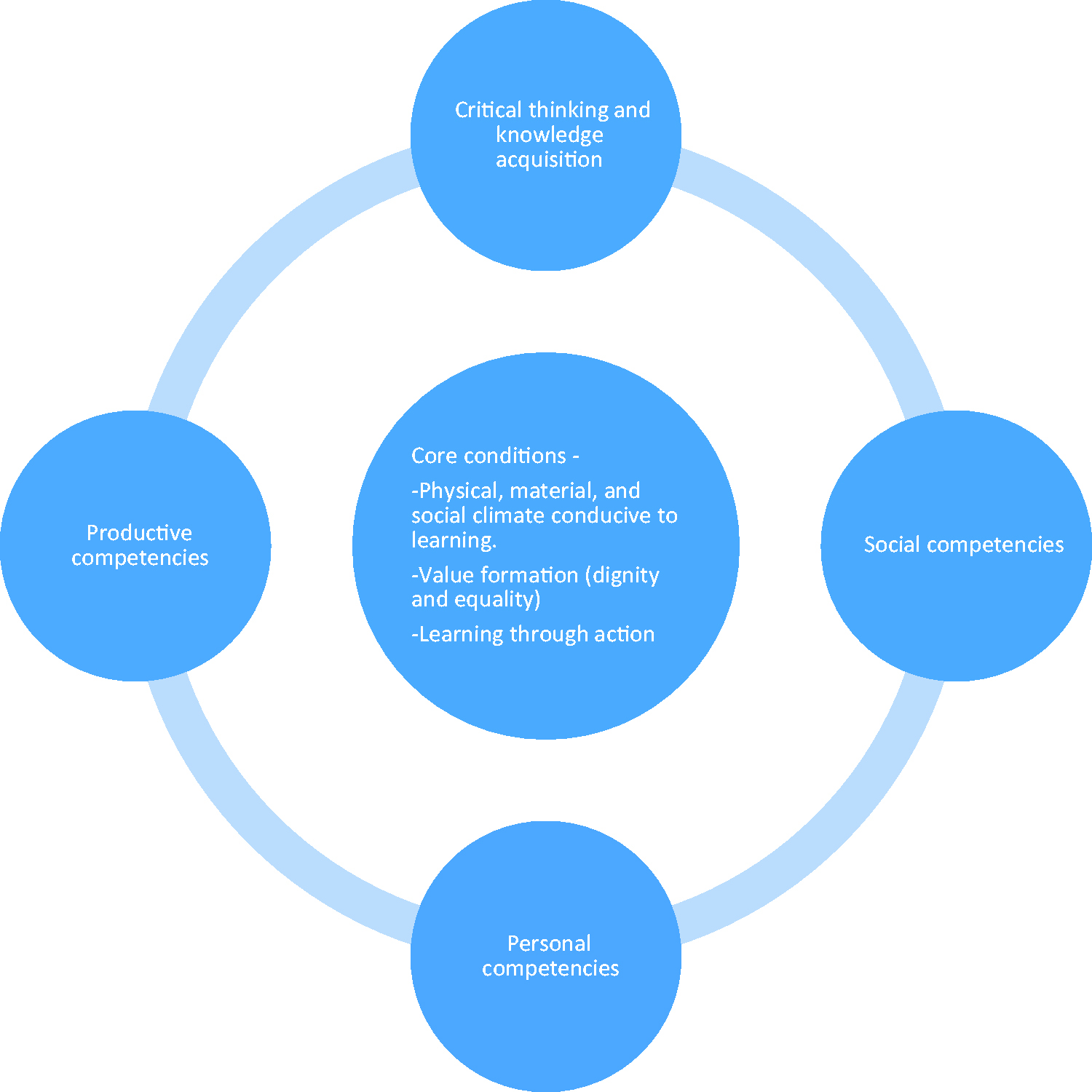
Competencies for empowerment
We have created a typology of competencies that the ideal education for adolescent girls should impart, and, while we have created distinct categories for the purpose of organization and discussion, in reality these overlap and are difficult to disentangle. The four competencies we identify comprise: critical thinking and knowledge acquisition; productive competencies; personal competencies; and social competencies. Of course, few schools or educational programs can deliver on all of these, particularly in poorly resourced settings, but an ideal education should strive to achieve these elements.
Critical thinking
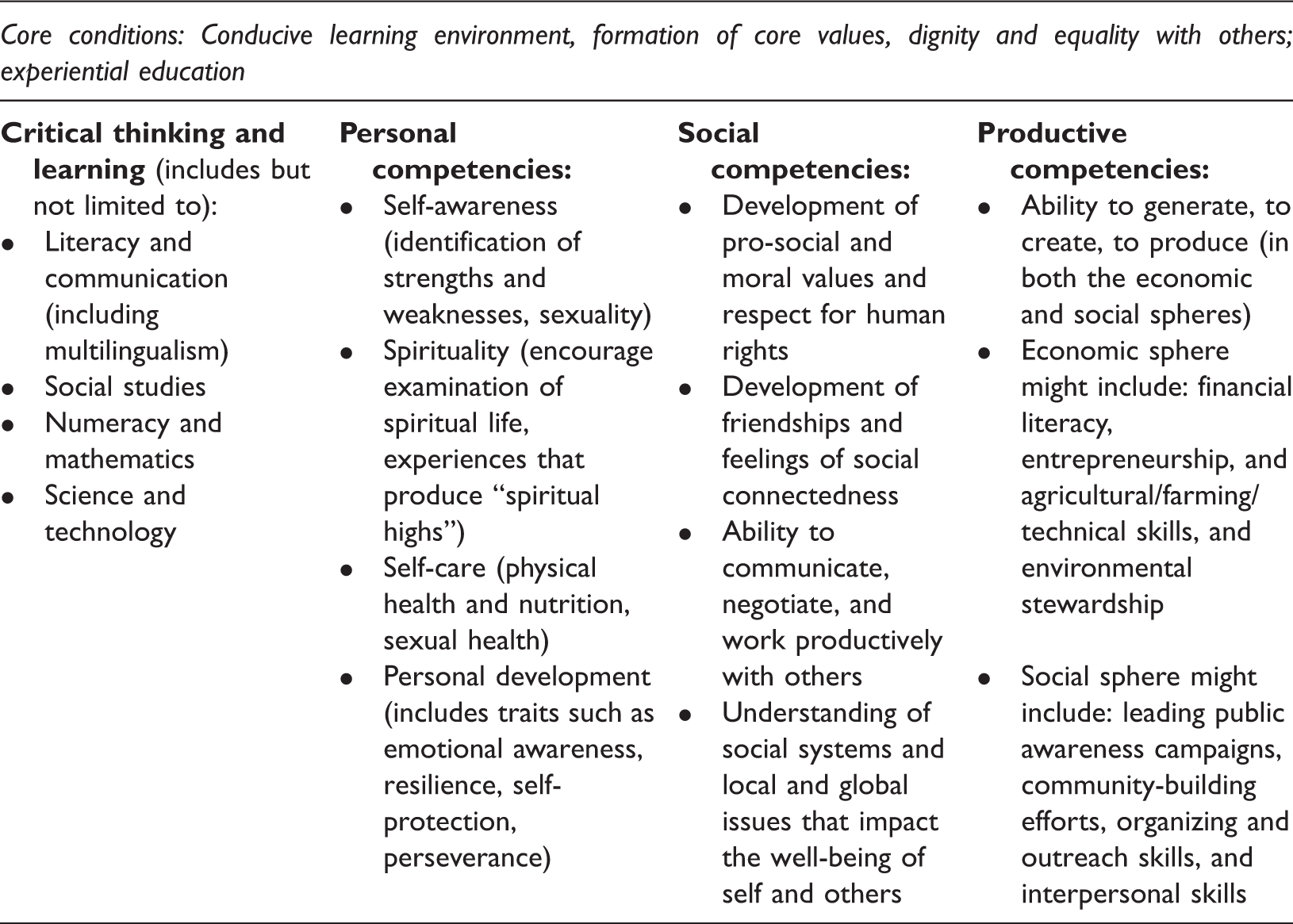
The capacity for critical thinking is of utmost importance, as it cuts across subject matter divisions. By critical thinking, we refer to “the mode of thinking – about any subject, content, or problem – in which the thinker improves the quality of his or her thinking by skillfully taking charge of the structures inherent in thinking and imposing intellectual standards upon them” (Scriven and Paul, 1987). Thinking critically is key to the empowerment process because this competency will enable girls and boys to analyze gender relations and critique social norms that lead to exclusion.
While it is beyond the scope of this article to suggest a complete curriculum for empowerment, we identify several areas that are critical: language and communication (including multilingualism in settings where the local language does not have a national or global reach); social studies; mathematics; and science and technology. The specific content of the curriculum will be determined at the national or regional level, but, at a very minimum, education must enable girls to learn in these domains.
Personal competencies
Empowering education will promote a number of processes we have labeled “personal” because they pertain to the thoughts, habits, and dispositions of the individual. Among these are self-awareness, self-care, and personal development. More specifically, education should provide spaces for students to reflect on their raison d’être, the purpose of their existence. For many individuals, this purpose will be connected to spirituality or religion (estimates suggest that upwards of 84% of the world population has a faith), yet many prior conceptualizations of empowerment ignore the centrality of spirituality and its potential as an impetus and sustainer of empowerment. 14 As Noddings (2013) has compellingly articulated, “students should be encouraged to think about their spiritual life and examine the encounters that produce spiritual highs” (p. 130). Connected with reflection on one’s raison d’être is the recognition that one has potential to positively contribute to society. At the critical stage of adolescence when youth are considering their future careers and life paths, education must provide opportunities for individuals to critically think about their strengths and weaknesses, their talents, their habits, and their likes and dislikes, and ultimately to support students in cultivating their innate strengths and dispositions so as to maximize their potential contributions to social well-being (Noddings, 2013).
A number of personality traits such as resilience, self-regulation, emotional awareness, discipline, and perseverance will, of course, vary among individuals, and quality education will foster rather than smother these traits. Developing personal competencies also involves coming to understand one’s sexuality, particularly important for this age group as they enter puberty and begin to experience sexual desire. More specifically, empowering education should foster knowledge and habits for physical and sexual health (e.g. exercise, nutrition, hygiene, illness prevention, sexually transmitted disease prevention, methods of birth control).
Social competencies
Stemming in part from the core condition of equality, empowering education should foster pro-social values and allow students to develop friendships, networks, feelings of social connectedness, respect for human rights, collaborative skills, negotiating skills, leadership skills, and knowledge of social systems and local and global issues. Experiential forms of education and service learning are particularly important for this area, because students will only develop these social competencies if they are able to work and learn to form relationships with others both inside and outside of their communities.
Productive competencies
Intimately connected with the core condition of learning through action, empowering education must foster students’ abilities to produce, to generate, and to create – in both economic and social spheres. Concrete examples of productive competencies in the economic sphere include financial literacy, entrepreneurship, environmental stewardship, and agricultural/farming skills. Students might learn these through service-learning projects or practica/internships with small businesses or experts in their community. In addition to learning to produce goods and services, empowering education should foster involvement in the social sphere, which could include community-building skills, leading public awareness campaigns, organizing and outreach skills, and interpersonal skills (these overlap considerably with the social competencies outlined above). These skills will provide a strong foundation for students to have a source of income/livelihood as well as to become contributing members of society/responsible citizens.
Core conditions and competencies for empowerment.
Educational initiatives with empowerment potential
Again, the conceptual framework described above was constructed through a review of empirical and theoretical literature as well as an analysis of a range of educational interventions. In conducting this review, we identified the need for an organizing schema for the range of educational programs that attempt to empower adolescents. We have developed the following way to categorize interventions in the field of empowerment for adolescent girls, as reflected in Appendix 1:
Formal education system interventions: these target students who are enrolled in a program that leads to a recognized educational credential (normally a lower and/or upper secondary school). Within this category we have identified three sub-groups of interventions: 1) formal NGO schools; 2) enhancements to formal schools; 3) extracurricular programs that target students enrolled in formal schools. Non-formal educational interventions: these do not provide a formal credential but may provide a certificate of completion. These range in duration but are typically less than one year, and often target competencies (e.g. productive or social) rather than covering a comprehensive national or regional curriculum. These programs may be single sex or coeducational.
Given concerns about sustainability and scale, we believe that efforts for adolescent girls’ empowerment in the formal sector will ultimately be most effective. At the same time we recognize that, in the short term, non-formal interventions will be most capable of reaching the most marginalized girls (those who have never attended or minimally attended school, have physical or cognitive disabilities, or have been displaced by political or natural disasters). While the need for non-formal interventions will likely persist in the near future, our (ambitious) hope is that ultimately the quality and reach of the formal education system will improve, thus promoting empowerment for all students.
Empowering education in the formal sector
Interventions in the formal education sector are those with innovative pedagogy and/or specially trained teachers and/or curricular enhancements that are designed to provide adolescent girls with a broader range of competencies, while challenging existing gender norms. These investments can involve the creation of alternative schools, the enhancement of existing public schools or the creation of extracurricular programs for female students. These include:
interactive learning models designed to improve critical thinking and learning while challenging traditional education hierarchies and gender stereotypes; gender-responsive teaching, including the training and deployment of more female teachers to develop more egalitarian attitudes and values about human rights, in particular gender; new curricular elements targeted at the development of specific social, individual and economic competencies
As mentioned above, the formal NGO school program that has been influential in conceptualizing many of the features of our conceptual framework is the SAT program (Sistema de Aprendizaje Tutorial) 15 in Honduras (McEwan et al., 2014; Murphy-Graham 2010, 2012). The SAT program provides an alternative secondary education, including interactive learning, gender-responsive teaching and specific curricular elements designed to impart relevant knowledge and skills for the pursuit of productive livelihoods in rural settings, thus addressing all four competencies in the framework. SAT was designed in the early 1980s by FUNDAEC (Fundacion Para la Aplicacion y Ensenanza de las Ciencias, Foundation for the Teaching and Learning of Science) – its parent organization. FUNDAEC assists with technical support, training and the development of textbooks. The SAT program, which is implemented in each setting through local NGOs, is in operation not only in Honduras, where it has been evaluated, but also in Colombia, Guatemala, Costa Rica, Nicaragua, and Ecuador. SAT schools in Honduras are fully accredited and subsidized by the government. A number of published studies link SAT to positive cognitive, personal, social, and productive outcomes (Honeyman, 2010; McEwan et al., 2014; Murphy-Graham, 2008, 2010, 2012).
Another innovative formal education program is Developments in Literacy in Pakistan. Developments in Literacy (DIL) is an NGO developed and supported by members of the Pakistani Diaspora from the States, UK, and Canada with the goal of addressing girls’ societal and educational disadvantage in Pakistan. DIL now runs 179 schools in partnership with local Pakistani NGOs in all four provinces of Pakistan, educating more than 17,000 students. Girls represent the majority of students attending these schools with percentages ranging from 60 to 70% depending on the location and school. DIL’s mission is “to provide quality education to disadvantaged children, especially girls, by establishing and operating [formal] schools in the underdeveloped regions of Pakistan, with a strong focus on gender equality and community participation” (Developments in Literacy, 2011). All their schools, both coed and girls’ schools covering grades 1–8, 16 include certain basic elements in terms of curriculum and pedagogy representing the building blocks for girls’ empowerment as outlined in our conceptual framework. First and foremost, they have developed their own Teacher Education Center to address the poor quality of existing teacher training using student-centered teaching methods. All DIL schools emphasize creativity as well as social skills and critical thinking skills and begin teaching English in the early grades along with local languages. DIL has developed its own reading materials showing girls exercising leadership and pursuing non-traditional roles and occupations. Inquiry-based science instruction and computer labs have also been introduced into the learning environment in about a third of the schools and DIL is starting to make use of learning materials available via the internet from the Khan Academy. The success of DIL is very much predicated on community and parental involvement in the maintenance and smooth operation of the schools.
As the program has evolved, the leadership of DIL has recognized the importance of supporting their girls in making a transition to secondary school (grades 9 and 10), as well as transitions to college (grades 11 and 12) and to employment. As a result, starting with the graduates of grade 8 at the end of middle school in 2007, DIL now provides financial support to girls to go on to government secondary schools. They have also introduced a vocational training centre to provide support to the communities where DIL is located. 17
Prerna, an all-girls formal school in the slums of Gomtinagar in Luchnow, India run by a private NGO (Study Hall Educational Foundation), provides an impressive example of what can be done to provide the least advantaged girls a quality education. The school is built around a critical feminist pedagogy that emphasizes all four competencies outlined in our conceptual framework. Prerna was founded in 2003 and covers all grades from pre-school to grade 12. The school meets in the afternoon to accommodate the needs of girls whose economic circumstances require that they work. Community and parental engagement are important parts of the model, including an agreement signed by the parents to protect their girls from child marriage. The pedagogy is engaging, interactive and activity-based (Sahni, 2012). The curriculum is enriched with a strong emphasis on English fluency and includes sports, marital arts, music, art, and drama, encouraging girls to develop a strong voice. Computer and vocational training are also provided. The relevance of the curriculum is enhanced with explicit empowerment and gender studies. Research suggests promising results in terms of retention, graduation, academic performance, and job transitions (Sahni, 2012). Additionally, Hull et al. (2014) describe how the “critically turned, feminist pedagogy” of Prerna allowed girls to claim their rights to an “education, civic life, and work identity beyond the domestic sphere” (p. 2). Likewise, they found that through online collaboration with youth in other countries, Prerna youth gain “cosmopolitan” identities (Stornaiuolo et al., 2011). 18
Room to Read, an international NGO based in San Francisco, runs perhaps the best-known and most far reaching program devoted to girls’ formal secondary education that involves enhancement to formal government schools. Room to Read now has education programs in nine countries: Bangladesh, Cambodia, India, Laos, Nepal, Sri Lanka, Tanzania, Vietnam, and Zambia with over 25,000 girls currently enrolled. In each school (typically coed) where Room to Read works, the locally staffed office of Room to Read offers a number of educational enhancements for girls including gender-responsive teacher training, mentoring, academic support, infrastructural support to provide safety and security, life-skills education, family, school and community engagement, and, for a small number of the neediest girls in each school, some material support (uniforms, school supplies). The life skills program, which includes 30 competencies, covers many of the elements included in the four competencies laid out in our conceptual framework. The life skills program is not only extensive but also intensive in that it involves at least 80 contact hours a year for as many as five to six years for each girl in secondary school. The venue for the life skills program varies depending on the setting and can include after school or weekend classes, camps and workshops. A two-year randomized control trial of the program will begin in 2016 in India.
Forum for African Women Educationalists (FAWE) has developed the Centre of Excellence (COE) model through which ordinary schools are transformed into gender-responsive schools that offer quality education that pay attention to the physical, academic, and social dimensions of both girls’ and boys’ education. Centers of Excellence were initiated in 1999 and have been introduced in Burkina Faso, Chad, Comoros, The Gambia, Guinea, Kenya, Madagascar, Namibia, Rwanda, Tanzania, Togo, Uganda, Zambia, and Zanzibar. Features include: gender-responsive training for teachers and school, an emphasis on science, mathematics and technology for girls, empowerment training for students, sexual maturation management program for girls, gender-responsive school infrastructure, and community involvement in school management. So far, 6500 students have been enrolled in COEs, and a report released by FAWE mentions impacts in a number of areas (including student empowerment, gender responsiveness of teachers, gender responsive school management, and community involvement in supporting girls’ education). However, no evaluation of the model was found. 19
In addition to educational interventions to benefit girls within the official school day, others are targeted to enrolled students but scheduled to meet outside normal school hours (during free periods, after school, on weekends, or during the summer). We term these extracurricular because they are not part of the official school curriculum yet they work with girls enrolled in secondary school.
The Campaign for Female Education (Camfed) provides an example of an extracurricular program, “My Better World.” In its early years, Camfed worked exclusively on subsidizing the costs of schooling for adolescent girls by providing scholarships. While the secondary school bursaries component of Camfed continues to be an important component of its work, the organization has now expanded to include a more holistic focus that includes: building multi-stakeholder partnerships; early childhood development and education; a primary school safety net fund; complementary and extra-curricular programs; and post-secondary and tertiary support. As of 2013, Camfed had supported over 1.2 million children to go to school (Camfed, 2014). Their “My Better World” program is a new offering, and it consists of an innovative curriculum that contains resources developed collaboratively between Camfed and youth in Africa (Camfed, 2014). It focuses on individual qualities (personal competencies), health and well-being. The program is delivered by young women who are graduates of Camfed’s programs, who commit to working 2.5 hours per week in the program. Girls who participate meet for approximately one hour per week, during a free period, over lunch, or after school.
Global Camps Africa is targeted to adolescents (ages 11–16) attending schools in Soweto, South Africa, who are HIV-affected. 20 The program provides an eight-day camp experience followed by weekly “Kids Clubs” that offer a life skills program with units for a full additional year beyond the camp experience. During the camp session, life skills education flows into the daily experiences of camp through arts and crafts, storytelling, poetry, theater, and other fun activities (consistent with the personal and social competencies covered in our framework). A typical schedule includes sports, drums and dancing, nutrition, arts and crafts, adventure-teamwork, swimming in addition to more explicit life skills (proper nutrition/hygiene, HIV/AIDS awareness and prevention, healthy sexuality, gender stereotypes, etc.). An independent evaluation study has been commissioned and is currently underway. Global Camps illustrates how empowerment is supported through creative expression and the arts, sports, and other kinesthetic learning experiences, as we discussed earlier.
Empowering education in the non-formal sector
Non-formal programs targeting adolescents vary in their duration, content, and level of explicit empowerment focus. Examples of girls-only programs, often called “safe spaces” include Biruh Tesfa (“Bright Future”) program in Ethiopia, and Ishraq (“Sunrise”) program in Egypt, both of which are supported by the Population Council. Biruh Tesfa, a program in collaboration with the Ethiopian Ministry of Education, is targeted to out-of-school slum-dwelling girls (10–19) including rural–urban migrants, domestic workers, disabled children, and orphans. The purpose of the program is to address the social isolation of these girls by building their social and personal competencies along with basic educational competencies. A recent evaluation of the program found that girls in the program were more than twice as likely to report having social support as those living in a comparison area where the program was not implemented. 21
The Ishraq program, run through a partnership between the Population Council, the Center for Development and Population Activities, Save the Children, Caritas, and local NGOs in rural Upper Egypt, provides opportunities for girls aged 12–15 to develop knowledge and competencies in the areas of literacy, life skills, nutrition, sports, and financial education as well as the opportunity for some to re-enter formal school. A recently published evaluation of the program shows many positive effects on girls in the areas targeted but also highlights “the continuing challenges of changing deep-rooted attitudes and behaviors” (Selim et al., 2013). A companion program has recently been developed to provide boys with training on gender equity, civil and human rights, and responsibility to self, family, and community. 22
BRAC, a Bangladeshi NGO, has developed an Empowerment and Livelihood Program for Adolescents that currently operates in seven countries for both in- and out-of-school girls. 23 The program has two prongs: the provision of life skills (personal and social competencies) and the provision of livelihood skills (productive competencies). A recent evaluation of the program in Uganda showed positive impacts among participants on risk-taking behaviors as well as on engagement in self-employment activities (Bandiera et al., 2012).
Partners of the Americas, together with country-level NGOs, offers the A Ganar (meaning to win/earn in Spanish) 24 program to male and female youth between the ages of 16 and 24. The program operates in several countries of Latin America and the Caribbean with primary funding from the United States Agency for International Development and the Inter-American Development Bank. 25 Consisting of three phases (sports-based life skills training; technical/entrepreneurial training; supervised internships/apprenticeships), the program targets male and female adolescents who are underemployed and considered “at risk” for gang activity, crime, and/or risky sexual behavior. The program attempts to build six sports-based skills (teamwork, communication, discipline, respect, a focus on results, and continual self-improvement). Upon program completion, graduates have gone on to jobs in education, business, and university studies. The explicit focus on sports enables the program to tackle prevalent gender norms as well as encouraging communication among males and females. A mixed-methods, longitudinal randomized control study funded by USAID is currently underway in Guatemala and Honduras. 26
Finally, Tostan’s Community Empowerment Model (CEM) is a program that started in Senegal and has spread to seven countries in West Africa. Each participating village has a class for adolescents and a separate class for adults, each meeting three times a week. The program draws on modern education techniques as well as African traditions like theater, storytelling, dance, artwork, song, and debate. The curriculum includes not only basic literacy and numeracy but also some aspects of personal, social and productive competencies laid out above including problem solving, human rights, health, and hygiene education and training in management and micro-credit. Recently, through the JOKKO project in Senegal, Short Message Service (SMS) text messaging using cell phones has been added as a tool for gaining literacy through the use of Community Forums allowing community members to disseminate information to a network of peers (Beltramo and Levine 2012). An evaluation after four months found that 73% of individuals in the study sample could read the text messages they receive, up from 9% at the start of the project. 27
Conclusion
Within this diverse programmatic arena, key actors come from many sectors, including the education sector, the health sector, and the labor market sector as well as from the interdisciplinary fields of gender studies and adolescent development. The rapid growth of interest in the unmet needs of adolescent girls has arisen at the same time as the global education reform movement has committed to improved learning outcomes as well as more “relevant” curricula and more effective pedagogies. Given resource constraints, it is important to cultivate cross-fertilization of ideas and experiences across these domains while at the same time avoiding duplication. Likewise, it is critical to have a shared conceptual understanding of how education can empower adolescent girls. We offer our conceptual framework as a starting point for future research and discussion.
To summarize, our conceptual framework of how education can support girls’ empowerment includes three core conditions: 1) the physical, material, and socio-cultural environment must be conducive to learning; 2) empowering education for girls should foster the recognition of their dignity and equal worth with others and; 3) empowering education requires action, or learning by doing. These core conditions provide a supporting or permeating structure for specific content or the curriculum. We suggest that four competencies – comprising critical thinking and the acquisition of knowledge; personal competencies; social competencies; and productive competencies – must reflect and be informed by the core conditions. While we have created a typology of competencies, we recognize that these will likely overlap in practice. Finally, this is an ambitious framework, one that we recognize will be difficult to fully operationalize in severely under-resourced contexts. Nevertheless well-designed, properly resourced educational interventions can foster these conditions and competencies.
Our review of programs that target adolescent empowerment has identified a range of promising programs in the formal (including NGO schools, enhancements to existing school curriculum, and extracurricular programs) and non-formal (both single-sex and co-educational) sectors. While several impact evaluations are currently underway, there is very little evidence about the effectiveness of these programs, and thus there is a great need for mixed-methods research that investigates the process by which (and if) empowerment takes place.
This is an opportune moment for deepening our understanding of the longer-term impact of existing approaches to educational investments for adolescent girls as well as testing new innovative approaches. UN Secretary-General Ban Ki-Moon recently launched his Global Initiative on Education during the same week as the launch of the International Day of the Girl (United Nations, 2012). At the same time, UNESCO and the Brookings Institution’s Center for Universal Education (CUE) (2013) convened a Learning Metrics Task Force to develop standards and metrics for a broad range of competencies for the primary and post-primary levels. These include all the competencies identified in our framework as being particularly important for girls’ empowerment. Additionally the Brookings Institution has recently convened a series of events (one of which included a keynote address by the US First Lady, Michelle Obama) 28 focusing on “second generation issues for girls’ education.” The issues they have identified include ensuring access and retention for girls in secondary school, ensuring that school facilities are safe and “girl-friendly,” improving quality, and supporting girls in the transition from secondary to post-secondary education and/or to the labor market. Policy advocacy work such as this will hopefully provide opportunities for deepening of our understanding of what works best for girls’ education and empowerment. While there is some overlap between these “second generation” issues and how we conceptualize empowering education for adolescent girls, we would like to see language reflecting the notion that quality education is empowering education.
This is a field in its infancy. Indeed, it is not surprising that relatively few of the programs highlighted here have been thoroughly evaluated according to the full range of competencies essential for girls’ empowerment. With new funding opportunities, including DFID’s Girls’ Education Challenge Fund and let Girls Learn, a US government-wide approach involving the White House, USAID, the the Peace Corps that aims to empower girls around the world. There will be opportunities to broaden and deepen evaluation research to fill knowledge gaps. Success will be enhanced when research teams include a range of disciplinary expertise, up-to-date knowledge of the educational environment in study countries as well as of the soon-to-be internationally agreed-upon metrics for measurement of competencies. 30 Ultimate success will require buy-in from ministries of education and local communities for programs to have any hope of sustainability.
Footnotes
Declaration of conflicting interests
The author(s) declared no potential conflicts of interest with respect to the research, authorship, and/or publication of this article.
Funding
The author(s) received no financial support for the research, authorship, and/or publication of this article.