




Abstract
This paper presents research on design challenges in protracted refugee camps, where “temporary” shelters undergo informal transformations, becoming long-term homes and establishing communities. We develop a shape grammar to investigate this phenomenon, focusing on the evolution of refugee housing units in the Irbid Camp in Jordan from the emergency to the transitional and permanent phases. Our parametric shape grammar analyzes and describes the physical characteristics of these units, revealing their dynamic nature. The corpus of the grammar includes 10 diverse housing units that provide a range of insights and opportunities for refugee housing design and planning. The grammar builds a foundation for developing design solutions that mediate transformations and address long-term implications for sustainable and adaptive environments to anticipate self-build processes and better support evolving resident needs in housing layouts.
Keywords
Introduction
Refugee camps play a vital role in providing temporary shelter and support for displaced populations. By definition, refugee camps are provisional communities that establish a safe humanitarian space with basic living facilities for people forced to leave their homes to seek safety elsewhere. However, these camps often face challenges in accommodating the evolving needs of their residents, as temporary shelters gradually transform into more long-term homes and larger urban communities when prolonged mass displacement shifts a camp into a protracted state. The research presented here explores the application of the shape grammar formalism to gain insight into the self-build process and growth dynamics of protracted refugee camps, with a focus on the case of Irbid Camp in Jordan, which has been hosting Palestinian refugees for almost 75 years now.
Planned refugee camps are among the various emergency sheltering solutions designed following the guidelines from emergency response handbooks and manuals such as the UNHCR Handbook for Emergencies and the Sphere Handbook. These camps adhere to a grid-based settlement planning model proposed by these manuals, assuming a uniformity of human needs worldwide. However, many camps have expanded alongside host cities1,2 and evolved into complex urban environments fully integrated with their surroundings, while others are self-sustaining in remote locations.1,3
Scholars have pointed out that many refugee camps, even those in isolated areas, undergo a process of self-organization and self-governance post-establishment, challenging the initial intent of these camps and the institutional approach of a unified planning model.4–7 Simultaneously, refugee camps often exhibit organic and unplanned growth, especially at the housing unit level. For instance, many Palestinian refugee camps in Jordan and across the region, established in the 1950s, have seen their initial temporary shelters gradually modified and expanded, reflecting the adaptive nature of their inhabitants. 8
Understanding this transformation is crucial for developing effective strategies in refugee camp housing design. To delve into this phenomenon, we examine the case of Irbid Camp, aiming to uncover the underlying principles and logic that govern the evolution of housing units within the camp. This exploration sheds light on the informal design process and its far-reaching implications
This article employs the shape grammar formalism as a method for analyzing the spatial patterns that emerge in the development of self-constructed refugee housing within protracted refugee camps. By adopting an analytical shape grammar approach, we investigate the layout, typology, and adaptability of these shelters to contribute to the ongoing efforts to create more dignified and sustainable living conditions for displaced populations. Furthermore, this research introduces a comprehensive grammar that encompasses both established conventions and innovative elements, facilitating the generation of spatial structures that emphasize the exploration of variations to better meet the needs of residents. The study is grounded in a dataset comprising 10 housing units that belong to key informants and residents in Irbid Camp. These housing units have evolved over a span of 65 years within the camp (1951–2016). Data for this research was collected in 2016 through a combination of on-site observations, interviews, and documentation of these shelters.
The insights gained from this study hold significant implications for the advancement of emergency housing interventions and the design of more sustainable and resilient refugee camp environments. By formalizing the growth logic observed in Irbid Camp, we can contribute to the development of effective strategies for accommodating the evolving needs of refugees. Moreover, our findings underscore the importance of integrating the informal design process within the broader discourse of refugee camp planning and design. In the subsequent sections of this paper, we will present the Irbid Camp Grammar (ICG), discuss the implications of the findings, and propose avenues for future research.
Research problem
More than 70 years have passed since the Arab-Israeli war in 1948, yet, Palestinian refugee camps in Jordan, Palestine, Syria, and Lebanon still exist, despite being politically designated as “temporary settlements.” Following the aftermath of the Arab-Israeli war, these camps were initially established as emergency settlements for displaced Palestinians. Interestingly, some of these camps developed into neighborhood-like settlements within the host cities and evolved from emergency settlements to permanent communities. 9 Despite their “temporary” status, the inhabitants of these refugee camps continued to lead their daily lives, develop their livelihoods, and shape their physical environments.1,3
To analyze and understand the design challenges associated with emergency housing interventions and their long-term implications, this research focuses on the transformation of individual refugee housing units in Irbid Camp in Jordan. Among the 10 camps 10 for Palestinian refugees in Jordan, Irbid Camp presents an example of a compact urban camp that has developed into a long-term-existing community over the course of seven decades. Using shape grammars, this study aims to analyze and understand the transformations that have taken place within these housing units and seeks to uncover the underlying principles and logic that govern the evolution of refugee camps to empower future efforts in their planning and design.
The major research questions shaping this work are: 1. How can shape rules, documenting spatial relations and their change over time, help designers understand the informal transformation process of housing units in Irbid Camp? 2. How might the formal interpretation of these design moves contribute to the advancement of the design of emergency housing interventions to better address the needs of displaced populations in the future?
Theoretical background
The creation and planning of refugee camps
Existing literature provides insights into various aspects of the refugee experience, including shelter design, camp planning, and spatial dynamics, highlighting the transformation of temporary emergency shelters into complex built structures. Modern refugee camps around the world are planned to follow a settlement planning model proposed by emergency response manuals, assuming uniformity of human needs worldwide. The discussion of the creation and the design of refugee camps is founded in seminal research on camps by Cuny 11 and Davis 12 where they focus on promoting balanced planning, well-organized layouts, and cultural considerations. The example presented by Cuny in India indicates that the grid-system approach has been used since the 1970s, emphasizing that such a model is better than not having a plan at all, but it ignores the identity of individual camp areas and housing units. On the other hand, Davis discusses the need for a deeper understanding of culture when designing emergency shelters and highlights the drawbacks of using tents that are provided to meet immediate emergency needs.
There is insufficient information available regarding the planning standards for refugee camps in the 1950s. Some researchers, like Oesch, 13 have described the types of dwellings and plot sizes that contributed to the establishment of Al-Hussein Palestinian refugee camp in Jordan, shedding light on the camp’s informal, invisible urban planning. Similarly, Aburamadan 14 presents a case study of Al-Zaatari camp in Jordan, arguing that refugee camps can evolve into enduring organizations of everyday life to challenge the perception of camps as temporary solutions. In addition, the research emphasizes the importance of better spatial and architectural design to enhance this potential. Recent studies investigate new innovative approaches to refugee camp design. For instance, Jahre et al. 15 discuss a shift towards designing for long-term settlement and self-reliance. Their research invites the implementation of a bottom-up, community-based approach to camp and shelter design. Furthermore, Ammoun and Uzunoğlu 16 discuss sustainable refugee camp design principles, advocating for flexibility, modular planning, and the consideration of the physical and psycho-social needs of refugees to enhance their quality of life. It should be noted, however, that these sources do not delve into the specifics of housing unit growth and the role of residents in shaping their built environments.
The transformation of dwellings in transitional settlements
Many studies extensively examine the transformation and reconfiguration of physical spaces at various scales and in diverse contexts, considering social, cultural, and economic factors.17–25 At the individual dwellings’ level, the appropriation and reconfiguration of space involves renewals, alterations, and recreations of spaces through day-to-day material spatial practices. 19 Brogden 25 and Wagemann 21 underscore the concept that shelters should not be seen as isolated entities but rather as a continuous process of initiation and evolution. Similarly, Chagas Cavalcanti 26 suggests that space appropriations at the dwelling level may result from establishing home businesses or income-generating activities. House appropriation could include creating spaces for physical activities, social gatherings, meetings, commercial activities, and more.
At the urban level, Robinson 23 states that the transformation of urban space involves the construction of meaning for the community space, particularly when the meaning becomes embedded in the physical space’s images. Furthermore, Ajulo et al. 24 emphasize the importance of transformation in adapting to disasters and building resilience. Their study, based on the Nakivale refugee camp in Uganda, demonstrates that the process of dwelling transformation is complex and often begins with social adaptations.
IFRC 20 identifies various types of shelters based on their timespan of existence and construction materials. These include emergency shelters, temporary shelters, transitional shelters, core unit shelters, and permanent housing. Among the significant studies on the physical transformation of housing units in transitional settlements is the research conducted by Wagemann 21 which focuses on transitional settlements in Peru and Chile, where transformation is facilitated through use-led actions such as increasing the house’s size by adding new rooms, using floor panels for extensions, constructing porches, utilizing the kitchen in an extended area, and incorporating new doors and windows.
Shape grammars
Shape grammars are a rule-based formalism characterized by visual computations that were first launched by Stiny and Gips in 1972. The primitives in shape grammars are shapes rather than symbols, and the relationships and operations on shapes are all spatial rather than symbolic. Therefore, shape grammars use rules that are shape-specific rather than property-specific, allowing designers to describe, interpret, and evaluate spatial relationships with geometric algorithms.27,28
Shape grammars can be broadly divided into two categories: analytical grammars, which are developed to analyze existing designs, and original grammars, which are concerned with the creation of new and original designs 29 Transformation grammars are a unique class of grammars focused on how languages of designs change over time or from one language to another, which can be formalized through rule addition, rule deletion, and/or rule change.30,31 Parametric shape rules use parameters to define rules that adapt to a range of possible geometries and related constraints as specified in the rule. 32
The application of the shape grammar formalism as a methodology for understanding and explaining informal architectural and urban design processes has been effectively carried out in several studies. These studies have focused primarily on architectural and urban development that is unplanned and either indicative of a traditional evolutionary process defined by cultural patterns or a spontaneous one characterized by necessity. The Marrakech Medina grammar focuses on hypothesizing the growth of the medina from the public center to private houses with a goal of defining new processes for architectural and urban design in Morocco built on this history. 33 Existing studies of spontaneous growth that utilize shape grammars primarily focus on the challenges of inadequate housing that motivate informal settlements such as the Brazilian favela. These studies also argue for the value of decoding informal residential and urban structures to understand their evolution and provide a framework for the better planning of future settlements.34–37 The work here applies shape grammars in a similar mode of analysis and synthesis to understand how a temporary settlement type, the refugee camp, informally evolves into a permanent architectural and urban structure through an ad hoc self-build process. The goal is likewise to develop a computational framework for improved participatory design processes to produce more humanitarian refugee camps that acknowledge the potential of transformation, customization, and permanence in their planning.
Methodology
This study utilizes shape rules to analyze Irbid Camp dwellings and explores how the findings can inform future designs. Specifically, transformation grammars, defined with parametric shape rules, are employed to study the evolution of housing units within the Irbid Camp. The use of transformation grammars facilitates shape rules which are structured to follow the stages of the camp where refugee housing units have been modified incrementally through the introduction of self-build logic, methods, and replacements that expand and solidify the units. These modifications are captured through the addition, deletion, and changing of shape rules from phase to phase.
The case study: Irbid Camp for Palestinian refugees
The Irbid Camp for Palestinian refugees is located in downtown Irbid city, Jordan. The camp was set up in 1951 on an area of 0.24 square kilometers to accommodate refugees who fled Palestine as a result of the 1948 Arab-Israeli war. It is a compact urban camp that is densely populated. The camp has grown over the years from a rural camp in the early 1950s into a neighborhood-like settlement as shown in Figure 1. Initially, the camp hosted 4000 refugees, accommodated in emergency tents on 8 x 8-meter land plots. Over time, the camp’s population has grown significantly, and it now houses over 28,000 refugees.
10
Aerial photo for Irbid Camp in 1953 (Left) and 2020 (right).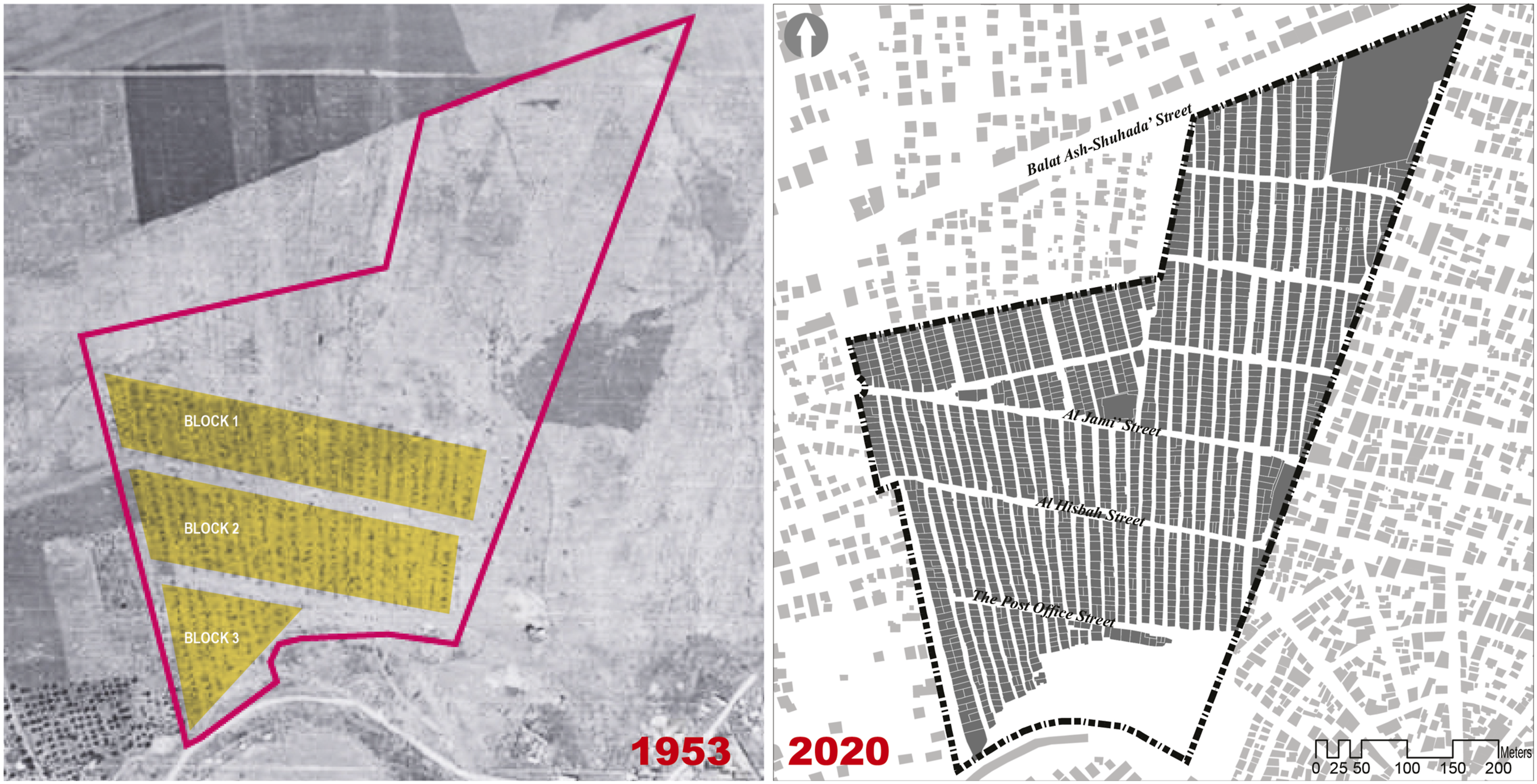
Data collection
The housing units used in this study belong to key residents and informants who settled in Irbid Camp in the early years and performed significant transformations in their residential units since then. This core corpus consists of 10 housing units which are illustrated in Figure 2. The corpus of the ten housing units used in the study.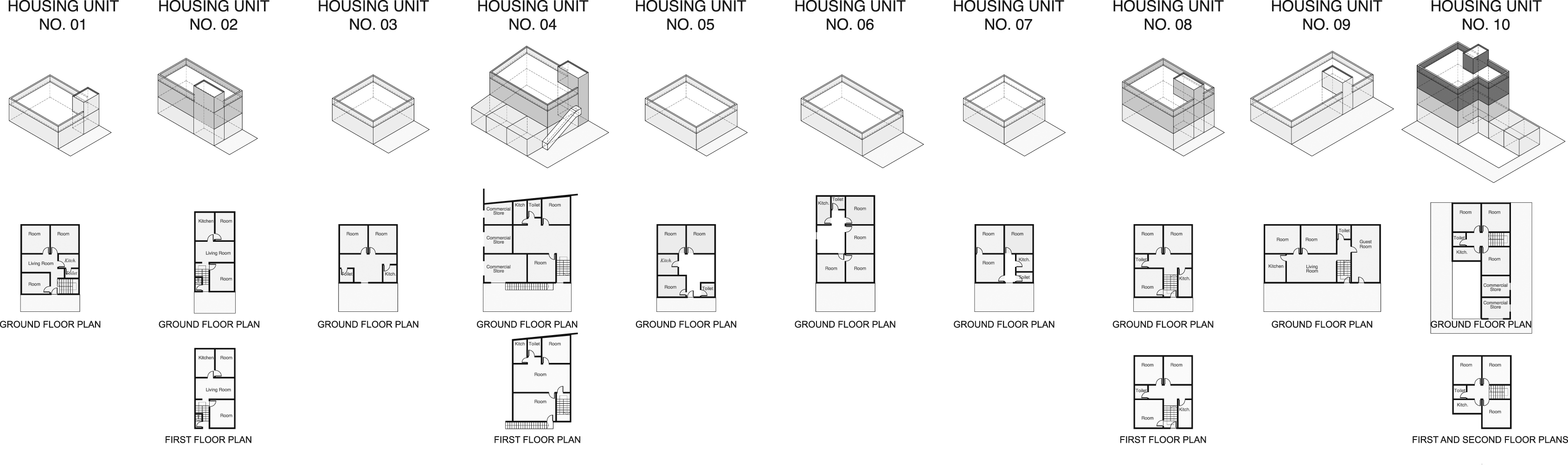
During fieldwork, the first author documented the most recent layout of the housing units on-site. To document the preceding phases, she relied on verbal descriptions provided by the residents of each housing unit. During the interviews, residents assisted in creating an initial sketch of the housing unit to depict its earlier phases as shown in Figure 3. Three examples of the sketches completed during the fieldwork are illustrated in Figure 4. Fieldwork Photo: Interviewees actively participating in recreating the plans of their housing units. Documentation of of the existing layout and evolution for three housing units during fieldwork.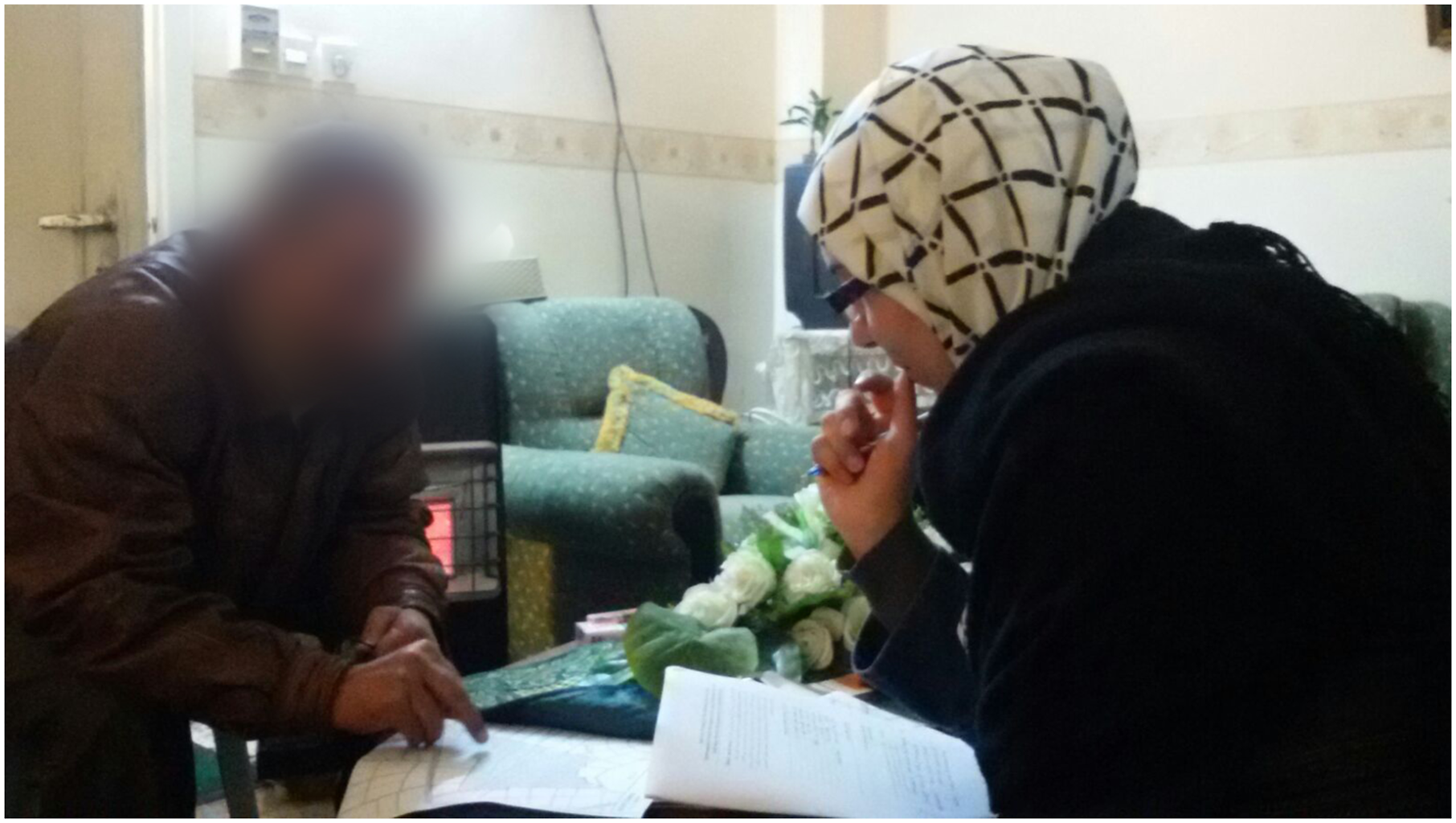
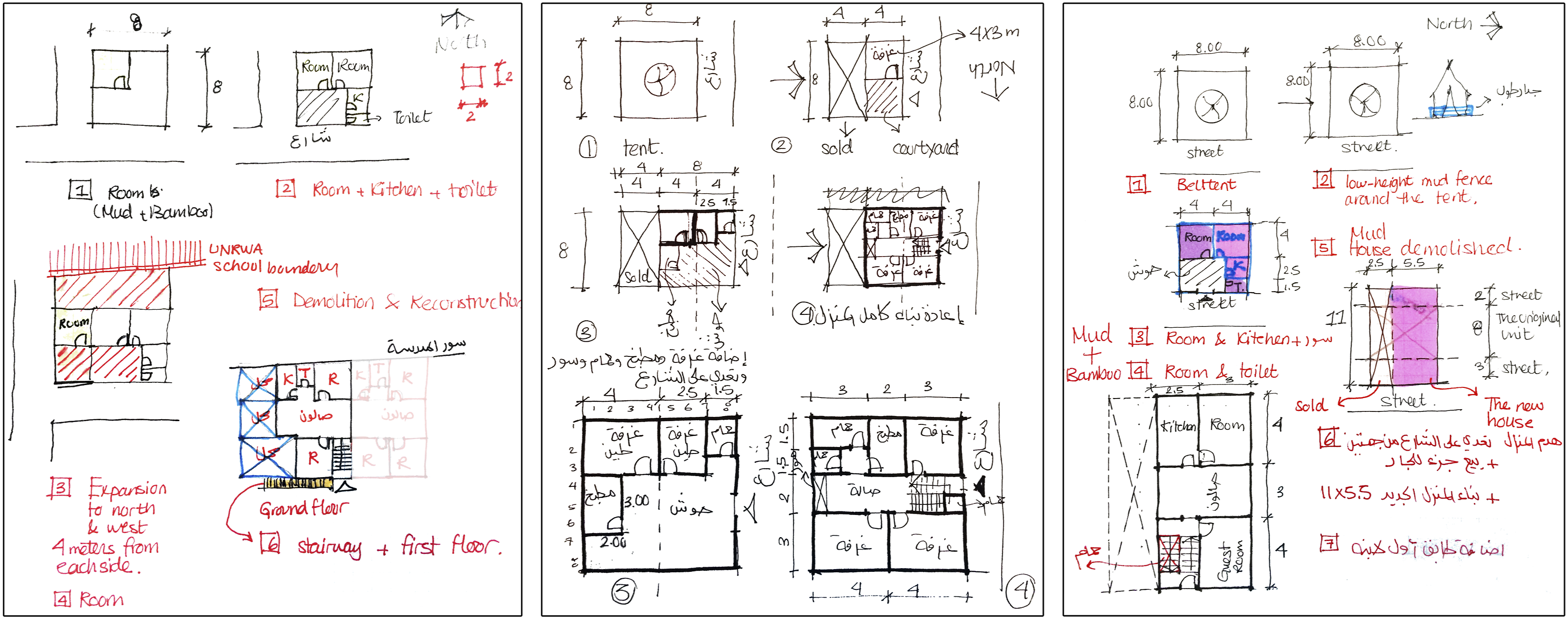
The following narrative provides the personal story of one of our 10 households in Irbid Camp: “Upon our arrival at the camp, my household was assigned an 8x8-meter land plot by UNRWA. Due to our limited resources, we constructed a 4x4-meter room using mud and dry bamboo. As our family grew, we expanded our living space by adding another 4x4-meter room, a toilet, and a kitchen. Our unit was adjacent to the boundary wall of the UNRWA school. Subsequently, we extended our unit by 4 m to the north, and 4 m to the west. This expansion involved constructing a room using cement blocks and zinc sheets. Unfortunately, UNRWA later demolished this room following a complaint submitted by our neighbor. To enhance our living conditions, we applied to UNRWA to acquire the plot we had previously expanded into. We dismantled the original mud structure and rebuilt our house using concrete and cement blocks. Simultaneously, my aunt purchased the adjacent residential unit, and the two units were reconfigured into two apartments on the ground floor, sharing a common staircase. Additionally, we invested in the construction of three commercial stores that had street access. Our apartment now featured two rooms, a kitchen, and a toilet, all accessible via the shared staircase with my aunt. Furthermore, my brother built another floor which has its independent external stairway.”
Refugee housing evolution
Over the course of the camp’s 70-year existence, the housing units in Irbid Camp witnessed numerous alterations and replacements.9,10 Based on fieldwork, refugees reported that upon their arrival at the camp, they were provided with tents by UNRWA and assigned plots measuring 8 × 8 meters. While UNRWA distributed the tents, the refugees themselves were responsible for setting them up and they lived in those tents for three to 4 years before transitioning to mud shelters by 1954. UNRWA provided roofing materials, such as dry bamboo and timber beams, while refugees crafted mud blocks by mixing mud with stubble and pouring the mixture into timber molds to construct their mud shelters.
Over time, many residential units in the camp experienced significant transformations through demolition and reconstruction. Some refugees upgraded from mud structures to permanent construction materials, using concrete extensions or rebuilding with cement blocks and concrete. Initially, households had a single-story, rectilinear layout to accommodate smaller families, maintaining a consistent appearance in the camp. Later, vertical expansion was permitted, and residents added floors for adult children and extended families. Image of housing units during this phase can be seen in Figure 5. Housing units initially included basic spaces like bedrooms, kitchens, and bathrooms. As households grew, they customized their units, adding rooms for guests, commercial shops, and gathering areas to meet their evolving social and economic needs. Figure 6 illustrates the phases of transformation for the housing units no. 1, 2, and 4. Photos of selected housing units used in the grammar creation process. Transformation of housing units 1, 2, and and 4. 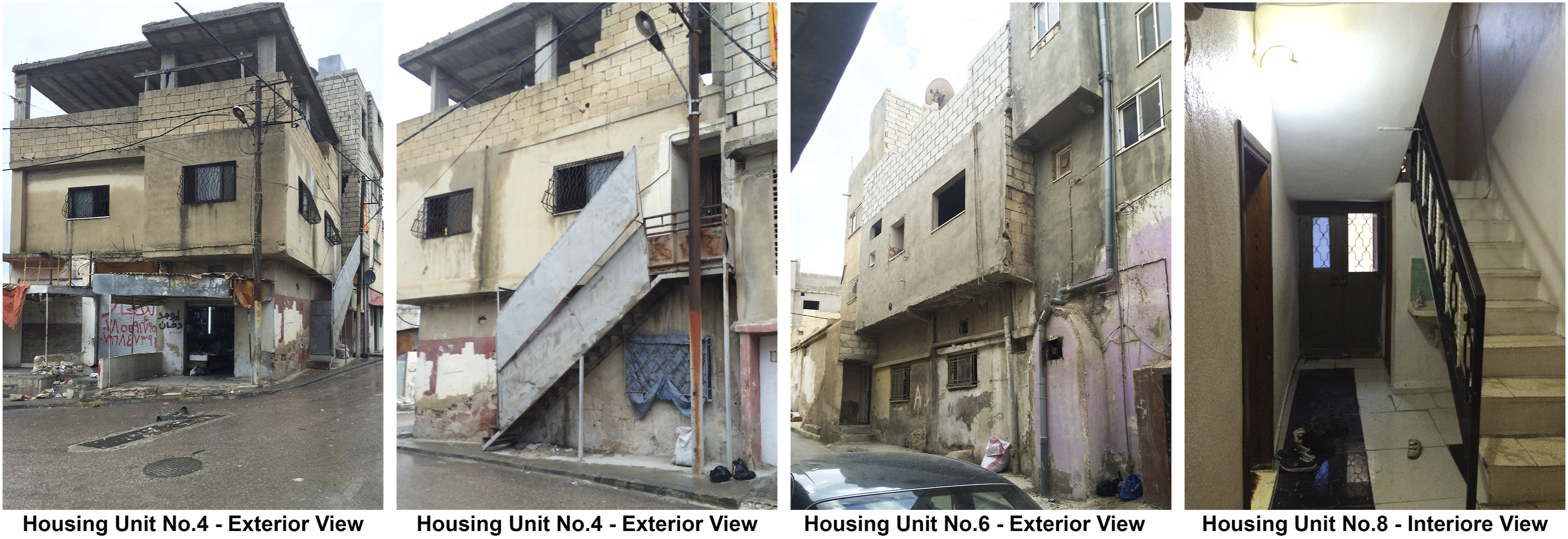
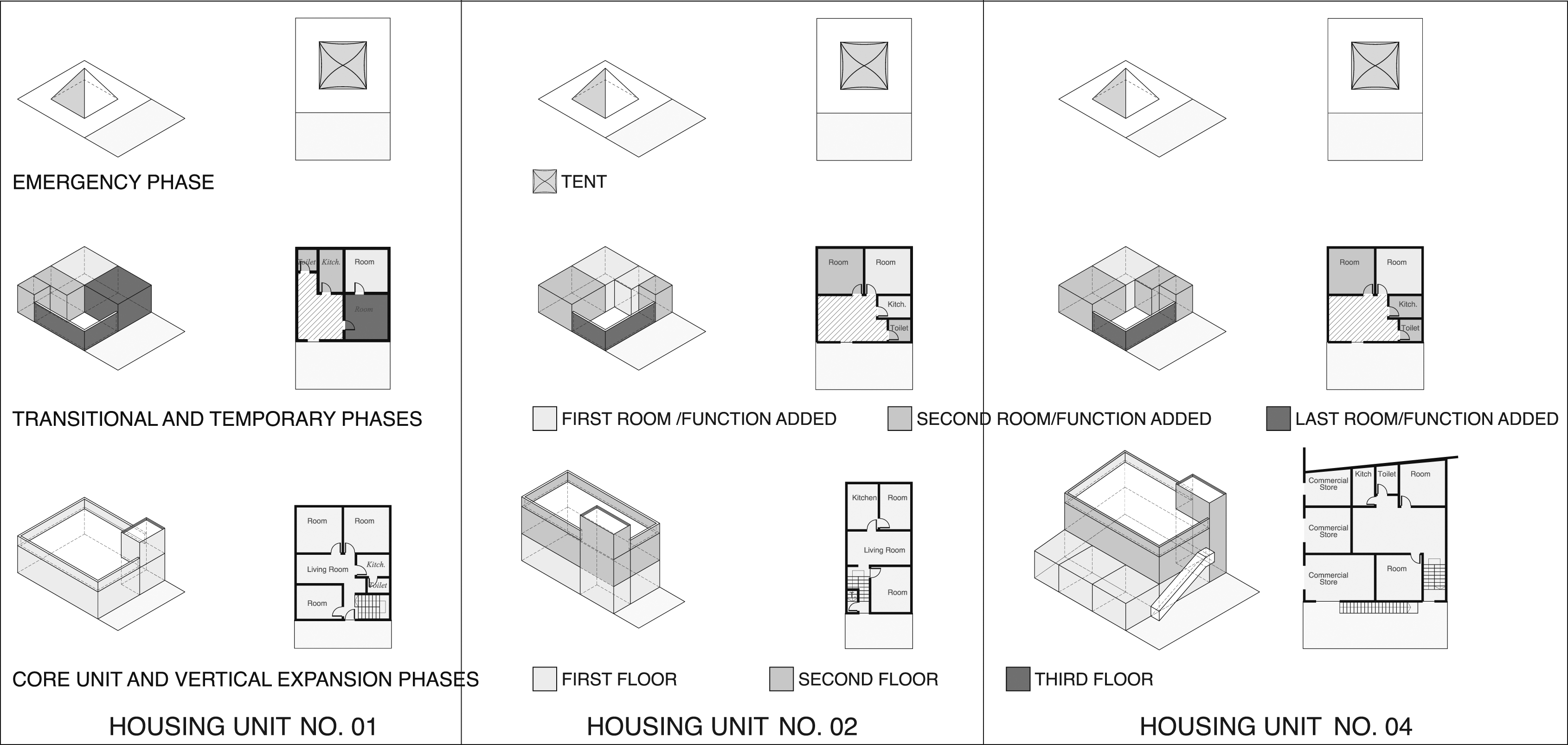
The transformation of housing units in Irbid Camp demonstrates the resilience and adaptability of the refugee community in creating long-term and suitable living conditions. Based on the shelter categories defined by IFRC,
20
the following transformation stages of the refugee housing units in Irbid Camp are defined: • • • • •
The Irbid camp grammar
The ICG employs the shape grammar formalism to examine and interpret the transformation of refugee housing units. The methodology draws from previous works29,38–41 that have utilized spatial relationships of existing architectural designs to analyze their configuration and then to generate transformed designs using newly created shape rules.
The ICG serves as a transformation grammar tailored to analyze and explain the informal changes that occur in refugee housing units. It identifies the five transformation stages discussed in detail in the preceding section, as shown in Figures 7 and 8. To comprehend how designs evolve from one phase of the settlement to the next, each transformation stage is defined using parametric shape rules that add, delete, or change the possibilities of the grammar based on interventions observed in the self-build process to follow Knight’s definition of the shape rule modifications that characterize transformation grammars.
31
Phases of transformation in refugee housing units. Grammar creation steps.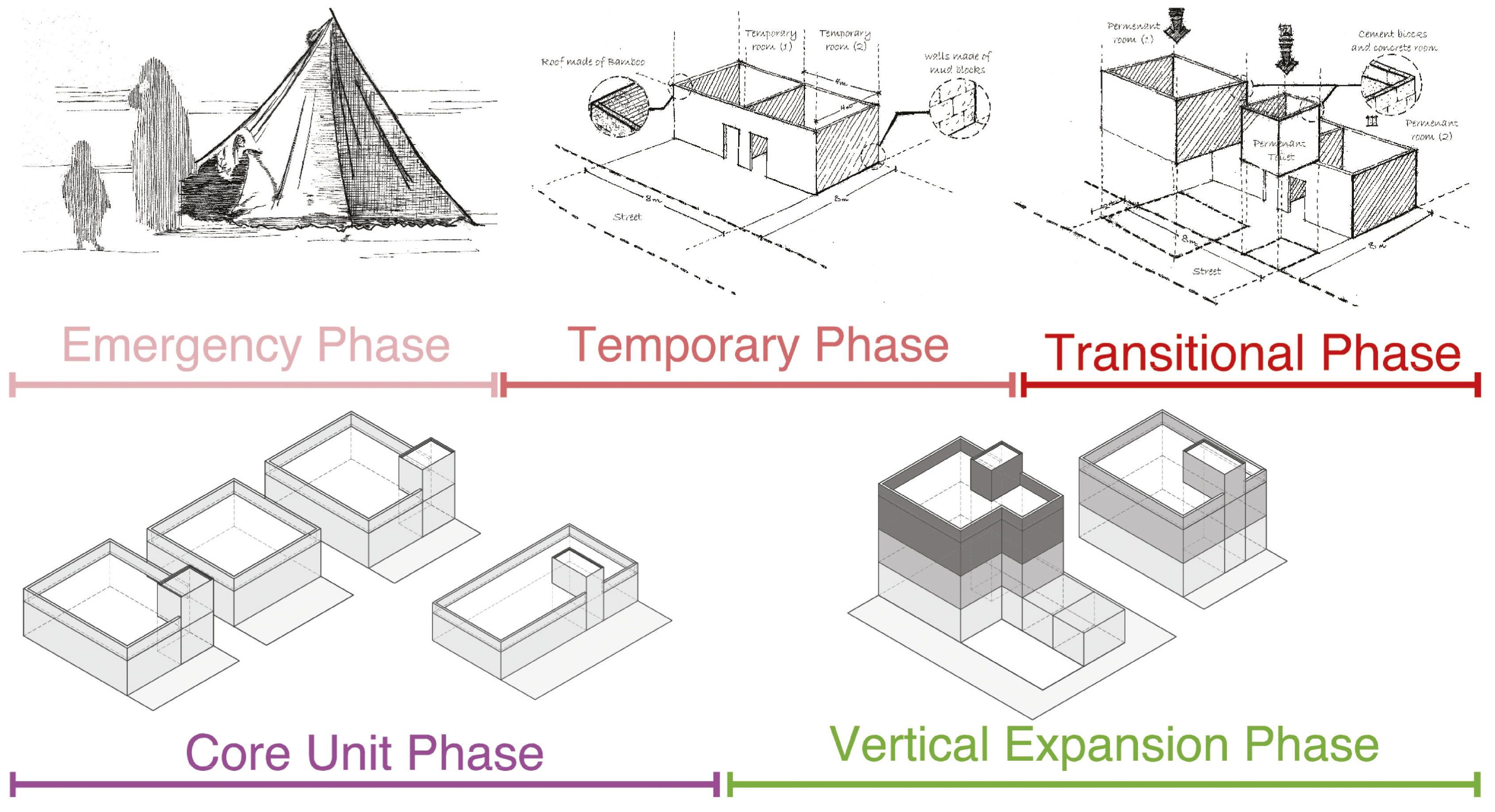

The work presented here extends an initial description of the ICG grammar 42 that served as proof-of-concept for the work elaborated since. The current ICG grammar has been expanded to address the entire corpus of 10 housing units as well as to develop its details, clarify its conventions, and advance future applications of the grammar for more resilient refugee housing systems.
The process of creating the ICG involves the steps shown in Figure 8 and described below:
Analysis of spatial relationships of the housing units
The tree diagram in Figure 9 was developed to analyze the housing units’ transformation process, serving multiple roles in this study. It visually represents primary spatial relationships, establishes a shape vocabulary for formulating shape rules, and aligns refugee housing unit evolution with camp development phases. Tree diagram showing the evolution of 10 housing units 42.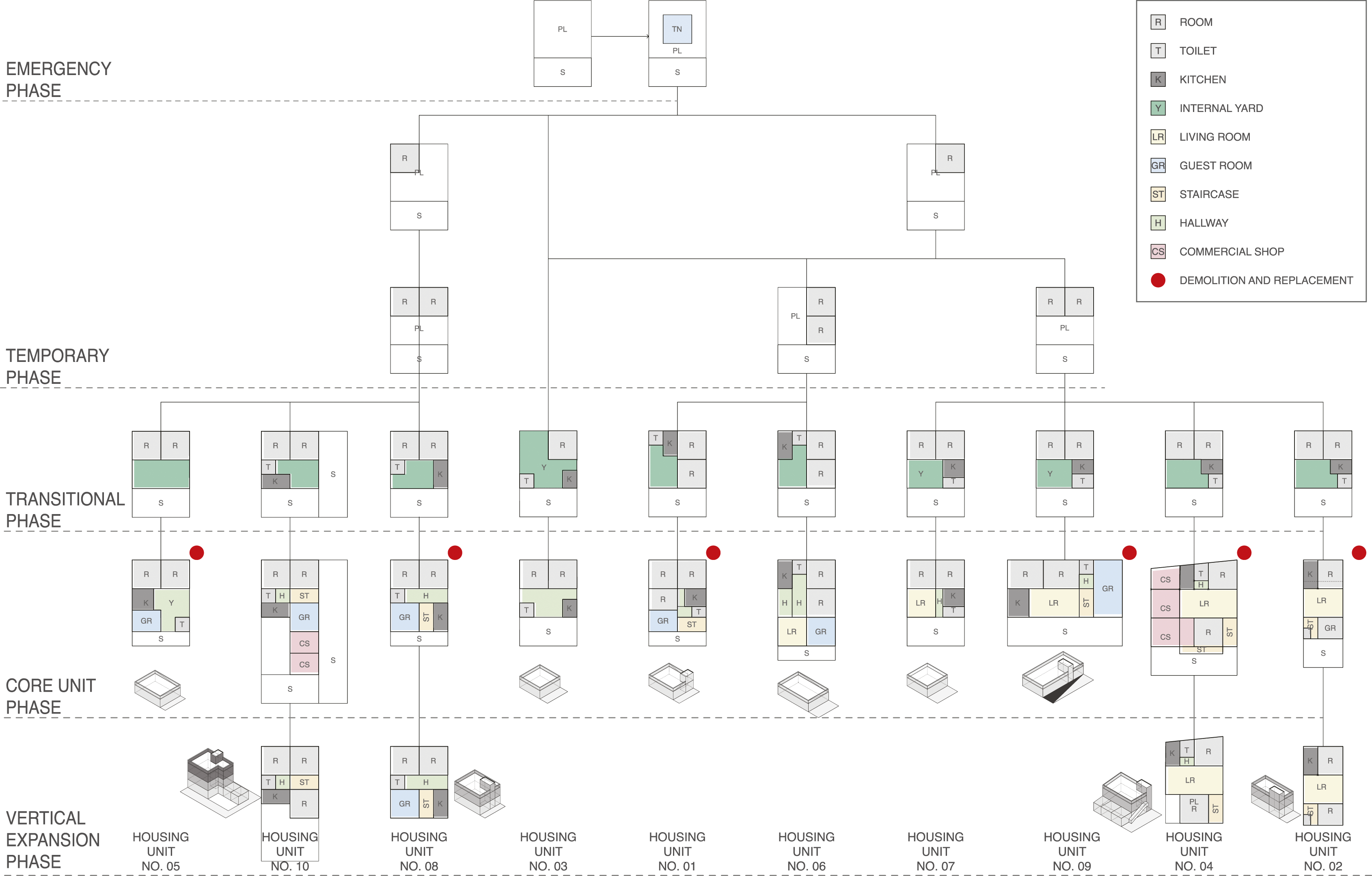
The tree diagram revealed commonalities among the housing units during the emergency and temporary phases, leading to three fundamental layouts. The transitional phase demonstrated shared functional and organizational similarities, mainly the addition of kitchens and bathrooms. As the transformation advanced into the core unit and vertical expansion phases, more spaces were incrementally introduced in a modular fashion.
Interestingly, the analysis exposed an informal grid-like organization of aggregated spaces in each phase, with new spaces intricately linked to prior constructions. This led to the development of a flexible yet modular parametric shape grammar, facilitating a deeper understanding of this design process.
Using the tree diagram to identify shared spatial patterns, this research establishes a systematic understanding of refugee housing unit transformations. The derived parametric shape grammar becomes a potent tool for comprehension, generation, and exploration of design possibilities in refugee settlements, enabling informed decision-making and more efficient future settlement planning.
Definition of shape vocabulary
The grammar is defined in the direct product algebras U13 x U23 x V03
43
to allow calculations in one, two, and three dimensions using parametric shapes consisting of labeled points, lines, planes, and volumes. The ICG’s primary shape vocabulary, as shown in Figure 10, is derived from analyzing the spatial elements extracted from the tree diagram. This shape vocabulary comprises polygons representing the spatial functions within the refugees’ housing units at any stage of the transformation process. The extrusion of these polygons with shape rules generates an overall massing to convey the volume of each housing unit in the final stage of the grammar. Starting from the top left of the figure, the largest shape represents the plot (PL), defining the boundary allotted to each housing unit. The next shape is the initial tent structure (TN). Other shapes at the top depict the primary spatial functions added during the temporary and transitional phases, including rooms (R), bathrooms (T), kitchens (K), and yards (Y). The shapes at the bottom represent spatial functions introduced during the core unit and vertical expansion phases, encompassing the staircase (ST), living room (LR), commercial store/shop (CS), hallway (H), and guest room (GR). Shape vocabulary elements of the ICG (modified from Abu-Aridah and Ligler 42).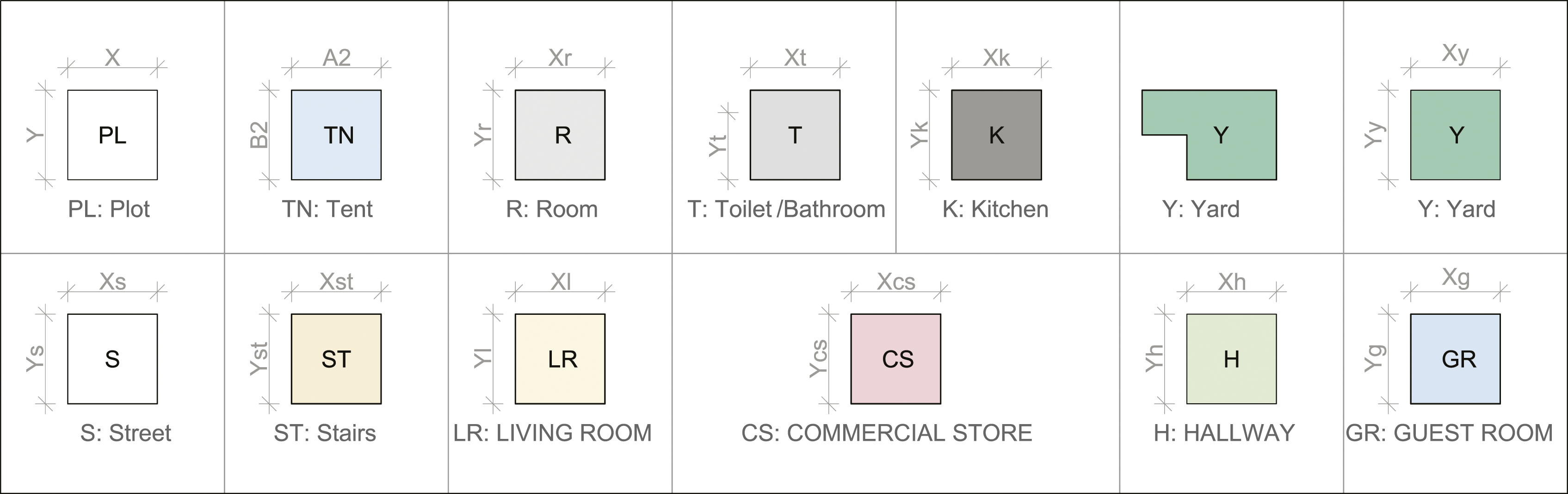
Design of shape rules
The ICG employs parametric shape rules specified with transformable polygons which represent different functional components or rooms within the housing unit. By applying specific rules, these polygons can be combined, arranged, or modified to accommodate various configurations, such as adding or removing rooms, expanding or contracting spaces, and adapting to changing requirements over time.
A limited number of rules are represented using rule schemata to capture emergent variability that follows a clear logic but resists the definition of a specific spatial relation.43–45
Two key conventions utilized in the grammar are parameters and labels. Labels play a significant role in the graphical definition of rules as they contextualize and control how rules are applied. For instance, Figure 11 illustrates a rule with a dot label indicating the addition of a new shape to the top right of the initial shape. Parameters indicate the length and width of each function within the housing unit and determine the position of each additional function. Parametric definition and position of functions (modified from Abu-Aridah and Ligler 42).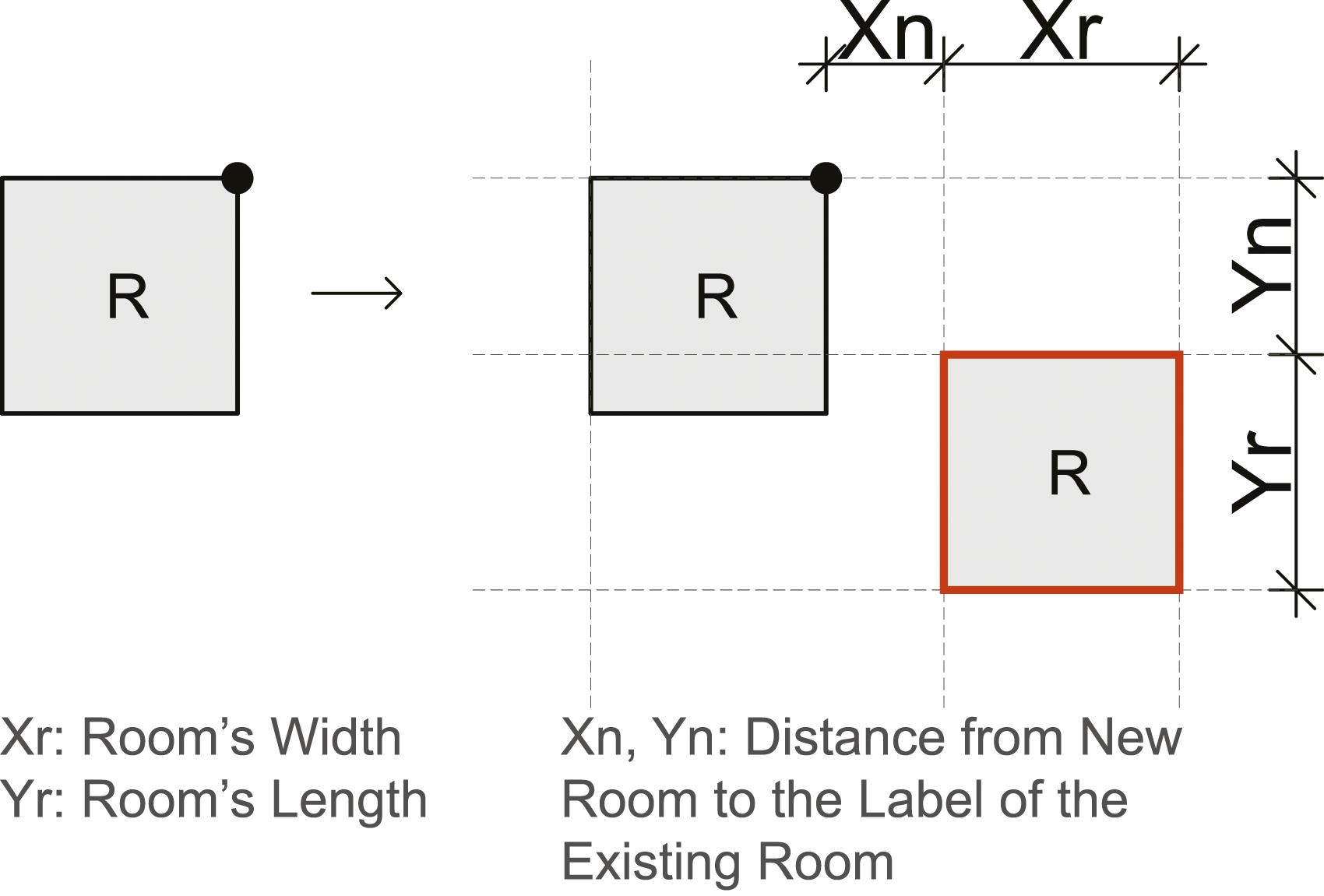
To aid visual representation, dashed lines illustrate the spatial relations of newly added functions, with the relevant distances defined as parameters, as shown in Figure 11. For example, Xr represents the room width, and Yr indicates its length. Xn and Yn signify the horizontal and vertical distances between each added function and the preceding one. When applying these rules, designers specify the values of these parameters. Similar parameters are defined for all subsequent shape rules described in the grammar.
Rule schemata are also utilized in the grammar to specify rules that describe a general design logic used in the grammar in lieu of a parametric spatial relationship.
43
This approach is utilized to identify emergent irregular polygons that result from the cumulative relations of the regular polygons in the shape vocabulary. For example, the rule that defines the internal court is defined using rule schema, as shown in Figure 12. It combines the three shapes A, B, C, and D to form the shape X, and then this shape X is subtracted from the PL shape to constitute the internal court. Another series of rule schemata is utilized in stage 5 to allow for the extrusion of two-dimensional polygons into three-dimensional volumes to represent the massing of a housing unit. Applying rule schema (modified from Abu-Aridah and Ligler 42).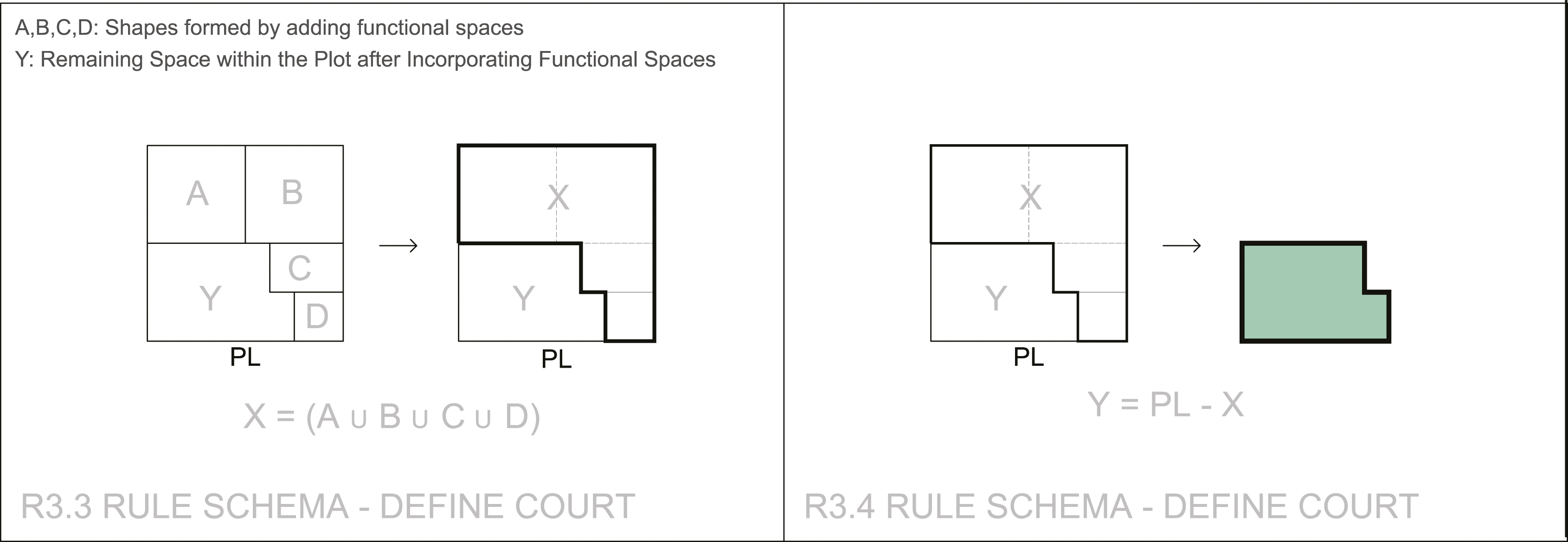
The ICG consists of 35 parametric shape rules, distributed across five stages. Each rule serves to introduce a new function, specify its dimensions, and incorporate it into the evolving spatial structure that is generated by sequentially applying the rules to each individual housing unit. These five transformation phases, with their respective rules, are as follows:
Phase (1) is the emergency phase and serves as the starting point, encompassing rules 0 to 1.3. This phase consists of four rules, which entail defining the plot, erecting 4 x 4-meter tent, positioning the tent within the plot, and dismantling the tent, as depicted in Figure 13. Rules for phase (1) (modified from Abu-Aridah and Ligler 42).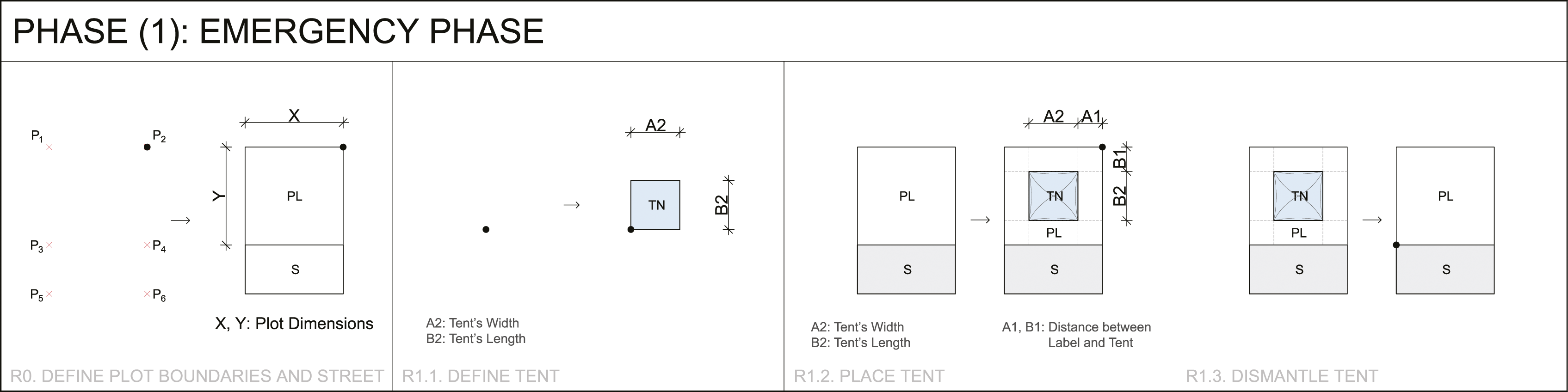
Phase (2) is the temporary phase (rules 2.1 to 2.4). During this stage, one room is constructed, followed by the addition of another room using temporary building materials. This phase is illustrated through four rules. Rule 2.1 defines the dimensions and position of the first room within the land plot, while the subsequent rules depict the incorporation of the second room and its spatial relationship with the first room as illustrated in Figure 14. Rules for phase (2) (modified from Abu-Aridah and Ligler 42).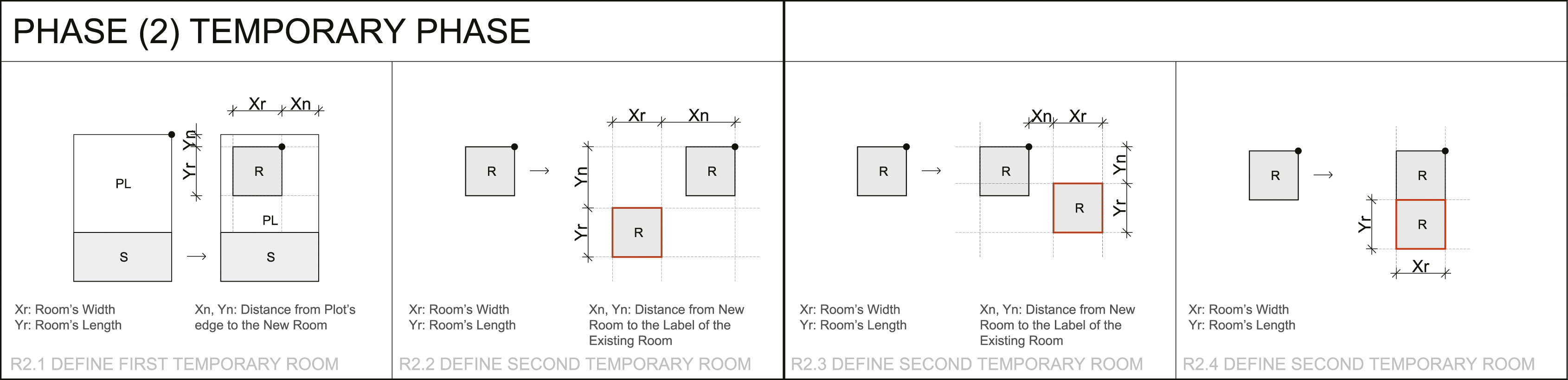
Phase (3) is the transitional phase, building upon the temporary phase (rules 3.1 to 3.6). During this stage, the housing unit undergoes significant developments, including the incorporation of basic functions such as kitchens and bathrooms. Additionally, the internal yard is defined, encompassing the remaining space within the plot boundary after integrating the kitchen and bathroom functions. This phase is characterized by six rules that govern the transformations.
The first rule (3.1) defines the layout and creates the kitchen, establishing its position within the housing unit. The subsequent rule (3.2) outlines the addition of the bathroom, detailing its location and dimensions relative to the kitchen.
The implementation of rule schemata is introduced to create and incorporate the internal courtyard, involving rules 3.3, 3.4, and 3.5. Additionally, rule 3.6 is defined to allow for the internal courtyard’s removal. All rules of this phase are depicted in Figure 15. Rules for phase (3) (modified from Abu-Aridah and Ligler 42).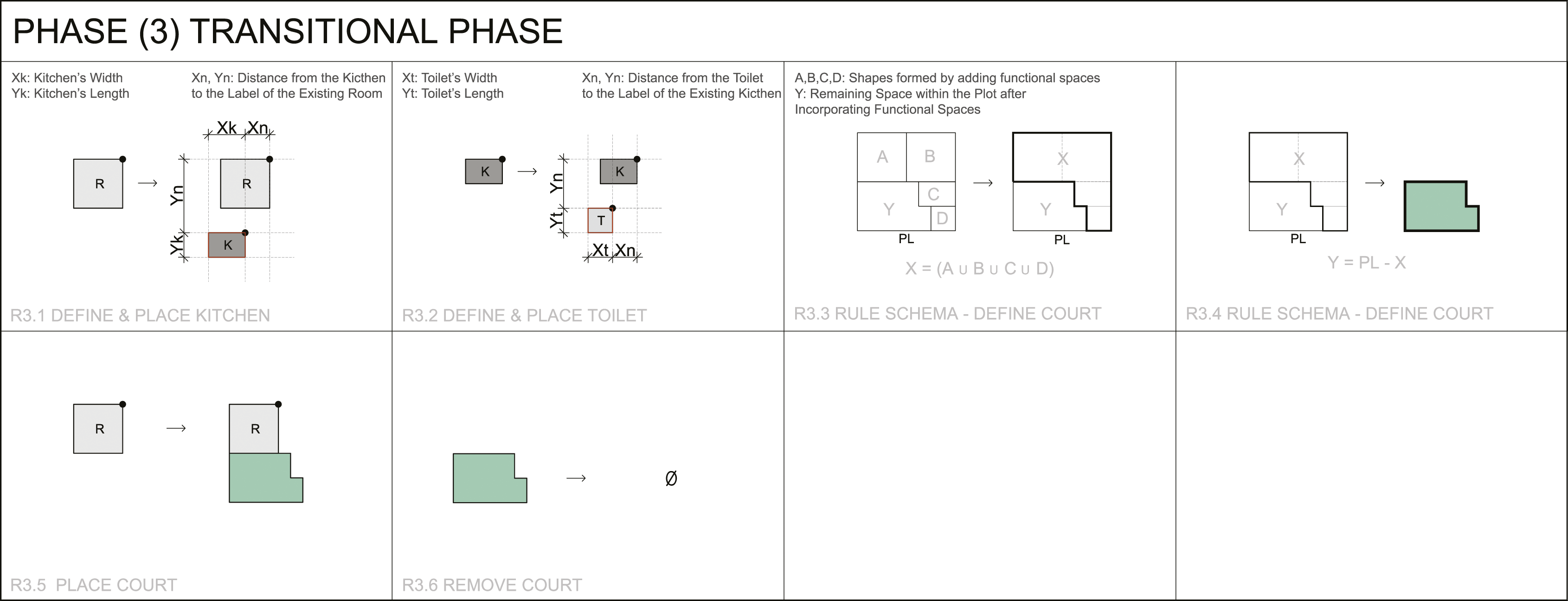
Phase (4) represents the core unit phase (rules 4.1 to 4.17), encompassing the definition of new functions, and the replacement of existing housing units built up to the end of the transitional phase. This phase consists of 17 shape rules, represented in Figure 16. Rules for phase (4) (modified from Abu-Aridah and Ligler 42).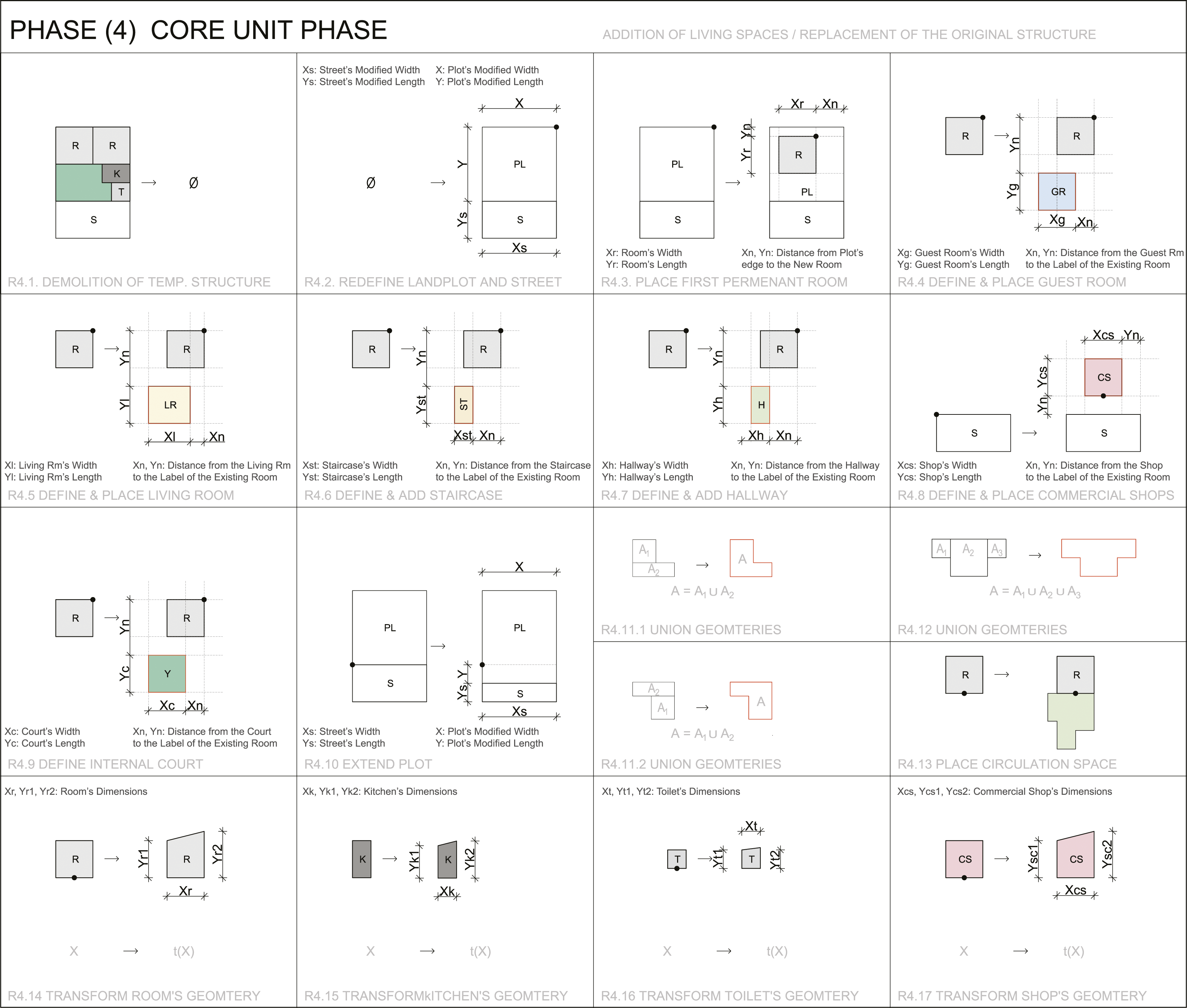
Rule 4.1 controls the complete demolition of the housing unit. Rule 4.2 indicates the definition of the land plot using parameters to represent the expansion of the original plot. Rule 4.10 is utilized to signify the expansion of the original plot in one or two dimensions without demolishing the existing housing unit.
Rule 4.3 is applied to define the dimensions and position of the first permanent room added after the demolition within the land plot. Rules 4.4 to 4.9 define subsequent functions, including the guest room, living room, staircase, hallway, and commercial shop.
To facilitate the concatenation of geometries, Rules 4.11.1, 4.11.2, and 4.12 are introduced. Rule 4.13 determines the position of the hallway, which features an irregular shape generated using concatenating geometry rules. Additionally, rules 4.14 to 4.17 represent rule schemata, signifying the transformation of room, bathroom, kitchen, and commercial shop functions.
Phase (5) is the vertical expansion or permanent housing phase, comprising rules 5.1 to 5.3, each of which is characterized by the implementation of rule schemata to describe the extrusion of the two-dimensional outline of the unit to define a three-dimensional massing of its volume. This phase involves the addition of extra floors to certain housing units within the camp, transitioning them into multi-story structures.
Rule 5.1 defines the shape transformation that converts the housing unit from a 2D representation to a 3D representation to capture its vertical expansion and the development of multi-story housing units. Rule 5.2 represents the addition of a second floor as a typical floor using the same boundary of the first floor. Rule 5.3 depicts the inclusion of a third floor, also as a typical floor. All rules for this phase are illustrated in Figure 17. Rules for phase (5) (modified from Abu-Aridah and Ligler 42).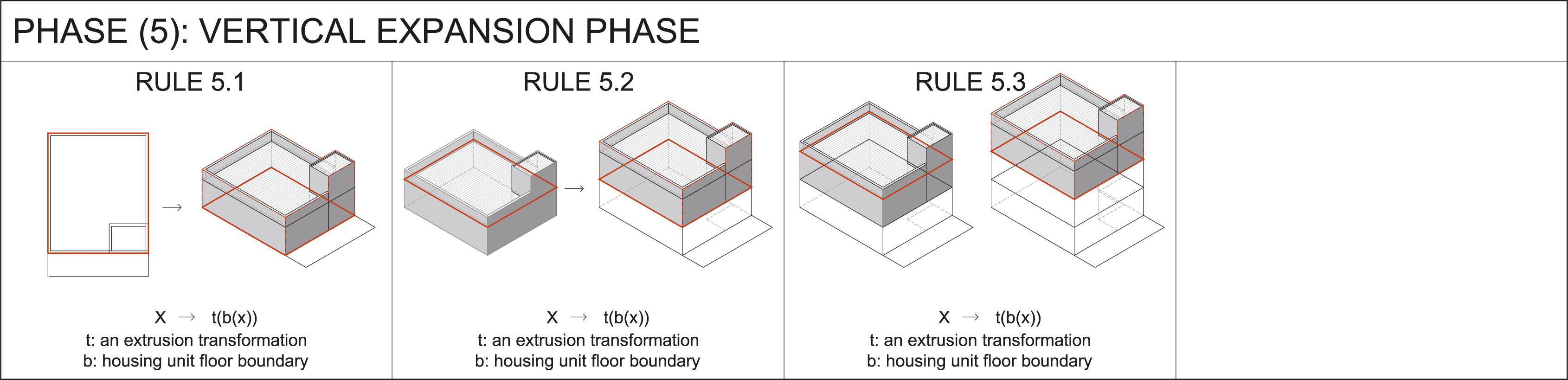
Application of shape rules to generate Irbid Camp designs
To demonstrate the ICG’s practical implementation, Figure 18 presents a detailed derivation depicting the step-by-step application of shape rules to transform housing unit number 10 from its temporary state to its current state. The design process involved employing the following rules: Application of rules for housing unit No.10.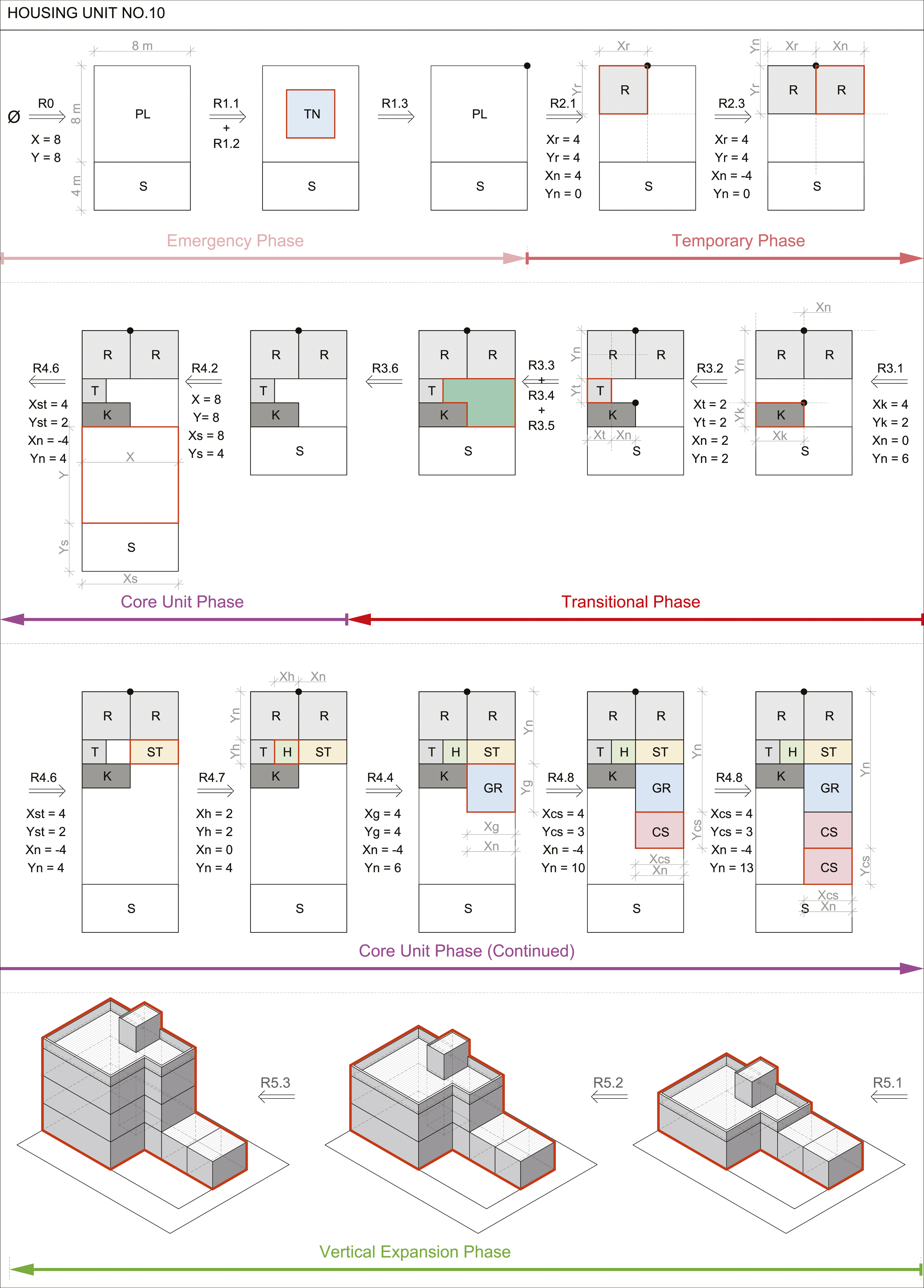
Beginning with rule 0 during the emergency phase, a 4 x 4-meter tent (rule 1.1) was positioned at the center of the 8 x 8-meter plot (rule 1.2). The tent was then removed using rule 1.3. In the temporary phase, a temporary room was added to the upper left side of the plot using rule 2.1, and a second room was constructed adjacent to the first one using rule 2.3 as depicted in Figure 18.
During the transitional phase, rule 3.1 was utilized to include the kitchen, rule 3.2 to incorporate the bathroom, and rules 3.3, 3.4, and 3.5 to define and place the internal courtyard.
During the core unit phase, the housing unit underwent further expansion, leading to modifications in the plot dimensions. The plot size doubled, and the refugees expanded their living space by utilizing parts of the adjacent streets. Consequently, rule 4.2 was used to reshape the land plot, which now measured 16 × 8 meters. Rule 4.6 was applied to add a staircase in preparation for the vertical expansion. A small hallway was added using rule 4.7. Rule 4.4 facilitated the addition of the guest room, while rule 4.8 was applied to include one commercial shop, and finally, to create an additional commercial store.
In the vertical expansion phase, rule 5.1 transformed the two-dimensional layout into an extruded three-dimensional representation. Furthermore, rule 5.2 was applied to incorporate a second typical floor, replicating the layout of the lower level without the commercial shops. Lastly, rule 5.3 was implemented to add a third floor as shown in Figure 18.
In a similar manner, shape rules are employed to generate each of the 10 housing units. The application of shape rules and the visual representations in the figures provide valuable insights into the transformation processes of these specific housing units, illustrating the changes in their layouts and configurations over time. Notably, for housing units 1 through 4 depicted in Figures 19 and 20, the key observations are as follows: 1. Housing units 1, 2, and 4 underwent a complete replacement process, where the original structures were entirely rebuilt. 2. Housing units 1 and 3 evolved into single-floor structures, while housing units 2 and 4 were expanded vertically to encompass two floors. 3. Housing units 5 and 8 underwent a complete replacement process, resulting in the construction of entirely new structures, as shown in Figures 21 and 22. In contrast, housing units 5, 6, and 7 maintained their original single-floor layouts, while housing unit 8 was expanded vertically into two floors. 4. Housing unit 9 stands out with its unique form of horizontal expansion, followed by a complete replacement after the transitional phase. Meanwhile, housing unit 10 stands as the sole example of vertical expansion, evolving into a three-story structure. Figure 23 provides an insightful illustration of the application of shape rules for housing units 9 and 10, showcasing the distinctive transformations that distinguish them from the rest. Application of rules for housing units 01 to 03. Application of rules for housing unit 04. Application of rules for housing units 05 and 06. Application of rules for housing units 07 and 08. Application of rules for housing units 09 to 10.
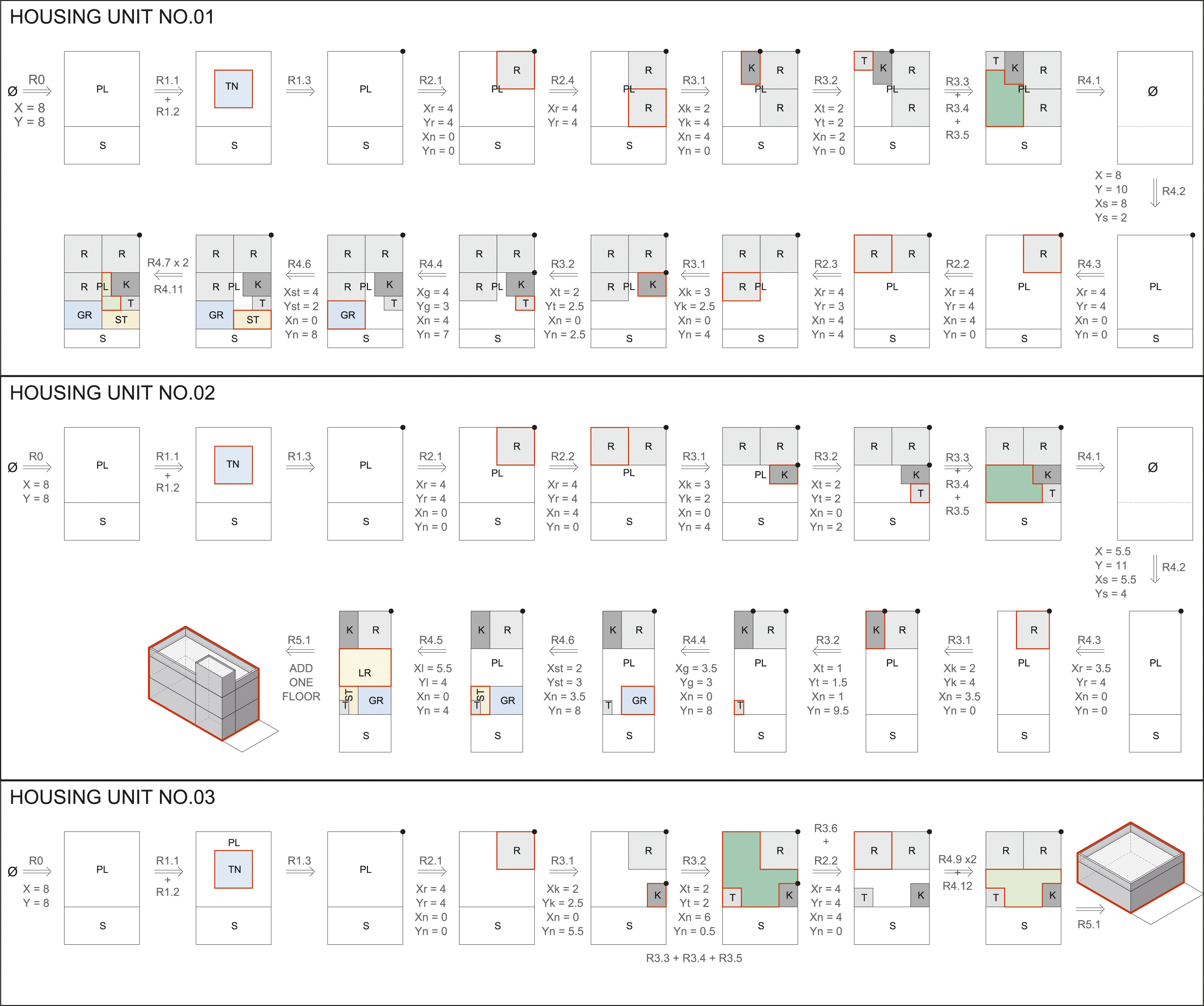
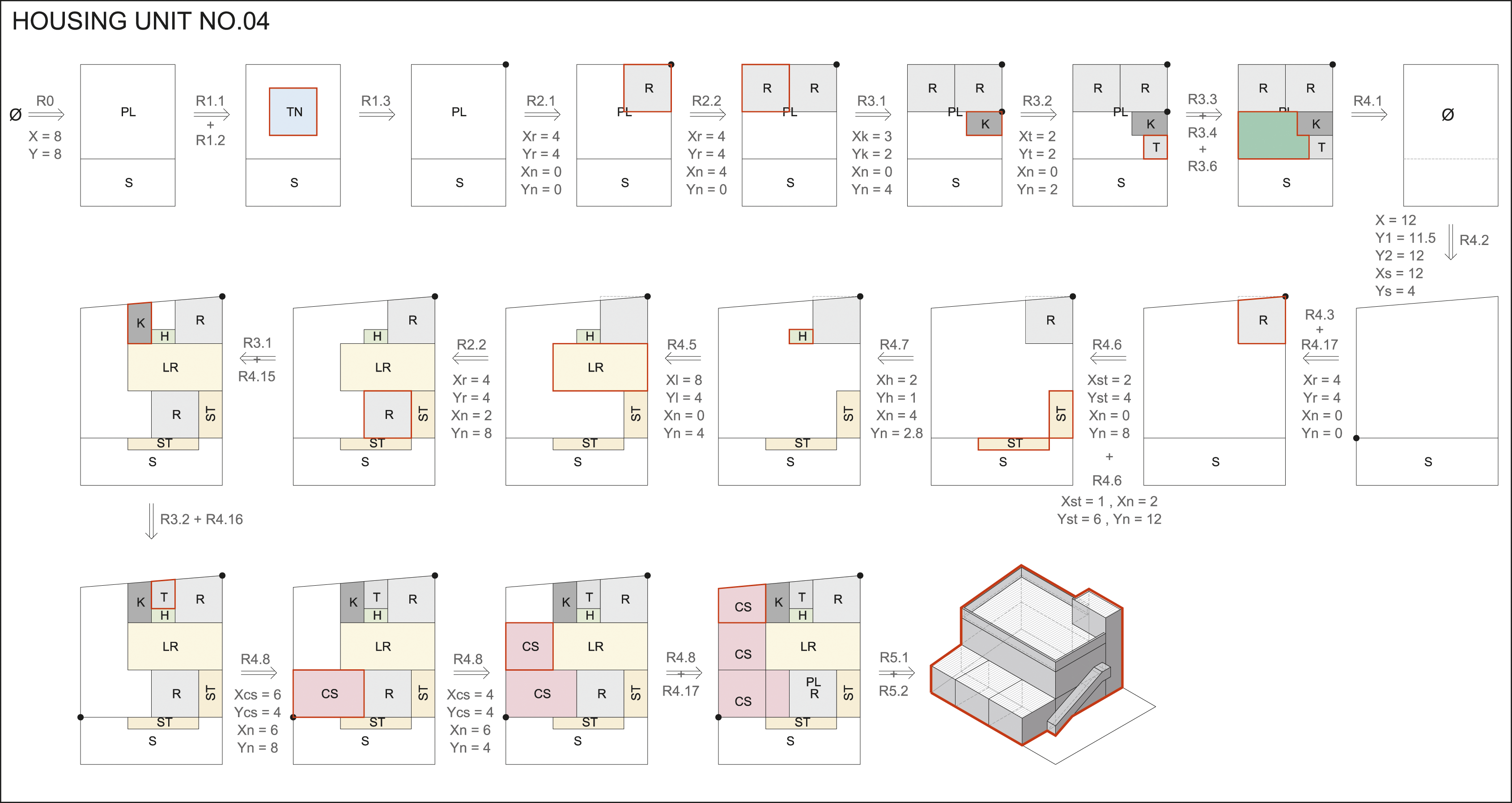
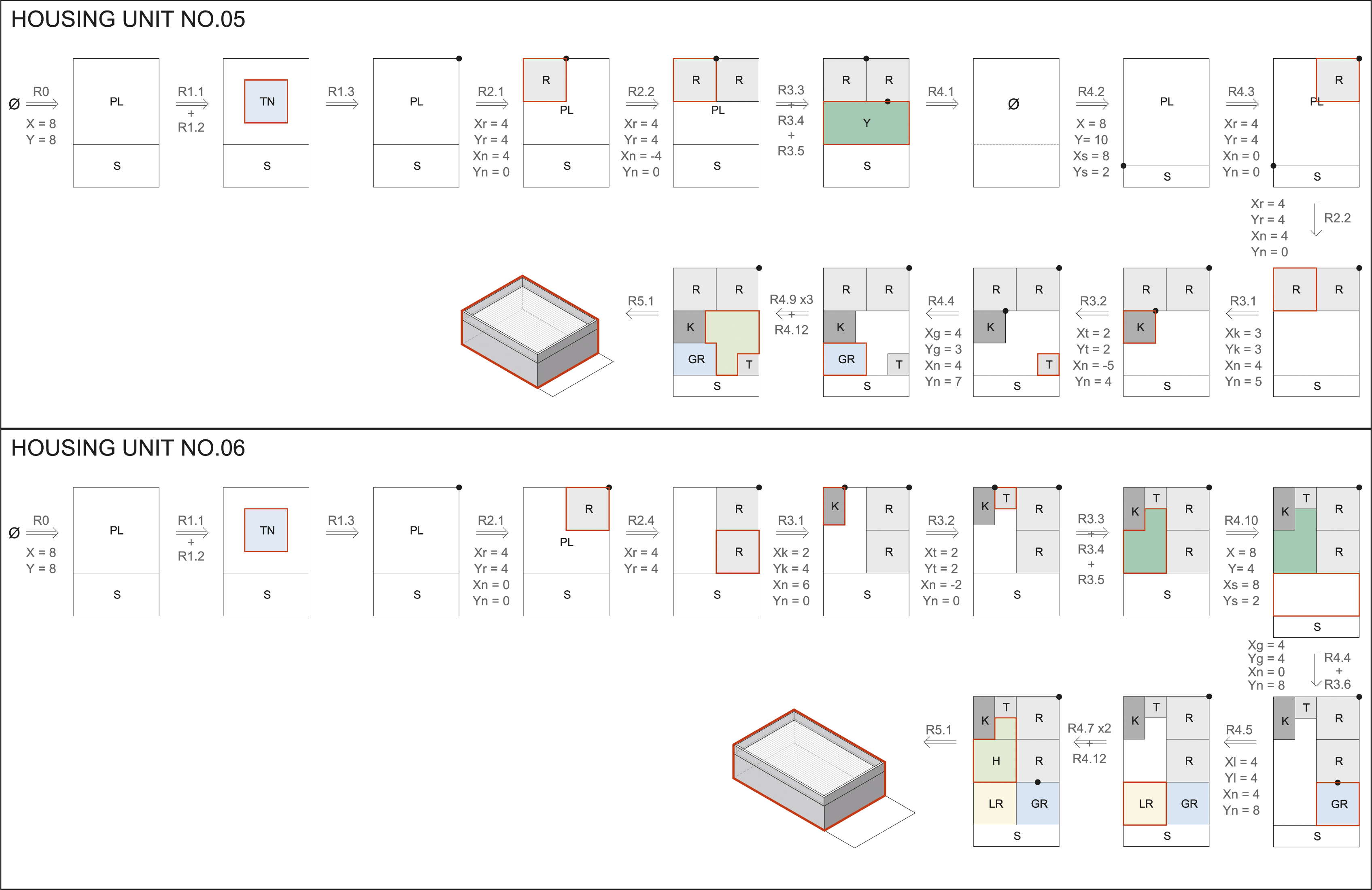
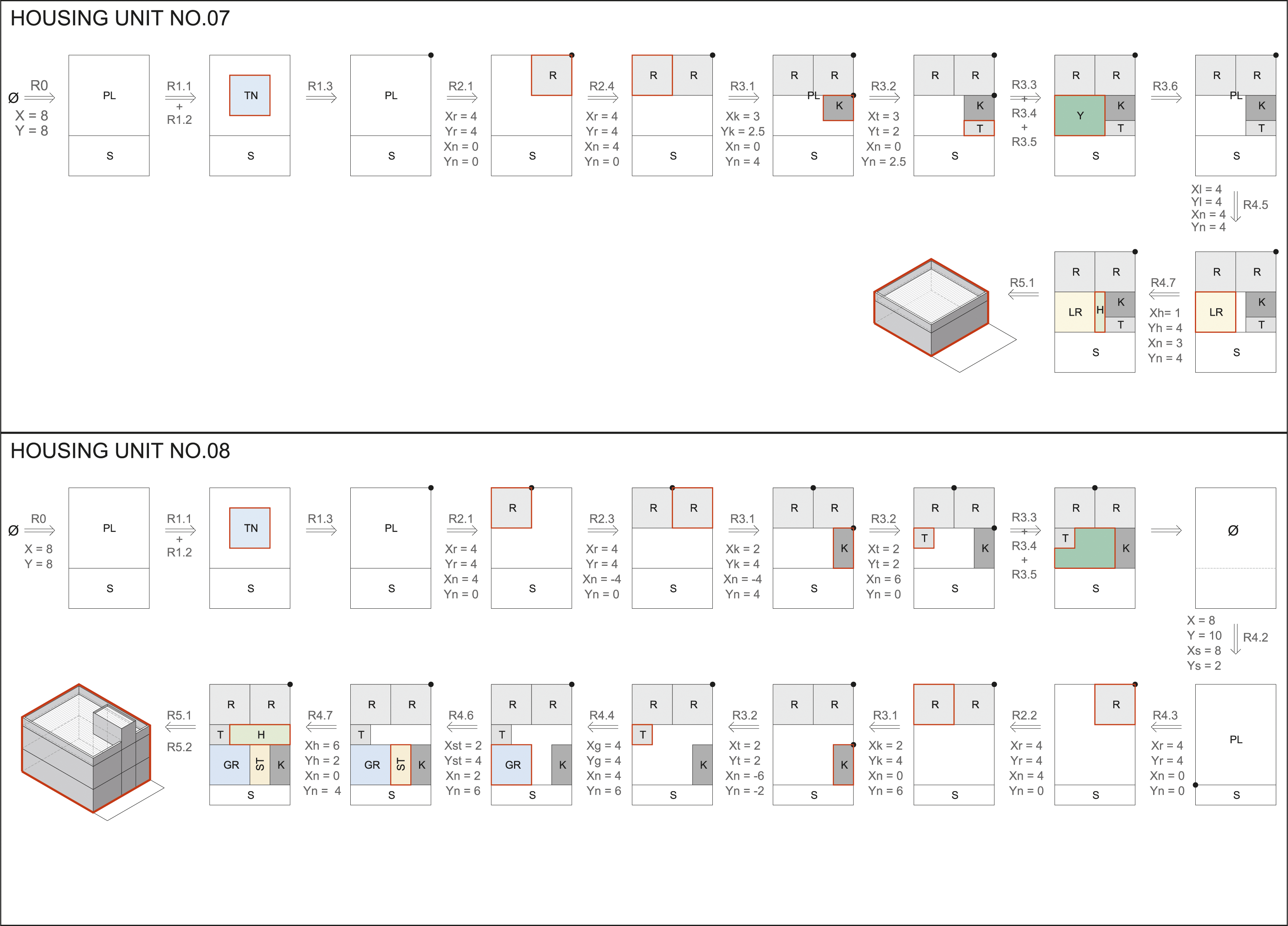
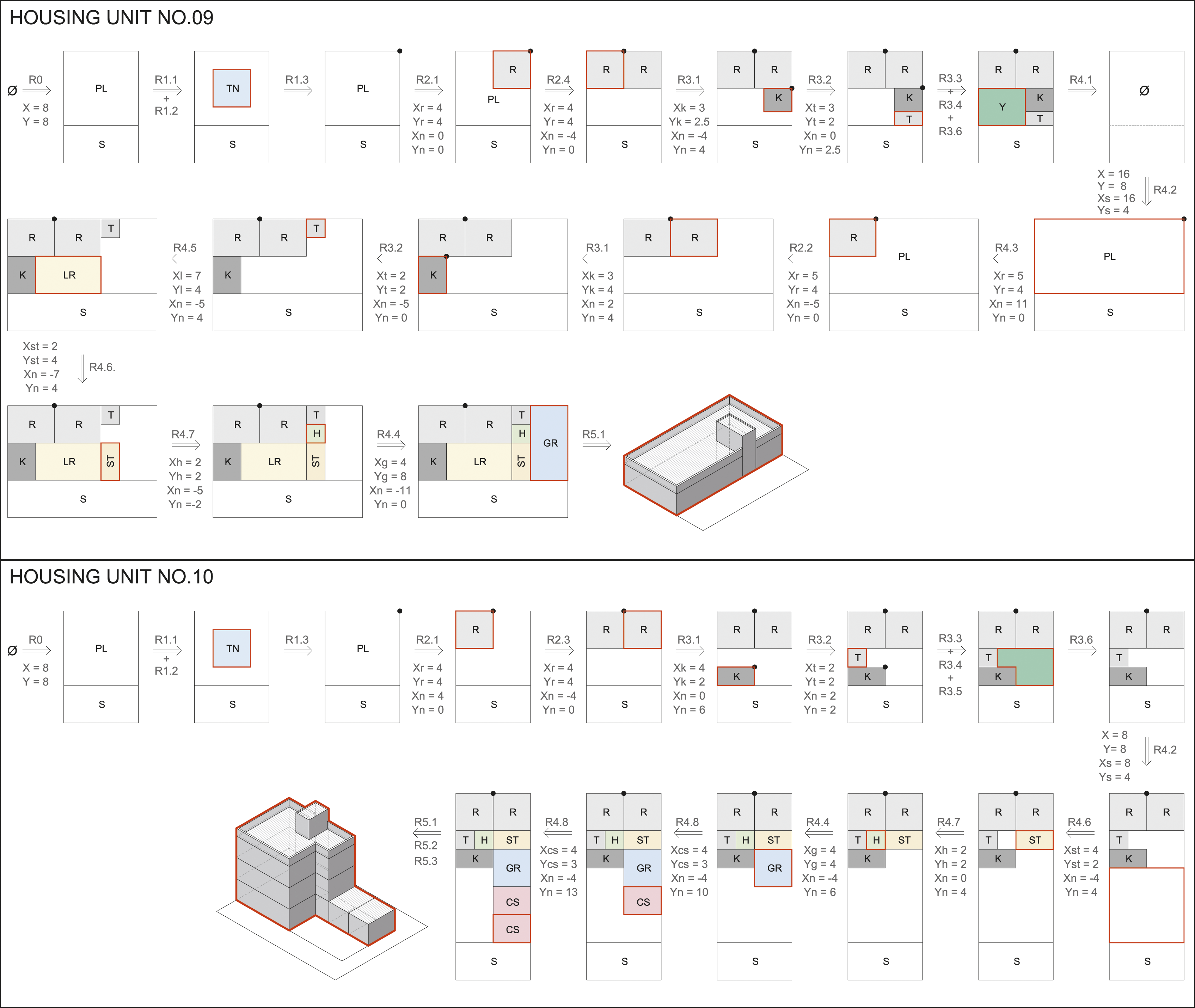
The patterns of growth and transformation observed are consistent with the common transformational trends found throughout the camp’s housing developments including informal grid-like development patterns and the most common incorporated functional features that are needed in protracted refugee contexts. For example, these functions include bathrooms and kitchens that provide more independence and privacy to a unit, followed by guest rooms for visitors, and finally the addition of commercial spaces at the ground level that contribute services and amenities to the community as it becomes more permanent.
Derivation of new housing designs using ICG
In this section, we explore possible layout variations for a shelter proposed to be built on an 8 m × 10 m plot to demonstrate how the ICG system might inform the design of future housing to better support inhabitant needs and to facilitate participatory design processes. The shelter consists of two bedrooms, each measuring 4 m × 4 m, a 3 m × 3 m kitchen, a 2 m × 3 m bathroom, a living room, a guest room which should preferably be closer to the street, a staircase for vertical expansion, and circulation spaces.
The tree diagram displayed in Figure 24 presents an array of 19 different layout variations for this housing unit achievable through the application of ICG rules. These layouts are sensitive to the spatial qualities observed at Irbid Camp, primarily the efficiencies of the compact structures and their adherence to minimums based on the initial plot allocation, tent size, and modular addition of rooms. The design variations generated with the grammar can be used to advocate for improving design processes and planning for “temporary” camps, which increasingly become protracted homes and urban environments. The application of these rules can create diverse configurations to best utilize the available space and cater to the unique needs and preferences of the occupants. The variations consider the spatial relationships between different functions and ensure efficient utilization of the limited area. The range of layout options generated for this housing unit can aid residents, designers, and stakeholders in making informed decisions when planning and developing housing solutions for refugee camps. For example, a major improvement would be to plan for the long-term and involve refugees in this planning. This effort might include a focus on the design of different housing unit types to provide alternative and/or culturally appropriate options as well as the consideration of public structures and spaces to provide additional amenities as the community becomes more settled. In addition, the shape rules of the grammar could be expanded to more precisely account for the health, safety, and welfare of each unit to better support the production of adequate structures for long-term dwelling. Application of shape rules for a new housing unit.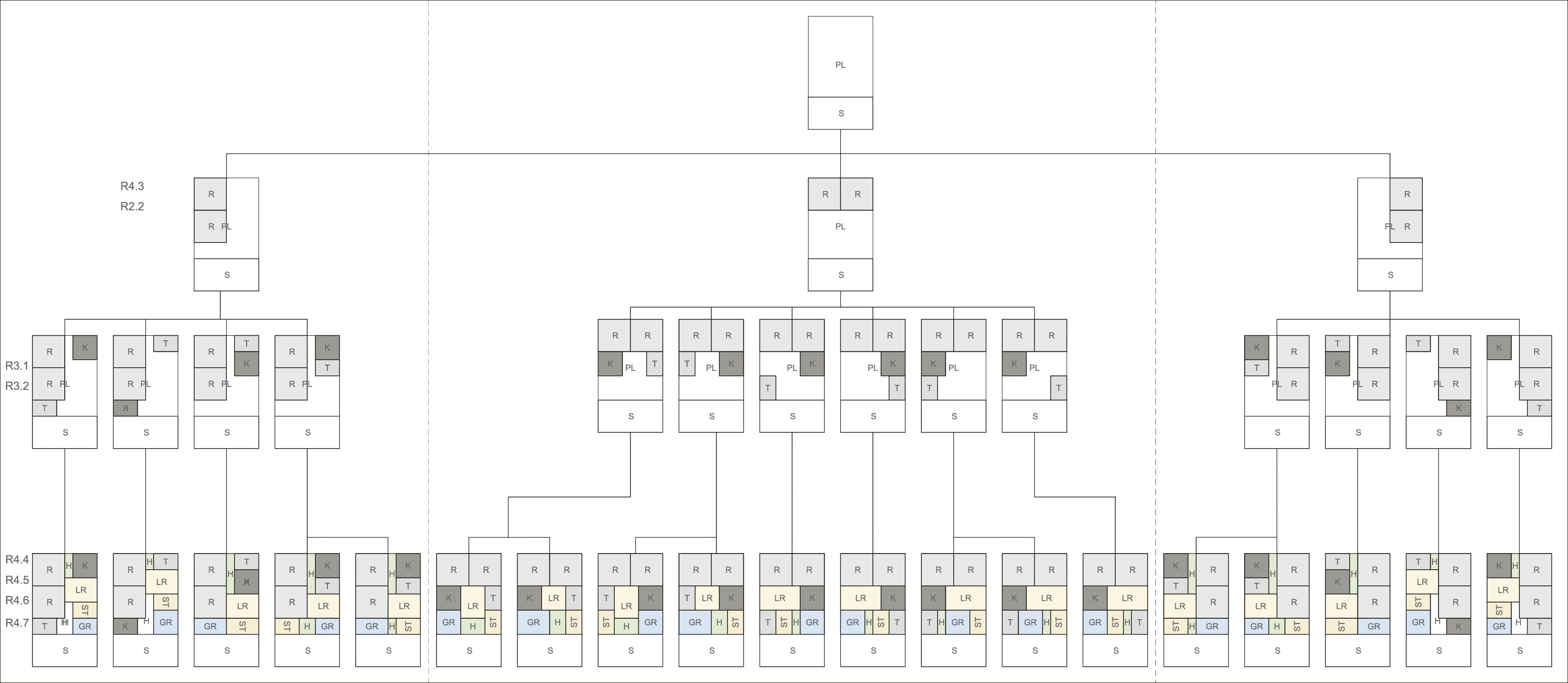
Findings and conclusions
The presented transformation grammar offers significant insights into the long-term evolution of refugee housing in Irbid Camp, viewing it as a series of design modifications. Through formalizing the growth of 10 housing units using parametric shape rules, this study reveals the modular-like evolution of houses, each uniquely shaped through an informal self-build process. The shape rules establish a clear link between the growth phases and the evolving spatial configurations of the housing units.
Significantly, the modular evolution of the housing units can be interpreted as the ongoing transformation of the initial tent structure. The dimensions of this module inscribe a pattern that continues throughout the self-build process from shelter to home. In shape grammar terms, the tent is the initial shape that initiates a design generation process. The identification of the tent module as the basis for the multi-room, multi-story transformations in refugee camps like Irbid Camp suggests how this dimension as well as its initial allocation of land and material holds the potential for long-term occupation and replication, necessitating sensitive thought, planning, and design in its structure.
More precisely, this identification of a modular growth system opens up opportunities for further interventions in refugee housing design. By facilitating and guiding these transformations, the parametric shape grammar lays the foundation for responsive solutions to housing emergencies while recognizing the potential long-term existence of the community. The grammar developed in this study has the potential to be implemented as a computational model that can be used for planning, engaging, and supporting residents in the design process. The ICG enables the development of strategies that prioritize flexibility, adaptation, and modularity, allowing for a proactive approach to better enable the self-build process.
The findings have the potential to shape future practices in refugee housing design, fostering sustainable and resilient solutions that enhance community well-being and integration. Furthermore, this research contributes to conversations on computational approaches to decode informal design processes, and specifically to studies at the intersection of informal settlements and shape grammars. More broadly speaking, the research adds to the ongoing discourse surrounding refugee camp planning and design, emphasizing the significance of integrating the informal design process into comprehensive camp development strategies.
Based on the findings of the ICG, future work will focus on the integration of more voices in the design process to support resilient refugee communities and evaluate their ongoing potential for long-term existence. The question of how to integrate formal design solutions as necessities change and time passes is of primary importance in this pursuit. The ICG provides a framework for a computational system and related technology to aid designers and community members in creating responsive and adaptable temporary housing for diverse refugee contexts. Utilizing such a tool will provide a basis for investigating community participation in the self-build process and understanding the benefits of empowering refugees and their communities in shaping housing designs in collaboration with architects and planners. These research avenues can enhance the discourse on refugee housing design with computational methodologies to develop innovative, sustainable, and community-centric processes (and subsequent solutions) that meet the evolving architectural and urban needs of displaced populations.
Footnotes
Declaration of conflicting interests
The author(s) declared no potential conflicts of interest with respect to the research, authorship, and/or publication of this article.
Funding
The author(s) received no financial support for the research, authorship, and/or publication of this article.
