



Abstract
The present paper describes a multilingual shape grammar to recreate the work of three designers that preconized the ‘International Style’. This is a top-down three-dimensional formulation. Whilst most grammars are monolingual and univocal, this work creates a multilingual formulation within the same artistic movement. Typically, a grammar describes a family of design solutions. These are helpful mechanisms to describe patterns that can be used for analysis or design exploration. This multilingual three-dimensional parametric grammar allows the independent recreation of original designs from three designers and hybrid solutions. Shape grammar's difficult application can be linked to its evaluation process. The original contribution of the study lies in the use of quantitative and qualitative methods for grammar evaluation, using Principal Components Analysis and user questionnaires. The PCA provides a pragmatic analysis, and the questionnaires an intuitive reading. Together they corroborate the results which are discussed using hybrids that assist in delineating parametric spaces.
Introduction
The current study proposes a multilingual three-dimensional shape grammar to describe the ‘International Style’ through the work of three architects that preconized it: Mies van der Rohe, Gropius and Le Corbusier.
The purpose of this study is to introduce a multilingual shape grammar. Multilingual shape grammar was introduced in the revisiting of the Palladian, Prairie and Malagueira shape grammar by Benros. 1 This multilingual grammar proposed a common generic grammar formulation to represent each independent style by varying not the graphical shape rules but its parametrization. Each language was generated using a specific parametric space with its range of possible parameters. All designs were different and with their style featured. In this instance, it is proposed to analyze the work of three design languages that are contemporary and fall within the same style umbrella – ‘The International Style’. This grammar will have the capability of describing the designs of the above-mentioned architects but also the hybrid variations that fall in between. Hybrid designs have no space in the design world but by varying the parametric rules we can explain the subtle differences and mutations of designs that the international style allows.
This study uses the hybrid generation to promote a novel strategy in grammar theory which encompasses a quantitative and a qualitative method. The quantitative method proposes plotting the generated houses in a cartesian chart and comparing them objectively by determining the parametric space of each language. The same is done with its hybrid designs and their language spaces overlap. The qualitative method is based on layman questionnaires where participants are asked about the intuitive resemblances between hybrids and original designs. This allows the assessment of the real parametric space and the validity and coherence of the hybrid designs.
Over the last 50 years, grammar theory has evolved from bidimensional to three-dimensional representation, focussing on architectural, design, fine arts and utilitarian subjects. The complexity of lexicons has also varied from orthogonal representations to more complex geometries focussing on curvature geometries such as the Islamic tiles 2 or the design of Coca-Cola bottles 3 which targets implementation. Evaluation has been one of the areas that lacked the most contribution as the study of 50 years of shape grammars illustrates 4 or it was simply implemented using empirical methods.
Grammar evaluation is at the core of the contribution of this study. Evaluation typically has been made through empirical methods either using the original designer, 5 or using combinatory calculus 6 or even using aesthetic methods. A more pragmatic and objective method was needed and that is the main problem that this study is trying to respond to.
The International style was chosen as the vehicle for this study as it was one of the most influential movements in the 20th century. Its design solutions were unique and designer-specific, but overall, there is a common thread, which is tangible in the work produced and not coincidentally is the result of a common way of thinking and a similar methodology in the design process. It was also extremely prolific allowing for a large universe of solutions.
The designers selected are related in style and design concept and can be identified within the movement. The ‘International Style’ introduced in the 20th century tried to break with the mainstream architectural styles in use and proposed a more utilitarian, affordable, modular and industrial perspective to design.
7
Its popularity spread mainly in Europe and North America with some manifestations in other countries. Three main designers are accounted for its success, Mies van der Rohe (1886–69), Gropius (1883–69) and Le Corbusier (1888–65). The architects’ design languages are unique and distinct. Mies’s style was rational, and minimal, with methodical respect for structural and regulating grids, as visible in the Farnsworth house. Gropius’s style was utilitarian and industrial. The rationality was present and distinct as shown in the Dessau and Old Church Street house. Le Corbusier’s language was plastic, volumetric and highly experimental. The rationality and orthogonality were often broken by carefully included curves as a result of the introduction of platonic solids. Corbusier describes his design procedure as a play of platonic solids and a quest for simple geometries to captivate light: ‘These shapes are such that they are revealed in the light. The relationships between them have not necessarily had any reference to what is practical or descriptive. They are a mathematical creation of your mind. They are the language of architecture’.
8
‘The International Style’ was a denomination coined by Philip Johnson and Henry-Russell Hitchcock responsible for organizing a retrospective exhibition of the novel architectural movement that started at the beginning of the XXth century and that manifestoed by the rationalization of the construction methods, by its utilitarian and industrialized techniques. 9 This exhibition was curated and hosted by the then recently inaugurated MOMA in New York in 1932, its building also demurred and minimal. Its popularity enhanced the profile of the three men exhibited particularly in the USA and probably allowed for their later careers in the country. Others preconized the International style but these three architects shared in common the start of their career interning almost at the same time in the Berlin office of Peter Behren between 1908 and 1910. 10 It was probably at Behren’s office that they were first exposed to the notions of modularity and rationalization spun from the principles of industrialization and the novel construction materials then produced. From that experience, their careers took different paths. Gropius helped to create ‘The Bauhaus’ and even designed the school building in Dessau. Mies joined him and taught there until its closure. Gropius left Dessau exiling first in London where he built the ‘Old Church St’ house, followed by a tenure at Harvard where he continued designing. Mies fled Germany and took an academic job in Illinois. Later in his career, he built prolifically both in Chicago and New York. Le Corbusier left Switzerland to settle permanently in France participating actively in the Paris art scene and collaborating with other artists and architects.
All three designers built prolifically around the world but mostly in Europe and North America from office buildings to museums and other public buildings. Domestic architecture was a common ground where they experimented and became the focus of the International style grammar, particularly single-family housing and was a good sounding board for the creation of a multilingual grammar and its hybrids. This study proposes the use of grammar as a formalism to recreate, describe and analyze the works of the International Style using a three-dimensional formulation. Grammars have proved efficient at recreating, explaining and analyzing style as they propose a consistent method and procedure as a generative design process. Shape grammar is a formalism that uses a generative system allowing the recreation of both existing designs and new design solutions that are part of the same family of designs or styles. 11 Typically, grammar is composed of a set of graphical rules that describe graphic transformations. The recursive application of these rules allows the recreation of an original design and/or new designs that follow the same design features and criteria of the language. 12 Stiny was responsible for the introduction of shape grammar inspired by Chomsky’s work on universal language grammar. 13 Instead of a lexicon of words, shape grammars use a lexicon of shapes and semantics composed of geometric operations. These graphic rules were language-specific, set and not parametric. Several were the architectural grammars produced since the 1970s, but the first recreated the work of Palladio and his Veneto’s villa floorplans using a series of shape rules. 14 This was followed by the first three-dimensional grammar to describe the work of Frank Lloyd Wright and its prairie houses; 15 the grammar sequence followed Wright’s own methodology of volume addition as described in his book ‘The Natural House’. 16 It was later in the 2000s that the first shape grammar computer implementation took place to illustrate the work of Siza in the Malagueira houses. This work also pioneered the evaluation process as it used the original designer, Siza, as the evaluator. He was asked to identify the computer-generated house amongst his designs and he admitted that the novel design was valid and followed the basic criteria.5,17 All the above-mentioned grammars established univocal relationships between their corpus and their rule set being monolingual. More recently, Beirao proposed a generic grammar to describe urban design. This was a formalism that was not language-exclusive like the previous studies, but more inclusive and flexible. 18 Similarly, Costa proposed a different generic grammar to customize tableware. This three-dimensional grammar also multilingual, explored a wide range of designs using parametric design rules. 19 The first generic grammar applied to architecture was developed by Benros targeting single housing. 1 This study targeted three independent design languages from Palladio, Wright and Siza and proposed a common grammar to describe all three. This study also introduced the notion of parametric space and hybridization in grammar theory. Most importantly, despite the grammar formulation, it was proposed that the sense of style was conferred by its parametrization, not the shape rule itself.
The notion of hybridization has been discussed in grammar theory. Knight describes different mechanisms of shape grammar and how these could be manipulated. 20 In the study is described unrestricted grammar which allows for further manipulation and therefore the exploration of non-expected results. In a shape grammar, the manipulation of its rules can originate a design hybrid, which is a design that derives from two or more parent languages. In multilingual grammars, hybrids fall within overlapping parametric spaces and they can be used for design exploration mainly, assessing the limits of a parametric space and/or testing the boundaries of design. Its study was tested in the work of Al-Kazzaz 21 who proposed a hybrid grammar for the design of minarets in religious monuments. In this study, hybrid design rules were allowed for solutions to be recreated. Similarly, Hadighi studied the presence of hybrids to assess the design evolution of Marcel Breuer-inspired designs to the definition of his signature style practiced on the Penn State campus by William Hajjar a self-proclaimed follower of Breuer. 22 The current work used hybrids as delineations of each language parametric space. Three-dimensional applications of shape grammar have been useful to pinpoint its contribution to grammar theory. Chau proposed a formulation for complex three-dimensional designs using space emergence and parametric shape rules. The focus was product design where a brand signature ‘Coca-cola’ bottle design and evolution was described. This is a first step towards hybridity as the subtle variations of design can provide useful insight into the hybrid theory. 3
Methodology
The three-dimensional multilingual grammar was proposed following the proposal of the bidimensional grammar for the International style. 23 The study of the original designs within the case study benefitted from the experience acquired then and from the shape rules proposed.
The current work methodology followed four steps: (1) analysis of the case study and identification of three-dimensional aspects; (2) definition of generic shape rules and language-specific for a three-dimensional formulation; (3) generation of original and new design solutions and (4) evaluation process.
Case study analysis
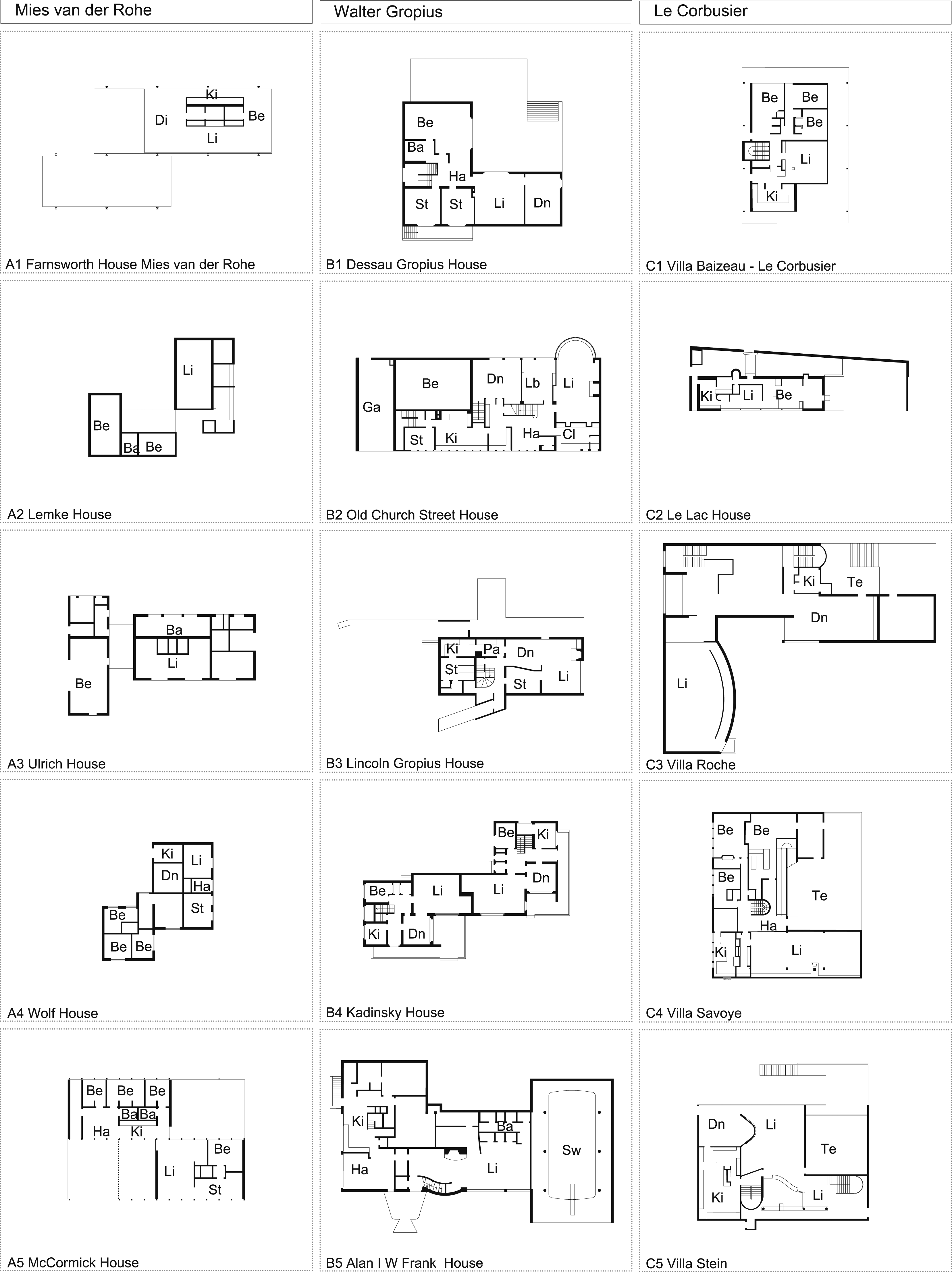
The case study selected is shown in Figure 1 which includes five houses designed, respectively, by Mies, Gropius and Le Corbusier. The selection was previously made by a study on bidimensional multilingual grammar
23
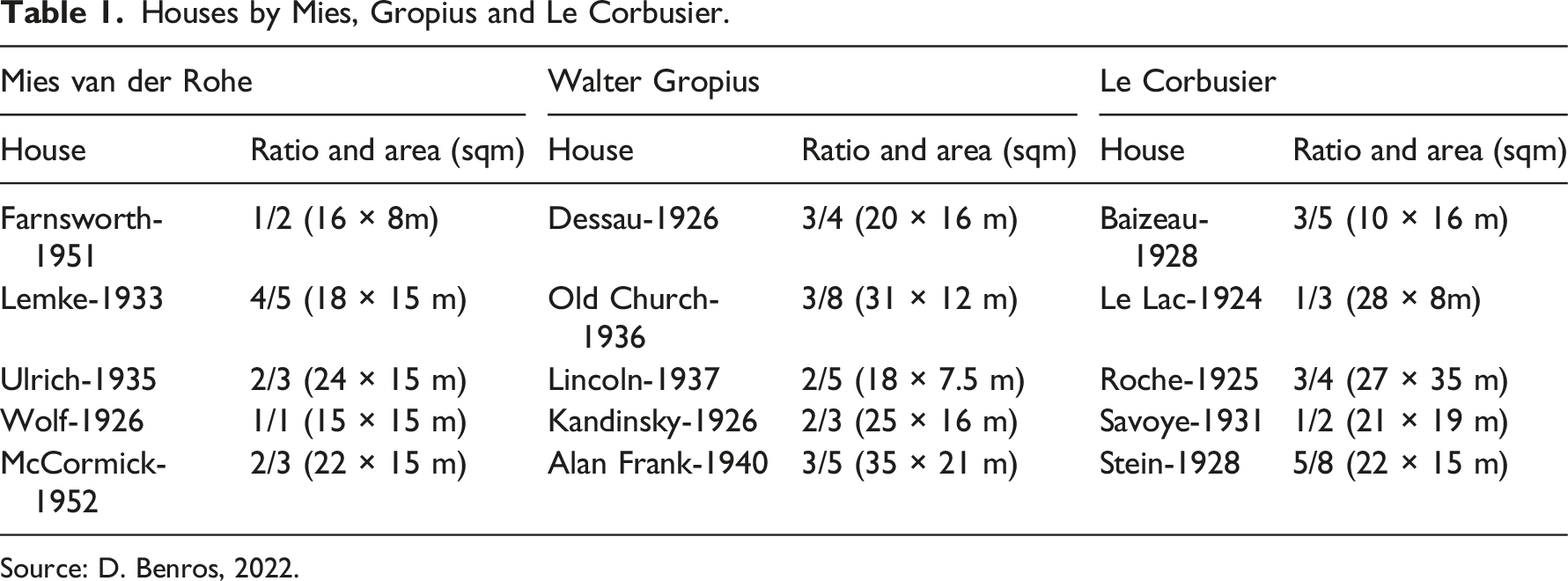
as shown in Figure 2. All examples showcased the main features of ‘The International style’, the rationalization, the minimalism, the utilitarian side of domestic architecture, modularity, use of industrial materials and trades. The selection covered some of the most emblematic houses designed within the style including ‘The Farnsworth House’, ‘Gropius House’ and ‘Villa Savoye’. It was observed that most houses from the corpus showcased an orthogonal layout contained within an external boundary. Most designs inspired a linear subdivision of internal spaces. Several key internal proportions were captured with a predilection for 1/1, ½, 1/3, 2/3 and 3/5 ratios (in keeping with a more classical tradition). Some geometric complexity was added with processes of space merging of adjacent rooms (particularly evident in Le Corbusier’s work). Additional information acquired was summarized in Table 1 which shows the key dimensions of each house’s envelope and its ratio used for the grammar inference. Grammar inference can be described as the process of composing the shape rules used in the formalism and its parametric expression. The values observed in the case study both in plan, section and elevation informed the parametrization used in the grammar rules. The analysis of the volume of the house shows additional features. Mies showed a predilection for colonnades that follow the strict structural/modular grid while there is often a flat terrace/porch adapted from classical architecture but made contemporary and minimal. Gropius often addressed horizontality and linear rhythms such as shown in ‘Old church street’ or ‘Lincoln House’ while creating well-defined entrance canopies, porches and smaller-sized balconies. Le Corbusier experimented with different typologies as shown in Figure 1, but the use of a free-flow open ground floor supported by pilotis, rhythmic horizontal openings and wide terraces are common features. These observations were useful for not only the generic part of the grammar but most importantly for the language-specific grammar side. International Style case study of 15 houses and their axo view from Mies van der Rohe, Walter Gropius and Le Corbusier. Source: Author. International Style case study of 15 houses from Mies van der Rohe, Walter Gropius and Le Corbusier. Source: Author. Houses by Mies, Gropius and Le Corbusier. Source: D. Benros, 2022.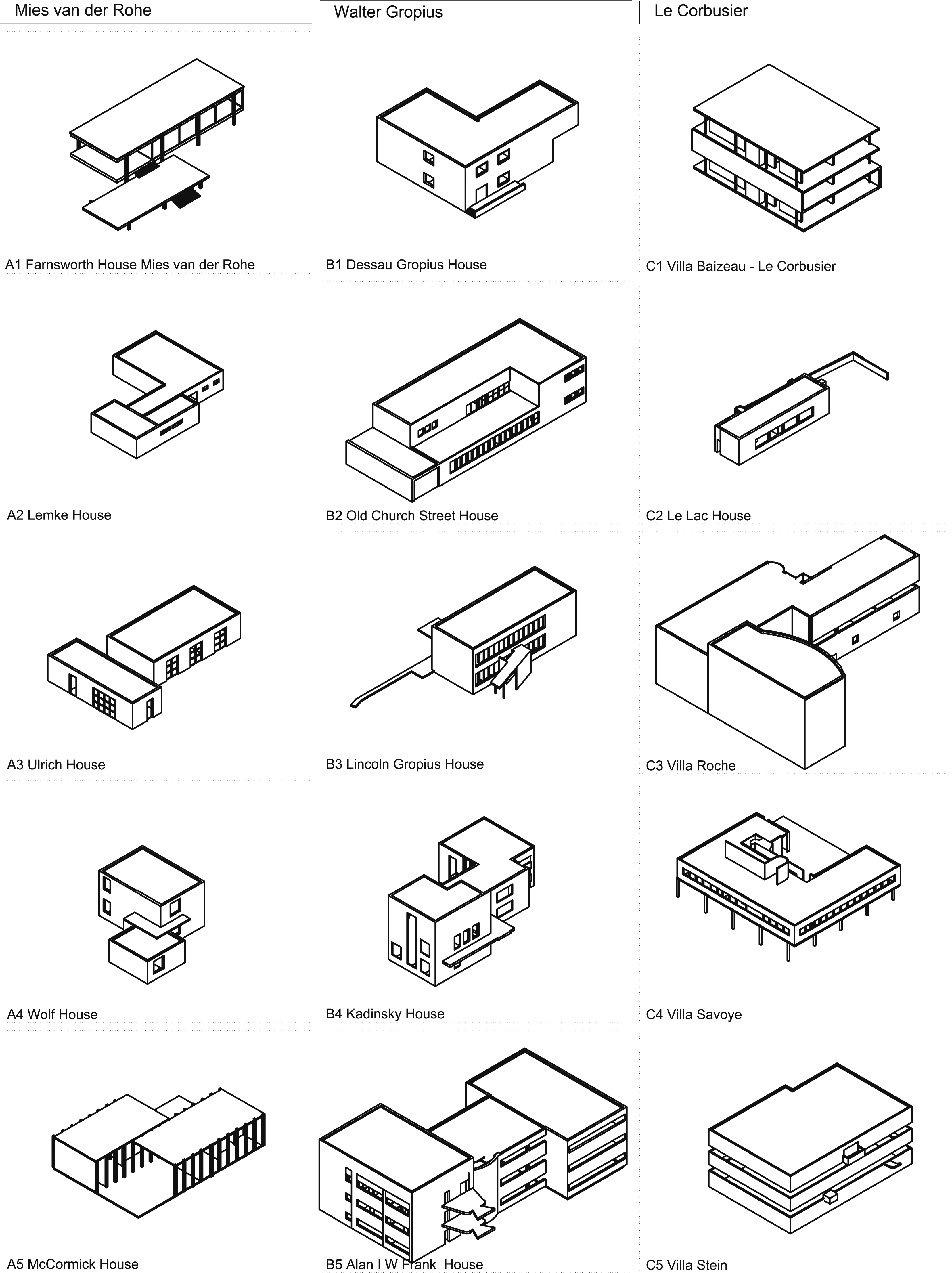
Grammar formulation and shape rules
The proposed formalism is based on a subdivision grammar, much like the Prairie houses, however, proposes a top-down approach using a subdivision method which resembles the Malagueira houses’ grammar.
5
While the latest uses a dual graphic illustration of mostly plan and section or plan and elevation taking advantage of bidimensional representation the proposed system is exclusively shown in three-dimensional. The generic grammar shape rules occur from stage I to stage IV, whilst the rest of the stages are particular to each language or sub-language. Figure 3 shows rules 1 to 5 showcasing the subdivision and merging rules. The same rules are shown for all three languages, but the parametrization is particular to each one as shown on the algebraic expression on the side. Most of the subdivision and merging rules are recursive and can be applied multiple times while still responding to the criteria defined by each language. The rules are also repeated vertically for the design of multistorey buildings. Generic shape grammar rules 1 to 5 stages I–III. Source: Author.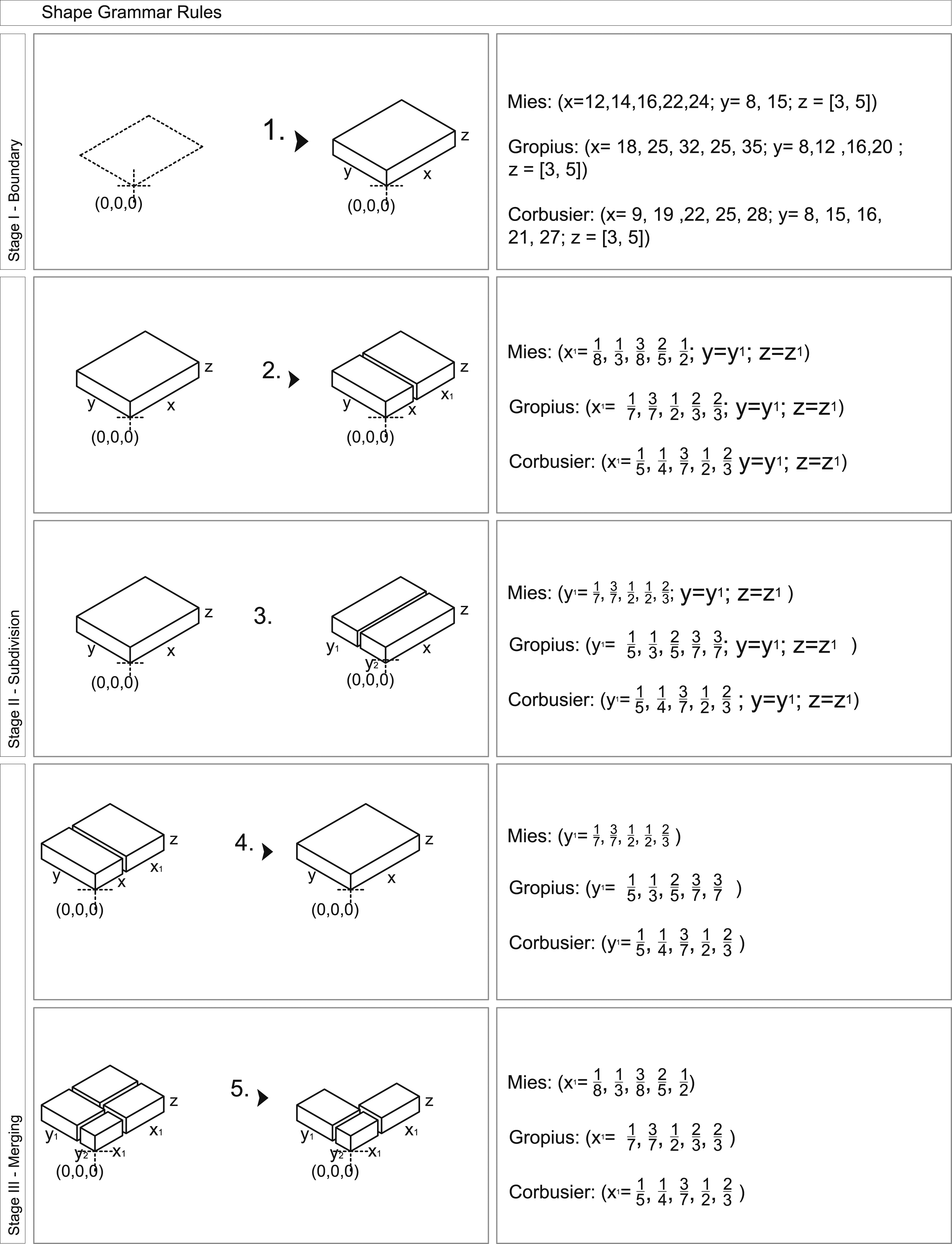
Recreation of designs
A good empirical method of testing a grammar rule system is using the grammar for the recreation of original designs or the creation of new solutions. The top-down approach used is illustrated in Figure 4 tree diagram which clearly shows the grammar branching into the three sub-languages of the common trunk of ‘The International style’. The diagram describes the original parametric envelope box that contains each building/floor. This is placed according to the ratios and dimensions commonly used by each designer concluding stage I. International Style shape grammar tree diagram with Farnsworth house, Dessau Gropius house and Villa Baizeau. Source: Author.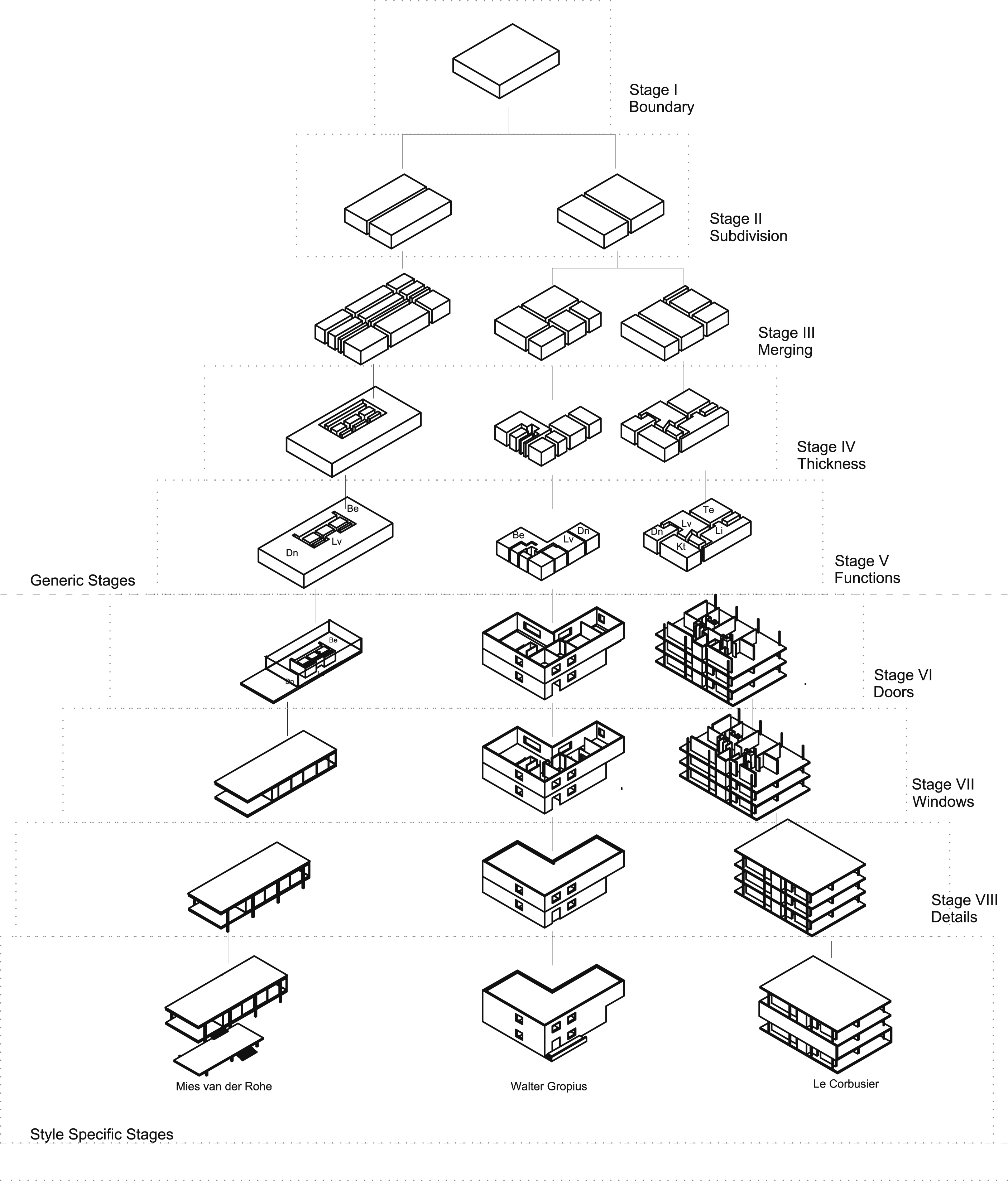
Stage II is responsible for the main tasks of subdivision according to the key internal proportions of each designer. Stage III allows for space merging. This stage prepares the design for a higher level of complexity by merging adjacent spaces into different configurations. The last common stage of the generic formulation is stage IV where wall placement happens.
The following stages are language-specific and therefore separated from the main branch. They include: stage V spatial assignment, stage VI addition of floors or stories, stage VII inclusion of details and inclusion of openings and Stage VIII the conclusion of design with the deletion of labels.
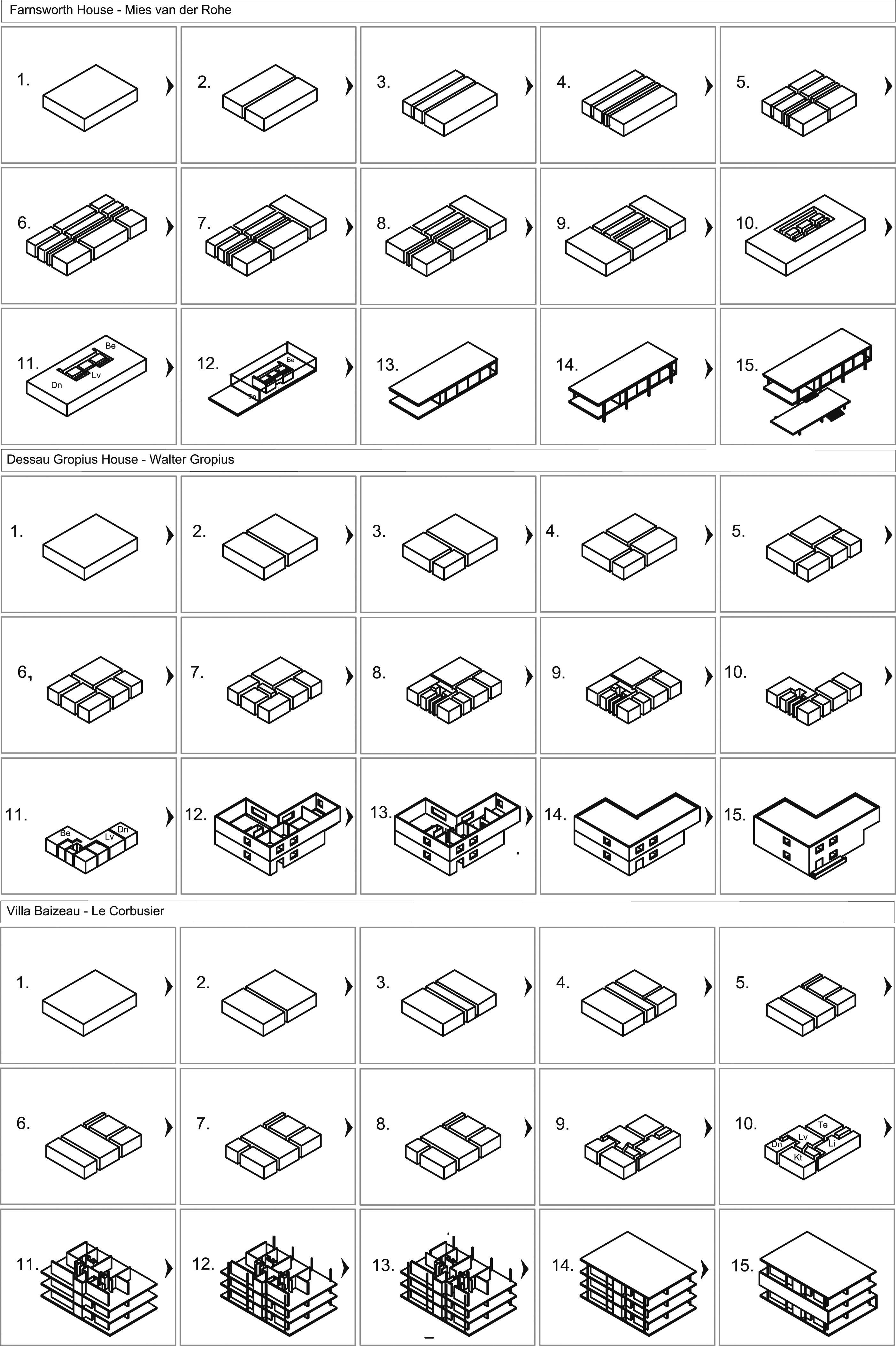
The empirical evaluation can be made using a typical derivation process. The derivation is the process that illustrates how designs are recreated using grammar. Figures 5 and 6 show three houses being generated using a step-by-step strategy from Mies’s Farnsworth house to ‘Gropius house’ and ‘Villa Baizeau’ by Le Corbusier. The illustrations show the derivation both in bi-dimensionality as shown in Ref. [23] and using three-dimensional representation. This enables the understanding of not only the spatial creation (better understood bi-dimensionally), but also the overall house volume and exterior features are shown three-dimensionally including the insertion of top floors, façade and structural elements. Important to note that the grammar sequence does not try to portray the construction process, but to achieve the result some processes' sequence might be altered. As an example, the grammar sequence is prompted by the envelope sizing, and spatial assignment, followed by the inclusion of additional stories and then the inclusion of a structural model. Derivation of Farnsworth house by Mies, Gropius house and Villa Baizeau by Le Corbusier. Source: Author. Partial derivation of Farnsworth house by Mies, Gropius house and Villa Baizeau by Le Corbusier in axo view. Source: Author.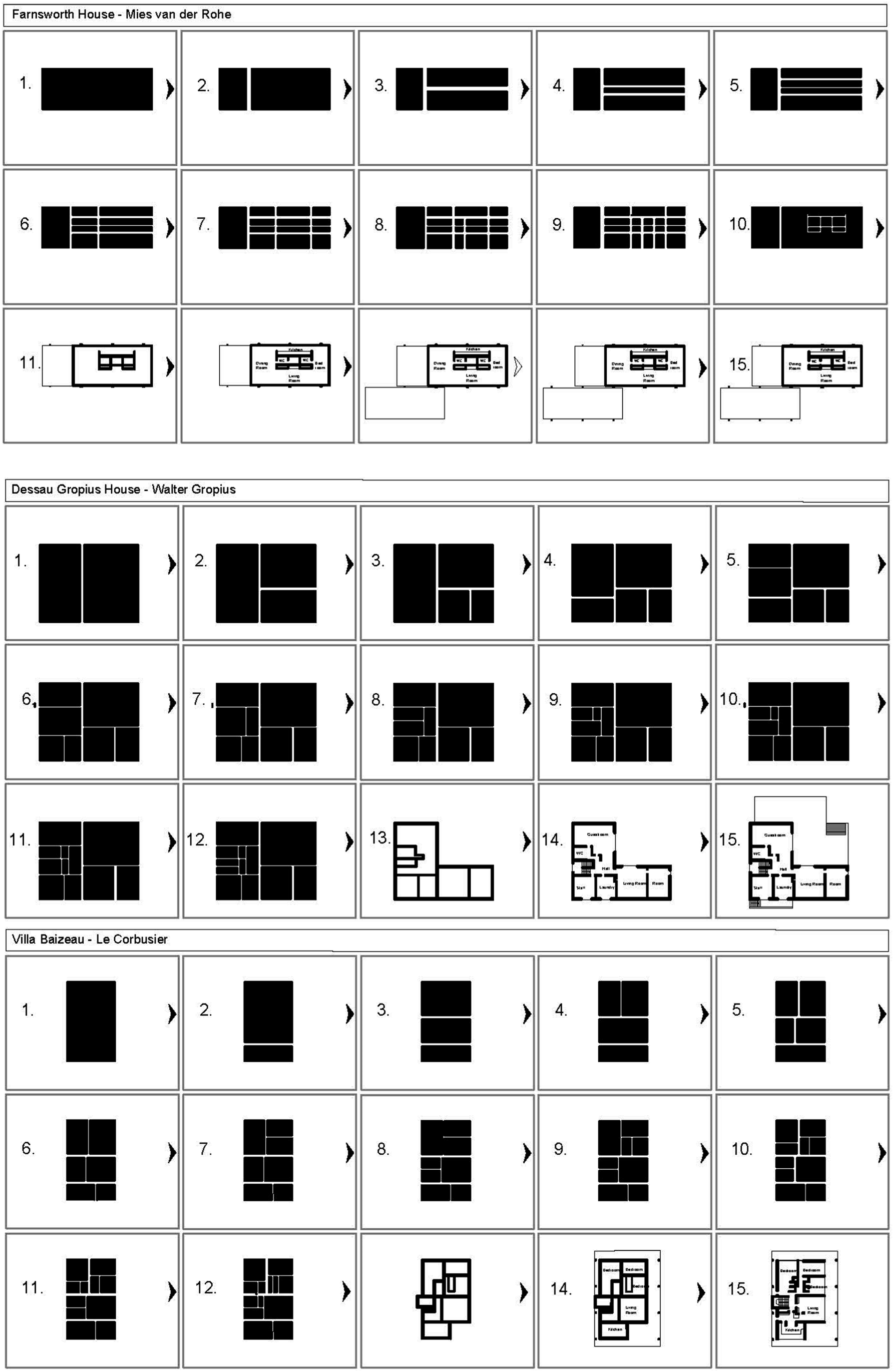
Evaluation
The study also aimed at the creation of a more effective evaluation method that complemented the usual empirical grammar evaluations via derivation and design generation.
A two-fold evaluation method was proposed: a quantitative and a qualitative method. The quantitative method used statistical formulations to address the design solutions reproduced and generated newly. For each design the parameters used by the grammar were stored and then using dimensionality reduction (often used for large datasets) called Principal Component Analysis (PCA) managed those parameters into a single cartesian point and then reproduced in a cartesian chart enabling visualization. That allows a method of objective comparison of several design solutions. The results of the PCA are shown and discussed in the Questionnaire section.
The qualitative method aimed at understanding the level of perception and intuition of different users of the grammar whilst reading the end results. To do so, a set of questions illustrated with floorplans designed to test how these were perceived. The results are shown in section 3.2.
Results
The two evaluation methods used resulted in important tools to analyze the work created. The quantitative method was responsible for a visible representation of the grammar languages’ parametric space whilst the qualitative method allowed for independent users to assess the grammar and their results. In addition, the output of the grammar and some of the new design solutions are also telling and worth discussing particularly the hybrid designs:
Qualitative methods – PCA
Using dimensionality reduction, we were able to reduce the parameters required to design each house into a cartesian representation and plot it into a chart. This graphical representation allows for an abstraction of the parametric space of each language to be shown. Figure 7 illustrates all the original houses within the selected case study plotted into a PCA chart. Their placement within the cartesian chart is reduced to a single point. For ease of interpretation, each house represented is shown next to the designated point. International Style designs from Mies (a), Gropius (b) and Le Corbusier (c) were generated by the multilingual shape grammar and their parametric spaces represented using Principal Components Analysis (PCA). Source: Author.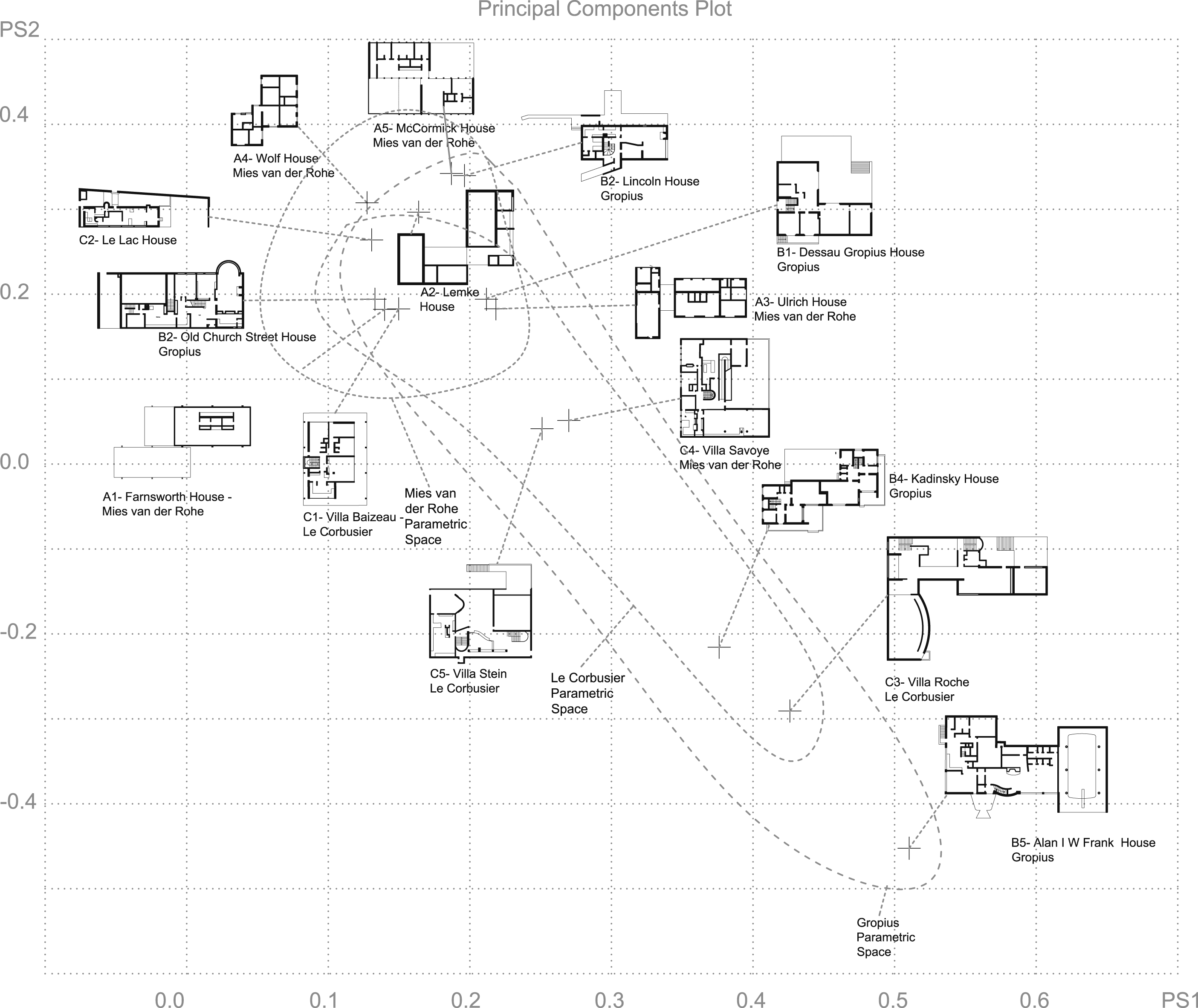
It is observed a clear clustering effect, where houses from the same designer congregate within a region of the chart. The most obvious cluster is preconized by the Mies’s houses which occupy a parametric space on the top left, clearly grouped. This seems to hint at a well-defined design language that was accurately represented by the multilingual grammar. Closely we can observe the parametric space of the Corbusian houses. These show a larger linear spread occupying the area in the centre of the chart. Despite the linear arrangement is clear that they congregate in the centre denoting a space. The Gropius’s houses are also grouped but do showcase a wider spread. This can be explained by the greater diversity of the case study with houses of a few rooms placed next to generous bourgeoise residences which even accommodate an indoor swimming pool such as the Alan W. Frank house dully located at the bottom extremity of the chart.
Not surprisingly, all these sub-languages of the International style coincide at some point showcasing a major overlap in the top centre of the chart. In fact, these designers shared in one way or another stylistic similarities and commonalities. The overlapping space somehow shows that the designers shared some design principles and confirms the idea of design movement preconized by independent design languages. The houses that fall in this common ground are of two types; of line, and also houses that have two articulated blocks such as Lemke, Ulrich and Farnsworth houses.
Hybrid designs
Hybrid designs are created from the mix of two or more parent design languages. They often share with the parents strong key characteristics and some detail features that might confer additional design character. In grammar design, hybrids are either generated by adjusting graphic design rules (the most common route)21,22 or as rehearsed in this study by simply playing with the parametrization. By using a range of parameters from both parent languages, results are consistently efficient where new hybrid designs generated fall within the design space of each parent (overlapping parametric spaces). To test the theory, six hybrid designs were generated as shown in Figure 8. International Style hybrid designs. Source: Author.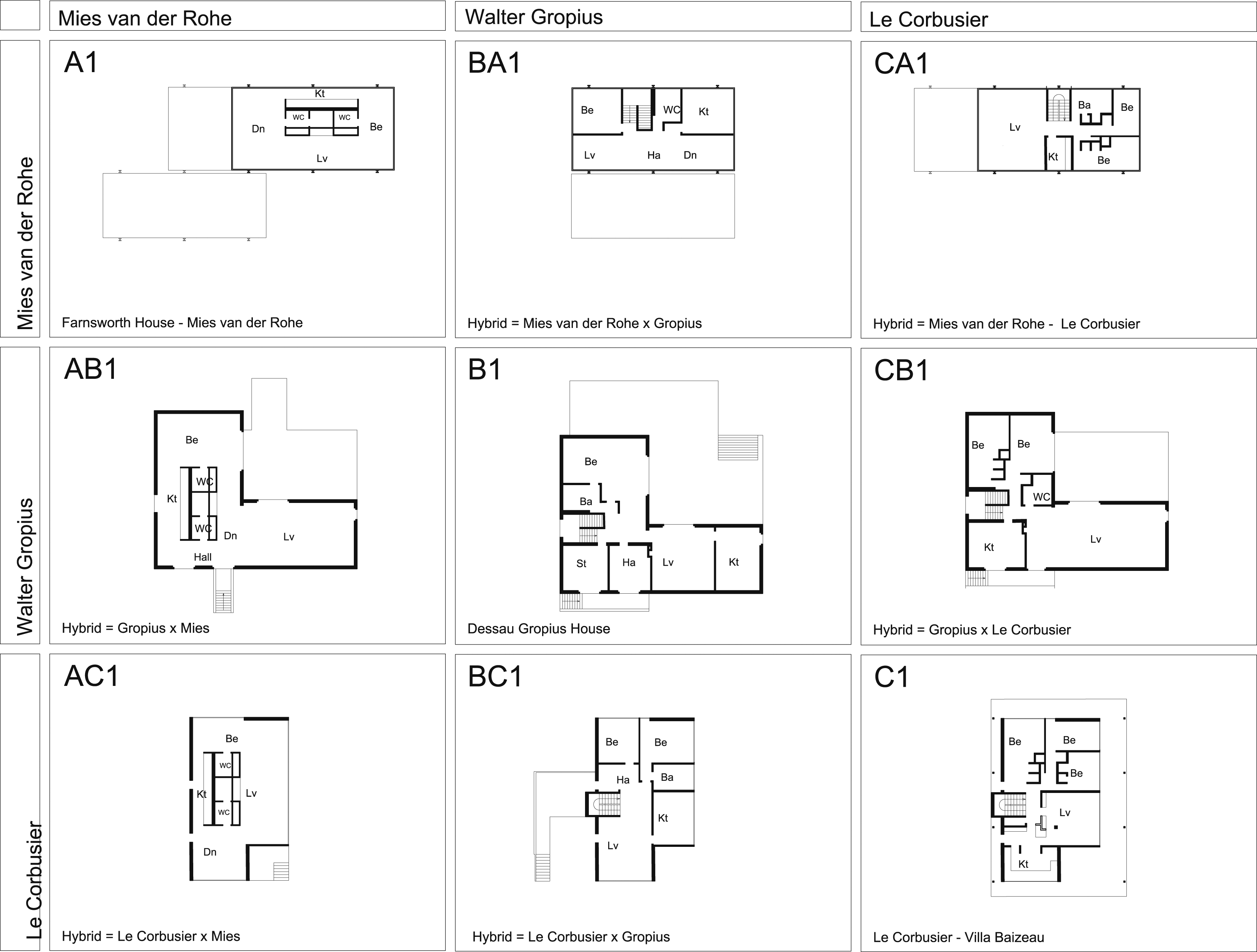
Figure 8 shows three original designs (Farnsworth, Gropius and Villa Baizeau) and six hybrid designs which play with the original designs' parametrizations. There are a Mies x Gropius, Gropius x Corbusier and Corbusier x Mies’s hybrid designs. The output is visually credible and makes sense from a spatial configuration standpoint.
The original solutions that feature the corpus shown in Figure 8 (Mies’s Farnsworth house, the Gropius house and Le Corbusier’s Villa Baizeau) were selected using the following criteria: a. Widely published and fairly known by designers and laymen. b. That represent the well-defined style preconized by each designer c. That allow for the use of their key features or parameterization in the generation of new hybrid designs.
By playing with the parameters within two parent-style parametric spaces, one attains a house that was generated by the common shape grammar rules but using parameters that are common to both parent styles.
Like the original designs, we proceeded using PCA to reduce the large data and plot the examples into a cartesian chart to visualize it. The result is shown in Figure 9. Hybrid designs from Mies van der Rohe, Gropius and Le Corbusier were generated by the multilingual shape grammar using (PCA). Source: Author.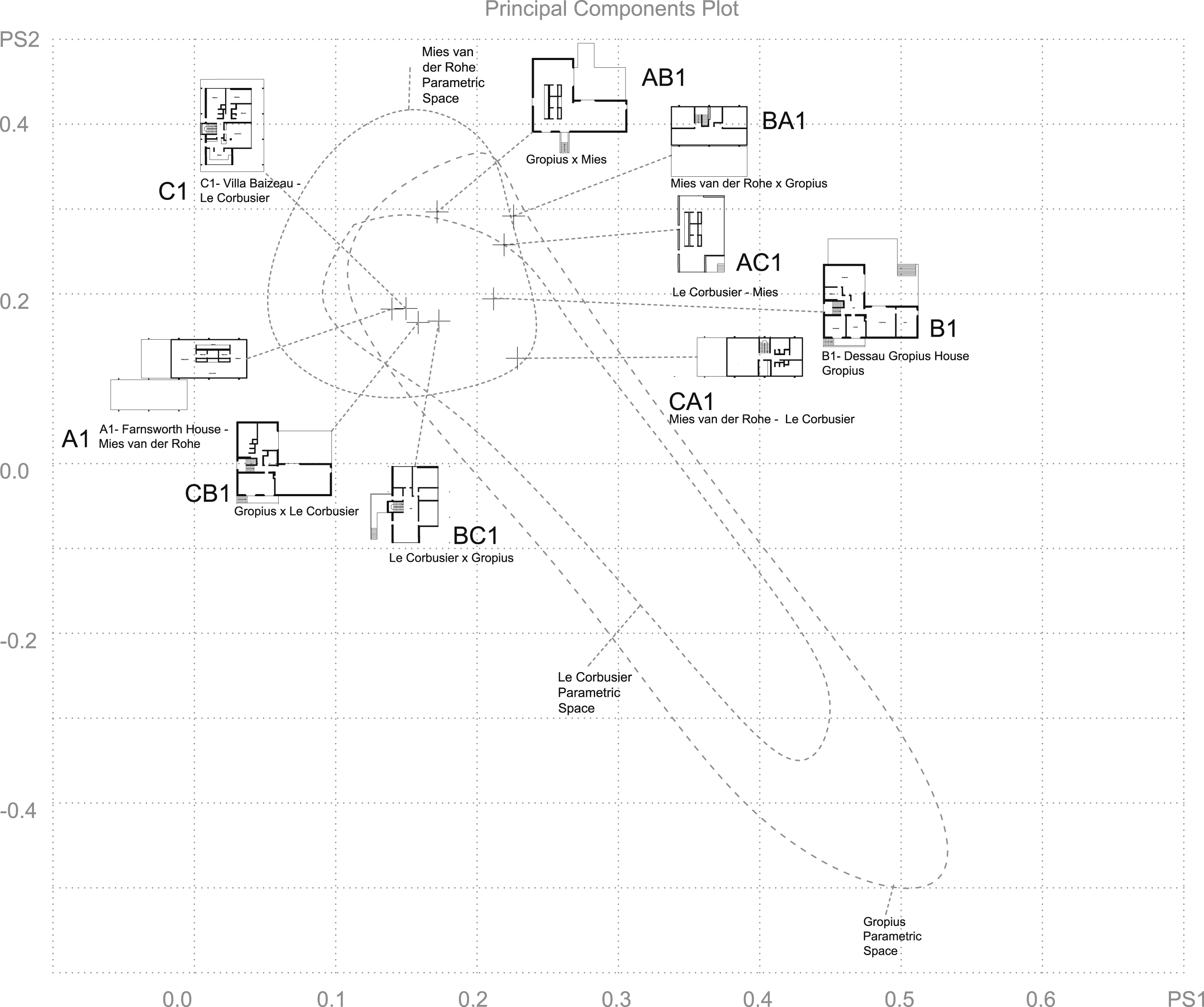
Astonishingly, the clustering effect is even more pronounced and as expected the hybrids fell within the parametric spaces of both parent languages. Not surprisingly, most clustering occurred in the smaller space where most languages overlap proving the hypothesis of visual representation of parametric space. The hybrids seem to confirm the clustering observed previously.
The hybrid results are also useful featuring in the user questionnaires as part of the qualitative methods.
Questionnaires
The qualitative method of evaluation proposed was based on questionnaires posed to third parties. Figures 10 and 11 illustrate the full set of six questions posed to the participants. They were asked to identify the least similar house from a sample of three houses, of which two were part of the original corpus and one was a hybrid solution. The International Style questionnaire and their hybrids page 1, where Q1-c is the hybrid solution, Q2-c and Q3-c. Source: Author. The International Style questionnaire and their hybrids page 2, where Q4-c is the hybrid solution, Q5-c and Q6-c. Source: Author.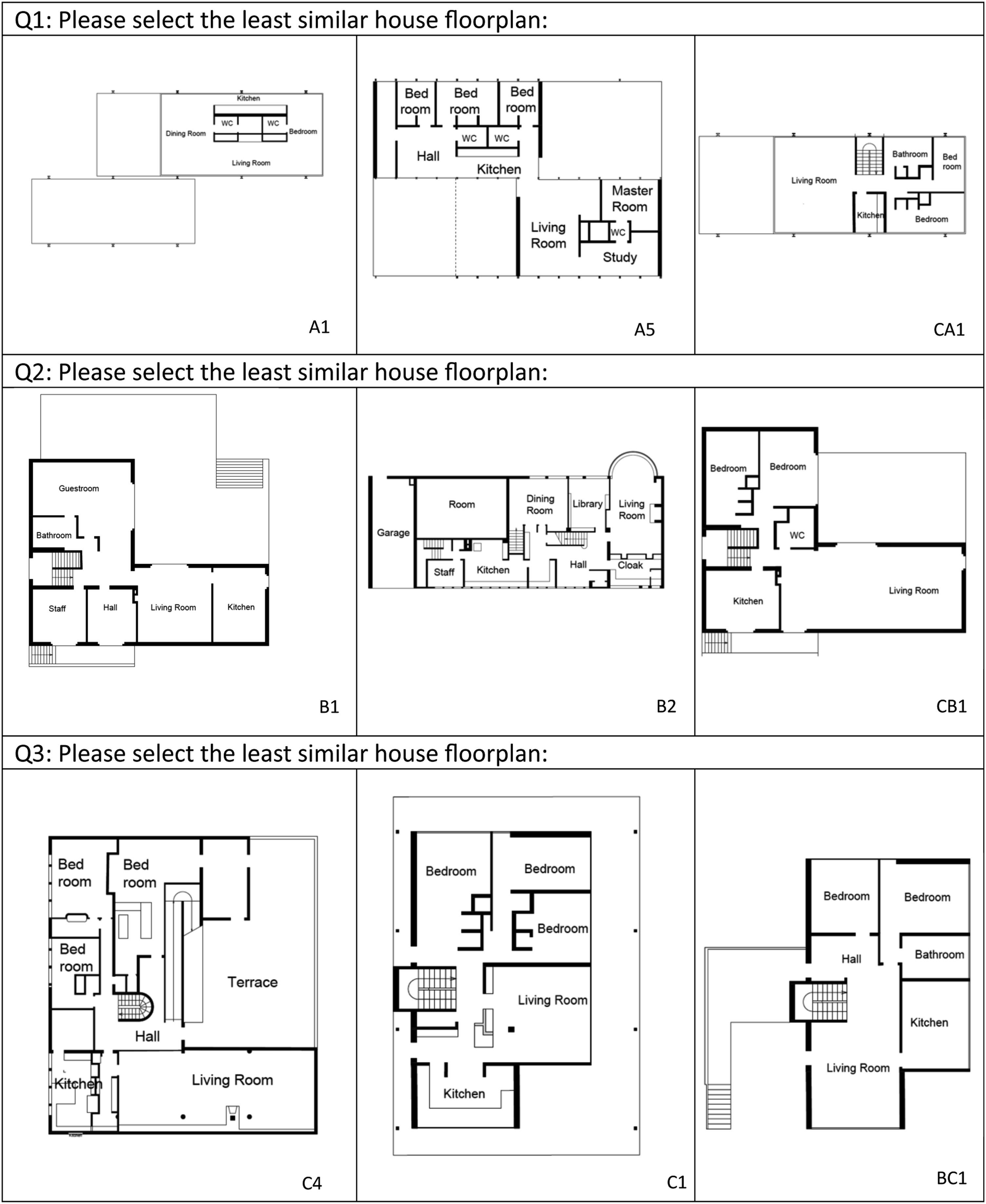
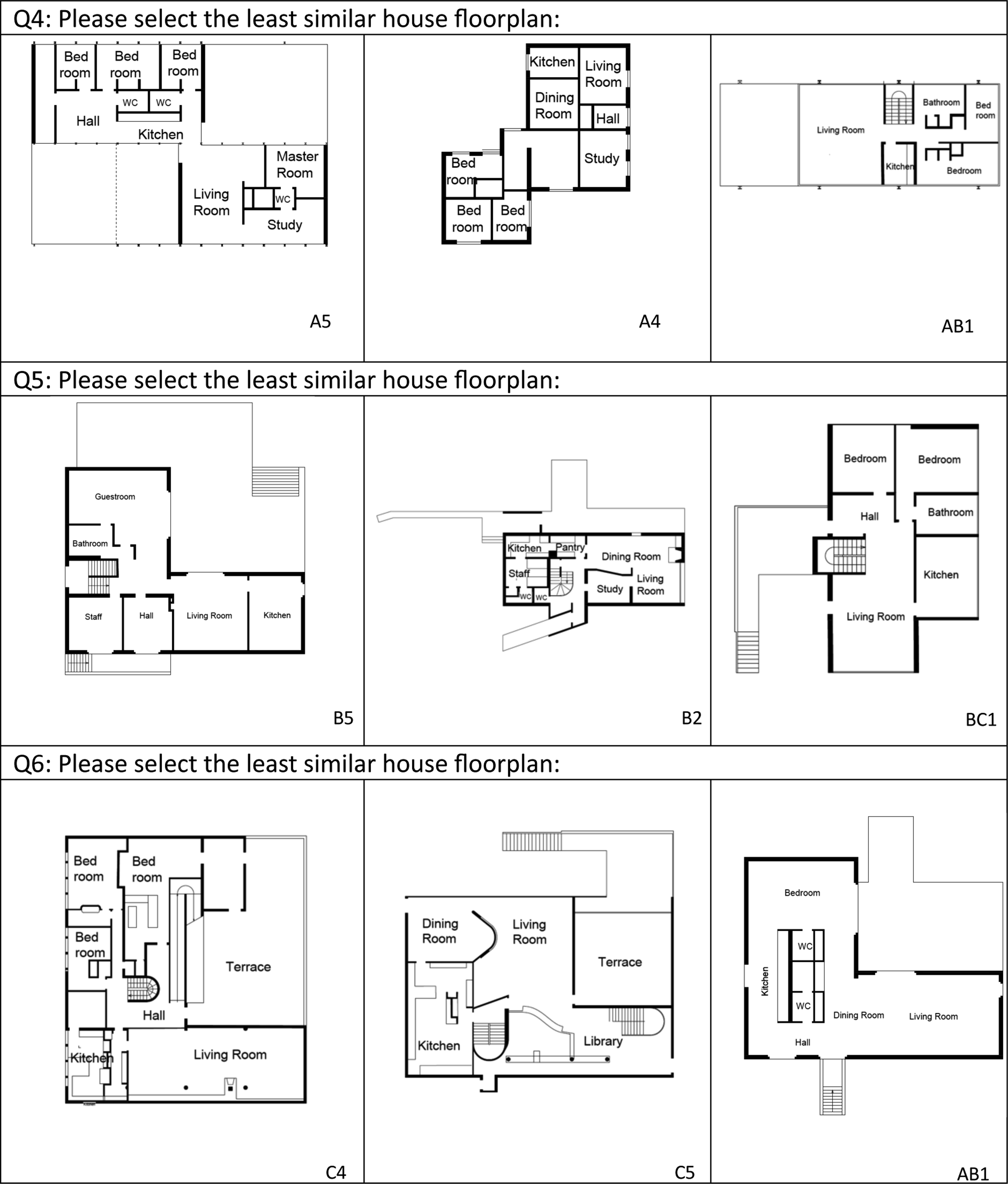
The main purpose was to test independent users to assess the similarities and differences using only their intuition and sense of spatial perception. The houses were illustrated in floorplan using similar graphics. The question was posed as illustrated below.
The universe of the questionnaire participants included laymen and users with design-related backgrounds. The questionnaire was conducted online for easier distribution and access using the ‘SurveyMonkey’ platform which constitutes a more expedited approach to collecting and arranging data. Thirty-five (35) participants concluded the full questionnaire with conclusive responses. The time for completing the questionnaire was under 5 min.
The questionnaire was posed as a multiple choice where participants had to select the option that provided the higher level of similarities.
The questionnaires were hosted using an online platform and divulged using social media. This warranted a mix of participants both laymen and design experts. All participant contributions were anonymous, so the exact profile of participants is undetermined. Their initial brief mentioned a study on design style and hybrid solutions. The participants were asked to use their intuition (rather than design knowledge or recollection of the designs observed) to select floorplans that showcased basic design similarities.
Most users did not distinguish between original and hybrid designs, and 67% of the participants did not identify the hybrid solutions as significantly different (questions 1–4). Most enquired, identified dissimilarities in the hybrid proposals from questions 5 and 6 (40% and 53% of the enquired). This seems to indicate that the new hybrid designs are often mistaken for the ‘original corpus’ or simply share too many commonalities.
The common occurrence encountered was the participants' inability to distinguish between original designs and hybrids, which seems to hint at one possible answer: Both original designs and hybrids share too many commonalities and pass as members from the same design language.
This is corroborated by the PCA analysis where both the same hybrids and original designs fall within the same parametric space. When analyzing Question 1, most participants 67% chose option 2 as the least similar house. This choice was solely made based on intuition and overall design appearance. What each user was empirically analyzing, regardless of their background, was how many similarities could be identified and if two of the houses exposed were familiar enough to be part of the same parametric space. What most users chose as the least similar house (option 2) was a real house designed by Mies van der Rohe, and so was (option 1). Option 3 was a hybrid generated by the grammar itself and not an original design. The similarities identified were between a hybrid and a real example. When compared to the results obtained by PCA (Figure 9), we realize that options 1 and 3, respectively, original and hybrid are somehow closer in their parametric space than the two original Miesian designs (Figure 7).
Qualitative and quantitative methods corroborate the results or seem to confirm similar findings.
Discussion
The exposed study focused on the body of work of three designers within the International style movement. Unlike previous studies, the proposed grammar was based on three-dimensionality proposing a set of parametric multilingual shape rules that cater to three different languages via its specific set of parametric ranges, whilst proposing a pragmatic quantitative and qualitative method to evaluate results. The use of PCA as a quantitative method and user questionnaires as qualitative methods are the main contributions of this study providing a solid methodology for grammar evaluation. Commonly evaluation has used empirical and subjective procedures to test the universe of solutions.
Also addressed was the rule system structure. The proposed rules were generic and cross-language up to stage 4 of implementation and language-specific from stages IV to VIII. This was implemented in precursor studies and refined in the current paper.1,23
Several shape grammars proposed three-dimensional formulations such as the Prairie houses and the Malagueira houses grammar, however, to the extent of our knowledge, this is the first multilingual generic grammar with a three-dimensional formulation based on a top-down volumetric subdivision approach, which is also a novelty in the state of the art. In addition is important to note that the parametric shape rules are the same ones for each sub-language varying only in the range of parameters used. This range of parameters is confined within the parametric space of each sub-language which can be plotted and illustrated in bidimensional representation through a cartesian chart.
The foreseen purposes of this multilingual grammar are threefold: firstly, a new design and recreation tool, secondly, an analysis/study tool for the artistic movement it covers and ultimately a possible algorithmic base for other future multilingual grammar endeavours.
Within the new algorithm, it is proposed a system whereby varying the range of parameters allowed for each substyle and maintaining the shape rule graphics many designs/families can be attained.
Another contribution is the notion of the parametric space of a language. Multilingual grammar while allowing for different styles enables an algebraic space where a certain well-defined language exists. The more defined the cluster effect of the parametric space, the more consistent the language. The parametric space notion was introduced in previous work 1 and reinforced in this study.
The last contribution of the exposed study is the evaluation process. In most shape grammars, this is empirically proposed by the recreation of the original corpus, the generation of new consistent designs and/or by an assessment made by experts or the original design language authors. This work proposes a dual evaluation based on quantitative methods using statistical tools and qualitative methods using third-party questionnaires. The dual mode is expected to be a more objective means of evaluation. This parametric grammar space seems to be corroborated both using quantitative methods and through qualitative methods. The quantitative methodology is comprised of the use of PCA and graphical presentation of numerical data which allows the visualization of the corpus of designs in ‘space’.
The main hypothesis of this study was ‘Can style features be quantifiable and qualitatively defined?’. Quantitative methods such as PCA provide clear objective results that can be objectively transposed into cartesian charts and measurably understood. Qualitative methods (such as questionnaires) provide a measurable means to account for qualitative descriptions. The questionnaire provides a way of understanding if independent users from different backgrounds intuitively recognize style via graphical means. The questionnaire results attest to empirical perception.
The quantitative method focuses on each study case house floorplan output from the grammar and the parameters used to generate it. These parameters are then reduced using Principal Components Analysis (PCA) and the results are plotted in a cartesian chart where the clustering defining parametric spaces is visible. The qualitative methods used user questionnaires addressed to both laymen and designers where they were asked to assess the most likely houses to be within the design family and the least similar house. The experiment also included hybrid designs produced by the grammar. The hybrid design generated also neatly fell within the previously determined parametric space attesting their authenticity within each language. In summary, most people struggled to discern the original designs from the hybrid solutions, proving that the hybrid-generated specimens shared basic structure or features comparable and relatable to the original designs and therefore attesting to the grammar efficiency. The notion of hybrids is introduced in grammar as a deviation from the main style, being the result of two parent languages. They are relevant in multilingual formulations as they are the result of manipulation of the parameters used for each language and unlike other work in hybrids this does not explore hybrids using shape rule manipulation or adjustment,21,22 but simply by varying the interval of parameters used.
The qualitative methodology is based on user questionnaires and user empirical perception of design solutions. Both results, pragmatic and empirical seem to align and confirm each other. 5.
The combined evaluation methodology provides a useful tool for grammarians to evaluate the proposed systems. Although not a perfect system with the expected biases and shortfalls, it is to the extent of our knowledge, the most comprehensive evaluation. The quantitative method provides an objective method to determine a parametric space using cartesian charts to illustrate bidimensional data. The greatest limitation would be the accuracy of the grammar developed and the universe of solutions that provide the range of parameters. The larger the corpus, the more accurate. Other limitations might be related to the precise graphical nature of each shape rule and its inference. The qualitative methods depend on user questionnaires, on their own would not constitute a foolproof method. It is only successful when associated with another evaluation method as ultimate confirmation. Its results are dependent on the empirical observations of independent users who might or not might be familiar with the languages. For this reason, it provides insightful information as it might confirm unexpected results attained using qualitative methods. The results are more accurate as more diverse and broader the universe of users enquired and therefore its results might be skewed by a limited group of questionnaire users.
Future work will continue with the ongoing computer implementation of multilingual grammar making it more accessible and easier to use to experts and laymen grammar users and allowing for automated creation of design solutions. The computer tool will allow the manipulation of the parametric space by allowing different values and therefore with the same graphic rules allow for other sub-languages. The algorithm can be reused for other design styles as a generic grammar formulation.
Advances in AI, namely, reinforced learning have proved useful in generative design and when allied with grammar implementations its potential is impressive. 24 This is potentially the future of grammar implementations and could be incorporated in the next steps of this research. These advances were not available to the first grammar devices conceived in the 70s and could be harnessed in the near future. AI is also useful for interface and collaborative design where design tool/grammar implementation and grammarian/design user can collaboratively and in a guided manner co-design using formalism.
Implementation is the next step of this research; nevertheless, the algorithm and planification of the system and multilingual grammar are showcased in this paper which will undoubtedly assist in the devise of a computer tool.
Footnotes
Declaration of conflicting interests
The author(s) declared no potential conflicts of interest with respect to the research, authorship, and/or publication of this article.
Funding
The author(s) received no financial support for the research, authorship, and/or publication of this article.
