



Abstract
This systematic review explores the impact of international professional mobility (IPM) programmes for continuing professional development by addressing two key research questions: (1) What is the impact of IPM on participants? (2) What contributions do participants make at organisational, community, and national levels after participating in IPM? Drawing on 78 peer-reviewed studies and employing a Mixed-Methods Research Synthesis approach, this review provides a comprehensive analysis of how IPM fosters professional expertise, intercultural competencies, and career advancement, while also generating broader societal impacts. Despite reintegration challenges – such as resistance to new ideas and weakened domestic networks – participants contribute significantly to organisational innovation, community engagement, and cross-border collaboration. The review identifies three pressing areas for future research: the need for detailed analysis of specific programme characteristics, the complexities of post-mobility reintegration, and the fragmented use of theoretical frameworks in the existing literature. By synthesising the evidence, this review offers critical insights for policymakers, funding agencies, programme designers, and participants aiming to maximise the professional and societal value of IPM initiatives.
Introduction
As globalisation reshapes economies and labour markets, the demand for professionals with international experience has intensified. Organisations increasingly seek individuals who can navigate complex, cross-border challenges, integrate diverse cultural perspectives, and establish global networks. This is especially true in sectors like healthcare, education, and non-governmental organisations (NGOs), where addressing transnational issues such as health crises, educational disparities, and humanitarian needs often requires a globally informed workforce (Jöns, 2007; Teichler, 2015). In response to these growing demands, international professional mobility (IPM) has increasingly been used as a strategy for continuing professional development (CPD) (Institute of International Education, 2024), enabling professionals to enhance their skills and advance their careers through structured, career-focused programmes abroad.
In this study, IPM is defined as the temporary international relocation of professionals participating in structured programmes designed for professional development. A structured programme refers to a professional development course, study, or training abroad that is planned in detail with specific objectives in mind. These programmes include exchange programmes (Naleppa & Waldbillig, 2018; Ospina & Medina, 2020; Pinto & Pereira, 2019; Soskolne, 1993), fellowship programmes (Adriansen & Madsen, 2021; Dorgan, 1998; Jöns, 2009; Wilson et al., 2014), professional placements (Biraimah & Jotia, 2013; Dalal et al., 2017; Engel, 2010), internships (Ateşkan, 2016; Pinto & Pereira, 2019), and professional development visits (Burstow, 2009; Kuzhabekova et al., 2022; Liu et al., 2021).
A significant body of literature focuses on the benefits of CPD within home countries, such as skills and knowledge enhancement, networking, and career development (Magwenya et al., 2023; Osborne, 2023). However, IPM is increasingly recognised as essential for professionals working in globalised sectors, and its role in shaping broader institutional and societal impacts remains critical but underexplored (Schäfer, 2022). Some studies have explored these aspects. For instance, Scott-Smith (2008) analysed the history of the U.S. State Department’s Foreign Leader Programme in Britain, France, and the Netherlands, highlighting its influence on career trajectories and its role in fostering transatlantic relations from the 1950s to the 1970s. Similarly, an evaluation of Humphrey Fellowship programme demonstrates the impact not only on individual fellows but also on institutional policies, national strategies, and international collaborations (GDIT, 2018). Additionally, recent analysis underscores the broader impact of such programmes on development areas, including economic growth, health, and educational opportunities (Kwak & Chankseliani, 2023).
This review extends this literature by systematically synthesising the evidence on how IPM contributes not only to professional development but also to institutional and societal impact. Despite growing interest in IPMs for CPD, two critical research questions remain largely unexamined: (1) What is the impact of IPM on the participants of such programmes? (2) What contributions do participants make at organisational, community, and national levels after participating in IPM? To address these questions, we systematically identified, evaluated, and synthesised relevant scholarly literature. Using Mixed-Methods Research Synthesis (MMRS) (Heyvaert et al., 2013), we were able to integrate qualitative and quantitative evidence to gain deeper insights into both individual and societal-level impacts of IPM. This synthesis approach allowed us to highlight patterns in how IPM contributes to professional development, intercultural understanding, and long-term contributions to home institutions.
This study provides a comprehensive analysis of existing literature, focusing on professionals from sectors such as higher education, schooling, healthcare, social work, NGOs, and community work who have participated in IPM programmes. The findings illustrate how, upon returning to their home countries, these professionals apply their enhanced knowledge, skills, intercultural competencies, and networks to drive institutional change, build long-term cross-national collaborations, and contribute to broader societal development. This review offers evidence-based insights for policymakers and practitioners, helping to shape IPM programmes that not only promote individual professional growth but also generate wider societal benefits, such as increased innovation, cross-border cooperation, and the dissemination of new practices across sectors. By highlighting both the practical applications and broader impacts of IPM, this review contributes to ongoing discussions on how best to design, implement, and fund these programmes to maximise their societal value.
Method
To address the research questions, this study employed a systematic literature review using an MMRS approach. MMRS is a systematic review technique that methodically collects, assesses, and evaluates academic literature based on established, transparent, and rigorous criteria (Heyvaert et al., 2013). This approach integrates data from qualitative, quantitative, and mixed-methods studies, offering a comprehensive understanding of the research objectives. Given the increased attention to and funding for mobility scholarship programmes since the 1960s (Chankseliani, 2022a), our review covers literature from 1960 to 2022.
This study defines IPM as the temporary international relocation of professionals participating in structured, career-focused programmes aimed at their professional development. A structured programme is characterised by its formal design, including specific educational or professional objectives, timeframes, and expected outcomes that lead to credentialed qualifications or professional skills. These programmes include advanced degrees (e.g. PhD or post-doctoral studies), targeted professional development courses (e.g. the Postgraduate Certificate in Education and pre-service teaching courses), and immersive professional training (including fellowships, placements, and internships) designed with explicit learning objectives. What distinguishes these programmes is their formalised structure, in contrast to unstructured experiences like short-term workshops or informal training.
Search strategy
We examined article titles, abstracts, and keywords in the Scopus database of peer-reviewed literature. The research process involved three key stages: (1) Initial search: We began with four groups of search strings reflecting the main research questions: ‘professional’, ‘international’, ‘mobility’, and ‘impact’. (2) Expanded search: Upon initial review, we observed that most papers focused on academics, teachers, and researchers. To broaden our scope, we incorporated additional keywords representing various professional sectors, such as artists, journalists, business professionals, and civil society members. (3) Focused search on structured programmes: Noticing a gap in literature specifically addressing structured programmes, we supplemented our search with terms such as ‘exchange programme’, ‘professional development programme’, ‘internship programme’, and ‘work placement programme’.
Detailed search strings and the methodology used in each stage are provided in Appendix 1.
As a result of these searches, we identified 5,681 articles. After automatically removing 2,286 duplicates, we screened the abstracts of 3,395 articles.
Inclusion and exclusion criteria
To select articles for this study, we applied the following criteria: (1) Articles published between 1960 and 2022. (2) Articles written in English. (3) Peer-reviewed articles. (4) Studies focusing on international student mobility (e.g. undergraduate studies abroad). These programmes are generally broader in scope, typically representing early-stage educational experiences aimed at educational and broader academic development rather than being directly connected to professional roles or the development of specific professional qualifications. This distinction ensures that the reviewed literature remains focused on mobility programmes that are explicitly linked to professional advancement and career development. (5) Programmes with an international mobility element. (6) Studies assessing the impact/influence of mobility programmes, whether on individual participants or broader societal levels. (7) Both qualitative and quantitative research, as well as mixed-method studies, were eligible for inclusion.
We excluded the following: (1) Books, book chapters, reports, and articles from non-peer-reviewed journals. (2) Non-English publications. (3) Studies focused on cultural tours, visits, conferences, or unstructured workshops. (4) Articles looking at international student mobility
1
and youth mobility. (5) Studies on IPM occur within a single country, between organisations, or within a single organisation. (6) Articles that discuss IPM programmes but do not evaluate their impact on individual professional development or subsequent effects at organisational, community, or national levels upon participants’ return.
The process of selecting articles involved two stages: an initial review of article titles and abstracts, followed by a comprehensive examination of the full texts. In the first stage, we used Covidence software, a web-based tool specifically designed to streamline systematic reviews. Covidence enabled multiple reviewers to efficiently screen articles by providing customisable templates for data extraction and filtering. It also supports collaboration by allowing reviewers to resolve conflicts through a consensus review procedure. In our review, Covidence was used to screen 3395 article titles and abstracts, resulting in the exclusion of 3255 irrelevant publications. This left 140 articles for the full-text assessment (Figure 1). Additionally, we identified 55 studies from the references of included articles, removing 25 duplicates and adding 30 papers for comprehensive examination. In total, 170 papers were screened in full. Flowchart of the article selection process.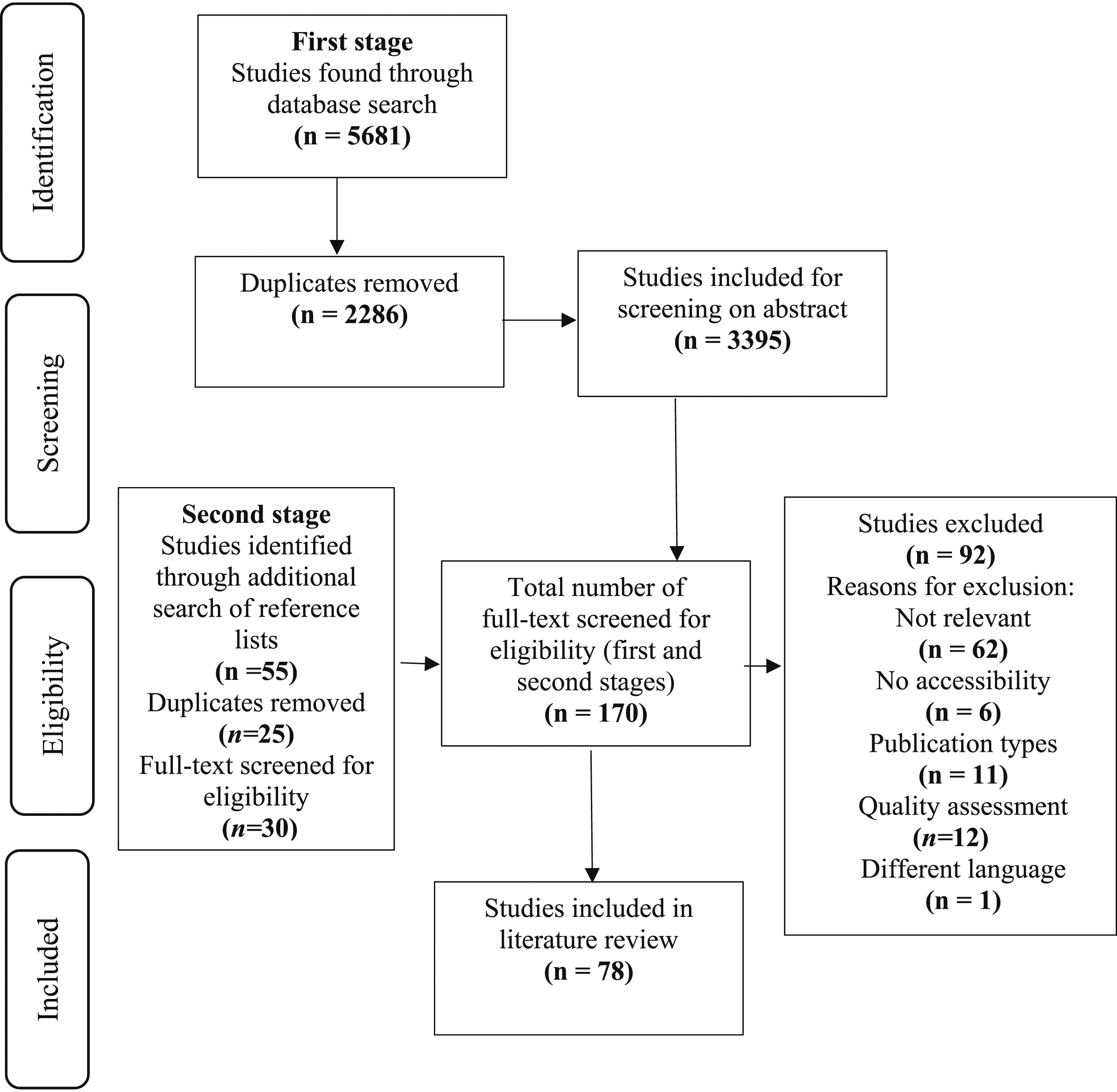
The second stage of selecting articles for inclusion involved a comprehensive evaluation of research rigour. To assess the quality of the 170 articles, a variety of factors were considered, such as the articles’ originality, clarity, credibility, confirmability, reflexivity, and ethics (Guba, 1981; Ryan, 2005; Stenfors et al., 2020). Originality was assessed based on the novelty of the study’s methodology, theoretical or conceptual framework, and data. Clarity was evaluated by the transparency of the article, including the coherence of the abstract, the structure and flow of the text, and how well the introduction articulated the study’s purpose and conceptual rationale. Credibility was established by the alignment of the study with existing literature, the reliability of findings, and the thoroughness of the analysis, including alternative interpretations. Confirmability referred to the degree to which findings were substantiated by the data and whether the research process could be replicated. Reflexivity assessed the researcher’s self-awareness examining potential biases and their influence on the research. Finally, ethics ensured adherence to ethical standards, including participant consent, confidentiality, and responsible data handling (Guba, 1981; Ryan, 2005; Stenfors et al., 2020). Each article was independently reviewed by two researchers in Covidence. Disagreements were resolved through discussion or by a third reviewer. This stage excluded 92 articles, leaving 78 articles for inclusion in this review.
Data extraction
A data extraction table was created in Covidence to facilitate a structured analysis. This table included the following information: author(s) name and year of publication, the country of the corresponding author, sample size and professions, the research methodology employed, the names of the programme entities from both home and host countries, the duration of these programmes, and both host countries (where the IPM programmes were offered) and home countries (the participants’ countries of origin) (see Appendix 2 for a simplified version of the extraction table).
Two reviewers independently analysed each article. After completing their data extractions, a consensus phase followed where the first reviewer examined both sets of data and collaborated with the second reviewer to finalise the data in the extraction sheet. All extracted data was stored in Covidence for easy export and subsequent analysis.
Not all articles reviewed in the study are cited in this review due to word count limitations.
Data analysis and category development
To address the study objectives, we conducted a thematic synthesis, as outlined by Harden et al. (2006) and Thomas et al. (2012). This approach involves categorising data into central themes and synthesising findings from both qualitative and quantitative studies. We used a combination of deductive and inductive coding. The deductive coding was driven by our main research questions and focused on established themes, including the impact of IPM on professional development, as well as its broader effects at individual, organisational, and societal levels. Inductive coding, on the other hand, allowed for the emergence of new themes directly from the data, including professional knowledge and skills acquisition, intercultural understanding, career development, the formation of connections, and reintegration challenges. These codes were synthesised to align with our overarching research questions (Popay et al., 2006; Thomas et al., 2012).
We then assembled narrative summaries for each theme to present an overview of the impact of IPM programmes. These summaries synthesised data from all included studies. Qualitative, quantitative, and mixed-methods studies were analysed separately, and insights from these analyses were integrated in the final synthesis phase.
In developing the categories for analysis (such as enhancement of professional knowledge and skills, cultivation of intercultural understanding, advancement of career trajectories, and development of connections), we ensured that categories were both empirically grounded and theoretically informed. Initial categories were derived from the themes that frequently appeared in the literature, ensuring they were deeply rooted in the data. Additional emergent themes were identified and integrated to fully capture the nuances of IPM impacts. Each category was rigorously defined based on its prevalence across diverse studies and its relevance to understanding the influences of IPM programmes.
To address the generalisability of our categories, we examined their applicability across various professional fields and geographical contexts, recognising the limitations posed by the number of included 78 papers. For example, we analysed whether the impact of IPM on ‘career advancement’ was consistently observed across contexts ranging from higher education to healthcare, providing a broad validation of this category’s relevance and applicability. Similarly, the category ‘cultivation of intercultural understanding’ was found to be significant across studies involving professionals in education, healthcare, and social work. In each case, we compared the findings across geographical contexts, including Asia, Europe, and North America, to determine if similar outcomes, such as increased cultural competence and career progression, were consistently reported. While our analysis primarily included English-language papers, these findings confirm the widespread importance of intercultural skills developed through IPM programmes in diverse geographical contexts, including Asia, Europe, and North America.
Results
Description of the scholarship
The number of papers on IPM included in this study has steadily increased over the years. Between 1960 and 1990, only two papers were published. This number grew to five in the 1990s and 12 between 2001 and 2010. The most significant increase occurred recently, with 23 papers from 2011 to 2015 and 36 papers from 2016 to 2020.
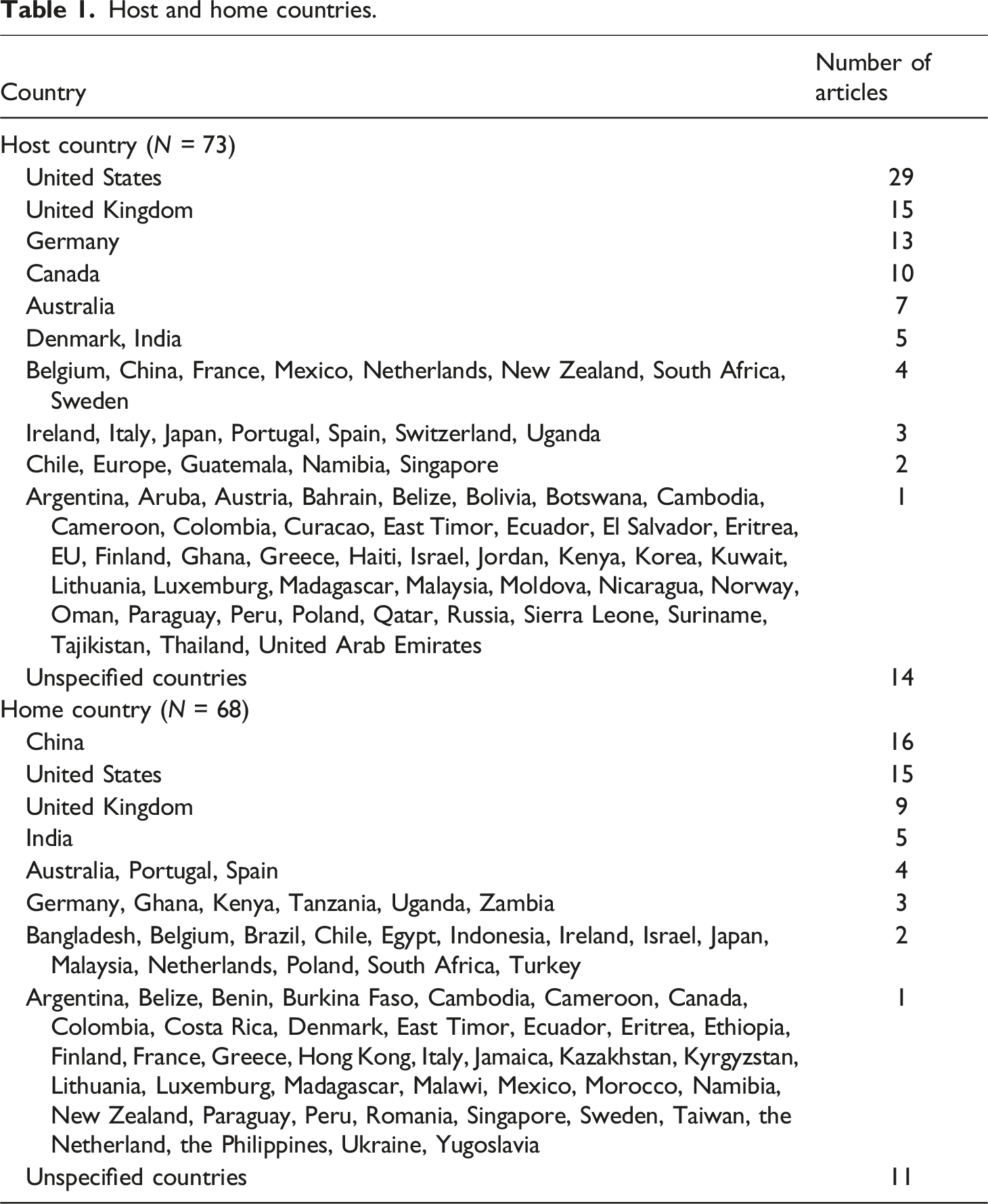
Host and home countries.
Professional sectors and types of mobility programmes
Our analysis revealed a variety of professional sectors involved in IPM programmes, as well as the types of programmes that these sectors predominantly engage with. Higher education (52% of reviewed studies): Focused on academics, researchers, and teaching staff. Programmes included international fellowships (Adriansen & Madsen, 2021; Gao & Liu, 2021; Jacob & Meek, 2013; Schaer et al., 2021), research projects (Andújar et al., 2015; Bauder, 2020; Leung, 2014), and teaching opportunities (Enders, 1998; Groves et al., 2017; Patrício et al., 2018). Schooling (26%): Focused on secondary teachers, head teachers, and pre-service/in-service teachers. Programmes included teaching and learning experiences and placements (Biraimah & Jotia, 2013; Dalal et al., 2017; Engel, 2010; Li & Edwards, 2013; Walstad & Rebeck, 2001). Healthcare (14%): Included doctors, nurses, trainee doctors, and social workers. Programmes featured exchanges (Bridgwood et al., 2017; Casey, 1999; Gordon et al., 2018), fellowships (Ackers, 2015; Wilson et al., 2014), and work experiences (Fox et al., 2018; Reardon et al., 2015). NGO and community work (5%): Include exchange training programmes (Blom et al., 2020) and placement with NGOs abroad (Pless et al., 2012; Pless & Maak, 2010). Other sectors: Included a fellowship for journalists (Lassila-Merisalo, 2018), an exchange for policymakers (Canter, 1969), and professional degree/work experience programmes for students (Abrams, 1979; Pinto & Pereira, 2019).
Aims of IPM programmes
The aims of IPM programmes vary significantly across different sectors:
In higher education, aims include advancing teaching, research, and knowledge production (Haupt, 2022; Liu et al., 2021; Purves et al., 2005; Xue et al., 2015). They also focus on internationalising curricula and instructional practices (Sandgren et al., 1999; Xue et al., 2015), modernising institutional capacities (Munoz et al., 2017; Patrício et al., 2018), and establishing transnational partnerships (Andújar et al., 2015; Jöns, 2007).
With school teachers, programmes aim to develop intercultural skills and pedagogical approaches, providing training for both pre-service and in-service teachers (Biraimah & Jotia, 2013; Dalal et al., 2017; Romero & Vasilopoulos, 2020; Walstad & Rebeck, 2001). For English language teachers, the focus is on enhancing language proficiency and intercultural competence (Gleeson & Tait, 2012; Trent, 2011).
In healthcare, the primary aim is to improve the standard of medical care by enhancing the professional development of medical staff (Casey, 1999; Lange & Ailinger, 2001; Wilson et al., 2014). These programmes often involve inter-professional collaboration to develop transferable skills (Bridgwood et al., 2018; Naleppa & Waldbillig, 2018). For social workers, the focus is on promoting competency, skills, and capabilities (Gordon et al., 2018; Irizarry, 1993; Nilsson & Wellington-Boyd, 2006).
Other specialised programmes aim to advance journalism skills and freedom of speech (Lassila-Merisalo, 2018), empower women through sport (Walstad & Rebeck, 2001), and improve the employability of business graduates through organised internships (Pinto & Pereira, 2019).
Although the majority of studies included in this review were published within the last decade, some trends in the aims of IPM programmes are observable. In higher education, programmes have increasingly emphasised international collaboration and the establishment of transnational partnerships. In healthcare, there has been a shift towards developing inter-professional collaborations and addressing global health challenges. Across multiple sectors, including education, healthcare, and social work, the cultivation of intercultural competence remains a consistently significant outcome, reflecting the growing need for professionals to operate effectively in diverse cultural contexts.
Funding
Summary of funding sources.
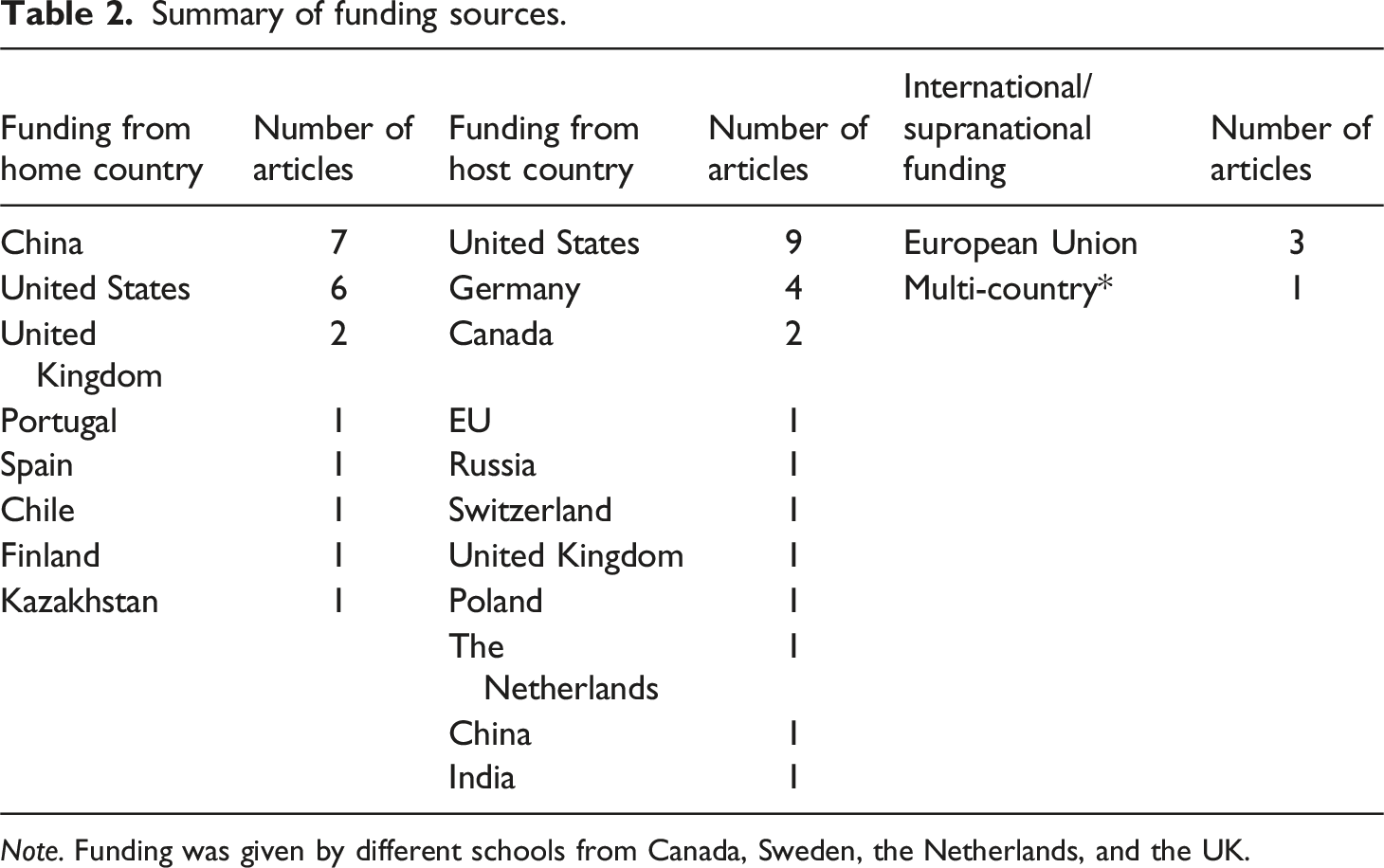
Note. Funding was given by different schools from Canada, Sweden, the Netherlands, and the UK.
Twenty articles indicated funding from eight home countries (Table 2). The funding organisations include the British Council (Purves et al., 2005), the Centre for International Programmes 2 (Kuzhabekova et al., 2022), the Chinese Scholarship Committee (Hu et al., 2020; Xue et al., 2015; Zhao & Liu, 2022), the Helsingin Sanomat Foundation (Lassila-Merisalo, 2018), the U.S. State Department (Biraimah & Jotia, 2013; Haupt, 2022; He et al., 2017), the Chilean National Commission for Scientific and Technological Research (Munoz et al., 2017), and the Knight Foundation (Sandgren et al., 1999).
Fourteen articles indicated funding from eleven host countries. The funding organisations include the U.S. State Department (Ateşkan, 2016; Blom et al., 2020; Dalal et al., 2017; Pate et al., 2020), the Canadian Social Science and Humanities Research Council (Bauder, 2020; Zhou et al., 2022), the Alexander von Humboldt Foundation (Bauder, 2020; Jöns, 2007), the European Commission (Enders, 1998), the Yale School of Medicine, the Yale-Mulago Fellowship Foundation, and Johnson and Johnson Corporate Contributions (Bodnar et al., 2015).
The influence of IPM programmes on individuals
In analysing the impact of IPM programmes on individuals’ professional development, we identified four major themes: the enhancement of professional knowledge and skills, the cultivation of intercultural understanding, the advancement of career trajectories, and the development of connections. In each of these sections, we apply relevant theoretical frameworks to explore how IPM programmes influence these areas.
Enhancement of professional knowledge and skills
The literature shows that internationally mobile professionals gain and share knowledge from their host countries, which they then bring back to their home countries. These professionals engage in global knowledge networks, highlighting the importance of international knowledge circulation and production. For instance, Jöns (2007) studied 1,200 visiting Humboldt research fellows from 90 countries and found that their professional interactions in Germany were influenced more by their fields of study and work nature than by their countries of origin. This suggests that international mobility’s impact on knowledge generation and dissemination goes beyond geographical factors.
Academics and school teachers report developing research-related knowledge, teaching methodologies, enhanced subject knowledge, and broader pedagogical perspectives through international programmes (Ateşkan, 2016; Biraimah & Jotia, 2013; Okken et al., 2019; Patrício et al., 2018). For example, Portuguese faculty members who participated in an exchange programme with Carnegie Mellon University in the U.S. shifted towards active learning and project-based methodologies (Patrício et al., 2018). Senior academics from Spain reported evolving their research knowledge and teaching methods through their international experiences (Groves et al., 2017). Dutch teachers adopted storytelling as a pedagogical method (Okken et al., 2019), and Turkish pre-service teachers were exposed to student-centred teaching approaches (Ateşkan, 2016). The Fulbright-Hays Group Project Abroad enriched teachers’ content knowledge in various domains, including culture, history, geography, and language (Biraimah & Jotia, 2013).
In social work and other fields, IPM programmes have fostered leadership and managerial skills, contributing to advanced practice and enhanced professionalism (Irizarry, 1993; Naleppa & Waldbillig, 2018; Nilsson & Wellington-Boyd, 2006; Soskolne, 1993). For instance, the Mount Sinai Leadership Exchange Programme for social workers improved managerial skills and advanced practice (Irizarry, 1993; Soskolne, 1993). Similarly, an international staff exchange and collaborative learning programme in social work contributed to leadership development, the generation of new practice ideas, enhanced cultural proficiency, and overall skill improvement (Naleppa & Waldbillig, 2018).
The enhancement of professional skills and knowledge is not merely a linear accumulation of facts or skills. Various theoretical frameworks, including social, experiential, and transformative learning theories, suggest that this enhancement is a complex, transformative process deeply rooted in lived experiences (Cushner & Mahon, 2002; Gordon et al., 2018; Hamza, 2010; Liu & Yumei, 2015; Zhao & Liu, 2022). Transformative learning theories, for example, were used to explain how international experiences shape participants’ knowledge, skills, and professional growth (Cushner & Mahon, 2002; Gordon et al., 2018; Smith et al., 2014; Zhao & Liu, 2022; Zhou et al., 2022). Hamza (2010) applied transformative learning theory to study the international experiences of female educators, portraying these experiences as multidimensional learning spaces that generate a variety of knowledge and skill sets, altering perspectives and expectations.
Social learning theories also play a role in understanding the impact of IPM. For example, Xue et al. (2015) used socialisation theory to focus on the social aspects of learning for participants. Gordon et al. (2018) and Liu et al. (2021) utilised social learning theory to design the Mount Sinai Programme for social workers and the International Training Programme in Pedagogy (ITPP) for visiting scholars, suggesting that participants’ behaviour or attitudes change after observing the behaviour of others. Gao and Liu (2021) invoked social cognitive theory to elaborate on how knowledge acquisition is a complex interplay of observation, cultural background, power dynamics, and individual identity and beliefs.
The concept of ‘rhizomatic knowledge’, originally developed by Deleuze and Guattari and further explored by Munoz-Garcia and Chiappa (2017), offers a useful framework for understanding knowledge as a complex, interconnected system without a fixed beginning or end. Munoz-Garcia and Chiappa apply this concept to illustrate how knowledge is fluidly constructed across diverse cultural and professional landscapes. In the context of IPM, it suggests that knowledge acquisition is an evolving process, where professionals adapt through continuous interaction with new environments. This process fosters reflection and action, contributing to their professional development and broader societal impact.
Cultivation of intercultural understanding
Interculturality refers to the interaction and understanding between different cultures. It emphasises the exchange of ideas, values, and practices across diverse groups, promoting mutual respect and appreciation for differences. This theme is evidence in many articles, though the framing varies. For instance, literature uses terms such as cultural ‘etiquette’ (Bridgwood et al., 2018), ‘intelligence’ (Pless et al., 2011, 2012), ‘humility’ (Wilson et al., 2014), ‘currency’ (Canter, 1969), ‘diplomacy’ (Liu et al., 2021), and ‘intercultural competency’ and ‘global readiness’ (He et al., 2017).
The relationship between intercultural understanding and the professional trajectories is explored in several articles. Researchers, through IPM, experience expanded horizons and a shift in their understanding of research roles. Groves et al. (2017) mention that Spanish researchers, through international experiences, became more aware of the scope of research beyond their home country, enriching collaborative efforts.
Medical professionals in exchange programmes gain a deeper understanding of cultural differences in healthcare practices. Bridgwood et al. (2018) highlighted that immersion in another culture meant participants gained not only new medical knowledge and skills but also an increased understanding of cultural differences. Casey (1999) also noted the opportunities to learn from international practices and support understanding cultural differences in healthcare.
Teachers gain valuable insights by interacting with students, parents, and fellow educators from different cultural backgrounds. Trent (2011) and Ateşkan (2016) emphasise the value of immersion in a foreign culture in honing teachers’ language skills and deepening their cultural understanding. Classroom discussions, curriculum planning, and collaborative projects offer opportunities for academic integration. Hamza’s (2010) research on American faculty members in the Gulf region and Liu and Yumei’s (2015) study on Chinese scholars in Canadian universities both underscore the influence of international experiences on intercultural communication and awareness.
The Fulbright-Hays Group Projects Abroad programme participants reported changes in behaviour, such as encouraging diverse values, lifestyles, and viewpoints and recognising their own cultural biases (Biraimah & Jotia, 2013). This change in cultural sensitivity was linked to their exposure to different languages, cultures, and group dynamics during the programme.
Career development
IPM programmes significantly impact career development across various sectors, including higher education and healthcare. They contribute to promotions, career path adjustments, and the creation of new job opportunities (Bodnar et al., 2015; Engel, 2010; Lassila-Merisalo, 2018; Lawson & Shibayama, 2015; Naleppa & Waldbillig, 2018).
For example, the Helsingin Sanomat Foundation fellowship found that 91% of the 45 journalist fellows experienced significant career shifts after the programme (Lassila-Merisalo, 2018). Of these, 42% had major role modifications while remaining in their positions, 29% moved to different roles within journalism, and 20% transitioned to entirely different professions. Japanese academics also acknowledged improved networking’s role in shaping career trajectories (Lawson & Shibayama, 2015).
In healthcare, a study of eight junior faculty members from Uganda who spent a year at Yale University School of Medicine reported expanded leadership roles at their home institutions (Bodnar et al., 2015). They attributed their promotions and enhanced roles within the Ugandan medical community to the specialised skills gained through the programme. Participants in Australia’s Mount Sinai Social Work Leadership Programme also reported noticeable career advancements, including securing more senior roles upon their return from the United States (Nilsson & Wellington-Boyd, 2006).
International internship programmes for university students and graduates also influence career choices. A survey of 330 university students who participated in such programmes found that international work experience influenced the career path and job selection for about one-third of respondents (Abrams, 1979). Nearly half believed that the marketable skills and experiences acquired through Antioch Education Abroad were beneficial in securing a job, particularly valuing language proficiency, self-confidence, cultural knowledge, and international exposure. Additionally, almost half reported using a foreign language in their jobs post-graduation, and 38% indicated that the international experience continued to influence their career aspirations over time (Abrams, 1979).
The interplay between career advancement, international mobility, and professional networking is highlighted in a study using social capital theory (Bauder, 2020). Examining 42 early-career academics in Canada and Germany, the study suggests that international mobility programmes facilitate career progression by enhancing social capital, defined as ‘networks and ties that provide access to particular social or professional communities’ (Bauder, 2020, p. 368).
Psychological and individual factors such as adaptability and self-awareness in shaping career paths were explored through the ‘protean career’ concept by Lassila-Merisalo (2018). This perspective emphasises personal satisfaction and adaptability over traditional measures of success like salary or status. In a study of the Helsingin Sanomat Foundation’s international fellowship programme, 87% felt that the experience enabled them to make critical career choices prioritising personal satisfaction and adaptability over conventional career progression.
Grounded in human capital theory, Pinto and Pereira (2019) examined the employability outcomes of 194 Portuguese business graduates. Their study revealed that having internship experience was beneficial for securing job interviews and higher salaries. Conversely, the absence of internship experience could adversely affect perceived employability and job prospects post-graduation, especially for women.
Development of connections
Various terms describe the connections that arise between individuals and institutions during and after IPM programmes, such as relationships (Gao & Liu, 2021; Groves et al., 2017), bonds (Pate et al., 2020), ties (Enders, 1998), networks (Andújar et al., 2015; Hu et al., 2020; Mede & Tuzun, 2016; Xue et al., 2015), and social capital (Bauder, 2020; Schaer et al., 2017). While social and professional bonds are often formed during the mobility period, the focus here is on how these connections foster long-term professional collaborations and institutional partnerships that extend well beyond the IPM experience.
Leung (2011) used the metaphors of ‘development chains’ and ‘development corridors’ to discuss how these connections link development across time and space, creating networks of relationships that span generations. For instance, a chain of academic mobility between two scholars from China and Germany fostered long-term collaborations that extended to their external colleagues, forming a multi-generational network.
Studies on mobility programmes, such as those involving Portuguese academics, highlight how these connections support ongoing professional collaborations. Temporary physical closeness during international mobility fosters cognitive, social, professional, and organisational connections, crucial for knowledge exchange. A study on Portuguese academics in health sciences, information technologies, and sociology found that those with mobility experience were more likely to form international knowledge networks. About 60% maintained knowledge-based relationships with their PhD or post-doctoral institutions throughout their careers (Fontes et al., 2013).
Additionally, a survey of 1,800 former visiting academics from 93 countries who participated in Germany’s Humboldt research fellowship programme demonstrated the long-term impact of these connections, with 54% of participants reporting continued collaboration with German colleagues after returning to their home countries (Jöns, 2009).
IPM also promotes institutional collaborations. A survey of 485 ERASMUS teaching staff showed that time abroad not only expanded international networks but also led to new cooperation initiatives between host and home institutions (Enders, 1998), contributing to long-term partnerships and improving student exchange programmes.
The ripple effect: Beyond individual impact
The scholarship on IPM highlights that these programmes impact not only individuals who participate but also their institutions and communities when they return home. The ripple effect refers to the way these individual gains – such as enhanced skills and knowledge – spread outward, influencing broader systems. Participants often contribute to sectors like higher education and schools through improved teaching practices, the creation of inter-institutional collaborations, and enhanced research capacity. This section explores how these individual-level benefits ripple outward to produce lasting changes at both institutional and societal levels, creating broader institutional and community impacts.
International experiences have significantly influenced teaching practices in higher and secondary education (Enders & Teichler, 2005; Gao & Liu, 2021; Liu et al., 2021; Sandgren et al., 1999). For instance, Liu & Yumei (2015) found that academics reformed their teaching methods by incorporating debates and in-class discussions. Liu et al. (2021) showed how scholars promoted student-centred pedagogies in China, extending their influence through scholarly engagement and training colleagues. In their study of Turkish ELT academics in the ERASMUS Teaching Staff Mobility programme, Mede and Tuzun (2016) demonstrated the broadening influence of mobility programmes through the development of innovative curricula, new teaching methods, and the integration of language courses.
Two papers included in this review offer theories on these links (Gao & Liu, 2021; Sandgren et al., 1999). Sandgren et al. (1999) proposed a causal process theory linking faculty experiences abroad to the course content they teach upon return. This theory highlights that specific ‘signal’ experiences contribute to cumulative changes in self-awareness and social awareness, resulting in transformative teaching practices. Gao and Liu (2021) used the ‘negotiated meaning theory’ to explain how international experiences shape academics’ knowledge and research contributions, providing a valuable perspective on the academic aspect of mobility.
For school teachers, professional development programmes translate into improved teaching strategies at the K-12 level. Li and Edwards (2013) and Romero and Vasilopoulos (2020) documented how these programmes led to enhanced teaching strategies. Okken et al. (2019) highlighted how increased cultural awareness among teachers led to teaching styles more accommodating of diverse student needs. He et al. (2017) showed that American teachers visiting China developed greater empathy, creating linguistically and culturally responsive classrooms.
In healthcare and social work, IPM programmes have catalysed the adoption of new practices and systems. For example, Naleppa and Waldbillig (2018) found that social workers improved client communication and implemented new practices within their agencies, including agency-wide training in crisis intervention. In a similar vein, participants in the Australian Social Workers Implement Leadership Programme pioneered initiatives ranging from group activities to quality assessments, enhancing patient care and broadening social work services within participating hospitals (Irizarry, 1993). The Israeli Social Workers Implement Leadership Programme also yielded notable outcomes, such as establishing volunteer groups to support parents of children undergoing surgery and creating a counselling centre (Soskolne, 1993). Additionally, a graduate of the programme introduced a social work information system in collaboration with the Brookdale Institute, integrated into a national framework involving the hospital’s computer services (Soskolne, 1993).
The ripple effects of IPM programmes extend beyond institutional boundaries to entire communities. For example, a U.S. exchange training programme for leaders of disability organisations led to the establishment of 11 new organisations or community initiatives, 66 new partnerships, and 22 social media campaigns to raise awareness (Pate et al., 2020). This study used self-determination theory to show how IPM enhances participants’ self-confidence and fosters relationships, empowering them to return home recharged and dedicated to social change.
Similarly, sports diplomacy programmes like coach-to-coach exchanges in Jordan and Tajikistan have had positive impacts on their communities (Blom et al., 2020). The success of these programmes relies on local coaches tailoring content to community needs and collaborating with U.S. staff to adapt games and rules. For instance, workshops in Jordan aimed at countering physical punishment in youth discipline prompted coaches to adopt trust- and respect-based approaches, promoting emotional well-being and elevating coaches as role models (Blom et al., 2020).
IPM programmes foster international collaborations and long-term relationships, leading to positive societal outcomes. Exchange GP research and education networks serve as strong foundations for future exchanges (Bridgwood et al., 2018). The Mount Sinai Social Work Leadership Enhancement Programme has catalysed practice-based research and international conferences in healthcare (Nilsson & Wellington-Boyd, 2006). These relationships often endure, setting the stage for future collaborative initiatives (Haupt, 2022; Mede & Tuzun, 2016; Pate et al., 2020). Casey (1999) highlighted the ‘Professional Links’ programme’s success in fostering collaboration among professional nurses in Scotland and Ohio, facilitating the exchange of innovative practices.
Reintegration challenges
While many articles acknowledge the benefits of international mobility in building connections among participants and institutions, they also highlight various constraints faced by participants when they return home.
Some studies discuss how time abroad can weaken or sever professional connections at home. For example, Bauder (2020) examined the social and professional networks of 42 academics in Canada and Germany, revealing that international mobility can be a double-edged sword. It can enhance international social capital, boosting productivity and career advancement, but may also reduce national social capital, limiting access to domestic career opportunities. Similarly, Schaer et al. (2021) analysed the mobility networks of early-career academics at the universities of Zurich, Cambridge, and UCLA. They found that while international networks expand, this does not always increase academic social capital because these ties often include family or friends who provide support but do not directly contribute to academic progress.
Despite clear career benefits, participants often face workplace challenges upon returning home. For example, some journalists who completed fellowship programmes felt intimidated by their employers or ‘punished for their absence’, with some even facing termination (Lassila-Merisalo, 2018, p. 870). A study of 30 Spanish academics who engaged in research visits abroad echoed these findings, highlighting the transformative impact of mobility on skills and networks but also noting resistance to new ideas and underdeveloped research infrastructures at home, which made some feel their careers had stalled (Groves et al., 2017). In a similar vein, American teachers who participated in International Teacher Education Program (ITEP) in Mexico often struggled with reconciling their global perspectives into existing curricula with standardised testing mandates and rigid educational frameworks (Alfaro, 2008).
Leung’s (2013) study involving 64 interviews and 123 questionnaires with Chinese scholars illustrated similar challenges. Younger scholars, especially post-doctoral fellows, feared being left behind as rapid developments in their fields continued in their absence. Scholars returning to China from countries such as the U.S., Australia, Singapore, the UK, Canada, and France also reported difficulties gaining acceptance within local academic circles, where relationships are crucial for resource allocation and evaluation (Gao & Liu, 2021).
However, continued support can mitigate these challenges. Pless et al. (2012) studied the Project Ulysses programme, designed for leaders of social entrepreneurs in developing countries. They found that ongoing coaching for several months post-programme helped leaders integrate new skills into their home institutions and ensured successful knowledge transfer.
Discussion and concluding thoughts
This systematic review highlights the broad-ranking impact of international mobility programmes on professionals. Participants gain enhanced professional knowledge and skills, both domain-specific and broader, alongside intercultural competencies that prepare them to work in diverse settings, often leading to career advancements. Additionally, IPM facilitates the development of professional connections, leading to often long-term collaborations. These findings, derived from 78 papers, are consistent across various contexts and sectors, suggesting broad applicability. However, specific impacts may vary depending on unique programme- or region-specific characteristics.
Importantly, the review does not focus much on the use of technological integration and digital learning. Some funders, such as the US State Department, have offered distance learning or hybrid models that combine physical travel with online engagement, particularly since the pandemic. However, there is still limited research on whether virtual or hybrid IPM programmes can replicate the benefits of physical mobility. Further research is needed to assess whether virtual or hybrid IPM can deliver comparable outcomes, particularly as online models expand access to participants who may otherwise be unable to travel.
This systematic review highlights the critical role of funding in enabling IPM programmes. Nearly half of the reviewed articles specify funding sources, with significant contributions from both home and host countries. The involvement of organisations such as the British Council, the Chinese Scholarship Committee, and the U.S. State Department illustrates a commitment to international professional development. Such funding schemes are key in supporting professionals’ participation in IPM programmes, enhancing their skills and contributing to wider societal development (Kwak & Chankseliani, 2023). However, the dependence on external funding raises important questions about sustainability and equity. While such investments provide crucial support, there is a need to critically assess whether they support long-term self-sufficiency and capacity building in the home countries. Future research should explore the sustainability of these programmes beyond the funding period and examine whether the skills and knowledge gained through IPM are effectively integrated into the participants’ home contexts. Additionally, it is essential to investigate whether the benefits of IPM programmes are equitably distributed among participants from different regions and socio-economic backgrounds.
Reintegration poses another significant challenge. Participants frequently struggle to apply their newly acquired knowledge and skills in their home contexts, facing resistance from employers or difficulty leveraging international networks. Time spent abroad can also weaken domestic professional ties, which may affect career progression. Despite these challenges, participants’ contributions extend beyond the individual level. At the organisational level, returnees introduce innovative practices and initiate projects using their new expertise in sectors like higher education and healthcare. At the community level, they effectively leverage their knowledge and skills for local initiatives. This mirrors broader discussions in the literature on the societal contributions of international student mobility (Chankseliani, 2018; Chankseliani & Kwak, 2024; Kwak & Chankseliani, 2024; Wang et al., 2024).
From the 1990s, globalisation reshaped IPM’s purpose, introducing new objectives like intercultural competence, collaborative research, and capacity building across sectors such as education and healthcare. Teichler (2015) highlights the growing focus on internationalisation, not just for individuals but also for institutions, with IPM becoming a tool for global knowledge exchange and partnerships. In the last few years, global disruptions such as the COVID-19 pandemic, along with technological advancements, have further transformed IPM. Hybrid and online programmes have emerged, potentially facilitating more equitable access but also challenging the immersive experiences typically associated with mobility.
The historical context of IPM has evolved significantly. Initially, during the Cold War, IPM programmes – similar to international student mobility programmes – were primarily diplomatic tools, advancing geopolitical interests by fostering bilateral relationships (Chankseliani, 2022b; Scott-Smith, 2008). U.S. efforts to expand influence in Europe are a notable example of this. From the 1990s, globalisation reshaped IPM’s purpose, introducing new objectives like intercultural competence, collaborative research, and capacity building across sectors such as education and healthcare. Teichler (2015) highlights the growing focus on internationalisation, not just for individuals but also for institutions, with IPM becoming a tool for global knowledge exchange and partnerships. More recently, hybrid and online models of IPM have emerged, influenced by technological advancements and global disruptions such as the COVID-19 pandemic. While these developments may increase access to mobility opportunities, they also challenge the immersive and experiential nature of traditional IPM programmes.
Thus, while professional mobility programmes offer significant potential for individual, organisational, and community development, they also present reintegration challenges that require targeted interventions. Future research could expand the understanding of how different IPM structures, such as hybrid models and virtual engagements, impact professional development and long-term outcomes in different contexts. Additionally, more attention is needed on the broader societal implications of IPM, particularly in under-researched regions and sectors.
Methodological decisions in this review were carefully considered to maintain rigour and minimise bias. The scope was restricted to English-language articles to ensure a coherent analytical framework, which might limit the generalisability of the findings. For example, the USA had the highest number of papers as the main host country and funding source, while other programmes, like Bolashak in Kazakhstan, were less represented. The review focused on peer-reviewed articles, excluding working papers, conference proceedings, books, and book chapters for methodological consistency. The Scopus database was used exclusively due to its extensive coverage across diverse disciplines. While these choices support internal validity, the findings should be interpreted within this methodological context and the sample characteristics of the selected papers. Generalisability is bounded by these parameters.
This study offers valuable insights for those involved in IPM programmes, including funding agencies, policymakers, programme organisers, and participants. The study has three key implications for research and policy: (1) Need for programme-specific research: Existing literature lacks clarity on how specific characteristics such as programme structures, duration, pedagogies, mode of delivery (online, in-person, or hybrid), and practices (e.g. the use of personalised learning) impact IPM outcomes. Consequently, it is difficult to attribute outcomes directly to these specific features. Future studies should focus more rigorously on these aspects to better understand their contributions. (2) Complexities of reintegration: The review suggests that participants often face challenges upon returning home, such as workplace resistance to new ideas or even job termination, erosion of domestic social capital, and difficulties integrating new skills. Sustained support mechanisms are needed to facilitate successful reintegration. Effective policies could help participants apply the benefits of their international experiences to their home settings, maximising the long-term benefits of IPM programmes. Future research should further investigate the challenges related to the participants’ reintegration after international mobility. (3) Theoretical fragmentation: The literature reveals a fragmentation of theoretical frameworks used to explore the impact of IPM programmes. While various studies have focused on cognitive aspects such as skills and knowledge acquisition through transformative and social learning theories, there is a notable lack of comprehensive theoretical approaches that integrate these aspects with the broader societal contributions of the participants. Future research should address this by not only exploring cognitive gains like knowledge and skills but also incorporating the study of professional values, identities, and societal contributions of participants.
By addressing these implications and gaps, future research can provide a more thorough understanding of the impacts and efficacy of IPM programmes.
Supplemental Material
Supplemental Material - Impact of international professional mobility programmes: A systematic literature review
Supplemental Material for Impact of international professional mobility programmes: A systematic literature review by Natalya Hanley, Lorena Sanchez Tyson, Zhe Wang, Joonghyun Kwak, Ahmad Akkad, Ilka Vari-Lavoisier, and Maia Chankseliani in Journal of Adult and Continuing Education
Footnotes
Acknowledgments
This work was supported by the Bureau of Educational and Cultural Affairs (ECA) of the U.S. Department of State under Grant R77721/CN002. We would like to thank Mira Al Hussein and Alice Aldinucci for their help in conducting the literature search.
Declaration of conflicting interests
The author(s) declared no potential conflicts of interest with respect to the research, authorship, and/or publication of this article.
Funding
The author(s) disclosed receipt of the following financial support for the research, authorship, and/or publication of this article: This work was supported by the Bureau of Educational and Cultural Affairs (ECA) of the U.S. Department of State (R77721/CN002).

Supplemental Material
Supplemental material for this article is available online.
Notes
References
Supplementary Material
Please find the following supplemental material available below.
For Open Access articles published under a Creative Commons License, all supplemental material carries the same license as the article it is associated with.
For non-Open Access articles published, all supplemental material carries a non-exclusive license, and permission requests for re-use of supplemental material or any part of supplemental material shall be sent directly to the copyright owner as specified in the copyright notice associated with the article.
