



Abstract
Rising youth gang involvement in the Nordic countries has become a growing concern, particularly due to its association with crime and other problem behaviours. This study is the first to examine the prevalence and risk factors of street gang involvement among adolescents from nine cities in five Nordic countries. Using comparative, cross-national probability city samples from the fourth wave of the International Self-Reported Delinquency Study (ISRD4), the analysis includes data from 9039 adolescents aged 13–17 from Denmark (n = 1094), Finland (n = 2037), Iceland (n = 3007), Norway (n = 1559), and Sweden (n = 1342). Based on the Eurogang measurement, the findings highlight significant differences in gang involvement across cities, with Stockholm exhibiting the highest prevalence of youth gang involvement (16%). These differences persisted after adjusting for individual-level risk factors. Adolescents involved in gangs reported higher levels of peer delinquency, pro-delinquency attitudes, lifetime assault, as well as lower levels of parental control and self-control. In contrast, family strain and perceived discrimination were associated with street gang involvement only at the city level. The study discusses the implications of these findings for policy and prevention strategies, emphasising the need for targeted interventions to curb the rise of gang involvement among youth in the Nordic region.
Gang-related crime is a growing public concern in the Nordic countries, particularly Sweden. The problem intensified in the early 2000s, escalated after 2014, and Sweden now ranks among the European countries with the highest rates of gun-related homicides (Rostami, 2017; Selin et al., 2023; Sturup et al., 2020). The other Nordic countries also experience these problems, but to a lesser extent (Klement, 2020; Lien, 2011; Moeller and Hesse, 2013; Pedersen, 2014). Quantitative studies on gangs in the Nordic countries have mostly examined national contexts or cross-national comparisons but differences may be driven by individual- or city-level factors (e.g., Klein, 2002; Sturup et al., 2020; Svensson and Shannon, 2021; Weerman and Decker, 2005). In addition, there have been no studies assessing the prevalence of adolescents’ street gang involvement and the potential factors driving differences within the Nordic countries for more than 10 years (Gatti et al., 2011; Haymoz et al., 2014).
To prevent the problems from becoming endemic, we need updated comparative research to inform policy decisions and reduce youth involvement in street gangs. We aim to address these issues by analysing the prevalence and risk factors associated with street gang affiliation in nine cities across the Nordic countries, focusing on adolescents aged 13–17 years. We pose the following research questions: RQ1: How prevalent is gang involvement in adolescents in nine Nordic cities? RQ2: Do any differences in prevalence remain after adjusting for the studied individual-level risk factors? RQ3: What are the main individual-level and aggregated city-level risk factors associated with street gang involvement among adolescents from the nine Nordic cities?
We combine two research protocols: the comparative, cross-national International Self-Reported Delinquency Study survey (ISRD4; Enzmann et al., 2018; Marshall et al., 2022) and the Eurogang methodology for measuring youth street gang involvement (van Gemert et al., 2008). The Eurogang ‘consensus’ definition is ‘any durable, street-oriented youth group whose involvement in illegal activity is part of its group identity’ (Weerman et al., 2009: 20). Measures of gang involvement affect prevalence estimates, and this definition aims to improve comparability by reducing the issues related to self-identification, for example (Esbensen et al., 2001; van Gemert et al., 2008). Comparative survey research requires robust, standardised indicators, cross-nationally validated methods and instruments, but there are only a few studies in the Nordic countries that use a common definition of gangs or a shared methodology.
Street gang prevalence in the Nordic countries
An early study by Bendixen and colleagues (2006) used questionnaires data from Norwegian adolescents (n = 1203; 1983–1985) to estimate gang membership. They defined involvement as answering ‘yes’ to at least one of three questions about participating in group vandalism, bullying, or rowdy alcohol-related behaviour, during the past 5 months. Based on this definition, 21% were classified as gang involved.
Later studies have used the Eurogang definition for better comparability. Haymoz and colleagues (2014) applied it in the second sweep of the ISRD study (ISRD2), administered between 2005 and 2007. They estimated an average prevalence of youth street gang involvement at 12% across 19 European countries. For Sweden and Denmark, prevalence was 11%, and for Finland and Norway, 9% (for other analysis using the same data and operationalisation, see Johnson and Mendlein, 2022). Gatti and colleagues (2011) added a self-identification criterion (‘Do you consider your group a gang?’) to the Eurogang definition in their operationalisation and found substantially lower prevalence estimates: 4% in the overall sample (30 countries), 6% for Sweden, 5% for Norway, 3% for Denmark, 2% for Finland, and 1% for Iceland.
Most recently, Pedersen's (2014) study examined the prevalence and risk factors for juvenile gang involvement among Danish adolescents (n = 1886), aged 12–17, from 18 different schools located in high-risk areas of Copenhagen in 2010. According to the Eurogang definition, 13% of the sample could be characterised as street gang members. An additional 7% were classified as serious offenders not affiliated with gangs, while 29% were petty non-gang-related offenders, and 51% were considered law-abiding.
These quantitative studies reflect how the understanding of what constitutes a gang has evolved, how different measurement approaches influence prevalence estimates, and how city-level differences related to high-risk, vulnerable areas, are important.
Ethnic minorities, marginalisation, and Nordic street gangs
Historically, gang research has focused on ethnic street gangs formed by young males with immigrant backgrounds in disadvantaged inner-city residential areas (Decker et al., 2009). Social mechanisms related to immigration, socioeconomic status, and residential segregation also play a role in the formation and prevalence of youth street gangs in the Nordic countries.
Klein (1996: 65) was an early observer of the gang situation in Sweden. He noted that there were ‘immigrant gangs in far more locations than before’, particularly in the housing projects on the outskirts of Stockholm. At the time, these gangs were not territorial, did not adopt a common style of dress, symbols or argot, and were not involved in intergang rivalries. However, he explained how gangs could emerge from more innocent youth groups and concluded that Stockholm may be on the path towards developing American-style gangs. A few years later, he summarised the situation as ‘one older and one newer variation on a similar theme attributable to common group processes and similar combinations of societal variables that produce marginalization of some youth populations’ (Klein 2002: 252).
According to the theory of multiple marginalisation (Vigil, 2002), collective disadvantage and perceived discrimination are critical factors in the formation of youth street gangs (Johnson and Mendlein, 2022; Pedersen, 2014; Pyrooz et al., 2010; Valdimarsdottir and Bernburg, 2015). Qualitative research portrays Nordic gang members as marginalised ethnic minorities who oppose mainstream society and seek alternative forms of status and respect through delinquent activities (e.g., Kalkan, 2024; 2022; Kolind et al., 2017). However, there may also be a more cultural component to this.
In Sweden, Bjørk (2008) noted that certain ethno-religious codes of honor and distrust toward the police and government institutions, align with the belief systems held by street gangs. Gemert (2005: 159) also observed that ‘some ethnicities seem to find their way into youth groups more easily than others’, possibly because cultural values play an important role (see also van Gemert et al., 2008; Weerman and Decker, 2005). This cultural values perspective aligns with findings from register studies where refugee men from cultural backgrounds most distinct from the Nordic context have markedly higher levels of criminal involvement, also when controlling for socioeconomic factors (Andersen et al., 2022; Moeller, 2024; Skardhamar et al., 2014).
Generally, the Nordic countries are characterised by low levels of income inequality and low imprisonment rates (Lappi-Seppälä and Tonry, 2011). Considering that ‘socioeconomic status and deprivation alone are inadequate explanations’ for differential criminal involvement of ethnic minorities in the US (Sampson and Lauritsen, 1997: 333), it seems unlikely that these factors are the primary drivers in the more egalitarian Nordics. However, marginalisation persists despite the welfare state's efforts to reduce social problems in vulnerable neighborhoods (e.g., Rostami, 2016).
Risk factors for street gang participation
Cumulative research has identified a broad range of risk factors associated with street gang participation. These include male gender, low-self-control, problem behaviour, pro-delinquency attitudes, close friends’ involvement in delinquency, unstructured socialising, low parental control, weak attachment to institutions, exposure to straining life events, and neighbourhood social disorganisation (e.g., Haymoz et al., 2014; Klein and Maxson, 2006; Pedersen, 2014; Wood and Alleyne, 2010). These risk factors relate to various established criminological theories.
The general theory of crime (Gottfredson and Hirschi, 1990) posits that low self-control (e.g., high impulsivity and risk seeking) is the primary cause of criminal and deviant behaviour. Studies have also found that low self-control is associated with a higher likelihood of gang membership and longer durations of involvement (e.g., Pyrooz et al., 2013). According to control theory (Hirschi, 1969), all individuals have a natural inclination toward deviance, but attachment to institutions such as family and school generates social control that promotes conformity to pro-social values and increases the social costs of criminal behaviour and gang membership (Alleyne and Wood, 2014; Dickson-Gomez et al., 2017).
Conversely, social learning theory highlights that social ties can also foster criminal tendencies (Akers, 1973). According to this theory, delinquent peer groups create a social environment in which individuals learn normative orientations and behavioural patterns that encourage criminal activity. Studies have found that association with antisocial peers predicts future gang involvement (Adamse et al., 2024; Gilman et al., 2014).
Social disorganisation theory (Shaw and McKay, 1942), in turn, emphasises that ineffective reinforcement of prosocial norms and weak crime control in disorganised communities contribute to the spread of deviant behaviour. In the context of gangs, disorganised neighborhoods may create conditions in which gangs fill the void left by failing social institutions (e.g., Dickson-Gomez et al., 2017). General strain theory (Agnew, 1992) proposes that significant negative and stressful life experiences, or the absence of positive and desirable experiences, increase the likelihood of individuals engaging in criminal behaviour as a coping mechanism. Together, social disorganisation theory and general strain theory align with broader gang theories that explain the phenomenon in terms of increasing disadvantage and marginalisation (e.g., Klein, 1996; Vigil, 2002).
However, gang study designs typically do not allow the assessment of whether identified risk factors are actual causes of gang membership (see Haymoz et al., 2014). Observational studies cannot definitively rule out omitted variable bias, and some degree of reverse causality is also possible in cross-sectional designs. For example, studies have found that gang involvement can occur during periods of declining self-control (Pyrooz et al., 2021), which contributes to shifts in delinquent attitudes and behaviours (e.g., Melde and Esbensen, 2011) and increases criminal activity and associations with delinquent peers (Gordon et al., 2004). As a result, most gang research cannot establish the causal mechanisms needed to advance theoretical development or guide targeted interventions. Instead, the identified risk factors may serve as useful markers for identifying high-risk groups and geographic areas for targeted interventions (e.g., Farrington, 2015).
Method
Data
This study uses a comparative cross-national probability sample of 9039 adolescents aged 13 to 17 from Næstved (DK; n = 484), Randers (DK; n = 610), Gävle (SE; n = 705), Stockholm (SE; n = 637), Oslo (NO; n = 1559), Reykjavík (IS; n = 1374), the surrounding municipalities of Reykjavik (henceforth ‘Other than Reykjavík’; IS; n = 1633), Helsinki (FI; n = 1033) and Turku (FI; n = 1004). The sample was collected as part of the fourth round of the ISRD (Marshall et al., 2022). Cities in each participating country were selected according to the ISRD4 protocol (Ibid.) and local research cooperation. Typically, in ISRD studies, two cities are selected from each participating country, one of which is usually the capital. In Denmark, however, Copenhagen did not participate because study planning began during the COVID-19 pandemic, and restrictive measures such as school closures complicated efforts to secure commitment to data collection. In Norway, only the capital city, Oslo, was included.
ISRD studies are coordinated international research projects on youth delinquency and crime victimisation, involving research teams from around the world. The comparative cross-national ISRD data represent one of the key infrastructures in criminological research (see the foreword by Michael Gottfredson in Enzmann et al., 2018). The dataset is large, methodologically robust, and designed to capture theoretical risk factors and crime experiences across national contexts.
Data was collected in spring 2022 in Finland and spring 2023 in the other countries. The response rate was 84% in Norway, 82% in Iceland, 81% in Finland and 41% in Sweden. Unfortunately, the response rate for the Danish sample could not be estimated, as information about the number of students in the sampled classes was not provided. The lower response rate in Sweden was largely because not all randomly selected schools or classes in Stockholm participated in the study (possibly at least partly due to the COVID-19 pandemic). Student refusal accounted for 23% in Gävle and 21% in Stockholm. An additional challenge was that the register used for the class draw was from the previous year, resulting in some selected classes being excluded due to outdated information.
Each national research team collected survey data on youth delinquency as part of a global collaboration coordinated by the ISRD steering committee (Marshall et al., 2022). The committee is responsible for designing and disseminating a shared research protocol and materials that ensure standardised implementation and comparability across datasets collected by national teams. As part of the project Street Gang Involvement Among Nordic Youth project (funded by NSfK), all Nordic countries added a gang-related module to the ISRD survey, based on Eurogang measurements (Weerman et al., 2009).
The survey data was collected using probability sampling of school classes in the selected cities (Enzmann et al., 2018). In this sampling strategy, research teams conducted random draws of school classes to obtain datasets representative of the adolescent population (aged 13–17 years) in each participating city. In Denmark, probability sampling of schools was used. The selected schools included both primary and high schools. Students filled out the online survey during a scheduled lesson (approximately 45 min). As a rule, the lessons were supervised by members of the national research team, but in some cases, teachers oversaw the sessions. The surveys were available in each country's official languages, as well as in English.
For comparability, it is important to note that the age limit for primary and secondary education differs across countries. In Denmark, Finland, Sweden, and Iceland, the age groups 13–14, 14–15, and 15–16 years fall within the primary education level. In Norway, only the 13–14 and 14–15 age groups are included in basic education. After basic education, the random sample became more selective, including only high schools. The sampling strategy also involved oversampling schools in disadvantaged neighborhoods to enhance the representation of potentially marginalised groups.
Ethical considerations in each country adhered to the Declaration of Helsinki and national research guidelines. The study was reviewed by the University of Helsinki Ethical Review Board in Humanities and Social and Behavioral Sciences, which concluded that it complies with the guidelines of the Finnish National Board of Research Integrity and is ethically acceptable (Statement 43/2021).
Measures
Outcome Variable
Youth street gang involvement was measured using the Eurogang methodology (Weerman et al., 2009), which operationalises gang involvement through a series of core questions aligned with the definitional criteria. First, respondents were asked whether they had a group of friends. The next questions were only posed to those who affirmed this. Then respondents were asked about the group's duration and whether they frequently spend time together in public places. Groups that had existed for at least 3 months and regularly spend time together in public were considered durable street-oriented groups. Respondents were then asked whether engaging in illegal activities was accepted by the group AND whether such activities were carried out collectively. Only respondents that had durable, street-oriented groups that condoned crimes and engaged in illegal activities collectively were considered as street gang members. It should be noted here that this classification is based on behavioural criteria and not respondents’ subjective perception of gangs or gang membership (for similar measurement, see Haymoz et al., 2014).
Independent variables
Parental control was measured using an adapted version of the Parental Knowledge Scale (see Eaton et al., 2009), as implemented in the ISRD4 survey (Marshall et al., 2022). The scale included three items scored on a 5-point Likert scale (‘never’, ‘rarely’, ‘sometimes’, ‘often’ and ‘always’): (1) ‘An adult at home knows where I am when I go out’, (2) ‘An adult at home knows what I am doing when I go out’, and (3) ‘An adult at home knows which friends I am with when I go out’. These items were combined into a sum variable with good internal reliability (α = .80 in the total sample, ranging from .78 in Randers and Næstved to .83 in Gävle).
Low self-control was measured using the impulsivity and risk-seeking subscales adapted from Grasmick and colleagues’ (1993) self-control scale (see Marshall et al., 2022 for the ISRD4 adaptation). The measure comprised three items for impulsivity (e.g., ‘I act on the spur of the moment without stopping to think’) and three items for risk-seeking (e.g., ‘I like to test myself every now and then by doing something a little risky’). All items had a 5-point Likert response scale (‘fully disagree’, ‘somewhat disagree’, ‘neither agree nor disagree’, ‘somewhat agree’ and ‘fully agree’). The six items were summed up to a sum variable with good reliability (α = .81 in the total sample, ranging from .75 in Other than Reykjavik to .85 Randers and Gävle).
Family strain was measured using a six-item Life event scale included in the ISRD4 survey. Respondents were asked whether their family had experienced problems such as parents’ substance abuse, repeated serious conflicts or physical fights between parents, or parental separation or divorce (0 = ‘no’, 1 = ‘yes’; see Marshall et al., 2022). These six items were summed to create a composite variable indicating the total number of strain-causing family problems.
Perceived discrimination was measured with a single item: ‘I feel part of a group of people that are treated unfairly in [studied country]’ rated on a 5-point Likert response scale (‘fully agree’, ‘somewhat agree’, ‘neither agree nor disagree’, ‘somewhat disagree’ and ‘fully disagree’). Responses were reverse coded so that higher values indicate greater perceived discrimination.
Peer delinquency was measured using three items on the delinquent involvement of the respondent's close friends. Respondents indicated whether they have close friends who had: (1) stolen things from a shop or store, (2) broken into a house or building to steal something, or (3) beaten someone up or hurt them badly with something like a stick, knife or gun (0 = ‘no’, 1 = ‘yes’). These items were summed to form a composite variable indicating the number of offences committed by the respondent's close friends.
Pro-delinquency attitudes were measured using five survey items assessing respondents’ beliefs about the wrongness of criminal behaviours (on a 1–4 scale, with 1 = ‘very wrong’ and 4 = ‘not wrong at all’). The behaviours included lying, disobeying or talking back to adults (such as parents and teachers), purposely damaging or destroying someone else's property, and hitting someone with the intent to cause harm (see Marshall et al., 2022). These items were combined into a composite sum variable, with an acceptable reliability (α = .75 in the total sample, ranging from .63 in Næstved to .77 in Other than Reykjavik).
Perceived neighbourhood disorganisation was measured using a three-item scale included in the ISRD4 survey (see Marshall et al., 2022), which captures respondents’ perceptions of their neighborhood. Participants rated their agreement with the following statements: “There is a lot of crime in my neighborhood,” “There is a lot of drug selling in my neighborhood,” and “There is a lot of fighting in my neighborhood” (with a 1–5 scale, 1 = ‘not at all’ and 5 = ‘completely’). These items were summed to create a highly reliable composite variable (α = .91 in the total sample, ranging from .88 in Næstved to .93 in Turku and Gävle).
The background factors included male gender (no, yes), age, immigration background (no, yes), lifetime assault perpetration (no, yes) and lifetime assault victimisation (no, yes). Additionally, city-level averages were calculated for the following individual-level variables: parental control, family strain, perceived discrimination, peer delinquency, and pro-delinquency attitudes. These aggregated variables reflect city-level differences in average social control (parental control), experienced strain (family strain and perceived discrimination), social learning (peer delinquency and pro-delinquency attitudes), and social disorganisation (neighbourhood disorganisation). All individual- and city-level continuous variables were standardised for the multivariate analyses. Descriptive statistics for all study variables are reported in Appendix.
Analytical approach
In the descriptive analysis, we report the frequency of gang involvement for the total sample, as well as separately by city. Prevalence estimates were calculated without the use of analysis weights due to insufficient data across all countries. However, weights were calculated for Sweden (Stockholm and Gävle) and Finland (Helsinki and Turku). No significant differences were found between weighted and unweighted prevalence estimates in these cities. The unweighted descriptive statistics for all independent variables are presented in Appendix.
To examine the relationship between gang involvement and the studied risk factors, we conducted multilevel logistic regression analyses with random intercepts for schools. For each model, we report odds ratios and associated p values. The first model was estimated using the pooled sample from all five countries. The independent variables include different risk factors along with dummies for all cities except Stockholm (the reference category).
Because area-level risk factors cannot be inferred from individual-level data alone (to avoid the atomistic fallacy), a second model was estimated using both individual-level and city-level aggregated variables and the pooled sample. In this model, six of the thirteen independent variables were aggregated to their city-level means and included in the model alongside the original individual-level variables.
All multilevel logistic regression models (Tables 1 and 2) were specified as random intercept models, which recognise that respondents from the same school are likely to be more similar than those from different schools. The intra-class correlation (ICC) was highest between schools (4.7%), lower between cities (3.4%), and lowest between the five countries (2.5%). None of these values indicate a very large difference in street gang participation. However, the clustering between schools is close to the threshold of 5%, which supports the use of multilevel modelling techniques (Heck et al., 2022).
Multilevel logistic regression model predicting adolescent street gang involvement – pooled data from five Nordic countries.
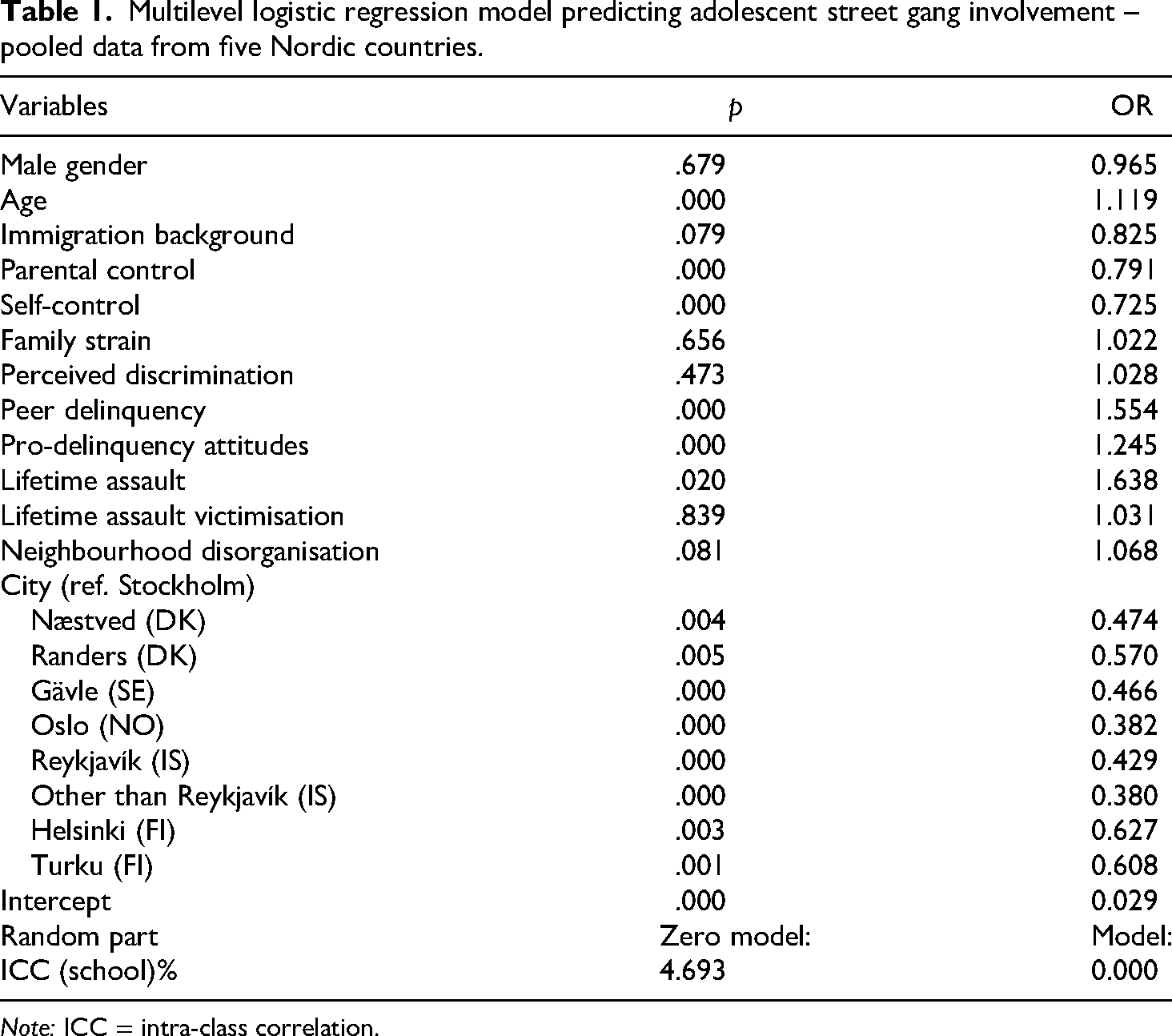
Note: ICC = intra-class correlation.
Multilevel logistic regression model predicting adolescent street gang involvement – pooled data from five Nordic countries.
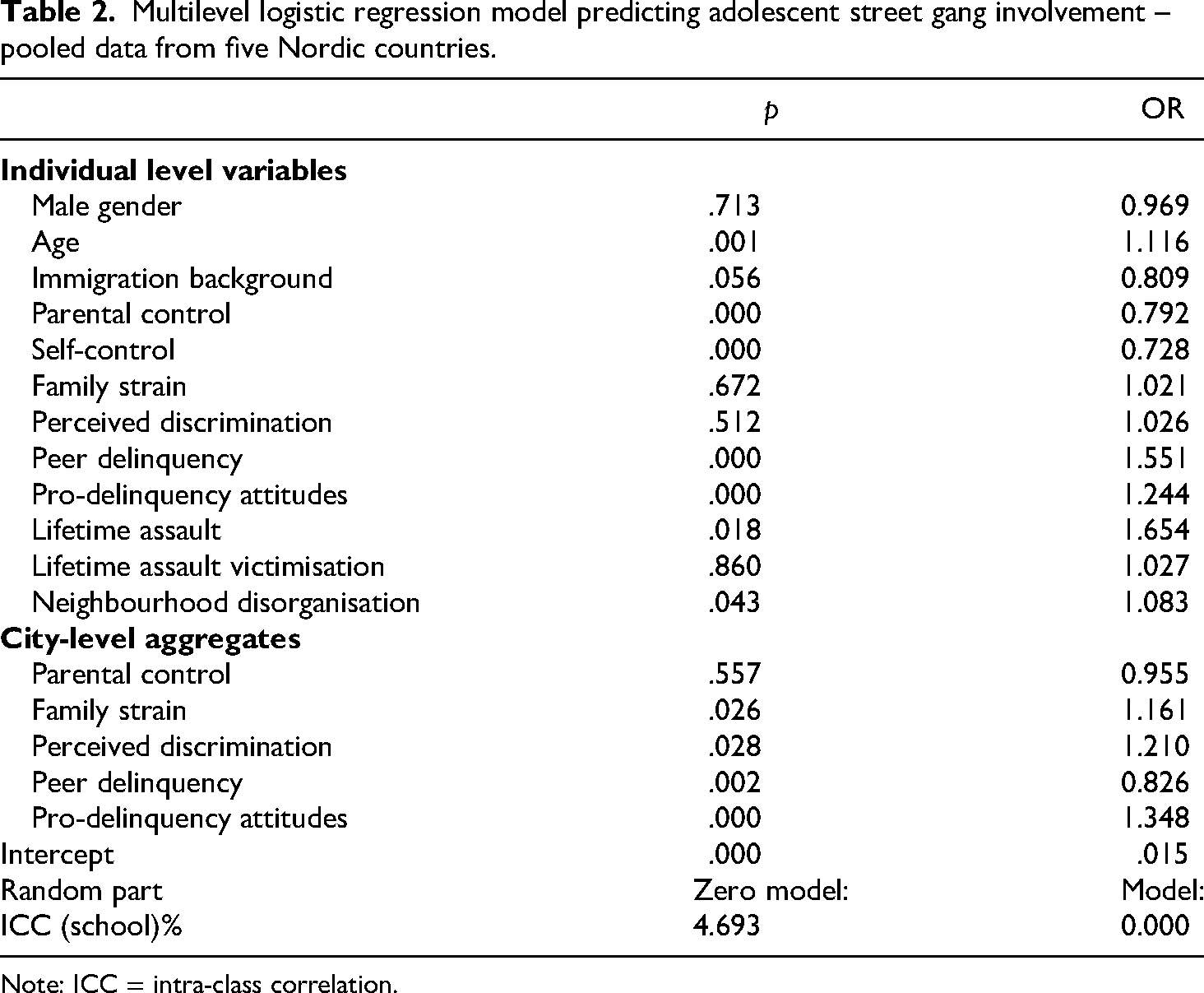
Note: ICC = intra-class correlation.
Results
Differences in prevalence across the Nordic cities
Street gang involvement was found to be significantly higher in Stockholm compared to other cities (see Figure 1). The prevalence of gang involvement in Stockholm was 16%, and rates in the other cities ranged between 5 and 9%. The differences are statistically significant between Stockholm and the other cities as indicated by the non-overlapping 95% confidence intervals. Additionally, it is interesting to note that the only other significant differences (non-overlapping 95% confidence intervals) were between Helsinki (9%) and Oslo (6%) and Helsinki and Other than Reykjavik (5%).
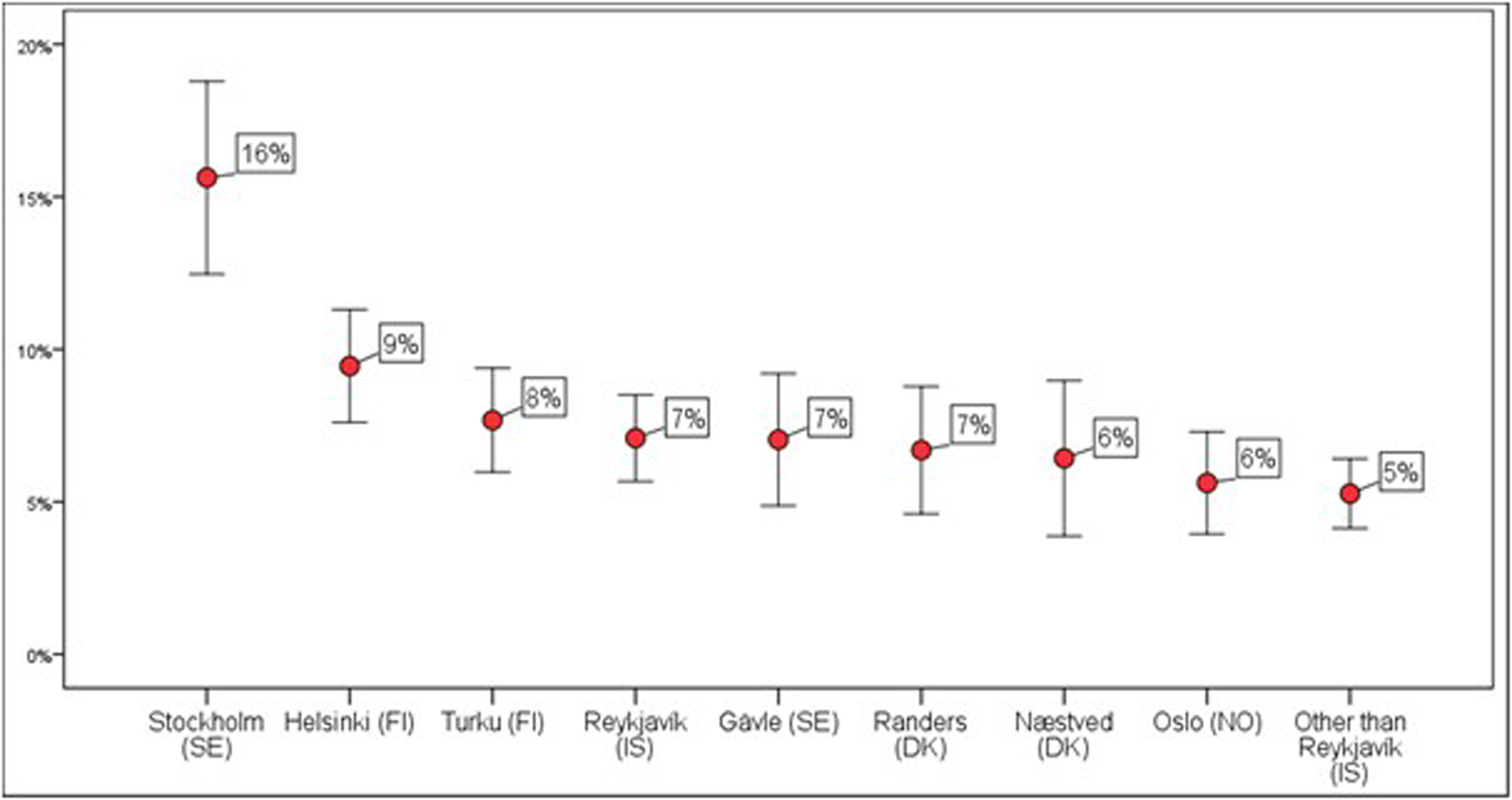
The prevalence of adolescents’ street gang affiliation in the studied Nordic cities.
Adding individual-level risk factors to the model did not explain away the difference between Stockholm and other cities. After adjusting for individual-level study variables (Table 1), Stockholm still has a significantly higher likelihood of gang involvement compared to all other cities: Other than Reykjavík (OR = 0.38, p = .000), Oslo (OR = 0.38, p = .000), Reykjavík (OR = 0.43, p = .000), Gävle (OR = 0.47, p = .000), Næstved (OR = 0.47, p = .004), Randers (OR = 0.57, p = .005), Turku (OR = 0.61, p = .001) and Helsinki (OR = 0.63, p = .003). Notably, Helsinki did not differ significantly from Oslo or Other than Reykjavík in the multivariate model (overlapping 95% confidence intervals).
Individual-level risk factors
Among the individual-level risk factors examined (Table 1), parental control was negatively associated with the dependent variable gang involvement (OR = 0.79). A one standard deviation increase in parental control was associated with a 21% reduction in the odds of street gang involvement. Self-control was also negatively associated with street gang participation (OR = 0.73). A one standard deviation increase in self-control corresponded to a 27% reduction in the odds of gang involvement.
In contrast, several variables showed positive associations with street gang involvement, peer delinquency (OR = 1.55), pro-delinquency attitudes (OR = 1.25) and lifetime assault perpetration (OR = 1.64). A one standard deviation increase in peer delinquency and pro-delinquency attitudes was associated with 55 and 25% higher odds, respectively, of gang involvement. Respondents who had committed an assault offense had 64% higher odds of being gang involved.
In the same model, family strain, perceived discrimination, assault victimisation and neighbourhood disorganisation did not show statistically significant associations with street gang involvement. Among the three background variables, only age was significantly related to gang involvement (OR = 1.12), indicating that older adolescents had slightly higher odds of involvement. Gender and immigration background were not significantly associated with gang involvement.
Individual- and city-level aggregated risk factors
In the model including aggregate city-level variables (Table 2), respondents from cities with higher average levels of pro-delinquency attitudes (OR = 1.35), perceived discrimination (OR = 1.21) and family strain (OR = 1.16) were significantly more likely to be involved in street gangs. At the individual level, peer delinquency was positively associated with street gang affiliation, but the association was negative between the city-level aggregated peer delinquency and gang involvement (OR = 0.83). At the individual level, the positive association between perceived neighbourhood disorganisation and gang involvement was statistically significant (OR = 1.08, p = .043).
Discussion
In this study, we examined the prevalence and risk factors associated with street gang affiliation among adolescents in nine Nordic cities using comparative data from the ISRD4 survey (Enzmann et al., 2018; Marshall et al., 2022) and the Eurogang measurement (Weerman et al., 2009). The findings indicate that adolescent street gangs are present in all studied cities, but the challenges are most pronounced in Stockholm. Notably, Gävle, the other Swedish city in our sample, did not exhibit similar levels of gang involvement.
Our findings suggest that, like more organised and violent criminal gangs, youth street gangs represent a particularly acute problem in Stockholm. This aligns with earlier research on street gang phenomena in Stockholm dating back to the 1990s (e.g., Klein, 1996), as well as more recent studies documenting severe gang violence during the 2000s (Rostami, 2017; Sturup et al., 2020). Although youth street gangs differ from more organised criminal groups, they appear to share regional dynamics and area-level risk factors. In some cases, regionally influential crime groups may serve as sources of influence and inspiration for adolescent gangs (Moeller, 2017; Pedersen, 2014, 2018).
The difference between Stockholm and other cities persisted after controlling for individual-level risk factors. This suggests that the observed differences between Stockholm and the other cities are not attributable to differences in the studied individual-level risk factors related to social control, self-control, strain, social learning or social disorganisation. These findings support previous research that has highlighted regional and city-level dynamics, such as social and spatial marginalisation (e.g., Klein, 2002; Sturup et al., 2020). Future research should prioritise comparative urban studies and in-depth analysis of intra-city and inter-regional contexts to further inform criminological theory.
At the individual level, the most robust risk factors were consistent with theories of social control (Hirschi, 1969), self-control (Gottfredson and Hirschi, 1990) and social learning (Akers, 1973). Gang affiliation was more prevalent among adolescents with low parental control. This is in line with prior studies that emphasised weak familial- and community ties among gang involved youth (Alleyne and Wood, 2014; Dickson-Gomez et al., 2017). The findings also support earlier research showing that young gang members tend to exhibit low self-control (Pyrooz et al., 2013), and are embedded in crime-supportive peer groups with pro-crime attitudes (Gilman et al., 2014). These criminogenic social ties may facilitate pathways into gangs (Adamse et al., 2024). On the other hand, it is important to consider the reverse direction as well. A gang is composed of crime-active social ties, and involvement reinforces such contacts (Gordon et al., 2004).
While previous studies have emphasised the link between street gangs and societal exclusion (e.g., Johnson and Mendlein, 2022; Pyrooz et al., 2010), our study did not find significant association between individual-level indicators of strain or marginalisation and gang affiliation. This somewhat unexpected result may suggest that youth street gangs are not as directly linked to social inequality as more serious forms of gang crime, as proposed by the theory of multiple marginalisation (Vigil, 2002). On the other hand, it is worth noting that our model also included variables that measured an individual's criminal propensity and likelihood to be in situations and settings conducive to criminal behavior. It is therefore possible that marginalisation and pressure are transmitted through higher personal and situational risk factors for crime. This hypothesis, however, was not examined in this study.
The city-level aggregated indicators of social control, strain, social learning and disorganisation were associated with youth gang membership. According to our results, the city-level average strain was a more significant factor than strain reported at the individual level. Gang membership was more likely in cities with higher average family strain and perceived discrimination. These findings are consistent with previous studies emphasising the importance of regional dynamics in fostering conditions conducive to gang formation (e.g., Klein, 2002; Sturup et al., 2020; Thrasher, 1927). Additionally, cities with higher average pro-delinquency attitudes also showed elevated gang involvement, which is consistent with the individual-level results. However, an unexpected finding was the negative association between aggregated peer delinquency and gang membership. This result lacks a clear theoretical explanation, and its robustness should be examined in future studies.
Regarding background variables, street gangs were more likely to include older adolescents. However, a surprising finding was that male gender and immigrant background were not significantly associated with gang involvement, despite previous research identifying these as risk factors (e.g., Pedersen, 2014). We did not differentiate between countries of origin or reason for migration in our operationalisation of immigrant background. A more nuanced measure of cultural background and reasons for immigration, for example, might have elicited different results (Andersen et al., 2022; Moeller, 2024; Skardhamar et al., 2014). It is also worth noting that prior studies have reported mixed findings regarding the relationship between immigrant status and adolescent street gang involvement (Haymoz et al., 2014). Another possibility is that youth street gangs have become part of the broader youth culture in the studied cities, rather than being confined to ethnic minorities or socially marginalised groups. The lack of association may be due to other risk factors in the model accounting for the variance typically attributed to immigrant background, male gender, and street gangs. In the case of immigrant background, it is possible that language barriers may have affected participation as the school survey was only available in official languages and English, potentially limiting accessibility for some groups.
There are several limitations that should be considered when interpreting the results. Data collection was delayed and staggered across cities due to the COVID-19 pandemic and related restrictions, which may have introduced regional variations in the findings. Additionally, the data collected during the period following restrictions due to the pandemic may reflect temporary disruptions in typical gang activity or atypical patterns influenced by the unique conditions of the pandemic. Cities with less strict lockdown measures may exhibit different patterns of gang involvement compared to those with prolonged restrictions, highlighting the uneven impact of pandemic responses. Differences between countries in the implementation of the ISRD4 sampling strategy and in response rates, which partly reflect the challenges of school-based sampling during the COVID-19 pandemic, may also to some extent limit the comparability of the city samples.
The study relied on self-reported data for gang membership and risk factors, which may introduce some measurement errors in the analysis. Nonetheless, the material was collected based on up-to-date frameworks of national comparative research on youth crime (ISRD4) and street gangs (Eurogang). The analysis was based on observational and cross-sectional data, which limits the ability to test dynamic or causal relationships between risk factors and street gang involvement. It is also possible that some of the risk factors may be, at least partly, in the opposite direction compared to the modeling performed in this study. Crime-active peer contacts may precede gang membership, but according to previous studies, joining a gang also increases the number of crime-active peers (Gordon et al., 2004).
The city samples were based on a random sampling of school classes, making the data broadly representative of the target age group. However, response rates varied across city samples, with particularly low participation in Sweden, which should be considered when interpreting the results. Survey-based research also faces limitations such as the underreporting of socially undesirable behaviours, which may partly explain unexpected results (e.g., among immigrant populations). Future research should pursue more robust comparative urban studies on youth gangs, using strong sampling designs and analysing intra-city differences. Longitudinal designs and the integration of official records with survey data could provide more detailed perspective on dynamics and trajectories of youth gang involvement.
Conclusion
According to the individual-level risk factors and aggregated city-level variables found in this study, youth street gang involvement is most prevalent among individuals with an increased criminal propensity, a criminally active peer group and greater exposure to neighborhood disorganisation. Youth street gang involvement is also relatively high in areas with higher city-level aggregates of family strain, perceived discrimination and pro-delinquency attitudes. Preventive interventions should target these individuals and groups, while more information is needed on the causal mechanisms of gang involvement. Importantly, the phenomenon also varies at the city level. For example, in Sweden, the prevalence of gang involvement in Stockholm was significantly higher compared to other cities, including Gävle, which did not stand out from the broader Nordic sample. Although adolescent street gangs were present in all studied cities, it is advisable to direct interventions toward higher-risk cities and areas (see also Klein, 2002; Sturup et al., 2020). Looking ahead, extensive cross-national city comparisons should be conducted on a broader European scale. Such research would enhance our understanding of the regional dynamics of youth gang formation and support the development of evidence-based prevention strategies.
Footnotes

Funding
This study was funded by the Nordic Research Council for Criminology (Project 20210014) and the Academy of Finland (project grant for Markus Kaakinen; Grant number 342741/2021).
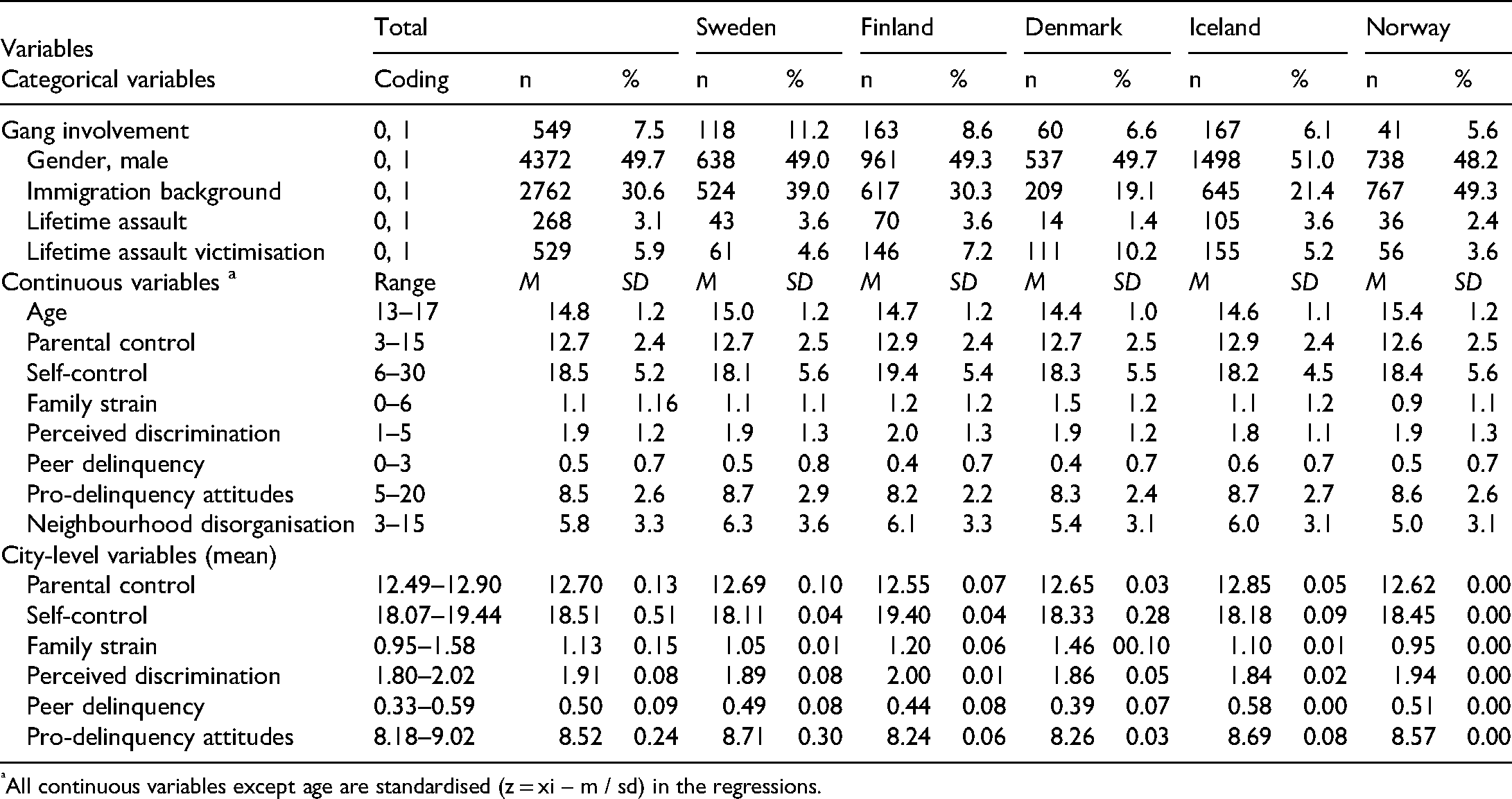
Appendix. Descriptive information of our study variables.
| Variables | Total | Sweden | Finland | Denmark | Iceland | Norway | |||||||
|---|---|---|---|---|---|---|---|---|---|---|---|---|---|
| Categorical variables | Coding | n | % | n | % | n | % | n | % | n | % | n | % |
| Gang involvement | 0, 1 | 549 | 7.5 | 118 | 11.2 | 163 | 8.6 | 60 | 6.6 | 167 | 6.1 | 41 | 5.6 |
| Gender, male | 0, 1 | 4372 | 49.7 | 638 | 49.0 | 961 | 49.3 | 537 | 49.7 | 1498 | 51.0 | 738 | 48.2 |
| Immigration background | 0, 1 | 2762 | 30.6 | 524 | 39.0 | 617 | 30.3 | 209 | 19.1 | 645 | 21.4 | 767 | 49.3 |
| Lifetime assault | 0, 1 | 268 | 3.1 | 43 | 3.6 | 70 | 3.6 | 14 | 1.4 | 105 | 3.6 | 36 | 2.4 |
| Lifetime assault victimisation | 0, 1 | 529 | 5.9 | 61 | 4.6 | 146 | 7.2 | 111 | 10.2 | 155 | 5.2 | 56 | 3.6 |
| Continuous variables a | Range | M | SD | M | SD | M | SD | M | SD | M | SD | M | SD |
| Age | 13–17 | 14.8 | 1.2 | 15.0 | 1.2 | 14.7 | 1.2 | 14.4 | 1.0 | 14.6 | 1.1 | 15.4 | 1.2 |
| Parental control | 3–15 | 12.7 | 2.4 | 12.7 | 2.5 | 12.9 | 2.4 | 12.7 | 2.5 | 12.9 | 2.4 | 12.6 | 2.5 |
| Self-control | 6–30 | 18.5 | 5.2 | 18.1 | 5.6 | 19.4 | 5.4 | 18.3 | 5.5 | 18.2 | 4.5 | 18.4 | 5.6 |
| Family strain | 0–6 | 1.1 | 1.16 | 1.1 | 1.1 | 1.2 | 1.2 | 1.5 | 1.2 | 1.1 | 1.2 | 0.9 | 1.1 |
| Perceived discrimination | 1–5 | 1.9 | 1.2 | 1.9 | 1.3 | 2.0 | 1.3 | 1.9 | 1.2 | 1.8 | 1.1 | 1.9 | 1.3 |
| Peer delinquency | 0–3 | 0.5 | 0.7 | 0.5 | 0.8 | 0.4 | 0.7 | 0.4 | 0.7 | 0.6 | 0.7 | 0.5 | 0.7 |
| Pro-delinquency attitudes | 5–20 | 8.5 | 2.6 | 8.7 | 2.9 | 8.2 | 2.2 | 8.3 | 2.4 | 8.7 | 2.7 | 8.6 | 2.6 |
| Neighbourhood disorganisation | 3–15 | 5.8 | 3.3 | 6.3 | 3.6 | 6.1 | 3.3 | 5.4 | 3.1 | 6.0 | 3.1 | 5.0 | 3.1 |
| City-level variables (mean) | |||||||||||||
| Parental control | 12.49–12.90 | 12.70 | 0.13 | 12.69 | 0.10 | 12.55 | 0.07 | 12.65 | 0.03 | 12.85 | 0.05 | 12.62 | 0.00 |
| Self-control | 18.07–19.44 | 18.51 | 0.51 | 18.11 | 0.04 | 19.40 | 0.04 | 18.33 | 0.28 | 18.18 | 0.09 | 18.45 | 0.00 |
| Family strain | 0.95–1.58 | 1.13 | 0.15 | 1.05 | 0.01 | 1.20 | 0.06 | 1.46 | 00.10 | 1.10 | 0.01 | 0.95 | 0.00 |
| Perceived discrimination | 1.80–2.02 | 1.91 | 0.08 | 1.89 | 0.08 | 2.00 | 0.01 | 1.86 | 0.05 | 1.84 | 0.02 | 1.94 | 0.00 |
| Peer delinquency | 0.33–0.59 | 0.50 | 0.09 | 0.49 | 0.08 | 0.44 | 0.08 | 0.39 | 0.07 | 0.58 | 0.00 | 0.51 | 0.00 |
| Pro-delinquency attitudes | 8.18–9.02 | 8.52 | 0.24 | 8.71 | 0.30 | 8.24 | 0.06 | 8.26 | 0.03 | 8.69 | 0.08 | 8.57 | 0.00 |
All continuous variables except age are standardised (z = xi – m / sd) in the regressions.