



Abstract
This article examines how Russia’s full-scale invasion of Ukraine in February 2022 has affected the dynamics of human smuggling across Ukraine’s borders. The imposition of martial law and a general mobilisation have included a ban preventing military service-aged men from leaving Ukraine. This restriction has intensified human smuggling efforts, particularly along the routes into the European Union. By analysing court data on human smuggling since the invasion and comparing it to pre-2022 data, this study reveals significant changes, including an increased presence of women among smugglers and a shift in offender demographics – the average smuggler is now younger, more often unmarried, with no criminal record, and a Ukrainian citizen. The findings indicate that the new type of people smuggling under martial law has reshaped both the socio-demographic profile of smugglers and the criminological characteristics of human smuggling in Ukraine and contribute to the understanding of smuggling as a flexible and context-sensitive phenomenon.
Introduction
Human smuggling is likely as old as state borders themselves, as people at all times, for all kinds of reasons, were ‘unable to travel via ordinary legal routes’ (van Liempt, 2021). While much attention to human smuggling has been given from the perspective of ‘entry’ states (e.g., European Union [EU]), the ongoing Russia–Ukraine war deserves a reversal in attention. Here, a combination of active warfare on the territory of Ukraine and a ban for military-aged male citizens to leave the territory legally under martial law has become a catalyst for the intensification of human smuggling out of Ukraine into the EU territory. While EU countries readily provide ‘temporary protection’ status (Council of the EU, 2022), Ukraine actively works on deterring and punishing such smuggling activities, especially where they are perceived to be linked to avoidance of serving in the armed forces (Art. 335–336, Criminal Code of the Republic of Ukraine [CCU]).
The role and importance of the geographical position of Ukraine for the functioning of migration routes in Europe is, hence, changing. Previous studies have shown that prior to 2022, Ukraine was considered a transit country for irregular migration to EU countries (Kuryliuk and Khalymon, 2020). However, since the full-scale invasion of Ukraine by Russia in 2022, the situation has changed. The presence of hostilities alongside a strengthened state border has made it largely impossible for migrants to be transported to Ukraine. This is reflected in the data of the State Migration Service, which in 2021 detected 8308 irregular migrants entering Ukraine; in 2022, it detected 5062; and in the first quarter of 2023, it detected only 966 (The State Migration Service of Ukraine, 2022), a substantial decrease in a short period of time.
However, the (irregular) migration has not stopped. According to the European Agency for the Protection of the External Borders of the EU Member States (Frontex), in 2022, large numbers of irregular migrants originating from Ukraine were recorded on the main migration routes to the EU, primarily using the Eastern land border (5130 individuals, compared to 59 individuals in 2021). Therefore, the use of the Eastern border land route saw an almost 100-fold increase in 2022, making it the most used route by Ukrainian migrants and hence, migrant smugglers (Frontex, 2023). These changes in migration are reflected in the overall number of individuals (attempting to) cross the Ukrainian border irregularly, which have increased exponentially: in 2022, 292 individuals were arrested while attempting to cross the border without the required documentation; in 2023, this number grew to 1613. The trends in (detected) human smuggling are likewise on the rise: from 327 incidents in 2021, to 1225 in 2022, and 2301 in 2023 (The State Migration Service of Ukraine, 2022).
This number comprises both Ukrainian citizens and foreigners residing in Ukraine without documentation, though foreigners comprise only isolated cases (Frontex, 2023). The share of foreigners has dropped to insignificant levels also due to the substantially increased cost of irregular border crossing (including with the use of smugglers) (Frontex, 2023). At the same time, a new type of migrant has emerged: men attempting to evade military service but unable to leave Ukraine legally. Considering the few restrictions in place for (non-military aged or female) Ukrainian civilians to legally leave the country, this dynamic is likely due to the restriction of the departure from Ukraine of persons who are subject to conscription for military service. Thus, in connection with the Russian aggression, Ukraine has lost the status of a transit country for irregular migrants and became a source/origin country.
The transformation of the threats associated with the armed conflict and the changing nature of the individuals using smuggling ‘services’ require a re-assessment of the characteristics of the individuals involved in human smuggling, as well as the response to this type of smuggling by law enforcement. Consequently, the purpose of this study is twofold: (i) to draw up a socio-demographic profile of a human smuggler across the state border of Ukraine during the period of martial law (since February 2022); (ii) to explore offence-related characteristics of the instances of human smuggling since February 2022. The study primarily relies on quantitative analyses of criminal court decisions in smuggling cases in 2022–2023, supplemented by official (public) data from the Office of the Prosecutor General of Ukraine (Office of the Prosecutor General, 2022). Additionally, to explore the developments since February 2022 comparatively, studies from the period prior to the full-scale invasion were used.
The article begins by providing a short overview of the link between migration and human smuggling, smuggling-related scholarship, focusing on studies exploring socio-demographic and criminological characteristics of the smugglers and their activities. It then explains the methods, including the research instrument used for quantitative analyses. The findings section is divided into an exploration of socio-demographic (individual-focused) variables and criminological (activity/offence-focused) variables. We conclude by observing the changes in the ‘average’ human smuggler and smuggling operation in the pre-war and during-war periods, discussing the contributions to the scant literature of this nature, and identifying future research pathways.
Migration, trafficking and smuggling: Supply and demand in the illegal market
Human smuggling, when done for profit, is an illegal ‘business’ (Aronowitz, 2001), though acknowledgement of the role of smugglers in times of armed conflicts for facilitation of fleeing conflict zones or persecution is increasingly acknowledged (see, e.g., United Nations Office on Drugs and Crime [UNODC], 2021). The legally binding, international definition of smuggling of migrants is offered by the United Nations Convention against Transnational Organized Crime and the Smuggling of Migrants Protocol, which defines ‘illegal importation of migrants’ as ‘the procurement, in order to obtain, directly or indirectly, a financial or other material benefit, of the illegal entry of a person into a State Party of which the person is not a national or a permanent resident’ (UNODC, 2000). While irregularly crossing country borders in most cases is ‘not a criminal offence, but an infraction of administrative regulations’ (European Commission, n.d.; European Commission, 2006), the Ukrainian wartime situation constitutes an exception as much of the population (military-aged males) is legally prohibited from crossing the border during the period of martial law (President of Ukraine, 2022).
Human smuggling is often confused with human trafficking, both by laypeople and by politicians or policymakers (UNODC, 2016). However, the distinction between the two is important for legal consequences. While human trafficking is defined as ‘the recruitment, transportation, transfer, harbouring or receipt of persons, … for the purpose of exploitation’ (UNODC, 2015: 21), in human smuggling ‘there is typically no intention to exploit the smuggled migrant after having enabled him or her to irregularly enter or stay in a country’ (UNODC, 2015: 21). Furthermore, trafficking in persons does not per se require crossing a border, while smuggling does. Finally, smuggling of migrants generally occurs, at least at the outset, voluntarily/with consent, while trafficking in persons is generally conducted without the individual's consent (UNODC, 2015: 21). Throughout the study, the terms ‘irregular migrant’ or ‘migrant’ are used interchangeably to refer to the actions taken by the individuals attempting to cross state borders, in contrast to ‘human smuggling’ or ‘illegal activity’ that refers to the activities of the smugglers (Art. 332, CCU, 2001).
Human smuggling is a cross-border crime, the prevalence of which is characteristic of most states, to a greater or lesser extent (UNODC, 2018). This is influenced by various factors: border policies, the degree of security of the state border, the geographical location of the state, social processes, among others (Gezie et al., 2021; van der Leun and van Schijndel, 2016). Experience has shown that if there is a demand for cross-border smuggling, there will be a supply (UNODC, 2018). Human smuggling researchers (Bilger et al., 2006), see it as a transnational service industry that connects service providers (people smugglers) with their clients. The presence of migrants who do not have (access to) legal pathways for crossing the state border, but who are ready to pay for services related to their transportation, leads to the formation of a category of people: smugglers, who are ready to provide such services. In this context, the extent and seriousness of existing barriers to smuggling will only affect its cost but can scarcely stop the migration (International Organization for Migration, 2017).
Human smuggling and smugglers: Criminological studies
Criminological studies of human smuggling have approached it as an ‘illegal market’, which allows for inclusion of market forces: increased demand for cross-border movement, coupled with strict border controls and unavailability of legal migration pathways, leading to the supply of illegal smuggling services (Aronowitz, 2001). However, such studies have primarily focused on situations of irregular entry rather than exit, making the context of martial law in Ukraine comparable to specific situations of, for example, Eritrea, North Korea, or Syria (Campana, 2020) and rather unusual in the global context of human migration and smuggling networks.
Studies of human smuggling, and related studies of human trafficking, have to date been dominated by a focus on the features of human smuggling as an activity: its geographical and temporal context, level of organisation, mechanisms of smuggling, and the legal consequences for the migrants and the smugglers (see, e.g., Campana, 2020; Zhang et al., 2018). Much less attention has been given to individual, socio-demographic characteristics of the smugglers (Campana, 2020) or to the perspectives of the migrants themselves (Zhang et al., 2018).
In prior studies of human smugglers, the peculiarities of the geographical locations of both the migrants’ country of origin and the smugglers’ country of residence have been found to be of importance in explaining how smuggling is conducted (see, e.g., Peña, 2021). This is unsurprising considering that geography also determines whether an individual's crossing of the border is an offence or not. As has been argued by Spener (2009), the type of migration (legal–illicit, open–clandestine) reflects the obstacles created by border enforcement. In the contemporary Ukrainian context, new legislation on border crossing is a clear factor in migrants’ choices: whereas women, and men who are under 18 or above 60 years old, can cross the Ukrainian border legally, it is against the law to attempt to do so for men of military age (Ukrinform, 2023). In the broader EU context, the freedom of movement across member states is extraordinary, while both entry into and movement across EU territory for individuals lacking an EU passport is seriously restricted (European Parliament, 2023).
Hence, the migrants’ geographical location informs the transit route and the potential smuggler networks used to pass through it (Kuryliuk and Khalymon, 2020; UNODC, 2018; Zhang and Chin, 2002), while the smugglers’ residence in either a transit country or a country of origin of migrants affects the modus operandi of the smuggling activities (Bilger et al., 2006; Kuryliuk and Khalymon, 2020; Zhang and Chin, 2002). Zhang and Chin (2002), in their studies of China, have found that where migrants are transported by sea routes to their destination countries of the USA and Western Europe, the same smugglers are involved in the entire path of the movement of migrants. In contrast, where smuggling takes place on land, smugglers operate within the borders of the state through which the migrants are transiting, directly involving local population of the border area in the smuggling activities. Thus, migration along land routes is likely to involve a network of organisations that ‘enter into partnerships with one another’, as found in the context of the Eastern Mediterranean (see, e.g., Achilli, 2018; Baird, 2017). Moreover, studies show that for local people in the border regions who get involved in smuggling, it seems to be a ‘low-profile way of making a living’ rather than a criminal career pathway (van Liempt, 2021: 305). Finally, we know that at least some smuggling is organised and carried out by family members, or others acting out of humanitarian reasons, though both types are understudied (van Liempt, 2021; Zhang et al., 2018).
Considering the complexity of smuggling and the multitude of contexts, studies have shown that ‘there is no standard profile of traffickers. They range from truck drivers to village “aunties” to labour brokers and police officers. Traffickers are as varied as the circumstances of their victims’ (Feingold, 2005: 28). The characteristics of human smugglers are thus likewise varied and tightly interwoven with the political, societal, and geographical contexts (see, e.g., Raineri, 2021; van Liempt, 2021; İçli et al., 2015). Campana (2020), in an overview of existing literature on the socio-demographic characteristics of smugglers, finds evidence for smuggling to be a male-dominated field, with average ‘guides’ aged 18–25, and more senior smugglers aged 35 or older (Campana, 2020). In addition, the review shows that smugglers often have another legitimate occupation and are not involved in other illegal activities. Beyond the individual level, literature also shows a variety of relations smugglers have with migrants, ranging from being relatives (Sanchez, 2018) and other relations of trust (İçduygu, 2018), to fraud and exploitation (Varese, 2017). The type of relation is informed by the extent to which smuggling is provided as a ‘professional service’ (Aziani, 2023) and the vulnerability of the migrant (e.g., Zhang et al., 2018), again emphasising the range of characteristics (e.g., Lopez–Castro, 1998; Spener, 2009; Stovel and Shaw, 2012). The relational approach to analysing smuggling has led to a more inclusive definition of smuggling as a ‘social’ rather than ‘illicit’ enterprise (Maher, 2018).
While several studies on human smuggling feature irregular crossings across Ukrainian borders or irregular entry of Ukrainian nationals into other states’ territories (e.g., Jandl et al., 2005; Leman and Janssens, 2018; Neske, 2006), little attention to the characteristics of the individuals carrying out the smuggling has been paid. Kushnir and Hutsulyak (2021) provide an insight into the characteristics of human smugglers who violated the order of entry and exit from the temporarily occupied territories in Ukraine (Verkhovna Rada, 2014). Through analysing court verdicts (N = 38), this study shows that most convicted individuals had no previous encounters with law enforcement, were citizens of Ukraine, male, were earning a low income and were hence motivated by financial gains. While Kushnir and Hutsulyak (2021) focused on a particular type of smuggling, a recent study by Kuryliuk and Khalymon (2020) provides an insight into the characteristics of human smugglers in/out of Ukraine, pre-2022 full-scale invasion. It uses similar methodology to the current study: analysing criminal court decisions in human smuggling cases (N = 360) over a longer period (2013–2018). This study will be used, where appropriate, to make comparisons between the pre-war and wartime characteristics of a human smuggler across the Ukrainian border.
Methodology
This study is based on (i) a quantitative analysis of trial judgements (verdicts) issued by the national courts of Ukraine, handed down in relation to persons who have committed irregular transportation of persons across the state border of Ukraine (Art. 332, CCU, 2001) under the conditions of martial law, and (ii) two interviews conducted with individuals convicted of the said offence and serving a sentence at the time of the research.
For the analysis of verdicts, all publicly available trial and sentencing judgements of the (regional) criminal courts of Ukraine from the period of March 2022 to May 2023 were included in the analyses. This amounted to 123 convictions and sentences against 153 individuals who met the two criteria relevant for this study: (a) committed irregular transportation of people across the state border of Ukraine during the period of martial law (March 2022–May 2023); (b) were convicted and serving a sentence at the time of the study.
For the interviews, the author’s team requested and received permission from the ‘Probation Center’ (State Institution) of the Ministry of Justice of Ukraine to conduct interviews with persons serving sentences for the commission of irregular transportation of people across the state border. The researchers then made direct contact with probation officers to begin primary data collection. In total, a preliminary interview was conducted with 21 persons; two persons gave their consent for the interview. Before the interview, measures were taken to protect personal data; participants were informed about the possibility to leave the study at any time, as well as the ethical use of information and publication of results.
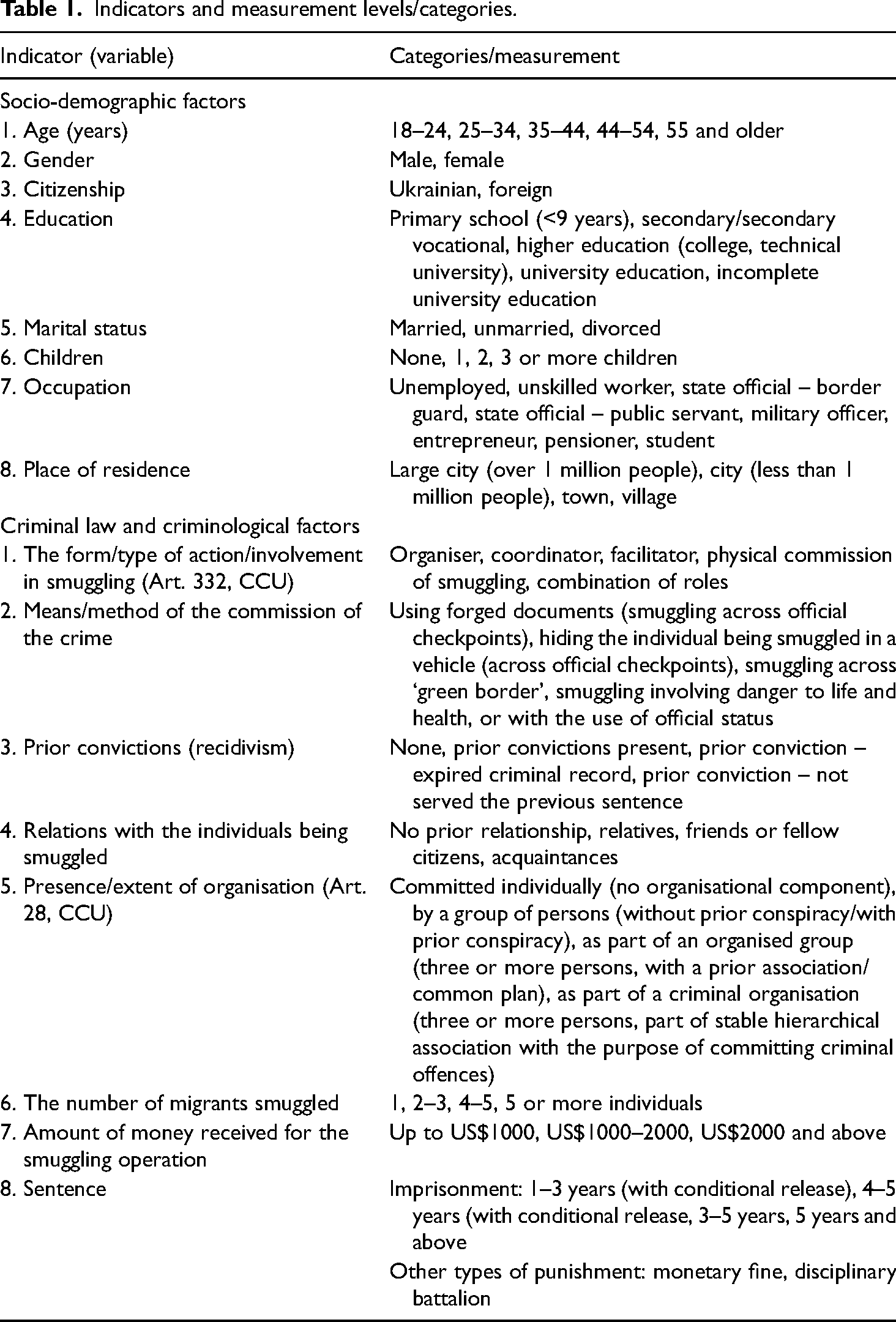
It is important to note that the study was not without limitations. While the court documents provide the most available and reliable sources of data, the factual number of both migrants and smugglers is much higher, as is common to criminological studies of human smuggling and trafficking overall (e.g., Friebel and Guriev, 2013; Rojas et al., 2020). Furthermore, the court data is limited due to the fact that in the majority of cases, the defendants confessed and entered into a plea agreement. This limits the extent of investigations and presentation of evidence during trial, likewise limiting the amount of data available for analysis. This particularly applies to analysing the motivations of the defendants, their relationships with the migrants, as well as the involvement of larger groups and structures, which the defendants are unlikely to confess to. Furthermore, little information on the migrants was included in the court files, and the researchers did not seek to interview the migrants. However, criminal court decisions tend to provide the data necessary to understand the characteristics of the conduct for which the individual is being prosecuted, as well as the individual circumstances informing the judges’ decision on the guilt or innocence and the appropriate punishment. The indicators in Table 1 reflect the information available in the public trial judgements of the courts of Ukraine.
Indicators and measurement levels/categories.
Research instruments and analytical approach
The research team developed and used an empirically constructed table of criminological characteristics based on features obtained from the available scientific literature related to criminal profiling (Ainsworth, 2001; Benedicto et al., 2017) and in-depth studies of human smugglers in different contexts, as reviewed above (Khalymon et al., 2023; Kuryliuk and Khalymon, 2020; Kuryliuk et al., 2021; Kushnir and Hutsulyak, 2021; Neske, 2006; Vega et al., 2018; Zhang and Chin, 2002).
First, the characteristics of the smuggling process itself were assessed, and relevant factors were identified. It should be noted that studies in the field of combating irregular migration recognise the significant role of criminological/sociological studies of the individual offender and determining their socio-demographic profile, along with the criminological characteristics of the specific type of crime and its determinants, as the basis for the development of measures to prevent crime (Canter, 2010; Waller and Weiller, 1986).
Studying the peculiarities of smuggling processes, Neske (2006) concluded, based on the main features of the smuggling process, that these can be divided into three different (main) types: (i) individual smuggling with a high degree of self-responsibility; (ii) smuggling using fake visas as a pure service; and (iii) premeditated smuggling (organised in advance). This classification reflects the most essential features of modern smuggling, which can be further enriched by merging it with the relevant legal provisions, in this case, the CCU. Additionally, socio-demographic characteristics relevant to and/or considered by the Criminal Courts of Ukraine were added to the analytical framework to enable establishment of pertinent characteristics of wartime human smuggler across the Ukrainian border.
Table 1 presents the 16 factors that were used in the analyses of court verdicts of human smugglers, divided into socio-demographic characteristics and criminological characteristics.
The following sections will present the findings accordingly grouped by the (i) socio-demographic and (ii) criminal law and criminological factors, compared with the findings of the pre-war studies of human smugglers by Kuryliuk and Khalymon (2020). While the two types of factors are potentially inter-related, they are presented separately for clarity.
Results
Socio-demographic profile of human smugglers
The analyses of the verdicts show that the vast majority of convicted smugglers (59.48%) were aged 25–44, that is, they are persons in their prime physically and professionally (see Table A1 in the Appendix for an overview of all findings). The other age groups feature as well, with the lowest representation of those aged 55 and above (8.5%). The lower percentages of older population (55+ years) might be due to the fact that smuggling activities require not only careful planning and preparation for committing the crime but also, in some cases, direct participation in transporting migrants across the state border, which requires significant physical exertion. In the case of Ukraine, most migrants cross the ‘green border’ – sometimes through mountainous terrain, by river or other waterways (Kuryliuk and Khalymon, 2020). On the other hand, older individuals, thanks to their experience and familiarity within the social circles of particular communities, might be more useful for potential migrants and able to capitalise on their networks (Achilli, 2018).
As expected, the majority of the individuals convicted of human smuggling were male (90.2%). However, if we compare the data of prior research (Kuryliuk and Khalymon, 2020) in the pre-war period (until 2022), the share of women was 7.8%, and for the related crime of the violation of the order of entry and exit to the temporarily occupied territories, the number of women was even less – 4.3% (Kushnir and Hutsulyak, 2021). Therefore, there is a certain, though not necessarily statistically significant, increase in the share of women among people smugglers. Broadly, this change might be related to the ban on leaving Ukraine for male persons under the age of 60 under the conditions of the ongoing Russian–Ukrainian war (Petrechenko et al., 2021) and the announcement of general military mobilisation. These circumstances are expected to encourage the inclusion of women into the milieu of smugglers, as they can relatively freely move across the border. However, the women in our sample were involved in specific forms of smuggling-related tasks: the forgery of documents or the movement of their relatives across the state border. Hence, it appears that women have mostly performed the intellectual aspects of the crime or acted as accomplices.
Particularly interesting patterns were observed with regard to family status of the offenders. Zhang and Chin (2002) note that the smugglers, in the context of China–US smuggling, are mostly married men, with similar findings in Turkey (Içli et al., 2015). Therefore, people smugglers have been found to be generally socialised, maintaining family ties, and, generally, not associated with criminality and not carriers of the norms of the criminal subculture. However, our analyses found that only 45.75% of the smugglers were married. Compared to prior studies, which found marriage rates of between 69.6% (Kushnir and Hutsulyak, 2021) and 77.09% (Kuryliuk and Khalymon, 2020), there has thus been a decrease in the proportion of married smugglers. It appears that the increase in the percentage of unmarried individuals among the sampled smugglers is in line with the changes in the number of children. Compared to the pre-war period (until 2022), the percentage of smugglers who do not have children has increased from 41.13% (Kuryliuk and Khalymon, 2020) to 60.13%.
A logical explanation of the low proportion of individuals who are married and/or have children could be young age. However, as mentioned above, the sample was mostly comprised of individuals aged 25–44. Hence, while speculative, some of the decrease in the share of married people among smugglers in Ukraine could be explained by the general changes in social relations because of destructive processes caused by the war, as well as the powerful wave of emigration of women from Ukraine.
The level of education might also be relevant to an individual’s behaviour. Studies devoted to the influence of the level of education on participation in illegal activities (Buonanno, 2003; Usher, 1997) have shown that education can be a protective factor. In our sample, a vast majority of smugglers were relatively educated (see Figure 1): 56.21% had secondary or secondary vocational education. Compared to the pre-war data (Kuryliuk and Khalymon, 2020), there was an increase in the share of smugglers who had primary higher education (by 10.08%), and of those with primary education (by 5.15%). Hence, our data also supports the position of some authors that there may be a non-linear relationship between education and crime (Buonanno and Leonida, 2005) and might be related to the specific circumstances of human smuggling in wartime and under martial law, where relatively educated individuals get involved in smuggling for personal as well as financial reasons and commit the violation using non-violent or non-physical means.
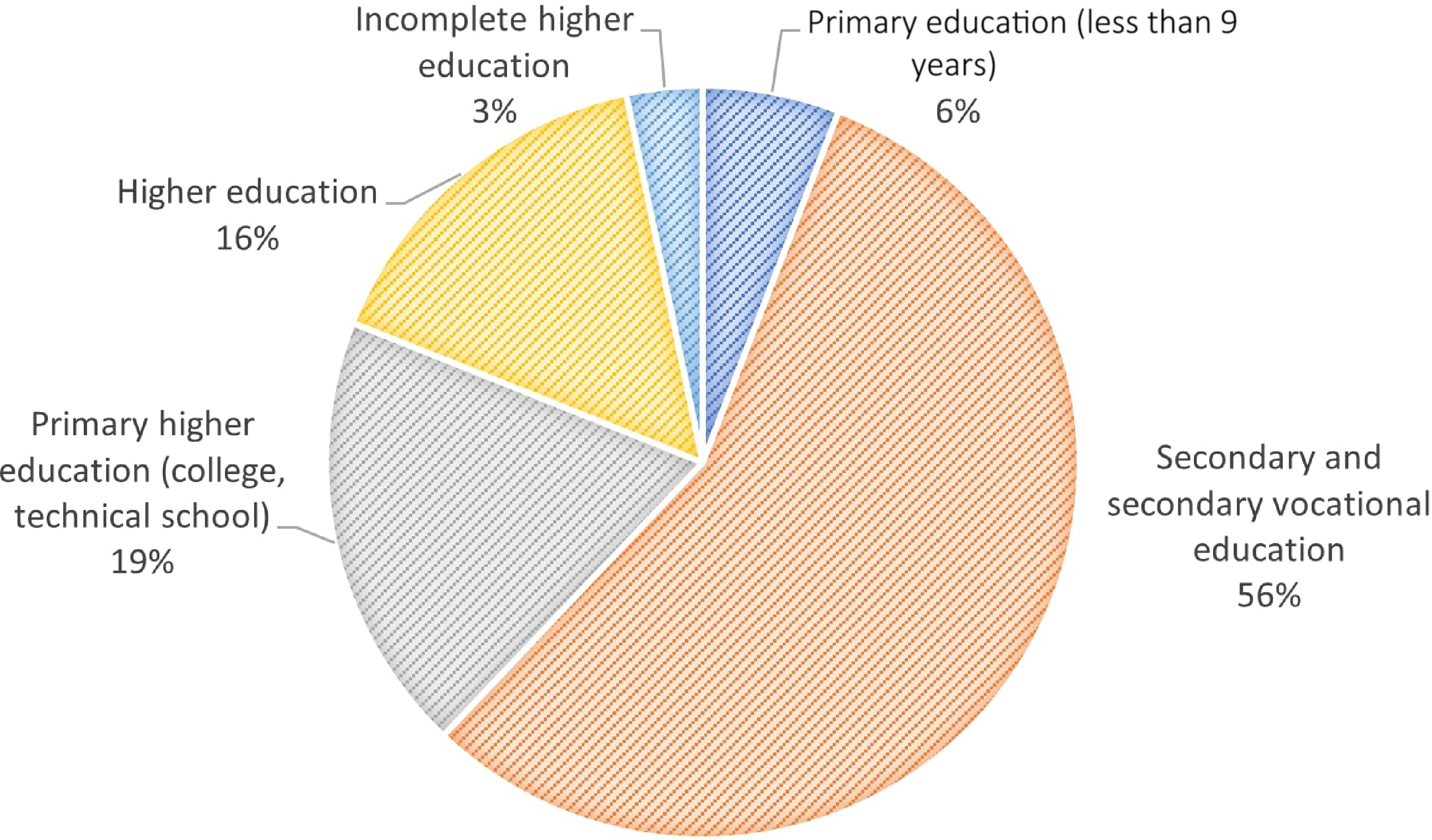
Educational background.
Unemployment has been found to be correlated with illegal activity (Kuryliuk and Khalymon, 2020). According to our data, the vast majority, 73.2%, of the sampled individuals at the time of conviction, were unemployed (see Figure 2). Comparing the obtained results with those of the pre-war period, we see that the share of the unemployed has increased by 5.22%, while new categories of pensioners and military servicemen have appeared among convicted smugglers. The share of border guards has almost halved (from 6.9% to 3.27%). The obtained results confirm that a small percentage of smuggling networks are comprised of corrupt border guards, though the number is very low. However, involvement of state officials to any extent is an important indicator of corruption, which enables the illegal movement of smuggled goods or migrants (Kuryliuk et al., 2021).
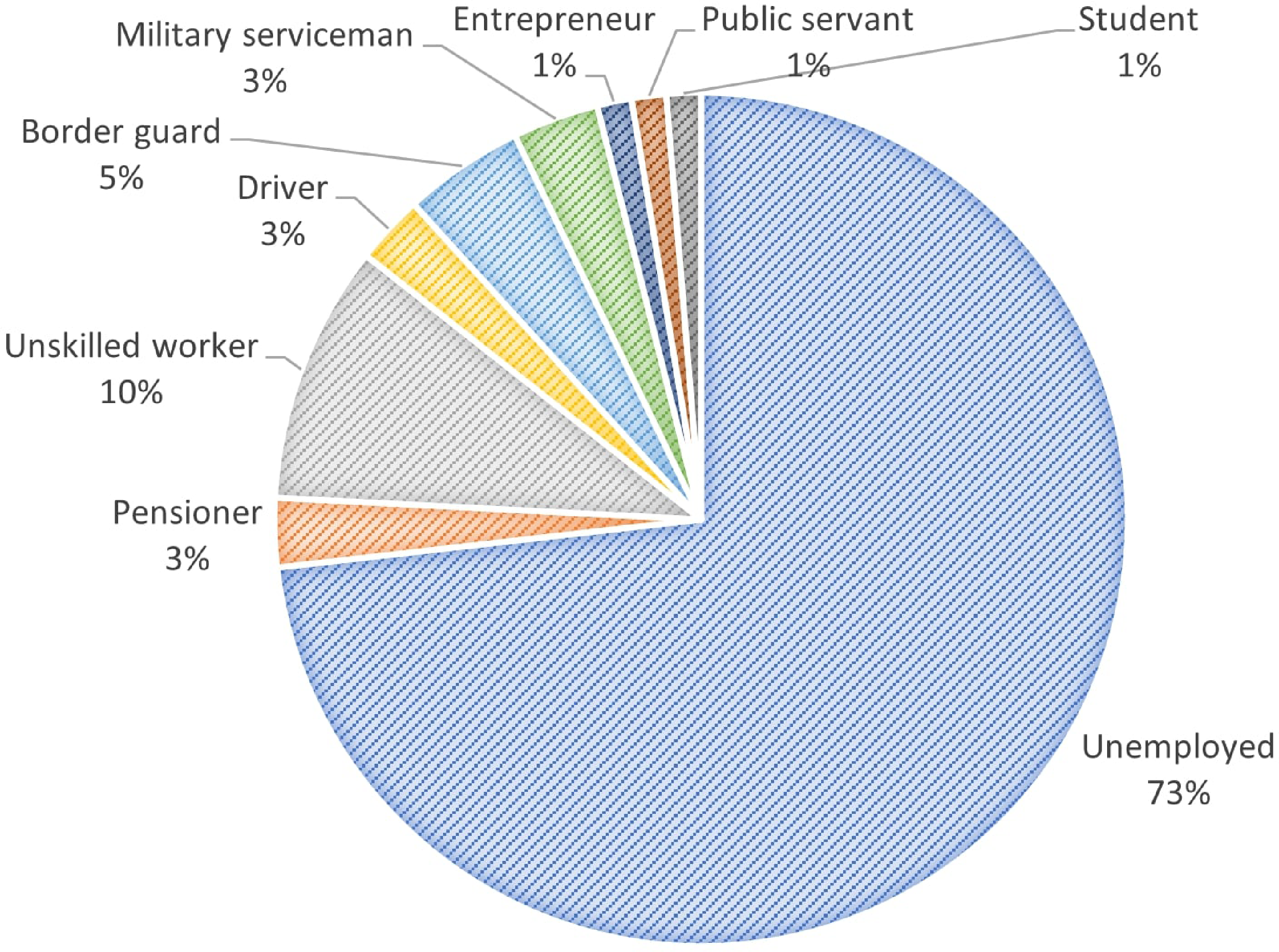
Occupation (%).
The place of residence of people smugglers is also indicative of the nature of such activity (organised or spontaneous). More than half of the offenders were residents of small settlements (52%), an increase by 8.9% compared to pre-war data (Kuryliuk and Khalymon, 2020). This may be due to the fact that the vast majority of persons caught by law enforcement agencies are residents of border settlements who acted as guides, as compared to the past years, when the transit process was more complicated because almost all migrants were foreigners. After the introduction of the legal regime of martial law in Ukraine, almost all migrants have been citizens of Ukraine; a substantial part of them arrived in the controlled border areas on their own and looked for those willing to help in crossing the state border, which, in our opinion, is the reason for the increase in people living in rural areas.
Besides the location of residence within the country, human smuggling has a cross-border nature, and therefore citizens of different countries usually participate in its organisation and implementation (İçduygu and Toktaş, 2002). In our sample, 90.2% of smugglers had Ukrainian citizenship, there were no stateless persons, and 9.8% were foreigners. We see a sharp decrease in the share of foreigners among the people smugglers – the proportion of Ukrainians in the pre-war period was 74%, with 26% of convicted smugglers having a foreign citizenship (Kuryliuk and Khalymon, 2020). Before the war, the composition of foreign smugglers included citizens of Moldova (16.19%), Afghanistan (10.47%), Russia (9.52%), Georgia (7.62%), Syria (6.67%), Pakistan (4.67%) and others (Kuryliuk and Khalymon, 2020). Among the judgements handed down by the courts during the wartime period that we examined, all 9.8% of the foreign smugglers were citizens of Moldova, a state neighbour of Ukraine. This may indicate that hostilities on the territory of the state reduce the capacity for smuggling of persons by citizens of states that do not border the country from which the smuggling is carried out.
There are important links between the citizenship of smugglers and the citizenship of migrants. Above we noted the termination of the functioning transit routes for transporting migrants through Ukraine due to the war, in connection with which the number of migrants from other countries has decreased. More than 4.8 million people who left Ukraine were registered to receive temporary protection (Bannikova, 2023) or similar national protection schemes in European countries; among them, 96% are Ukrainians. At the same time, the rules regarding the visa-free regime and temporary protection do not apply to persons who are not citizens of Ukraine and who lived in Ukraine at the time of the war (with some exceptions). This means that such persons (mostly from Turkey, the Russian Federation, India, Azerbaijan, Israel and Georgia) may need the services of migrant smugglers to leave Ukraine (UNODC, 2022). Thus, the services of smugglers are used by two categories of migrants: (1) citizens of Ukraine (mostly men who evade military service), and (2) foreigners who were in Ukraine during the war and wish to leave Ukraine. To a greater extent, foreign smugglers either (1) had family or friendly ties with migrants or (2) were citizens of a state adjacent to Ukraine, to which the migrant is leaving. The decrease of foreign migrants in connection with the start of the hostilities thus might explain the comparatively low number of foreign smugglers found in our sample.
Criminological and criminal law characteristics
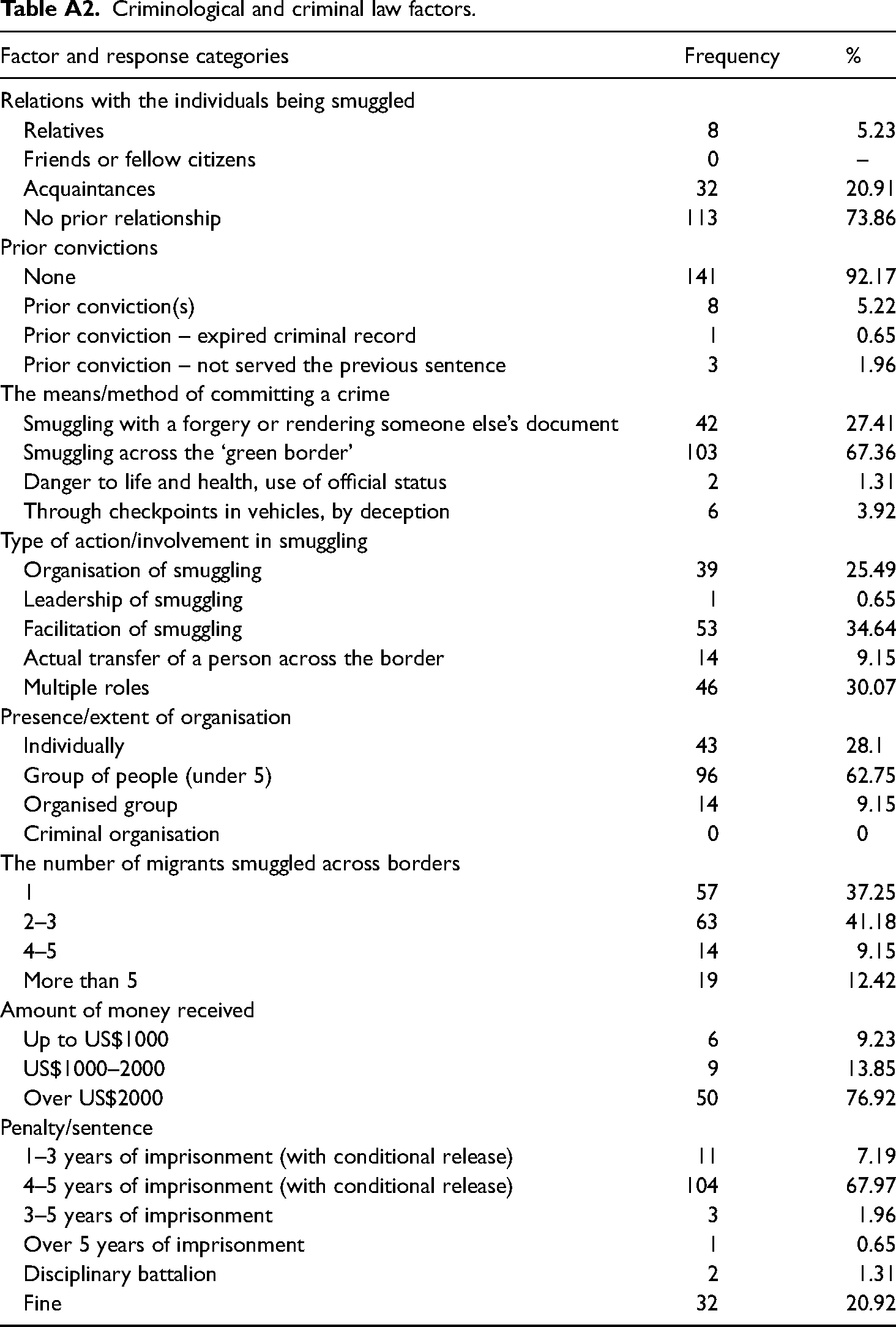
Considering the criminalisation of human smuggling overall, shadow market characteristics are inherent in human smuggling in Ukraine both in the pre-war and in the war periods (see Table A2 in the Appendix for a complete overview of the variables). The smuggler was not previously acquainted with the migrant in 73.86% of the cases or was not a close acquaintance in 20.91% of the cases (see Figure 3). In particular, friendly relations between smugglers and migrants were not found. Hence, we assume that the dominant motivation for providing smuggling services has to do with financial gain. Along with this, the migration situation in Ukraine is directly related to the intensity of hostilities and the difficult economic situation of internally displaced persons. About half of those who left for European countries are women, 40% are children, and 10% are men (UNODC, 2022). The softening of the migration legislation of the EU member states regarding female migrants may have led to an increase in the number of attempts by families to go abroad. In the context of the martial law, women hence might get involved in forging documents to smuggle their husbands and adult male children. It is in such cases that family ties between the smuggler and the migrant are found (5.23%).
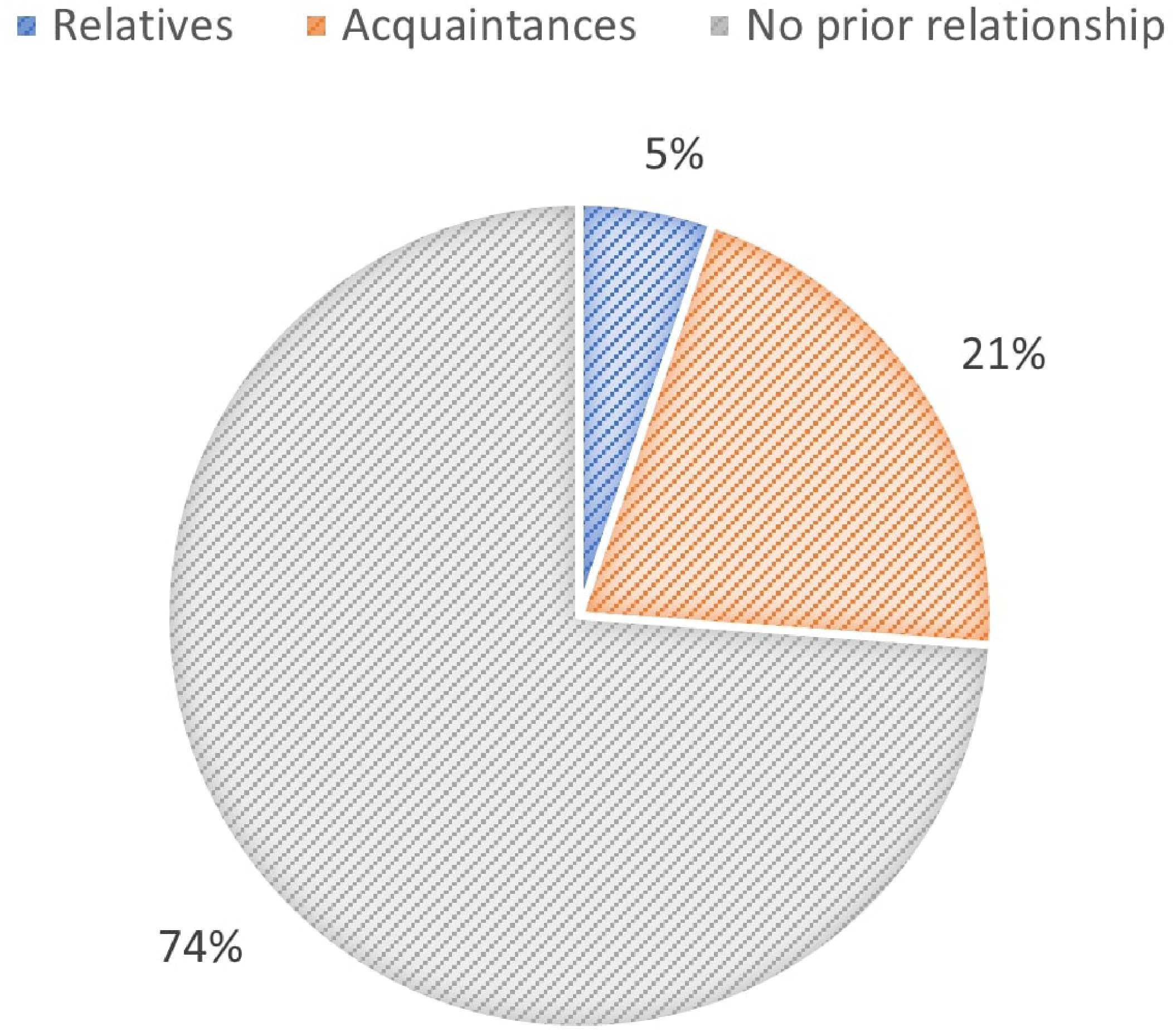
Smuggler–migrant relations.
Here, more insight can be found in the interviews. Both respondents who agreed to be interviewed indicated that they did not perceive themselves as belonging to the smuggling business: …got into such a situation accidentally, due to the coincidence of family circumstances (maintenance of the non-working common-law wife, her minor child and the sick father of the common-law wife). I was suggested to engage in such activities by an acquaintance who had previously been involved in similar crimes. (Respondent A) …an acquaintance asked for a favor, namely, to drive people to the state border, but the further purpose was unknown. He was not involved in people smuggling before the full-scale invasion of Russia. (Respondent B)
Here, we acknowledge the small sample of the interviewees, and only intend the quotes above to be used illustratively in conjunction with quantitative data.
Furthermore, the data shows that an overwhelming majority of the sampled offenders did not have a criminal record (92.17%). Importantly, in the pre-war period (until 2022), the number of offenders with criminal records was higher, 18.47%, as compared to 4.57% in the current data (Kuryliuk and Khalymon, 2020). At the same time, among those who violated the procedure for entering and leaving the temporarily occupied territory of Ukraine, 12% were previously convicted (Kushnir and Hutsulyak, 2021). Here, the reasonable (while speculative) explanation for the increase in law-abiding individuals among human smugglers is the changed nature of the outlawed behaviour and, thus, of individuals making use of smugglers: the martial law and the ban on military-aged males to leave the country. This is an important shift for the smugglers: while previously a majority of smuggler clients were individuals wanting to enter the EU without the necessary paperwork, now many of the migrants are likely Ukrainian citizens trying to evade military service. It is possible that due to the changed nature of the migrants, more ad hoc smuggling is taking place, and new, inexperienced smugglers are involved in bringing individuals across the border.
People smuggling can be carried out in different ways, and individuals can be involved in the crime to a different extent. According to our analyses, the most common practice in the commission of people smuggling, in 67.36% of the cases, was the transfer of migrants across the ‘green border’. However, smuggling via provision of forged documents was also common (27.41%). Comparing our data with the pre-war period data, we see that the cases of using forged documents have increased by almost 10%, while the changes in the rest of the methods are minor (Kuryliuk and Khalymon, 2020).
Considering the different forms of people smuggling, the picture of the role of smugglers is quite interesting. Our analysis of court verdicts shows that the most common role was that of facilitator in transporting migrants across the border (34.64%). Compared with the data obtained in the pre-war period, it can be noted that this number of people decreased by 16.59%. This also applies to the organisers of smuggling. If before the war this figure was 43.84% (Kuryliuk and Khalymon, 2020), then during the war period it is 25.49%. However, it should be noted that since 2022, the share of persons who combine several roles when committing smuggling has been increasing. This share is now almost a third of all the convictions – 30.07%, demonstrating that in wartime individuals involved in people smuggling appear to be more independent and more resourceful, carrying out multiple activities by themselves.
Human smuggling is an activity of a cross-border nature. Hence, to successfully carry it out, smugglers commonly resort to combining the efforts of multiple individuals. Our data shows that most smuggling is committed by a group of persons (62.75%), with 9.15% of crimes committed by an organised group. We have not found any observable changes in this respect compared to the pre-war period (Kuryliuk and Khalymon, 2020), despite a slight increase in self-organised (independent) smuggling. Prior to 2022, the commission of smuggling by criminal organisations constituted a small share of the convictions, that is, 0.49% (Kuryliuk and Khalymon, 2020). There were no such convictions during the war. While this, on the face of it, might indicate that the majority of smuggling is carried out by individuals and small groups, it is also important to consider that the majority of smuggling cases under analysis were decided following a guilty plea of the accused. In such cases, limited investigations are carried out, and the extent of organised criminality can easily remain concealed.
In the majority of instances, the offenders transported one (37.25%) or two to three (41.18%) individuals. Hence, small-scale smuggling is dominant, similar to the pre-war period (one migrant at a time: 32.2%, two to three: 30.79%). The biggest change concerns groups of five or more migrants being smuggled at a time, which has dropped from 23.64% to 12.42%. The slight reduction of smuggling two to three, and five or more migrants indicates that the introduction of the martial law, the change in the type of migrant, and the strengthening of control over the state border line, in a certain way, reduces the opportunities to smuggle a large number of people across the state border at the same time.
An important feature of people smuggling across the state border is the motivation, which in smuggling cases tend to be either personal, in terms of relationships with migrants, or financial (UNODC, 2018). Considering the low number of individuals with prior knowledge of the migrants being smuggled, a large part of the motivation may lie with the financial compensation that the smugglers receive. Since the full-scale invasion in 2022, smugglers have received from US$200 to over US$2000 for one transfer of a person or a group of persons across the state border (see Figure 4). After the introduction of martial law in Ukraine, there seems to have been a clear increase in the cost of services related to people smuggling, possibly related to the increased securitisation of the border, and thus an increased risk of being intercepted by law enforcement. In the pre-war period, 12% of smugglers got paid up to US$1000 (Kuryliuk and Khalymon, 2020) compared to only 6% of convicted smugglers in our sample. In most cases of our sample, smugglers agreed to transport an individual across the border only for amounts over US$2000, a substantial amount of money, especially considering the average salary in Ukraine is around US$400 (Statista, 2023) and the unemployed status of most of the offenders in the sample.
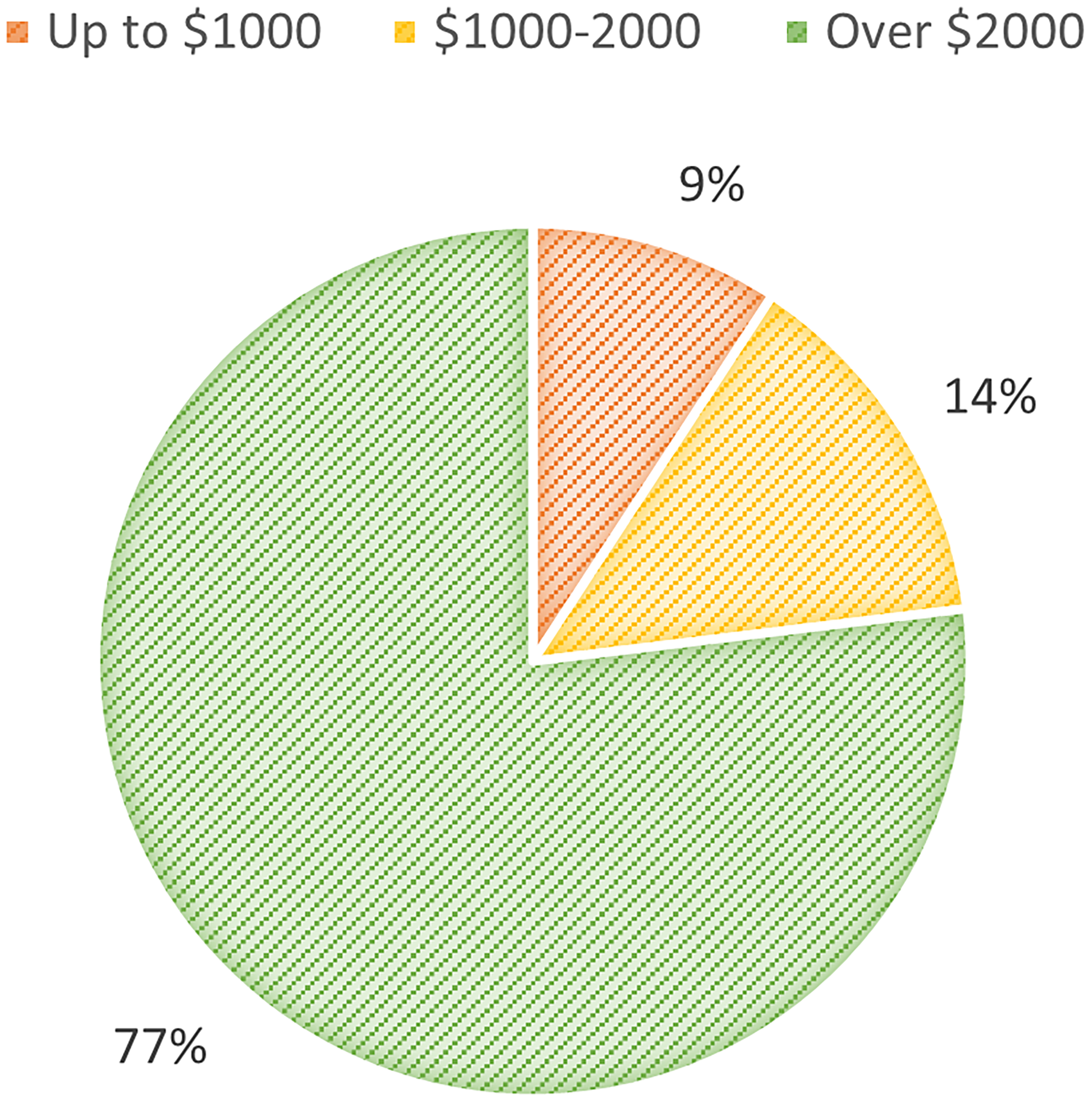
Payment received for smuggling an individual.
Finally, according to the legislation of Ukraine, illegal transportation of persons across the state border is punishable by imprisonment for a term of 3–5 years (if the crime is committed without aggravating circumstances); 5–7 years (if the crime was committed against several persons or in a dangerous way for them, by a group of smugglers, a smuggler using official status/capacity, or repeatedly committing the offence), or 7–9 years with confiscation of property (if the crime was committed for financial reasons or by an organised group) (CCU, 2001).
In most cases in our sample (67.97%), smugglers were sentenced to imprisonment for a period of 4–5 years with simultaneous exemption from serving the sentence with probation (conditional release). A small number of lower sentences (1–3 years, 7.19%) were also subject to conditional release, adding up to 75.16% of the individuals convicted of smuggling who were not subjected to imprisonment but rather released on probation.
The courts’ practice of applying probation, rather than restricting the freedom of individuals convicted of human smuggling, is a clear feature of the practice since the introduction of martial law in Ukraine (see Figure 5). Before 2022, this practice existed (Kuryliuk and Khalymon, 2020) but was very uncommon, and convicted human smugglers were more likely to serve a prison sentence (Kuryliuk and Khalymon, 2020). This may also have consequences on the smugglers’ perceptions of the seriousness of the offence, as also supported by the views of both interviewees, who claimed that ‘Responsibility for the committed offense has changed the attitude towards such activity’.
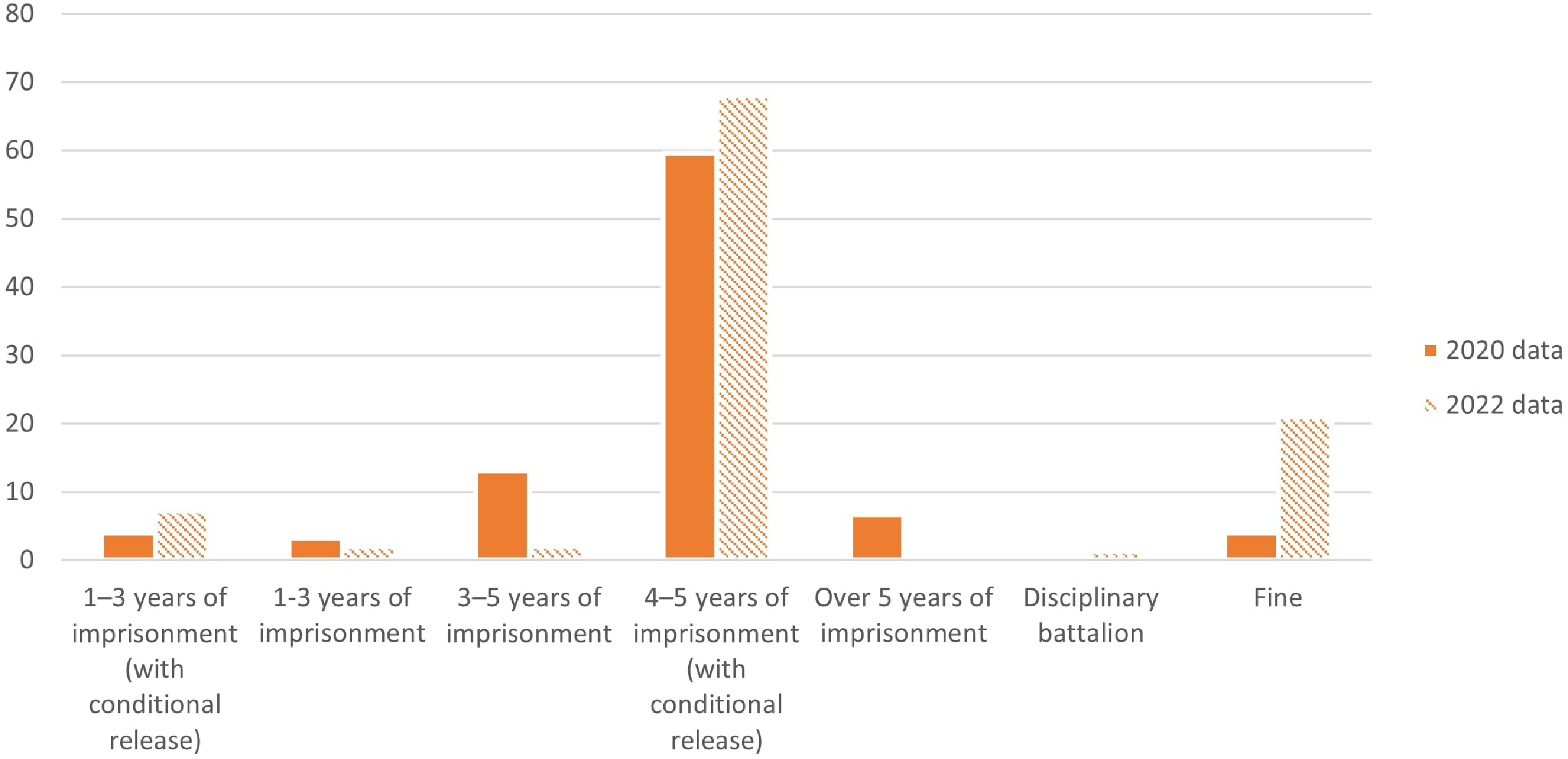
Sentencing for people smuggling, comparison year 2020 vs. 2022 (%).
In addition, we also observe a tendency to use alternative types of punishments. In 20% of the cases, the courts issued fines, which were issued at a much lower rate (3.94%) in the previous period (Kuryliuk and Khalymon, 2020). The courts therefore now appear to have been using increasingly ‘economical’ or efficient punishments against smugglers. There is a widespread practice of convicted individuals concluding plea agreements, and therefore receiving minimal punishments (probationary terms and fines). The change in the severity and types of sentences from the pre-war, pre-martial law period and the martial law period is interesting, and while it can be seen as problematic in terms of predictability of the legal system (Yagunov et al., 2023), it might also reflect the changes in the characteristics of the offence and of the individuals prosecuted for it. In the period since the full-scale invasion, those accused of human smuggling are more likely to be young, Ukrainian citizens, involved in smuggling their fellow countrymen out of the country, which is a substantially different picture of the pre-war context.
Returning to the three types of smuggling as identified by Neske (2006), the findings can be summarised as follows. Type I, not specialised smuggling services, was found in around 28% of the cases, where individuals tried to assist in border crossings on their own, without prior planning. This type was found in the court cases and supported by interviews. Type II, the number of people smuggling using forged (false) documents, has increased to 20% (and falls under both Type I and Type III in terms of extent of organisation). The full-scale invasion of Russia into Ukraine has altered the profile of the migrant, and therefore the methods of movement. Thus, for legally crossing the state border, documents are used that are the basis for studying abroad, exemption from military duty due to health, documents related to the activities of humanitarian organisations, the transportation of humanitarian and other goods. Generally, such services are used by persons with financial resources because the cost of forged documents can range from US$2000 to US$7000. Finally, Type III, the (pre-)organised people smuggling, has been found to be the most common. Over 70% of the smuggling cases analysed involved some extent of organisation, though no cases were found where organised crime groups were involved. This demonstrates that a certain network of involved individuals is necessary to successfully carry out smuggling activities, including representatives of state authorities (police, border service, military personnel of territorial recruitment centres, high-level civil servants), who can issue permits for crossing the state border to men of military age. Organised groups of a cross-border nature were found only in three cases, and all of them were representatives of the Republic of Moldova.
Conclusions
The full-scale invasion of Ukraine by Russia in February 2022, alongside the imposition of the martial law and related ban on leaving the country for military-aged males, led to the transformation of Ukraine from a transit country to a country of origin of migrants. This change of circumstances also generated new types of migrants and changes in the physical circumstances of irregular migration – the closure of major border crossings, increased border monitoring and physical barriers and the closure of air and sea routes. The developments observed in the study demonstrate how the changes to the demand (to illegally leave the country in the face of legal and physical barriers) and supply (to provide illicit means of leaving the country) interact to result in changes in socio-demographic characteristics of the smugglers and the smuggling itself.
In terms of the socio-demographic characteristics, convicted smugglers are now, compared to the pre-war period, more often female, unmarried, with no children, with no prior criminal record and of Ukrainian citizenship. Some of these findings are in line with previous studies on human smuggling: smugglers tend to be educated, male, young-to-middle-aged and not involved in other illegal activities (Campana, 2020). However, some of the findings point to specifics of the Ukrainian situation and the potential effects of martial law: the involvement of women, fewer foreign nationals, and an overwhelming majority of accused with no criminal record point to the involvement of ‘regular’ Ukrainian citizens who prior to the full-scale invasion and war likely were not exposed to the world of human smuggling and to crime overall.
Important changes in the modus operandi and other criminological characteristics of smuggling across the Ukrainian border have also been found. Since the imposition of martial law, there has been an increase in smuggling with the use of forged documents; individual smugglers are more likely to play multiple roles in the smuggling operation, financial rewards are higher, and punishment is more lenient. Combined, these features point to a situation of increased demand by individuals who can afford the financial costs or reflect the increased awareness by smugglers of the lack of choices that the migrants are facing, and thus exploitation of the situation. Additionally, the use of forged documents may be specific to smuggling males of military age, as multiple exceptions (e.g., medical, official work travel) exist in the martial law provisions, as discussed below.
While the court verdicts do not provide much information on the migrants themselves, the analyses, demonstrating important changes in the socio-demographic and criminological factors, point to the full-scale invasion and martial law as conditions currently driving human smuggling from Ukraine (the phenomenon of evasion of military service via crossing the border is well documented, for example, by The Economist (2023), The BBC (2023) and Radio Free Europe (2022). Smuggling appears to be enabled by a certain extent of corruption and involvement of civil servants and state officials (Al Jazeera, 2023; Ukrainska Pravda, 2023), the absence of technical means of protecting the state border of Ukraine, which facilitates unhindered crossing of the border outside the checkpoints (‘green border’), increase in unemployment caused by military actions, and expectations of high profits combined with lenient punishments.
The findings of this study suggest that, on the one hand, the war and the resulting socio-economic instability, especially in the border regions, may be pushing ordinary citizens into criminal activities for monetary gain. On the other hand, the involvement of women and the disclosed percentage of migrants who were acquaintances or relatives of the smugglers suggest that at least some of the smuggling is conducted out of perceived duty to assist others, especially friends and relatives, to avoid military draft or otherwise escape the conflict. This involvement of ‘regular’ law-abiding citizens not only has implications for the current situation in Ukraine but could lead to broader social implications: the normalisation of illicit activities as justified or necessary, lack of trust in the state and opposition to state policies negatively affect the rule of law and democratic processes. Furthermore, smuggling of migrants with the aim of avoiding military draft not only threatens the security of the state at war but also erodes social cohesion, as those with the means to leave may be perceived as traitors and widen the gap between those who experienced the conflict while being abroad, and those who were actively involved in defending the state. This is likely to make post-war societal recovery even more challenging.
Finally, we would like to stress the complexity of assessing court and criminalisation practices in the context of an ongoing armed conflict and martial law, and the importance of a better understanding of the related societal and legislative changes in times of war. While the phenomenon of migration and human smuggling has been studied in many different contexts before, few have been approached from the perspective of domestic courts prosecuting their own nationals for the involvement in smuggling individuals away from war and their legal duty to serve in their nation's army. This is not an unknown phenomenon: many men have fled military conscription (e.g., Eritrea, Syria, etc.), but the studies analysing their flight have been from the ‘receiving end’ of the migration/smuggling route. The decision to abandon military duty, while outlawed, can be seen as a political choice or even a right, and may be considered, whether we do, or would, perceive the same acts differently in other conflict contexts. Here, we present the view of human smuggling from inside the state under martial law, adding another piece to the puzzle of what crossing borders with the use of smugglers involves and looks like under war-time conditions. While we benefitted from the availability of pre-war data as a comparative point, analyses across different conflict contexts would provide a more complete picture of the individuals involved in providing the services of human smuggling and give insights into their choices.
Footnotes
Acknowledgements
The author's team would like to thank Vitaly Murali, the director of the branch of the state institution ‘Probation Center’ in Zakarpattia Oblast, for his assistance in interviewing convicts who were serving sentences for illegally transporting people across the state border. We would like to express our sincere appreciation to the editors and anonymous peer reviewers for their invaluable feedback and constructive criticism, which greatly improved the quality of this manuscript.
Funding
The author(s) received no financial support for the research, authorship, and/or publication of this article.

Appendix
Criminological and criminal law factors.
| Factor and response categories | Frequency | % |
|---|---|---|
| Relations with the individuals being smuggled | ||
| Relatives | 8 | 5.23 |
| Friends or fellow citizens | 0 | – |
| Acquaintances | 32 | 20.91 |
| No prior relationship | 113 | 73.86 |
| Prior convictions | ||
| None | 141 | 92.17 |
| Prior conviction(s) | 8 | 5.22 |
| Prior conviction – expired criminal record | 1 | 0.65 |
| Prior conviction – not served the previous sentence | 3 | 1.96 |
| The means/method of committing a crime | ||
| Smuggling with a forgery or rendering someone else’s document | 42 | 27.41 |
| Smuggling across the ‘green border’ | 103 | 67.36 |
| Danger to life and health, use of official status | 2 | 1.31 |
| Through checkpoints in vehicles, by deception | 6 | 3.92 |
| Type of action/involvement in smuggling | ||
| Organisation of smuggling | 39 | 25.49 |
| Leadership of smuggling | 1 | 0.65 |
| Facilitation of smuggling | 53 | 34.64 |
| Actual transfer of a person across the border | 14 | 9.15 |
| Multiple roles | 46 | 30.07 |
| Presence/extent of organisation | ||
| Individually | 43 | 28.1 |
| Group of people (under 5) | 96 | 62.75 |
| Organised group | 14 | 9.15 |
| Criminal organisation | 0 | 0 |
| The number of migrants smuggled across borders | ||
| 1 | 57 | 37.25 |
| 2–3 | 63 | 41.18 |
| 4–5 | 14 | 9.15 |
| More than 5 | 19 | 12.42 |
| Amount of money received | ||
| Up to US$1000 | 6 | 9.23 |
| US$1000–2000 | 9 | 13.85 |
| Over US$2000 | 50 | 76.92 |
| Penalty/sentence | ||
| 1–3 years of imprisonment (with conditional release) | 11 | 7.19 |
| 4–5 years of imprisonment (with conditional release) | 104 | 67.97 |
| 3–5 years of imprisonment | 3 | 1.96 |
| Over 5 years of imprisonment | 1 | 0.65 |
| Disciplinary battalion | 2 | 1.31 |
| Fine | 32 | 20.92 |