



Abstract
Using a random sample of 1185 Ukrainian adults, the study examines the influence of exposure to the Donbas war, relative to factors such as alcohol use, daily stressors, and negative emotions, on involvement in intimate partner violence (IPV) among men and women. The findings indicate that daily stressors, negative emotions, and alcohol abuse consistently predict involvement in IPV for both genders, with daily stressors and negative affect demonstrating particularly strong effects on involvement in IPV. Conversely, war exposure does not have a direct relationship with IPV. However, both direct and indirect war exposure condition the effects of negative emotions, alcohol abuse, or daily stressors on IPV. These results underscore the importance of integrating prevention and support services for the victims of IPV into broader societal contexts affected by war.
Introduction
Intimate partner violence (IPV) is a serious public health issue affecting both men and women around the globe. Taking many forms, from coercion to physical violence, IPV is generally defined as behaviors resulting in psychological, physical, or sexual harm in intimate relationships (White et al., 2024). Although IPV is significantly underreported, the World Health Organization (WHO) estimates its median prevalence to be over 40% in some countries (WHO, 2024). In European countries, IPV is also a serious problem: over 600 women were victims of homicide by an intimate partner or relative within 14 European Union nations in 2018 (Eurostat, 2018). Importantly, the risk of intimate partner victimization appears to be converging for men and women (Archer, 2006), although women may be more likely to experience severe forms of IPV resulting in long-lasting harm (Fanslow et al., 2023; c.f. Laskey et al., 2019).
In the past few decades, research on IPV has explored many contextual (e.g., gender politics) and interpersonal (e.g., history of abuse) theoretical frameworks that explain violent behaviors in relationships (e.g., Dutton et al., 1996). Most of these explanations, however, have been assessed as individual risk factors rather than elements of larger integrative processes promoting IPV (Finkel and Eckhardt, 2013). Likewise, as debates about the prevalence of IPV across gender lines continue unabated, it is yet to be established whether some of the existing explanations of IPV are gender-specific. On the one hand, research appears to find more similarities than differences in risk factors for IPV across gender lines (Spencer et al., 2022). On the other hand, there are strong arguments suggesting that motivation for violence in relationships may be dictated by a desire for control among men and a need for self-defense among women (Langhinrichsen-Rohling et al., 2012; Swan et al., 2008; Yllo, 2005), thus underscoring the possibility that at least some explanations of IPV may be gendered.
Empirically, the literature documenting IPV and its possible causes across various settings is vast. However, with most evidence originating from Western countries, research in other countries tends to be fragmented and less systematic (c.f. Cofie, 2020; Mojahed et al., 2022). Our study utilizes unique data from Ukraine, a country that has historically struggled with IPV (Barrett et al., 2012) and has been embroiled in war for nearly a decade, to achieve four specific goals. First, we seek to gauge the extent to which a rarely explored contextual factor, war exposure, contributes to involvement in IPV. Second, we assess the predictive power of three interpersonal risk factors for IPV perpetration: alcohol abuse, daily hassles, and negative affect, in the context of Ukraine. Third, we investigate possible interactions between the contextual effects of war exposure and the three interpersonal risk factors for IPV. Finally, we assess the examined relationships across the gender lines.
War, patriarchy, and IPV in Ukraine
On 24 February 2022, Russia launched a full-scale attack on Ukraine, leading to an ongoing war (Chumachenko and Chumachenko, 2022). This study focuses on the preceding 8-year conflict (2014–2022) in the Donbas region involving Ukrainian forces, Russian armies, and Russia-backed separatists. Ukraine's fraught relationship with Russia dates back to its occupation by czarist Russia and later the Soviet Union (Cancio et al., 2020). After the USSR's collapse, Ukraine faced political and socioeconomic instability, exacerbated by Russian interference. In late 2013, widespread protests against the pro-Russian president, Viktor Yanukovych, led to his flight from Ukraine in early February 2014 (Kochnev, 2020). Amidst the political turmoil, Russia annexed Crimea and initiated military action in Donbas, escalating the conflict. With Russia's support, insurgents declared independence in Donetsk and Luhansk, initiating a protracted conflict later named the Donbas war.
The consequences of the 8-year Donbas war reverberated throughout Ukraine, directly impacting many of its residents and indirectly affecting the entire nation. Media reports on deaths and injuries, stories of internally displaced Ukrainians, and the struggles of soldiers battling the flames of war permeated every household. These experiences, constituting extraordinary stressors, have contributed to a range of behavioral, emotional, and mental health outcomes. Recent studies confirm this, highlighting elevated levels of PTSD, anger, and the risk of involvement in violence among Ukrainians (Johnson et al., 2022; Timmer et al., 2023a) exposed to the Donbas war.
While much of IPV in the country is hidden from the public eye, and research on its causes is limited, its lifetime prevalence among Ukrainian women has been estimated at 20.1% (O’Leary et al., 2008), with some studies reporting up to 81% of women mothering school-aged children affected by psychological violence and 57% affected by physical violence (Burlaka et al., 2017). These figures must be placed in the context of the still patriarchal Ukrainian society, whose economic woes following the demise of the Soviet Union resulted in extremely high unemployment rates among women. The changes effectively further lowered Ukrainian women's social and economic status, collectively disempowering them (O’Leary et al., 2008).
The lingering gender inequality has been exacerbated by the Donbas war, which disproportionately affected women, depriving them of material welfare as well as access to healthcare and social services (Rushwan et al., 2023). According to the UN reports, of 1.7 million Ukrainian residents displaced in 2016, over 65% were women. It would be reasonable to expect that, in wartime, IPV is experienced by even more women and at higher rates than indicated by prior studies. Supporting this assumption, a study of displaced and non-displaced Ukrainian women showed a significant increase in experiencing gender-based violence among women displaced by the Donbas war (Capasso et al., 2022).
With much of the existing research focusing on victimization rather than perpetration of IPV (c.f., Balabukha et al., 2016), it is essential to explore how war exposure influences the perpetration of IPV in the country.
War exposure and IPV: Research evidence
Exposure to military conflicts has been empirically linked to violent behaviors (Timmer et al., 2023a; see also Gartner and Kennedy, 2018) and, specifically, IPV (Goessmann et al., 2019; Le and Nguyen, 2022; c.f., Alleyne-Green et al., 2021). With almost all studies focusing on causes of victimization rather than the perpetration of IPV, research finds higher IPV rates among military populations (Kwan et al., 2020) and civilians exposed to war (Østby, 2016). While the exact nature of this relationship has been debated, studies have documented several potential mechanisms linking exposure to military conflicts with IPV.
A sociocultural approach finds roots of IPV in patriarchal societies where gender represents a structure regulating interpersonal and institutional relationships and prioritizing masculine characteristics over femininity (Risman, 2018). IPV may then be viewed as a tool used by men to retain their control over women (e.g., Dobash and Dobash, 1979) and reaffirm their masculine, dominant status. Attempting to understand the association between war exposure and IPV, some scholars suggest that prolonged violence perpetrated against women and children during military conflicts serves to establish cultures of violence normalizing and trivializing violence in intimate relationships (Jewkes, 2002; see also Waldmann, 2007). A study by Goessmann et al. (2019) of Kurdish IDPs in Iraq indirectly lends credibility to this argument by reporting a statistically significant association between gender views and IPV. A conceptually related argument posits IPV as a mechanism for restoring power among those negatively impacted by war, and, particularly, men (Clark et al., 2010).
Another approach focuses on post-traumatic stress disorder (PTSD) and related mental health conditions as a link connecting war exposure with IPV. This link has been documented in Vietnam War veterans (Savarese et al., 2001), Kurdish IDPs in Iraq (Goessmann et al., 2019), as well as men and women in Liberia (Vinck and Pham, 2013).
Finally, some studies point to a set of circumstances promoting IPV in war-exposed populations, including the increased vulnerability of women to violence resulting from a loss of social networks as well as men's alcohol abuse, mental health issues, and economic strain associated with war (e.g., Horn et al., 2014; Kohli et al., 2015; Mannell et al., 2020). While these circumstances are likely important in the causal chains connecting war exposure to IPV, each has also been identified as a predictor of IPV perpetration in populations not exposed to war.
Importantly, research suggests that IPV related to war exposure remains well-hidden in many contexts, rarely attracting the attention of researchers and policymakers (Guruge et al., 2017). This communicates the urgency of understanding the impact of war exposure on the likelihood of engaging in IPV in various cultural contexts.
Daily stressors, negative affect, and alcohol use as predictors of IPV
Whereas some research has focused on sociocultural, context-based explanations, thus advocating for the gendered approaches to the issue, critics note the considerably larger effects of proximal, individual-level factors on the likelihood of engaging in IPV (Stith et al., 2004). While studies pursue a number of intrapersonal explanations, ranging from those centering on individual learning history to personality characteristics and cognitive functioning (see Finkel and Eckhardt, 2013 for review), our study investigates three intrapersonal factors that are likely to be directly related to IPV and whose influence may be very strong in wartime: alcohol use, instigating triggers (daily stressors), and negative affect. To further our understanding of the way each of these risk factors is directly and conditionally related to IPV, we also introduce gender as a potential contingency for these causal links.
Daily stressors
Stress is a known predictor of violence and, specifically, IPV. The vulnerability-stress-adaptation (VSA) model offered by Karney and Bradbury (1995) portrays relationships as being shaped by preexisting vulnerabilities of partners (e.g., prior experiences and personal traits), ongoing stressful events and circumstances encountered by the partners, and adaptations to these circumstances. Thus, violence in couples may reflect an emotional reaction to experienced stressors or be seen as a way to manage such stressors (Keilholtz et al., 2023).
Whereas many stressors have been linked to IPV, a recent meta-analysis of the stressor–IPV association (Keilholtz et al., 2023) highlights relationship troubles and poor socioeconomic standing to be among the stressors most strongly predictive of violence in couples. Notably, chronic daily hassles, even if minor, appear to be as predictive of aggressive and violent behaviors in couples as significant but short-term stressors (Bodenmann, 2005).
Negative affect
Negative affect is yet another factor that appears to be empirically associated with IPV. While the relationship between negative affect and violence in couples may be moderate and contingent upon the specific context in which the interaction occurs (Finkel and Eckhardt, 2013), anger, hostility, and internalizing negative affect may be an important force impelling violence in couples (Finkel, 2007). As suggested by Anderson and Bushman (2002), anger may promote violence in three ways. First, chronically experienced anger may promote violence as excusable behavior in certain contexts. Second, frequently experienced anger may push individuals to use specific scripts associated with violence. Finally, anger may produce excitement and arousal which, in turn, can result in violent responses. Therefore, both dispositional and situational anger may be significant risk factors for IPV.
Empirically, the link between anger, hostility, and internalizing emotions is supported as it holds across many studies and constructs used to tap various types of negative affect (Birkley and Eckhardt, 2015; Norlander and Eckhardt, 2005). However, scholars caution against framing negative affect as a hegemonic predictor of IPV, noting that a variety of inhibitory or impelling mechanisms may be at play in the incidence of couples’ violence (e.g., Doumas et al., 2008; see also Birkley and Eckhardt, 2015; Finkel, 2007).
Excessive alcohol use
Yet another potential risk marker for IPV is alcohol use, a moderately strong and well-investigated predictor of aggressive and violent behaviors (e.g., McKinney et al., 2010; Sprunger et al., 2015). Researchers envision three scenarios explaining the relationship between IPV and alcohol use (Leonard and Quigley, 1999). First, this association may be spurious, and both violent behavior and alcohol abuse may stem from a characteristic or trait (e.g., absolute or relative deprivation or the use of substances other than alcohol) unaccounted for by existing studies. Research shows, however, that the association between alcohol use and IPV is stable with a variety of other predictors included in analyses. Alternatively, heavy drinking might lead to relationship dissatisfaction and other problems, which, in turn, could trigger violence. Against this argument, research documents a strong relationship between IPV and alcohol use despite controlling for the potentially detrimental effects of alcohol on relationship quality (Fals-Stewart et al., 2003). Finally, excessive alcohol use may directly cause violent behavior through the disinhibitory effects of ethanol on cognitive processing (Boden et al., 2012 Klostermann and Fals-Stewart, 2006).
In all, daily hassles, negative affect, and alcohol use have been empirically linked to violence in couples in a variety of contexts. The impact of their interactions with war exposure on IPV is yet to be established.
War exposure as a moderator of the daily hassles/negative affect/alcohol use–IPV links
Focusing on interpersonal violence, Timmer et al. (2023a) report interactive relationships between negative affect, daily hassles, and war exposure bearing on the likelihood of violent behavior. In Ukraine, where alcohol abuse is widespread (Bromet et al., 2005) and daily stressors are pervasive (e.g., Cockerham et al., 2006), exposure to war may be a contextual stressor that interacts with daily hassles, negative affect, and heavy drinking to increase the likelihood of IPV.
First, war exposure is likely to amplify the impact of daily hassles on partner violence. According to Agnew (2005), straining experiences occurring in one life domain may amplify strains experienced in other domains. In addition, studies have found that exposure to multiple stressors can increase the likelihood of IPV in peacetime (e.g., Copp et al., 2015; Shortt et al., 2013). Thus, war exposure, a substantial stressor, may exacerbate the violence-inducing effects of many daily hassles experienced by people in war-engulfed countries.
Second, war exposure may also condition the negative affect–IPV association by amplifying the positive effect of war exposure on IPV. In that case, individuals experiencing negative emotions may be more likely to react with violent coping strategies (Agnew, 2006) and engage in IPV when they are also exposed to many horrifying war events and their accounts. In other words, negative affect may be more likely to accumulate and be more salient for those individuals who are exposed to tragic war events, and it results in them responding with more violence against their intimate partners.
Finally, it is the inherent violence of war that may amplify the effects of alcohol abuse on IPV. On one hand, the disinhibitory effects of alcohol are known to lead to a higher likelihood of violence among those who drink excessively (Boden et al., 2012; Klostermann and Fals-Stewart, 2006). On the other hand, repeated images of human suffering and loss of life, experienced both directly and indirectly, may turn into violent scripts integrated into the behavioral repertoires of those living in wartime. Thus, it is foreseeable that among heavy drinkers, coupled with alcohol-induced disinhibitions, these learned patterns of behavior may further heighten the likelihood of IPV in relationships.
The role of gender
Yet another unresolved question pertains to the role of gender in the causal mechanisms linking these risk factors to violence in intimate relationships. IPV is a hidden, under-recorded crime, which limits scholars’ ability to accurately capture its prevalence among male and female populations. The empirical question about gender differences in IPV perpetration is far from settled: while some studies report that men are significantly more likely to engage in IPV (Catalano, 2008; Fernandez-Montalvo et al., 2019; Tjaden and Thoennes, 2000), others support the ‘gender symmetry’ thesis, proposing no statistically significant differences in IPV involvement across gender lines (e.g., Robertson and Murachver, 2007).
Similarly, researchers have yet to determine whether the links between risk factors for IPV and couples’ violence are gender-specific. While Langhinrichsen-Rohling et al. (2012) found that most motivations for IPV appear gender-neutral, a meta-analysis by Spencer et al. (2022) revealed some gender differences. Specifically, the authors reported that 9 out of 43 factors conducive to IPV appeared gendered, and one of these was alcohol use. Yet other studies have found that problem drinking and/or negative affect can explain IPV perpetration among both men and women (e.g., Gass et al., 2011). To summarize, research on how gender interacts with these predictors to influence IPV is limited and often hindered by various methodological issues (Gil-Gonzalez et al., 2006).
The limited evidence on how gender influences motivations for IPV underscores the need for a more nuanced examination of risk factors across gender lines. On one hand, at least some of these factors may be gendered. For instance, men, who are more likely to experience combat directly or through their peers, may be more attuned to war's effects compared to women. Conversely, women in many societies face precarious conditions that can heighten their vulnerability to the impacts of war, potentially worsening their already difficult financial situations or undermining any status improvements they had achieved before the conflict. Finally, women's reactions to all these conditions might be tempered by gendered behavioral stereotypes that characterize violent behavior as nonfeminine. This is particularly true of patriarchal societies that regulate the conduct of women both within and outside their homes.
On the other hand, given available empirical evidence, war exposure, alcohol use, negative affect, and daily stressors may affect both men and women similarly, leading to comparable responses. Our study seeks to investigate this assumption further.
Present study
Using survey data from two randomly selected household samples drawn in two large Ukrainian cities, our study addresses several gaps in research on war exposure and intimate violence perpetration.
To begin, our study is the first to investigate the impact of the ongoing war, alone and in conjunction with intrapersonal risk factors for violence, on violence in intimate relationships. Second, our data help us examine whether the effects of each included predictor of involvement in IPV are gender-specific. Given the ambivalence of the existing empirical evidence on this problem, we test the null hypothesis that gender does not influence the proposed relationships. We evaluate the following hypotheses:
H1–2: Direct and indirect war exposure is positively associated with individual involvement in IPV.
H3–5: Daily strains, negative affect, and alcohol use are positively associated with individual involvement in IPV.
H6–8: The instigating effects of daily strains, negative affect, and alcohol use on IPV are amplified among those with greater direct war exposure.
H9–11: The instigating effects of daily strains, negative affect, and alcohol use on IPV are amplified among those with greater indirect war exposure.
H12: Gender does not condition the proposed relationships.
Methods
Data
This study draws on survey data collected in 2017 from random samples of adults in Lviv and Kharkiv, Ukraine. The survey, conducted by SOCIOINFORM, a reputable Ukrainian organization with criminological and international research experience, was approved by three US university institutional review boards. Similar to prior studies conducted in Ukraine (Antonaccio et al., 2017), we used multi-stage stratified random sampling. Lviv and Kharkiv were divided into 70 and 83 neighborhoods, respectively, as defined by local residents who shared amenities (e.g., playground, grocery store, or bus stop). From these 153 neighborhoods, we randomly selected 26 neighborhoods. Within each, street routes and eligible households along each route were randomly chosen for interviews. We asked that household members with the birthday nearest to the day of the interview be the study respondents. The household replacement rate was consistent with prior studies in Ukraine (e.g., Antonaccio and Tittle, 2008).
The survey instrument, developed in English, was translated into Ukrainian and Russian, and then back-translated into English by linguists fluent in these languages. Our face-to-face interviews were confidential, with sensitive questions self-administered and sealed in envelopes. The sample demographics matched the populations of Lviv and Kharkiv as reported by the local censuses. Missing data were minimal, with no more than 3% missing for any item. The Expectation Maximization (EM) algorithm was utilized to impute missing values, resulting in the final analytical sample of 1185 respondents.
Measures
Dependent variable
IPV
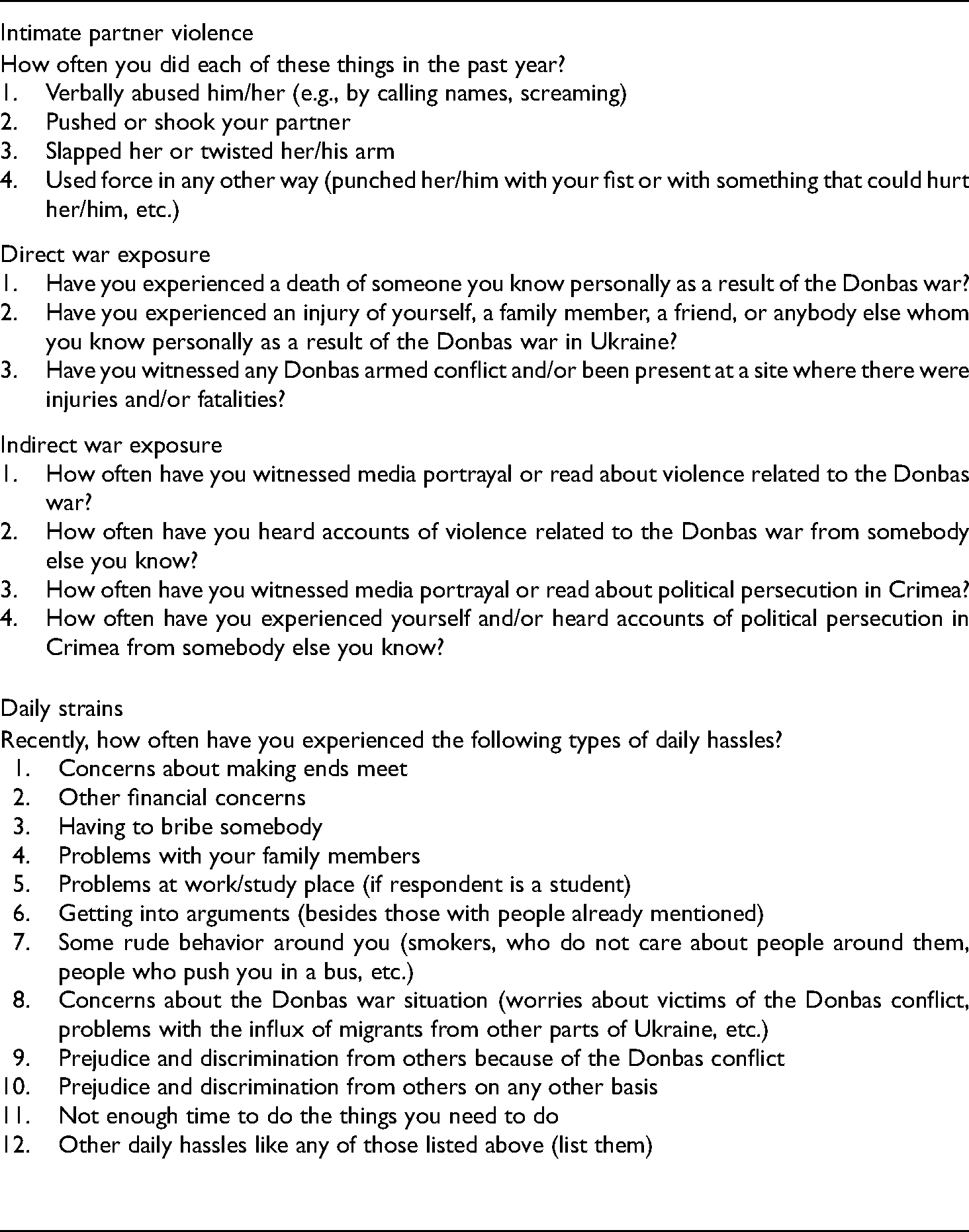
Consistent with past cross-national research on IPV (Johnson and Das, 2009), respondents reported the frequency with which in the past year they committed the following acts: verbal abuse, pushing/shaking partner, slapping or twisting arm, or using force (see Appendix Table 1). Responses ranged from 0 (never) to 4 (very often) and were combined into a summative index of IPV (α = .80). Higher scores on the resulting index represent higher levels of involvement in IPV (see Table 1).
Descriptive statistics for study variables.
Note: SD: standard deviation; Min: minimum; Max: maximum; SES: socioeconomic status.
The symbol * indicates significant differences (p < .05) by gender.
Independent variables
War exposure
Consistent with past research on war in Ukraine (Johnson et al., 2009; Timmer et al., 2023a, 2023b), several survey items tapping direct and indirect war exposure were used to construct two indexes of war exposure (see Appendix Table 1). Three items tapped direct war exposure and inquired respondents whether they had experienced various war-related events, including the death or injury of somebody they knew since the beginning of the Donbas war in 2014. Responses to these items ranged from 0 (no) to 1 (yes) and were combined into a summative measure of direct war exposure. The higher scores on this measure indicate higher levels of direct war exposure. In addition, civilian populations may frequently experience traumatic war events indirectly (e.g., watching television), and these indirect experiences can also have harmful effects (Timmer et al., 2023a). Therefore, the indirect war exposure measure was constructed utilizing four survey items inquiring survey participants about how often they have heard about the war, seen the media reporting of war-related events, and so on (see Appendix Table 1 for a full list of the survey items). Responses to these items ranged from 1 (never) to 4 (many times) and were summed to comprise a cumulative measure of indirect war exposure. Higher scores on this measure indicate higher levels of indirect war exposure.
Daily strains
Drawing on past research (Keles et al., 2016; Timmer et al., 2023a), the measure of daily strains was constructed. Survey respondents were asked how often they experience 11 various daily hassles, ranging from personal and financial problems to war-related strains (see Appendix Table 1 for a full list of survey items). Responses ranged from 1 (never) to 5 (very often), and they were combined into a summative index of daily strains (α = .81), with higher scores indicating higher levels of daily strains.
Negative affect
Consistent with past research (Timmer et al., 2023a), the measure of negative affect tapped the past experiences of the respondents with various negative emotions and utilized two survey items based on an established Positive and Negative Affect Schedule (PANAS) (Watson et al., 1988). Participants reported the degree to which they felt anger and irritation over the last several months. Responses to these items ranged from 1 (very slightly or not at all) to 5 (extremely) and were added into a summative measure of negative affect. Higher scores on this measure represent higher levels of negative affect.
Alcohol use
Consistent with past research (Agnew and White, 1992; Botchkovar et al., 2013), to tap individual alcohol use, survey participants were asked about the frequency with which they typically had a drink in the past year. Responses ranged from 0 (never) to 4 (nearly every day), with higher scores indicating higher levels of individual alcohol consumption. Because prior alcohol use is an important established predictor of interpersonal violence, its inclusion in the models also allows controlling for unobserved population heterogeneity.
Control variables
The analyses include several control variables that are usually employed in the research on individual-level predictors of violence. Those are: age (in years old), gender (1 = male; 0 = female), ethnicity (1 = Ukrainian; 0 = another ethnicity), marital status (1 = married; 0 = single or another family status), employed (1 = employed full-time, 0 = another employment status). We also incorporated a measure of individual socioeconomic status (SES). Based on prior research in Ukraine (Antonaccio et al., 2010; Antonaccio et al., 2017), six survey items asking respondents about their ability to afford buying needed groceries, clothes, durable goods, car, and apartment/house or traveling abroad for leisure are employed to construct this measure. The responses to these survey items were 0 (no) and 1 (yes) and are combined by summing to construct the measure of SES, with higher scores on this measure representing higher individual levels of SES. Finally, a dummy variable (1 = Lviv; 0 = Kharkiv) is included to control for the residence city of survey participants.
Analytical strategy
To test the study hypotheses, a negative binomial regression was used due to the skewed distribution of the domestic violence involvement index (Osgood, 2000). Robust standard errors were used in all models to account for data clustered by neighborhoods. Multiplicative interaction terms, with standardized variable components to reduce multicollinearity, assessed the interactions between war exposure types and moderators. All regression coefficients in gender-specific models were tested for cross-group differences using the Paternoster et al.’s test (1998). Regression diagnostics confirmed that all variance inflation factors (VIFs) are below 4 (Fisher and Mason, 1981).
Results
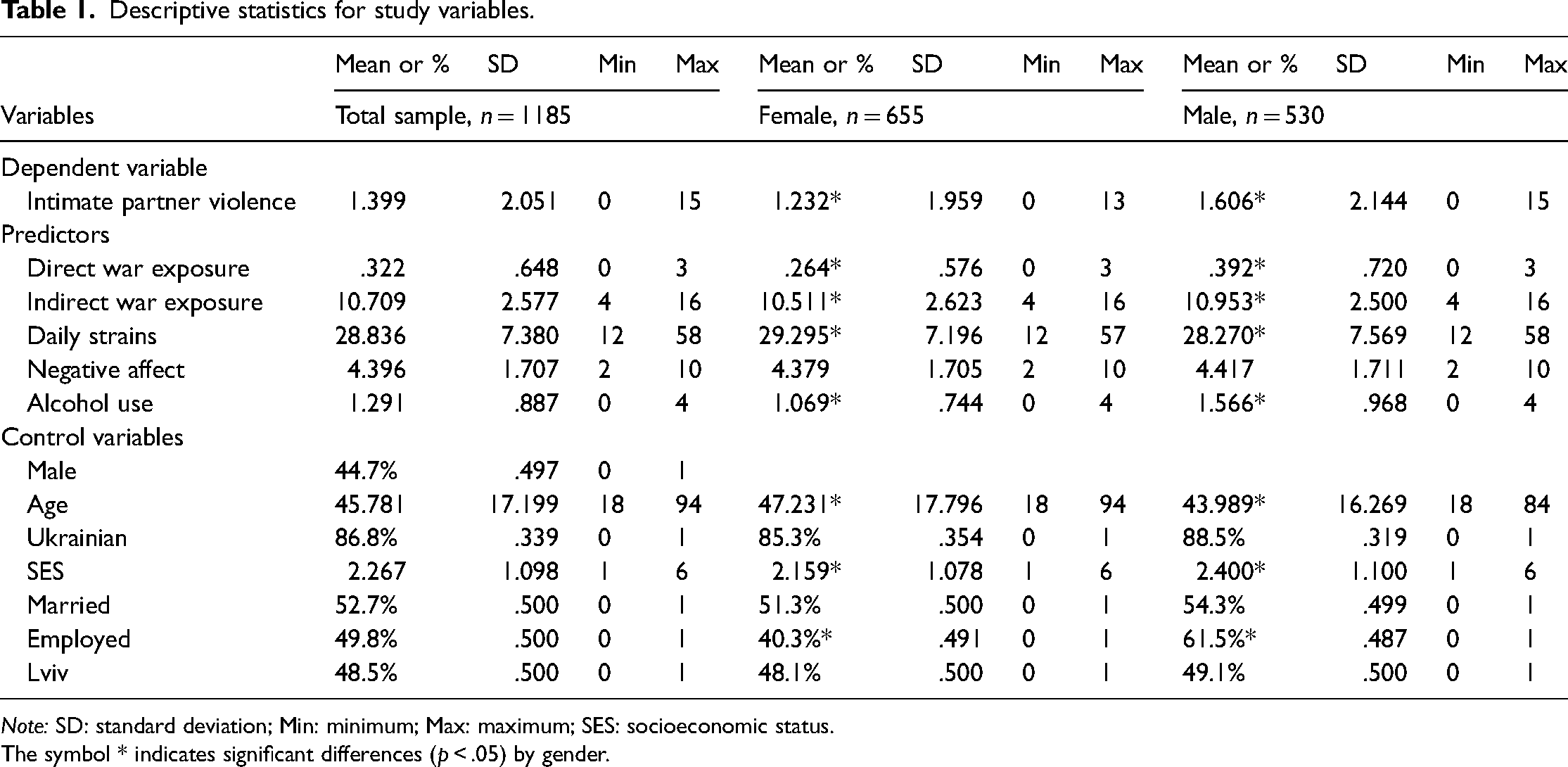
Descriptive statistics shown in Table 1 demonstrate some variation in IPV perpetration with the mean of 1.4 and standard deviation of 2.05. In addition, those figures show substantial variation in direct and indirect war exposure as well as other predictors of IPV. For example, the average direct war exposure is .32 on the range from 0 to 3 (with 23% of the whole sample experiencing at least some of it), whereas the mean for indirect war exposure is 10.71 on the range from 4 to 16 (with almost everybody, 98.5% of the sample, reporting at least some of it). Furthermore, about 45% of the respondents are male, 87% Ukrainian, and 49% from Lviv.
Table 1 also shows averages for all included variables across two gender groups. We note that the results of the t-test indicate statistically significant differences in IPV perpetration as well as most markers for IPV, except negative affect. Relative to women, men report consistently higher levels of IPV perpetration, direct and indirect war exposure, and alcohol use.
Direct effects
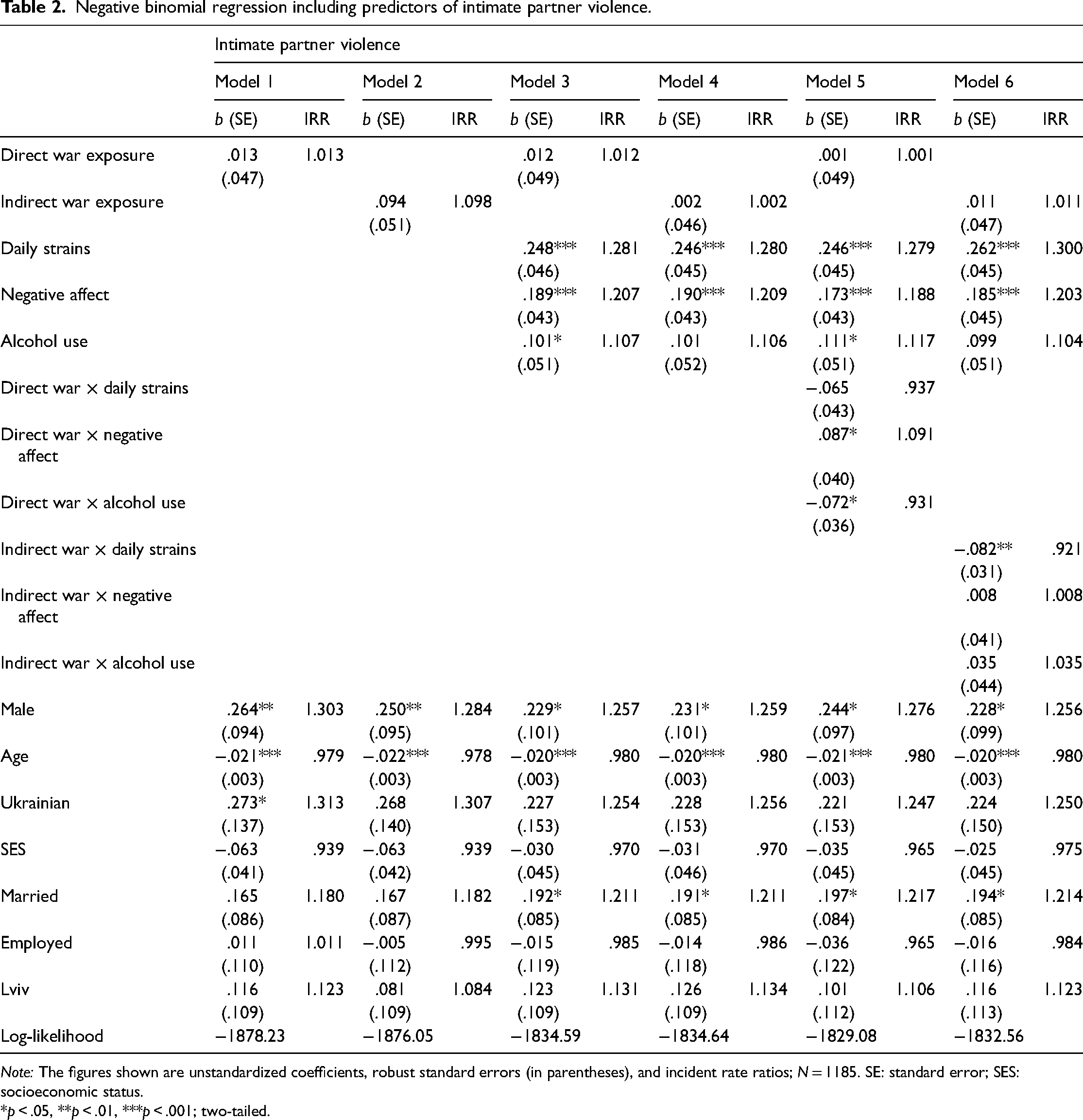
Table 2 shows findings from negative binomial regression models showing how predictors of IPV impact individual involvement in IPV, net of all controls. Contrary to Hypothesis 1, figures in Model 1 reveal that direct war exposure is not significantly related to IPV (IRR of 1.013), and that this effect remains non-significant in Models 3 and 5 when other predictors of IPV and interactions are included. Similarly, contrary to Hypothesis 2, figures from Models 2, 4, and 6 show no significant effects of indirect war exposure on IPV net of either only control variables (Model 2), other IPV predictors (Model 4), or interactions (Model 6). Additionally, as to the impact of control variables, the results from full Models 5 and 6 demonstrate that men, younger people, and those married exhibit higher levels of involvement in IPV.
Negative binomial regression including predictors of intimate partner violence.
Note: The figures shown are unstandardized coefficients, robust standard errors (in parentheses), and incident rate ratios; N = 1185. SE: standard error; SES: socioeconomic status.
*p < .05, **p < .01, ***p < .001; two-tailed.
Models 3 and 5 speak to the direct effects of other important predictors of IPV. As demonstrated in Model 3, daily strains, negative affect, and alcohol abuse exert positive and significant effects on the involvement in IPV, net of controls and direct war exposure, and other IPV predictors. Specifically, IRRs show that each unit increase in daily strains, negative affect, and alcohol abuse results in about 28%, 21%, and 11% increase in IPV perpetration, respectively. Next, figures from Model 4 show similar findings indicating that the impacts of daily strains, negative affect, and alcohol abuse on IPV are positive and significant, net of controls, indirect war exposure, and other IPV predictors. In particular, IRRs demonstrate that each unit increase in daily strains, negative affect, and alcohol abuse results in about 28%, 21%, and 11% increase in IPV, respectively. Overall, these results provide support for Hypotheses 2–5.
Moderating effects
Furthermore, figures shown in Models 5 and 6, Table 2, provide evidence regarding interaction effects. The coefficients from Model 5 reveal whether the relationships between daily strains, negative affect, and alcohol abuse and IPV could be moderated by direct war exposure. In particular, these figures demonstrate that the interaction between direct war exposure and daily strain is not significant, thus providing no support for Hypothesis 6. On the other hand, two interaction terms in Model 5 are significant: direct war exposure × negative affect (.087) and direct war exposure × alcohol use (−.072). To simplify the interpretation of these significant interactions, we computed regression coefficients for predicted effects of negative affect and alcohol use and their significance at high (1 SD above) and low (1 SD below) levels of war exposure as well as graphed those relationships. These computations show that, as shown in Figure 1, negative affect has a positive effect (.086) on IPV among those with low direct war exposure (1 SD below), but this effect is much stronger (0.26) when direct war exposure is high (1 SD above). Thus, these results provide support for Hypothesis 7. However, as shown in Figure 2, contrary to Hypothesis 8, those computations indicate that the effect of alcohol abuse on IPV is smaller among those with high (1 SD above) levels of direct war exposure, and it is larger (.183) among those with low levels (1 SD below) of direct war exposure.
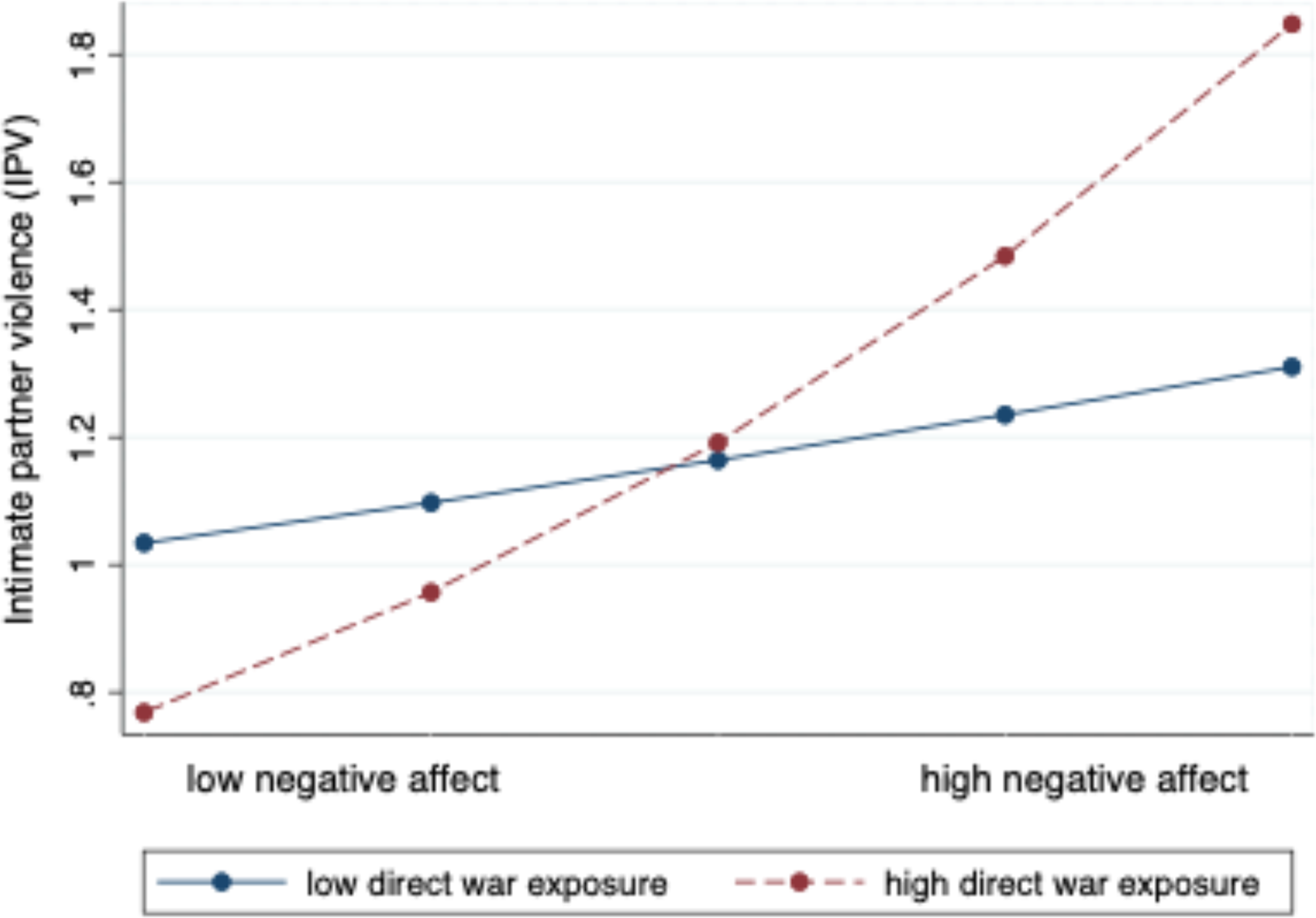
The effect of negative affect on IPV at different levels of direct war exposure. IPV: intimate partner violence.
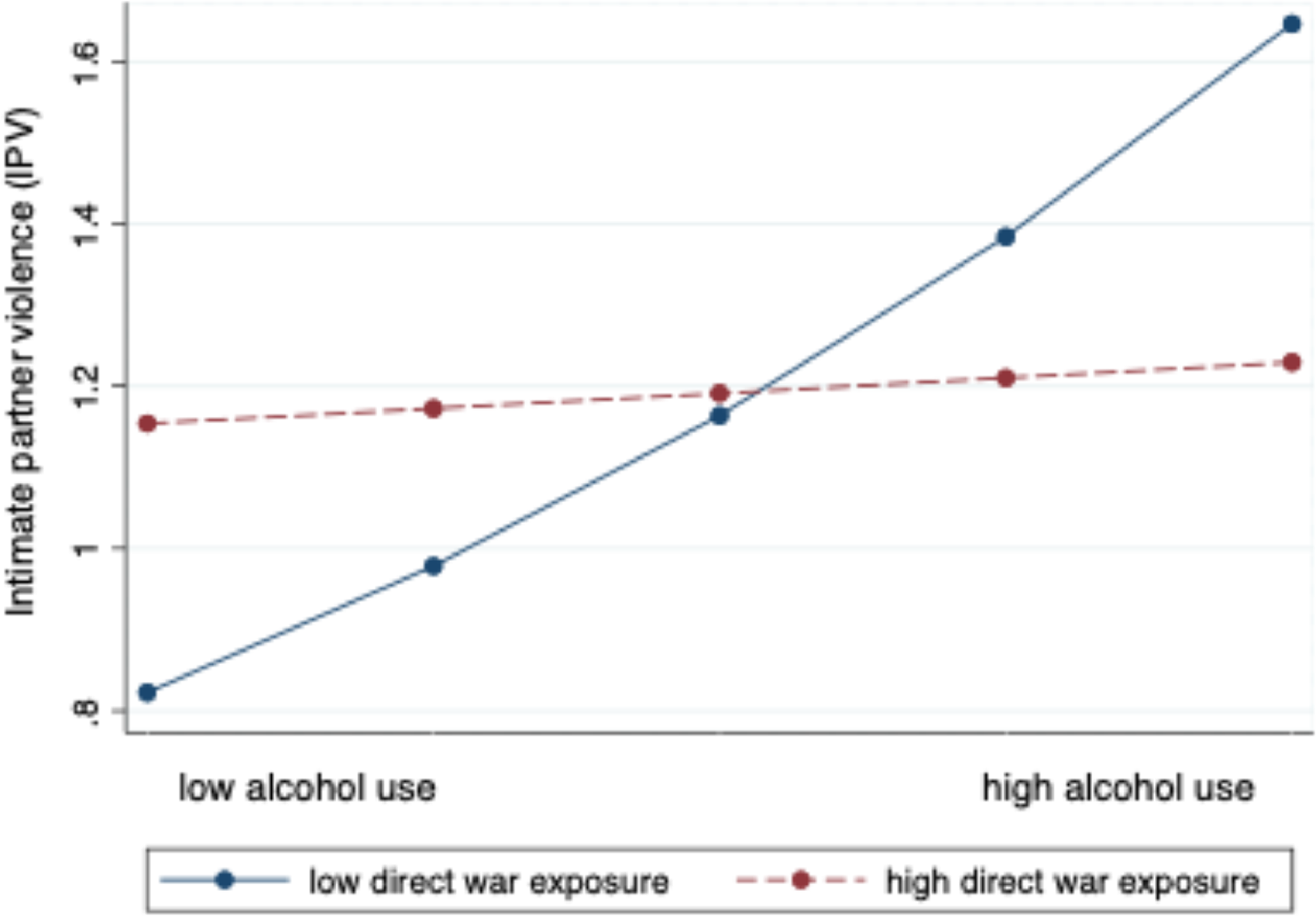
The effect of alcohol use on IPV at different levels of direct war exposure. IPV: intimate partner violence.
Next, the coefficients from Model 6 show the interaction effects of daily strains, negative affect, and alcohol abuse with indirect war exposure. Specifically, they indicate that the two interactions, one between indirect war exposure and daily strains and the other between indirect war exposure and alcohol abuse, are not statistically significant, thus providing no support for Hypotheses 10 and 11. However, the interaction between indirect war exposure and daily strains in Model 6 is significant (−.082). To illustrate this interaction, the regression coefficients for the predicted effect of daily strains on IPV are estimated at high (1 SD above) and low (1 SD below) levels of indirect war exposure. As shown in Figure 3, these computations demonstrate that, contrary to Hypothesis 11, the effect of daily strains on involvement on IPV is smaller (.262) among those with high levels (1 SD above) of indirect war exposure, but it is larger (.344) among those with low levels of indirect war exposure (1 SD below). 1
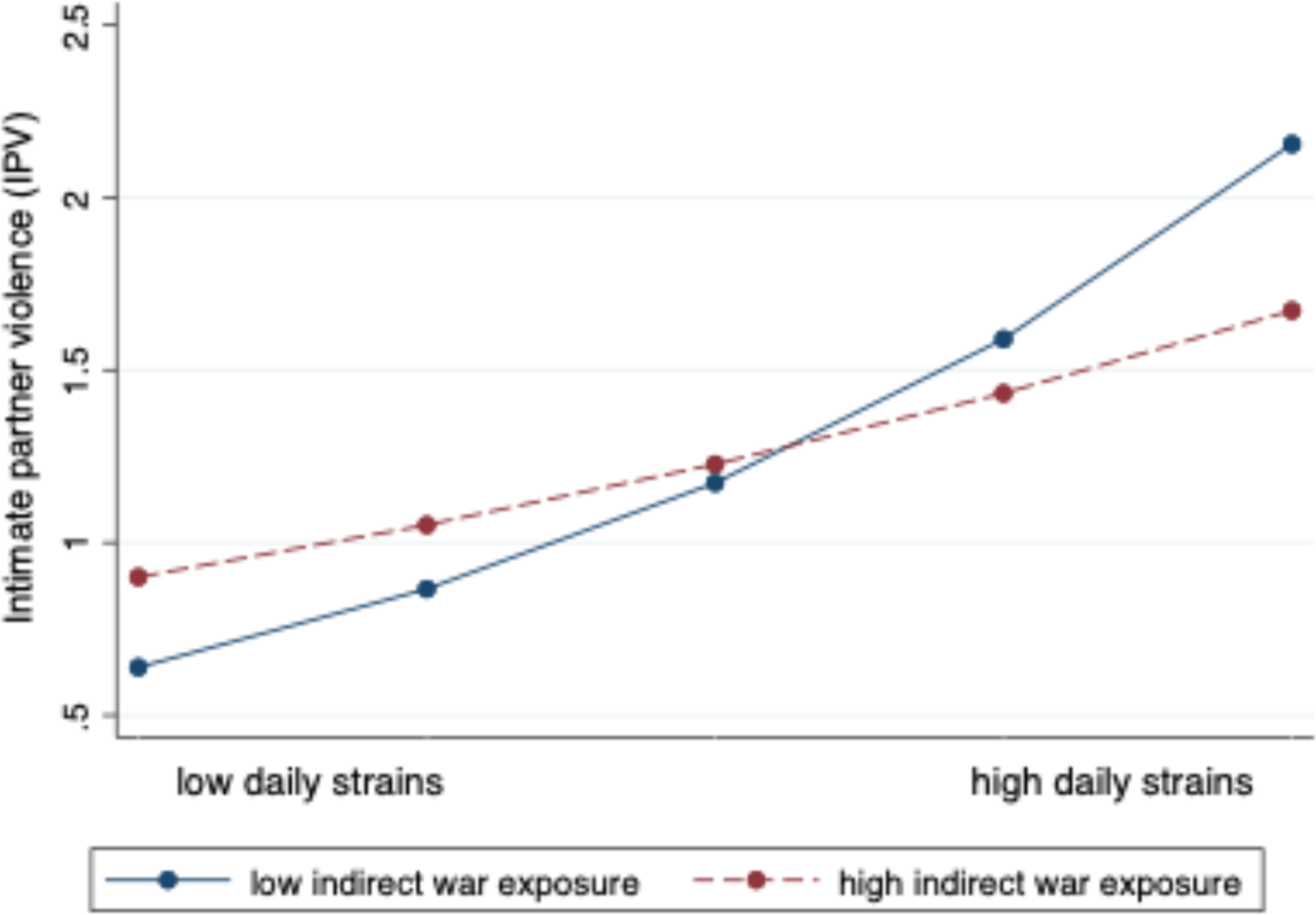
The effect of daily strains on IPV at different levels of indirect war exposure. IPV: intimate partner violence.
Finally, Table 3 presents figures from the negative binomial regression models estimating direct and moderating effects on involvement in IPV by gender. While these gender-split models reveal several significant regression coefficients, the Paternoster et al.’s test (1998) used to evaluate male–female differences in regression coefficients shows that no gender differences are statistically significant, thus providing support for Hypothesis 12 on the gender invariance of the selected IPV predictors.
Negative binomial regression including predictors of intimate partner violence by gender.
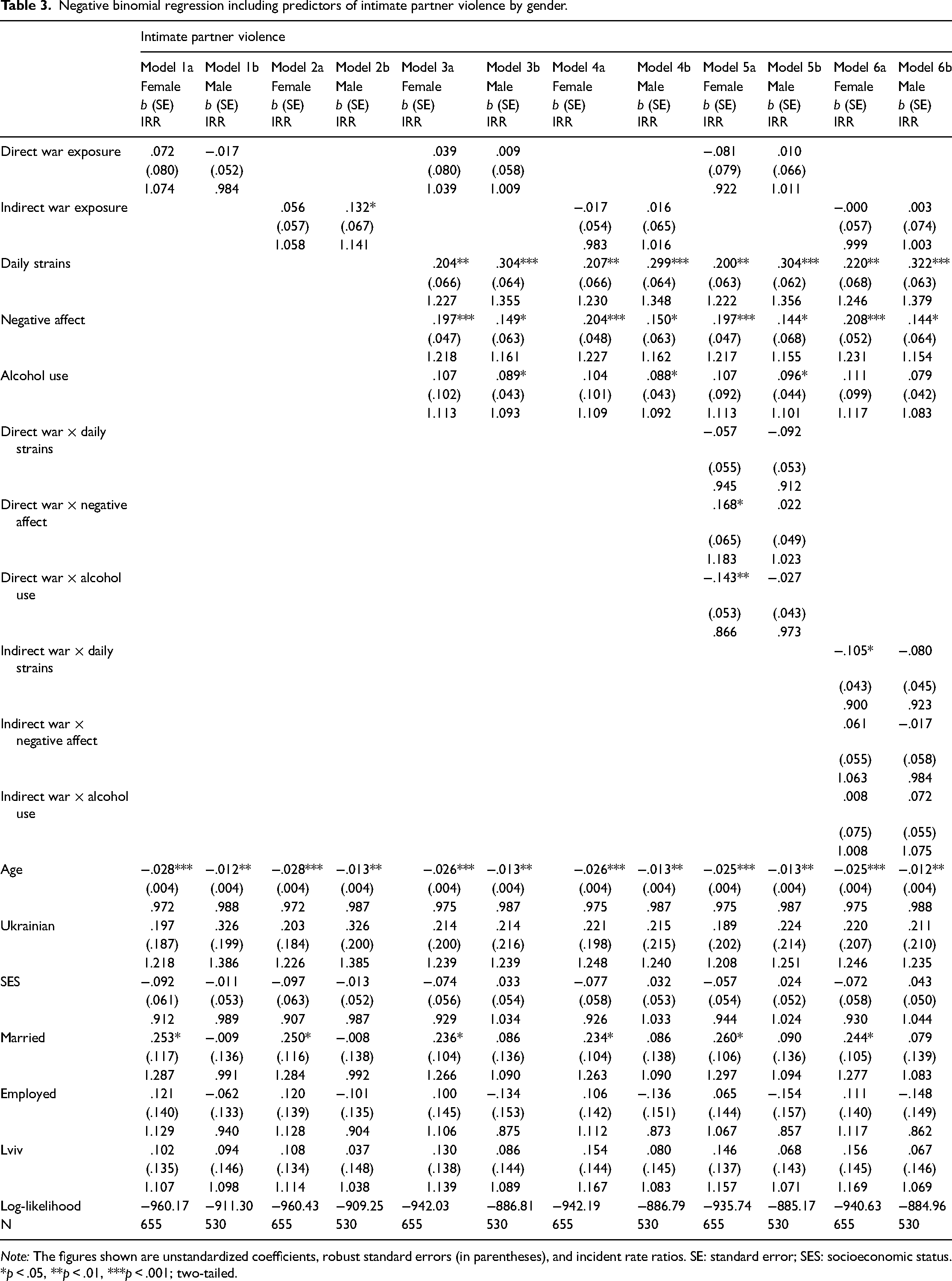
Note: The figures shown are unstandardized coefficients, robust standard errors (in parentheses), and incident rate ratios. SE: standard error; SES: socioeconomic status.
*p < .05, **p < .01, ***p < .001; two-tailed.
Discussion
The literature on IPV has not yet established its relationship with both direct and indirect war exposure, particularly using random samples, nor has a single study attempted to do so during active military conflict. Additionally, the complex relationships between war exposure and some traditional IPV predictors remain unexplored, with mixed evidence on the gender invariance of these markers for couples’ violence. This study addresses these gaps and provides new insights into this important but understudied topic.
Overall, several notable results emerge from our study. First, our findings demonstrate that a few traditional predictors of involvement in IPV—daily strains, negative affect, and alcohol abuse—produce expected direct positive effects on the perpetration of IPV in the random sample of Ukrainian respondents. Moreover, the detrimental impact of two predictors, daily strains and negative affect, appears to be strong and undiluted by the inclusion of control variables, other predictors, or interactions. Theoretically, these results provide substantial support for Agnew's General Strain Theory (2006), featuring both of these factors as especially criminogenic. These findings are also consistent with recent research on violent behavior and IPV victimization during the war against Ukraine (e.g., Timmer et al., 2023a). At the same time, alcohol abuse emerges as another important predictor of violence in couples, although its damaging effect on involvement in IPV is moderate relative to that of daily stressors and negative emotions.
Unexpectedly, our findings also demonstrate no evidence of the direct impact of war exposure on involvement in IPV. In fact, neither direct nor indirect exposure to traumatic war experiences appears to raise the likelihood of engaging in IPV among the Ukrainian population. On one hand, our findings may be due to the prolonged exposure to war among Ukrainians who may have learned how to cope with this powerful stressor (e.g., Botchkovar and Broidy, 2013; Timmer et al., 2023b). On the other hand, the relationship between war exposure and involvement in IPV may be more complex, with war exposure heightening the probability of involvement in IPV only for some groups of people.
The findings from the analyses involving a series of interaction effects provide evidence regarding this possibility and confirm that the effect of war exposure on IPV may be criminogenic for specific subgroups of respondents. Supporting our hypothesis, they demonstrate that direct war exposure increases the likelihood of IPV perpetration among those with high levels of negative affect. This indicates that, in the context of war, people may be particularly likely to react to the high levels of negative affect they experience by lashing out at their partners. However, the results also show that it is low, not high, war exposure that heightens the chance of IPV among those consuming more alcohol. Contrary to our initial arguments, it is possible that those who drink excessively and simultaneously experience high direct war exposure encounter an overall ‘numbing’ effect reducing their involvement in violence against partners.
Our results also show that indirect war exposure moderates the effect of daily strains on IPV. Specifically, the impact of daily hassles on IPV perpetration is criminogenic only among individuals who experience lower levels of indirect war exposure. Whereas this result is contrary to what was expected, it is consistent with prior research evidence bearing on the interaction between indirect exposure to war and daily hassles (Timmer et al., 2023a). It appears that mundane, everyday stressors are especially likely to incite violence against intimate partners when they are not overshadowed by indirect war exposure. Thus, among those who experience high levels of indirect war exposure, daily hassles seem to lose their violence-inducing potential as those individuals may be more likely to be overwhelmed by tragic events of war.
Finally, we note that our results fail to reject the null hypothesis suggesting the gender invariability of the associations between the selected predictors of IPV and IPV itself. We hasten to note that our study included a limited range of risk markers for IPV, and it is possible that further studies carried out in Ukraine and other societal contexts will uncover important gender-specific mechanisms translating exposure to specific risk factors into violence in couples. Our data indicate that men are significantly more likely to report both engaging in couples’ violence and experiencing most of the selected risk factors for IPV. This suggests that the observed gender difference in the likelihood of engaging in IPV could be, at least in part, attributed to differences in the levels of experienced IPV predictors, rather than to differences in how these conditions influence the behavior of men and women.
Although our findings contribute significantly to the literature on IPV, the study has several limitations. First, our findings may only be generalizable to Lviv and Kharkiv, despite our careful selection of the data collection sites, and, as with any survey data, our results may be vulnerable to telescoping, exaggeration, or misreporting. The consistency between our key findings and previous studies in Ukraine (e.g., Timmer et al., 2023a) confirms the reliability of our results.
Second, conditions like exposure to violent behavior models, erosion of support for women, or heightened importance of patriarchal structures due to war exposure were not directly incorporated into the study. This limitation highlights the need for more detailed investigations into the role of war exposure in promoting IPV. Additionally, due to data constraints, our study offers a limited perspective on the causes of IPV, excluding important contextual factors such as neighborhood SES, community war exposure, and gender schemas. The cross-sectional nature of our data also prevents definitive claims about causal relationships. These issues emphasize the importance of integrated, multi-level, and longitudinal research on IPV.
Finally, our data were collected in 2017, 3 years after the onset of the Donbas war and 2 years after the second peace attempt in Minsk, Belarus. It's plausible that the effects of direct and indirect war exposure were more acute and consequential for IPV during the early stages of the conflict. Our findings underscore the need for further research with data collected at various stages of protracted military conflicts.
In sum, our findings underscore the variable nature of the relationships between war exposure and other important risk factors for IPV. They also highlight the relative importance of war exposure in explaining IPV under specific circumstances (e.g., heightened negative affect experienced by a person directly exposed to war). Given the ongoing full-scale war in Ukraine since the beginning of 2024, local governments and non-governmental organizations must work collaboratively to provide timely and appropriate interventions and assistance to the victims of IPV in Ukraine's current dire circumstances.
Footnotes
Funding
The authors received no financial support for the research, authorship, and/or publication of this article.

Notes
Appendix Table 1. Survey items comprising the measure of intimate partner violence,war exposure,and daily strains.
| Intimate partner violence |
| How often you did each of these things in the past year?
Verbally abused him/her (e.g., by calling names, screaming) Pushed or shook your partner Slapped her or twisted her/his arm Used force in any other way (punched her/him with your fist or with something that could hurt her/him, etc.) Have you experienced a death of someone you know personally as a result of the Donbas war? Have you experienced an injury of yourself, a family member, a friend, or anybody else whom you know personally as a result of the Donbas war in Ukraine? Have you witnessed any Donbas armed conflict and/or been present at a site where there were injuries and/or fatalities? How often have you witnessed media portrayal or read about violence related to the Donbas war? How often have you heard accounts of violence related to the Donbas war from somebody else you know? How often have you witnessed media portrayal or read about political persecution in Crimea? How often have you experienced yourself and/or heard accounts of political persecution in Crimea from somebody else you know? |
| Daily strains |
| Recently, how often have you experienced the following types of daily hassles?
Concerns about making ends meet Other financial concerns Having to bribe somebody Problems with your family members Problems at work/study place (if respondent is a student) Getting into arguments (besides those with people already mentioned) Some rude behavior around you (smokers, who do not care about people around them, people who push you in a bus, etc.) Concerns about the Donbas war situation (worries about victims of the Donbas conflict, problems with the influx of migrants from other parts of Ukraine, etc.) Prejudice and discrimination from others because of the Donbas conflict Prejudice and discrimination from others on any other basis Not enough time to do the things you need to do Other daily hassles like any of those listed above (list them) |