



Abstract
Our study juxtaposes egoistic and altruistic motivations as explanations of criminal behavior. Self-control, reward/cost considerations, and moral values are investigated as possible mediating and conditional influences on the relationship between these motivations and crime. To do so, we utilize self-report data from a random sample of 1435 Ukrainian and Russian respondents. Findings confirm a relationship between altruistic orientation/self-interest and offending, with altruism and self-interest being significantly mediated by perceived rewards and costs of offending, moral beliefs, and self-control. Furthermore, morality, self-control, and perceived rewards condition the association between altruistic tendencies and crime, whereas their moderating effects on the relationship between self-interest and crime are less consistent. Altruistic orientation fails to reduce the likelihood of offending among individuals with very low levels of morality and self-control or those finding crime particularly attractive. Therefore, while altruism may protect against crime, this effect will likely be offset by strong predispositions to crime.
Introduction
From Bentham's (1948 [1789]) utilitarianism to Homans’ (1958) exchange theory, human actions have sometimes been theorized to be driven by rational and ‘egoistic’ considerations, assuming that people seek to maximize the benefits and minimize the costs of their behaviors. In understanding antisocial behavior, some theories have focused on the selfish pursuit of rewards (e.g., Akers, 1998; Gottfredson and Hirschi, 1990) and the various restraints or filters, such as morality, necessary to curb this pursuit (e.g., Wikström and Treiber, 2007).
Whereas research shows support for the role of selfish and reward-seeking tendencies in predicting behavior, people also often engage in prosocial and empathetic actions that hardly benefit them, such as volunteering and aiding others (e.g., Agnew, 2014; Batson et al., 1981; Bar-Tal, 1985–1986; Borman et al., 2001; Eisenberg et al., 2002; Jeffries, 1998; Penner et al., 2005). This suggests that ‘true altruism’ aimed to benefit others may also be part of human nature (Piliavin and Charng, 1990; see also Bloom, 2013; Churchland, 2006; Fehr and Fischbacher, 2003; Svingen, 2023). Indeed, individuals may be both self-interested and ‘socially concerned’—seeking conformity and acting in the interest of others—and both types of orientations can be linked to deviance and crime, albeit in the opposite directions (Agnew, 2014).
Although prior research demonstrates that prosocial orientation reduces crime (Broidy et al., 2003; Craig, 2017; Jolliffe and Farrington, 2006; Paternoster et al., 2017; cf. Jones et al., 2011), studies that fully conceptualize and test the effects of altruistic orientation on individual behavior remain limited. This study utilizes 2009 survey data, collected prior to the ongoing war, from two non-Western countries, Russia and Ukraine, to advance the concept of personal altruistic tendency (cf. Batson, 2010) as a comprehensive framework for exploring the role of prosocial reasoning in reducing individual criminal behavior. Building on Agnew's (2014) call to integrate both self-interest and selfless motives into theoretical explanations of crime, this study examines their independent and relative effects on criminal behavior. Additionally, it investigates the role of self-control ability, reward/cost considerations, and moral values as potential mediators and moderators in the relationship between self-interest, altruistic tendencies, and antisocial behavior. Specifically, the study aims to: (a) determine whether altruistic tendencies and self-interest directly influence crime; (b) evaluate whether altruistic tendencies and self-interest affect criminal intentions indirectly through shaping perceived costs and benefits, moral acceptability, and self-control during decision-making processes involving criminal acts; and (c) assess whether the effects of altruistic tendencies and self-interest on the likelihood of involvement in criminal behavior are conditioned by perceived costs and benefits of crime, moral acceptability, and susceptibility to situational temptations at the time a crime is committed.
Self-interest and human behavior
Social scientists have long relied on rational choice theory as one of the frameworks for understanding individual behavior (e.g., Andenaes, 1966; Hechter and Kanazawa, 1997). In the words of Coleman, ‘if an institution or a social process can be accounted for in terms of the rational actions of individuals, then and only then can we say that it has been “explained”’ (1986: 1). To be sure, criminology is not impervious to factors potentially affecting decision-making, such as emotions (Agnew, 1992), nor has it ignored obvious imperfections in the decision-making process displayed by humans (e.g., Paternoster and Pogarsky, 2009; Van Gelder and de Vries, 2014). A significant number of criminological theories (e.g., Wikström and Treiber, 2007) also do not prioritize rational choice as an explanation of criminal behavior. Nonetheless, the self-interested calculus of potential benefits and losses associated with criminal activity has been central to some theoretical frameworks (e.g., Paternoster et al., 2017). Hence, rational choice, as well as self-interest underlying it, remains an important consideration in understanding the motivations behind criminal actions. Research has also shown self-interest to increase readiness for instrumental violence, boost intentions to engage in morally problematic behaviors, such as making false insurance claims and cheating, and heighten the likelihood of delinquent behavior among juveniles both directly and indirectly via decreased morality (Groß et al., 2018; Hövermann et al., 2016; Karstedt and Farrall, 2006; Muftić, 2006). However, the independent and relative performance of self-interest compared to altruism as a predictor of crime has yet to be assessed.
Altruistic tendencies in human behavior
The origins of altruistic tendencies
The concept of altruism as a determinant of human behavior has been circulating in social sciences for many years. A key figure in sociology, Sorokin (1950) was convinced that altruistic, non-egoistic love was the only ‘cure’ for the selfishness of Western civilization. To Sorokin, altruism was an action or series of actions undertaken to help others physically or psychologically, and altruists were as common as ‘good neighbors’, ready to lend a sympathetic ear in the times of need and contributing to the moral fabric of society with their good deeds (Sorokin, 1948, 1950).
Over time, the scholarly focus increasingly shifted from investigating helping behaviors as manifestations of altruism (e.g., Oliner and Oliner, 1988) to asking probing questions about the nature of altruistic, prosocial orientation (Piliavin and Charng, 1990). In its advanced form, altruism may be defined as an act of ‘unconditional kindness’ (Fehr and Schmidt, 2006: 619) or the desire or motivation to engage in selfless action for the benefit of others (e.g., Batson, 2011). Empathic concern, including the emotions of sympathy and compassion, may serve as a precursor of altruism (Batson, 2011) and has been linked empirically to altruistic behaviors, including helping, comforting, and sharing (Batson, 1991; Batson and Powell, 2003). However, altruism is conceptually and empirically distinct from empathy. In contrast to altruism, empathy has been shown to produce sadness or even self-centered responses to relieve this negative emotional state (e.g., Cialdini et al., 1987). Thus, whereas empathy may or may not translate into social concern, altruistic tendency undoubtedly will.
Altruism also is distinct from morality, even though there appears to be some concordance between altruistic inclinations and espousing moral principles focused on promoting the welfare of others (e.g., Eisenberg et al., 2014). However, altruistic decisions are not always guided by moral standards, thus implying that altruism can be both moral and immoral (e.g., Batson et al., 1995). For instance, a hypothetical decision to move a person in need up the organ donor list at the expense of others who also need a transplant is an example of a collision between the moral principle of fairness and altruistic desire to provide help for the specific individual in need. Therefore, while some overlap between moral beliefs and altruistic tendencies is to be expected, it would be incorrect to equate altruism with morality.
Finally, altruism should not be confused with reciprocity or cooperation. In reciprocal relationships, one's actions toward others may be kind or unkind depending on how those actions are perceived by the individual and whether the actions and their outcomes are seen as fair (Fehr and Gächter, 2000; Fehr and Schmidt, 2006; see also Svingen, 2023 for a review). Reciprocity, therefore, involves a contingent element where the expectation of return influences behavior. By contrast, Svingen (2023) defines cooperation as helping or punishing behaviors seeking to sustain the intactness of a group and its norms. Unlike reciprocity, cooperation is often motivated by a collective goal rather than individual benefit. Altruism differs from both cooperation and reciprocity, and it is characterized by selfless concern for the well-being of others without expectation of any form of return, distinguishing it from both reciprocity and cooperation (Batson, 2011; Fehr and Schmidt, 2006). Thus, while reciprocity and cooperation may involve elements of mutual benefit and collective interest, altruism is driven solely by one's desire to help others regardless of personal gain or concern for group stability.
The altruism–crime connection
Although altruism as an independent concept has not been linked explicitly to criminal behavior at the individual level, the assumption of an inverse relationship between criminal behavior and some forms of concern for other people has been evident in the literature for at least three decades (e.g., Richardson et al., 1994; see also Jones et al., 2011). Calling for more attention to prosocial motivation as a promoter of conformity in individuals, Agnew (2014: 5) refers to social concern as an inclination that may ‘sometimes lead people to give more consideration to others than to their own interests’. In a similar vein, Paternoster et al. (2017) focus on the ‘interest in the fortune of others’ and measure this concept in terms of the benefits of others in the course of playing economic games. Agnew (2014) and Paternoster et al. (2017) suggest the importance of considering both egoistic and prosocial orientations in explaining criminal behavior. We propose that altruism may insulate individuals from crime because those with altruistic tendencies put the interests of other people above their own, and most crimes constitute acts that ignore other people's well-being and interests (e.g., Gottfredson and Hirschi, 1990). Thus, people displaying altruistic tendencies may be less likely to entertain criminal behaviors as an option.
Examining self-interest, altruistic orientation, and other predictors of crime
Beyond their independent effects on criminal behavior, crime-related effects of self-interest and altruism may be mediated or moderated by principal theoretical variables from related explanations of crime. As discussed below, these variables include moral beliefs (Wikström and Treiber, 2007), the calculus of costs and benefits associated with crime (e.g., Becker, 1968), and self-control (Gottfredson and Hirschi, 1990).
Mediators of self-interest–crime and altruism–crime relationships
Morality
Conceptualizing morality specifically as ‘law-relevant’ moral rules, that is, those pertinent to the breaking of conventional norms (e.g., Wikström, 2014: 78), we argue that altruistic tendencies may strengthen, and self-interest may weaken, personal moral controls. Altruistic individuals are more likely to internalize and adhere to law-relevant moral rules, reducing the temptation to engage in behavior that violates legal norms. Conversely, individuals driven by self-interest may deprioritize these moral considerations, increasing their susceptibility to criminal behavior. This mediating role of morality offers an important pathway by which altruism and self-interest shape criminal outcomes.
Benefits/costs
Contemporary perspectives on rational choice theory in criminal decision-making emphasize that individuals engage in calculated assessments of costs and benefits before committing crimes, striving to maximize rewards and minimize risks (e.g., McCarthy, 2002). We argue that altruistic tendencies and self-interest may shape individual perceptions of the rewards and costs of crime. In particular, altruistically oriented individuals may perceive crime as less rewarding and riskier due to their concern for others and sensitivity to potential harm caused by their actions (Kroneberg et al., 2010; see also Groß et al., 2018). Conversely, self-interested individuals are more likely to perceive crime as offering greater personal rewards while underestimating the associated risks or costs. These differential perceptions provide another pathway through which altruism and self-interest indirectly influence criminal behavior, with altruism discouraging and self-interest encouraging crime by altering the perceived attractiveness or utility of illegal actions.
Self-control
Self-control theory posits that all individuals possess an inherent predisposition toward criminal behavior and that the ability to resist deviant impulses depends on self-regulatory capabilities (Gottfredson and Hirschi, 1990) shaped primarily during early childhood through parenting practices. However, subsequent research has demonstrated that self-control is mutable over the life course and influenced by factors beyond parental upbringing (e.g., Gibson et al., 2010; Na and Paternoster, 2012). It is possible that altruistic tendencies may enhance self-control over time by encouraging individuals to prioritize group interests over immediate self-rewarding impulses. This process may foster habits of restraint and long-term thinking, reinforcing self-regulatory abilities. On the other hand, self-interest may undermine the development and maintenance of high self-control, as it prioritizes immediate personal gratification. This dynamic suggests that self-interest and altruistic tendencies may affect criminal outcomes through shaping individual levels of self-control (see Figure 1).
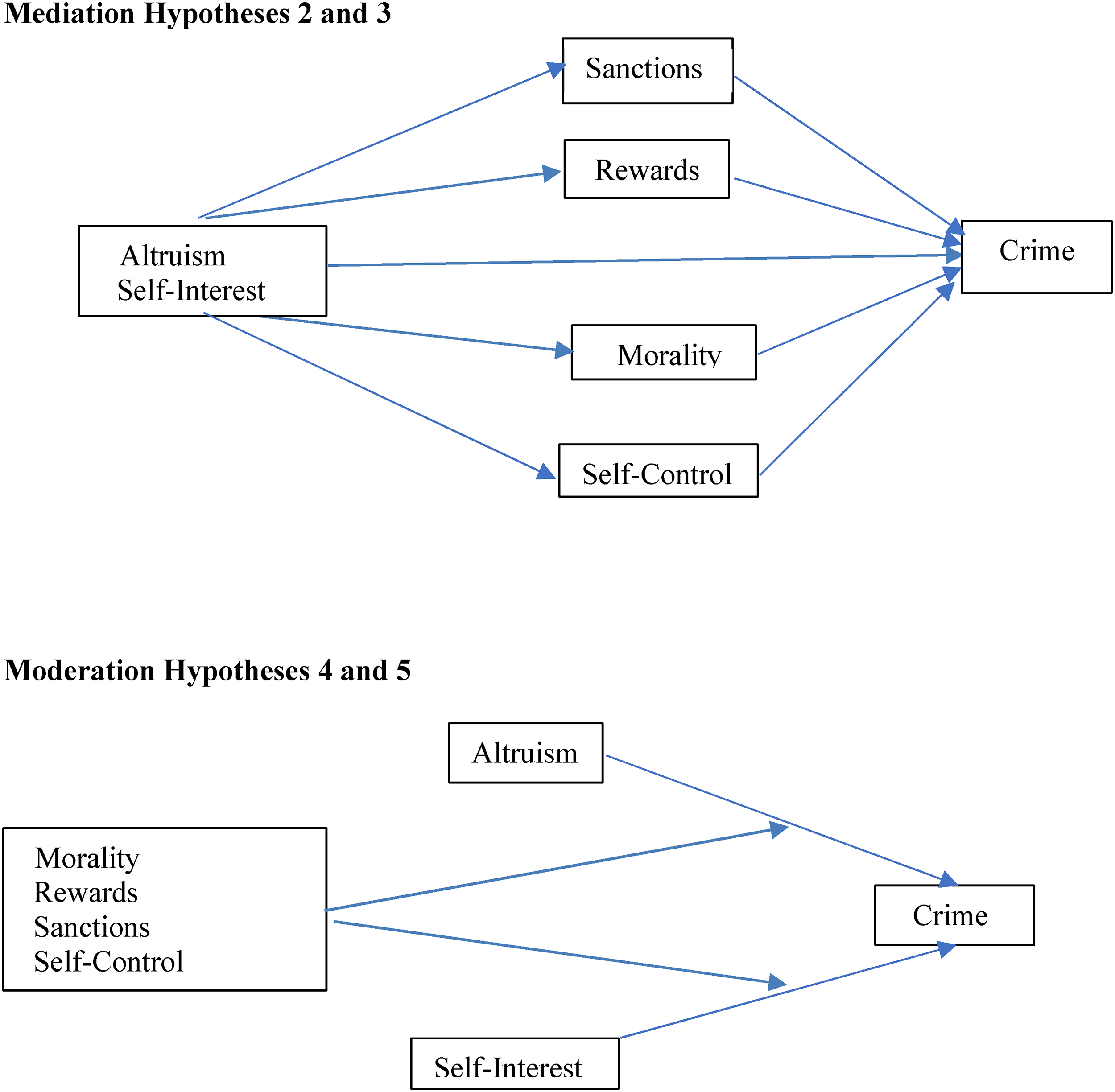
Causal diagrams for mediation and moderation hypotheses.
Moderators of self-interest–crime and altruism–crime relationships
The effects of altruism and self-interest on crime may also vary depending on an individual's moral beliefs, level of self-control, and perception of the rewards and costs associated with criminal behavior. On one hand, these factors—morality, self-control, and personal calculus—can condition the positive association between self-interest and criminal behavior. Indeed, weak moral beliefs and low self-control are considered core components of an individual's propensity for crime (Wikström et al., 2012). Such deficiencies reduce internal restraints and make individuals especially susceptible to the criminogenic effects of self-interest. Additionally, when the perceived rewards of crime are high and the risks of punishment are low, individuals with a selfish orientation are particularly prone to engage in criminal activities (e.g., Akers, 1998).
On the other hand, while an altruistic orientation is a critical protective factor against criminal behavior, its insulating effect can be undermined in certain situations. For example, individuals with weaker moral convictions and lower self-control may fail to act consistently with their altruistic tendencies, thus being especially vulnerable to crime. Similarly, when the perceived benefits of crime are especially large or the perceived risk of sanctions is minimal, even altruistically oriented individuals may find it harder to not get involved in criminal activity. Thus, the protective influence of altruism is not absolute but contingent on the strength of an individual's internal values, self-regulatory capacity, and crime cost-reward calculations (see Figure 1).
Current study and hypotheses
Responding to calls for the inclusion of both self-interest and selfless motives in theoretical explanations of crime (Agnew, 2014; Messner et al., 2008), this study examines the direct and independent effects of altruistic tendencies and self-interest on criminal behavior. In addition, we evaluate the role of several related theoretical factors—self-control, crime reward/cost considerations, and moral beliefs—as possible intervening (mediating) links and conditioning (moderating) influences in these relationships. To assess these associations (shown in the causal diagrams in Figure 1), we use data from a random sample household survey conducted in two unique non-Western socioeconomic locales, Russia and Ukraine. Specifically, we test the following hypotheses:
Altruistic orientation will be negatively associated with criminal behavior, whereas self-interest will be positively associated with criminal behavior. The positive association between self-interest and criminal behavior will be mediated by moral beliefs, self-control, and perceptions of crime rewards and punishment risks. The negative association between altruistic orientation and criminal behavior will be mediated by moral beliefs, self-control, and perceptions of crime rewards and punishment risks. The positive relationship between self-interest and criminal involvement will be stronger among those with weaker moral beliefs and self-control, higher levels of perceived crime rewards, and lower levels of perceived risks of punishment. The negative relationship between altruism and criminal involvement will be attenuated among those with weaker moral beliefs and self-control, higher levels of perceived crime rewards, and lower levels of perceived risks of punishment.
Methods
Data
The data used in this study were collected from random household samples of residents in two cities, Nizhni Novgorod, Russia, and Lviv, Ukraine, in the summer of 2009 1 by two reputable professional survey organizations with experience in sociological research. In all, 700 respondents in Ukraine and 735 respondents in Russia were selected for paper-and-pencil face-to-face interviews using multi-stage stratified random sampling. For census purposes, each city was divided into six to eight districts of 60,000–250,000 residents. Because these city districts are too large to be defined as neighborhoods, and because there are no equivalents of the US census tracts or blocks, the professional survey organizations mapped each city into smaller and more homogenous neighborhoods (approximately 8000 residents per community) defined as having at least two parallel or perpendicular streets with a shared playground or similar area, a grocery store, and access to public transportation (Botchkovar et al., 2018). Yielding 60 neighborhoods in Lviv and 80 neighborhoods in Nizhni Novgorod, this procedure is consistent with the general definition of a neighborhood as a geographical and social subsection of a larger community in which residents share a common sense of identity that persists over time (see Bursik and Grasmick, 1993: 5–12). Neighborhoods in each city have been historically established and, as indicated by their unique names, are recognized by residents as distinct residential areas.
Twenty-one neighborhoods in Nizhni Novgorod and 20 neighborhoods in Lviv were randomly selected from within city districts. Eligible apartments and houses were then randomly sampled from each neighborhood (35 from each neighborhood), and the adult respondent (18 years or older) whose birthday was closest to the date of the interview was selected from each household. The household replacement rate was about 65%, with replacements made due to unavailability of respondents, refusal to participate, and commercial leasing of apartments. The random replacement rate is comparable to those of other household surveys conducted in Eastern Europe and the USA (e.g., Kordos, 2005; Tittle et al., 2003).
The survey instrument was written in English, translated into Ukrainian/Russian languages, and back-translated into English. Sensitive questions such as those regarding criminal involvement were self-administered by respondents away from interviewers to ensure anonymity and increase data accuracy. In each case, written answers were sealed in an envelope and placed into a basket containing a stack of identical envelopes. The completion rate for each study variable was at least 98%.
Study context
Prior to the wars of 2014 and 2022, Russian and Ukrainian societies underwent decades of similar socio-political processes and change. In both countries, the transition from a socialist model to a capitalist society was accompanied by an erosion of the welfare state, deterioration of traditionally strong institutions such as education and the family, and a growing gap between the rich and the poor (Foglesong and Solomon, 2001; Gilinskiy, 2006; Kalman, 2002). In addition, massive socio-cultural transformations occurred as older communitarian values and objectives gave way to the value orientations of the new capitalist environment. The results of the European Social Survey showed Russians and Ukrainians scoring higher than the residents of many other European countries on dimensions such as self-affirmation and being much less likely to care about other people or nature (Magun and Rudnev, 2007; 2010). Various polls also registered increasing cynicism in the value orientations of the population. For instance, at the end of the first decade of the 21st century, both younger and older Russians were likely to agree that appropriating the products of other people's labor is not an issue as long as it can be done without negative consequences, that every person should strive to accumulate more wealth, and that one should not help others unless a reward is involved (Sulakshin and Zakharenko, 2016; Yadova, 2012).
By 2009, Russia and Ukraine appeared to represent social contexts in which moral constraints took a back seat to economic concerns and self-interest tended to guide human behavior. However, despite the limited visibility of altruism in these societies, it is unlikely to be nonexistent and still can be expected to reduce the likelihood of criminal behavior.
Measures
Dependent variable
Projected offending is our principal dependent variable. To create this measure, respondents were asked to indicate their likelihood of committing each of the four offenses—two property and two violent acts (see Appendix A). The answer categories varied from ‘no chance’ (0) to a ‘very high chance’ (4), and a summative projected offending scale (α = .84) ranging from 0 to 10 was constructed (mean = 2.26).
Compared to self-reports of past criminal involvement, projections of criminal behavior are superior for establishing causal order, obtaining full disclosures of criminality, and ensuring data reliability (e.g., Grasmick and Bursik, 1990; Tittle et al., 2003). Projections of criminal behavior are used frequently in criminological research, with demonstrated high levels of accuracy (e.g., Albarracin et al., 2001; Pogarsky, 2004). Table 1 shows descriptive and reliability statistics for projected criminal involvement and all other study variables.
Descriptive statistics and bivariate correlations.
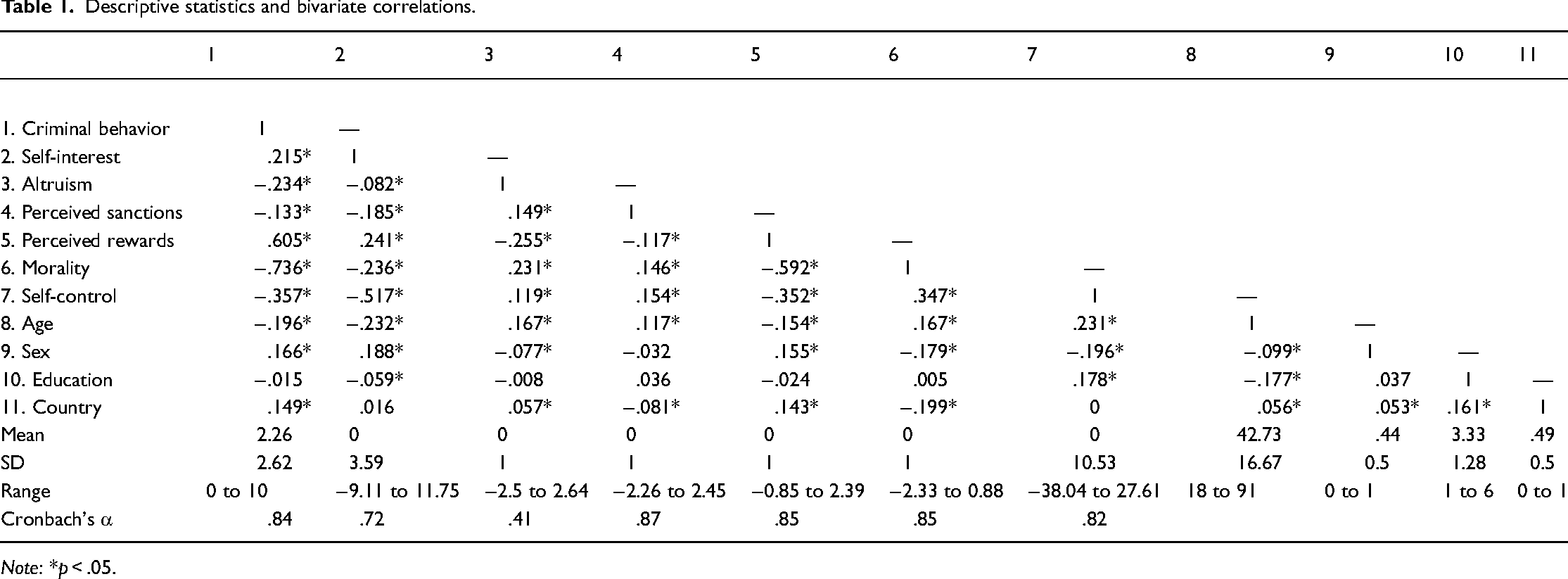
Note: *p < .05.
Independent variables
Altruism. In accordance with the definition of altruism as the desire to engage in selfless action for the benefit of other people (Batson, 2011), altruism was measured by two items asking respondents to rate their agreement with two statements: ‘One should always look for ways to help others who are less fortunate than oneself’ and ‘The common interest comes before personal interest’. After reverse-coding the items, response options ranged from ‘strongly agree' (5) to ‘strongly disagree’ (1), with higher values indicating a stronger altruistic orientation. The items were combined into an additive measure that was standardized. 2 Importantly, the same items were utilized by Feldman and Steenbergen (2001) to capture individualistic vs. humanitarian values in American society. Although both survey questions touch upon moral and ethical considerations, we argue that they are not equivalent to moral rules guiding human behavior in crime-related situations, as outlined in Wikström's theory (Wikström, 2010). Instead, the questions address broader social values and moral obligations attempting to capture the balance between individualistic and collectivistic values and assessing whether individuals prioritize the welfare of the group over their own personal gain. These items are thus consistent with theoretical definitions of altruism, which often refer to self-sacrifice for the benefit of others and the prioritization of collective welfare (e.g., Fehr and Fischbacher, 2003). While a two-item scale may not capture the full complexity and range of altruistic behaviors and attitudes, we believe the scale provides a meaningful snapshot of altruistic tendencies and can offer valuable insights into how altruism influences behavior.
Self-interest. Our measure of self-interest consists of eight items (see Appendix A). Response options for all items ranged from 5 (‘strongly agree’) to 1 (‘strongly disagree’), with the item related to prioritizing family over financial success being reverse-coded. The final scale was constructed by summing the standardized items (α = .72). We acknowledge that this scale is not intended to encompass all possible situations in which self-interest may manifest. Nonetheless, we believe it effectively combines a diverse set of items across several domains, including family, economy, and education, with each of these items reflecting the prioritization of self-interest and emphasizing personal gain over ethical considerations and/or societal institutions, consistent with the prior research on prioritizing selfish considerations (Rosenfeld and Messner, 1994). For example, the item that reduces education to a tool for financial success highlights one's personal emphasis on material rewards over intrinsic values such as intellectual or personal growth. Similarly, agreement with statements suggesting there are no right or wrong ways to achieve one's goals—only easy or hard ways—demonstrates a willingness to prioritize one's own interests, potentially at the expense of the well-being of others. Collectively, these items capture key dimensions of self-interest by emphasizing individual benefit over broader ethical or social concerns.
Morality. In order to assess individual morality, we used a common attitudinal measure of moral beliefs (e.g., Antonaccio et al., 2017; Wikström and Treiber, 2007). Survey items asked respondents to report the extent to which committing the four offenses in question would be morally acceptable to them (see Appendix A). Response categories ranged from ‘always morally acceptable’ (1) to ‘never morally acceptable’ (5) and were coded so that higher values represent higher levels of morality. Item scores were summed and standardized to produce a scale with an overall reliability of .86.
Self-control. To measure self-control, we employed the widely used Grasmick et al. (1993) attitudinal scale of self-control. The 23 survey items comprising the scale were summed and standardized. Higher scores represent higher self-control/lower criminal propensity (α = .83).
Perceived risk of sanctions. Drawing on past research on perceptions of sanctions (e.g., Neissl et al., 2019), we measure perceived risk of sanctions as a combination of sensitivity to formal and informal punishment risks. Perceived risk of legal sanctions was gauged from responses to questions asking respondents to estimate the likelihood they would suffer formal penalties (such as being detained, fired, or fined) if they committed each of the four offenses tomorrow. Perceived risk of informal punishment was captured by respondents indicating how likely they felt it would be that people whose opinion they value would disapprove of their acts if they committed each of the offenses tomorrow. Response categories varied from ‘not likely at all’ (1) to ‘very likely’ (5). The overall scale was constructed by summing all items and standardizing (α = .63).
Perceived rewards of crime. Consistent with past research, we capture perceived rewards of crime by gauging how gratifying or pleasing committing each of the offenses would be to respondents if they could get away with it (Neissl et al., 2019). Possible answer categories range from ‘not gratifying or pleasing at all’ (1) to ‘very gratifying or pleasing’ (5). The resulting composite scale is standardized (α = .85).
Control variables
We control for socio-demographic correlates of crime, including gender (0 = female, 1 = male), age in years, and level of education (1 = incomplete secondary education to 6 = having a PhD), as these demographic groups have been found to display varying levels of altruism (e.g., Dovidio et al., 2000) and be differentially involved in crime. We also control for the country of residence (1 = Ukraine, 0 = Russia) to address contextual differences in levels of criminal activities, altruism, self-interest, and sensitivity to these characteristics. Analyses conducted with past criminal behavior as a control variable yielded no substantial differences in results.
Analyses
For projected offending, scores summed across each of the four offenses provided counts of criminal conduct. Because tests revealed the presence of over-dispersion, negative binomial regression was utilized. In all models, robust standard errors were used to adjust for clustering. No evidence of multicollinearity was observed; all model variance inflation factors (VIFs) were below 2. Except for criminal outcomes, all scale variables were standardized or centered to ease interpretation of results and reduce multicollinearity in interaction models. Multiplicative interaction terms were included in interaction models and interpreted alongside conditional marginal effects estimated using the margins command in Stata 16.1 (see, e.g., Brauer, 2023). Because the slope of an effect in a nonlinear model is not constant across its entire range, the interaction effect ‘cannot be evaluated simply by looking at the sign, magnitude, or statistical significance of the coefficient on the interaction term’ (Ai and Norton, 2003: 129). Plots of conditional marginal effects confirm interpretations of interaction effect in negative binomial models. The values of all covariates included in these models were set equal to their means.
To investigate mediating effects in models predicting projected crime, we used the Karlson–Holm–Breen (KHB) decomposition method (Karlson et al., 2011) executed with the khb command in Stata 16.1. In addition to enabling detection of the presence of significant mediating effects in nonlinear models with multiple mediators, the KHB method allows effects to be compared across nested nonlinear models (Kohler et al., 2011). The KHB method estimates two models—one full model with the mediator(s) and another reduced model that uses calculated residuals from a linear regression of the mediator(s) on the exposure variable. This model extracts from the mediator(s) any information not contained in the exposure variable or any control variable.
To explore the possibility of more complex mediation and moderation effects (e.g., mediated moderation), we conducted our analyses using a four-way decomposition procedure that allows mediation and interaction effects to be evaluated simultaneously (Brauer, 2023; VanderWeele, 2014). Specifically, we used the Stata med4way command (appropriate for linear and negative binomial models) to decompose the total effect into four components representing: (a) neither mediation nor interaction (labeled as CDE, the controlled direct effect); (b) only interaction but not mediation (INTref, the reference interaction effect); (c) both mediation and interaction (INTmed, the mediated interaction effect); and (d) only mediation but not interaction (PIE, the pure indirect effect) (Discacciati et al., 2018).
Finally, given some contextual similarities between our two research sites at the time of data collection, we follow prior research in these locales (e.g., Botchkovar et al., 2018) by presenting main findings for the combined country sample. Findings from country-specific analyses are discussed in the ‘Sensitivity analyses’ section.
Results
Bivariate correlations
Bivariate correlations reported in Table 1 confirm our initial expectations, showing the risk of criminal behavior to be positively associated with self-interest (r = .215) and negatively associated with altruism (r = −.234). All other theoretical predictors, including perceived risk of sanctions and rewards of crime, moral beliefs, and self-control, are associated with the risk of criminal behavior in the expected directions.
Self-interest and altruism are significantly but weakly correlated (r = −.082), confirming they are distinct concepts rather than the opposite ends of a continuum. Self-interest is significantly positively related to all other theoretical predictors, suggesting that self-interested individuals may perceive fewer sanction risks and greater crime rewards, hold weaker moral beliefs, and have lower levels of self-control (r = .−.517). Unlike self-interested individuals, those with altruistic tendencies are more apprehensive of sanction risks and see crime as less rewarding, hold stronger moral beliefs, and have higher levels of self-control. However, the strength of the correlation between moral beliefs and altruism is not overpowering (r = .231), confirming our assumption that altruistic orientation is not identical to morality.
Overall, the results indicate that both self-interest and altruism are associated with self-control, morality, and perceptions of rewards and sanctions. This aligns with expectations that self-control, morality, and the calculus of costs and benefits mediate the relationships between self-interest, altruism, and criminal behavior. The results from additional multivariate regression models treating the mediating variables (i.e., self-control, morality, perceptions of rewards, and perceptions of sanctions) as outcomes confirm altruism and self-interest as statistically significant predictors.
Mediation analyses
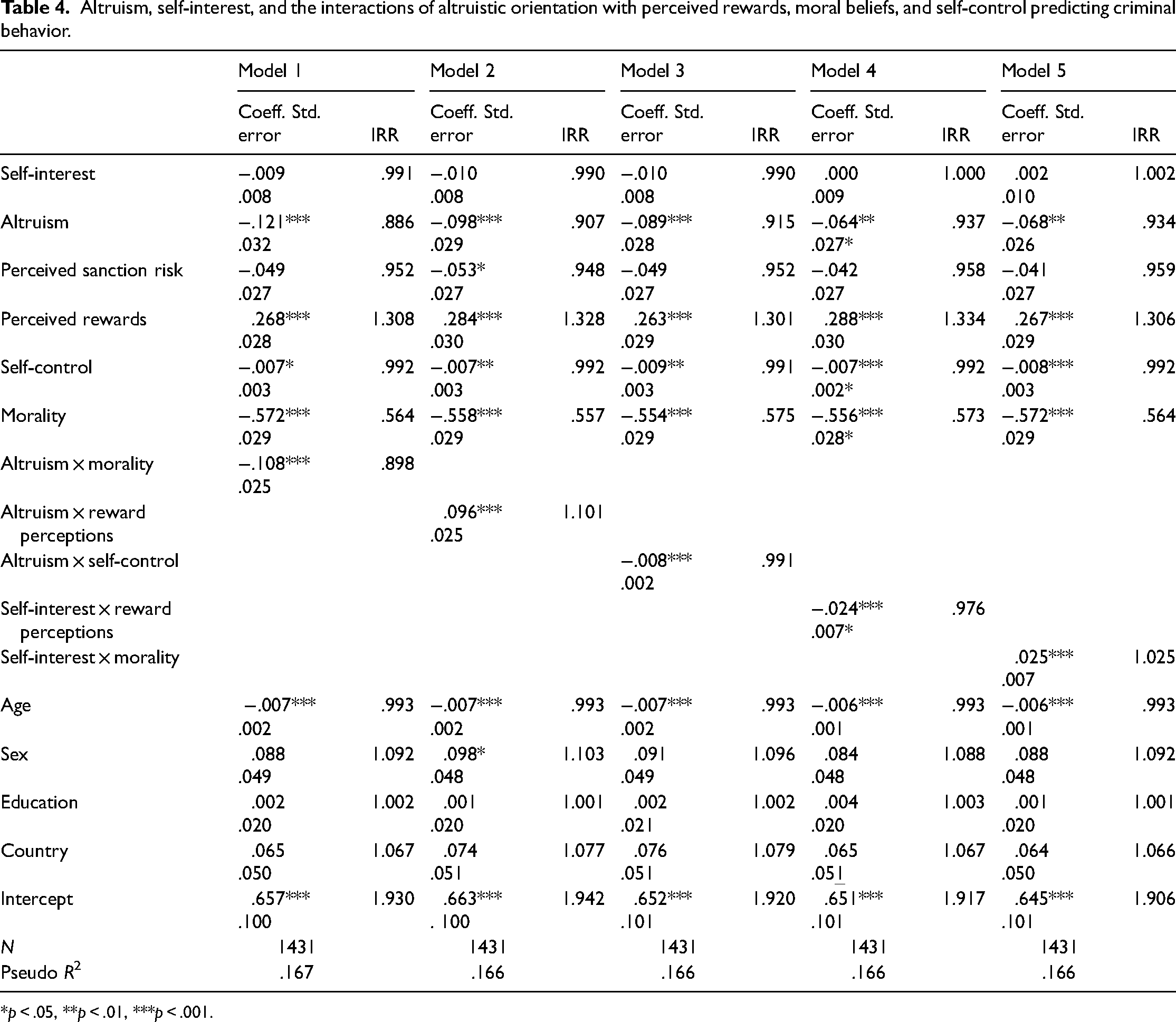
To begin, we use multivariate analyses and the KHB decomposition method (Karlson et al., 2011) to investigate the role of multiple mediators in the link between self-interest/altruism and criminal behavior (Tables 2 and 3). Consistent with bivariate analyses, Model 1 in Table 2 demonstrates significant independent effects of altruistic and self-interested inclinations on misbehavior, controlling for the effects of age, sex, education and country of residence. This is consistent with Hypothesis 1.
The results of negative binomial regression estimating perceived sanction risks, rewards of crime, moral beliefs and self-control as potential mediators of the effects of self-interest and altruism on criminal behavior.
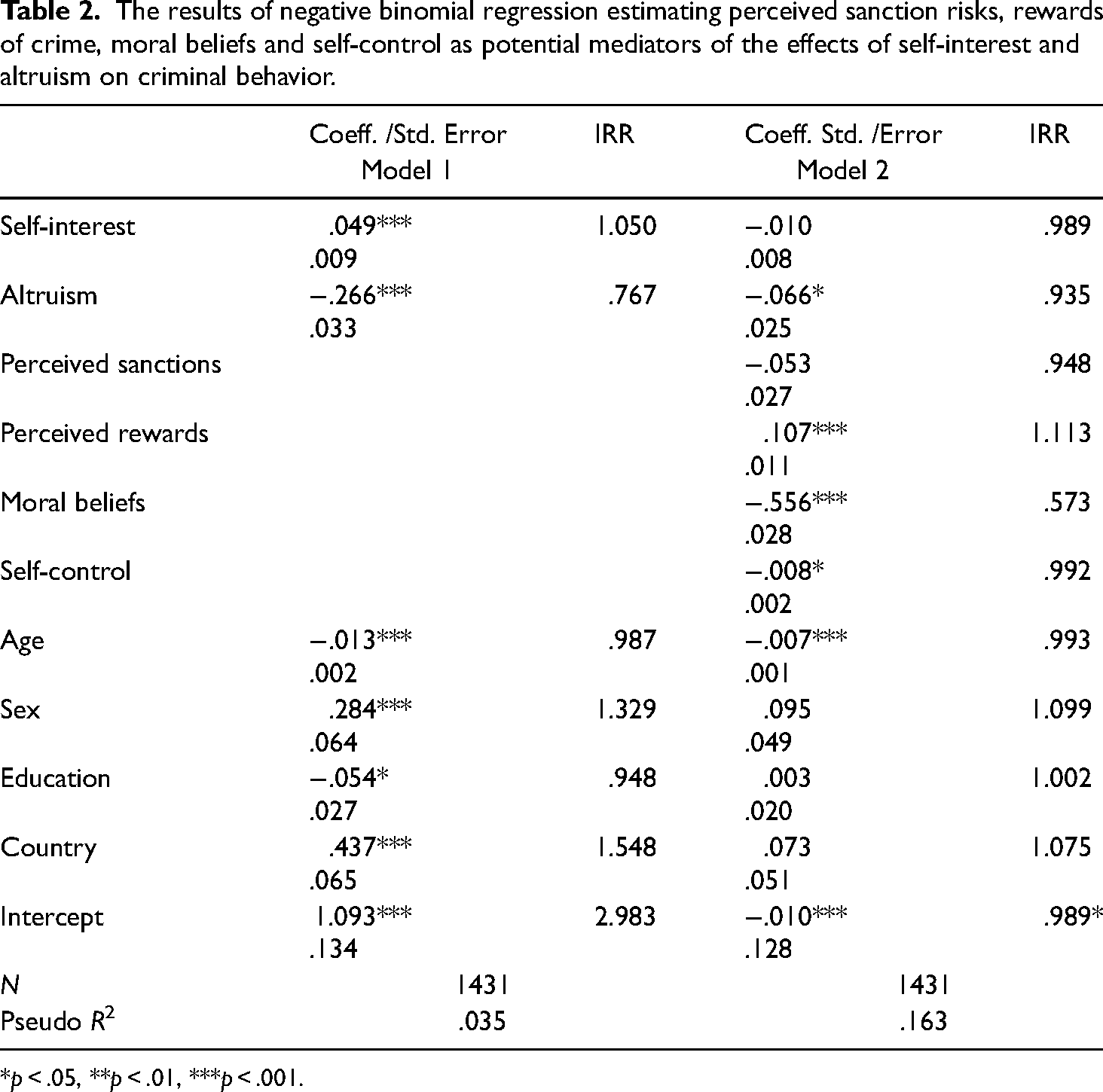
*p < .05, **p < .01, ***p < .001.
The results of the KHB analyses showing the contribution of perceived rewards of crime, sanction risks, morality, and self-control as mediators of the altruism/crime and self-interest/crime relationships.
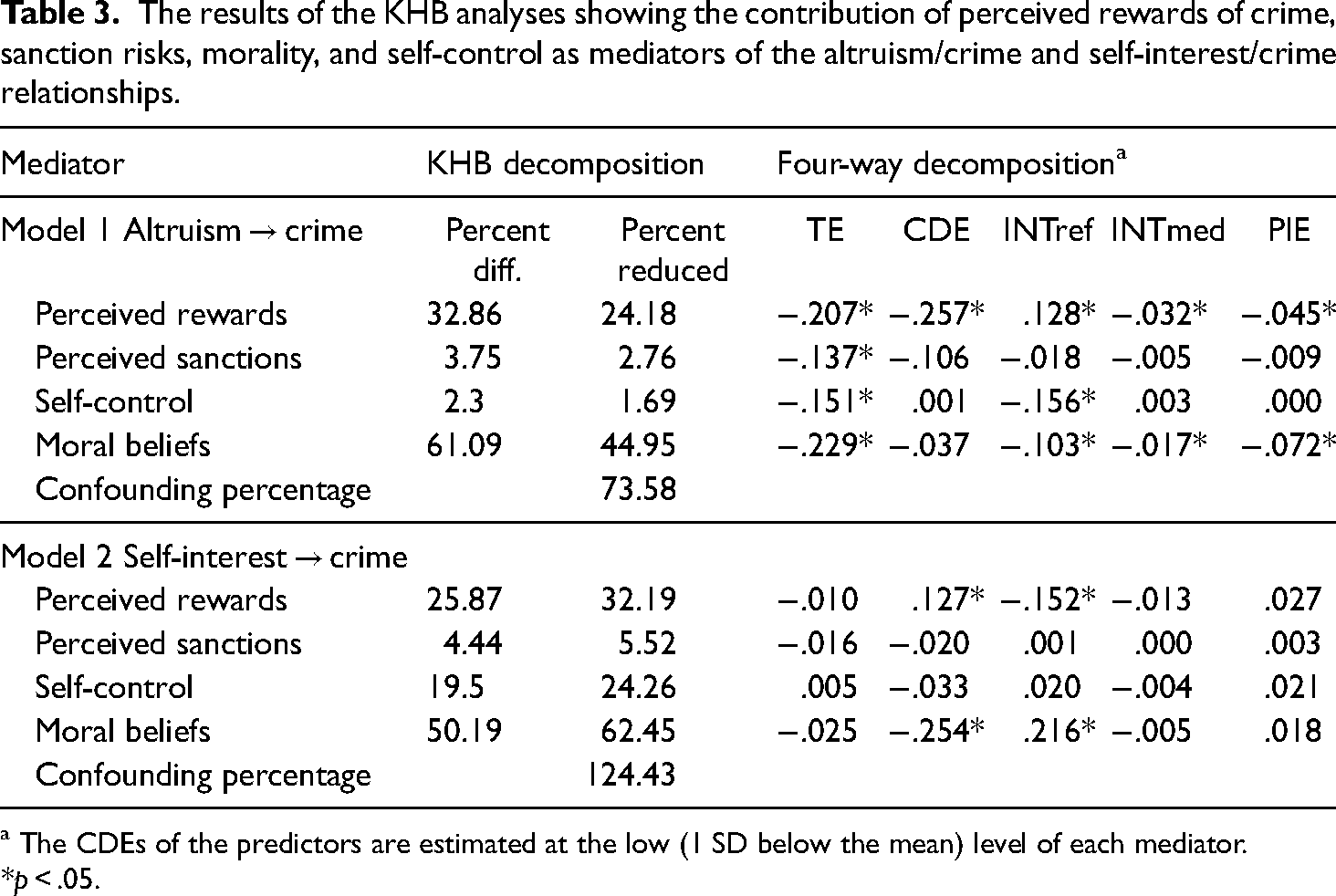
a The CDEs of the predictors are estimated at the low (1 SD below the mean) level of each mediator.
*p < .05.
Model 2 introduces the effects of potential mediators. We hypothesized (Hypothesis 2) that the effect of self-interest on offending would be mediated by morality, rational considerations and self-control. Comparing Models 1 and 2, we see that the instigating effect of self-interest on criminal behavior (IRR = 1.050) is reduced to non-significance after mediators are introduced. At a first glance, this points to significant mediation, which appears to be full rather than partial (Hypothesis 2).
Hypothesis 3 proposed that morality, self-control, and rational choice elements would mediate the link between altruistic inclinations and offending. Model 2 indicates that the inhibiting effect of altruism remains statistically significant, albeit somewhat weaker (IRR = −.066), even after controlling for the effects of perceived risks and rewards of crime, moral beliefs and self-control. Importantly, except for perceived sanction risks, all theoretical mediators appear to exert statistically significant effects on offending. Of note is a strong effect of perceived rewards of crime on criminal behavior (IRR = 1.303) relative to other variables of interest in the model.
Returning to mediation Hypotheses 2 and 3, Table 3 presents results from the decomposition of total effects into direct and indirect effects using the KHB method (Karlson et al., 2011). Model 1 suggests that the relationship between altruism and crime is partially explained by moral beliefs (61.09%), perceptions of crime rewards (32.86%), and both perceptions of sanction risks (3.75%) and self-control (2.3%). However, the confounding percentage of 73.68 indicates that the combined set of predictors fails to fully mediate the effect of altruism on offending. Model 2, by contrast, shows self-interest to be fully explained by individual morality (50.19%), perceptions of crime rewards (25.87%), self-control (19.5%) and perceptions of sanction risks (4.44%). The effects of the mediators dominate the model, trumping and reversing the direction of the effect of self-interest, which is confirmed by the confounding percentage of 124.43. These findings appear to provide further support for Hypotheses 2 and 3. We return these hypotheses later using a four-way decomposition method for simultaneously evaluating mediating and moderating effects (Brauer, 2023; VanderWeele, 2014).
Moderation analyses
Table 4 focuses on potential moderating influences of moral beliefs, perceived rewards of crime and self-control on the association between crime and both altruism and self-interest. First, in Model 1 there is a statistically significant negative interaction between altruism and morality (b = −.108). Consistent with Hypothesis 5, visualization of conditional marginal effects in Figure 1 shows that the crime-preventive effect of altruism on crime is statistically significant and strongest (−.229) among those with higher moral beliefs (1 SD above the mean) and is reduced to −.013 (not statistically significant) among those with weaker moral beliefs (1 SD below the mean).
Altruism, self-interest, and the interactions of altruistic orientation with perceived rewards, moral beliefs, and self-control predicting criminal behavior.
*p < .05, **p < .01, ***p < .001.
Next, Model 2 reveals a significant positive interaction between altruism and perceived crime rewards (b = .096). As illustrated in Figure 2, the crime-reducing effect of altruism is statistically significant and stronger among those with lower levels of perceived crime benefits (−.194 at 1 SD below the mean) and appears virtually absent for those with the highest levels of perceived crime benefits (−.002 and non-significant). These findings also support Hypothesis 5.
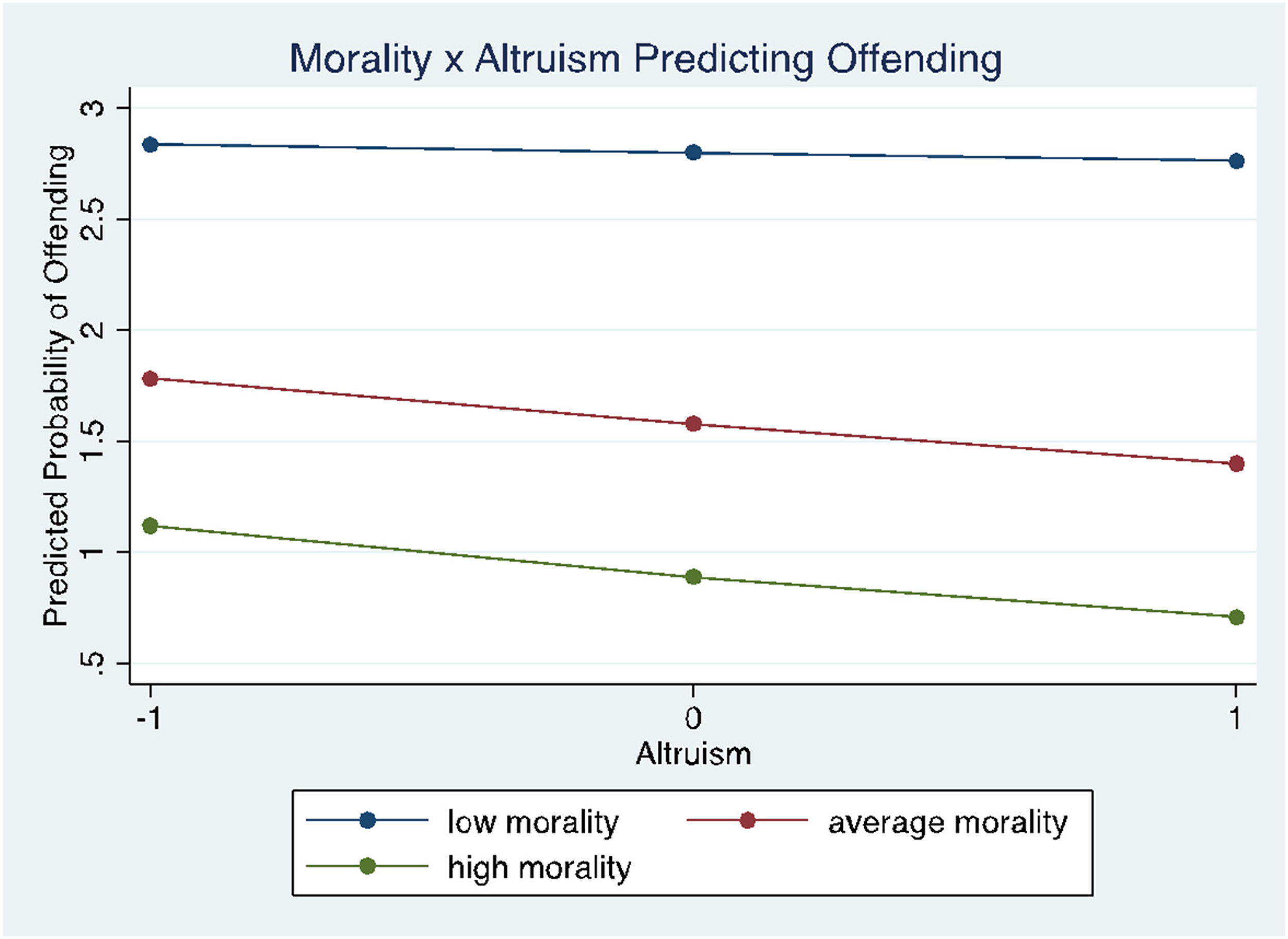
The conditioning effect of morality on the association between altruistic orientation and criminal behavior.
As shown in Model 3, the interaction between altruism and self-control (b = −.008) is statistically significant and negative. In further support of Hypothesis 5, the crime-preventive effect of altruism is statistically significant and strongest among those with higher levels of self-control (−.178 at 1 SD above the mean) and does not differ significantly from zero for those with lower (1 SD below) levels of self-control (Figure 3).
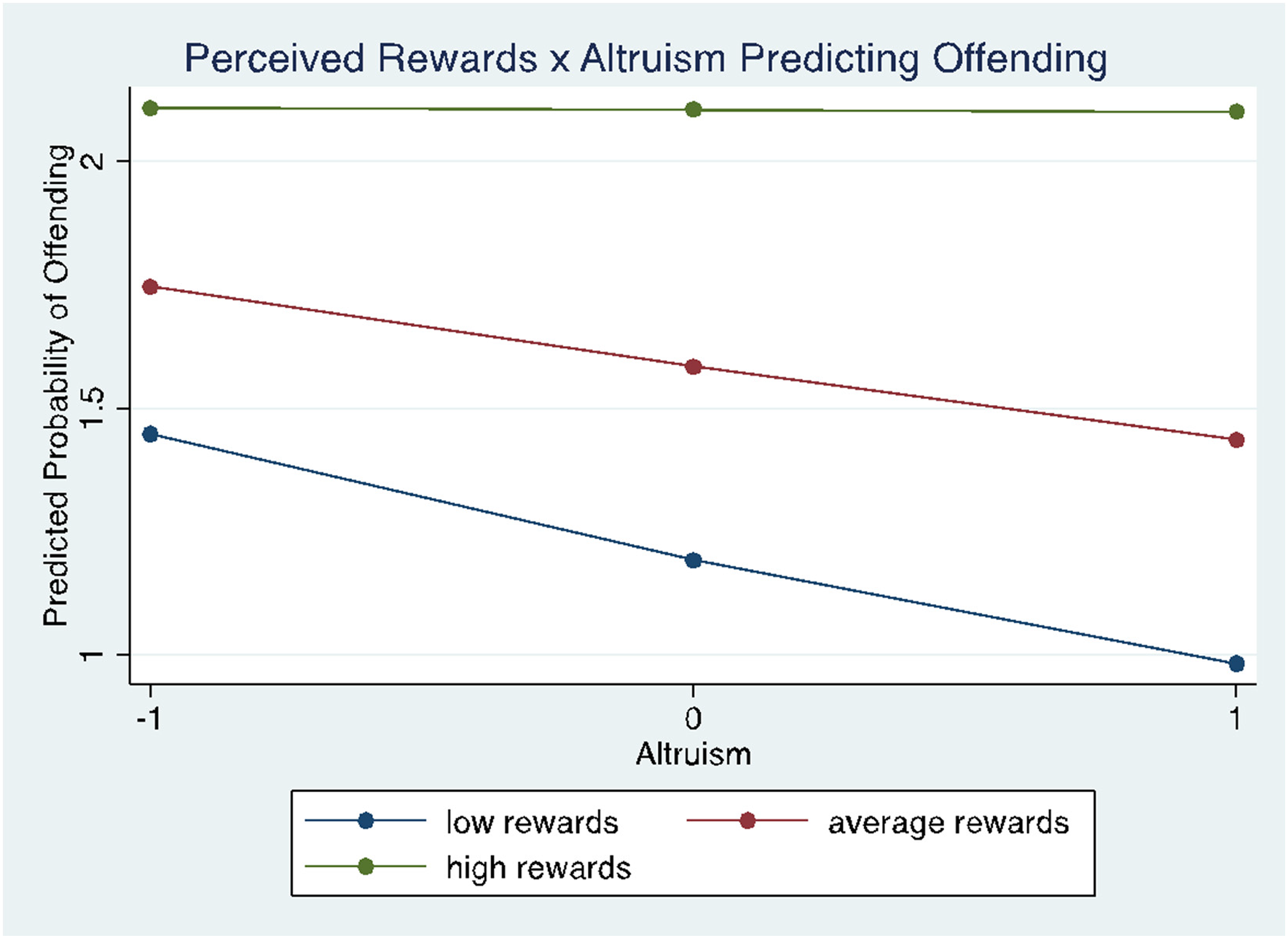
The conditioning effect of perceived rewards of crime on the relationship between altruistic orientation and criminal behavior.
Finally, in Models 4 and 5 only two of the four potential moderator variables appear to interact with self-interest, perceived rewards (b = −.024) and moral beliefs (b = .025). In both cases, the direction of estimated marginal conditional effects contradicts expectations, with self-interest having no significant positive effect at low levels of perceived crime rewards/high level of morality and small but significant negative effects at high levels of perceived crime rewards and low levels of morality. In sum, these findings provide no support for Hypothesis 4.
Four-way decomposition mediation/moderation analyses
Finally, we conducted a four-way decomposition procedure to estimate mediation and interaction effects simultaneously (Brauer, 2023; Discacciati et al., 2018; VanderWeele, 2014). As shown in Table 3, findings from these analyses confirm the pattern of results obtained from separate mediation and moderation analyses, as well as uncover a more complex picture of relationships between predictors and mediators/moderators. In particular, the ‘pure’ interaction effect between altruism and perceived rewards of crime is much larger (.128) than the effects that are due to mediation only (−.045) or mediated interaction (−.032). Concerning altruism and morality, the findings show comparable effects due only to interaction (.103) or only to mediation (−.072), whereas the mediated interaction effect is very small (−.017). Furthermore, the results confirm that altruism and self-control, self-interest and perceived rewards, and self-interest and moral beliefs operate indirectly mostly through ‘pure’ interaction effects (−.156, −.152, and .216, respectively). Finally, as before, altruism and perceived sanctions, self-interest and perceived sanctions, and self-interest and self-control do not play a meaningful role in any mediation or moderation combination (Figure 4).
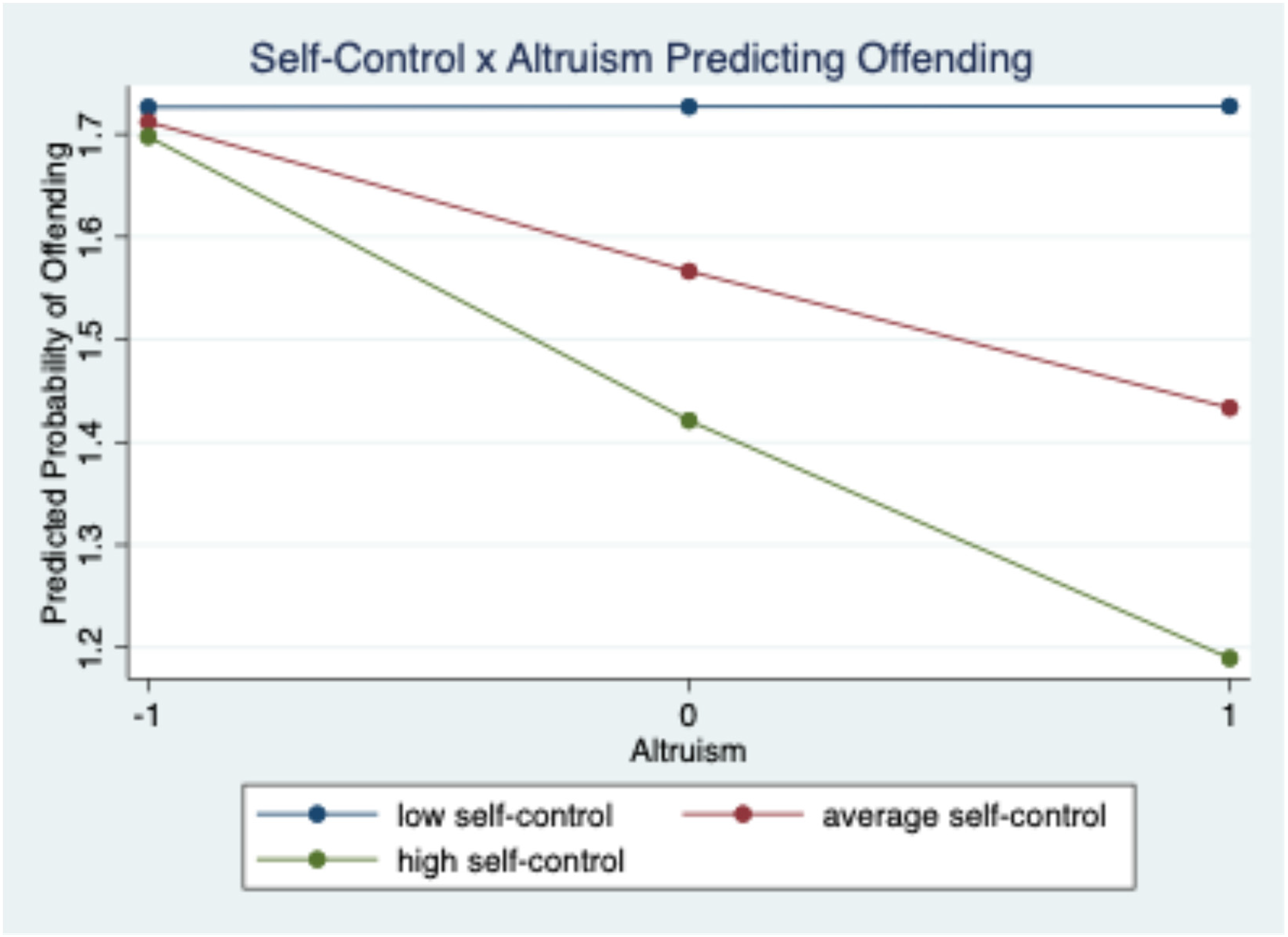
The conditioning effect of self-control on the relationship between altruistic orientation and criminal behavior.
Sensitivity analyses
To verify the robustness of results, we conducted a series of sensitivity analyses. First, we re-estimated all models using OLS regression. The findings from these analyses were identical to the main results. We also conducted country-specific analyses and found no substantive differences. Finally, accounting for possible differences in findings across crime types, we evaluated results for violent behavior and property crime independently and found similar patterns of mediating and moderating effects.
Discussion
In this study, we sought to understand the nature of altruistic tendencies and their relationship with criminal behavior by considering altruism alongside self-interest. As part of this goal, we assessed the mediating and moderating effects of self-control, moral beliefs and rational choice considerations (perceptions of the rewards and risks of crime). To the best of our knowledge, this is the first study to comprehensively examine and disentangle the direct and indirect influences of altruism and self-interest on criminal behavior.
Using survey data from residents of Nizhni Novgorod, Russia, and Lviv, Ukraine, we found evidence of an independent effect of altruistic tendencies on projected crime net of self-interest. Also notable was the presence of a significant but weak negative correlation between altruistic orientation and self-interest. Together, these results support Agnew's (2014) claim that individuals are both self-interested and socially concerned, and they contradict assumptions equating self-interest with a lack of altruistic orientation (e.g., Groß et al., 2018).
The effect of altruism on crime was also partially explained by all three proposed mediators, particularly personal morality. A partial overlap between altruistic proclivities and morality was expected because both likely are products of the same socialization process (e.g., Eisenberg, 2004). However, the fact that mediation is partial rather than complete provides evidence that altruism and morality are overlapping but distinct concepts and that altruistic tendencies may affect criminal involvement through avenues other than moral values. Perceived crime benefits emerged as another, albeit weaker, mediator of the relationship between altruism and crime. The perception of fewer crime benefits by those with altruistic orientation confirms that these individuals may not necessarily be ‘acute conformists’ (Pogarsky, 2002) for whom crime falls into the non-market area (Paternoster and Simpson, 1996). Instead, these individuals may discount incentives associated with crime to the point of irrelevance, possibly because their altruistic orientation allows them to see more clearly the harmful effects of crime. Importantly, however, the cost part of the rational choice calculus appears to play no mediating role in this relationship.
Supporting our hypotheses, results provide evidence of the conditioning role of moral beliefs, self-control and rational considerations in the relationship between altruism and criminal involvement. Specifically, we found the risk of criminal involvement among individuals with altruistic tendencies to be significantly reduced at higher levels of morality, higher levels of self-control, and lower levels of perceived crime rewards. Thus, altruistic persons with stronger moral beliefs and self-control ability, as well as those who do not perceive crime as particularly rewarding, appear to benefit from multiple layers of protection against crime. However, altruistic orientation fails to reduce the risk of criminal involvement at lower levels of morality and self-control and among individuals who see crime as particularly attractive. Therefore, as expected, altruism appears to protect against crime, but its effects may be overshadowed by particularly strong criminal predispositions.
Of course, as previously discussed, it is possible that individuals residing in Russian and Ukrainian societies are somewhat more self-interested than their counterparts in Western nations, even in their most altruistic stance. This may explain why we observed a tendency among altruistically inclined individuals to rely on rational choice considerations and why the crime-preventive effects of altruism were not evident among those who perceived crime to have especially appealing benefits. However, despite this possibility, one of the most robust and promising findings of our study is that the preventive effect of altruistic orientation on crime persisted after controlling for the effect of self-interest on criminal behavior. Thus, even in possibly less altruistically inclined societies, the favorable effect of altruism on individual behavior is likely to be evident. This highlights the need for future research to investigate altruism as another important and potentially universal predictor of crime.
Although this study makes an important contribution to the literature investigating rational choice decision-making process, it is not without limitations. First, as is the case with all self-reported crime survey data, our data are vulnerable to possible telescoping, exaggeration, and/or misreporting of information. However, we employed various verification methods to help increase the accuracy of our data. Second, although we used a projected rather than past crime measure and confirmed our findings using past crime as the dependent variable, our research design ultimately is cross-sectional. Research with longitudinal data is needed to confirm the proper causal ordering of variables, especially those involved in mediating relationships. Finally, due to the narrow scope of the included items, our measures of self-interest and altruism may be weaker in external validity and narrowly tailored to explain specific types of behaviors in specific situations. Therefore, more research based on an expanded measure of altruistic tendencies is necessary to ascertain its relationship with criminal behavior.
Despite limitations, our study makes an important contribution to the literature by identifying altruistic orientation as a significant predictor of crime, independent of self-interest. Altruism appears to decrease the likelihood of criminal involvement by strengthening moral beliefs and diminishing the perceived benefits of crime. Furthermore, we found evidence of altruism protecting against criminal involvement among individuals who hold stronger moral beliefs, have higher self-control and perceive fewer rewards associated with crime. Therefore, altruistic and selfish orientations both need to be considered in holistic, integrated accounts of decision-making and criminal involvement.
Our results also have significant policy and practice implications. Although our study does not investigate the origins of altruistic tendencies, it seems reasonable to assume these tendencies are at least partly learned early in life. Emphasizing educational programs that foster the development of altruistic, unselfish tendencies thus could be beneficial. Parenting support programs might also highlight the advantages of rewarding altruistic, socially concerned behaviors in young children. Such approaches likely would foster greater social concern and reduce self-interested behaviors in children and adults worldwide.
Footnotes
Funding
The author(s) received no financial support for the research, authorship, and/or publication of this article.

Notes
Appendix A. Items used in the study
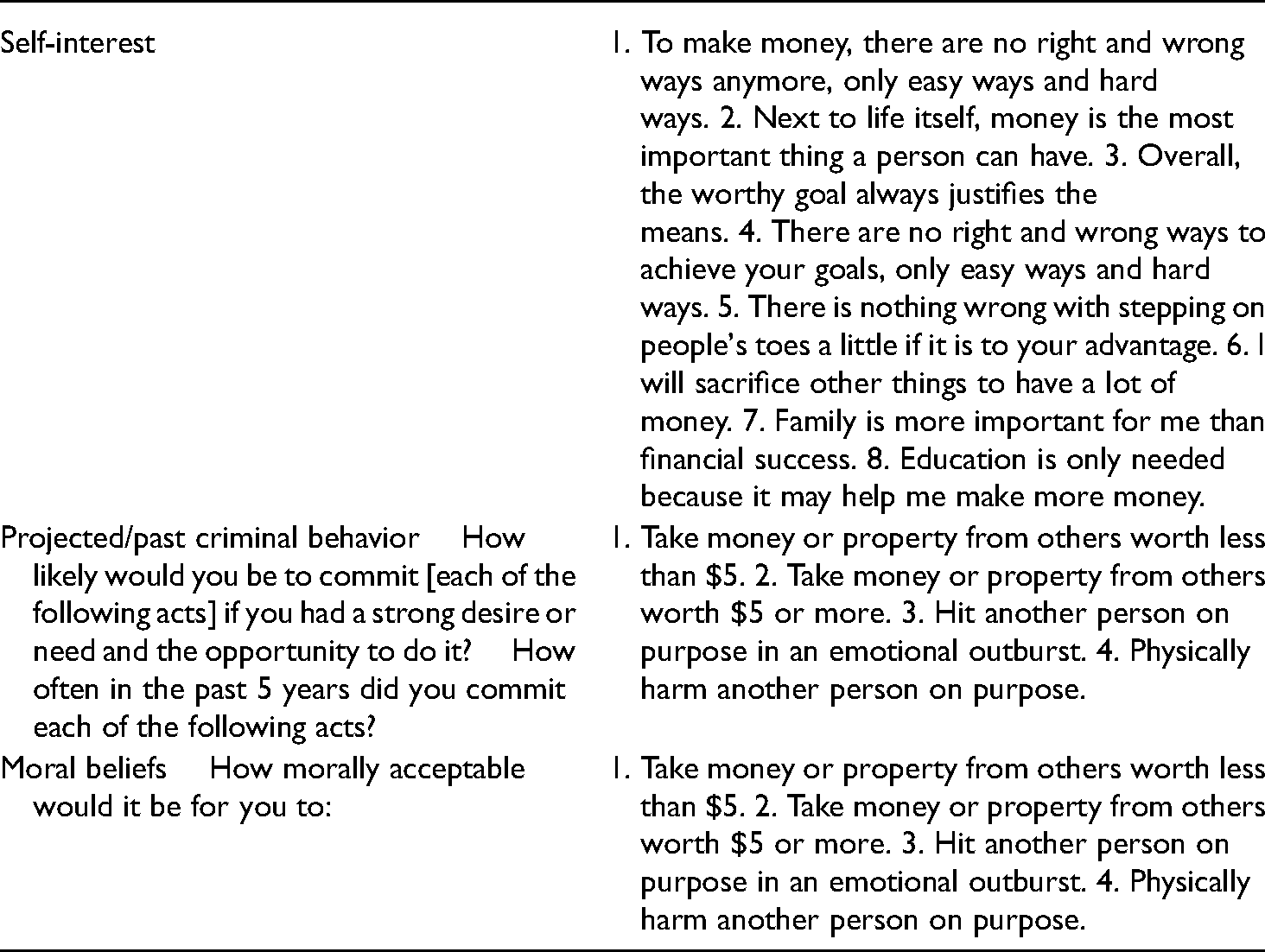
| Self-interest | 1. To make money, there are no right and wrong ways anymore, only easy ways and hard ways. 2. Next to life itself, money is the most important thing a person can have. 3. Overall, the worthy goal always justifies the means. 4. There are no right and wrong ways to achieve your goals, only easy ways and hard ways. 5. There is nothing wrong with stepping on people's toes a little if it is to your advantage. 6. I will sacrifice other things to have a lot of money. 7. Family is more important for me than financial success. 8. Education is only needed because it may help me make more money. |
| Projected/past criminal behavior How likely would you be to commit [each of the following acts] if you had a strong desire or need and the opportunity to do it? How often in the past 5 years did you commit each of the following acts? | 1. Take money or property from others worth less than $5. 2. Take money or property from others worth $5 or more. 3. Hit another person on purpose in an emotional outburst. 4. Physically harm another person on purpose. |
| Moral beliefs How morally acceptable would it be for you to: | 1. Take money or property from others worth less than $5. 2. Take money or property from others worth $5 or more. 3. Hit another person on purpose in an emotional outburst. 4. Physically harm another person on purpose. |