



Abstract
Research on violence against women (VAW) attitudes among adolescent migrant communities is limited. This study examines VAW attitudes in second-generation refugee and migrant adolescents compared to native adolescents in Zurich, Switzerland. Participants completed surveys at ages 15 and 17 as part of a longitudinal study. The research explores differences in VAW attitudes between groups and identifies factors associated with higher support for VAW. Findings show low overall support for VAW across all groups, with second-generation refugee adolescents significantly more likely to support VAW than native adolescents. However, regression analyses controlling for gender, parental education and maternal gender inequality index revealed no direct relationship between migration background and VAW attitudes without interaction terms. Significant interactions were found between refugee background and moral neutralisation of aggression at ages 15 and 17 and with experiencing corporal punishment at age 15. Higher VAW attitudes among second-generation refugees are linked to increased moral neutralisation of aggression and experience of corporal punishment. Interestingly, those with average levels of these factors demonstrate lower VAW attitudes compared to both second-generation migrants and natives, indicating successful assimilation. Overall, while VAW attitudes are generally low among second-generation refugees, targeted interventions addressing moral neutralisation of aggression could mitigate residual higher support during this developmental phase.
Introduction
Understanding the distinction between general attitudes towards violence and attitudes specifically towards violence against women (VAW) is crucial for addressing and mitigating such behaviours. General attitudes towards violence encompass societal views on the acceptability of using physical force to resolve conflicts or assert control, influenced by factors such as cultural norms, media portrayals of violence and personal experiences (Anderson and Bushman, 2002). Societies with a history of conflict or high crime rates might normalise certain forms of violence, making them more acceptable or even glorified in certain contexts (Felson, 1996). Comparatively, attitudes towards VAW, including domestic violence, sexual assault and other forms of gender-based violence, are shaped by gender norms, power dynamics and systemic inequalities (Heise, 1998). These attitudes are often rooted in patriarchal structures that view women as subordinate to men, thereby justifying or minimising the harm of using violence against them as a means of control or punishment (Dobash and Dobash, 1981).
Refugee children are those who were forced to leave their countries of origin and have been displaced to a new host country as a result of war or persecution, with or without parents/an adult family member (United Nations High Commissioner for Refugees, 2022). Migrant children, on the other hand, have not been forcibly displaced from their home countries and are not affected by wars and conflicts. Moreover, they often comprise a group of children who migrate with parents or adult family members (Liefaard and Sloth-Nielsen, 2016; Onukogu, 2022). Research on VAW attitudes within migrant and refugee communities is scarce (El-Abani et al., 2020), and that of adolescents is even more limited.
Parallels can, however, be drawn from research conducted in societies with prominent patriarchal institutions and cultural norms. For example, in a study exploring the prevalence of attitudes in support of honour killings in Jordan, 40% of the boys and 20% of the girls in the sample justified the killing of a sister, daughter or wife if she has dishonoured her family (Eisner and Ghuneim, 2013). Similarly, data from the same sample found that the rates of acceptance of wife beating ranged from 6.1% ('sometimes it is okay for a man to beat his wife’) to 50.5% (‘an unfaithful wife deserves to be beaten’) (Schuster et al., 2020). Furthermore, prevalence of attitudes in support of wife beating was found to be high in data from boys in Bangladesh (42%, N = 275), India (51%, N = 13,078) and Nepal (28%, N = 939) (Dalal et al., 2012).
In addition to coming from more ‘traditional’, non-Western cultures, people migrating as refugees to the West have often been exposed to war and are potentially suffering trauma that is long-lasting (Sangalang and Vang, 2017). Accordingly, direct or indirect exposure to war trauma among children and adolescents can have social and psychological repercussions that continue many years after the exposure (Attanayake et al., 2009; Gadermann et al., 2022; Sangalang and Vang, 2017) and can be intergenerationally transmitted (Sangalang and Vang, 2017).
The current study, to the best of the authors’ knowledge, is the first to explore attitudes towards VAW among second-generation refugee, migrant and native adolescents. Adolescence is an important period in shaping attitudes and behaviour, and studies on attitudes towards VAW among adolescents are limited (El-Abani et al., 2020). Those among immigrant and refugee adolescents are even scarcer. To address this gap, this paper aims to explore a combined set of predictors of attitudes towards VAW derived from three theoretical perspectives (patriarchal ideologies, social cognition and social learning) over 2 years, among a sample of second-generation refugee, second-generation migrant and Swiss native adolescents living in Zurich, Switzerland. Within an integrative theoretical framework, the aim of the present study was to explore the roles of violence-legitimising norms of masculinity, moral neutralisation of aggression and experience of corporal punishment on attitudes towards VAW, while controlling for relevant socio-demographic variables, namely, gender, maternal gender inequality index, parental education level, socio-economic status and migration background.
Understanding how second-generation refugee and migrant adolescents perceive and justify VAW provides valuable insights into their assimilation and adjustment processes. By identifying whether these groups hold different attitudes compared to native Swiss individuals, the research sheds light on how cultural values and experiences from their parents’ backgrounds influence their integration into Swiss society.
Moreover, by identifying the specific factors and interactions that influence VAW attitudes, this research can inform targeted interventions and policies aimed at promoting gender equality and preventing violence. Understanding the role of migration background and associated factors in shaping these attitudes is essential for developing culturally sensitive and effective programmes to support the integration of migrant and refugee communities.
Theoretical framework
In selecting the theoretical frameworks for this study on attitudes towards VAW among second-generation refugee, second-generation migrant and native adolescents, a comprehensive and multidimensional approach was paramount. The integration of patriarchal ideologies, social cognition and social learning theories is not arbitrary but rather a deliberate choice based on their ability to capture the structural, cognitive and behavioural dimensions influencing these attitudes.
Patriarchal ideologies provide a critical understanding of the cultural and societal foundations that perpetuate gender inequalities and justify violence (Hunnicutt, 2009; Walby, 1990). This perspective is essential for exploring how deeply ingrained beliefs and power dynamics shape attitudes towards gender and violence, particularly in patriarchal societies where traditional gender roles are upheld (Connell, 1987).
Social cognition theory delves into the cognitive processes by which individuals rationalise and justify aggressive behaviours, thus minimising the perceived moral culpability (Bandura, 1999). This theory was chosen over other cognitive theories because it specifically addresses mechanisms such as moral disengagement and justification of harmful conduct, which are critical for understanding how adolescents might rationalise VAW (Sykes and Matza, 1957).
Social learning theory complements these perspectives by emphasising the role of social environments and interactions in the behavioural acquisition and reinforcement of norms related to gender and violence (Bandura, 1977). This theory was selected instead of other behavioural theories due to its comprehensive consideration of observational learning and the influence of significant others, which is crucial for understanding how attitudes towards violence are modelled and perpetuated within social contexts (Akers, 1998).
These theories were selected over others, such as feminist standpoint theory or radical feminist theory, which, while valuable, focus primarily on structural inequalities without delving deeply into cognitive processes or social learning mechanisms. Similarly, cognitive dissonance theory and rational choice theory, although useful in explaining specific decision-making processes, do not provide the same depth of insight into the cultural and social learning aspects influencing attitudes towards VAW.
Together, patriarchal ideologies, social cognition and social learning theories offer a robust framework that captures the complex interplay of individual and societal factors. Patriarchal ideologies provide a macro-level analysis of systemic gender inequality, social cognition theory offers a micro-level examination of individual cognitive processes and social learning theory bridges these levels by illustrating how social environments influence individual behaviours.
This integrative approach provides a more holistic and nuanced analysis, essential for uncovering the multifaceted influences on adolescents’ attitudes, particularly in diverse cultural contexts where the intersection of various experiences and identities plays a significant role.
Patriarchal ideology
Patriarchal ideologies form a critical foundation for examining how deeply entrenched societal norms and structures uphold male dominance and justify VAW. This perspective highlights the systemic nature of gender inequality, which is rooted in historical and cultural practices that perpetuate male authority over women (Dobash and Dobash, 1981). Understanding these ideologies is essential for identifying the underlying factors that sustain attitudes supporting VAW.
Patriarchal societies are societies where certain cultural norms, beliefs and institutions support the notion of male supremacy and female subordination (Eisner and Ghuneim, 2013). In patriarchal societies where men are violent towards their partners, VAW is generally condoned and is even an inherent part of the culture (Schuster et al., 2020; Zaatut and Haj-Yahia, 2016). Accordingly, the concept of patriarchy can be used to explain attitudes in support of VAW, since it highlights aspects such as dominance, gender and power imbalance (Tonsing and Tonsing, 2019).
Migrant youths are more likely to hold norms of masculinity that condone VAW (Lahlah et al., 2013; Rabold and Baier, 2011). Moreover, masculinity norms and attitudes in support of VAW were also found to be associated with higher levels of aggression among immigrant and refugee youths (Lahlah et al., 2013; Rabold and Baier, 2011).
The association between culture of honour and violence has been extensively documented (Eisner and Ghuneim, 2013). More specific to this study, violence among immigrant youths has been linked to the culture of honour (Baier and Pfeiffer, 2008; Lahlah et al., 2013; Rabold and Baier, 2011). For example, a study by Lahlah et al. (2013) found serious violent offending to be more prevalent among Moroccan-Dutch boys than native Dutch boys. The driving force behind this was argued to be holding traditional and conservative gender role orientations. Once the gender role attitudes were controlled for, there was no difference in violence between Moroccan-Dutch and native Dutch boys (Lahlah et al., 2013).
Social cognition
Social cognition theory offers insight into how individuals process and internalise societal norms related to gender and violence. This perspective explains how cognitive processes, such as perception, memory and reasoning, influence attitudes and behaviours towards VAW.
Moral neutralisation is a type of social cognition that encompasses a set of beliefs of when it is justifiable to use violence in general, and it is grounded by three main theories: moral disengagement (Bandura et al., 1996), neutralisation theory (Sykes and Matza, 1957) and self-serving cognitive distortions (Barriga and Gibbs, 1996). These three concepts result in a person justifying violence against others based on, for example, the perception that the victim is to blame and is deserving of the aggression and that other individuals would behave in the same way (Ribeaud and Eisner, 2010a).
Moral neutralisation is a significant factor associated with adolescent aggression and attitudes in support of VAW (Eisner and Ghuneim, 2013; Haskuka et al., 2008; Schuster et al., 2020, 2021), and extensive research has considered the processes of moral disengagement among immigrant youths and their impact on externalising behaviour and aggression (Campaert et al., 2018; McEwen et al., 2022).
It appears that attitudes supporting VAW demonstrate a series of justifications of why and when it is acceptable for a man to be violent to or abusive to a woman. These attitudes may be part of a broader set of beliefs, norms and values that legitimise the use of violence and aggression against others in general.
Social learning theory
Social learning theory highlights the role of observational learning and imitation in the development of attitudes and behaviours. Social learning theory posits that people, especially children and adolescents, are active learners. They constantly interact with their proximal environment and learn how to act through social observation and mimicking (Bandura, 1973, 1977).
Sutherland (1939) and Akers (1998) have significantly influenced the development of social learning theory. Sutherland argued that criminal behaviour is acquired through interactions within intimate groups, where individuals adopt techniques, motives and attitudes favourable to crime. Akers expanded on this by integrating principles from behaviourism and social psychology, emphasising the roles of reinforcement, imitation and modelling in learning criminal behaviours. Both theorists highlight the importance of social interactions and environmental influences in shaping individuals’ behaviours, underscoring that learning occurs not just through direct experiences but also through observing and interacting with others in their social milieu.
In environments such as children's households and schools, their interactions with their family members, friends and teachers contribute to determining their attitudes and behaviours, and social learning theory suggests that violent acts and attitudes are learnt just like other forms of behaviour, through witnessing and/or experiencing violence in the household. This can then result in attitudes that support the idea that violence can help solve problems (Schuster et al., 2020).
Previous literature has found experience of corporal punishment to be a significant predictor of VAW attitudes (Alink et al., 2013; Korol et al., 2020; Regev et al., 2012; Svensson et al., 2012; Walsh et al., 2010; Zhu et al., 2017). Furthermore, social learning theory has often been employed in research among adolescents to explain their delinquent behaviour (Boxer et al., 2013; Chen and Zhong, 2013; Fandrem et al., 2009; Ribeaud and Eisner, 2010b; Solomontos-Kountouri and Strohmeier, 2021) and attitudes in support of VAW (Kulis et al., 2010; Schuster et al., 2020).
Overview
For the purposes of this study, three subgroups of adolescents were identified: (a) second-generation refugees, with at least one refugee parent; (b) second-generation migrants, with at least one parent being a voluntary non-war-related migrant; and (c) native Swiss, with two Swiss parents. The research aims to answer the following questions: (1) Are there differences in VAW attitudes among the migration groups? and (2) What factors are associated with higher levels of support of VAW attitudes? Accordingly, the following hypotheses were created based on prior research and theory and will be tested using correlations, ANOVAs and regression analyses:
H1: Second-generation refugee adolescents will exhibit significantly higher support for VAW attitudes compared to second-generation migrant and native Swiss adolescents. H2: Higher levels of moral neutralisation of aggression, experience of corporal punishment and adherence to violence-legitimising norms of masculinity will be positively associated with higher support for VAW attitudes across all groups (second-generation refugees, second-generation migrants and native Swiss). H3: Interactions between migration background and key factors will influence VAW attitudes as follows:
Among second-generation refugee adolescents, higher moral neutralisation of aggression will amplify support for VAW attitudes compared to second-generation migrants and native Swiss adolescents. Among second-generation refugee adolescents, experience of corporal punishment will amplify support for VAW attitudes compared to second-generation migrants and native Swiss adolescents.
Methodology
Participants
In the current study, data were used from the Zurich Project on the Social Development from Childhood to Adulthood (z-proso). In 2004, a total of N = 1675 first graders from 56 selected public schools in Zurich were invited to participate in the study with their parents. A stratified random sampling was applied to define the target sample with schools as the randomisation units and stratification by school size and socio-economic background.
In the present study, data from waves 6 (age 15 years, standard deviation [SD] = 0.37, completed in 2013) and 7 (age 17 years, SD = 0.38, completed in 2015) were examined. Participants completed paper-and-pencil questionnaires in their classrooms, which took approximately 60–90 minutes. In return for their participation, they received a financial reward of approximately 50 (wave 6) and 60 USD (wave 7).
The total sample consisted of 1230 adolescents. Second-generation refugees made up 16.5% (N = 203, 48.3% males) of the sample, second-generation migrants made up 40.6% (N = 499, 49.7% males) and native Swiss adolescents made up 42.9% (N = 528, 54.7% males) of the sample. In terms of countries/regions of parental origin, most of the refugee sample originated from Sri Lanka (N = 97, 45.3%), followed by Ex-Yugoslavian countries (N = 44, 21.8%), Somalia (N = 17, 8.4%), Turkey (N = 11, 5.4%) and the Middle East (N = 11, 5.4%). The remainder were from various regions with an N of <5% per country. Most adolescents with a migrant background originated from Western Europe (N = 318, 63.8%), followed by Southeast Asia (N = 40, 8%), Eastern Europe (N = 34, 6.8%) and North America (N = 31, 6.2%). Various other regions made up the remainder (<0.5% per country).
Measures
Gender, socio-economic status, gender inequality index and migration background
Participants were asked about their gender. Responses were coded in two options, 1 for males and 2 for females. In order to determine the participants’ socio-economic status, the International Socio-Economic Index of Parental Occupational Status (ISEI) was used. Parental occupation was first coded according to Elias and Birch (1994) and then transformed into the ISEI of occupational status scores ranging from 16 to 90 (Ganzeboom et al., 1992). Final ISEI scores (based on the parent with the highest score) were then standardised for further analysis. For gender inequality, the gender inequality index (GII) developed by the United Nations Development Programme (UNDP, n.d.) was utilised. This index combines indicators such as maternal mortality ratio, adolescent fertility rate, female political representation, female secondary and tertiary educational attainment and female labour market participation (see United Nations Development Programme [UNDP], 2013, Technical Note 3). Scores on the GII range from 0 to 1, with higher values indicating greater disparities between genders across these dimensions. This measure was chosen for its comprehensive reflection of women's challenges in health, education and employment, as well as societal attitudes towards gender roles. It serves as a valid proxy for assessing gender inequality in societies (see Else-Quest et al., 2010; Nivette et al., 2014). Our analysis involved averaging the GII across 2005–2014 for each country and standardising the results to a mean of 0 and an SD of 1. Finally, migration background was divided into three groups: second-generation refugee, second-generation migrant and native Swiss adolescents.
Parental education level
To measure parental education level, the highest level of education obtained by either the male or female primary caregiver was used. Responses ranged from 1 to 10, with 1 being ‘incomplete compulsory school’ to 10 ‘university, Swiss Federal Institute of Technology’. Mother's education level and father's education level were summed to a score of the parental educational level.
Corporal punishment
Data on adolescent experience of corporal punishment were based on self-reported measures. The corporal punishment scales for each wave were based on the Alabama Parenting Questionnaire (Shelton et al., 1996) and the Parenting Scale from the Kriminologisches Forschungsinstitut Niedersachsen (KFN), adapted by the z-proso Project Team. The corporal punishment subscale included four items, including ‘Your parents slap you’ and ‘Your parents spank you with their hand’. Answers were based on experience of corporal punishment in the 12 months prior to answering the questionnaire. Responses were measured on a 4-point Likert scale ranging from 1 = ‘never’ to 4 = ‘very often/always’. The measure of corporal punishment was reliable across the two measures (αage 15 = 0.74 and αage 17 = 0.75). A mean score of the responses was utilised to create the scale for the current analyses.
Moral neutralisation of aggression
To determine the degree to which participants justified aggressive behaviour, the moral neutralisation of aggression scale (Ribeaud and Eisner, 2010b; Ribeaud, 2012) was used. The scale covered the domains of (a) cognitive restructuration (e.g. ‘It is okay to bully others’); (b) distorting consequences (e.g. ‘Bullying is important to teach someone a lesson’); (c) blaming the victim (e.g. ‘Some kids deserve to be bullied’); (d) assuming the worst (e.g. ‘It is okay to taunt others, they taunt you too’); and (e) minimising agency (e.g. ‘It is okay to fight back when you are being attacked’). The scale consisted of 18 items in which responses were given on a 4-point Likert scale and ranged from 1 = ‘strongly disagree’ to 4 = ‘strongly agree’. Moral neutralisation of aggression was measured at ages 15 and 17 and was reliable (αage 15 = 0.90 and αage 17 = 0.91). A mean score of the responses was utilised to create the scale for the current analyses.
Violence-legitimising norms of masculinity
Masculinity norms were measured on a three-item scale based on Nisbett and Cohen's (1996) ‘Culture of Honour’. Items in the scale were (a) ‘A real man should be able to strike when he's insulted’; (b) ‘A real man protects his family’; and (c) ‘A real man must defend himself’. Responses were given on a 4-point Likert scale ranging from 1 = ‘fully untrue’ to 4 = ‘fully true’. Violence-legitimising norms of masculinity were measured at ages 15 and 17, and the scale was reliable (αage 15 = 0.73 and αage 17 = 0.76). A mean score of the responses was utilised to create the scale for the current analyses.
VAW attitudes
A three-item scale was used to measure attitudes in support of VAW. The scale was developed by the z-proso team and was based on Saunders et al.’s (1987) Inventory of Beliefs about Wife Beating (Schuster et al., 2020). The three items included in the scale were (a) ‘A man is allowed to beat his wife/female partner if she doesn’t do what he wants’; (b) ‘Women only have themselves to blame when they are beaten by their husband/male partner’; and (c) ‘If a woman insults her husband/male partner, he is allowed to beat her’. Responses were based on a 4-point Likert scale ranging from 1 = ‘fully untrue’ to 4 = ‘fully true’. The scale was reliable (αage 15 = 0.66 and αage 17 = 0.67). A mean score of the responses was utilised to create the scale for the current analyses.
The decision to carry out the study cross-sectionally at different ages was useful as the study intended to investigate if the same findings still held when the people were older, rather than to examine the change in attitudes. Looking at the amount of change over time and whether this varies by migration group could be a next step. Caution should be exercised when interpreting the term ‘predictor’, as its usage can vary among different disciplines and researchers. While in some contexts it may suggest a significant relationship between variables, implying predictive power, it does not inherently imply causation. It is crucial to consider that identifying predictors in statistical models or analyses does not establish causal relationships. As highlighted by Pearl (2009), causal inference requires rigorous methodologies such as randomised controlled trials or causal modelling frameworks. Therefore, while predictors may be indicative of associations, further investigation and consideration of alternative explanations are often necessary to establish causality.
Analytic plan
The amount of missing data in the key variables was 11% or less for the analyses at 15 years old and 17.7% for analyses at 17 years old. Using multiple imputations, the models for both ages were run, and the conclusions did not change. Accordingly, assuming a missing at random mechanism, the missing data were handled by listwise deletion. The analyses are cross-sectional, providing snapshots of the data at different points in time, and this paper will investigate whether the results vary at the two different time points.
To investigate differences in VAW attitudes among the migration groups, ANOVAs for VAW attitudes and related variables were conducted. Standard multiple regression analyses were then performed using the enter method in SPSS to examine the factors associated with VAW attitudes. Interaction terms were included to assess the moderating effects of migration background on key factors (moral neutralisation of aggression and experience of corporal punishment). Three regression models were conducted for each age group: the first model tested predictors of VAW attitudes without interactions; the second included the interaction between migration status and moral neutralisation; and the third incorporated the interaction between migration status and experience of corporal punishment. Although the hypotheses specify directional relationships, two-tailed hypothesis testing was used for all analyses. This decision was made to adopt a more conservative approach, ensuring that results remained robust regardless of the direction of the effect.
Results
Differences in VAW attitudes between second-generation refugee, second-generation migrant and native Swiss adolescents
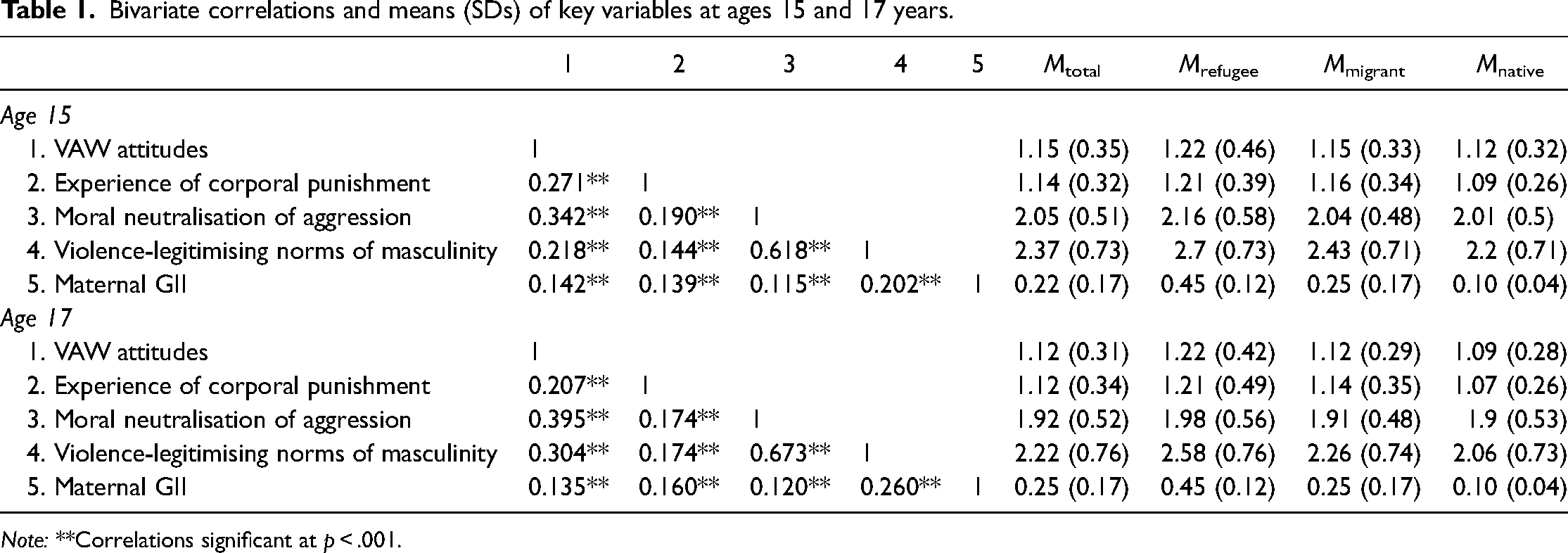
Prior to conducting the ANOVAs to determine differences in VAW attitudes among second-generation refugee, migrant and native Swiss adolescents, a series of Pearson correlations were performed between all the dependent variables at ages 15 and 17 years. Means and SDs of all key variables, as well as bivariate correlations, are depicted in Table 1.
Bivariate correlations and means (SDs) of key variables at ages 15 and 17 years.
Note: **Correlations significant at p < .001.
As shown in Table 1, at age 15, VAW attitudes had a positive, weak correlation with experience of corporal punishment (r(1114) = 0.27, p < .001). Moreover, attitudes towards VAW were also weakly correlated with violence-legitimising norms of masculinity (r(1106) = 0.22, p < .001) and maternal GII (r(1116) = 0.14, p < .001) and moderately correlated with moral neutralisation of aggression (r(1114) = 0.34, p < .001). Furthermore, the highest correlation found was between moral neutralisation of aggression and violence-legitimising norms of masculinity (r(1109) = 0.62, p < .001).
Correlations at age 17 showed that VAW had positive moderate correlations with moral neutralisation of aggression (r(1023) = 0.39, p < .001) and violence-legitimising norms of masculinity (r(1019) = 0.30, p < .001). Moreover, attitudes towards VAW were also weakly correlated with experience of corporal punishment (r(1008) = 0.21, p < .001) and maternal GII (r(1116) = 0.27, p < .001).
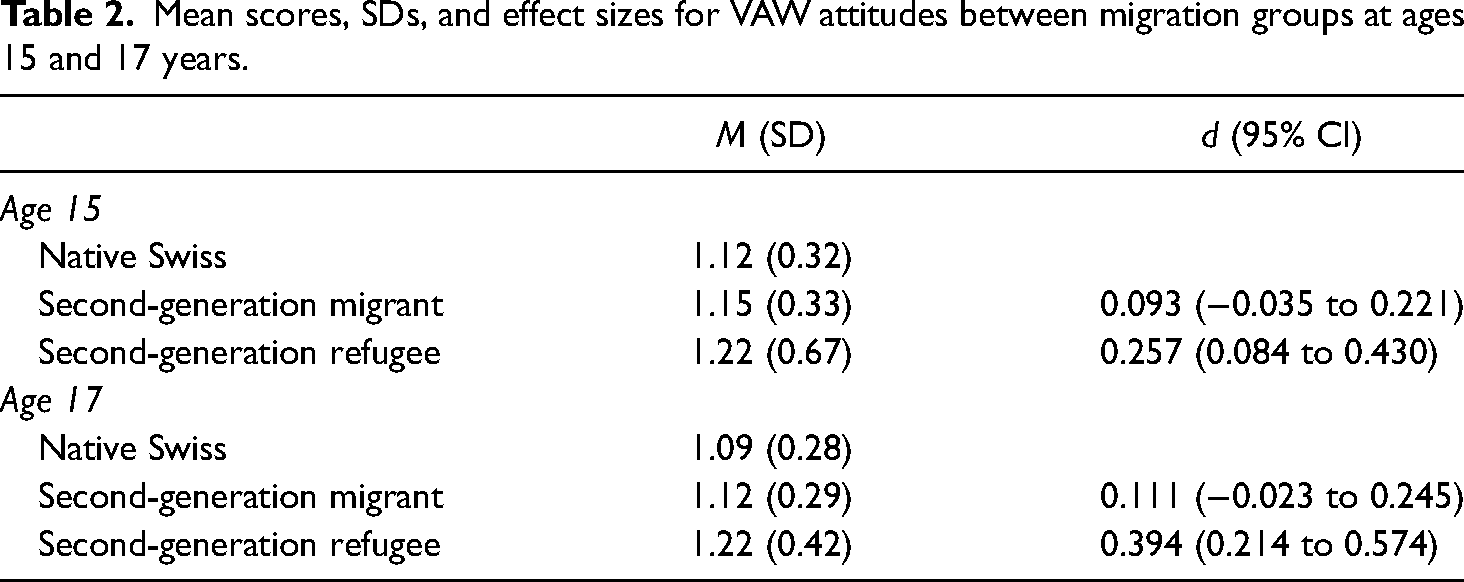
Mean scores of attitudes towards VAW were compared between second-generation refugee and second-generation migrant adolescents (with native Swiss migration background being the control group) at ages 15 and 17 years (Table 2). It was found that second-generation refugee adolescents scored slightly higher levels of VAW than their native counterparts, with a small effect size (d = 0.257 and d = 0.394 at ages 15 and 17, respectively). In order to test whether these differences are significant, an ANOVA was conducted next.
Mean scores, SDs, and effect sizes for VAW attitudes between migration groups at ages 15 and 17 years.
A series of one-way ANOVAs were then conducted with VAW attitudes, violence-legitimising norms of masculinity, experience of corporal punishment and moral neutralisation of aggression set as dependent variables and migration status set as the fixed factor at both ages 15 and 17 years. Table 3 shows the results of the ANOVAs with alternative Welch's F values where homogeneity of variance was not assumed.
One-way ANOVAs with VAW attitudes, experience of corporal punishment, moral neutralisation and violence-legitimising norms of masculinity as dependent variables and migration status as the independent variable at ages 15 and 17 years.
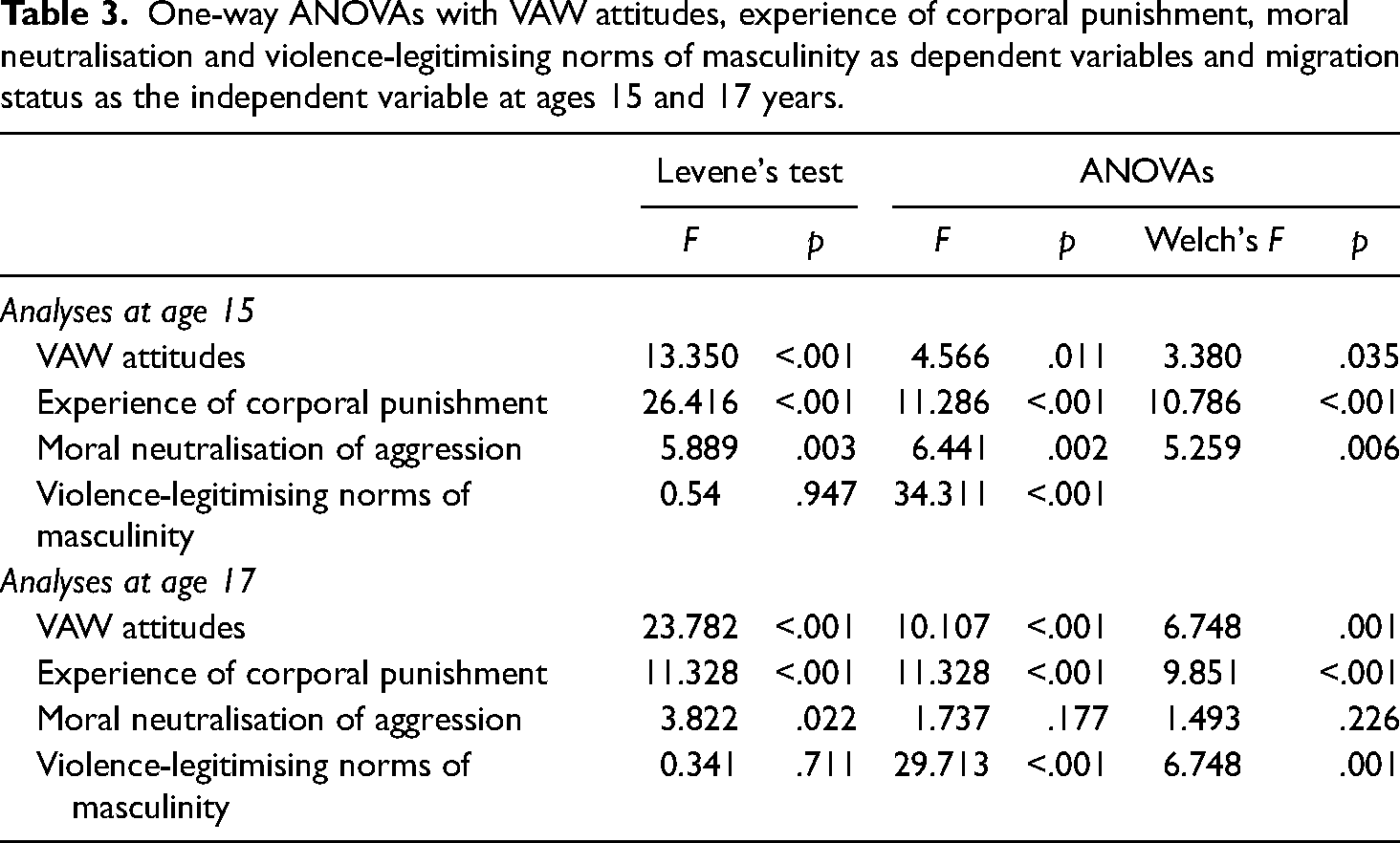
At age 15, all the ANOVAs were statistically significant: F(2, 1113) = 3.380, p = .035 for ‘Attitudes towards violence against women’; F(2, 1107) = 10.786, p < .001 for ‘Experience of corporal punishment’; F(2, 1116) = 5.259, p = .006 for ‘Moral neutralisation of aggression’; and F(2, 1108) = 34.311, p < .001 for ‘Violence-legitimising norms of masculinity’.
Pairwise comparisons showed that significant differences in the extent to which participants support VAW were present between refugees (M = 1.22) and natives (M = 1.12), but not migrants (M = 1.15). In terms of violence-legitimising norms of masculinity, significant mean differences were found between all three groups (Mrefugee = 2.7, Mmigrant = 2.43 and Mnative = 2.2). Furthermore, significant mean differences in experience of corporal punishment were only present between natives (M = 1.07) and refugees (M = 1.21) and natives and migrants (M = 1.14), with refugees experiencing the highest level of corporal punishment. Finally, refugees (M = 2.16) scored significantly higher on the moral neutralisation of aggression scale than migrants (M = 2.04) and natives (M = 2.01).
At age 17, the ANOVAs showed significant group differences for the variables ‘violence against women’ (F(2, 1022) = 6.748, p = .001), ‘experience of corporal punishment’ (F(2, 1003) = 10.598, p < .001) and ‘violence-legitimising norms of masculinity’ (F(2, 1020) = 29.713, p < .001). The variable ‘moral neutralisation of aggression’, however, showed no significant group differences (p = .226).
Post-hoc tests were then conducted following the significant ANOVAs to examine the individual main comparisons across all three groups. For VAW attitudes, mean differences between refugees and both migration groups were significant, with refugees holding a higher level of support (M = 1.22) than migrant (M = 1.12) and native (M = 1.09) adolescents. In terms of violence-legitimising norms of masculinity, significant mean differences were found between all three migration groups (Mrefugee = 2.57, Mmigrant = 2.25 and Mnative = 2.07). Furthermore, significant mean differences in experience of corporal punishment were only present between natives (M = 1.07) and refugees (M = 1.21) and natives and migrants (M = 1.14). Finally, no significant mean differences were found in the adolescents’ moral neutralisation of aggression levels (Mrefugee = 1.98, Mmigrant = 1.91 and Mnative = 1.90).
Predictors of VAW attitudes
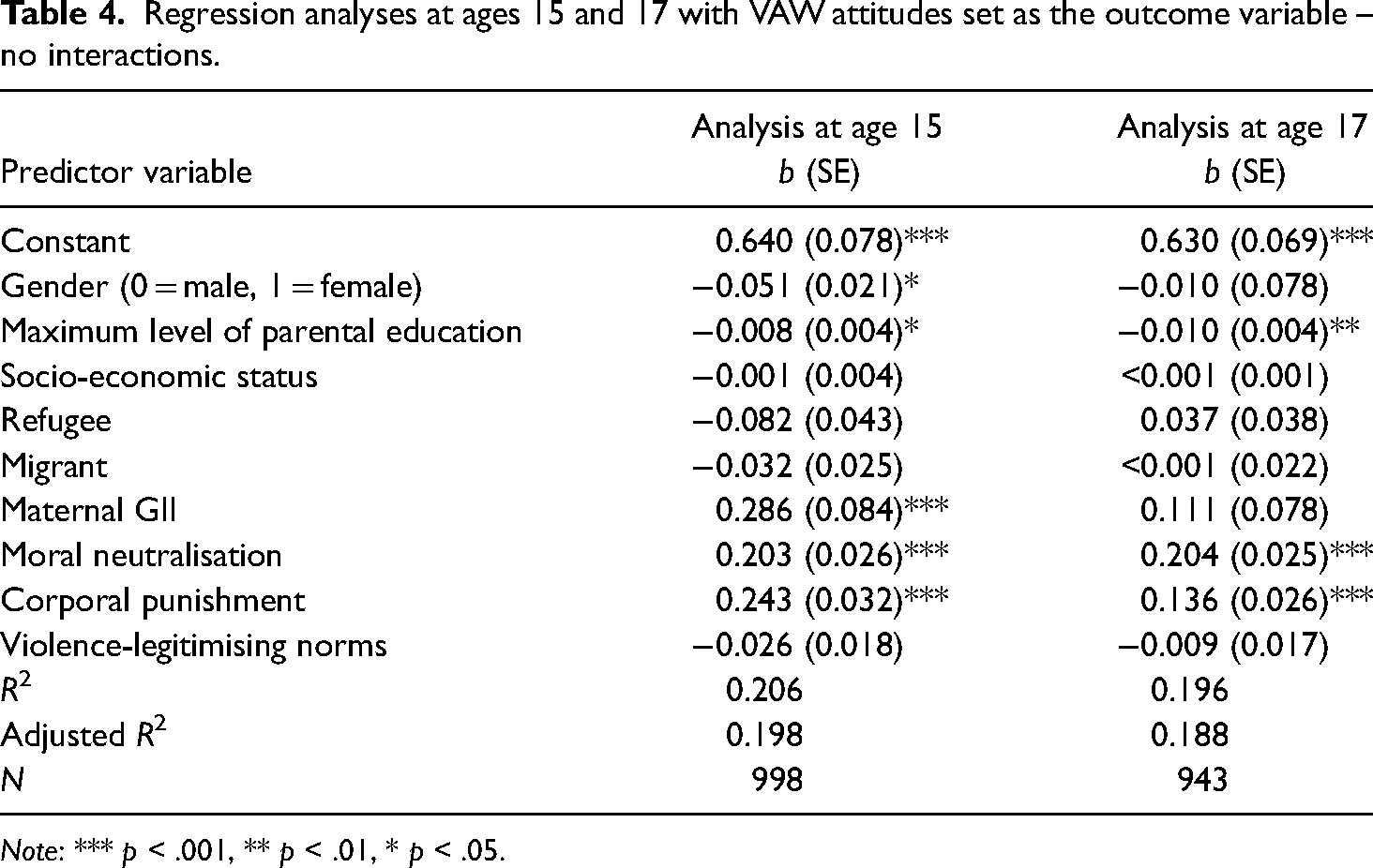
Table 4 shows the regression results for the whole sample without any interactions at ages 15 and 17 years. At age 15, the regression results showed that male gender (b = −0.051, p = .017), lower levels of parental education (b = −0.008, p = .049), a lower maternal GII (b = 0.286, p < .001) and higher levels of moral neutralisation of aggression (b = 0.203, p < .001) and experience of corporal punishment (b = 0.243, p < .001) were significant predictors of attitudes in support of VAW.
Regression analyses at ages 15 and 17 with VAW attitudes set as the outcome variable – no interactions.
Note: *** p < .001, ** p < .01, * p < .05.
At age 17, the regression results showed that lower levels of parental education (b = −0.010, p = .006) and higher levels of moral neutralisation of aggression (b = 0.204, p < .001) and experience of corporal punishment (b = 0.136, p < .001) were significant predictors of attitudes in support of VAW.
Interaction between moral neutralisation and migration status
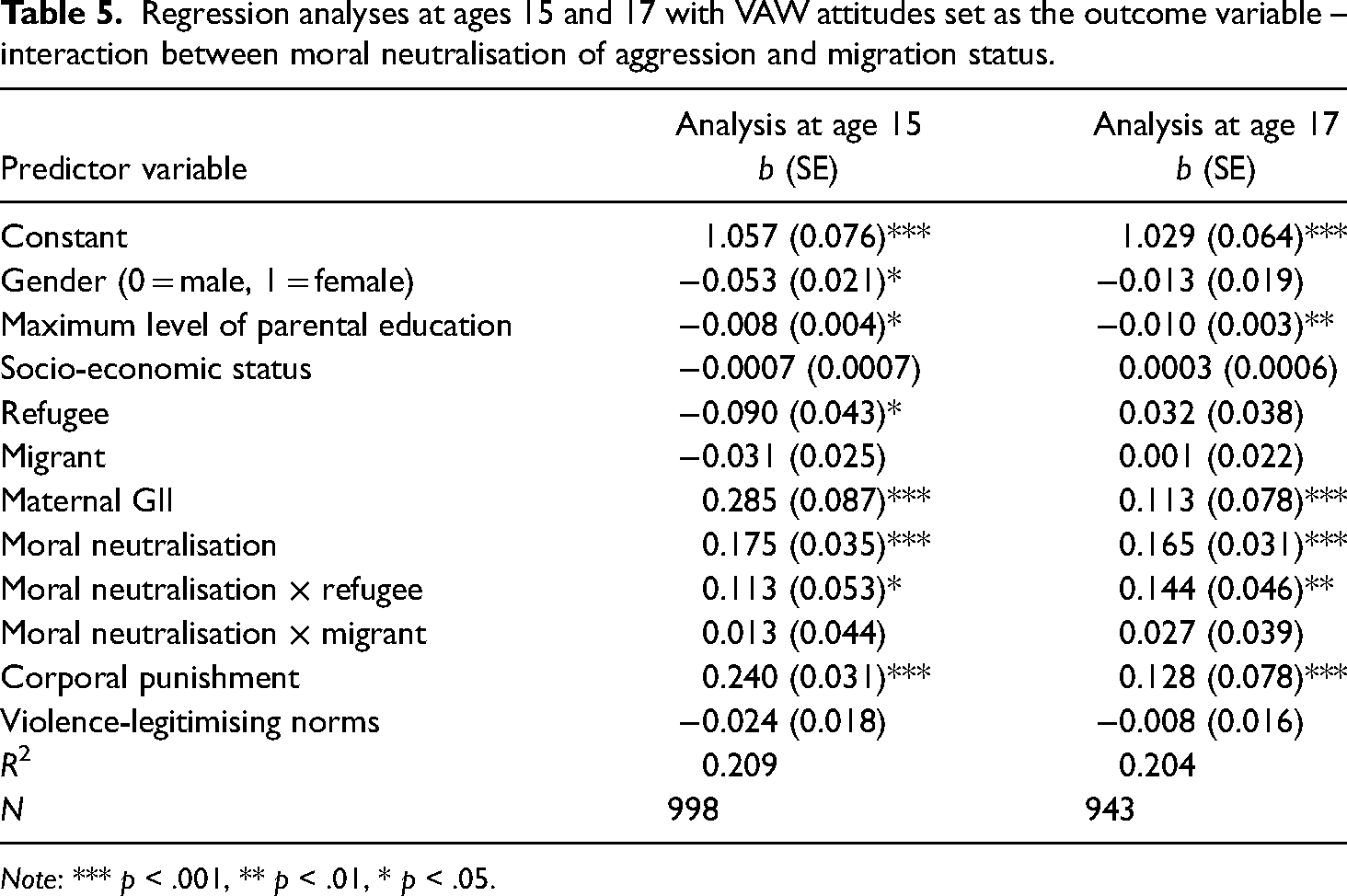
Table 5 shows the regression results for the whole sample with an interaction between moral neutralisation of aggression and migration status at ages 15 and 17 years.
Regression analyses at ages 15 and 17 with VAW attitudes set as the outcome variable – interaction between moral neutralisation of aggression and migration status.
Note: *** p < .001, ** p < .01, * p < .05.
There is a significant interaction between moral neutralisation and being a second-generation refugee at both ages 15 (b = 0.113, p = .035) and 17 (b = 0.144, p = .002).
The conditional effects of the focal predictor at values of the moderator indicate that there is a significant relationship between moral neutralisation and VAW for all three groups, but the relationship is stronger for the refugee group.
Interaction between corporal punishment and migration status
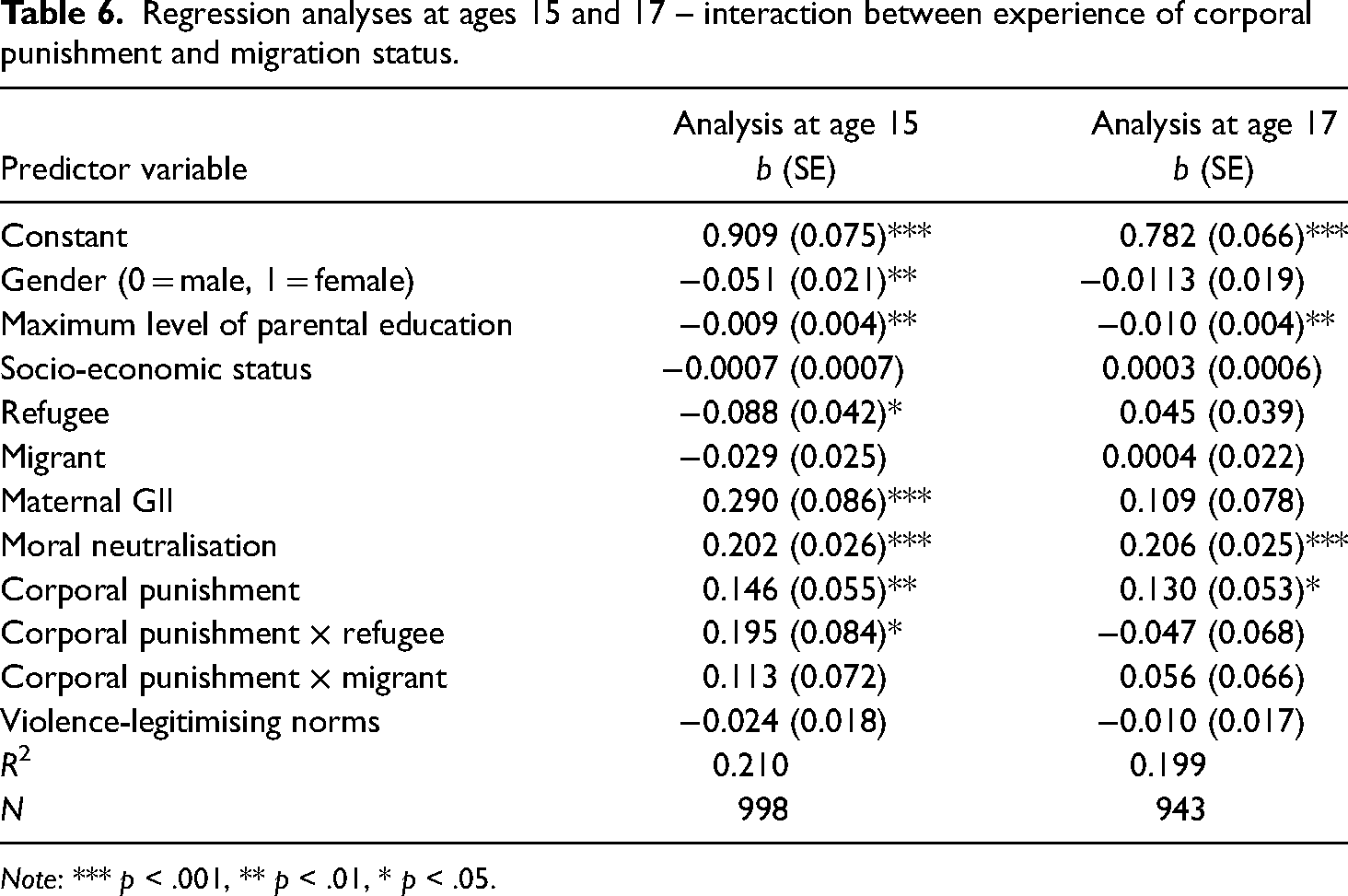
Table 6 shows the regression results for the whole sample with an interaction between experience of corporal punishment and migration status at ages 15 and 17 years.
Regression analyses at ages 15 and 17 – interaction between experience of corporal punishment and migration status.
Note: *** p < .001, ** p < .01, * p < .05.
There is a significant interaction between corporal punishment and being a second-generation refugee at age 15 (b = 0.195, p = .020). Moreover, at age 15, the conditional effects of the focal predictor at values of the moderator indicate that there is a significant relationship between corporal punishment and VAW for all three groups, but the relationship is stronger for the refugee group. However, at age 17, there is not a significant interaction between corporal punishment and being a second-generation refugee or second-generation migrant.
Discussion
A series of independent one-way ANOVAs were conducted and the results show that second-generation refugee adolescents were significantly more likely to support VAW than native adolescents. However, regression analyses at ages 15 and 17 showed that once gender, parental education levels and maternal GII were controlled for there was no relationship between migration background and VAW attitudes. The interaction between having a refugee background and moral neutralisation of aggression was significant at ages 15 and 17. Moreover, the interaction between having a refugee background and experience of corporal punishment was only significant at age 15.
Further ANOVAs showed significant differences between natives and second-generation refugees and natives and second-generation migrants, with refugees experiencing the highest level of corporal punishment; significant mean differences were also found in relation to violence-legitimising norms of masculinity between all three groups, with second-generation refugees reporting the highest level, followed by second-generation migrants and then natives. Finally, results showed that at age 15, second-generation refugees were significantly more likely to morally neutralise than second-generation migrants and natives, but this was not the case at age 17 years.
After performing the initial regression analysis without interactions, two additional regression models were conducted for ages 15 and 17. These models examined the interaction between migration background and moral neutralisation of aggression (Table 5), as well as the interaction between migration background and experience of corporal punishment (Table 6).
Results showed a significant interaction between moral neutralisation and being a second-generation refugee at both ages 15 and 17. This indicates that the relationship between moral neutralisation and VAW is different for second-generation refugee compared to native adolescents, but there is no significant difference between native and migrant adolescents.
The conditional effects of the focal predictor at different values of the moderator revealed a significant relationship between moral neutralisation and VAW across all three groups: native adolescents, second-generation migrant adolescents and second-generation refugee adolescents. However, the strength of this relationship varies. For second-generation refugees, the link between moral neutralisation and VAW is notably stronger, indicating that moral neutralisation has a more pronounced impact on VAW within this group compared to native and migrant adolescents. This suggests that second-generation refugees are more influenced by moral neutralisation when it comes to their attitudes towards VAW. Moreover, at age 15, the significant negative coefficient for second-generation refugee adolescents (b = −0.094, p = .027) indicates that for a mean level of moral neutralisation, VAW is significantly lower for second-generation refugee adolescents than their second-generation migrant and native counterparts. At age 17, the non-significant coefficient for second-refugee adolescents (b = 0.0322) indicates that for a mean level of moral neutralisation, there is no significant difference between second-generation refugee and native adolescents in terms of VAW.
In terms of the interaction between migration status and experience of corporal punishment, results indicated a significant interaction between corporal punishment and being a second-generation refugee at age 15. This suggests that the relationship between corporal punishment and VAW differs for second-generation refugee compared to native adolescents, while there is no significant difference between native and migrant adolescents.
At age 15, a positive relationship exists between corporal punishment and VAW across all three groups. However, this relationship is notably stronger for second-generation refugees. The conditional effects of the focal predictor at various moderator values indicate a significant relationship between corporal punishment and VAW for all three groups, with the strongest relationship observed in the refugee group. The significant negative coefficient for second-generation refugee adolescents indicates that, for an average level of corporal punishment, VAW is significantly lower for second-generation refugee adolescents than for their second-generation migrant and native counterparts.
At age 17, however, there is no significant interaction between corporal punishment and being a second-generation refugee or migrant. This means the relationship between corporal punishment and VAW is consistent across all three groups. The non-significant coefficient for second-generation refugee adolescents at age 17 (b = 0.0450, p = .244) indicates that, at an average level of corporal punishment, there is no significant difference in VAW between second-generation refugee and native adolescents.
Data from the current study indicated that having a refugee background was not directly associated with higher levels of support of VAW. Although ANOVA statistics indicate a higher level of VAW attitudes among second-generation refugees, this can be attributed to their higher levels of moral neutralisation and experience of corporal punishment compared to their second-generation migrant and native peers. In other words, second-generation refugee adolescents with average levels of moral neutralisation of aggression and experience of corporal punishment actually exhibit lower levels of VAW attitudes than the other groups. These findings paint a picture of successful assimilation into the host country, where second-generation adolescents from refugee backgrounds have lower support for VAW in comparison to peers from their families’ country of origin, and part of the explanation is likely to be that they adopt the majority beliefs and norms of the host country.
Previous research on immigrant, adolescent attitudes towards VAW is limited, but the findings presented here can be considered in the context of data available from the regions where refugees have migrated from. Those data show a relatively high level of support for VAW in comparison to the current study, as was shown in the studies by Dalal et al. (2012), Eisner and Ghuneim (2013) and Schuster et al. (2020) highlighted in the introduction.
In the current study, gender was significantly associated with higher levels of support of VAW at age 15 but not at age 17. The non-significant effect of gender as a predictor of VAW attitudes is in line with previous literature (Arnoso et al., 2021).
There are at least two possible explanations for gender not being predictive of VAW attitudes at age 17, once moral neutralisation of aggression was included. Firstly, the initial significance of gender on attitudes towards VAW is likely to be the result of males being more prone to morally neutralise than females (Eisner and Ghuneim, 2013; Schuster et al., 2021). Accordingly, moral neutralisation of aggression will probably work as a mediator for the relationship between gender and VAW attitudes in this sample.
Secondly, adolescents of all migration backgrounds are likely to have adopted higher levels of egalitarian views and beliefs in the empowerment of women (Arnoso et al., 2021; Bornatici et al., 2020). For example, a recent study by Bornatici et al. (2020) investigated the trends in Swiss men and women's gender attitudes in the period 2000–2017 by using the Swiss Household Panel data. Results showed that attitudes towards gender roles have become more egalitarian during this period for both men and women (Bornatici et al., 2020).
The finding that a lower maternal GII is associated with higher support of VAW is in line with previous research (Tran et al., 2016; Saeed Ali et al., 2017). The total number of second-generation refugee (M = 0.45) and second-generation migrant (M = 0.25) adolescents is higher than the number of native Swiss adolescents (M = 0.10). Previous research highlights a significant disparity in the proportion of people who accept intimate partner VAW between high GII and low GII countries. An analysis of data from 66 population-based surveys across 44 countries (Heise and Kotsadam, 2015) found that national-level gender-related factors, such as norms related to male authority over female behaviour and the extent to which laws and practices disadvantage women in access to land, property and other resources, predict the prevalence of intimate partner violence within the past 12 months. Gender inequality is deeply rooted in the patriarchal system, which is created and maintained by men (Tran et al., 2016). Patriarchy and ideologies of male dominance influence laws, policies, criminal justice systems and education, fostering conditions that justify VAW and girls (Carter, 2015).
Parental education levels were significantly associated with support of VAW. The significance of parental education is consistent with previous literature, where lower parental education was related to higher levels of VAW attitudes among adolescents (Dalal et al., 2012; Schuster et al., 2020).
Results indicated the importance of moral neutralisation of aggression, specifically for refugee adolescents. The strong influence of moral neutralisation of aggression specifically on second-generation refugee adolescents is supported by the social cognition theoretical framework and the moral neutralisation theory by Ribeaud and Eisner (2010a): attitudes in support of VAW can be part of a wider set of attitudes and beliefs that justify violent and aggressive means towards others in general.
Moral neutralisation of aggression is likely to be the mechanism through which violence-legitimising norms of masculinity operates for all adolescents. Violence-legitimising norms of masculinity were found not to be a significant predictor of VAW attitudes after moral neutralisation of aggression was controlled for. This result is supported by a study conducted by Poteat et al. (2011) that showed that beliefs that justify the use of violence had a moderating role on the relationship between normative masculine attitudes and aggressive and homophobic behaviour among adolescent boys and girls. This result highlights the importance of the role of moral neutralisation of aggression in adolescent attitudes towards VAW and violence use in general and that it is possibly the mechanism through which violence-legitimising norms of masculinity operates.
It makes sense for the interaction between moral neutralisation of aggression and migration background to be strongest for second-generation refugee adolescents, as adolescents from a refugee background have refugee parents who have experienced war trauma and have likely adopted a higher justification of violence and revenge (Posada and Wainryb, 2008) than migrant and native youths.
Moreover, experience of corporal punishment was also found to be associated with VAW attitudes. This result is in line with previous literature (Eisner and Ghuneim, 2013; Morris et al., 2015). Based on the Bandura's (1977) social learning theory, adolescents who experience higher levels of harsh discipline by their parents are more likely to adopt violent attitudes and ideologies as a means to deal with conflict. Adolescents who have experienced harsh parental discipline may have internalised that violence is the acceptable and proper way to deal with or solve problematic situations. They may have even internalised that the victim, woman in this instance, is to blame and that aggression is the right means to ‘correct’ her behaviour, just like they had their behaviour corrected by corporal punishment (Schuster et al., 2020). Moreover, adolescents who have experienced corporal punishment may view abusive interactions as a normal aspect of relationships, as well as a means of obtaining submission and compliance from others (Morris et al., 2015).
Conclusion
The findings of this study underscore the critical roles of patriarchal ideologies, social cognition and social learning in shaping attitudes towards VAW among second-generation refugee, migrant and native Swiss adolescents. The theoretical frameworks of patriarchal ideologies suggest that societal structures and norms perpetuate gender inequalities, influencing individuals’ attitudes and behaviours towards women (Tran et al., 2016). In this study, patriarchal norms were reflected in the higher levels of violence-legitimising norms of masculinity and lower GII observed among second-generation refugee adolescents compared to their migrant and native counterparts.
Social cognition theory, particularly moral neutralisation of aggression, emerged as a significant predictor across all groups, with the strongest impact observed among second-generation refugee adolescents. This is in line with previous research suggesting that cognitive mechanisms, such as moral neutralisation of aggression, play a crucial role in rationalising and justifying violent behaviours (Ribeaud and Eisner, 2010a). The findings emphasise that addressing these cognitive patterns is essential in interventions aimed at reducing support for VAW among adolescents.
Furthermore, social learning theory, as conceptualised by Bandura (1977), posits that individuals learn attitudes, behaviours and norms through observation and interaction with others in their social environment. The higher levels of corporal punishment experienced by second-generation refugees were associated with stronger attitudes supporting VAW, highlighting the impact of parental discipline practices on adolescent attitudes and behaviours (Eisner and Ghuneim, 2013; Morris et al., 2015). This underscores the need for parenting interventions that promote non-violent discipline strategies among refugee families.
An important contribution of this study is the positive narrative of cultural assimilation. The findings suggest that second-generation adolescents from refugee backgrounds in Switzerland exhibit lower support for VAW compared to their peers in their countries of origin, indicating successful integration and assimilation. This positive adaptation highlights the transformative potential of acculturation processes, where exposure to egalitarian norms within the host culture fosters more progressive attitudes. Adolescents who undergo positive cultural assimilation are exposed to values that challenge traditional patriarchal beliefs, promote critical thinking and endorse non-violent behaviours (Berry, 1997; Phinney et al., 2001).
In conclusion, while this study confirms the complexity of factors influencing VAW attitudes among adolescents, it also provides actionable insights for policy and practice. Prevention and intervention programmes should incorporate components that challenge patriarchal ideologies, target cognitive distortions such as moral neutralisation and promote positive parenting practices. Longitudinal research could further elucidate the developmental trajectories of these attitudes and behaviours over time, informing more effective strategies for promoting gender equality and preventing VAW in diverse cultural contexts.
Footnotes
Declaration of conflicting interests
The authors declared no potential conflicts of interest with respect to the research, authorship, and/or publication of this article.
Funding
The authors disclosed receipt of the following financial support for the research, authorship, and/or publication of this article: This research was conducted as part of a PhD project funded by the Economic and Social Research Council (ESRC).

Correction (February 2025):
Article has been updated to correct the following sentence “In 2004, a total of N = 2520 first graders from 56 selected schools in Zurich were invited, of whom N = 1675 children took part in the ongoing study.” to “In 2004, a total of N = 1675 first graders from 56 selected public schools in Zurich were invited to participate in the study with their parents.” in the Methodology section.