



Abstract
Various programmes have been implemented in prisons to strengthen parental involvement and parent–child relationships during imprisonment. In-depth insights into such programmes are limited. This qualitative study compared the experiences of two groups of imprisoned fathers in the Netherlands: fathers who participated in a family approach programme (N = 10) and fathers in a comparison group (N = 29). Based on a thematic analysis, four key differences were identified between the family approach group and the comparison group. Fathers in the family approach group: (1) described more positive engagement activities in direct father–child interactions, (2) reflected more positively on their fathering role during imprisonment, (3) structurally included participation in the family approach programme in their narratives of how imprisonment affected father–child relationship quality, and (4) more often expressed feelings of uncertainty and caution when discussing family life after imprisonment. The findings of this study are informative for the mechanisms behind prison-based parenting and family relationship programmes and illustrate the potential of these programmes to alleviate the unintended negative impact of imprisonment on parental involvement and family relationships. Based on these findings, recommendations for further research and practice are provided.
Research has linked paternal imprisonment to various negative outcomes among children, including emotional problems, behavioural problems, decreased educational performance, and delinquency (for recent overviews of the literature, see Arditti and Johnson, 2022; Lee and Wildeman, 2021; Poehlmann-Tynan and Turney, 2021). Paternal imprisonment has further been linked to decreased family relationships and parenting quality (Dennison et al., 2017; Turney and Marín, 2022; Turney and Wildeman, 2013). Various programmes have been implemented in prisons to strengthen relationships between imprisoned parents and their children and to support positive parenting behaviours. The content of such programmes varies and may include parenting and relationship courses, family activities, child-friendly visits, family retreats, storytelling and video messages for children, expanded telephone access, video visits, and special residential wings for parents in prison. Generally, these programmes aim to mitigate the negative impact of parental imprisonment on children's wellbeing and reduce reoffending. The empirical evidence suggests positive but limited effects of prison-based parenting and family relationship programmes on parenting-related outcomes (Armstrong et al., 2017; Buston et al., 2012; Loper et al., 2019; Purvis, 2013; Troy et al., 2018). However, many studies lack in-depth insights into how and why parenting and family relationship programmes in prison are effective (Loper et al., 2019).
The purpose of this qualitative study was to examine imprisoned fathers’ experiences of the family approach programme in Veenhuizen prison in the Netherlands. The family approach is a prison-based programme aimed at supporting imprisoned fathers and their families. Our aim was to provide an in-depth understanding of fathers’ experiences of the programme, which may contribute to the development of effective interventions that are tailored to families’ needs. The research question of this study was: How do imprisoned fathers who participate in the family approach programme experience father involvement, fathering role, and father–child relationship quality, and how do these experiences differ from fathers who do not participate in the family approach programme? The outcomes of interest were selected based on the programme's aims. Using semi-structured interviews, we compared fathers’ experiences who participated in the programme with a comparison group of fathers in prison who did not participate in the programme. A strength of a qualitative evaluation research design like the one used in this study is that it is suitable for studying the mechanisms behind programmes by examining the in-depth experiences of participants (Kelly, 2004). Further, the use of a comparison group in qualitative evaluation research allows for the identification of key differences between the experiences of those who participate in the family approach and those who do not, which helps to identify the primary mechanisms that bring about the desired changes in terms of father involvement, fathering role, and father–child relationship quality (Lindsay, 2019).
Background
Family life and imprisonment
Imprisonment has been described as a dormant period for fatherhood, with serious constraints on father involvement (Arditti et al., 2005) and negative impacts on the quality of father–child relationships (Turney and Marín, 2022). Fathers in prison consider missing their children as the most severe of all prison-related deprivation strains (Reef and Dirkzwager, 2019). Paternal imprisonment may disrupt fatherhood identity, family rituals, meaningful family interactions, and family connections (Dyer et al., 2012). During imprisonment, fathers’ opportunities to remain involved in family life are generally limited to visits, telephone calls, mail, and in some cases video calls.
Families face a wide variety of barriers to maintaining meaningful family contact during paternal imprisonment. These include financial and practical barriers (e.g., travel costs, telephone costs) as well as prison-related barriers. In the case of family visits, the physical environment, restrictions on physical contact, and the provision of meaningful activities strongly influence families’ experiences of family contact (Sharratt, 2014). Other relevant factors affecting families’ experiences of contact include search procedures, attitude of prison officers, limited privacy, and difficulties in synchronising prison time schedules with the lives of families outside (Sharratt, 2014; Venema et al., 2022). Such barriers can reduce the quality and quantity of family contact. A lack of high-frequency and high-quality contact inhibits developmentally promotive father–child interactions and parenting practices during imprisonment (Dennison et al., 2017). As such, imprisonment presents a challenging context for fathers to remain involved in their children's lives, negatively affecting their role as fathers and their relationship with their children. However, the impact of paternal imprisonment on family life is not uniformly negative for all families; relationships may also remain stable or change positively. A recent literature review highlighted that the impact of paternal imprisonment on father–child relationships depended on pre-prison father–child relationship quality, the quantity and quality of father–child interaction during paternal imprisonment, the relationship between the father and the caregiver, and the degree to which prison limits or enables meaningful family interactions (Venema et al., 2022).
The negative impact of imprisonment on family life may persist after the parent's release from prison. The process of rebuilding bonds and family reunification after imprisonment can be difficult, particularly for parents who served a long prison sentence and have older children (Muentner and Charles, 2023). Paternal imprisonment has been associated with decreased father involvement after release, in particular among fathers who co-resided with their children before imprisonment (Turney and Wildeman, 2013). Additionally, father–child relationships after release have been found to be negatively affected by economic and housing insecurity (Western and Smith, 2018). This is crucial, as higher levels of father involvement after release have been linked to positive reintegration outcomes and reduced reoffending (Visher, 2013). High-quality family relationships can further be a source of resilience for families, which may provide a buffer for the negative impact of paternal imprisonment on children's and families’ outcomes (Arditti and Johnson, 2022).
Parenting and family relationship programmes in prisons
To mitigate the harm of imprisonment on families, many researchers have called for initiatives to facilitate the maintenance of meaningful family relationships during imprisonment through family-friendly policies (e.g., Arditti and Johnson, 2022; Lee and Wildeman, 2021). Prison-based parenting and family relationship programmes may contribute to achieving this. Parents in prison have been found to be highly motivated to participate in such programmes, and often find them valuable (Loper et al., 2019; Purvis, 2013). In general, literature overviews describe largely positive effects of participation in parenting and family relationship programmes on parent–child communication and relationships, parenting skills, parenting knowledge, parenting attitudes, parenting stress, and parental health and wellbeing (Armstrong et al., 2017; Buston et al., 2012; Loper et al., 2019; Purvis, 2013; Troy et al., 2018). However, a meta-study of parenting interventions for incarcerated parents found that average effect sizes ranged from small to moderate and that the effects were heterogeneous across studies (Armstrong et al., 2017). Effectiveness was only found for short-term measurements and was not maintained at follow-up measurements. Various review studies have underscored the methodological limitations of evaluation studies. For instance, the long-term impacts of programme participation are rarely assessed (Buston et al., 2012; Purvis, 2013). A further complicating factor is the complexity of delivering parenting and family relationship programmes in a correctional context. Many factors make effective programme delivery difficult, including variation in sentence length, low literacy levels of participants, unstable funding streams, limited opportunities for direct involvement of children and family members in the programme to practice parenting skills (e.g., through family activities), and the lack of a wider range of family-friendly prison policies and contact facilities (Butler et al., 2019; Purvis, 2013).
Importantly, the programme components and the mechanisms by which possible beneficial impacts of programme participation occur remain underexplored (Armstrong et al., 2017; Butler et al., 2019; Loper et al., 2019). Gaining a deeper understanding of prison-based programmes through the lived experiences of imprisoned fathers allows us to better articulate and study the programme's underlying logic. This is important for improving these programmes, which can ultimately benefit imprisoned parents and their families. Our study focuses on exploring the differences between imprisoned fathers participating in a family approach programme and fathers who do not participate in such a programme. This may aid in understanding the limited effectiveness of prison-based parenting and family relationship programs and in developing more effective interventions.
The current study
Family approach in Veenhuizen prison
Our study concerns a qualitative study of the family approach programme in Veenhuizen prison in the Netherlands. Veenhuizen is a medium security prison that houses roughly 600 inmates in three different locations. The family approach programme was introduced in Veenhuizen prison in 2018 and was inspired by ‘Invisible Walls Wales’ in Parc Prison in Wales (Clancy and Maguire, 2017). In this study, we focused on one goal of the programme, namely to stimulate positive father–child relationships and promote father involvement during imprisonment. At the time of writing, the programme had not been standardised or manualised. While already implemented, the programme was subject to continuous development.
The family approach contained six elements. First, participating fathers resided in a dedicated family wing with 23 cells. Prison staff working on this wing were selected based on their motivation and interest in working with imprisoned fathers. Topics surrounding fatherhood were emphasised in prisoner–staff and prisoner–prisoner interactions to support fathers’ perceptions of their paternal role during imprisonment. Second, participants in the family approach could use a family-friendly private visiting room, which was decorated like a regular living room. In this visiting room, there were various facilities to support meaningful family interaction (e.g., toys, board games, and DVDs). Family-friendly visits may last up to two and a half hours. Third, participants could make use of video calls in their cell. Fourth, regular family activities (e.g., family sports events, special events during Father's Day, and family Christmas dinners) were organised for fathers participating in the programme. Most events were co-organised with volunteer organisations. Fifth, all participants were required to follow an eight-week parenting course offered by the volunteer organisation Exodus. Last, the programme was coordinated by a family officer, who carried out application procedures, maintained contact with partner organisations and the family members of fathers in prison, and supported families experiencing paternal imprisonment. The family officer developed a ‘fatherhood plan’ for participating fathers in which individualised fatherhood-related goals were set and agreements were made about the frequency of family contact.
Fathers who did not participate in the family approach programme had access to all regular modes of family contact, including visits in the regular visiting room, telephone calls, mail, video calls, and parent–child days. In the regular visiting room, multiple visits took place simultaneously. People in prison and visitors were separated by a barrier to prevent the influx of contraband (in some prisons the regular visiting room had a Plexiglas barrier between visitors and the imprisoned person to limit the spread of the COVID-19 virus at the time of data collection). Besides regular visits, all imprisoned fathers (including participants in the family approach) could participate in parent–child days, where children visit their fathers with less restrictions on physical interaction, and with more child-friendly activities. Some fathers could make use of a small, private room where family visits can take place, depending on good in-prison behaviour. This room had less play facilities and a less family-friendly atmosphere than the family-friendly visiting room of the family approach programme. The conditions for video calling differed slightly between prisons and could take place in the regular visiting areas, in a dedicated video calling booth or, based on good in-prison behaviour, in the prison cell.
Participants could voluntarily apply for the family approach programme if they identified as a biological or non-biological father to one or more children (aged 0 to 18, in some cases grandchildren were also allowed). Fathers were selected for participation in the family approach programme by the family officer based on (1) motivation to maintain or repair father–child relationships during imprisonment based on an intake procedure, (2) good in-prison behaviour (e.g., participation in daily prison programmes, no misconduct), (3) nature of the offence (fathers convicted of offences where children were victimised and/or sexual crimes were excluded from participation), (4) safety of the child (the prison carried out a safety check with an external organisation to ensure that extended family contact was in the best interests of the child and would not be harmful to the child) and (5) consent to participate of the child's primary caregiver – generally the child's biological mother.
Conceptualising father involvement, fathering role, and father–child relationship quality in the context of paternal imprisonment
We identified three outcomes of interest for our study that directly address the programme's aims of promoting positive father–child relationships and father involvement during imprisonment: (1) father involvement, (2) fathering role, and (3) father–child relationship quality. The first construct, father involvement, has been conceptualised by Pleck (2010) as consisting of three primary components. The first component refers to direct positive engagement activities and interactions between fathers and children, particularly enduring patterns of progressively more complex reciprocal interactions that are likely to promote children's development. The second dimension relates to warmth and responsiveness in parent–child interactions. The third dimension relates to control, particularly parental monitoring and decision-making. The second and third dimensions correspond to the dimensions underlying the authoritative parenting style. Father involvement can further be distinguished into direct (e.g., one-to-one interactions and child-rearing activities) and indirect forms (e.g., arranging material or financial resources for the child, or contact with the school) of involvement (Pleck, 2010).
The second construct, the fathering role, refers to men's internalised conceptualisations of and reflections on their own role and identity as a father (Day et al., 2011). The process of identity confirmation or interruption is theorised to be shaped by (1) fathers’ internalised behavioural standards relevant to the fatherhood identity, (2) whether fathers enact behaviours that they consider meaningful to their fatherhood identity, and (3) ‘reflected appraisals’ by others, referring to fathers’ perceptions of how others view them and their behaviours as fathers (Dyer, 2005). Imprisonment is thought to jeopardise men's fatherhood identity, as behaviours that are considered meaningful to fathers’ identity cannot be (fully) enacted during imprisonment, interrupting the identity confirmation process (Dyer, 2005). Negative appraisals by others may lead to stress, low self-esteem, and identity interruption among imprisoned fathers (Chui, 2016).
The third construct, perceived father–child relationship quality, refers to fathers’ internal perceptions of the quality of the father–child relationship. Relationships are composed of interactions on the one hand, and of ‘perceptions, fears, expectations, and so on that each has about the other and about the future course of the relationship’ on the other hand (Hinde and Stevenson-Hinde, 1987: 2). Interactions and perceptions of relationship quality affect each other reciprocally (Hinde, 1997). As such, fathers’ perceptions of the father–child relationship quality are affected by the experiences of father–child interactions during imprisonment, which in turn shape their hopes and fears about the future relationship. Given the limitations on the quantity and quality of family interactions during imprisonment, it is likely that perceptions of relationship quality are affected by parental imprisonment.
Method
Data collection
This study used qualitative data drawn from a purposive sample of 39 fathers in two prisons across three locations. The sample contained fathers participating in the family approach programme in Veenhuizen prison, location Esserheem (N = 10), and a comparison group of fathers not participating in the family programme in Veenhuizen prison, location Esserheem (N = 8) and location Norgerhaven (N = 10), and in Lelystad prison (N = 11). The prison sites differed somewhat in terms of facilities for family contact (e.g., conditions surrounding visits, telephone calls, video calls, and parent–child days). While these differences between prison contexts were not the primary focus of the analyses, the inclusion of multiple prison sites was highly informative for the analysis as it provided insight into how facilities for family contact affected fathers’ experiences.
Participants for the study were selected by prison staff, which in practice was done by selecting fathers who participated in family-related activities (e.g., a parenting course, parent–child days). A total of 51 fathers were selected to participate in the study, of which one father declined and 11 did not show up at the interview due to overlapping appointments, personal reasons, or a lack of motivation (76% participation rate). The concept of ‘information power’ was used to determine whether the sample was sufficient for the current research purpose (Malterud et al., 2016). Information power indicates that the more information the sample holds, the fewer amount of participants are needed. Due to the relatively narrow aim of the study and the detailed and rich, yet focused nature of the interview data, the data provided sufficient information power for this study.
The primary data for this study were face-to-face semi-structured interviews (the full interview guide is provided in Appendix 1). The same interview guide was used for all participants to enable comparison between the two groups. The interviews covered topics such as family relationship quality before, during, and after imprisonment, family interactions during imprisonment, experiences of fatherhood during imprisonment, and the overall impact of paternal imprisonment on the family. These topics were informative for studying the primary constructs of this study, as fathers were asked to reflect on father involvement when discussing family interactions, fathering role when discussing experiences of fatherhood, and father–child relationships when discussing how their relationships changed due to imprisonment. The interviews were conducted between November 2021 and March 2022 by the research team and trained interviewers. All interviews were audio recorded, transcribed verbatim, and anonymised during transcription. Participants were assured anonymity and confidentiality and provided informed consent. The study was approved by the Hanze University of Applied Sciences Groningen Ethical Review Board (reference number: heac.2021.031a). Interview duration ranged from 19 to 77 minutes, with a median of 46 minutes. The qualitative interviews were supplemented by a short questionnaire in which we registered socio-demographics (e.g., age, education, number of children, and relationship status) and sentence characteristics (e.g., first-time incarcerated, sentence duration, and violent crime), for which we provide descriptive statistics in the results section to compare the family approach and comparison group.
During the interviews in Veenhuizen, location Esserheem, it became apparent that three fathers in the comparison group had applied to participate in the family approach programme. Their application was under review at the time of the interview. Two other fathers were on the waiting list to be placed on the family wing, and one other father intended to apply for the programme. Fathers who applied or were on the waiting list could in some cases already make use of the family-friendly visiting area and video calls in their cell. Whether fathers applied or were on the waiting list for the family approach programme was taken into account in the analysis when relevant. For example, when comparing experiences of family visits between the two groups, fathers who were on the waiting list and were able to use the family-friendly visiting area were considered as participants of the family approach rather than the comparison group.
Data analysis
The data were analysed using thematic analysis (Braun and Clarke, 2021). The aim of the analysis was to construct themes that captured the differences in the patterned experiences, responses, narratives, and meanings regarding father involvement, fathering role, and father–child relationship quality during imprisonment between fathers who participated in the family approach programme and fathers who did not. Although there were many similarities between the two groups, we mainly focused on the differences to examine the impact of the family approach programme.
We coded the data in ATLAS.ti 22 (ATLAS.ti Scientific Software Development GmbH [ATLAS.ti 22 Windows], 2022) using a codebook approach of inductive and deductive coding. A codebook approach is a good fit for our study because of its clear and applied focus (Braun and Clarke, 2021). After data familiarisation, we developed and defined codes, which were refined as data analysis progressed. The deductive codes captured concepts which have been shown to affect father–child relationships during imprisonment. Deductive codes included codes on the quantity and quality of family interactions during imprisonment, perceptions of pre-imprisonment and current father–child relationship quality, father–caregiver relationship dynamics, changes in relationship quality, experienced prison barriers for family contact (Venema et al., 2022), reflections on fatherhood role (Day et al., 2011), and descriptions of father involvement from prison (Pleck, 2010). The inductive codes were developed throughout the analyses to ensure a rich description of the data and incorporation of unanticipated findings into the analyses. Coding was carried out by the first and second authors, and monitored by the third author.
After the coding of the full data set was completed, we analysed, categorised, connected, and interpreted the codes across the dataset as a whole. Then, the coded segments were compared between the two groups (Guest et al., 2012). For example, interview segments which were coded as fathers’ experiences of family visits were compared across the family approach group and the comparison group. The aim was to identify patterned differences between the experiences of fathers in the family approach and the comparison group, with the research question guiding the analyses. Based on the comparisons of the coded segments, we constructed overarching themes that captured patterned differences between participants in the family approach and the comparison group. The themes were reviewed in relation to the coded data extracts and the data set as a whole, were refined, and were discussed within the research team until a consensus was reached. Furthermore, we searched for negative cases that contradicted the main narrative identified in the thematic analysis. In Appendix 2, we reflect on the rigour and trustworthiness of the analytical process, researcher positionality, and the theoretical underpinnings of the study.
Results
Characteristics of the study participants
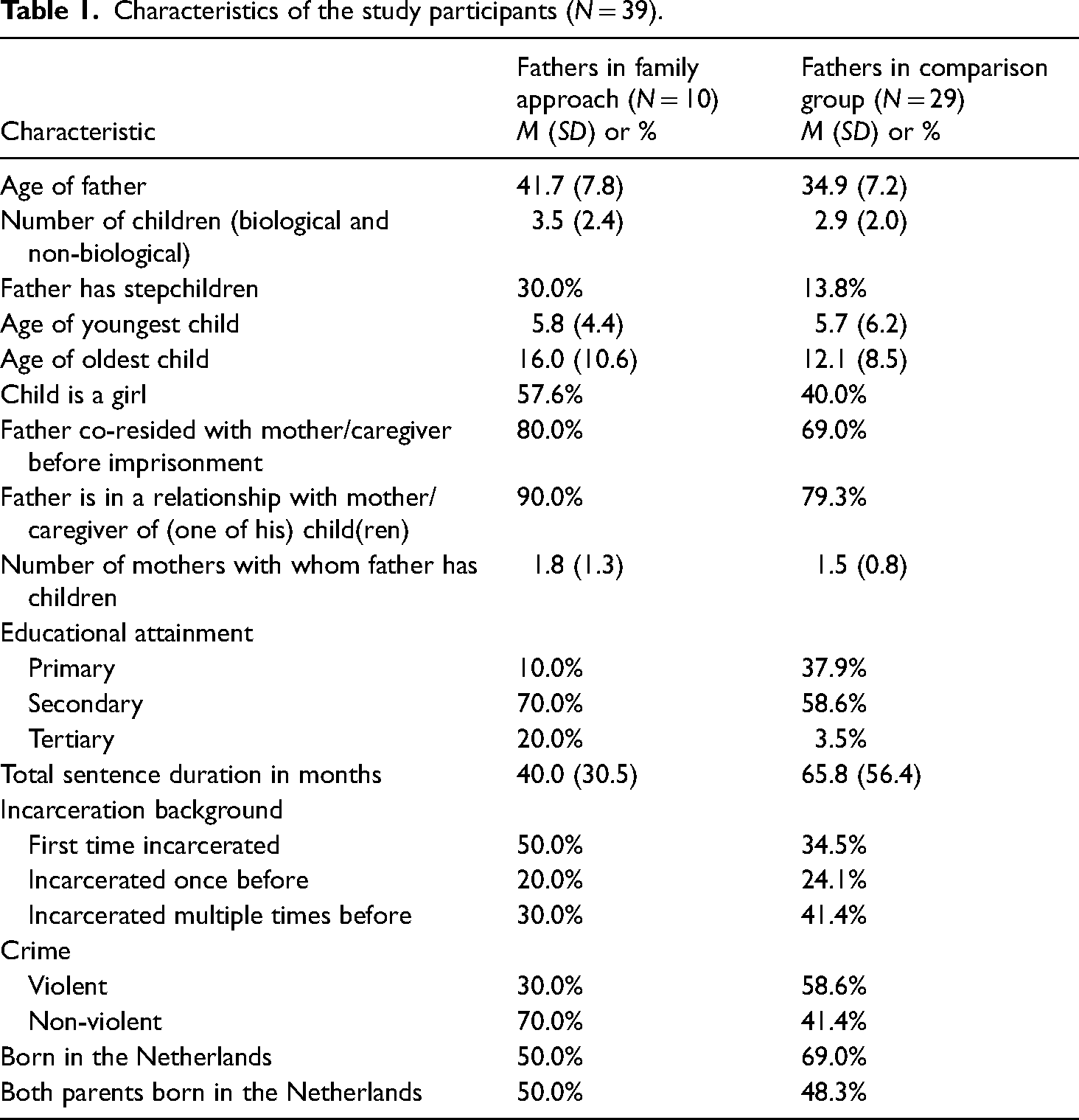
Table 1 displays descriptive statistics of study participants’ socio-demographics and sentence characteristics split by participation in the family approach programme (N = 10) and the comparison group (N = 29). Differences between the two groups were tested using t-tests and chi-square tests. We found one statistically significant difference between the two groups: fathers in the family approach were, on average, older than fathers in the comparison group, t(37) = 2.5, p = .02. Although the differences in other characteristics between the two groups were not statistically significant, fathers in the comparison group were less likely to have lived with the mother or caregiver of his child(ren) before imprisonment, were less likely to be in a relationship with the mother of his child(ren), were lower educated, had longer prison sentences, were more likely to have been incarcerated before, and were more often convicted of a violent crime than fathers in the family approach group. Overall, these differences suggested slightly more favourable characteristics among participants in the family approach group and may reflect the selection criteria on which participation in the family approach programme was based. Despite these differences, the two groups were sufficiently similar to meaningfully compare them.
Characteristics of the study participants (N = 39).
Thematic analysis
We identified four themes that captured the differences in the patterned experiences, responses, narratives, and meanings regarding father involvement, fathering role, and father–child relationship quality between fathers who participated in the family approach programme and the comparison group. The four themes related to differences in (1) positive engagement activities, (2) reflections on fathering role, (3) narratives of how imprisonment affected father–child relationship quality, and (4) expectations of family life after imprisonment. For each theme in the following section, we begin with a description of the central organising concept that captures the essence of the theme. The theme is then elaborated upon and illustrated with statements made by the interview participants.
Theme 1: Differences in positive engagement activities
The first theme centred around differences in experiences of father involvement during imprisonment between fathers in the family approach and the comparison group. Across the full sample, fathers described challenges in father involvement due to imprisonment. However, fathers in the family approach programme described more instances of positive engagement activities – a key component of father involvement – during father–child interactions relative to the comparison group. This was evidenced by fathers’ descriptions of higher quality contact (such as eating, playing, or watching television together), which was in turn attributed to the facilities for high-quality family contact associated with the family approach programme (private family-friendly visiting room and enhanced options for video calling). Overall, fathers in the family approach had more family contact, and more often made use of multiple modes of contact relative to the comparison group. Forms of indirect father involvement (e.g., buying presents or being in contact with the child's school) did not noticeably differ between the two groups.
The visiting areas were an important context in which direct father involvement took place. Fathers in the comparison group often expressed dissatisfaction with the regular visiting area, which was exemplified by statements such as: ‘I think visits for children should be more child-friendly’ [Interview 5], and ‘there's nothing for children’ [Interview 12]. Participants noted that regular visiting areas were not conducive to positive father involvement due to restrictions on active interactions and physical contact, limited opportunities and materials to engage in play, lack of privacy, and the child-unfriendly atmosphere. In the comparison group, fathers often expressed the need for higher frequency of and higher quality father–child contact. Regarding the quality of father–child contact, fathers in the comparison group expressed the need for father–child interactions during imprisonment to resemble everyday family life at home as closely as possible. The following excerpt of a father in the comparison group illustrates fathers’ needs: It would be nice if you could just be with your kid and live a normal life for a while, like you do at home. Instead of sitting across from each other like you do here. [Interview 32, comparison group]
This excerpt contrasts with descriptions of the family-friendly visiting room of fathers in the family approach, which was experienced to be conducive to positive father engagement. Unlike the comparison group, fathers in the family approach did not express a need for more or higher quality contact, suggesting that this need had been satisfied due to participation in the programme. Descriptions of father–child interactions in the family-friendly visiting room more closely resembled family interactions at home. One father in the family approach described: The (family-friendly visiting room) is organised very practical, like a living room. There's a dining table, a sofa, lots of DVDs with cartoons for the little ones. There's a television with a DVD player. We always prepare a cake or a pie for the family room. The last visit, we moved everything aside and laid down on the ground underneath a blanket and watched a cartoon. I wouldn’t change a thing about it. [Interview 7, family approach group]
This excerpt demonstrates how the facilities in the family-friendly visiting room allowed families to carry out positive engagement activities, like watching cartoons together. Descriptions of such activities and interactions were not found in the comparison group. The following excerpt demonstrates that the family-friendly visiting room also allowed fathers in the family approach to engage in disciplining parenting behaviours – an important component of father involvement – in the context of positive engagement activities. Again, such behaviours were not found in the comparison group. Last time we were in the family room we had a pillow fight. (My son) grabbed a CD cover and threw it to my head. My wife got very upset. (…) And then I became very upset. Then (my son) realised: “this is a new experience for me”. Normally I’m always playing with him, bringing him cakes and candy, or eating with him, and now I suddenly became upset. [Interview 13, family approach group]
Father involvement could also be enacted through video calling. Descriptions of video calls among fathers in the family approach more often demonstrated day-to-day father-child interactions (e.g., eating, playing, or watching television together) relative to the comparison group, which is indicative of positive engagement activities. A father in the family approach described: This morning (during a video call) we drove together on his toy tractor. He put me, on the phone, on the trailer behind his tractor. He drove in circles around the house and underneath the table. [Interview 8, family approach group]
The negative case analysis showed that there were two fathers who participated in the family approach but did not make use of the family-friendly visiting room or video calling. For these fathers, no differences in terms of positive engagement activities relative to the comparison group were identified.
Theme 2: Differences in reflections on fathering role
The second theme centred around differences in fathers’ reflections on their role and identity as a father between participants in the family approach programme and the comparison group. Fathers in the comparison group often experienced having a minimal role as a father during imprisonment. This was exemplified by statements as: ‘There's nothing I can do, my hands are tied’ [Interview 39], ‘I’m stuck here, I can’t do a whole lot for [my children]’ [Interview 10], and ‘I am in [my daughter's] life, but I’m not a father right now’ [Interview 36]. Participants in the family approach programme did not make such statements. Overall, fathers in the family approach group reflected more positively upon their own fathering role during imprisonment than fathers in the comparison group. However, fathers in both groups expressed difficulties as a result of the limited opportunities to carry out their fathering role from prison, as illustrated by statements such as: ‘it's hard that I can’t be there with them’ [Interview 5, comparison group], and ‘I can’t get used to not being with them. I won’t get used to it’ [Interview 7, family approach]. Furthermore, many fathers across the sample expressed that their absence due to imprisonment negatively impacted their children's lives, as illustrated by statements as: ‘[he] is having some problems, he's missing me’ [Interview 8, family approach group] and ‘he's derailing a little bit’ [Interview 26, comparison group].
Fathers perceived that participation in the family approach supported them in fulfilling their paternal role. This was evidenced by the finding that fathers in the family approach commonly expressed satisfaction or gratitude for participating in the programme, primarily because there were more opportunities to maintain family contact. Some fathers who were previously in different prisons initiated a transfer to Veenhuizen to participate in the family approach programme. The following excerpt exemplified fathers’ experiences of the value of participating in the family approach programme in relation to performing the paternal role from prison: There are weekends here when they organise craft days for children. We’re getting support with how to react to situations at home and things like that. (…) There are weekends when they organise activities with the children. At Christmas there are possibilities to organise brunch or lunch with my wife and children. So yes, basically we have it really good here. [Interview 9, family approach group]
Having more and higher quality father–child contact due to participation in the family approach could also lead to increased awareness of fathers’ paternal role during imprisonment. This is illustrated by a father's description of a family sports day which was organised for family approach participants and their family members. The sports event led to feelings of stress, but also made the father more aware of his fatherhood identity as opposed to his prison identity: I hadn’t felt it before. (…) (During the sports event) I caught myself thinking about prison things all the time instead of focusing on them. (…) I became aware of that. So the next time they came to visit, I tried to block that out, so that I could just focus them. [Interview 14, family approach group]
Residing in the family wing could further stimulate fathers’ perceptions of their paternal role during imprisonment. Fathers on the family wing described that the other fathers on the wing, like themselves, prioritised their family over other things, and refrained from misconduct. Fathers often provided this like-mindedness as an explanation for why the family wing was quiet and had a low incidence of misconduct. One father described how residing in the family wing could lead to increased awareness of fathers’ role as a parent during imprisonment: If you’re on a wing where there's only a few fathers, (fathers) will get neglected. (…) Here it's stimulated quite a lot, you know? Fathers are more aware here. More than in other prison wings. Also because there's more people who are kind of in the same situation. [Interview 7, family approach group]
A negative case analysis showed that there was one father in the family approach who deviated from the main narrative of participants in the family approach when discussing their paternal role during imprisonment. When prompted to reflect on his paternal role during imprisonment, this father stated: ‘I can’t do anything, I’m here’ [Interview 20]. A characteristic that distinguished this father from other fathers in the family approach was that he expressed a great deal of dissatisfaction with his punishment, which in his view was unjust. This negative case thus suggests that the potential impact of participation in the family approach programme may be diminished when fathers are highly preoccupied with matters other than their family.
Last, only minor differences in interactions with other fathers in prison or with prison staff were found between the two groups. Across the sample, fathers often expressed (almost) never talking about family-related matters with prison staff or with other fathers in prison. When such family-focused conversations did occur, they were described to be superficial. No clear difference in the degree to which family-related matters were discussed with prison staff and with other fathers in prison was found between the two groups. Fathers in the family approach did more often describe supportive prisoner–staff relationships relative to the comparison group, but this was not necessarily related to their role as a father.
Theme 3: Differences in narratives of how imprisonment affected father–child relationship quality
The third theme centred around differences in perceptions of how father–child relationship quality was affected by imprisonment between fathers in the family approach and in the comparison group. Across the full sample, fathers described three trajectories of how father–child relationship quality changed due to imprisonment: father–child relationship quality remained stable, changed positively, or changed negatively. A distinctive feature of participants in the family approach was that they attributed the absence of negative changes in the father–child relationship quality directly to participation in the family approach programme.
The majority of the sample stated that the quality of the father–child relationship remained stable despite their imprisonment, and described the father–child relationship as ‘good’. Fathers in the comparison group commonly described that although they experienced many barriers to father–child contact during imprisonment, they did not perceive the relationship quality to have changed negatively. (the relationship is) good, but it's being blocked by being in prison. (…) But it's not going to change, the relationship was, and is good. [Interview 31, comparison group]
Narratives of how father–child relationships remained stable during imprisonment were distinct among participants in the family approach. These fathers directly attributed the stability of father–child relationship quality to participation in the family approach and to the facilities for enhanced family contact in particular. This is illustrated by the following excerpt, where a father in the family approach explained why the relationship with his children remained stable despite imprisonment: They’re always really happy when they see me. (…) Because everything is well organised here. The children can come here, there's all sorts of activities for them. (…) We can video call three times a week. [Interview 9, family approach group]
Narratives of how father–child relationships improved during imprisonment were distinct among fathers in the family approach relative to the comparison group. Again, these explicitly referred to the role of participation in the family approach when discussing this. They outlined the importance of facilities for maintaining meaningful family contact and the role of receiving support from prison staff. Such narratives were not found in the comparison group. These fathers’ narratives underscored the potential of the family approach to positively influence father–child relationships during imprisonment for a subgroup of fathers. This was exemplified by the following two excerpts: With my youngest son, the relationship improved. (…) At the beginning (of my sentence) we were like two strangers. So it did contribute, we formed a bond. Here, in prison, they tried to support me with that. (…) He got to know me because of the visiting facilities I have here. [Interview 8, family approach group] I think (the father–child relationship) became better. It sounds very strange. Outside, we were always busy. (…) When they’re here, I’m really spending time with them for two and a half hours. Before imprisonment we never played a lot of games, now we play games every week. (…) It may sound weird what I’m saying, but our bond is becoming better. We have more attention for each other. [Interview 4, family approach group]
A small group of fathers described that the father–child relationship changed negatively due to imprisonment. We found no distinct differences between the family approach and the comparison group among fathers who described the father–child change negatively due to imprisonment.
Theme 4: Differences in expectations of family life after imprisonment
The last theme centred around differences in fathers’ perceptions of family life after imprisonment between fathers in the family approach programme and the comparison group. While fathers in the comparison group often expressed optimism when discussing return to family life, participants in the family approach expressed feelings of uncertainty and caution. Across the full sample, fathers uniformly expressed the desire to be involved in their children's lives after imprisonment.
A common narrative among fathers in the comparison group when discussing family life after release was that fathers expected that family life would go back to the way it was before imprisonment. Such expectations were characterised by high degrees of optimism: ‘I think it will be easier after imprisonment’ [Interview 33, comparison group]. Exceptions were found among fathers who had problematic relationships with their children's mothers.
The overall optimistic attitude of fathers in the comparison group contrasted with the attitude of fathers who participated in the family approach. Participants in the family approach commonly described how family life had continued and how new family routines had formed in their absence. Fathers in the family approach often discussed having to renegotiate parental roles with their partner after release. Exemplary excerpts included: I’ve talked about this with my wife. (After release) I’m not going to decide anything. I can’t say “I’m back, now we’re going to do things my way again”. You can’t do that. I’ll have to follow her lead. [Interview 13, family approach group] I’ll have to see where the shoe pinches, and where I can take my place. It's been mum who's been at the forefront all this time. [Interview 8, family approach group]
A negative case analysis showed that two fathers in the family approach deviated from the main narrative, and did not express caution or uncertainty regarding their family life after imprisonment. For one father this was because his child lived abroad. The other father was highly dissatisfied with his sentence and viewed it as unjust. He viewed his return back into family life as the only justifiable option, which could explain why he did not express uncertainty regarding his return to family life.
Discussion
Various prisons have implemented parenting and family relationship programmes to alleviate the negative consequences of imprisonment for parents in prison and their family members. In this study, we provided an in-depth understanding of fathers’ experiences of parenting and family relationship programmes. Based on a thematic analysis, we found that fathers’ experiences in the family approach group were different from the comparison group in terms of (1) positive engagement activities, (2) reflections on fathering role, (3) narratives of how imprisonment affected father–child relationship quality and (4) expectations of family life after imprisonment.
The four themes identified in the analyses are informative of the possible mechanisms that may be targeted in parenting and family relationship programmes in prison. First, providing facilities for family contact that allow interactions in prison to resemble interactions outside of prison could stimulate direct father involvement in the form of positive engagement activities. Providing facilities that allow high-quantity and high-quality father–child contact directly responded to fathers’ needs, as expressed by fathers in the comparison group. Key factors that positively affected father–child interaction quality during visits included privacy, active interactions, physical contact, opportunities for play, and a child-friendly atmosphere, which were in line with earlier studies (e.g., Sharratt, 2014). Furthermore, our study corresponds to earlier research findings as many difficulties regarding fatherhood in prison identified in previous studies were also described by fathers in our study (e.g., issues relating to the quality of father–child interactions, father–caregiver relationships and caregivers’ gatekeeper role, co-parenting, visiting facilities, distance and travelling in the context of visits and scheduling; Arditti et al., 2005; Dennison et al., 2017).
Second, we found that participation in the family approach influenced fathers’ paternal role during imprisonment positively. It is plausible that positive reflected appraisals by children and family members took place during these high-quality father–child engagement activities, which reinforced fathers’ paternal identity during imprisonment (Dyer, 2005). The findings suggested that being around like-minded fathers may reinforce fathers’ paternal identity during imprisonment. However, relative to interactions with children and family members, interactions with prison staff and other fathers in prison seemed to play a minor role in fathers’ experiences of their paternal role. This suggests that reflected appraisals of staff members and other fathers in prison were less influential for the identity conformation process than reflected appraisals of fathers’ own family members (Dyer, 2005). It is further possible that parenting courses reinforced perceptions of the fathering role, but this was not explicitly mentioned by fathers in the interviews.
Third, the findings suggested that engaging in high-quality father–child engagement activities during imprisonment may provide a buffer against the negative impact of paternal imprisonment on the quality of father–child relationships, or may even create conditions for relationships to be developed or improved. This highlights the critical importance of maintaining frequent and high-quality father–child contact in understanding how father–child relationships change in the face of paternal imprisonment (Venema et al., 2022). Fathers in the comparison group often described that the father–child relationship quality remained stable, while at the same time describing many challenges regarding father–child interactions. Fathers in the family approach group, however, explicitly linked the high-quality father–child interactions to the lack of negative changes in father–child relationship quality.
Last, realistic expectations for the return to family life may be targeted as a mechanism for successful interventions. It is plausible that higher quantity and quality family interactions provide possibilities for discussing the process of returning back into family life. Our study corresponds to earlier research findings that have highlighted imprisoned fathers’ optimistic, but possibly unrealistic expectations of family life after release (Arditti et al., 2005; Nurse, 2002). These optimistic expectations were primarily expressed by fathers in the comparison group. Fathers in the family approach group more often expressed uncertainty and caution when discussing family life after release.
The negative case analysis showed that several barriers diminished the potential impact of parenting and family relationship programmes. One case in our study was a father who was dissatisfied with his sentence and viewed his sentence as unjust. This preoccupation seemed to obstruct the potential benefits of participation in the family approach for his fatherhood role. Furthermore, participation in the family approach programme cannot overcome structural barriers to maintaining father–child relationships during imprisonment, including financial hardship and long travelling distances.
Limitations
Our study has several limitations. First, the size of the family approach group and the comparison group was unbalanced. However, this balance reflected the real situation in prison, as the participants in the family approach were a relatively small group in practice. Given the richness of the interviews and the specific nature of our study, we are confident that we have enough information power. Furthermore, the inclusion of multiple prison sites in the study allowed for a detailed understanding of how different facilities for family contact affected fathers’ experiences, which was highly informative for the analysis.
Second, the family approach group and the comparison group differed in composition. Although most differences were not statistically significant, they may reflect the selection procedure for the family approach programme. It cannot be ruled out that some of the observed differences in fathers’ perspectives, attitudes, and motivations between the family approach group and the comparison group are attributable to selection effects. Given that fathers in the comparison group showed evidence of overall higher risks (e.g., lower rates of first-time incarceration) and more fragile family relationships (e.g., lower rates of father–mother cohabitation before imprisonment), it may be that fathers in the comparison group have greater needs for support and therefore express more dissatisfaction with the current arrangements. Previous research has shown that family-friendly contact opportunities, such as family-focused visiting rooms, activities and events, are particularly valuable in strengthening the bonds of families with more fragmented relationships, as these families experience more difficulties in maintaining meaningful contact through regular contact facilities (Sharratt, 2014). Nevertheless, differences in fathers’ descriptions on the quality of father–child interactions are unlikely to be attributable to selection effects. Furthermore, the two groups were sufficiently similar to allow for meaningful comparison.
Third, the interviews were conducted when some COVID-19-related contact restrictions were still present. These restrictions likely affected the quantity and quality of family contact (Minson, 2021). Some fathers in our study stated they did not want to be visited by their children in the regular visiting room when a Plexiglas barrier was present. In the analysis, we focused on fathers’ descriptions of family contact which were not characterised by descriptions of the COVID-19-related restrictions. This was done to ensure that the research findings were transferable to a situation where contact restrictions were absent.
A fourth limitation is that we did not include children's and caregivers’ perspectives in the analyses. Family relationships are composed of multiple perspectives, and should ideally be studied in multi-informant research designs. Despite this limitation, it remains valuable to study fathers’ experiences as many of the family approach programme components are primarily aimed at fathers rather than at family members (e.g., family wing, parenting courses, fatherhood plan).
In our study, there was a limited focus on father–caregiver relationships. This contrasts with many studies on fatherhood and imprisonment that have documented the essential role of father–caregiver relationship quality in understanding fatherhood and father–child relationships in relation to paternal imprisonment. Studies have outlined the key importance of caregivers’ gatekeeping role for father–child contact during imprisonment (Arditti et al., 2021). Although father–caregiver relationships were often discussed in interviews, they were not of key importance to understand the differences between the family approach group and the comparison group. Given that caregivers’ permission is needed for participation in the family approach, fathers in the family approach group described relatively positive father–caregiver relationships. Furthermore, due to the selection procedure for participation in the study, the majority of fathers in our study were visited by their children during imprisonment. This contrasts with statistics of parents in the overall Dutch prison population where around half are visited by their children (Berghuis et al., 2020). Given the caregivers’ gatekeeping role in father–child contact during imprisonment, this also implies that most fathers in our study have relatively positive relationships with the caregiver (although there were some exceptions in the comparison group). The findings in our study are therefore limited to a specific subgroup of fathers with relatively positive father–caregiver and father–child relationships.
It is further important to consider the possible role of psychological problems, which are highly prevalent among the Dutch prison population (Favril and Dirkzwager, 2019). For example, antisocial personality disorders are estimated to be prevalent in roughly one-third of the Dutch prison population (Bulten and Nijman, 2009). Personality disorders likely shape fathers’ parenting behaviours and father–child interactions. It is further possible that some fathers gave socially desirable descriptions of their fatherhood role during the interviews. This was illustrated by fathers who stated that they were highly involved in their children's lives before imprisonment but found it difficult to provide detailed descriptions of this. With the collected data, we could not fully explore these subjects.
Recommendations for practice
We formulate five recommendations for prison-based parenting and family relationship programmes. First, it is important to employ a long-term perspective in the development of such programmes. It is common that prison-based parenting and family relationship programmes do not explicitly formulate a long-term perspective (Butler et al., 2019; Hayes et al., 2018). This is further complicated by the transient nature of the prison population (Troy et al., 2018). In the family approach programme, the duration of participation in the programme varied among participants (ranging from several weeks to several years) and depended on total sentence duration. In general, prison-based parenting and family relationship programmes should develop a long-term strategy (from entry to release) to ensure positive impacts are sustained beyond programme completion.
Second, it is important to differentiate between pre-imprisonment family characteristics when developing prison-based parenting and family relationship programmes. Fathers who were highly involved in their children's lives before imprisonment and wish to prevent deterioration of the father–child relationship are likely to have different programme needs as opposed to fathers who were less involved in their children's lives and who wish to establish or repair father–child relationships. A further consideration is the age of fathers’ children, particularly at the start of the imprisonment period. Several fathers in our sample had children who were very young or not born yet when they were imprisoned. These fathers aimed to establish a relationship with their children during imprisonment, as opposed to fathers with older children who often aimed to prevent the relationship from deteriorating. Within this context the total sentence duration is also important. It is easy to imagine that a father with a long sentence whose child was born during imprisonment has different needs than a father with a short sentence who has spent much time with his children before imprisonment.
Third, it is important to consider the timing of parenting and family relationship programmes. Some prison-based programmes are focused on the end of the sentence to support parents’ re-entry (Clancy and Maguire, 2017), whereas others have suggested it is best to support parents early in their sentence when families are in need of assistance (Langston, 2016). Overall, it is unclear whether prison-based parenting and family relationship programmes are more effective at the start of the prison sentence or toward the end. This may also depend on pre-imprisonment family characteristics and individual families’ needs.
Fourth, parenting and family relationship programmes benefit from having possibilities for imprisoned parents to practise and rehearse their parenting skills (Butler et al., 2019; Hayes et al., 2018). Infrequent or an absence of parent–child contact undermines the effectiveness of prison-based parenting interventions (Troy et al., 2018). In practice, this could imply that fathers practise and rehearse the skills learned during the parenting courses during visits. The experience of these visits could then be reflected upon in the following session of the parenting course, or in prisoner–staff conversations.
Last, participants of parenting and family relationship programmes and other parents in prison may benefit from a broader prison culture that supports parents in prison and their families, with facilities that allow for meaningful family interactions during imprisonment. The number of families reached by parenting and family relationship programmes is often limited due to the small-scale nature of such programmes. A prison-wide approach would complement these programmes and would benefit larger amounts of families.
Conclusion
We identified four key differences between fathers participating in the family approach programme and the comparison group. Relative to the comparison group, fathers in the family approach group (1) described more positive engagement activities in direct father–child interactions, (2) reflected more positively on their fathering role during imprisonment, (3) structurally included participation in the family approach programme in their narratives of how imprisonment affected father–child relationship quality, and (4) more often expressed feelings of uncertainty and caution when discussing family life after imprisonment. A key strength of the study was the inclusion of a comparison group, which allowed for a focus on the differences in experiences between the two groups.
We make several recommendations for future research. First, future studies should employ longitudinal designs to determine the long-term impact of prison-based parenting and family relationship programmes. Ideally, participants would also be followed after release from prison to study the impact of programme participation on fathers' reintegration outcomes and family reunification. Second, we recommend that future studies examine other outcome domains, including children's behavioural and emotional outcomes. Third, although difficult to conduct, we recommend that future studies make use of multi-actor designs, including perspectives of caregivers and children. Fourth, we recommend investigating how in-prison parenting and relationship programmes may affect different families in different ways, depending on risk factors (e.g., psychological problems, substance use, imprisonment history, sentence duration, and nature of crime) and pre-prison father involvement and family relationships.
The findings of this study illustrate the potential of prison-based parenting and family relationship programmes to alleviate the negative impact of imprisonment on family relationships and parenting behaviours. In line with earlier research, this study suggests that prison-based parenting and family relationship programmes can be meaningful for families (Armstrong et al., 2017; Buston et al., 2012; Loper et al., 2019; Purvis, 2013; Troy et al., 2018). The results of this study add in-depth insights into how and why parenting and family relationship programmes in prison may be effective, which to date have been underexplored (Loper et al., 2019). This, in turn, may aid in developing effective programmes. Parenting and family relationship programmes that are tailored to families’ needs could mitigate the unintended negative consequences of paternal imprisonment for families, particularly when they are embedded within a wider array of child-focused prison practices.
Supplemental Material
sj-docx-1-euc-10.1177_14773708241227682 - Supplemental material for Experiences of fatherhood in prison: A thematic analysis of differences between fathers in a family approach programme and a comparison group
Supplemental material, sj-docx-1-euc-10.1177_14773708241227682 for Experiences of fatherhood in prison: A thematic analysis of differences between fathers in a family approach programme and a comparison group by Simon D. Venema, Petrick Glasbergen, Marieke Haan, Eric Blaauw and René Veenstra in European Journal of Criminology
Footnotes
Declaration of conflicting interests
The author(s) declared no potential conflicts of interest with respect to the research, authorship, and/or publication of this article.
Funding
The author(s) disclosed receipt of the following financial support for the research, authorship, and/or publication of this article: This study was funded by the Dutch Custodial Institutions Agency. The views and opinions expressed in this article are those of the authors and do not necessarily reflect the official policy or position of the Dutch Custodial Institutions Agency.

Supplemental material
Supplemental material for this article is available online.
References
Supplementary Material
Please find the following supplemental material available below.
For Open Access articles published under a Creative Commons License, all supplemental material carries the same license as the article it is associated with.
For non-Open Access articles published, all supplemental material carries a non-exclusive license, and permission requests for re-use of supplemental material or any part of supplemental material shall be sent directly to the copyright owner as specified in the copyright notice associated with the article.
