



Abstract
In this paper, we present evidence of estimated significant associations between greenspace and prisoners’ self-reported well-being, self-harm and violence in prisons in England and Wales. Refining and extending our previous research that estimated the relationship between greenspace and self-harm and violence while controlling for the effects of prison characteristics (e.g. prison size, over-crowding and security level), the findings in the present study show that greenspace remains significantly related to self-harm and violence when we additionally control for prison population characteristics (such as prisoner age, ethnicity, sentence length) and when we use additional self-reported indicators of well-being. Furthermore, our findings also show that the beneficial effects of greenspace appear to be particularly prominent in prison establishments that suffer from overcrowding or hold relatively large shares of younger and un-sentenced prisoners. Finally, our results reveal that greenspace has important impacts on the inter-relationships between self-reported well-being, self-harm and prison violence.
Keywords
Introduction
Over the last decades, an extensive body of research has identified an array of prison and prisoner characteristics that can be linked to prisoner well-being and misconduct (Quick et al., 2023; Wooldredge, 2020). However, it is commonly agreed that there is ample scope to continue to search for additional or new factors that influence the behaviour and welfare of prisoners (Quick et al., 2023; Steiner and Meade., 2016). Within this context, a growing number of studies have traced the benefits of nature contact in prisons (Moore, 1981; Moran, 2019; Moran and Turner, 2019; Moran et al., 2021a, 2021b, 2022; Nadkarni et al., 2017; Reddon and Durante, 2019). Most of the evidence on the effects of nature contact is obtained from qualitative research or from the evaluation of specific programs run in individual prisons (DelSesto, 2022); relatively little macro research has been done on the potential effects of greenspace or nature contact in a national prison system.
Our research (Moran et al. (2021a, 2021b, 2022)) forms an important exception to this. Using geographical information systems (GIS) mapping and statistical methods, we calculated the amount of greenspace within a set of English and Welsh prisons. Applying multivariate statistical analysis controlling for a set of prison characteristics (e.g. age, security level, crowding), we found that greenspace is positively related to prisoner and staff well-being, as prisons with a higher percentage of greenspace have significantly lower levels of self-harm, violence and staff absence.
The purpose of the present paper is to extend and improve upon these initial findings on the relationship between greenspace and prisoner well-being in the prison system of England and Wales. To understand and explain prisoner misconduct and well-being, researchers commonly refer to three types of explanation: importation theory (characteristics of prisoners when entering the prison system), deprivation theory (experiences of prisoners while imprisoned) and prison management styles (Steiner, 2016; Wooldredge, 2020). In Moran et al. (2021a, 2021b, 2022, 2022) we focused mainly on factors related to deprivation theory and prison management style, by estimating the relationship between greenspace and prisoner well-being while controlling for several prison characteristics. For the present study, we collected additional data on prisoner characteristics, allowing us to control for a wider set of factors related to deprivation theory and several factors related to importation theory. Our first aim in this paper, therefore, is to examine whether the association between greenspace and prisoner well-being persists when controlling for a wider set of prison and prison population characteristics. Additionally, we also assess whether and how the relationship between prison population characteristics and well-being is affected by greenspace.
Our second aim is to further refine the estimated relationship between greenspace and prisoner well-being. As we acknowledged in Moran et al. (2021a), the use of data on self-harm and violence as proxies for well-being constitutes a rather blunt approximation of a much more nuanced issue. In addition to data on various prisoner characteristics, we have therefore also collected new data that captures a range of self-reported measures of well-being (e.g. experiencing mental health/emotional problems, feeling unsafe and unrespected, and medication and substance abuse). By using such self-reported indicators of prisoner well-being as alternative dependent variables, we further examine whether greenspace is related to prisoner well-being and how the relationship of prisoner characteristics with these alternative indicators of well-being is affected by greenspace. This allows us to assess under which conditions an increase in greenspace is more likely to generate particularly beneficial effects.
Our third aim is to examine inter-relationships between self-reported prisoner well-being and incidences of self-harm and violence, and the role that greenspace plays within these, by considering a wider array of prisoner well-being indicators. If, as we might assume, self-reported well-being is predictive of self-harm and/or violence, does the presence of greenspace affect this relationship? In other words, does the presence of greenspace mitigate the ‘translation’ of poor self-reported well-being into incidences of self-harm and/or violence?
It is important to note that the dataset that we assembled does not allow us to make claims about causal impacts of greenspace and prison(er) characteristics on well-being. We use a cross-sectional prison-level dataset for prisons in England and Wales and estimate associations between greenspace and prisoner well-being, conditioned on a range of prison and prisoner characteristics. To obtain evidence that would identify causal impacts of greenspace the use of some form of experimental research approach would be required (see e.g. DelSesto, 2022; Van der Linden, 2015). However, given the paucity of statistical research on the effects of greenspace, especially at the macro level, our study provides important new evidence about the potentially important contributions that greenspace may generate for prisoners' well-being.
The paper is constructed as follows. In the second section (Greenspace and well-being in prisons), we discuss in more detail research on the effect of nature contact or greenspace on prisoner well-being. The third section (Method and data) discusses the data and the specification of our regression model. The fourth section (Empirical findings) presents our main empirical findings, containing new evidence on the relationship between greenspace and prisoner well-being, how greenspace is associated with the relationship between prisoner characteristics and well-being and how greenspace is important for the relationship between prisoner-reported indicators of well-being and self-harm and prison violence. The last section summarises and concludes.
Greenspace and well-being in prisons
The link between greenspace and well-being has been the subject of academic inquiry for many decades. Ulrich's (1984) study, for example, found faster recovery rates from surgery in hospital rooms with a view of greenspace compared to those facing onto a blank wall. A great deal of work since has investigated the role of nature in the built environment to foster well-being (e.g. Bertram and Rehdanz, 2015; Gilchrist et al., 2015; James et al., 2009). The psychological and physiological mechanisms driving this effect remain somewhat ambiguous, although individuals with a greater sense of connectedness to nature seem to derive greater well-being benefits from exposure (Pritchard et al., 2020). A recent systematic review (Houlden et al., 2018) found evidence for hedonic well-being (life satisfaction) being related to presence of local greenspace, though there was less evidence to support an impact on well-being derived from visits to different types of greenspace and wider greenspace accessibility.
Within a carceral context, prisoners have less freedom to visit greenspaces, meaning that the effects of greenspace presence and views may be more pronounced. There has been work examining effects of prisoners’ direct exposure to natural environments (such as through horticultural programmes, see DelSesto, 2022) but in practice only limited numbers of prisoners can be involved in such schemes (e.g. Farrier et al., 2019). In contrast, research on nature presence and views applies to the effects on wider prison populations. Moore (1981), for example, noted that prisoners with a view of nature made fewer sickness calls. Self-reported responses to nature contact in UK and Norwegian prisons revealed increased feelings of calm and ability to reflect (Moran and Turner, 2019; Moran, 2019). Similarly, a recent study of 326 male prisoners across three prisons in China identified a positive relationship between views of nature from their cells and self-reported well-being (Li et al., 2021)
Recently, a set of our studies has examined the relationship between greenspace and well-being in the prison system of England and Wales (Moran et al., 2021a, 2021b, 2022a, 2022b). Using publicly available data for a cross-section of prisons, these studies relate prison-level incidents of self-harm, violence amongst prisoners and violence towards staff to the percentage of greenspace of prison terrains and various prison characteristics (e.g. security level, crowding, size). As discussed in detail in Moran et al. (2021a), GIS analysis of Ordnance Survey Mastermap data and geo-rectified aerial photographs of the prisons was used to calculate the percentage greenspace (vegetated landcover) of the terrains enclosed by prison walls. The results of these studies indicate significant negative associations between greenspace and self-harm and prison violence, suggesting that greenspace exercises a positive effect on prisoner well-being (Moran et al., 2021a). A similar negative association was identified between greenspace and the rate of staff-absence of the prisons, indicating that greenspace may also contribute to the well-being of prison staff (Moran et al., 2021b). In extension, another study reports further corroborating evidence in the form of negative associations between the extent of greenspace of a 500m buffer surrounding prison perimeters and self-harm and prison violence (Moran et al., 2022a).
Method and data
In order to accurately estimate associations between greenspace and prisoner well-being, our regression model needs to sufficiently account for other factors that previous research has shown to be related to self-harm and violence. At least three different types of explanations for the variation of misconduct across prisoners and/or prisons are frequently examined: importation theory, the theory of deprivation and the theory of prison management (Schenk and Fremouw, 2012; Steiner, 2016; Steiner et al., 2014). In general terms, importation theory posits that prisoners’ pre-prison characteristics provide an explanation for their behaviour in custody. Factors that are linked to this type of explanation include, for example, their age, ethnicity, education and previous criminal history. In contrast, deprivation theory argues that prisoner misconduct can be explained by conditions and experiences while in prison. Examples of factors that this theory posits to be important include sentence length, level of prison crowding and frequency of contact with visitors. Prison management forms the third type of explanation and includes aspects such as a prison's management style in relation to its security level, communication between staff and prisoners and the regimentation of prisoners’ daily activities.
Figure 1 shows how we envisage the various groups of factors to be associated with prisoner well-being. In Moran et al. (2021a, 2022a, 2022b) we focused on estimating the relationship between greenspace and inverse indicators of prisoner well-being in the form of self-harm and prison violence, while controlling for various prison characteristics. As such, these studies are based on estimating models that primarily relate the variation of well-being to how prisons differ according to factors related to prison management and deprivation. In the present study, we provide an important extension to this work, by adding several variables that capture characteristics of prisoners and their prison experience.
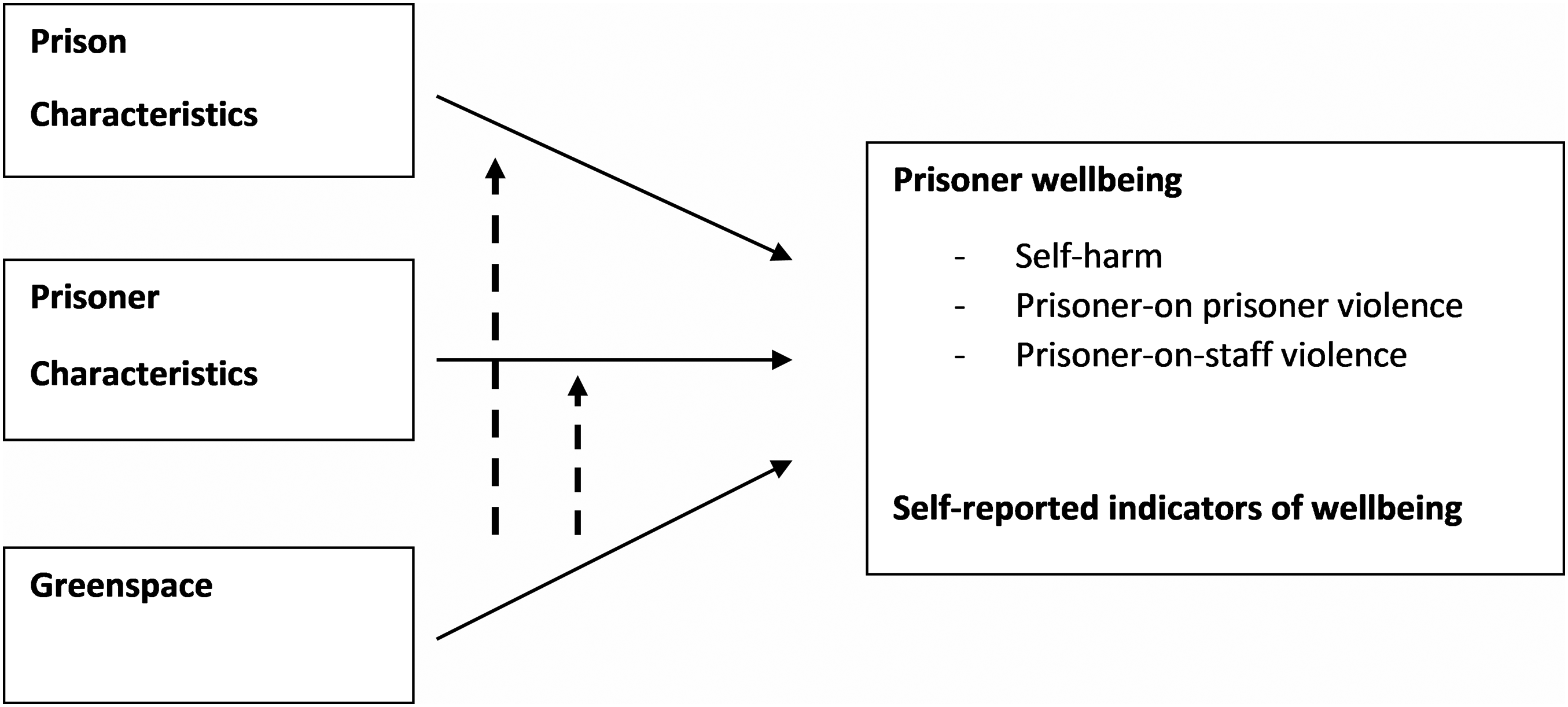
Drivers of prisoner well-being.
Thus, we capture the effects of a wider set of factors related to deprivation theory and management style and we also include elements of importation theory. In so doing, our aim is not to examine whether management, deprivation or importation theory provides a better explanation for self-harm and prison violence. Instead, by controlling for a wider range of factors that are related to these theories we aim to obtain a better picture of what is important for prisoner well-being. 1 This is also facilitated by the use of alternative dependent variables. As indicated in the right-hand side of the figure, we reproduce anayss following Moran et al. (2021a, 2022a, 2022b) by using self-harm and prison violence as proxy indicators of well-being, but in addition we introduce several alternative dependent variables that are more directly linked to prisoners’ self-reported indicators of well-being. This links the present study more closely to wider studies on greenspace and well-being that usually rely on such self-reported indicators (see e.g. Krols et al., 2022; Sang et al., 2016).
Furthermore, the inclusion of prisoner characteristics allows us to extend our analysis of the importance of greenspace. One advantage is that by controlling for a wider set of variables that may be related to prisoner well-being, we lower the risk that the estimated effect of greenspace is affected by omitted variable bias. The second advantage is that it allows us to examine whether particular prisons are more likely to benefit from greenspace. This is indicated in Figure 1 by the dashed lines between the solid lines indicating the relationships between prison(er) characteristics and well-being. In contrast to most variables of deprivation theory that are seen to increase prisoner misconduct, greenspace is expected to reduce prisoner misconduct. We believe it to be likely that greenspace also impacts on the relationship between variables of both importation and deprivation theory and well-being. For instance, it may be that young prisoners, who are commonly found to experience more problems adjusting to prison life, may find this easier to do so when a prison offers sufficient greenspace. Similarly, the anxiety experienced by prisoners awaiting trial and/or sentencing may be lower in the presence of sufficient greenspace. If this is the case, our findings will have important implications for policymaking in prisons with a high presence of young or un-sentenced prisoners.
To estimate the relations depicted in Figure 1, we estimate a number of specifications of the following regression model:

The vector ‘Prisonerchars’ contains a set of characteristics of the prison populations. We collated data on prison population characteristics from inspection reports produced by His Majesty's Inspectorate of Prisons (HMIP). HMIP is an independent inspectorate providing independent scrutiny of the conditions for and treatment of prisoners in England and Wales. Prisons are inspected at least once every five years, with most establishments inspected every 2–3 years. Inspection of a prison normally spans a period of two weeks, the first week of which involves a full survey of a random sample of the prison population conducted by a team of HMIP researchers. Prison-aggregated results are made publicly available on the HMIP website. In order to align with the period covered by the dependent variables, we collated data from appendices of HMIP reports conducted in or around 2014 (the year of publication of the reports that we used ranges from 2012 to 2016) 2 .
One variable related to prisoner characteristics is the extent to which a prison houses un-sentenced prisoners. We expect a positive relationship between this variable and the dependent variables, given findings from previous research that show that prisoners awaiting trial and/or sentencing are more likely to feel distressed or to engage in self-harm (Arbach-Lucioni et al., 2012; Hawton et al., 2014; Schenk and Fremouw, 2012). To capture the effect of un-sentenced prisoners we construct a dummy variable that takes the value of 1 for prisons with an above sample mean percentage of un-sentenced prisoners.
Another variable capturing prisoner characteristics is the percentage of young prisoners. As many studies have found, youth is one of the strongest predictors of self-harm and prison violence (Fazel et al., 2016; Quick et al., 2023). To capture this effect, we use two different variables. The variable ‘age18–21’ is measured as the percentage of the prison population falling into the 18–21 age bracket; ‘age 22–29’ is the percentage of the prison population in the 22–29 age bracket.
Next, we control for the ethnic composition of the prison population. As Steiner and Wooldredge (2009) note, ethnicity is frequently included in modelling prisoner behaviour, often without a clear justification or hypothesis. It is beyond the scope of this paper to outline the extreme complexity and time- and context-specificity of any hypothesised relationship between ethnicity and indicators of well-being. However, for the purposes of our present analysis, we suggest that, as Steiner and Wooldredge (2009) venture, the frequent equal status contact occurring between individuals of different ethnic backgrounds in diverse prison populations may be a protective factor reducing tension within the overall prison population. We use two variables here. The first is the percentage of the prison population that is of British nationality. We expect a positive association with the dependent variables, since a high percentage of one nationality may lead to tensions with prisoners of minority nationalities. Since there is considerable ethnic variation within the population of British nationals, our other variable is ‘ethnic fractionalisation’, defined as
We also control for the average sentence length of the prison population. Prisoners serving long sentences are less likely to engage in prisoner misconduct (Quick et al., 2023; Reidy and Sorensen, 2018; Toman et al., 2015), arguably because they have come to terms with their sentence and have adjusted to prison conditions. Using information on groups of prisoners with different sentence lengths, we calculate an indicator of average prison sentence length, using the percentage shares of the groups of prisoners as weights.
Finally, we include two variables that relate to the extent that a prisoner is isolated from the environment and the outside world. Overall, studies that examine the effect of prison visitation find that visits from friends and family have beneficial effects on prisoner well-being and lower prisoner misconduct and recidivism (De Claire and Dixon, 2017; Meyers et al., 2017). To capture this effect, we include a variable labelled ‘difficult visits’, measured as the percentage of prisoners indicating that it is (very) difficult for their family and friends to visit them. The other variable that we include is ‘low outside’, measured as the percentage of prisoners that do not (want to) go outside + the percentage of prisoners that go outside only once or twice a week. We interpret this variable as an indicator whether inmates isolate themselves from social life inside the prison.
Next to the controls for prisoner characteristics we also include several variables capturing prison characteristics. We add prison dummy variables related to prison type and security levels. Based on findings presented in Moran et al. (2021a), we add a dummy variable for female prisons when estimating the model with self-harm as dependent variable. We add dummy variables for young offenders’ institutes and high-security prisons when using violence among prisoners as dependent variable and for Category C prisons when using violence towards staff as dependent variable. Furthermore, we collected data from the prisons on three prison-level variables that in Moran et al. (2021a) we found to be associated with prisoner well-being: size (number of prisoners in 2014), prison structure (dummy variable identifying prisons that started operating in the nineteenth century) and an inverse indicator of the level of crowding (official operational capacity of a prison divided by the actual number of prisoners in 2014). 3
Empirical findings
Greenspace, prison population characteristics, self-harm and violence
Table 1 presents the main findings from estimating various specifications of regression model (1) for the three dependent variables. Columns 1–4 report the results with self-harm as the dependent variable. In column 1 we report the estimated coefficients of greenspace, female prisons and the prison population characteristics. In line with our findings in Moran et al. (2021a), the estimated coefficient of greenspace is significant and negative, indicating that the negative association of greenspace with self-harm persists when we control for various prisoner characteristics unaccounted for in previous research. The estimated effects of these characteristics are in line with expectations. For example, the estimated significant positive coefficient of the two young age category variables confirms that self-harm is more common amongst younger prisoners. Also, the estimation reveals that impediments to visitation are positively associated with self-harm.
Effects of greenspace and prison(er) characteristics on self-harm and violence.
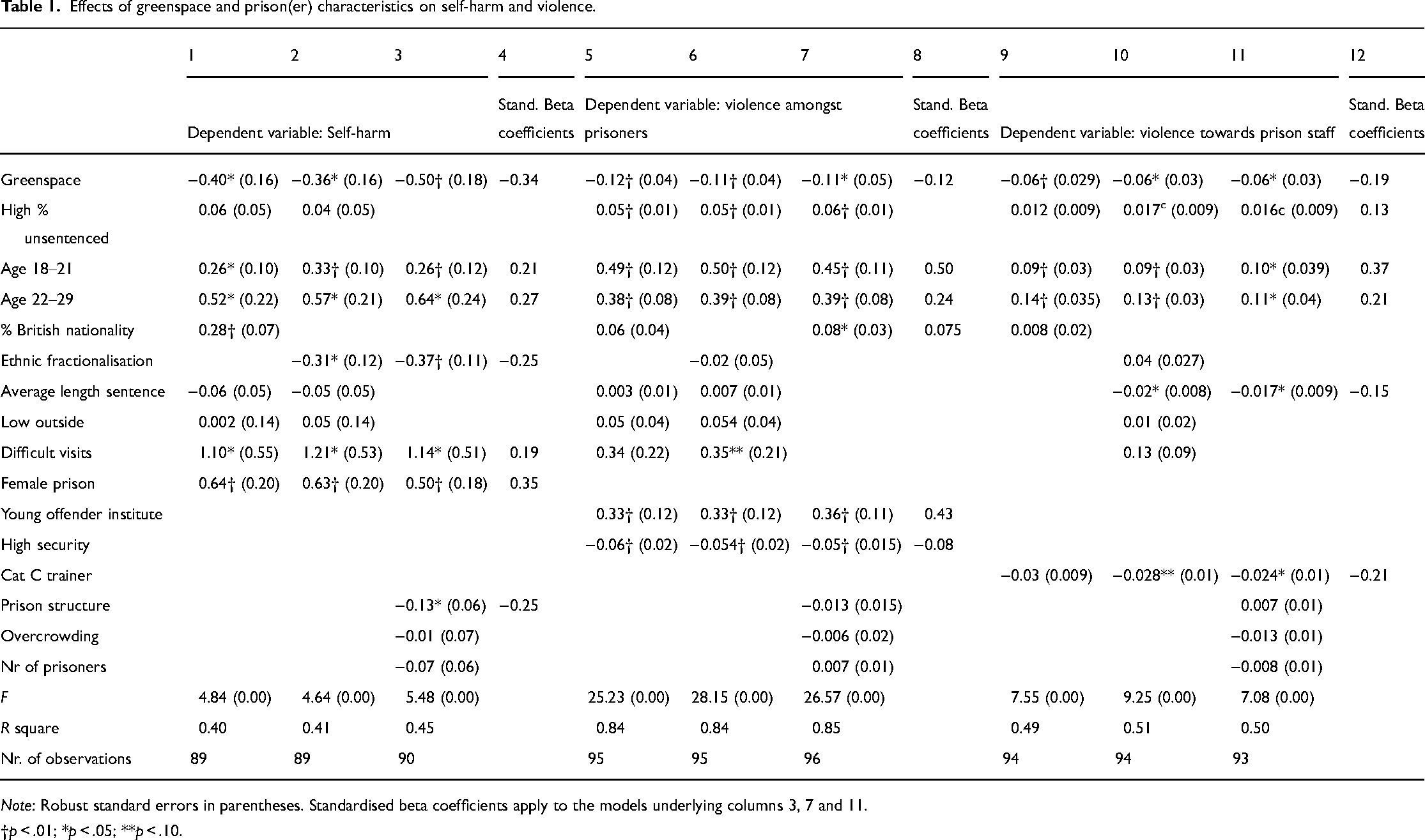
Note: Robust standard errors in parentheses. Standardised beta coefficients apply to the models underlying columns 3, 7 and 11.
†p < .01; *p < .05; **p < .10.
The estimated association of ‘percent British nationality’ is also significant and positive, indicating that prisons with a relative high percentage of British nationals are characterised by a significantly higher level of self-harm. As shown in column 2, ethnic fractionalisation carries an estimated significant negative coefficient, indicating that prison populations with a higher degree of ethnic diversity have lower rates of self-harm. As discussed earlier, we interpret these findings as an indication that more ethnically diverse prison populations are less likely to foster tension between different ethnicities or nationalities.
Column 3 reports the findings from including the three prison characteristics as used in Moran et al. (2021a). This inclusion does not affect the estimated significance of the prisoner characteristics, indicating that they are relevant for understanding levels of self-harm. Importantly, their inclusion also does not change the significance of the estimated negative association of greenspace with self-harm.
Column 4 presents the standardised beta coefficients of the control variables that carry significant coefficients. By capturing by how many standard deviations the dependent variable changes following a one standard deviation change in the independent variables, standardised beta coefficients enable us to compare the effects of the control variables. We find that the dummy variable identifying female prisons and the variable greenspace appear to exercise the largest effect on self-harm, followed by the variables age 22–29, century old and ethnic fractionalisation.
Columns 5–8 report the results with violence between prisoners as dependent variable. The estimated association of greenspace is significant and negative, confirming that prisons with more greenspace have significantly lower levels of violence between prisoners. The variable identifying prisons with a high percentage of unsentenced prisoners carries a positive coefficient, in line with the notion that the high presence of such prisoners leads to unrest and misconduct. The other factor important for prison violence is prisoners’ age, as the variables age 18–21, age 22–29 and the Young Offenders Institute dummy variable carry positive coefficients. The standardised beta coefficients (column 8) also indicate that the effects of the young prisoner variables are the most important, followed by greenspace.
Columns 9–12 repeat the estimations with violence towards prison staff as dependent variable. The importance of greenspace is confirmed, as is the share of young prisoners in the prison population (age 18–21 and age 22–29). In addition, we also find that the average sentence length is negatively associated with prison violence, in line with findings from other studies. Considering the relative importance of the effects (column 12), a high level of young prisoners again appears to exercise the strongest effect on violence, followed by greenspace.
Summarising, the results in Table 1 identify several prisoner characteristics that are significantly associated with self-harm and violence. This is a clear extension of our previous research on the UK that has focused primarily on the effects of prison characteristics. Furthermore, the results show that when we control for variables capturing prison categories, prison characteristics and prison population characteristics, there is no change in the significance of the negative association of greenspace with the dependent variables, as initially demonstrated in Moran et al. (2021a, 2022a, 2022b). In this augmented analysis greenspace persists to exercise a significant and dampening effect on both self-harm and violence, further supporting the notion that greenspace is important for well-being in the prison system of England and Wales.
Greenspace and self-reported prisoner well-being
In the next step of our analysis, we replace self-harm and prison violence with self-reported indicators of well-being. The use of self-harm/violence indicators is based on the plausible assumption that they approximate a lack of well-being (Moran et al., 2021a). However, by further examining whether greenspace is associated with other indicators of prisoner well-being, we can obtain further evidence of the role of greenspace. We use four different dependent variables that relate to prisoner well-being. One is the percentage of prisoners indicating that they experience mental health and/or emotional problems. Second, we construct a variable by performing a principal component analysis on the variables percentage of prisoners reporting mental or emotional problems, percentage of prisoners reporting having developed a drug habit in prison and percentage of prisoners reporting having started to misuse medications in prison. We take the first principal component as an indicator of the occurrence of problems with mental health and drugs/medication dependency, labelled ‘PC1_mental health’. A third dependent variable is measured as the percentage of prisoners indicating that they do not feel respected, and the percentage of prisoners feeling unsafe. The fourth variable is a multidimensional indicator of factors related to negative well-being: percentage of prisoners not feeling respected; percentage feeling unsafe; percentage reporting mental and/or emotional problems; percentage reporting having developed a drug/medications habit in prison; percentage reporting having experienced abuse from other prisoners; percentage reporting having experienced abuse from staff; and percentage having officially reported abuse from staff to the prison authorities. We perform a principal component analysis on this set of variables and use the first principal component which we label ‘PC1_multidimensional’ as an indicator of this broad indicator of negative aspects of prisoner well-being.
Table 2 presents the results from estimating the model with the various indicators of self-reported well-being. Columns 1–5 use mental health and emotional problems as dependent variables. We first estimate the associations of greenspace and prison type: greenspace (female prison, local prison) is negatively (positively) associated with mental health problems, Next, we include characteristics of prison populations and prisons. In all the estimations, the estimated coefficient of greenspace is significant and negative. Surprisingly, the effect of the age category age 21 is negative, which goes against the common notion that young people are more susceptible to mental health problems (e.g. Patel et al., 2007). A possible explanation for the negative association is that young prisoners may be less likely to report experiencing these problems. The estimated positive coefficient of the variable British and the negative coefficient of ethnic fractionalisation indicate that ethnic diversity exercises a positive effect on mental health. Of the prison characteristics, the estimated effect of the variable ‘Century old’ is negative, in line with ourfindings in Moran et al. (2021a). The coefficient of the inverse indicator of overcrowding also carries a negative sign, indicating that overcrowding is associated with a higher occurrence of mental health problems. Finally, looking at the standardised beta coefficients in column 5, greenspace is third in importance, after female prison type and the effect of ethnic fractionalisation.
Effects of greenspace and prison(er) characteristics on self-reported indicators of well-being.
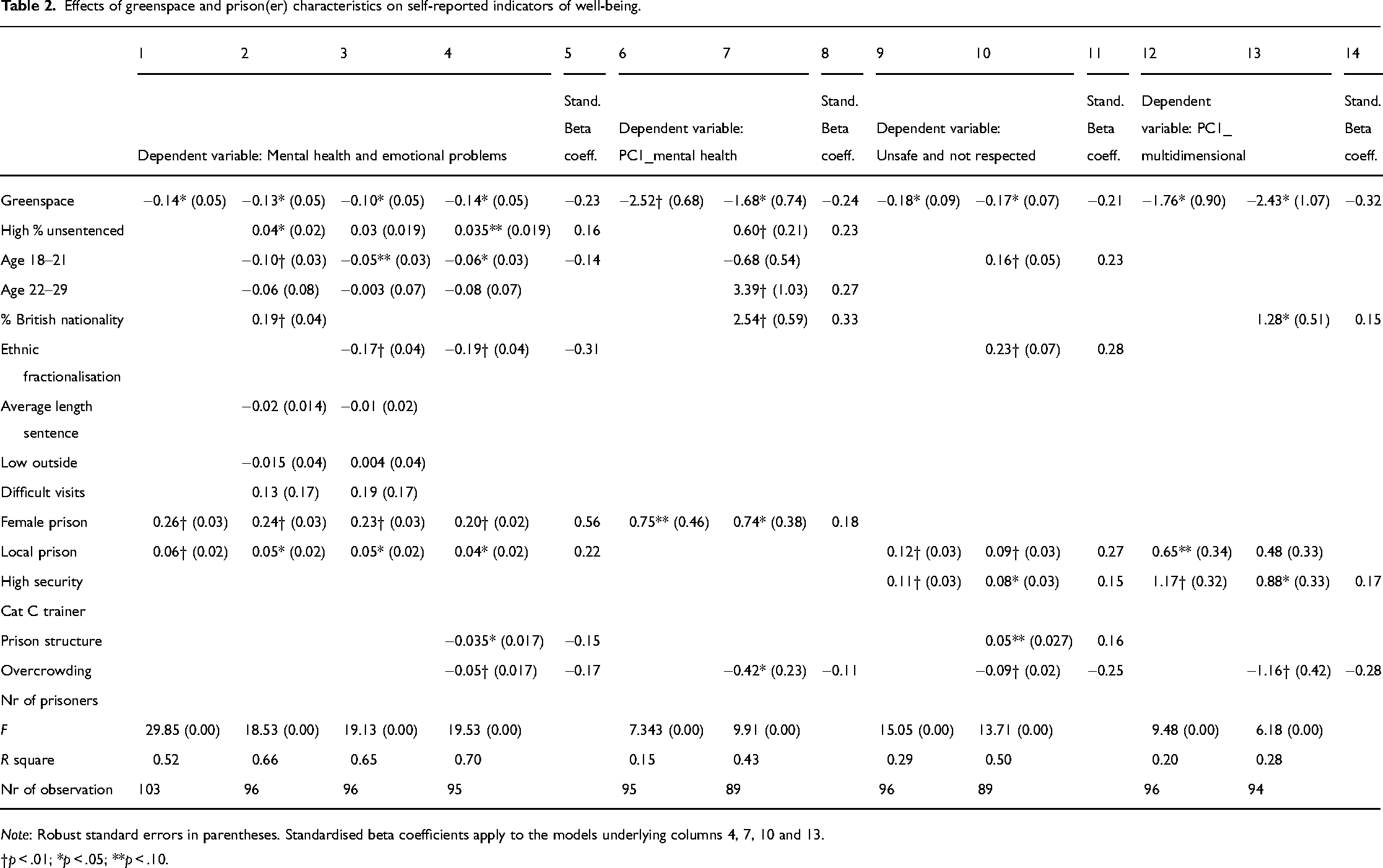
Note: Robust standard errors in parentheses. Standardised beta coefficients apply to the models underlying columns 4, 7, 10 and 13.
†p < .01; *p < .05; **p < .10.
The remainder of Table 2 shows the results from using the dependent variables PC1_mental health, feeling unsafe and not respected, and the multidimensional indicator PC1_multidimensional. In all estimations greenspace carries a significantly and negatively signed coefficient, strongly indicating that greenspace is associated with these various types of prisoner well-being. Other key findings reported in Table 2 are that younger prisoners are more likely to experience problems with drug/medication abuse (age 22–29) and to feel disrespected and unsafe (age 18–21). The ethnic composition of the prison population appears to be important both for mental health and substance abuse and for the multidimensional indicator of prisoner well-being. Depending on the indicator of well-being, prison category variables capturing female prisons and local prisons exercise significant effects. As for prison characteristics, the estimated effect of overcrowding is significant in all the estimations, indicating that, like greenspace, overcrowding appears to be important for all these types of prisoner well-being. Looking at the standardised beta coefficients in column 14, greenspace appears to exercise the largest effect on multidimensional well-being, followed by overcrowding.
Interactions between greenspace and prisoner characteristics: When is greenspace most beneficial?
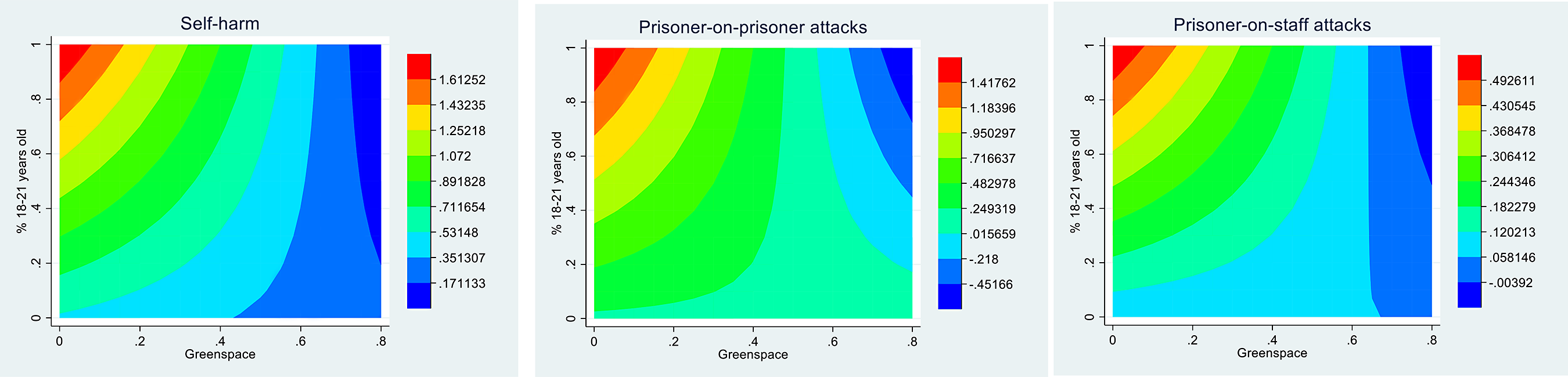
Next, we address the question whether we can identify characteristics of prisons populations that are related to the strength of the association between greenspace and well-being (irrespective of how we measure well-being). Considering first self-harm and violence, the results in Table 1 show that sentenced/unsentenced status and age are both important prisoner characteristics. To further examine their importance in relation to greenspace, we re-estimated the models underlying columns 3, 7 and 11, adding interaction terms between the prisoner characteristics and greenspace. 4 Using the results of these estimations, we estimated predictive margins of the interaction terms which we present graphically in Figures 2 and 3.
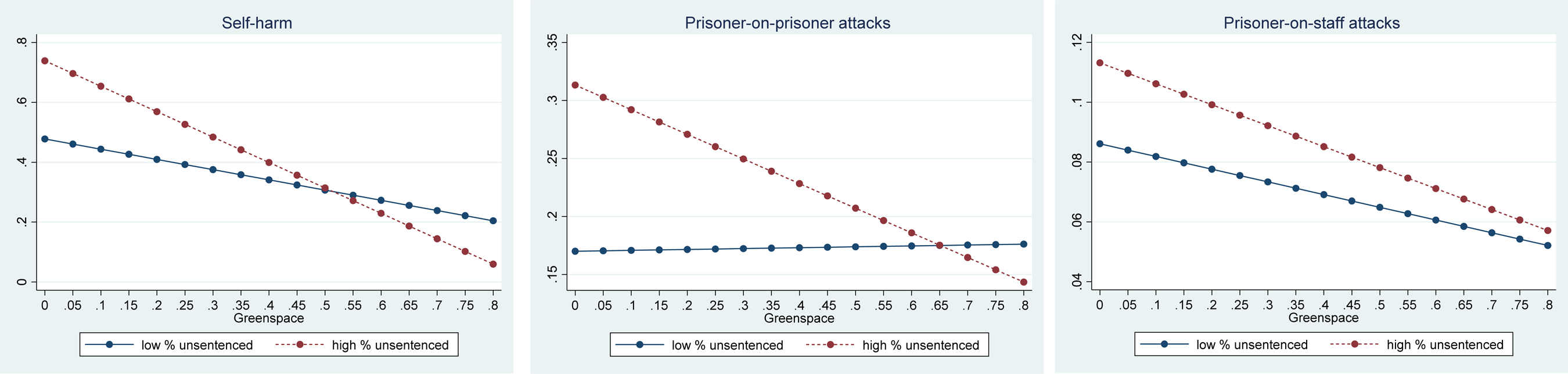
Predictive margins of interaction between greenspace and high percent unsentenced prisoners.
Predictive margins of interaction between greenspace and percent prisoners age 18–21.
Figure 2 presents the results of the interaction between greenspace and the dummy variable identifying prisons with a high percent of unsentenced prisoners. The general importance of greenspace is confirmed; irrespective of whether the percent of unsentenced prisoners is low or high, more greenspace appears to be associated with less self-harm and violence. The exception to this is the case of violence between prisoners in prisons with a low percentage of unsentenced prisoners – where violence remains low at all levels of greenspace. Furthermore, irrespective of which dependent variable we consider, lower rates of self-harm and violence are more strongly associated with larger amounts of greenspace in prisons with a high percentage of unsentenced prisoners. This suggests that increasing greenspace couldhave a particularly pronounced effect on well-being in establishments holding many prisoners awaiting trial or sentencing.
Figure 3 shows the findings on the interaction between greenspace and percent of prisoners aged 18–21. Since both variables are continuous, plotting the predictive margins would result in a three-dimensional surface. To simplify visualisation, we estimated predictive margins of the interaction for a set of pre-specified values of the two variables (indicated on the horizontal and vertical axes). We plot these values against the estimated predictive margins in contour plots, whereby differently coloured areas capture different ranges of the predictive margins. Taking the first contour plot of Figure 3 as an example, the red area – showing the highest level of self-harm – is characterised by low greenspace and a high percentage of prisoners aged 18–21. In contrast, a high level of greenspace and a low share of young prisoners is accompanied by a relatively low level of self-harm, indicated by the dark blue area in the bottom right of the contour plot. Importantly, the association between lower self-harm when greenspace is greater is stronger when the percentage of young prisoners is high. Starting at the top left of the contour plot, more greenspace is associated with a more rapid movement between the ranges of the predictive margins compared to a similar-sized increase in greenspace when the percentage of young prisoners is low. The other two plots indicate that a similar difference exists for violence amongst prisoners and violence towards staff members. This suggests that an increase in greenspace could be particularly effective in terms of improving wellbeing when targeted at prisons with many young prisoners. 5
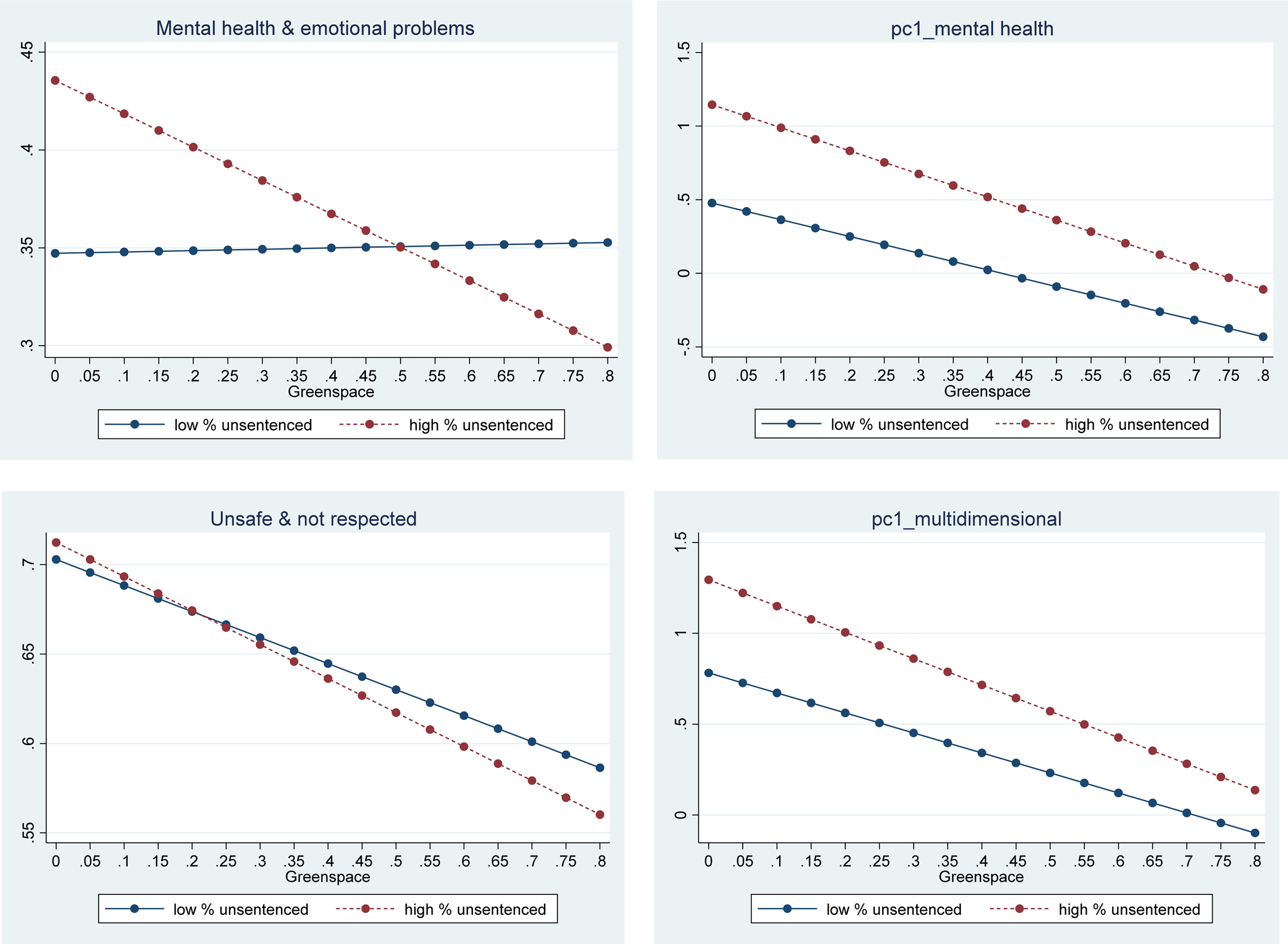
Next, we examine the interactions between greenspace, high percentage of un-sentenced prisoners and percentage of young prisoners for the models that use the alternative dependent variables. In addition, we also examine the interaction between greenspace and overcrowding, given the findings in Table 2. Figure 4 presents the plots for the interaction between greenspace and high percentage of unsentenced prisoners. There is no difference in the strength of the association with greenspace when considering feelings of lack of safety or respect. The outcome variables PC1_mental health and PC1_multidimensional is more strongly associated with greenspace in prisons with a high percentage of unsentenced prisoners. The association in prisons with a high percentage of unsentenced prisoners is the strongest when considering mental health and emotional problems as outcome variable.
Predictive margins of interaction between greenspace and high percent of unsentenced prisoners.
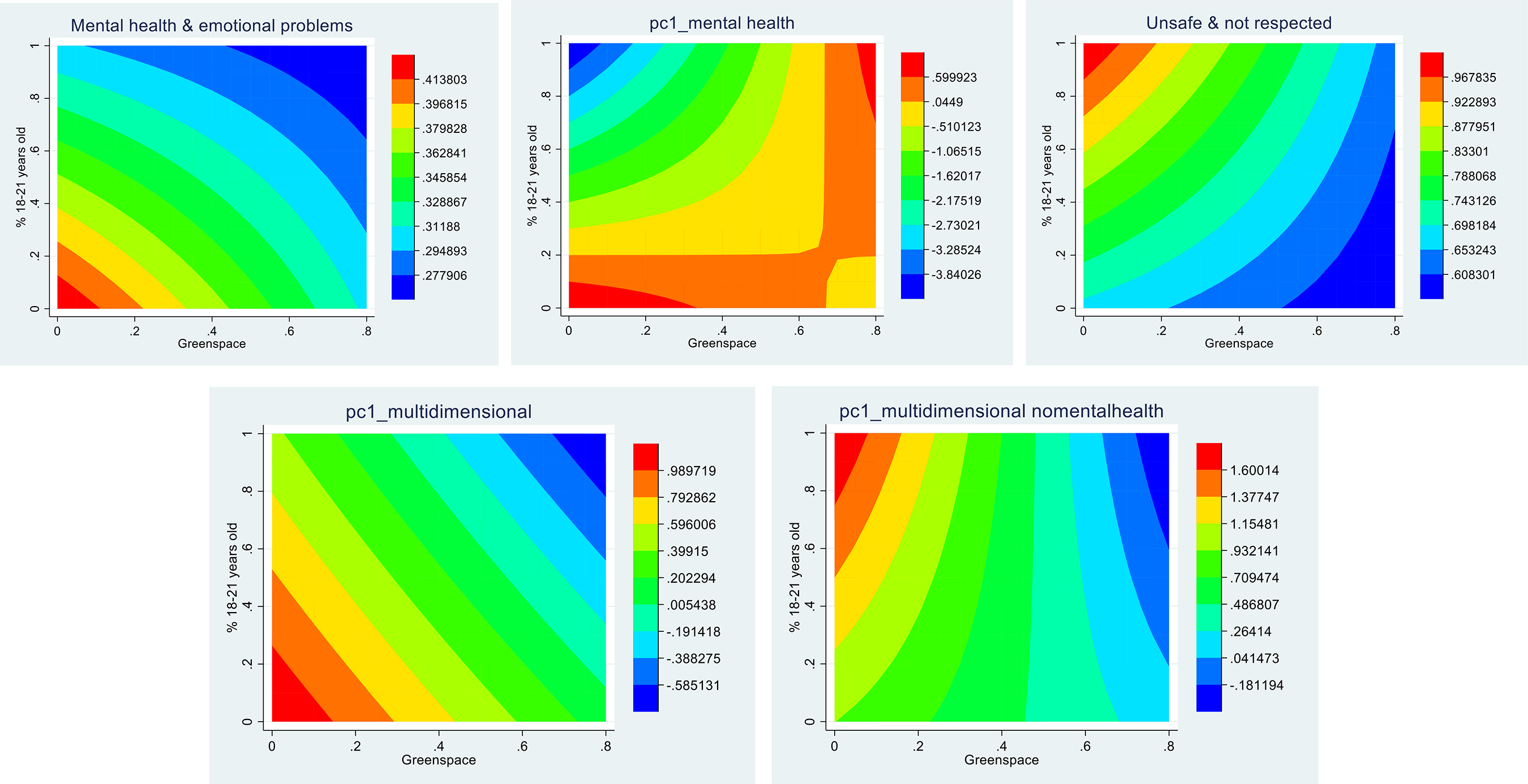
Figure 5 presents the plots for the interaction between greenspace and the percentage share of 18–21-year-old prisoners. The findings with mental health and emotional problems or PC1_mental health as dependent variable suggest that prisons with a low percentage of young prisoners are the most affected by these problems. Although this is in line with the finding in Table 2 that prisons with a high percentage of young prisoners have significantly lower levels of mental health problems, this may reflect the suggestion that young prisoners are less willing or able to indicate that they are experiencing such problems. 6 The plot with unsafe and not respected as dependent variable is in line with the findings from Figure 3: prisons with a high percentage of young prisoners indicate a stronger association between well-being and greenspace compared to prisons with a low percentage of young prisoners.
Predictive margins of interaction between greenspace and percent prisoners age 18–21.
The last two plots of Figure 5 show the results for the interaction between greenspace and the multi-dimensional indicator of well-being. Given the similarity with the plots for mental health and PC1_mental health, it is likely that the plot at the bottom left is also affected by the negative relationship between percentage young prisoners and reporting mental health problems. Therefore, we also re-estimated the model with an interaction between greenspace and the first principal component of all the self-reported indicators of well-being except mental health. As the plot in the bottom right shows, doing so gives results that suggest that prisons with a high percentage of young prisoners and low greenspace are characterised by the lowest level of well-being. Again, more greenspace in prisons with a high presence of young prisoners is associated with greater well-being than a similar level of greenspace in prisons with a low presence of young prisoners.
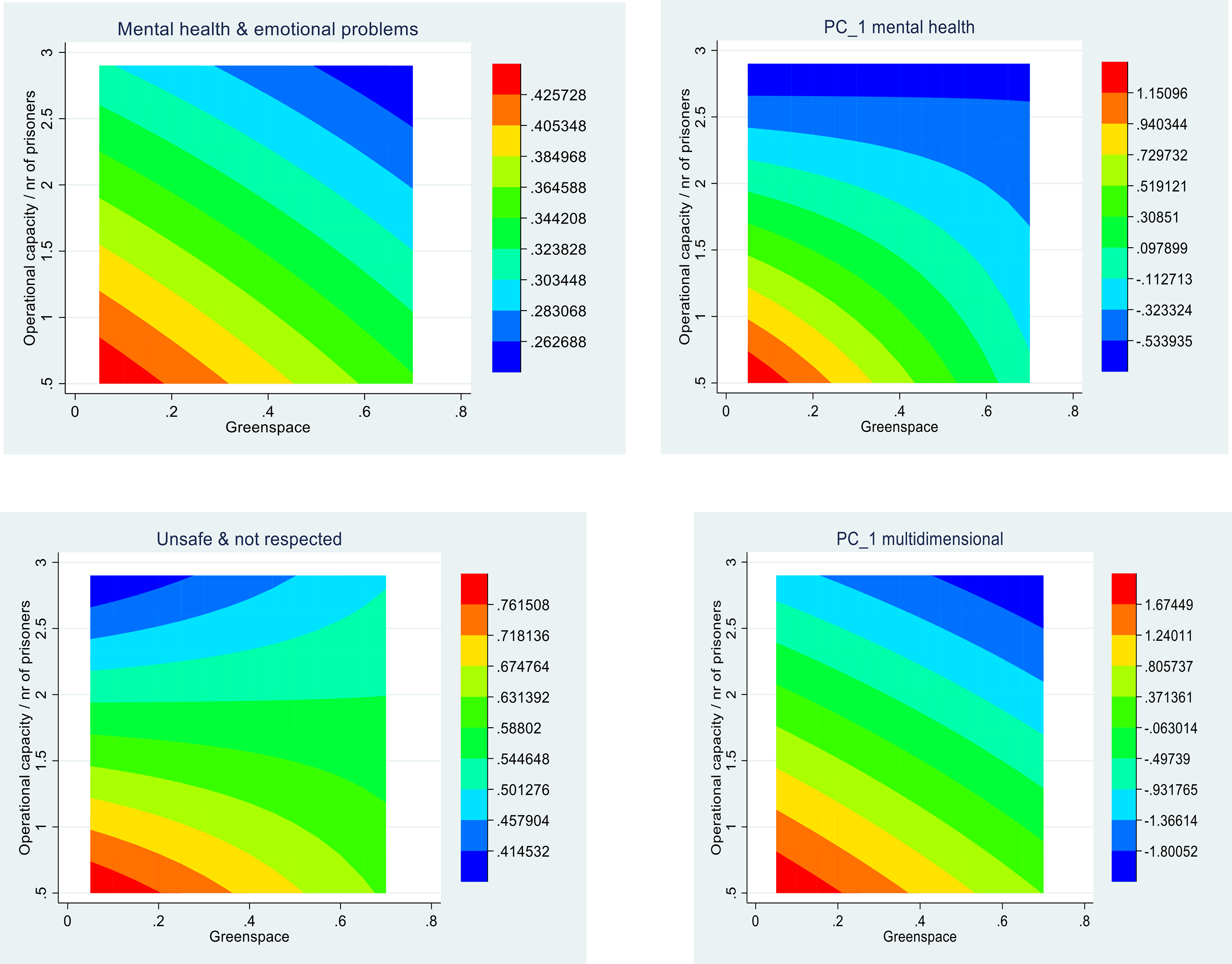
Finally, Figure 6 depicts the findings on the interaction between prison overcrowding and greenspace. Given that overcrowding is measured as the ratio of a prison's operational capacity over its actual number of prisoners, a low value indicates that a prison is relatively overcrowded. The negative effect of overcrowding on well-being is confirmed in all four contour plots, with the red area located in the bottom left of the plots. Also, more greenspace has the strongest association when the level of the overcrowding variable is high, especially when using PC1_mental health and feelings of lack of safety and respect as outcome variables. This indicates that greenspace is likely to impact particularly strongly on prisoner well-being in prisons with high levels of overcrowding.
Predictive margins of interaction between greenspace and overcrowding.
Greenspace, self-reported well-being, and self-harm and violence
So far, our analysis shows that greenspace is significantly associated with self-harm and prison violence, even when we control for the effects of both the characteristics of prisons and their populations. Furthermore, our results also show that greenspace is associated with alternative dependent variables that more directly capture prisoners’ self-reported well-being. What these results do not consider, however, is that there may be inter-relationships between self-reported well-being, self-harm and violence and that greenspace may potentially impact upon these interrelationships.
Table 3 shows the results from estimating bivariate regression models with self-harm or violence as dependent variables, and self-reported indicators of prisoner well-being as explanatory variables. As the results show, there are clear and significant associations between the various indicators of self-reported prisoner well-being, and self-harm or violence. This suggests that we can think of self-harm and violence as outcome variables that are influenced by the various indicators of self-reported well-being. We therefore may need to account for this relationship in our estimations of the relationship between greenspace and well-being, since greenspace is associated both with the outcome variables and with self-reported well-being.
Self-harm, prison violence and prisoner well-being.
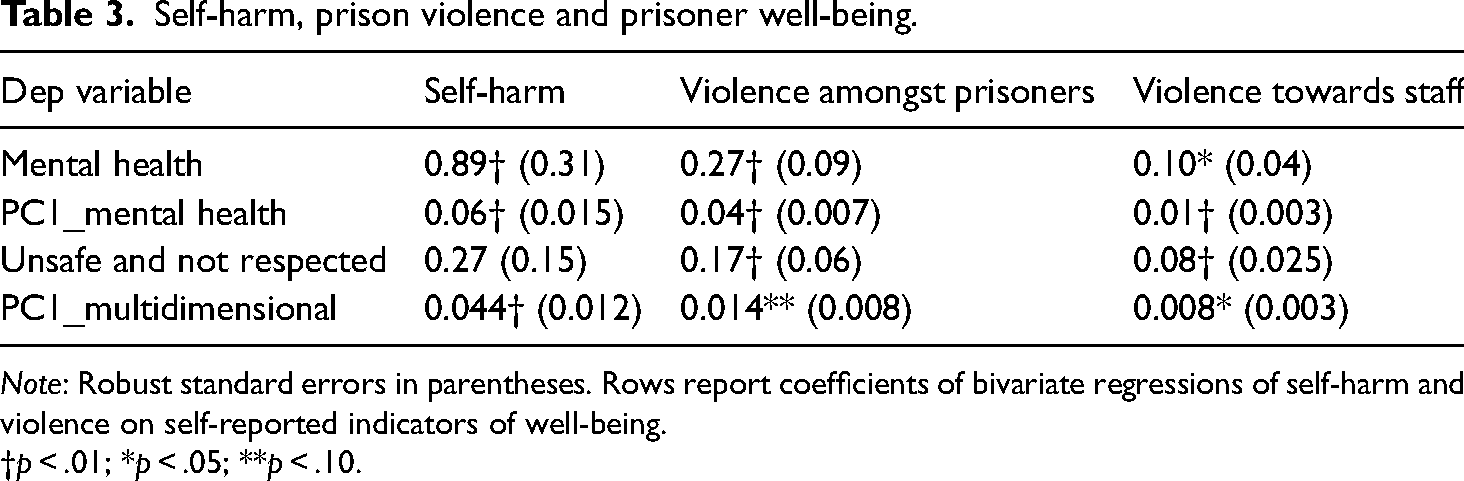
Note: Robust standard errors in parentheses. Rows report coefficients of bivariate regressions of self-harm and violence on self-reported indicators of well-being.
†p < .01; *p < .05; **p < .10.
One approach to estimate the effect of prisoner well-being and greenspace in a multivariate setting is to apply ordinary least square (OLS) techniques to the following regression model:
Interpreting the estimated effects of greenspace and mental health (Z) from model 2 is problematic, however. Greenspace impacts on Z (see Table 2), which in turn impacts on Y (see Table 3), while greenspace also impacts directly on Y (see Table 1). To assess whether and to what extent this biases the OLS estimation of model 2, we therefore also estimate the following system of equations using three stages least squares (3SLS) techniques:


In the first stage, we regress greenspace on those prison category dummy variables that are not significantly associated with prisoner mental health, self-harm and prison violence. In the second stage, we regress prisoner well-being on the instrumented variable greenspace. The advantage of this approach is that the third stage estimation provides unbiased estimates of the effects of both greenspace and self-reported well-being on self-harm and prison violence and that it indicates whether there is also an indirect effect of greenspace on self-harm and violence running via the relationship of greenspace with self-reported well-being.
Table 4 shows the results from estimating models 2 and 3a–c using mental health as an indicator of prisoner well-being and self-harm or violence as dependent variable. The OLS results in column 1 indicate that both greenspace and mental health are positively associated with self-harm. However, the findings from the 3SLS estimation (column 2) are substantially different. The estimated effect of greenspace is much larger, indicating that – after taking out any effect on mental health – the negative association of greenspace with self-harm is much larger. As for the effect of mental health, the estimated negative effect indicates that a higher occurrence of mental health problems leads to a decrease in the occurrence of self-harm. This seems to be a surprising result, but may reflect a self-awareness effect. Self-harming may be used as a coping tool by prisoners who are insufficiently aware that they are suffering from mental health and emotional problems to seek assistance. If so, this would show up as a negative association between self-reported mental and emotional health problems and self-harm. 7
Greenspace, mental health, self-harm and violence: OLS and 3SLS results.
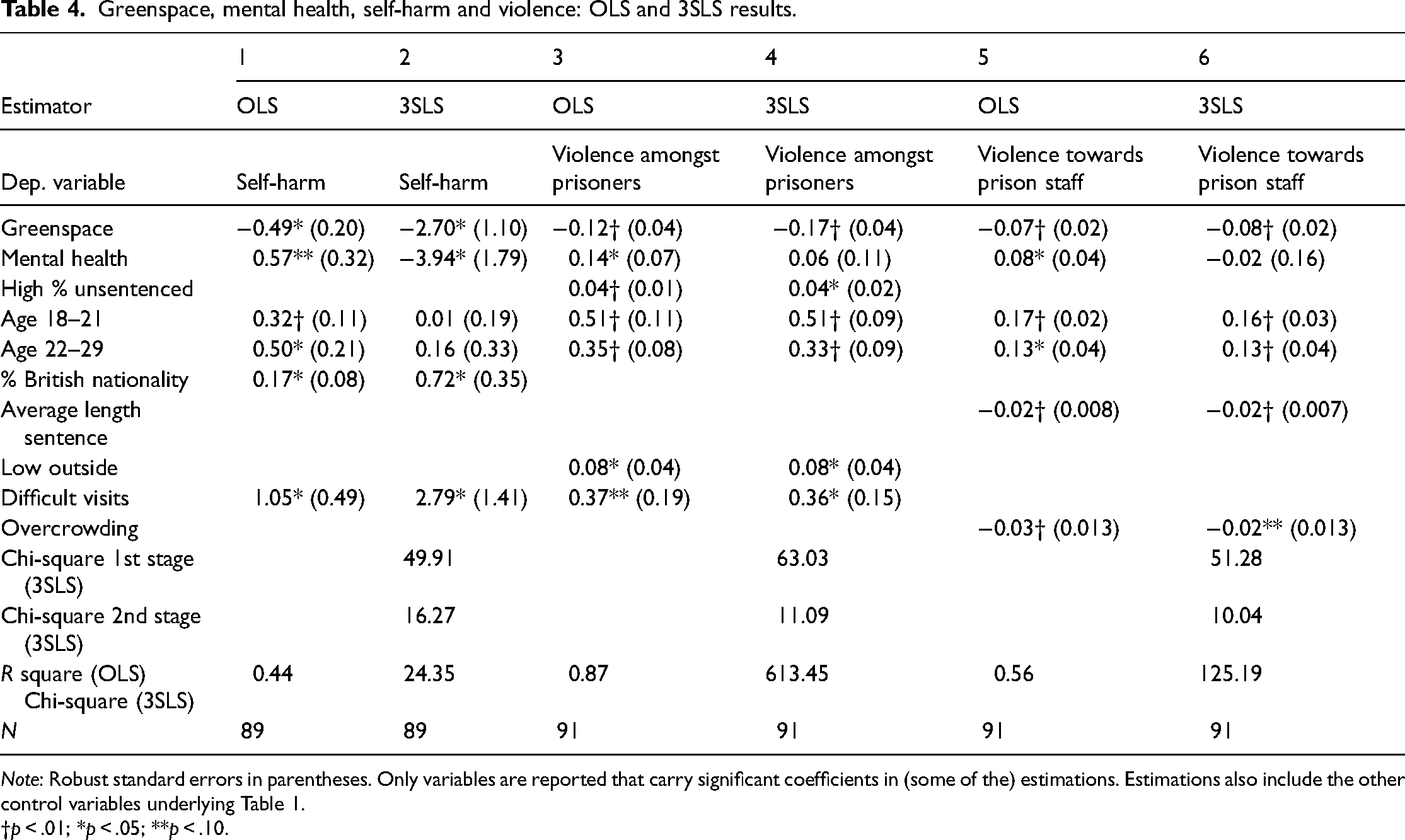
Note: Robust standard errors in parentheses. Only variables are reported that carry significant coefficients in (some of the) estimations. Estimations also include the other control variables underlying Table 1.
†p < .01; *p < .05; **p < .10.
The results in columns 3–6 are from estimating the regression model with prison violence as dependent variable. The OLS estimations produce significant positive associations of both greenspace and mental health. The 3SLS estimations confirm the effect of greenspace but also show that the effect of mental health turns insignificant. This indicates that although mental health in associated with violence, this association is mediated by the relationship between greenspace and mental health. After taking out this relationship, there is no additional effect of mental health on prison violence.
Table 5 summarises the main results from estimating models 2 and 3a–c with PC1_mental health or PC1_multidimensional as indicators of self-reported prisoner well-being. Except for column 4, greenspace is always significantly negatively associated with self-harm and violence. As for prisoner well-being, there is a significant positive association of mental health and substance abuse with violence (column 6), even after accounting for the association of greenspace with prisoner well-being (column 10). This is also the case for the multidimensional indicator of prisoner well-being in the model with self-harm as dependent variable (column 4). In the other estimations, the association of prisoner well-being with the dependent variables turns insignificant in the 3SLS estimation. This change further underlines the importance of greenspace: not only does greenspace appear to exercise direct effects on self-harm and violence, it also appears to generate indirect effects via its relationship with self-reported prisoner well-being. Next to acting as an important transmitting channel of this indirect effect of greenspace, prisoner well-being also appears to exercise direct impacts on self-harm or violence in several of the estimations.
Greenspace, PC1_mental health, PC1_multidimensional, self-harm and violence: Summary of OLS and 3SLS results.
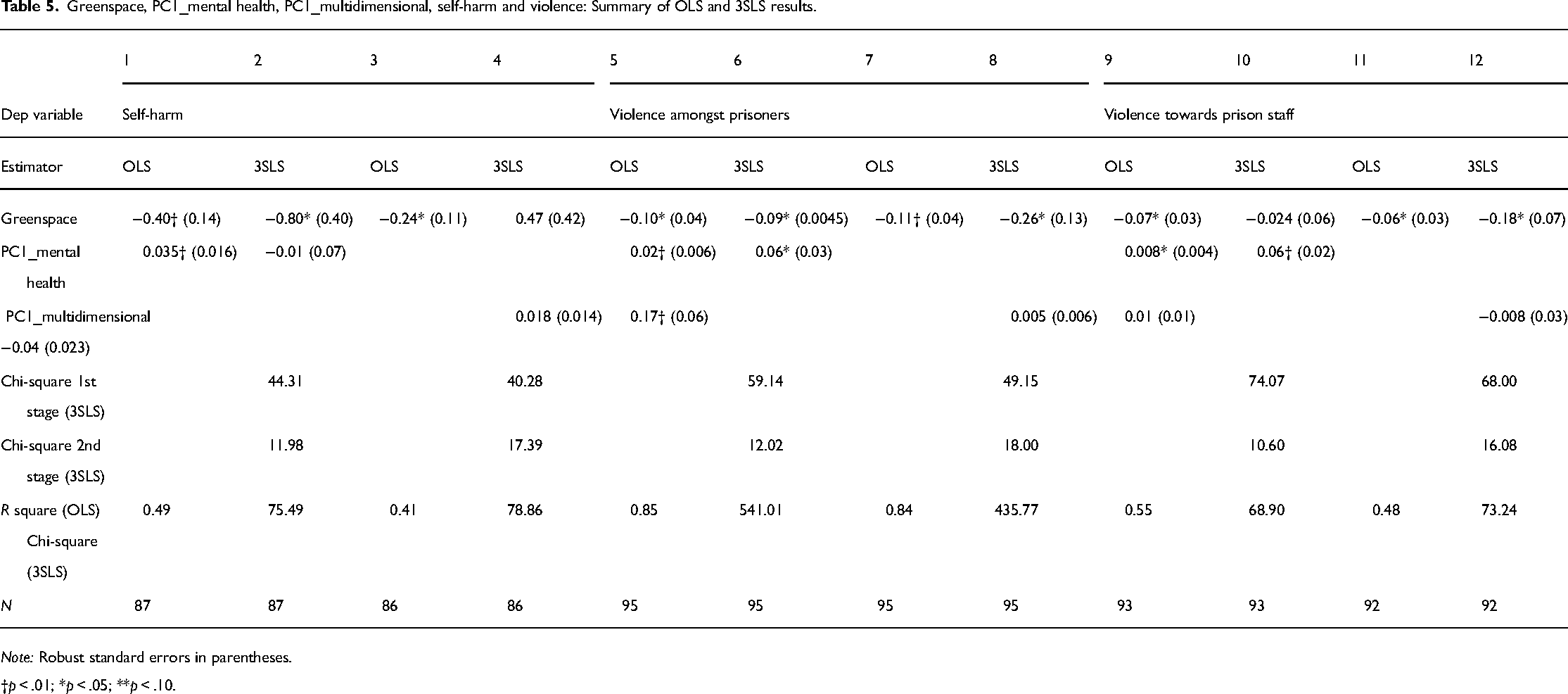
Note: Robust standard errors in parentheses.
†p < .01; *p < .05; **p < .10.
Conclusions
This paper presents an extension of our previous statistical studies of the relationship between greenspace and well-being in the prison system of England and Wales. The study makes several contributions to the existing literature. Firstly, while our prior studies have examined the association between greenspace and well-being while controlling for prison characteristics, this new research also controls for various characteristics of prison populations. Secondly, the study provides a broader assessment of the potential importance of greenspace by considering its relationship with a new set of indicators directly linked to prisoner self-reported indicators of well-being, in addition to self-harm and violence. Thirdly, it investigates conditions under which an increase in greenspace may exercise particularly meaningful effects on prisoner well-being.
The findings of this study reinforce our previous evidence that greenspace appears to be important in promoting well-being. All estimations demonstrate significant associations with well-being, whether captured by self-harm, prison violence, or various aspects of prisoner-reported well-being. Additionally, several prisoner characteristics are identified as important factors (such as a high presence of young or unsentenced prisoners) which are associated with lower levels of well-being. Depending on the outcome variable, sentence length, low number of visits, and an ethnically diverse prison population are also found to be important. As for prison characteristics, an important finding is that overcrowding is significantly negatively associated with self-reported well-being. Our analysis of conditions under which more greenspace is likely to foster particularly strong effects focuses on interactions between greenspace and the percentage of unsentenced prisoners, percentage of young prisoners, and overcrowding. Our findings are uniform in showing that more greenspace appears to have stronger effects in prisons that are characterised by a high presence of unsentenced prisoners, a high percentage share of young prisoners, and a high level of overcrowding.
The findings of this study have implications for both scholarship and policy-making in relation to prisoner misconduct and well-being. The theoretical implications are two-fold. First, prison systems, pre-prison characteristics of inmates and negative individual in-custody experiences are commonly seen as the primary drivers of misconduct and ill-being. Although our study confirms that these factors are important, we also find that greenspace is significantly associated with well-being. This strongly suggests that theories need to be extended by incorporating effects of broader prison characteristics such as greenspace that are not directly related to the set of prison(er) characteristics normally considered. Our findings showing that greenspace also interacts with several prison(er) characteristics underline the importance of such a consideration. The second theoretical implication pertains to the necessity of cultivating a more nuanced understanding of the underlying interconnections between various dimensions of prisoner well-being and misconduct. Our findings demonstrate that facets concerning the self-reported well-being of prisoners appear to serve as important inputs in processes generating self-injury and violence. Further investigation is essential to appraise the significance of these associations and to identify additional variables that may also play a contributory role in these processes.
The primary policy implication of this research is that greenspace may be a key element in supporting prisoner well-being. The estimated significant association of greenspace with well-being materialises in all our estimations, irrespective of the nature of the dependent variable, the inclusion of the wider set of control variables and whether or not we allow for interrelationships between input and output well-being variables. We appreciate that a general increase of greenspace in prisons is expensive and logistically challenging. However, our novel finding that more greenspace appears to be particularly influential under certain conditions is of key importance. Our findings suggest that if opportunities to increase greenspace are limited, then this alteration should be prioritised for prisons with a high percentage of unsentenced prisoners, many young prisoners, and/or high levels of overcrowding. Likewise, where a change in the population held in a particular prison is being contemplated, its (potential) provision of greenspace should be considered before it is used for the accommodation of young or unsentenced prisoners.
