



Abstract
The literature on the importance of procedural justice in policing is extensive. Using the context of information sharing in community policing, this paper argues that interactional, procedural and distributive justice are salient in interactions between the police and the public, both online and face-to-face. Structured interviews (n = 161) were conducted with members of young minority groups and intermediaries (who work with minorities and police agencies) across nine countries in Europe. Our analysis of barriers and facilitators to sharing information with the police highlights processes of interactional, procedural and distributive justice in building public confidence. We highlight theoretical and practical implications of relevance to policing internationally. Our findings show that demonstrating aspects of interactional justice (attitude and behaviour, accessibility and communication, personal contact and relationships); procedural justice (responsiveness and efficiency, data protection and security); and distributive justice (outcomes and effectiveness, equity in distribution of policing services) have a role in building public confidence and facilitating information sharing with police online and face-to-face. We conclude that in addition to micro-level interactions, meso-level social processes (e.g. community policing models and data protection and security procedures) can be useful in enhancing public confidence.
Keywords
Introduction
The willingness of members of the public to share information with the police is central to the operation of the criminal justice system. It is particularly important to explore determinants of information sharing at a time when people are living more of their lives online, especially in light of a global pandemic when face-to-face communication is restricted. Reporting on findings from the Unity Horizon 2020 project, a study of community policing with young minority ethnic people in nine European countries, this paper explores the importance of procedural justice for sharing information, both online and face-to-face. It highlights that, while procedural justice scholarship has led to important insights for policing, it has tended to foreground procedural justice over other types of ‘justice’ which, we argue, are also relevant. As Beugré and Baron (2001) note, procedural justice is one element of the broader concept of ‘organisational justice’, the other components of which are interactional justice and distributive justice. We argue that police–public relations are affected by all three, that is, the fairness of the manner in which they are treated, the operationalisation of procedures and the distribution of outcomes and resources (the components identified by Beugré and Baron, 2001).
The existing literature on procedural justice in policing has conflated aspects of procedural and interactional justice, but it is worth distinguishing between these types of justice in exploring information sharing. Our analysis demonstrates that public confidence in the police is engendered by elements of not only procedural, but also interactional and distributive justice, which is of relevance to sharing information in person, over the phone or online. We also argue that this public confidence will lead, not only to a greater willingness among the public to comply (as tends to be the focus of much procedural justice literature), but also to share information with the police. We conclude that in addition to micro-level interactions, meso-level social processes, such as models of policing, can be useful in enhancing public confidence.
In our study, we take information sharing 1 to refer to the exchange of personal information and valuable knowledge between the police and community members. This includes the identification of local policing issues through consultation with the public, the collection of information from residents on criminal events and antisocial behaviour and reporting back to the public on progress (Brogden and Nijhar, 2005; Trojanowizc and Bucqueroux, 1990). Community policing broadly refers to a policing style that prioritises a problem-solving and collaborative approach with members of the public. As community policing is by design fluid in its exact methods to reflect local needs and priorities, it is difficult to present a concrete description of what it entails (inter)nationally as it varies at a regional and local level. Community policing and information sharing (both face-to-face and online) are novel contexts in which to explore interactional, procedural and distributive justice. Furthermore, analysing data collected in nine countries across Europe allows us to draw out common themes and begin to identify differences in these contexts. As Roché and Oberwittler (2018) point out, procedural justice theory focuses on micro-level interactions, while macro-level (societal and political) conditions are often neglected in contemporary research. There is not the space in this paper to detail the meso context in each of the nine countries, especially as the exact expression of community policing will vary between all of them. However, we highlight some of the key themes for public confidence and information sharing across different contexts. Young minorities were the focus of this research given the importance, identified by partners across national contexts, of engaging them in community policing initiatives.
Although the recent policing-related procedural justice literature is more contextualised than previously (Tyler, 2014), and has explored to a limited extent distributive justice (e.g. Dirikx et al., 2012), this paper considers the importance of interactional, procedural and distributive justice for aiding understanding of the willingness of the public to share information online. We argue that understanding these factors is of relevance to communication with the police, especially in online fora where often there is little or no direct interaction when information is shared. We begin with a consideration of the existing scholarship of our main theoretical concepts: public confidence and procedural, interactional and distributive justice. We then discuss the research project on which our development of these theories is based, analyse our findings on determinants of information sharing with reference to these theoretical concepts and conclude by discussing the theoretical and practical implications.
Public confidence in the police
Assessments of public confidence are important to the development of police policy and practice (Jackson and Bradford, 2010). How exactly public confidence is measured, and thus what it means, can be variable. For example, Jackson and Bradford (2010) used data from the Metropolitan Police Public Attitudes Survey to suggest that trust in police effectiveness and fairness, as well as trust in police engagement and shared values, leads to an overall measure of confidence in policing. Tankebe (2010) focuses on three dimensions or proxy measures of public confidence in the police: perceptions of effectiveness, trustworthiness and procedural justice. Regarding procedural justice it is important to note the link between the quality of the interaction between a police officer and a member of the public and the impact this can have on public confidence, which is particularly important in relation to facilitating information sharing between the police and the public (Bottoms and Tankebe, 2013; Hohl et al., 2010). A citizen-focused policing approach (e.g. community policing) relies on regular information sharing with the public to achieve its goals, prioritising close relationships between the police and local communities (Casey, 2008). Community policing, which fosters an engagement-based approach can increase public confidence, and information sharing, in turn, supports community policing (Reisig, 2007). While these are all important dimensions in achieving public confidence in policing, most of the research to date on these matters does not consider the willingness of the public to share information, in a virtual as well as physical space, an element which our research will address.
Procedural, interactional and distributive justice
The current procedural justice approach to policing argues that when members of the public view the police as procedurally fair, police legitimacy, compliance with the law and cooperation with the police are all enhanced and confidence in the police grows (e.g. Jackson et al., 2012; Murphy and Cherney, 2011; Sunshine and Tyler, 2003; Tyler and Fagan, 2008). Tankebe (2010) draws on Tyler's conception of procedural justice, which emphasises demonstrating consistency, neutrality, objectivity and impartiality, and focusing on the quality interpersonal treatment, that is, politeness, dignity and respect. Other work has explored this with a variety of countries and population groups in policing (e.g. Murphy, 2009), with perceptions of fairness being constitutive of police–public interactions. Tyler (2014) has conceptualised police–public interactions as having ‘teachable moments’ – that if the police use procedurally just methods, they can communicate that the police are a legitimate authority that is respectful of the situation. While the police can theoretically control and manage their interactions with others (Sargeant et al., 2018), the pre-existing attitudes that an individual has towards the police can be more difficult to manage. This is particularly the case in countries that have more corruption where, Staubli (2017) argues, trust is generally lower regardless of interaction.
Procedural justice is not an isolated concept, however, and along with interactional justice and distributive justice, is a component of the larger concept of organisational justice; the extent to which large systems are deemed to operate fairly (Aston et al., 2019; Beugré and Baron, 2001). We will demonstrate in our following analysis why a consideration of all three elements of organisational justice is relevant to a study of public confidence in the police. As is the case with actors in large organisations, police–public encounters involve the assessment of the fairness of the operationalisation of procedures, interpersonal treatment and the distribution of resources and outcomes. In other words, it requires consideration of procedural justice, interactional justice and distributive justice; regard to only one of these, procedural justice, obscures the importance of the others. Failure to operate fairly will represent an ‘injustice’ in either procedures, interactions or distributions, and risks damaging public confidence. We expand on these types of justice below.
Interactional justice refers to the perceived fairness of the manner in which people are treated, the quality of interpersonal treatment, such as levels of dignity, respect and politeness in the interaction itself (Beugré and Baron, 2001). It relates to the manner, or style, in which procedures are followed and resources distributed. Unfair treatment suggests that people are not respected and not treated as full members of a group (Lind and Tyler, 1988). Perceptions of interactional justice are enhanced with appropriate communication in how procedures have been followed and resources distributed.
Distributive justice, in contrast, is more concerned with the fairness of outcomes or distribution of resources, and whether they are seen to achieve equality, equity or correspond to need (depending on the situation) (Beugré and Baron, 2001). Research, such as that by Greenberg 1989, cited in Beugré and Baron, 2001), suggests that individuals are highly sensitive to the fair distribution of resources, especially if they feel they have received less than they deserve. An injustice here can lead to increased vigilance during future distributions.
Within the organisational justice literature, the concept of procedural justice is focused primarily on the fairness in the operationalisation of relevant procedures (Beugré and Baron, 2001; Lind and Tyler, 1988). This will include the consistency and accuracy of the procedures used to determine resources and outcomes, as well as openness to correction and unbiased decision-making. Table 1 sets out the primary features of these three types of justices based on definitions from Beugré and Baron (2001).
Key features of interactional, procedural and distributive justice.
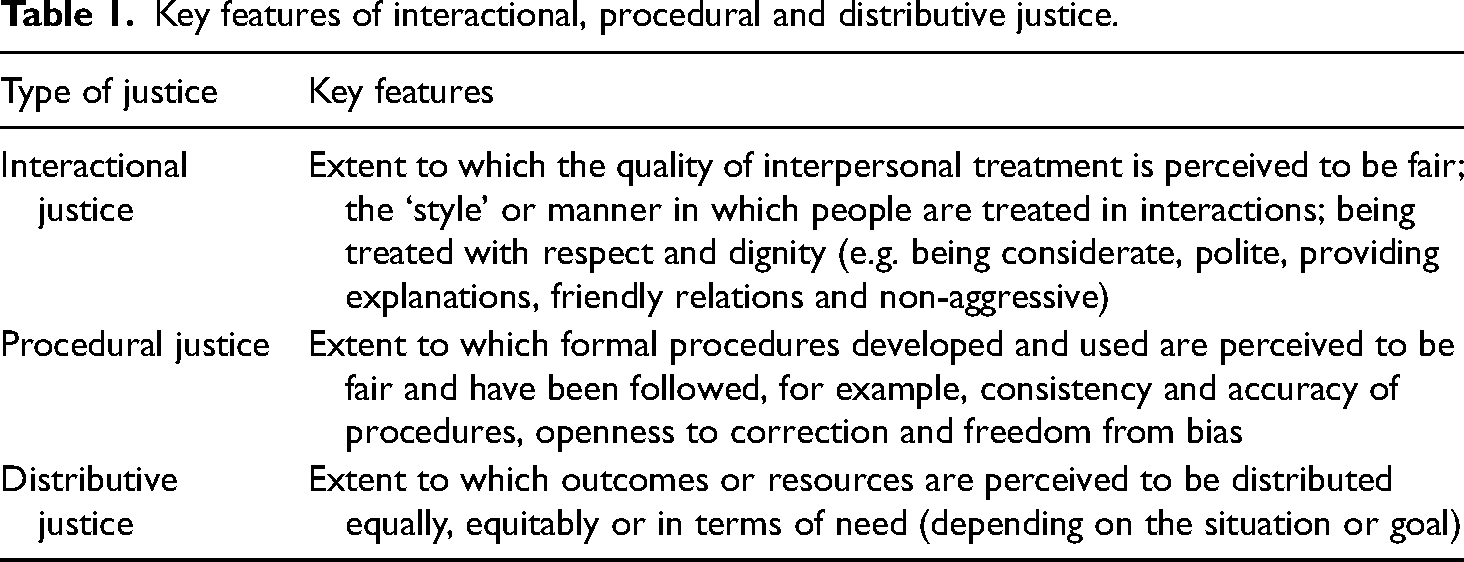
Thus, the policing-related literature in effect tends to conflate aspects of procedural and interactional justice under the umbrella term ‘procedural justice’. However, interactional justice refers to the perceived fairness of the quality of interpersonal treatment, while procedural justice measures the fairness of the operationalisation of procedures. They are separate, albeit closely related, concepts and will be considered as such in this paper. Our data suggest that ‘injustice’ can be perceived in all types of interactions with the police, many of which are now mediated by online systems, and also includes issues such as data security and fair distribution of policing resources. These go beyond the quality of treatment in an encounter with the police, the main focus of much of the procedural justice literature to date. Additionally, because communication skills are central in engaging with members of the public in community policing, achieving interactional justice as well as procedural justice is important.
Although procedural justice and its effect on compliance from the public are a well-utilised theoretical basis for exploring community policing (Hough et al., 2016; Reisig, 2007; Tyler, 2017), this paper will argue that the role information sharing plays in the relationship between the public and the police has not been given appropriate attention, particularly in the online community policing environment. With more communication happening online, it is important to consider willingness to share information both face-to-face and online and the implications of this. This paper is concerned with answering the following research questions: what are the barriers and facilitators to minorities sharing information (online and face-to-face) with the police in the context of community policing across Europe? How do aspects of procedural, interactional and distributive justice aid our understanding of public confidence and willingness to share information?
Methods
Data was collected through ‘Unity’, a European Commission funded project, which aimed to capture best practice in community policing and develop communications technology for citizens and police. Interviews (323 in total) were conducted on a variety of topics across the project's phases with police, legal experts, members of young minority communities and individuals from intermediary organisations (referred to as ‘intermediaries’) who work with local minority groups and police. The intermediaries in the study included, for example, civil representatives, lawyers, local politicians, volunteers, youth workers, neighbourhood watch and minority support groups, refugee, victim protection, volunteer and youth work organisations. To provide some consistency and comparability of the data across the participating countries, project partners and stakeholders in each partner country were asked to identify the groups most important for them to include in community policing initiatives. Young minorities emerged as the common group across the national contexts, which drove the orientation of the data collection rounds. What was considered ‘minority’ status in each country was left open for the partners in each context to determine, for example, this could refer to people of Asian heritage in England and members of the Roma community in Estonia. ‘Young’ refers to people between the ages of 18–25 years across all countries.
The data utilised in this paper focuses on interviews (n = 161) conducted across nine European Unity 2 consortium countries between 2015 and 2016, utilising a purposive sample of young minority groups and intermediaries who have knowledge of community policing in their area. It was the young minorities and their intermediaries who were best placed to comment on the barriers to sharing information with the police, thus they were the focus of data collection for this topic. Intermediaries were included alongside minorities given their anticipated role in advocating for them in navigating barriers and facilitating information sharing with the police. Intermediaries also have an enhanced awareness of information sharing at the organisational level. While our focus on minority youth provides important insights, our research was not designed to compare these to experiences in the general population. However, survey data suggest that legitimacy varies between immigrants and non-immigrants in Europe (Bradford and Jackson, 2018) and Murphy and Cherney (2011) found that procedural justice was less effective in fostering cooperation among ethnic minorities (than other Australian citizens), suggesting that our qualitative exploration of minority views is important.
Bryman (2008: 458) defines a purposive sample as being ‘essentially strategic’, allowing a connection between the research questions and the participants taking part. Each partner country was provided with the same criteria to support their selection of participants. They were asked to conduct 10 interviews with participants from within each sample group. As reported by Vasileiou et al. (2018), sample numbers in qualitative research tend to be smaller in comparison with quantitative projects, as the focus is on collecting in-depth data. This paper reports on 161 structured interviews with 86 young minority participants and 75 intermediaries. The sample comprised 62% male and 35% female (3% did not provide gender information). The interviews covered a range of topics connected to community policing (e.g. definitions, goals and practices), but in this paper, we focus on the barriers and facilitators to information sharing.
Data collection
To protect the validity of the research, data was collected locally in each partner country by native-speaking interviewers, translated into English and forwarded to us to prepare for analysis. To ensure accuracy and research reliability were maintained across international boundaries, standardised interview protocols (with different versions for police, stakeholders and community groups) were utilised. Both standardised closed and open-ended non-leading questions were used. This paper focuses on qualitative data from the latter, which allowed participants to respond in their own words, providing an insight into their experiences and perceptions. Young minorities and intermediaries were asked about: any concerns they had as an individual or aspects of their group, community or country that make sharing information with local police difficult or unsafe; and what would make it easier and safer. In addition, intermediaries were asked about organisational concerns regarding sharing information. Interview guidelines and questions were written in English, translated into the native language of each partner and then back translated into English to ensure they were accurate and the meanings of the questions were not compromised. It should be acknowledged there was variation in the depth of the data provided, thus some of the illustrative quotes below are more detailed than others. Where possible, interviews were recorded. All responses have been anonymised in this paper to protect confidentiality and identified only by their country of origin, participant type and number, as per the ethical approval sought by each partner to ensure that key considerations such as informed consent, voluntary participation, confidentiality and a duty of care to participants were upheld. Sheffield Hallam University's research ethics committee served as the primary ethical oversight body for the project.
Data analysis
Once the data had been checked and edited, it was uploaded to the NVivo software package. An initial coding scheme was developed with the research questions providing a framework for labelling each category of data. Thematic analysis was conducted, utilising nodes as a method of identifying emerging themes. Ritchie and Lewis (2003: 3) describe this as a ‘cross sectional code and retrieve method’, which is used to organise and highlight in a systematic manner the emerging themes found in the data. This method of analysis, however, is not without its critics with arguments made regarding a loss of context during the coding process (Coffey and Atkinson, 1996). In an attempt to retain important contextual information where appropriate larger ‘chunks’ of the data were included in the coding process which allows the contextual information to be maintained.
We will now explore our main research findings in relation to the determinants of information sharing between the police and young minority groups in the context of community policing. We have analysed the data across the nine partner countries and recognise that while this does not allow for deep contextual meso and macro information from each country to be included, it does allow us to explore key emergent themes in community policing contexts across Europe. Community policing is, by definition, embedded in its respective communities. Therefore, enablers of community policing are contingent on the requirements and expectations of each of these communities. We found that in the Balkan countries in our study (Bulgaria, Macedonia and Croatia) there were general problems with trust in the police, for historical and political reasons. This finding is supported by the European Social Survey (Jackson et al., 2011) which, for example, rates Bulgarians as having the least trust in the police among the nine countries in our study. This paper does not seek to examine different operational practices of community policing, but seeks to understand police–public interactions and public confidence in relation to information sharing. Through an inductive process, the analysis of determinants of information sharing revealed a number of themes, which we explore through an analysis of interactional, procedural and distributive justice.
Findings
The interviews with young minorities and their intermediaries reveal several barriers and facilitators to sharing information, which reflect the importance of differentiating between interactional, procedural and distributive justice in shaping public confidence in the police, which is also linked to broader macro-level political and historical factors (Staubli, 2017). While acknowledging the macro-level context, findings focus on the micro-scale. Across the nine countries, a number of key themes emerge, which correspond to either interactional, procedural and distributive justice, our three primary sections to follow.
Interactional justice
The analytical themes which emerged in the context of information sharing in community policing and can be seen as related to interactional justice are: ‘attitude and behaviour’, ‘accessibility and communication’ and ‘personal contact and relationships’. These are included here as they are strongly connected to perceived fairness of interpersonal treatment, to the manner or attitude displayed by officers, including aggressive behaviour and the style of communication in interactions and relationships.
Attitude and behaviour
The attitude of the police was important in willingness to share information (Estonian minority 04). A more ‘human, less tough’ (Finnish intermediary 05) attitude from the police makes it easier for young people to talk to them. This can be connected to aspects of interactional justice, in terms of how the police come across in the encounter (Beugré and Baron, 2001). Lack of motivation and ‘lack of interest by the police’ were also seen as a barrier to information sharing (Macedonian minority 06). In Bulgaria, concerns among intermediaries included a bad attitude, lack of commitment and integrity; and barriers to information sharing went as far as serious concerns of minorities regarding behaviour: ‘sometimes [the police are] prone to aggressive behaviour’ (Bulgarian minority 03). Indeed, Jackson et al. (2011: 6) note that ‘…Bulgaria have the least positive views on how the police treat people’. Increasing professionalism and improving the image of the police were important to make sharing information easier and safer, according to Macedonian minorities, Croatian intermediary 04 and Estonian minority 02. The findings in this section on police attitudes and behaviour are best reflected in interactional justice, with Staubli (2017) noting that cognisance also needs to be given to global, macro understandings as well as local interactions. Our findings in relation to interactional justice note that in addition to the quality of the interaction, including attitude and behaviour, perceptions of a lack of interest and commitment were also seen as barriers to sharing information with the police.
Accessibility and communication
Our analysis of the determinants of information sharing also found that the degree to which the police are accessible to the public in their communication practice was important, linked to the concept of interactional justice. In Finland, it was emphasised that the police should make themselves more available for young people to talk about their problems: ‘young people are ready to tell the police of their worries: the police should have time to listen’ (Finnish intermediary 03). Minorities in Croatia highlighted a need for the police to keep people informed about their work, cooperate with the community and enhance availability. Availability was linked to confidence in enabling information sharing: ‘the police should be more available in the community’ (Croatian minority 07). There was a call across contexts for dynamic and modern communication methods, including social media and technological solutions such as Apps, to make sharing information online easier and safer. However, aspects of accessibility connected to physical presence and availability in local communities were seen to be integral to facilitating communication and information sharing with the police. This suggests that the solutions are also practical, in addition to the importance of how people feel they are treated in interactions.
Personal contact and relationships
In a world where online communication is increasingly common, participants valued the quality of personal contact with the police, reflecting the importance of interactional justice. In addition to general visibility, participants, in particular intermediaries, emphasised familiarity and face-to-face contact with police officers as important; for example, in Finland and Germany: ‘more personal contact with citizens’ (German intermediary 02). Developing local contacts was seen as central in various countries including Scotland, Macedonia and Croatia, for example, ‘maintain contacts on a local level’ (Croatian intermediary).
In Germany increased personal contact with police officers was emphasised by minorities as a means of facilitating information sharing. This included the police participating at events, town meetings and in education in schools as well as officers being well known and building personal relationships. One of the Bulgarian minorities believed that there should be: ‘more personal meetings and conversations with the police … such course of action by the police will make people feel more secure, but they don't want to act in this way’ (Bulgarian minority 09). Getting to know officers was highlighted as a way of improving communication, with a focus on groups within the population, as well as partners: ‘that they have a young inspector which is known by the youth and in our instance, if I would know somebody, I would contact the police in a faster way’ (Belgian intermediary 05). Familiarity and face-to-face contact were emphasised as important in improving accessibility: ‘familiar police and legal education to youth makes the police more humane. Police are not only the “last resort”’ (Finnish intermediary 05). Local events were proposed to share updates, safety information or to encourage relationships, for example, with young people. ‘The police need to be more actively involved here; it takes long term engagement’ (Scottish intermediary 02). In addition, intermediaries highlighted macro-level barriers and facilitators to sharing information, such as cultural (e.g. language skills and cultural awareness of police), legal, political and social factors. Intermediaries acknowledged that relationships between the police and the public also need to be fostered societally, at a meso and macro level.
Personal contact and building long-term relationships through face-to-face engagement were seen to be absolutely central to building confidence in and facilitating information sharing with the police (including online). This suggests that sustained interactions through engagement-based community policing methods, a meso-level structure that enables micro-level contact, rather than isolated encounters in law enforcement focused contexts (Roché and Oberwittler, 2018) are important for building public confidence. This emphasises the role of interactional justice over the longer-term beyond isolated interactions.
Procedural justice
The analytical themes emerging from our exploration of information sharing in community policing that correspond to procedural justice are ‘responsiveness and efficiency’ and ‘data protection and security’. Perceptions of responsiveness and efficiency were strongly connected to the perceived fairness of the operationalisation of procedures. Participants were sensitive as to whether police procedures were followed consistently and in an unbiased manner when officers were called to service and also whether these procedures were enacted accurately and efficiently. Adherence to data protection and security aligns well with the notion of the extent to which fair procedures are developed and followed.
Responsiveness and efficiency
Perceptions of responsiveness and efficiency, for example, failure to respond to calls for service or taking too long to address problems, were seen by minorities (in Macedonia and Bulgaria) as central barriers to calling the police or sharing information: ‘the police will not fulfil its duties’ (Bulgarian minority 09). By the same token, they regarded timely responses to requests for service as a way of increasing public confidence. These reflect the importance of consistency in adherence to procedures to enable information sharing.
Croatian intermediaries mentioned negligence and lack of efficiency, while in Macedonia, they discussed the speed of the response. Also: Some people say that the police also did not come. Or they will come, talk two minutes, do nothing. It seems that the confidence is gone… The people are ready to call, but will not get the help that they hoped to get (Estonian intermediary 08).
In Bulgaria, concerns included inefficient use of administrative staff and ‘implementation of inefficient policies’ (Bulgarian intermediary 03). There was a concern that the police do not take information into account, and there is a lack of response, investigation or consequences. Relatedly, a lack of action linked to corruption was seen as the key barrier to future information sharing with the police. This involved: ‘links between politics and local decision makers’ (Croatian intermediary 01), police not taking action against drug dealers due to police involvement in their schemes (Bulgarian minority 05) and local constables not responding to information about someone if they know them (Estonian intermediary 10). This points to a lack of consistency in the operationalisation of law enforcement procedures and bias in decision-making, connected to procedural injustice.
Furthermore, in Macedonia and Bulgaria, the lack of feedback to those who have contacted the police was mentioned as an issue. The importance of keeping people informed was emphasised, that is, the need to ‘be in permanent contact with the source of the information’ (Macedonian intermediary 08).
When an alert is submitted there should be accountability by the police; upon solving the case the police should find a way to notify the citizens who submitted the alert – via email, phone call, SMS (Bulgarian intermediary 02).
These findings suggest that information sharing can be facilitated by improving public confidence through micro-level aspects demonstrating the fair operationalisation of procedures in encounters (procedural justice), such as responsiveness, efficiency and providing feedback and keeping people updated.
Data protection and security
Community policing relies on communication with the public and exchanging information with them. Therefore, following procedures for the protection and security of data is highly relevant for this policing method. The majority of concerns amongst minority groups about sharing information with the police, including online, were focused around protection of personal privacy (Belgium, Bulgaria, Croatia, Estonia, Germany, Macedonia and Scotland). Interestingly, participants tended to question data security, even in countries in our sample with higher levels of trust in the police, such as Finland, Germany, UK and Belgium (Jackson et al., 2011). In Scotland, there was an emphasis on ensuring the security of the system, allowing people to ‘opt out’ of providing personal information and the ability to engage anonymously online. Fears regarding data protection and the safety of systems were also highlighted in Belgium and Germany, with a participant claiming they were ‘scared of hacking, even if the information is protected’ (Belgian minority 04). For these participants, there was a desire to protect their privacy, with a participant noting that ‘police don't need my IP address’ (Belgian minority 01).
Although intermediaries’ concerns to a large extent mirrored those raised by minority groups with regard to the protection of privacy and fear of negative consequences, they also needed to consider organisational concerns regarding compliance with data protection. For example, intermediaries in Scotland emphasised safe storage of data, anonymity and maintaining confidentiality of clients’ information, photographs and videos to maintain clients’ confidence and safety. There was a particular emphasis on this in Finland with intermediaries emphasising the risks to people's security and being seen as a ‘snitch’, the importance of young people trusting youth workers and the police not revealing where information comes from.
To improve public confidence, Macedonian and Bulgarian intermediaries highlighted that data protection and abuse of information need to be addressed through secure storage of information: In order to regain the general public's trust, the police have to find a way to tackle the issue with the information leakage… it may use the experience along with the best practice of other countries when it comes to protecting sensitive information (Bulgarian intermediary 07).
Security of data and maintenance of confidentiality and anonymity were emphasised as being important by Belgian, Croatian, English, Estonian, Macedonian and Bulgarian minorities as well as the intermediaries. Anonymous reporting was proposed as a means of ensuring protection of family from threats and facilitating information sharing by minorities in Estonia, Macedonia and Bulgaria. Furthermore, intermediaries emphasised that they have a role in informing the police, for example, in relation to domestic abuse.
Intermediaries raised serious issues of abuse of data and unprofessional behaviour in Macedonia, and misconduct (including intimidation of those who had been in contact with the police as victims or witnesses) and lack of anonymity in Bulgaria. For example, the most serious concerns (connected to not following procedures) were related to anonymity, information being made public, possible identity disclosure, data protection and the misuse of information from individuals, minority groups and intermediaries in Bulgaria, Croatia, Estonia, Germany and Macedonia. This impacts on willingness to share information with officers. This is highlighted by one participant who claimed that ‘the police gave out my name when I was a witness’ (Estonian minority 06) and another stating he ‘would inform the police only anonymously’ (Estonian minority 01). In Macedonia and Bulgaria, both minorities and intermediaries emphasised abuse of information by the police and fear of retaliation: The police currently function in such a way that it may turn out that I submit information about an offence… the offender himself has connection with the police and due to this fact may learn about my alert and cause me some harm as a result (Bulgarian intermediary 03).
Individuals from minority groups, particularly (although not exclusively) from countries in the Balkan region, were worried about potential negative consequences associated with sharing information, reflecting the historical context of policing in these countries (Meško et al., 2013; Staubli, 2017).
Data security has not hitherto been a focus of community policing research and does not feature in the literature on public confidence or procedural justice in policing. While macro-scale context, particularly public confidence in institutions, echoes findings elsewhere (Meško et al., 2013; Staubli, 2017), our findings nuance this work and show that broader aspects of protection of privacy, such as confidentiality, anonymity, data protection and storage, are now significant barriers to sharing information with the police across Europe, particularly online. This is notwithstanding an absence of wider contextual concerns (e.g. corruption) or existence of generally high levels of public confidence. It is clear that demonstrating enhanced data security through improvements to systems, data storage, protection and procedures, including anonymous reporting, are ways to demonstrate a procedurally just approach, helping to build public confidence in policing and improve information sharing. This involves embedding just procedures within policing systems, not just in micro-level interactions.
Distributive justice
Our analytical themes which emphasise the importance of distributive justice are: ‘outcomes and effectiveness’ and ‘equity in distribution of policing services’. The perceived fairness of outcomes our participants described related not just to the outcomes of specific interactions with police officers, but also to perceptions of effectiveness in relation to the intended outcomes of policing, for example, an increase in safety (at a societal level as well as individual level). The second theme under distributive justice relates to perceptions regarding the extent to which available policing resources or services are distributed equitably.
Outcomes and effectiveness
Perceptions of outcomes and effectiveness, such as: ‘the police can't protect me’ (Croatian minority 01), were central to willingness to share information, particularly in Balkan countries within our study. Effectiveness suggests that the police provide outcomes that members of the public expect, and they distribute their resources appropriately. In Bulgaria, poor work, police inability to guarantee public order and the low percentage of crimes solved were factors (Bulgarian intermediary 03). Inaction and the inability of the police to protect people were seen as barriers to calling the police. This point illustrates the cross-over between the macro- and micro-level context, where broader perceptions of effectiveness impact micro-scale interactions. Negative perceptions of police effectiveness, derived from micro-level direct or indirect experiences and/or broader assessments of governmental capability, in line with Roché and Oberwittler (2018), are barriers to sharing information with them. Overall perceptions of effectiveness can have implications for the degree to which the public have confidence in the police (Tankebe, 2010). These findings suggest that improving public confidence to share information can involve focusing on instrumental concerns and perceptions of effectiveness at a meso and macro level, as well as micro-level issues such as the outcome of an encounter (e.g. whether they got the help they hoped), an aspect of distributive justice.
Furthermore, some of the outcomes of breaches of procedures, including inappropriate conduct (e.g. misuse of data or aggressive behaviour in certain contexts) go beyond the concepts of procedural or interactional justice as they result in extremely negative outcomes for individuals, bringing in the concept of distributive justice. Indeed, serious concerns with information sharing were raised among Bulgarian participants in relation to corruption, with minority individuals repeatedly discussing fear of reprisals in the form of physical violence: ‘my concerns are related mainly to becoming subject of vengeance by people to whom the information has leaked’ (Bulgarian minority 03).
Equity in distribution of policing services
Public confidence in our findings was also connected to perceptions of policing not being fairly or equitably delivered or distributed, as well as direct negative experiences. These concerns go beyond following procedures and how people were treated (i.e. interactional justice) to include concerns about equity in distribution of policing and experiences of unfair outcomes, in line with distributive justice. Minority individuals in Germany highlighted police prejudice against foreigners as a barrier. In a similar vein, minorities in Macedonia felt there was ‘no equally delivered service [sic] by the police to the customers’ (Macedonian minority 06). In turn, in relation to building trust, Finnish minorities emphasised equal treatment of people, including not focusing on policing young people, and a Bulgarian minority saw listening to all parties as important. Our findings note that in addition to failures in following procedures; perceptions of a lack of interest and commitment and the attitude and quality of the interaction (interactional justice); the distribution of police resources to sections of the public (distributive justice) was also seen as a barrier to sharing information with the police.
Solutions to improving confidence and facilitating information sharing were also inherently practical, being concerned with the distribution of policing services, not just connected to normative judgements about how people feel they will be treated in an interaction. This highlights the importance of distribution of policing resources, as well as interactional and procedural justice, in encounters. Police behaviour and activities that breach procedures, for example, abuse of data (related to procedural justice), unprofessional attitudes (related to interactional justice) and the lack of ability to protect people and keep them safe (connected to distributive justice) are connected to low public confidence.
Discussion
This paper has highlighted the centrality of interactional, procedural and distributive justice in understanding public confidence, brought to the fore through a focus on the willingness of young minority communities to share information with police, both online and face-to-face. This research was conducted in the context of community policing across nine countries in Europe. We now outline the main arguments we have made and their theoretical and practical significance. We found that interactional, procedural and distributive justice all have a role in enhancing public confidence in the police. Procedural justice measures in the extant policing literature have subsumed aspects of interactional justice within them, but we argue that it is helpful to distinguish between interactional and procedural justice, where the latter refers to perceptions of fairness in the use of procedures, and the former emphasises fairness of interpersonal treatment. In addition, our analysis points to fair distribution of policing services and outcomes also being a factor, highlighting the role of distributive justice. Table 2 outlines how our findings on information sharing in the context of community policing are connected to each type of justice and extend beyond the key features in the organisational justice literature (see Table 1).
Findings relating to interactional, procedural and distributive justice.
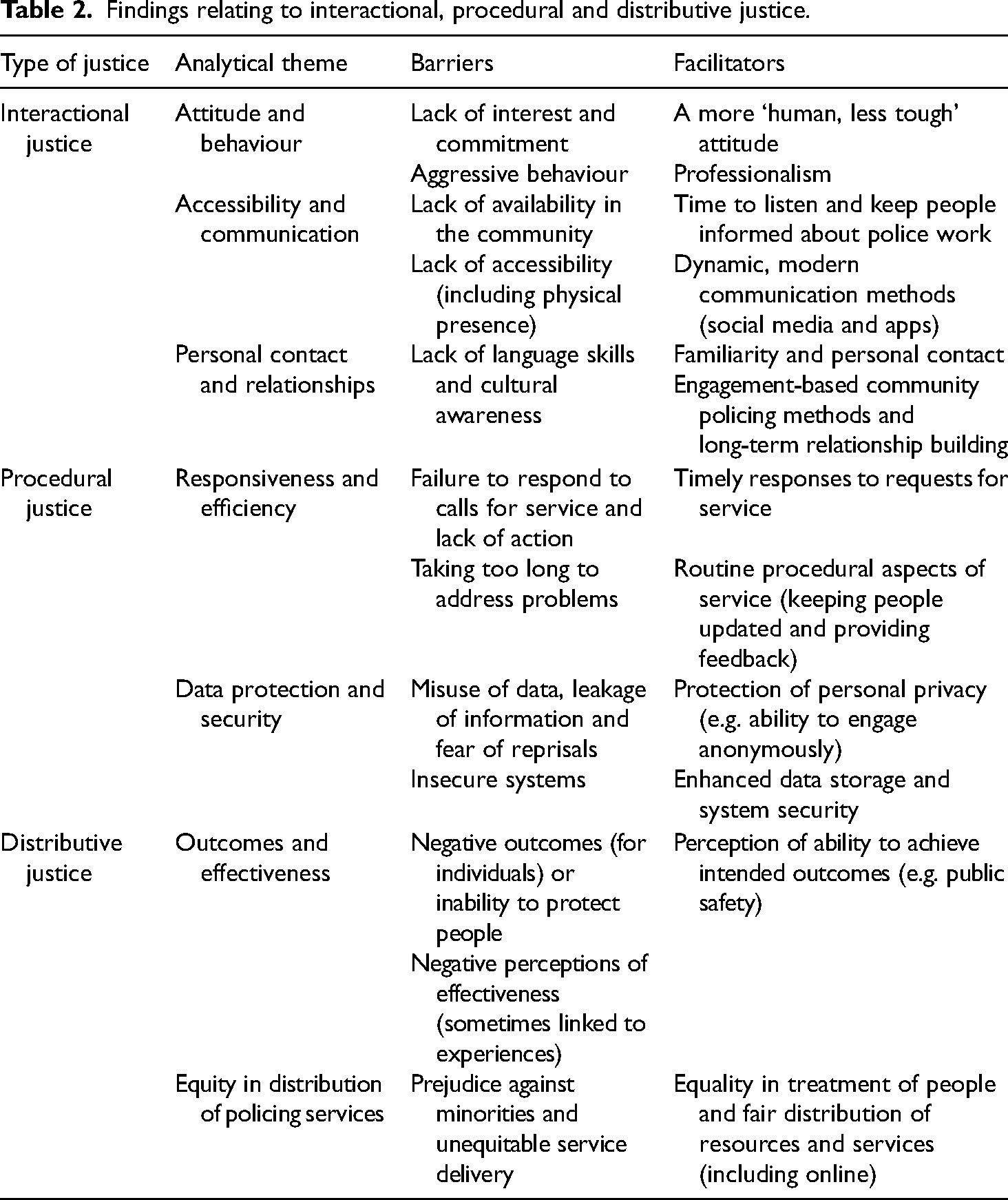
Good encounters with the police lead to enhanced public confidence and clearly normative (e.g. Bradford et al., 2015) aspects of interactions are understood to be key. Our findings suggest that further aspects of interactional justice, such as perceptions of police attitudes (from the macro- to micro-scale), are also important in facilitating information sharing face-to-face and online with minority youth. This can include negative previous experiences with the police, in line with findings across countries where aggressive policing has a negative effect on trust (Roché and Oberwittler, 2018) or there is a history of corruption and lack of integrity (Meško et al., 2013; Staubli, 2017). Additionally, we found that minority youth perceptions of the police's lack of interest and commitment were barriers to sharing information with them. Furthermore, making it easier to share information with the police is also about creating situations where opportunities to be in contact with the police are maximised through being available, accessible and having time to listen (community policing techniques), as well as using dynamic digital communication methods such as Apps and social media. We found that personal contact, familiarity and face-to-face relationship building were seen to be crucial, echoing Hail et al.’s (2018) review. Online sharing of information faced similar barriers to other methods and our findings are in line with traditional engagement-based community policing literature, for example, Trojanowizc and Bucqueroux (1990), who argue that the human touch, familiarity and regular interaction is central in building public confidence. Thus, our findings emphasise the role of interactional justice over the longer-term beyond isolated encounters (the focus of the extant procedural justice policing literature), which fits nicely with enhancing legitimacy, given its ongoing, dialogic and relational nature, as posited by Bottoms and Tankebe (2013).
The procedural justice policing literature tends to focus on components (voice, neutrality, respect and trust) in encounters but we found that experiences and perceptions of timely responsiveness and efficiency, through following formal procedures, are integral to public confidence, and where negative, are key barriers to sharing information, particularly among the young minorities in Balkan countries in our sample. This supports the work of Van Craen and Skogan (2014) who found that perceptions of responsiveness were extremely important in terms of shaping public confidence in the police. In addition, we found that routine procedural aspects of service are central, such as providing feedback and keeping people updated. Extending beyond the existing literature in the field we also found that a lack of protection of personal privacy and data security was a predominant concern and hence a barrier to sharing information with the police, particularly online. Intentional misuse of personal data was evident in certain countries but, even when minority youth were not worried about corruption or their data being misused by the police, they were concerned about data security. This led to a desire to share information anonymously, without providing personal data. This is an important finding for public confidence in the police going forward as digital data is increasingly collected and stored. Our findings show that improvements to systems, data protection and storage procedures, including the ability to ‘opt out’ of providing personal information or engage /report anonymously online, are important ways to demonstrate a procedurally just approach, build public confidence and facilitate information sharing across Europe in a digital era.
With regard to distributive justice, we found that instrumental concerns of minority youth such as perceptions of effectiveness in relation to the intended outcomes of policing (e.g. enhancing safety or preventing crime) at a meso or macro level, as well as micro-level issues such as the outcome of an encounter (e.g. whether they get the help they expect or in some contexts experience negative outcomes such as reprisals), are also important in shaping public confidence, which is vital for willingness to share information. Perceptions of fairness in outcomes, as well as procedural fairness, can be of great importance in shaping legitimacy in enclosed contexts such as prisons, according to Bottoms and Tankebe (2013). They state that it is unusual for incidents to be widely known in a neighbourhood community policing context. We argue that this is not necessarily the case among certain communities, especially those with high degrees of social connectedness. Therefore, distributive justice is likely to be extremely salient in shaping public confidence in a virtual community, or an online context where actions may be publicly available. Furthermore, equity in the distribution of policing services (including online) is important alongside perceptions of interpersonal treatment (as emphasised in the extant procedural justice policing literature) when it comes to sharing information with the police.
The procedural justice literature tends to focus on the individual, rather than collective level. In line with Roché and Oberwittler (2018) and Staubli (2017), our work highlights the importance of linking the meso- and macro-level context with the micro-scale impacts. This paper or project never sought to disentangle the macro-, meso- and micro-level across the nine countries, but rather draw general thematic analysis across contexts. Although we acknowledge that macro-level structures shape the situations in which people act (Roché and Oberwittler, 2018), we would anticipate the general operation of the different forms of justice (interactional, procedural and distributive) to be broadly similar across the nine case studies, though the specific contexts of injustice may differ. We acknowledge that it would be valuable for future research to disentangle these levels further.
Our findings have significant implications for policing policy and practice internationally, which we now turn to. They suggest that perhaps police should concentrate on responsiveness and effectiveness as important bases of public confidence and willingness to share information, particularly with minority youth in contexts where relationships with the police have historically been poor. It may be that addressing fundamental instrumental concerns such as responsiveness and efficiency (procedural justice) and outcomes and effectiveness (distributive justice) should be a priority with certain groups, contexts or countries, for example, with higher levels of corruption or post-conflict or post-autocratic contexts, while enhancing normative aspects of interactional justice can be more of a focus in those with generally better levels of confidence. In essence, it is important to get the basics right and address fundamental problems related to not following procedures (including not responding and misuse of data), negative behaviours in interactions, and perceptions of severe lack of effectiveness and negative outcomes such as fear of reprisals (distributive justice).
We found that beyond improving the quality of interactions, it is important that the police also focus on enhancing perceptions of commitment. As more policing is done online, the police need to be accessible to facilitate information sharing, but this should not be done at the expense of personal contact and face-to-face community engagement that builds relationships and interactional justice long-term. Procedural improvements to ensure data is secure and personal privacy is protected can build public confidence and will be aided by facilitating sharing of information anonymously (or minimising the amount of data required). Furthermore, the police can also focus on demonstrating equity in provision of services (connected to the idea of distributive justice) to build public confidence with minorities.
In conclusion, while the largely quantitative procedural justice policing literature finds that the quality of an encounter is most significant in shaping legitimacy (Sunshine and Tyler, 2003), our qualitative findings on minority youth across Europe suggest that interactional, procedural and distributive justice are all important in building public confidence and facilitating information sharing, both online and face-to-face. Fundamental practical factors related to accessibility and face-to-face engagement, and availability and distribution of policing services are crucial in improving public confidence and willingness to share information, even in online environments, highlighting interactional and distributive justice. This supports the role of interactional justice over the long-term and via a community policing approach. Concerns regarding data protection and security are particularly pertinent in an online context. Introducing procedures to strengthen privacy and security provides an opportunity to embed procedural justice and build confidence. The perspective of intermediaries largely reinforced the concerns of minorities, but also shed light on the role of intermediaries (e.g. third party reporting) and organisational concerns (such as data protection). Furthermore, intermediaries highlighted meso- and macro-level barriers and facilitators (e.g. cultural awareness of police) to information sharing.
Aspects of interactional, procedural and distributive justice are likely to be particularly salient in an online community policing environment, where people may be able to see how information, feedback, services, protection and safety are distributed. Our findings are of particular significance internationally with people spending large amounts of time online, policing organisations seeking to increase digital contact, and in the context of pandemics. We have emphasised the importance of engagement and personal contact, suggesting that, in addition to improving micro-level interactions, meso-level social processes such as models of policing (e.g. community policing facilitating long-term engagement and systems improvements embedding data security) may be useful in enhancing public confidence. Our focus on information sharing by minority youth online in a community policing context has illuminated aspects of interactional, procedural and distributive justice that have hitherto not been the focus of the procedural justice policing literature, for example, the importance of long-term engagement, the centrality of data security procedures and the importance of equity in the distribution of policing services.
Footnotes
Acknowledgements
We would like to thank all of the research participants and Unity project partners in particular. In addition to the two anonymous reviewers and editorial team, we are grateful to Dr Helen Wells, Dr Edward Hall, Dr Kiril Sharapov and Professor Nicholas Fyfe who provided us with feedback on an earlier draft.
Funding
The authors disclosed receipt of the following financial support for the research, authorship, and/or publication of this article: This work was supported by the European Commission (grant number 653729).
