




Abstract
We examine an integrated dynamic model of social influences and internal controls on delinquency in adolescence. We assessed to what extent parental bonds, peer delinquency, and self-control were reciprocally related to delinquency throughout adolescence, and whether their effects were time varying. We applied cross-lagged panel models to analyze these relationships using three waves of data from a sample of Swiss youth at ages 13 to 17. Results suggest that self-control is a strong predictor for future delinquent behavior. Moreover, social influences affect self-control into adolescence, contributing to a growing area of research on the dynamic properties of self-control over the life course. Social influences, in particular peer delinquency, are also reciprocally related to delinquency, implying that delinquency can lead to cumulative disadvantages that further entrench individuals in antisocial pathways over the life course.
Introduction
Two of the major claims in life course research on crime are that effects of social controls and influences vary over time and that these effects are reciprocal, generating cumulative disadvantages over time (Catalano and Hawkins, 1996; Sampson and Laub, 1997; Thornberry, 1987; Thornberry et al., 2003). Although studies have investigated this claim, they tend to focus on variation and reciprocal effects of social influences (parents, peers), because internal controls (self-control) are often not expected to vary during adolescence (for example, Gottfredson and Hirschi, 1990; Hirschi and Gottfredson, 1993; Pratt and Cullen, 2000; Vazsonyi et al., 2001). However, recent research has suggested that both social influences and internal controls play a role in these cumulative and time-varying processes (Hay and Forrest, 2006; Na and Paternoster, 2012). That is, a lack of social controls such as parental bonds can decrease internal controls throughout adolescence (Van Gelder et al., 2017), which in turn further weakens parental bonds and increases the likelihood of delinquency (Na and Paternoster, 2012). Therefore, this article examines an integrated dynamic model of criminal behavior over the life course, with a focus on the reciprocal and time-varying effects of social influences and internal controls on delinquency over adolescence.
Specifically, we assess relative influences of parental bonds and delinquent peers on both self-control and delinquency over time. In addition, we test a key tenet of many life course developmental theories of crime, namely that these effects are age graded and reciprocal. In other words, the effects vary over time and social influences are expected to affect engagement in delinquency, which in turn affects social influences (for example, Sampson and Laub, 1997; Thornberry, 1987; Thornberry et al., 2003). In order to do so, we use data from the Zurich Project on the Social Development from Childhood to Adulthood, which includes measures of social influences, self-control, and delinquency across key stages of adolescent development.
Social influences and delinquency
According to social control theory (Hirschi, 1969), individuals who maintain strong bonds to social institutions are less likely to engage in delinquency (Sampson and Laub, 1997). Bonds to parents and family and commitment and success in school are most important in adolescence (Thornberry et al., 2003). Affective (for example, social support) and informal control elements (for example, monitoring and discipline) of these bonds place bounds on adolescents’ behavior. Indeed, a lack of parental support, monitoring, and attachment have been linked to engagement in delinquency in adolescence (for example, Craig, 2015; Hoeve et al., 2012). Interactional theory proposes that adolescents who have weak bonds to social institutions are more likely to become seriously and persistently engaged in delinquent behavior, especially when they also have a peer network where antisocial behavior is reinforced and/or positive attitudes towards this behavior exist (Thornberry et al., 2003). The hypothesis that association with delinquent peers is related to delinquent behavior was derived from social learning theory (see, for example, Akers, 2002), which assumes that delinquency is learned through social interaction, and it has been supported by previous studies (see, for a meta-analysis, Pratt et al., 2010). In the remainder of this article we use the term ‘social influences’ to refer to bonds to parents and the influence of delinquent peers.
Although early research on social influences did not explicitly incorporate dynamic developmental relationships, researchers have since noted that bonds and commitment are not time-stable individual characteristics but are formed through interactions with others (Loeber and Le Blanc, 1990). In light of this, researchers have made at least two important advancements to our understanding of the dynamic relationship between social influences and delinquency.
First, scholars hypothesized that delinquency may (further) weaken an individual’s parental bonds or strengthen an individual’s association with delinquent peers (Catalano and Hawkins, 1996; Sampson and Laub, 1997; Thornberry, 1987). Delinquency is likely to conflict with the conventional beliefs of parents, and therefore negatively influences the parent–child relationship. Recent studies support the idea of a negative reciprocal relationship between the quality of the parent–child relationship and delinquency (Harris et al., 2016; Keijsers et al., 2010; Keijsers et al., 2011).
Moreover, the more an individual engages in delinquency, the more likely it is that he/she associates more with delinquent peers. This is partly due to social selection processes, in which adolescents sort themselves into peer groups that share similar values and behaviors, and partly because delinquent adolescents are often rejected by prosocial peers, and eventually end up being friends with each other (Thornberry, 2014). Matsueda and Anderson (1998) found that delinquency indeed has a positive effect on peer delinquency, and that this effect is even larger than the effect of peer delinquency on adolescents’ delinquency. Other studies also suggest a reciprocal relationship between delinquency and peer delinquency (Elliott and Menard, 1996; Lee et al., 2014; Thornberry et al., 1994).
Second, the role and relative importance of the family and peer domains change fundamentally over the course of adolescence (Meeus and Dekovic, 1995; Warr, 2002). From early to late adolescence, individuals strive for autonomy, and they spend more time with friends and less time with family. Simultaneously, parents relax controlling and monitoring of behavior during adolescence, which suggests that they acknowledge their child’s need for autonomy (Keijsers et al., 2009). This indicates that the socializing units expected to influence delinquency vary between different developmental periods (Catalano and Hawkins, 1996). Parents arguably have a stronger influence in early adolescence (from about age 12), compared with middle (from about age 15) and late adolescence (from around age 18) (Agnew, 2003).
Peers become more important during middle adolescence, since youth spend more time away from home and with their peers. In the final stage of adolescence, the influence of peers is expected to decrease again, since newly emerging social bonds and commitment to conventional activities (for example, employment or romantic partners) partly replace peer relationships (Sampson and Laub, 1997; Thornberry, 1987).
Previous research on time-varying effects of social influences and controls on delinquency is relatively limited, and existing studies find mixed results. For example, Jang (1999) found that the peer influence increased from early to middle adolescence and decreased afterwards, but that the effect of family involvement and attachment remains stable over the course of adolescence. By contrast, a meta-analysis by Hoeve et al. (2012) on the correlation between parental attachment and delinquency suggests that this association weakens as adolescents grow older. In line with expectations, Nilsson (2016) found that the effect of delinquent peers on delinquency decreased from mid to late adolescence.
Self-control and delinquency
Seemingly in contrast to the school of thought that social influences affect delinquency dynamically over the life course is the notion that delinquency is primarily driven by time-stable internal characteristics. From this point of view, the relationship between social influences and delinquency can be partly explained by these underlying characteristics too. Perhaps the most prominent proponents of this position are Gottfredson and Hirschi (1990), who argued that the time-stable characteristic of low self-control can account for both weak social attachments and involvement in delinquency. People who lack self-control are characterized as ‘impulsive, insensitive, physical (as opposed to mental), risk-taking, short-sighted and non-verbal’ (Gottfredson and Hirschi 1990, cited in Pratt and Cullen, 2000: 932). The evidence for low self-control as a risk factor for delinquency is strong. Two meta-analyses concluded that there is a strong relationship between low self-control and deviance or crime (Pratt and Cullen, 2000; Vazsonyi et al., 2017). Vazsonyi et al. (2001) found that Grasmick et al.’s (1993) self-control measure accounted for between 17 and 28 percent of total deviance in four countries, controlling for the effects of age and sex.
Low self-control is established during childhood when parents do not monitor or correct their child’s bad behaviors. Individuals with low self-control are therefore less likely to resist temptations to commit crime when opportunities are present. Furthermore, Gottfredson and Hirschi (1990) argue that poor development of self-control has important consequences for one’s quality of relationships and membership in adolescent peer groups (Chapple, 2005; Franken et al., 2016), and children who did not develop self-control skills are found to be less successful in a wide range of adult outcomes, including school performance, health, and the labor market (Pratt and Cullen, 2000; Wright et al., 1999). Importantly, self-control is assumed to stabilize by ages 8–10, meaning that parental and other social influences no longer have an effect on individuals’ self-control (Gottfredson and Hirschi, 1990). This does not imply that absolute levels of self-control are time invariant, but adolescents’ self-control relative to similarly aged others should be stable (Hay and Forrest, 2006). Recent studies found support for stabilization of self-control by the age of 10 (for example, Vaske et al., 2012; Vazsonyi and Jiskrova, 2018).
However, Gottfredson and Hirschi (1990) consider low self-control as a probabilistic individual characteristic important in understanding variability in crime and deviance, which implies that they did not explicitly rule out other explanations. In fact, they recognized that ‘lack of self-control does not require crime and can be counteracted by situational conditions or other properties of the individual’ (Gottfredson and Hirschi, 1990, cited in Vazsonyi et al., 2015: 12). In line with this, recent studies found that both social influences (that is, parents and peers) and self-control exert an independent effect on delinquency (Fine et al., 2016; Franken et al., 2016). In addition, utilizing an appropriately long time period (that is, 5 years in these studies), there is evidence that an individual’s relative standing on self-control does vary over the course of adolescence, meaning that self-control is not an immutable and stable propensity (for example, Winfree et al., 2006).
Na and Paternoster (2012) therefore hold a more dynamic view suggesting that social influences continue to shape self-control throughout adolescence. Evidence from longitudinal studies supports this argument. For example, a small portion of US children aged 7–15 (about 16 percent) experience substantial absolute and relative changes in self-control, and self-control continues to be affected by parental socialization (Hay and Forrest, 2006) and by association with prosocial and deviant peers (Burt et al., 2006), even after the age of 10. Meinert and Reinecke (2018) showed that changes in parental monitoring and discipline are related to changes in self-control during adolescence (see also Na and Paternoster, 2012). Moreover, impulsivity and future orientation, two concepts that indicate low self-control, continue to be affected by parental discipline practices during adolescence, and partly mediate the effect of parental discipline on delinquency (Van Gelder et al., 2017).
Whereas Gottfredson and Hirschi (1990) claim that differences in levels of self-control between individuals (at least partially) account for differences in the quality of social bonds and association with delinquent peers, current evidence suggests that levels of self-control may also change within individuals over the course of adolescence. These within-individual changes are shaped by changing social influences (Na and Paternoster, 2012), and likewise changes in self-control affect social influences (Franken et al., 2016). Thus, the relationship between self-control and social influences is likely reciprocal over the course of adolescence.
The current study
The current study aims to examine the development of delinquency over adolescence, with particular attention to time-varying, reciprocal relationships between social influences, self-control, and delinquency. Previous research suggests that delinquency in adolescence is influenced to varying extents by bonds to parents and peers as well as by self-control. The effects of these social influences are expected to vary over the course of adolescence, wherein parental attachment effects are strongest in early adolescence and peer effects are strongest in mid to late adolescence. In addition, there is evidence to suggest that the relationships between social influences, internal controls, and delinquency are reciprocal. That is, social influences and self-control affect the likelihood of delinquency, which in turn affects social influences and self-control. Thus we examine to what extent social influences, as measured by parental attachment and peer delinquency, affect levels of self-control and delinquency, and to what extent delinquency likewise affects changes in social influences over the course of adolescence. Figure 1 summarizes the theoretical relationships tested in this study.
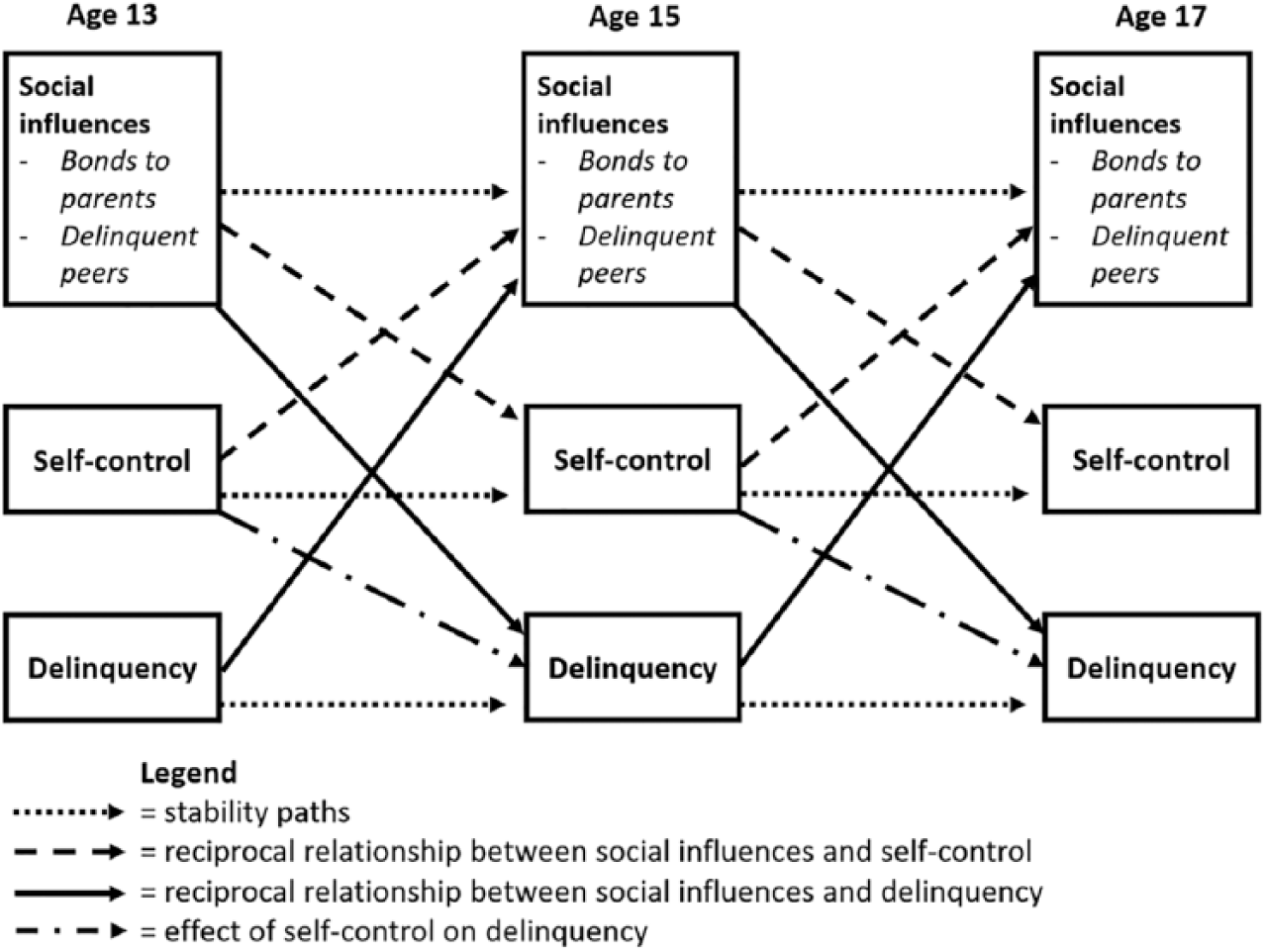
Graphical representation of the theoretical relationships tested in this study.
Methods
Data
This study uses three waves of the Zurich Project on the Social Development from Childhood to Adulthood (z-proso). This ongoing longitudinal study consists of a sample of all 1675 children who entered first grade in 56 randomly selected primary schools in Zurich in 2004 (Nivette et al., 2014). Schools were selected using a sampling procedure stratified by school size and the socioeconomic background of the school districts. Disadvantaged school districts were slightly oversampled (Eisner et al., 2019). The sample is largely representative of the youth population for the city of Zurich, but not for the whole country. The first wave of data collection took place when the vast majority of the children were 7 years old. Seven waves of child interviews were collected at ages 7, 8, 9, 11, 13, 15, and 17. The current study uses data from waves 5, 6, and 7, when the majority of respondents were 13, 15, and 17 years old. Data were collected via self-report questionnaires during leisure time and participants were given a participation incentive worth US$30. From age 13 on, the participants were legally old enough to give active consent to participate on their own, although their parents received an information letter that allowed them to forbid their participation.
From wave 5 (age 13) on, the project team were able to re-contact the entire initial target sample from wave 1. in wave 5, 1365 respondents participated, which was 81 percent of the initial target sample in wave 1. The attrition rate between wave 5 and 6 was relatively low, at 2.6 percent, and 117 respondents from the target sample (re-)entered, making a total of 1446 respondents in wave 6. Attrition between waves 6 and 7 was higher, at 11.0 percent, and only 18 respondents from wave 5 re-entered, making the total number of respondents 1305 in wave 7. Only respondents who participated in all three waves were included in the analysis, resulting in a sample of 1197 respondents. A recent study showed that prosocial behavior, symptoms of anxiety/depression, symptoms of attention deficit hyperactivity disorder (ADHD), non-aggressive conduct behavior, and aggressive behavior were not related to attrition between waves 5 and 7 in the z-proso study (Eisner et al., 2019).
Measurement
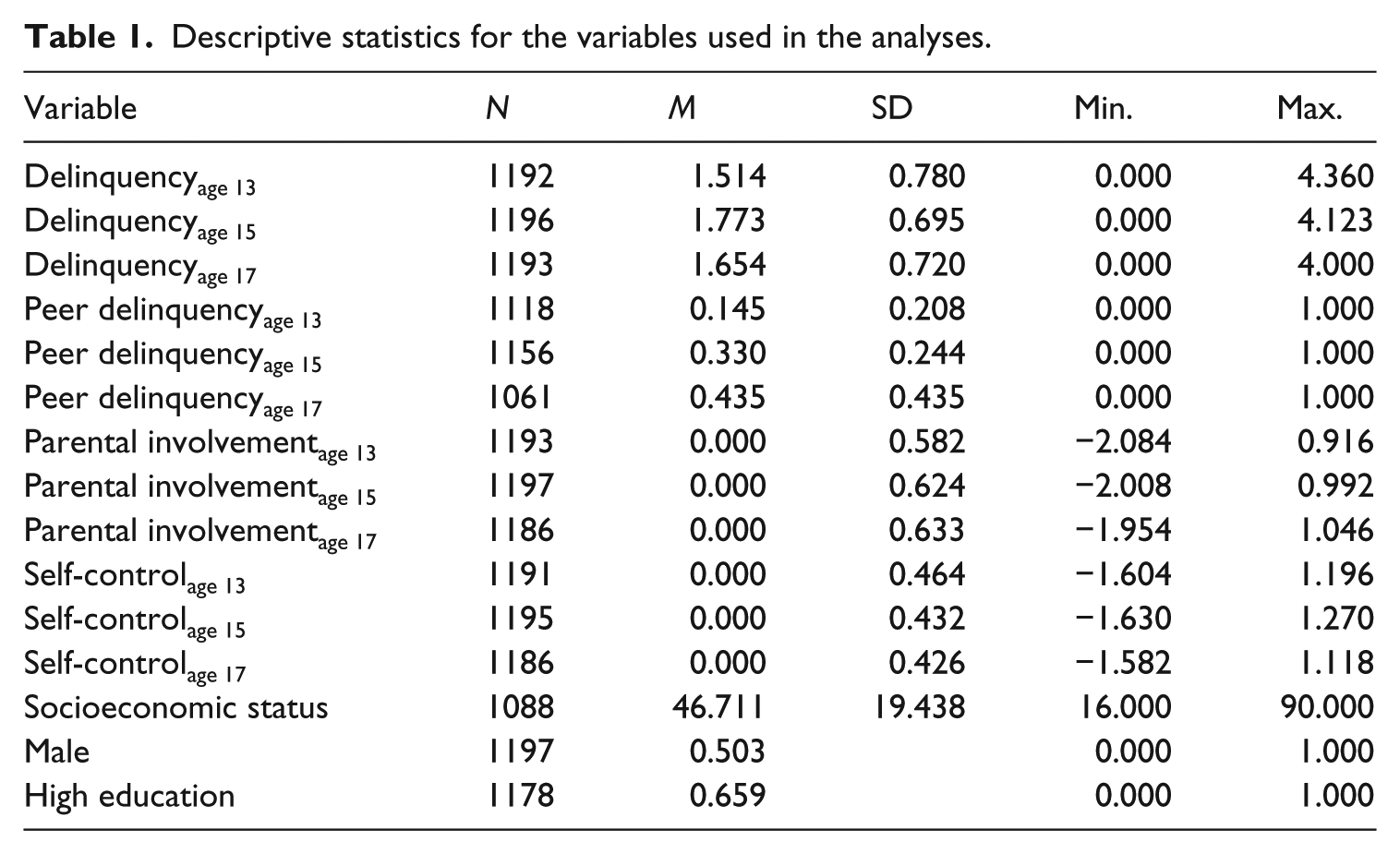
Descriptive statistics for the variables that are used in the analyses can be found in Table 1.
Descriptive statistics for the variables used in the analyses.
Delinquency
Delinquency was measured using 19 items (for example, truancy, cheating at school, shoplifting, vehicle theft, driving without a license, burglary, drug dealing, vandalism, robbery, carrying a weapon). Respondents were asked whether or not they engaged in these behaviors in the past 12 months. A variety index was created from these items, indicating how many of the 19 types of deviant or delinquent acts a respondent committed. The distribution of this delinquency scale is skewed to the right, so a square root transformation was performed on the delinquency scales to approach a normal distribution.
Peer delinquency
Respondents could indicate whether they had up to two ‘best friends’ and answer for six delinquency items whether or not these friends engaged in this behavior. The items are: hit/kick and injure somebody, steal something from a shop/kiosk, play truant, drink alcohol, smoke cigarettes, and take illegal drugs. For each best friend a mean score of the six items was constructed (range 0–1). The Pearson’s correlation between the first and second best friend’s delinquency is .602 at age 13, .535 at age 15, and .527 at age 17. If the respondent indicated two best friends, these two scale scores were combined into one measure by taking the mean of the two scores. When respondents indicated that they did not have at least one best friend, they scored a missing value on the peer delinquency variable. Only a small proportion of respondents did not have a best friend: 5.5 percent at age 13, 2.6 percent at age 15, and 7.0 percent at age 17. In all three waves, the distribution of the peer delinquency variable is positively skewed.
Parental bonds
The z-proso dataset includes various measures of parenting and parental bonds, based on the Alabama parenting questionnaire (Shelton et al., 1996). As an indicator for parental bonds, the parental involvement scale was used in the current study. This is a relatively broad indicator of a respondent’s bonds to his/her parents, as indicated by a moderate positive correlation with the other available measures for parental bonds such as parental monitoring and parental supervision (for example, for monitoring in wave 5: r = .479, N = 1197, p < .001; for supervision in wave 5: r = .412, N = 1193, p < .001) Reliability of the parental involvement scale was relatively high in all three waves (Cronbach’s αage13 = .748; Cronbach’s αage15 = .767; Cronbach’s αage17 = .769). The scale consists of six items measuring: whether parents talk with the respondent about his/her friends and other students in the class, whether the respondent does fun things with his/her parents, whether the respondent can go to his/her parents when he/she has problems, whether his/her parents help the respondent with his/her homework, whether his/her parents are interested in what he/she does, and whether mother or father hugs him/her when he/she is sad. Respondents could respond to these statements in four categories: never (1), rarely (2), sometimes (3), often (4). The scale scores were centered around the mean.
Self-control
Self-control is measured using a 10-item scale adapted from Grasmick et al. (1993) measuring dimensions of impulsivity, self-centeredness, risk seeking, and preference for physical activities. For easier interpretation, the scale scores were reverse coded, meaning higher scores equate to higher self-control, before including them in the analyses. Reliability of the scale is acceptable in all three waves (Cronbach’s αage13 = .804; Cronbach’s αage15 = .771; Cronbach’s αage17 = .851). Scale scores were centered around the mean.
Control variables
Three time-invariant control variables were measured at age 13. To control for gender, a dummy variable ‘male’ (1 = yes; 0 = no) was constructed. Socioeconomic status (SES) was measured using information about the primary caregivers’ current occupation. These occupation codes were translated into International Socioeconomic Index of occupational status (ISEI) scores (Ganzeboom et al., 1992). Higher scores on this scale reflect higher SES, and the maximum possible score is 90. When information on two primary caregivers was available, the highest ISEI score was used as an indicator of a respondent’s SES. Finally, a dummy variable was created that indicates whether or not the respondent’s educational level is high (1 = yes; 0 = no). Educational level was coded as high when respondents attended ‘secondary school type A or equivalent’ or ‘Gymnasium or equivalent’. ‘Secondary school type B/C or equivalent’ and ‘Special needs class’ were coded as low.
Analytical strategy
In order to examine the time-varying and reciprocal relationship between social influences, self-control, and delinquency, we estimated cross-lagged panel models, a type of structural equation model that can be used to analyze the structural relations between repeatedly measured variables. Specifically, we incorporate autoregressive effects, cross-lagged effects, and residual errors.
Autoregressive effects examine the average stability of a variable from one measurement occasion to the next within individuals. For example, the autoregressive path from delinquencyage13 to delinquencyage15 illustrates how stable delinquency in general is between these measurement occasions. A higher autoregressive coefficient indicates a high stability over time and a lower autoregressive coefficient means a substantial reshuffling of individual’s delinquency over time (Selig and Little, 2012).
Cross-lagged effects measure the effect of a variable on another variable that was measured one measurement occasion later. These effects represent the propositions tested in this study. An example is the effect of parental bondsage13 on delinquencyage15. Since the autoregressive effects are included in the models, this effect of parental attachmentage13 on delinquencyage15 is independent from the adolescent’s delinquency at age 13. Controlling for prior levels of the outcome variable in this way makes it possible to rule out that a cross-lagged effect of parental bondsage13 on delinquencyage15 is due to the fact that parental bonds and delinquency are simply correlated at age 13. The temporal precedence of parental bondsage13 makes it then possible to explicitly test the effect in this particular direction. Estimating cross-lagged effects, while controlling for autoregressive effects, therefore makes it possible to explicitly test the direction of potential causality. Moreover, in a cross-lagged panel model, a variable can be both an explanatory and an outcome variable, which makes this method particularly suitable for testing reciprocal relationships. Finally, residual errors of all variables within the same wave were correlated with each other.
Models are estimated using maximum likelihood estimation with standard errors that are robust to non-normality (MLR) in Mplus 7 (Muthén and Muthén, 2012). Accounting for non-normality is necessary since not all variables are normally distributed. Full information maximum likelihood (FIML) was used, so that cases with missing values can still be included in the analysis. The dummy variables ‘male’ and ‘high education’ were explicitly specified as exogeneous variables, since no reasonable normality assumption could be made for these variables, which means that cases with missing values on these variables (N = 19) are excluded from the analyses. This makes the final sample size for the analyses 1178.
We estimated three models that reflect the major claims outlined by the social control and influence, self-control, and life course theoretical frameworks. We followed a stepwise modeling procedure in which model fit was compared with the fit of the previous model. Model 1 tests a fully constrained model wherein all cross-lagged and autoregressive effects are constrained to be time invariant. This model reflects claims made by static theories that the effects of social influences and self-control do not vary over time. In Model 2, cross-lagged effects of parental bonds and peer delinquency on delinquent behavior, and corresponding reciprocal effects, are allowed to vary freely over time. This model reflects both dynamic and static perspectives, in that social influences are age graded whereas internal controls remain time invariant. Model 3 is the fully unconstrained model, wherein all effects are allowed to vary freely over time. This model best reflects an integrative approach that assumes a dynamic relationship between social influences, self-control, and delinquency throughout adolescence. Effects of control variables were constrained to be time invariant in all models.
Model fit was evaluated before interpreting parameters. Several criteria are used to evaluate the model fit: comparative fit index (CFI) and Tucker Lewis Index (TLI) greater than .90, and root mean squared error of approximation (RMSEA) and standardized root mean square residuals (SMSR) less than .05 (Burkholder and Harlow, 2003). We used a Santorra–Bentler scaled chi-square difference test to compare the fit of the models against each other.
In order to formally test for time-varying effects, we used the Wald chi-squared test to evaluate whether autoregressive and cross-lagged coefficients differed significantly between ages 13 and 15, and between ages 15 and 17.
Results
Table 2 shows that the fully constrained model fits the data relatively well (χ2 (47) = 198.208, CFI = .971, RMSEA = .052). In Model 2, the direct and reciprocal effects of the parental involvement and peer delinquency variables on delinquency were freely estimated. This model also fits the data relatively well, and more importantly Model 2 fits the data significantly better than the fully constrained model (Model 1), ∆χ2Santorra–Bentler scaled (7) = 19.158, p = .008. In the final model (Model 3), all effects were freely estimated. Model 3 fits the data well (χ2 (34) = 152.799, CFI = .977, RMSEA = .054), and again this model fits the data significantly better than the previous model (∆χ2Santorra–Bentler scaled (6) = 25.543, p < .001).
Evaluation of model fit statistics for fully constrained, partially constrained, and unconstrained models.
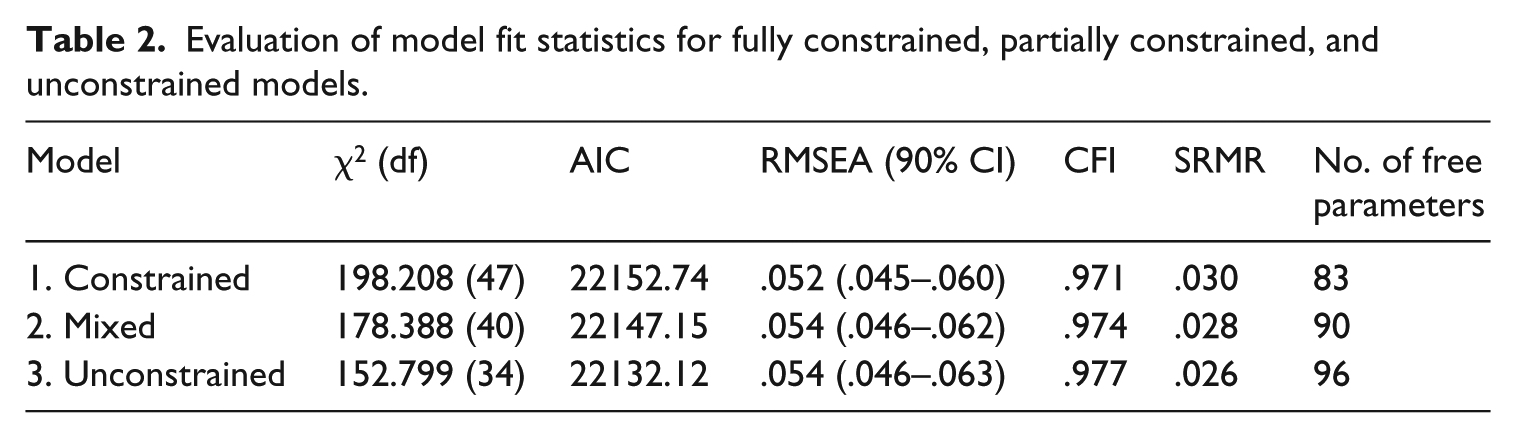
The results of these model fit comparisons indicate that (1) the strength of the reciprocal relationship between delinquency and the social influence variables varies over time, (2) the strength of the association between self-control and delinquency varies over time, and (3) the strength of the reciprocal relationship between self-control and the social influence variables varies over time. This supports an integrative and dynamic perspective on social influences and internal controls and delinquency over adolescence. In the next section, we examine the estimates from the unconstrained model to evaluate the size and variance of direct and reciprocal effects on delinquency over time.
Autoregressive effects: Stability across adolescence
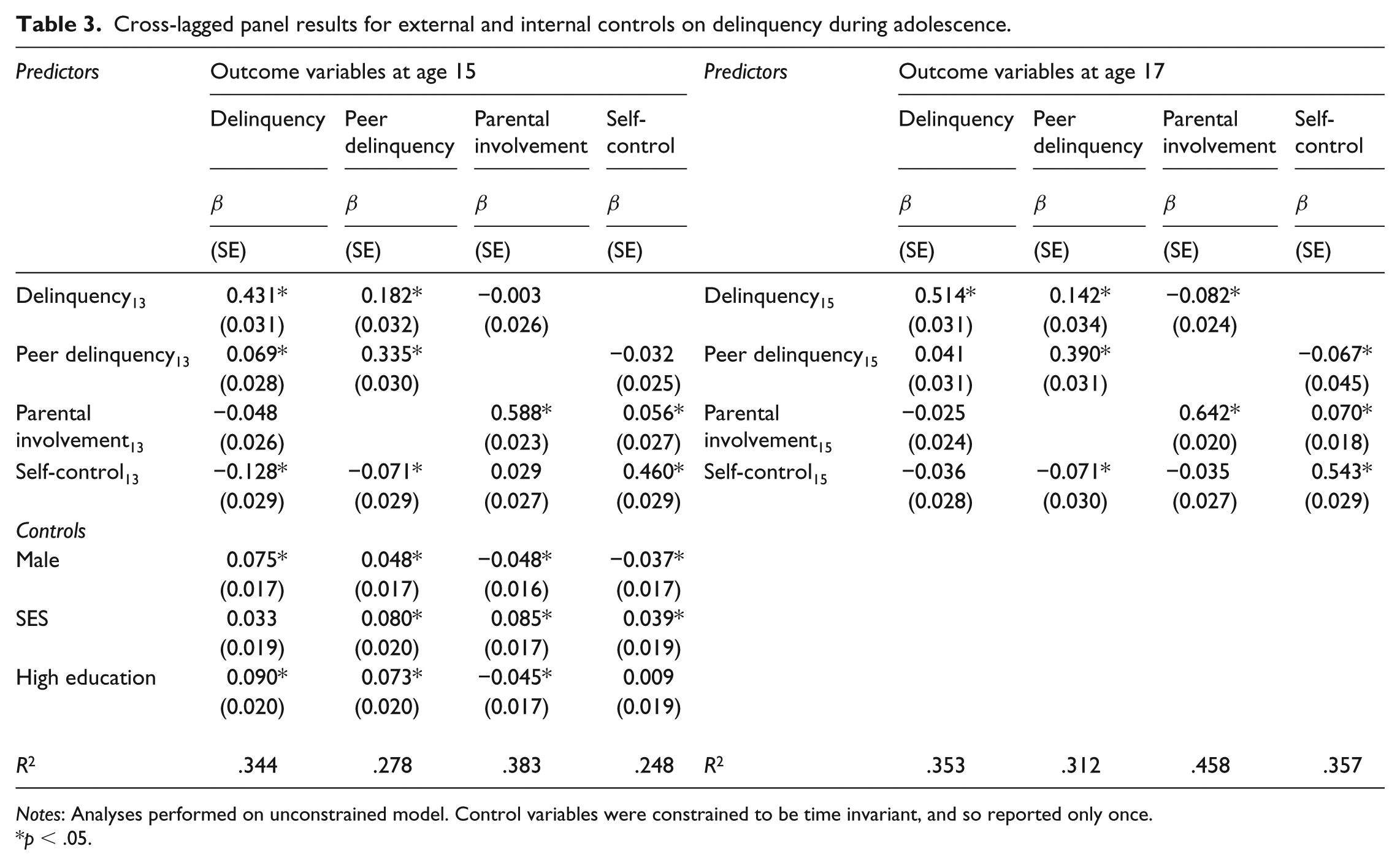
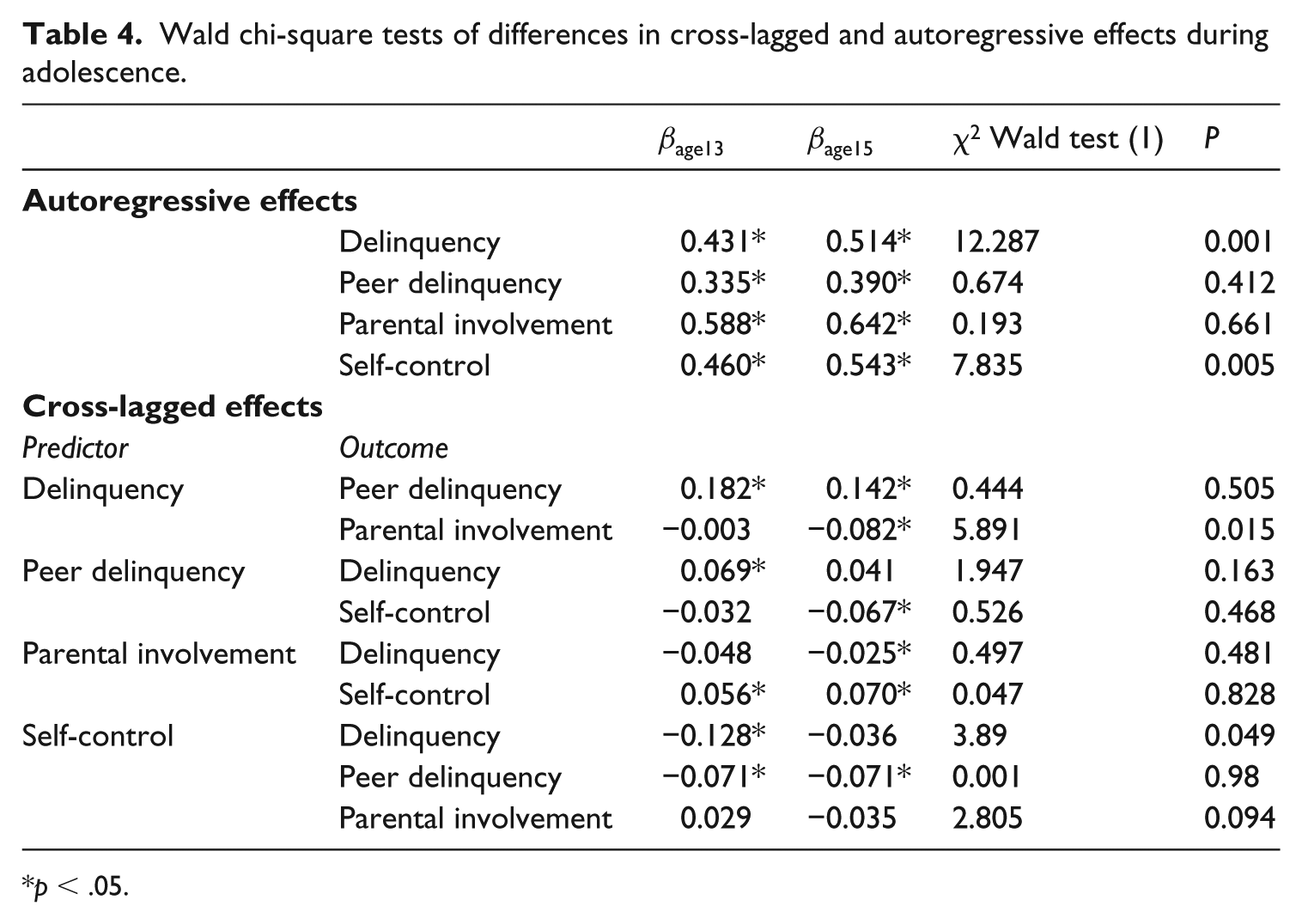
Table 3 displays the standardized coefficients for autoregressive and cross-lagged pathways for the unconstrained model. The results suggest that most constructs are at least moderately stable across adolescence. Peer delinquency displays the comparatively lowest stability between ages 13 and 15 (β = .335, p < .001 ) and ages 15 to 17 (β = .390, p < .001), followed by delinquency (βage13-15 = .431, p < .001; β age15-17 = .514, p < .001) and self-control (βage13-15 = .460, p < .001; βage15-17 = .543). The size of autoregressive effects for both delinquency and self-control are significantly greater between ages 15 and 17 (delinquency: χ2Wald-test (1) = 12.287, p = .001; self-control: χ2Wald-test (1) = 7.835, p = .005), meaning that there is greater stability in delinquency and self-control in late adolescence. Interestingly, the strongest autoregressive effects were found for parental involvement, which showed relatively high stability across adolescence (βage13-15 = .588, p < .001; β age15-17 = .642, p < .001).
Cross-lagged panel results for external and internal controls on delinquency during adolescence.
Notes: Analyses performed on unconstrained model. Control variables were constrained to be time invariant, and so reported only once.
p < .05.
Social influences, self-control and delinquency
The cross-lagged coefficients in Table 3 indicate that peers have the strongest effect on later delinquency, but only in early to mid adolescence. Peer delinquency at age 13 positively affects delinquency at age 15 (β = 0.069, p = .014), whereas this effect disappeared between age 15 and age 17 (β = 0.041, p = .184). Parental involvement (β = −0.048, p = .060) at age 13 is not significantly related to self-reported delinquency at age 15, or from age 15 to 17 (see Table 3). The effect of peer delinquency was not significantly smaller between ages 15 and 17 (χ2Wald test (1) = 1.947, p = .163), suggesting that the size of the effect of peer delinquency does not change from early to mid adolescence (see Table 4).
Wald chi-square tests of differences in cross-lagged and autoregressive effects during adolescence.
p < .05.
Furthermore, we find that social influences and delinquency are reciprocally related, although this is inconsistent across time points. Self-reported delinquency at age 13 increases association with delinquent peers (β = 0.182, p < .001) at age 15, and again between ages 15 and 17 (β = 0.142, p < .001). Delinquency has no significant effect on parental involvement at age 15 but does weaken involvement between ages 15 and 17 (β = −0.082, p = .001). Testing for time-varying effects, we find that the size of the effect of delinquency on peer delinquency does not vary over time (χ2Wald test (1) = 0.444, p = .505), whereas the effect on parental involvement is significantly stronger between ages 15 and 17 compared with between ages 13 and 15 (χ2Wald test (1) = 5.891, p = .015).
Results for self-control across time points were mixed. Self-control at age 13 is associated with significantly less involvement in delinquency between ages 13 and 15 (β = −0.128, p < .001), but not between ages 15 and 17 (β = −0.036, p = .194). Testing for time-varying effects, the size of the effect is significantly larger between ages 13 and 15 compared with ages 15 and 17 (χ2Wald test (1) = 3.890, p = .049).
Peer delinquency was associated with significantly lower self-control, but only in late adolescence (β = −0.067, p = .009). However, the size of these effects does not significantly differ from the effects between ages 13 and 15 (χ2Wald test (1) = 0.526, p = .468). Parental involvement significantly increased self-control throughout adolescence (βage 15 = 0.056, p = .040; βage 17 = 0.070, p = .010), suggesting that parents still matter to the formation of self-control past childhood. The size of the effect of parental involvement on self-control is not significantly different between ages 13 and 15 compared with ages 15 and 17 (χ2Wald test (1) = 0.047, p = .828).
The effects of self-control on the social influence variables were also mixed. Higher self-control was associated with significantly less involvement with delinquent peers at ages 15 (β = −0.071, p = .015) and 17 (β = −0.071, p = .019). Self-control had no significant impact on parental bonds (see Table 3).
Robustness checks
To test the robustness of the results, various additional tests were performed (results available from the authors upon request) from which the most important findings are outlined below. The majority of the results are robust to slightly different operationalizations of the delinquency variable. First, we found that results are not sensitive to the square root transformation of our delinquency variable. Second, we examined whether the results are robust to a broader operationalization of delinquency using a 28-item scale that includes measures of bullying and substance abuse. We find that higher self-control at age 15 is associated with significantly lower delinquency at age 17 (β = −0.070, p = .007), although the effect size is significantly smaller (χ2Wald test (1) = 4.375, p = .036) compared with the effect between ages 15 and 17 (β = −0.145, p < .001). Third, if only the 14 more serious, low-frequency items are included in the delinquency variety scale, peer delinquency at age 15 is significantly related to delinquent behavior at age 17 (β = −0.078, p = .012), and the effect size is not significantly different from the effect between ages 15 and 17 (χ2Wald test (1) = 0.526, p = .468). The same applies when delinquency is operationalized with a 14-item incidence scale. Items about truancy, cheating at school, running away from home, illegal uploading/downloading, and fare dodging are excluded in this scale. Furthermore, when the parental monitoring scale is used instead of the parental involvement scale, the results do not substantively change, indicating that the results are robust against a different operationalization of parental bonds.
Discussion
This study has implications for our understanding of adolescent delinquency in at least three ways. First, the results are consistent with a dynamic model of social influences and internal controls on delinquency during adolescence (Sampson and Laub, 1997; Thornberry, 1987). The model that best fits the data allows for all parameters to vary freely over time. In addition, the results suggest that self-control, although relatively stable over time, is still malleable to social influences throughout adolescence. Second, in line with previous research, peers play a significant role in influencing delinquency in mid adolescence, as opposed to parents. In addition, this relationship is reciprocal, wherein peer delinquency increases the likelihood of delinquency, and likewise delinquency reinforces peer delinquency. Finally, autoregressive effects indicate that certain constructs and behaviors are at least moderately stable over time. Most notably, we find that involvement in delinquency is quite stable throughout adolescence, and particularly in mid to late adolescence. This suggests more continuity than change within adolescence.
Peers, parents, and delinquency
In line with a great deal of research on peer influences and delinquency, this study finds that peer delinquency is positively related to future self-reported delinquency. However, the degree to which this effect is time varying is difficult to determine. On the one hand, significant peer effects are found in early adolescence (ages 13 to 15), but not in later stages (ages 15 to 17). This is in line with life course theory and research that emphasizes the decreasing importance of peers into later adolescence (Jang, 1999; Sampson and Laub, 1997; Steinberg and Monahan, 2007; Thornberry, 1987). On the other hand, the effect sizes do not significantly differ between the two time-lags. This leaves room for the interpretation that peer effects are stable across adolescence, particularly since peer effects remained significant during robustness checks when only the relatively serious items were included in the delinquency scale. This could indicate that peers are particularly influential with regard to more serious offenses (see also Elliott and Menard, 1996). Alternatively, peer delinquency could be more indirectly related to delinquency in middle and later adolescence, for example via the formation of beliefs in delinquent values (see Thornberry, 1987). Furthermore, the relationship between peers and delinquency is reciprocal. That is, delinquency in turn influenced peer delinquency, suggesting that delinquency reinforces existing bonds to delinquent peers (Elliott and Menard, 1996; Matsueda and Anderson, 1998).
There is some question as to whether this process is driven by self-selection or social influence mechanisms in which the adolescent influences his/her friends. This study did not take into account whether respondents nominated the same or different friends compared with the previous wave of data collection, and thus it is not possible to separate selection from social influence mechanisms. However, the standardized coefficients suggest that delinquency has a stronger effect on peer delinquency than the other way around. According to Matsueda and Anderson (1998), this suggests that selection mechanisms are present within this process. 1 However, more research is needed to disentangle the underlying mechanisms driving this relationship, particularly given the ongoing debate about the relative importance of peer influence and peer selection in explaining delinquency (see, for an overview, Schwartz and Vazsonyi, 2014).
Importantly, and in contrast with previous research, we found no consistent evidence that parental bonds, as measured by parental involvement, affect future involvement in delinquency (see, for example, Craig, 2015; Hoeve et al., 2012; Piko, 2000; Thornberry, 1987). There are several possible explanations for this result. First, the link between parental attachment and delinquency is generally stronger when children are younger (Hoeve et al., 2012; Jang and Smith, 1997), thus the influence of parents may have already weakened by age 13. Second, parental bonds may have indirect effects on delinquency in adolescence through, for example, the formation of internal controls such as self-control (Van Gelder et al., 2017), the development of beliefs in conventional values (Thornberry, 1987), and/or association with delinquent peers (Janssen et al., 2016; Keijsers et al., 2012). Indeed, the current study’s results suggest that parental involvement significantly increases self-control throughout adolescence.
In line with previous research, we found some evidence that delinquency damages parental bonds (Keijsers et al., 2010; Keijsers et al., 2011; Sampson and Laub, 1997; Thornberry et al., 1991), but only during mid to late adolescence. Parents may, for example, be more forgiving of delinquency in early adolescence but, as the behavior becomes more persistent, the bonds begin to weaken. In this case, we would expect a threshold effect of delinquency on bonds over time, wherein effects are visible only among chronic or serious offenders. Alternatively, since delinquency is measured using adolescents’ self-reports, parents might simply not know enough about their child’s delinquency to change their behavior.
Social influences, self-control, and delinquency
In line with expectations, higher self-control significantly decreased the likelihood of engaging in delinquency; however, effects were significant only between ages 13 and 15. In contrast to Gottfredson and Hirschi’s (1990) argument that self-control is stable beyond childhood, our results suggest a more malleable construct that is shaped in adolescence by associations with delinquent peers and parental involvement. We find support for the idea that parents continue to influence self-control during adolescence (Van Gelder et al., 2017; Hay and Forrest, 2006; Meinert and Reinecke, 2018). In addition, we find some evidence supporting the notion that peer associations and self-control are reciprocally related. Individuals with low self-control are more likely to associate with delinquent peers (Chapple, 2005), and this association further weakens self-control in later adolescence (Burt et al., 2006). This finding speaks to the theoretical propositions, first, that self-control is shaped not only by parents but by broader socializing institutions, including peers (Meldrum, 2008), second, that self-control is affected by these social influences beyond childhood (Hay and Forrest, 2006), and, third, that these influences may operate in a reciprocal, cumulative fashion over time (Na and Paternoster, 2012). Although cross-lagged effects are seemingly small, the size of effect is in line with previous longitudinal models that account for autoregressive effects (see Adachi and Willoughby, 2015; Malti et al., 2016). In addition, it is important to note that small cross-lagged effects are still meaningful because they represent cumulative impacts on the outcomes over time (Adachi and Willoughby, 2015).
In addition, our results suggest that self-control is not sufficient for explaining variation in adolescents’ delinquency, since it cannot completely explain the relationship between peer delinquency and delinquent behavior in early adolescence. This is in line with recent research on the effects of self-control and peer delinquency on delinquent behavior (Franken et al., 2016; Fine et al., 2016; Pratt et al., 2010; Pratt and Cullen, 2000).
Stability over time
Delinquency can be explained partly by levels of self-control and peer delinquency in early adolescence. However, when comparing the autoregressive effects (see Table 4), delinquency is significantly more stable between ages 15 and 17, a time of rapid social change. Neither changes in self-control, in peer delinquency, or in parental attachment explain changes in delinquency between ages 15 and 17. This could be due to the stability of these constructs during this period. Self-control, the most important predictor of delinquency between ages 13 and 15, is more stable between ages 15 and 17 compared with ages 13 and 15. Parental bonds appear to be more stable than peer delinquency, which is in line with previous research suggesting that adolescents’ relationships with significant others in the family, school, or community are more stable than relationships with their peers (Brown and Larson, 2009).
Moreover, Sampson and Laub (1997) note that the stability of delinquency may reflect the stability of social response more so than an underlying time-invariant criminal propensity. For example, persistency in delinquency is more likely when an adolescent who has engaged in delinquency is publicly labeled as a delinquent by others. This may lead to exclusion from conventional opportunities, to alteration of personal identity, and eventually to an increase in the likelihood of further association with delinquent peers and engaging in delinquency (Lee et al., 2014; Paternoster and Iovanni, 1989). Although labeling is not necessarily a cause of delinquency, once the process of engaging in delinquency has started, it could help to explain the persistence of delinquency in later adolescence. This indicates that there are common as well as distinct predictors for the initiation and persistency in delinquency (Catalano and Hawkins, 1996).
Limitations and future research
There are several notable strengths to this study. First, the data cover a key period of adolescence within the life course. Second, the design and time frame allowed us to incorporate both social influences and internal controls into one model to examine the dynamic relationships between different theoretical constructs. However, there are also important limitations.
First, future studies could benefit from incorporating some alternative operationalization of the variables measured in this study to test the robustness of our results. For example, peer delinquency was measured indirectly via the respondents’ perception of their friends’ behavior. Although indirect measures of peer delinquency are widely used in studies on adolescents’ delinquency, researchers note that the similarity between adolescents’ and their peers’ behavior may be overestimated and partly explained by projection bias (Young et al., 2011). Future research would benefit from direct (peer-reported) measures of peer delinquency. Further, self-control was measured using items based on Grasmick et al. (1993). Since there is some debate in the literature about the validity of this scale (see, for example, Piquero and Rosay, 1998), further research is needed to test the robustness of our results to different operationalizations of self-control.
Second, a common problem in cross-lagged panel modeling is that one might not be able to detect an effect of one variable on another when this effect is present only in a shorter term than the time-lag that was used (that is, in this case, less than two years). As Weerman, Wilcox, and Sullivan (2018) noted, studies using time-lags longer than a couple of weeks between measurements may miss the dynamic nature of short-term relationships between adolescents and their peers. Future studies would benefit from studying a longer developmental period, including part of childhood, and using shorter time intervals. This makes it possible to determine the relative strength of indirect, direct, and reciprocal effects of peer delinquency and parental attachment on delinquency and self-control at each stage of the life course.
Third, due to limitations in space and model specification, we could not test all possible relationships between social influences, self-control, and delinquency. For example, we did not test whether parental involvement and peer delinquency are (reciprocally) related throughout adolescence, as indicated by previous research (for example, Keijsers et al., 2012). Moreover, we did not incorporate a reciprocal relationship between self-control and delinquency, although research has shown that self-control and deviance are reciprocally related throughout childhood and early adolescence (Vazsonyi and Jiskrova, 2018), and that active offenders update their perceptions of risk with each offense and discount future-oriented sanction threats (Fagan and Piquero, 2007). Thus it is plausible that successfully engaging in delinquency can further weaken internal controls and strengthen present orientation as future threats are devalued. Future research should more closely examine whether and how delinquency might impact self-control throughout adolescence.
Conclusions
This study aimed to examine an integrated and dynamic model of the reciprocal relationship between social influences and internal controls and delinquency in adolescence. Following recent calls to incorporate self-control into more dynamic life course models of delinquency (Na and Paternoster, 2012), we assessed to what extent these effects were time varying and reciprocally related across key stages of adolescence. Our results suggest that, for the most part, social influences affect self-control into adolescence, contributing to a growing area of research on the dynamic properties of self-control over the life course. Furthermore, we find evidence that these social influences, in particular peer delinquency, are also reciprocally related to delinquency, supporting the claim that delinquency can lead to cumulative disadvantages that further entrench individuals in antisocial pathways over the life course (Thornberry, 2014).
Footnotes
Funding
The author(s) disclosed receipt of the following financial support for the research, authorship, and/or publication of this article: The Zurich Project on the Social Development from Childhood to Adulthood is currently supported by the Swiss National Research Foundation (SNF) [Grant number 100014_149979] and the Jacobs Foundation (JF) [Grant number 2013-1081-1]. Substantial funding in previous project phases was provided by the SNF, the JF, the Swiss Federal Office of Public Health, the Swiss State Secretariat for Migration, the Bank Baer Foundation, and the Visana Foundation.
