




Abstract
This study proposes context-aware lighting presets for the office lounge based on user behaviour. We explored five kinds of optimised light scenarios: empty, relaxation, discussion, chatting and party, while matching them with patterns of user behaviours. Firstly, we designed lighting solutions for each context through expert interviews. Using these, we developed an algorithm that detects the number of users, their movement and their sound volume using a camera and microphone and suggests appropriate lighting settings based on this data. Then, we implemented the algorithm in two types of office lounges. Finally, user assessments and interview results confirmed that the adaptive lighting preset enriched users’ experience. We also discussed the challenges for better implementation.
1. Introduction
Research has shown that lighting can significantly influence users’ emotions, behaviours and productivity, creating environments that enhance comfort, collaboration and efficiency.1,2 Thus, providing appropriate lighting based on the activities of the people in the space can play a supportive role. Lighting needs vary largely depending on the environment. 3 Separate from primary lighting, used for functional illuminance to ensure visibility, people use additional secondary lighting to create ambience or illuminate specific areas locally. The popularity of lighting setups utilising such sub-area lighting is steadily increasing, suggesting that more research should focus on secondary lighting. 4 These secondary lighting offers flexibility and variety, making it a focus of research on interactive systems.5,6
Properly designed lighting can enhance users’ emotions, productivity and overall satisfaction.1,2,7,8 It addresses both basic needs, like visibility, and higher-level aspects, such as aesthetics and emotion. 3 Numerous studies have explored how different lighting designs affect users, consistently highlighting illuminance and colour as the key components influencing emotions and user experience.1,9–11
Different levels of illuminance can create distinct experiences for users. Studies have shown that higher illuminance tends to enhance energy, alertness and vibrancy,12,13 while lower illuminance promotes relaxation. 1 Especially in office settings, finding the right balance is crucial for both visual comfort and productivity, as overly bright lighting can cause glare and eye strain.14,15 Research also suggests that optimal illuminance can improve work performance and reduce errors, further emphasising the importance of carefully designed lighting systems in work environments.16,17 The colour of lighting plays a key role in shaping the atmosphere of a space. Correlated colour temperature (CCT) is often used to describe lighting colours, with low temperatures enhancing comfort and luxury, 18 while higher temperatures improve focus and performance.19,20 Other studies, focusing on chromatic lighting, suggest that different lighting colours can impact how spacious or warm a space feels. 11 In office environments, proper light distribution is essential for visual comfort and task performance. It reduces glare, prevents shadows and ensures adequate visibility.21,22 Light distribution is influenced by factors like natural light, surface finishes and architectural design. 23 Research also shows that preferences for light distribution can vary throughout the day, impacting productivity and alertness, making it a key consideration in shared office spaces. 24
Empirical research has driven the development of appropriate lighting solutions tailored to different contexts. For instance, Choi et al. 10 developed 20 lighting presets to support the user’s affection and activity. Similarly, Barkmann et al. 25 developed seven lighting presets composed of different illuminances, colour temperatures and contrasts. They applied the presets in schools, and their solutions improved students’ learning efficiency and reduced error rates. Also, the solution found the most preferred presets. These studies demonstrate the practical effectiveness of using varied lighting conditions to emphasise the purpose of a space and support emotional well-being.
Despite the diverse functionalities and support that lighting can offer, only a few users benefit from these advantages. Users tend not to change their lighting due to ignorance and latent needs. For instance, Offerman et al. 3 investigated how 13 participants interacted with lighting over a week. The study revealed significant differences in interaction needs with lighting among individuals, and participants preferred to interact with lighting with minimal effort. This finding suggests a new system that automatically adjusts lighting to support the context.
While several studies have proposed systems that adjust illuminance and colour temperature based on specific information, many are primarily aimed at energy reduction and do not significantly help users benefit from the advantages of lighting. 26 Still, some research has attempted to support user emotions and context. For example, the adaptive lighting environment proposed by Magielse et al. 27 supports three scenarios based on different numbers of participants and situations.
However, such smart lighting systems have not been widely adopted. The common concerns are the initial cost and technical expertise for the installation. 26 These limitations stem from the excessive complexity of proposed lighting control systems.28,29 It is theoretically possible to implement smart lighting systems with numerous sensors and AI models to offer many features, but they have not demonstrated significant utility in practice. The consistently highlighted limitations of smart lighting systems underscore the need for developing systems practically usable through easy installation and low complexity.
In addition, one of the main concerns raised about lighting systems that detect and respond to activities within a space is the issue of privacy.30,31 Here, the privacy issue includes facial recognition 32 and conversational context recognition. 33 Consequently, there is a pressing need for a system that can understand the context of a situation and provide appropriate lighting without collecting personal information. Such a system would rely on minimal data to determine the context and adjust the lighting accordingly, ensuring user privacy while delivering optimal lighting solutions. As interest in the impact of workspace design on employee health and welfare increases,34,35 significant changes have been made to the traditional office structure, which primarily focuses on individual spaces. 36 As part of this shift, efforts to enhance interactivity among workers have led to the introduction of shared spaces within offices and the concept of open-plan offices.37,38 However, exploring these spaces is still a developing field, and there has been insufficient discussion in the research literature.
Some papers emphasise the importance of office lounges, highlighting the diverse activities that can occur in these spaces.39,40 They argue that these lounges are not designed with a single purpose but rather accommodate various activities such as relaxation, work-related discussions and social interactions. For example, lounges provide a space for employees to relax during breaks, fostering a healthier work environment.36,41 Additionally, they serve as venues for discussions and brainstorming sessions, which can enhance collaboration among team members.36,42–44 Social interactions, such as chatting, are also common in these spaces, contributing to a more cohesive workplace culture.39,41,43 Such social interactions often invoke emotions, 45 which tend to lead to higher voice loudness compared to work-related discussions.46,47 While some papers note that workplace parties have declined due to the impact of COVID-19, 48 others argue that these events can still significantly boost employee morale and productivity. 49
Although a comprehensive study that categorises and analyses the various activities within office lounges is still lacking, existing research provides a foundation for identifying the key functions of these spaces. These functions include relaxation, discussion, chatting and party. Additionally, some research on automating office systems has considered the empty state of a space, where the system recognises that no one is using the lounge.42,50
However, despite these benefits, there are notable limitations to current lighting systems. Many existing solutions require manual adjustments, but users often fail to engage with them due to complex and unintuitive interfaces. 3 Adaptive lighting systems that have been developed to address these shortcomings frequently encounter technical challenges in installation and high costs, which has created a barrier for users to actively utilise and benefit from the available lighting options.51,52 These limitations underscore the need for a more accessible and practical approach to lighting control in dynamic environments like office lounges.
To address these issues, this study proposes a smart lighting algorithm that is aware of the context and provides appropriate lighting for shared office spaces, such as office lounges, where multiple people engage in various activities. Our system is designed to interpret context with minimal information without identifying users or recording conversations, making it significantly easier to use while addressing privacy concerns. Utilising easily accessible equipment such as commercially available microphones and webcams, our system does not require an internet connection, further simplifying the installation process and ensuring user privacy. The system’s performance will be evaluated through field tests, which will confirm how well the adaptive lighting presets enhance the user experience in office lounges. The system aims to be fully automated, eliminating the need for manual adjustments and allowing users to receive optimal lighting support without cognitive effort. By reducing the need for manual intervention and leveraging readily available technology, our proposed system aims to enhance user experience and optimise the lighting environment, ultimately supporting productivity and well-being in shared workspaces.
2. Methods
2.1 Study overview
The study aims to develop a context-aware lighting algorithm for office lounges. We utilised contexts derived from an paper review in our research. Based on interviews with 10 experts, including lighting designers and UX designers, appropriate lighting solutions were designed for each context. Additionally, this study developed an algorithm that detects context and provides appropriate lighting. The algorithm uses readily available webcams and microphones to recognise the situation for ease of installation and operational efficiency. Our algorithm does not collect personally identifiable information or capture conversation content, thereby minimising privacy concerns. This approach ensures user privacy while enhancing practical applicability in real-world environments. The developed system was validated through two weeks of field studies, confirming its effectiveness in various settings.
2.2 Context definition and expert interview
To define the relevant contexts, we conducted an paper review on studies discussing office lounge activities. Papers published in the last 20 years were selected based on relevance to shared office spaces and their emphasis on user interaction and environmental well-being. We used Google Scholar to search for the keywords ‘office lounge’, ‘shared office’ and ‘office design’. Studies that excluded shared spaces or did not consider the activities occurring within those spaces were not included in the paper review. The selected papers addressed key lounge activities, including empty, relaxation, discussion, chatting and party. Based on interviews with 10 experts, including lighting designers and UX designers, appropriate lighting solutions were designed for each context.
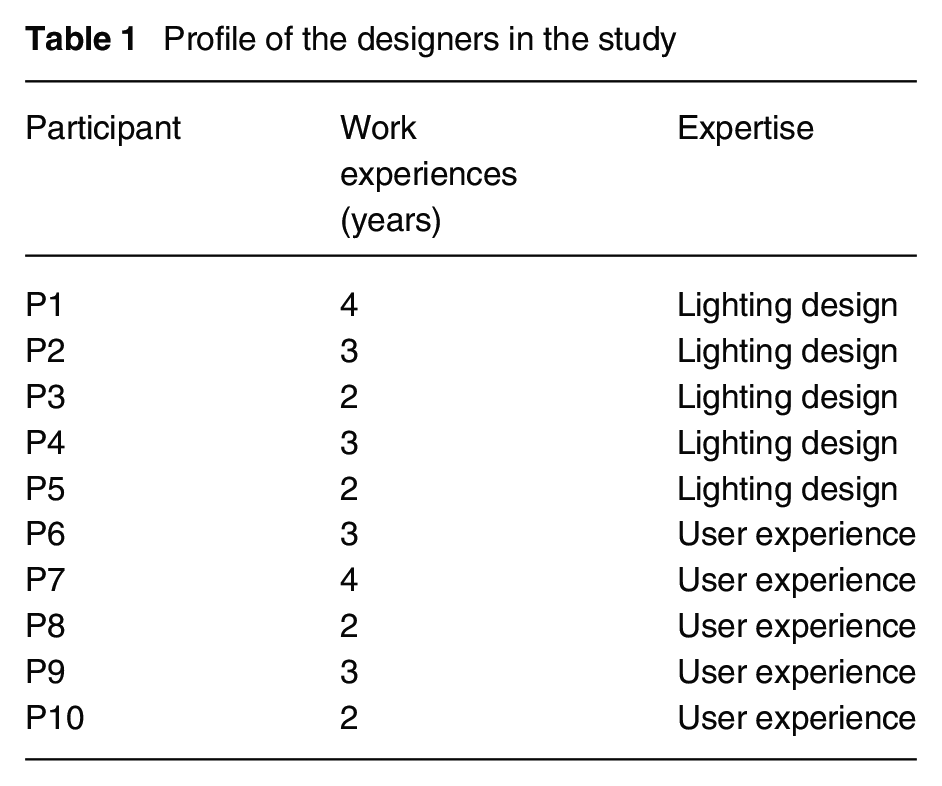
Individual interviews were conducted to design the lighting solutions for the algorithm. Each interview involved one participant and two researchers, with the researchers assuming the roles of moderator and controller. The moderator guided the participant through the procedure and conducted the experiment while the controller communicated with the participant and adjusted the installed lighting accordingly. A total of 10 participants were interviewed, consisting of five lighting designers and five UX designers, with an average age of 26.5 ± 6.8 years. All participants had relevant academic backgrounds and demonstrated expertise through their involvement in projects, with their qualifications and experience verified by the researchers. The expertise and the years of experience of these experts are provided in Table 1.
Profile of the designers in the study
In the interview, we utilised five contexts: four derived from the paper review and one additional context where no one uses the space. The contexts used in the experiment are as follows: empty, relaxation, discussion, chatting and party. Interviewees were presented with one of these contexts randomly and asked to imagine the scenario occurring in the office lounge for 30 s based on their personal experiences. This process helps participants immerse themselves in the given context. Afterwards, participants verbally requested their desired lighting settings from the controller, selecting the colour and illuminance of the lighting. They were allowed to modify the lighting until they found the optimal solution they envisioned. To facilitate smooth communication between the participants and researchers, a printed colour wheel and CCT bar were provided, allowing participants to mark and convey their desired colours to the researchers directly. The worksheet used during the interviews is shown on the right side of Figure 1.
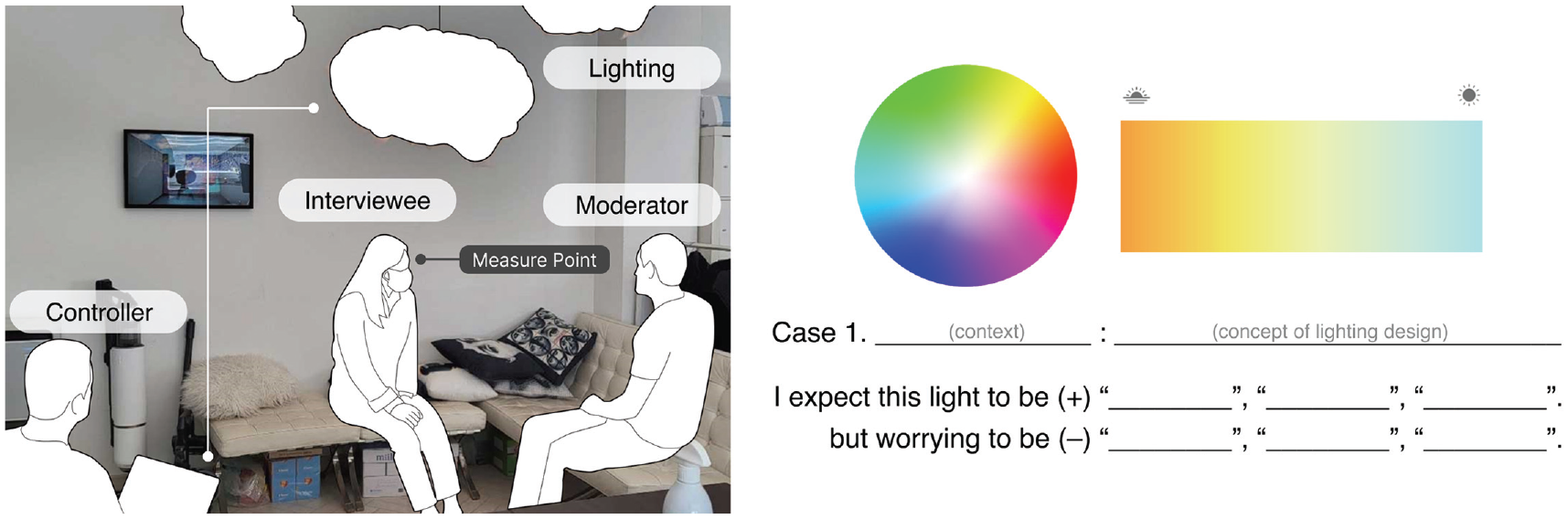
The interview protocol, including the test environment where the interview was conducted (left), and the form that interviewees used to record their solutions (right). All lighting measurements within this environment were taken from a designated ‘measure point’ representing the interviewee’s eye level
The interviews took place in a lounge area of an office space measuring 2.3 m × 3.5 m. This space is an actively utilised shared area within a working office environment, where common activities such as relaxation and discussions frequently occur. The lounge was furnished with a three-person sofa and decorated with three clusters of cloud-shaped lighting in the centre. Four smart bulbs from Philips were used, with two bulbs in one of the clouds. Unlike traditional secondary lighting, these fixtures diffuse light and spread it broadly throughout the shared space. This makes it easier for interviewees to notice changes in lighting, facilitating immediate and effective interview sessions. Figure 1 shows the layout of the interview space and the form provided to the interviewees.
As the controller, we prepared to manipulate the lighting remotely through an interface. The controller’s interface allowed adjustments to the hue, saturation and brightness levels using the HSV (Hue, Saturation, Value) colour metric, where the hue could be set between 0 and 359, saturation between 0 and 100 and brightness (referred to as ‘value’ in the HSV system) between 0 and 100. Additionally, the controller set the colour temperature, determining how warm or cool the lighting appeared. Once the interviewees determined the appropriate lighting for each context, the experimenter measured and recorded the lighting conditions using a light meter. The KONICA MINOLTA CL-200A, Konica Minolta, Tokyo, Japan was utilised for these measurements. After the lighting solution was set, the interviewees were asked to list three advantages and disadvantages that their lighting solution would provide to the lounge users.
As said, the interviewees were presented randomly to the five contexts and asked about their personal experiences.
‘Empty’ context: Most interviewees preferred to keep the lights on in the office lounge, even when the lounge was not being used. Only two out of ten respondents preferred to turn the lights off completely, while the others believed it would be better to have the lights on, even at a low level. They argued that turning the lights off can prevent users from feeling the space too cold and create a warm atmosphere. Some participants also mentioned that keeping the lights on indicated to users that the space is available. Those who preferred warm colours tended to focus on creating an atmosphere, while those who preferred bluish colours wanted to show that the space was available through lighting. However, most interviewees expressed concern about energy usage by keeping the lights on constantly.
‘Relaxation’ context: Interviewees preferred to provide dim lighting when someone was relaxing. They tended to choose warm-coloured lights, as they believed that these lights could help people relax and create a cosy atmosphere. However, some interviewees noted that dim, warm lighting could distract users from returning to work.
‘Discussion’ context: The interviewees tend to focus on facilitating successful discussions. As a result, they preferred bright lighting with cool white colours for the context of the discussion since it helped improve the quality of the discussion. Also, they argued that selecting a familiar lighting colour for users might prevent lighting from taking away users’ attention.
‘Chatting’ context: For chatting, interviewees preferred to provide bright lighting, allowing users to see the other person’s face and focus on the conversation. Some interviewees selected white lighting, while others chose warm-coloured lighting to create a more social atmosphere. During the process, interviewees argued that chatting is a more social activity than discussion, as it often involves a conversation with a close person and may cover private topics.
‘Party’ context: For the party context, interviewees tend to choose a broader range of colours, with pink and purple being the most popular choices, which people prefer according to studies.53,54 The interviewees stated that colourful lighting could create a new atmosphere and make the office lounge feel less like a working space. However, some interviewees pointed out that unusual colours could be too awkward and cause objects to be rendered unnaturally.
2.3 Design solutions and automation algorithm
Based on the results of interviews and a comprehensive review of existing literature, researchers were tasked with developing appropriate lighting solutions for the five identified contexts. Table 2 summarises these solutions, detailing the specific measured colour coordinates and illuminance levels for each context. Note that the hue (H) value ranges from 0 to 359, while the saturation (S) and brightness (V) values range from 0 to 100.
Lighting solutions for various office lounge contexts, detailing correlated colour temperature, HSV scale, measured colour coordinates and illuminance levels
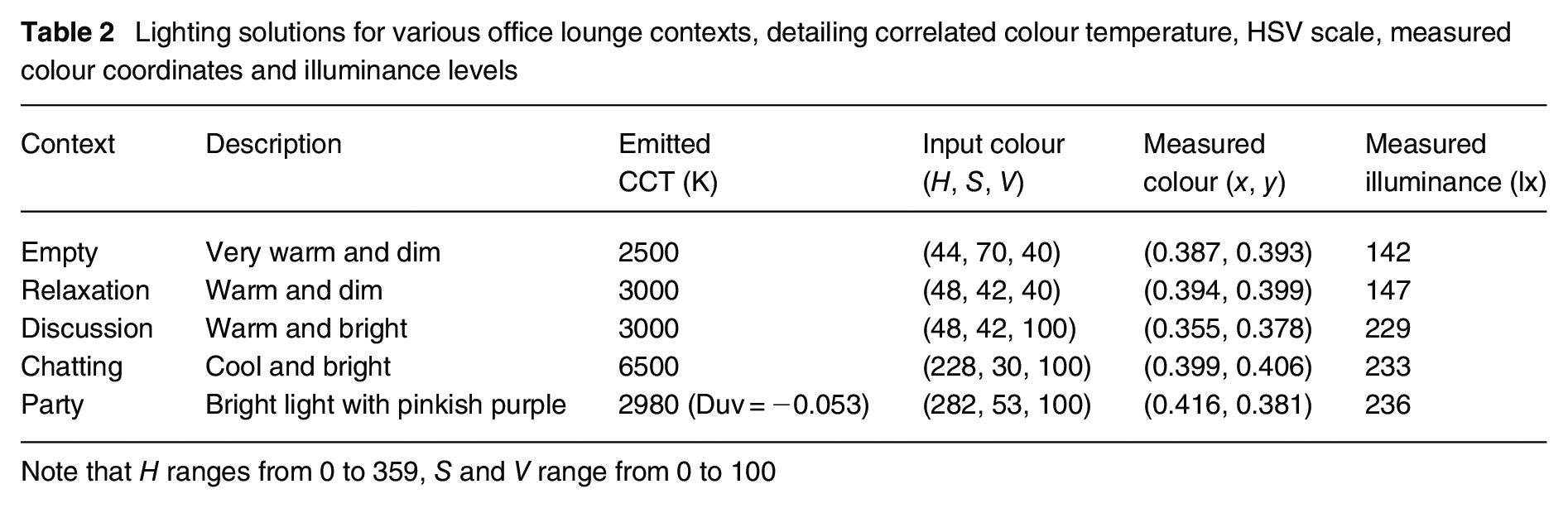
Note that H ranges from 0 to 359, S and V range from 0 to 100
Each context has been meticulously crafted to provide optimal lighting conditions that align with the specific activities and ambience associated with that context. For instance, the ‘Empty’ context is characterised by a very warm and dim setting, with HSV values of (44, 70 and 40) corresponding to the colour temperature of 2500 K. Within the same lighting setting, the measured lighting environment shows CIE 1931 colour space coordinates of x = 0.387 and y = 0.393, with an illuminance level of 142 lx. The illuminance level was measured at the height of 0.85 m from the floor, approximating the typical eye level when seated. Similar detailed specifications are provided for the other contexts to ensure a precise and effective lighting environment in the office lounge.
The lighting solutions developed in this study only target an office lounge, which is distinct from the main working areas. Therefore, these solutions are only applied to the lighting that operates independently of the office lighting. This indicates that changes in lighting conditions driven by the algorithm are confined mainly to the office lounge without affecting the overall lighting environment. This approach ensures that the lighting provides optimised conditions for activities within the office lounge while avoiding disruptions in the main working areas. As a result, the diversity of lighting environments that can be provided may be relatively minimal compared to directly adjusting the overall lighting system.
The five contexts used in this study can be arranged based on the activity level. For example, when the space is empty, there is little movement and sound; during a party, many people continuously move, and music may be playing. An algorithm was developed to predict these contexts and provide appropriate lighting solutions.
An algorithm capable of detecting the context of an office lounge was created using Python to deliver suitable lighting for different situations. This algorithm uses a single webcam and microphone to assess the situation. A conference room microphone was utilised to eliminate directional bias, ensuring that the system could accurately capture sound from all directions within the office lounge. This type of microphone was chosen for its omnidirectional pickup pattern, which allows it to detect sound evenly from multiple angles, rather than focusing on a single direction. The algorithm is integrated with the lighting system and adjusts the lighting based on the detected context (Figure 2).
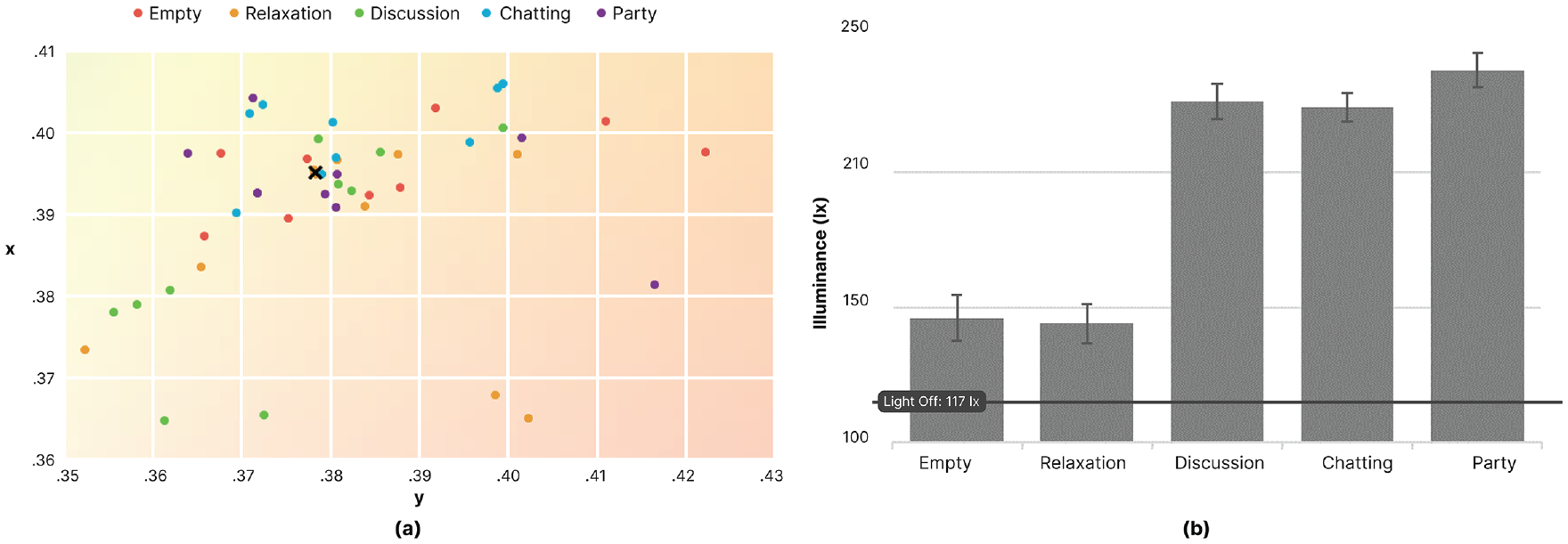
Interview results showing as corresponding lighting conditions: (a) measured lighting colour conditions plotted on the CIE1931 xy coordinate (×: environmental condition with lights off); (b) mean and standard error of the measured illuminance values
The algorithm determines the context of the lounge using three variables. The first variable is users, which indicates the number of people detected in the last 3 s. The algorithm captures images from the camera every 0.3 s and counts the number of people in each captured image. To detect people, our algorithm employed YOLOv7 developed by Wang et al., 55 which is highly regarded for its speed and accuracy, making it well-suited for real-time object detection tasks in dynamic environments. 55 The number of people in the space is determined by the count of objects tagged as ‘person’.
The second variable is movement, representing the detected movement within the frame. The algorithm compares the current frame with the previously captured frame to extract the foreground mask. This process involves background subtraction, where pixel-by-pixel differences between the current and previous frames are calculated. The areas where significant changes occur between the two frames are marked as the foreground, representing movements detected in the scene. A higher proportion of this mask relative to the entire frame indicates significant movement in the office lounge. 56
The third variable is sound, which measures the volume of sound in the space. The microphone captures sound, which is converted into a decibel full-scale value ranging from −60 dB to 0 dB. To avoid misinterpretation due to sudden changes, the algorithm calculates the average sound level over the past 3 s and uses this average to determine the context.
The discrimination criteria for this algorithm were determined through a week-long pilot study conducted in a real situation. By running the algorithm continuously and analysing the collected data, we established precise thresholds for each context.
Empty: If the number of users detected in the last 3 s is 0.5 or fewer, the algorithm determines that the lounge is empty.
Relaxation: The relaxation context considers both scenarios where only one person uses the lounge or multiple people are present without engaging in conversation. If the number of users detected is fewer than 1.8 or if the sound level is below −39 dB, the algorithm classifies the context as relaxation.
Discussion: The criteria for classifying a context as discussion involves the presence of conversation but with relatively low voice volume and minimal movement. Specifically, if the number of users detected in the last 3 s is 1.8 or more, and either the movement rate is 1.8% or less, or the sound level is below −30 dB, the algorithm classifies the situation as a discussion.
Chatting: The criteria for classifying a context as chatting involves louder voices and more active movement. If the number of users detected in the last 3 s is 1.8 or more, the movement rate exceeds 1.8% and the sound level is above −30 dB, the algorithm classifies the situation as chatting. These conditions must be continuously met over the last 3 s for the classification to hold.
Party: When a party occurs in the lounge, multiple people are detected, along with continuous loud sounds. If the number of users detected is three or more, the movement rate exceeds 7% and the sound level is above −23 dB, the algorithm determines that a party is occurring.
To prevent excessive changes in lighting, the system is designed to maintain the current lighting for at least 5 s after a context change is detected. Additionally, the lighting transition occurs gradually over 3 s, reducing discomfort caused by abrupt changes in the lighting environment. Figure 3 illustrates the operation of this algorithm and the connection to each lighting scenario.
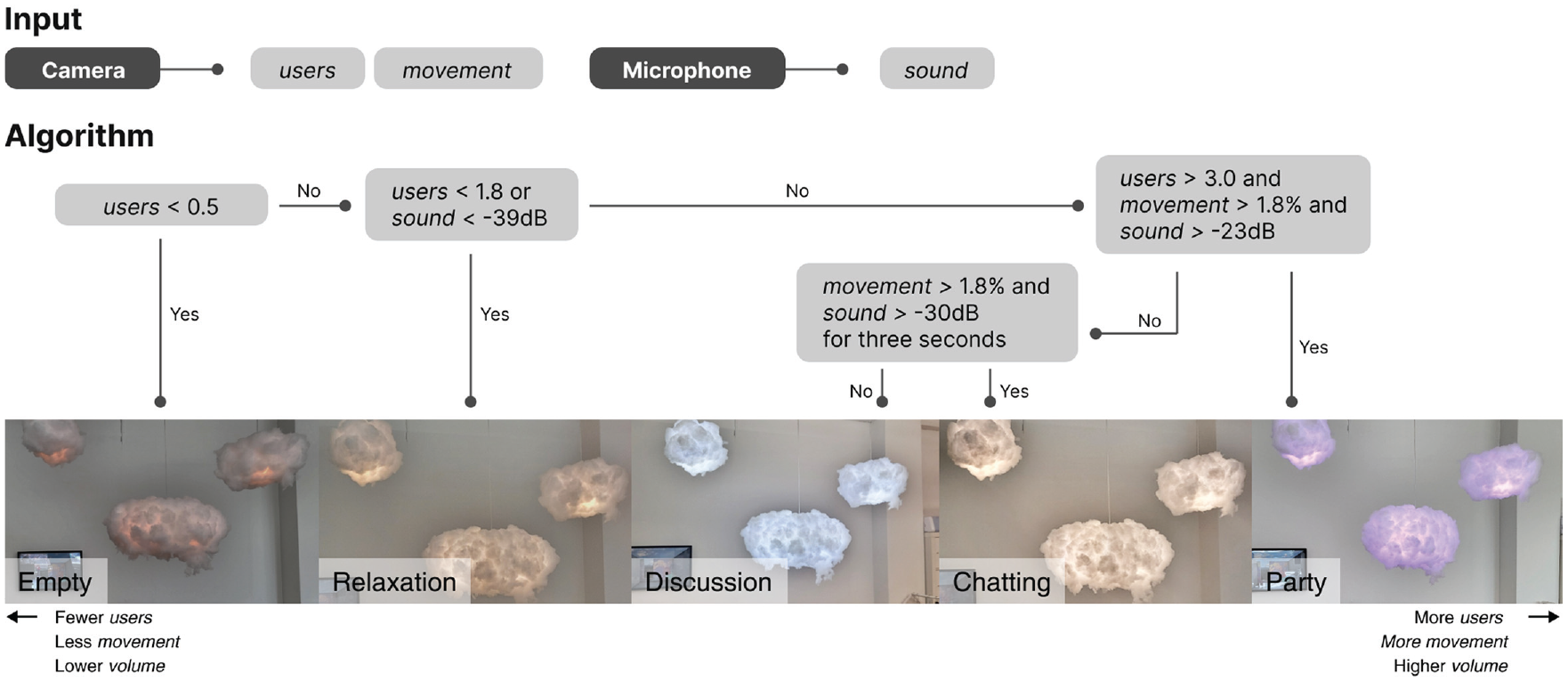
The context-aware lighting control algorithm in action. The algorithm uses input from a single camera and microphone to distinguish between different contexts and adjust the lighting accordingly, based on three variables: users, movement and sound
The lighting system’s algorithm does not recognise faces or eavesdrop on conversations. Instead, it only collects data on the number of people present, the movement level and the sound volume. This selective data collection ensures that the algorithm cannot identify who uses the office lounge or what conversations are taking place, thus protecting user privacy. Furthermore, simplifying the algorithm minimises energy consumption.
2.4 Practical application and validation
In order to test the algorithm’s effectiveness, we installed it in two office lounges. The first lounge, labelled as L1, was used by five graduate students, while the second office was used by five employees. The users in the first office were 24.8 ± 2.2 years old, while the users in the second office, labelled as L2, were 38.8 ± 6.4 years old. We chose these two lounges because they represented users of different age ranges. Both office lounges were shared spaces in active use. Specifically, L1 was a shared area adjacent to two walls, and L2 was situated in the central part of the office. The image of each lounge is shown in Figure 4. The first lounge was in the same location where the preliminary interviews were conducted. The second lounge had a table in the middle of the lounge and three lights installed in a row. The two office lounges were not physically separated from the actual workspaces but shared the same area. When the lounge lights were off, the lighting environment in L1 measured 117 lx with a correlated colour temperature of 3640 K, while L2 measured 131 lx with a correlated colour temperature of 5231 K.
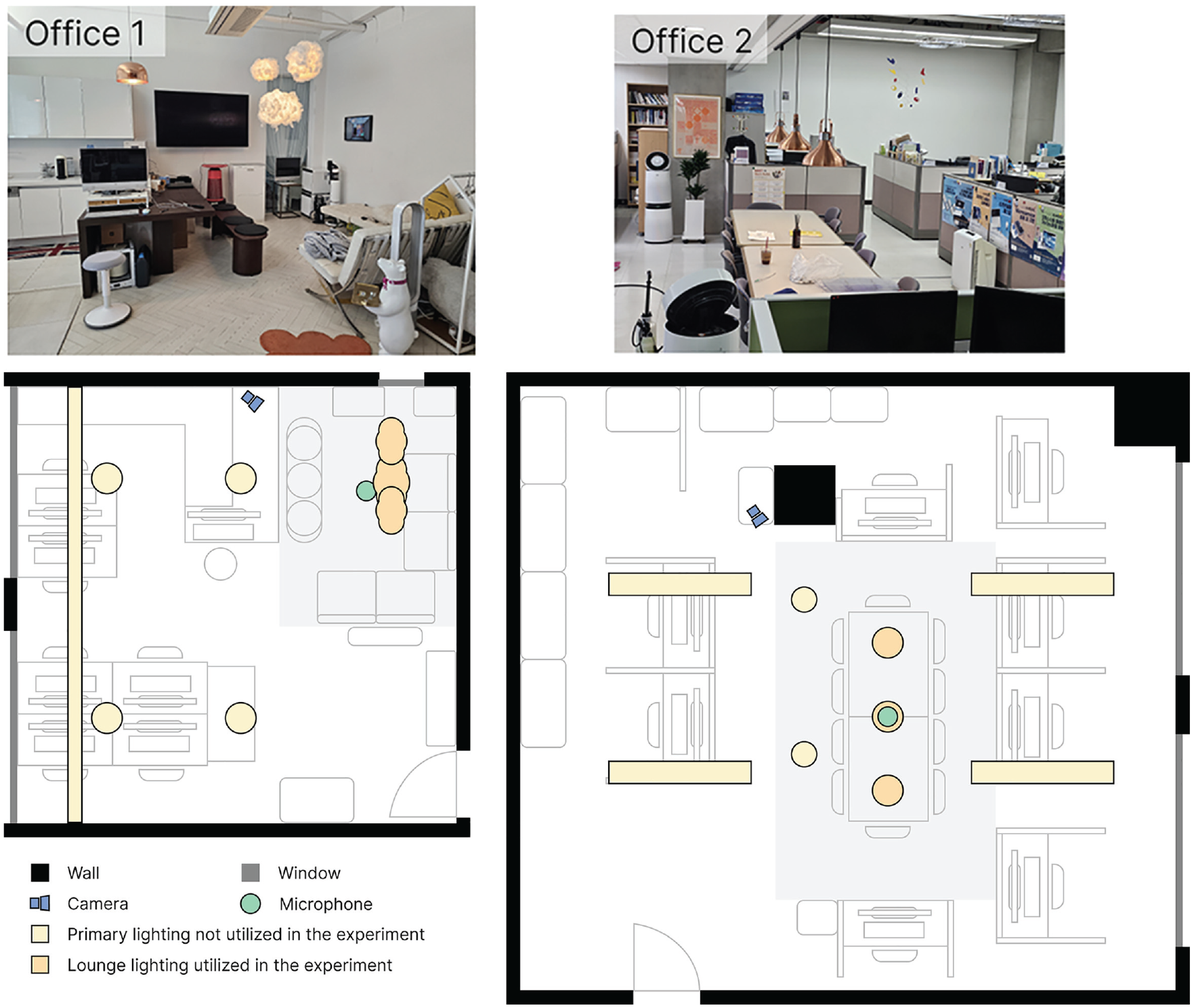
Image and the floor plan of two office lounges that the demonstration has conducted. The two lounges had different characteristics and were used by users with different ages
To fully leverage the lighting system, it was essential to set appropriate thresholds that would allow the system to adapt to different user behaviours and contexts effectively. To achieve this, a three-day adjustment process was conducted. After installing the camera and microphone in the two office lounges, the research team visited the offices every 3 h over the course of three days. During each visit, participants were asked for feedback on the system’s responsiveness – whether they found it too sensitive or unresponsive. If the participants indicated any issues with the system’s sensitivity, the threshold values were adjusted accordingly, and the team revisited the office after another 3 h to monitor the results and gather further feedback. This iterative process of adjustment and feedback continued until the system’s thresholds were optimised. As a result, the same thresholds, as shown in Figure 3, were applied to both lounges.
Participants were not given specific instructions on when or for how long to sit in the lounges, as the goal was to allow them to integrate the system into their daily routines naturally. They were asked to continue their usual activities as they would in a typical workday. This approach enabled the lighting control algorithm to adapt organically to their behaviours, providing insights into how the system was perceived – whether as supportive or distracting. The field test lasted for two weeks. Participants were informed that a microphone and camera were installed during the experiment.
After a two-week field test, we administered a questionnaire to evaluate our lighting control algorithm to the participants. The evaluation used a 7-point Likert scale and eight pairs of adjectives from the short version of the User Experience Questionnaire (UEQ-S) 57 : (1) obstructive to (7) supportive, (1) complicated to (7) simple, (1) inefficient to (7) efficient, (1) confusing to (7) clear, (1) boring to (7) exciting, (1) not interesting to (7) interesting, (1) conventional to (7) inventive and (1) usual to (7) leading edge. The UEQ-S provides meaningful measures of a system’s pragmatic and hedonic qualities as experienced by participants, with its simplicity contributing to its widespread adoption in various studies.58,59 Each participant individually rated the lighting control system for every pair of adjectives, reflecting their personal experiences. To ensure a comprehensive evaluation, participants were instructed to base their ratings on their overall experience with the system over the entire two-week period, rather than focusing on isolated instances. In this questionnaire, a score of four corresponds to an evaluation of the original static lighting system, which served as the baseline for comparison.
After the individual evaluation, we conducted group interviews with all members who used each office based on their evaluations. The group setting allowed participants to share and build on each other’s experiences, revealing nuances and perspectives that might not have emerged during individual interviews. To minimise the potential influence of group dynamics and ensure that we captured both personal and collective insights, we ensured that all participants had completed their individual evaluations independently beforehand. During these interviews, we asked participants about their experiences with the lighting system, including how the changing lighting affected them and whether it was helpful or disruptive. We also asked for their opinions on the development of the system and specific examples of their experiences. Each group interview took approximately 1 h.
The interviews were transcribed. Since the interviews were conducted based on the UEQ-S items, feedback from participants was compiled according to these items. This analysis, combined with the quantitative scores provided by the participants, allowed us to identify the strengths and limitations of the lighting system as experienced during use.
3. Results
During this study, quantitative data on the frequency of correct scenario selection was not systematically tracked. However, from the participant feedback, we observed occasional mismatches between the chosen lighting and the participants’ activities. Based on the results collected from participants using the UEQ-S to evaluate the installed lighting in their offices, it was found that terms like ‘exciting’, ‘inventive’, ‘interesting’ and ‘easy’ prominently indicated a refreshing and innovative trend. However, participants expressed some ambiguity regarding the reasons behind the colour changes and whether the new lighting environment directly facilitated their activities. This led to lower scores in the ‘supportive’ and ‘efficient’ aspects. Additionally, it was observed that without a separate guide, many participants found it ‘confusing’ to understand the messages conveyed through the colour changes intuitively. These observations suggest that while the system was generally responsive, further refinements could enhance its alignment with occupant behaviour, improving user experience and satisfaction. The summary of the UEQ-S assessment results and interview contents is shown in Figure 5.
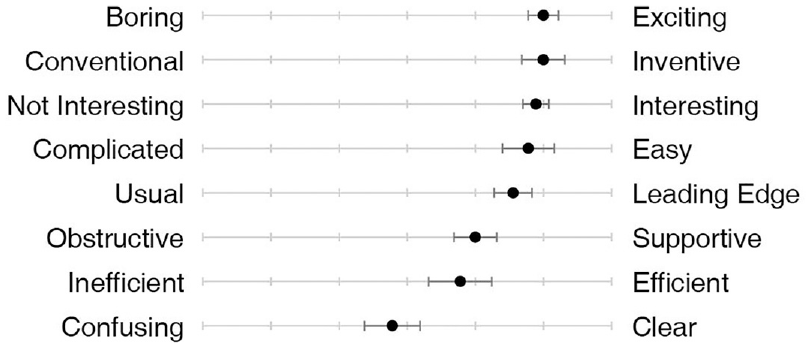
Mean and standard error of the evaluation results from the field test, using eight pairs of adjectives from the UEQ-S
‘This system is new and interesting’. Participants evaluated the algorithm as exciting (6.00 ± 0.22), inventive (6.00 ± 0.31), interesting (5.90 ± 0.19) and cutting-edge (5.60 ±0.28). They found that the changing lighting based on context provided an engaging experience. This feedback highlights the potential of transforming typical office environments into more dynamic and responsive spaces. Additionally, some participants tried new activities, such as singing, to see if different lighting patterns would be triggered.
… It was fascinating to see the lighting adapt automatically to our activities. It made the space feel more dynamic. (L1, P3) … I tried various activities, like singing, to see if the lights would change. And they did! It felt like the room was reacting to us. (L2, P1)
‘This system is easy’. Participants also found the algorithm easy to use (5.80 ± 0.38). They appreciated that there was no need to operate any interfaces or buttons to change the lighting. This automatic operation was particularly valuable as it allowed users to focus entirely on their activities without any distractions.
… It was convenient not having to touch anything to change the lighting. I was relaxing in the lounge, and when a colleague joined to discuss research, the space automatically brightened. (L1, P2)
‘The system needs more reinforcement to support users efficiently’. Relatively, the algorithm was evaluated as less supportive (5.00 ± 0.31) and efficient (4.80 ± 0.47). Participants who gave low scores for these adjectives pointed out instances where the algorithm provided misleading lighting. They shared experiences where the mismatched lighting disrupted their activities. For example, some participants reported that the ‘party’ lighting scenario activated in situations more appropriate for meetings or breaks. Additionally, they noted that it took a long time for the misaligned lighting to be corrected, resulting in a frustrating wait for appropriate lighting. This feedback suggests that while the system is innovative, it needs further refinement to ensure the lighting accurately matches the context.
… It was quite awkward when the purple light suddenly turned on during a casual conversation. It felt completely out of place. … Also, it takes a long time for the lighting to change back, … (L2, P4)
‘This system confuses users’. Compared to traditional static lighting, participants evaluated this lighting system as confusing (3.80 ± 0.41). Traditional lighting allows users to turn the light on and off by pressing a switch, but this system did not provide information on controlling the lighting. As a result, there were instances where participants were unable to select the desired lighting settings, since participants were not allowed to overrule the automated system, even though they knew the algorithm could provide them. The complete automation of the lighting system left some participants confused and wanting more control over the system.
… When having a casual chat with a colleague, I would have preferred the lighting to turn warm, but sometimes it turned cool instead. It was frustrating knowing the system could change to warm lighting but not being able to control it, … (L2, P3) … There were times when I wanted to select a different lighting option, but I couldn’t control the lights. It would be great if the system could recommend lighting but also allow manual adjustments when needed, … (L1, P1)
4. Discussion
The demand for smart lighting systems is increasing, and such systems are continuously being proposed. However, implementing these systems is practically challenging due to cost and technical issues.26,29 Therefore, this study proposes a lighting algorithm that utilises easily accessible webcams and microphones to provide context-appropriate lighting at a low cost with a technically simple and easy-to-install algorithm. Additionally, the system alleviates users’ psychological concerns about privacy by not directly recognising individual faces or conversation contexts. To verify the effectiveness of this system, we conducted a two-week field test in a real office lounge. Following the interviews, we found that the system was quite supportive. Users positively evaluated the automatic lighting adaptation to the situation and appreciated the advantage of controlling the lighting without any cognitive effort.
However, the interviews revealed that automated lighting sometimes confused the users. This limitation has been consistently identified in existing automated lighting control systems and was repeatedly observed in our study.60,61 Some studies suggest that providing users with a certain degree of controllability, rather than having the lighting change fully automatically, leads to higher satisfaction. 62 Additionally, the limitations of using a simple algorithm in the system became apparent. The algorithm was designed to collect minimal information to understand context, which generally allowed it to assess situations and provide appropriate lighting conditions. However, the system could occasionally misinterpret the context, leading to incorrect lighting settings. For example, an intense discussion might involve more volume and dynamics than casual chatting, but the algorithm might struggle to distinguish between the two due to its simplicity. This highlights the common trade-off in smart systems between simplicity and accuracy.63,64 Future research should, therefore, focus on addressing these limitations and improving the system’s contextual awareness.
The lighting system proposed in this study focuses on the secondary lighting that locally illuminates shard spaces within offices. This provides a high degree of flexibility, allowing the lighting to be actively recommended based on the context. Additionally, most office lounges often share the same space as areas with the workspace. Therefore, utilising secondary lighting enhances the effect of spatial separation by locally manipulating light and reduces the likelihood of workers being disturbed by light. However, the limitation of being confined to secondary lighting is that it only involves adjusting a few light bulbs, which may not provide dynamic environmental changes. This limitation indicates that the lighting may not fully influence work efficiency and emotional states as effectively as previously discussed.
This study utilises a camera and microphone to understand the context. Various lighting systems proposed by numerous studies have used various sensors, including light sensors 65 and depth sensors 66 as inputs to perform complex functions. However, the requirement to purchase and install additional sensors only for lighting control presents a barrier to practical application. Moreover, while many studies have used cameras and microphones, they often require high technical skills to process more complex information,5,6 which hinders practical application in real-world environments. In this regard, our system strongly appeals due to its ease of installation and minimal setup requirements.
This simplicity also enhances privacy security. Unlike many existing lighting control systems that analyse sensitive information, such as facial expressions 32 or conversations, 33 to understand the context, our algorithm relies on basic inputs like the number of users, their movement and ambient sound levels. By using minimal data, the system provides appropriate lighting without violating personal privacy. This approach effectively addresses the recurring privacy concerns associated with smart lighting control systems,30,31 making it a promising solution for practical adoption. Reducing the psychological barriers to using smart systems can be a significant advantage, as it encourages more users to embrace this technology with confidence.67,68
However, users who actually utilise the space may still experience psychological barriers. Although the camera in our system is designed solely to detect minimal information without registering personal data or analysing individual details, users may not fully understand these limitations. The presence of a camera in a shared space could lead to unexpected discomfort or resistance, especially if users are uncertain about the scope of data being collected. While clear communication about the camera’s specific functionality is essential, fully alleviating these concerns may be more challenging in practice, as users’ perceptions of privacy risks often persist despite technical reassurances.
Although the same threshold values were used for both field tests in this study, it is essential to set appropriate thresholds to fully leverage the benefits of the lighting system. This requires a precise tuning process, which is crucial for ensuring the accuracy of the lighting and user satisfaction. While our system simplifies operations and reduces costs compared to traditional systems, there may be some cases where slight adjustments are needed to tailor the lighting to specific environments or preferences. However, these adjustments can provide a significant contribution to reducing the technical complexity of the system.26,29
Future work will focus on improving and expanding the algorithm. Instead of fully automating lighting control, we can develop the system to allow users minor involvement. Additionally, we will develop various scenarios to diversify lighting settings, thereby providing helpful lighting solutions in more situations. These efforts will enable this automatic lighting control algorithm to be optimised for different contexts, such as residential spaces or schools, beyond office lounges.
This study was validated with a limited number of users and contexts, so the conclusions should be generalised with caution. The small sample size may limit the applicability of the findings, and further validation with a more diverse participant pool and varied settings is needed to substantiate the results. Additionally, as this study only addressed five specific contexts within the unique environment of an office lounge, expanding the proposed algorithm’s applicability will require exploring a broader range of scenarios and developing more varied lighting solutions. These efforts will help ensure the algorithm functions effectively across different spaces and enhance overall user satisfaction.
Preferences for appropriate lighting in each context can vary based on gender, 69 age 70 and culture. 18 Considering these factors, we can derive lighting solutions that provide higher satisfaction to a broader range of users across diverse contexts. This approach will enhance the flexibility and inclusivity of the lighting system, meeting the needs of various users.
5. Conclusion
In this paper, we derived first appropriate lighting solutions for various situations in office lounges through expert interviews. Based on this, we proposed a new smart lighting algorithm that detects context using a single microphone and camera and then provides suitable lighting solutions. This algorithm was tested over two weeks in two office lounges to verify its effectiveness. The proposed lighting system received positive feedback for its ease of use and excitement, while perceptually easier solutions remain the challenge. The lighting system is expected to contribute to the field by distinguishing contexts with a simple algorithm without requiring an internet connection or excessive information collection about the context.
Footnotes
Declaration of conflicting interests
The authors declared no potential conflicts of interest with respect to the research, authorship, and/or publication of this article.
Funding
The authors received no financial support for the research, authorship, and/or publication of this article.
