




Abstract
Since the proportion of digital and more flexible work in the western labour market increases, more and more employees are working at least partly from home. This development was even enhanced by the COVID-19-pandemic. In contrast to office workplaces, lighting at home-based workplaces is less studied and regulated. Lighting has been shown to not only ensure vision but also evoke non-image forming effects such as changes in alertness. In this study, light exposure of nine office employees at their home-based workplaces was investigated. Illuminance at home-based workplaces was found to be low, compared to office standards. In addition, melanopic equivalent daylight illuminance (MEDI) did not reach recommendations for healthy daytime light exposure. Furthermore, an additional lighting was installed at participants’ desks in order to examine possible effects on alertness. Mean illuminance and MEDI during work were increased by the additional lighting. A decrease in subjective sleepiness could be shown after 6 hours, although differences were not significant. Improvements of response time in a psychomotor vigilance task were already achieved at the beginning of work and after 3 hours. This study shows that lighting conditions at home-based workplaces often do not meet the criteria for health-promoting lighting in terms of non-image forming effects.
1. Introduction
Due to the digitalisation and growing flexibility in the European labour market, an increasing percentage of employees are working from home. In a survey from July 2020, 1 employees in 51% of German companies at least partially worked from home before the COVID-19-pandemic started. Those included service industry, trading and manufacturing industries. After the start of the pandemic, the number of employees who worked home-based increased rapidly, since 80% of workplaces were partially or entirely closed due to lockdowns in countries all over the world.1,2 Working predominantly at home was explicitly supported by government regulations. From January to June 2021, employers in Germany were obliged to offer home-based work, if the nature of their employees’ work did allow it. Because of these regulations approximately 25% of employees even worked predominantly home-based during 2021. 3 Many office employees had to relocate their workstations to their homes within days. As a result, one-third of German employees did not have a permanently installed workstation at home in 2020. 4 Consequentially, people were frequently working in kitchens or living rooms, places which were originally arranged for a different purpose. Lighting conditions were matched to the requirements of living spaces. These may on one hand include purposes that are in accordance with the completion of working tasks, such as enabling vision and facilitating visual tasks. On the other hand, lighting conditions may also have been chosen to primarily create a specific atmosphere or an aesthetic experience. 5 The extent to which they are adapted to the completion of work tasks significantly differs depending on personal preferences and spatial conditions. In Germany, lighting conditions at workplaces are regulated by the Workplaces Ordinance and the Technical Rules for Workplaces (ASR A3.4). 6 Office workplaces require a minimal horizontal illuminance of 500 lx and a vertical illuminance of 175 lx (at a height of 1.2 m for predominantly seated and 1.6 m for predominantly standing activities) at surfaces/locations that are relevant for the continuation of work. These regulations are intended to ensure an optimal vision at employees’ desks in order to complete their working tasks.
Although regulations still focus on visual effects of light, it is known that light can also elicit non-image forming effects. These can support or disrupt people at work. Non-image forming effects are mediated by intrinsically photosensitive retinal ganglion cells (ipRGCs) in the retina. Their photopigment, melanopsin, has a peak sensitivity at 480 nm. 7 In 2018, the Commission Internationale de L’Eclairage (CIE) published a new system for metrology for ipRGC-influenced responses to light. 8 For the activation of ipRGCs the so-called melanopic equivalent daylight illuminance (abbreviated here as MEDI) was introduced. It describes which illuminance a D65 light source must have to elicit the same melanopic response as the tested light condition. Although non-image forming effects are not yet covered by European workplace regulations, they are well-accepted in the lighting research community.
Acute alerting effects of light were studied in a variety of laboratory settings.9 –11 Furthermore, lighting conditions in office workplaces and their impact on acute alertness were investigated in the field. Peeters et al. 12 investigated light exposures of 10 office employees who worked in the same open-plan office. Two 3-week intervention studies with different lighting conditions every week were performed. They included a brighter and a darker lighting scene with horizontal illuminances of 900 lx and 125 lx, respectively. In the first week, lighting consisted of bright light in the morning and dim light in the afternoon, whereas for the third week the order was changed. In the second week, lighting was set at the lower illuminance for the whole day. Peeters et al. found that light exposure during the second week significantly differed between participants, depending on their location and orientation in the room. Furthermore, an effect of season (spring vs. winter) on hours and levels of daylight could be shown. No positive effects on subjective sleepiness, vitality, mood, fatigue, sleep and light appraisals were found by applying the brighter lighting scene. 13 The applied light intervention could be identified by analysing exposure data. However, effects of the intervention on illuminance levels differed remarkably between participants due to position, orientation and personal behaviour. In addition, exposure data of personally worn detectors showed an average increase of 100 lx by the intervention, although 260 lx at eye level were applied.
Figueiro et al. 14 installed desktop luminaires to real-life workplaces that delivered different lighting conditions depending on the time of day. Illuminance values as well as spectral composition were adapted. From 06:00 to 12:00 blue light, from 12:00 to 13:30 white light with a colour temperature of 6500 K and from 13:30 to 17:00 red light was applied. It was found that during the intervention, participants received a significantly higher circadian stimulus in the mornings. As a result, subjective sleepiness was significantly lower in the afternoon.
In general, there is evidence that higher illuminances and correlated colour temperatures (which tend to have a higher proportion of optical radiation in the short wavelength region) lead to an increase in alertness during the day.15 –17 However, findings are often hardly comparable due to a variety in lighting conditions and partly lead to small or insignificant effects. In 2022, Brown et al. 18 published recommendations for a healthy daytime light exposure, taking into account non-image forming effects of light. In their paper, the authors agree that responses beyond vision can be best predicted by MEDI. Although evidence for circadian effects is much stronger, they also state that ‘alerting effects of light are better predicted by melanopic irradiance than other available metrics’. 18 Based on these and other findings, Brown et al. recommend a MEDI of 250 lx or more at eye level for daytime light exposure. However, there is evidence that non-image forming effects depend on several individual parameters, such as age and gender.19,20 In addition, negative effects of glare may counteract positive non-image forming effects of brighter lighting scenarios.
Lighting conditions in home-based workplaces have so far been largely unexplored. From December 2020 to March 2021 Amorim et al. 21 carried out a study in which Brazilian and Colombian employees rated lighting conditions at their home-based workplaces in an online survey. They found that employees were mostly satisfied with their artificial lighting and available daylight. A positive correlation between light levels and satisfaction with workplace lighting was found. In her master thesis, van Alphen 22 investigated light exposure of home-based employees using a personally worn light exposure device. A significant variability in illuminances and melanopic irradiances within and between subjects could be identified. It was found that higher light levels during 2 hours prior to tasks increased performance with regard to executive functioning.
To the best of our knowledge, at the time of submission of this paper, no interventional study that includes a change in lighting conditions at home-based workplaces and personal light exposure measurements was published.
Taking into account these considerations, it is likely that lighting conditions in many home-based workplaces may not fulfil regulations regarding minimum levels for illuminance at office workplaces of Eh = 500 lx and Ev = 175 lx. This indicates that lighting at home-based workplaces also does not evoke desired non-image forming effects, which could support alertness of employees during work. Although home-based work by now is widely practised in Germany, not much about lighting conditions at home-based workplaces is known. This study is a contribution to reduce this knowledge gap by measuring and describing lighting conditions in real-life home-based workplaces. In addition, we want to address the question whether a simple low-cost additional lighting system could be used to increase light exposure (including MEDI) and thereby support the alertness of employees working from home.
2. Method
2.1 Participant selection
The study was performed from July to September 2021 in Dortmund, Germany. Participants were recruited via e-mail and word-of-mouth advertising. All declared in advance that they worked home-based at least 4 days a week, 6 hours a day, during four consecutive weeks. They also stated that they worked between 6 am and 8 pm, were not disturbed from work on a regular basis (e.g. by children), did not change time zones, did not smoke, did not have any form of colour-blindness and would not rate themselves as an extreme early or extreme late chronotype or as a person with explicitly bad sleep quality. Nine participants (five female participants and four male participants) were recruited. Four participants stated that they regularly wore glasses or contact lenses. After recruitment, participants completed an online eyesight test including colour vision, contrast sensitivity and acuity. 23 Each participant answered every question. All participants answered at least 84% of questions correctly. Further descriptors of participants, such as sleep quality and chronotype, are found in Table 1. The German version of the morningness–-eveningness questionnaire (DMEQ 24 ) ranges from 14 (definite evening type) to 86 (definite morning type). The Pittsburgh Sleep Quality Index (PSQI 25 ) identifies individuals as poor sleepers if scores are higher than 5. The ethical review board of the Technical University of Berlin (TUB) approved the study.
Participant descriptors
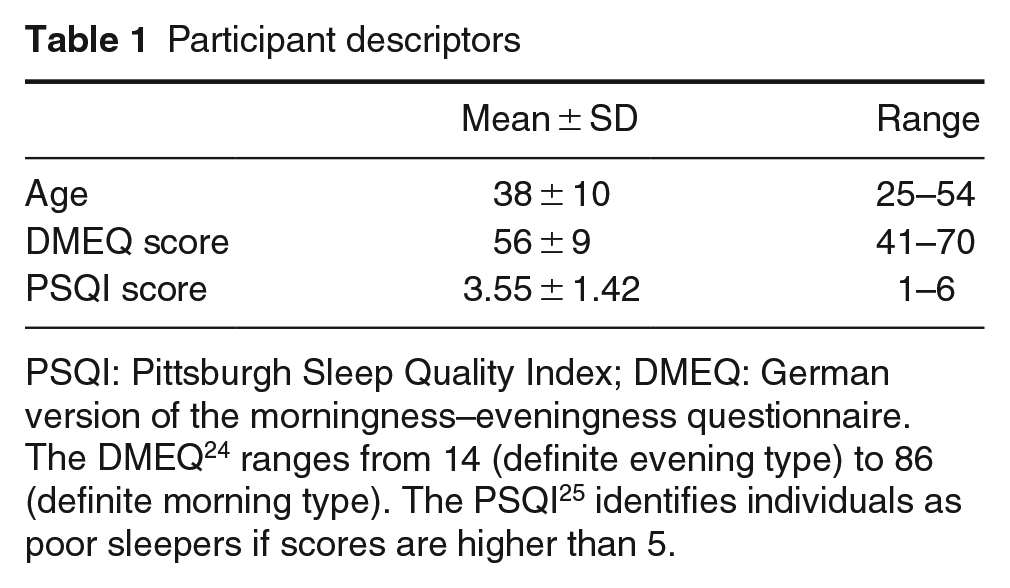
PSQI: Pittsburgh Sleep Quality Index; DMEQ: German version of the morningness–eveningness questionnaire.
2.2 Home-based workplaces
Participants completed questionnaires about their workplace at home. All workplaces were located near the window: seven at the side, one in front and one with the back facing the window. Two participants stated that they typically did not use other luminaires during work, whereas the others mostly used ceiling and desk luminaires. Mean distance of eyes to monitor was given as 0.62 m ± 0.10 m.
2.3 Additional lighting
Several aspects were taken into account, when designing the additional lighting. The purpose of the lighting was to increase vertical illuminance at eye level, with special regard to an increase in MEDI. It should be installable on every home-based workplace and therefore not require extra space on the table. In addition, we aimed at finding a low-cost solution that would be affordable for many employees and employers. The directionality of the additional lighting was considered as well, since it was found that light of the upper hemisphere was more effective in eliciting non-image forming effects. 26 Surface luminaires were preferred in order to stimulate a higher proportion of ipRGCs in the retina. In addition, we aimed at finding a solution that did not offer different settings for illuminance or spectral composition and thereby decrease flexibility and increase comparability. As shown in Figure 1, the lighting included a bracket to be mounted and fastened on the upper edge of a monitor. We used two surface luminaires (FOTGA 906pc LED Light CN-T9627). In order to reduce glare, a neutral density filter foil and a diffusor foil between the incorporated LEDs and the diffusing case were included (Lee Filters, Andover, UK). Illuminance and MEDI were measured for three different configurations at the mean distance from the monitor, as shown in Table 2. It was assumed that, on average, person-worn exposure devices were placed 0.25 m below eye level.
Characteristics of additional lighting, measured at the mean distance between eye and monitor of 0.62 m and a height of 1.2 m (at eye level, when seated) 18
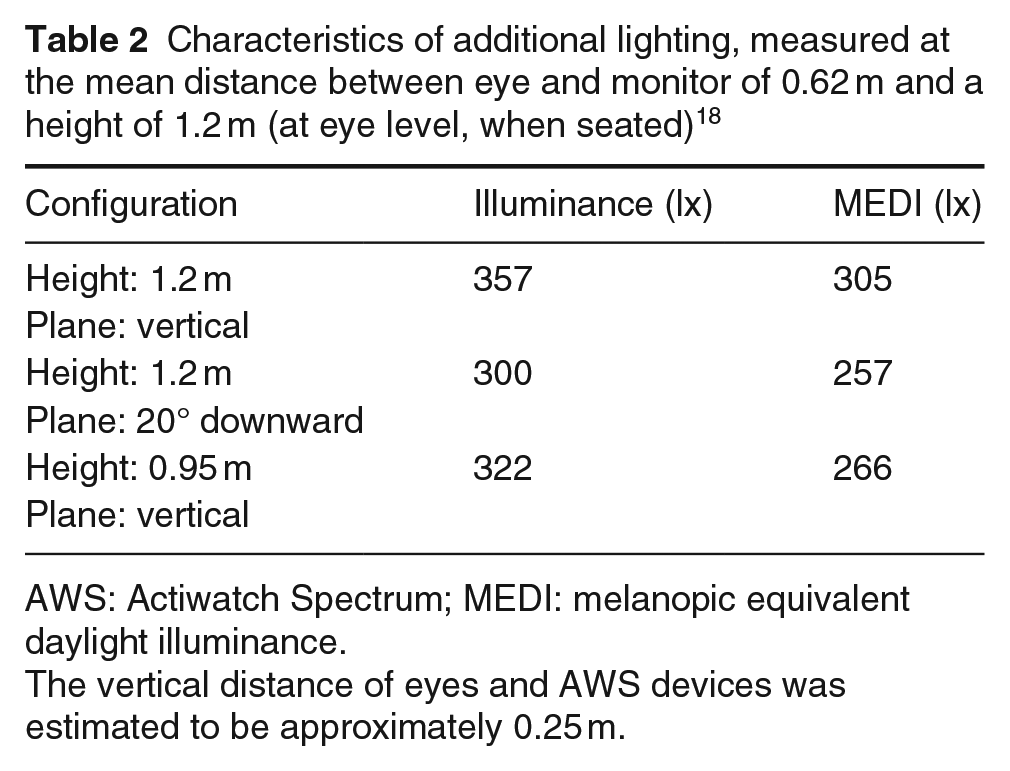
AWS: Actiwatch Spectrum; MEDI: melanopic equivalent daylight illuminance.
The vertical distance of eyes and AWS devices was estimated to be approximately 0.25 m.
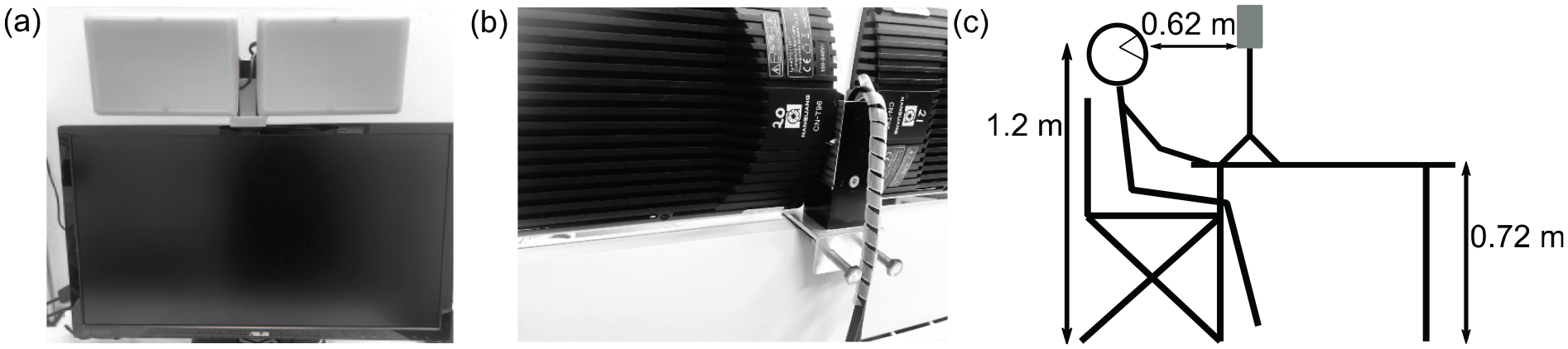
Surface lighting mounted on a monitor, as observed by the participants (a); the adjustable bracket that was used to fasten the additional lighting (b); a sketch of a typical setup with average dimensions (c)
2.4 Protocol
Participants were asked to complete an online survey, which included subjective scales and a psychomotor vigilance task (PVT), at the beginning of every home-based working day (T1), after 3 hours (T2) and after 6 hours of work (T3) (Figure 2). Between two surveys participants were supposed to sit in front of the luminaires for approximately 3 hours. This duration of time was not controlled during the study. For 2 of the 4 weeks, luminaires were to be switched on before the first task and switched off after the last. The order of weeks without and with additional lighting was randomised between participants. In addition, an activity diary was filled out. The diary included questions about sleep times and sleep quality, workplace (home- or office-based) and whereabouts of the previous day.
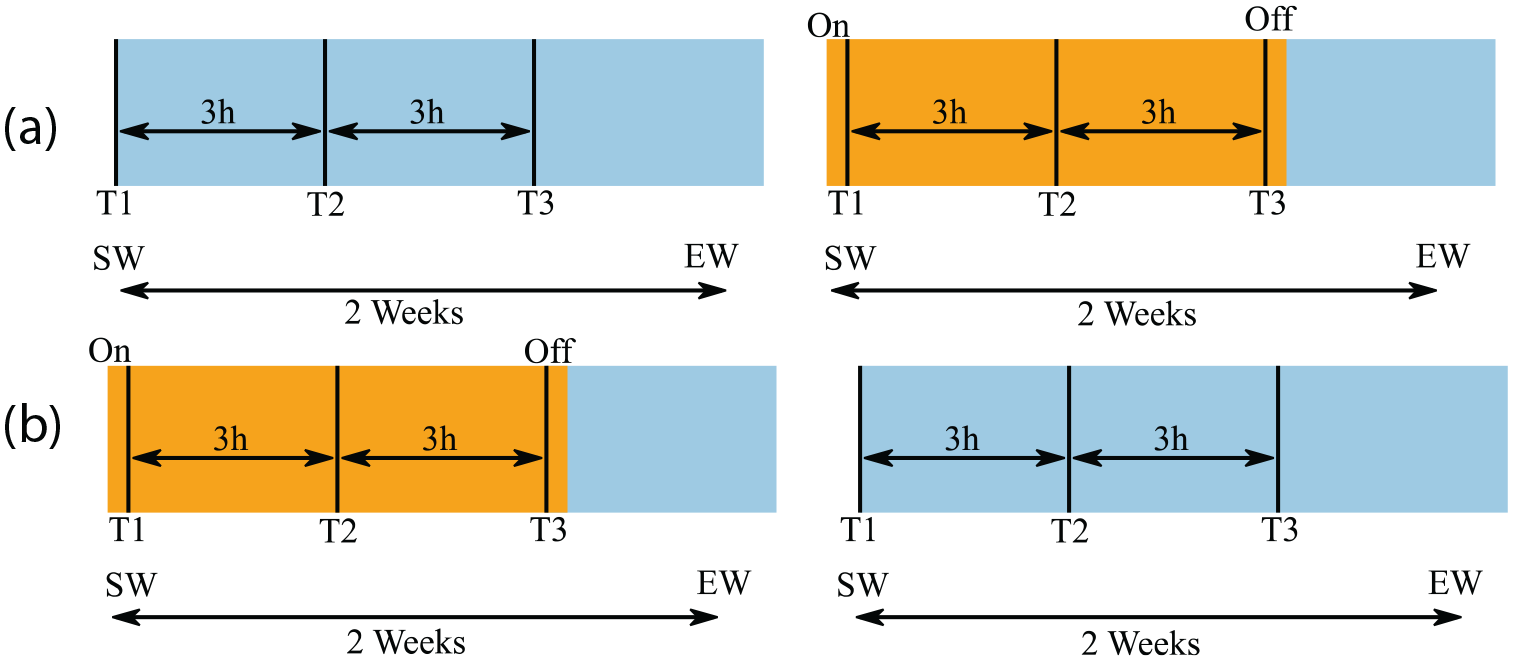
Group A (four participants) first completed 2 weeks of light exposure measurements without the additional lighting, whereas group B (five participants) started with the intervention. T1 was always completed at the SW. The EW differed between participants depending on their individual working hours
2.5 Measurements
2.5.1 Light exposure
Personal light exposure and activity was measured with Actiwatch Spectrum (AWS) devices (Philips Respironics 28 ). Each AWS device has three sensors that measure irradiance (in µW cm−2) in the blue, green and red regions of the visible spectrum, as well as the illuminance (in lx). More information on these devices can be found elsewhere. 29 The AWS devices were calibrated in the optical laboratory of BAuA. Illuminance measured in the study were divided by a mean calibration factor of 1.78.29,30 MEDI was calculated by combining the measured signals of the blue and green sensor, followed by multiplication with a mean calibration factor of 4.3 and division by 1.3262 lm−1 mW.30,31 Measurements were taken every minute. AWS devices were attached on the outer clothing layer at chest level, using magnets. Participants wore them during all days in home-based work and all previous days. When in bed to sleep, participants were asked to place the device near their beds and to not cover it. Furthermore, participants could state if they had to take off the AWS device during the day (e.g. due to physical activity). They were asked to keep the device nearby and to not cover it, if taking off was necessary. Details on processing of activity and light exposure data can be found in the Appendix. Only light exposure on working days, on which participants worked home-based, was included in the analysis. In general, light exposure was analysed for whole working days (3 am to 3 am) and working periods. The working period was defined as the time between the first and the last alertness task on 1 day. If participants worked longer than 6 hours a day, working periods ended after 6 hours and therefore did not include their whole working hours. If working periods included inactive periods, they were excluded from the analysis. Whole days with inactive periods before or after work were not excluded.
2.5.2 Subjective scales
To address sleepiness, the Karolinska Sleepiness Scale (KSS) was used. 32 It is a nine-point Likert-type scale that exists in different versions. 33 We chose a German translation with a description on every point. In addition, we used a unidirectional analogue scale from 0 to 100 to assess the current mood of participants between ‘very poor’ and ‘very good’. All subjective scales were realised as online surveys. Values that differed more than three standard deviations from the mean of one participant during the same lighting condition and at one point of time were marked as outliers and not included in the analysis. Satisfaction scales were realised as unidirectional scales from 0 to 100. Eleven statements were rated from ‘not at all’ to ‘completely agree’. German statements and their translation can be found in the Appendix.
2.5.3 Psychomotor vigilance task
A short form of a PVT was used to assess alertness. Within the scope of this paper, alertness is interpreted as a person’s ability to activate and react to a given stimulus. Therefore, it can be connected to a measure of current fatigue but does not represent a holistic picture of the attentional state, which would for example also include resilience to distractors or alternation and separation of attention. The PVT was realised as an online task. As stimuli, we included yellow dots that appear for 500 ms on different positions on a grey screen randomly, every 2–9 seconds. When participants spotted a point, they had to click the mouse-button with their index finger. Then a new sequence was started. Every PVT consisted of 35 dots. Due to the typical polling rate of computer mice (125 Hz) and frame rate of monitors (60 Hz), an approximate resolution of 20 mseconds was achieved. Participants were asked to execute the PVT in full-screen mode. PVT was created using the online study builder lab.js 34 and hosted on a JATOS 35 server at the TUB. Mean response times, 10% slowest and fastest response times, as well as lapses were analysed. Scores which differed more than three standard deviations from the mean of one participant during the same lighting condition at one point of time were marked as outliers and not included in the analysis.
2.6 Statistical evaluation
Illuminance and MEDIs during whole working days and working periods without and with additional lighting were analysed by using the Wilcoxon signed-rank tests. t-Tests were not considered, because scales are thought to be rather ordinal than metric. Scores on subjective scales and psychomotor task parameters were evaluated by dependent one-tailed t-tests, if differences were approximately normally distributed. Normal distribution was investigated via the Shapiro–Wilk test (p < 0.05). Whenever the Shapiro–Wilk test was significant, paired Wilcoxon signed-rank tests were executed. If ties or zeroes were present, normal approximation was applied. Data were processed using Python 3.8.8. All statistical evaluations were performed using R version 4.1.2 with package WRS2. Plots were created using ggplot2 package.
3. Results
3.1 Light exposure
Analysis of light exposure data revealed severe intra-individual differences in illuminance levels and daily courses. Figure 3(a) shows mean illuminance values during five randomly chosen home-based working days for all participants without the additional lighting. No clear exposure patterns for participants (e.g. lunch break) can be identified. In general, light exposure reaches its maximum value during the afternoon for all participants. In addition, a pronounced inter-individual variety in mean light levels and courses between participants is found. Depending on waking times, light exposures during the morning and evening vary significantly. Furthermore, mean light levels on working days without additional lighting range from 89 lx to 346 lx. Figure 3(b) shows heatmaps for mean illuminance on working days on which the additional lighting was used. When comparing Figure 3(a) to (b), it seems that illuminance values during morning and midday increased. However, the magnitude of the increase varies substantially between participants. For participants A, B and G, tiles are remarkably brighter during working hours. On the other hand, this effect cannot be observed when investigating participant F. Generally, illuminance during working time partly exceed log(1000) = 3. As proposed by Crowley et al., 36 we interpret an illuminance of 1000 lx as a cut-off for outdoor activity. Participants may have left their desks to spend time outdoors, for example, going for a walk or sitting on the balcony. Table 3 shows mean exposure durations above certain thresholds on home-based working days without and with additional lighting. Time duration between illuminance values of 300 lx and 500 lx was more than doubled. This shows that the intervention improves lighting conditions on rather insufficiently illuminated workplaces. Time above 500 lx was increased remarkably as well. Furthermore, it is shown that on average participants received MEDIs of more than 250 lx for only one and a half hour a day. Regarding the recommendations of Brown et al., 18 this shows the need for improvements concerning illumination of home-based workplaces.
Mean exposure duration above illuminance and MEDI thresholds on home-based working days
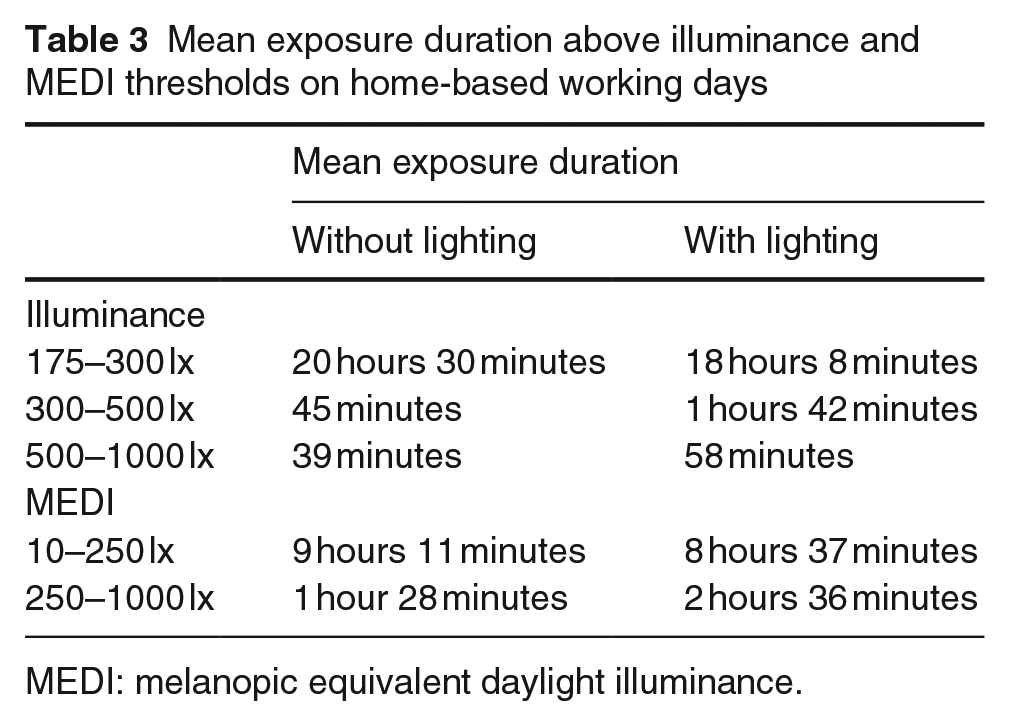
MEDI: melanopic equivalent daylight illuminance.
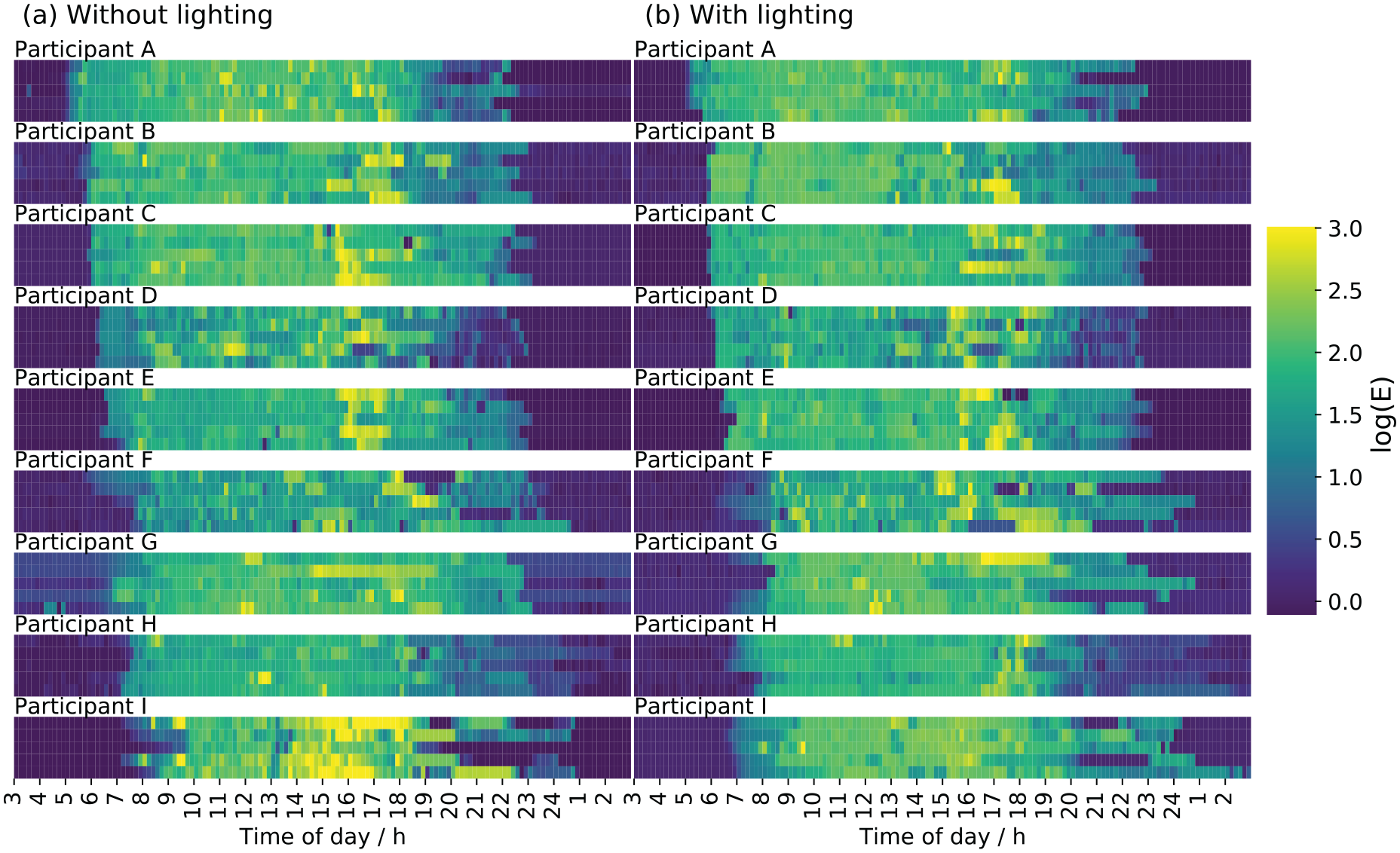
Logarithms of 10-minute mean illuminance values during home-based working days for each participant without (a) and with (b) the additional lighting. Illuminance was measured vertically by AWS devices. Working days are chosen randomly. Order of participants matches their working times from earliest to latest beginning
Figure 4 shows mean values for illuminance and MEDIs without and with additional lighting. In Figure 4(a) and (b), values during the whole day are taken into account, whereas Figure 4(c) and (d) include only working periods. The Wilcoxon signed-rank test does not reveal significant differences in mean illuminance during the whole day. Illuminance during working periods are significantly higher with additional lighting (Mdn = 331) than without (Mdn = 276), p = 0.004 and r = −0.96. MEDIs during working periods are also significantly increased by adding the lighting (Mdn = 214, Mdn = 245), p = 0.004 and r = −0.96. Figure 5 shows corrected mean courses for all participants. Here, only illuminance values lower than 1000 lx are included in the mean values. After this correction, illuminances during working periods are higher when the additional lighting is switched on, for most points of time. Therefore, the increase in illuminances and MEDIs during work is even more pronounced, if values are corrected for outdoor light levels, as shown in Figure 6. The Wilcoxon signed-rank test reveals a significant increase in illuminances (Mdn = 106, Mdn = 197), p = 0.004 and r = −0.96 and MEDIs (Mdn = 81, Mdn = 147), p = 0.004 and r = −0.96 during working periods.
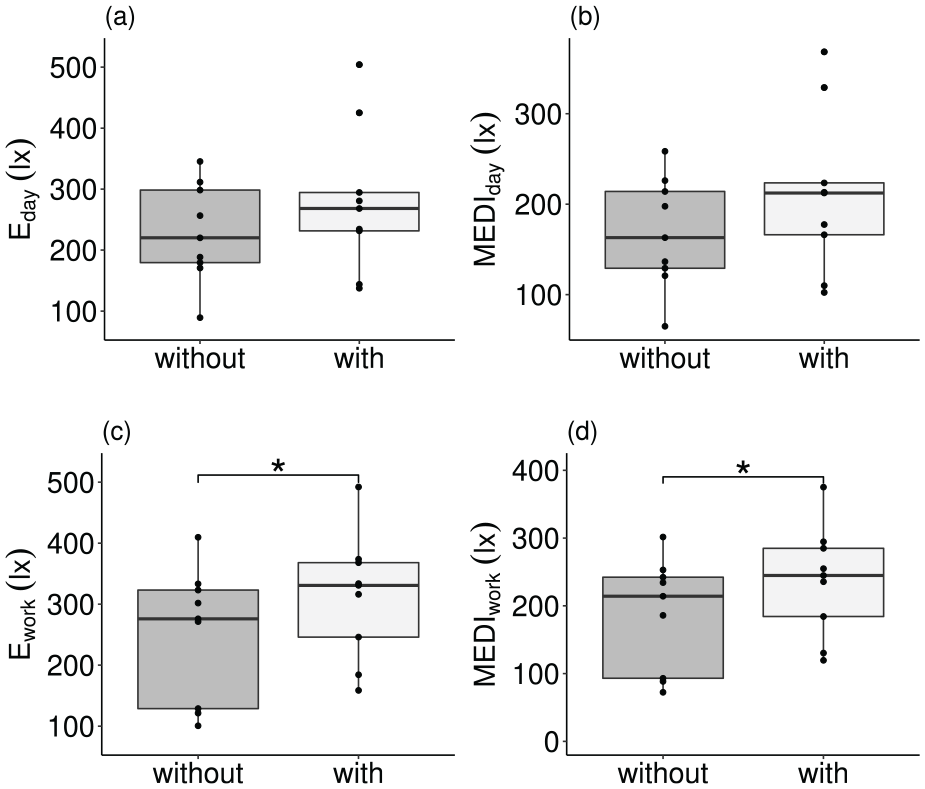
Subfigures show mean illuminance (a), respectively MEDI (b) values during the whole day. Subfigures (c) and (d) show mean values for illuminances (c) and MEDI (d) during working periods. Illuminance and MEDI during work are significantly increased by the additional lighting (p < 0.05)
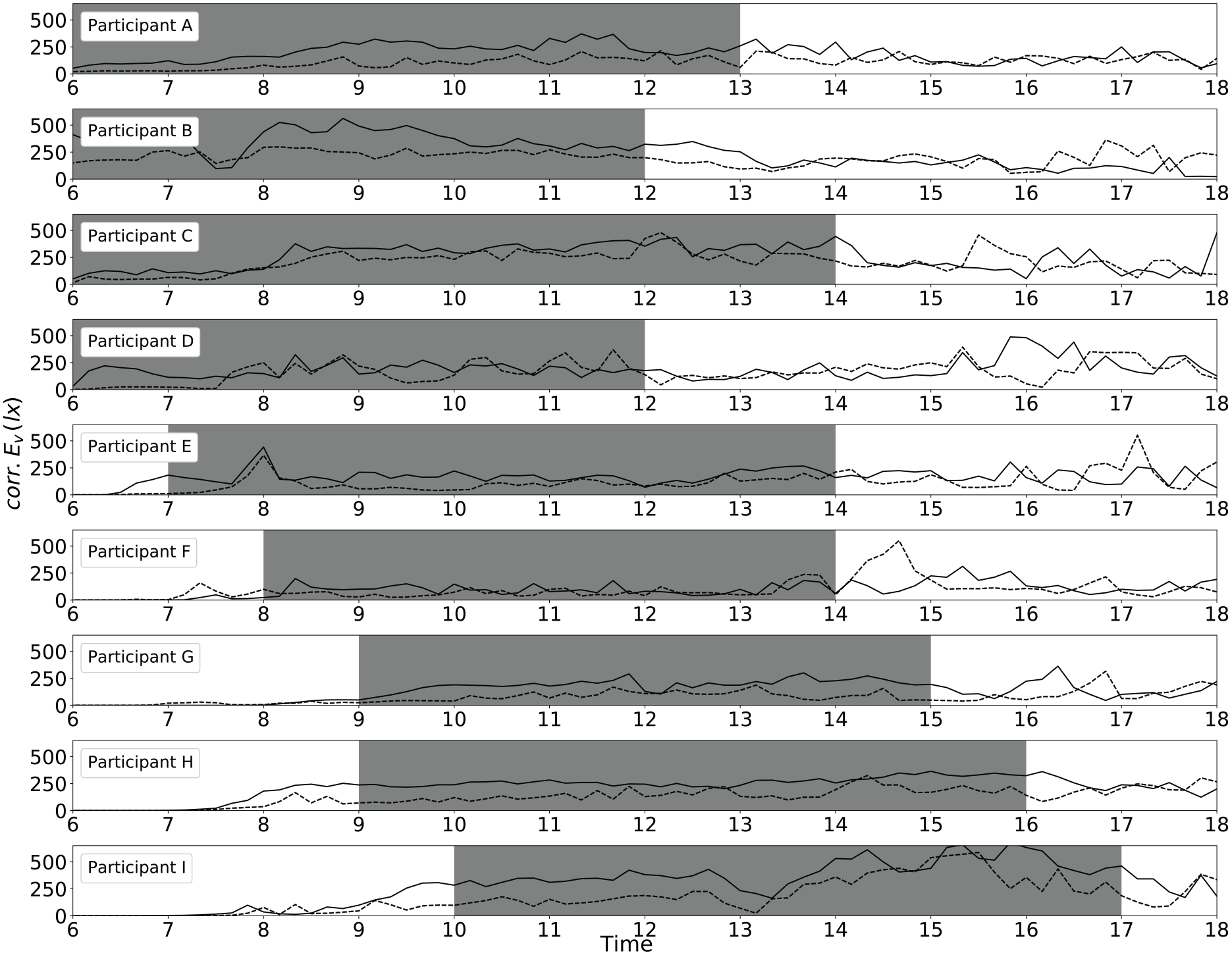
Corrected vertical mean illuminance values during home-based working days without (dashed) and with (straight) additional lighting for all participants. Values are averaged over 10 minutes and include at least five different working days. Mean working periods are rounded to full hours and accentuated in grey. Order of participants matches their working times from earliest to latest beginning
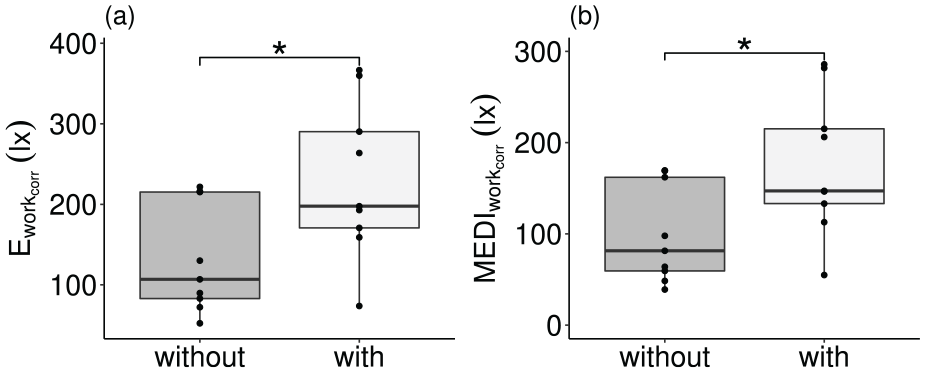
Corrected mean illuminances (a) and MEDIs (b) during working periods
3.2 Satisfaction with additional lighting
Satisfaction with the additional lighting was examined by using different unidirectional analogue scales from 0 to 100. Results are shown in Figure 7. In general, the additional lighting was mostly rated as comfortable. However, approximately half of the participants described it as too bright or glaring (more than 50), when they worked on their monitors. Five of eight participants who answered this question would use the additional lighting voluntarily during their working day, most of them during morning and midday.
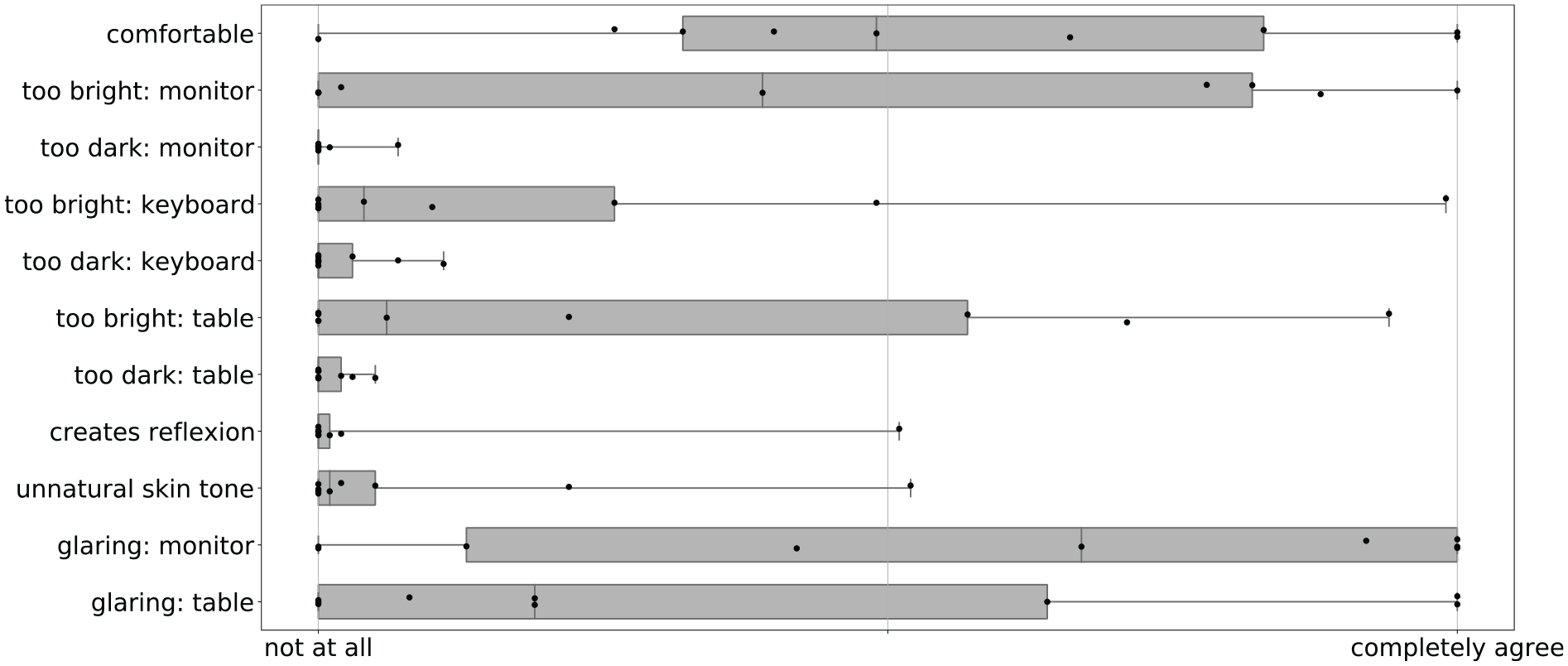
Results of light satisfaction survey
3.3 Subjective scales
Mean KSS scores are dispersed from 1 to >6, as shown in Figure 8(a). No statistically significant differences without and with additional lighting are found by executing one-sided t-tests. Deviation of scores between subjects is noticeably increasing during the course of the day. One-sided t-test reveals a significantly higher mood score with (M = 65.47, SD = 13.09) than without (M = 63.09, SD = 11.32) additional lighting after 6 hours of work t(8) = −1.98, p = 0.04 and r = 0.57. However, this effect is rather small and cannot be observed examining the corresponding boxplots in Figure 8(b). All further t-tests do not reveal any significances.
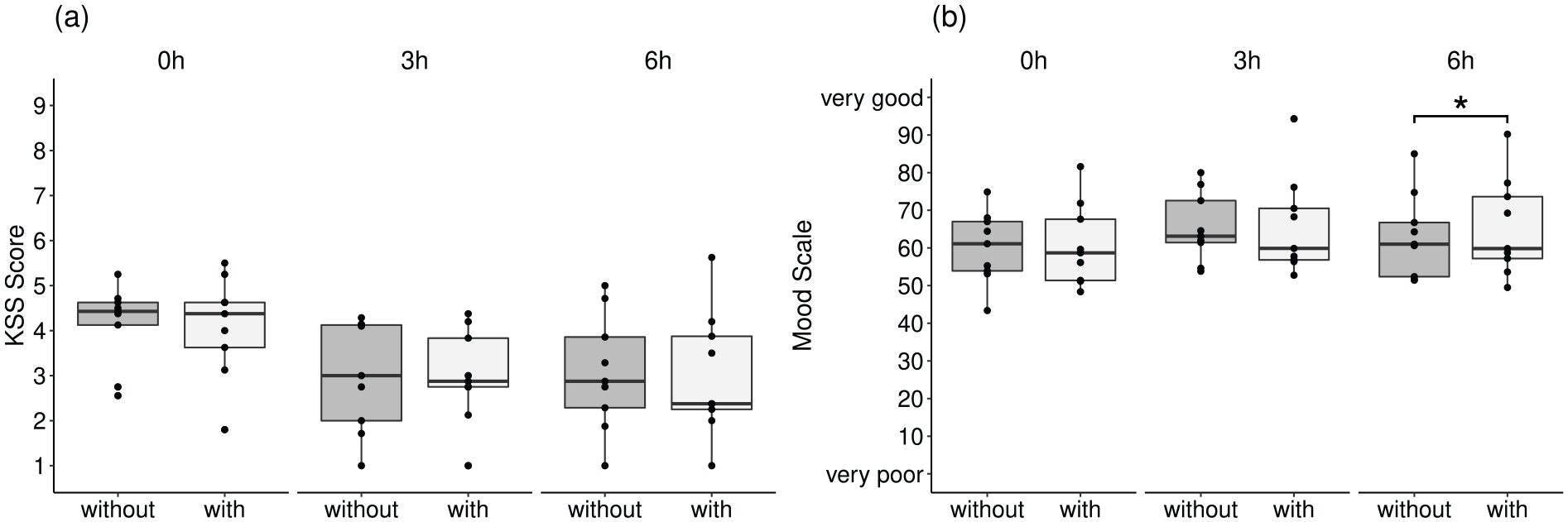
Mean results for KSS scores (a) and mood scale (b) with and without additional lighting at 0 hour, 3 hours and 6 hours after the beginning of work. KSS scores range from 1 ‘extremely alert’ to 9 ‘very sleepy, great effort to keep awake, fighting sleep’
3.4 Psychomotor vigilance task
Mean response times are significantly lower with (M = 436, SD = 81) than without (M = 460, SD = 70) additional lighting after 3 hours of work t(8) = 2.26, p = 0.027 and r = 0.625, as examined by one-tailed t-test. Although the boxplot in Figure 9(a) also shows this trend at the beginning of work and after 6 hours, t-tests do not reveal any significances. In addition, the mean of the fastest 10% responses is significantly lower with (M = 316, SD = 46) additional lighting than without (M = 326, SD = 43) at the beginning of work t(8) = 2.20, p = 0.029 and r = 0.614. Since differences of mean scores after 3 hours of work may not be normally distributed, as examined by the Shapiro–Wilk test, the Wilcoxon signed-rank test was performed. It shows that fastest response times are significantly lower with (Mdn = 297) than without (Mdn = 324) additional lighting p = 0.004 and r = −0.96. Strikingly, differences between scores partly lie within the range of uncertainty.
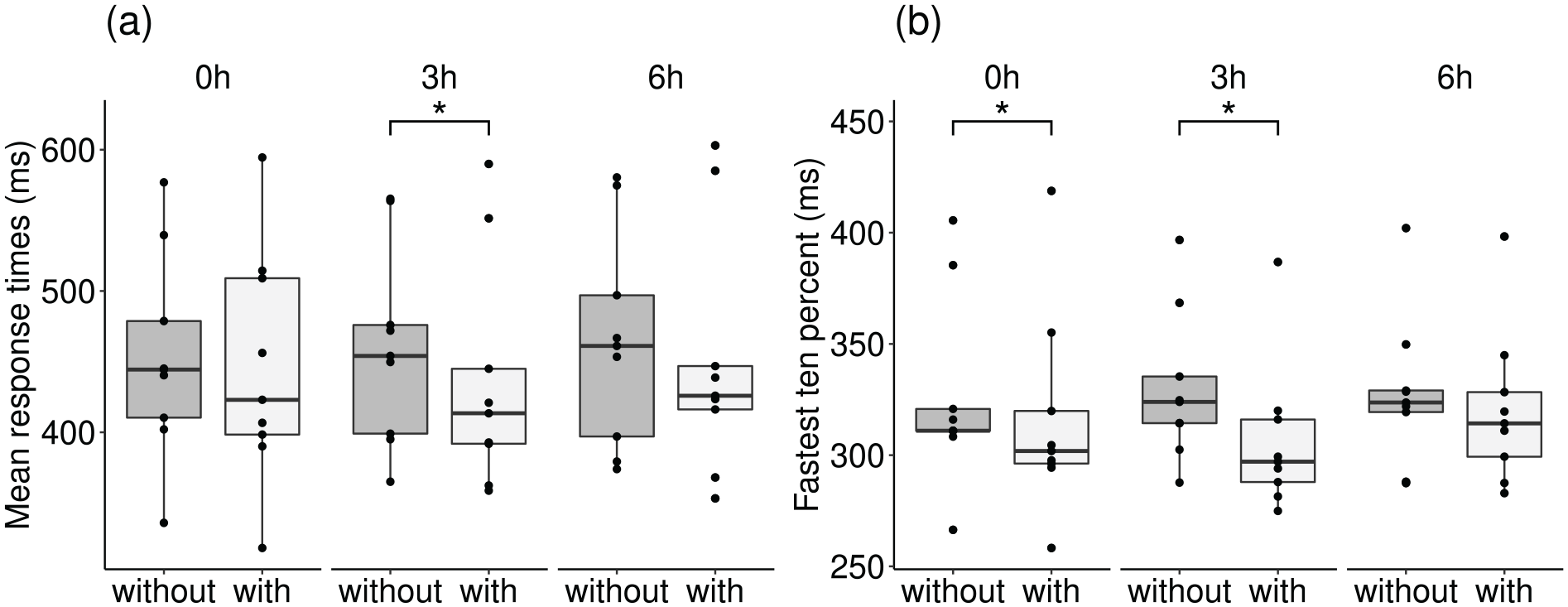
Mean (a) and 10% fastest (b) response times with and without additional lighting at 0 hour, 3 hours and 6 hours after the beginning of work
4. Discussion
4.1 Limitations
This study was performed with a sample of nine participants. Due to the extensive period of 4 weeks in which measurements were done and participants had to work almost exclusively home-based, it was not possible to reach a larger sample size. Since the measurements were taken during the beginning of July to end of September, weather and day-lighting conditions changed over time. Measurements were not taken for all participants simultaneously. However, measurements of one participant always include four consecutive weeks and are only compared within participants. Nevertheless, effects of additional lighting may be more pronounced during the darker months, which may already include September. Such an effect was not investigated due to the small sample size and an unequal distribution of starting times.
As reported by Udovicic et al., 29 the calibration factor for illuminance showed a standard deviation of 19%. The spectral mismatch for MEDI was approximately 16%. In addition, detectors were worn at chest levels. This implicates that they were not sensitive to head-movements and viewing angles. Distances to light sources of eyes and device differ slightly. However, Aarts et al. 37 found that deviation of illuminance values measured at chest level were within a range of 6%–17%, depending on lighting conditions. We assume that our measurements provide reasonable information.
Some participants rated the additional lighting as glaring when looking to the monitor, whereas others did not receive this impression. Since glare depends on the background luminance (including the luminance of the monitor), this can be explained by different luminance levels and distributions in their individual workplaces. In addition, tolerance thresholds depend on several factors, such as age, eye colour or individual preferences. 38 The additional lighting delivered a luminance of approximately 6000 cd m−2, as measured by the luminance camera LMK 4. In a test room, which was set up as an office workplace with a horizontal illuminance of 500 lx, we measured an Unified Glare Rating (UGR) of approximately 22 (LabSoft Glare-Addon, TechnoTeam). This value is above the desired threshold for office workplaces of 19, but still rated as ‘just acceptable’. If the lighting was perceived as glaring, this may have caused effects on PVT performance. Rodriguez et al. 38 showed a drop in Stroop task performance when comparing a diffuse daylight to a direct sun light scenario with higher glare for glare-sensitive individuals. In addition, it is not clear to which extend glare may have reduced the visibility of stimuli in the PVT. Especially for glare-sensitive participants, this effect may overlay possible alerting non-image forming effects of the additional lighting. However, improvements in PVT performance during the intervention were still visible.
4.2 Light exposure
In general, the large variety of light levels and daily courses impedes the interpretation of light exposure data. For many participants, no clear pattern in daily courses on home-based working days is seen. In addition, illuminances occasionally reach 1000 lx, indicating that participants left their desk and went outside. Possibly, such light levels were also reached by daylight entering through windows. These results are in accordance with a study of Peeters et al. 12 who found significant differences in light exposure data of office workers who worked in the same open-plan office. Therefore, it is not surprising that variability between participants in their personal home-based workspaces are even more pronounced. In analogy to our findings, Peeters et al. could not identify personal exposure patterns.
Mean illuminance and MEDIs during working periods were significantly increased by using the additional lighting. However, an increase is not seen for mean values during whole days. This indicates that light exposures during the rest of the day are higher and therefore overlap with the effect during working times. Figure 3 shows that highest illuminances are mostly reached in the course of the afternoon. Generally, illuminance levels during working periods are comparable to exposure of office employees in the literature.12,39 Most participants worked at illuminances lower than 350 lx, three participants did not reach the regulation for office workplaces of 175 lx, measured vertically. Additional lighting induced an average increase of 60 lx. This increase turned out to be much smaller than expected from laboratory measurements, where the additional lighting led to an increase of approximately 300 lx. These deviations may occur due to changing orientation of participants’ chests to their monitors, variation in angles due to mounting and tilt angles of monitors and different vertical and horizontal distances between monitors and chests. Furthermore, if illuminances in the upper hemisphere were already higher than 300 lx due to entering daylight, the additional lighting may have led to a decrease in exposure. Such a discrepancy in the amount of illuminance between static measurements and personal measurements was also identified by Peeters et al. 12 Even after adding the additional lighting system, MEDIs during work of five participants did not reach the recommendation of 250 lx by Brown et al. 18 As already mentioned, these values include time periods in which illuminances reached 1000 lx. After correction, light levels were even lower. Then illuminance did not reach 250 lx without the additional lighting. Most notably, corrected MEDIs were lower than 100 lx for most participants without additional lighting and could not be increased to over 250 lx by the intervention. These findings show extensive lack of ipRGC activation in terms of MEDI levels, when correction is applied. We conclude that many employees continuously work at artificial lighting conditions that do not support their alertness. Required exposure levels can then only be reached through daylight exposure – if employees leave their workplace and go outside or at least work close to their windows.
4.3 Subjective scales and PVT
No statistically significant effect on KSS by adding the display-mounted lighting was observed. However, a tendency to lower KSS scores can be visually examined after 6 hours. This indicates that effects of lighting on subjective sleepiness may only occur after longer exposure times. An improvement of lighting may therefore be especially supporting for workplaces of fulltime employees who work more than 6 hours a day. After 6 hours an improvement of perceived mood state was reached.
Mean and fastest response times were significantly lower at the beginning of work when the additional lighting was used. In general, observed effects are rather small, which may also depend on the small sample size. Furthermore, uncertainties of time measurements are influenced by participants working equipment and impede the comparison. As seen in Figure 9, overall mean values range from 320 mseconds to 600 mseconds. This may reflect interindividual differences, as well as differences in working equipment. However, statistically significant effects of the additional lighting on the parameters of the PVT are observed and would likely be more pronounced if higher numbers of participants were reached. These effects already occur after short exposure duration. Therefore, we assume that an increase in illuminance and/or MEDI almost immediately activates and therefore improves the alertness of employees.
5 Conclusion
Although the achieved increase in light exposure during working periods did not lead to lower subjective sleepiness, improvements in PVT parameters could be identified. In addition, most participants would use the additional lighting voluntarily in the future. This indicates that they are dissatisfied with their current lighting conditions or at least perceive an increase of light levels as improvement. This is in accordance to Amorim et al. 21 who found a positive correlation between light levels and satisfaction. Furthermore, it was found that corrected illuminance and MEDI levels in most home-based working spaces do not reach recommendations for office lighting by far. We conclude therefore that any additional lighting which is comfortable for the employee and especially adds light in the blue spectral range should be considered in order to improve alertness in home-based workplaces. To achieve stronger effects on alertness, higher illuminances should be considered. Therefore, we assume that indirect lighting may provide the opportunity to achieve such an improvement without increasing glare. These suggestions are only applicable for daytime workers, as MEDI during the evening and in the sleep environment should be low (see Brown et al. 18 ). In addition, employers should encourage their employees to move their desks towards lighter spaces if possible or at least to reside near windows if desk work is not required. Further investigation is needed to increase knowledge about lighting at home-based workplaces and create strategies on how to improve them in a fast and feasible manner.
Footnotes
Appendix
Acknowledgements
We gratefully acknowledge helpful discussions with Dr Erik Romanus and technical assistance of Joelle Nicolay.
Declaration of conflicting interests
The authors declared no potential conflicts of interest with respect to the research, authorship, and/or publication of this article.
Funding
The authors received no financial support for the research, authorship, and/or publication of this article.
