



Abstract
Recently, there has been a growing interest to implement a holistic approach to study perception in urban settings with historic value, in which environmental factors such as acoustics and lighting play an important role. However, little research has addressed sound and light in combination. In this exploratory field study, a soundscape and lightscape protocol was implemented to gather both objective and subjective data. In all, 46 people joined a group walk around the historical sites of Colosseum and Fori Imperiali in Rome. Participants assessed the soundscape and lightscape quality via questionnaire at four locations, immediately before and after the sunset in April 2021. Acoustic parameters (A-weighted equivalent sound level, loudness, sharpness, roughness) and lighting parameters (luminance, colour rendering index and correlated colour temperature) were measured at each location while participants filled in the questionnaire. While there was little variation in the acoustic parameters measured before and after the sunset walks, changes were observed in perceptual data about the soundscape. These outcomes reveal a potential effect of lighting conditions on soundscape perception.
1. Introduction
When one lives, works, spends a short time or walks in a context, the feelings, such as belonging, being part of, being happy in that situation, are strongly related to the influence of several external factors at the same time. Perception, in fact, has a multisensory nature that implies that external inputs cannot be separated and, most of all, should be evaluated in combination to understand the mechanisms that underlie humans’ reaction in contexts, and, in turn, the effects induced on health and well-being.
With respect to environmental factors, much has been done so far in the fields of lighting and sound perception separately.1–7 Research conducted for outdoor lighting have focused on perception of pedestrian safety8,9 and street lighting6,7,10 while for soundscape it was mostly driven by the aim to go beyond noise mitigation approaches, to define quiet areas in cities and address general health and well-being goals. 11 The practice of soundwalks and lightwalks, that is, the process of walking in a context while focusing on the analysis of key points in the environment, has become a common environmental assessment tool in the recent years,4,12 allowing for the acquisition of attributes and subjective impressions as well as objective measures that characterise the sound and light environment quantitatively. The exclusive characterisation of an environment by means of objective quantities, in fact, may fail in recognising the importance of perceptual implications. While the influence of non-auditory factors on soundscape has been looked at by researchers from the viewpoint of visual perception and its urban context counterpart (such as visual greenness),13–17 to the best of the authors’ knowledge, few studies have investigated perception at a multi-domain level, relying on objective lighting and acoustic measurements combined.
Jeon et al. 18 investigated subjective responses on a combination of environmental conditions using an experimental walk and found a stronger association between the perceived daylight and the overall impression of a site than it was the case with the acoustic comfort. Radicchi and Henckel 12 proposed a novel method that combines lightwalks and soundwalks to evaluate the perception of cities during the night-time. As only two attributes were mainly used to describe the environment, noisy and bright, the suggestion was to build a survey that accounts for a greater variety of attributes to better represent perception, since the one proposed might have been not fully appropriate. Calleri et al. 19 evaluated the effect of enhanced sound and light environments on the perception of safety and social presence. The presence of scenic lighting only influenced the perception of social presence, but not of safety. As far as the presence of background music is concerned, it resulted in improved perception of both safety and social presence.
The enhancement of sound and light outdoors can be related also to the protection and promotion of a cultural heritage, especially when these are located within urban environment. As research is shifting towards an inclusive paradigm of cultural landscape, the joint system of cultural heritage and territorial context made it possible to think of multi-domain approaches for their protection and enrichment.20,21 From this, it arises that different perceptions of contexts are not only related to the external factors in which they are immersed, but also to the moment of the day in which they are perceived. Daytime sounds and light are profoundly different from night-time.
This work is a preliminary attempt to apply a combined protocol for soundscape and lightscape assessment focusing on the sites of the cultural heritage, their prevention and promotion. To achieve this objective, two practical research questions were addressed through an exploratory field study. First research question (RQ1): what is the effect of daytime and night-time lighting conditions on the soundscape experience? Second research question (RQ2): could the defined light parameters be suitable to assess the overall (perceptual) lightscape? To answer these questions, the area of Colosseum and Fori Imperiali in Rome were studied in a soundwalk and lightwalk that was carried out in April 2021 involving participants who were asked to answer a survey on both environmental aspects.
2. Method
This research aims at defining a first draft of a procedure that is able to identify subjective and objective correlations among the acoustic and lighting aspects that influence how people perceive a specific environment. Over the last few years, several studies have demonstrated how the same environment can induce different perceptions if the surrounding conditions change, in terms of sound and light. 22 Nowadays, there are several available protocols to gather perceptual data about how people experience the soundscapes in cities, and the most common tool is the soundwalk; however, heritage concepts and assessment are still in the early stages of development.23,24 On the other hand, similar procedures for the light environment are missing, and references in literature are scarce. In addition, only few are focused on heritage.
Street lighting is a very critical issue, especially in historical cities such as Rome. Here, it should not only be considered in terms of presence or amount of light, but also in terms of its quality and characteristics (i.e. the spectral power distribution, colour temperature, etc.) to enhance the experience of the cultural heritage and the artistic aspects of the city. For this purpose, a combined soundwalk and lightwalk (referred from now on as sound/lightwalk) together with an experimental measurement campaign was organised in the archaeological area outside the Colosseum and Fori Imperiali, during day- and night-time, with a group of participants experiencing different acoustic and light environments.
2.1 Description of the site
The chosen case study to test the proposed procedure is the Colosseum archaeological area. The site could induce a wide variation of visual sensations, due to its rich cultural and historical context and its changing surrounding conditions, such as the designed lighting for night-time (see Figure 1). This well-known archaeological site is located in the city centre of Rome. It is situated within a restricted traffic zone (Fori Imperiali area) at its southern border. The locations follow an urban plan developed by the City Council of Rome, where conservation and preservation are fundamental to maintain the integrity of the historic district.
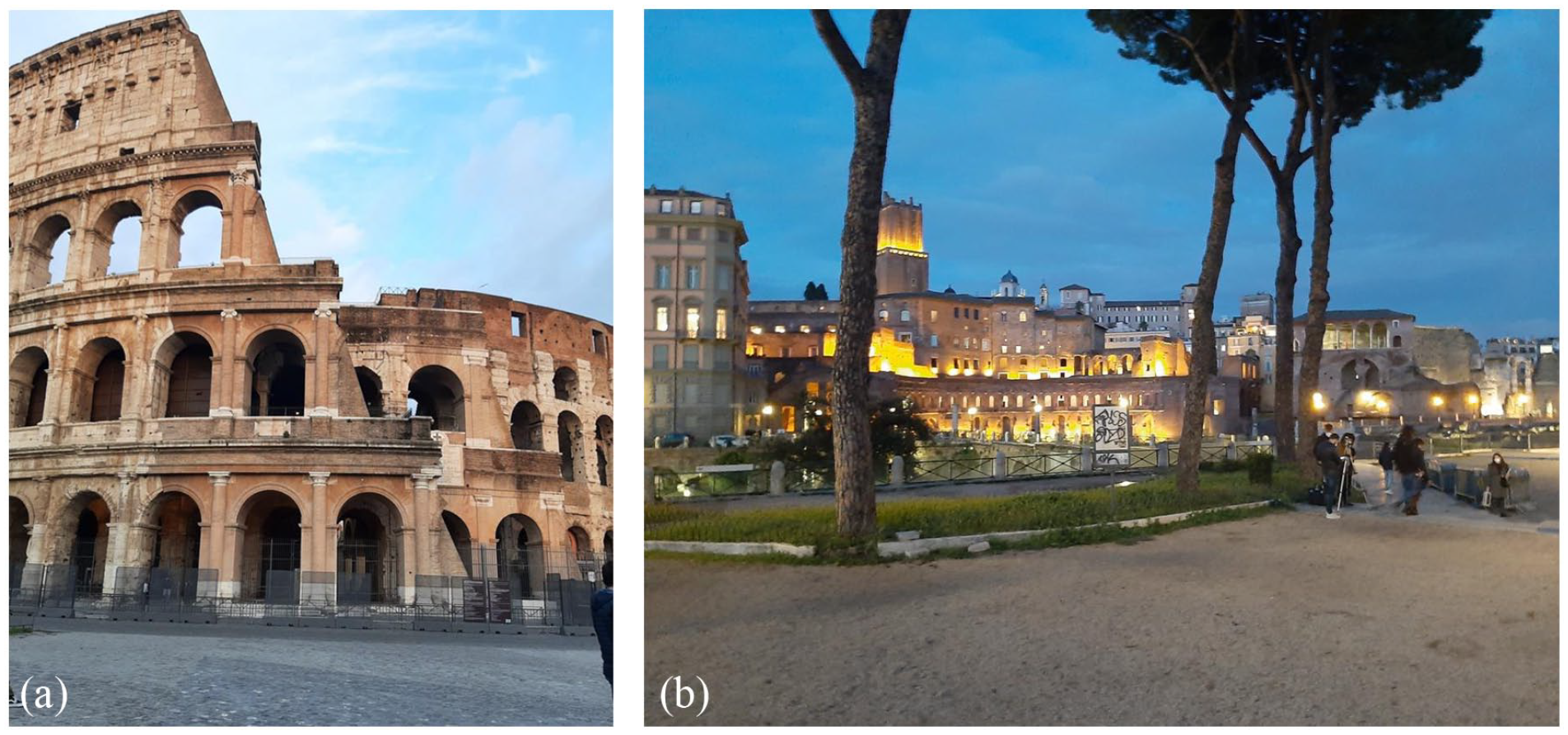
The Colosseum archaeological area in Rome: (a) Colosseum and (b) Fori Imperiali area
The traffic within and next to the investigated area is limited to public transport, authorised vehicles and pedestrians visiting the archaeological site. In Figure 2, the overall urban environment can be observed as well as the route followed during the walk and the locations where the measurements were taken for the sound/lightwalk.
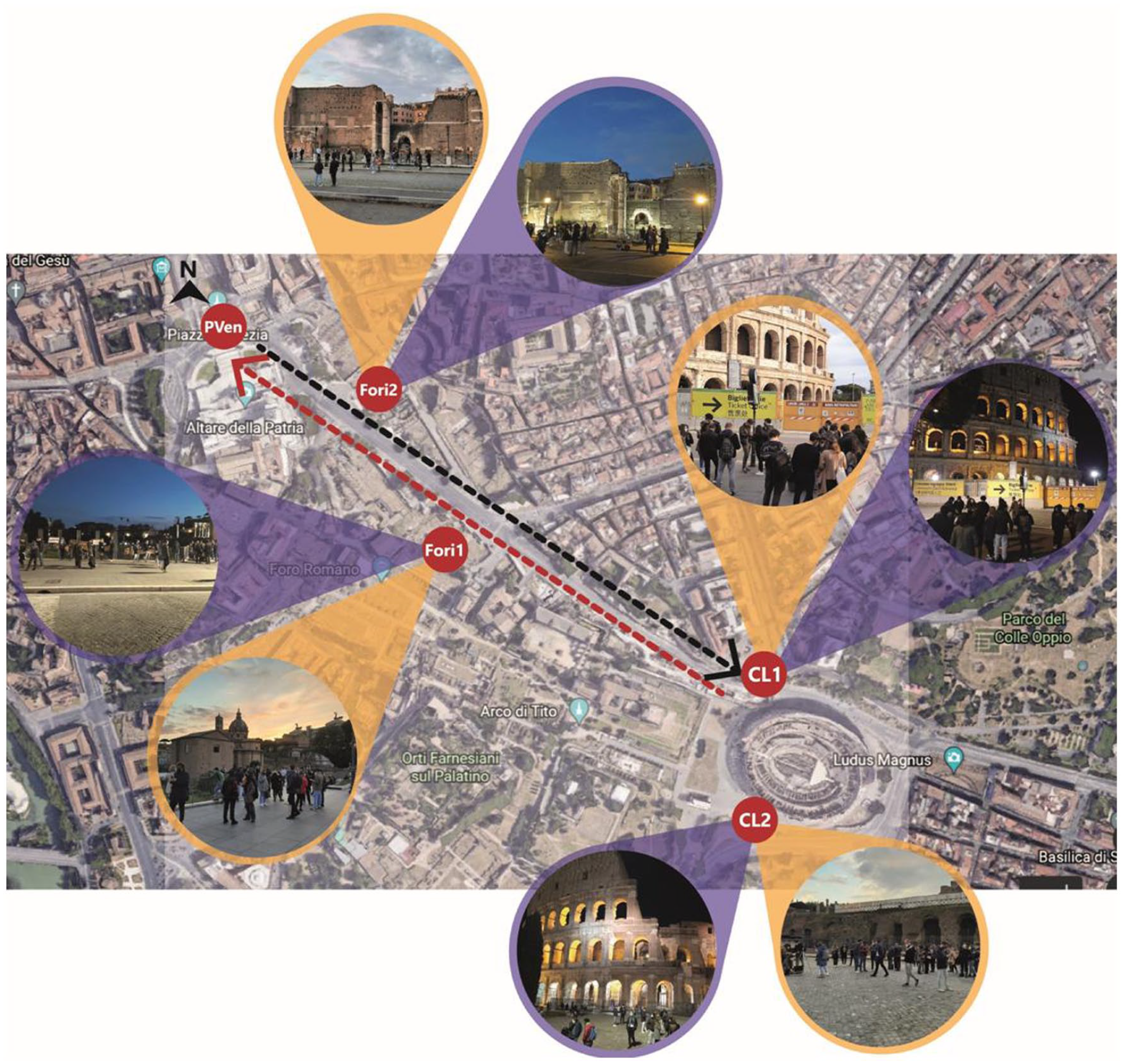
Colosseum archaeological area. Dashed lines show the sound/lightwalk path, red line shows the starting direction (from CL1 to PVen) and the black line the return path (PVen to CL1). The lighting conditions are shown in each location, pictures in yellow show the daytime condition and purple night-time condition
The path was travelled back and forth for carrying out the survey under day and night conditions. As a result, two different sets of answers of the questionnaires and two measurements values correspond to each location (CL1, CL2, Fori1 and Fori2). Only location PVen was investigated once, at sunset time.
2.2 Participants
In all, 46 undergraduate and postgraduate students from the University of Roma Tre voluntarily participated in the sound/lightwalk. There were 26 women and 20 men of age ranging from 19 to 52 years (median age = 23). The students gave informed consent, and the research was carried out according to the ethical requirements of the Helsinki Declaration, approved by BSEER Ethics Committee at University College London (UK). Participants who had confirmed their attendance, were asked to participate in a preparatory webinar so that the main issues and the whole procedure could be addressed in a group discussion. The webinar specifically addressed some key concepts in soundscape and lightscape theory, as well as the protocol of the walk to be conducted on site. The items of the questionnaire were discussed so that prospective participants would have a common understanding of their meaning and provide consistent perceptual data. This approach had already been proved to be viable in previous studies. 4
2.3 Data collection
The entire session (i.e. sound/lightwalk, binaural recordings and lighting measurements) was carried out on the 22nd of April 2021, between 06:30 and 09:00 pm of a weekday. The whole day of the sound/lightwalk was characterised by clear sky conditions, the temperature between 6.30 and 9.00 pm ranged between the 16°C and 14.5°C with a relative humidity of about 77% and an average wind speed of about 9 km/h. It is worth noting that, at the time of data collection, some restrictions for public activities were enforced in Rome, due to lockdown policies implemented because of the COVID-19 pandemic. Restrictions did not involve, however, public and private transport, so traffic noise was present in the surrounding areas. The sites of the case study are of course very popular, but the lockdown restrictions actually offered an opportunity for a relatively controlled setting that was not affected by the presence of people, which could have introduced an additional source of uncertainty and environmental variability. The presence of people and/or crowdedness of an area have indeed been shown to affect a number of perceptual constructs, such as soundscape and visual quality, perceived safety and others.13,19,25
The data collection instrument reported in Table 1 was based on different sources from the literature, as well as internal discussions among the authors. The Soundscape attributes (ISO), the Sound sources (ISO) and Soundscape quality (ISO) categories were taken from Method A of the ISO Technical specifications on soundscape. 3 The Soundscape attributes (Historical settings) category was adapted from sources in literature focussing specifically on historical soundscapes.23,24 The Lightscape attributes, Light sources and Lightscape quality categories were adapted from previous works on the topic,1,19 while the items of Lights for colours and materials category were defined during a workshop organised for the purpose of this. The questionnaire was translated in Italian before the sound/lightwalk.
Data collection instrument (questionnaire) used during the sound/lightwalk
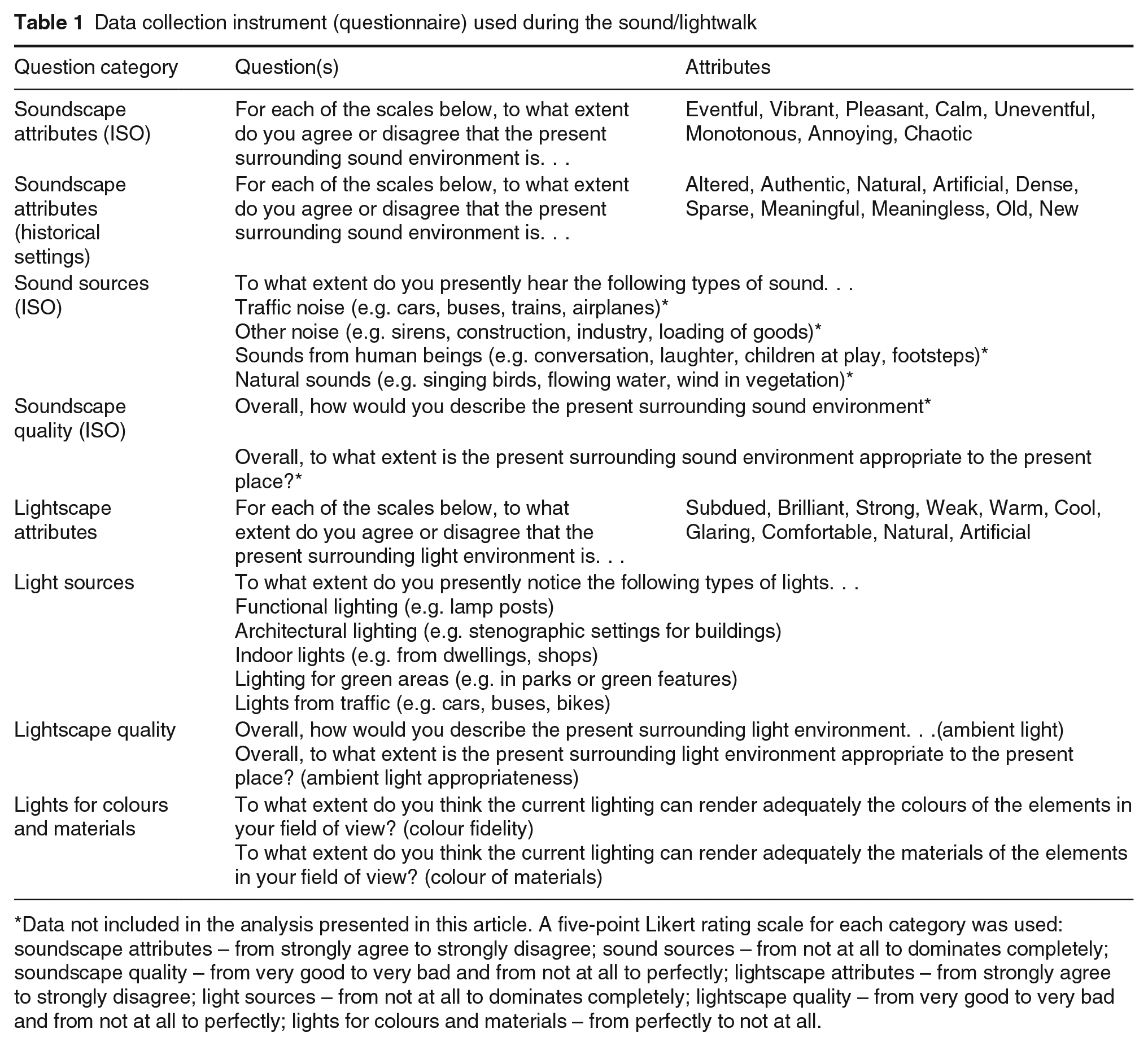
Data not included in the analysis presented in this article.
A five-point Likert rating scale for each category was used: soundscape attributes – from strongly agree to strongly disagree; sound sources – from not at all to dominates completely; soundscape quality – from very good to very bad and from not at all to perfectly; lightscape attributes – from strongly agree to strongly disagree; light sources – from not at all to dominates completely; lightscape quality – from very good to very bad and from not at all to perfectly; lights for colours and materials – from perfectly to not at all.
Throughout the survey, a non-participant operator performed a head-mounted binaural recording. Aiming at evaluating how human beings detect the acoustic environment, binaural acoustical measurements were carried out in compliance with Annex D of ISO/TS 12913-2:2018(3), using a Head Acoustics SQobold with BHS II. Acoustic measurements recorded were A-weighted equivalent continuous sound level (LAeq(dBA)), loudness (N5 (sone)). Tonality (tuHMS), Roughness (R(asper)), Sharpness (S(acum)) and Fluctuation strength (FS (vacil)). Measurement time both in the daytime and night-time was a 2-minute interval that was carried out at the same time while the participants were listening to the acoustic environment and observing the light one, at each location of the sound/lightwalk. Simultaneously, the lighting measurement campaign was carried out, for each location, during day and night as well.
Similar to the sound recording, photometric measurements were taken at each location at a height of 1.6 m facing each historic landmark (other than illuminance which was measured at floor level): luminance, illuminance, CIE general colour rendering index (CRI) and correlated colour temperature (CCT). These were recorded using a luminance meter (TechnoTeam LMK 98-4 calibrated to ISO/CIE 19476:2014-06 on 21/07/2020), illuminance meter (Konica minolta T-10°, calibrated to ISO/IEC 17025:2017 on 28/11/2020) and spectroradiometer (AsenseTek Lighting Passport calibrated by the manufacturer on 14/02/2020), respectively. Attention to the viewing position was taken when measurements were recorded to avoid any risk of glare. Participants were directed to the scene where the photometric measurements were taken, for example when arrived to the location Colosseum 2, instructions were given to look towards the scene shown in Figure 3(a) and (b). For luminance, the weighted mean value defined on the instrument display was used.
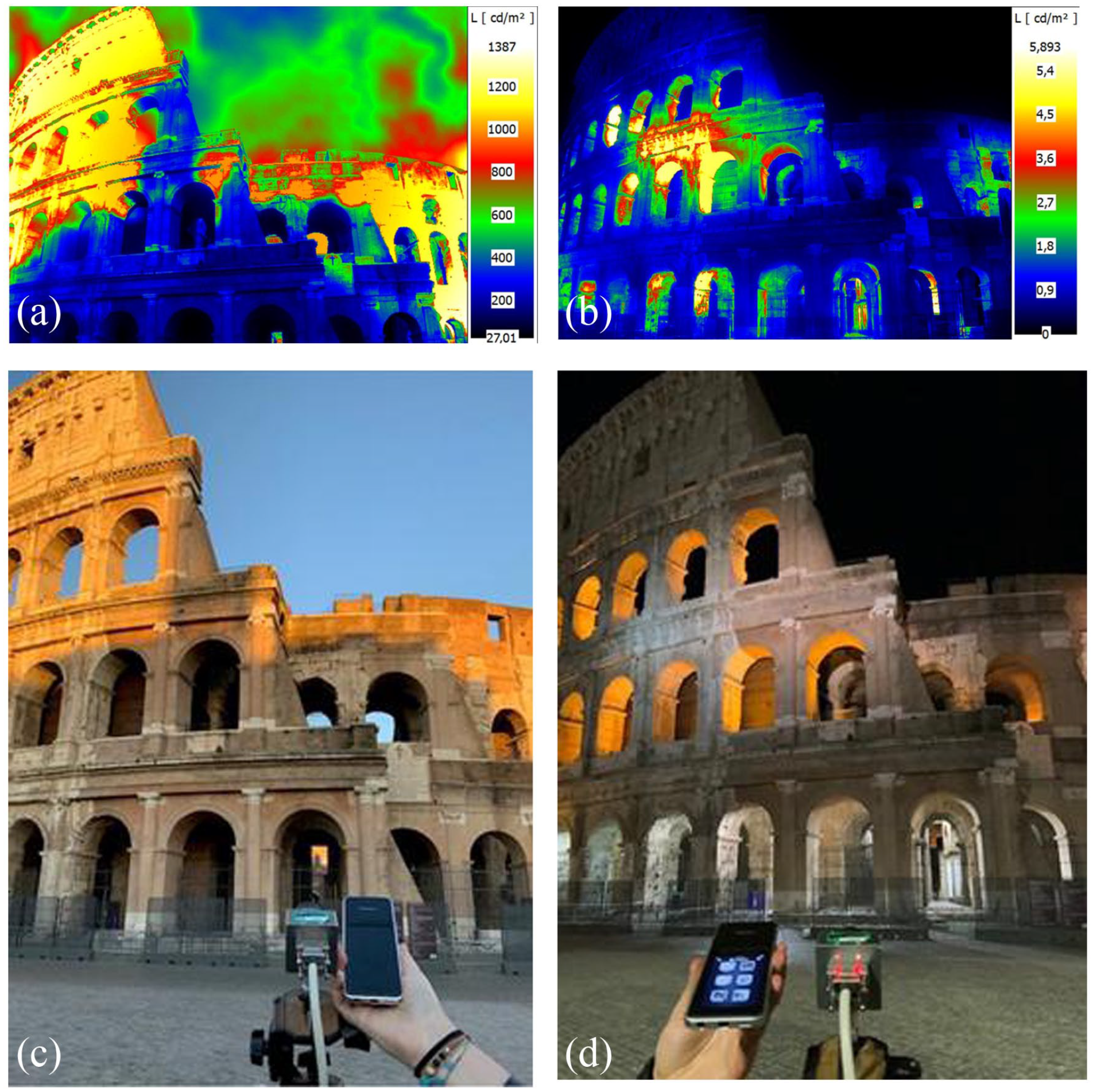
Luminance recording of Colosseum 2 for daytime and night-time conditions. Images (a) and (b) are the results obtained from the photometer; note the luminance scale is different between (a) and (b). Images (c) and (d) are for illustration purposes of how equipment was used to record measurements
3. Results
The data for each location were calculated using the total number of responses from participants. Data were eliminated when the information provided was incomplete. PVen location was not included in the analysis due to only having one lighting condition. The analysis was carried out grouping together locations and day/night periods. Analyses were performed in IBM SPSS Statistics Version 27 and in each tests p values < 0.05 and p < 0.01 were considered to indicate statistical significance. Data were not normally distributed therefore nonparametric test were used. Mann–Whitney U analysis was run to test differences between the first and second lighting conditions. Due to participants not completing and/or missing to submit the questionnaire on time during the night-time walk, the maximum number of responses per location was set by night-time and data from daytime was randomised data for each location. Furthermore, Kendall’s Tau-b was run to test correlations between objective and subjective lighting variables.
3.1 Objective parameters
Table 2 shows the acoustic and lighting objective parameters measured in each location for both lighting conditions (daytime and night-time). The rows headed Dif in Table 2 show a change across the parameters between lighting conditions (Dif = daytime - night-time), a negative sign indicates that a parameter increased over time. Acoustic data in Table 2 show that the sound exposure conditions between the first and second walk were quite similar, 26 so participants were experiencing fairly similar soundscapes, while the lighting condition was obviously dramatically different because of the daytime/night-time scenarios.
Acoustic and lighting parameters measured in both lighting conditions and in each historic location (CL1, CL2, Fori 1 and Fori 2)
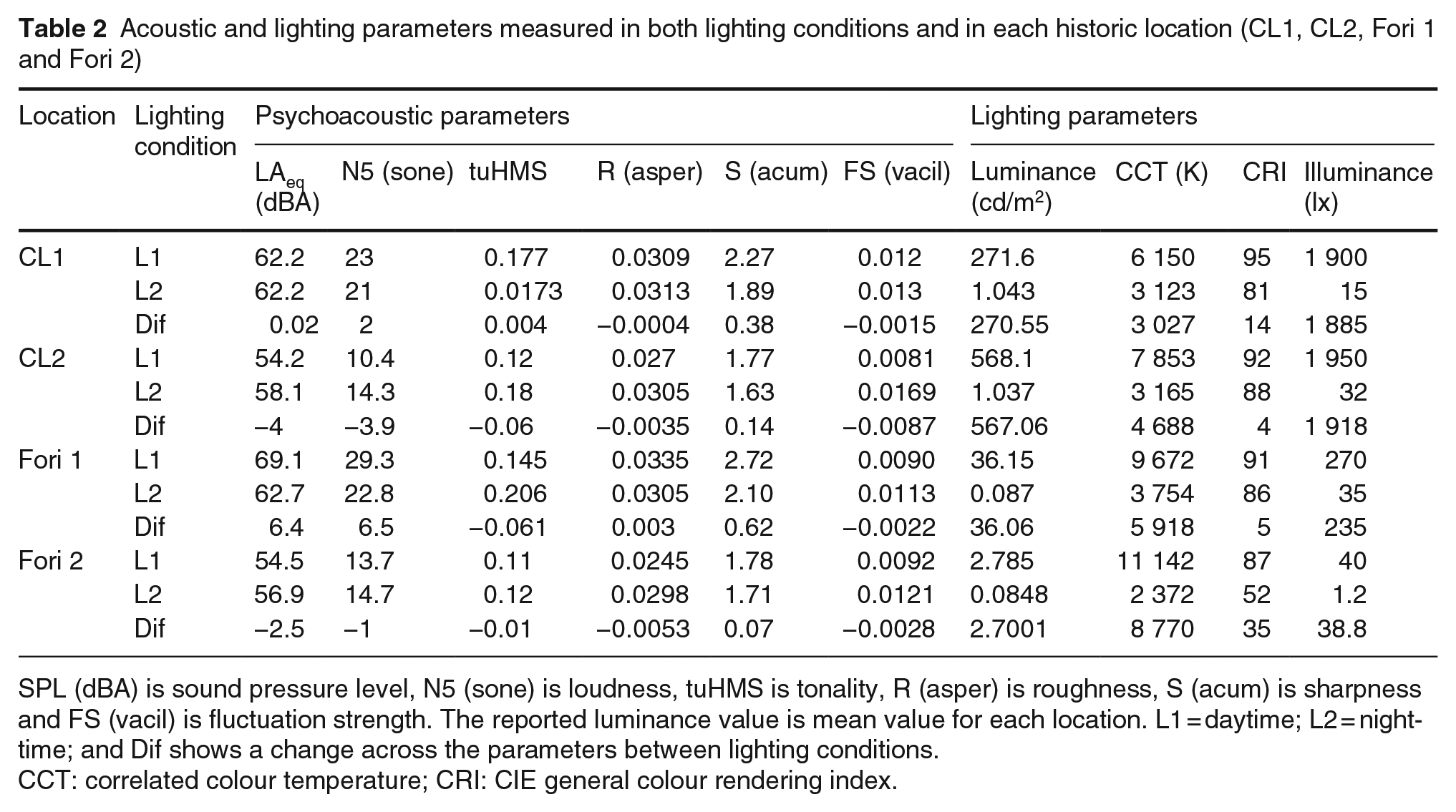
SPL (dBA) is sound pressure level, N5 (sone) is loudness, tuHMS is tonality, R (asper) is roughness, S (acum) is sharpness and FS (vacil) is fluctuation strength. The reported luminance value is mean value for each location. L1 = daytime; L2 = night-time; and Dif shows a change across the parameters between lighting conditions.
CCT: correlated colour temperature; CRI: CIE general colour rendering index.
3.2 Effects of light on soundscape perception (RQ1)
The first goal of the study was to investigate the effect of lighting conditions on soundscape attribute perception at historic locations. The mean values of soundscape descriptors are shown in Table 2, while the statistical significance in differences of perceptual soundscape attributes between two lighting conditions (daytime and night-time) in four different historic locations are shown in Table 3.
Mean values and SD of soundscape attributes in historical settings for each location (CL1, CL2, Fori 1 and Fori 2) and each light condition (L1 = daytime; L2 = night-time)
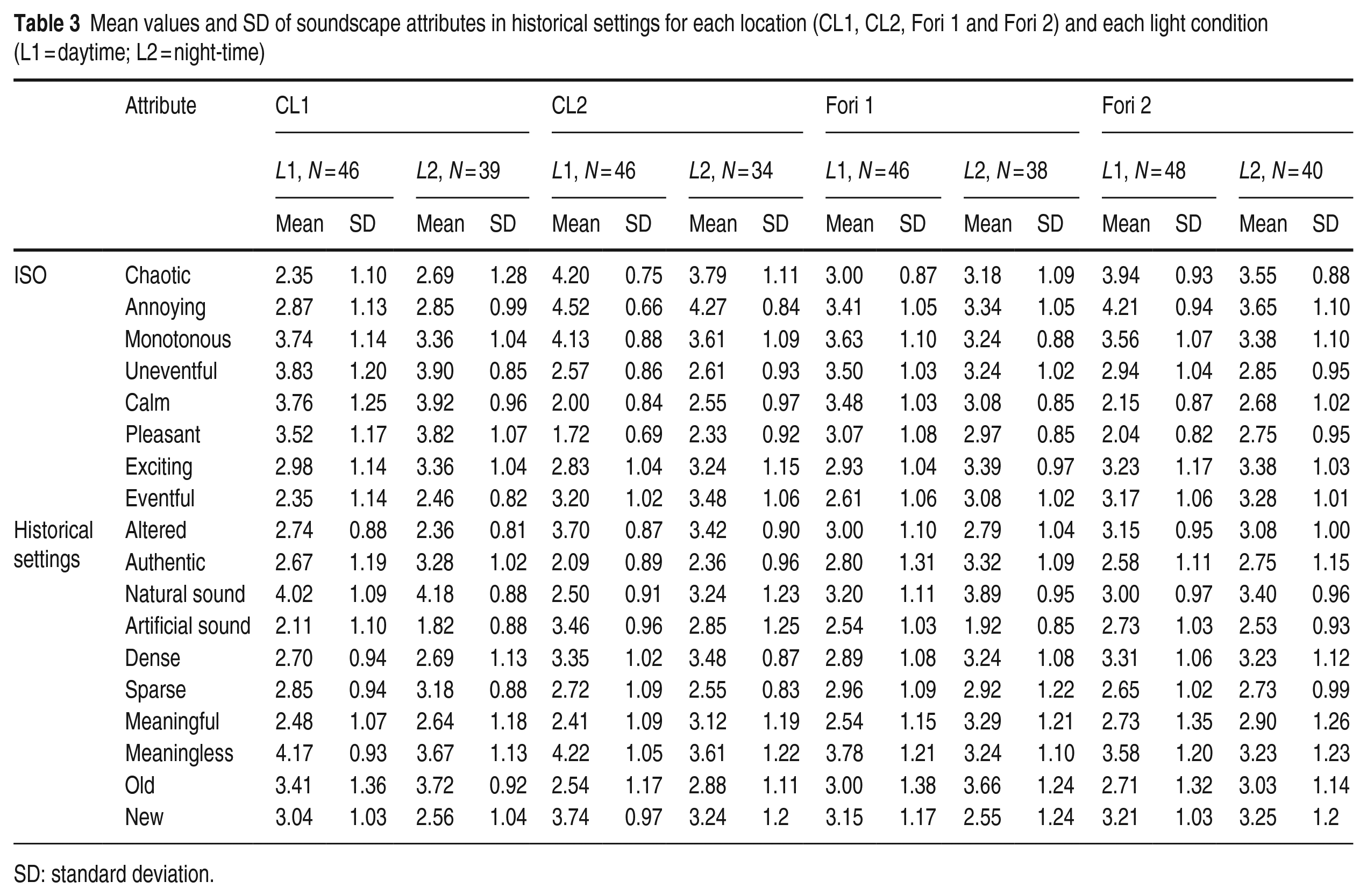
SD: standard deviation.
A Mann–Whitney U test was applied for each location separately and only statistically significant differences are highlighted. The meaningless attribute had significant differences in three of the four locations, but also as can be seen in Figure 4(b) changes are positive meaning that responses tend to change from disagree to agree during night-time.
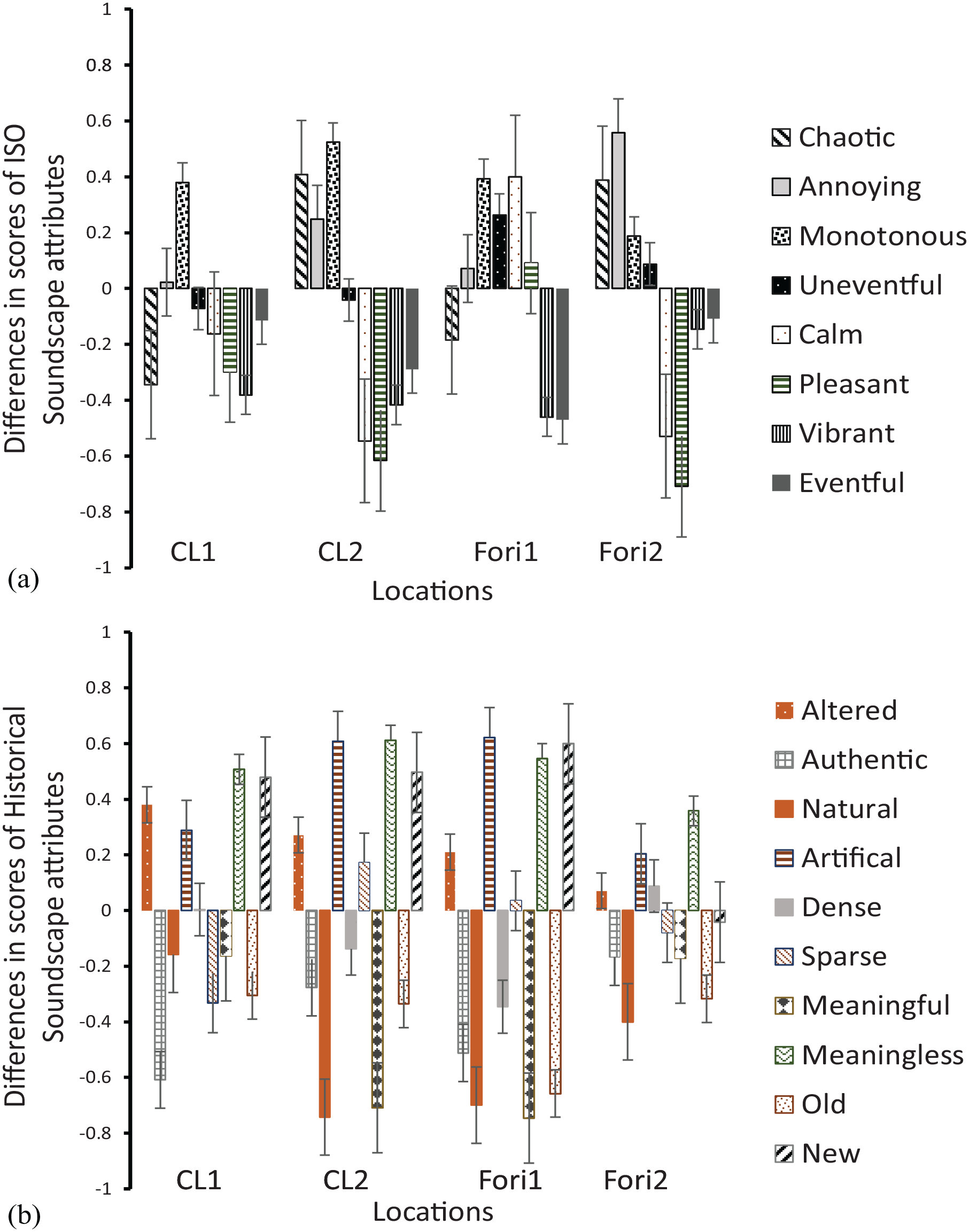
Mean changes in soundscapes attributes perception for (a) ISO attributes and (b) historic settings attributes in four locations (CL1, CL2, Fori 1 and Fori 2).
As shown in Table 4, the distributions of monotonous perception scores at CL1 and CL2 between day and night were not similar. For instance, scores for CL1-day (mean rank = 49.78) were statistically higher than for CL1-night (mean rank = 38.87), U = 736, z = −2.05, p = 0.040; while for CL2-day (mean rank = 45.64) was higher than CL2-night (mean rank = 33.54), U = 545.5, z = −2.42, p = 0.015. This could be interpreted as more participants having ranked these two locations to be perceived as more monotonous during daytime. Similarly, CL1 is perceived significantly more meaningless (p = 0.027), newer (p = 0.019) and altered (p = 0.011) during the night-time condition, while during daytime, CL1 was perceived as more authentic (p = 0.008).
Mann–Whitney U results of soundscapes attributes between two lighting conditions for each historical location (CL1, CL2, Fori 1 and Fori 2)
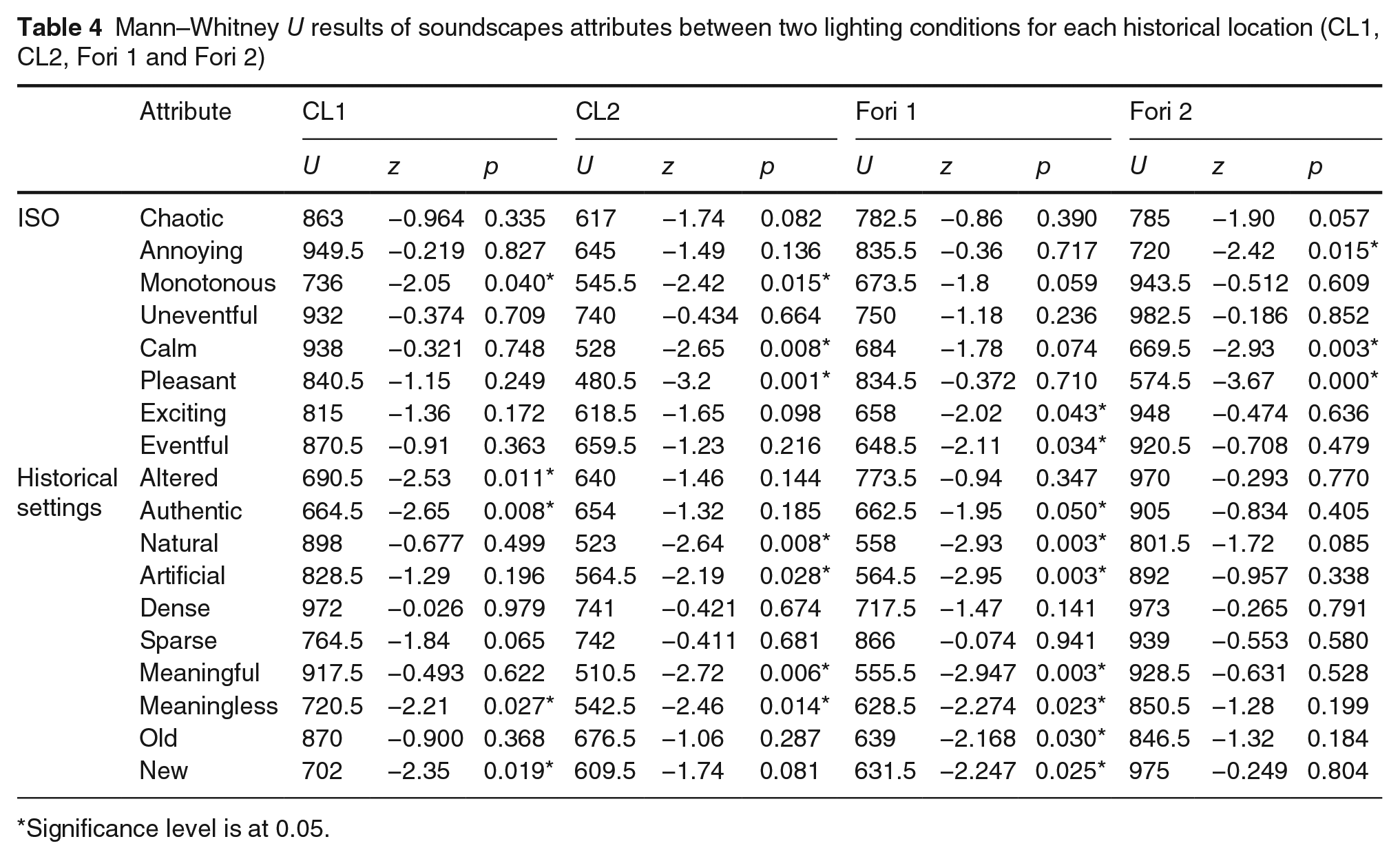
Significance level is at 0.05.
Location CL2 during the day was perceived as significantly calmer (p = 0.008) and pleasant (p = 0.001) than during the night walk. In addition, counter attributes natural (p = 0.008) and artificial (p = 0.028) and meaningful (p = 0.008) meaningless (p = 0.028) were significantly different between walks, perceiving CL2 to be more artificial and more meaningless during the night. In addition, results from the location Fori1 showed that there are more significant differences in most historic attributes. During the day, it was perceived as significantly more authentic (p = 0.050), having more natural sound (p = 0.003), meaningful (p = 0.003), and old (p = 0.030); while it was perceived as significantly less meaningless (p = 0.023), new (p = 0.025) and as artificial sound (p = 0.003), than during night-time.
3.3 Relation between objective and subjective light variables (RQ2)
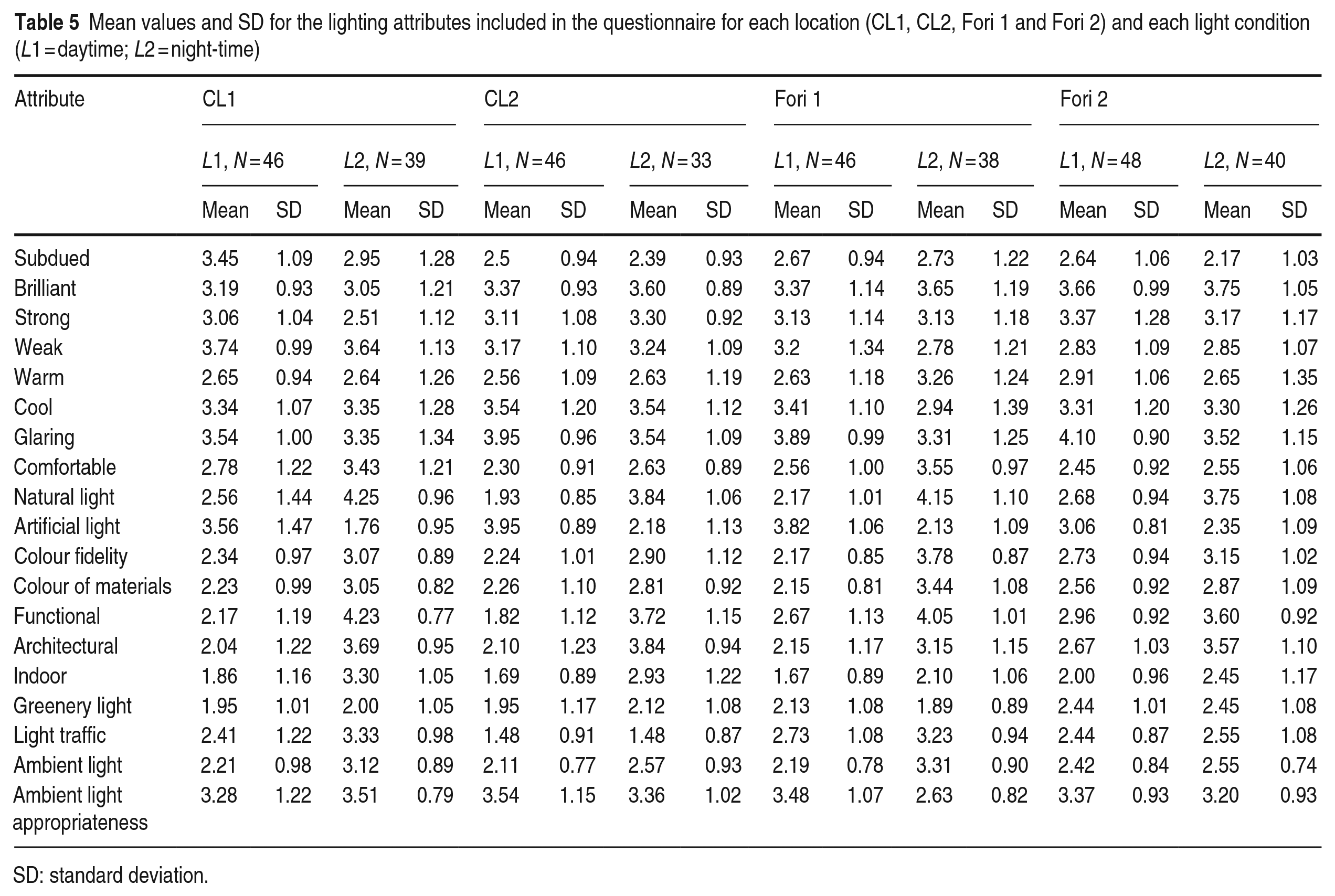
Subjective lighting quality was assessed with 19 defined attributes using a five-point rating scale. To test correlations for lighting variables, mean values were used to apply Kendall’s tau-b to determine the relationship between objective measurements (luminance, colour temperature and colour rendering) and the defined subjective attributes for both day and night lighting conditions. Table 5 shows mean values of the responses for the subjective lighting attributes: warm, cool, glaring, comfortable, natural, artificial, etc.
Mean values and SD for the lighting attributes included in the questionnaire for each location (CL1, CL2, Fori 1 and Fori 2) and each light condition (L1 = daytime; L2 = night-time)
SD: standard deviation.
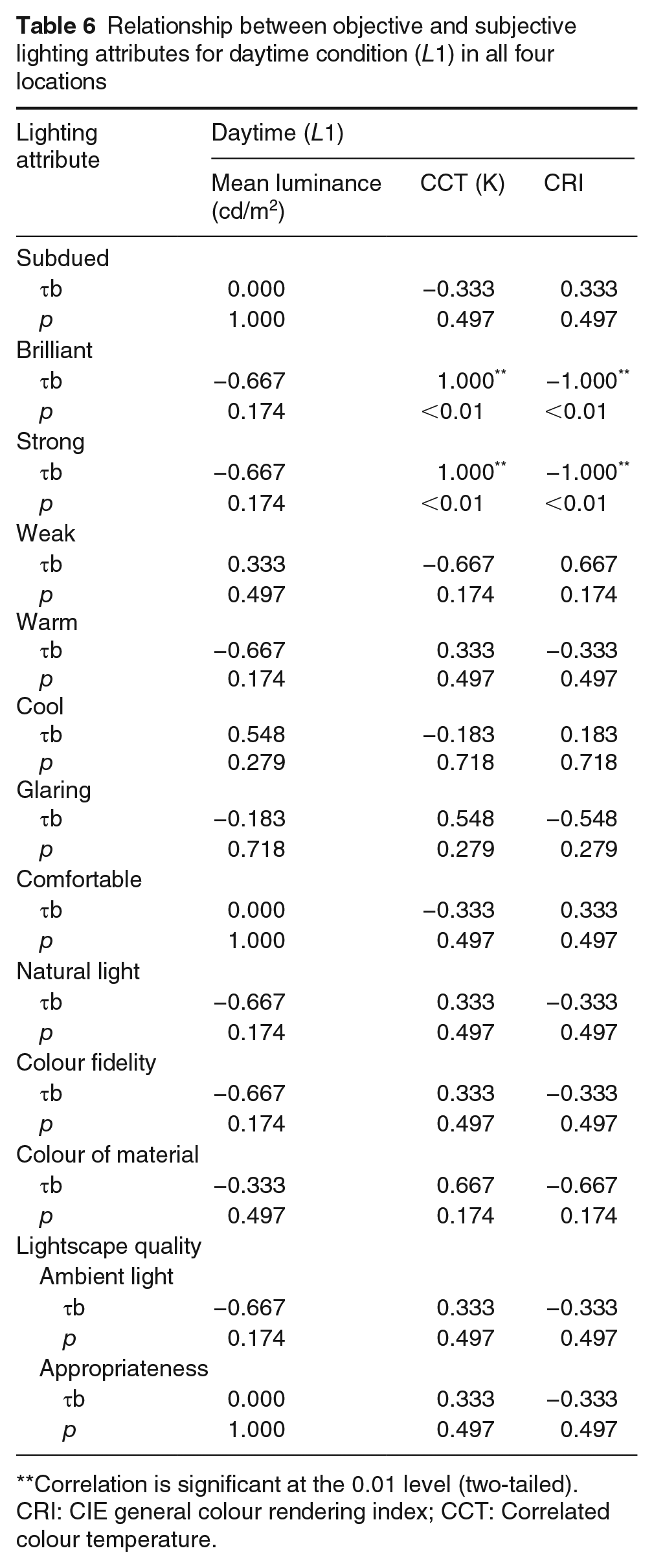
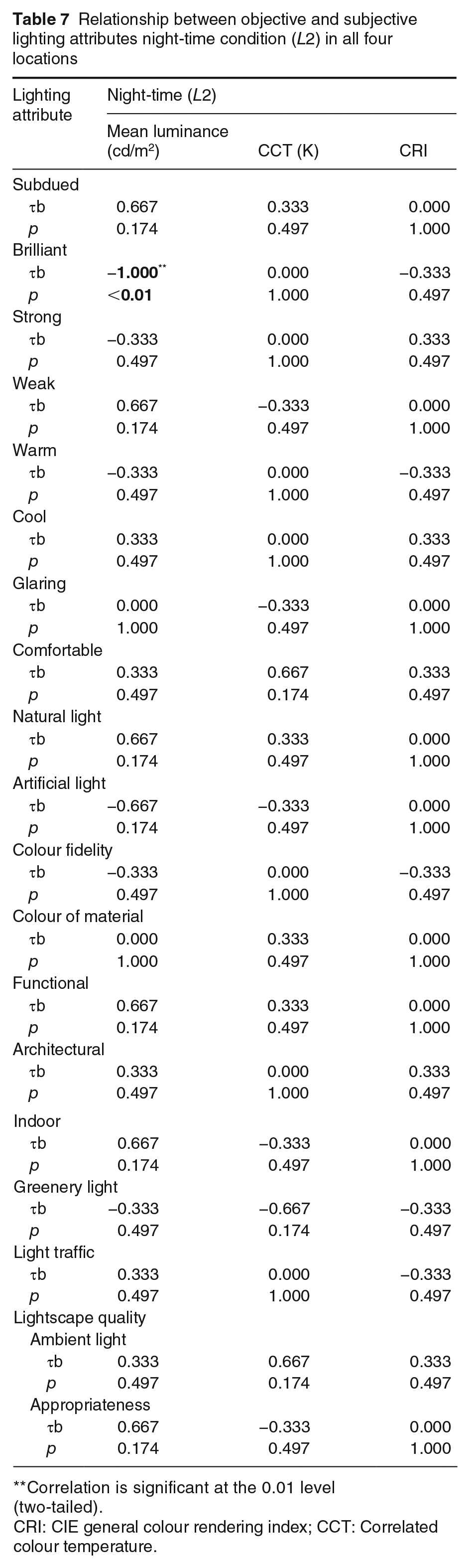
Tables 6 and 7 show correlation results between photometric measurements and subjective attributes for each lighting condition. Table 6 shows results considered relevant between photometric measurements and subjective attributes for the daytime condition. For example, for the daytime condition, the following subjective attributes were not considered appropriate to characterise the lighting condition: indoor, architectural, greenery light, etc. Table 7 shows the results relevant between photometric measurements and lighting attributes.
Relationship between objective and subjective lighting attributes for daytime condition (L1) in all four locations
Correlation is significant at the 0.01 level (two-tailed).
CRI: CIE general colour rendering index; CCT: Correlated colour temperature.
Relationship between objective and subjective lighting attributes night-time condition (L2) in all four locations
Correlation is significant at the 0.01 level (two-tailed).
CRI: CIE general colour rendering index; CCT: Correlated colour temperature.
Results for the daytime condition showed strong positive relation between the attributes, strong and brilliant and colour temperature (τb = 1, p < 0.01). In addition, a strong positive relationship was found between these same subjective attributes and CRI (τb = −1, p < 0.01). For the night-time situation, only brilliant showed a strong negative relation to mean luminance value (τb = −1, p < 0.01). This means that when low mean luminance was recorded in a location, participants’ responses tended to have a high score (strongly disagree). As can be seen, there were no relationships found between subjective attributes that describe how colours are perceived under daytime or night-time condition, despite having CRI values in three of the four locations. Similarly, there were no associations between questions for describing the light environment (ambient light) and the appropriateness of the light environment in each location.
4. Discussion
This exploratory study evaluated the effects that lighting conditions have on perceived soundscapes of historical outdoor spaces and, developed and tested an instrument to assess the overall perception of lightscapes (see Table 1). To evaluate the perception of historical outdoor locations, a combined set of methods for sound and lighting were used for five different locations in two conditions, where participants were asked to rate their perception in terms of sound and lighting while parametric measurements were taken. However, only four out of five locations were analysed since the last location (PVen) was only visited during sunset (late afternoon). To the best of the authors’ knowledge, there is no consensus on the best methodology for assessing both soundscape and lightscape and different approaches have been used.6,7 For the purpose of this study, some of the subjective lighting questions were based on a previously developed assessment tool for outdoor spaces 1 and accustomed to the well-established protocol for soundscape.
For the first question, what is the effect of daytime and night-time lighting conditions on the soundscape experience, a first approach was taken to observe whether these two lighting conditions have an effect on the acoustic perception, and perceptual answers were compared for each location in each lighting condition. While all four evaluation points were positioned along the Via dei Fori Imperiali, Fori1 was at the crossing with Via Cavour, another main road in the area. This was reflected by a higher change in the acoustic parameters in Fori1, most probably by a different measurement window taken in relation to the traffic light rhythm, capturing two exchanges in the day measurement instead of just one during the night. This could have impacted the results in Fori1. The results showed changes in most of the perceived historical attributes between walks in Fori 1. However, we could not state whether the perceptual change was affected more by the acoustic or the change in lighting condition. For the rest of the locations, we could see that the perception of monotonous was reduced during the night. This could indicate that the perception of sound perception in these historical locations changed to be more dynamic or that people are more aware of their surroundings during the night. 7 However, the locations in the Colosseum were perceived as less meaningful during the night. Overall, in this study, we could not see a clear effect of acoustic perceptions due to changes in lighting conditions, which is consistent with previous laboratory findings. 27
For the analysis of objective and proposed subjective lighting attributes and with the purpose of the evaluation of the suitability of both parameters to assess the overall perceptual lightscape, it was expected to find some associations between the defined attributes and their respective photometric characteristic, such as the higher the value of CRI during the night the better the colour perception of objects and materials; however, this was not the case. First, we decided to analyse the attributes for each lighting condition. The results showed that for the night condition only one lighting attribute, brilliant, related better if there was a higher value of mean luminance. On the other hand, for the daytime condition, brilliant and strong related with CCT and CRI values, but not for the mean luminance value. Participants strongly agreed with brilliant when the recorded views had higher values of CRI. In contrast, if the same location recorded a high value of CCT (lowest value 6, 150 K; highest value at 11, 142 K), participants’ response tended to disagree with this attribute. We did not see any statistically significant associations for the rest of the subjective attributes and the photometric measurements, which could mean that the presented attributes were not relevant to the objective measurements recorded or simply that the photometric measurements reported are not enough to characterise the complexity of these lighting scenarios.
This study showed two positive relationships between an objective lighting parameter and perception of two lighting attributes during daytime; and during night-time only one positive relationship between luminance and a lighting attribute. The majority of the attributes did not relate to any lighting parameters which suggests there is room for improvements in the lightwalk method proposed. Results could also suggest that the participants did not relate the lighting attributes as being relevant in the current lightscape or that alternative attributes need to be defined. Although the analysis of this study was divided to reduce the impact of perception in two different light scenarios, as it is important to consider that visual adaptation to the different lighting conditions would have contributed to participants perceptions of the outdoor spaces, as they moved from photopic vision at the start of the walk to mesopic vision at sunset,1,28 no clear differences were observed on participants’ responses for both lightscapes’ quality.
The limitations of this study are associated with the lack of a well-established protocol for lightwalks and the difficulty of taking measurements in outdoor spaces to characterise what participants are perceiving. The main issue was to record and characterise the visual scene of what was actually perceived by each participant or the view direction (where the camera/sensor is pointing). Additional photometric measurements would be necessary to characterise and describe both lighting conditions for outdoor locations1,29 (record of daylight dynamic, glare, location in the visual field, spectral characteristics of the area/scene, background luminance, contrast, information from lighting system, horizontal illuminance for both lighting situations, etc.); and to adjust the proposed attributes with some that better describe each lighting scenario (day vs. night). Although instructions were given to the participants, the groups were sparse, and it would be difficult to match an overall subjective perception of each location associated with one objective measurement.
The issues above give an overview of what would be necessary to do in order to approach and develop a robust protocol for lightwalks; for instance, by having smaller groups participating in the sound/lightwalk, more specific instructions on where exactly to look (definition of viewpoints) would be given or recording information regarding where exactly the participant was facing when responding to the survey. Another example is to develop an immersive light measurement protocol, which could measure the historical location at once, in a 360° approach for every set time. To address these issues for future research, we suggest studies should include a larger and more diverse sample of participants including residents (people who live in the area), visitors and tourists. This could show whether historical attributes or perception changes due to the personal experiences impacting on the overall soundscape and lightscape and whether lighting preferences have an impact on what is being perceived. 30 Second, the optimal testing for this type of work is to investigate more historical locations in highly contrasting lighting conditions (morning/early afternoon and night (with lighting and no-lighting)) and with different soundscapes.
5. Conclusion
In this study, we investigated whether different lighting conditions have an impact on sound perception in historical locations, while testing a method which combined the assessment for both soundscape and lightscape. Although the results presented showed some changes on soundscape attributes between walk1 and walk2, we could not observe a clear pattern as to whether these lighting conditions had a significant impact on participants’ soundscape perception in this historical location. However, it is important to consider that only eight points of data were used in this fieldwork. Moreover, in combination to the soundscape protocol, we proposed a procedure for the assessment of light conditions in a historical context. This assessment was divided into four categories: from perception of the lightscape, light sources, light quality and the colours perceived in that lightscape. These proposed attributes have been tested in previous studies where questions were asked in more controlled settings that characterise artificial lighting indoor 6 and outdoor 1 during the night. And even though the analysis of this study was divided to reduce the impact of perception between the daytime and night-time differences, no relationships were observed during latter. While some of these attributes can be used to described controlled artificial lighting settings, the results in this study showed that these attributes need to be adjusted for assessing highly complex environmental perceptual scenes as we could not observe relationships between subjective and objective data during the night. And second, the daytime perceptual attributes will differ from those used to characterise the same outdoor environment during the night; therefore, a different approach for the assessment of different lighting conditions needs to be adopted and tested.
This was the first attempt of using this new tool and some adjustments are needed for both the questionnaire and the protocol to assess the lightscape in a real-world environment. If the limitations of this study are addressed and improved, this type of sound/lightwalks could provide more insight about people’s perception in culturally meaningful locations with an aim to learn and improve the urban design, not only on these sites but also in the immediate surroundings. This would function to enhance visitors’ experience while preserving cultural heritage in a metropolitan area.
Footnotes
Acknowledgements
The authors would like to thank all the participants of the sound/lightwalk, as well as those who participated in the preparation workshop and final webinar related to this study in the context of the Influence of soundscapes and lightscapes on cultural heritage perception project.
Declaration of conflicting interests
The authors declared no potential conflicts of interest with respect to the research, authorship and/or publication of this article.
Funding
The authors disclosed receipt of the following financial support for the research, authorship and/or publication of this article: This work was supported by UCL Cities Partnership Programme 2020/21.
