



Abstract
Three behaviour types – suicide, trespass and risky behaviours, which can result in entry to railway tracks – present an ongoing challenge to the rail industry for fatality prevention. Many preventative interventions exist, operating at different stages in the timeline of a person’s decision to access the tracks to the point that they have entered and remain in the track area. However, there is little understanding of the impacts of interventions on the behaviours in question. This paper outlines the generation of the functional requirements for the use of lighting as safety interventions, which can contribute towards the development and evaluation of such interventions. The study includes the analysis of literature on how lighting has been used to date in the prevention of suicide, trespass and other risky behaviour on railway property. Interviews were carried out with 13 key stakeholders who have expertise in the behaviours in question and awareness of the range of safety interventions used in practice in railway settings. The analysis explores how lighting can be used to influence these different behaviour types. Functionalities that are both theoretically and empirically promising are identified. These functionalities include the need for reactive environmental changes, novelty, ability to influence decision-making and ability to support a human response, for example, through highlighting to staff when someone has entered the tracks. These functionalities offer developers a framework for developing (and subsequently evaluating) a range of novel intervention technologies, which could highlight specific lighting properties that could influence behaviour.
1. Introduction
Railways are generally very safe with few fatalities; however, suicide, trespass and risky behaviours on the railway continue to be a concern. Between 2020 and 2021, there were 269 public fatalities on the mainline railway network in Great Britain, which includes 253 suicide or suspected suicides, and 16 non-suicide fatalities (largely trespassers involved in accidents). 1 Where such fatalities or accidents occur, access is usually at stations and level crossings, which are of particular concern since during the same time there were a further 342 recorded near misses at these locations. The physical separation of rail networks from areas of public access is difficult. There are approximately 6 000 level crossings and 2 576 train stations in the UK, each representing potential access points to the tracks. As such there have been many efforts to prevent and dissuade people from accessing the tracks. Different types of safety interventions are currently available to the rail industry to address these behaviour types. According to Havârneanu et al. 2 and Ryan et al. 3 these include the following:
fencing and other physical barriers,
environmental design,
monitoring and detection systems,
education and information for individuals,
design and aesthetics to influence behaviour and
decreasing the attractiveness of railways for trespass and suicide.
Lighting can contribute to the design and aesthetics of the railway environment and potentially influence the behaviours of people and attractiveness of a location for particular activities and has been considered and applied in various studies and practical situations.4–6 However, there are few studies which describe how these lighting interventions work in practice or present substantial data on the evaluation of the intervention.
There are three broad underlying behaviour types related to a person being on or close to the tracks at an unsafe time/location. Definitions of these behaviours – along with their context relating to the railway – are as follows:
Suicide: Accessing the tracks for the deliberate taking of one’s own life.
Trespass: The Rail Safety and Standards Board’s (RSSB) Trespass Risk Group note that it is illegal for the public to be on the railway tracks but that many people intentionally do so. 7 There are many motivations or types of trespass behaviour which include deliberate access to unauthorised areas for conducting criminal behaviours, for example, metal theft and vandalism, or deliberately crossing unsafely, for example, taking short cuts, or ‘beating the train’ (i.e. crossing when warning signals are in operation).
Risky behaviours: This behaviour type includes actions that lead to a person unintentionally putting themselves in danger by, for example, being distracted, inebriated or unwittingly entering a dangerous area.
The RESTRAIL toolbox described by Wisniewski and Havârneanu 8 outlines a number of existing interventions for railway suicide and trespass, along with justification for their use and the mechanisms by which the intervention might work. Although this toolbox describes some lighting interventions (e.g. blue lights or sudden illumination), there is little detail provided as to how lighting might work and how it might influence the behaviours in question.
There are several stages leading up to the point where a person is in a place of danger on the tracks. These stages include the decision to engage in suicide or trespass, the decision to access the tracks with suicidal intent or intent of trespassing, and then the subsequent entering and remaining in the track area, whether deliberately or inadvertently. Each stage presents an opportunity for intervention9,10 and as such, the nature of the interventions at these stages will differ. The closer the person gets to the tracks, the more targeted and immediate/reactive intervention is needed. This is an area in which lighting may be applicable as a safety intervention, relevant to all three behaviour types: suicide, trespass and other risky behaviours.
The use of different characteristics of lighting is emerging as a potentially innovative approach to suicide and trespass prevention.6,8 For example, the Foyle reeds light installation, consisting of reed-like structures incorporating LED lighting along the length of the bridge, is aimed at reducing suicides on or around the Foyle bridge by increasing footfall (natural surveillance) in the area, 11 and responsive overhead illumination measures are aimed at reducing crime through the increase in visibility and feelings of surveillance. 12 Both interventions were found to bring positive effects to the area, although the extent to which they reduced suicides is still to be determined. Hughes et al. 6 outline a number of scenarios within which lighting could be employed to address passenger movement and crowd management. Lighting could be a promising approach for addressing the following areas related to intentional access to the tracks:
Reducing affordances/opportunities for crime or reducing the attractiveness of the area for those who mean to commit crimes (e.g. discourage loitering) by attracting attention or illuminating the area such that illicit behaviours cannot be hidden,
facilitating passengers who are under the influence of alcohol or drugs to avoid accidents by improving general visibility and visibility of hazards,
addressing adverse behaviour, such as entering an unauthorised area by highlighting barriers or warnings about the nature of the area,
facilitating the identification of those with suicidal intent for timely intervention by attracting attention to these individuals and illuminating the area such that natural surveillance is possible,
improving safety surrounding the platform–train interface through illuminating or managing crowd behaviours around these areas.
Although lighting could provide a means of preventing access to the tracks, there is currently little understanding of how this can be achieved within the railway context and whether there is sufficient theoretical and industrial justification for developing lighting interventions for the identified behaviours. This study intends to fill gaps in knowledge of how lighting can be used to prevent entry to the tracks or dissuade people from remaining in a place of risk close to the operational railway. The study takes account of the similarities and differences in behaviours in those who engage in suicide, trespass and other risky behaviours when considering the functionality of lighting interventions. It used a Human Factors approach to deriving functional requirements for new lighting interventions for rail suicides, trespass and risky behaviour based on research evidence (i.e. literature overview), and a stakeholder engagement outlining an inventory of current experiences of experts. To identify the functional requirements for such interventions, the literature overview process had a specific focus on previous studies of lighting-based interventions for suicide, trespass and risky behaviours. The stakeholder consultation considered knowledge and experience of existing lighting (and other) interventions that are/could be used within the railway and other factors that could influence implementation in the industry (e.g. practical, situational or cost constraints). The results of both are combined, and suggestions are made for promising functionalities of lighting interventions which can be developed and evaluated in future studies.
2. Method
2.1 Literature overview
This review summarised publicly available studies, reviews and commentaries discussing lighting interventions. Predominantly, these were research articles (including conference proceedings) from academic databases, including doctoral theses and reports prepared for governing/funding bodies, regarding interventions implemented worldwide and which were stored in industry repositories, for example, RSSB’s Spark repository. 13
The initial approach to the search for literature took a snowball approach, in which academic literature was identified through reviewing papers already examined for previous projects of the research team (e.g. Ryan et al.,5,14 Hughes et al., 6 Ryan and Philippou 15 ). Search repositories (Science Direct, Google Scholar, Scopus) were used to seek review articles which examine interventions for suicide, trespass and risky behaviours on the railway (e.g. Havârneanu et al., 2 Pirkis et al., 16 Lobb et al. 17 ) and the original sources mentioned in these review articles were visited. Research repositories were used to search for references to rail-based interventions that employ or discuss lighting-based technologies. Specifically, resources were examined for descriptions of and evaluations of suicide, trespass and risky behaviour interventions that included some form of lighting. Paper titles and abstracts were scrutinised for references to lighting (lights, lighting, illumination, etc.) and were included if they included an appraisal (positive or negative) of the use of any form of lighting as an intervention.
In total, 32 resources (academic and grey literature) were identified that reference such interventions, including describing evaluations, theory and practice related to these interventions. The key information that was taken and summarised from each source was referenced to the type of lighting or a description of work undertaken, a description of the lighting properties that were examined or suggested to be effective, and whether the intervention was evaluated.
2.2 Stakeholder consultation
The purpose of the stakeholder consultation was to establish functionalities of the suggested lighting intervention that rail industry experts and experts in the targeted behaviours feel could be useful and acceptable in a rail context. Experts were sought for their knowledge of characteristics of safety interventions that either work or do not work in a rail setting, to apply these where appropriate within the design of lighting interventions. Lighting experts were not consulted at this stage as the intention was to gather an understanding of the needs, preferences, barriers (and so on) of the rail industry prior to subjecting the lighting intervention concept to the affordances and constraints of lighting design.
2.2.1 Procedure
A broad overview of the industry and the behaviours in question was sought. Thus, a qualitative interview method was selected with experts as participants. Telephone interviews were conducted with stakeholders in the rail/transport industry and/or with knowledge of suicide/trespass prevention interventions. The aim of these interviews was to identify relevant problems, discuss existing (and potential) solutions and gauge the potential efficacy, acceptability, and constraints to the implementation of the suggested intervention to address the identified problems on the railway. By identifying the features of existing and or potential types of intervention that experts value, it would be possible to propose ways in which lighting interventions must function to affect these different types of behaviours. The study received ethical approval from the Faculty of Engineering prior to the beginning of the interviews.
2.2.2 Participants
E-mails were sent to known contacts within the relevant industries (rail, security, suicide prevention), with requests for both participation and for the recommendation of other experts to contact if they felt the study was beyond their expertise. Through this purposive and snowball sampling method, 13 participants agreed to be involved in the consultation. The majority (8) of the participants were from train operating companies and the infrastructure owner Network Rail. Two participants were from the British Transport Police (BTP), one participant was from RSSB, one from the Samaritans (a charity dedicated to supporting those struggling with mental ill-health and who may be considering suicide) and one was an academic with expertise in suicidology. The participants were predominantly involved in some form of management (e.g. programme managers, station managers, safety managers). Three were considered to specialise in suicide prevention, four in trespass reduction and six in the decrease in risky behaviours. Although participants were roughly divided into these specialisms, there was a significant overlap in individuals’ expertise between these areas.
2.2.3 Materials
During the interviews, a scenario consisting of a proposed lighting intervention was communicated to participants as a stimulus for discussion. To generate this proposed intervention, existing lighting-based products/interventions were considered (or those approaching readiness) that could be readily adapted into working prototypes. Participants heard a description of these and were asked to discuss the extent to which they might be developed into a range of ‘trackside’ interventions in future studies. The scenario presented/description of the intervention was as follows:
The intervention will be connected lighting, in this case, an overhead ‘column’ light (typical of a streetlight) and/or a ground-mounted pavement level light (e.g. spotlights installed flush with the ground). These lights would both be triggered by the presence of people through some form of sensing technology and would differentiate their response to different behaviours, for example, running versus walking.
The description intentionally lacked details such as the properties of the lighting (e.g. whether they flashed, brightness, colour) to enable the participant to put forward their own suggestions for these features.
Interview participants received information about the study and signed and returned a consent form before beginning the interview. They then participated in a phone interview for up to 1 hour using a semi-structured interview schedule. Notes were taken both by the interviewer and a second researcher. Conversations were audio recorded.
Participants were asked about their type of work/expertise; their thoughts about the extent of problems relating to suicide, trespass and risky behaviours on the railway; particular behaviours of concern or commonly experienced behaviours; their knowledge and awareness of existing solutions and interventions (specifically areas of innovation); and their thoughts about potential future solutions. Once this background information had been discussed, the interviews moved on to the lighting intervention. Participants were informed about the conceptual responsive lighting solution (an overhead light and a ground-mounted pavement level light triggered by the sensing of the presence of people). They were asked to share their thoughts and provide commentary regarding how the wider industry might accept new lighting interventions and what factors they thought might impact upon efforts to introduce such interventions. They were asked to imagine how this intervention might work and make suggestions for how other potential lighting-based interventions might work.
Where sensitive topics were being discussed, participants were reminded before the interview that they did not have to discuss matters if they did not feel comfortable. Matters relating to fatalities and injuries because of trespass, suicide and railway safety risks were part of the day-to-day activities of their job roles, and participants were all willing to discuss such matters during the interview.
2.2.4 Analytical approach
The primary data source for analysis was the notes taken during the phone interviews, and the audio files were revisited where needed to clarify certain points. The first part of the analysis, presented in Tables 2, 3 and 4, was conducted as follows:
Observable characteristics: The first part of the analysis was to identify the different types of behaviours that could initiate preventative response actions in this context. This was informed by the behavioural framework outlined by Ryan, 43 which describes pre-suicidal behaviours at railway locations. Within this framework, several behaviours were identified which could signify that a person has a suicidal intent, such as jumping or stepping from the platform to the rail, moving towards the platform edge, sitting on the track and so on. Some of Ryan’s identified behaviours could be applied to trespass and risky behaviours on the basis that trespassers might show these characteristic behaviour types when attempting to access the track (e.g. walking/running across or towards the tracks, sudden moves towards the tracks/platform and climbing down onto the track). Risky behaviours near the railway (e.g. smartphone distraction) result in some similar behaviour patterns. For example, appearing to look for something on the track may lead to a person accidentally walking onto the tracks. However, many of the specific behaviours here were also informed by descriptions given by the stakeholder interviews in response to questions directed at eliciting descriptions of problem behaviours. Such behaviours were added as new immediate or short-term behaviours not previously appearing on Ryan’s list.
Current and potentially general interventions suggested by stakeholders and potential interventions suggested by stakeholders: Descriptions of existing interventions (not necessarily lighting specific) and potential solutions that stakeholders thought could be implemented were identified to determine the intervention types that are valued by the industry and the general functionalities which would be required from new lighting interventions. For example, participants often described interventions that were triggered by the presence of people. This was therefore considered to be a valuable functionality of an intervention and a functional requirement of a new lighting intervention. All interventions that were mentioned were described in the tables.
Potential lighting-based interventions suggested by stakeholders: Details of any specific lighting technologies or concepts were recorded. This consisted of ideas that participants had either heard of (though they had no direct experience with them) or had proposed themselves based on their experience with the behaviour and knowledge of how the rail industry works.
Implications for functional requirements: A commentary was provided summarising participants’ insights and incorporating insights from the literature (where available) on how the features of existing and proposed interventions could be used in specifying functional requirements for lighting interventions to address the three overarching behaviour types (suicide, trespass and risky behaviours).
The interview data were then summarised to provide a general picture of the problems as perceived by the participants, using their responses to questions regarding the extent of the problems across the industry and their consequences. This information was used to identify functionalities that would be valuable within any kind of safety intervention for this context and, as such, could also be applied to the lighting intervention. This final part of the analysis is presented as general observations.
3. Results
Table 1 summarises the findings of the literature overview in relation to aspects of lighting that have been examined previously. The table describes the types of interventions that have been either employed or theorised for use in a rail context directed at the three behaviour types. Findings are outlined relating to the effectiveness of the interventions (where measured) and the specific features of the interventions that have been effective (where available), for example, sudden illumination, flashing and symbolism.
Summary of literature relating to lighting interventions for suicide, trespass and risky behaviour on the railway
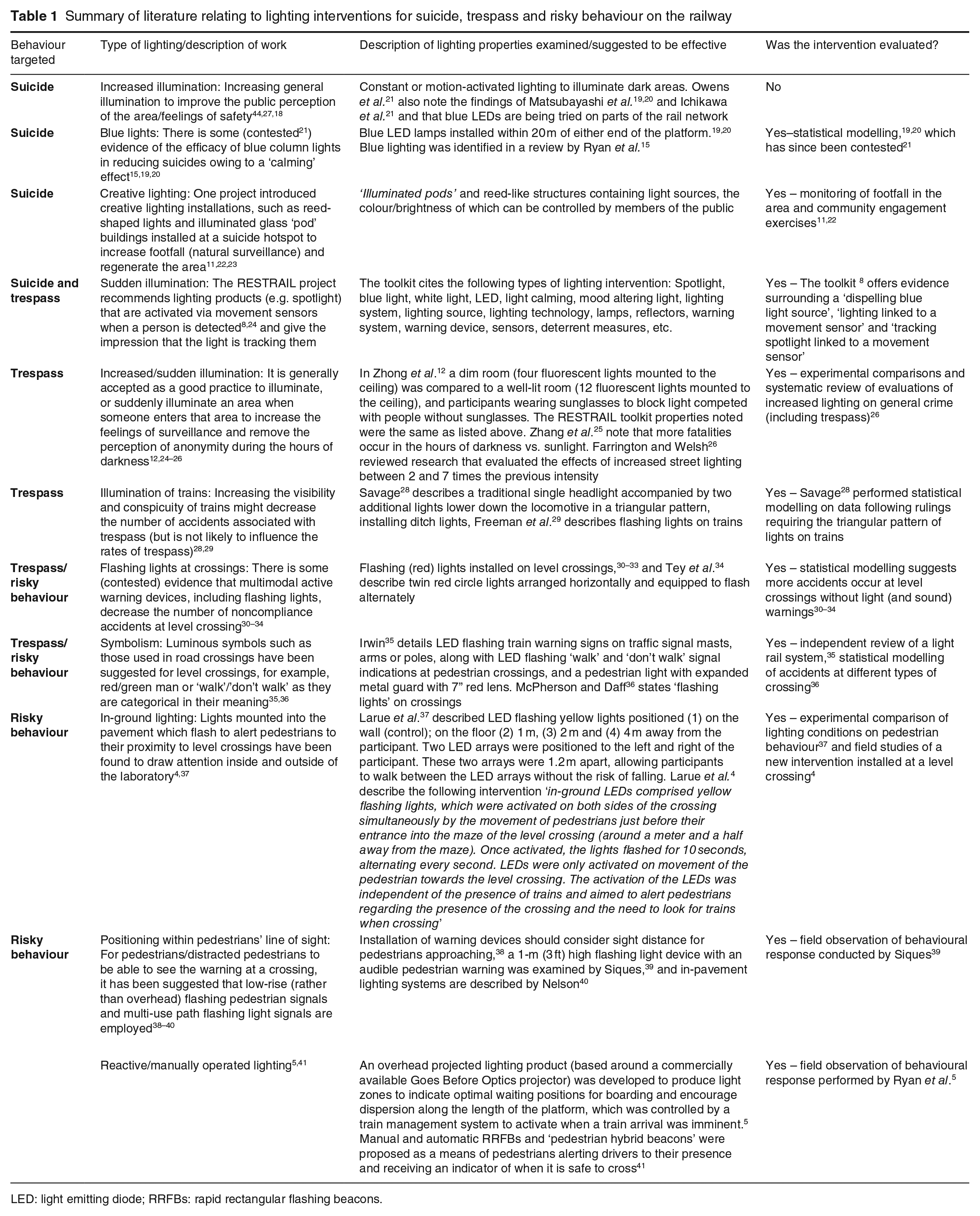
LED: light emitting diode; RRFBs: rapid rectangular flashing beacons.
3.1 Key learnings from the literature
The lighting interventions reviewed here were not well described, often being referenced in non-specific terms, for example, ‘flashing’, ‘blue’ or using ‘LEDs’ without further details of specific properties, which would be useful for those developing lighting products for these interventions. Moreover, not all papers detailed a thorough evaluation of the interventions, so it is unclear whether such interventions are known to be effective.
Nevertheless, it was possible to draw some generalised conclusions from the literature that identify specific and more generalised functional requirements for the proposed intervention technologies. The features and impacts described in the ‘type of lighting’ column (Table 1) provide ideas for potential development and future evaluation. Specifically, the intervention must be responsive to the actions of individuals; must increase the feelings of surveillance or enhance existing surveillance (ideally through sudden environmental changes); should involve some element of communication or differentiated responses directed at different behaviours; and at a more practical level, must be noticeable to people in the vicinity. Furthermore, a creative element in the design can be beneficial.
Lighting interventions show promise for addressing safety issues; yet, it is accepted that lighting alone is likely not enough to prevent access to the tracks. A consensus-based review of evidence on a variety of prevention methods by Ryan et al. 3 suggested that detection and surveillance systems would be one of the list of recommended measures for the prevention of suicides and trespass. Evidence from the literature indicates that lighting could be most effective if activated only when a person has approached a critical area (rather than being always active) because of the attention-grabbing effect of a sudden environmental change and the feeling of surveillance and reduced anonymity that is brought about by an environmental response to a person’s movements.12,24,42 Thus, some form of sensing/surveillance technology should activate the intervention.
3.2 Stakeholder insights
3.2.1 Linking interventions to behaviours
Tables 2, 3 and 4 outline observable behaviours relating to suicide, trespass and risky behaviour as discussed by stakeholders. Although there is considerable overlap between the behaviours, they are presented as separate tables for clarity. Some items, therefore, are repeated across the tables. Participants offered little insight into how the lighting intervention described to them could work.
Interventions suggested by stakeholders for suicide prevention. Current and potential measures that show similarities to the interventions in question for this paper (or have similar functionalities) are highlighted in bold
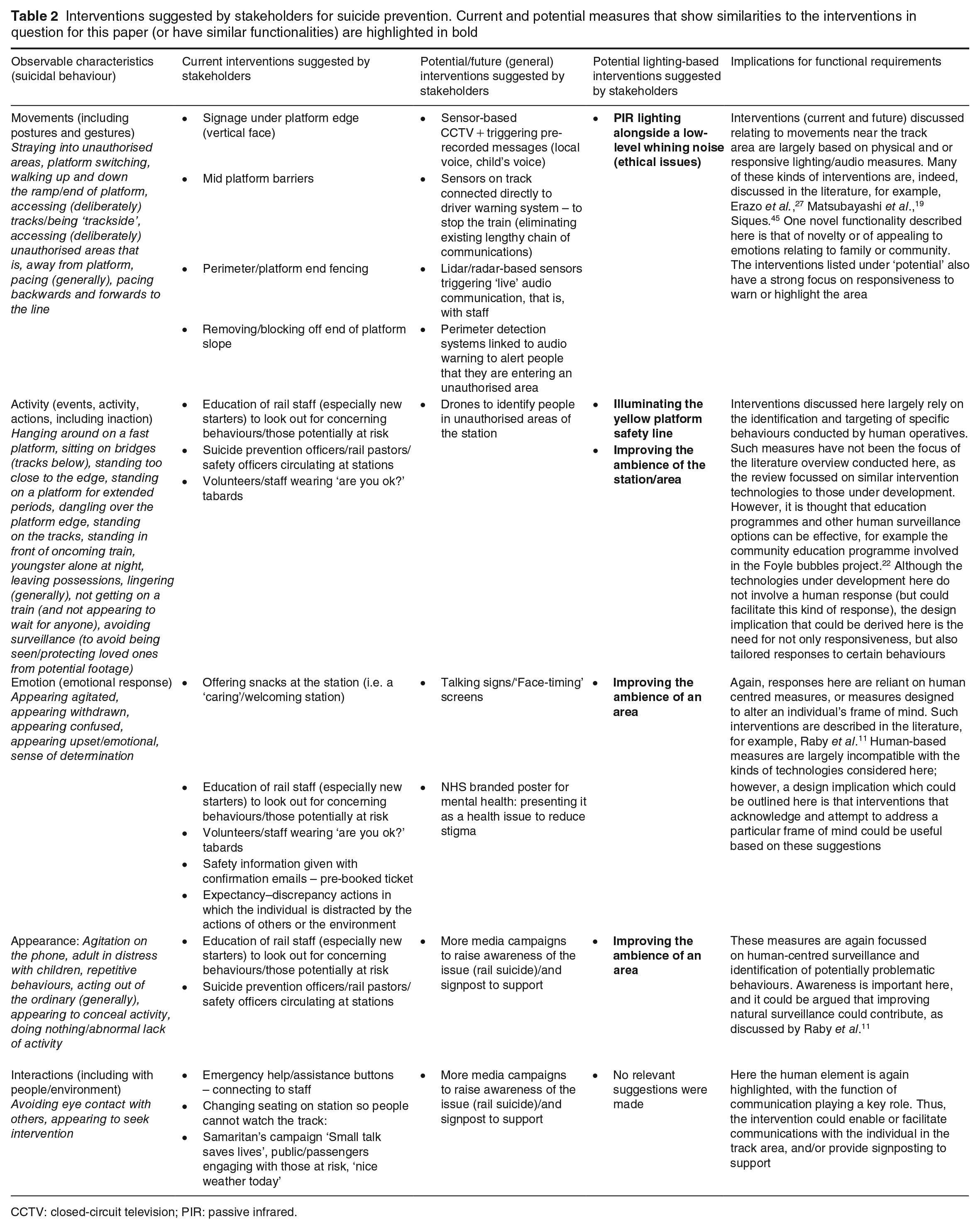
CCTV: closed-circuit television; PIR: passive infrared.
Interventions suggested by stakeholders for trespass reduction. Current and potential measures that show similarities to the interventions in question for this paper (or have similar functionalities) are highlighted in bold
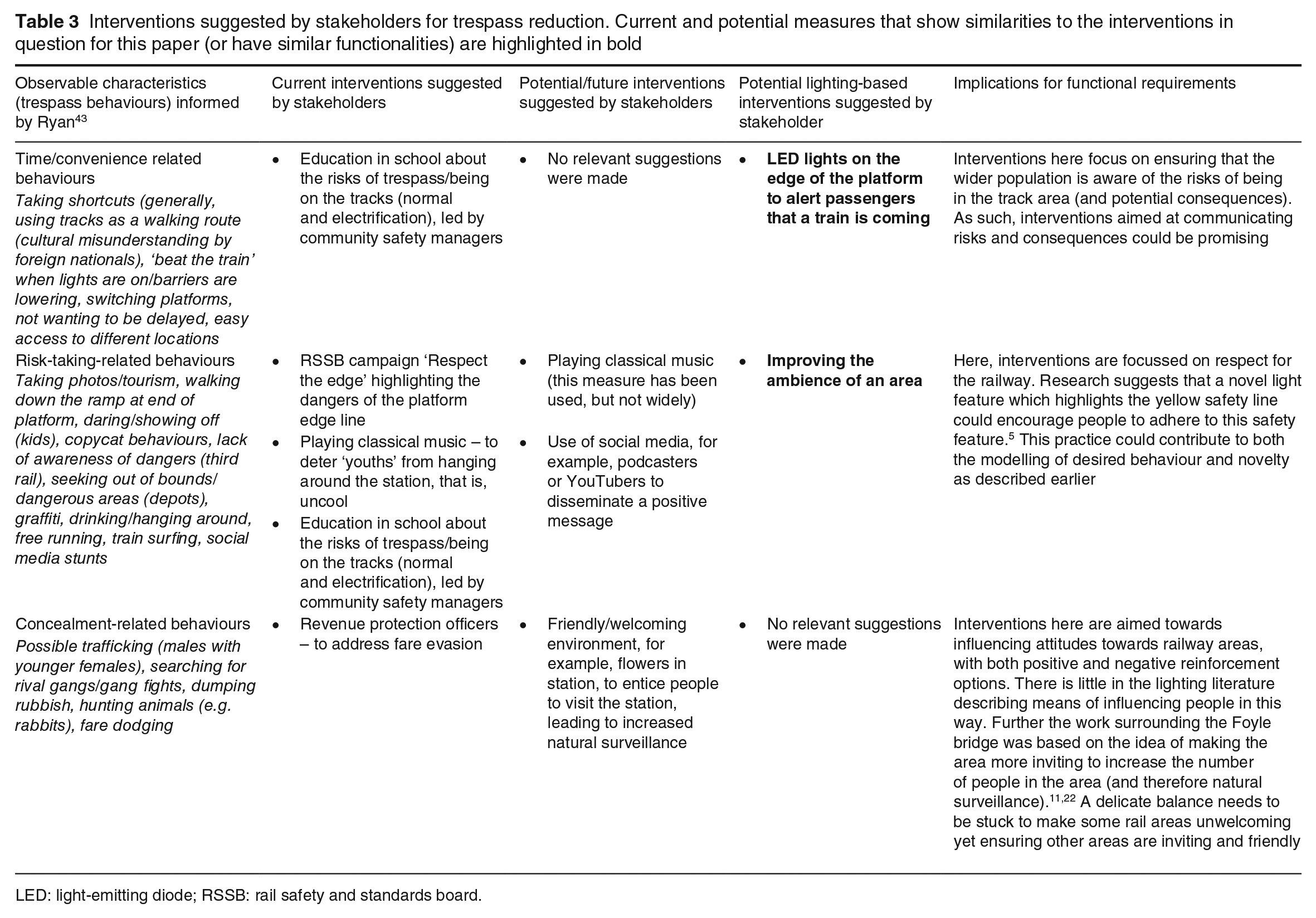
LED: light-emitting diode; RSSB: rail safety and standards board.
Interventions suggested by stakeholders for risky behaviour reduction. Current and potential measures that show similarities to the interventions in question for this paper (or have similar functionalities) are highlighted in bold
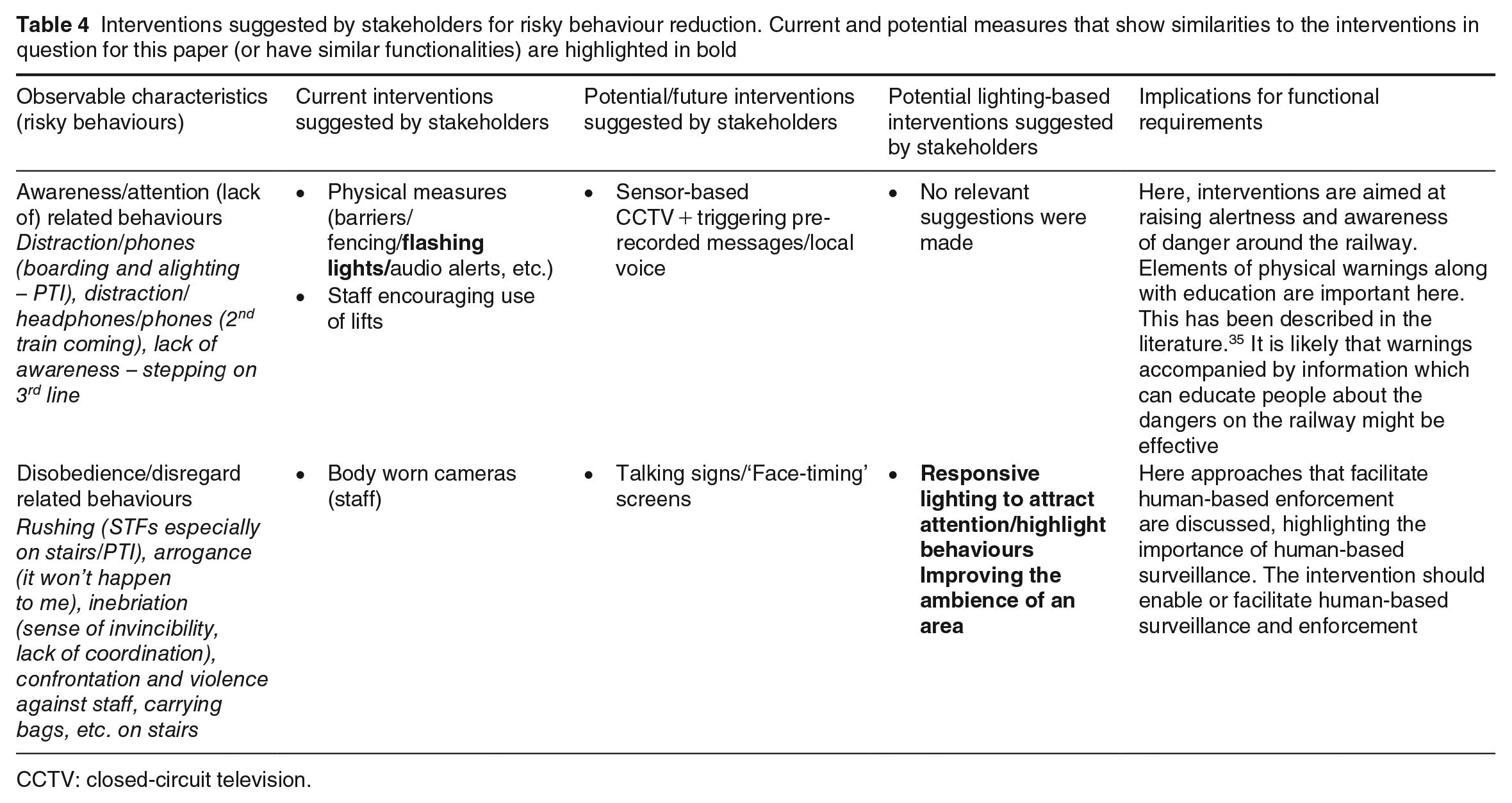
CCTV: closed-circuit television.
The interviews have been used to collect information on the extent to which similar preventative measures have been observed within the industry, as well as identifying functionalities of the other kinds of interventions suggested by participants which they thought were promising. As such, some design implications and functional requirements for the lighting intervention could be identified, even where participants did not explicitly suggest functionalities specific to lighting. Current and potential measures relating to lighting-based interventions are highlighted in bold.
3.2.2 General observations
Throughout this section, information relating to potential functional requirements for the intervention technologies in question is highlighted in italic.
There was a feeling that the lighting intervention, as described to participants, could work, but participants offered no specific descriptions regarding how it should work. Participants found it difficult to imagine the potential intervention, and they seemed to be reluctant to suggest something novel – some participants noted that there is a lack of rigorous scientific evidence from which to draw conclusions about new interventions. At a basic level, across most behaviours, participants thought that generally improving the ambience of the station/area was likely to be a positive measure, and lighting could form part of this ambience. For example, by reducing the threat of dark areas by improving ambient light, the area would become more welcoming to the public, thus improving the options for natural surveillance. Conversely, removing lighting from some areas might make activity in these areas more difficult. Yet, many participants discussed novel ideas, such as using colourful lighting/art installations to provoke an emotional connection. These novel characteristics were thought to be potentially effective against suicidal behaviours owing to an expectancy–discrepancy effect, as described by one participant who noted that an unexpected environmental change could induce people to ‘snap out’ of their concentration. This effect was described as an unexpected experience interfering with decision-making and thought processes, thus causing hesitation in conducting the behaviour type (or lack of decision-making in the case of distracted pedestrians). Importantly, participants warned that any lighting that is to be installed within the operational envelope should not interfere with the light signals used by train drivers, for example, red or green lights. Many participants commented on how responsive technologies are a potential opportunity to bridge the gap between making physical changes to the infrastructure and increasing staff responsibilities.
Potentially inhibiting factors surrounding the use of lighting-based interventions were discussed with participants. There were several suggestions here which might introduce complex decisions into the design of the intervention products. For instance, although participants largely recommended that there should be a human element or artificial intelligence/pattern recognition to interventions, they also pointed out that there is very little possibility of involving rail staff/BTP owing to budget and time constraints. Yet, there was also a concern surrounding offloading surveillance and vigilance to technology which might not be able to respond adequately. There were also general warnings aimed at the visibility of suicide prevention interventions. For instance, staff would worry about suggesting suicide to vulnerable people by ostensibly introducing interventions against suicide in a particular location – those with expertise in suicide prevention noted if a location is identified as a suicide hotspot, more suicides tend to occur there. The same was also said of trespass, with access to some locations being thought of as a ‘badge of honour’ among trespassers – for example, graffiti artists tagging hard-to-reach locations. Thus, the intervention and/or the location it is placed within should not be labelled or identified as a location in which suicides/trespass commonly occur. Further consultations with experts are needed during the design process to address any potential incompatibility and counteractivity of messaging.
When asked to discuss general measures to address problematic behaviour on the railway, the majority of participants mentioned more holistic approaches such as education and multi-agency campaigns. Some rail-specific measures included the presence of rail welfare officers and means restriction (e.g. physical barriers). Mid-platform barriers for restricting access to fast lines and the Samaritans’ ‘small talk saves lives’ campaign were mentioned by several participants. Others mentioned infrastructure changes, static information or human interaction. Since many existing intervention types are available, the lighting-based intervention should therefore complement other types, potentially introducing some form of multimodality features. Apart from physical barriers, these general measures are again reliant on a response from rail staff or the police and the expertise and skills of rail industry staff. The intervention should neither replace relevant staff members nor should it add to staff workload. It should complement their activities to harness the efficacy of human interactions. A few novel ideas were offered, for instance, the use of drones to identify people in unauthorised areas and the use of ‘face timing’ signs (i.e. large screens offering a video chat functionality). Overall, however, most of such suggestions were based on surveillance and closed-circuit television, which were also identified as expensive and impractical if there is no capacity to respond. Applying these principles to lighting, the intervention could improve the visibility of restricted areas for patrol/surveillance staff. There were very few references to technologically driven interventions. This does not necessarily mean that these are not worth consideration but may be more indicative of the fact that there are not many good examples of these in operation currently in the industry.
Regarding limitations of current measures (and as such, functionalities/properties to be avoided), participants noted a general pattern of inconsistency and overload of signage/messages, and they noted an inability of staff to respond to an incident. Participants who have responsibility for rail stations and other infrastructure noted that there are many different types of signage mandated for different areas and purposes and that the messaging is often counteractive or conflicting (e.g. showing ‘do not trespass’ notices alongside the caution that ‘trespassers will be fined’ – suggesting a weak punishment for an act that is forbidden). One participant suggested a minimalist approach, in which signage should not be introduced unless a need is identified for that information. It is important that the intervention is simple, and any associated message should be carefully considered. However, the impracticability of requiring a response from staff remains a key consideration. Those participants who have to respond to incidents described the impossibility of monitoring and responding to incidents along the entirety of the rail network at all times with limited staff resources.
Finally, participants were asked about industry and context-related considerations which could influence the success of lighting interventions. The overriding considerations were the requirement to avoid interfering with operational tasks and avoiding conflicting messages in multi-modal warnings. There will need to be clear cost–benefit estimations for the rail industry to adopt the interventions, so an evaluation of its effects (or lack of effects) is expected to be crucial to the take-up of the intervention across the industry.
Overall, participants were broadly positive about the potential intervention as described to them. As there are many overlapping behaviours in suicide, trespass and risky behaviours, an intervention that might address behaviours relating to all three problems would be worthwhile. Moreover, it was suggested that rail staff generally react positively to any attempts to reduce incidents since it potentially reduces their exposure to them. While we acknowledge that such opinion-based findings cannot fully justify the introduction of the interventions, there seems to be sufficient industry support to continue with the development and evaluation of the intervention as described to participants.
4. Discussion
The railway industry faces ongoing problems with suicide, trespass and risky behaviour 1 . Various safety interventions have been suggested.3,8,46,47 These include references to lighting-based solutions (e.g. dispelling blue light source, lighting linked to a movement sensor and tracking spotlight linked to a movement sensor 8 ). Still, there are few rigorous studies of the implementation or effectiveness of lighting to influence safety behaviours in laboratory or field trials (for some examples of such studies, see Larue et al., 4 Ryan et al., 5 Siques, 39 Patella et al. 48 ). The current study has reviewed research relating to lighting interventions for suicides, trespass and risky behaviours on the railway, combining this with interviews with experts from industry and academia who have experience of the prevention of railway fatality who were able to comment on operational reasons that could influence lighting solutions (e.g. where colours could affect the correct identification of a colour light signal for a driver) and provide indications of face validity (e.g. that the solutions are accepted by industry staff/experts). It has enabled the identification of functional requirements for innovative lighting interventions to influence behaviours, such as entering the tracks, or remaining in high-risk areas, whether for suicide, trespass or risky behaviours. Where possible, these functional requirements have been identified by the behaviour types (suicide, trespass and risky behaviour) that can be addressed by the functionality of the lighting. The requirements are not prescriptive about the details of interventions but highlight the functionalities that have been identified as being valuable to prevention. The functionalities are listed as follows:
The intervention should have the ability to influence behaviours before an individual reaches the track without compromising general health and safety. This influence must be to guide the individual(s) away from dangerous situations or prevent their seeking/reaching dangerous areas in the first instance. Artistic and community-based interventions (e.g. the Foyle reeds) might play a role here. This approach might include a periodic change to the intervention so that it continues to be novel/noticeable over time (all three behaviours).
The intervention should be noticeable under different environmental conditions and positioned within the eye line of pedestrians. Ground-mounted or other eye-level lighting that is responsive to people’s presence might play a role here (all three behaviours).
The intervention should be responsive to induce the feeling that a real consequence of non-response is possible, for example, follow-up action by law enforcement bodies. The use of sensors to trigger the activation of, for example, floodlights or another bright lighting might play a role here (trespass).
The intervention should be mindful and potentially attempt to positively influence a person’s behaviours, attitude and respect for the railway, potentially through improving or otherwise manipulating the ambience of an area. Again, artistic and community-based lighting installations might play a role here, to provide a pleasant experience to all (suicide and trespass).
It could employ natural aversions to certain conditions, for example, bright light (subject to ethical consideration) or other negative environmental influences. The introduction of bright light (e.g. floodlighting) where it is not expected might play a role here (trespass, risky behaviours).
Any associated sensing technologies should accurately detect targeted behaviours with a low false-alarm rate (all three behaviours).
It could raise awareness and draw attention to existing aspects of safety-related infrastructure or warnings/signs. The illumination of warning notices and obstacles might play a role here (all three behaviours).
It could support monitoring or response by people/staff, where this is appropriate (i.e. improving visibility/salience of the person), and potentially enable or facilitate communications with them. Illumination of the location of the targeted behaviour or specific access points to the track location might play a role here (suicide and trespass).
There are opportunities for multiple modality interventions, potentially involving some creative or community-driven elements, but it is important to keep the intervention simple. The creative use of lighting is particularly promising, for example, through art installations that employ light (trespass, suicide). 11
The intervention should not interfere with operational tasks and, as such, should avoid the use of green or red light (which are used in railway signalling) within eyesight of drivers (all three behaviours).
The functional requirements allow the means of achieving these to be decided by designers. The current study has found that the literature contains very limited detail on specific features of the lighting that can be used in these contexts (e.g. intensity, colour, flash rates., see table 1) and the railway experts in the study did not comment on specific characteristics of lighting-based solutions. Future studies could include a more targeted search of the wider literature for how properties of lighting can affect behaviour in other contexts (such as colour temperatures on wayfinding, 49 short-term recall, problem-solving, long-term recall and long-term recognition, 50 and the manipulation of overall lighting level, spatial distribution and colour corrected temperature on emotional responses of ‘shoppers’ 51 ). These behavioural effects could be harnessed for the purposes of avoiding suicide, trespass and risky behaviours.
Weaknesses in existing evaluations of solutions are evident. 46 Many existing interventions used in a rail context today have not, typically, been subject to robust evaluations of behavioural impacts. Only 20 of the 32 papers in Table 1 include some level of evaluation of the lighting interventions, and it is recognised that the effectiveness of many types of interventions is not well understood. 46 As an example, the study by Matsubayashi et al.19,20 occurred during daylight hours in which the lights may not be visible, and the statistical findings did not distinguish sufficiently between incidents that occurred at the platform ends (where the lights were installed) and other parts of the platform. 21 Furthermore, many of the evaluations conducted within the sources in Table 1 rely on statistical modelling of numbers of incidents without taking sufficient account of such contextual issues and details of the functioning of the lighting interventions that could influence the outcome. 21
The consultation exercise’s value relies on the expertise of the participants who may have been asked to offer opinions and ideas beyond their real expertise. A particular weakness of this investigation is the lack of input from lighting experts. While it was decided that the needs of the industry were the first priority for this research, it is accepted that the input of lighting industry experts is needed before the intervention can be developed further. This type of consultation could be extended to include lighting experts, psychologists and those with expertise in behavioural pattern recognition as part of further work to design laboratory or field-based tests, with manipulation of lighting properties and measurement of behavioural responses to identify the required lighting properties for each functional requirement in turn (e.g. the type and frequency of changes needed for a lighting cue to retain its novelty, the kind of lighting required to increase saliency to staff and lighting properties that are noticeable under different lighting conditions). However, there are some ethical and practical barriers to overcome in planning and conducting such trials. For example, the types of behaviour relating to suicide are impossible and unethical to recreate in a laboratory study. Realistic opportunities for evaluation should be kept in mind from the very early stages of intervention design. 52 The functional requirements present an ideal mechanism for this as they provide a framework of measurements by which the intervention can be evaluated. Through identifying specifically how the intervention works and how this might induce various responses from people, parties involved in designing, locating, installing and evaluating the intervention are informed of the specific and measurable aims and objectives by which the intervention can be evaluated from the start. 53
5. Conclusion
This paper highlights the gaps in the published evidence relating to the design, application and evaluation of lighting interventions for suicide, trespass and risky behaviours. The review of literature and consultation with stakeholders indicates that there are opportunities for consideration of novel lighting interventions, potentially alongside other interventions, in influencing the decisions and behaviours of people entering the track area, regardless of their motivation for being there (or lack thereof). Functional requirements for new lighting interventions have been identified, providing support to designers when considering how to respond to these differing behaviour types in railway settings. A conceptual example of a responsive lighting intervention that encompasses these functional requirements has been accepted by industry stakeholders as a potential late-stage measure to dissuade or warn individuals at the entry to a high-risk area on the railway. Very few of the existing safety interventions in this area have been subject to systematic empirical testing. Insight from the understanding of these functional requirements can contribute to the development of robust evaluation protocols for new lighting interventions.
Footnotes
Declaration of conflicting interests
The authors declared the following potential conflicts of interest with respect to the research, authorship and/or publication of this article: Insetting Limited has a financial interest in products that may be developed based on the work described in this paper.
Funding
The authors disclosed receipt of the following financial support for the research, authorship and/or publication of this article: This work was supported by the Rail Safety and Standards Board and the Department for Transport under the Train Operator Competition – TOC17. Minimising disruption from antisocial behaviour using behavioural insights and new technology. RSSB/2754. The funders had no involvement in the conduct of the research and preparation of this paper.
