




Abstract
Light is necessary for vision; it enables us to sense and perceive our surroundings and in many direct and indirect ways, via eye and skin, affects our physiological and psychological health. The use of light in built environments has comfort, behavioural, economic and environmental consequences. Daylight has many particular benefits including excellent visual performance, permitting good eyesight, effective entrainment of the circadian system as well as a number of acute non-image forming effects and the important role of vitamin D production. Some human responses to daylight seem to be well defined whilst others require more research to be adequately understood. This paper presents an overview of current knowledge on how the characteristics of daylight play a role in fulfilling these and other functions often better than electric lighting as conventionally delivered.
1. Introduction
Daylight is the holistic combination of the luminous characteristics of sunlight from direct solar radiation and skylight from diffuse solar radiation (Figure 1). Unlike electric lighting, daylight is highly dynamic, changing within and across days, throughout the year, and with weather conditions in intensity, colour, diffuseness and direction. Daylighting refers to the illumination of indoor spaces by daylight delivered through openings in the building skin.
Daylight, a combination of sunlight and skylight (left and middle) or skylight only (right) (Copyright details: (left): Photo by Amy Chandra from Pexels https://www.pexels.com/photo/boat-on-ocean-789152/, (middle): Photo by Francesco Ungaro from Pexels https://www.pexels.com/photo/sky-blue-sun-ray-of-sunshine-97558/, (right): Photo by Gabriela Palai from Pexels https://www.pexels.com/photo/blur-calm-waters-dawn-daylight-395198/, https://www.pexels.com/photo-license/)
This article arose from discussions between the authors at a seminar held in Berlin in June 2018 and is not intended to be a comprehensive review paper. The purpose of the seminar was to reflect an interdisciplinary discussion on the various scientific, technical and creative aspects of the differences between daylight and electric light. As a first step, this overview should provide a basis for further, more specific discussion and research.
Numerous survey-based studies have shown that daylight is preferred to electric lighting in most settings.1–5 Boyce et al. 6 state that ‘There is no doubt that people prefer daylight over electric lighting as their primary source of illumination’ and provide an overview of literature which shows that high percentages of survey respondents prefer to work by daylight. Most studies were performed at latitudes around 50°N2,3,7; one study in the tropics indicates that the majority of occupants prefer to work under daylight as well. 8
Characteristics of daylight and electric lighting
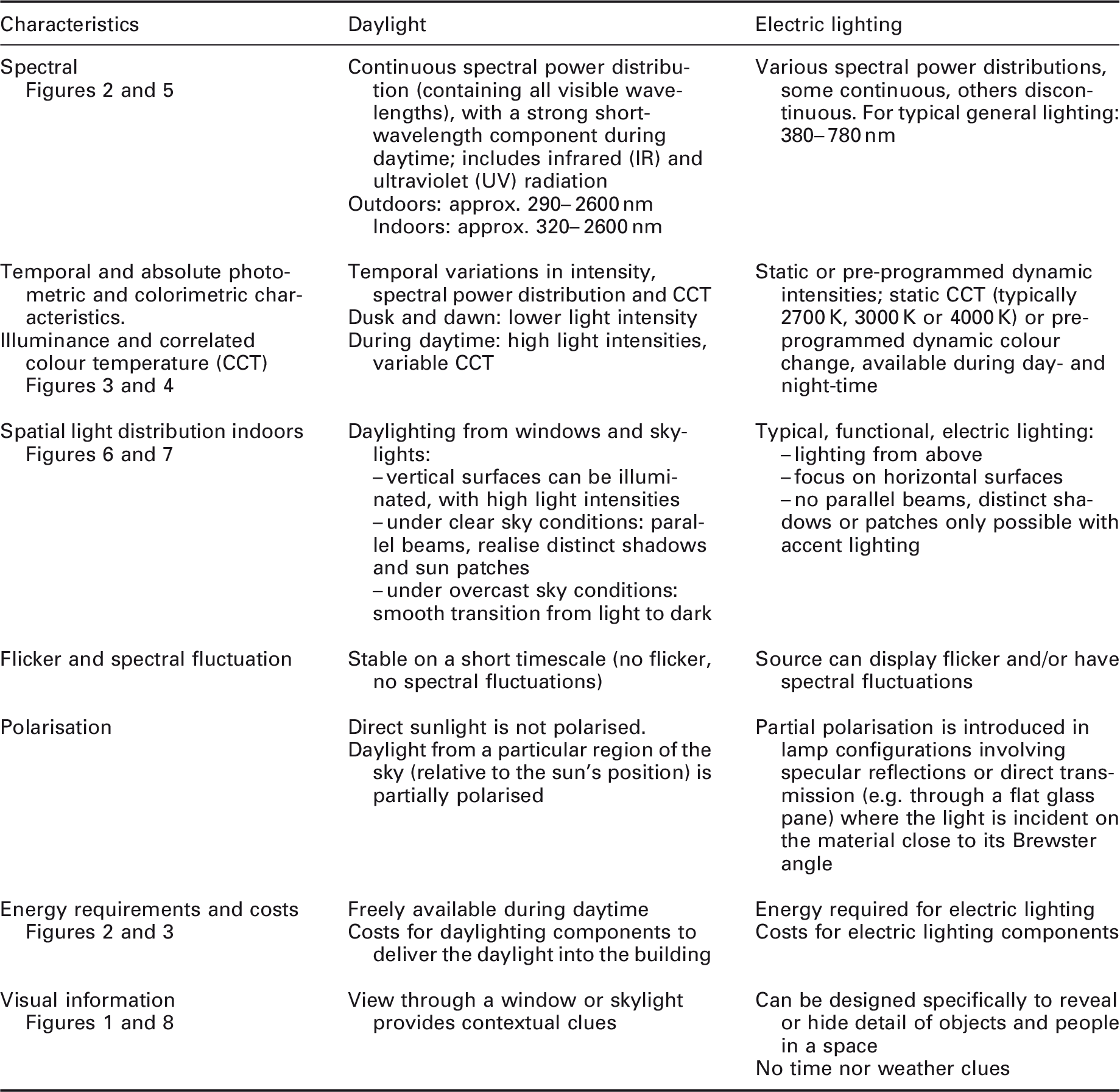
Underlying the human preference for daylight are experiences that transcend immediate physical stimuli, often orchestrated by their nature to be interwoven with context-related knowledge. The sun has been worshiped in many cultures, with sunlight and the qualities of shadows and darkness being generally felt to be a source of spiritual and aesthetic experience as well as of health and well-being. Unlike daylight, electric lighting is a controllable man-made light source associated with advances in science and technology that is easier both to study and to engineer to achieve specific outcomes. In contrast, daylight as a natural source is more difficult to control and the daily, seasonal and annual dynamics of daylight produce different outcomes in different locations, additionally modified by weather conditions. Due to these geographical differences, appropriate daylight utilisation can vary from sun- and skylight exposure to complete exclusion of sunlight from buildings. In addition, the use of daylight openings in the building envelope depends on the function of the indoor space, as well as occupants' requirements for privacy, view, glare protection and solar heat gain management. Individuals also respond differently to daylight, as for example reviewed by Pierson et al. 16 A complex construct of individual, physiological, cultural, geographical and seasonal preferences and characteristics underlies the desire for daylight, and the subsequent human response, as well as the environmental and monetary benefits.
2. Visual performance
Vision is the most developed sense in humans and, therefore, our species significantly relies on the provision of light of adequate quality. Visual performance, defined as the speed and accuracy of processing visual information, is influenced by lighting conditions.
17
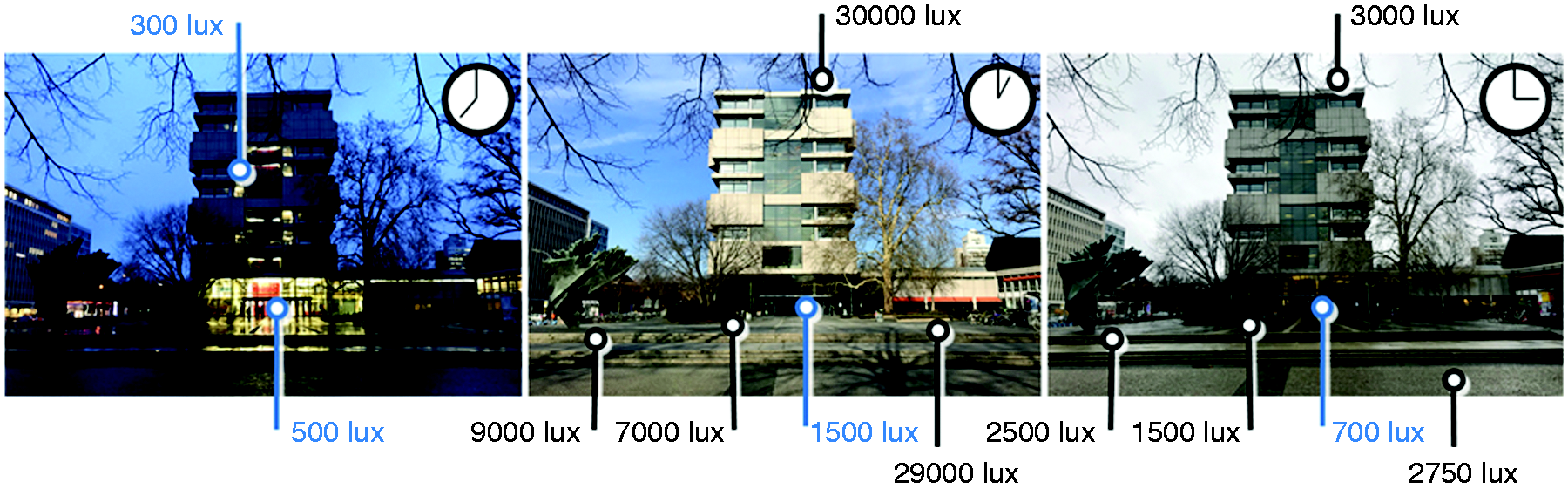
Daylight is a very good light source to support visual performance. It is a flicker-free light source with a continuous spectral power distribution covering the full visible range (Figure 2). The high illuminances (Figure 3) enable discrimination of fine details supporting visual acuity. Glare must be controlled both for daylight and electric light. The spectral power distribution of daylight offers optimal colour rendering and allows better colour discrimination than most electric lighting, whilst the directionality of both daylight and electric light can produce shadows that enhance details for three-dimensional tasks.
Examples of the spectral power distribution of daylight indoors (left) and electric lighting (middle: fluorescent lamp, right: LED), with corresponding colour rendering qualities (according to IES TM-30-15 and CIE 013.3:1995); CRI: Colour Rendering Index, Rf: Fidelity Index, Rg: Gamut Index Range of approximate horizontal illuminance levels indoors (blue) and outdoors (black) in example situations during winter time in Berlin, Germany (left: evening; middle: clear sky condition, afternoon; right: overcast sky condition, afternoon)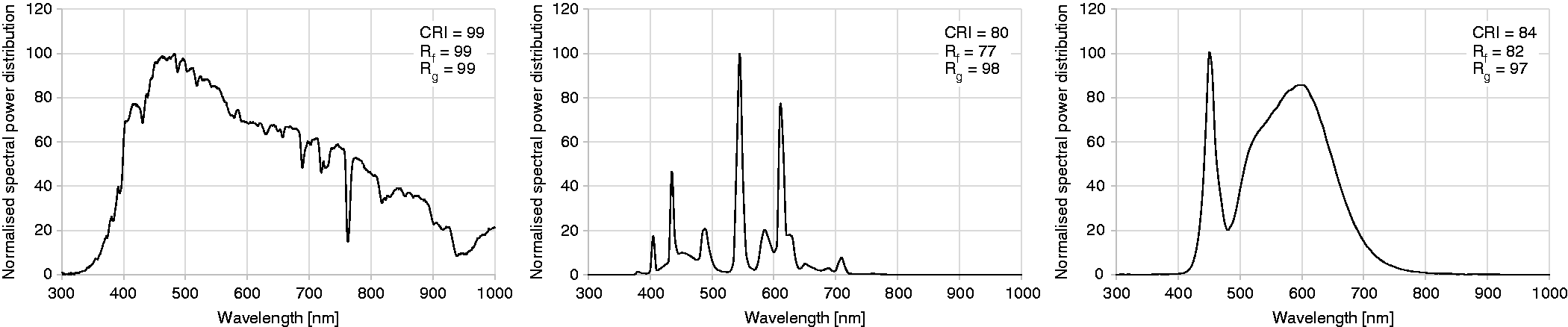
3. Good eyesight
Lack of daylight exposure seems to be linked to developing myopia or short-sightedness. Myopia is the most common visual disorder affecting young people; it has reached epidemic levels in East Asia and is increasing elsewhere. Myopia is normally first diagnosed in school-age children. Recent studies have revived the idea that it is the environment in which children learn that determines whether or not they become short-sighted. 18 It seems that children who engage in outdoor activities have lower levels of myopia. 19 Thus, daylight exposure at levels significantly higher than those typically found indoors (Figure 3) may be important in preventing myopia. The precise biological mechanisms through which being outdoors may protect children's eyesight are not yet fully understood. The hypotheses are that (i) bright light stimulates the release of the retinal neurotransmitter dopamine, which inhibits the axial growth of the eye that causes short-sightedness; (ii) since circadian rhythms in the eye affect ocular growth, disruption of such rhythms by low light levels has also been proposed as a development factor 20 and (iii) there is a geographical, seasonal, component, as both eye elongation and myopia progression increase as day-length shortens. 21 The complex protective effect of daylight may depend on many interlinked aspects including duration and timing of daylight exposure, wavelength and intensity. Excessive near-work may also damage children's eyesight; even though evidence for this is inconsistent, a recent review of myopia prevention by Lagrèze and Schaeffel 22 reported that ‘A person with little exposure to daylight has a fivefold risk of developing myopia, which can rise as high as a 16-fold risk if that person also performs close-up work’.
The spectral component of daylight exposure (Figure 2) may affect visual colour performance. Reimchen 23 showed that colour deficiencies are more common in northern latitudes, where twilight occupies a more significant part of the day than at the equator, where colour deficiencies are very uncommon. A study of visual perception in individuals born below and above the Arctic Circle, in different seasons, indicated that a reduction of daylight and an increase of exposure to twilight and electric lighting during infancy changed colour sensitivity; participants born in autumn above the Arctic Circle showed the lowest overall colour performance. 24
4. Circadian entrainment
Well-timed lighting can entrain the circadian system, which is important for positively affecting an individual's sleep quality, health, mood and cognitive abilities.
25
Daylight, due to its temporal variations in spectral power distribution and intensity (Figure 4), is the natural time cue (‘zeitgeber’) for synchronisation of the circadian system and the sleep–wake cycle. Dawn and dusk are important cues for entrainment with high light levels during the day followed by darkness at night being essential for optimal sleep.
Temporal characteristics: Light levels of daylight throughout example days for different weather conditions in Berlin, Germany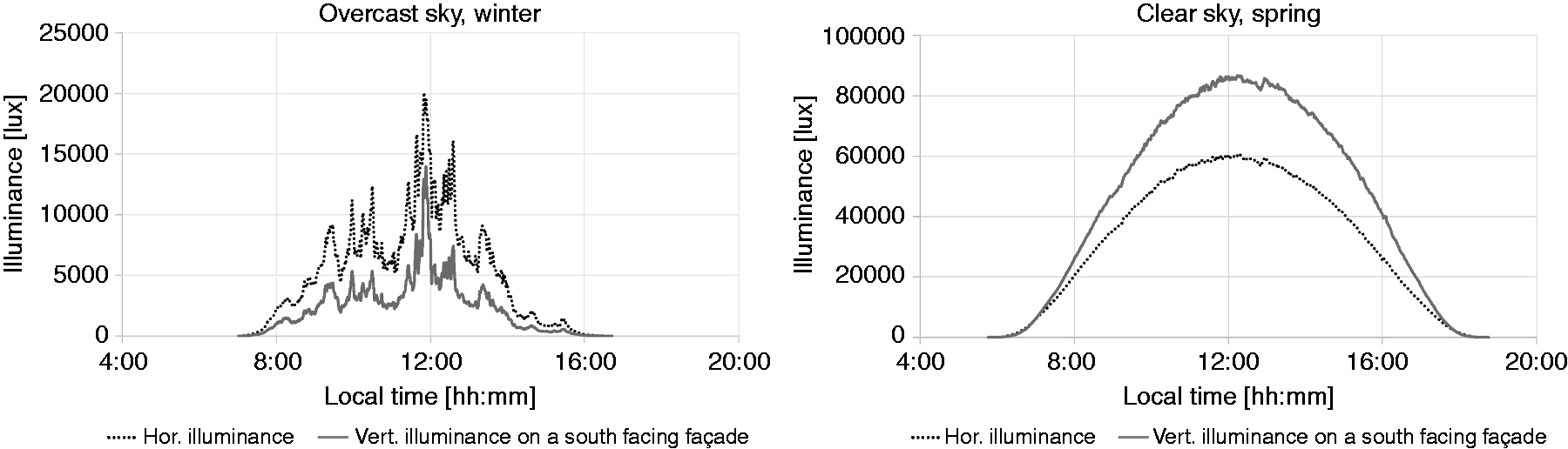
Light input to the circadian system occurs through intrinsically photosensitive retinal ganglion cells (ipRGCs) particularly sensitive to the short-wavelength ‘blue’ component of light. Discovered in 2002,26,27 these cells are connected to the circadian clock and other parts of the brain, affecting primarily non-visual functions. 28 To support circadian functionality, bright and short-wavelength light exposure during daytime is important together with avoidance of light during nighttime. A study in the Antarctic region showed better sleep quality of base personnel during the period of the year with daylight, with its prevalent higher light levels, compared to sleep quality during the polar winter with only electric lighting. When comparing electric lighting conditions, blue-enriched (17,000 K) light was more efficient than bright white (5000 K) in supporting good sleep–wake cycles. 29 In interiors, reduced exposure to sunlight during the day together with electric light exposure after sunset can delay timing of the circadian clock leading to difficulties falling asleep at night and problems getting up on time in the morning. Exclusive exposure to daylight synchronises the circadian system to solar time.30,31 Roenneberg and Merrow 32 proposed to treat and prevent circadian misalignment by ‘strengthening light environments (more light during the day and less light during the night). This requires taking advantage of dynamic changes in spectral composition, and applying architectural solutions to get more daylight into buildings’. To artificially provide the high-amplitude temporal dynamics of daylight by means of electric lighting requires significant energy use. It is assumed that daylight is the best and appropriate light source for circadian entrainment, though conclusive research evidence for this is lacking.
Dawn and dusk signals are the most powerful zeitgebers, not requiring high intensity light but a pattern of diurnal change with sunrise and sunset. They depend on day of year and latitude. Simulation studies have shown a rapid phase advance with a single dawn pulse, 33 and exposure to natural dawn and dusk immediately re-positions sleep to within the night. 31 Compared to static lighting, dynamic lighting simulating a natural sunrise through a change of colour temperature (from 1090 K to 2750 K) and illuminance at the eye (0–250 lx) resulted in better subjective mood and well-being, 34 better cognitive performance 35 and could be a potential protector for cardiac vulnerability in the critical morning hours. 36 Dynamic lighting that included lower lighting conditions and colour temperatures in mornings and evenings resulted in significantly higher melatonin production 1 hour prior to bedtime compared to static light. 37
Daylight outdoors intrinsically provides temporal dynamics. Thus, the simplest solution to getting enough circadian stimulus is to go outside. Nonetheless, people in the modern, industrialised, society spend up to 90% of their time indoors.38–41 In buildings, the form and façade, as well as the choice of glazing material in the windows and shading system modify intensity, colour and distribution of daylight in the interior. Daylighting conditions available to the occupant of a room also depend on their distance from the window, the geometry of the room and surface reflectances. Depending on the daylighting design, indoor daylight can often provide an adequate stimulus and support to the circadian system, thus remaining as the usual light source for circadian support. Office workers with access to windows have reported better sleep quality than those without windows. 42 Sleep quality increases with higher daylight availability in summer, 43 with the duration over a threshold of 1000 lx or 2500 lx at eye level being an indicator for better sleep quality. 44
Comparing daylight to electric lighting conditions, Turner et al.
45
state: ‘Typical residential illuminance [on average 100 lux or less, due to electric lighting] is too low for circadian needs even in young adults. Properly timed exposure to sunlight or other bright light sources is vital for mental and physical well-being in all age groups. […] In general, several hours of at least 2500 lux of blue weighted light exposure (ideally sunlight) starting early in the morning benefit most people. Bright light immediately and directly enhances cognition, alertness, performance and mood, so bright environments throughout the day provide additional benefits, especially for middle-aged or older adults.’
5. Acute, non-image forming effects
Circadian responses, such as regulation of sleep timing, are related to retinal-mediated responses to light mediated by the ipRGCs. In addition, some acute effects, such as melatonin suppression, increase of heart rate or alertness, can also be realised by light through the ipRGCs or a combination of photoreceptors.
46
Both intensity and spectral composition of light play a role in inducing or avoiding these effects. Daylight can provide high light levels. However, the spectral power distribution of light from specific regions of the sky can vary widely
47
; indoors, since the daylight received depends on the orientation of a room, the colour of the light can be considerably cooler than the 6500 K cool white often assumed. The related spectral power distribution and short-wavelength component indicate daylight has a high potential to support acute non-image forming effects (Figure 5).
Example spectral power distributions of daylight and electric lighting including spectral sensitivity of ipRGCs (Smel(λ)) and cones (V(λ))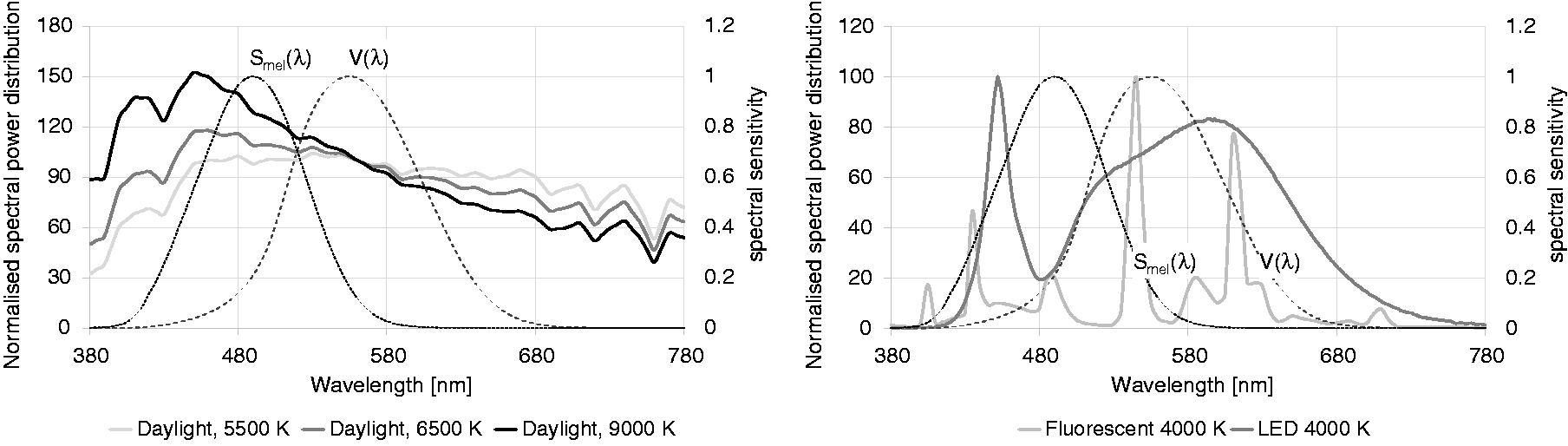
Investigations of these acute non-image forming effects of light have mostly been conducted with electric lighting. It has been shown, for example, that self-reported daytime performance, alertness and ability to concentrate, and reduction of daytime sleepiness, improve under static lighting with high correlated colour temperature.48,49 Smolders et al. 50 found increased subjective alertness and vitality, as well as objective performance and physiological arousal, when offering 1000 lx instead of 200 lx at eye level in the morning. Even though relevant studies with daylight have been limited, daylight would be expected to very effectively produce acute non-image forming effects during daytime due to the availability of high light levels together with the pronounced short-wavelength component in its spectrum. Though lamps have been specifically developed to support circadian and acute non-image forming effects, daylight is the natural light source to support these effects whilst incurring little, or no, energy use.
6. Room, object and human appearance
The multiple characteristics of daylight (both sunlight and skylight) affect room, object and human appearance, providing a specific perceived room ambience that can influence the occupants’ emotional state. There is no conclusive research on the impact of dynamic changes of directionality and diffuseness due to variations of sunlight and skylight entering built environments. However, users of a space are sensitive to the intensity, direction and diffuseness of light in a space.
51
Electric light systems usually deliver light from a number of points distributed over a space leading to light rays of various intensities and directions creating overlapping shadows that can be perceived as visual noise. Conversely, daylight is delivered through a window or a skylight, which has a main direction inward to the room from the opening in the building skin. This creates visual clarity that can provide an impression of serenity of the space. The spatial light distribution also affects room appearance, as well as the perceived representation of objects and human faces. The appearance of faces of people seated near the window, side-lit by daylight, has been shown to be labelled with positive attributes, and high luminance contrasts are not perceived as disturbing.
52
Due to the size of a window, shadows are typically ‘soft’, which is considered appropriate for good modelling.
53
In addition, the light from the side, or a lateral ‘flow’ of light, seems to be preferred in the perception of human faces and objects; daylight through windows is effective in realising such spatial light distributions (Figure 6).54–56
Spatial light distribution due to daylight (left, right) and electric lighting (middle)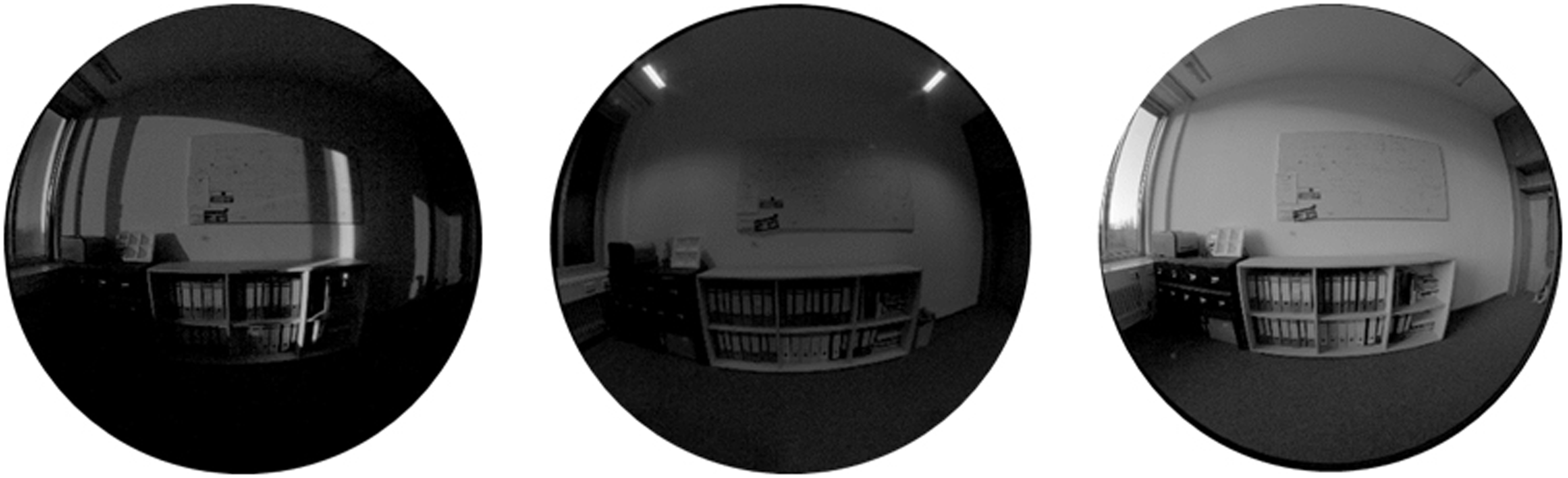
Research under electric lighting conditions showed that brightness of room surfaces, preferably greater than 30–40 cd/m2 in a horizontal band of 20° above and below the line of sight, give visual lightness and attractiveness to office rooms.57–60 Also important for perceived spaciousness is the amount of light,61,63 with wall-oriented lighting alone or a combination with a low level of overhead lighting seemingly beneficial for spaciousness.61,63 A full-scale study (Figure 7) of a series of room quality attributes showed that high levels of daylight from large windows are crucial in order to achieve a more pleasant, exciting, complex, legible, coherent and open room.
64
Spatial light levels due to daylight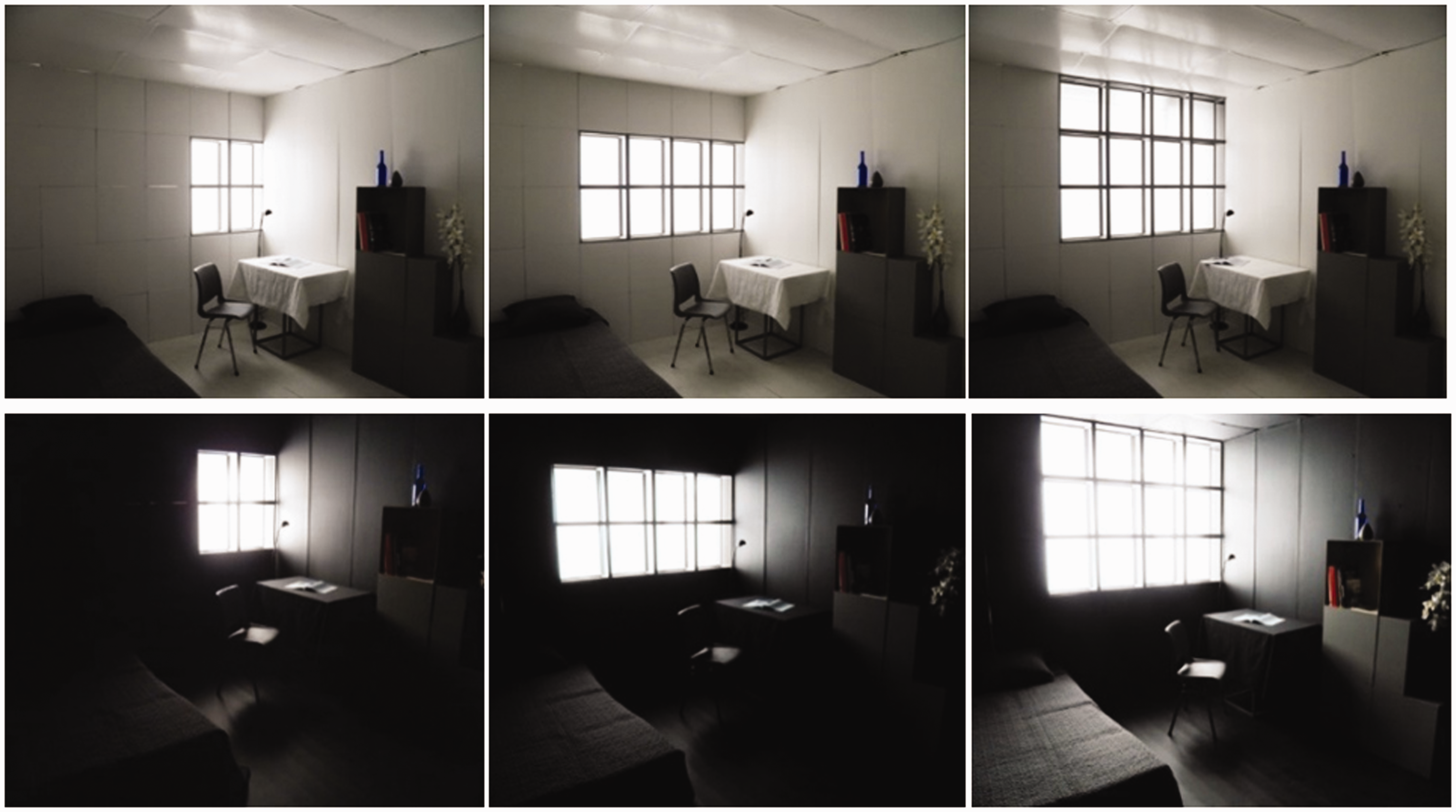
Direct sunlight affects room appearance with a sun patch as well as clearly defined shadows produced by parallel beams of sunlight. Whilst the sun patch is seen as a visual stimulus, research suggests that appropriate sunlight penetration can induce relaxation. 65 Sunlight penetration was found to have a positive effect on job satisfaction and general well-being. 66 A social survey in four different building types by Ne’eman et al. 67 showed that sunshine has ‘a unique non-physical property which induces psychological wellbeing’. One study used an artificial sky to mimic daylight of a clear sky with defined (blue-toned) shadows, a sun patch, (producing a brightness ratio for the sunlight to shaded areas as found outdoors), as well as a bright light source seen through the window (having the appropriate perceived size of the sun).68,69 The results indicated that these lighting characteristics had a positive effect on perceptions of room appearance and the mood, stress and anxiety levels of participants. Sunlight falling directly on the occupant or reflected from a surface can cause visual and/or thermal discomfort. This discomfort is linked to blind usage, 70 which will then block (part of the) direct sunlight and skylight from entering the building.
Though most research on space and object appearance has been conducted using controlled electric lighting, the results are applicable to daylight conditions. The research included in this section has mainly been performed in temperate climates and indicates that the spatial lighting realised by daylight supports good perception of room and object appearances. Direct sunlight seems to enhance perceived room ambience and the user's emotional state, when visual and thermal comfort are maintained. Façade design considerations to maintain comfort in tropical regions will affect indoor daylight conditions. Both the resulting room and object appearance, as well as the prevalence of sunny conditions might result in different subsequent occupant responses.
7. Comfort
The specific spectral power distribution and brightness of daylight can also affect human physical comfort. Physical comfort is the feeling of well-being, when an environment's thermal and lighting conditions are experienced as pleasant and associated with satisfaction. The brightness and the strong infrared component of daylight (Figure 2) may be appealing, but can cause visual and thermal discomfort. Nonetheless, interviews in field studies showed that occupants can be satisfied with daylight even though they sometimes experience visual discomfort. 71
Sunlight penetration heats up a room. In addition, windows are a source of heat transfer from and to the exterior. Differences between temperate zones and the extremes of polar or equatorial regions are typically reflected in architectural solutions, as the design approach should be different to give comfortable indoor environmental conditions. 72
Thermal discomfort due to high or low temperatures activates biological cooling (e.g. sweating) or heating (e.g. shivering), respectively. Discomfort can also arise from the thermal asymmetry between the temperatures of the cool internal surfaces of windows and those of warmer walls. 73 A field study by Chinazzo et al. 74 indicates that satisfaction with the temperature in the room is affected by lighting conditions, with a lower satisfaction under lower lighting levels. This could suggest a greater tolerance for thermal discomfort in situations with daylight, as previously proposed by Veitch and Galasiu. 11
Visual discomfort, referring to ‘discomfort or pain in or around the eyes’ (according to Boyce and Wilkins 75 ), can have several causes, including glare and flicker from the light source. Glare can impact visual performance, but even glare that does not necessarily impair seeing objects can lead to fatigue. Research on discomfort glare due to high luminances or luminance contrast from daylight or electric lighting indicates a greater tolerance when mild discomfort glare arises from daylight76,77 and/or a diversity of individual requirements for visual comfort from daylight 78 than met from electric light sources with the same luminance. Culture and climate are suggested to influence perceived glare from daylight. 79 Flicker can cause headaches, eye strain or seizures, and reduce visual performance. 80 Electric lighting can be a source of flicker, whilst daylight is flicker-free.
8. Well-being due to views through windows
A window offers daylight, air exchange, a view, and information on the weather and activities outside. Window material properties, design and usage offer control over outdoor influences, such as smell, sound and heat. In addition, windows may provide an escape route. All these aspects play a role in the feeling of control and safety in indoor environments. Enclosure, privacy, safety and (subconscious) knowledge of escape routes relate to the functionality of a space. Stamps 81 states that lightness of a scene is related to judged safety (‘ability to move and the ability to perceive’). No information about the weather and lack of a view were the reasons female office workers dislike windowless offices, having feelings of isolation, depression and tension (Ruys, reported in Collins 1 ).
The view from a window can affect several aspects of physical and mental well-being. It can, for example, support restorative processes, relieve stress or increase job satisfaction. Research investigating the effects of view content suggests that busy and dense urban areas with obstructions giving a short visual range require constant accommodation and adaptation processes by the eye muscles, to keep an image fixed at the fovea. Conversely, views into a deep space can relieve the eye and the muscle tonus, and free the cerebral cortex from processing information, leading to cognitive relaxation. Looking at a view speeds-up physiological recovery from a stressful experience.82,83
Less information is available comparing the relative restorative benefit of rooms with window views, artificial windows and windowless walls. Office occupants have a preference for real windows or an artificial window with a dynamic view of nature, 84 but the restorative effect of artificial windows with dynamic ‘views’ seems to be lower. 85 In windowless spaces, occupants seem to compensate for the lack of windows with nature elements, in the form of plants or pictures of natural scenery. Heerwagen and Orians 86 found that small windowless offices are decorated with twice the number of visual materials than windowed rooms with views. Visual material (in windowless offices) did not represent ‘surrogate’ views, but did include natural themes.
Windows also offer contextual clues about time of day and about weather conditions, that fix ourselves in time and space, both consciously and unconsciously. Patients in an intensive therapy unit with a translucent window had a more accurate memory and orientation and fewer hallucinations and delusions then those in a windowless unit. 87 A questionnaire to understand the preference for windows showed that the view outside that gave temporal information was amongst the most frequently cited favourable factors for residential spaces and a number of non-residential spaces. 88 According to Veitch and Galasiu 11 ‘This information provision is an acknowledged function of a window’.
Both content and perceived quality of a view can affect human responses to daylight. The number of view layers, the width and distance of the view, the perceived quality of the landscape elements and the composition of the view are important influential parameters as shown in Figure 8.
89
Tolerance of discomfort glare from daylight through a window is partly determined by how interesting the scene outside is,90,91 its attractiveness
92
and its content.
93
Examples of the view in four view quality categories (from left to right: insufficient, sufficient, good, excellent)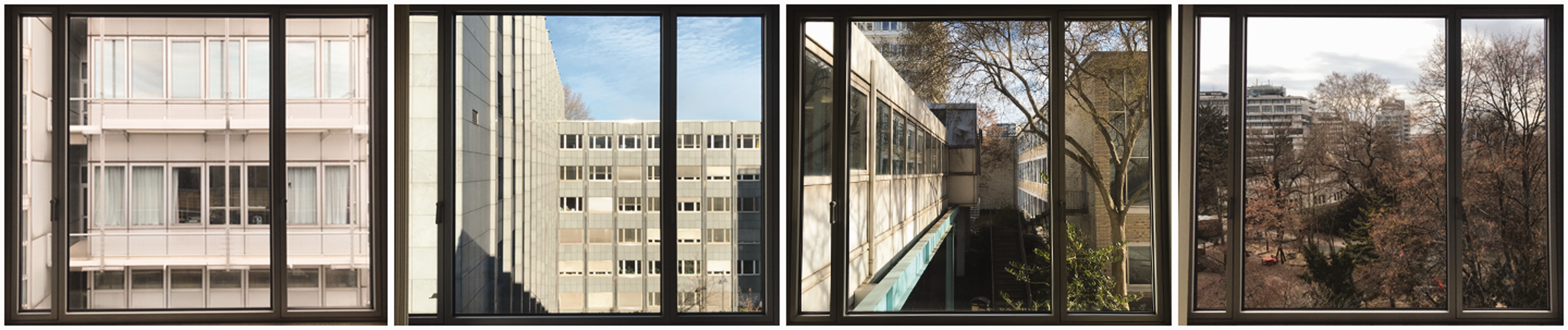
A view outside adds to the desirable perception of daylight, especially for natural, attractive and interesting views, but the mechanisms for this are not yet fully understood. Even though the contextual clues associated with daylight can be emulated, research indicates that some benefits might not be reproduced by electric lighting.
9. Energy efficiency
Daylight provision offers cost-free indoor lighting with a continuous spectral power distribution from 320 nm to 2600 nm which has implications for the heating, cooling and lighting energy demand of a building. 94 Daylighting can directly reduce the electric energy required to illuminate a room. The extent to which daylight can displace times of use of electricity is obviously specific to the design, location, purpose and use of a space within a building. Care should be given to the most suitable location of activities, for example highly visual tasks should be done near a naturally lit building perimeter. A daylight design should be combined with electric lighting controls that switch-off or reduce, but maintain the quality of, electric lighting to reduce electricity use. Lighting energy savings achieved through installing daylight responsive lighting controls range from 20% to 70%.95–99 A meta-analysis by Williams et al. 100 showed average savings of approximately 30% in various applications. Tsangrassoulis et al. 101 indicate that a 40% reduction in lighting energy consumption can reduce overall primary energy consumption by 17%. Only when the full potential of such designed-in approaches has been exhausted should consideration be given to the introduction of technological systems to convey daylight deeper into interior spaces by deflection at windows or the, often costly to install, transmission of daylight from a roof through intervening floors by mirrored pipes or fibre optic cables.102–104
Daylight openings affect thermal conditions in a building. Heat losses in wintertime can increase when the heat resistance of windows is less than walls. Heat gain arises from solar radiation through windows and depends on climate; this might be beneficial in winter but may require additional cooling in summer. The energy saved as well as the cost-effectiveness of daylighting is thus less if cooling energy is required. Modern glazing systems are capable of filtering-out a significant fraction of the infrared component. Solar heat gains can be modulated with shading devices or switchable glazing systems, which, ideally, should also balance provision of daylight and a view outside, and protection against glare. 105 There are large differences in daylight composition and daylight availability between temperate and equatorial regions for which architectural solutions are usually appropriately defined. The overall energy demand depends on building type, form and construction, occupant activities and patterns together with geographical location, climate, orientation and degree of obstruction.106–108
Electric lighting requires energy. It may also release heat to the building, depending on the light source that can increase the cooling load but can also decrease heating energy demands. A windowless building is often less energy efficient than one with an appropriate selection and control of well located windows.
10. Monetary value
Daylight design can bring monetary benefits by reducing the energy cost of electric lighting and by improving the productivity of building occupants. Daylight can increase the latter by a combination of sharpened vision due to better colour rendering or higher light levels, improved visual modelling of objects and faces, reduction of flicker and/or the provision of contextual clues. 109 Productivity has been shown to increase by 5–15% in companies that have moved into buildings with more daylight.110,111 However, the exact role of daylight on productivity in these kind of studies is still subject to future research, given the many other factors that change simultaneously with such a move. The impact of daylight on productivity and related aspects, such as absenteeism, can only be investigated in field studies and epidemiological studies,112,113 in which experimental control is difficult and interpretation of results is demanding. 5 For now, insufficient results are available to draw conclusions with respect to the impact of daylight availability on productivity; further research is necessary.
An analysis of annual income and expense data for commercial buildings by Kim and Wineman 114 indicated that views have an economic value. In their study, higher buildings, likely to have a skyline and cityscape views, had higher property values. In interviews, the majority of businesses stated that the view was a consideration in setting rents. A study by Heschong 115 indicated that call centre workers with the best possible view processed calls faster and scored better on tests of mental function when compared with those workers without a view.
An analysis of sales in stores with and without skylights by Heschong et al. 109 indicated that stores with skylights had an increase in their sales index. Interviews indicated that the skylight unconsciously led to the visual environment being perceived as cleaner and more spacious.
As stated above, the detailed mechanisms behind these and other, secondary, monetary benefits are largely unknown. In addition, an increase in productivity can only be achieved when unwanted effects from daylighting, such as glare, shadows, veiling reflections and overheating, are avoided.
11. Conclusion
Intensity, spectral power distribution, and the spatial direction and diffuseness of daylight are characteristics that support room and object appearance as well as non-image forming effects. The dynamics of changes in the intensity and colour of daylight naturally support circadian entrainment, mood and alertness. Some human responses, such as non-image forming effects, seem to be well defined. Also the role of sunlight on the skin to support vitamin D production is well established. However, many benefits of daylight and windows cannot yet be explained so straightforwardly. The higher onset of visual discomfort glare in daylight conditions as well as the positive effect of the contextual clues provided by a view are induced by mechanisms that are not well understood. Some responses to light seem to be mediated through both visual and non-image-forming pathways that require further research.116–118
Even though many characteristics of daylight can be mimicked by electric lighting, it has not been demonstrated that all the diverse holistic positive outcomes associated with daylight can be reproduced artificially. Indeed, the characteristics of the complex interaction of the dynamics of daylight with individual human responses have not been readily quantifiable to-date. They remain key areas that require extensive further research.
We suggest that future studies should address the impact of daylight on the following aspects of human performance, health and well-being that might lead to behaviours translating into monetary benefits:
Differential impact of variations in the spectral power distribution and light intensity across the day and seasons at different geographical locations, for example through epidemiological studies further exploring the effect of daylight provision on good eyesight and circadian entrainment, restorative sleep and better health; Differences in the impact of the source of light on room and object appearance, comparing electric lighting, and daylight through windows, skylights or light tubes, which includes the differences between static and dynamic lighting; Statistical estimations of the variance in the impact of daylight with concurrent exposure to electric light, to elaborate their interactions including assessments of light history effects, and to obtain a better insight into the acute, non-image forming potential of daylight;
In addition, some co-variables need attention, for example:
Qualitative assessments of the perception of an (e.g. work) environment to study the role of context and content under different lighting regimes including the absence of light and whether symptoms of such absence can be quantified/operationalised; Quantification of the view and contextual clues from windows. Metrics need to be developed for the quantity and quality of the view out and a measure to evaluate the importance of contextual clues, to balance different window functions, such as glare protection, solar heat gain management and daylight provision; Prevalence of weather conditions and architectural archetypes might influence occupants' expectations and responses, thus the impact of climate and culture on light source preference, room and object appearance as well as comfort aspects should be the subject of further investigation.
And finally, maybe what is most urgently needed and most difficult to devise would be a (set of) metric(s) to measure the ‘naturalness’ of light.
Footnotes
Authors' Note
Detailed documentation on the benefits of daylight is currently being prepared within a Technical Committee of the International Commission of Illumination (CIE). Information can also be found in ‘Changing perspectives on daylight: Science, technology, and culture’, a sponsored supplement to Science (2017).  .
.
Acknowledgment
This paper arose from discussions between the authors at a seminar held in Berlin, Germany, in June 2018.
Declaration of conflicting interests
The authors declared no potential conflicts of interest with respect to the research, authorship, and/or publication of this article.
Funding
The authors disclosed receipt of the following financial support for the research, authorship, and/or publication of this article: Attendance at the seminar was financed by the Daylight Academy.