




Abstract
Despite widespread research on daylighting, there are insufficient data to justify a definitive statement on daylighting design criteria. This paper reviews the requirements for daylighting codes and guidelines, doing so from two different viewpoints. The first considers standards and regulations, the second is focused on development and the scope of climate-based daylight modelling.
1. Introduction
This paper arises from a review of papers on daylighting published in Lighting Research and Technology (LRT) during its first half-century. The first conclusion of this review is very clear: daylighting is not a single research topic. Several distinct strands of study are evident: the availability of daylight, mathematical models of the sky, computation of interior daylighting, glare from daylight, user preferences and new window technology. These strands continue quite independently with surprisingly little cross-referencing, and they differ in the progress they have made during the 50-year period. Those which developed most were topics where computing was essential either to handle large quantities of data, such as in sky luminance recording, or because they were computationally demanding, such as the modelling of daylight penetration in buildings. This half-century happened to be the period when personal computing grew from merely a specialist interest into an essential universal tool; the papers in LRT strongly reflect the substantial influence of computers on daylighting research.
There are important questions which 50 years of study have not fully answered: What are the criteria of good daylighting? What should be the central aim of the designer? What regulations or standards are required? Although there have been many well-developed proposals for daylighting metrics, none has universal acceptance. This is evident from the lack of consistency between the daylight regulations of different countries, not only in the level at which standards are set but also in the metrics adopted. Some regulations require absolute values of illuminance, others retain the daylight factor (DF); some consider sunlight, many appear to ignore the particular climate of a place.
The question of daylighting criteria now pervades current research and this situation is unsatisfactory. It represents a failure of theory and is a handicap in practice. In this paper, we set out some of the factors to be considered. The two authors examine the problem from differing viewpoints and, with the aim of stimulating discussion, present them separately. The first looks at standards, the second examines the scope in design practice of daylight simulation and modelling. Throughout we use the term daylight’ to comprise both the direct solar beam (‘sunlight’) and the diffuse light from the whole sky (‘skylight’).
2. Viewpoint: Peter Tregenza
The physiology of the human body is bound in with daylight. This is the most important general result to emerge during the last 50 years. There is, for example, very strong evidence that a view from a window can have a positively beneficial value to health generally and can influence specific sensations such as discomfort glare – a significant change from lighting guides of the 1960s which treated view as merely an amenity. 1
We know now that there are many criteria of good daylighting and that specific needs vary from person to person. We know, too, that light has non-visual effects on the body. We have computational tools that can predict almost any aspect of daylight illumination and we have an increasingly strong knowledge of the human body's need for natural light. Unfortunately, from the position of the architectural practitioner, the outcome can appear to be an overwhelmingly complexity of aims and means. This complexity is a problem in any attempt to regulate the provision of daylight in buildings.
The following paragraphs are an attempt provide a structure for discussion about the aims and criteria of daylighting, I look separately at three aspects: (a) regulations and mandatory standards; (b) good current practice and (c) innovation.
2.1. Daylight regulations: Are they necessary?
Theory and calculation are clearly not essential to the design of fine buildings. Throughout architectural history there have been rooms with imaginative, beautiful and practical natural lighting. But there have also been places where rural desolation or city slums produced dwellings where the environmental conditions – of ventilation, light, sanitation and warmth – were utterly unacceptable. The history of this goes back a long way – examples are given on the second viewpoint. In the UK and several other countries, local authorities were given the responsibility of ensuring that every building achieves certain conditions of environment. 2
There is no reason to believe that present-day developers possess a greater altruism than their historical counterparts: it is a fair working hypothesis that strong economic pressures to maximise the volume of building on a site are associated with a diminution of the occupants access to natural light and ventilation. Public authority control is justified wherever the well-being of occupants is dependent on the presence of daylight, and what society would take to be the minimum acceptable conditions should be defined in mandatory standards.
2.2. The nature of standards
A decision to impose mandatory standards is not trivial. Standards are expensive: they require a regulatory authority to administer them; they increase the work of the building design team; and there must be an appeals process. Furthermore, regulations can distort the process of design by being focussed on just one or two out of many requirements and by emphasising those objectives that happen to be numerical. A mandatory standard is a crude tool. Unless it is carefully written and applied, it can be ineffective or, worse, result in conditions quite different from those intended.
There are some characteristics which are required of any standard.3,4 Its outcome must be beneficial; it must be clear; the conditions required for conformity must be (i) few, (ii) obviously related to the purpose, (iii) testable within a realistic time and at a reasonable cost, (iv) capable of giving consistent results when repeated or reproduced by different assessors and (v) capable of being used by all relevant parties.
2.3. Metrics and proxies
The metric is the physical measure used to define the conditions for conformity. Ideally, it is the measure that best correlates with the aims of the standard. The metric most used in regulations and codes of practice for good lighting is illuminance on a given interior surface such as a horizontal working plane. For electric lighting, there are some drawbacks with this; with daylight, there are three substantial difficulties:
In a cloudy climate, actual daylight quantities can be described only in statistical terms.
5
The daylight illuminance at a given place and time cannot be given by a single number: all that can be said is that, based on long-time records, there is a known probability that illuminance will lie within a particular range. The measure of illuminance required is of the building in use; that is, after completion of construction, after furnishing and decoration and when the building is used for its intended activities. This implies that approval or rejection of a building proposal can be given only retrospectively. Windows affect more than just the daylight in a room: optimising lighting in isolation can cause thermal, acoustic, ventilation and sight-line failures. Conversely, if daylight is considered solely as a modifier of a building's energy use, the outcome can be visually unsatisfactory conditions.
A ‘proxy’ in this context is the use of one measured quantity in place of one or more others. For example, in legislation intended to reduce highway accidents, vehicle speed is used as proxy criterion for the many factors that determine the occurrence of accidents. Speed limits satisfy the conditions (i) to (v) above: advanced equations or multiple criteria do not.
In lighting, the ultimate aim is the satisfaction and performance of users. Illuminance can be used as a proxy for this because in many cases, it correlates strongly with user requirements. But, in practice, it is not illuminance itself, the physical quantity that is used: it is the value predicted by a numerical model at the design stage of a building. This is true of the whole range of daylighting prediction techniques, from simple DFs to climate-based simulation. What differs between models is their complexity, their ease of use and the precision of their prediction. It is always a mathematical construction, not a physical luminous quantity that we use.
Types and requirements of daylighting prediction methods
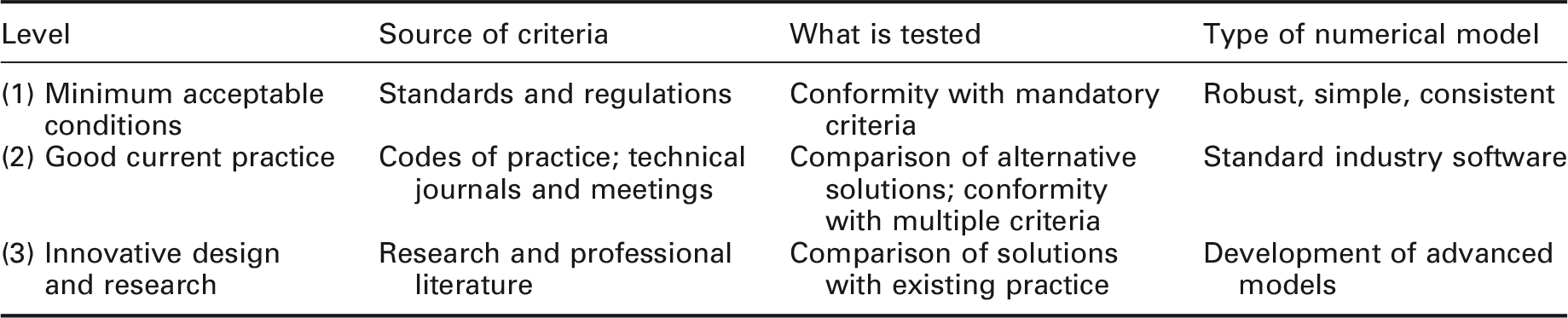
2.4. Conformity and prediction
The difference between testing for conformity and predicting performance is fundamental. A test whether, for example, the daylight illuminance in a building reaches a given minimum level should be based on the climatic conditions that cause low daylight illuminance. It does not have to be a good predictor of daylight at other times; the more focused it is on minima, the less accurate will be its application to other conditions. For this reason, it is a mistake to apply the CIE Overcast Sky to daylight illuminance modelling in other cases although this sky, with its assumption of no sunlight, is entirely justified for the testing of minima.
The adoption, in UK regulations after WW2, of a minimum DF of 2% for classrooms was not in itself wrong. The fault, which led to rooms with excessive solar gain and other environmental mistakes, was two-fold: an absence of any requirement to predict daylight at normal levels and analysis of one condition, daylight, in isolation of other aspects of human requirements.
I have argued that there is an important practical difference between mandatory standards which state the lowest acceptable level and those publications which describe good practice – the codes and guides produced by professional organisations, for instance. Where the designer is aiming to meet, creatively, the multiple criteria of good lighting, the primary tool is advanced daylight modelling software with output taking many forms – graphical, numerical, statistical, virtual reality. It is, specifically, a means of examining the performance of a scheme against the total set of daylighting criteria.
2.5. Future research: Lighting, information and energy
There is ample evidence that information about the external world is important to people in buildings. It is not just the total quantity luminous energy that is important. Daylight entering a window carries information: falling directly on the eye it is perceived as a view; falling onto the surfaces of the room it is a changing pattern of room brightness which also tells about the world outside. Looking at daylight as a carrier of information is potentially a powerful approach to both theory and practice. It can suggest answers to questions that are intractable when light is considered only as energy. For example:
What makes a room appear daylit? If a room is lit by a combination of daylight and electric lighting, what is the optimum balance of illuminance between the two sources?
If the first answer is that people associate the continuously changing distribution of brightness with the presence of a window, and they prefer this to unchanging surroundings, then the second answer is that the upper limit of electric lighting illuminance should be the level in which it is still perceptible. If the variation is swamped, the room ceases to look daylit: the information carried by the light is washed out.
Describing lighting only in terms of illuminance is equivalent to describing music in terms of sound pressure level. Such specification might be necessary during the design process, but as a description of the experience, it is woefully inadequate. The fundamental purpose of lighting is to convey information not power. The analysis and design of lighting as the distribution of information is an area of research with considerable potential.
3. Viewpoint: John Mardaljevic
For the building designer aware of the various needs and requirements for daylight described in the first viewpoint, a number of questions present themselves. Chief amongst these might be: Is it possible to make meaningful estimates or predictions of daylighting performance at the design stage? If so, how might they lead to adjustments in any particular design? Someone concerned more with planning and regulatory guidelines might go further and question if it is possible to codify measures of daylighting performance so that designers may then need to demonstrate compliance with a particular standard, invariably some minimum requirement.
This viewpoint begins with a brief historical survey of the consideration of daylight in buildings, with observations on the key developmental milestones for its evaluation up to the present day. It concludes with a recommendation to help address some of the issues raised in the first viewpoint.
3.1. The first 1000 years: Socrates to Justinian
One of the earliest recorded recommendations regarding sunlight and building design is that attributed to Socrates (469–399 BC): Now in the houses with a south aspect, the Sun's rays penetrate into the porticoes in the winter, but in summer, the path of the Sun is right over our heads and above the roof so that there is shade. If, then, this is the best arrangement, we should build the south side loftier to get the winter sun and the north side lower to keep out the cold winds. Quoted by Xenophon in Memorabilia Socrates
6
We must take care that all buildings are well lighted … . Hence we must apply the following test in this matter. On the side from which the light should be obtained let a line be stretched from the top of the wall that seems to obstruct the light to the point at which it ought to be introduced, and if a considerable space of open sky can be seen when one looks up above that line, there will be no obstruction to the light in that situation.
7
The distinction between light (from the sky) for illumination and the view out of a building is made by Justinian (529–565 AD) in the Corpus Juris Civilis or ‘Body of Civil Law’: Light is the power of seeing the sky, and a difference exists between light and view; for a view of lower places may be had, but light cannot be obtained from a place which is lower.
8
3.2. Waldram, Trotter and the daylight factor
Quantitative measures of daylighting provision evolved from the methods devised in the nineteenth century to determine some objective basis for the degree of daylight injury (that is, reduced daylight illumination) caused to an existing space by the introduction of some obstruction, e.g. a new building. The Prescription Act 1832 provides for the creation of a right to light where light has been enjoyed for the period of 20 years before a claim to the easement is made. 9 Once a right to light (with regard to a particular window) is determined to exist, the owner of the right is entitled to ‘sufficient light according to the ordinary notions of mankind’. Whilst the 1832 Act essentially enshrined in Common Law the notion of a ‘right to light’, the determination of what constitutes an ‘ordinary notion’ of sufficiency was, initially, largely a matter of judgement supplemented by rough rules of thumb such as the 45° rule, i.e. the vertical angle of sky visible at the centre of the window. The attempts to systematise the assessment of daylight injury date back to at least 1865. 10 In the 1920s, Percy Waldram determined what was intended to be a precise and objective measure of an ‘ordinary notion’ of sufficiency for daylight illumination. This was based on measurements of daylight illumination in buildings combined with subjective determination of sufficiency by a jury of experts. From this study, Waldram determined the so-called ‘grumble point’, i.e. the point in a space at the boundary between sufficient and insufficient daylight from a window. The ‘grumble point’ was defined in terms of the illumination received at that boundary as a percentage of the unobstructed horizontal illumination from a notional average (assumed uniform luminance) sky. The percentage value at the ‘grumble point’ was found to by 0.2%. For practical application of Waldram's ‘grumble point’ in ‘rights of light’ disputes, surveyors commonly apply the ‘50/50 rule’ to determine if a space is adequately daylit, i.e. no more than half of the space at table-top height should receive less than 0.2% of the sky illumination. Additionally, the percentage value is referred to as the sky factor since, for evaluation purposes, it is a measure of the illumination on a horizontal surface resulting from any direct view of a uniform luminance sky, expressed as a percentage of the horizontal illumination from an unobstructed view of the sky. Neither reflected light nor attenuation from any glazing is accounted for in the ‘rights to light’ schema.
Whilst Waldram's work is widely credited as providing the basis for the DF, it appears that the idea of using a ratio between inside and outside was first proposed in 1895 by Alexander Pelham Trotter (1857–1947).
11
The origins of the DF are actually somewhat hazy since there does not appear to have been a seminal paper introducing the approach. The reference to its introduction in 1895 appears to be anecdotal and recalled a number of years later. The DF was conceived as a means of rating daylighting performance independently of the actually occurring, instantaneous sky conditions. Hence, it was defined as the ratio of the internal horizontal illuminance E
in
to the unobstructed (external) horizontal illuminance E
out
, usually expressed as a percentage.

However, the external conditions still need to be defined since the luminance distribution of the sky will influence the value of the ratio. At the time that the DF was first proposed, it was assumed that heavily overcast skies exhibited only moderate variation in brightness across the sky dome, and so they could be considered to be of constant (that is, uniform) luminance. The assumption of a uniform sky is, of course, in keeping with the notion of rating the performance independently of sky conditions. Thus, the DF can be taken as a measure of the connectedness of the internal space to the outside, whilst also accounting for the reflectance of internal surfaces.
With hindsight, it is perhaps surprising that the DF was effectively redefined some years later to use a particular, non-uniform sky condition: the International Commission for Illumination (CIE) standard overcast sky. This came about because measurements of densely overcast skies revealed that the luminance of the sky vault can exhibit a relative gradation from darker horizon to brighter zenith; this was recorded in 1901. With improved, more sensitive measuring apparatus, it was shown that the zenith luminance can be three times greater than the horizon luminance for some of the most heavily overcast skies.
12
A formulation for the luminance pattern of densely overcast skies was presented by Moon and Spencer in 1942 and adopted as a standard by the CIE in 1955. Normalised to the zenith luminance L
z
, the luminance distribution of the CIE standard overcast sky has the form

The rationale often given for using the CIE standard overcast sky as a basis for the DF is that it represents a ‘worst case’ condition. The implication being that, if a designer provides a certain measure of daylight for the ‘worst case’, then surely it can only be better than that for the rest of the time. However, whilst such notions are suggestive, they have rarely, if ever, been rigorously expounded – or verified. For example, what exactly is meant by ‘worst case’? Is it that the absolute values provided by the sky (i.e. the diffuse horizontal illuminance) is (are?) ‘worst case’, or is it perhaps that the luminance distribution on the sky vault is a ‘worst case’? The former would seem unlikely, since the most applications of the DF do not consider absolute values.
The CIE standard overcast sky is in fact – to quote Enarun and Littlefair – an ‘extreme’ case of overcast sky. 13 Thus, skies that conform to the CIE standard overcast sky pattern are likely to be rarer than is generally imagined, and in any case produce internal illuminances at or below the lower end of what is generally preferred by occupants. Enarun and Littlefair suggest that ‘…if a general cloudy sky is all that is required, the CIE may not be the best option’. 13 In the same paper, they suggest that the ‘quasi-overcast sky’ may serve better as a ‘general cloudy sky’. The quasi-overcast sky has a more gradual gradation between horizon and zenith compared to the CIE standard overcast. But, it also includes a small component that varies with angle from the sun. Thus, it could not replace the use of the CIE standard overcast in a DF evaluation because the sun position is now a factor in the evaluation. Given that the ‘quasi-overcast’ cannot replace the CIE standard overcast in a DF-based evaluation, perhaps the uniform sky is in fact the ‘best’ simple sky condition on which to base estimates of daylight provision using the basic method of internal to external illuminance ratios. In fact, the uniform sky is probably a closer fit to an average of the ‘quasi-overcast’ (for varying sun positions) than the CIE standard overcast pattern. Furthermore, it is perhaps not unreasonable to describe the CIE standard overcast sky pattern and one that exhibits bias when used to estimate the occurrence of internal illuminance from DFs. This is because the luminance pattern – maximum at the zenith – deviates from the gamut of typically occurring overcast patterns in a consistent manner. The greatest consequence of this ‘bias’ perhaps is for any relative comparison of the daylighting effectiveness of side-lighting with respect to top-lighting, since the CIE standard overcast sky evidently ‘favours’ the latter which ‘sees’ the brighter sky at the zenith. Notwithstanding the above observations, application of the CIE standard overcast is so entrenched in daylighting practice (and much research) that it seems unlikely that its use as a basis for the DF will be widely questioned.
Architects have for centuries used physical scale models to study various aspects of building design including natural lighting, and the practice is still commonplace today. DFs were often measured in scale models under actual overcast sky conditions. The measurements of internal and (unobstructed) external illuminance need to be taken simultaneously since the illuminance produced by an actual overcast sky can vary significantly over a period of a minute or even shorter. An artificial sky provides a controlled means of illuminating a scale model for the purpose of taking measurements and also for qualitative appraisal. 14 As originally defined, the DF refers to a single point in space. So, multiple values across a grid of points covering the space at, say, desktop height would need to be calculated in order to determine either the distribution in DF or some single value such as the average DF – commonly used to characterise the daylighting potential of a space. 15 Even under the controlled conditions of an artificial sky, taking sufficient illuminance measurements to reliably determine the average daylight can be a laborious procedure.
Graphical methods such as the Waldram diagram were devised in the early 1900s to predict the direct sky component of illumination under simple sky conditions, e.g. the uniform luminance and CIE standard overcast sky patterns.
14
The principle of the Waldram diagram is that the half hemisphere of sky visible from a vertical window (without obstruction) is mapped onto a regular grid such that equal areas of the grid correspond to equal values of direct illumination from the sky. For the DF, the inter-reflected component of illumination needs to be estimated and added to the direct sky component. To simplify matters – in many cases, eliminating altogether the need for any physical (or virtual) 3D modelling – purely analytical means for calculating the average DF of simple spaces were devised in the late 1970s. The average DF (ADF) equation was first proposed by Lynes in 1979.
16
In the original formulation, the ADF calculated was that for all the enclosing surfaces of the space. The equation was revised by Crisp and Littlefair in 1984 following validation tests using scale models.
17
In the revised version, the ADF calculated is that for the working plane only – it is usually expressed as follows

3.3. Climate-based daylight modelling
In the late 1990s, two researchers (this author and Christoph Reinhart) working independently developed what would later become known as climate-based daylight modelling, or CBDM.19,20 Although lacking a formal definition, CBDM is widely taken to be the prediction of any luminous quantity (illuminance and/or luminance) using realistic sun and sky conditions derived from standardised climate data. Nearly all of the CBDM formulations to date are founded on the principle of daylight coefficients – introduced by the author of the first viewpoint in 1983. 21 CBDM steadily gained traction – first in the research community, closely followed by some of the larger practitioners. The widespread adoption of the Radiance lighting simulation system 22 and, ultimately, CBDM was due in part to the outcomes from validation studies which demonstrated quite remarkable prediction accuracy, e.g. within ± 10% of measured values. 23 Around this time, the accuracy of physical scale models for daylight assessment was called into question, with validation studies showing large discrepancies between illuminances measured in a scale model and the full-size building under the same conditions. 24
In 2013, the UK Education Funding Agency (EFA) made CBDM a mandatory requirement for the evaluation of designs submitted for the Priority Schools Building Programme (PSBP). School designs submitted to the PSBP must achieve certain ‘target’ criteria for the useful daylight illuminance metric. This is believed to be the first major upgrade to mandatory daylight requirements since the introduction of the DF more than half a century ago. In the US, a climate-based daylight metric approved by the Illuminating Engineering Society of North America (IESNA) has appeared in the latest version of Leadership in Energy and Environmental Design (LEED). Perceived as long overdue in some quarters, in others, the EFA decision was seen as controversial and is not without its critics. 18
In addition to predicting annual metrics of daylight illumination on, say, the horizontal work/task plane, CBDM opened up the possibility of computing measures of glare and visual discomfort derived from (annual) simulations of the field-of-view luminance for one or more virtual occupants. 25 Exploratory studies have investigated the possibility of using CBDM to predict measures of illumination received at the eye in order to estimate the potential for daylight indoor to induce so-called non-visual effects. 26
The emergence of CBDM, and the ways in which it was first used (i.e. largely to predict illuminance on the horizontal plane), are very much in keeping with the developmental history of the evaluation of daylighting. Rule of thumb measures such as the ‘no sky line’ were largely carried out with reference to the horizontal plane. Quantitative daylight evaluations, necessarily, began with a focus on measurements taken at the horizontal plane. At the time, visual tasks in offices were mostly paper based (including typewriting) and largely aligned with the horizontal desk surface. Percy Waldram's singularly influential study was founded on assessments made on the horizontal at desk height. And, as noted earlier, the original average DF formulation (which applied to the entire enclosure) was reformulated to be applicable to the horizontal plane. That CBDM evaluations typically predict illuminance values on the horizontal plane, however, imperfect that approach may be, is very much in keeping with common practice/tradition.
What was, however, perceived by some as a fundamental shift in the nature of daylight evaluations was the switch from relative to absolute measures of illumination, that is, from DF percentages to lux values. 27 That this shift might have been seen as ‘controversial’ is perhaps down to the huge influence that Percy Waldram has exerted over the years, in particular his claim made in 1937 that: ‘The eye is affected by ratio only, and is scarcely aware of huge variations in amount.’ 28 Waldram's claim was the foundation for what became an ‘article of faith’ amongst many practitioners, i.e. that there is no need to make any consideration of absolute values – the DF ratio is all that is required. Waldram's assertion and the evidence in support of it were examined in a 1955 CIE conference paper by Phillips. 29 In short, Phillips’ analysis of the original data makes the convincing case that, contrary to Waldram's assertion, the subjects in his study were in fact expressing a preference for adequate absolute daylight levels rather than relative ones; that is, illuminance values not DFs. 30 It now seems remarkable that Phillips’ paper was consigned to near obscurity for 60 years.
3.4. Daylighting standards and unintended consequences
Good daylighting has long been proposed as an effective means of reducing the primary energy consumption of buildings. 31 Hoped for savings, however, are often not achieved for a variety of confounding factors, e.g. blinds left down for extended periods and lights left switched on, poorly designed/commissioned lighting controls, user ‘sabotage’ of automated controls, etc. 32 Increasing window size in the hope of reducing electric lighting consumption could lead to precisely the opposite if the facade design results in occupants making frequent use of blinds to control glare or visual discomfort. Another reason perhaps for hoped-for savings not being achieved is that estimates were often based on the key studies from the 1970s and 1980s. Since then, lighting technology, office layouts and modes of working have changed considerably. In particular, the emergence of potentially very efficient solid-state lighting will further reduce in absolute terms whatever savings might be gained from daylighting.
Studies that have claimed a link between ‘good daylighting’ and productivity have helped to raise the importance of daylight as a design consideration. Perhaps the most influential of these was the 1999 schools study carried out by the Heschong-Mahone Group (HMG) in California, USA.
33
The HMG study claimed that: … students with the most daylighting in their classrooms progressed 20% faster on math tests and 26% on reading tests in one year than those with the least daylight. Similarly, students in classrooms with the largest window areas were found to progress 15% faster in math and 23% faster in reading than those with the least window areas.
Perhaps inevitably given the reliance on the DF as the sole measure of daylighting performance, ‘good daylighting’ was often taken to mean higher DFs. Thus, whilst the importance of daylight in buildings – especially classrooms – appeared to gaining wide recognition, it did not necessarily result in well-designed spaces. The decision of the EFA in 2013 to adopt CBDM as a mandatory requirement for the PSBP (the successor to BSF) was in part a response to the evident failings of many BSF school designs. Employing CBDM for design evaluation inescapably brings the contribution of sunlight into the overall assessment of daylighting.
3.5. Whither daylighting evaluation?
The first viewpoint raised many pertinent issues and timely questions. To what extent can the most recent developments described above – notably, CBDM – be said to address those issues/questions? Whatever one's enthusiasm for, say, CBDM, the answer has to be that it is too early to tell. Though the author of this viewpoint would argue that the signs should, on balance, suggest promise rather than despair, 18 the provision of ‘good daylight’ in buildings is now very much a ‘hot topic’. In large part, that is because of all that we now know about daylight and its effects other than simply providing illumination for task (usually on a horizontal surface). So why do daylighting evaluations – and the majority of standards/guidelines – continue to use some measure on the horizontal? This is primarily due to tradition/habit, but also practicality – as the example (below) of the project ‘Daylighting the New York Times’ illustrates.
The daylighting evaluation for the New York Times building was one of the earliest high-profile ‘live’ projects’ which made extensive use of CBDM. The simulations were used to assist the building owner and manufacturers in making informed decisions on the design and control of an automated roller shade and electric lighting control system for The New York Times Headquarters in the pre- and post-bid phases of the project. 39 A prior monitored field study in a full-scale mock-up answered initial questions concerning technical feasibility and performance benefits of automated control for the roller blinds. Simulations enabled extension of the monitored field study to the final building in its complex urban context. In addition to illuminance on the horizontal, the field-of-view luminance (i.e. that perceived by a simulated occupant) was also predicted for multiple views and on several floors – on the same annual basis as the illuminance data. This allowed the investigation of various control strategies for deployment of the blinds, in an attempt to balance daylight provision whilst minimising the likely occurrence of visual discomfort. Most of the CBDM simulations for the New York Times project were carried out in mid-2004 – less than a decade after CBDM was first demonstrated. The inclusion of simulated view greatly expanded the scope of simulations and the effort required to post-process and analyse/interpret the mass of data (approximately 140 Gb of CBDM output). Had the evaluation been confined to the (CBDM) simulation of daylight on the horizontal, then the scope/effort/cost would have been considerably less.
The New York Times project also served to illustrate the difference between daylighting evaluations that are possible (i.e. if sufficient funds and time are available) and those that are practicable. That difference has diminished over the years as easy-to-use CBDM tools have made complex, multi-factorial daylighting evaluations relatively easy. However, the proliferation of these tools, in particular, those that allow for routine parametric analysis, has resulted in something of a ‘simulate first, think later’ mindset. Such tools often proclaim that they are ‘user centric’ and that the generation of voluminous parametric results somehow ‘empowers the user’. The reality often appears to be somewhat different: the easy-to-generate reams of simulation output are just as likely to overwhelm as empower the user. Ideally, any user of daylight simulation tools – academic or practitioner – should have some notion of the outcome(s) prior to switching on the computer. The use of CBDM as a tool for learning rather than just doing is perhaps undervalued. Notwithstanding this caveat, the overall level of activity in daylighting research (and not just simulation) seems much greater now than was the case 25 years ago when this author first began to tinker with a difficult (but promising-looking) software system called Radiance.
In the last 15 years, CBDM (invariably using some form of Radiance) has been employed on numerous projects/studies to evaluate long-standing and novel daylighting problems. A short list to illustrate the diversity of application follows:
The prediction of the cumulative annual exposure of daylight on artworks for conservation, and the effectiveness of various amelioration techniques.
40
Prediction of the ‘daylight injury’ to the roof-lit studios of the Art Students League Building (New York) by the Central Park (formerly Nordstrom) Tower. The Central Park Tower, due to be completed in 2019, will be the second tallest building in the US.
41
An evaluation of (horizontal) daylight metrics and illumination received at the eye.
26
Daylight performance of complex fenestration systems, e.g. a microstructured prismatic window film.
42
Use of CBDM is now commonplace amongst daylight designers and consulting engineers, whilst academics continue to extend the range of applicability and, importantly, test the reliability of the predictions from the various CBDM formulations, e.g. the two-phase, three-phase and five-phase Radiance methods, etc. 43
Developments in glazing technology could render a number of the daylighting design and evaluation issues noted above obsolete, or at the very least greatly reduce their overall importance. In 1998, Steve Selkowitz, then Leader of the Windows and Envelope Materials Group at Lawrence Berkeley Laboratory (CA, USA), called the dynamic control of daylight the ‘Holy Grail’ of the fenestration industry.
44
Since then, there has been considerable effort and many tens of millions of dollars (US) spent to achieve a viable product that is a practical alternative to ordinary or fixed-tint glass. Electrochromic (EC) glass is believed to be the leading contender in the race to manufacture a glazing technology that will achieve this ‘big prize’.
45
Available on the market for a number of years, production EC glazing can now be manufactured in large sizes and with performance characteristics such that no supplementary solar/daylight controls (e.g. brise-soleil, blinds, etc.) are required. Current (2017) EC product from Sage Glass has a range in visible transmittance from 60% in the clear state to just 1% when fully tinted. The corresponding range in solar heat gain coefficient is 0.41 (clear) to 0.09 (fully tinted). Additionally, a single floor-to-ceiling EC pane can be ‘zoned’ into sections that can each be assigned a particular tint state. The photograph in Figure 1 shows a view of the upper-floor main facade of the Architecture Building at Loughborough University. This facade faces south-west and the original clear glazed expanse had been the cause of considerable overheating and glare/discomfort from afternoon sun. The first solution suggested by the contractors managing the refurbishment of the building in 2017 was a heavy brise-soleil. This would have boxed in the main facade and greatly diminished the view and the ‘connection’ to the outdoors, and do so on a permanent basis. Daylighting and the views out were a particular consideration for this building since the two floors would become the main studio spaces for the architecture students. Fortunately, instead of the traditional brise-soleil option, the 24 standard double glazing units of the main facade were replaced with EC glazing, keeping the original metal frames. Commissioned in August 2017, the EC glass is set to tint automatically depending on external illuminance, with the option to manually override each of the three zones: upper, middle and lower. The control was configured so that, unless overridden, the lower zone would always remain clear to ensure a neutral spectrum of daylight illumination in the space.
46
Based on early experience of the refurbished Architecture Building, it does seem hopeful that many of the major drawbacks of over-glazed buildings could be avoided altogether by substituting standard clear double glazing with zoned EC glass. The daylighting design (that is, performance) of the space would therefore be largely achieved after construction through the programming of the control system. This, of course, could be periodically reviewed and refined in response to user feedback – the logging of overrides and the conditions which triggered them would also help to improve the operation. Thus, the daylighting designer working with EC glazing may be just as concerned with the operation of the control system as the form of the building.
Example Sage Glass electrochromic glazing installation (Architecture Building, Loughborough University, UK)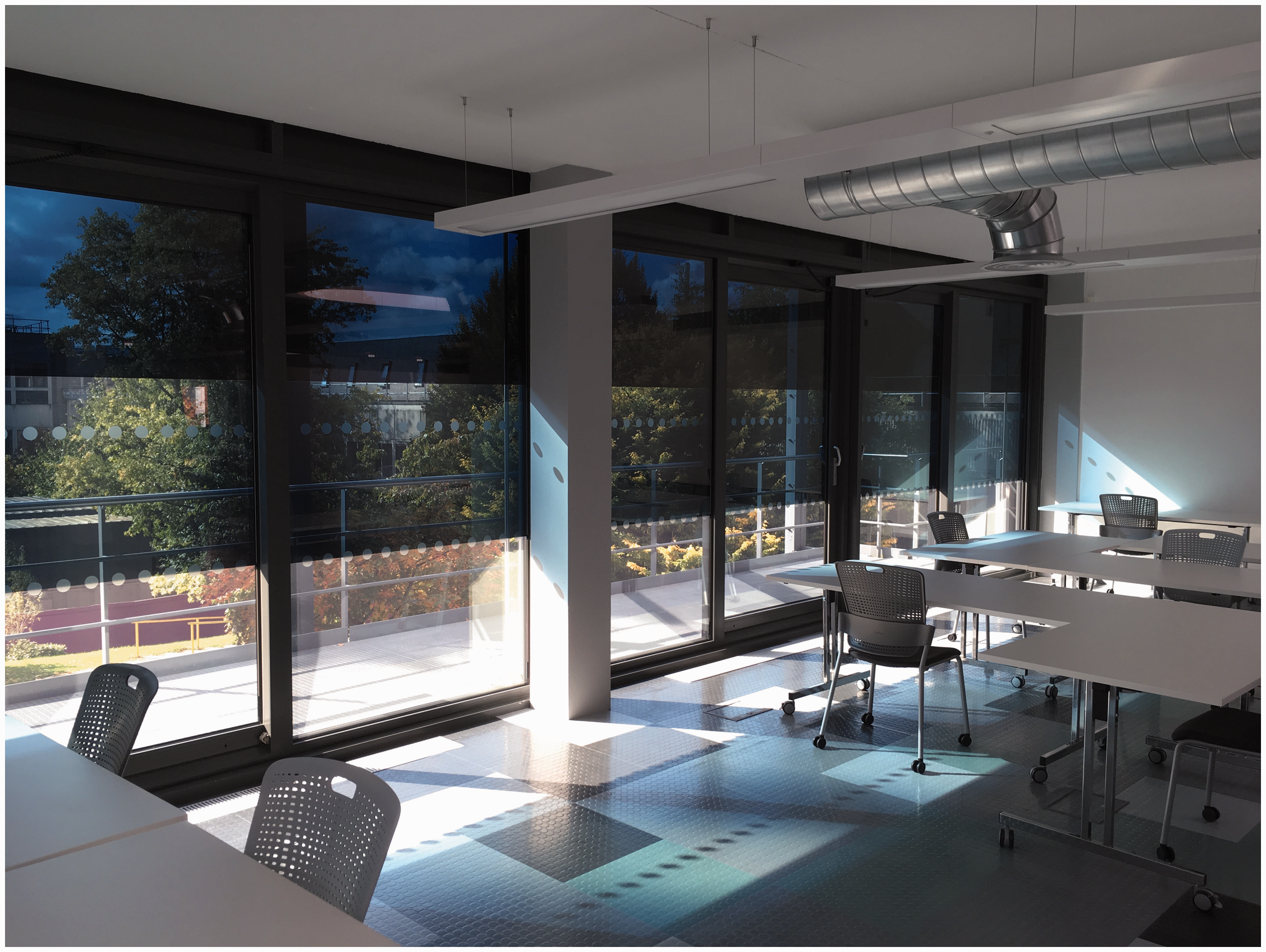
In conclusion, whilst it may not be immediately evident from my contribution to this discussion, I broadly share the concerns raised by my colleague in the first viewpoint. I agree that, for both academics and practitioners, it is important to be ‘simulation sceptic’ in addition to ‘simulation savvy’. Needless to say, that should also apply to those who draft, or advise on the drafting, of guidelines, standards and codes. Ultimately, the true value of any simulated measure of daylight in a building (be it on the horizontal, at the eye, illuminance and/or luminance, etc.) must depend on how well it informs on the actual daylighting performance of the real space, both in terms of objective measurement and subjective experience of the space. Validation of predicted measures of daylight performance in actual buildings has proven to be a challenging prospect. In fact, it always has been irrespective of the measure used, e.g. DFs or CBDM metrics. Though, with DFs the notional simplicity of the quantity, and consequently the apparent ease with which it can be measured/tested, have proven to be illusory. Verification of DFs by actual measurement of illuminance in real buildings is rarely carried out, and the confounding factors are many and difficult to correct for. 18,47,48 Compounding the problematic nature of any attempt to validate daylight performance is the woeful lack of any data on actual measures of physical luminous quantities (e.g. lux) in real, occupied spaces. Anyone attempting such an endeavour is effectively ‘starting from scratch’ with regard to pre-existing data – in contrast to, say, air temperature where there is a veritable glut of data for occupied building spaces that is logged and waiting to be examined. The long-term monitoring of any luminous quantity (say, illuminance) in real, occupied spaces has, until recently, been an expensive prospect. Calibrated illuminance sensors cost upwards of several 100 pounds each, often with additional outlay for logging capability (e.g. wireless basestations). The hardware commonly used in buildings to measure temperature and CO2 levels is less than one-tenth that cost, and much more discreet. The recent emergence of low-cost sensors with internet connectivity offers the prospect of affordable and fit-for-purpose (i.e. reasonable accuracy) light sensors that could be used for the routine, long-term measurement of the experienced luminous environment in buildings – at a fixed point, or even on the person, i.e. a wearable sensor. Even the cost of capture of high-dynamic range images seems set to plummet with the use of smartphone cameras/lenses combined with tiny microcomputers (e.g. the Raspberry Pi Zero). 49 It seems hopeful, therefore, that in the next few years sizeable datasets on the experienced luminous environment will be collected. These, in addition to complementary data on the subjective response/impressions of building occupants to the experienced luminous environment, should form a key part of any future research agenda. The next decade promises to be an exciting time for daylighting researchers, and perhaps also for daylighting practitioners.
Footnotes
Declaration of conflicting interests
The authors declared no potential conflicts of interest with respect to the research, authorship, and/or publication of this article.
Funding
The authors received no financial support for the research, authorship, and/or publication of this article.
Acknowledgements
Prof. Mardaljevic acknowledges the support of Loughborough University.