




Abstract
The dynamic control of daylight is seen as key for the effective exploitation of natural illumination in buildings. Traditional control solutions are invariably used in a sub-optimal manner: blinds/shades are left down for long periods and lights are left switched on. A glazing with a transmissivity that varies continuously between clear and dark extremes, and which can be controlled automatically, could be much more effective in providing a ‘well-tempered’ daylit environment that meets occupants needs. Amongst the different types of variable transmission glazing that have undergone extensive research and development in the last few decades, those based on electrochromism appear to have the best performance characteristics and the greatest market potential. Electrochromic (EC) glazing generally exhibits a shift in spectral transmission as the glass darkens, e.g. causing it to appear blue as it tints. Occupants, however, are believed to prefer a neutral spectrum of daylight illumination without any pronounced hue. In this paper, the authors show that it is possible to maintain a neutral spectrum of illumination with electrochromic (EC) glazing under normal operation provided that just a small proportion of the EC glazing is kept in the clear state. A theoretical model to predict the daylight spectrum resulting from any arbitrary combination of clear and tinted glazing is described. Predictions from the model are compared with measurements of the daylight spectra in an office with EC glazing under various states of tint. The predicted spectra show excellent agreement with the measurements. The model is applicable to any combination of clear and/or tinted glass panels irrespective of the glazing type(s). The paper concludes with a discussion of design considerations for the effective deployment of EC glazing.
1. Introduction
The use of daylight in office buildings is generally considered to be a greatly under-exploited resource. In large part this is because of the highly variable nature of daylight illumination. The natural, large variability in daylight means that users will often need to use shades to moderate excessive ingress of daylight. Most shading systems are often operated as a ‘shutter’ that is either open or closed, with users rarely making the effort to optimise the shading for both daylight provision and solar/glare control. For example, venetian blinds can be used to both redirect light and offer protection from direct sun. However, effective operation/adjustment of venetian or slatted blinds is probably the exception rather than the rule. Also, blinds are often left closed long after the external condition has changed. A glazing with a transmissivity that varies continuously between clear and dark extremes could offer a much greater degree of control over the luminous environment.
The principle behind variable transmission glazing (VTG) is straightforward: The transmission properties of the glazing are varied to achieve an ‘optimum’ luminous and/or thermal environment. The various types of VTG can be grouped into three broad classes: Chromogenic, suspended particle device and micro-electromechanical systems (MEMS). In the chromogenic class, there are four distinct types of formulations that have variable transmission properties. These are electrochromic (EC), gasochromic, photochromic and thermochromic. The agents causing the change in transmission are voltage (EC), concentration of pumped gas (gasochromic), localised illumination (photochromic) and localised temperature (thermochromic). Thermochromic and photochromic are essentially passive devices, which respond to changes in the environment, whereas EC and gasochromic are active devices that can be configured to respond to any sensor input, e.g. illumination, temperature or some combination of the two. The suspended particle device is a plastic PET film-based technology. The plastic film contains a suspension of rod-like particles in billions of liquid droplets. An applied voltage alters the orientation of the particles and therefore the transmission properties of the film. A VTG based on MEMS has tiny, micron-scale structures that move in response to an applied electrostatic field, thereby altering the transmission properties of the glazing.
The key to performance for a VTG is a high (visible) transmission in the clear state and a sufficiently low (visible) transmission in the darkened (or tinted) state. To be perceived as acceptable to the majority of building occupants, the VTG in the clear state should appear like ordinary (un-tinted) double glazing, and so have a visible transmission of around 60% or greater. In the darkened state, the transmission should be low enough so that additional shading is required only very rarely, or perhaps not at all. In practice, this means a minimum visible transmission of around 2% or less – a feat achieved for production EC glazing. Additionally, the building occupants should have some degree of control of the glazing, e.g. to manually override an automated control setting. Experience has shown that occupants will often resort to sabotage if an automated building control system fails to do what they wish. So, whilst a ‘passive’ VTG might seem attractive at first because it allows for autonomous operating behaviour, the corollary of this is a lack of control, e.g. modulation of the glazing transmission by (localised) window temperature will not necessarily offer the luminous environment desired by the occupants.
There are examples of thermochromic glazing on the market, though the narrow visible transmission range (e.g. 13–60% or 6–30%) indicates that additional shading would be needed to control glare. Thermochromic glazing therefore seems better suited to offering a degree of moderation of the thermal rather than the luminous environment. Gasochromic has the potential advantage of rapid switching speeds. A gasochromic system requires that the glazing unit is literally ‘plumbed-in’ – connected to an electrolyser and pump by piping. The practicalities of a gasochromic installation are such that the technology is still considered the preserve of research. Suspended particle device for clear (i.e. view) windows appears to be still ‘near-to-market’ rather than market ready, and MEMS glazing technology seems to be still undergoing development. Thus, of the technologies described above, only EC glazing appears to have the necessary optical properties (i.e. wide visible transmission range), is relatively straightforward to install, and is already in the marketplace.
1.1. EC glazing
Electrochromism has been known since the 19th century, 1 and its application as a glazing technology has been investigated since the 1980s. 2 However, it is only recently with major new investment and scaled-up production that EC glazing has shown the potential to become a mainstream product. 3 In effect, EC glass mimics the function of the iris in the mammalian eye by varying the overall transmission whilst maintaining a clear view. EC glass is therefore an example of ‘bio-mimicry’ in architectural design – an appreciation that appears to have been overlooked in the past.
The effectiveness of EC glazing to temper the indoor thermal environment has been demonstrated in a number of theoretical and empirical studies, 4 and modelling its performance in a dynamic thermal simulation program is relatively straightforward. 5 It is, however, the user acceptance of the luminous environment produced by EC glazing that will be the key determinant for the success of this VTG technology. 6
User acceptance for any daylight control technology depends on a number of performance and operational characteristics. For EC glazing, these include performance with respect to glazing transmission range (i.e. the values for the maximum and minimum visible transmittances), the switching time between the clear and tinted states and the effectiveness of the automated control to minimise user interventions (e.g. manual overrides). Another key factor for user acceptance is the quality of the luminous environment produced by EC glazing. An important component of this is the spectral composition of the daylight that is ‘filtered’ through tinted EC glass. This is because the spectral transmission properties of the EC coating varies as the glass changes state. This can be seen in Figure 1 showing a pair of photographs with EC glass in the clear state (left) and at full-tint (right). As the glass darkens (i.e. ‘tints’), the longer wavelengths are diminished proportionally to a greater degree than the shorter wavelengths, giving the EC glazing good solar control properties to help prevent overheating. Optically, the consequence of this is to shift the peak in visible transmission to the blue end of the spectrum.
Images showing electrochromic glazing in clear and darkened state (photos courtesy: SAGE Electrochromics, Inc.). (Available in colour in online version)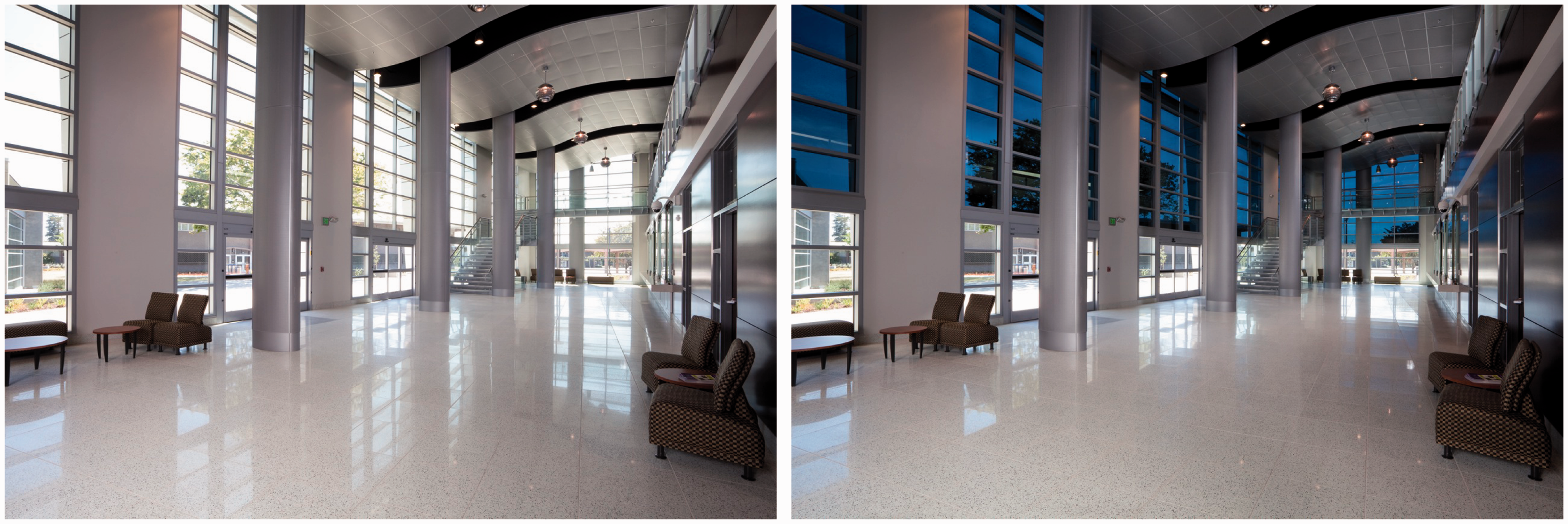
This can be seen in the transmission curves for SageGlass EC glazing shown in Figure 2. In the clear state, the EC glazing has a visible transmittance of 62% and appears effectively neutral to the eye. There is a slight ‘peak’ in the curve around 600 nm giving a very slight straw coloured hue, though this is generally not noticeable in normal use. This product has a minimum visible transmittance of 2% when fully tinted and can be varied continuously between this and the clear state. However, a small number of intermediate states is considered adequate for most practical installations, e.g. ‘light-tint’ (20%) and ‘mid-tint’ (6%). Note: the transmission curves are those for SageGlass EC glazing manufactured in 2012 and installed in the offices used for the validation described below. The current generation of SageGlass varies in visible transmission between 60% (clear) and 1% (fully-tinted). The findings shown below are equally applicable to the current product.
Absolute and normalised spectral transmission curves for SAGE electrochromic glass in clear (62%), fully tinted (2%) and two intermediate states. Data from the IGDB files are supplied by SAGE Glass. The normalised plot also includes the visual sensitivity curve 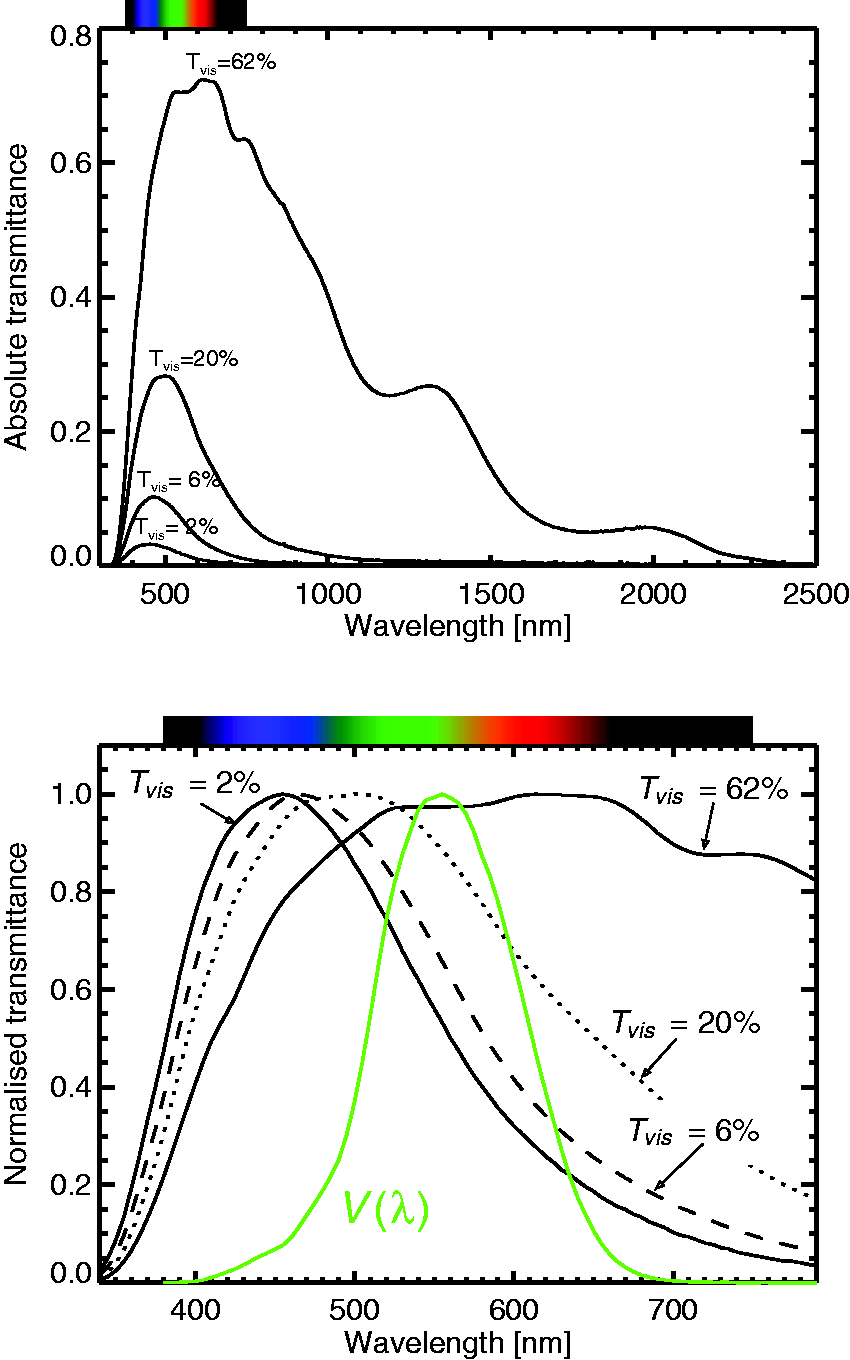
The peak in the spectral transmission curves gradually shifts from 615 nm in the clear state to 455 nm at full-tint. Thus, the view through the glazing takes on a progressively deeper blue hue as it transitions from clear to full-tint (Figure 2). And of course, the daylight transmitted through the window will be ‘filtered’ according to the spectral properties of the glazing and the character of the illumination incident on the glazing, e.g. ‘warm’ sunlight, ‘blue’ skylight, etc. This presents a number of potential user acceptance issues for any EC glazing installation. In particular, ensuring that the daylight illumination in the space is perceived as ‘neutral’ and adequate for everyday colour rendering purposes. There have been reports that ‘blue’ fixed-tinted glazing had lower approval ratings from test subjects than neutral or warm fixed-tinted glass. 7 Thus, the question regarding the neutrality of the illumination spectrum is an important one that needs to be addressed.
In this study, the authors demonstrate that it is possible to maintain an effectively neutral spectrum of daylight illumination in a space with EC glass in normal operation, provided that a relatively small proportion of the glass is left in the clear state. We present a theoretical formulation giving the overall spectral transmittance curves for any arbitrary combination of clear and tinted EC glazing in varying proportions. Applying the theoretical model, it should be possible to configure and/or control an actual EC glass installation, so that neutral daylight illumination results, even during times when a high degree of daylight/solar control is required. The theoretical model is tested using measurements of the daylight spectra in an office space with EC glazing for six combinations of clear and tinted glass. The paper concludes with:
a discussion on the design of facades with EC glass to ensure that the neutral illumination spectra predicted by the model is achieved; and two hypotheses regarding occupant approval of EC glass.
The following section describes the theoretical model.
2. Theoretical model
A general matrix formulation to determine the overall spectral transmittance curve for any arbitrary combination of EC glass with known transmission spectra is presented. Following the mathematical description, an example is given based on spectral transmittance data for a commercial EC glazing product manufactured by SAGE Glass (Minnesota, USA). The spectral data for the EC glass in each of the four commonly used states of tint were obtained from the respective International Glazing Database (IGDB) files. The spectral transmittance data covers the range 300 to 2,500 nm in increments of 5 nm (Figure 2).
2.1. Matrix formulation
The procedure to derive the overall transmittance curve for an arbitrary combination of EC panels in various states is as follows. The row vector 

The effective visible transmittance of the combination VR is determined from the following equation:




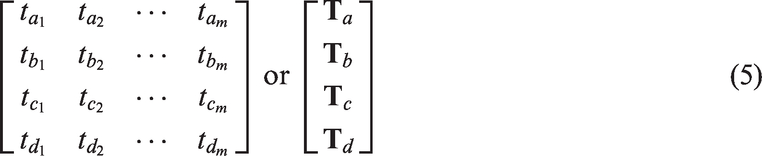
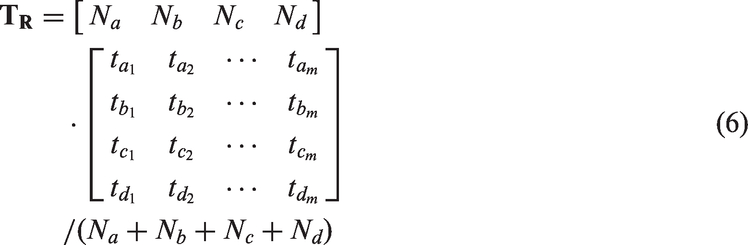

2.2. Predicted properties
With even a small number of independently controlled EC panels, there are many unique combinations of tint state possible. Initial tests showed that to achieve high levels of overall daylight control, whilst maintaining at the same time the potential for neutral daylight illumination, a combination of clear and fully tinted panels is particularly effective. For example, a two panel combination with one set to fully clear (62%) and one to full-tint (2%) has an equivalent visible transmittance of 32%, i.e.

Any comparison of spectral transmittance curves will depend to a degree on how the data are normalised. The combination spectral curves (Figure 3) are shown each normalised to peak value equals 1 because, for this part of the evaluation, it the shape of the spectra rather than their absolute values, which are of importance. Additionally, the plot shows the transmittance curves for EC glass in the clear state (dashed line) and at full-tint (dotted line), Figure 3. For reference, the plot also includes the visual sensitivity curve Eight spectral transmittance curves for EC glass in the combinations given in equation (8). (Available in colour in online version)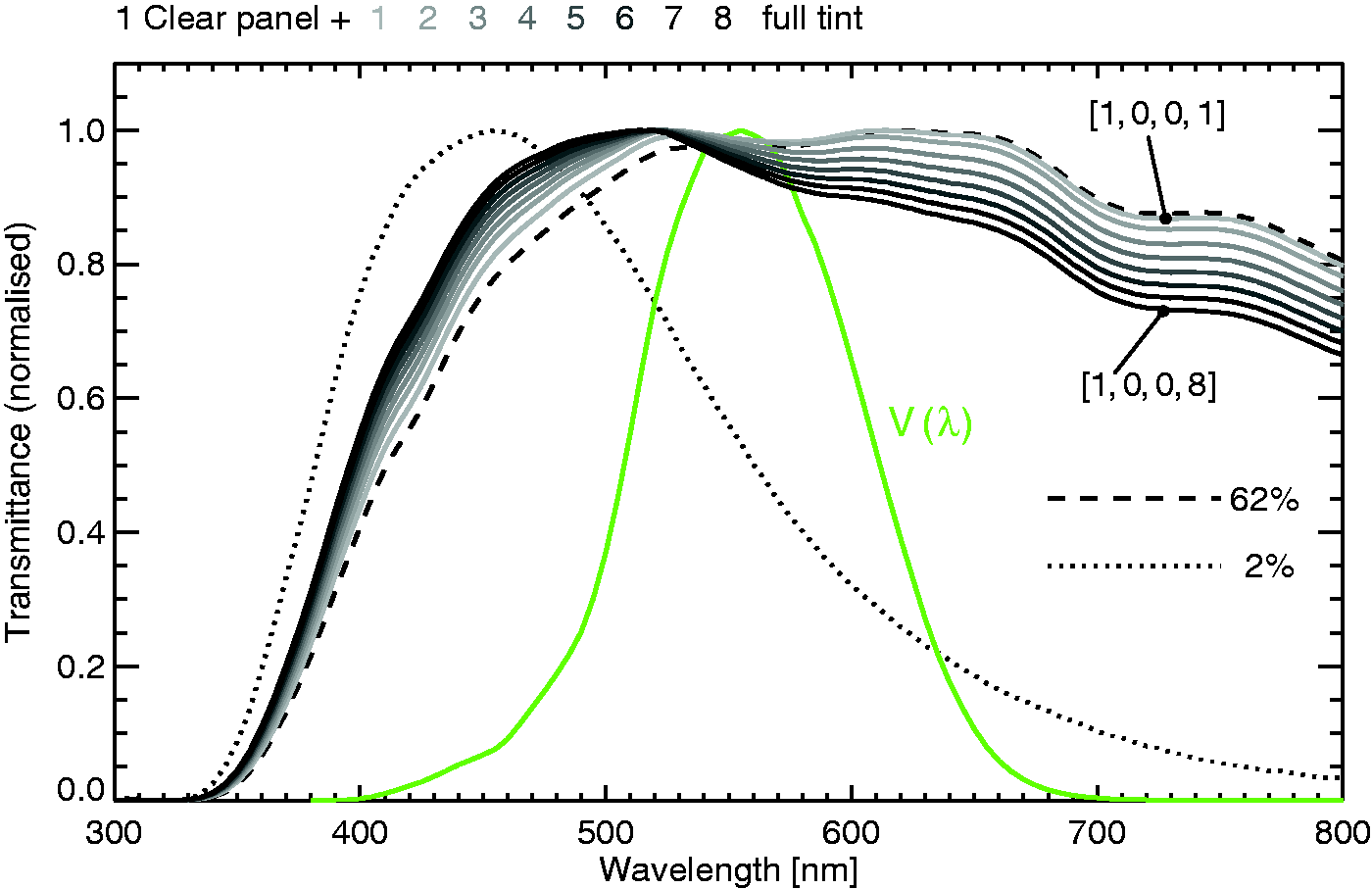
The curve for
Even with eight full-tint panels for every one that was clear, the (normalised) transmittance curve for the combination is, qualitatively, much closer to the curve for the clear state than that for the full-tint state. Note also that, with reference to the visual sensitivity curve
The predicted performance of the combinations are summarised in Figure 4. Here, the effective visible transmittance for each combination (equation (2)) and the percentage of the total transmittance from glass in the clear state (equation (3)) for Nd equals 0 to 8 are plotted using the same percentage scale. Also shown is the percentage of the total transmittance resulting from glass panels at full-tint. With Nd = 8, the effective visible transmittance of the combination is just 8.7%, but nevertheless 79.5% of the combined visible transmittance is due to the glass in the clear state. Hence, even with this arrangement, one might reasonably expect the illumination to be fairly neutral, i.e. fairly ‘flat’ across the visible range. This hypothesis is tested in the validation section.
Summary of transmission properties for one clear panel and up to eight at full-tint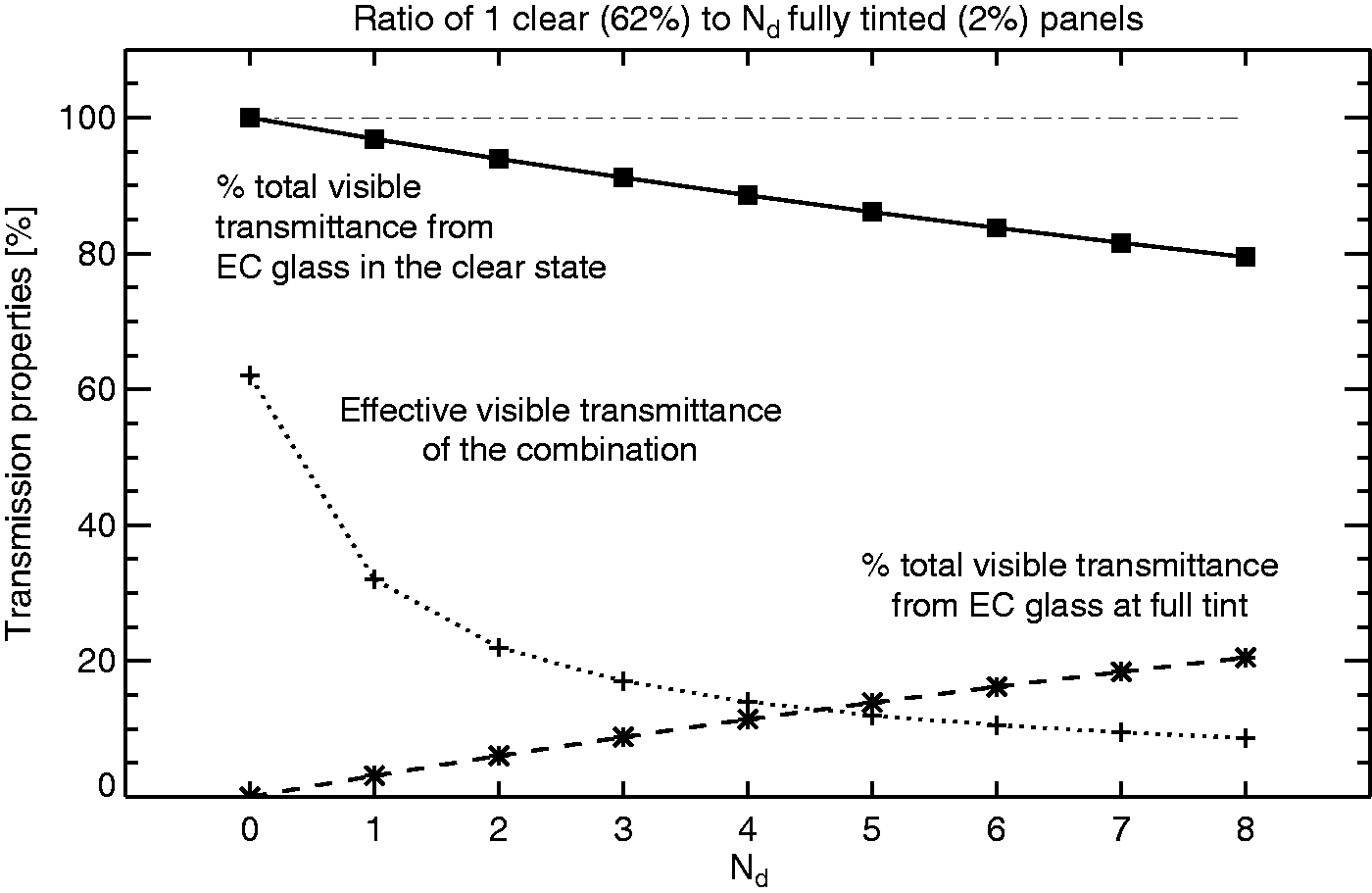
2.3. The illumination spectrum
The procedure described above predicts the transmittance spectrum for an arbitrary combination of EC glass in various states. The illumination spectrum – that is, the daylight that passes through the glazing to illuminate the space – will depend also on the spectrum of light that is incident on the glass. The illumination spectrum is given by the vector Illumination spectrum derived from predicted transmittance spectrum and standard illuminant – for comparison with measured illumination spectra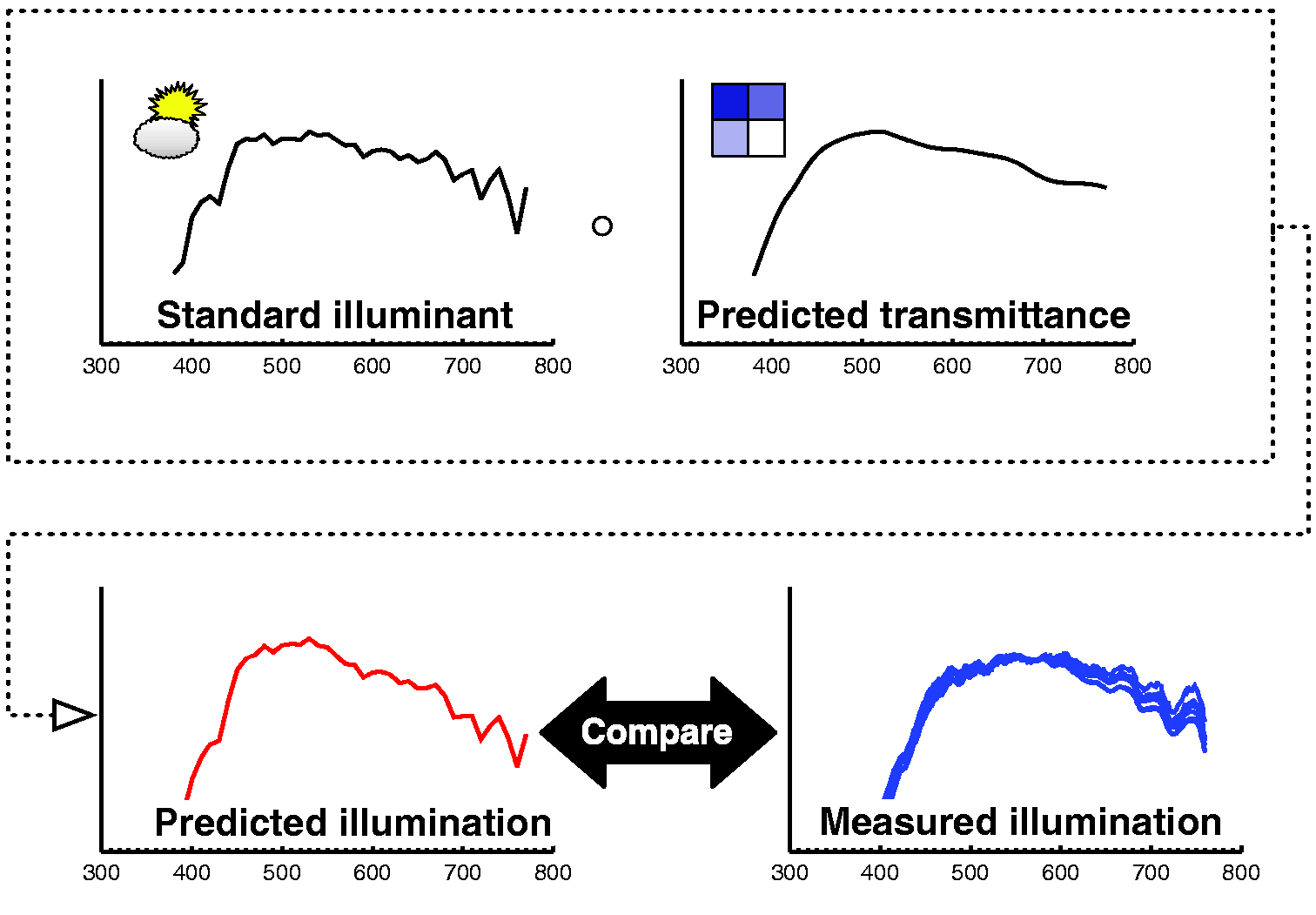

3. Validation
The theoretical schema described above was tested in an office space containing eight panels of SAGE EC glass, which have the spectral characteristics as shown in Figure 2. The validation scenario is described in the following section.
3.1. The EC glazing installation
Although EC glass has been available for a number of years and evaluated under various experimental conditions (e.g. test cells), the first commercial installation in the United Kingdom happened only in late 2012. Two offices at De Montfort University (Leicester, UK) were fitted with EC glazing produced by SAGE Electrochromics, Inc. The lighting in the offices was upgraded at the same time, but otherwise the offices and the occupants were as before. The user acceptance of the installation is being evaluated as part of a long-term case study. 8 In addition to being the first office building in the United Kingdom with EC glass, the case-study evaluation is perhaps unique precisely because it is such an ordinary office space with occupants going about their everyday tasks. In contrast, many of the other EC installations to date have been large transit spaces (e.g. Figure 1) or conference rooms with intermittent occupancy and limited scope to capture ‘real world’ user experience under typical working conditions. 6
Photographs of the office that was used for this field-study (Room 0.30) and the external facade are given in Figure 6. Note that the installation was a non-standard retrofit. The two offices (Rooms 0.30 and 0.29) comprise three large window bays, each with six panels. However, the dividing wall between the two offices bisects the central bay. Additionally, the false ceiling in the offices meets the facade wall at the shared window and the window exclusive to 0.29. Thus, the upper panels for these two bays are either for ventilation or are ‘false’ windows, i.e. they do not provide any illumination to the offices. For the remaining bay in 0.30, the false ceiling is stepped back from the window, and all six panels can illuminate the space – though the false ceiling does offer some shading depending on the sun angle. Thus, there are eight EC panels in Room 0.30 and six in Room 0.29 – they were all set to full-tint when the external photograph was taken (Figure 6).
Photograph of Room 0.30 and the external facade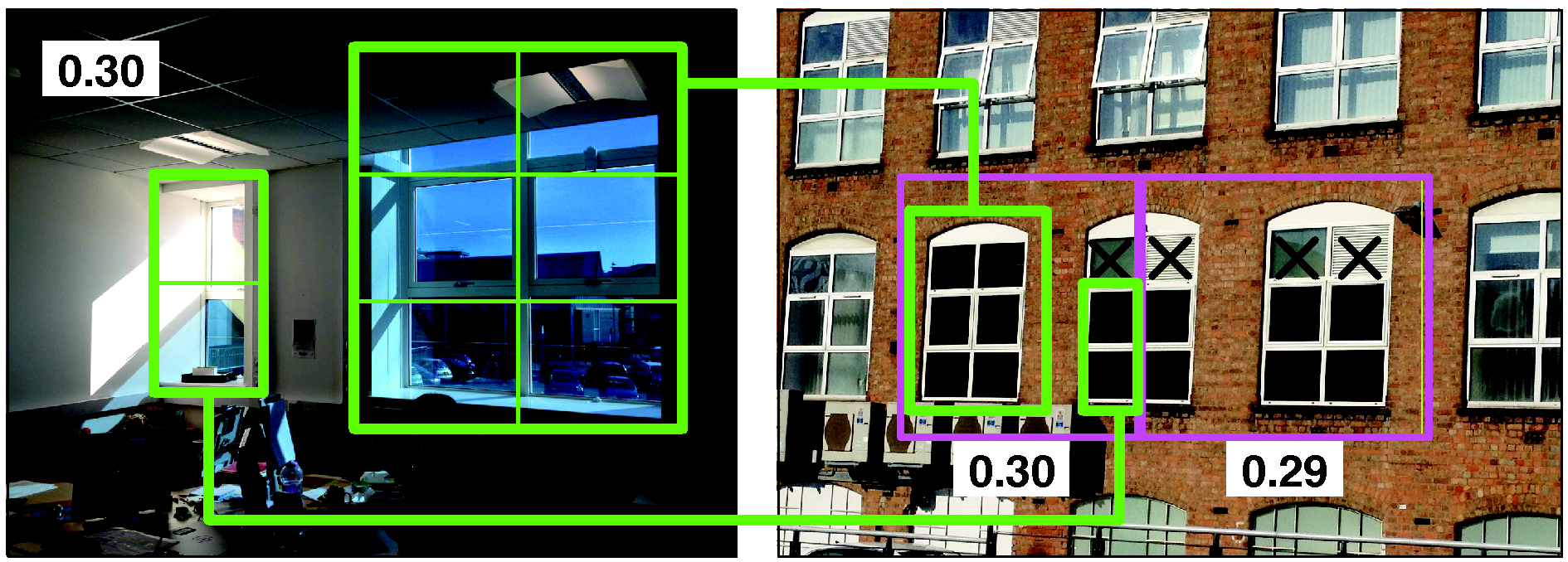
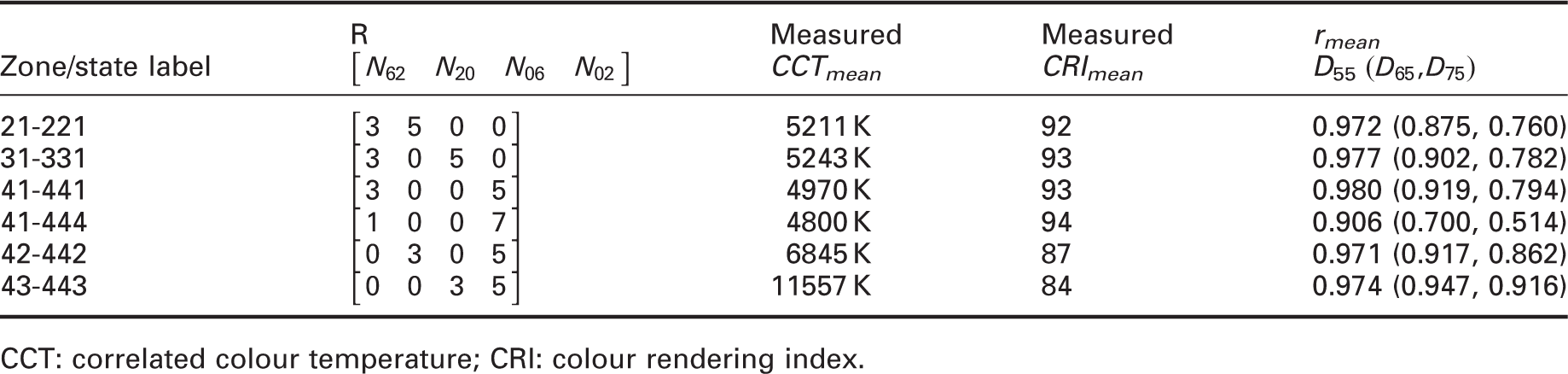
3.2. Glazing states tested
The zoning arrangement used to control the glazing in 0.30 is shown in Figure 7 (zones 1–4 were assigned to the four zones in Room 0.29). In the full-height six pane window, each row-pair of panels constitutes a zone – thus there are five zones in total. The ‘housekeeping’ label used to describe a particular state for the EC glass in Room 0.30 is a series of five numbers each between 1 and 4, e.g. 41-441, where 1 is for fully clear, 4 full-tint, with 2 and 3 for the light- and mid-tint states, respectively. The ordering follows the numbering of the zones. Thus, for the label 41-441, zones 5, 7 and 8 are set to full-tint (i.e. five panels altogether), and zones 6 and 9 are set to full clear (i.e. three panels altogether). The ratio vector Zoning of the EC glass in Room 0.30 (compare with interior view in Figure 6) and a schematic (not to scale) of the office layout showing the occupant workstation positions and the six view directions (A–F) at which spectra were measured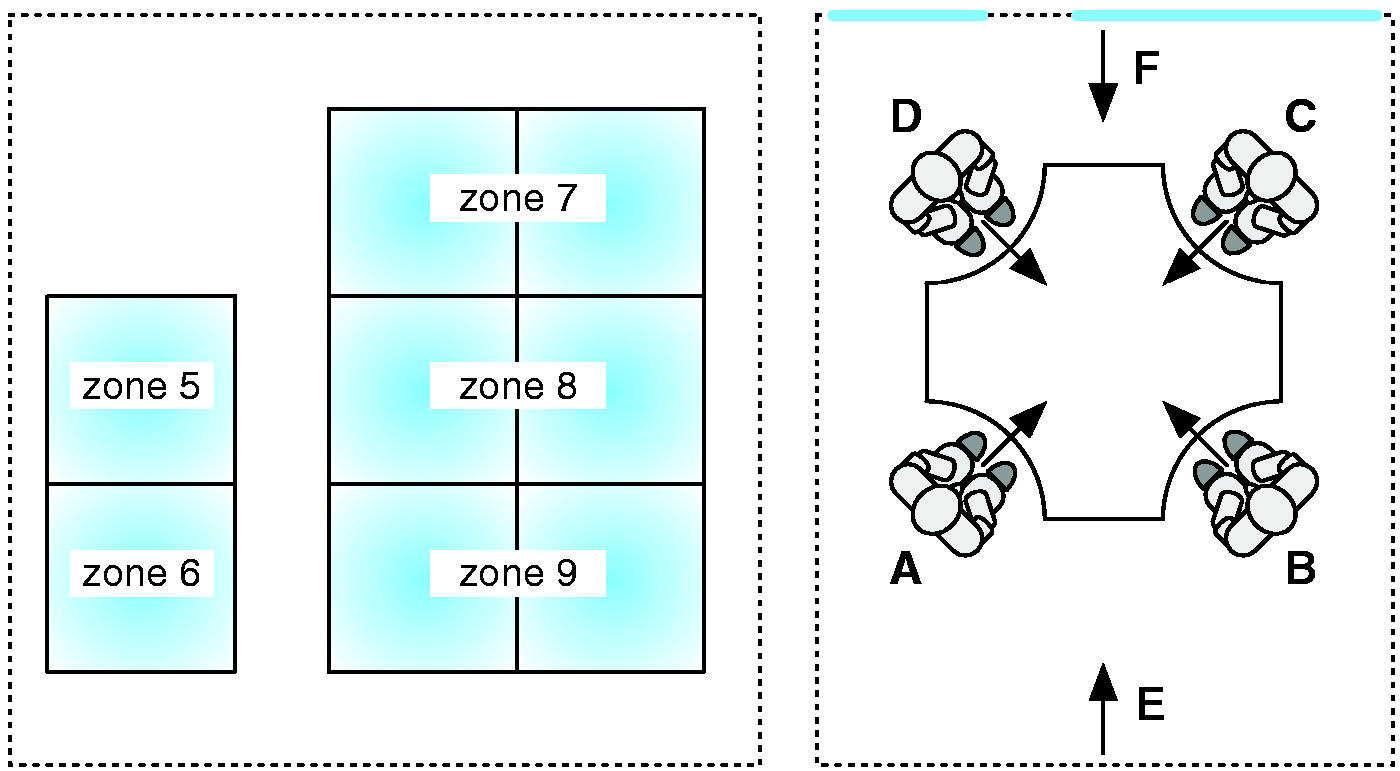
Nomenclature for the measured states and a summary of the results
CCT: correlated colour temperature; CRI: colour rendering index.
3.3. Measurement and normalisation of the spectra
Spectra were measured using an MK350 handheld spectrometer produced by UPRtek. The spectra cover the range 360 to 760 nm and are output as normalised curves (peak equals 1). The sensor has an approximate cosine response, and so the spectra recorded are equivalent to spectral irradiance by a device that measures absolute units. The measured spectra are therefore also similar to what would be received by the eye when located at the various measurement positions and view directions indicated in Figure 7. The MK350 also records illuminance and various derived quantities including correlated colour temperature (CCT) and colour rendering index (CRI). Tests showed that repeatability was very good and there was no practical advantage in taking multiple spectra at individual measurement points – an important consideration since we did not want the sun position to change significantly during each set of measurements. Comparison of daylight and artificial light spectra measured simultaneously with a ‘laboratory grade’ spectrometer (PhotoResearch 655) showed very good agreement.
The measurements were taken under sunny, clear sky conditions on a weekend day in order to not disrupt the normal occupants. The conditions were very stable with an almost total absence of clouds. The vertical illuminance recorded by the facade sensor (part of the EC control system installed by SAGE) shows the stability of the sky conditions on that day – the measurements were taken between ∼11 a.m. and ∼1 p.m., Figure 8. The sun azimuth was almost normal to the facade during the measurement period, and the sun was overwhelmingly the dominant source of illumination in the office space under those conditions. Thus, standard illuminant D55 was chosen as the source used in equation (9) to predict the illumination spectrum for the office space.
Vertical illuminance measured by the (external) facade sensor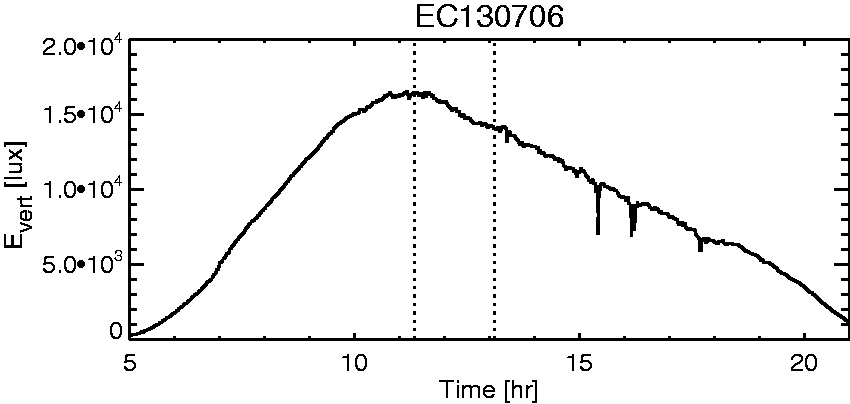
Predicted and measured spectra were normalised to
3.4. Results
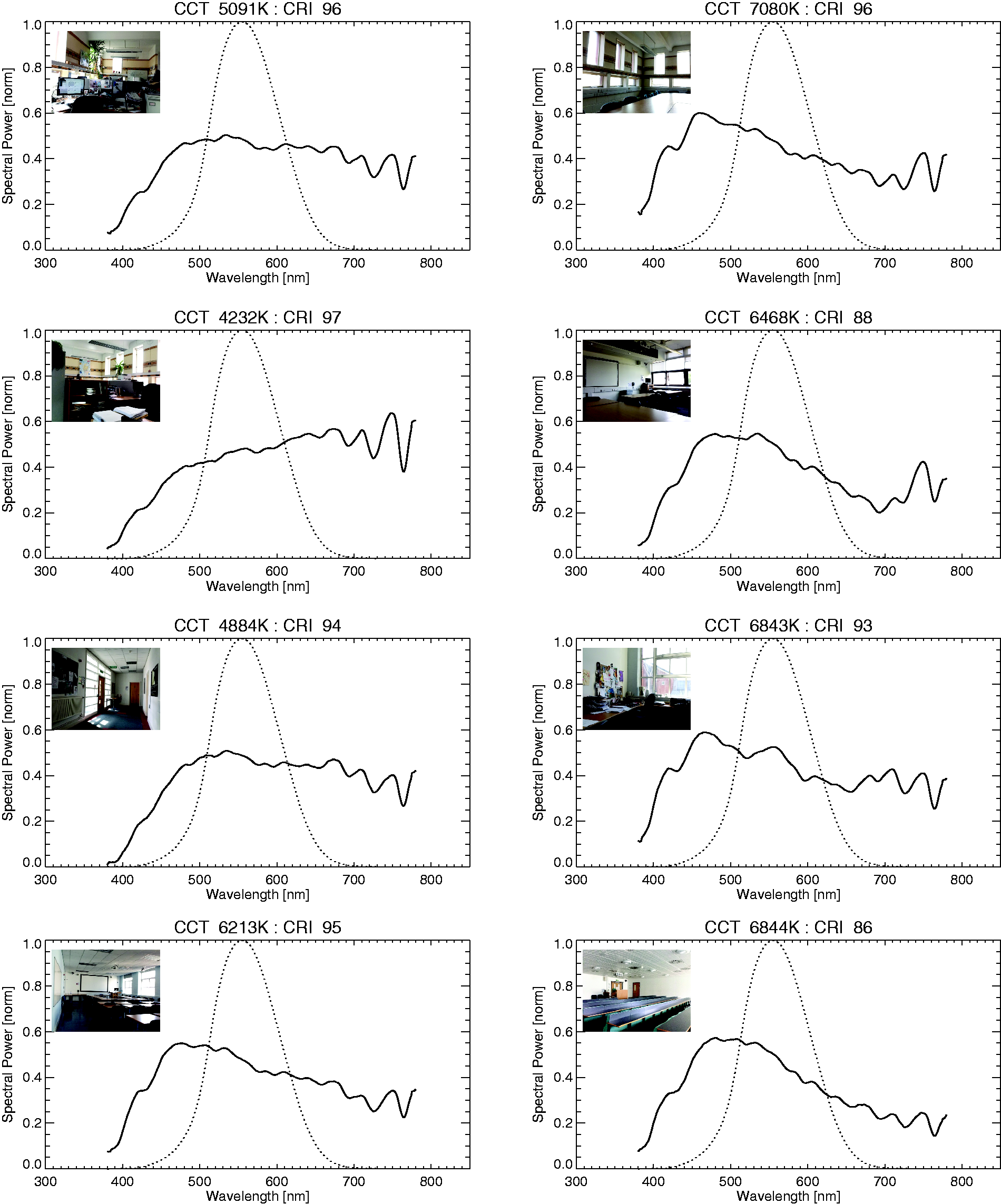
Spectra measured at the six view points/directions shown in Figure 7 were compared with the theoretical illumination derived using equations (7) and (9) for the six combinations of EC state given in Table 1. The set of six comparisons are shown in Figure 9. The predicted illumination spectrum is shown in red (dashed lines) and the six measured spectra in blue. Additionally, the visual sensitivity curve Predicted illumination spectrum and measured spectra for six combinations of clear and tinted EC glass. (Available in colour in online version) Measured daylight spectra in spaces with standard clear glazing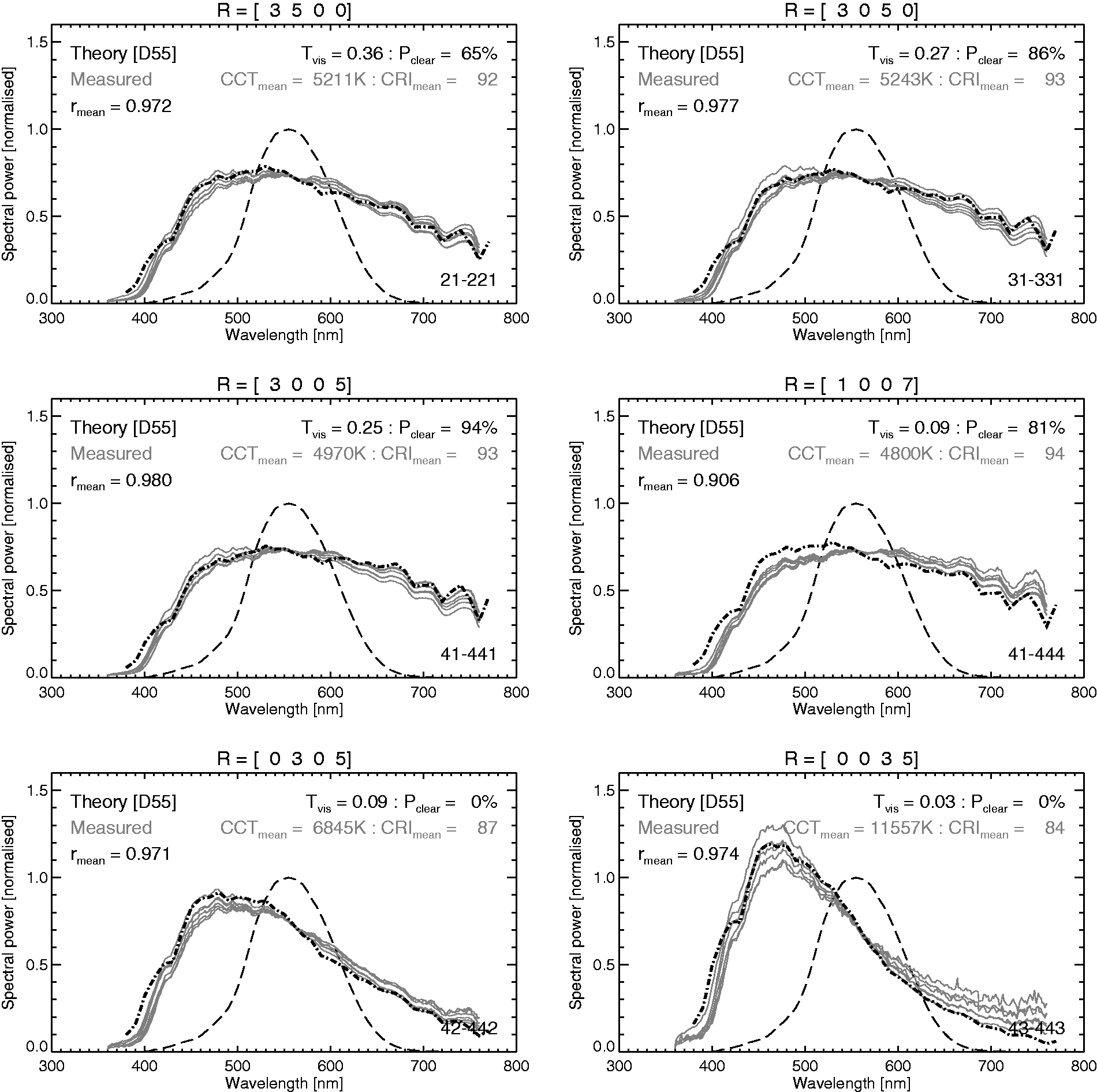
The measured CCT and CRI further support the appearance of neutrality. Subjectively, at the time of measurement, the illumination in the space appeared effectively neutral for these four cases. For the two cases without any panels set to clear the measured (and predicted) spectra show a pronounced peak in the blue part of the spectrum, i.e. around 470–480 nm and 450–470 nm for, respectively, cases 42-442 and 43-443. The measured CCT and CRI for these two cases showed commensurate deviations from perceived neutrality. This corresponded also with subjective assessments at the time of measurement that the illumination in the space now had a noticeable grey or blue hue. Note also the conspicuous appearance of noise in the spectra measured for case 43-443. The effective visible transmittance for this combination was 3%, i.e. Tvis = 0.03 – see annotation on each of the plots in Figure 9. Thus, the absolute levels of illumination measured at A–F were low: ranging from 11 to 43 lux. Such a combination of glazing state is unlikely to ever occur in an actual installation, and was chosen here solely for the purpose of testing the theoretical model.
The theoretical model assumes of course that the resulting illumination spectrum is the spatially homogeneous product of spectra from individual glazing panels in various states, i.e. the light is ‘perfectly mixed’. In reality, of course, there will be some spatial variation in the illumination spectra dependent on such factors as:
The configuration, zoning and state of the EC panels. The layout of the room and the surface reflectance properties. The sun position and patterns of direct illumination in the room.
Notwithstanding these considerations, the six spectra taken at the various points around the room show greater similarity than was first anticipated. The arrangement which might be expected to result in the most spatially inhomogeneous illumination spectrum was 41-444, i.e. 1 clear panel (zone 6) with the other seven panels at full-tint. In fact, the spread in the curves for 41-444 is no greater than for the other five cases, and actually appears to have less spread than most. We believe this is because the (high-angle) direct sun was reflected up off the white window sill, and subsequent reflections would be off the walls and ceiling – both white. This arrangement would appear to be particularly effective in ‘mixing’ the illumination spectra. This observation has implications for glazing/facade design with EC glass where both neutrality of illumination and a high degree of daylight/solar control are required.
Quantitative comparison was made by determining the Pearson correlation coefficient (r) between the theoretical illumination spectrum and each of the six measured spectra. Since the individual measured spectra were very similar, we present just the mean for the six values (rmean), Figure 9 and Table 1. For all but 41-444, the agreement is very good, i.e. the rmean was greater than 0.97. For 41-444, the rmean was 0.906, noticeably lower than the other cases but still good.
It was instructive to test the effect of other standard daylight illuminants on the determined correlations. Daylight illuminants D65 and D75 can be taken to approximate, respectively, daylight from a sky without noticeable hue (e.g. overcast) and daylight from a moderate blue sky. 9 The rmean with the illumination spectrum now predicted using illuminants D65 and D75 are given (in parentheses) in Table 1. The correlations with the measured spectra are markedly less good, and, as expected, the illumination spectrum predicted using D75 shows poorer agreement than that predicted using D65. This trend further supports the hypothesis that the spectrum of illumination incident on the window was better represented by D55 than either of the two other illuminants.
Note – the theory described in Section 2.1 has general applicability to any glazing type(s) of known spectral transmittance. However, the specifics of the predicted performance (e.g. Figures 3 and 4) are applicable only to the SageGlass® glazing manufactured by SAGE Electrochromics, Inc. as described by the IGDB files shown in Figure 2.
4. Discussion
A theoretical model giving the spatially homogeneous spectral transmission curve for a combination of clear and tinted glass in arbitrary proportions has been presented. When combined with an applied daylight illuminant, the model gives the predicted (spatially homogeneous) illumination spectrum for any particular combination of glazing. The model was tested against measurements of daylight spectra in an office with EC glazing for six combinations of clear and tinted glass. Agreement between theory and measurement was good, perhaps remarkably so, and we consider the model to be validated for practical application in real world settings.
Facade design with EC glass should encourage good mixing of the light, though in practical terms, this really means effective redistribution of daylight – especially direct sun – through glass which is clear. This can be achieved by positioning reflecting surfaces such as sills close to sections of the EC glass that are likely to be kept clear during normal operation. Additionally, some designs might benefit if the zoning were staged to vary throughout the day in order to maximise the reflection and redistribution of direct light through clear panels. Of course, a mixture of standard clear and EC glazing would be equally effective, provided there was certainty that the reduced flexibility did not diminish overall, annual performance, i.e. that users would never require any moderation of the light through the (standard) clear glass panels.
If light through the full-tint glass is not effectively mixed relative to light through clear panels (e.g. ‘lost’ through absorption by low reflectance surfaces), then the actual illumination spectrum is likely to be ‘better’ than that predicted by the model – though the effect may be slight. This may explain the small discrepancy between the theoretical illumination spectrum and the measured spectra for 41-444 where the illumination was indeed marginally more neutral than that predicted by the model.
The work described here suggests that the previously reported lower approval ratings for fixed-tint ‘blue’ glass compared with neutral or ‘warm’ tint glass 7 are not directly applicable to VTG when some of the glass area is left in the clear state. Recall that the measured spectrum is that which would be received by the eye at the various positions in the room (Figure 7). This leads to an intriguing question: if the illumination spectrum received at the eye is effectively neutral, does it matter for the occupant what colour the windows appear to be? It is not possible to give a definitive answer to this question given the complexities of the relation between illumination and view for ordinary windows, 10 let alone for variable transmission glass. However, one can offer some reasoned conjecture to this end. Two such speculations follow. The reader will note that the hypotheses outlined in the section below are solely for the purpose of promoting discussion – they will need to be tested using a variety of experiments involving human participants.
4.1. Hypotheses regarding an observer’s experience of tinted glass
The subjects’ expectation may have played a part in the assessment of the reported lower approval for fixed-tint ‘blue’ glass.
7
Few would claim that a view of blue sky through a window is unpleasant in any significant way, provided there are no visual discomfort issues related to direct sun, etc. So it seems unlikely that we would have evolved to somehow have an in-built antipathy to ‘blue views’, at least for those which we perceive as natural. The light from the bluest part of a clear blue sky has a spectrum that is markedly shifted to the blue, with a CCT often greater than 10,000 K or even 15,000 K. A blue sky however will, for an observer, always be associated with sunlight in some way. Even if sun illuminated surfaces are not directly visible, the illumination spectrum received at the eye would most likely contain a significant contribution from the ambient sunlight. But, on an overcast day, a grey sky seen through fixed-tint glass with a blue hue would not evoke the same response as the view of an actual blue sky (either through clear glass or directly through an open window). First, we would not expect to see blue sky on a grey day (notwithstanding the fact that it is unlikely that EC glazing would be set to tint under such conditions). So, the spectral content of the view would conflict with our (preexisting) knowledge of the external daylight conditions. The tint would also make a dull sky appear even duller, thereby exacerbating any sense of drabness regarding the illumination. Perhaps just as important, if not more so, is the spectrum of illumination received at the eye. This would be very different from what we expect when there is a view of ‘blue’ through the window because, on a grey day, there would be no component of ambient (i.e. reflected) sunlight in the illumination spectrum received at the eye. Based on the findings reported here, it seems reasonable to speculate that a view containing panels of blue tinted EC glass may be perfectly acceptable to occupants – on sunny days – provided that the illumination spectrum contains a significant component of sunlight, i.e. a small proportion of the panels are set to clear. This is because:
we have an ‘in-built’ expectation that blue in the distant view through windows is associated with the presence of sunlight in the illumination spectrum received at the eye; and, the daylight through the clear EC glass dominates the resulting illumination spectrum, giving a natural appearance and good colour rendering.
For the second speculation, the reader is asked to consider a hypothetical scenario where the occupant, initially, has their back to the window. At workstation positions C, D and also at F looking to the back of the room, the measured illumination spectra (for the cases with one or more clear panels) were sufficiently neutral that an observer might not be aware of the tint state of the glass, unless of course they had a direct view of the window. Furthermore, there was no significant difference in spectra between these and the other three view points, which did have sight of the windows. Now consider a scenario where very similar illumination conditions – both for the spectrum and absolute (i.e. lux) values – were achieved using either (i) standard glass with blinds or (ii) EC glazing in a combination of clear and full-tint panels. Would an occupant, with their back to the windows, be able to notice any significant difference between these two scenarios? One would think not if the spectra were similar. When the occupant turns to face the windows, the illumination conditions (spectrum and lux values) may again be very similar, though of course the views will be completely different. With standard glass/blinds, the view to the outside may be completely blocked, prohibiting the occupant from relaxing their focus on a distant scene. With EC glazing, a clear view is preserved even when at full-tint – a feature that occupants may find preferable to standard blinds, which act like a ‘shutter’.
To summarise the above, what is seen/experienced by the occupant needs to be congruent with what is known/expected regarding the external conditions.
4.2. Additional considerations
An anonymous reviewer raised a number of discussion points that are outside of the scope of the main topic of this paper. However, they are interesting points worthy of further discussion/investigation – two are briefly touched upon in this section.
The Kruithof curve has been cited in numerous publications since it first appeared in 1941. 11 The curve suggests that lower CCT light (i.e. a ‘warm’ hue) is preferred for low illumination levels, and high CCT (i.e. a ‘blue’ hue) at high illumination levels. This would appear at first glance to be in ‘opposition’ to what occurs in a space with EC glazing. First, it has been pointed out by a number of authors that the boundaries of the Kruithof curve have, in the majority of cases, not been successfully reproduced in subsequent tests. In a 1990 paper by Boyce and Cuttle, 12 the authors state that the ‘results obtained show quite clearly that, once the subject is fully adapted to the conditions, the CCT of good colour rendering lamps in the range 2700 K to 6300 K has little effect on people’s impressions of the lighting of the room’. However, more significantly for EC glazing, the study reported here shows that daylight illumination spectra can be kept well within the range considered normal by ensuring that just a relatively small proportion of the EC glazing is held in the clear state.
If used effectively, light redirecting shades can reprocess a portion of the direct sunlight into diffuse daylight that could then enhance the overall daylight levels in the space. In contrast, EC glazing will reduce overall light levels whenever the glazing tints. A consequence of maintaining a clear view whatever the state of tint is that EC glazing cannot redirect light. Of course, this is so for all materials that have purely specular transmission, e.g. essentially all architectural glazing intended to provide the possibility of a clear view out. EC glazing certainly has the potential to greatly diminish the overall daylight levels in a space: by up to a factor of 60 for the latest SAGE product. It is rarely likely to be the case that occupants would wish such a large reduction in overall daylight levels, as opposed to those experiencing direct sun. However, the work reported here demonstrates that some EC glazing should, in the main, always remain in the clear state. A ‘rule-of-thumb’ for EC control could be to always maximise the proportion of glazing held in the clear state whilst ensuring that visual and/or thermal discomfort is minimised. Although the emphasis for this paper was on maintaining a neutral daylight spectrum, the work described here is being developed to investigate absolute levels of daylight illumination in addition to spectrum using lighting simulation techniques.
4.3. Future work
Findings from the case-study evaluation of user acceptance for the two EC offices will, we hope, help to answer some of the questions posed above. Occupant feedback related to the perception of colour in the EC offices is being collated as part of the regular program of data collection. 8 At the time or writing, the authors are preparing a number of experiments to more rigorously assess the subjective perception of colour in the EC offices under normal operation.
More generally, this investigation has shown that it is possible to carry out fairly exacting measurements of daylight spectra in real buildings under normal conditions. Recent models to predict the non-visual effects of daylight have incorporated the spectral properties of the different standard daylight illuminants. 9 Thus, it is timely to demonstrate that the field measurement of daylight spectra in buildings is now a practical possibility, for both general investigations of the internal luminous environment (see Appendix 1) and also for the testing of theoretical models.
Footnotes
Funding
The authors disclosed receipt of the following financial support for the research, authorship, and/or publication of this article: The EC glazing in the two offices was installed by SAGE Electrochromics, Inc., and Ms. Kelly Waskett is supported by a De Montfort University PhD Studentship.
Acknowledgements
Prof. Mardaljevic acknowledges the support of Loughborough University; and Dr. Painter, the support of De Montfort University. Dr. Ivan Korolija (De Montfort University) assisted with the measurement of the spectra in the EC office.