



Abstract
Road lighting in residential roads should enhance the visual component of interpersonal judgements concerning the apparent intent of other pedestrians – whether friendly, aggressive or indifferent. This paper describes an experiment which collected forced-choice judgements of emotion and gaze direction after 1000 ms exposure under 18 combinations of lamp type, luminance and interpersonal distances. Better performance was found with higher luminance and larger task size, but with diminishing returns according to a plateau-escarpment relationship. The results were used to estimate appropriate light levels for outdoor lighting. Results for judgements of emotion from facial expression suggest a minimum luminance of the face of 0.1–1.0 cd/m2 if facial expressions are to be identified accurately at 4 m, but a luminance above 1.0 cd/m2 for identification at 10 m.
1. Introduction
Lighting in residential roads is designed to enhance the safety and perceived safety of pedestrians. One basis of personal safety is the ability to make accurate judgements about the intent of other pedestrians, i.e. whether or not they present a threat, 1 for which it has been suggested that lighting should enable facial recognition at a distance of 4 m, supposedly the minimum distance at which an alert person is able to take defensive action if threatened. 2
The need to make visual evaluations about other people is recognised in road lighting design standards and guidance. British Standard BS 5489-3:1992 3 stated that to provide a sense of security, it should be possible for a pedestrian to recognise whether another person is likely to be friendly, indifferent or aggressive in time to make an appropriate response. To ensure a high possibility of recognition, it was recommended that the illuminance on vertical surfaces at the average height of the human face should be ‘adequate’. Similar guidance appeared in the next version of this document, BS 5489-1:2003, 4 with the additional suggestion that lamps of good colour rendering should be considered. Following further revision, BS EN 5489-1:2013 5 identified the need to judge the intent and/or identity of other people at a distance sufficient to take avoiding action if necessary.
While lighting guidance for subsidiary roads tends to prescribe horizontal illuminances on the ground, pedestrians’ faces tend to comprise vertical surfaces and thus a measure involving vertical illuminance may be more appropriate. Two statements in BS 5489-1:2003 4 address this. First, that the provision of lighting designed to meet the requirements of the appropriate horizontal illuminance class normally provides adequate vertical illuminance when using mounting heights of between 4 m and 12 m. Second, that it is permitted to specify a semi-cylindrical illuminance in addition to the general lighting class when there are particular problems of crime and personal safety, but this is only recommended in exceptional circumstances due to the difficulty in defining the appropriate observer position. These are the ES-series of lighting classes given in EN 13201-2:2003. 6
The 1995 issue of CIE report 115 7 noted that the adequate lighting of vertical surfaces is required for both facial recognition and enabling an act of aggression to be anticipated. A recent revision of this document 8 states that the purpose of road lighting includes allowing pedestrians to see and recognise other pedestrians and offers additional requirements for vertical and semi-cylindrical illuminance that apply if facial recognition is necessary.
While the need to make judgements about possible threatening behaviour is recognised by those who propose the basis for design criteria, 1 and is an assumption of design guidance, research within the lighting community has tended to target only facial recognition, and in particular whether it is affected by the spectral power distribution (SPD) of lighting. The results are mixed, with some studies suggesting SPD affects recognition whilst other studies do not.9,10
Lin and Fotios 11 examined facial recognition methodology and suggested that an effect of SPD on facial recognition is expected when the task is difficult, for example when the duration of observation is brief or when the task is small. While this remains to be validated, supporting evidence is available from two studies. First, colour photographs were found to provide significantly better recognition of celebrities than grey scale versions when facial information was made less visible by blurring. 12 Second, investigation of visual acuity at photopic levels of adaptation demonstrates that lamp SPD can affect foveal acuity when the task is small and test participants are encouraged to guess the smaller sizes not otherwise clearly visible. 13
Past studies of facial recognition have not addressed the interpersonal distance at which it might be desirable to make judgements about other pedestrians, and this is important because it affects the visual size of the task. Thus, alongside evaluation of interpersonal judgements, the distance at which these judgements are desired is being investigated14,15 to explore the assumption that facial recognition at 4 m is a critical threshold.
The comfortable interpersonal distances identified in past studies vary considerably. Sobel and Lillith 16 reported a distance of 1.18 m following observation of collision avoidance behaviour in outdoor spaces. Using a stop-distance procedure to measure comfort distance, Adams and Zuckerman 17 reported a distance of 1.17 m under low light levels (1.5 lux), decreasing to 0.53 m under brighter light (600 lux). Townshend 18 suggests a distance of 15 m following field interviews carried out after dark. There are clear variations in comfortable interpersonal distances with light level and with the procedure used to measure the desired inter-personal distance. 14
This work investigates judgement of intent, whether or not an approaching person is considered to present a threat, rather than facial recognition. This may be the more appropriate task for pedestrians after dark; identity recognition may play a part but it is not the whole task. There is evidence that facial expression and body posture contribute to social judgements that are related to the evaluation of threat.19–21 There are six universally recognised facial expressions 22 : neutrality, sadness, disgust, fear, anger and happiness. Similarly for body posture four recognisable emotions have been proposed: anger, fear, happiness and sadness. 23 Willis et al. 20 found that faces exhibiting angry expressions were less approachable than those with happy expressions, and similarly for emotions conveyed by body posture. Approachability was defined as the willingness to approach a stranger in a crowded street to ask for directions, which might be considered the polar opposite of a judgement of threat intent and the resulting motivation to avoid. More details are needed to recognise facial expression than to recognise facial identity and as a result, identity may be easier to recognise than expression under conditions that degrade the transmission of higher spatial frequencies in a face image such as large distances and poor lighting. 24
The direction of gaze is also a social signal, with direct gaze associated with approach motivation and averted gaze with avoid motivation.21,25 Willis et al. 21 found that angry faces were considered less approachable when displaying direct eye gaze than averted eye gaze.
Past studies20,21 exploring social evaluations based on facial expression have used photographs as targets rather than real people. The validity of this is confirmed in past studies where accuracy of the response can be evaluated, these demonstrating that static images of faces provide better than chance level assessments of intelligence, sexual orientation and criminal tendency. 26
It has been suggested 27 that intent might be investigated using faces exhibiting different expressions and asking people to categorise these as either friendly or non-friendly. Similarly, Valla et al. 26 sought judgements of criminality using photographs of faces and found that test participants were able to distinguish between criminals and non-criminals. This would allow a variety of targets to be presented at a constant visual size, overcoming a limitation of the stop-distance procedure, with controlled duration of observation, lighting and randomised target order.
A problem with evaluation of intent is that judgements may vary within or between subjects, and such inconsistent responses add noise that makes it difficult to isolate the effect of lighting. Thus, preliminary studies were carried out to determine the repeatability of judgements of intent based on facial expression or body posture. 28 Twenty test participants were presented with a set of 48 images in random order, these being 24 facial expressions and 24 body postures, and asked to state whether the target would be considered threatening or not if encountered alone after dark. These images presented two facial expressions (happy and angry) and three body postures (happy, fear and angry), these being found in a pilot study to lead to more repeatable judgements of intent than did the remaining expressions and postures. 29 Targets were extracted from standard databases23,30 and presented separately on a series of cards, in a randomised order, with one target per card. The sizes of the targets were chosen to present the images at the visual size at which decisions might be made in real situations, 10 m for facial expression and 30 m for body posture. Participants were required to make rapid judgements, and this was typically within 2 seconds per image. For convenience, these trials were carried out under daylight or office lighting, higher light levels than experienced under road lighting.
It was concluded28,29 that standard facial expressions and body postures did not lead to consistent judgements of intent. Bullimore et al. 31 also found low consistency for some expressions. There are two reasons why, in contrast, Valla et al. 26 found consistent judgements of criminality: first, longer observation durations (20 to 30 seconds) were permitted than in the current study (approximately 2 seconds); second, that the photographs presented by Valla et al. included real criminals while the current study used actors who attempted to portray expressions such as anger. Using direct evaluation of intent to investigate the effects of lighting, as suggested by Fotios and Raynham, 27 would therefore be hindered by noise. An alternative to judgements of intent would be to seek whether judgements of the emotion conveyed by facial expressions are effected by lighting. This paper presents an experiment carried out to investigate how road lighting might influence judgements of emotion and gaze direction.
2. Method
2.1 Description of the apparatus
Target images were photographs of actors expressing a range of facial expressions, body postures and gaze directions, and these were obtained, with permission, from three databases. The FACES database is a set of images of naturalistic faces of 171 younger, middle-aged and older women and men, displaying each of six facial expressions described as anger, disgust, fear, happiness, neutrality and sadness.
30
Twenty-four images were used, these being six expressions from each of four target people: a young male, a young female, an old male and an old female. The BEAST database
23
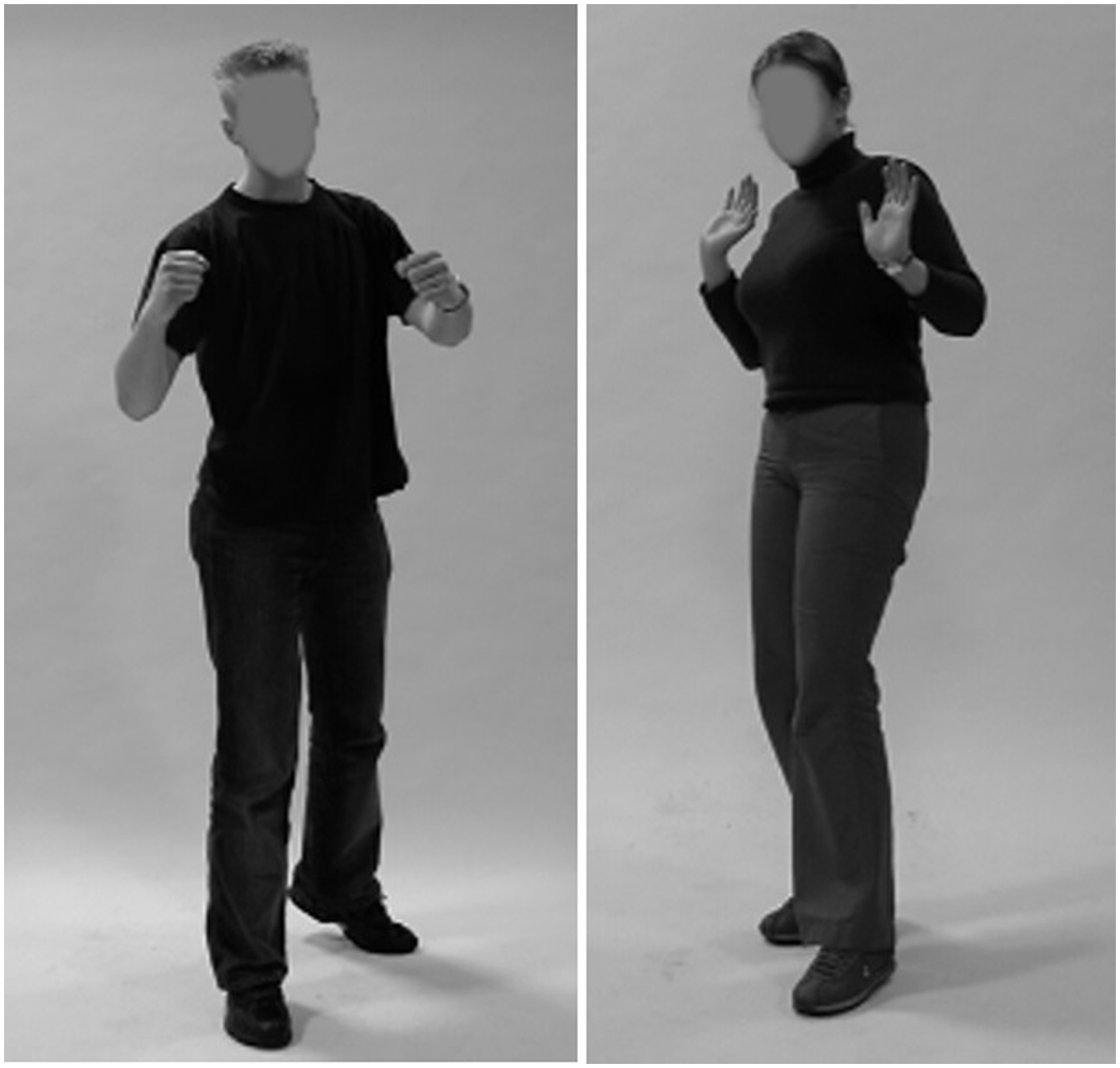
comprises 254 whole body postures from 46 actors conveying four emotions: anger, fear, happiness and sadness, from which 16 images were selected, these being four postures from four target people, two males and two females. Note that in these images the target faces are covered by neutral shading. Gaze direction targets were selected from the head pose and gaze database developed by Institute of Neural Information Processing, University of Ulm (uulmHPG).
32
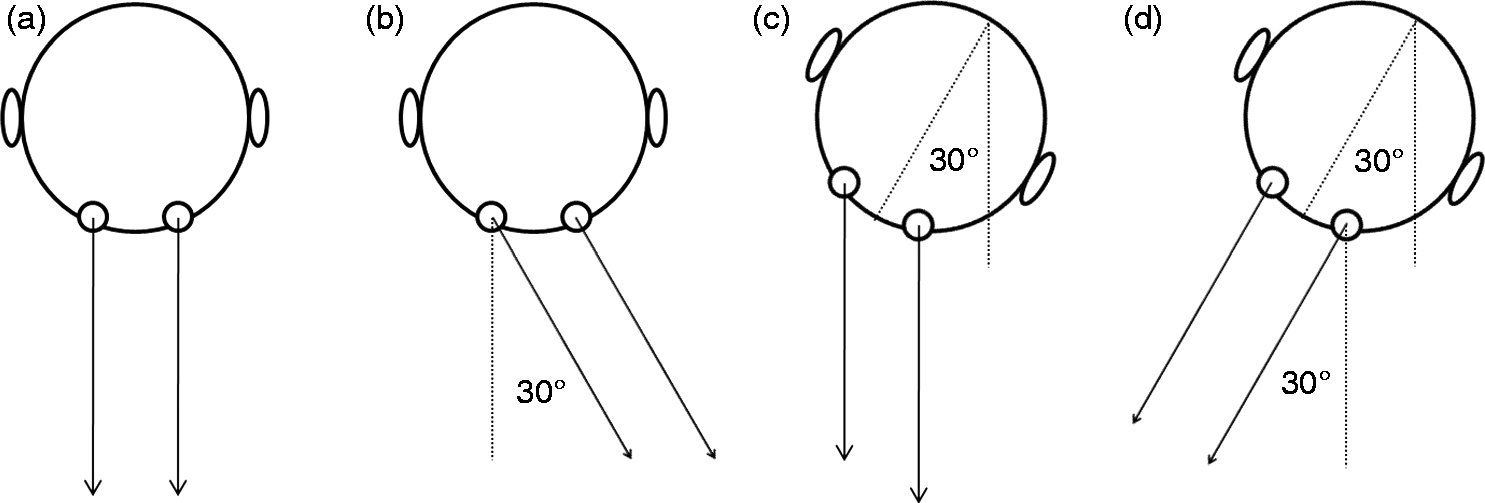
Sixteen images of four target people were used, these being two males and two females, with one male and one female each wearing glasses. For each target person, there were four combinations of head pose and gaze direction: straight or rotated (30°) head position and direct or averted (30°) gaze. Figures 1 to 3 show examples of these images.
Sample of facial expressions from the FACES database.
30
These are a younger male with an angry expression (left) and an older female with a happy expression (right). Website for image database: http://faces.mpdl.mpg.de/faces/ Sample of body postures from the BEAST database.
23
These are a male with an angry posture (left) and a female with a fear posture (right). Website for image database: http://www.beatricedegelder.com/beast.html Plan diagrams to show head and eye geometries for the gaze fixation target images from the uulmHPG database.
32
(Note that reproduction of the uulmHPG images is not permitted.) These are (a) head forward, eyes direct; (b) head forward, eyes averted; (c) head rotated, eyes direct; and (d) head rotated, eyes averted. Website for image database: http://www.uni-ulm.de/en/in/institute-of-neural-information-processing/members/g-layher/image-databases.html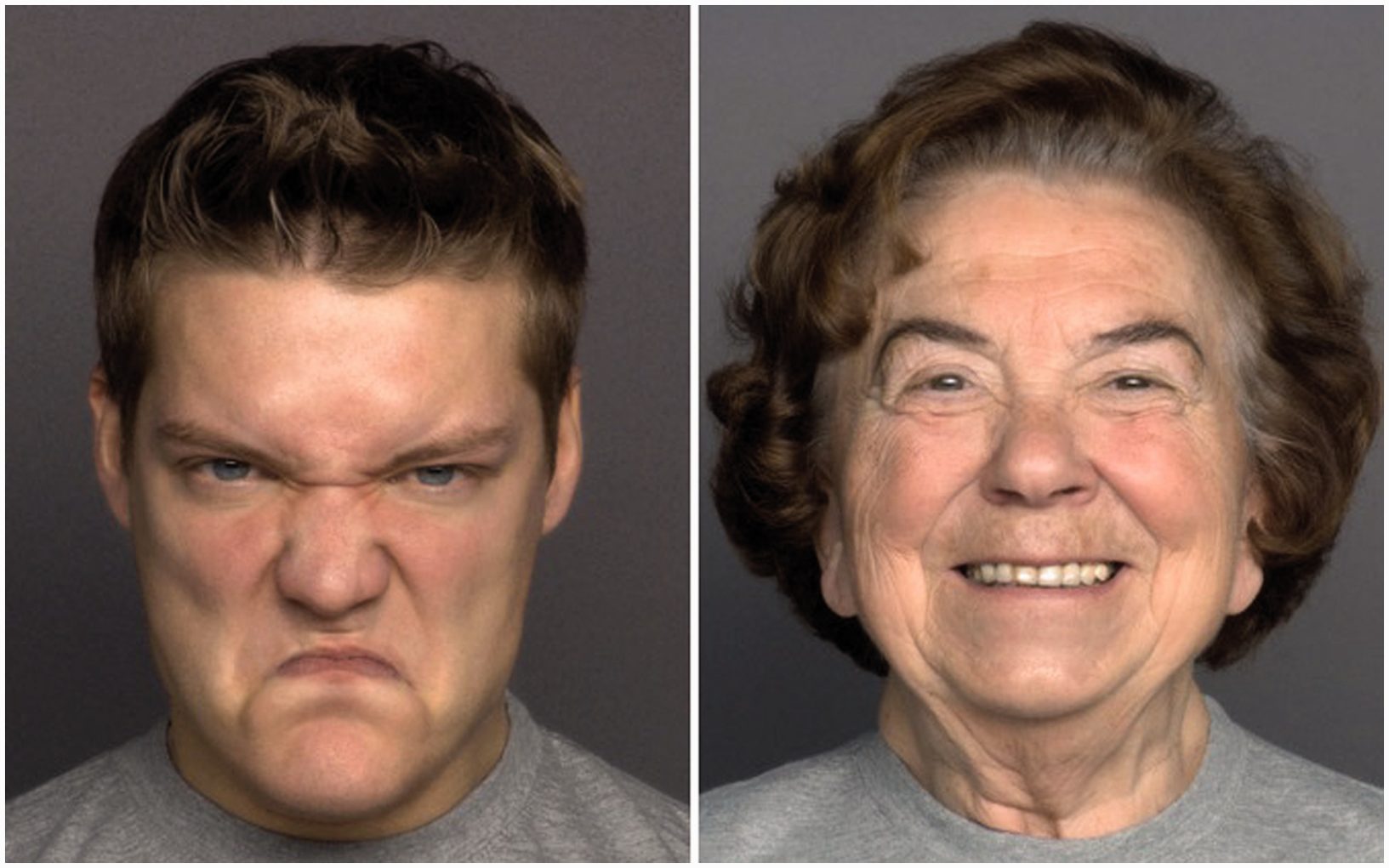
Target images were presented on a non-self-luminous screen (Pixel Qi® PQ3Qi-01, 10.1 inch display) having a resolution of 1024 pixels × 600 pixels. Self-luminous screens are those which require an internal light source (back light) to present screen images and thus emit light to their surroundings: non-self-luminous screens do not have an internal light source and instead require ambient light for display images to be seen. The non-self-luminous status, achieved by switching off the screen back-light, was used to avoid mixing screen-generated light with the test light conditions. The facial expression and gaze direction photographs provided by the databases are in colour. However, at the low light levels of the current study, the target images showed very little colour. The body posture photographs are achromatic.
The screen was located inside a test booth (Figure 4) permitting changes in luminance (by adjustment of an iris) and SPD (by changing lamp type) with negligible changes in spatial distribution. The screen was placed on the floor of the booth and lit from overhead. It was observed from a distance of 0.65 m which was maintained using a chin rest with forehead restraint.
Section through apparatus used to observe target faces/bodies under different light settings.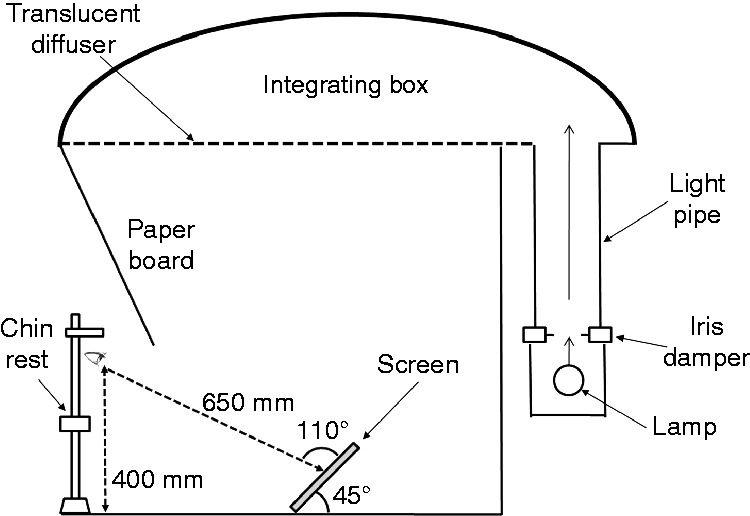
2.2 Test variables
Six lighting conditions were used. There were two types of lamp: high pressure sodium (HPS: 2000 K, S/P = 0.57, Ra = 25) and a metal halide lamp (MH: 4200 K, S/P = 1.77, Ra = 92). Three light levels were used: screen luminances of 0.01 cd/m2, 0.1 cd/m2 and 1 cd/m2, as measured using a Konica-Minolta LS100 luminance meter. These arose from illuminances of approximately 0.2 lux, 2.0 lux and 20 lux at the surface of the screen, chosen to bracket the range of light levels expected in residential streets in the UK, and with the two log-unit range giving reasonable expectation of detecting an effect of light level.
Visual size (minutes of arc) of targets according to simulated interpersonal distance (m).
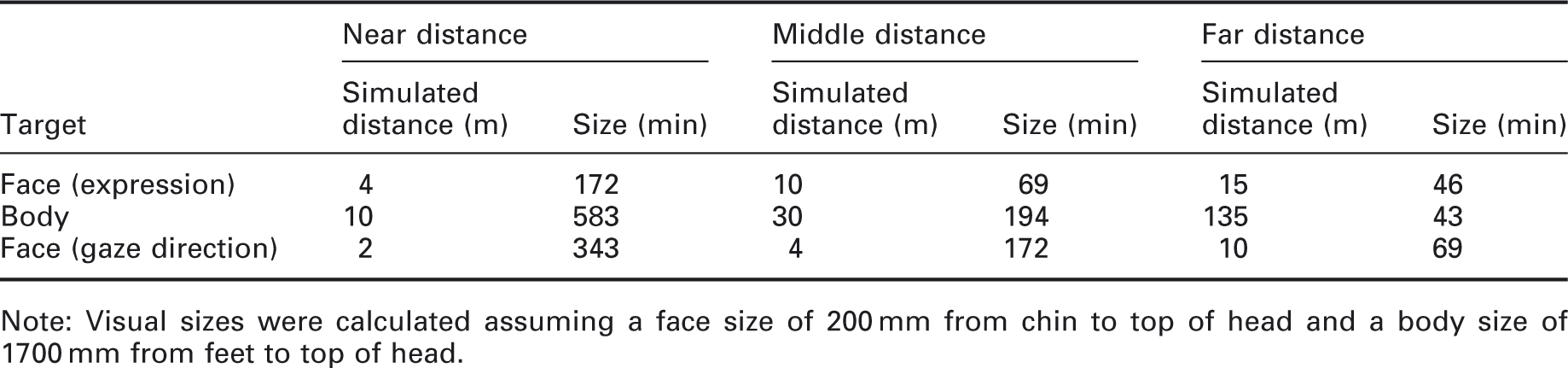
Note: Visual sizes were calculated assuming a face size of 200 mm from chin to top of head and a body size of 1700 mm from feet to top of head.
2.3 Procedure
Thirty test participants were recruited from staff and students of the University of Sheffield, and other residents of Sheffield. They were paid a small fee for their contribution. Past work suggests that the age and gender of test participants may affect judgements based on facial information31,33 and thus the sample was balanced across these groups to examine difference: 16 were males and 14 were females; 15 were from a younger age group (18–40 years, approximate mean age 25 years) and 15 were drawn from an older age group (40–65 years, approximate mean age 54 years). All test participants had normal or corrected-to-normal visual acuity as tested using a Landolt-ring test, and all had normal colour vision according to the Ishihara test under a daylight-simulating source. Each test session started with 20 minutes for adaptation to the low light level.
The responses sought were judgements of emotions conveyed through facial expression (anger, disgust, fear, happiness, neutrality or sadness), body posture (anger, fear, happiness or sadness) and gaze direction (toward or averted from the test participant). Past studies of facial recognition have tended to permit constant fixation on the target face, but this is likely to be an unrealistic proxy for real-world interpersonal judgements as there is a common inclination to avoid looking directly at others in some social situations. In the current work, each target was presented for 1000 ms, this being chosen to simulate the brief observation of an unknown approaching person expected in real situations, with no time limit for input of the subsequent response. Responses were given using a button box, with one button for each of the available responses.
A series of practice trials were used to present and confirm understanding of the response options. Initially, the available options (e.g. six different facial expressions) were shown simultaneously to illustrate all possible options. Twenty-four example face targets (the six expressions for four target people not used in trials; 16 body postures; 16 gaze direction faces) were shown in random order under office lighting conditions and without time limit, to allow these expressions to be learned.
The three tasks (categorical perception of facial expression, body posture and gaze direction) were carried out in separate blocks, and block order was counterbalanced. Within each task, images of different size, and featuring different expressions, postures or gaze directions, were presented in a counterbalanced order. The order in which lamp type and luminance were experienced was counterbalanced across the sample.
3. Results
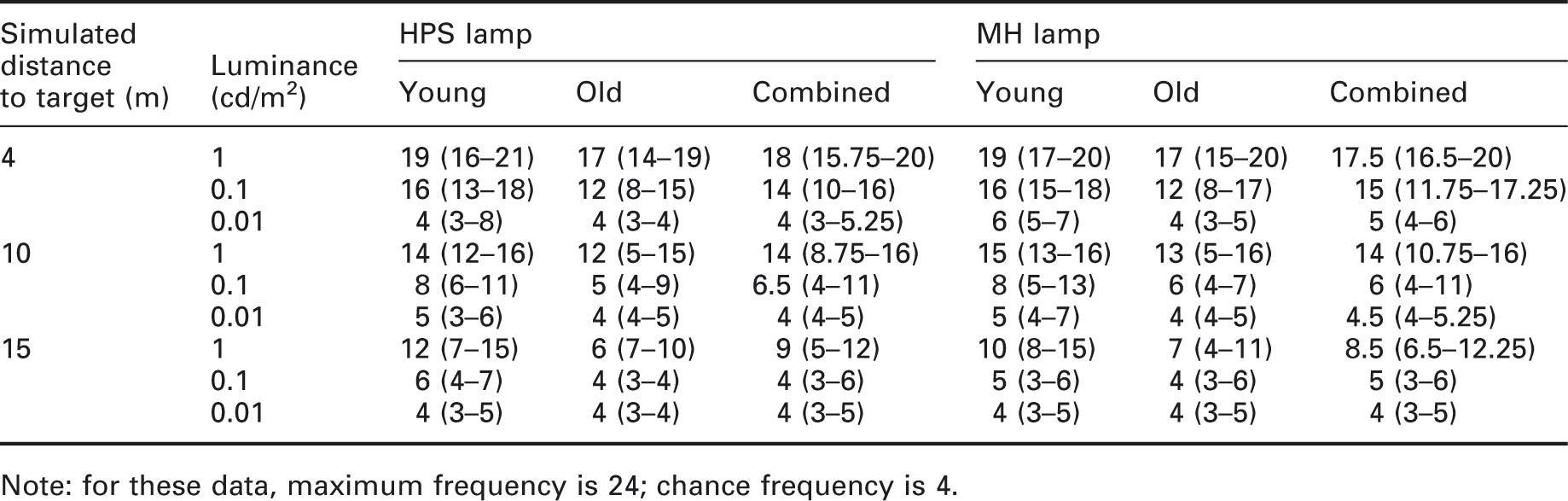
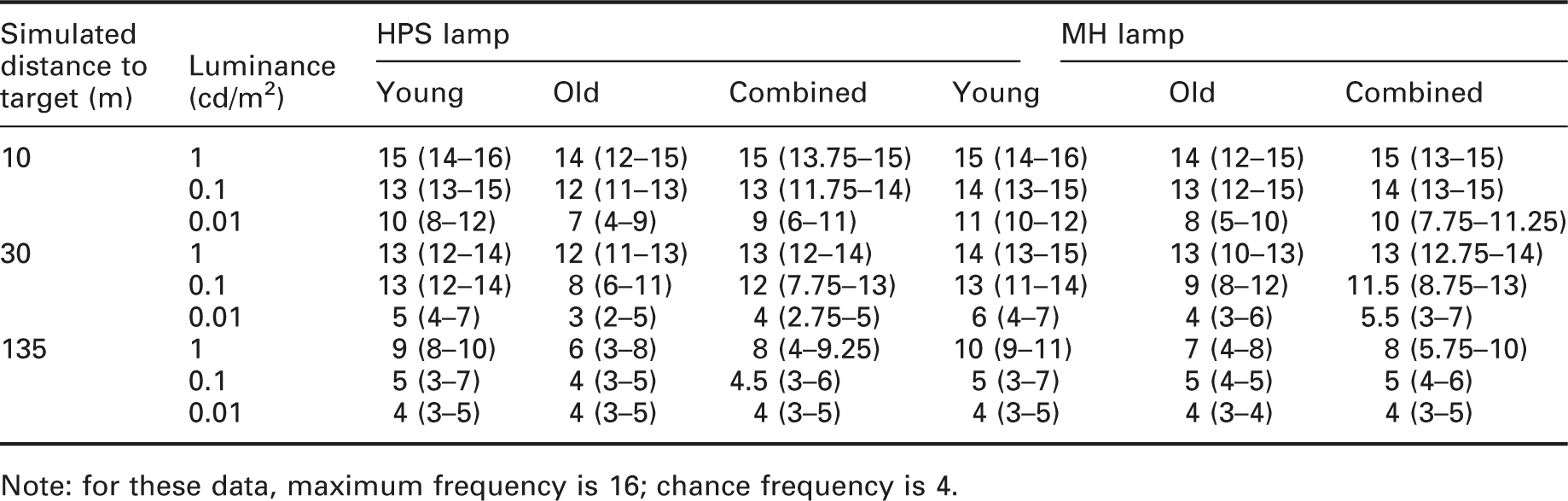
For each trial, the data were recorded as 1 for correct identification or 0 for incorrect identification. For each combination of luminance and size and lamp, there were 24 target images (for facial expressions); for each test participant, their score was the total number of correct identifications from these 24 targets, hence leading to a distribution of 30 scores (across the 30 test participants) from which statistical measures were derived. The results are shown in Figure 5(a)–(c) and Tables 2, 3 and 4. These are the median frequencies and interquartile ranges for correctly identifying emotion or gaze direction. As luminance increases, there is an apparent increase in the probability of correctly identifying emotions conveyed by facial expression or body posture. For the identification of gaze direction, luminances of 0.01 and 0.1 cd/m2 lead to performance at the chance level, and only the luminance of 1.0 cd/m2 leads to performance above chance level. There appears to be little difference in task performance between the HPS and MH lamps.
Median frequencies for correct identification of emotion from facial expression (a); body posture (b); and gaze direction (c). The legends show lamp type (MH or HPS lamp) and simulated target distance. Median frequency (and interquartile range: 25th to 75th percentile) of correct identification of facial expression. Note: for these data, maximum frequency is 24; chance frequency is 4. Median frequency (and interquartile range: 25th to 75th percentile) of correct identification of body posture. Note: for these data, maximum frequency is 16; chance frequency is 4. Median frequency (and interquartile range: 25th to 75th percentile) of correct identification of gaze direction. Note: for these data, maximum frequency is 16; chance frequency is 8.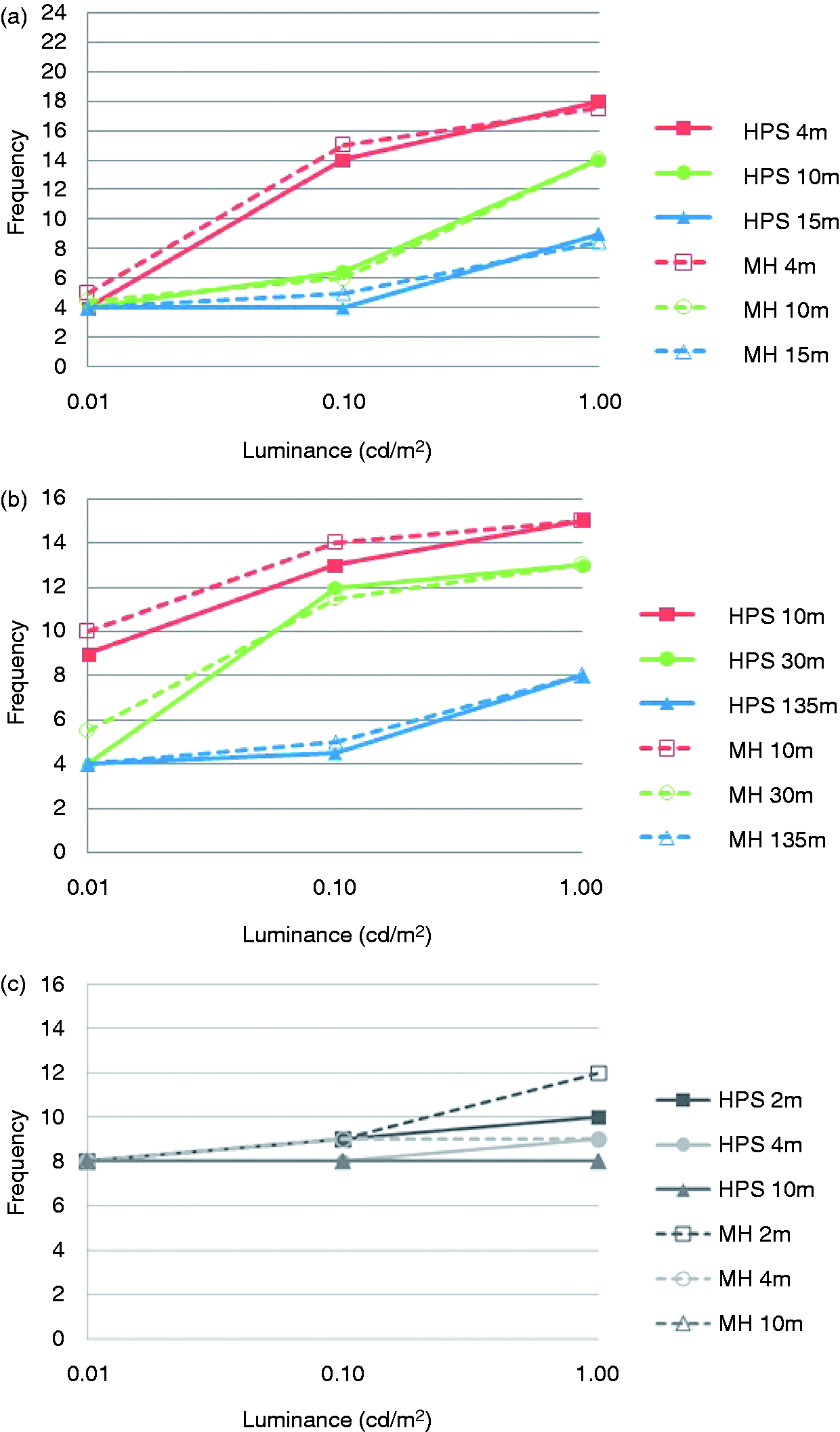
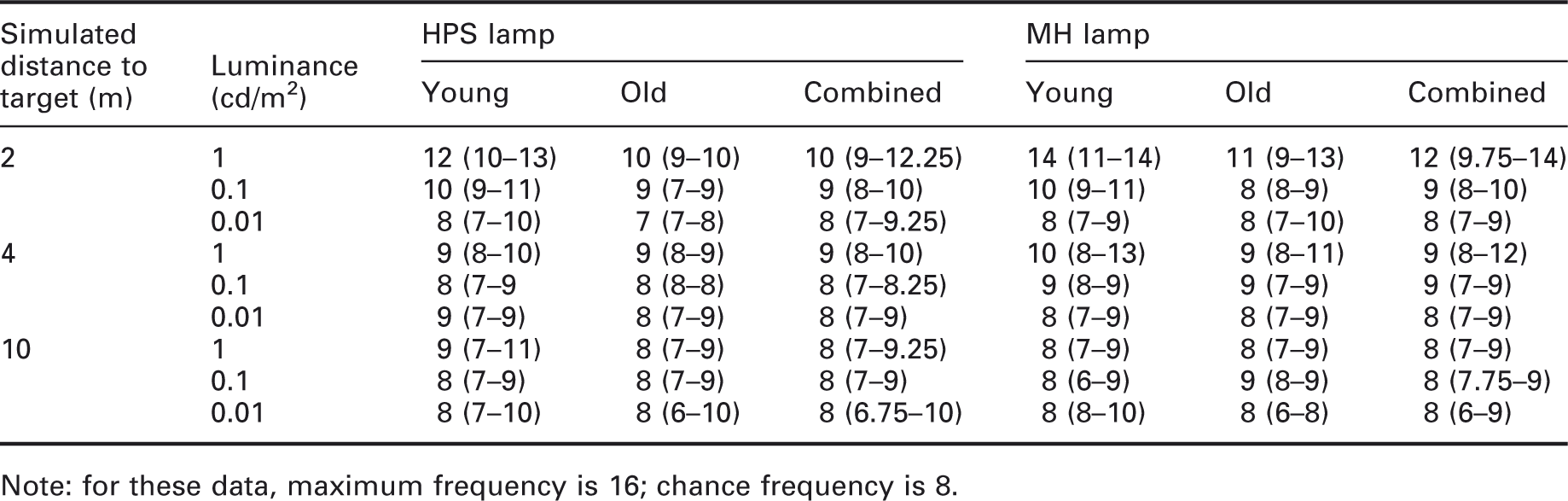
For the facial expression targets, the 24 images comprised six expressions from each of four people; thus, there was a 1/6 probability of correctly identifying the expressed emotion by chance, a frequency of 4 in Figure 5(a). For the body posture targets, the 16 images comprised four postures from each of four people; thus, there was a 1/4 probability of correctly identifying the conveyed emotion by chance, a frequency of 4 in Figure 5(b). For gaze direction, the 16 images comprised four poses from each of four people, of which two were direct gazes; thus, there was a 1/2 probability of correctly identifying direct gaze by chance, a frequency of 8 in Figure 5(c).
At the lowest target luminance of 0.01 cd/m2, only body postures at 10 m were identified at frequencies above the chance level. Shorter inter-personal distances increased the probability of correctly identifying emotions conveyed by facial expression or body posture: This may be due to the larger visual size subtended. For gaze direction, at low light levels (0.01 cd/m2 and 0.1 cd/m2), there is no apparent difference between the three simulated distances. For the higher light level (1.0 cd/m2), there is a higher probability for detecting the gaze direction of the closer targets than of the distant targets.
These graphs suggest a plateau-escarpment relationship between light level and correct judgement as tends to characterise visual performance. 34 At higher target luminances, performance reaches a plateau above which increasing luminance gives diminishing returns in terms of increased probability of correct identification. At low target luminance, performance is at chance level and further reductions in luminance do not reduce performance. In the intermediate range, the escarpment, a change in light level can affect performance more appreciably.
4. Analysis
Five variables are examined: luminance, lamp type, size (i.e. target images at different distances), age and gender of participants. The data were recorded as frequency of correct categorical judgement of facial expression, body posture and gaze direction. Analysis of these data using a range of metrics (including skewness, kurtosis, Kolmogorov–Smirnov test and Shapiro–Wilks test) did not suggest they are drawn from a normally distributed population, and hence statistical analyses were carried out using non-parametric tests.
Analyses of these data required multiple application of the statistical tests with a risk of capitalising on chance (a type I error) and thus suggesting a difference to be real when it is not. The results were thus analysed with reference to a Bonferroni-corrected threshold and to the overall pattern of results.
4.1 Facial expression
Figure 5(a) suggests that there is better recognition of facial expression at higher luminances, and with targets of larger size (i.e. shorter simulated distance), but does not suggest a difference the two types of lamp. At the lowest luminance (0.01 cd/m2), the median results for all combinations of distance and lamp type are at chance level.
The Friedman test suggests that luminance has a significant effect on categorical judgement of facial expression (p < 0.001) in all six combinations of lamp type and distance. For six tests, the Bonferroni corrected threshold is p = 0.0083 (i.e. 0.05/6). When data at the three luminances are considered separately using the Wilcoxon signed ranks test, differences between luminances are significant at all distances for both lamps (p < 0.001), except between 0.1 cd/m2 and 0.01 cd/m2 at 15 m for either the HPS or MH lamps (p = 0.065 and 0.153, respectively): In these cases, the results are at chance level being the smallest target and the lower light levels. The Wilcoxon test does not suggest that lamp type has a significant effect on categorical judgement of facial expression for any light level and at any distance. The Friedman test suggests that distance has significant effect on categorical judgement of facial expression (p < 0.001) for both lamp types at luminances of 1.0 cd/m2 and 0.1 cd/m2. It did not suggest a significant effect of distance at the lowest luminance level (0.01 cd/m2) which may be because the judgements are at chance level at this low luminance.
4.2 Body posture
Figure 5(b) suggests that there is better recognition of body posture at higher luminances, and with targets of larger size (i.e. shorter simulated distance), but does not suggest a difference between the two types of lamp.
The Friedman test suggests that luminance level has a significant effect on categorical judgement of body posture (p < 0.001) in all six cases (lamp type and distance). When data at three luminance levels are considered separately using the Wilcoxon test, differences between luminance levels are significant at all distances for both lamps (p < 0.001), except for just one case, this being the comparison of the two lower luminances (0.1 cd/m2 and 0.01 cd/m2) at the greatest distance (135 m) under the HPS lamp (p = 0.141).
The Wilcoxon test does not suggest that lamp type has a significant effect on categorical judgement of body postures for six of nine conditions. The three cases of distance and luminance where a significant difference between lamps was suggested are 135 m at 1.0 cd/m2 (p = 0.043), 10 m at 0.1 cd/m2 (p = 0.048) and 10 m at 0.01 cd/m2 (p = 0.011). These cases are those in the middle of the luminance and distance combinations: When the task is either relatively difficult (i.e. small and low luminance) or easy (i.e. large and high luminance), then lamp type did not affect the task.
The three target sizes used in the body posture tests represented distances of 10 m, 30 m and 135 m. The Friedman test suggests that distance has a significant effect on categorical judgement of body postures (p < 0.001) in all six cases (lamp type and luminance). When data at three distances are considered separately using the Wilcoxon test, differences between all possible distance pairs are significant (p < 0.001) with only one exception: It did not suggest a significant difference between 30 m and 135 m for the HPS lamp at 0.01 cd/m2.
4.3 Gaze direction
Figure 5(c) suggests that recognition of gaze direction tends to be at chance level except when using the higher luminance with the largest target size (shortest distance) and does not suggest a difference between the two types of lamp.
The Friedman test suggests that luminance level has a significant effect on categorical judgement of gaze direction (p < 0.001) at 2 m and 4 m for both lamp types. The Wilcoxon test suggests that differences between the two luminances are significant at 2 m for both lamps (p < 0.001), but at 4 m the results are mixed: There is a significant difference between 0.1 cd/m2 and 1.0 cd/m2 for both lamps, and also a difference between 0.01 cd/m2 and 1.0 cd/m2 for the MH lamp. The Friedman test does not suggest a significant effect of luminance at the largest distance (10 m).
The Wilcoxon test does not suggest that lamp type has a significant effect on categorical judgement of facial expression in seven of the nine conditions but does suggest a significant difference for the higher luminance (1 cd/m2) for both of the shorter distances (2 m and 4 m). Figure 5(c) suggests these cases lie in an apparent escarpment region. According to the Friedman and Wilcoxon tests, the difference between test distances is significant at 1.0 cd/m2 for both lamps; at 0.1 cd/m2 the difference is significant under the HPS lamp but not under the MH lamp, and at 0.01 cd/m2 the differences are not suggested to be significant.
4.4 Age and gender of test participant
Tables 2, 3 and 4 show that younger test participants tended to respond correctly more frequently than did the older group. Differences between the age groups examined using the Mann–Whitney test are suggested to be significant (p < 0.01) for judgements of facial expression, body posture and gaze direction. The Mann-Whitney test did not suggest differences between male and female test participants to be significant.
5. Discussion
These results demonstrate that the ability to recognise emotions from facial expression, body posture and gaze direction is affected by luminance and target distance: Higher luminances and closer distances (i.e. subtending a larger visual size) tend to increase the frequency of correct judgements. The test results tend to exhibit a plateau-escarpment relationship, with a diminishing increase in performance after a certain high luminance and/or short distance is reached, and reducing to chance performance at low levels of luminance and large distances. An effect of lamp type was found in judgements of body posture and gaze direction for those conditions lying on an apparent escarpment but a difference between lamps was not found in judgements of facial expression.
For the facial expression tests, all of the target faces were of an apparent white Caucasian origin. Faces of people from different cultures and/or ethnicities may lead to different interpretations of emotion. The models were asked to remove their jewellery, glasses, makeup and any clothing that covered the neck, and to put on a standard grey shirt. For the body posture targets the faces are obscured; the faces used as gaze direction targets included three of white and one of brown skin colour.
These data may be used to provide tentative estimates of appropriate light levels, tentative, because these were evaluations of achromatic images in the laboratory rather than three-dimensional people in natural outdoor settings.
If identification of gaze direction is important, the results suggest a need for face luminances of at least 1.0 cd/m2 to ensure probability of correct identification is above the chance level. The facial expression and body posture data suggest a plateau-escarpment relationship, and the knee in these curves provides one estimate of appropriate light level: Lower luminances would allow a rapid decline in visual performance, while higher luminances offer no benefit. The maximum identification probabilities found in the current data (73% for facial expression and 89% for body posture) approach those exhibited when the databases were validated under good lighting conditions with longer exposure durations (4 seconds for body, unlimited for face), which suggests the plateau is reached in the current data (81.3% for facial expression 30 and 92.6% for body posture. 23 Unfortunately, similar information is not available for the gaze direction database). For facial expressions at 4 m, this knee is somewhere in the range of 0.1 cd/m2–1.0 cd/m2, increasing to > 1.0 cd/m2 for identification at 10 m. For body posture, this knee appears to be reached at 10 m and 30 m at a luminance of 0.1 cd/m2.
Comparison of semi-cylindrical illuminances suggested in different studies.
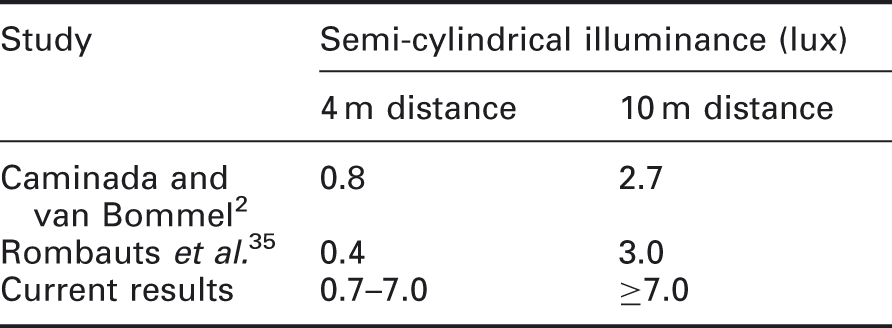
The current estimates of light level are also slightly higher than the findings from the study of facial recognition by Rombauts et al. 35 who investigated illuminance and facial recognition. Their results suggest a semi-cylindrical illuminance of 0.4 lux is required for identification at 4 m, approximately 3.0 lux for identification at 10 m, and an asymptote of around 20 lux to 25 lux beyond which higher ESC did not lead to better recognition.
Thus, the current data suggest illuminances that are higher than those reported in past studies. This higher illuminance may be because the task was more difficult, as recognition of facial expression can be more difficult than recognition of facial identity 24 and through the limited observation permitted. Note however that when Boyce and Gutkowski 36 interpreted the Rombauts et al. data, they suggested a vertical illuminance of 33 lux is needed at a distance of 17 m, which is of a similar order to the current results which suggest an illuminance of greater than 20 lux is needed in the plane of the target for identification of expression at 10 m. Rombauts et al. also suggested that confident face recognition is not possible beyond 17 m: The current results (Figure 5(a)) suggest recognition of facial expression is no better than chance at 15 m.
6. Conclusion
An experiment was carried out to investigate how lighting effects a pedestrian’s perceptions of another person’s emotional state determined from facial expression, body posture and observation of gaze direction. These factors contribute to judgements of the apparent intent of other pedestrians, whether they are friendly, aggressive or neutral. This work extends investigation of the relationship between lighting and interpersonal judgements beyond the analysis of facial recognition.
The results suggest that task performance was affected by the lighting and the interpersonal distance, with higher target luminance and targets of larger visual size tending to lead to higher frequency of correct identification. Lamp type (SPD) had an effect in only a few cases. The results exhibit a plateau-escarpment relationship between performance and luminance and this offers an approach to estimate appropriate light levels. The current data suggest a luminance of 0.1 cd/m2 is required for recognition of facial expression at 4 m and body posture at 10 m and 30 m, and a luminance of 1.0 cd/m2 is required for recognition of facial expression at 10 m and gaze direction at 2 m.
Repeating these trials using colour targets may reveal differences in performance between lamps and may affect performance thresholds. It is apparent that using these data to suggest design light levels requires further discussion as to which task is the more critical, and the minimum distance at which it is desirable for the critical task to be carried out. With regard to relative importance, Willis et al. 20 found that facial expression exerted a larger influence than did body posture in terms of the perceived approachability of a person but further evidence of this is desirable.
Footnotes
Funding
Acknowledgements
Images used in this experiment were taken, with permission, from databases established by others: The FACES database developed by the Max Planck Institute for Human Development, the BEAST database developed by the Laboratory for Cognitive and Affective Neuroscience in Tilburg University, and the uulmHPG database developed by the Institute of Neural Information Processing in University of Ulm.