




Abstract
Urban water governance in India is dominated by engineering-centric, hierarchical systems that marginalise non-technocratic knowledge. We introduce a novel approach in conceptualising and operationalising transformative spaces that leverage informality—characterised by flexibility, adaptability, and creativity—to disrupt these hegemonies and promote culturally situated collaboration. These transformative spaces function as ‘safe-enough’ environments where diverse actors experiment, dialogue, and co-create water-sensitive approach tailored to their contexts. While established methodologies like Transition Management (TM) employ structured transition arenas, we adapt these into a broader and more fluid understanding of transformative spaces, explicitly tailored to India’s urban governance setting. Informality, a prominent mode of governance in India, is harnessed in this framework through three principles: cultivating confidence to challenge regressive power structures, fostering frugality and creativity, and instilling faith in the transformation. These spaces are critical for navigating the complexities of hierarchical governance and enabling more inclusive, pluralistic approaches. This paper explores how transformative spaces, shaped by informality, enable actors to confront entrenched hierarchies and foster meaningful engagement towards water sensitive governance, particularly within contexts characterised by power asymmetries and technocratic dominance in Bhopal and Bhuj. Ultimately, these spaces advance water sensitive governance by creatively framing solutions that move beyond technocratic models and empower local actors.
Keywords
Introduction
This paper introduces a novel approach to designing and applying transformative spaces to address water governance challenges in Indian cities and achieve water sensitivity goals. Water sensitivity refers to an integrated urban water management approach that envisions cities as ecosystems—where water is valued as a resource, communities are engaged, and infrastructure is decentralised, adaptive, and ecologically restorative (Bichai & Flamini, 2017). It calls for both technical and socio-institutional transformation to provide inclusive, reliable water services under growing climate and urban pressures, positioning water resilience as a catalyst for broader societal change (Bichai & Flamini, 2017).
Achieving these transformative ambitions calls for collaborative environments that facilitate deep reflection, open dialogue, and sustained engagement. Transformative spaces, as explored in this paper, aim to provide such environments — by broadening participation, normalising discussion on governance challenges, and disrupting entrenched hegemonies through their flexible capacity to address power imbalances while functioning within resource constraints and including non-technical perspectives (Pereira et al., 2015). These spaces do not presuppose transformation but instead offer the potential to nurture the capacities necessary for it, contingent upon context, relationships, and power dynamics.
Transformation demands more than technical solutions—it requires the ability to navigate complex socio-political and institutional landscapes. Formal governance systems in the Global South often lack this flexibility and responsiveness (McFarlane, 2012; Roy, 2009). In these contexts, informality offers a valuable alternative—a malleable organising logic that emerges within and alongside formal systems, that enables actors to circumvent rigidities, experiment with new arrangements, and co-produce adaptive solutions. Informality is a fluid and relational mode of governance enacted by communities, states, and non-state actors, co-produced through hybrid service arrangements shaped by socio-political, economic, and infrastructural negotiations. Rather than existing outside the state, it functions as an organising logic—a system of norms that governs urban transformation by transcending the dichotomy of legal and illegal practices (Ahlers et al., 2014; McFarlane, 2012; Wahby, 2021). For instance, in Hubli-Dharwad, India, informal water storage practices—such as household tanks and community-level coping strategies—persisted even after the introduction of formal 24/7 piped water supply, illustrating how informal and formal modalities often coexist in practice (Burt & Ray, 2014).
By grounding transformative spaces in informality, we show their inherent flexibility, creativity, and potential to support co-produced, locally rooted responses to governance challenges. This is especially relevant in India, where water governance is dominated by technocratic approaches that prioritise engineering solutions and centralised decision-making (Mollinga, 2008). These approaches marginalise non-technical knowledge and often ignore the socio-political and ecological dimensions of water (Hartley & Kuecker, 2021; Zwarteveen, 2017). Hierarchies based on gender, rank, and seniority further restrict the ability of local actors to question dominant paradigms or propose alternatives (Kumar, 2018; Mollinga, 2008; Rijke et al., 2013).
As a result, governance processes often fail to accommodate pluralistic approaches. While participatory spaces exist, they rarely realise their transformative potential. Many inhibit meaningful engagement, as actors may fear the political consequences of critiquing institutional weaknesses (Pereira et al., 2015; Prasad et al., 2023). Instead of challenging power, they tend to reproduce existing structures. Overcoming this requires deliberately cultivating ‘safe-enough’ spaces—where actors can critically and constructively explore alternatives without fear of reprisal.
Informality holds particular promise in enabling such spaces by fostering governance approaches rooted in local norms, tacit knowledge, and personal networks (Burt & Ray, 2014; Funder & Marani, 2015). It is especially valuable when formal systems struggle to support collaborative logic, offering the flexibility to reimagine roles and relationships. Its adaptive nature allows actors to experiment with alternative scenarios, challenge dominant narratives, and navigate complexity in context-sensitive ways (Haapala et al., 2016; Rijke et al., 2013). Working within and around power asymmetries creates openings for innovation without directly threatening authority (Jaglin, 2014; Jayaweera et al., 2023). For example, in rural Nepal, Haapala et al. (2016) found that informal arrangements—such as relying on trusted community members rather than formally designated officials—encouraged wider participation in water users’ associations by lowering entry barriers and allowing more organic, locally meaningful engagement.
This paper hypothesises that transformative spaces grounded in informality are better suited to the collaborative logics and political constraints of urban governance in India. These spaces do not impose change but enable the conditions for transformation to emerge. Without such approaches, technocratic dominance is likely to persist, impeding transitions towards water sensitivity.
To explore how such spaces can be designed and implemented, this study adapts TM—an urban governance framework developed to facilitate systemic change (Nevens et al., 2013; Roorda et al., 2014). TM involves structured multi-actor arenas, building on problem framing, long-term visioning, backcasting and experimentation (Hölscher & Frantzeskaki, 2020; Loorbach et al., 2015). However, research suggests that TM’s structured approach often struggles to engage deeply with power imbalances and hierarchies in Southern cities, thus overlooking informal governance structures and, ironically, reinforcing technocratic solutions (Hölscher & Frantzeskaki, 2020; Nastar & Ramasar, 2012).
In response, this paper adapts TM’s process-based logic into a broader framework of transformative spaces, leveraged through informality. While retaining the iterative structure of TM, this approach reconfigures its application to suit better the realities of India’s hybrid urban governance arrangements—where collaborative experimentation is often negotiated informally, and change is mediated by trust and socio-political negotiation. We examine how transformative spaces, in the form of workshops, were developed in the Water4Change programme in Bhopal and Bhuj, India, to foster dialogue on water sensitivity. Both cities face deeply embedded hierarchies and technocratic legacies that inhibit integrated governance.
The paper proceeds as follows: Section 2 (Informality and transformative spaces), conceptualises informality and its role in shaping transformative spaces. Section 3 (Empirical application through workshops), outlines the empirical application through workshops. Section 4 (Analysis of collaborative logics), analyses how these spaces responded to Indian collaborative logics. Finally, Section 5 (Implications for transformative governance) discusses the implications of this approach for advancing transformative governance and disrupting technocratic hegemony in the Global South.
Leveraging informality to shape transformative spaces
In our research, the transformative spaces adapt the structured approach of transition arenas while situating it within the Global South context by leveraging informality. Transition arenas, a vital tool in TM, support long-term societal transformations through successive stages: problem structuring, envisioning, backcasting transition pathways, experimenting, and monitoring, all facilitated by a diverse ‘transition team’ (Nevens et al., 2013). In this paper, we focus specifically on the backcasting of transition pathways within our transformative spaces. The earlier stages provided valuable time and insight to reflect on and rethink the methodology, adapting it to India’s unique governance context. Transition pathways are co-created as comprehensive roadmaps integrating various policy domains and strategies (Frantzeskaki et al., 2019). While TM is effective in stable, well-resourced settings, it struggles to address the socio-political complexities and power imbalances prevalent in the Global South (Noboa et al., 2019).
In contexts like India, where hierarchical governance and significant power asymmetries dominate, TM can unintentionally perpetuate these imbalances. Originating in the Global North, its structure does not align with the informal governance practices (Noboa et al., 2019). Although TM has sought to incorporate informal governance through ‘shadow processes’ (Loorbach et al., 2015), these efforts remain insufficient to capture the nuanced power dynamics (Nastar & Ramasar, 2012). Consequently, TM risks becoming overly technocratic, limiting its impact beyond its immediate participants and reinforcing the very technocratic dominance present in India’s urban water governance (Nastar & Ramasar, 2012). Furthermore, TM’s reliance on short-term, externally funded programmes in the Global South often leads to ‘projectisation,’ disempowering marginalised groups and undermining sustained systemic change (Jayaweera et al., 2023).
To address these limitations, transformative spaces in our study adapt structured elements from transition arenas, such as co-creation and experimentation, but apply them with greater flexibility and sensitivity to local contexts. Unlike traditional TM, transformative spaces recognise the political nature of governance transitions and seek to address the socio-political complexities TM overlooks. These spaces seek to create ‘safe enough’ environments where a broader range of actors, including those excluded from formal processes, can engage in open dialogue and co-create solutions (Pereira et al., 2015). We hypothesise that transformative spaces align better with India’s collaborative governance practices by leveraging informality. While retaining the structure of transition arenas to ensure direction and progress, these spaces remain adaptable, accommodating informal governance practices essential for navigating India’s urban water challenges.
Achieving transformative change within governance systems, particularly in contexts like India, requires significant malleability and openness to rethinking entrenched institutional structures. This often necessitates challenging long-standing approaches, which can be unsettling for governance frameworks that only rely on formal procedures and hierarchical control. This discomfort is exacerbated by the need to acknowledge and address inherent flaws within the system itself—a daunting endeavour for authoritative figures who may perceive such challenges as a direct threat to their established power. Transformative spaces advocate for including non-experts, who bring valuable experiential insights to challenge the traditional dominance of technocratic dominance (Pereira et al., 2015). While necessary for democratising decision-making, this inclusion often faces resistance as it disrupts established power dynamics (Cornwall, 2004).
Informality plays a crucial role in this context, operating within a state of ‘deregulation,’ where institutional rules are often suspended or loosely applied, creating zones of exception (Roy, 2009). In these zones, actors can navigate beyond formal structures, blending experiential knowledge with rational frameworks to co-create locally relevant and sustainable solutions (Funder & Marani, 2015). When applied both proactively and reactively, informality enables governance actors to navigate the socio-political complexities, enhancing the potential for transformative water-sensitive governance outcomes (Rijke et al., 2013).
Drawing from the literature, three key parameters of informality emerge as potential contributions to the functioning of transformative spaces in the Global South. First, informality may cultivate the confidence needed to challenge regressive structures. Second, it can foster frugality and creativity—valuable qualities in resource-constrained contexts. Third, it is proposed to instil faith in transition processes, supporting sustained engagement over time. In the following section, we elaborate on how these parameters serve as guiding hypotheses in this study, which investigates how such dynamics unfolded in practice. Later in the results and discussion, we examine how these possibilities materialised, drawing on reflective analysis of workshop interactions and post-event interviews.
Cultivating confidence to challenge regressive structures
TM is driven by the expertise and initiative of ‘front runners'—change agents—who develop long-term visions and experiments to foster sustainable change (Hölscher, 2018; Roorda et al., 2014). However, the structured nature of TM may inadvertently reinforce technocratic control in sectors like water management in India (Loorbach et al., 2015). Informality serves as a crucial counterbalance, amplifying marginalised voices and weaving diverse epistemologies into grassroots networks and self-organisation (Haapala et al., 2016; Mayaux et al., 2022). This inclusive approach combines expert knowledge with users’ lived experiences to enrich dialogue on governance issues. Collaborative storytelling and regular gatherings in these informal settings encourage critical learning and cultural exchange, fostering solidarity and shifting the focus from technology to governance challenges (Goldstein et al., 2013). These spaces facilitate introspection and iterative discussions, easing the challenge of confronting regressive structures. Informality strives to empower critical discourse, strengthen community-led initiatives, and utilise existing hierarchies to address oppressive governance effectively (Cornwall, 2004; Haapala et al., 2016).
Nurturing frugality and creativity
TM fosters creativity and innovation through transition arenas (Hölscher, 2018); however, in resource-constrained regions, maintaining such innovation can be challenging (Jayaweera et al., 2023). Informality here emerges as a crucial strategy, enabling a shift from focusing on resource constraints to embracing creative problem-solving. By fostering frugality and creativity, informality encourages reimagining limitations as opportunities, making solutions feasible and practical. Cultural validations of this approach, through concepts like Jugaad in India or Gehood Zateya in Egypt, exemplify this mindset, where actors repair and innovate by mixing formal and informal tactics to make things work (Badami, 2018; Wahby, 2021). Informality capitalises on deregulated settings by reorganising resources and authority strategically (Ahlers et al., 2014; Roy, 2009), facilitating the implementation frugally. This frugal approach emphasises the strategic use and repurposing of available resources, making informality a transformative tool that turns constraints into the bedrock for innovation.
Instilling faith in the proposed novelties
Transition Arenas leverage transition networks to progressively engage a diverse range of societal actors in promoting and executing a transition agenda through experiments and by integrating these into broader initiatives (Hölscher, 2018; Roorda et al., 2014). In parallel, informal networks play a pivotal role, providing essential support and guiding stakeholders through comparable challenges. These networks are established through personal relationships, hierarchical influences, and an in-depth understanding of the socio-political landscape, which are crucial for identifying loopholes and seizing opportune opportunities. Such insights are vital for sustaining initiatives and weaving them into larger programmes by harnessing personal and professional agency, particularly in resource-limited settings. ‘Safe-enough’ spaces, where participants can reshape their interaction dynamics, are crucial for enhancing their influence and fortifying the network that underpins evaluating and realising their innovative proposals (Haapala et al., 2016). This organically developed methodology ensures the alignment of local solutions with broader external trends and significantly bolsters their acceptance. Notably, in fields like water governance, where adaptability is essential due to inherent unpredictability (Dewulf et al., 2008), these strategies foster a sense of ownership and confidence in the transformative potential of the initiatives. By prioritising flexible transition mechanisms over fixed goals, informal networks underscore the importance of proactive involvement in transformation processes, thus reinforcing faith in the transformative outcomes.
Methodology
This section outlines the methodology employed during the workshop to establish transformative spaces for developing transition pathways in the Water4Change (W4C) research programme.
W4C was a collaborative research programme, co-funded by India’s Department of Science and Technology (DST) and the Dutch Research Council (NWO). The programme sought to apply the Water Sensitive City (WSC) concept using the TM approach over five years (2019–2024), focusing on Bhopal and Bhuj due to their diverse geographical and socio-economic contexts. W4C collaborates with local Indian academic and research institutions in Bhopal and Bhuj as knowledge partners. These partners work to nurture capacities for water-sensitive governance and sustain the programme’s outcomes by engaging relevant stakeholders and adapting the TM approach to co-create locally sensitive solutions.
We first establish an understanding of the case studies before delving into the adaptation of transformative methodologies.
Case studies: Bhopal and Bhuj
Bhopal and Bhuj each face distinct urban challenges shaped by their unique geographical and socio-economic contexts. Bhopal, the capital of Madhya Pradesh, is centrally located and known for its lakes. Despite this, official reports highlight issues with water quality and quantity (CAG India, 2021). Fieldwork further revealed that local stakeholders have a false sense of water sufficiency due to reliance on external sources, overlooking groundwater contamination, particularly by Persistent Organic Pollutants (PoPs) (Everard et al., 2020). Conversely, Bhuj, located in India’s arid north-western frontier, historically benefited from unique hydrogeology and traditional water management (van der Meulen et al., 2023). However, rapid population growth has led to groundwater depletion and increased salinity (Saha & Gor, 2020). Field observations reveal conflicts between local aquifer restoration efforts by NGOs and citizen groups and government initiatives prioritising distant water sources.
Despite differing water issues, both cities face similar governance challenges exacerbated by rapid urban growth, migrant inflows, and haphazard infrastructure development. Limited resource allocation and centralised decision-making further hinder effective water management. In Bhuj, the Bhuj Nagar Palika (Bhuj Municipal Council) manages the water supply but lacks autonomy, following directives from the state capital, Gandhinagar (Bajpai & Kothari, 2020). Similarly, in Bhopal, the transition of water supply management to the Bhopal Nagar Nigam (Bhopal Municipal Corporation) is complicated by the continued influence of the state’s Public Health Engineering Department (PHED), highlighting issues of centralisation and limited delegation of responsibilities (CAG India, 2021).
W4C workshops
Borrowing from TM, the W4C workshops adhered to four key stages: problem framing, envisioning, pathway development, and city-specific adaptation. The first two workshops concentrated on problem framing and envisioning futures. However, their outcomes highlighted the limitations of the transferred TM methodology in the Indian context, prompting a more grounded and informal approach for the third workshop on ‘pathway development’. This workshop—central to this paper—was crucial in synthesising earlier visions into actionable strategies. Furthermore, it also surfaced previously overlooked governance and procedural barriers often dismissed as trivial or routine.
The three parameters were hypothesised during the design phase of the pathway development workshop, informed by a review of relevant literature, and subsequently guided both the facilitation process and the thematic focus. Post-event reflections, field notes, and interviews were analysed to trace how these parameters shaped participant engagement, adaptability, and informal mentorship throughout the process. They became the analytical lens through which we examined how transformative capacities were nurtured, reflecting the iterative and reflective logic of action research.
The following sections detail the methods employed.
Pathways development workshop
Prior fieldwork
The study began with extensive fieldwork, including 64 semi-structured interviews in Bhopal and Bhuj. Using ethnographic methods (Gobo, 2008), the first author engaged with government officials, NGOs, civil society, academics, and citizens to understand the informal practices shaping water management. Visual ethnography (Pink, 2013) revealed unconscious traits influencing the actors. This fieldwork highlighted distinct repair practices in each city and how informality shaped these practices.
Venue and participants selection
Delhi city was chosen as the workshop venue due to its national significance and accessibility, allowing the inclusion of national experts to provide insights to city stakeholders. These experts were chosen based on their approachability, diverse experience, and openness to candid discussions.
The team used prior workshops and fieldwork insights to identify key stakeholders crucial to each city’s water management for participant selection. A diverse group of 6–7 stakeholders from each city, including government officials, academics, civil society members, and citizens, was chosen by Indian and Dutch researchers. Selection criteria included relevance to ongoing projects, willingness to engage, and availability for future workshops.
While the goal was to include a balanced representation, local partners also invited influential figures resistant to change to strengthen their relationships, which risked marginalising transformative voices. To balance this, PhD researchers invited stakeholders based on research needs. This move provided a transparent view of governance dynamics, with these influential figures potentially becoming agents of change if they embraced the workshop’s learning. Participants were then divided into small groups of three for focused engagement.
Team composition and facilitation training
Each participant group was facilitated by a pair of PhD researchers—one Indian and one Dutch— and co-supervised by senior experts from W4C partners representing diverse fields such as urban planning and design, transition and governance studies, water technology, and behavioural science. This structure ensured diverse disciplinary perspectives and cross-cultural mentorship while preventing dominance of any single viewpoint.
Recognising that hierarchical dynamics can stifle participation, experienced W4C facilitators conducted mock sessions to train the team in empathetic listening, jargon-free explanation, bias awareness, and strategies for managing condescending or dominant interactions. The participant groups maintained a 1:2 facilitator-to-participant ratio throughout the workshops to ensure that every participant felt heard and supported. Because the researchers were familiar with each stakeholder’s background and projects, nudge questions were tailored to their contexts, fostering organic, inclusive discussions.
Workshop design
Given the resource constraints, the two-day workshop was designed to adapt existing transition pathways to achieve WSC objectives. The sessions were crafted to cultivate confidence in challenging regressive structures, encourage frugality and creativity, and instil faith in the transformative process while respecting India’s collaborative culture.
Session 1 aimed to cocreate transformation pathways while aligning them with existing projects using backcasting Photograph 1. The backcasting process (Robinson et al., 2011), which works backwards from a desired future to identify the steps required to achieve it, was employed iteratively. This iterative design allowed multiple rounds of questioning the feasibility of pathways, reflecting on challenges, and providing anonymous feedback through tools like Mentimeter. This anonymity helps surface sensitive topics (such as political bullying and institutional inertia) that the participants are reluctant to discuss openly. The emphasis was on creating an environment that normalised reflection and course correction, supported by sensitive facilitation and strategic nudge questions to foster confidence in participants. The inclusion of multiple facilitators was intentional to ensure that the implications of suggestions were explained from different disciplinary perspectives, enabling a more comprehensive understanding.
Session 2 aimed to consult with experts and seek solutions for challenges identified in earlier sessions that could hinder the uptake of transformation pathways. Recognising that discussing governance challenges can be difficult, the session was designed to take place in a relaxed, informal setting resembling a food fair to encourage spontaneous dialogue. The use of culturally relevant snacks and informal, off-the-record discussions was deliberate, allowing participants to engage in unfiltered conversations akin to ‘coffee machine chats.’ This approach was meant to cultivate confidence, making it easier for participants to ask questions without the pressure of needing to sound correct or knowledgeable. The design promoted flexibility, allowing participants to engage with experts at their comfort level, fostering a more meaningful exchange of knowledge while reflecting on how to frugally address their issues. However, the design also acknowledged that some participants might face hierarchical barriers, such as seniority or gender dynamics, which could limit their willingness to engage openly. This led to the design of an additional session (Session 3) without any experts.
Session 3 was designed to facilitate peer-to-peer learning between stakeholders from different cities in addition to what they had learned from experts in the previous session. The session adopted a classroom-style format without a central authority figure to promote balanced dialogue and collaboration. Leveraging the existing hierarchy, senior participants from one city were paired with junior participants from another, fostering a mentorship dynamic. The design aimed to create a safe-enough space where participants could openly discuss ‘loopholes’ in their approaches, which are often avoided in formal settings. By encouraging continuous engagement and building rapport throughout the workshop, the design enabled participants to share individual experiences and practical insights. This helped in developing long-term relationships and collaborations beyond the workshop itself. The session celebrated the identification and resolution of challenges, fostering creativity and faith in applying novel solutions within resource constraints. Actors discussing during backcasting session. (Photograph Courtesy - Johnathan Subendran).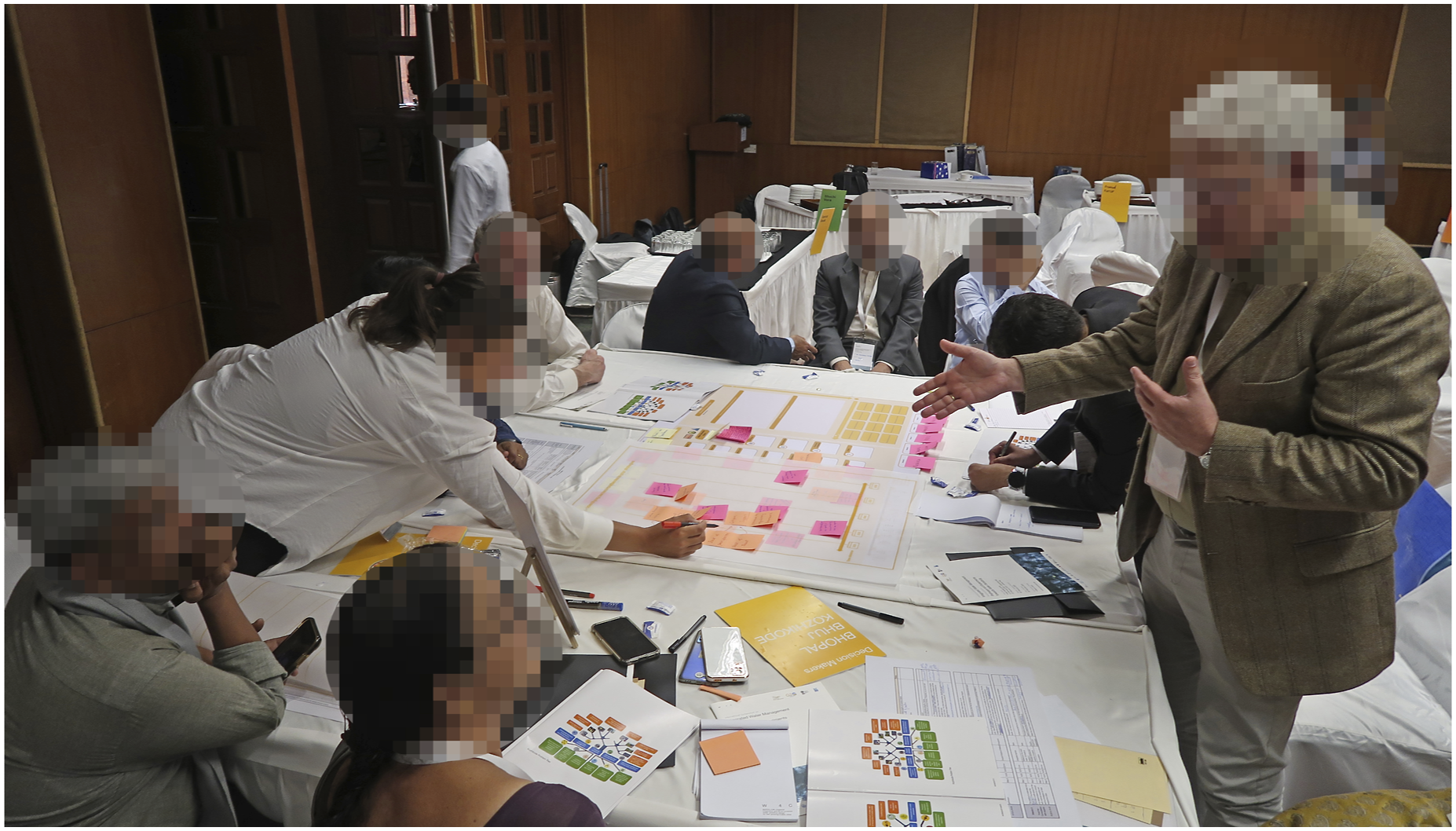
Workshop follow-up and evaluation
Post-workshop, stakeholder contributions were documented using Miro software, and the first author conducted 8 follow-up semi-structured interviews (3 Bhopal stakeholders, 2 Bhuj stakeholders, 3 with national experts). These interviews analysed using ATLAS. ti software, helped us understand the participants’ learnings and examine the extent to which it facilitated achieving their respective goals. This was to comprehend how the space facilitated the nurturing of transformative capacities and to ascertain the role of informality in this process.
Results
This section presents how transformative spaces challenged the dominance of technocratic approaches in Indian water governance and enabled actors to reimagine transition pathways in more inclusive and contextually grounded ways. Initially, workshops were dominated by discussions of technological upgrades and infrastructure, reflecting an entrenched preference for engineering-driven solutions. This dominance was reinforced by authoritative actors employing specialised jargon, marginalising non-technical voices and alternative perspectives. As the workshops unfolded, participants increasingly recognised the limitations of purely technological solutions, prompting broader conversations around governance reforms, mediation, and community engagement—issues often side-lined in technocratic discourse. In Bhopal and Bhuj, these spaces encouraged reflection on and adaptation of existing transition pathways towards more human-centred, socially attuned governance practices. In Bhopal, participants re-evaluated their roles to rebuild trust, strengthen collaboration, and promote shared responsibility, while in Bhuj, efforts were rooted in cultural practices, community engagement, and exploration of statutory reforms. This section examines three key parameters that emerged through informality: cultivating confidence to challenge hierarchies, adopting frugality to broaden proposals, and instilling belief in the transition pathways. We further assess how transformative spaces, by leveraging informality, nurtured governance capacities that underpinned the development of these outcomes.
Cultivating confidence to challenge technological dominance
The workshop encouraged participants to challenge entrenched water governance structures and recognise previously dismissed issues by sharing personal experiences rather than impersonal, third-person accounts. This approach humanised the issues, emphasising the need for non-engineering solutions. At the Bhopal table, personal stories repeatedly surfaced about the lack of awareness about contamination, highlighting concerns often dismissed in formal settings. Facilitators skilfully introduced these overlooked topics, fostering an environment where participants felt validated and confident in addressing them.
These dialogues also led to a reassessment of problems, encouraging more open dialogue and altering perceptions of experts and those initially seen as transgressors. This shift helped resolve long-standing issues, as evidenced by a stakeholder
1
who initially denied contamination problems but later acknowledged them, albeit minimally: “It is correct that it is a problem, but the extent of what he was saying was that there were a lot of things that were not true.”
Tools like the Mentimeter played a role in addressing overlooked topics such as institutional resistance, political bullying, and vested interests, thereby exposing hidden challenges in the system.
Frugality and creativity aid in broadening the proposal to seek funding
Informal settings, like food fairs as unofficial discussion spaces, fostered frugality and creativity (Photograph 2). These organic environments encouraged candid conversations between experts and stakeholders, free from formal constraints such as recordings, strict timelines, or external judgment. This flexibility allowed stakeholders to take ownership of solutions, leading to sustained engagement. Informal Setting such as food-fair allowing candid conversations. (Photograph Courtesy - Johnathan Subendran).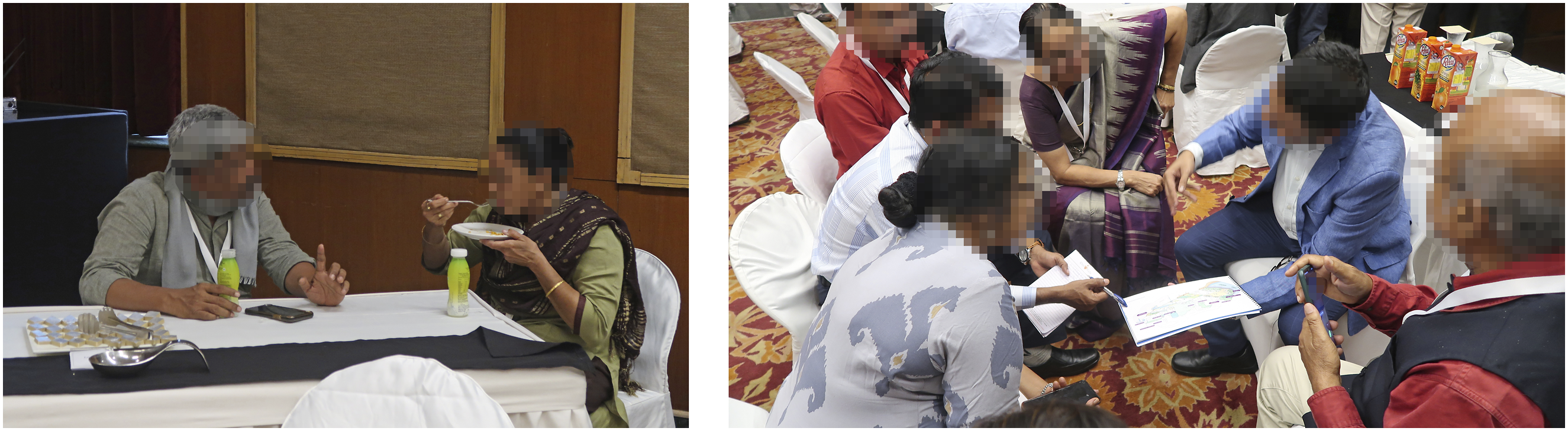
Initially focused on technological upgrades, discussions soon shifted to addressing managing expectations and emotions in resource-constrained environments. One conversation centred on navigating funding challenges by adopting a frugal mindset. This was emphasised during expert consultation where stakeholders explored innovative strategies for securing funding. What began as a focus on technical expertise evolved into discussions on broadening the scope of funding proposals. The expert
2
remarked, “…the problem is not with funding; the problem is how you propose for funding”.
The expert advised the stakeholders to frame their projects with broader applicability, such as disaster management, thus broadening their perspectives.
Bhopal-Bhuj instil faith by mentoring each other simultaneously
The workshop also strengthened trust in water governance strategies through cross-city mentorship. Senior stakeholders from one city mentored juniors from another, using existing hierarchical structures to foster open discussions on overcoming governance challenges (Photograph 3). This cross-city mentorship enabled open discussions on overcoming governance challenges, transcending technical details to focus on real-life problem-solving. Senior stakeholders shared their successes and challenges, enhancing credibility and providing a balanced perspective on navigating governance obstacles. The format encouraged juniors to ask candid questions, leading to a deeper understanding of feasible solutions. Senior stakeholders from one city mentoring junior stakeholders from other cities. (Photograph Courtesy - Johnathan Subendran).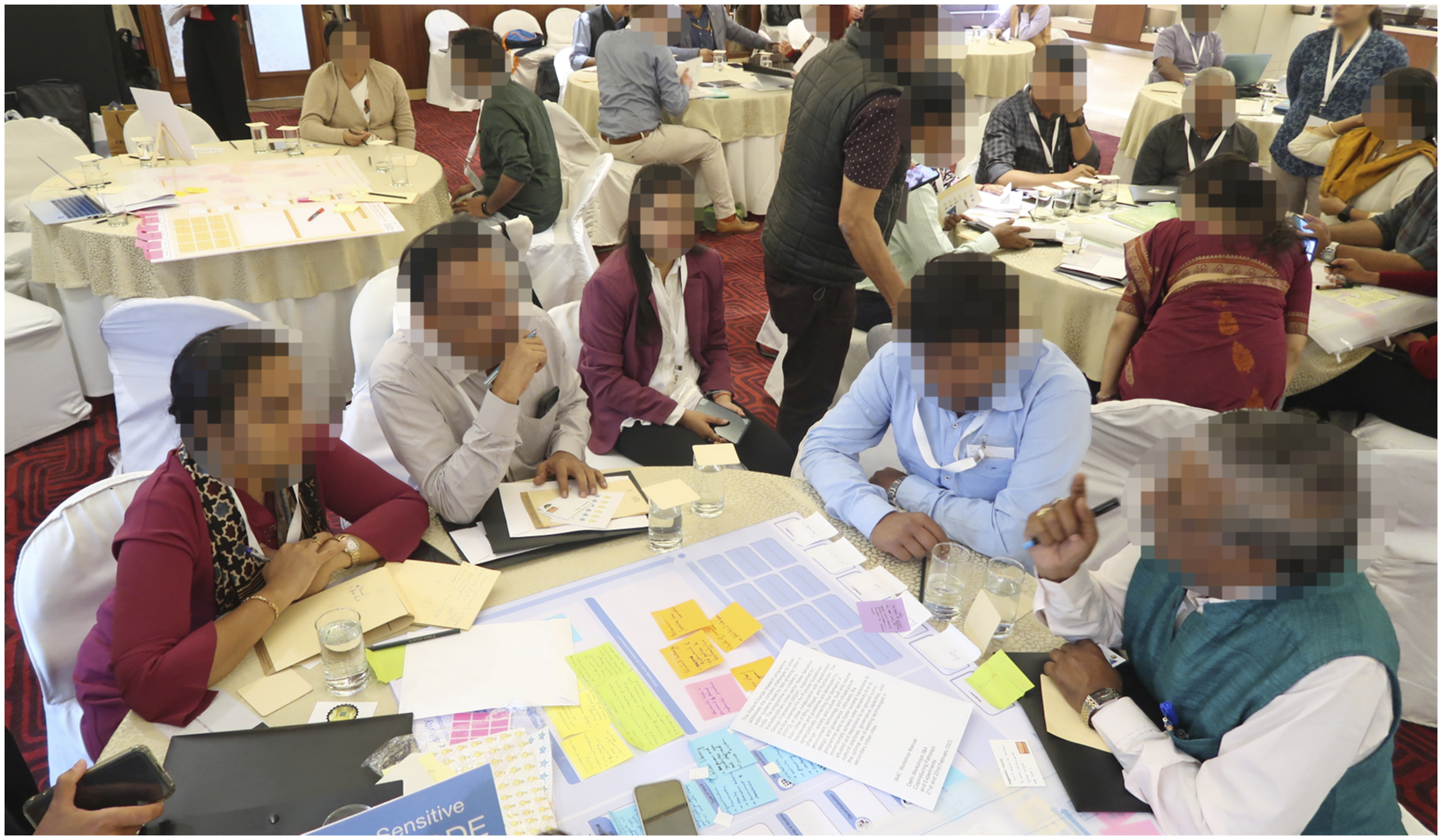
Mutual inspiration between the cities was evident, with Bhopal institutionalising a lake development authority and Bhuj focusing on community awareness. Each city offered valuable insights to the other. A stakeholder
3
from Bhuj described their experience: “There was a team from Bhopal that mentioned they have a lake development committee, which we don't have here. If we had a lake development committee and a pressure group that included media, eminent citizens, and working women—people from all walks of life—it would make a significant difference. These points were particularly important for me”.
While not providing direct solutions, the informal settings were crucial in identifying the conditions for enabling transformation. Discussions revealed previously unrecognised capacities for coordination, collaboration, innovation, and adaptation, even within the constraints of formal rules and limited resources. Through thoughtful facilitation in these informal settings, participants became better equipped to nurture these capacities, advancing their water sensitivity goals and developing more sustainable solutions.
The three parameters played a key role in grounding the transformative process within the Indian context, fostering governance capacities to an extent. While not all objectives were fully realised, these parameters influenced the development of the pathways. By addressing overlooked issues such as representation, data credibility, and institutional awareness, the parameters enabled participants to move beyond technocratic approaches, contributing to more inclusive and systemic solutions. Including marginalised voices ensured that the pathways extended beyond purely technical concerns, incorporating suggestions to develop mediating bodies, community-led data management, and innovative funding strategies. Although challenges remained, the pathways became somewhat more actionable, drawing on ongoing projects and collaborative networks, and were shaped by a practical understanding of local contexts. While imperfect, this iterative and informal approach helped transform ambitious goals into more feasible and contextually grounded outcomes, reflecting the ongoing need for adaptive, sustainable governance in India’s water sector.
Discussion and conclusion
Our study explored how informality fosters transformative spaces in the Indian context. By leveraging three key parameters, these spaces nurtured governance capacities and influenced the development of new pathways. Our findings build on the literature on informality by extending the role of three interlinked parameters beyond static traits into dynamic, co-evolving practices that mediate power, creativity, and trust in transformation contexts. Confidence was not only about voicing concerns but also about recognising systemic blind spots and reframing actor roles. Frugality went beyond resource efficiency to enable strategic reframing of project proposals, thus broadening ownership and vision. Faith, meanwhile, was not static but cultivated through peer mentorship and informal exchange. Together, these parameters acted as scaffolding for locally grounded innovation. Moreover, our findings point to emergent concerns—particularly the politics of facilitation, the role of informal mentorship, and the delicate navigation of state-aligned legitimacy—that require further scholarly attention when translating theory into practice in Global South governance transitions. In doing so, the paper adds conceptual depth to the evolving understanding of informality as a governance logic—advancing beyond its role as a workaround to explore its constructive and systemic potential for transformation. By foregrounding relational facilitation and responsive adaptation, this study offers an action-oriented approach to transformation rooted in lived experience and co-produced knowledge—aligning with the special issue’s focus on how Action Research (AR) stimulates and sustains change.
Addressing technocratic hegemony
The workshops marked a shift from the question of what needs to be done in water governance to how change can be enacted—opening space for discussions on democratising data, loosening institutional rigidities, and strengthening community involvement, as discussed by Zwarteveen (2017) and Hartley and Kuecker (2021). Informality was central to this shift.
Drawing from Cornwall’s (2004) concept of ‘unofficial spaces,’ alongside Pereira et al. (2015) idea of ‘safe enough spaces,’ the workshops created informal environments like food fairs and classroom-style settings that encouraged openness and creativity. Digital tools such as Mentimeter facilitated anonymous and off-the-record engagement, allowing participants to challenge technocratic dominance without fear of repercussion.
This design helped humanise water management and fostered broader discussions, incorporating marginalised voices and non-technical perspectives. Though technocratic dominance was not entirely dismantled, these informal spaces marked a step toward questioning entrenched power structures. The spaces did not immediately produce concrete solutions but laid the groundwork for more participatory and collaborative governance approaches, demonstrating the potential of informality to challenge rigid, formal structures.
Nurturing capacities through informality
The workshops functioned as relational spaces where participants could reflect, reposition, and co-create ideas beyond formal constraints. Rather than ‘building’ new capacities, they ‘nurtured’ existing ones—such as trust, critical reflection, and the ability to navigate entrenched hierarchies—often marginalised in formal governance. Informal logics like reverence-based seniority, self-organisation, and reciprocity enabled context-sensitive engagement.
This resonates with Settersten et al.’s (2022) concept of relational transitions, which foregrounds situated social practices over static capacities. Transformation emerges not from prescriptive interventions but from enabling environments where local actors can co-shape processes of change. These spaces thus supported the pluralisation of water governance by amplifying endogenous capacities and challenging technocratic paradigms.
Situating sensitivity
The transformative spaces enabled stakeholders to explore local meanings of water sensitivity beyond imported frameworks. Although the Australian WSC model emphasises decentralisation and ecosystem restoration, its application in India required reinterpretation because the social, political, and infrastructural contexts differ markedly. Australian models often presume functional decentralisation and community trust—conditions not readily present in India’s hierarchical systems. Participants pragmatically defined water sensitivity as enabling local decision-making, mending distrust, and navigating socio-political constraints by repairing and adapting existing governance arrangements. Through iterative discussions and informal engagements, stakeholders co-produced water sensitivity as a politically situated aspiration.
Navigating power and positionality in facilitation
The W4C programme’s affiliation with the Indian national government led some participants to perceive it as closely aligned with official narratives. Indian partner organisations—respected for their political credibility—were instrumental in bringing together both state and non-state actors. Yet, these very affiliations sometimes constrained researchers from those organisations from posing critical questions, due to concerns about jeopardising future political relationships. To manage this tension, we paired Indian and Dutch facilitators with complementary expertise and dispositions. This pairing was not only intended to balance cultural and political sensitivities but also to navigate group dynamics: while some facilitators were more comfortable introducing sensitive topics, others played a key role in maintaining stakeholder rapport. However, in practice, outcomes varied—comfort in addressing difficult issues was shaped as much by individual personalities and group dynamics as by the facilitation strategy itself. These efforts revealed the constraints imposed by W4C’s political positioning: although we aimed to balance access with critical reflection, deeper critique was at times limited, underscoring the need for ongoing reflexivity and adaptation in politically sensitive contexts.
Future scope and limitations
While prior work on TM (e.g. Hölscher et al., 2018; Roorda et al., 2014) has focused on structured arenas, this study highlights how informality can better navigate power asymmetries in Global South contexts. Extending Pereira et al. (2015), we show how informality supports iterative, adaptive, and locally grounded transformation processes.
Situated in the Indian context, our findings offer insights for other Southern cities, while also informing more formalised systems in the Global North. However, informality alone cannot sustain transformative spaces in the long term. Endorsement by formal institutions may be essential to ensure their continuity and legitimacy. Furthermore, the quality of facilitation plays a critical role; if left unexamined, it risks reinforcing existing biases and hierarchies. To realise their full transformative potential, such spaces require facilitation that is not only reflexive and inclusive but also grounded in local socio-cultural contexts.
Footnotes
Acknowledgments
This research was conducted within the W4C programme, a collaborative partnership between India and the Netherlands. We appreciate the invaluable contributions and critical reflections of all participants, and we extend our gratitude to the W4C member institutions for their support and collaboration.
Declaration of conflicting interests
The author(s) declared no potential conflicts of interest with respect to the research, authorship, and/or publication of this article.
Funding
The author(s) disclosed receipt of the following financial support for the research, authorship, and/or publication of this article: The research leading to these findings has been supported by funding from the Dutch Research Council (Nederlandse Organisatie voor Wetenschappelijk Onderzoek - NWO) under Grant W 07.7019.103 and the Indian Government Department of Science & Technology (DST) under Grant DST-1429-WRC.
