



Abstract
This article examines how piloting a diary method became pivotal in transforming a participatory ethnography on household debt in Greece and Spain into full-fledged Action Research —driven and shaped by the diary-writing participants themselves. We analyse the evolving dynamics between researchers and diary authors, as an initial phase of solitary diary writing prompted the collaborative development of workshops with drama and theatre methods which, in turn, catalysed dialogue, critical reflection, and collective empowerment. These engagements not only enabled diary authors to articulate previously silenced issues around indebted subjectivity, but also repositioned them as central agents and co-researchers, enabling the research team to fully inhabit the role of situated Action Researchers.
Keywords
Diary methods from participatory ethnography to action research with drama methods
The article discusses how using a pilot diary research method turned a participatory ethnography project on household debt into action research through collaboration with diary writing participants. Ethnodrama and community theatre methods were developed to encourage reflection on the diary method and to negotiate the relationship between researchers and diary authors. This approach empowered diary authors to voice previously overlooked issues. But in turn, diary authors became key agents in helping the research team fully embrace their role as Action Researchers.
The article’s broader aim is to reflect on how diary methods can become incorporated into action research (AR). Thus far, there is rather limited reflection on the use of diary methods in AR (Mshelia et al., 2016), despite the fact that researchers highlight the potential of diaries to: a) alter the everyday lives and processes researchers seek to understand (Zimmerman & Wieder, 1977); b) enable respondents to define the boundaries of knowledge and experience they wish to share; and c) understand the making and re-making of subjectivities (Gibson et al., 2013; Spoward & Nairn, 2014).
Here, we exemplify the relationship between diary methods and AR by reflecting upon how the debt diaries method, which was piloted by our team while conducting ethnographic research on household debt in Greece and Spain, became fully-fledged AR. This occurred as diary-writing participants expressed explicit interest in co-creating an international community where they could share experiences of indebtedness and coping strategies with other debt diary authors. To facilitate this process, we applied for extra funds and organized a closed workshop, followed by an open public event, where we brought together diary authors from Spain and Greece. The workshop, facilitated through community theatre co-creation methods, enabled participants to compare and contrast their experiences of indebtedness, to highlight and compare what they considered to be important issues, but also to comment and reflect on the method of diary writing itself and on how it can be improved. Some of the key issues that emerged in the workshop had been explored individually in diaries, and included shared individualized feelings of guilt, disempowerment and shame as well as collective feelings of empowerment through mutual-support and collective action. In terms of learning and improvement of the diary method itself, we observed that the collective mobilization, common organizing and belonging that Spanish diary authors experienced prior to, and during, diary writing, facilitated a deeper sharing also through the diaries themselves. In this light we can argue that the long-term relationship building and collaboration of researchers with social movements and local organizations is key to generate trust and the conditions for knowledge co-creation.
Whilst outlining the potential of the debt diaries, combined with drama methods, to empower marginalized actors, we emphasize also how the field processes, the participants and the co-created workshops, empowered us, researchers, to fully embrace our own role as situated Action Researchers and to shift a predominantly ethnographic project with AR elements to fully-fledged AR.
Drawing upon our experience, we outline the potential, but also the weaknesses and possible pitfalls, of using diary methods as part of AR and suggest ways that can help overcome these weaknesses.
Motivation for developing the debt diaries method
Our research team developed and piloted the debt diaries method as part of a broader project studying household mortgage debt defaults in Greece and Spain at the aftermath of the 2008 financial crisis. This was the first time, to our knowledge, that diary methods were used to gather detailed qualitative data on the impact of indebtedness on daily life in an international context. By studying households facing evictions and foreclosures, the project connected macro-economic data on mortgage debt to the individual experiences of living ‘mortgaged lives’ (García Lamarca & Kaika, 2016; Siatitsa, 2014).
The need to develop the debt diaries method arose when two sets of concerns emerged after many months of more ‘traditional’ ethnographic field research. The first set of concerns was ethics related; we needed to provide a ‘safe space’ to vulnerable subjects. Diary methods are seen as valuable for this purpose (Walker & Burningham, 2011; Whittle et al., 2012). Diaries could potentially allow indebted subjects under stress and crisis to express issues and concerns around coping, or trying to rebuild their lives after an eviction (Bashir, 2018; Kaika, 2012; Petrova & Prodromidou, 2019; Simón-Moreno Heitkamp Pereira & Siatitsa, 2024; Alexandri & Janoschka, 2018; Cahill, 2007; Chmelar, 2013; Fields, 2017); or even realize frustrations that might not otherwise be shared (Filep et al., 2018).
In the case of Spain, where great research interest in the housing movement meant the presence of many researchers in the field, the diaries would also allow people to tell their story in their own time, using a format (diary) they had not previously experienced, ‘free’ from the potentially pressing presence of the researcher and without the mediation of speech or communicative gestures. Additionally, in Spain, where social movements had already provided a public forum for discussion, the debt diaries could uncover experiences that could not be expressed orally in activist meetings. Indeed, Fernando (pseudonym), who had participated for years in the Spanish housing movement, commented during the workshops that followed diary writing: “Thank you for letting me express myself, I don’t usually talk about my case. It helped me remember, to console myself a bit since I try not to think about the past in order not to suffer, but that same silence eats me from the inside.”
In Greece, diary writing in one’s private space and time was particularly important for different reasons. Unlike Spain, shame and stigma around debt and personal insolvency had not become part of an open public dialogue, do diaries became a way of expressing what had been left untold. Katerina (pseudonym) also noted the collective workshops at the end of diary writing: “The idea of taking part in this research and sharing an experience that completely overturned my life through a diary format excited me from the beginning. Of course, as it happens to most of us, when writing about deeply personal and stigmatizing events, there were moments when I was heavily loaded. But at the same time, those moments also strengthened my belief and my hope that this was the way to make my story heard to a wider community. It felt like an opportunity to send out a message: we are not alone. And if we unite, we can certainly achieve better outcomes.”
The second set of concerns that motivated the debt diaries method were methodological. Documenting the personal experiences of debt defaults using more ‘conventional’ qualitative methods (life stories, interviews, etc.) presented several limitations, which were interrelated with ethics considerations, mainly due to the reluctance of debt defaulting individuals to discuss a socially stigmatizing issue. The debt diaries method could fill some gaps in data availability (Denzin, 2017) and help further explore the correlation between macroeconomic practices and everyday practices inside debt’s “intimate spaces” (Dawney et al., 2020; see also Brickell, 2024; Harker, 2021; Harvey, 2011; Karaagac, 2020). It could help explore the correlation between debt defaults and various personal and societal challenges (e.g. deteriorating social, health, personal and emotional conditions (Mahony & Pople, 2023)), shedding light on the broader range of actors involved in managing household debt beyond financial and state institutions (see Baker, 2020; Loomans & Kaika, 2021). We originally conceived the diaries as an anonymous and individual process that participants would share only with us, as researchers. But the most striking and transformative element in this process was the request from the part of diary writers themselves (from both Spain and Greece) to collectivize this process, by meeting and trying to understand each other and to compare the process of indebtedness in a different geographical context. We were surprised by this unexpected development and demand, that took diary writing to something beyond a solitary experience and shifted our research process towards fully-fledged AR, as we will explain in more depth in the following sections.
Driven by the two sets of concerns outlined above, the debt diaries method was developed with some elements of AR, such as offering a forum for expressing personal experiences, bringing to fore previously hidden issues and concerns. However, the method was not explicitly designed as an AR method right from the start.
Recruiting diary authors: ethical and practical considerations
Accessing and engaging participants
Our target for the pilot debt diary method was to engage ten volunteering participants in Athens and ten in Barcelona for diary writing over a period of four to six months. We opted for voluntary recruitment and not purposeful selection since our aim was not to secure a broad socially stratified sample, but rather to bring out issues that had been silenced previously. This was an AR element present already in the conception of the debt diaries method. We did, however, establish that the voluntary participants had to be: 1) adults aged between 18-65; 2) people struggling to make debt repayments or already defaulted; and 3) people who had been in employment and able to service their debt regularly, prior to the 2008 financial crisis
Research and activism carried out by Melissa García-Lamarca in Spain and Maria Kaika and Dimitra Siatitsa in Greece over the preceding years enabled us to build upon our networks and relations of trust with mortgage-affected people and support organisations to identify a pool of potential voluntary participants. In Spain, the researcher had conducted ethnographic research for one year (2013–2014) before she became an activist in the housing movement. In Greece, the researchers had participated in projects on homelessness and housing precarity (2014–2015) involving non-governmental organizations and institutions that provided shelter and housing support whilst Dimitra Siatitsa was also involved as activist in mobilizations against auctioning indebted homes.
Due to the differential engagement of researchers with movements and local organizations in each site, we used slightly different recruitment strategies. In Athens, nine participants were recruited through four organisations working with people affected by debt: EKPOIZO a consumer organisation, ARSIS and PRAKSIS, working with vulnerable groups, and STOP AUCTIONS PLATFORM an activist platform against home repossessions. 1 Initially, twelve people volunteered in Athens; ultimately, eight women committed to participate, with only one actively involved in the anti-auction movement.
In Barcelona, nine participants volunteered through the engagement of one of the authors as an activist-researcher in the Platform for Mortgage Affected People (PAH) (García-Lamarca, 2017a; 2017b, 2022). Eight joined during a PAH assembly in April 2016, where the researcher explained the project, and a ninth participant was recruited at an action to block an eviction. All participants were active and involved in the PAH, and all had defaulted on their mortgage debt.
In our sample, women were over-represented (14 out of 17 participants). Furthermore, all participants were white and middle-aged. We believe our positionalities as white female researchers may have affected the participants’ profile, since women felt more comfortable engaging with us. In Spain, women make up most PAH members, and migrant groups have a strong presence. However, migrants in Spain didn’t volunteer, possibly due to language barriers affecting their comfort in diary participation. In Greece, only one migrant woman (from Ukraine) volunteered.
Questions or trust, mimicry and renumeration: the role of previously existing relationships with support groups
The prior trust established with local activist networks, institutions and mortgage-affected people themselves was invaluable for recruiting committed participants. Concerns arose about whether diary-keeping would be seen as an ‘obligation’ to these groups. Given the support many diary participants received from groups or organizations in our networks, we were aware of trying to control mimicry practices. It was important to distinguish the researchers’ role from that of supporting organizations and make it clear that diary keeping was voluntary and not tied up to support programs. These issues were addressed explicitly in follow-up interviews and co-created workshops.
Considerations were also made regarding payment for participants in the diary study. While wanting to value their effort, we also wanted to avoid payment being the sole motivation. In Athens, where research renumeration is not common practice, we were concerned that payments might even be seen as inappropriate or offensive. Conversely, in Barcelona, renumeration was considered important, due to the heavily involvement of potential participants in several non-remunerated tasks related to the housing movement, on top of (poorly) paid part-time employment (Alexandri & Hodkinson, 2025). Ultimately, a moderate compensation was chosen, considering the time-consuming nature of diary writing and the financial constraints of potential authors. Participants were informed that payment served as recognition for their contributions. Payment methods varied between the cities based on cultural and legal disparities. In Athens, payments were announced after participation commitment and made through a local non-profit. In Barcelona, renumeration was mentioned during recruitment and individual payments were made.
Shunning digital formats: the importance of the diary as a tangible physical object
Diary design: opting for non-digital format
The decisions over the diary format and length were shaped entirely by questions regarding diary distribution, the frequency of interaction between researchers and diary authors, and the shaping of the experience of diary writing.
Right from the start, we decided to opt for a physical rather than digital diary format. We wanted the diary to become a unique and attractive physical object, a presence in people’s everyday lives. A well-designed physical booklet would: a) transmit to participants the value we sought to give to their written experiences; b) invite them to fiddle, touch, open and write on it more often; and c) create a mental space in people’s homes, where they could go to reflect and write, free of the distractions and multi-tasking that digital interfaces create.
A graphic designer was contracted to design the diaries in A5 notebook form. Electronic and dictaphone versions were also made available to participants, but only three participants opted to use the electronic version. Follow up interviews revealed that participants did indeed find that the diaries’ physical presence as an attractive tangible object in their homes ‘invited’ them to pen entries.
An additional important design element we considered -also related to encouraging freedom of expression- was whether to structure the diaries strictly into weekly sections with blank pages or incorporate weekly questions and prompts to give structure and ensure focus on the topics of interest. In the end we opted for a combination of weekly prompts and blank pages, since a fully open-ended writing process was likely to produce fear and writers’ ‘block’. It would also make data harmonization more difficult. The weekly prompts/questions covered the social, personal, and institutional factors contributing to mortgage defaults, the impact of debt defaults on individuals, actors and conflicts linked to defaults, and the changes defaults brought to community and family relationships.
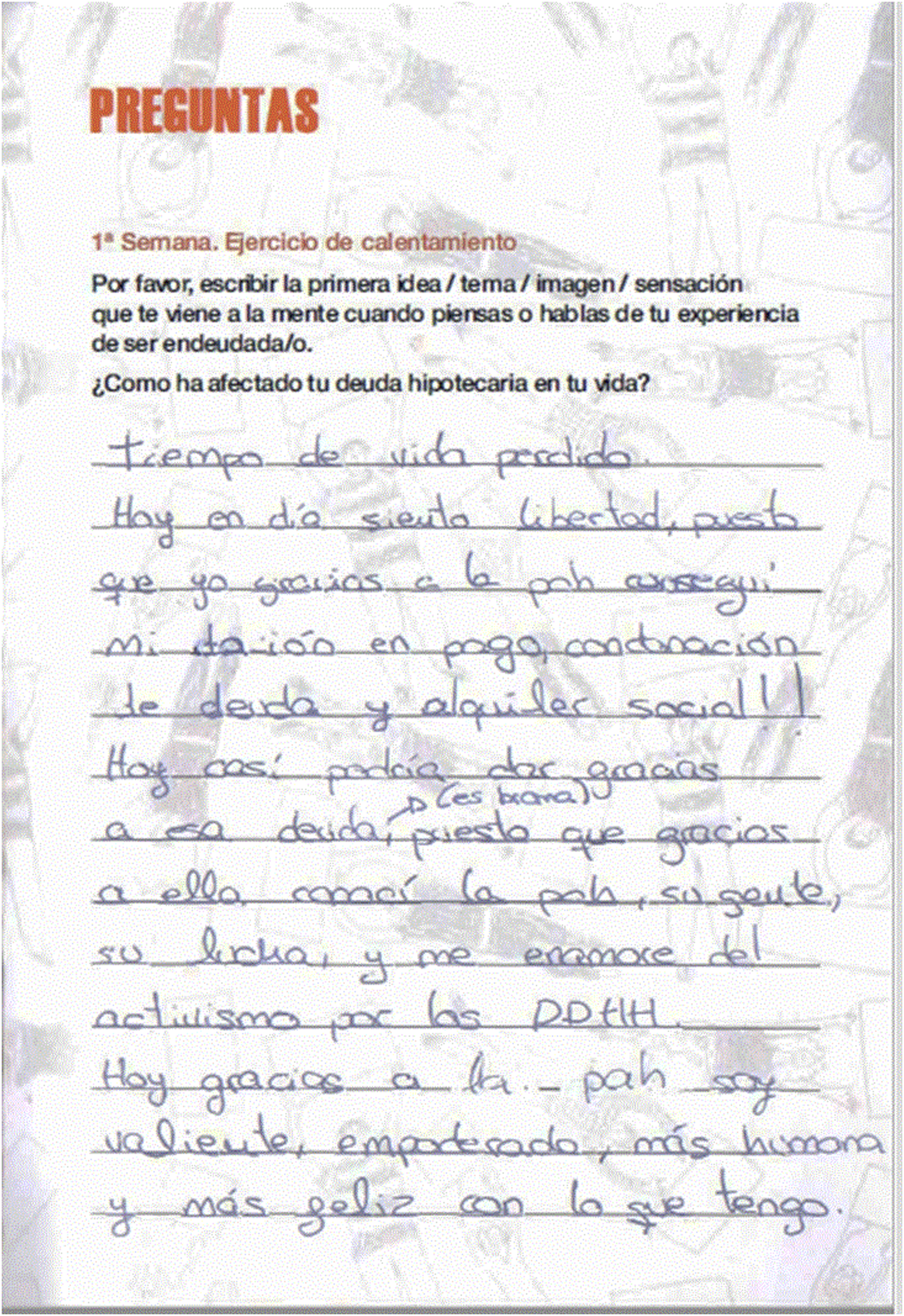
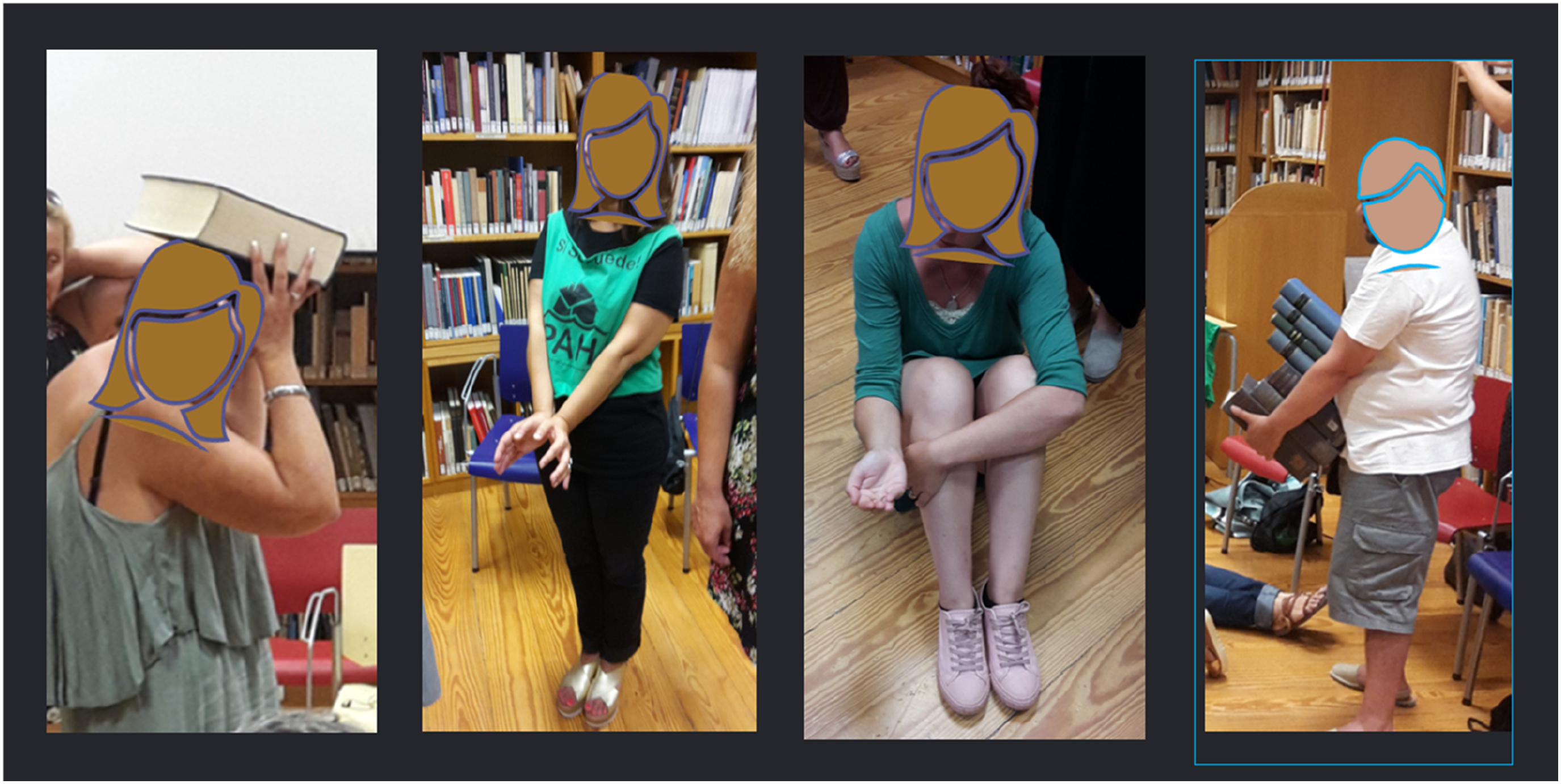
At the end of each week, we included an ‘open space’ with a few lined and blank sheets, inviting more open expression. An additional, longer ‘open section’ was included at the end of the diary, with almost as many pages as the rest of the diary. These open spaces aimed to empower participants to address overlooked issues (Whittle et al., 2012). We informed authors that the guiding questions were optional and encouraged them to write on any theme and create their own questions and headings (Figures 1, 2, 3). The cover of the A5 diary booklet, produced in Spanish, Greek and English, designed by Diego Borbalan. Diary page completed by Spanish author Gabriela (pseudonym). Translation Below Week 1: Warm up exercise. Please, write the first idea/issue/image/sensation that comes to mind when you think or talk about your experience of being indebted. How has your mortgage debt affected your life?. Community drama methods: co-creating ‘living statues’ of indebtedness.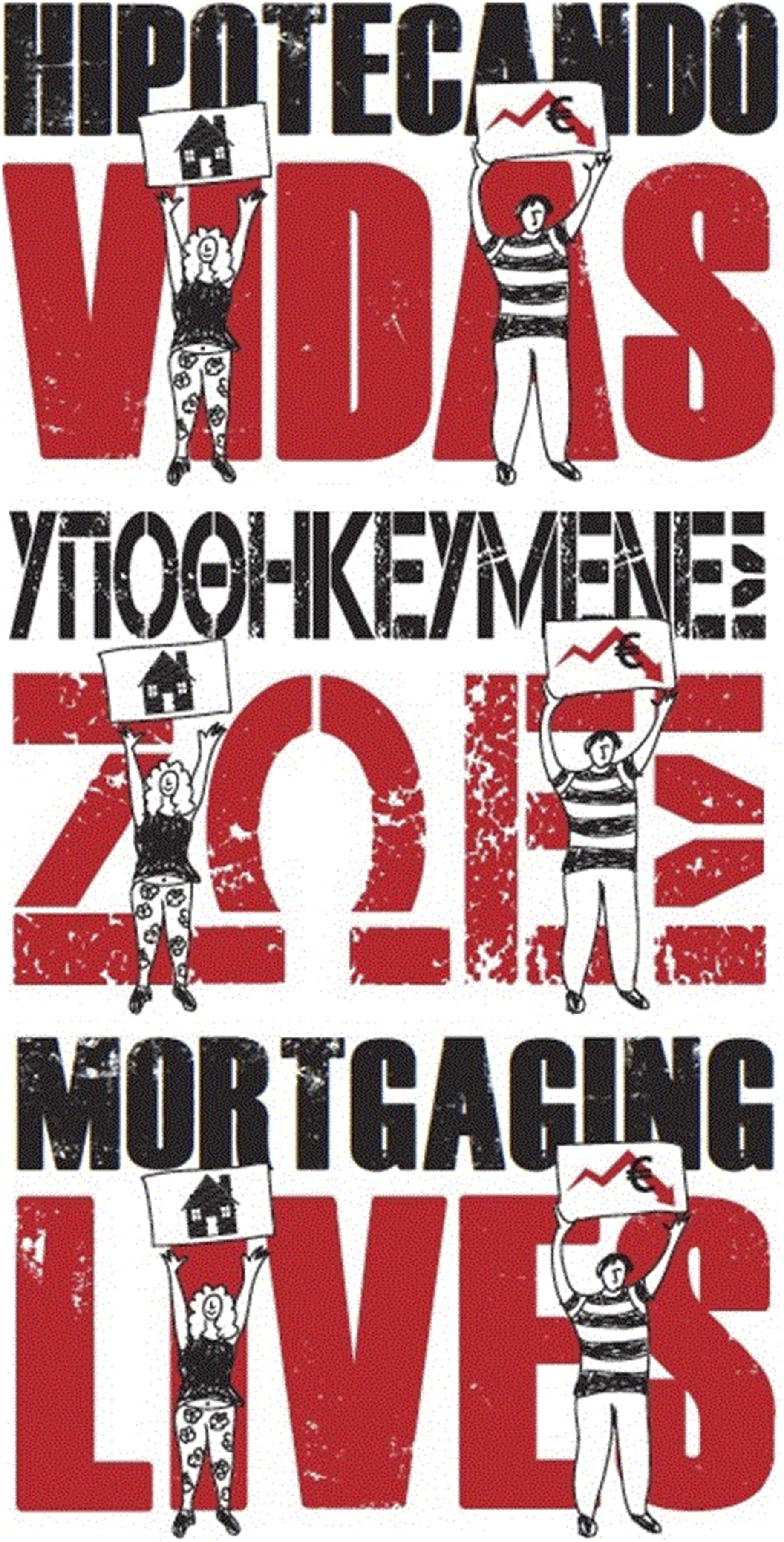
Diary structure and distribution
We discussed three options for the diary structure based on researcher-diary author interaction frequency. Option one: printing and stapling weekly A4 sheets for four months. Option two: creating a single diary booklet for the entire four-month period. Option three: preparing two booklets (A and B) for each two-month period, involving three meetings between researchers and participants for distribution, collection, and interviews.
Although most diary methods hold weekly or biweekly diary collections (Spoward & Nairn, 2014), we chose option three, with bi-monthly diary collections without weekly nudges from our part for two reasons. First, to make diary writing less overwhelming for participants, compared to giving them weekly or biweekly tasks. Second, to give participants the freedom to write and think in their own time, avoiding influencing them with nudging questions and comments.
During the initial meeting, we distributed booklet A, and thoroughly explained the project, the ethics, and reassured participants they could opt out at any point. We also emphasized anonymity and encouraged free and creative expression through writing, drawing, sketching, using photographs, film or sound. We offered the option of recording an audio diary or writing in electronic word format. Two participants in Barcelona chose to write on their computer. Another participant wanted to write in her mother language (Ukrainian), which we had translated into Greek and then English. We assured participants of our open availability for any questions, allowed ample time for queries, and concluded by collecting signed consent forms.
After the first two weeks, communication between participants and researchers was maintained to a minimum of fortnightly nudges in the form of a short email or quick phone call. No research interviews were performed during the diary-keeping period. These were conducted after booklets A and B were collected. After collection, all entries were transcribed, then translated in English and archived digitally according to academic ethics.
Anticipated outcomes: revealing silenced issues, tensions and the role of neglected actors
The debt diaries did offer insight on the gaps in qualitative data we wanted to address by piloting the method. They identified silenced issues around the impact of indebtedness on everyday life and around ways of coping (or not) with household debt defaults. They also gave insight on the role of previously under-researched actors.
One surprising finding was the relief diary authors felt when defaulting on their mortgages, as this act lifted the debt's binding influence that had reshaped their lives for years. The diary narratives also illustrated the lengths at which households went to maintain regular monthly repayments, before they eventually defaulted on their debt. They also revealed that many people had spent months –or years– trying to maintain regular monthly repayments, often cutting down on clothing and even food. Authors also expressed how they struggled with issues of mental health, and how debt defaults affected family and friendships.
The granular diary data included narratives about the changing landscape and roles of actors involved in managing indebtedness, as households moved gradually from regular debt repayments to debt defaults: debt brokers, family members, lawyers, police officers, activists. The diaries exemplified the interdependency between these local actors/processes managing mortgage contracts and global actors
Participants also highlighted points of tension or conflict within activist groups or families. When family members played an active role, in accessing or repaying mortgages, intergenerational dependencies came out strongly. Burden transfer, guilt, regret and conflict were emphasized in many cases where family members acted as guarantors and thus risked their own houses, or where debt repayments depended on other family members’ salary or pension. Equally, however, family interdependencies also featured as a relief and coping strategy –especially in the Greek case– though still presenting a big emotional burden for those receiving support.
Comparing Greece and Spain, the impact of open public debate on household debt was significant. Spanish authors linked public discourse and, in some cases, political economic dynamics to contextualize their personal debt within a social context. In Greece, limited public debate led to more personalized and restricted diary narratives. This contrast is a key discovery warranting further investigation in future studies.
Penned diary entry: When you have had “everything” (e.g. a normal life) and the time comes, that you can never imagine, that you are left with nothing economically, you/I start to be anxious, sinvivir (literal translation is ‘without life’) for having hit rock bottom, to desperately see how to overcome [the situation], in helplessness and isolation because as a person it’s difficult for me to ask for help and I feel ashamed to explain my situation perhaps due to added feelings of guilt, of, how did I get here?
Unexpected outcomes: turning participatory ethnography into action research
As noted earlier, our debt diaries method initially incorporated AR elements (Greenwood, 2015). However, the most powerful outcome of piloting the method was that the very act of diary writing became in-itself central for turning our project into fully-fledged AR. Diary writing participants became the key agents for this, through the four processes outlined below.
Open space: empowerment and overcoming stigma through diary writing
During the interviews that followed the solitary diary writing, participants noted feeling more empowered to freely discuss personal issues they couldn’t address before. This was particularly true in Greece, where participants lacked a public forum to address personal indebtedness issues; but also in Spain, where authors were accustomed to sharing experiences within the PAH movement assemblies. Spanish participants noted that the diary writing experience was ‘unique’, it allowed them to give details they had not shared before; to narrate their debt stories in new ways; and to become reflexive about their position within the PAH movement itself. Diary writer Lucia (pseudonym) from Barcelona noted in an interview after completing the diary writing process that having lived such a huge play of emotions during her mortgage problems, “it’s hard, not to put words to feelings, but it is hard to order/arrange those feelings. Whereas to have to write them, it helped me to recognize my feelings in a chronological way. That was cool, I really liked it.”
In a follow up interview, commenting on diary writing, Eryfyli (pseudonym) from Athens mentioned: “Participating in the diary writing was a kind of outburst. It helped me, because capturing your thoughts and impressions in just a few pages forces you to see things more clearly.” Along the same lines, Ioanna (pseudonym) said “I had to think about certain things in much greater detail”.
This difference between Greece and Spain in politicizing personal experiences and feelings of shame, failure and social stigma through narration, was also evident in how participants used the diaries’ ‘open space’. Spanish authors made more use of the open sections for free expression, creative writing, sketching and expressing emotions around power relations with a wide range of actors. Some authors reflected specifically on how diary writing itself contributed to highlighting previously silenced issues.
In both Greece and Spain, the majority of diary entries in the open section provided valuable personal views and issues for new research insights, aligning with AR’s key aim as identified by Reason and Bradbury (2013). This material may not cover a wide range of actors and could be challenging to generalize or include in a standard academic article. However, they offer context-specific meanings and practical knowledge, raising new research questions, especially regarding overlooked actors. This affirms Young’s (2008) point, that ordinary people’s 'petit narratives' shed light on universal themes, such as household debt. We also want to acknowledge that our experience of diaries becoming AR is also attributable to the long-term relationships we had already established with housing movements and local organizations, and thus the trust we built that made diary writers more comfortable to participate in the process. At the same time, in terms of writing a diary itself, as a method, compared to being interviewed by a researcher, several diary authors mentioned that the diary gives you more time to think, to reflect, to look into yourself and to stop and pick up again if you are tired. They felt able to offer more of themselves in this way rather than during an interview, especially if the latter is conducted by someone they didn’t know. All the Spanish diary authors and some of the Greek diary authors had been interviewed by other researchers before. And all diary authors were interviewed as part of this particular research project.
Anonymity versus visibility and agency of a vulnerable social group
The second process that was crucial for turning the debt diaries method into AR was prompted by diary authors themselves. Although diaries were anonymized upon collection and later during digitizing, archiving, and communication, many participants in Athens and Barcelona explicitly requested to be named in the research outputs. We debated this ethical dilemma and decided to follow Evans’s (2004, p. 75) suggestion to acknowledge the “participants’ moral right to be recognized as sources of information as well as to accrue any benefits for their communities coming out of research”. Naming those participants who wished to be named as authors of their diaries helped to break the invisibility and stigma around indebtedness and enabled sharing emotional data (Spoward & Nairn, 2014). We do, however, continue to ask participants individually if they want to be named or remain anonymous for each publication.
Creating a community of co-researchers: the role of community theatre and drama methods in action research
The debt diaries writing process became -unexpectedly- catalysts for turning ethnographic research into fully-fledged AR. This process started when, during the in-depth interviews that followed solitary diary writing, most authors in Greece and in Spain expressed keen and repeated interest in meeting each other, to share and compare commonalities and differences, learn from each other’s experiences and coping strategies, and reflect on diary writing itself. For example Lucia (pseudonym), from Spain, noted in an interview conducted during the diary writing period, that she’d like to know what her Greek diary writing counterparts’ fears are, “maybe their fears exist in our assemblies but we haven’t been able to recognize them.”
In response to their demand to co-create a process and a space for opening up and sharing internationally issues that had not been addressed before, we applied for extra funds and organized a two-day closed participatory workshop, followed by an open public event in early September 2017 at the Netherlands Institute in Athens (NIA). But as Fairey et al. (2022) argue, participatory methods are not a guarantee against extraction in themselves (see also Bradbury, 2022a, 2022b; Dick, 2015; Dick & Greenwood, 2015). We wanted the workshop to be co-created rather than participatory. An additional challenge for co-creation to us was that Spanish and Greek debt authors did not speak each other’s language, and many did not speak English either. Dr Georgia Alexandri facilitated the process and also helped with on-site translation.
In order to overcome verbal communication challenges, we opted for using community theatre methods to co-create a workshop that would enable non-representational intercultural communication of ideas, feelings and experiences. In addition, drama methods are more inclusive, as they can put participants’ voices at the centre, and mitigate self-filtering and censorship (Grandi, 2022).
Drawing upon Augusto Boal’s theatre of the oppressed, we performed a series of community theatre exercises to channel the individual emotions and thoughts that emerged from the intimate and solitary process of diary writing, towards more collective and action-oriented research activities. For example, in a community performance where participants decided to perform ‘living statues’ of indebtedness, they enacted very powerful ways of visualizing indebtedness: two of them took the heaviest tomes from the NIA library to represent debt as an unbearable weight they had to carry in their hands, or on their head; others represented indebtedness as begging; as imprisonment; as handcuffs over their hands; as a noose over their neck; and even as death itself. The international meeting of diary authors, the theatre workshops and the public debate gave valuable insight on the debt diary method itself but also enabled participants to compare and contrast their experiences of indebtedness and diary writing.
Creating a community of co-authors: using ethnodrama to overcome dissemination dilemmas in action research
While analyzing the diaries and theatre workshop data, it became clear that the standard academic article format could not do justice to the breadth and richness of the material (Cahill & Torre, 2007; Sughrua, 2011). Therefore, following data analysis from the theatre workshop and diary entries, we had to find more creative ways for data dissemination, to maximize the effectiveness of this rich material.
For this reason, we created “Mortgaged Lives’, a piece of Ethnodrama / Reality Theatre (Kaika et al., 2020), using data from the diary entries, interview transcripts, workshops and fieldnotes. Ethnodrama lends itself for wider dissemination without compromising data integrity. It can speak to both academic and broader audiences. This method is documented by Riley et al. (2021) to be particularly adept at conveying data related to emotions. The piece of Ethnodrama, called ‘Mortgaged Lives’ is copyrighted as co-authored by all participants and researchers involved and is freely available for staging as a public theatrical performance. The full transcript can be found in the Supplemental Material File of this article. The ethnodrama was created by the authors of this article, in discussion and communication with diary authors, and with editorial contribution by four students who took a class on drama as research method offered by Maria Kaika at the University of Amsterdam. Diary authors approved the final text and all but two insisted they wanted to be named as co-authors with their real names. The final copy-editing of the text was made by the first author of this article.
Shifting researchers’ positionality: relinquishing our role as standard ethnographers
As noted earlier, although our research project included elements of AR, when we designed the debt diaries method, we were nevertheless concerned that recruiting participants through our activist networks might invite mimicry practices, that we might have difficulties distinguishing our role from that of support organizations, or that we might have difficulties generalizing the diary data.
When analysing the diary data, it did prove difficult to assess whether references to support groups or organizations could be attributed to mimicry practices, whether they expressed real feelings of gratitude, or even whether participants viewed diary writing as a kind of obligation related to the organizations which supported them. For example, in thirty per cent of the cases, diary authors referred to activist or support networks with strongly complementary words; while in the cases where authors received support from organizations, their diary entries avoided references to these organizations altogether. In the beginning of the process, we were wary of such issues, noting Markham and Couldry (2007) observation that when including more creative material and illustrations in diary writing these elements can invite mimicry practices, and may influence the context of the collection of the written material (see also Beasley, 2006).
However, the reflection during the in-depth interviews with debt writing participants, their demand to co-create a space for reflection not only about their debt experiences, but also about diary writing, the theatre workshops that followed, were all key to liberate us, as researchers, not only to embrace the role of diary authors as situated research participants, as Gibson (2005) suggests; but also to fully embrace our own role as situated Action Researchers and to shift the direction of our research from ethnography with action research elements to a fully-fledged AR project (Cahill, 2007). This meant shifting from more academic or research-driven concerns to focus on the social process and relations to be developed, and the learning that could take place between diary writers from two different geographical locations. As we have noted earlier, we were struck by how participants from Barcelona, who had participated in public discussions on debt (thanks largely to the PAH movement), felt more comfortable to write/speak about their debt because it had become a collectivized experience through the movement; they also focused not only on fear of debt, but also struggles against the results of indebtedness. Greek participants, by contrast, expressed themselves in less combative and more sentimental ways, focusing mainly on fear, uncertainty and the havoc that debt defaults wrecked on their lives. As Kemmis (2009, p. 463) notes, AR is the type of research that “changes people’s practices, their understandings of their practices, and the conditions under which they practice”. This was certainly the case for us; the field itself, the participants, the co-created workshops, the community theatre methods became central in liberating us, as researchers, to relinquish the understanding of our position as ‘standard’ qualitative researchers who seek to triangulate data, scale-up methods, or generalize results. By embracing AR, our work was not principally focused on quantifiable academic research results but became more concerned with bringing diary writers together to facilitate open exchange and collective learning towards the possibility of some transformative change, at least in the participants themselves, but also possibly providing inspiration for collective organizing around mortgage foreclosure and evictions in Greece.
Limitations and challenges of the debt diaries method as action research
Reflections on language, educational level and cultural context
In both Greece and Spain, there was a correlation between educational level and the length of diary entries, or the clarity by which people organized their thoughts or described emotions/feelings, and relations to actors or events. Language or educational level might have acted as barriers also for the participation of migrant groups. Despite offering translation of diaries from any language to widen participation potential, only one non-Spanish/Greek native speaker participated. Local/contextual cultural specificities in relation to communication, ways of expression, and familiarity with diary writing also came through quite strongly.
One strategy to widen participation further could be to first conduct semi-structured interviews to collect factual data on potential participants and develop better strategies for involving non-native speakers prior to recruitment for diary writing (see Zimmerman & Wieder, 1977; Spoward & Nairn, 2014).
A potential way to deal with these realities in future research would be to emphasize the possibility for audio/video recording a diary, or conduct weekly phone sessions for each question, parallel to diary keeping. We could also break down the diary in smaller sections, with more specific questions. Spanish diary author Sofia (pseudonym) suggested during the post diary workshops that we could make questions more open-ended by suggesting simply a concept-title, such as: “children”, “guarantors”, banks, etc. This way, writers could write their thoughts and experiences around that concept. Maya (pseudonym), another diary writer from Barcelona, suggested that diary sections or lead titles could suggest going back even further in time; for example, start with questions like “What did you think [bout housing or debt] when you were younger? What did they make you believe later on in life? What did you learn from the financial world? How does leaving home, and getting married relate to becoming indebted?” Orlanda (pseudonym), from Barcelona, suggested to include a list of all weekly questions at the beginning of the diaries, in order to know what is coming and avoid repetition in the writing. But most other diary authors said they liked not knowing what was coming as a title every week, and the flexibility that this provided.
However, as discussed earlier, a more hands-on approach would affect the freedom of expression that participants felt during a solitary writing process. And the eradication of the open section would mean that we would lose the liberating potential that participants documented these sections to have offered them. It is thus important to think about benefits and trade-offs of shifting diary structures to address language, education levels and cultural concerns.
Participants’ labour in action research: empowerment versus emotional cost of diary writing
Despite the liberating effect that participants recorded diary writing to have, we, as researchers, were wary about the emotional cost that diary writing carries, and the effect that stirring up things that were not talked about previously could have on participants (Apgar, 2022; see also Bradbury & Divecha, 2020). So, in follow up interviews, and during the co-created workshop, we opened a discussion around these issues. Some participants mentioned that writing was at first emotionally burdensome, or that they initially experienced some anxiety about entering the process, since it involved having to recall and trying to express painful experiences with debt in written format. They also noted that the difficulties they faced, and the level of hesitation/anxiety was directly related to how familiar or accustomed they had been previously with writing. This accentuated our early concerns about the strong bias that socio-cultural contexts or the participants’ educational level can add to diary methods.
Some diary authors also raised questions of conformity to social norms and expectations when expressing themselves in written form. One Greek author, for example, mentioned that she was quite restrained while writing by her awareness to avoid becoming rude or expressing anger. So, she had to adjust/think more about how she could express herself. But she also stated that this adjusting process was part of overcoming her fear and anxiety to talk about her experience. By contrast a Spanish participant chose to be downright rude when he was referring to the banking system.
The personal and solitary process of diary writing also raises questions about the potential of this method to act as an open communicative space where emotional burdens, dilemmas and concerns can be negotiated collectively leading eventually to collective knowledge production (Kemmis, 2006; Kemmis et al., 2014). In our pilot research, we observed this potential unfold as we moved from a primarily ethnographic approach towards an AR approach. The co-creation of the theatre workshop was crucial for this. The participatory and interactive methodologies introduced there (including a co-creation of key issues to be raised at the workshop and the selection of ethnodrama methods to be used for open communication during the workshops) focused on exploring alternative ways to analyze and disseminate findings, through open dialogue, self-reflexion and criticism of the researchers’ and the participants’ positionalities and of the diary method itself. The workshop also focused on issues of empowerment that the diary writing process generated, and on what it failed to do. The workshops suggested that there was value in the solitary diary writing in terms of bringing out and expressing previously bottled-up issues. But what also became clear during the workshops was that this process of solitary writing became meaningful only when knowledge production was eventually shared in the co-created workshops that followed, because they could see how their own experiences related to others in and through practice; in short, when ethnographic research became AR, and particularly during the collective workshop at Athens.
Researchers’ labour in action research: key issues
Inevitably, many much-debated and unresolved issues around action research and the embodied role of the scientist (Francombe-Webb et al., 2014) emerged during the debt diaries pilot. The method was labour-intensive for the research team. Setting it up and securing participants was demanding, as was data analysis due to the wealth of material. Researchers also contributed significant emotional labour (Carroll, 2013; Sanders et al., 2014). As Bradbury and Divecha (2020, no page number) note, AR: “includes reflexive practice—a dynamic objectivity and inquiring into our own selves, values, and worldviews.”
After collecting the diaries, our research team also faced key dissemination dilemmas while juggling tasks like transcribing, translating, analyzing and writing for diverse audiences. We had to choose between academic norms (journal articles, conferences) and community engagement. Ultimately, we prioritized direct community involvement and wider dissemination via national and local media, putting academic outputs on hold.
The labour-intensive nature of the pilot diaries method made it evident that scaling-up to a larger sample and/or to a broader international study runs the risk of moving away from AR. To maintain an AR approach and avoid the shift to a ‘science’ research model, i.e. a team of researchers with strict division of labour with respect to the tasks of sampling, contacting participants, following up with weekly nudges, collecting diaries, conducting follow-up interviews, digitizing, archiving, translating, analysing and harmonizing data, several elements need to be considered. First, building from networks of researchers who have long-standing relationships with social movements or local organizations and thus have established trust with potential diary writers. Second, obtaining sufficient funding for a 1–2-year research process that includes monetary compensation to acknowledge the time and labour that diary writers contribute and a larger research team to provide follow up and support to diary writers. And third, leaving open outputs to focus on what emerges from diary writers in terms of their needs, individually and collectively, as well as the needs of the larger social environment of which they form part. We recognize that the latter is in tension with many funders who require and indeed prioritize academic outputs, but we think an AR process requires challenging standard ‘science’ research approaches if we want to take broader processes of transformative change seriously.
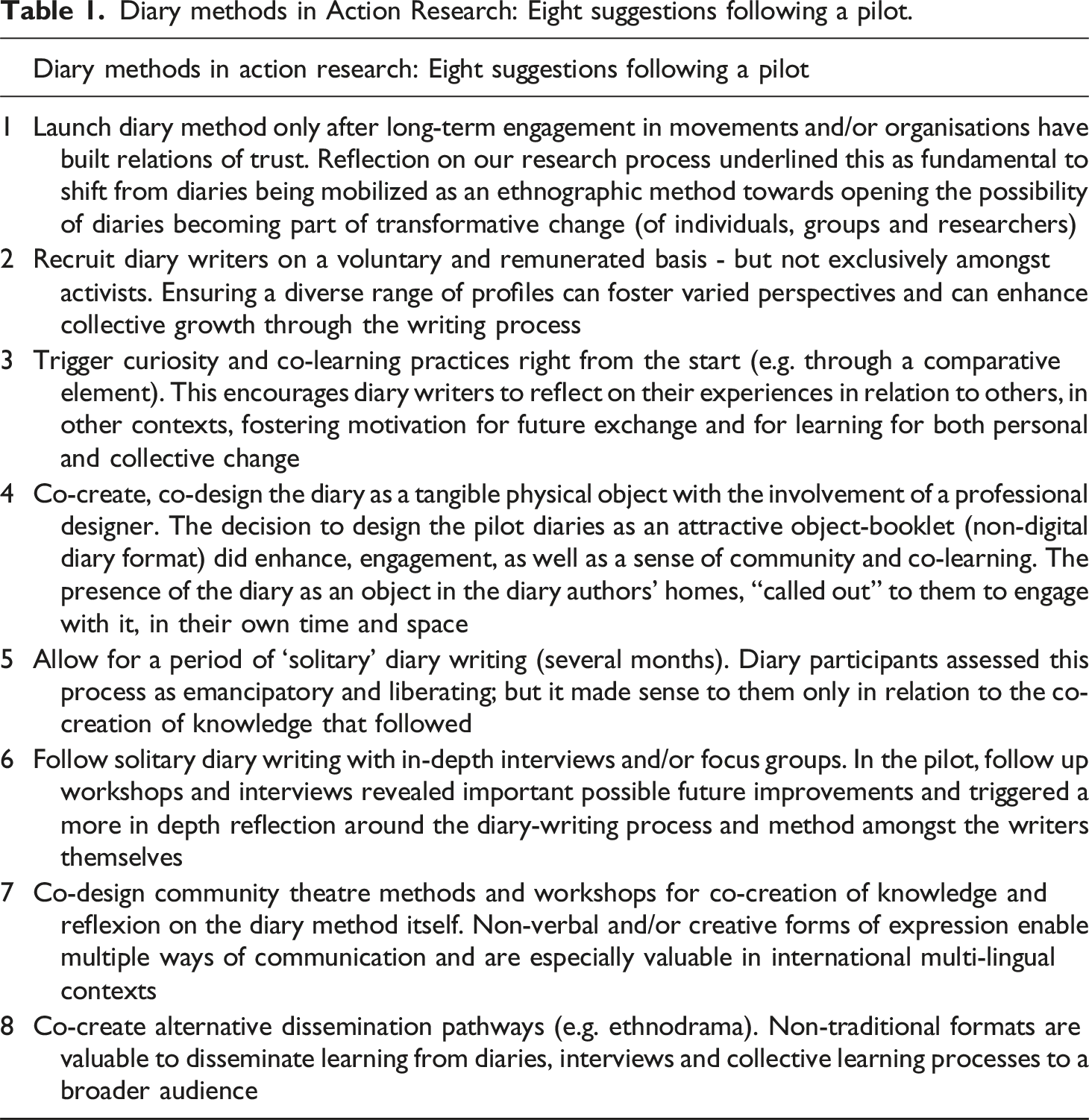
Conclusion: Eight steps for embedding a diary method into action research
In this article, we explained how diary methods can facilitate Action Research through authors taking active roles in turning research into action, a vital discovery in our pilot of the debt diaries. Several pivotal steps and decisions we made were crucial in this transformation. And in the process, we learnt about things we could have done better. We outline all this below, hoping it may prove useful for future research that seeks to employ diary methods as action research.
First, to fully develop our diary method into Action Research, it was significant that we were actively involved in movements and had established relations of trust prior to its launch.
Second, recruiting voluntary diary writers was important. However, it is equally important to involve participants from both activist movements and other backgrounds.
Third, triggering curiosity and co-learning processes was very important for moving beyond research extractivism. The comparative international element in our research played a crucial role in this. Ethnographic research transitioned to action research when diary authors expressed desire to learn from counterparts in other countries, who faced similar issues. This desire led to the co-creation of an international theatre workshop, which collectivized and politicized personal experiences; but also provided valuable insight on the method itself and shed light on the limitations of standard ethnography.
Fourth, although we cannot ‘prove’ this, we believe the decision to use non-digital diaries, designed as aesthetically pleasing physical objects present inside people’s homes, contributed to AR. First, it created a reflexive space away from digital distractions. Second, it transformed intangible thoughts into tangible form. Third, it fostered a sense of connection with other authors, sparking curiosity and a desire to meet and learn from each other, leading to the co-creation of workshops that a purely online process may not have achieved.
Fifth, we suggest that the combination of solitary diary writing followed by a co-created theatre workshops for reflexion and collectivization may lead to stronger AR, than the movie method that Gibson proposes for video diaries (2005). The solitary act of diary writing, free from the frequent intervention of researchers, was crucial in creating a secure environment for expressing previously silenced concerns.
Sixth, in-depth interviews that followed the solitary writing period were significant in sharing improvements in the diary method and learning process, and in our case also highlighting the need for participants to become co-researchers and co-producers of knowledge. The interviews, combined with the workshops were also crucial for us, as researchers to fully embrace our role as Action Researchers.
Seven, the co-created community theatre and drama workshops helped overcome verbal communication challenges, and fostered non-representational intercultural communication of ideas, feelings and experiences. The workshops empowered participants to communicate compare and politicize personal experiences of indebtedness; but also gave valuable insight on the debt diaries method itself.
Eight, we found the co-creation of an ethnodrama piece, co-authored by all participants, to be a fruitful way forward for disseminating to a broader audience the rich data collected through diaries, interviews, and co-created workshops.
Diary methods in Action Research: Eight suggestions following a pilot.
Supplemental Material
Supplemental Material - The debt diaries: Turning participatory ethnography into action research
Supplemental Material for The debt diaries: Turning participatory ethnography into action research by Maria Kaika, Melissa García-Lamarca, Dimitra Siatitsa in Action Research
Footnotes
Acknowledgments
This research was supported by the Netherlands Institute for Advanced Study in the Humanities and Social Sciences (NIAS-KNAW), the Netherlands Institute in Athens (NIA), the Centre for Urban Studies at the University of Amsterdam, and the University of Manchester’s School of Environment Education and Development. Many thanks to Dr Georgia Alexandri for her invaluable support during the Athens workshops; to Diego Borbalan for creating the beautiful diary designs; to all diary authors for their time and commitment; to the Platform for Mortgage Affected people in Barcelona (PAH), the Stop Auctions platform, and the social organisations Arsis, Praxis and EKPIZO in Athens, for facilitating participant outreach; to Billie Bos, Yalou van der Heijden, Floris van Rutten, and Hidde Wams.
Declaration of conflicting interests
The author(s) declared no potential conflicts of interest with respect to the research, authorship, and/or publication of this article.
Funding
The author(s) disclosed receipt of the following financial support for the research, authorship, and/or publication of this article: This research was supported by the Netherlands Institute for Advanced Study in the Humanities and Social Sciences (NIAS-KNAW), the Netherlands Institute in Athens (NIA), the Centre for Urban Studies at the University of Amsterdam, and the University of Manchester’s School of Environment Education and Development.

Supplemental Material
Supplemental material for this article is available online.
Note
Author Biographies
References
Supplementary Material
Please find the following supplemental material available below.
For Open Access articles published under a Creative Commons License, all supplemental material carries the same license as the article it is associated with.
For non-Open Access articles published, all supplemental material carries a non-exclusive license, and permission requests for re-use of supplemental material or any part of supplemental material shall be sent directly to the copyright owner as specified in the copyright notice associated with the article.
