




Abstract
This article explores how imaginal knowing can contribute to learning and action research. I relate this to a need for organizations to learn differently for bringing sustainable results that nourish the world. I position imaginal knowing as a reflexive way of being, which informs awareness beyond language and discourse. An arts-based researcher, my paintings are imaginal reflections of lived experience. I found how engaging with the imaginal enables a more profound presence with that experience. This process, which I refer to as growth-in-connection, can generate unexpected insights and learning. For me, artistically expressing imagination became a reflexive practice to deepen understanding and voice. This article consists of a practice-based strand where I share drawings, paintings, and an inquiry into client work. In the other strand, I explore theoretical ideas from Art-Based Method, Critical thinking, Reflexivity and Action Research.
Keywords
Introduction
“That which is not imaged exists outside of what is considered part of the universal human experience” (Chicago, 1975).
As an action researcher and organizational consultant, I seek to contribute to human flourishing for individuals and society. I hope my work is a humanizing act, offering insight into expanding ways of learning that can transform the learner and their surroundings. This transformational learning is inclusive and participatory for its quality of engaging with the world.
The purpose of this article is to explicate how imaginal knowing can vitalize learning and action research. Engaging with the imaginal realm can lead to new awareness. This happens when it transcends intellectual knowing through a playful or creative approach. To approach an experience with images bridges my outer and inner worlds, as any sensuous awareness can do. To attend to the senses is an experience that taps into tacit knowing: images, whispers, smells, goosebump moments and all those “subjective voices in my head” (Gearty, 2015). I present imagination in my own practice through images, while the source often includes multiple senses. Parallel to shapes and colors that emerge on my canvas, I inquire and play with developing insights. I note those ideas in my journal and reflect on them as fabrics of lived experience. Those ideas and images may inform dialogue with others about research or work. In other words, through my creative act, I engage with an embodied, sensual realm that might not so easily be activated in my daily work. In parallel, there is a process of clarifying and developing voice, through written inquiry.
The realm of the imaginal can contribute to action-based research and learning in organizations. Organizations should help address the world’s challenges, but this intention is often disconnected from their actions. Many researchers have taken a stand for organizations to take a more integrated sustainable view of their contribution: to bridge the gap between intention and action. Laloux shares how he is “increasingly disillusioned by organizational life” (2014). Alvesson wonders in his book Triumph of Emptiness why there “is no satisfaction” even if there is “increased growth and consumption” (2013). Action researchers Scharmer and Kaufer point to the fact that “maximum material consumption” led us to a “state of organized irresponsibility, collectively creating results nobody wants” (2013). I find Scharmer and Kaufer optimistic when saying “nobody wants” as some organizations or beneficiaries may precisely want to stimulate commercialization and consumption at a growing societal price.
I hope that it is true that “Organizational life plays a vital role in creating and nurturing regenerative and sustainable societies” (Bradbury et al., 2019). This can be the case since organizations have power. If organizations would prioritize inclusive immaterial values such as sustainability and nurture, our societies might benefit. Yet, while many organizations are currently not there, this raises the question of how we as organizational development practitioners can contribute to such a shift? I plea that we practitioners actively engage with future possibilities through other ways of knowing about today’s challenges.
To view ourselves as instruments of change is not new. Organizational change starts with individual learning, which begins by looking into our own blind spot or the “inner place” from which we operate (Scharmer, 2003, 2018). If we can shift our interior condition, could working at the heart of organizations become a more vitalizing, possibly transformational experience? Developing this notion of life in organizations might then bring societal change. I assert that we need to go beyond instrumental learning and instead become the instrument. While global businesses are thriving, 1% of the worldwide population is displaced, a number which will grow (International Office for Migration, 2019). There is terror, war and climate disruption on every continent. At this very point, we live in the grip of a global pandemic, and our healthcare systems are challenged. Income gaps grow at a higher rate than ever before. Given all of this, how do we transform? How do we shift our interior condition to become better in tune with what the world needs?
This research is a plea for revitalizing learning through actively engaging with our imagination to understand the immaterial world. I encounter my imaginal response while asking how my future actions can be responsible, even helpful, or at least not negligent. Engaging with imaginal knowing allows me to find alternative and novel ideas. To articulate those ideas and find dialogical solutions shifts me, the learner. Connecting my images as artistic responses to challenging (organizational) happenings means that I am developing my content. This phenomenon, where ideas become new knowledge, was addressed by the artist Judy Chicago (1975). Her images are powerful statements of femininity which she attributes to ending female marginalization.
With this article, I draw on my doctoral research (2018), in which I theorize that extending our ways of knowing expands our ways of being. I base this in part on a relational approach from the Stone Center about women’s ways of being in the world. Their growth-in-connection theory emphasizes that we develop “through meaningful connections with others” (Jordan et al., 1991; Miller, 1986; Miller & Stiver, 1997). I extended this idea by including the need for meaningful connections also with ourselves to deepen meaningful reflection on action in the pursuit of knowledge creation.
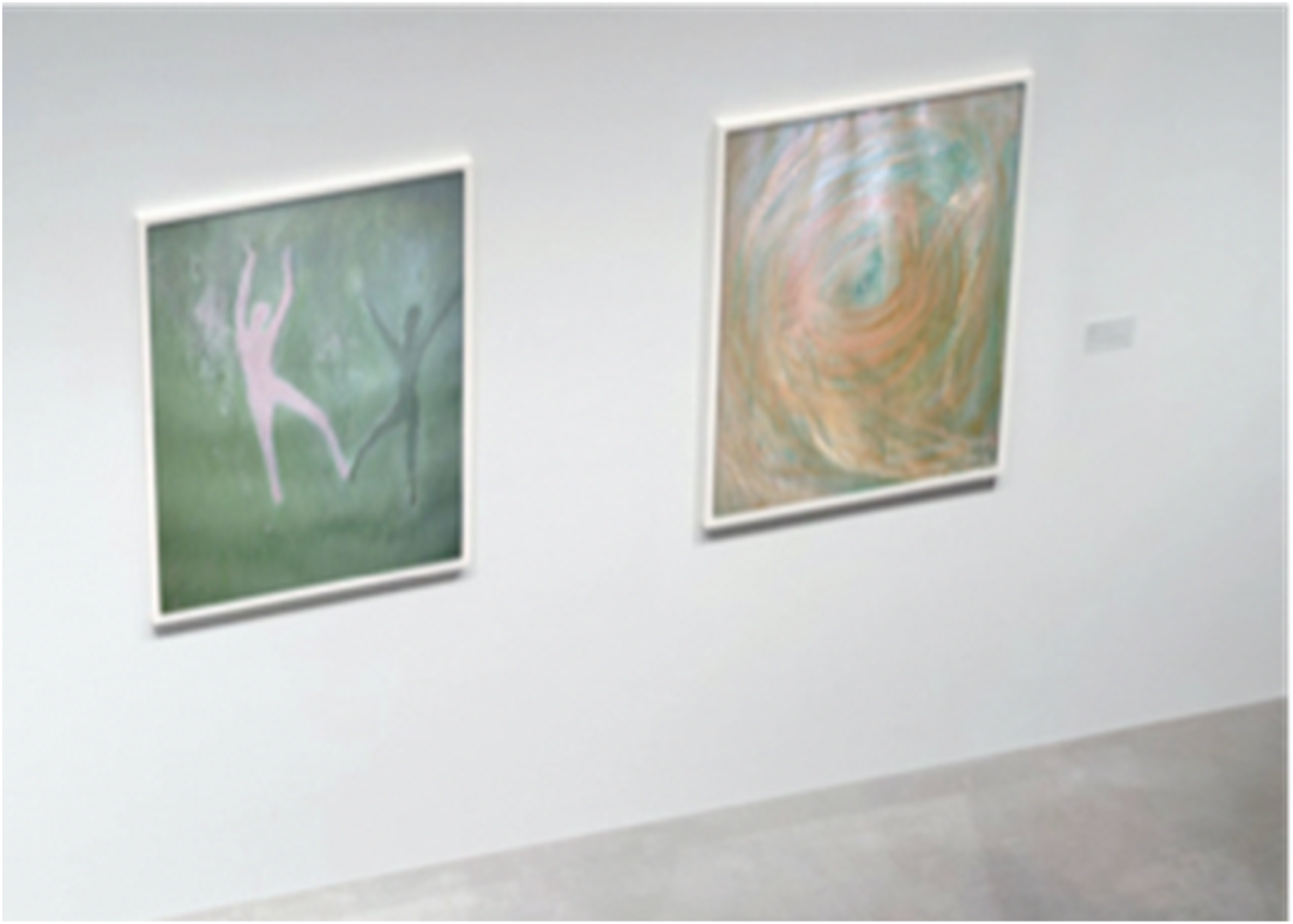
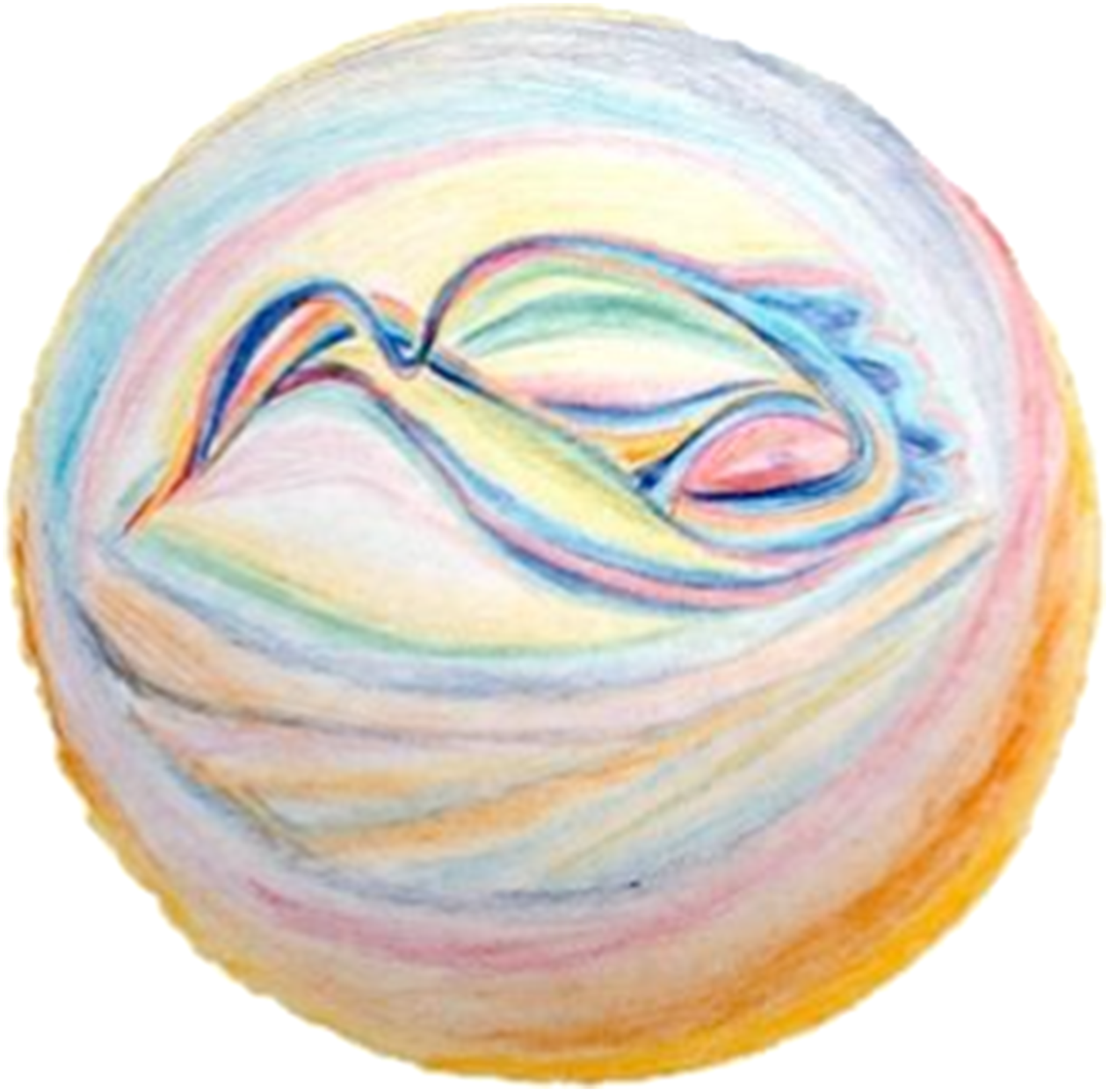
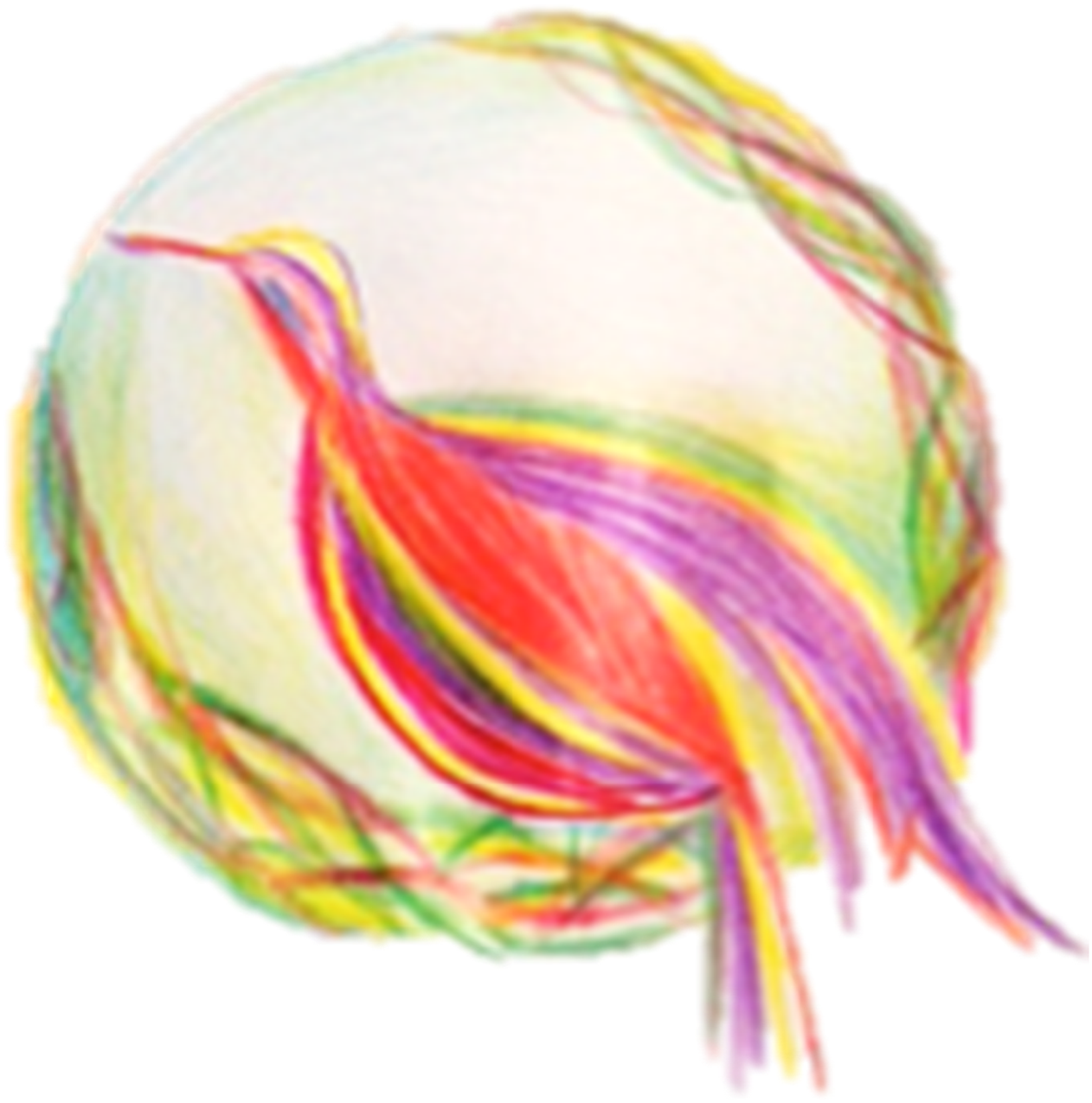
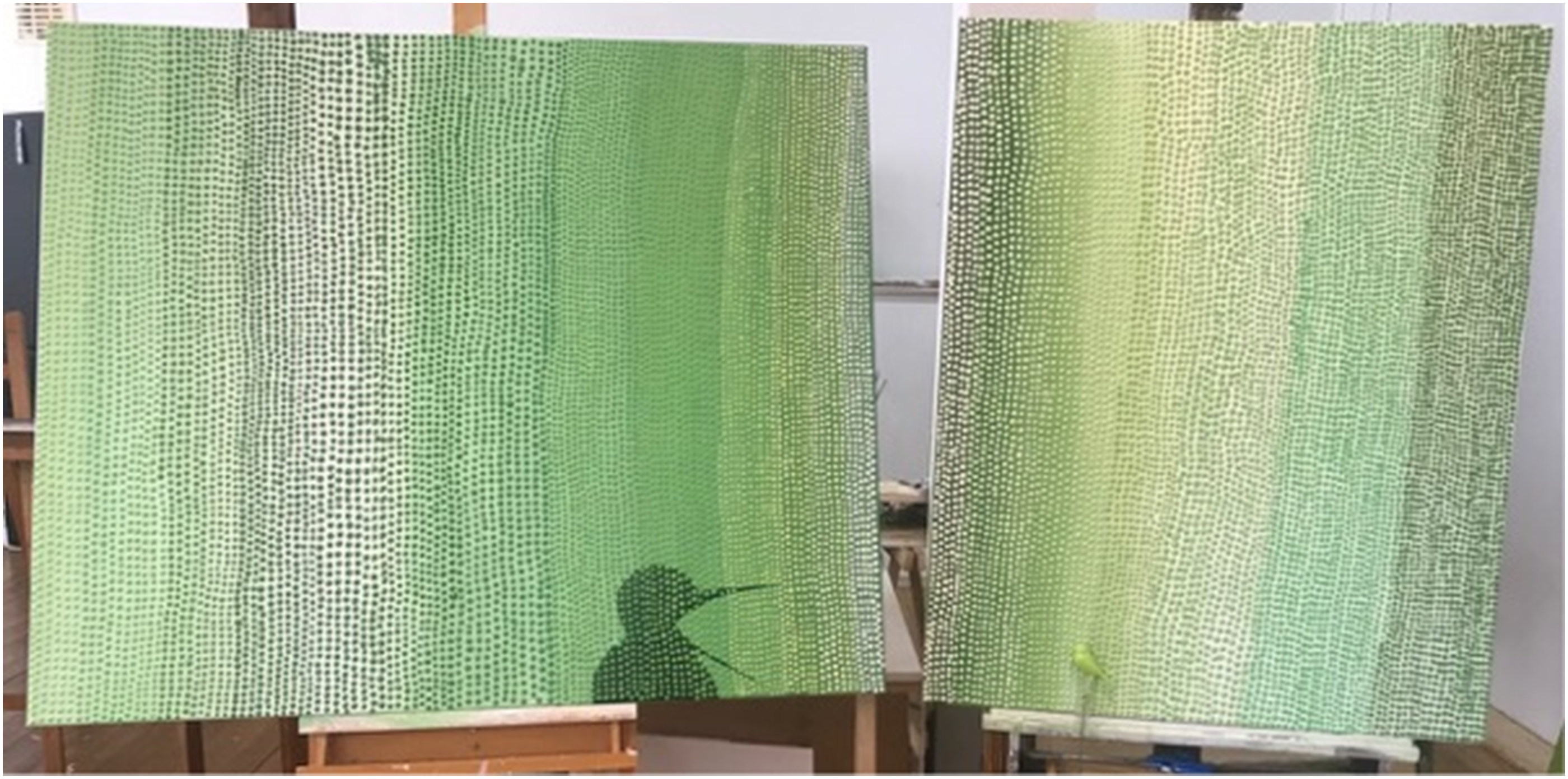
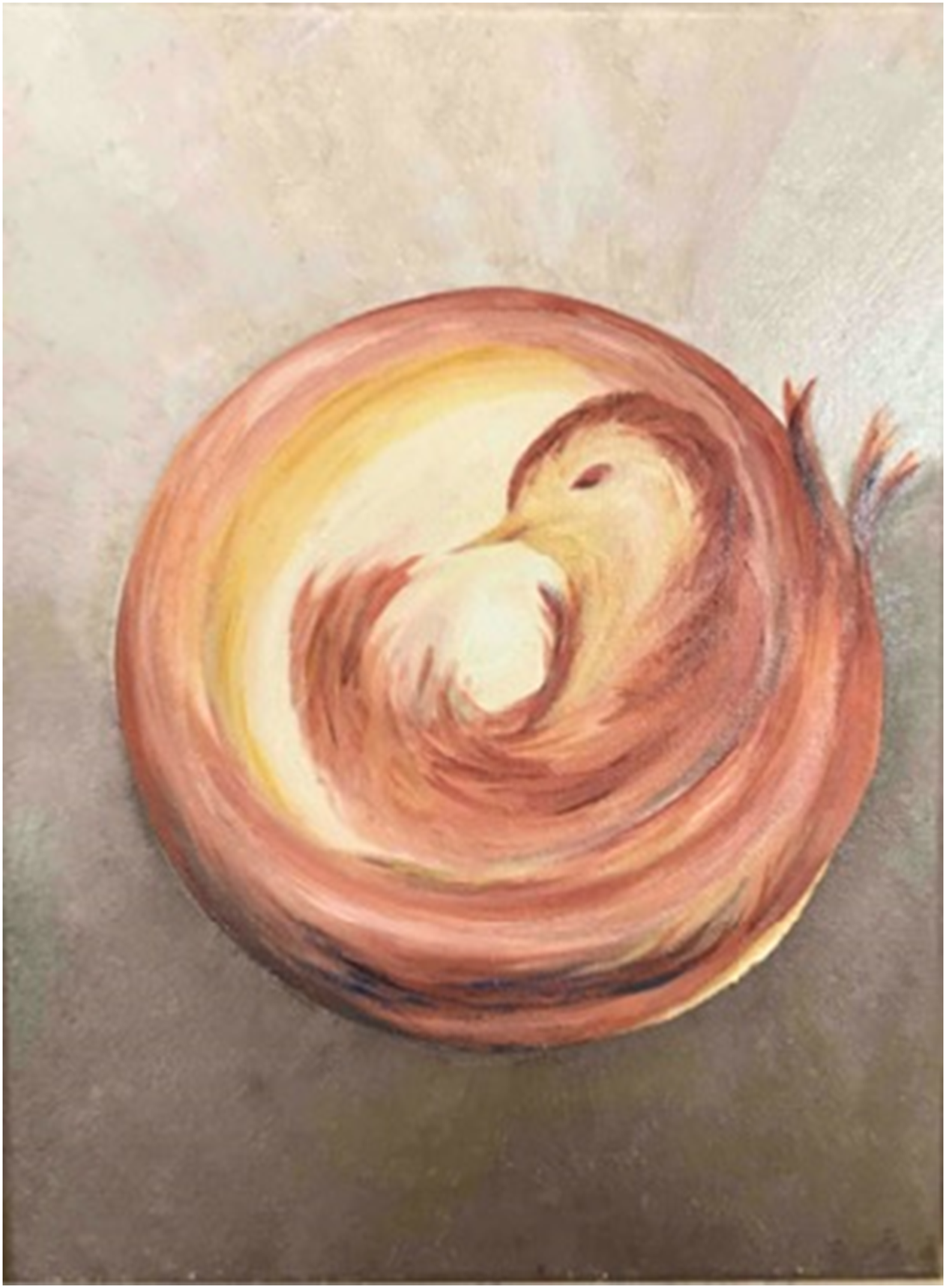
This article is structured in five sections. In “Imaginal knowing as a way to learn,” I outline my core ideas. Then I explore “Artfulness to work with the imaginal.” In “Reimagining a client event,” I share a personal example of how the imaginal appears in my organizational practice. This is followed by “Artful knowing as a way to develop reflexivity”, where I explain the enabling conditions of relationality and interiority. Concluding with some final thoughts. Covid, journal images, July 2020. Cosmic dance. Dancer and Shadow, 2015; silence and turmoil, 2014, 1.20 m *0.80 m. Bird, Pencil drawing, August 2014, 0.15 m * 0.15 m. Nested Bird, pencil on paper, November 2015, 0.15 m * 0.15 m. Paradise Bird, pencil on paper, December 2015, 0.15 m * 0.15 m. Bird paintings, oil paint, and paste on canvas with a plastic artifact, May 2019, 1.30 * 1 m and 1 m * 0.80 m. Bird, Oil on paper, July 2018, 0.5 m * 0.4 m.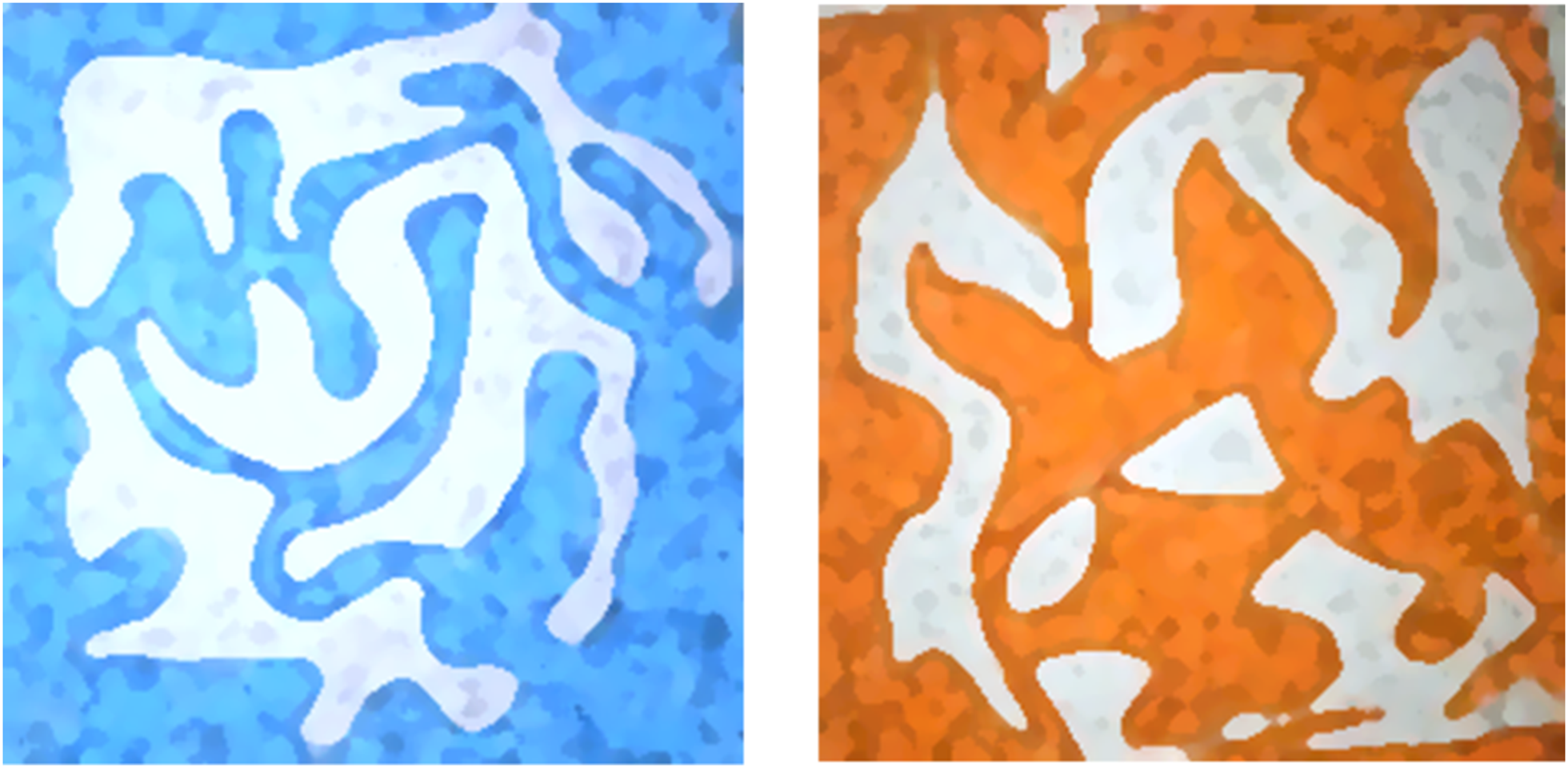

Imaginal knowing as a way to learn
Jungian analysts use the imaginal realm for addressing unconscious patterns in an individual or a collective. This is an approach that engages with the interior space as a lively part of our human nature. In my view, the imaginal offers a helpful addition to the predominantly externally oriented, activity-based learning in organizations Figure 1.
A term used in analytical psychology for engaging with interior messages in this way is “active imagination,” also described as attending to a reverie that spontaneously arises (Jung, 1988; 1999; 2000b; Romanyshyn, 2013). In Jungian psychology, this creative process is given “Its own ontological status as a domain of reality between the domains of matter and mind” (Romanyshyn, 2013). My experience is that the images arise spontaneously, and in terms of Jungian functions, this works with intuition, sensing, or feeling. Imagination draws on our understanding of the world as deeper reasoning, an active wondering. The activity is to appreciate this reasoning and to include the findings in a figural and literal way.
The imaginary domain might be populated with figures or energies in various forms. I cultivated this imaginal realm as a child, as I see many children do. I refer to it as my “other world” of (day)dreams in which I linger, dwell, hear music or see beyond the outer eyes. Some forms of education, such as the Montessori or Waldorf schools, make space for this type of knowing, but those were not the schools I attended. I missed this type of playful understanding even more in higher education, where exams sometimes felt like a “tick the box” on remembering other people’s ideas rather than my own quest to understand the world’s phenomena. I did not speak much about this with others, nor did I systematically work with my images. It was in my doctoral research on learning that I started to connect imaginal knowing to scholarly thinking.
Due to its immaterial nature, the imaginal is omnipresent. Reconnecting with it brought me an infinite source of life energy, offering inspiration. When working through challenges, actively engaging with the imaginal brings me a sense of being human. I connect with it through sensing inwardly, as the experience is embodied. Often this starts with detecting fleeting instances of awareness, energies, or feelings. This type of dwelling can be activated through play, (day)dreaming, practices of mindfulness, creativity, inquiry, dialogues and arts. Methods, often unlearned in performance-based organizations or classroom settings, where dreaming and play can be seen as unnecessary distraction. Personally, I remember how I felt inadequate for my lack of pace at times in work, shy for noticing how my mind drifted off in a space to reflect. I chose to work part-time as an employee in the financial industry to allow myself that space. Now I realize how crucial it was to not let external expectations become too dominant yet to find my own way of working in an organizational system. In hindsight, I see that those reflections often added quality to my work, yet the activity remained unappreciated for not immediately, explicitly contributing. My private solution allowed thoughtfulness which I now see as an integral part of my work.
Over time, I found that imaginary expressions take lively, dynamic forms and invite me to engage with them. Those energies require space, and the gratification sits in the space of being rather than doing.
As a child, the imaginal world presented itself readily. As an adult however, it takes conscious effort to reach into this tacit realm and weave observations into strands of knowing. I also found how to know imaginally is democratizing, for it is a human condition and it allows multiple voices that can differ, while in this dialogue an that emerging awareness can permeate into our being as alived experience.
In the words of Merleau-Ponty: And in so far as my hand knows hardness and softness, and my gaze knows the moon’s light, it is as a certain way of linking up the phenomena and communicating with it. Hardness and softness, roughness and smoothness, moonlight and sunlight, present themselves in our recollection not pre-eminently as sensory contents but as certain kinds of symbioses, certain ways the outside has of invading us and certain ways we have of meeting the invasion. (Merleau-Ponty, 1962)
Differently said, sensory content permeates our embodied self if we observe and remain present with it. Connecting my awareness with the energetic content illuminates this content, which generates energy and consciousness. Time seems to stop at the aesthetic point when we intimately experience and become one with a phenomenon through our senses. Seeking to represent this experience as a researcher, I took up painting with my inquiry into organizational transformation.
For example, inquiring into learning (Van Meer, 2016; Van Meer, 2019), I connected with the image of a dancer and its shadow, and a second image of a cosmic dance. It felt as if through painting those images, I now became a partner in the dance, and it brought me across fluid boundaries of a visible and invisible presence. I relate this to what the Dutch phenomenologist Luijpen (1964) describes as a new knowing that transcends the current being as it goes beyond existence (Figure 2).
Transformation shows in my painted experiences. The first painting, named “dancer and Shadow,” paints a path of becoming—a tactile experience between visible and invisible, lighter and darker aspects of ourselves. The painting turmoil and silence approaches this dance with the cosmos as an auditory experience of overwhelming noise and incredible silence. (journal notes)
Artfulness to work with the imaginal
Artists make bridges between various kinds of relationships, energies, or ideas during the making of an artifact (Bateson, 2000). The editors of this journal cite Seeley and Thorncliff asking “how we cultivate our imaginative and perceptual capacities (…) in pursuit of creating more sustainable systems, structures and organizations?” (2014, p7). With this section, I inquire into artfulness to express imagination and how this might bring value to organizational practices.
If the imaginary realm is a tacit counterpart of the more explicit material world, the images come through us as images of the world, universal expressions of being. Art offers a practice to manifest this energy. Crucial, for in Chicago’s words, “that which is not imaged exists outside of what is considered part of the universal human experience” (1975). As the artist, I then become an instrument for manifesting implicit into explicit knowing.
I follow action researchers Heron and Reason when they emphasize that our “experiential articulation of being in a world as such is the ground of all our knowing (Heron & Reason, 1997, 2001, 2008).” I particularly recognize the description Seeley and Reason give of experiential knowing as “imaging and feeling the presence of some energy, entity, person, place, process, or thing” and how it “is the ground of presentational knowing” (Seeley & Reason, 2008).
In my process, I experience myself in an alternating interior and exterior dance. Staying with this not knowing, energy becomes form, becomes image. My experience of forming energies is that they do not stand still. They offer movement and pace. The dance I experience is to stay with phenomena that I am curious about. In this state of being, there is reciprocity: images might engage in conversation as well. It makes me feel deeply connected with the nature of the world. So, to actively engage with the “nothing” is what I see as a part of my practice. I encounter and must let go of my desire to deliver something. Bypassing to-do lists to make space is where play comes in. Playing helps for its permission to be in the moment.
Method and medium, be it paint, writing or conversation, offer a way to explicate the experience of energy in this space. The paint bridges tacit into active knowing as a material expression. The energies now meet “matter,” when through my hands I shape and form them. An essential characteristic of painting is that it is non-verbal. Differently from how words can linger around, the colors and smell of paint connect me to streams of consciousness. Through its substance and color, I see perspectives come to life. Such an inquiry stream vitalizes that moment but also accompanies me through other roles in life, such as my organizational coaching or my research.
An active engagement with those streams of consciousness thus offers responses to various inquiries. This is amplified through my daily writing practice, where I produce messy texts. My pen helps me shape thoughts to articulate ideas better, an emergent process that happens over several weeks or months.
Developing a language around inner and outer phenomena feels like developing my voice in service of expanding discourse or the “social arena in which common understandings are manifest in language, social practices, and structures” (Fletcher, 2001). In turn, transforming voice and dialogue develops insight into my adaptation and my sense of free will (Foucault, 1979). There, I break free from socialized aspects of my own mind and the collective mind, expanding my speech with a growing critical, independent voice (Arendt, 1978, 1998; Foucault, 1979; Alvesson & Skoldberg, 2009). Understanding those relations makes me reflect on the broader arena, in service of erosion of unearned privileges (Lincoln et al., 2011). I find myself in a political position. Beyond that, as I grow into a more radical authenticity, through my presence, transformation might take place.
Reimagining a client engagement
Next, I share a thick description (Geertz, 1973), an example of reflexive inquiry from my consultancy practice, showing personal journal entries, images with notes (in italics) that informed my learning. This inquiry intertwines reflections and actions concerning inner and outer selves, as well as feedback from others. This inquiry took place in the context of my doctoral research (Van Meer, 2018), a learning space with plenty of feedback to develop it as first person action research (Marshall, 2016).
This inquiry strand starts in 2014. As an expert on organizational values and culture change, I worked alongside a team of internal facilitators in this client whose goal was to establish a culture transformation. I was asked to facilitate some leadership and large-scale dialogues. The client work felt exciting, and as part of the work, I became curious why I felt so much pressure in the client’s organization. Inquiring, I became aware of feelings such as loneliness and vulnerability. I noted in my journal: “How do my autoethnographic writings about this client connect to my doctoral research?”. A drawing that I produced at the time surprised me due to the figure of a bird (Figure 3).
A year later, operating in this same role, I was asked to co-facilitate an on-stage dialogue for over six hundred leaders. The conference hall setting felt modern. Loud, upbeat music would accompany us on stage, somewhat like a rock concert. Choosing clothing a dry-run performance and rehearsing activities were all a part of the choreographed stage performance. During the weeks of preparation, I asked myself: was I going to show up or show off? At the same time, Europe was in crisis over the vast streams of refugees traveling through Turkey, Greece, and Europe. Images with long lines of people entered our news. I felt sad, affected by the refugee stream. I have volunteered at times, in the Netherlands, Asia and in the Greek migration camps, where refugees asked me, “why are people detesting us?”. Thus far, the refugee crisis had seemed to rumble away in the background. But these weeks, it was on the news everywhere. Then, the image of a dead toddler washed on the Turkish beach went viral.
While preparing the session on culture, we positioned how organizational culture and global cultural challenges intertwine, offering images of the refugee and climate crisis. Preparing, participants also shared their ideas on those crises. I noted how their tone of voice seemed geographically influenced, mirroring political involvement and tensions between various countries. There was for example, frustration with Turkish delegates who explained backstage that the photo of the child (Demir, 2015) had only now shaken up the whole world while in Turkey, images of drowned people on the shores were already a part of everyday news. They were doubtful that this heap of emotions would bring sustained relief in the long run.
This notion of how each experiences a global crisis differently, stayed with me as a curiosity, although having little time for a deeper connection. I knew that on stage the conversation could only be limited. Before my turn, I listened to the previous speaker’s session on growing business numbers, noting “winning this battle,” “aggressively attacking the market,” and “expanding our territory.” I felt aware of these war words’ surreal effect on me in their strange relatedness to the reality of Europe’s borders remaining closed, ignoring the Syrian warzone. Then I had an imaginal experience. In the turmoil of the applause and incredibly loud upbeat music that announced every speaker, the audience morphed in my awareness into a gigantic shrieking flock of birds. It was as if the gray-cemented auditorium suddenly appeared as a futuristic gray science fiction setting. It was as if I sat not in a conference room but in a science fiction bird meadow. Half-present, I noted in my journal how I felt “surreal about my own appearance” like a “strange bird in a twittering flock” (dslu).
My performance on stage went okay, although I found it challenging for many reasons. We included some of the world crises in the speakers’ inquiry and found a satisfied client afterward. But for me, my inquiry had only just begun. In November 2015, when reflecting on my experience, I wanted to better understand my images. Reconnecting to the shrieking flock’s sounds then, I drew (Figure 4).
Making this drawing, I felt vulnerability. I first related it to the performance anxiety of the event, then not fully following this inner arc. Later, my mind drifted beyond, into reflecting on vulnerable refugees. How would those, whose children may get lost on the shores, look at this type of event? How might they have reflected on us sharing concerns about the crisis? What could I learn from this? The drawing provoked me to remember the significance of how and where I appear. It pointed me to notice the vulnerable world of my own heart. The bird feels small and shy in its nest, yet it is shielded from the powerhouse where it showed up. This bird lives in a different world, it seems.
It felt as if I lived in different worlds, and a few weeks later, my inquiry turned to: “How can I live a more integrated, meaningful life?” I continued probing into this on and off. When I took up my pencils and drew what I felt, the following drawing showed up (Figure 5).
I dwelled on the bird’s ecosystem related to the client event with the concrete auditorium. This made me reflect on my felt sense of needing to hide my vulnerability. There was a fear of vulnerability being problematic, especially in high-powered environments in which I advised. It made me conscious that learning in organizational settings requires a growing awareness of “power” on voice. Will people speak their truth in high power, scripted roles? Do I do so? Sensing a need to meet power as a form of politics, I felt drawn to more overtly address social issues of power in the work arena. In digesting observations and feelings, I found that, surprisingly, my painting practice was most helpful. To stay with a white canvas, play with brushes, or oily color offers a sensory and autonomous experience. In painting, I cultivate the creative tension of not knowing, which supports my authentic presence. It makes me aware of how I can contribute through sharing my not-understanding. And rather than holding back, I found more curiosity in listening to disruptive ideas inside and outside myself. Knowing that I can tuck myself away in my studio helps me bring disruptive thoughts into dialogue and inquire outside the dominant discourse.
To dwell on the bird’s ecosystem also made me realize that the client conference may have been a totally different experience. Would the outcomes not be totally different if we had literally sat on a meadow or had taken walks in nature? Suppose we would have had soulful music rather than loud applauses? How come that large organizational conferences seem to often take place in concrete buildings?
While this inquiry lasted a few years, new awareness and skill weaved into choices about my future. Reimagining myself had to do with asking: “Who do I wish to stand with, in today’s world?” and “Where do I wish to show up?”. For me, this led to reducing work with commercial clients and developing alternative paths where I work in low power, democratizing places, and education. I also more actively address tokens of power as a curious inquirer in organizational and societal systems. This meant that my work shifted to include political and societal work. Most surprisingly to myself was that I kept developing my artistic practice (Figure 6).
Artful knowing as a way to develop reflexivity
As an organizational consultant, coach, and artist, I draw on the voices of many others. Making sense of artistic expressions is for me a relational experience and not a solo undertaking. I often share images and ideas in my art inquiry group, with friends or with other artists.
Reflexivity, in my experience, relates to reflection in the sense of sustaining a reflective stance as a way to observe and become. Developing self-reflexivity is defined by Cunliffe as questioning our ways of being, acting, and relating “from within our own experiences” to “highlight the tacit assumptions and ideologies that subsist in our ways of talking” (Cunliffe, 2002). This calls for ongoing inquiry practice, questioning assumptions regarding the relational structure in which we operate, by which reflexivity becomes a relational—possibly organizational practice.
I offer the notion of two principles for developing a reflexive practice based on imaginal knowing. First, the principle of relationality or the fact that we grow-in-connection with interior and exterior voices. Second, how developing critical subjectivity necessarily means that I need to sustain and grow my autonomous voice.
The feminist notion of growth-in-connection sits central in my work, positioning art inquiry as a relational practice (Van Meer, 2018). The theory places relationships at the heart of human growth and development, suggesting that there is uneven ground at the basis of such a development process (Van Meer & Semler, 2015). Uneven, because of historical evidence that women’s and minority voices are suppressed and underrepresented in high-powered environments (Miller, 1986; Belenky et al., 1997; Fletcher, 2001; Gilligan, 2003). In my research, I reflect on the masculine and feminine tendencies in myself as a mirror of social, cultural patterns in the workplace. This could show up as the idea that I need to prioritize other people’s needs and fit in rather than disrupt prevailing discourse. We are always in a relationship, both in the present and with culture and history over time. I see this as intersubjective ontology; “A way of thinking about who we are in the world that is based on the belief that we are not separate individuals (entities), but we are always in relation with others – with particular persons, communities, history, culture, language, and so on.” (Cunliffe, 2016)
In my dissertation, I inquire into my search to live an organizational practice in an integrative way (Figure 7). This meant a curiosity A into my “hamster wheel” loops, such as feeling trapped in the notion of time and performance: into some of my own blind spots, where I was primarily focused outwardly and not inwardly enough. As an organizing entity, an organization places me in the context of my environment. When creating a nurturing organizing community, growth-fostering relationships may support rather than challenge my authenticity and my connection to the reflective aspects of my learning. It did not always make sense that while I was happy with my work, it often left me feeling depleted.
The theory of growth-in-connection has actual value in our academic thinking about learning and development. In my view, it did not receive full acknowledgment in mainstream organizational learning because it does not feed into the prevailing socio-cultural mindset, emphasizing individual authority and accomplishment. I hear Bob Dylan’s words when writing this; “Are the times a-changing?” Working from the premise of relatedness can counterbalance the idea that learning in organizations must contribute to quick wins at future generations’ cost. We learn as individual practitioners and shift organizational cultures to become more sustainable when fully acknowledging this interconnected nature of our existence. Or said differently, “the more one approaches the ... raison d’etre through action and reflection, the more one can reveal it. And ultimately, this must develop in the action which transforms reality” (Freire, 1973).
This requires a critical subjective perspective as well as an embodied way of knowing. Many learning environments draw mainly on experience as a behavior rather than an experiencing awareness inclusive of the imaginal. When learning is not attentive to softer whispers from within, such as the bird in the nest in Figure 5 whose voice is muted, we may miss out on meaningful information. Ladkin describes the goal in critical subjectivity as “to be able to loosen the binds between the things or situations and our interpretations of them” (Ladkin, 2005, 2014). We extend our learning beyond the intellect by fostering a wider gaze, including action and feelings, senses, and thoughts about this action. To be reflexive thus means that we act in the world while holding an inner eye open. This inner arc awareness is “inclusive of imagination,” a process of “inquiring and wondering while in action.” (Antonacopoulou & Taylor, 2019). Therefore, a reflexive practice can support developing voice and articulating perspective on complex matters.
To me, becoming a reflexive practitioner means cultivating senses, feelings, and imagination as an experiential practice, enhancing and vitalizing your presence in action. We need to listen inward, to be aware of the interior space from which we respond.
Conclusion
Organizations are places with the power to contribute to a sustainable society, yet they often stimulate consumerism, which has the opposite effect. In this article, I reflected on how to change this, shifting the space from which I operate as an organizational practitioner. By accessing the imaginal realm as an interior extension of lived experience, I found how extending my ways of knowing expands my ways of being in the world.
As a practitioner, the imaginal could inform your reflexive practice. Engaging with images means shifting yourself away from socialized thinking to the place where you critically stretch the prevalent (organizational) discourse. My example of a client inquiry may show how you can develop reflexivity from combining creative insights into your practice. Engaging with extended ways of knowing, beyond language and discourse, may help you to detect blind spots. That, in turn, helps develop your critical subjective mind to make sense of complexity. Supported through dialogues and feedback from others, you can then create alternative views, voices, and actions.
As an arts-based practitioner, I draw on painting the imaginal as a first person, reflexive practice. Yet, the artist of life is an attitude that does not necessarily require brushes and paint. The magic, I find, sits in the radical freedom and non-conformist attitude of the artist. Through this attitude, we can each embrace authenticity and extend observations of the world.
As images are a part of the human condition, you do not need to be an artist to access this sensory content. Any form of creativity can reach into this content and be a vital resource for action researchers and organizational change practitioners. We can all draw ideas and inspiration from the inner world. Choosing to work with this type of emergence has transformational potential as it takes your action research out of the explicit discourse into a tacit, imaginal realm. Any method can be a place to start from, as long as it enables your reflexive relating with the world and supports you to express this. Crafting your practice over time could be as personal as a fingerprint.
Transforming imaginal awareness into knowledge does not automatically happen. It requires sustained sensuous attention. Attending to extended ways of knowing can shift the interior space from which we operate in the world. To develop this is to grow-in-connection, spreading new ecosystems in and outwardly into places and organizations where you show up.
While it offers enormous benefits, this type of learning seems still removed from mainstream organizational learning settings. Possibly for is not only creative and embodied but also grounded in not knowing rather than on predictable outcomes. By writing about the imaginal, I hope that others feel encouraged to experiment and share examples of practice to learn from different stories. A broader appreciation for the imaginal realm might serve organizational learning as a reflective and innovative source of knowledge about the world.
Connecting to interior images, made me aware of what truly matters to me. The question “who I wish to support and where?” has meant that I shifted my organizational practice. How might this question affect you? (Figure 7)
Footnotes
Acknowledgments
This article contains inspiration and thoughts from many people. I specifically like to express my warm appreciation to Dr. King and Dr. Ladkin, whose advice was to take a stand for imaginal knowing during my viva some years ago. I could not have done this research without the thoughtful guidance of Dr. Gearty, my supervisor, who accompanied me during the 5 years of my doctoral research. I especially thank Dr. King for her input, practical support and encouragement, crucial in writing this article. My gratitude also goes to my ongoing art inquiry group, my art teachers and artist friends. I also thank clients and students for trusting me with your stories, offering continuing inspiration, inquiry, and learning.
Declaration of conflicting interests
The author(s) declared no potential conflicts of interest with respect to the research, authorship, and/or publication of this article.
Funding
The author(s) received no financial support for the research, authorship, and/or publication of this article.
