




Abstract
The present research focuses on the influence of both screen time and various screen activities (television, video or educational games) on the socio-emotional development of 9001 Irish 5-year-old children using a nationally representative birth cohort study. Parents were asked about their children’s screen use and various family factors, while socio-emotional development was measured using the Strengths and Difficulties Questionnaire. Hierarchical multiple regression models examined the influence of screen use factors on externalised, internalised, and prosocial behaviour, while controlling for environment and family factors. Engaging in two or more hours of screen time per day had a small negative influence on all three of the socio-emotional scales. Mostly playing video games also related to increased internalised and externalised behaviour for this cohort. While the screen use variables made a significant contribution to the regression model, even after family factors were accounted for, the effect sizes were small in comparison. The results of this study suggest that screen time, activities, and wider ecological factors are all important to consider in future screen use research to provide a more nuanced understanding of screen time’s unique role in early development. The findings provide evidence-based guidelines for researchers, caregivers, educators, practitioners, and policymakers.
Introduction
The increase in young children’s screen time within the home has become an area of interest to researchers and parents alike. This is largely due to the presence of more screen-based games and touchscreen devices in the average household compared to a generation ago (Dinleyici et al., 2016; Strasburger et al., 2013). Since this rise in electronic and handheld device use, there has been a range of research addressing various screen use and activities in older cohorts, such as adolescents’ engagement with social media and video games (Przybylski and Weinstein, 2017). Research on this topic with younger children has begun to gather pace in the last 5 years, however, less is still known about the influence of screen time and various screen activities on different aspects of socio-emotional development in young children.
Benson (2020) suggests children’s socio-emotional development is influenced by their immediate environment more so than cognitive development. This is supported by the vast amount of research that has found factors in the home environment, such as play, to have an important role in psychological development and well-being in early childhood (Whitebread et al., 2012). As screen use has become a prevalent activity within the early home environment, there is growing interest in what influence this may be having on early development. While much research in this area has focussed on screen time’s influence on cognitive development, for example language acquisition and development (Byeon and Hong, 2015; Operto et al., 2020) fewer studies have explored the role of early screen use in socio-emotional development (Domingues-Montanari, 2017). Additionally, much of the extant screen research to date focuses on the influence of television on young children’s development, with fewer studies focussing on other types of screen use.
The following sections explore the research available on screen use and socio-emotional development in the early years and highlight some of the methodological issues that exist in early screen use research. Some of these issues relate to the use of television viewing as a sole measure of screen time, and not controlling for children’s environmental factors. These issues have resulted in a level of discrepancy in the empirical findings on the extent of screen time’s influence on early socio-emotional development, which the study reported below seeks to address.
The influence of television on socio-emotional behaviour
Much of the evidence on television and early socio-emotional development that has accumulated over the decades has focussed on ADHD symptoms or attentional problems and hyperactivity as a measure of externalised behaviour specifically. Externalised behaviour encompasses hyperactivity and attentional disorders (Sevincok et al., 2020), along with conduct problems such as aggression or defiance (Oliver, 2015). However, the research to date is noted to not be well understood given the level of mixed findings in the past literature (Wilkinson et al., 2021). For example, a study using a representative American sample found television exposure in infancy to not predict hyperactivity by age 3 years if the content was educational (Zimmerman and Christakis, 2007). However, this was not consistent with findings from a study using a representative Japanese sample, where an association between television viewing in infancy and ADHD symptoms at age 4 years was found (Kano et al., 2007).
To compare the findings of Zimmerman and Christakis (2007) to other American studies, Miller et al. (2006) assessed the cross-sectional association between television viewing and ADHD symptoms for 170 American preschool children. They found that amount of daily television viewing did predict parental-reported ADHD symptoms, as indicated by parents on an ADHD checklist. These discrepancies highlight the need for further research in this area of early development. Furthermore, little is known on the influence of television viewing on measures of socio-emotional development outside of externalised behaviour. Other measures of socio-emotional development such as emotional and peer problems, known as internalised behaviour (Liu et al., 2011), and prosocial behaviour, have been less explored in the research.
Research on older children suggests that more time spent on screens leads to more internalised behaviour, especially relating to mental health, at a later age (Twenge and Campbell, 2018). However, other research has found no significant association between adolescents’ computer use and socio-emotional well-being (Huang, 2010). In contrast to this again, Przybylski (2014) found screen time to have benefits for internalised and prosocial behaviour in 10- to 14-year-olds. To further test these findings with a younger cohort, Przybylski and Weinstein (2019) assessed early screen time’s influence on the socio-emotional scores of 20,000 2- to 5-year-olds. Higher levels of television viewing were modestly positively associated with positive affect, however, in the adjusted models with the children’s background factors included, this very small effect was no longer statistically significant. Their findings suggested that there is little or no meaningful link between screen use and young children’s internalised behaviour, once external factors and effect sizes were considered.
Pagani et al. (2013) assessed the influence of television viewing at 29 months on kindergarteners internalised and prosocial behaviours. Using the data for 1997 children from a Canadian prospective study, they found that each 1 hour increase in television watching in infancy was modestly related to an increase in teacher-reported internalised behaviour, but not prosocial behaviour. These findings were independent of key covariates, including maternal education and the child’s baseline temperament. Conversely, research by van Evra (2004) suggests that television viewing is associated with increased sympathy, nurturing behaviour, tolerance, and can be a positive role model for children. While later studies have also showed this to be the case (Coyne et al., 2018; Mares and Woodard, 2012), these studies have been mostly conducted on children aged 6 years and above.
In a more recent study, screen time in infancy has been reported to be a risk factor for internalised behaviour at 4 years of age for the 2492 Chinese children in a birth cohort study (Liu et al., 2021). Cross-sectionally, screen time at age 4 years was also associated with externalised, internalised, and prosocial behaviours. Maternal education, income, and the child’s birth information was also adjusted for in the analysis. The above findings suggest that environmental factors are important to consider in early screen use studies, as the effect, and statistical effect size, of screen time is often decreased when wider ecological variables are adjusted for.
The influence of other screen activities on socio-emotional development
One of the most researched areas in the literature on screen activities outside of television viewing is the effect of video games on behaviour. Meta-analyses on video gaming also reveal a lack of consensus on whether video games have any meaningful influence on developmental outcomes. For example, a meta-analysis examining the influence of video games on socio-emotional development in adolescence suggested that teenagers who play video games, in comparison to other past times, had increased levels of aggression and displayed lower prosocial behaviour (Anderson and Bushman, 2001). Yet another meta-analysis, also examining the effect of video games in adolescence, found that video games contributed to cognitive enhancements in the areas of visual and spatial processing and hand-eye coordination (Powers et al., 2013).
Studies that have examined the role of various screen activities in young children’s socio-emotional development also show a discrepancy in their findings. For example, Tamana et al. (2019) found that early engagement with screen activities, including using computers, tablets, mobile phones, and watching television, was associated with externalising problems. In contrast, Levelink et al. (2021) did not find a dose dependant effect of computer use and television watching on externalised behaviour, specifically ADHD symptoms. A limitation with the studies however is they did not separate screen activities, which Tamana et al. (2019) noted as necessary for understanding the varying influence different activities may have. Both studies summed the screen activities together to create a single screen time measure.
A study that addressed this limitation found television to be associated with worse socio-emotional outcomes than other interactive digital activities for 4013 10-year-olds (Sanders et al., 2019). The findings showed that screen time had a small effect on children’s outcomes, which was further moderated by the type of screen activity engaged in. However, whether this effect would also be observed in a younger sample is an area that still needs more attention in the research. However, Hinkley et al. (2018) explored the effect of different screen activities on the social skills of 575 2- to 5-year-olds. The researchers found that poorer compliance scores were only associated with high levels of television watching, while digital games had no significant influence on any of the social skills scales.
Based on the research available, it is not clear whether screen use, including screen time and activity, has any meaningful influence on early socio-emotional development. While television viewing has been linked with socio-emotional difficulties in children, the findings have not been consistent. Few studies have examined screen activities separately, but those that have, suggested television viewing to be more strongly associated with socio-emotional difficulties than digital games. Furthermore, even fewer studies have explored the influence of various early screen activities on internalised and prosocial behaviour. Despite the strengths of prior research, a more comprehensive study is warranted, especially using a large cohort study where data on socio-emotional development and children’s screen use has been measured.
The current study
The reviewed literature highlights the complexity of interpreting screen time research due to the various influencing factors at play. Additionally, some studies do not account for the environmental factors that have been shown to influence children’s socio-emotional development, and inconsistent findings and effects sizes are still present in the current literature. Therefore, the current research aims to explore the cross-sectional influence of screen use across three measures of socio-emotional development (externalised, internalised, and prosocial behaviour) available in the Growing Up in Ireland (GUI) Infant Cohort ‘08 dataset (Murray et al., 2019). The following analyses examines the associations between 5-year-olds’ screen use (both screen time and the type of activity) and developmental scores, after environmental factors are controlled for.
Method
The data used in this research were from the GUI Infant Cohort ‘08, Anonymised Microdata File, which was obtained from the Irish Social Science Data Archive. The GUI Study is a national longitudinal study of children and young people in Ireland and initially followed two cohorts of children in 2006, when the children were 9 months of age, and 9 years of age (Infant Cohort ’08 and Child Cohort ’98, respectively). The study sample represents approximately one in seven Irish children, sampling from all socio-economic backgrounds and family types living in Ireland (see Murray et al., 2019).
The current study utilises data from the ‘Main questionnaire’ provided to primary caregivers at Wave 3. This Wave took place between March and September 2013 (when the children were 5 years old), and provides data on the child’s home environment, parental factors, and the activities the child participated in, such as screen time. Primary caregivers were also asked to complete the Strengths and Difficulties Questionnaire (Goodman, 1997), as a measure of the children’s socio-emotional development. Ethical approval for all data collection and procedures was granted by the GUI Research Ethics Committee. Full ethical considerations, including child welfare, data protection, and interviewer training are reported by Williams et al. (2019). Using these data, the current study aimed to examine the cross-sectional influence that screen use (both time and activity) had on the 5-year-olds’ socio-emotional scores, after controlling for environmental factors.
Participants
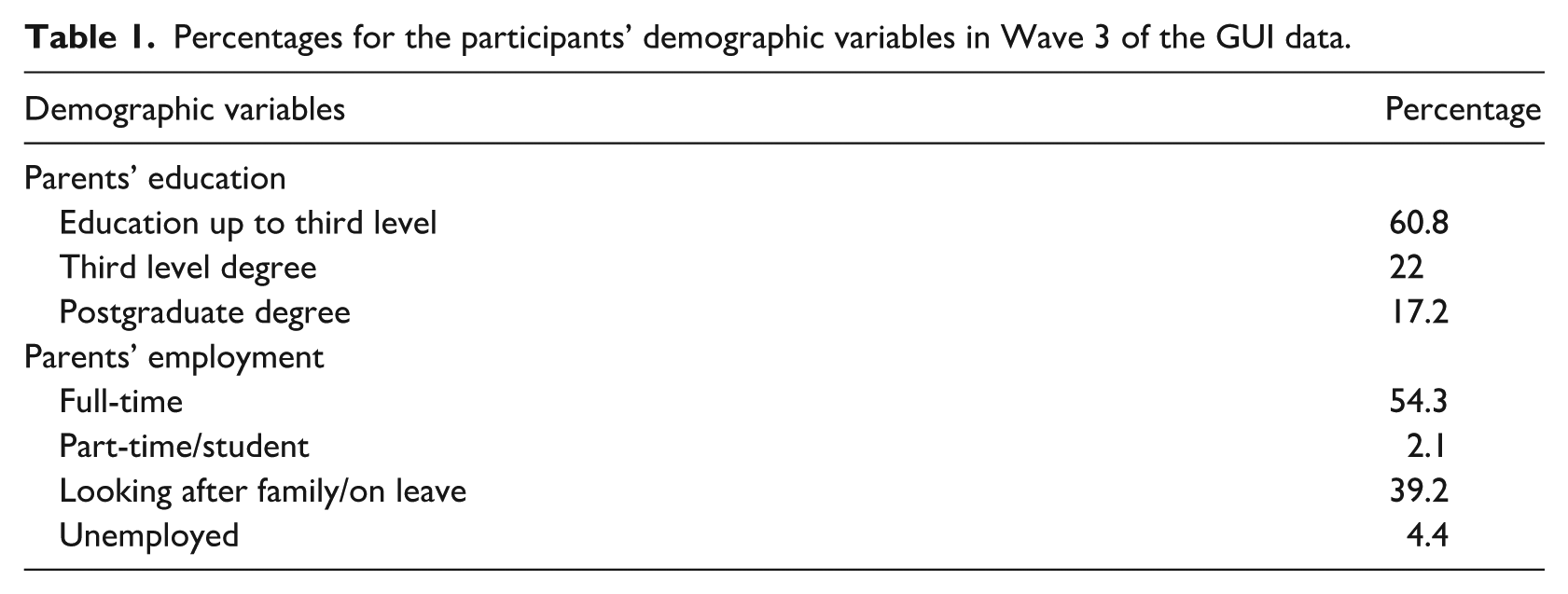
Nine thousand and one of the children from the original 11,134 families in the Infant Cohort ’08 participated in Wave 3 of the study when the children were 5 years old. Of these 9001 5-year-olds, 50.7% were male and 49.3% female (ethnicity was not recorded at this Wave). The demographic data of the children’s primary caregivers can be seen in Table 1.
Percentages for the participants’ demographic variables in Wave 3 of the GUI data.
Measures
Screen use
The child’s primary caregiver provided detailed information on the study child as well as themselves. The questions of interest in the current study related to the child’s daily screen time, and the screen activity they mostly engaged in. Caregivers were asked: ‘How many hours does [study child] spend on screen time on an average weekday?’, with the responses reported in the following categories: No screen time; Less than 2 hours; 2 to less than 3 hours; and 3 or more hours. For screen activity, the question asked was: ‘What does [study child] mostly engage in during screen time? Is s/he usually engaged in: Educational games; Other games; Watching television/videos; or a Mix of all activities?’.
Socio-emotional development
The socio-emotional development of the children was measured using the Strengths and Difficulties Questionnaire (SDQ; Goodman, 1997). The SDQ is a 25-item behavioural screening questionnaire designed to assess emotional health and problem behaviours in children. The questionnaire comprises five subscales (‘Emotional Problems’, ‘Conduct Problems’, ‘Hyperactivity’, ‘Peer Problems’, and ‘Prosocial’) each containing five items, and each having a minimum score of 0 and a maximum score of 10. Parents answer on a scale of 0–2 for each statement, where 0 = Not true, 1 = Somewhat true, and 2 = Certainly true. The SDQ is a widely used questionnaire in assessing the socio-emotional development of children aged 3–18 years, and with an overall Cronbach alpha of 0.77 for the parent-report version of the scale it is considered a valid and reliable instrument to use for this study (Mieloo et al., 2012).
Environmental factors
The primary caregiver questions of interest to this study related to the primary caregivers’ educational attainment, household income, and parent-child closeness. The possible answers relating to education attainment ranged from ‘No formal education/Primary education’ to ‘Doctorate/Ph.D’. Data for equivalised household annual income used in the study were collapsed into deciles, with 1 being the lowest income category and 10 being the highest. The Child-Parent Relationship Scale – Short Form (Pianta, 1992) was used to collect data on the level of closeness between the primary caregiver and the study child. The subscale ‘Level of closeness’ within this 15-item scale, received alpha coefficients of 0.58 (Pianta, 1992).
Data analyses
The five SDQ subscales were collapsed into three subscales which is recommended for non-clinical samples: Internalised Behaviour (combining the Emotion and Peer Problems subscales), Externalised Behaviour (combining the Hyperactivity and Conduct Problems subscales), and Prosocial Behaviour (remained the same). Statistical analyses were conducted using IBM Statistical Package for the Social Science (IBM SPSS) version 24.0. The variables of interest were extracted from the overall dataset for the purpose of analyses, and data were weighted based on the weighting variables provided in the dataset by the GUI researchers. Hierarchical multiple regressions were conducted to assess whether the screen use variables remained significant in their contribution to the children’s socio-emotional scores, even after the environmental factors were included.
Prior to running the regression models, the two screen use variables (time and activity) were dummy coded so that each level within the variables could be entered into the regression independently. The screen activities (educational games; video games; watching television/videos) were entered into the regression in Step 1, with ‘Mix of all activities’ used as a reference category. Similarly, the screen time categories (No screen time; 2 to less than 3 hours; 3 or more hours) were entered into the regression at Step 2 with ‘Less than 2 hours’ used as a reference category. These variables were used as reference categories as over half of the study sample were contained in these categories. The control environmental factors (primary caregivers’ education level, household income, and level of parent-child closeness) were then entered as variables into the regression in the final step.
Results
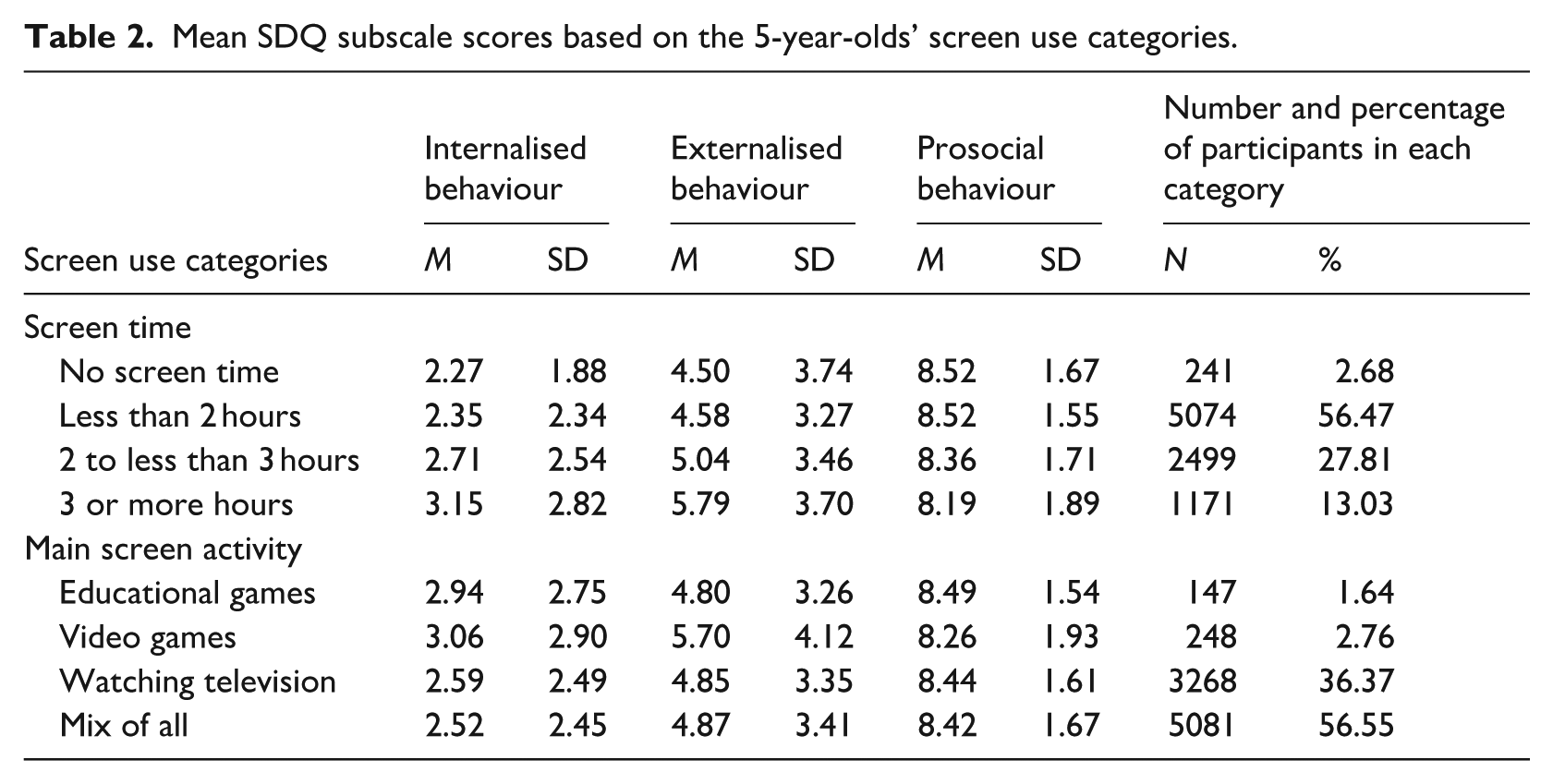
Of the 9001 5-year-olds in the third Wave of the GUI Study, data from 8985 were available for screen time and activity, and the three SDQ subscales. The children’s scores on the internalised (M = 2.56, SD = 2.47) and externalised (M = 4.88, SD = 3.42) behaviour scales ranged from 0 to 14, and 0 to 20, respectively. The average score on the prosocial behaviour score was 8.43 (SD = 1.65), with scores ranging from 0 to 10. Looking to the means, the children who had the highest internalised and externalised behaviour scores overall were those who had 3 or more hours of daily screen time, followed by those who mostly played video games (Table 2). Those with the highest prosocial scores were those who had less than 2 hours of daily screen time, followed by those who mostly engaged in educational games. These descriptive findings suggest that screen use may create variance in the socio-emotional scores. To assess whether this variance was statistically significant, regression models were conducted.
Mean SDQ subscale scores based on the 5-year-olds’ screen use categories.
The influence of screen use on internalised behaviour
At Step 1 in the internalised behaviour regression model, screen activity accounted for 0.1% of the variation in the children’s scores, R2 = 0.001, F(3,8547) = 5.249, p = 0.001. Only video games significantly differed from the reference category. Screen time explained an additional 1.4% of variation in Step 2, R2 = 0.014, F(6,8544) = 23.495, p < 0.0001. Interestingly, all screen activities became significant in the second step, indicating a possible interaction effect between screen time and activity (Table 3). The final step including the environmental factors explained an additional 7.7% of the variation, R2 = 0.077, F(9,8541) = 97.032, p < 0.0001. With the additional factors included, screen activity and time remained statistically significant, although parent-child closeness scores had the largest influence on internalised behaviour, as seen by the β coefficients (Table 3, Model 3).
Regression model of screen use variables and internalising scores.
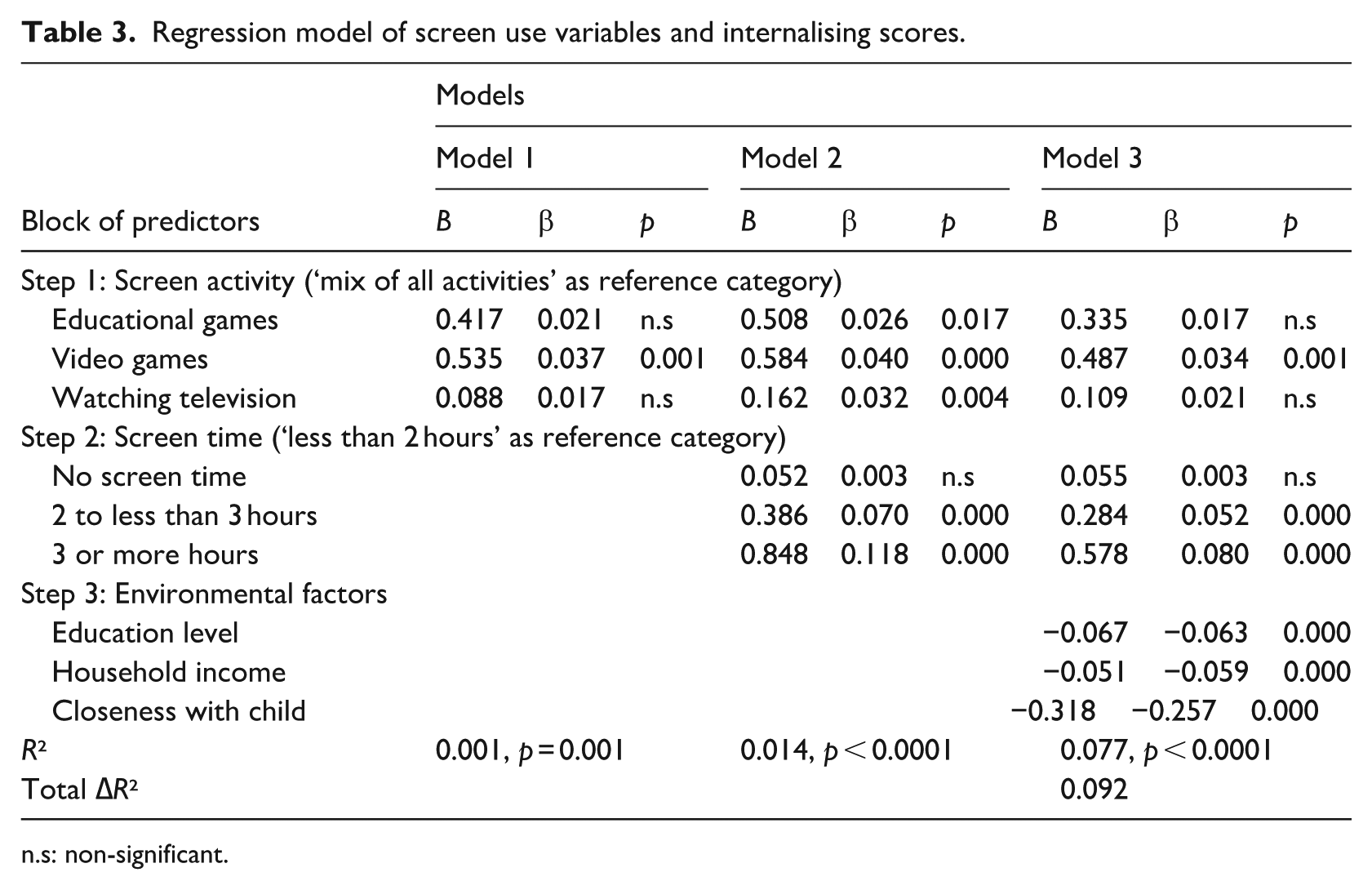
n.s: non-significant.
The influence of screen use on externalised behaviour
The second regression model explored the influence of screen use on externalised behaviour. The model indicated that at Step 1, screen activity accounted for 0.2% of the variation in the children’s externalised behaviour, R2 = 0.002, F(3,8546) = 5.639, p = 0.001. Only video games significantly differed from the reference category. Screen time explained an additional 1.5% of the variation in Step 2, R2 = 0.015, F(6,8543) = 26.078, p < 0.0001. Again, children who engaged in 3 or more hours of screen time per day had the highest β coefficient values (Table 4, Model 2). The final step explained an additional 8.3% of the variation, R2 = 0.083, F(9,8540) = 106.375, p < 0.0001. In the final model, video games and screen time of over 2 hours per day were also significant unique contributors to externalising scores in the 5-year-olds (Table 4, Model 3).
Regression model of screen use variables and externalising scores.
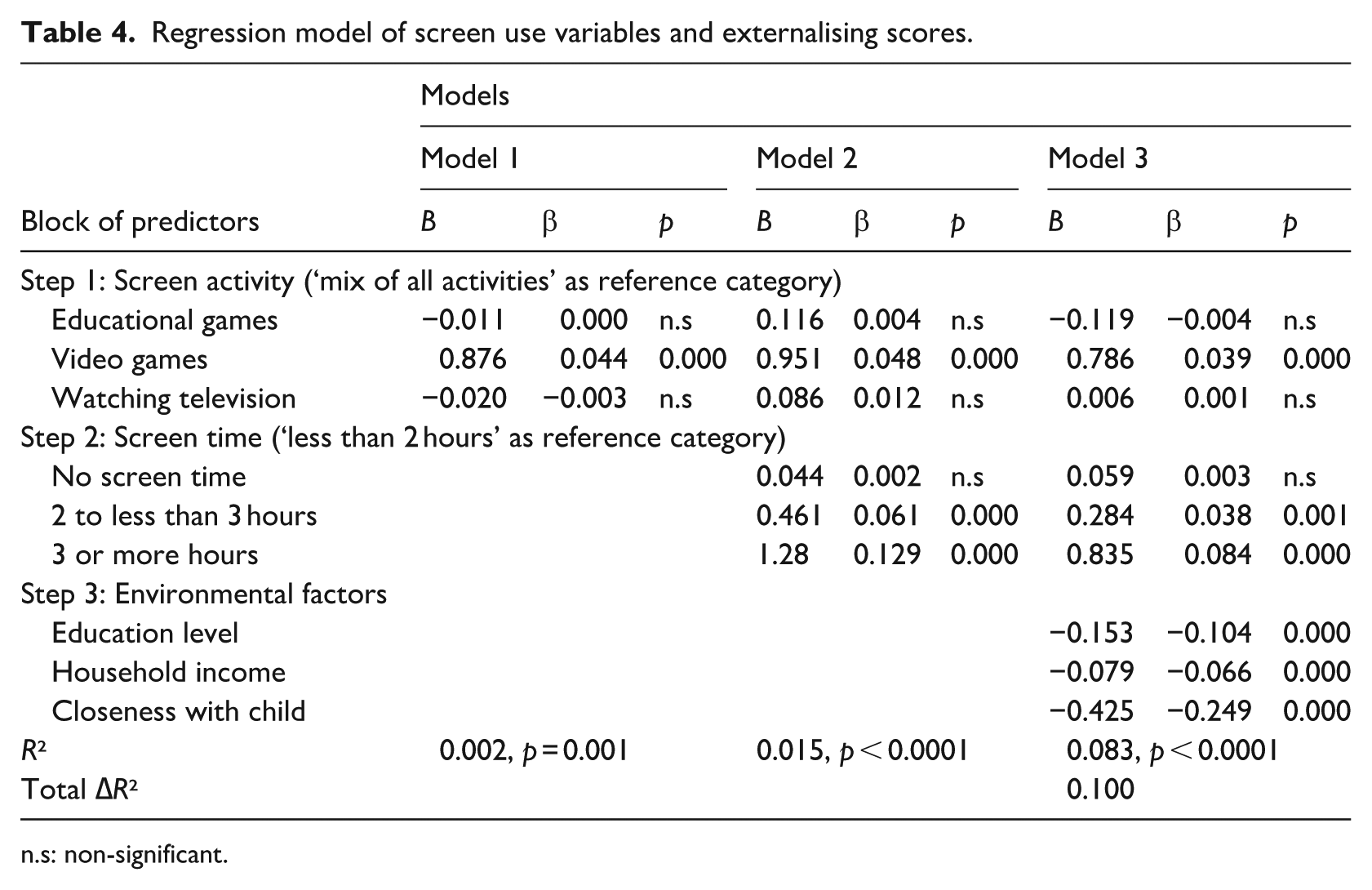
n.s: non-significant.
The influence of screen use on prosocial behaviour
The prosocial behaviour regression model indicated that the type of screen activity did not significantly predict prosocial scores in Step 1. In Step 2, screen time accounted for 0.5% of the variation in the children’s prosocial scores, R2 = 0.005, F(6,8544) = 8.789, p < 0.0001. Children who engaged in over 2 hours of screen time per day had significantly lower β coefficient values than the other time brackets (Table 5, Step 2). In Step 3, the environmental factors explained an additional 10.4% of the variation, R2 = 0.104, F(9,8541) = 117.41, p < 0.0001. Screen time of over 2hours per day remained significant in the final model, however the level of closeness between caregiver and child had the highest influence on prosocial scores, as seen in the β coefficients (Table 5, Model 3).
Regression model of screen use variables and prosocial scores.
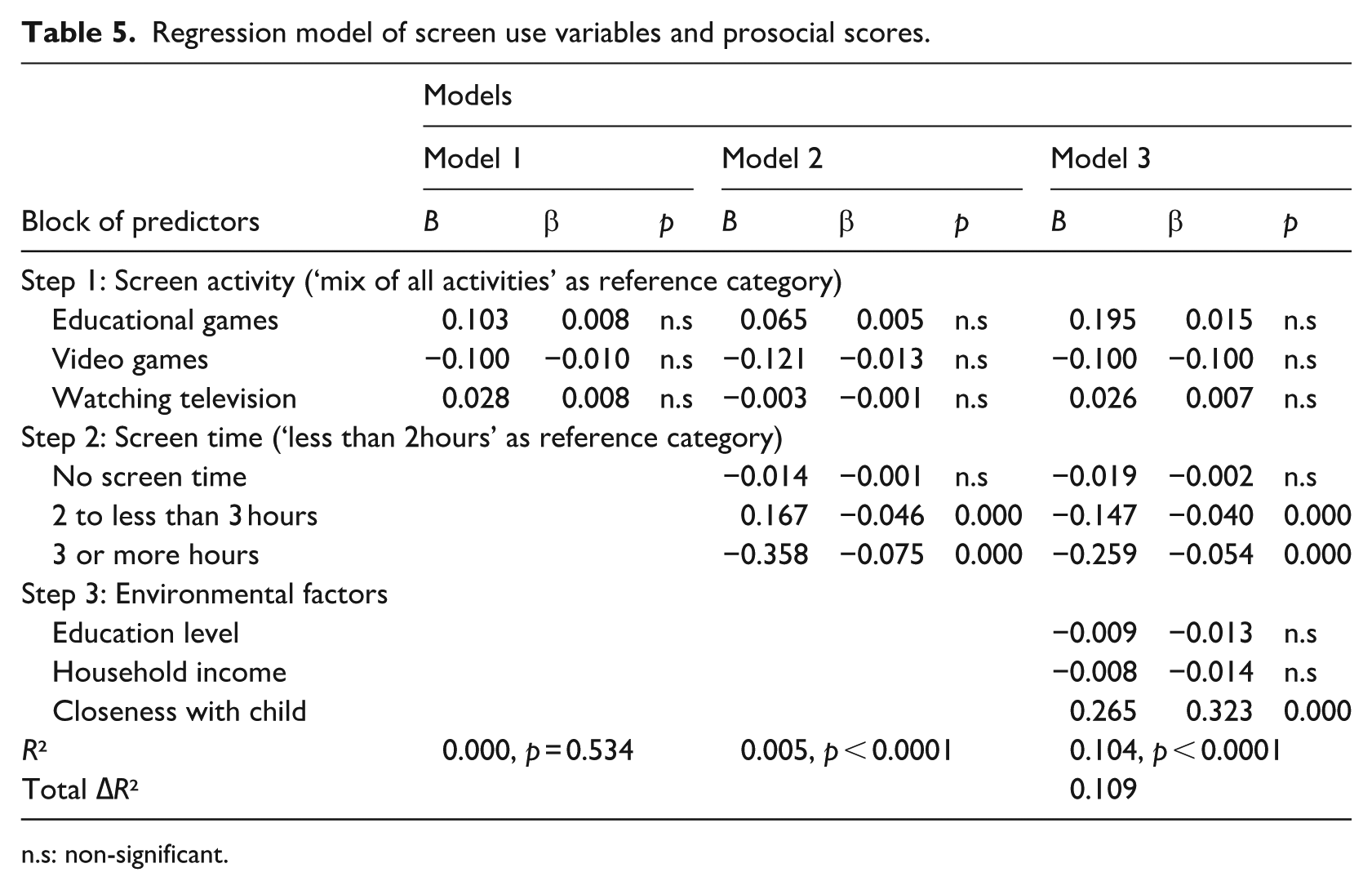
n.s: non-significant.
Discussion
The aim of this paper was to explore the cross-sectional influence that screen use had on 5-year-olds’ socio-emotional development, as measured by the SDQ, drawing on data from the large nationally representative sample of children in the GUI Study. By doing so, the current research addresses some of the research issues outlined in the existing screen use literature, accounting for influencing environmental factors using a young cohort. The following section discusses these findings in light of the existing findings in the field, while also assessing what evidence-based claims can be made about whether early screen use has a meaningful influence on socio-emotional development. The implications of these findings for policy, health organisations, and those working with and for young children, will be discussed.
The influence of screen time on socio-emotional development
The findings showed that the 5-year-olds who had 2 or more hours of screen time scored significantly higher on the internalising and externalising subscales, and significantly lower on the prosocial scale, than those with less than 2hours of screen time. Past researchers have also found this to be the case, such as Zimmerman and Christakis (2007) and Kano et al. (2007), who found higher amounts of screen time at a young age to have significant associations with socio-emotional difficulties. Others however have found no meaningful association between this amount of daily screen time and socio-emotional outcomes. For example, Przybylski and Weinstein (2019), and Kardefelt-Winther (2017) found screen time to only have a negative association with socio-emotional development if children engaged in excessive amounts (more than 7 hours daily).
Interestingly, the regression models showed that screen time continued to have a statistically significant influence on socio-emotional development even after environmental factors were controlled for. Additionally, the largest R2 value seen between screen time and socio-emotional scores was for externalised behaviour, despite some past research noting screen time to account for little variance in externalising symptoms (e.g. Kostyrka-Allchorne et al., 2020; Stevens and Mulsow, 2006). However, similar to these studies, environmental factors did account for much more of the variance in all measures of socio-emotional development than screen time itself. These factors accounted for 5.5times more of the variance in internalising and externalising scores than screen time, and for prosocial scores they accounted for 20 times more of the variance. This is also comparable to Chonchaiya et al. (2015) whose study explored the associations between infants’ television watching and socio-emotional difficulties. Similar to the current findings, the explained variance in socio-emotional scores in their final regression models was between 7% and 11%, with researchers noting that the variance explained solely by screen time within that percentage was too low to be considered a predictor of behavioural concerns.
The influence of screen activity on socio-emotional development
The 5-year-olds mostly engaged in screen activity which also influenced their internalising and externalising scores, although to less of a degree than screen time itself. The findings showed that those who mostly engaged in video games scored significantly higher on the internalised and externalised behaviour subscales than the children who mostly watched television or engaged in a mix of all screen activities.
This finding is consistent with the literature on video games and aggression, inattention, and emotional conduct in older children (Anderson and Bushman, 2001), and in younger children (Ferguson, 2015). In Ferguson’s meta-analytic study, there was a reported association between video games and socio-emotional difficulties, although the R2 values ranged from 0.00 to 0.06. While the children in the studies reviewed in the meta-analysis were aged between 5.5 and 17 years, the findings are similar to that of the current study which focuses on 5-year-olds. This highlights that while video games are reported to be associated with socio-emotional difficulties in later childhood, this may also apply to younger children. However, the size of the effect should be considered in the interpretation of these results, as despite the significant p value, the R2 values only ranged from 0.00 to 0.02, suggesting that screen activities account for a very small portion of the variance in SDQ scores – again, much less than other aspects of the children’s environment.
When comparing screen activities, Przybylski and Weinstein (2017) and Sanders et al. (2019) found television watching to be more strongly related with externalised behaviour than computer games for older children (aged 10years and older), even after controlling for ecological factors, which is again in contrast with the current findings. This may suggest that video games may have more of an influence developmentally for older children than younger children. This should therefore encourage future researchers to continue replicating large cohort studies examining the influence of screen activities across various age brackets.
Lastly, screen activities had no significant influence on prosocial scores, although screen time did. Previous research suggests that screen content is important to consider too. For example, Coyne et al. (2018) and Saleme et al. (2020) found content to be an important factor in media’s influence on socio-emotional competencies, with educational and prosocial media shown to have a positive influence on prosocial behaviour for children aged 7 and older. The current findings show that while screen activity did not contribute to socio-emotional scores as much as screen time itself, it remains an important measure of screen use to be considered in future screen time research.
Strengths, limitations, and future research
Given the lack of research that has explored screen activity and socio-emotional development together in a young cohort, its inclusion in the current research can be considered a main strength. Additionally, the findings provide empirical evidence on the influence that screen use has in early childhood, using a nationally representative sample of young children in Ireland. This is an area that has been under-researched to date. Furthermore, a large amount of research in the area has been conducted solely on externalised behaviour. The findings of this study address this by including measures of internalised and prosocial behaviour at an early age, which have been noted as areas that have not received a lot of attention in the research to date (Coyne et al., 2018; Saleme et al., 2020).
A further strength relates to the inclusion of other environmental and family factors within the studies. Researchers such as Kardefelt-Winther (2017) and Levelink et al. (2021) have suggested that screen use research should control for various environmental and individual factors when measuring psychological developmental outcomes. Although both screen time and screen activity remained significant in the regression models, the children’s environmental and family factors accounted for more of the variance than the screen use variables. These findings suggest that future research should continue to consider ecological factors in studies of young children’s early screen use.
Despite the larger effect size that parent-child closeness had in the regression models, a possible limitation of the current research relates to the inability to assess parental engagement during screen time as this was not measured in the GUI Study. Given previous research shows that ‘technoference’ and parental interaction during screen time to influence early development (Mackay et al., 2022; Pempek et al., 2011), parental engagement remains an important aspect of early screen use for future research, as opposed to measuring screen time alone. There were also further avenues of interest that could not be explored in this study due to the limitations of the screen use data collected in the GUI Study. While the screen activity that the children mostly engaged in was measured, and a distinction was made between education games and video games, all television watching was summed as one activity. The literature has shown that educational content may vary in its influence on development in comparison to entertainment content (Barr et al., 2010; Duch et al., 2013). Further research examining the role of content is therefore warranted.
Finally, the GUI Study is a large cohort study and therefore includes a heterogenous sample of families from various socio-economic backgrounds across Ireland, which allowed for generalisable findings to be produced on the role of early screen use in psychological development. However, the sample also reflects the largely White population living in Ireland in 2006 when data collection began. As a result, future research should continue to explore the role of early screen use in the development of children from various cultural and ethnic backgrounds, and with differing developmental abilities.
Implications
These findings have implications for policy makers, parents, and those who educate and care for young children, as well as those who engage in research related to screen use in early childhood. From a policy perspective the findings suggest that it is important to have in place, current screen use guidelines, (World Health Organisation, American Academy of Paediatrics). However, the findings in the current study highlight nuances in relation to the role of screen use in early development, suggesting that the same amount of screen time does not necessarily have the same role to play in all aspects of socio-emotional development. Similarly, while it is useful to have policies and guidelines in relation to screen time, the current findings also highlight the importance of also considering the type of screen activity.
Similarly, for parents and those who work with and care for young children, it is important that screen use guidelines reflect the latest research evidence base. Over the last two decades there has been a rapid increase in the diversity of screen types (from predominantly television sets prior to the year 2000 to tablets and smartphones today) and screen activities (from predominantly passive television viewing to a range of activities, including educational apps, eBooks, and video calls). Therefore, it is important that the guidelines and screen use advice that parents seek is up to date and reflects the latest research findings on the role of screens in early childhood development.
Conclusion
This paper provides empirical findings on the cross-sectional associations between screen time and socio-emotional development in early childhood from an ecological perspective. However, the screen use effect sizes reported were modest in comparison to those seen for the children’s environmental factors, such as parent-child closeness. Therefore, caution should be exercised when interpreting the extent of the influence early screen use has on development, and whether this influence can be considered meaningful when considered from a holistic perspective.
Footnotes
Acknowledgements
The authors would like to thank all the families who participated in the GUI Study and therefore made this research possible.

Ethical considerations
Ethical approval for all data collection and procedures was granted by the Growing Up in Ireland Research Ethics Committee. According to the Irish Social Science Data Archive, ethical approval reference numbers were not used for the Wave of data utilised in the current study.
Consent to participate
Author contributions
Both authors were involved in the conception and design of the study, and the final drafting of the manuscript, revising it critically for intellectual content. The first author led in the analysis and interpretation of the data and the original drafting of the manuscript. Both authors agree to be accountable for all aspects of the work. No AI-assisted technologies were used in the production of any aspect of the manuscript.
Funding
The authors received no financial support for the research, authorship, and/or publication of this article.
Declaration of conflicting interests
The authors declared no potential conflicts of interest with respect to the research, authorship, and/or publication of this article.
Data availability statement
The data that support the findings of this study are available from the Irish Social Sciences Data Archive, but restrictions apply to the availability of these data, which were used under licence for the current study, and so are not publicly available. However, the anonymised microdata files can be requested for research purposes through the Irish Social Sciences Data Archive.