




Abstract
Although extensive research has demonstrated the benefits of high-quality early childhood education, established quality frameworks often overlook the perspectives of stakeholders who are central to local improvement. Leveraging Quebec, Canada’s tradition of exemplary early childhood education (ECE), this study explored the concept of ECE quality with multiple stakeholder groups across the province, including parents, educators, administrators, and researchers. A structured group concept-mapping process identified seven components that participants saw as important for excellence in center-based early childhood education, including ideas not present in established quality frameworks. Participants viewed an exemplary ECE center as one that (1) offers children choices and stimulating learning experiences based on exploration and play, (2) adopts best practices in ECE, (3) ensures that staff have developmentally sensitive knowledge and skills, (4) provides professional support and good working conditions for staff, (5) partners with families and the community, (6) values diversity and inclusion, and (7) offers a stimulating physical and nutritional environment. These results suggest a Quebec-specific model of ECE quality spanning multiple ecological levels that reflects widely accepted scientific concepts as well as locally relevant ideas emerging from stakeholders’ perspectives. In addition to suggesting components for a Quebec-specific, stakeholder-driven model of quality, the research described in this article offers ideas and methods for similar initiatives in other contexts.
Keywords
Introduction
Substantial research has established that high-quality early childhood education (ECE) has positive impacts on children and families (Ulferts et al., 2019; von Suchodoletz et al., 2023). However, controversy remains about how to define, measure, and improve ECE quality (Dahlberg et al., 2013; Fenech, 2012; Hunkin, 2018). Several approaches exist, varying in their underlying philosophical perspectives (Dahlberg et al., 2013; Lemay and Lehrer, 2023; Lemay et al., 2025; Vandenbroeck et al., 2023).
One approach, sometimes referred to as a post-positivist view of quality (Lemay et al., 2017), sees quality as a quasi-universal concept that promotes optimal child outcomes through consistent application of scientifically-validated best practices (Harms et al., 2015; Pianta and Hamre, 2009; Teachstone, 2022a). Proponents of this view define quality in terms of structural and process dimensions, both of which have been linked to positive child outcomes (Slot, 2018; von Suchodoletz et al., 2023). To improve quality, this approach typically focuses on improving educator-child interactions through training, assessment, and structured feedback (Harms et al., 2015; Pianta and Hamre, 2009; Teachstone, 2022a). This approach underpins many of the monitoring systems increasingly being used to assess and improve quality in early childhood education (Buettner and Andrews, 2009; Irvine et al., 2024b; OECD, 2015, 2021).
Another approach proposes a constructivist view of sense-making embedded in local values and contexts (Hunkin, 2018; Vandenbroeck et al., 2023). This perspective challenges portrayals of ECE as an investment and children as resources to be optimized, instead seeing them as individuals with unique ways of learning and experiencing the world (Hunkin, 2018). Proponents of this view prioritize children’s agency, educators’ role as facilitators, and collective meaning-making (Dahlberg et al., 2013; Lemay et al., 2017; Ulrich Hygum and Hygum, 2023). This approach encourages stakeholders to develop their ideas about what is good for children in locally meaningful terms (Dahlberg et al., 2013; Fenech et al., 2020; Hunkin, 2018). For example, Fenech et al. (2020) found that Australian educators valued “love” as a key element of childcare excellence, a concept that may be difficult to measure but was meaningful and actionable for local actors.
A third “hybrid” approach works to combine local expertise and cultural sensitivity with widely accepted scientific knowledge (Lemay et al., 2017; Lemay and Lehrer, 2023; Pastori and Pagani, 2017; Vandenbroeck et al., 2023). This approach encourages stakeholders to consider their own experience as well as scientific knowledge as they articulate and develop their views about quality (Tonyan, 2017). For example, Pagani and colleagues used results from standardized measures of quality to stimulate discussions among Italian ECE staff about the key concepts in established quality frameworks and how their own views compared to these models (Pagani, 2021; Pastori and Pagani, 2017). This approach encourages stakeholders to consider the scientific knowledge base as well as locally relevant ideas about quality as they reflect on and improve their practice, a valuable way to promote improvements in everyday practice.
A hybrid approach to conceptualizing quality may be particularly relevant in Quebec, a Canadian province characterized by a long tradition of ECE excellence and a cultural and linguistic heritage unique in North America (Japel, 2012; Mathieu, 2021; McCluskey, 2018). Inspired by Nordic ECE models (Urban et al., 2023), Quebec’s ECE system has been shaped by pro-family government policies, widespread societal concern for equal opportunity, and a strong network of nonprofit childcare organizations that evolved into a province-wide, government-subsidized ECE system (Cleveland et al., 2021; McCluskey, 2018). The province-wide ECE network has created favorable training and working conditions and a supportive regulatory structure (Akbari et al., 2021; Mathieu, 2021). Quebec also benefits from a well-developed professional network of researchers, professional associations, specialized training programs, and continuing education. In 2022, over two-thirds (68.8%) of children under five in the province attended some form of regulated childcare, making it an important early childhood institution (Ministère de la famille, 2024). This depth of experience, policy support, and local knowledge make it an ideal context to study local views of ECE quality (Mathieu, 2021).
Quebec’s approach to ECE quality is rooted in the province’s educational program Accueillir la petite enfance [Welcoming Early Childhood] (Ministère de la famille 1997, 2019). This program promotes a holistic and integrated view of child development and explicitly values partnerships with families as a core educational principle. While it includes some participatory elements, such as its emphasis on parental engagement, decisions about the regulatory definition of quality and its dimensions, indicators, and measures have involved little stakeholder input. Early province-wide quality assessment efforts included large scale, governmental surveys that measured four dimensions drawn from the educational program: physical environment, activities, educator-child interactions, and educator-parent interactions (Drouin et al., 2004; Lapointe and Gingras, 2014). A quality assessment and improvement system was introduced in 2019, based in the Classroom Assessment Scoring System (Pianta and Hamre, 2009; Teachstone, 2022a) and semi-structured interviews and questionnaire data (Geffray, 2022; Roy-Vallieres et al., 2025). Developed with limited stakeholder involvement, this system has been criticized for prioritizing evaluation over improvement, neglecting organizational and policy-level influences on quality, and placing responsibility for change on front-line educators without providing corresponding support (Geffray, 2022; Lehrer et al., 2025).
Despite little attention to stakeholder input at the policy level, a few research studies have explored how specific stakeholder groups view quality in the province. For example, Hébert (2016) interviewed center directors about their views of educational quality, and Lehrer et al. (2015) explored parents’ perceptions of quality in center-based and home-based ECE. These studies suggest that a Quebec-specific quality framework could incorporate components, such as management leadership style and staff working conditions, that are currently overlooked. Still, the current research base is too limited to support a comprehensive model of quality adapted to the Quebec context.
To contribute to a more comprehensive, participatory, and Quebec-specific model of ECE quality, this study used Trochim’s group concept mapping method (GCM; Kane and Trochim, 2007; Trochim, 1989; Trochim and Kane, 2005). GCM offers a structured, participatory, discovery-oriented process for identifying participants’ views of key ideas in a subject area and creating a collective portrait of their understanding of the topic. Participants generate qualitative data through brainstorming and sort resulting ideas into piles based on similarity in meaning. Sorting data is statistically analyzed to produce a collective portrait of participants’ views of major concepts and their interrelationships. GCM has been used to explore quality in many fields, including health care, social services, industry, and education, often revealing locally meaningful quality components not previously articulated (Burke et al., 2005; Donnelly, 2017; Robinson et al., 2023; Rosas and Ridings, 2017; Trochim and Kane, 2005). However, GCM has not previously been applied to conceptualizing ECE quality.
This study aimed to contribute to a Quebec-specific model of quality by using GCM to gather diverse stakeholder views on the characteristics of exemplary childcare centers in order to create a collective portrait of their views of key quality components and their relationships.
Method
Data collection was conducted in two phases using Concept Systems Incorporated’s web-based Global Max® platform (Concept Systems Incorporated (CSI), 2017), designed for GCM as proposed by Trochim (1989) and Kane and Trochim (2007). In phase 1898 anonymous participants participated in the online brainstorming task (January 10–March 9, 2020). Given that this phase ended before any Covid-19 closures, pandemic-related issues were not likely top-of-mind for most participants. In phase 2 a year later, after the immediate crisis period of the pandemic had ended, a subsample of 91 participants sorted and rated selected content from the previous brainstorming task.
The study was approved by UQAM’s research ethics committee (UQAM-CIEREH certificate number: 2019-1999). Participation was voluntary and uncompensated. The study posed minimal risk, as it focused on participants’ perspectives on early education and did not collect information about sensitive personal topics. Participants were informed of the purpose of the study, their right to withdraw at any time without consequence, and the potential benefits of contributing to a broader understanding of ECE quality in Quebec. Informed consent was obtained electronically prior to data collection, using a secure consent form embedded in the online platform. Data security and confidentiality were maintained through secure login and data storage procedures. Participants were invited to contact the research team with any questions or concerns at any point; no such inquiries were received. Throughout the research process, we adhered to the ethical principles of respect for persons, justice, and beneficence.
Participants and recruitment
Phase 1 participants were recruited via ECE-related email lists across Quebec. Announcements explained the study and provided a generic link to the Global MAX® platform. A total of 898 individuals participated, and 593 volunteers indicated willingness to participate in a second phase of the study.
Given that technical constraints in the data collection software limited the Phase 2 subsample to 100 participants, efforts were made to maximize gender diversity and to achieve an equal number of parents and professionals in this subsample. Volunteers’ sociodemographic information was used to create two groups based on their primary role in relation to ECE: those who were associated with ECE because they were parents or interested citizens (subsequently referred to as “parents”) and those who had a professional role related to ECE, such as staff, administrator, researcher, student, or other professional in the early childhood field (subsequently referred to as “professionals”). To maximize gender diversity from a sample largely composed of women, we first invited all male volunteers to participate in phase 2 (n = 22; 10 parents and 12 professionals) and then randomly selected among remaining volunteers to achieve a sample of 50 parents and 50 professionals. Several invitations sent to this sample went unanswered or were refused. After a refusal or two non-responses, a replacement was randomly chosen from the same role group. We issued 263 invitations to obtain 91 participants for phase 2 (46 parents and 45 professionals). Three of these participants completed only the sorting task, eight completed only the rating task, and 80 completed both tasks.
Information on participants’ sociodemographic characteristics is presented in Table 1.
Sociodemographic information.
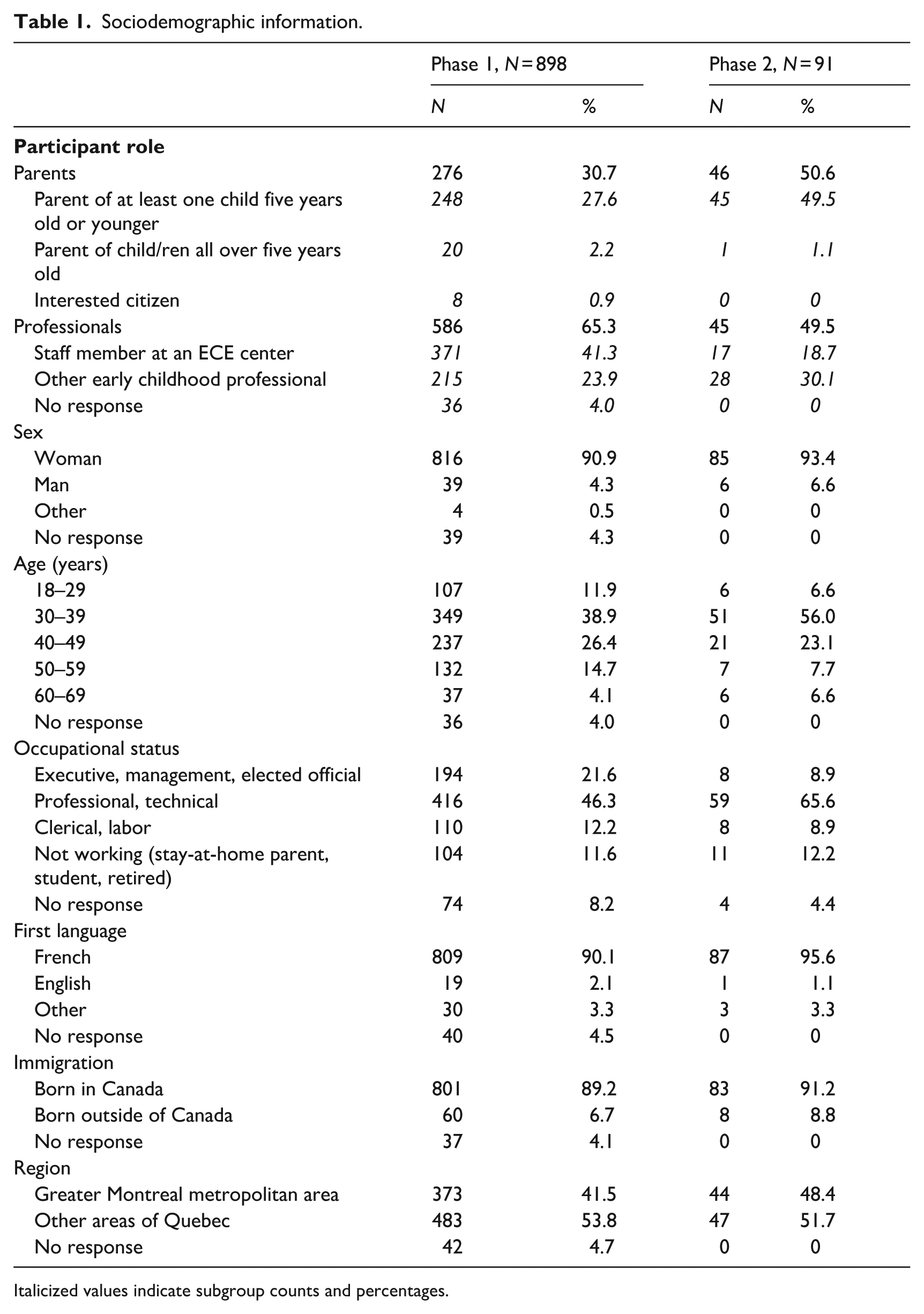
Italicized values indicate subgroup counts and percentages.
Materials and procedure
Data were collected using the Global MAX® platform, with materials available in French and English. Phase 1 participants logged onto the platform anonymously and completed questions about their gender, language, birthplace, and number and age of children. Participants identified their primary role in relation to ECE by choosing among the following categories: parent of at least one child under six; parent of children all aged 6 years or older; interested citizen; ECE staff or management; researcher, teacher, or student in the ECE field; or other professional involved in early childhood. Those who were interested in participating in further research provided their email address.
After the sociodemographic questions, participants were presented with the brainstorming task. The word “quality” was not included to avoid directly activating preexisting models of quality. The wording of the prompt was as follows: In this study, we are interested in center-based early learning and childcare settings. From your perspective, what describes an exemplary early childcare setting? Please add keywords or short statement that would complete either of the following sentences: ‘
Participants were asked to type as many statements as they wished but to keep each statement brief, just one thought. Some participants added no new ideas after reviewing the previously submitted ones, resulting in a total of 809 responses. Despite instructions for short, single-idea responses, many contained multiple ideas. Two bilingual members of the research team split the responses into over 3000 individual ideas and then combined those that were closely related. Given technical limits for the sorting task, the research team selected 125 of these ideas to represent as fully as possible the diversity of ideas from the original pool.
For phase 2, selected volunteers were emailed a personalized hyperlink to access study materials. After logging in, they were presented with the selected 125 statements in random order in the form of individual “cards” in the left panel of the interface window. Cards could be dragged into “piles” on the remaining window. Participants distributed the statement cards into piles based on their perceptions of which statements were most similar in meaning. This open-ended task allowed participants to decide how many piles to make and which statements went into each pile. The only rules were that statements were to be sorted according to similarity in meaning and that statements that were unrelated to others should be sorted into piles by themselves rather than into a miscellaneous pile (CSI, 2017). After sorting, participants provided labels that reflected their view of what united the statements in that pile. The research team examined each sort for adherence to sorting instructions, resulting in three sorts being excluded and 80 useable sorts for the analysis.
For the rating task, participants were presented with each statement in random order in questionnaire format and asked to rate the importance of each. They were reminded that even though all the characteristics might be important, they should use the full range of response choices, from 1 “relatively less important” to 5 “extremely important.”
Analyses
Phase 2 sorting data was analyzed using multidimensional scaling (MDS) and cluster analysis (CSI, 2017). For the MDS analysis, each participant’s sort pile was converted to a 125 × 125 matrix, with values of 1 for statement pairs sorted into the same pile and 0 otherwise. Matrices were summed across all participants and a similarity cutoff value of three was applied as a filter; if two statements were placed together in a pile by three or fewer users, the filter replaced that cell with 0. This type of filter helps to reduce spurious relationships between statements and is appropriate when there is a high level of diversity in the sorts and a relatively large number of sorts (CSI, 2017). A review found an average of 27 sorts in GCM studies (median 20; Donnelly, 2017), supporting the appropriateness of using this filter on the relatively large N of 80 sorts analyzed in this study.
A two-dimensional scaling solution was generated from the MDS analysis of the summed matrix, producing Cartesian coordinates for each statement and a two-dimensional “point map” in which statements sorted together by more participants are closer in proximity. The quality of MDS solutions is assessed with the stress-value goodness-of-fit index; values closer to zero indicate better fit (Trochim, 1989). Rosas and Kane (2012) found that stress values across 68 GCM studies averaged 0.28, ranging between 0.17 and 0.34. The stress value in this study was 0.22 after 11 iterations, well within this range.
The MDS solution also produces a bridging score for each statement which quantifies how often a statement was grouped with nearby items. A low bridging score indicates that a statement was consistently grouped with its neighbors and can be considered representative of the meaning of that area of the map. A high score indicates that a statement was often grouped with more distant items, likely because different participants saw it as being related to different underlying themes (CSI, 2017). Statements with high bridging scores are less representative of local meaning and more likely to bridge to other concepts in the map. At the cluster level, a lower average bridging score indicates greater conceptual consistency, while a higher score suggests a mix of diverse ideas. In the results, we report bridging scores for each statement as well as the average bridging score for each cluster.
For the cluster analysis, Ward’s technique was used to create groups of statements (Trochim, 1989). The Cartesian coordinates generated by MDS were used to group the two closest points on the map into an initial cluster, subsequently represented by its centroid. The next closest pair of points or centroids was sequentially grouped together until all statements were in one cluster.
The final choice among possible solutions in cluster analysis is recognized as an important, qualitative aspect of the analysis. The research team examined solutions from 15 to 5 clusters, and a seven-cluster solution was judged to be the most coherent and interpretable. Cluster names were developed after examining the statements in each cluster and the labels that participants gave to similar piles.
Ratings data were analyzed by calculating the mean importance score for all the statements in each cluster, overall and by participant role.
Results
Figure 1 presents the final concept map. Each statement is represented by a point placed on the two-dimensional map according to its coordinates generated by the MDS solution. Each cluster is labeled, and an outline is drawn around its component points. The number of layers represents the average importance of statements in the cluster, with more layers indicating higher ratings.
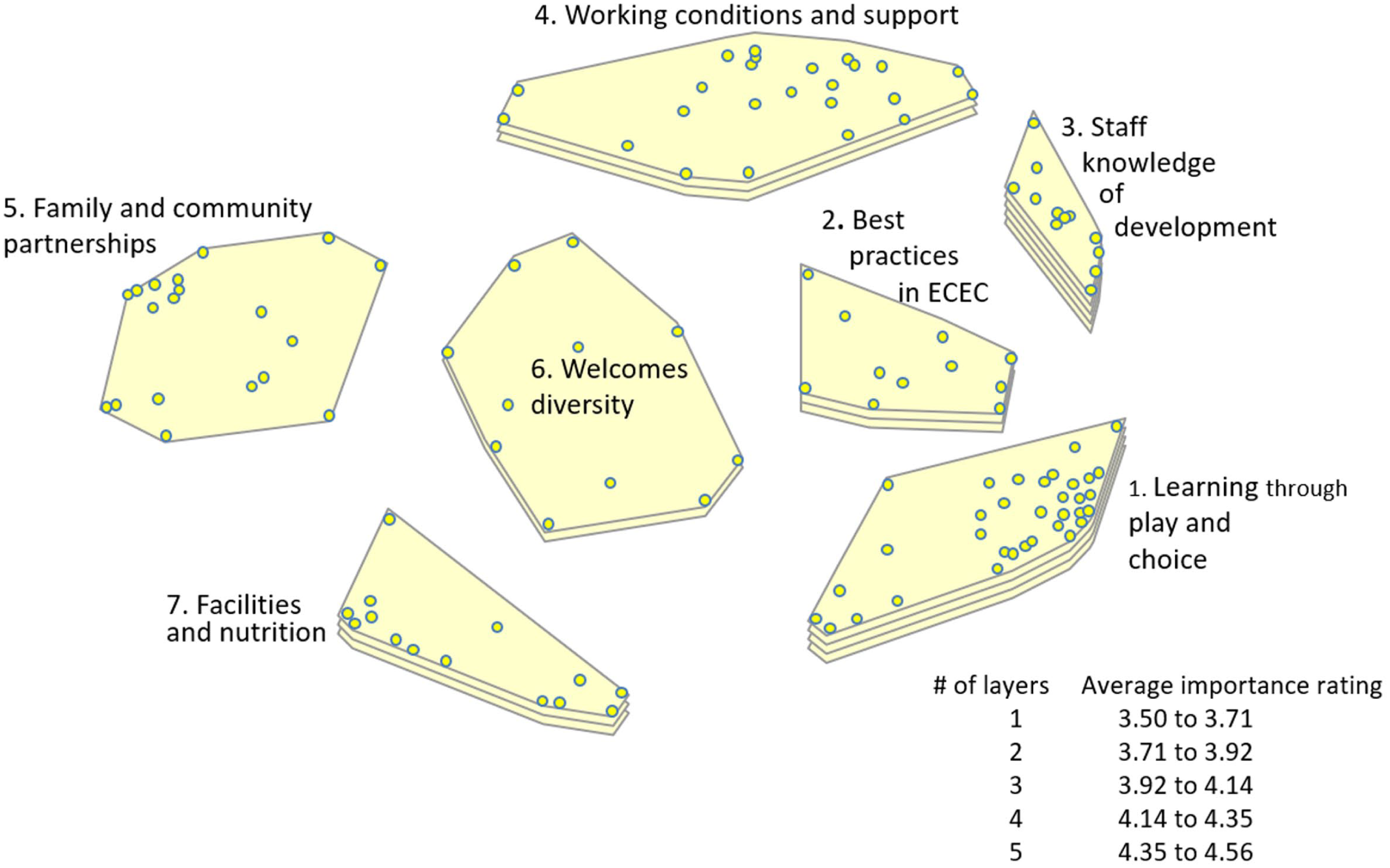
Final concept map with cluster titles. Points represent the placement of individual statements according to the two-dimensional MDS solution. Clusters are represented by yellow polygons; the number of layers in each cluster represents the average importance score for the statements in that cluster. Titles from each cluster were generated by the research team after examining the statements in each cluster and participants’ pile labels.
Typical of GCM maps, higher order dimensions can be detected in the organization of the clusters. Clusters from left to right suggest a dimension from external (relationships with parents and community actors) to internal (within-setting interactions between children and educators). Clusters from top to bottom suggest a dimension from staff-related issues (working conditions, knowledge, and training) to child experiences (characteristics of the environment that children encounter).
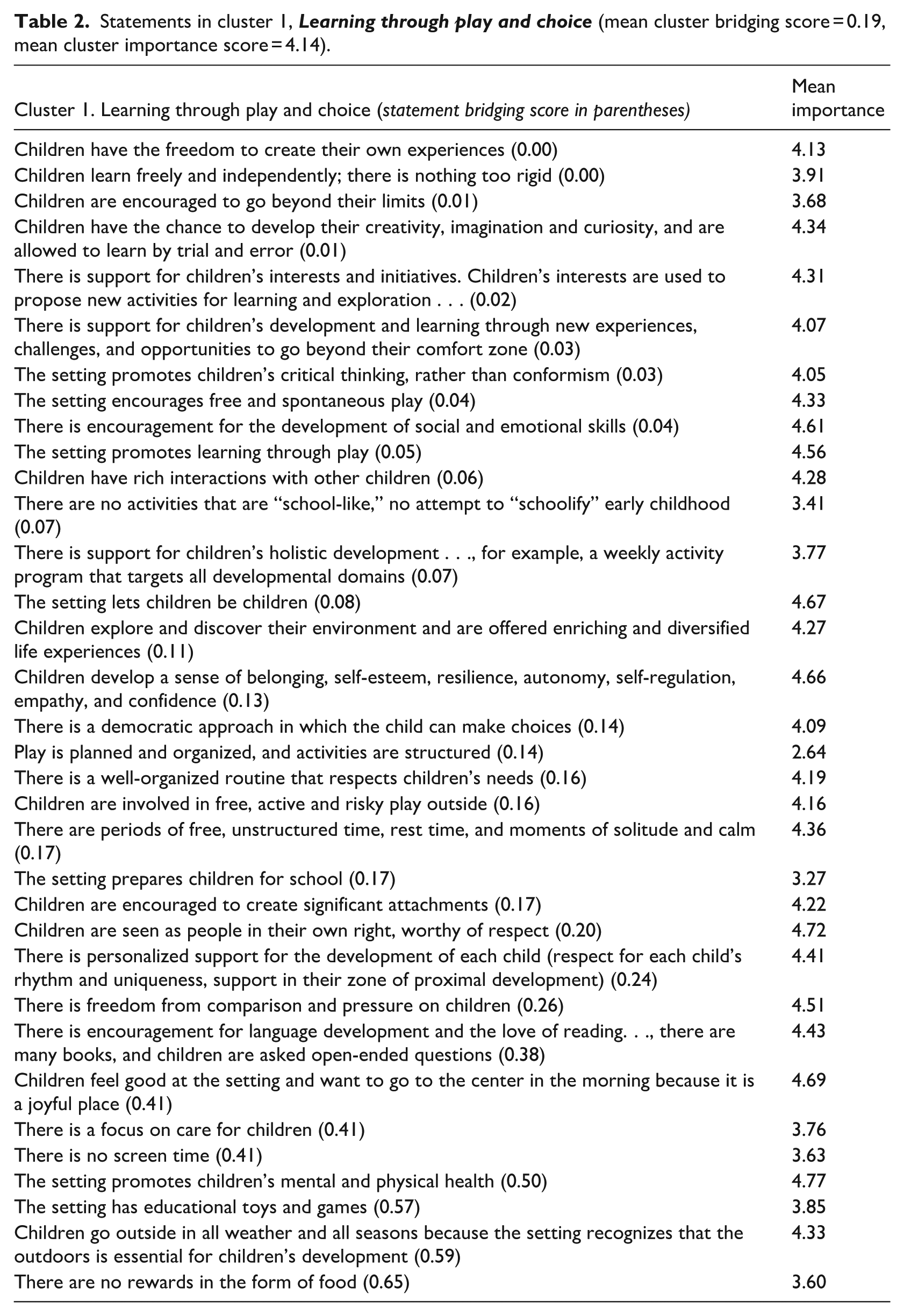
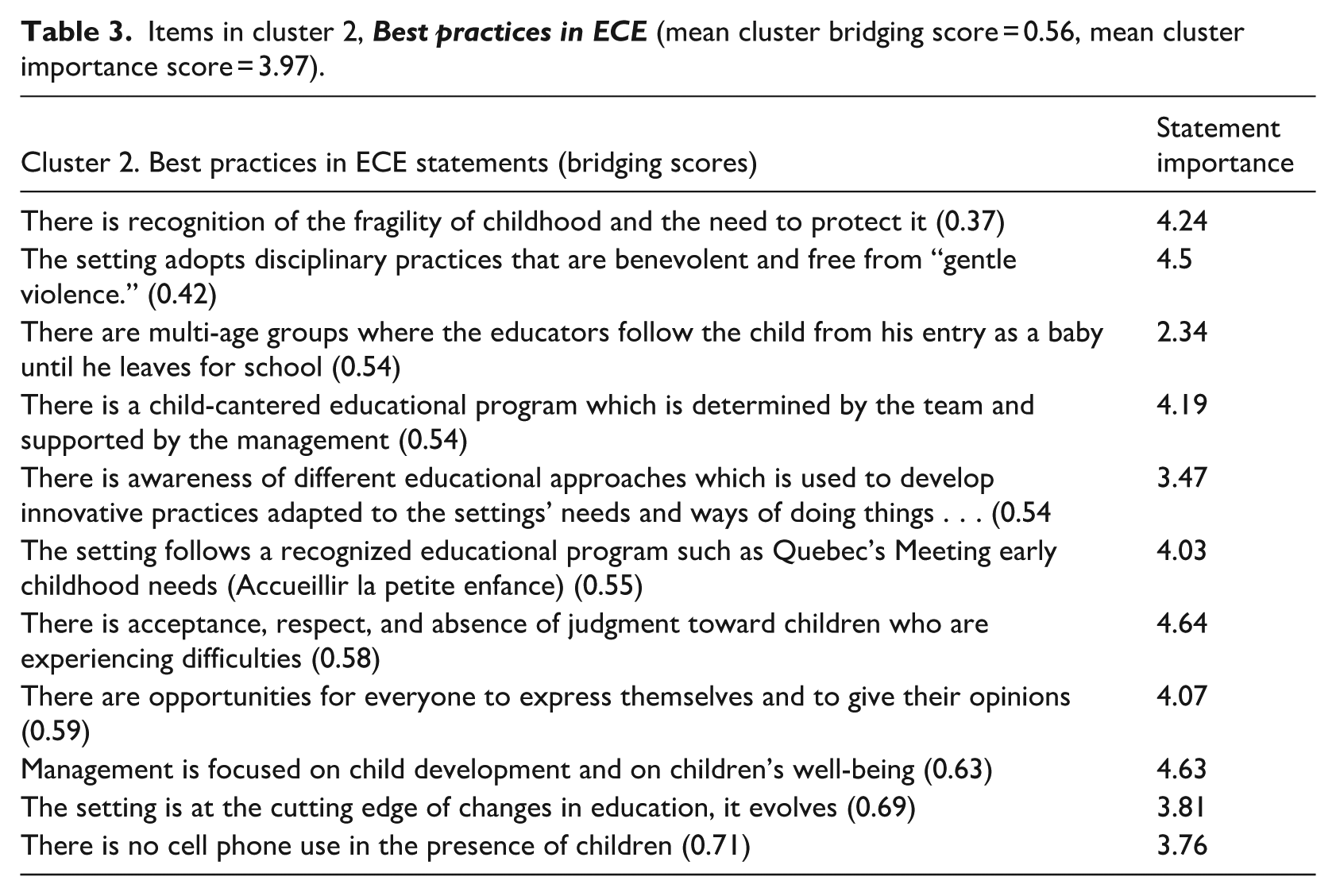
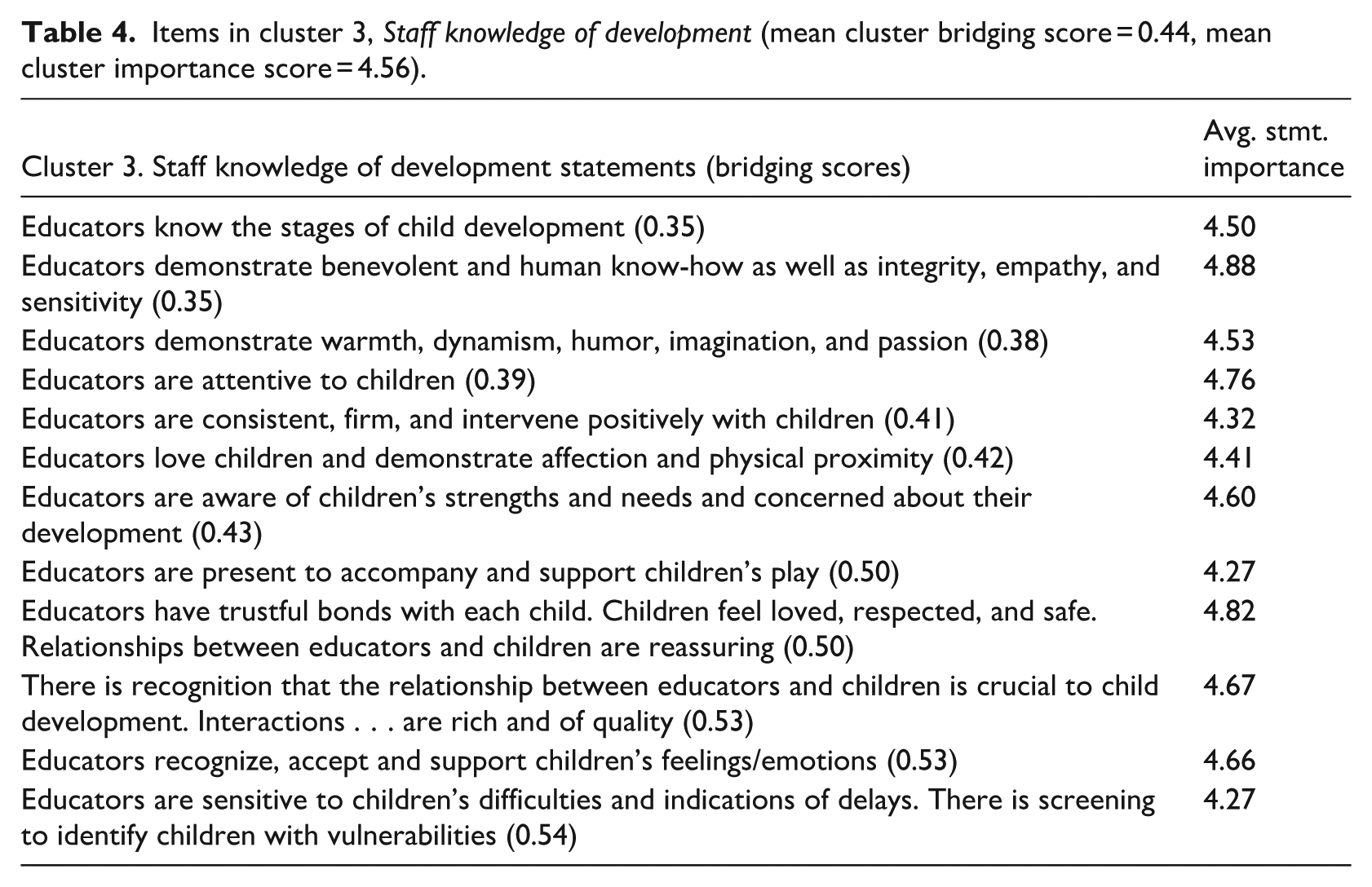
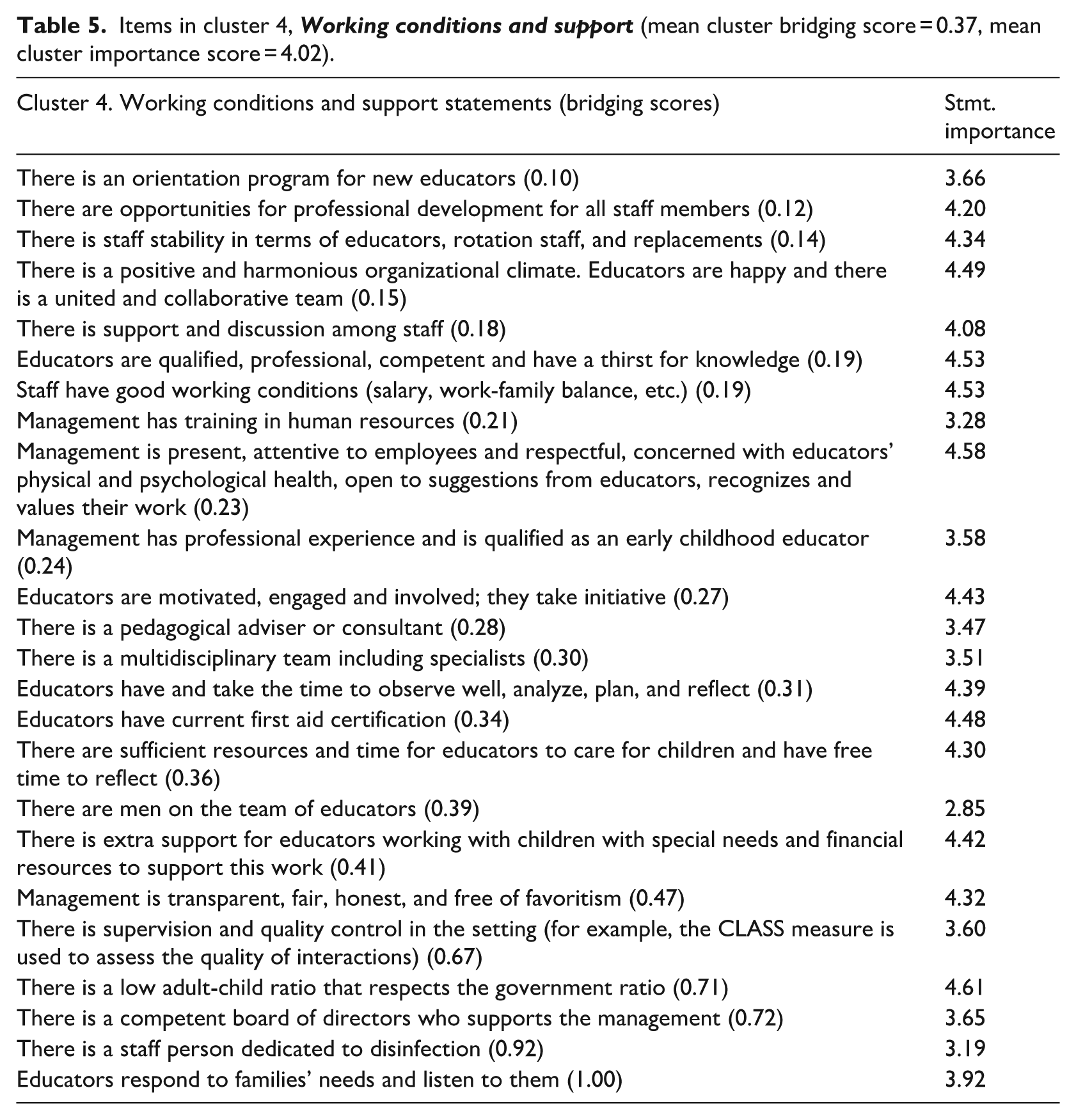
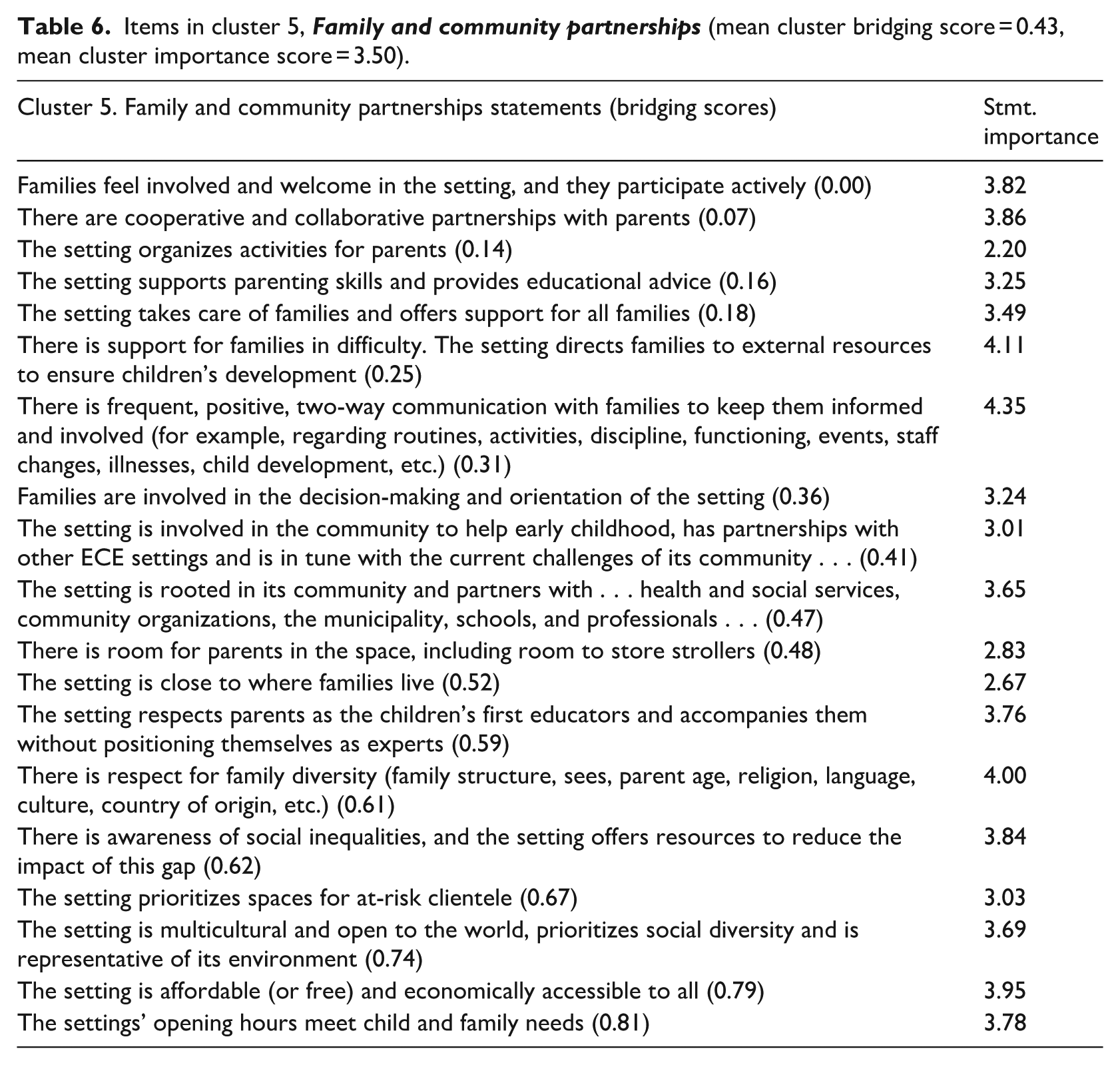
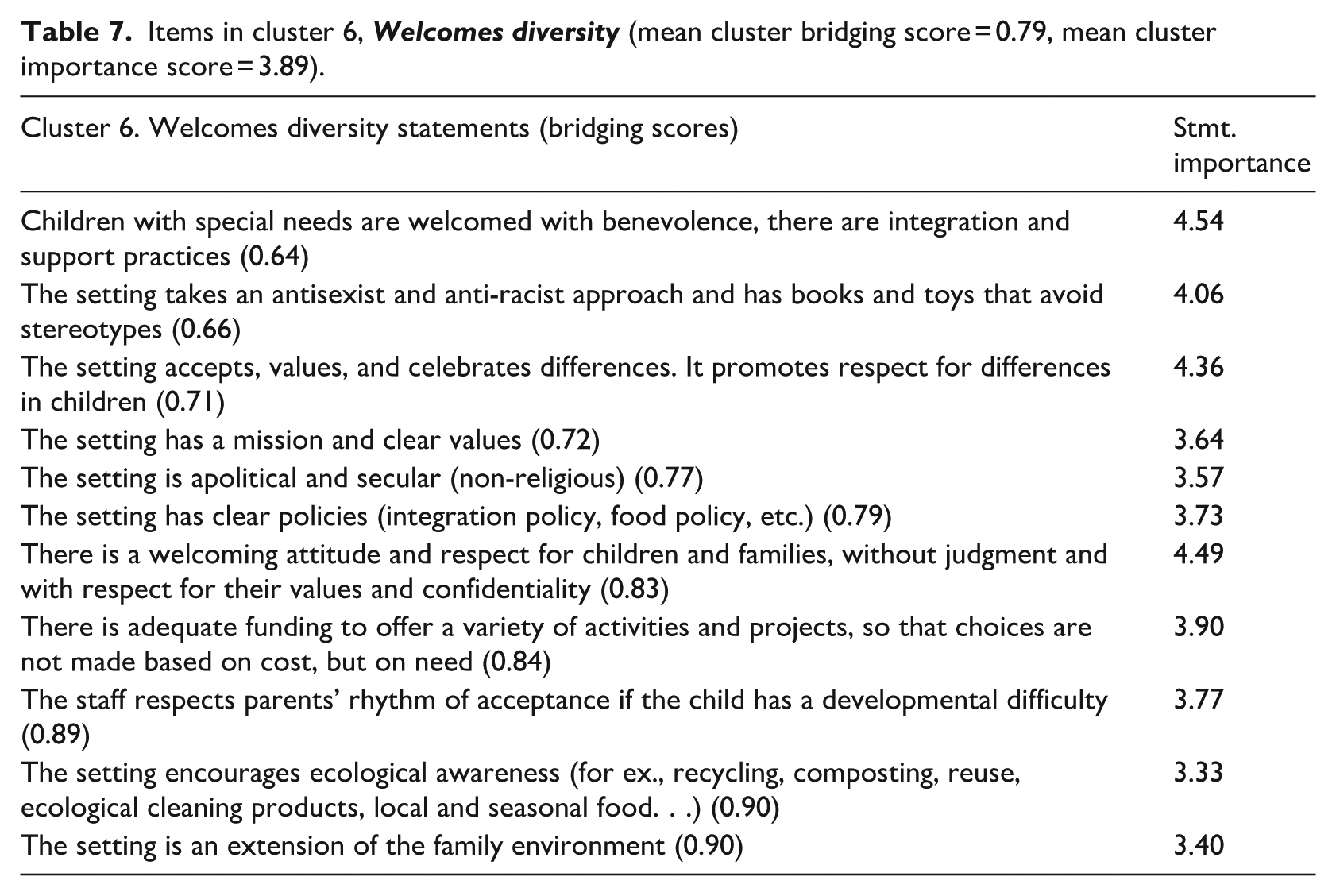
The following description starts with the most coherent cluster (the one with lowest average bridging score) and proceeds in counterclockwise order around the concept map. Tables present the component statements of each cluster, ordered from lowest to highest bridging scores so that statements most representative of the cluster meaning are listed first. Ellipses indicate where statements over 25 words were shortened to save space in presenting results.
The cluster most coherent in meaning (lowest bridging score) is located at the “southeast” region of the concept map and titled
Statements in cluster 1,
Proceeding counterclockwise, the
Items in cluster 2,
The
Items in cluster 3, Staff knowledge of development (mean cluster bridging score = 0.44, mean cluster importance score = 4.56).
The
Items in cluster 4,
The
Items in cluster 5,
The
Items in cluster 6,
The
Items in cluster 7,
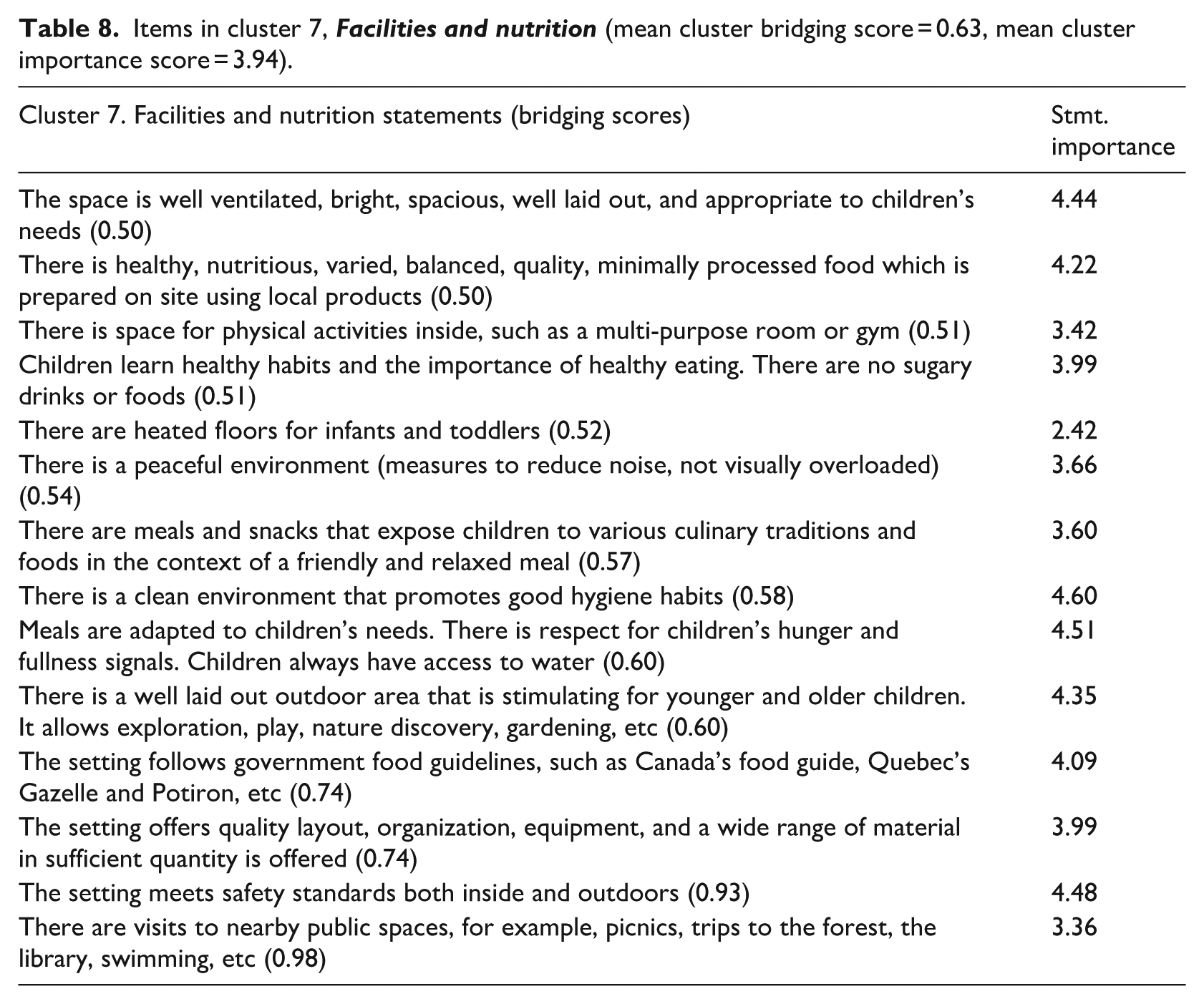
Figure 2 compares the mean importance ratings for each cluster by participant role. Both parents and professionals gave relatively high importance ratings for all clusters: no cluster received a mean importance rating lower than 3, the midpoint between “relatively less important” to “extremely important.” The rank order for both groups was roughly the same, suggesting that parents and professionals held similar views about the relative importance of the different components associated with an exemplary childcare center.
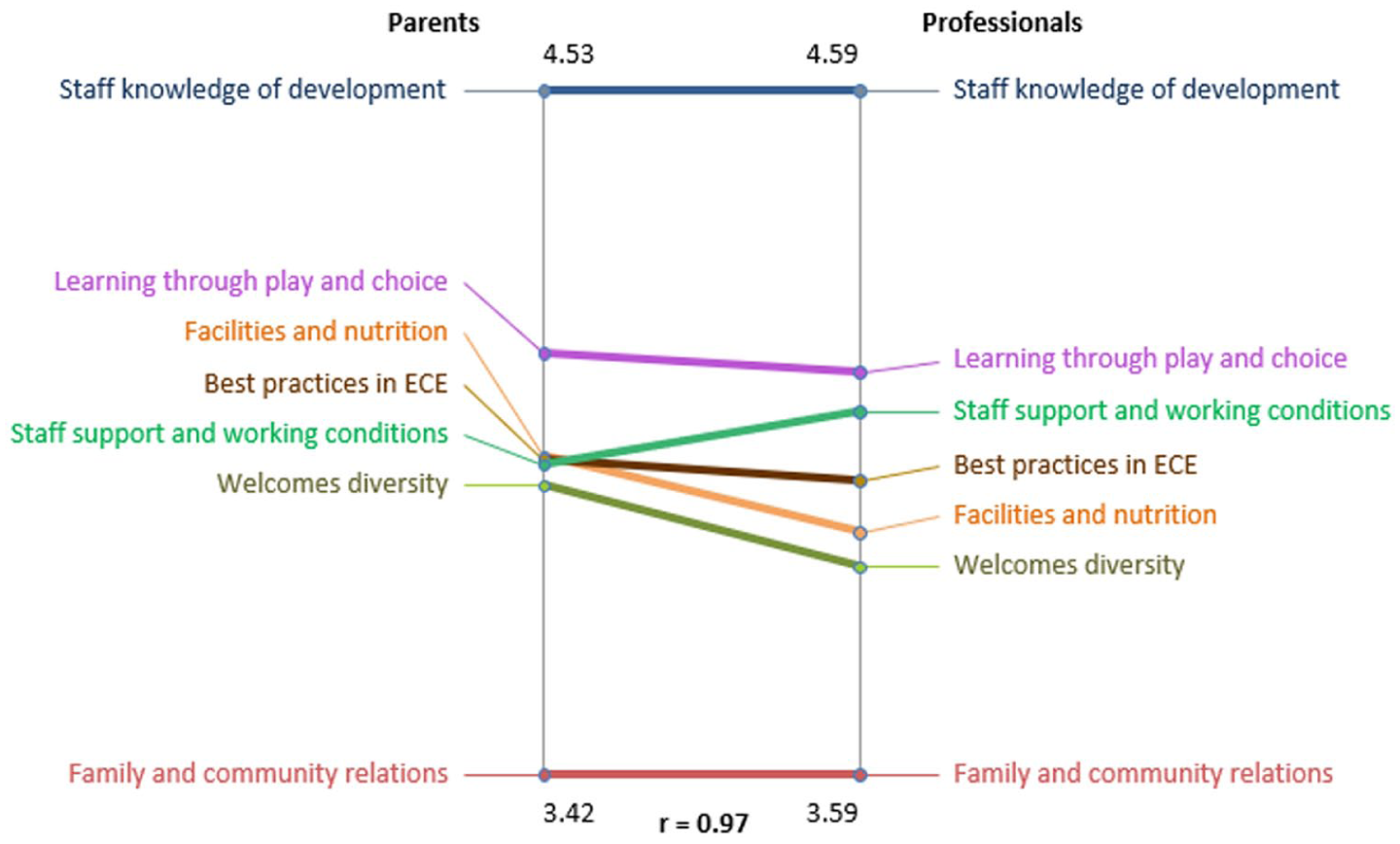
Importance ratings by cluster for parents and professionals. Note that the y-axis in this graph is not the full response scale; it is bounded by lowest and highest mean scores for each group across the seven clusters.
Discussion
This study used Trochim’s (1989) group concept mapping method to create a structured and visual representation of diverse aspects of quality that Quebec stakeholders include in their understanding of center-based ECE. The study allowed stakeholders with diverse scientific, professional, and experiential expertise to participate in identifying, organizing, and prioritizing characteristics that they associated with exemplary center-based care, reflecting a hybrid approach to conceptualizing quality in a locally relevant manner (Lemay et al., 2017; Pastori and Pagani, 2017; Vandenbroeck et al., 2023).
Participants in this study described an exemplary childcare center in terms of seven clusters of ideas. In this view, an exemplary high-quality ECE center (1) offers children choices and stimulating learning experiences based on exploration and play, (2) adopts best practices in early childhood education, (3) ensures that staff have developmentally sensitive knowledge and skills, (4) provides professional support and good working conditions for staff, (5) partners with families and the community, (6) values diversity and inclusion, and (7) offers a stimulating physical and nutritional environment. All clusters were rated as important by both parents and professionals, with staff knowledge of development being rated most important, and family and community partnerships rated as slightly less important relative to other components.
These results align with and yet extend established quality frameworks underlying the Classroom Assessment Scoring System (CLASS Pre-K; Pianta and Hamre, 2009; Teachstone, 2022a) and the Early Childhood Environment Rating Scale-Revised (ECERS-R; Harms et al., 2015). Drawing on ecological and settings theory (Blanchet-Cohen and Brunson, 2014; Bronfenbrenner, 1979), we compare our results to these established frameworks across four levels of analysis.
The first level of analysis involves interactions and activities occurring
There is, however, an interesting difference in perspective that emerges here. The CLASS Pre-K and ECERS-R adopt a teacher-centered viewpoint, evaluating whether educators encourage communication and language learning (ECERS-R) or promote participation and higher-order learning (CLASS Pre-K). Two of our clusters similarly emphasize educators’ roles in creating classroom experiences (Best practices in ECEC and Staff knowledge of development). However, our concept map also adds a child-centered perspective. Notably, the largest and most coherent cluster in our results highlights children’s experiences of choice, play, exploration, creativity, and autonomy (the Learning through play and choice cluster). This suggests that Quebec stakeholders value children’s experiences as well as educators’ roles. Future research could focus on finding more direct ways for children to contribute their perspectives on quality (Macha et al., 2024).
A second level of analysis relates to
A third level of analysis addresses
A fourth level of analysis addresses relationships with
In addition, diversity is literally at the center of our results. While the CLASS Pre-K has consistently reflected inclusive values and its latest version has been further revised to enhance inclusiveness (Teachstone, 2022a), it does not include a specific dimension in this area. Similarly, diversity is not explicitly addressed in the original ECERS-R, although recent related work has proposed a Diversity subscale (Sylva et al., 2003). The view of ECE as an important community institution that makes its services accessible to a broad range of families likely reflects the Nordic roots of Quebec ECE services, its origins in a widely-shared social commitment to equal opportunity, and the fact that the system reaches a large majority of Quebec families in all their diversity (Akbari et al., 2021).
While some aspects of this concept map may be specific to Quebec, many align with broader trends. A growing theme in the literature is the adoption of a multi-level approach that extends beyond traditional process quality indicators. For example, Sollars (2022) used multiple ecological levels to interpret participants’ views on quality in the Maltese ECE system, and the European Core study on educator competency emphasized multiple levels of competency, including work within ECE institutions, collaboration with community partnerships, and engagement at the policy level (Urban et al., 2011). Increasing attention is also being paid, both the literature and in broader society, to elements such as healthy eating, outdoor play, and diversity (Sylva et al., 2003; Teachstone, 2022a, 2022b). Our findings further align with a growing trend for quality rating and improvement frameworks to include broader factors such as professional development, working conditions, governance, pedagogical leadership, equity, or family participation (OECD, 2021). Several of our clusters reflect these broader concerns. Finally, a distinctive aspect of our findings is the emergence of a child-centered perspective that positions children’s experiences and views of ECE settings as relevant to defining quality. In these multiple ways, the model arising from this study suggests important aspects to consider in a systemic, inclusive, and locally grounded model of quality for Quebec.
Limitations and future research
While this study provides important insights, several limitations should be considered.
This research focused on center-based ECE services in Quebec, omitting home-based services. Recruitment procedures reached adults who were already in contact with Quebec ECE communication channels and who were comfortable completing the process online in French or in English. In this sense, the study used a purposive sampling strategy (Donnelly, 2017) aimed at obtaining a theoretically relevant and relatively diverse sample of participants, without intending or claiming to seek a statistically representative sample of all stakeholder groups. The diversity represented in this study can be seen to go beyond that of studies where the content of data collection tools is pre-determined by researchers. In this study, a broad sample of participants from different stakeholder groups contributed to both the content of the map (through brainstorming) and its structure (through the sorting and rating tasks).
Other limitations arose from choices in how GCM was implemented in this study. The wording of the brainstorming and rating prompts necessarily influenced results. Online brainstorming allowed for broader participation and diverse, but also less coherent, ideas. Technical constraints on the number of statements meant that some potentially relevant ideas were potentially excluded. Previous research has shown that different GCM algorithms can yield somewhat variable results (Péladeau et al., 2017). In addition, results were produced as a single collective concept map combining all participants’ data, rather than separate maps for each stakeholder group. While this synthesis loses the nuance of group-specific perspectives, it reflects a hybrid approach that integrates scientific, professional, and experiential expertise.
Consistent with the discovery-oriented, model-building nature of the inquiry, the final clusters in this study should be viewed as reflecting broad themes rather than precise constructs. Additional methods, such as Delphi studies, could enrich these results as well as include additional stakeholder groups, including children. Future confirmatory research could test different model components to determine their usefulness in predicting important outcomes. Intervention research could test whether locally meaningful concepts provide useful levers for improving policy and practice.
Implications and conclusion
These results deepen the understanding of quality in Quebec’s ECE system by identifying components to include in a locally relevant model of quality. They point to the need for a Quebec-based framework that adopts a multi-level structure and includes a broader range of quality dimensions. Such a model would align with established frameworks by emphasizing stimulating learning experiences for children and staff knowledge and skills, but would also expand to include children’s perspectives, healthy food and physical environments, staff well-being, diversity and inclusion, and family and community partnerships.
Although these findings are preliminary and have not yet been incorporated into a validated model or applied in practical quality improvement efforts, they do suggest some actionable directions for change. One approach could involve professional development programs that engage staff in reflecting on a Quebec-specific hybrid model of ECE quality in relation to their practice (Lemay et al., 2017; Pastori and Pagani, 2017; Vandenbroeck et al., 2023). Practical center-level changes could include increasing the availability of healthy, freshly prepared food; providing better support for educator well-being; and strengthening capacity for family and community connections. At the government level, policies could promote funding, support, and accountability for these local changes, as well as supporting educators’ working conditions and professional reputation.
These findings also suggest directions for future research. Additional studies should develop and validate a stakeholder-driven, multi-level model of ECE quality specific to Quebec, along with assessment tools and improvement processes that support participatory quality improvement efforts (Lehrer et al., 2025). The hybrid approach used in this study may also suggest methods for similar initiatives in other contexts aimed at strengthening culturally relevant theories of ECE quality and locally-grounded efforts to improve it.
Footnotes
Acknowledgements
We would like to acknowledge Nathalie Bigras for her leadership in funding acquisition, resources, and supervision for this project and for the research team. Her support was instrumental to this research.

Ethical considerations
The Institutional Review Board for the Université du Québec à Montréal approved this research on May 7, 2018 (UQAM-CIEREH certificate number: 2019-1999).
Consent to participate
Participants were provided with an online informed consent form, which they were required to review and electronically accept prior to their participation in each phase of the study.
Author contributions
Author 1 – Liesette Brunson: conceptualization, data curation, formal analysis, methodology, writing – original draft; writing – review and editing. Author 2 – Joanne Lehrer: conceptualization, writing- original draft; writing – review and editing. Author 3 – Alexandra Paquette: conceptualization, data curation, investigation, project administration, writing – original draft; writing – review and editing. Author 4 – Lise Lemay: conceptualization, resources, writing – review and editing.
Funding
The authors disclosed receipt of the following financial support for the research, authorship, and/or publication of this article: This work was supported by the Fonds de recherche du Québec - Société et culture, grant number 297601.
Declaration of conflicting interests
The authors declared no potential conflicts of interest with respect to the research, authorship, and/or publication of this article.
Data availability statement
The datasets generated and analyzed during the current study are available from the corresponding author on reasonable request.