




Abstract
There is growing evidence of children’s engagement in multimodal literacy activities across a range of digital media in their homes. However, little is known about the ways in which bilingual children experience their languages in their everyday digital literacy events. As digital technologies are becoming increasingly common in society, children’s digital literacy practices in migrant families need to be better understood. This research explored the digital literacy and language experiences of Turkish-Australian families with preschool aged children in Melbourne, Australia. Data were collected via an online questionnaire from 35 parents, and four engaged in semi-structured interviews. The findings revealed that although Turkish was spoken at home, most parents wanted their children to become fluent in both languages (English and Turkish). Approximately three quarters of the 3–5-year-old children used Tablets at home multiple times per week for entertainment, online learning and social purposes and most of them were provided with opportunities to engage with digital content in Turkish and English. This article reports and discusses the details of these data. Parents expressed a need for guidance from experts about the types of apps and programmes appropriate for children. The implications from this study are of value and relevance to early childhood educators, researchers and parents; assisting them to better support the language and literacy needs of young bilingual children.
Introduction
Many children experience digital technologies in their everyday lives from a very early age (Arnott and Yelland, 2020; Marsh et al., 2021). Research has documented how children’s early literacy experiences are increasingly multimodal including the use of words, sounds and images in their interactions with the world (Flewitt et al., 2015; Marsh, 2020). Family literacy practices of children from culturally and linguistically diverse backgrounds, including children from immigrant families, are also represented in multiple languages and modalities (Compton-Lilly et al., 2019; Cun, 2022). Immigrant children are defined here as those who have either immigrated to a new country, or who are born in a country but have one parent who is a migrant. With the rapid increase of immigrant children in many countries, it is important for educators and researchers to understand how they draw on their communicative and cultural repertoires (Kwon, 2022). Children from immigrant families bring rich funds of knowledge to educational settings (Lam and Warriner, 2012). Knowledge of their digital literacy practices is important in more effectively bridging children’s home practices to their educational settings. While digital technologies suggest new possibilities for children’s bi- or multi-lingual literacy practices, fewer studies focus on young children’s multi-lingual digital literacy experiences.
The Covid-19 pandemic has increased scholarly attention on young children’s home digital literacy practices. However, research on digital literacy practices among children from immigrant families remains limited. Victoria, one of Australia’s most culturally diverse states, had 31, 832 Turkish speakers in 2016 (Department of Premier and Cabinet, 2018). Recognising the diverse and multimodal nature of literacy practices, this study investigates the home digital literacy practices of Turkish-Australian children, addressing this knowledge gap.
Theoretical framing
This investigation into children’s digital literacy practices is grounded in sociocultural theory and multimodality. Sociocultural theories posit that children’s learning is social and it occurs in the contexts of their homes, with family support, varying by type and culture. From this perspective, literacy is characterised as dynamic and involving fluid practices that are embedded in social practice (Street, 1995). Children make meaning through their use of the resources in their social and cultural contexts, including evolving literacy practices using digital technologies (Mills, 2010).
This study also draws on multimodality, emphasising the various modalities in children’s meaning making (Kress, 2009). This perspective emphasises the diversity of literacy practices across digital technologies, including reading, writing and multimodal meaning making through communication modes including gesture, language, movement, drawing and vocalisation (Flewitt, 2008).
Children’s digital literacy practices
Since the 1980s, research has shown that young children’s literacy understanding develops from birth through engagement in various home literacy practices (Teale and Sulzby, 1996). Currently, family literacy practices often involve digital technologies (Flewitt et al., 2015).
Due to increased use of digital technologies, children begin school with diverse digital literacy experiences (Neumann et al., 2017). Over the past 20 years, research has focussed on young children’s digital literacy practices at home (Harrison and McTavish, 2018; Kumpulainen et al., 2020), indicating that these practices can contribute to early literacy skill development (Neumann, 2018b).
Digital literacy practices can enhance bilingual skills in children from diverse language backgrounds (Mah et al., 2021). Verhallen and Bus (2010) found that digital picture storybooks (with music and animation) effectively supported Dutch vocabulary development in 5-year-old bilingual children in the Netherlands, especially those from low-income Turkish and Moroccan families, compared to print-based books.
Cun (2025) reported that digital literacy practices were integral to the lives of multilingual children, and that these practices ‘were embedded across the languages children spoke at home’ (Marsh et al., 2017: 52). For example, a 2-year-old child from an immigrant family in England, engaged with the Qu’ran using a digital toy and the family accessed Arabic channels on television.
Studies indicate that children are provided opportunities by their parents to engage with digital technologies in both their home language and English. Nunez (2019) found that mothers in three immigrant families in the US used digital tools and multimodal literacy practices to support their children’s literacy development in both Spanish and English; such as evaluating a movie trailer, playing online games, reading online stories from Mexican websites, watching English movies on Netflix. Similarly, Said (2021a) reported that Arabic-English speaking families of children birth – 8 years, in the UK created opportunities to support their children’s bilingualism through digital literacy practices, such as reading digital books, using YouTube, designating times for reading in both languages, even downloading free Arabic children’s books and enlarging the text.
In their study with Polish families living in Norway, Tunkiel and Bus (2022) examined language use during shared readings of digital picture books in Polish and Norwegian. The books had auto-narration in both languages. Analysis revealed a preference by parents and children to relay comments and explanations in Polish, regardless of the book’s language. Most parent-child interactions were content-related utterances in Polish. The researchers suggested that combining digital book reading in the second language with parental talk in the first language could support children’s bilingual language learning.
A case study by Zhao and Flewitt (2020), investigated the literacy experiences of two emergent bilingual brothers (aged 8 and 6), living in London with their Chinese mother and Portuguese father. Although the family primarily used English, the boys had observed their mother’s interactions on WeChat from a very young age and consequently they utilised semiotics resources such as emojis, stickers and moving images, to create messages in Chinese and English for their grandparents and mother’s friends.
Previous research revealed that parents serve as gatekeepers and mediators of their children’s technology use, with digital literacy practices shaped by parental perceptions and values (Hao, 2023; O’Connor and Fotakopoulou, 2016). This study explores parents’ attitudes towards technology and their priorities for children’s language learning.
Method
Study context and design
A mixed methods approach was employed to identify trends in bilingual children’s digital literacy practices by integrating quantitative and qualitative data (Creswell, 2015). The data were collected during the Covid-19 pandemic in Melbourne, Victoria, Australia (August–October 2021). We gathered, analysed and merged quantitative data from parents’ questionnaires, with qualitative data parent interviews and video recordings of a sub-set of the sample of families.
The participants
The study involved 34 parents (33 mothers and 1 father) of 3–5-year-old children, all first-or second-generation Turkish immigrants living in Melbourne. Participants were recruited via social media posts targeting Turkish parents living in Melbourne (e.g. Turkish-Australians in Melbourne Facebook group) to complete the online questionnaire. Table 1 provides demographic data about parents’ birthplace, years in Australia and education levels.
Demographic data – Parent questionnaire respondents (n = 34).
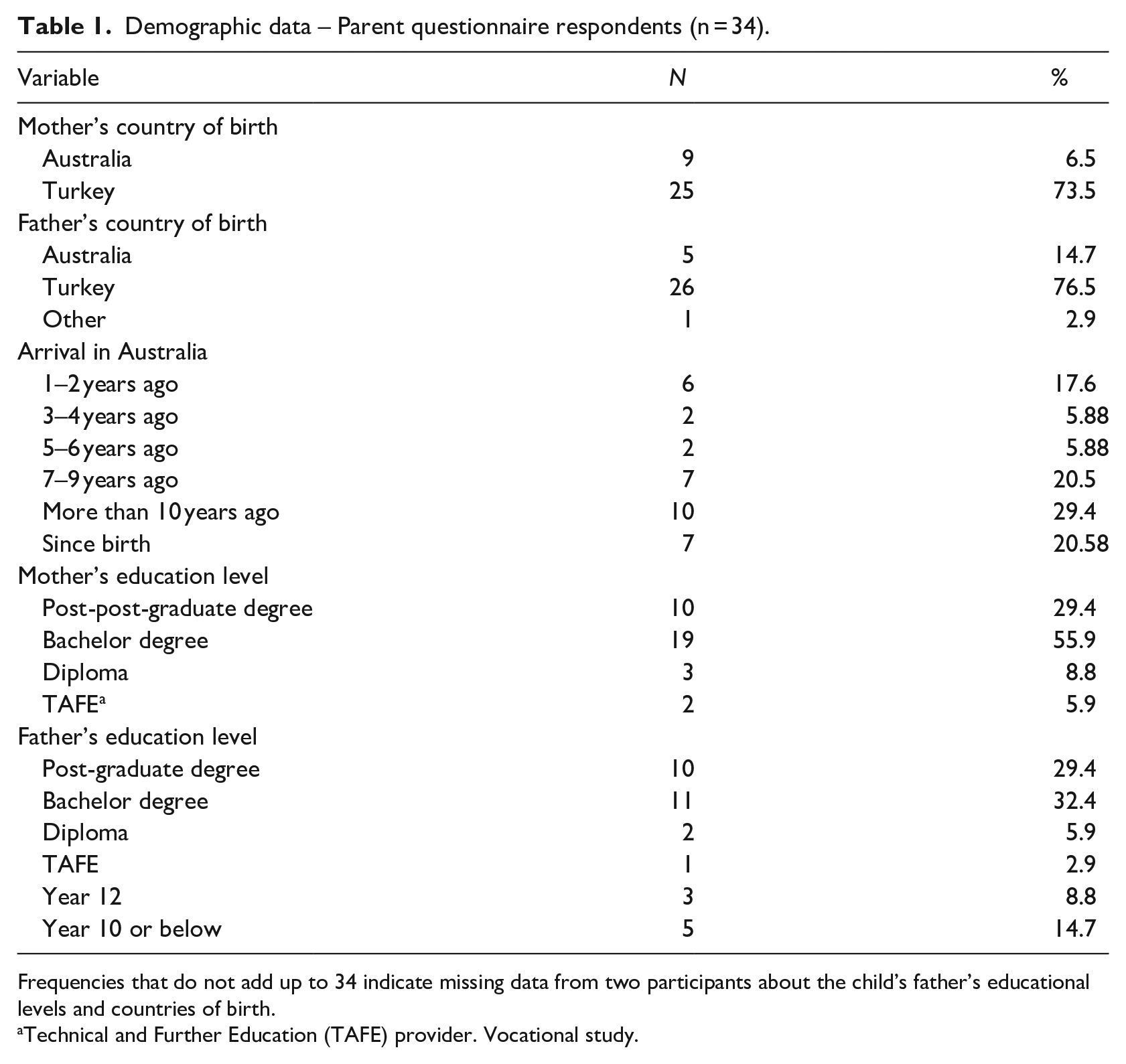
Frequencies that do not add up to 34 indicate missing data from two participants about the child’s father’s educational levels and countries of birth.
Technical and Further Education (TAFE) provider. Vocational study.
The children (18 girls, 16 boys) ranged from 36 to 60 months (M = 49.8, SD = 0.82). Twenty-six were born in Australia and eight in Turkey. The main language spoken at home by families was Turkish for 79.4% (n = 27) of families, with five speaking English and two using a combination.
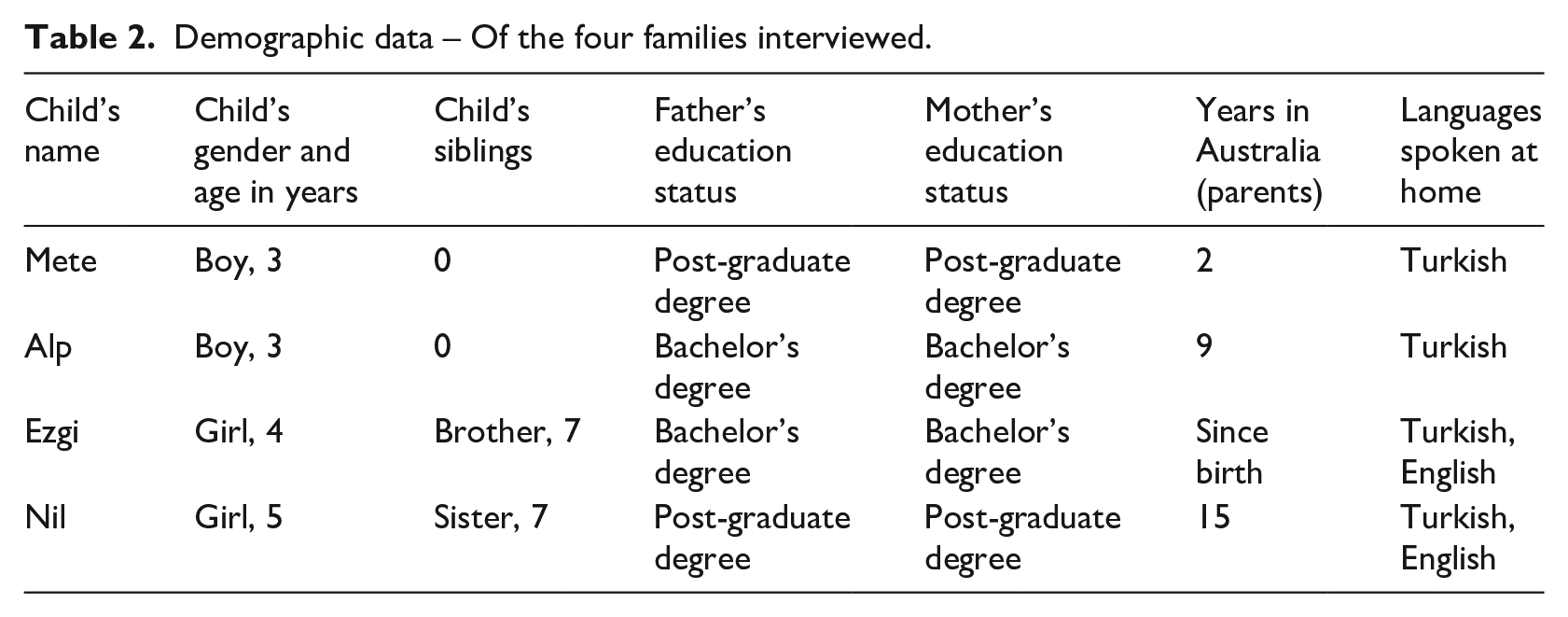
Four mothers volunteered for interviews; two shared photographs and video footage of their children’s engagement with digital technologies. Information on these families is provided in Table 2 (pseudonyms are used).
Demographic data – Of the four families interviewed.
Data sources
The Parent questionnaire
A promotional poster with a link to the online questionnaire about children’s home digital literacy practices was shared on relevant Facebook groups. Parents were first directed to the Plain Language Statement and Consent form. The 10-minute questionnaire had 15 questions with 52 items comprising multiple choice, Likert scale and open-ended responses covering family demographics and key themes drawn from existing research literature on children’s digital practices (Flewitt and Clark, 2020; Marsh, 2020), such as children’s access to technology and apps, digital literacy practices and parent-child interactions.
Additionally, parents indicated the language used (English, Turkish or both) during six typical, daily situations. In conclusion, parents were invited to participate in an online interview.
Interviews
G.O., plurilingual in Turkish and English, interviewed the four mothers individually in Turkish, their language of choice. Three were native Turkish speakers, born in Turkey; one was born in Australia. Covid-19 lock-down restrictions necessitated that all interviews were conducted via Zoom, and these each lasted approximately 45 minutes. A semi-structured protocol covered themes from the questionnaire (child access to technology and apps, child digital literacy practices, and parent-child digital literacy practices and parent’s perspectives) to facilitate the integration of both quantitative and qualitative data. G.O. transcribed and translated the recordings.
Visual data
At the conclusion of each interview, parents were invited to consider sharing visual data (images or video) portraying their child’s bilingual use of digital devices at home. Two mothers agreed and emailed videos. Prior research highlights the benefits of video use to understand children’s interactions and communication (Fleer and Ridgway, 2014). One video, featuring a child conversing with grandparents was transcribed and is discussed in this paper.
Ethical considerations
Ethical approval was granted by the University’s Human Research Ethics Committee, in accordance with the Australian National Statement on Ethical Conduct in Human Research.
Parental consent was obtained via Plain Language Statement and Consent forms, detailing participation options, rights to withdraw and confidentiality measures including anonymity of the questionnaire data, the re-identification of interview data, the use of pseudonyms for interviewees and children and permission for the use of visual data depicting children’s engagement with digital technologies for educational, research and publication purposes.
Quantitative data preparation and analysis
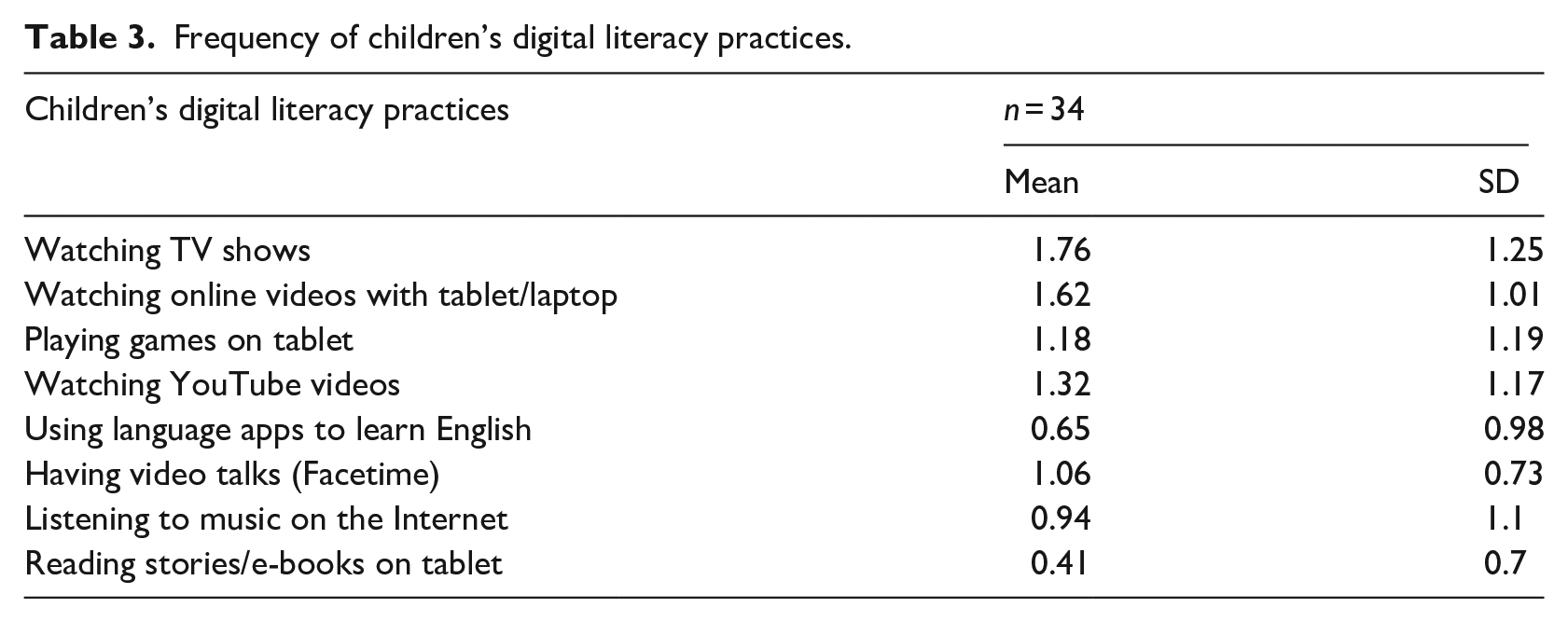
The online questionnaire, The Digital Literacy Practices Questionnaire, was developed and delivered through Qualtrics XM. In total, 36 responses were received, 34 of which were complete and suitable for analysis. Questionnaire data were exported from Qualtrics to SPSS Version 28 for analysis. Descriptive statistics were used for items related to digital literacy practices, and we carried out independent sample t-tests to examine gender differences. Tables 3 and 5 list the means and standard deviations of digital literacy activity variables for children. Independent samples t-tests were carried out for each of the items, but significant gender differences were only found for the item, I have video talks with my child (Facetime). Specifically, parents’ self-reported practices revealed that parents have video talks with their daughters more frequently than their sons (t(30) = 2.4, p = 0.02). There was no evidence of a difference between girls’ and boys’ frequency of digital practices.
Frequency of children’s digital literacy practices.
Qualitative data preparation and analysis
We applied thematic analysis, a flexible method for extracting insights, to analyse the interview data (Nowell et al., 2017). Using Braun and Clarke’s (2021) thematic guidelines, we employed a deductive approach, repeatedly reading narratives to address questions about children’s digital resources usage, technology engagement, digital literacy practices and beliefs about technology’s role in developing their child’s bilingual language and literacy. Initial coding identified key themes, which were integrated with the quantitative data (Braun and Clarke, 2021).
Findings
The quantitative questionnaire, and qualitative interview data were analysed separately, then integrated and mapped for deeper understanding and inference (Creswell, 2015). These analyses revealed the following four dimensions: children’s access to digital resources, children’s digital literacy practices, parent-child joint digital literacy practices and parents’ priorities and their perceptions. Each will be discussed in turn.
Children’s access to digital devices at home
Most of the 3–5-year-old Turkish children in the study were growing up with access to a range of digital technologies in their homes (Figure 1). Consistent with large scale studies (Ofcom, 2024) families commonly had multiple devices including laptops, tablets and mobile phones. Tablets were most popular, used by 74.3% of children, with more boys (81%) than girls (63%) accessing them and internet use was comparable. The second most popular device was parent’s mobile phones, followed by desktop computers, video games and laptops.
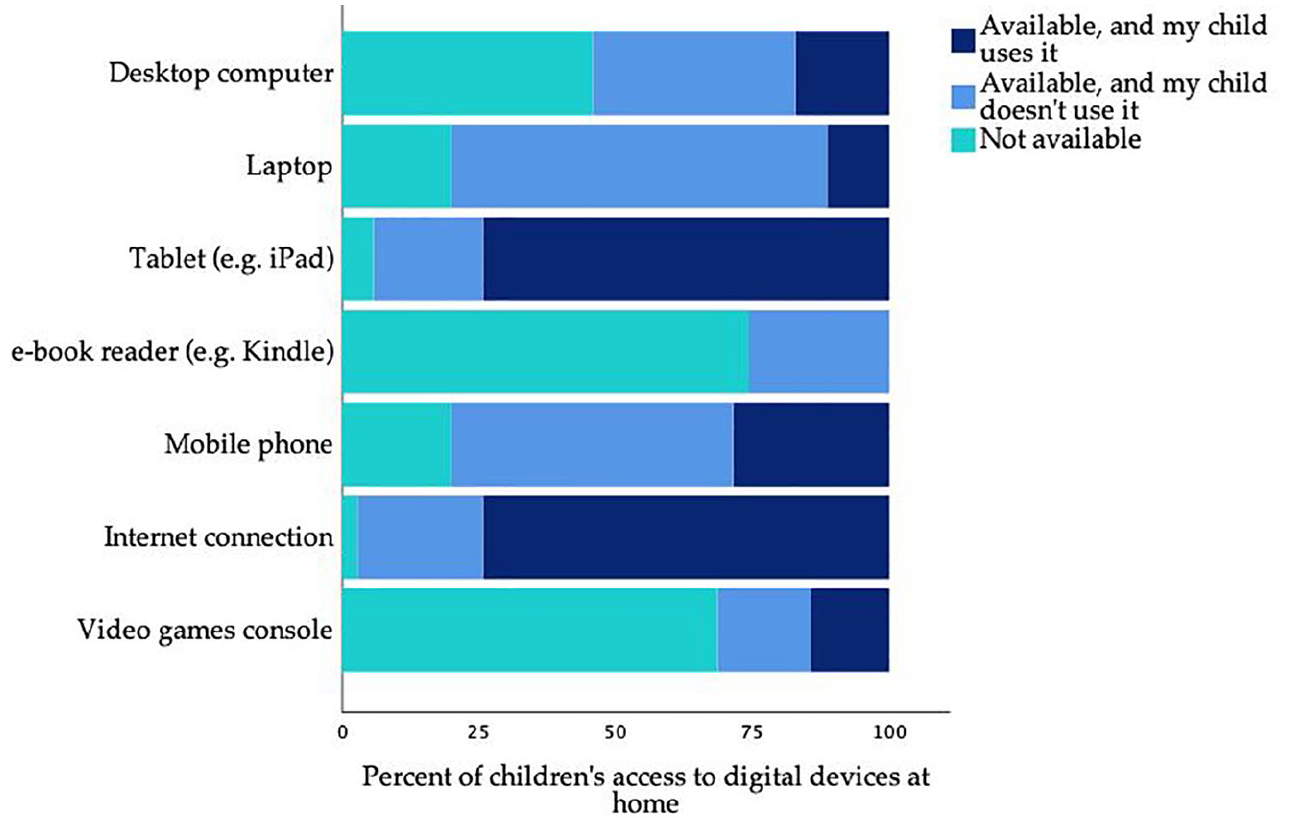
The percentage of children’s access to digital devices at home (n = 34).
Parents reported making digital devices available to their children and that they monitored their usage.
Children’s digital literacy practices
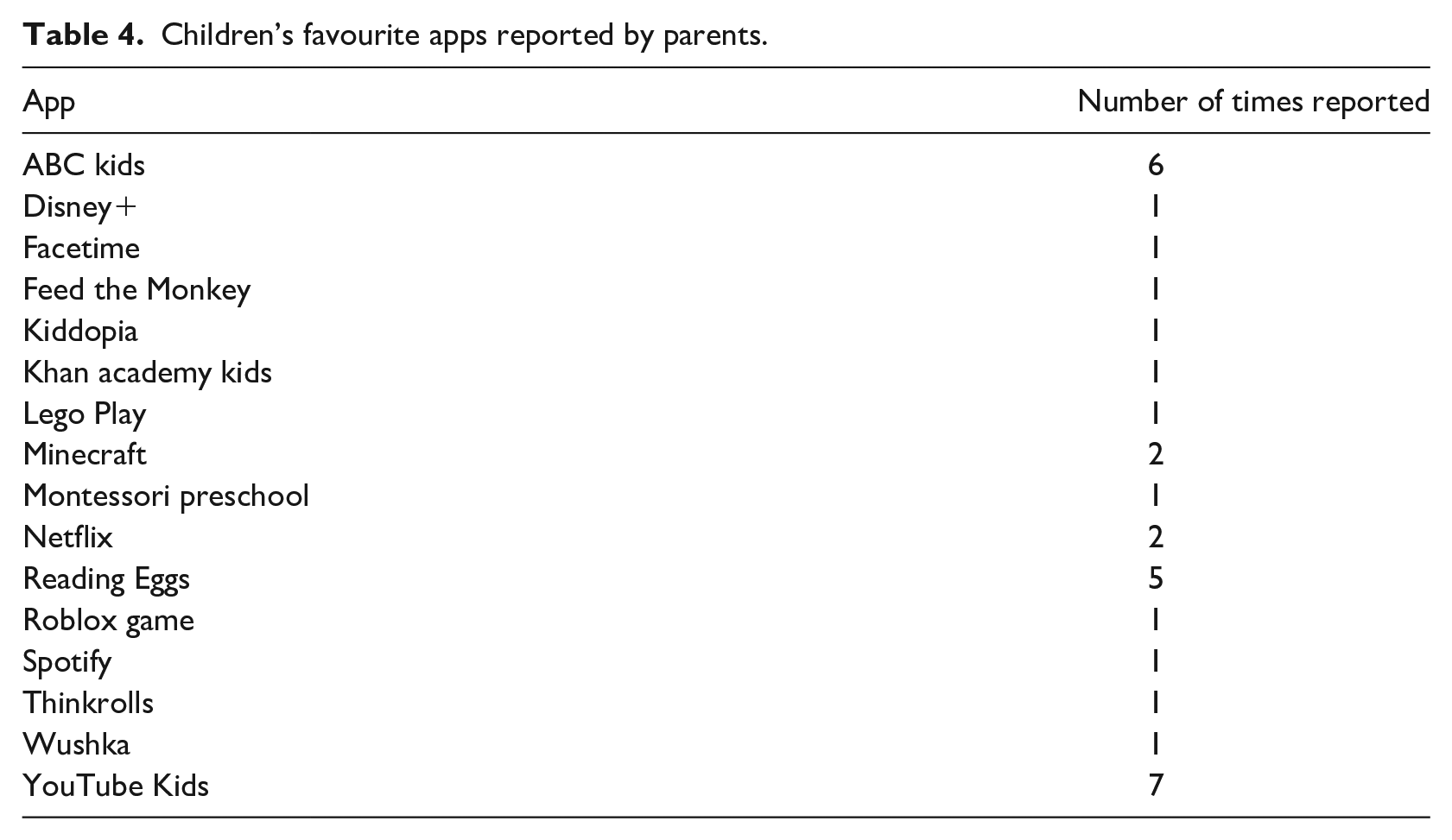
As shown in Figure 2, most children used digital technologies for entertainment, online learning, and social purposes, multiple times per week, with watching online videos, singing songs and nursery rhymes and video calls being most common. Parents reported their children used mobile devices to watch online videos, TV shows, engage in video calls, play games and listen to music (Table 3). Tablets were primarily used to watch online videos, with 62.9% of children watching for over 30 minutes daily. This coincides with Lewis et al.’s (2023) Australian study, where over two-thirds of parents (n = 101) reported their children’s, regular digital device use for entertainment during Covid-19. In our study, children’s favourite apps were ‘YouTube kids’, ‘ABC kids’ and ‘Reading Eggs’ (Table 4).
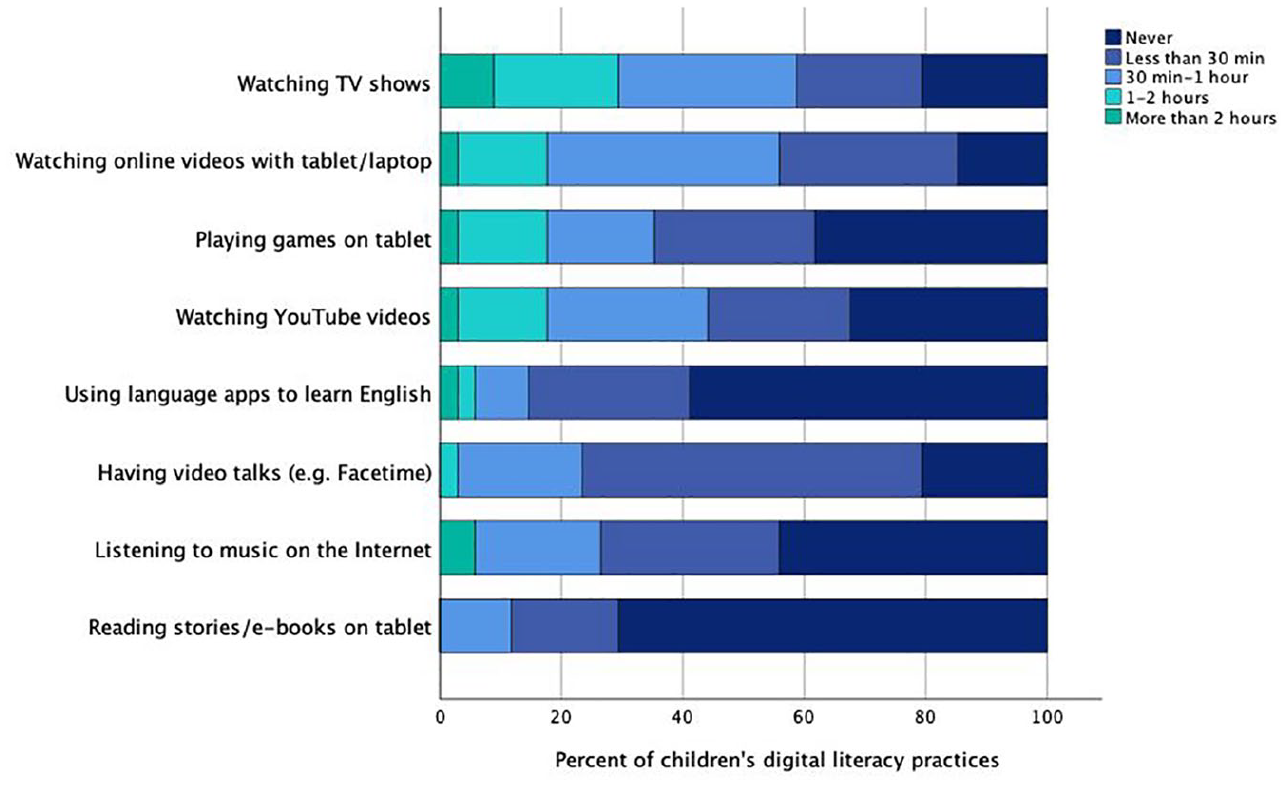
The reported frequency of children’s daily engagement in digital literacy practices.
Children’s favourite apps reported by parents.
Children’s engagement with digital technologies was segmented, using tablets at specific times for particular activities (Poveda et al., 2020). For example, Alp (3 years), an early riser (at 5.30 am) and only child watched videos independently on a Tablet for approx. 30-minutes while his parents slept. Similarly, Ezgi’s (4 years) regular screen time involved using a tablet for entertainment, with multiple activities and interests intertwined into day.
The interviews revealed that children were provided with access to digital content in Turkish and English at home. Cun’s (2022) US research found that that immigrant children preferred English cartoons. Similarly, in this study, children favoured English cartoons and games, though they also viewed online videos and sang song and rhymes in both languages.
Alp enjoyed videos on the ABC Kids and YouTube Kids apps; his favourite English cartoon is Peko Kid. His mother reported that: He watches online videos/cartoons for 30 min to 2hrs a day. The cartoons he watches are in English. He prefers to watch English cartoons or play games (English). . .We also have the TRT Cocuk app with Turkish cartoons but there is nothing he likes to watch – it’s not his preference. The Turkish language on the app is heavy and too complicated for him.
Despite his mother’s encouragement to use his Tablet for educational activities on apps like Kiddopia (a subscription-based app), Alp was disinterested, his mother attributing this to him being ‘very young’. This is consistent with research indicating that many educational apps failed to engage young children due to direct teaching methods (Sari et al., 2019) or lack interactive features (Neumann, 2018b).
During the pandemic lockdown, Nil (5 years) had daily online learning sessions for 1.5 hours with her teacher due to the Early Childhood Centre’s closure. At home, she and her 7-year-old sister preferred watching English cartons on ABC Kids (app), despite their mother’s encouragement to watch the Turkish cartoon, Niloya. She reported that they didn’t like it. ‘They both like English cartoons and find them more interesting’.
Parent-child digital literacy practices
In the questionnaire, parents reported engaging in some digital literacy activities with their children (Table 5). The most common activities were singing songs and nursery rhymes with a digital device (tablet, mobile phone or laptop), with 71.5% doing this at least twice a week. This was followed by video calls with extended family members (60.1%) and watching online videos (60%) with their children at least twice a week (Figure 3).
Frequency of parents’ digital literacy practices with their child.
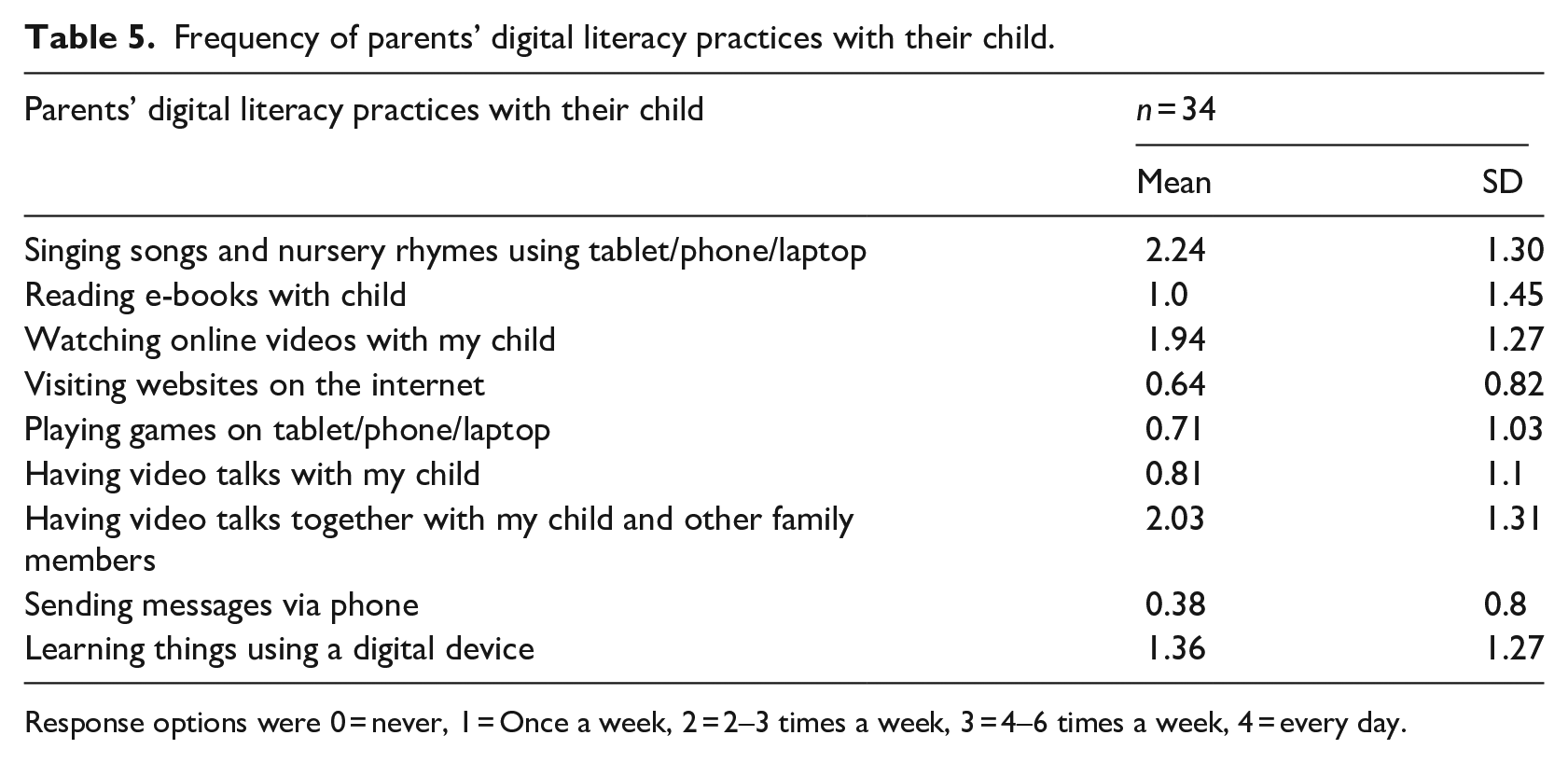
Response options were 0 = never, 1 = Once a week, 2 = 2–3 times a week, 3 = 4–6 times a week, 4 = every day.
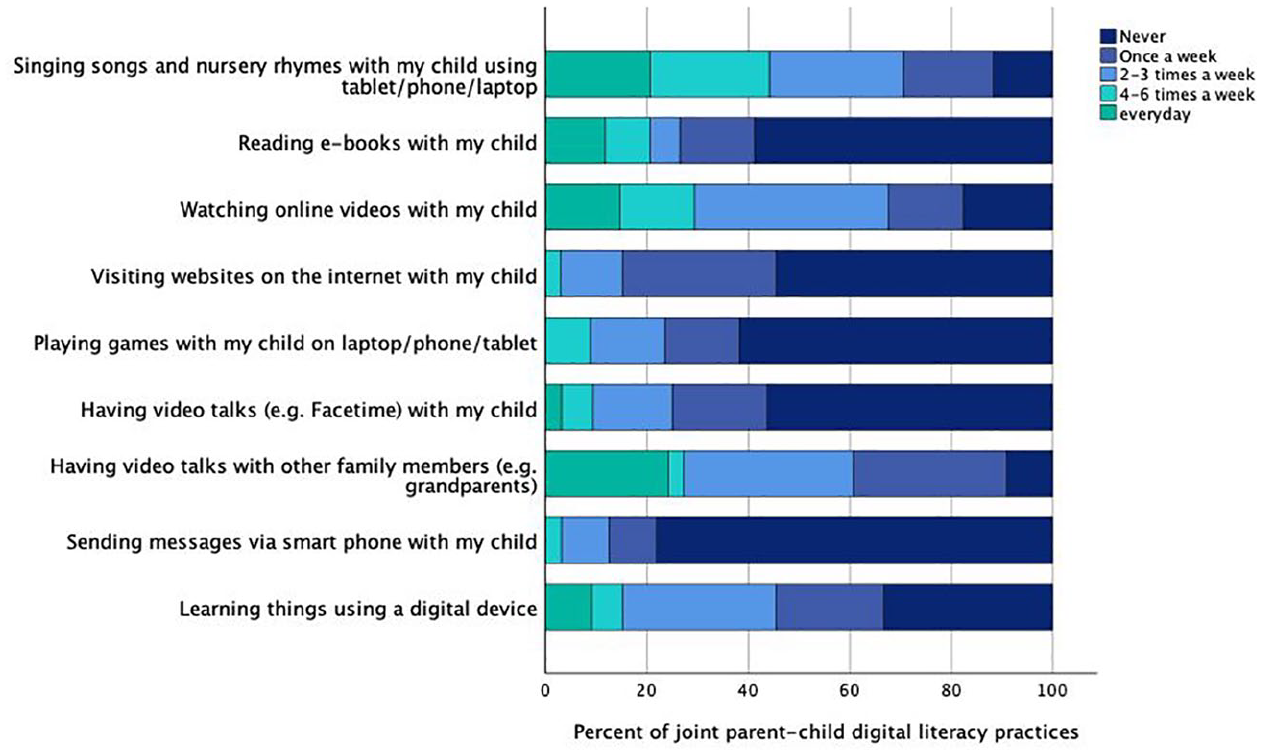
The reported frequency of joint parent-child digital literacy practices.
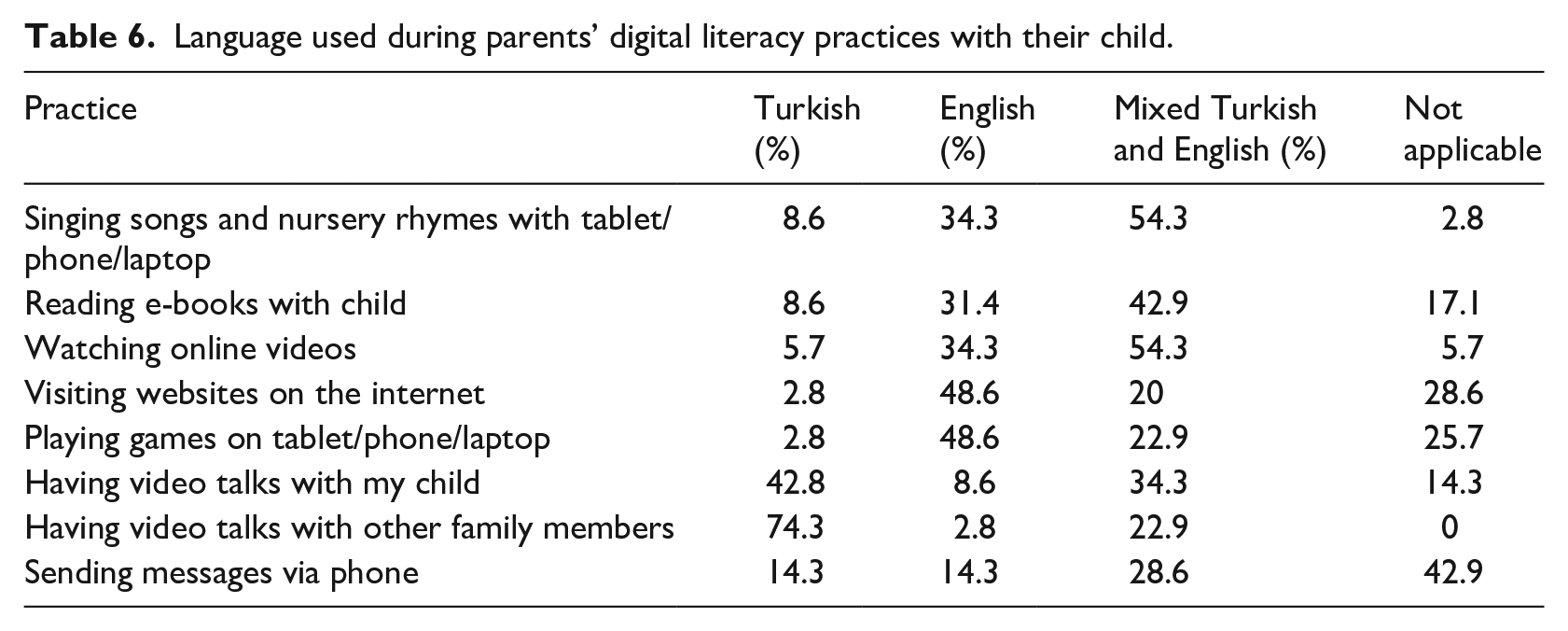
When asked about languages used during joint parent-child digital literacy practices, 74.3% of parents reported speaking Turkish during video calls with extended family (see Table 6). Additionally, 54.3% indicated that they sang songs and nursery rhymes using a digital device and watched online videos in both Turkish and English. Almost half (48.6%) visited English websites and played digital games in English with their children.
Language used during parents’ digital literacy practices with their child.
Interview data aligned with the questionnaire results, revealing that families engaged in bilingual activities, frequently watching videos and video calling in both Turkish and English. For example, Ezgi and her mother, whose first language is English, often watched English and Turkish TV shows together. Ezgi’s mother said: ‘regarding Turkish cartoons, we watch Mickey Mouse on TRT Cocuk 1 ..My children’s Turkish is better than mine so sometimes they translate things’.
Mete’s mother reported that he often asks to use the tablet or smartphone for video calls and viewing family photographs, so they always accompany him when doing so.
This behaviour aligns with Marsh et al.’s (2021) study, which found that very young children commonly use tablets to view photographs.
Nil used a tablet to learn to read in English and enjoyed reading activities on ABC Reading Eggs
2
with her mother, Sezen. Believing that listening to Turkish songs would support Turkish language learning, Sezen, played Turkish songs from YouTube for Nil and her sister: they don’t like listening to Turkish songs on YouTube - songs that I played for them. For example, we listened to the Turkish version of The Wheels on the Bus, a couple of times but this didn’t work. We also listened to ‘Mini mini bir kus konmustu’ – my childhood nursery rhyme, but they did not enjoy it.
Video calls with grandparents
All four children communicated with their grandparents and extended family members through video calls using apps like Facetime and WhatsApp. This aligns with earlier studies on families’ engagement in digital transnational practices to connect with extended family in their country of origin (Compton-Lilly et al., 2019; Cun, 2022). For instance, Senem’s 3-year-old son, Mete frequently participated in video calls with his grandparents: We have video calls with his grandparents. This mostly happens at home during dinner time because of the time difference between Australia and Turkey. Occasionally this happens when we are playing outside when he’s riding his bike, and I say ‘Look, here is your grandma say hello’.
Similarly, Nil communicated with one grandmother living in Turkey and her grandfather who lived in Melbourne, using Facetime, especially during the Covid-19 lockdown: They live 20 min away but due to Covid we’re talking with them via Facetime or WhatsApp. We mostly speak Turkish, but Nil mostly speaks English.
Next, we present dialogue from a video recording of Sezen’s daughter, Nil’s video call with her grandparents, highlighting the family’s language use and code-switching. During the 5-minute WhatsApp call, Nil chatted with her grandfather (GF) while her father held the mobile phone. Her grandfather initiated the conversation in Turkish, asking about the image on her drink bottle. Nil repeated his words and excitedly stated that it was a mermaid (denizkizi), demonstrating with head movements. She continued the conversation by showing a cardboard sword she made, continually smiling and gazing at the screen, speaking mostly in English. Her grandfather persistently asked questions in Turkish to gauge her knowledge of Turkish vocabulary.
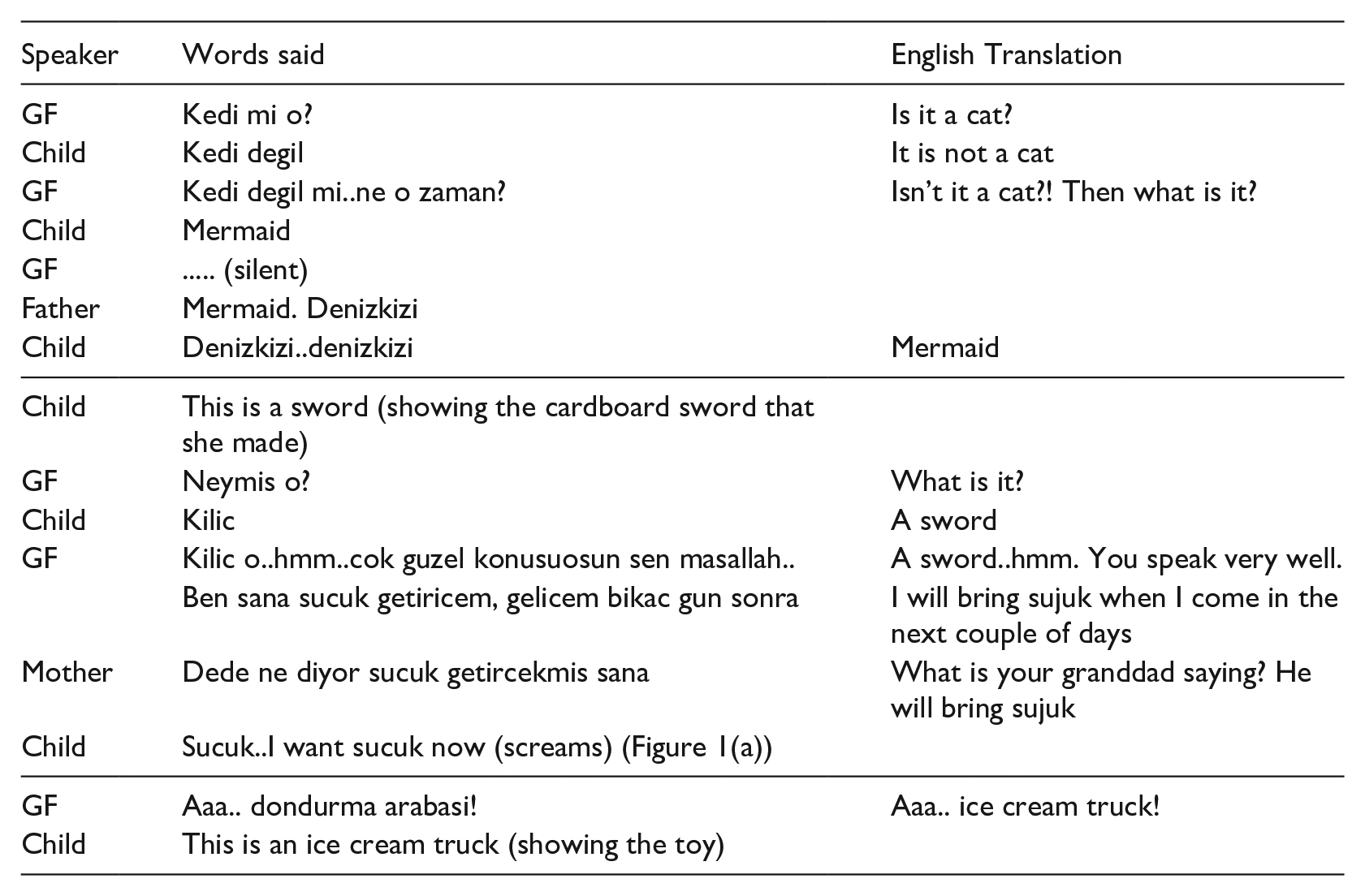
Transcript from video call
During this conversation, Nil comprehended spoken words in both languages. Her grandfather and mother, Sezen, primarily used Turkish, while Nil opted for English. This aligns with Song’s (2016) study identifying how Korean bilingual children negotiated their language preferences, especially when their language choice differed from parental expectations.
Nil expressed meaning through gestures, facial expressions, intonation, tone, volume and displaying her toys, exemplifying multimodal communication (Kress, 2009; Figure 4).
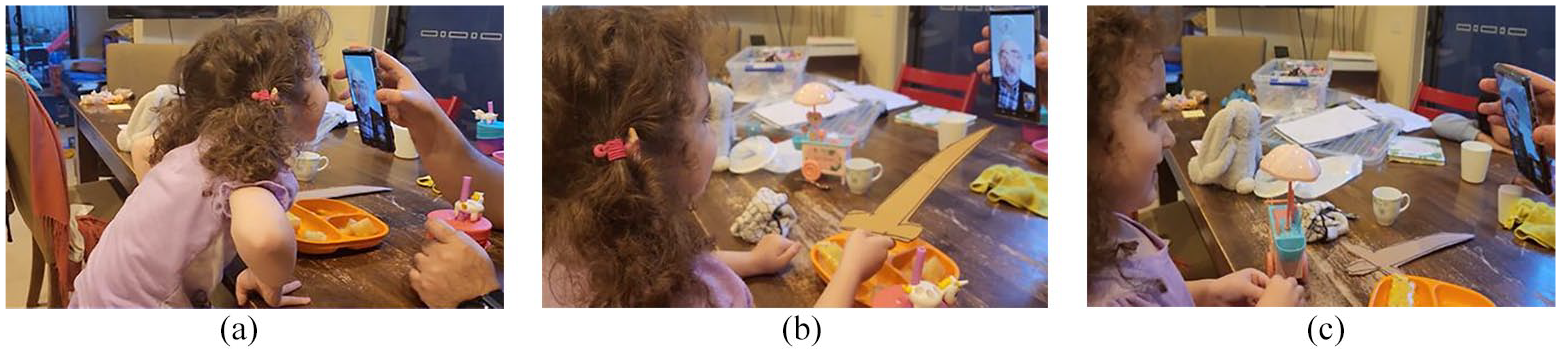
Nil excitedly screams ‘I want sujuk now!’ (a), shows her toy – sword (b) and ice cream truck (c).
The next section focuses on mothers’ priorities for their children’s language learning and their perceptions of children’s digital technology use.
Parents’ priorities and their perceptions
The interview data revealed that all four mothers prioritised their children learning both Turkish and English, emphasising the importance of maintaining Turkish language proficiency while acquiring English. They firmly viewed English as critical to ensuring their children’s participation in society effectively, and they value the Turkish language for its links to their children’s cultural identities.
Interestingly, the families mainly spoke Turkish at home and their engagement with print-based literacy practices was predominantly in the Turkish language. Zehra stated that: Mostly, we speak Turkish because we both [parents] grew up in Turkey. We have many friends who were born in Australia, so when they come around; we speak English with them. . .. I read Turkish books to my son, but if a book is written in English, I translate them into Turkish.
Mete’s mother, Senem, also mentioned that they sometimes read English books and translate them into Turkish, prioritising Turkish language learning since Mete will acquire English in Australia. However, she expressed concern about incorrect pronunciation: Also, we have accents, so I don’t want him to just learn English from us. It would be better for him. . . if he speaks English with others (outside of home) so he can learn the correct pronunciation.
Nil’s mother (Sezen) lived in the USA for 9 years before migrating to Australia and wants her children to speak both English and Turkish fluently. She consciously prioritises using print-based literacy resources with her children at home as she prefers to delay her children’s use of digital devices. She intentionally participated in this study to ensure that her alternative views would be heard, some parents prioritise the ‘non-digital over the digital’ (Poveda et al., 2020: 515), as Sezen explained her preference for reading Turkish storybooks to her children: We often go to the library to borrow storybooks. Hume City Council library had a programme called ‘1000 books before school’- we did it for my both daughters. I translated English books into Turkish when I read to them. I never read storybooks in English, unless it is a rhyming book. My mum (Nil’s grandmother) brought two suitcases of Turkish books, and I read them to my children at home.
Although Ezgi’s family spoke both Turkish and English at home, her mother wanted her children to maintain their Turkish language and identity: Our friends are all Turkish. I don’t want my children to forget who they are. . .where their ancestors are from. They didn’t grow up in Turkey, but their parents are Turkish. Whenever we visit Turkey, they’re able to communicate and express themselves because their Turkish language is good. At home their choice of language depends on their purpose. Sometimes they speak English with each other in their room when they are having a chat.
Previous studies have shown that parents believe that digital technology could be useful in improving literacy skills (Tour, 2019). Similarly, mothers in this study recognised the educational value of technology in providing opportunities for Turkish language learning by viewing videos on YouTube and using apps on tablets. Elif stated, My children learn Turkish through Turkish books and cartoons. When they’re watching Turkish cartoons on YouTube, they sometimes ask the meaning of a word. If I don’t know the meaning, Google Translate helps us to translate when my husband is not at home.
All four mothers expressed concern about potential risks such as exposure to harmful or inappropriate digital content. In Nil and Mete’s homes a clear distinction was made between appropriate and inappropriate uses of digital technology use. Nil only consumed media content that was pre-selected and arranged by her mother. Mete’s mother, actively restricted access to the internet and aired her fears, stating: Children should not start using digital devices at an early age. Technology might support language learning in the future at some point. I want my son to stay away from it for now because he’s still very young. Maybe we’ll start using some apps in 6 months. The later you start, the better.
Sezen sought to restrict Nil’s use of technology, believing that digital devices hinder children’s social interactions. Her adult perspective on technology use differed greatly from her own upbringing. Her father, a computer scientist, provided her with a computer during early primary school. In contrast, Nil’s father encouraged technology use and bought a PlayStation 5. Sezen, however remained firm in her stance: If I see my children are using our mobile phones, I take it away. I feel sad when I see this. I want them to play with people and have real social interactions. . .but due to Covid they’re watching cartoons when I cook.
Ezgi’s mother, a nurse, worked extended hours during the Covid pandemic and permitted her children increased screen time. She also voiced concerns about media content: Some stuff they view doesn’t seem right to me -I find it weird. For example, my daughter likes watching a show called, Rebecca. I said, ‘This is not suitable for your age’ but she still likes it. Also, other things she watches. . . they’re about how to use a lipstick, and an eye brush. Does a 5-year-old child do make up?
Despite her concerns about the content Ezgi accessed, she did not actively intervene. Consistent with previous research (Neumann et al., 2020; Poveda et al., 2020; Teichert, 2017), data from interviews emphasised the tension parents had in deciding to whether to allow their children to access digital devices and if so the appropriateness of types of digital technologies they make available in their homes. Similar to other studies (Dardanou et al., 2020; Papadakis et al., 2022), mothers expressed deep concerns about their lack of knowledge on choosing appropriate apps for their children and expressed the need for guidance regarding their children’s digital engagement.
Discussion and conclusion
Children’s home literacy environments are dynamic and multifaceted, involving a range of digital practices and parental beliefs (Flewitt and Clark, 2020; Marsh, 2020). The study reported here confirmed this; however, a significant point of difference is that this study sought to identify how bilingual children of first and second-generation Turkish migrant families in Australia, accessed and engaged in digital language and literacy practices at home and to understand their parents’ perspectives on technology use and dual language learning.
Consistent with the emerging body of research in this area (Compton-Lilly et al., 2019; Cun, 2022), the findings show that Turkish-Australian children’s family literacy practices encompass multiple languages and modalities. Children aged 3–5-years accessed array of digital devices in their homes with tablets being the most common, followed by parent’s mobile phones and computers.
Although most families primarily spoke Turkish at home, children had opportunities to engage with digital content in both Turkish and English. Children’s use of digital technologies varied throughout the day, from independent to shared use with a family member. The 3–5-year-old children viewed online videos, sang songs and recited rhymes in both languages, but strongly preferred cartoons and games in English. Similarly, Orellana’s (1994) study of three bilingual children’s experiences with media found English superhero films were dominant among Spanish speaking children in the USA.
Our study revealed that shared digital literacy practices, such as reading digital stories, viewing videos and singing, were integral to the children’s daily lives. The most popular digital activities for children at home included watching YouTube, using apps and interacting with relatives during video calls. Parent-child interactions mostly occurred while watching online videos and video-calling relatives in both Turkish and English, with varying frequency among families.
Studies have highlighted the significance of shared media engagement on children’s language and literacy development (Neumann, 2018a), and most parents in this study shared this belief. Our study indicates that video calling apps (Facetime, WhatsApp) facilitated frequent bilingual interactions with relatives such as grandparents, which children readily embraced. The frequency of these calls may have increased due to effects Melbourne’s pandemic lockdowns. Previous research has suggested that video calls in transnational families support emotional connections and positively impact children’s language development (Palviainen and Räisä, 2023; Said, 2021b).
This study identified parent’s priorities and perceptions of digital literacies and language learning. Interviewed parents regarded English language proficiency as essential for their child’s acceptance and integration into Australian society, while valuing and prioritising Turkish language maintenance to strengthen children’s cultural identity. Parents employed various strategies to support Turkish language learning including reading print based Turkish picture books, translating English books, downloading Turkish books, singing and reciting rhymes in both languages, providing access to bilingual videos and programmes in both Turkish and English and exposing them to applications in both languages (learning apps, WhatsApp, Facetime). Parents also expressed a need for expert guidance on suitable apps and programmes for children.
This study emphasised the importance of valuing and recognising the knowledge and experiences that bilingual children bring with them to early childhood settings. The findings are crucial for early childhood educators highlighting the importance of their role in preparing children for schooling while avoiding biases in interactions with children from diverse language backgrounds (Hofslundsengen et al., 2023). Educators should value and acknowledge children’s funds of knowledge - ‘culturally developed bodies of knowledge and skills essential for households or individual functioning and wellbeing’ (Moll et al., 1992, p.133). This also requires them to draw on children’s linguistics and communicative resources. Dwarte (2020) advocates, for innovative pedagogies that support educators’ abilities to draw upon children’s translingual competencies. It is important that educators be aware of and value learning about each child’s family literacy practices and to realise that even if children have limited English language, they might be highly digitally literate. Tapping into their funds of knowledge (Moll et al., 1992) can open the door for positive learning engagement and better communication.
The generalisability of this study’s findings is limited due to the small sample size and geographical and cultural constraints. All four interviewees had university degrees, which may not be representative of the broader bilingual Turkish community. Further research with a larger, more diverse sample is needed to more deeply understand migrant bilingual children’s digital literacy experiences. Unique to this study, is that the research took place during the first few months of the global Covid-19 Pandemic in Australia; an historic moment in time. Despite these limitations, the findings help to identify and de-mystify, the digital literacy practices of 3–5-year-old bilingual Turkish children in their own homes during the lock-down in Australia. Also, valuable is the insight into how bilingual parents perceive and mediate digital literacy practices at home to entertain their children and enhance their language and literacy learning. This knowledge is useful for teachers and educators in early childhood and primary school settings who strive to become more attuned to, and better understand the children that they teach.
This study highlights the need for further research on the digital literacy practices of children from immigrant families in varied contexts. Digital technologies suggest new possibilities for children’s bilingual and plurilingual literacy practices, therefore more research regarding the nature and content of multilingual digital literacy experiences is needed.
