




Abstract
Ensuring access to high-quality programs and services can improve children’s long-term health and education outcomes and reduce inequities in health, income, and education in the population. The professional well-being of those working in the early childhood education sector has been negatively associated with levels of turnover, which in turn can impact program quality more broadly. Considering the variability of professionals working in the field of early childhood, it is important to better understand how their experiences influence their professional well-being. This study aims to address this gap, through a mixed methods exploration of survey responses to items on an Early Childhood Professional Well-Being questionnaire. We conducted both an Latent Profile Analysis (LPA) on 27 items and also a conventional content analysis of one open-response item and then compared and contrasted results to create a fulsome illustration of patterns of early childhood professional well-being. The LPA revealed five distinct profiles of professional well-being: highest well-being, generally high well-being, active agency, comfortable well-being, and low wellbeing. Years of experience and newcomer status had a relationship to profile membership, with more years of experience associated with higher professional well-being and newcomer status with lower or medium levels of well-being. Our content analysis revealed mostly negative perspectives regarding professional well-being, most often due to various, overlapping external factors. Greater understanding of profile membership and what may impact it as well as the larger external systems that affect early childhood professionals will help to inform policy supports for professional well-being of specific individuals, thereby promoting professional wellbeing and, in turn, overall program quality.
Keywords
Introduction
Ensuring access to high-quality early learning and child care (ELCC) programs and services for families can improve children’s long-term health and education outcomes and reduce inequities in health, income, and education in the population (Black et al., 2017; Marmot et al., 2008). Currently, there are more than 300,000 people working as early childhood professionals (ECPs) in Canada that work directly within programs and those that play external support roles (McCuaig et al., 2022). The Government of Canada (Uppal and Savage, 2021) has predicted that this professional workforce will grow, particularly given the recent federal investment in ELCCs through the Canada-Wide Early Learning and Child Care (CWELCC) agreements between the provincial, territorial and federal governments. These CWELCC agreements aim to achieve a broader vision of ELCC by supporting their affordability and accessibility through high-quality, inclusive, and culturally responsive programs. A qualified, stable workforce among ECPs is a key driver in the success of the implementation of CWELCC agreements (McCuaig et al., 2022), especially given the changing policy context. In this research we explore how ECPs working in Nova Scotia, Canada (NS) experience professional well-being and the ways their professional and personal experiences may impact it.
Background
While many types of well-being (e.g. psychological, hedonic, eudanomic) have been studied in their relation to ELCC (Jeon et al., 2018; Jones et al., 2019), well-being among ECPs is a relatively under considered area of research compared to the well-being of children (Cumming et al., 2021). The professional work environment of early childhood settings plays a role in achieving high quality, but research suggests that existing policies aiming to enhance quality in ELCC may not support the full complexities of professional well-being, particularly in the relationality of the work (Cumming et al., 2021). For example, Cumming et al. (2021) found that although ECPs rated “collegiality” as an important aspect of an ideal work environment, they rated it poorly in their own work. Exploring the current state of well-being among ECPs is also a timely area of study with recent upheaval during the COVID-19 pandemic (Eadie et al., 2021; Swigonski et al., 2021) and the growth in workforce planning for the ELCC sector, especially within the context of the CWELCC agreements.
McMullen et al. (2020) argue that well-being is a common term that may have a variety of definitions and describe professional well-being as being a stand-alone concept, pointing to the work of Day and Qing (2009). McMullen et al. (2020) further characterize ECP well-being as a cumulation of educator’s feelings of physical and mental health, which includes “safety, emotional stability and soundness, and overall contentment with the early learning and child care setting and experiences within it” (p. 334). These authors base their conceptualization of ECP well-being on a holistic version of Maslow’s (1943) Hierarchy of Needs, with ECP well-being made up of nine senses: comfort, security, affinity, self-respect, communication, engagement, contribution, efficacy, and agency. For McMullen et al. (2020), these senses are not hierarchical (unlike Maslow), but equally affect an individual’s sense of ECP well-being, which is also specific to an individual’s own perception of their experiences. McCormick et al. (2021) explain that ECP well-being includes “physical, cognitive, psychological, and emotional perceptions” (p. 3). Being paid above the average wage, workplace flexibility and organization, and positive professional relationships are positively associated with workplace well-being in educators (Jeon et al., 2018; Jones et al., 2019). As noted above, higher ECP well-being may lead to a lower risk of turnover in early years programs (McCormick et al., 2021; McMullen et al., 2020), defined as dissatisfaction with one’s job and considerations of leaving their position or the field (McMullen et al., 2020). McCormick et al. (2022) note that internal and external factors can influence ECP well-being, citing the work of Cumming and Wong (2019).
ECPs have diverse backgrounds, regarding their levels of education, experience, and other demographic factors (Uppal and Savage, 2021). Model-based approaches to grouping individuals are increasingly popular in various fields, including psychological research (Nylund-Gibson and Choi, 2018) and work and organizational sciences (Spurk et al., 2020). However, we only found two studies that used these types of approaches to understand latent groups of ECPs. Nasiopoulou et al.’s (2017) study of 698 preschool teachers in Sweden used Latent Class Analysis to create 2 distinct professional profiles defined by: graduation year (before or after the curriculum was introduced), continuous involvement in professional development (low or high), level of experience, and assignment in preschool. Hong et al. (2023) used Latent Profile Analysis (LPA) to investigate the job satisfaction and turnover intention of 2304 early childhood teachers in China and Singapore. Their analysis revealed three distinct profiles: low job satisfaction and high turnover intention (profile 1), medium job satisfaction and turnover intention (profile 2), and high job satisfaction and low turnover intention (profile 3). Country, level of education, and amount of experience had varying relationships to profile membership. While Hong et al. (2023) did not connect these profiles to professional well-being, these findings illustrate how certain background experiences impact turnover intention and job satisfaction.
Research context
Following decades of advocacy related to the poor working conditions of ECE professionals and children’s right to quality early learning (OECD, 2018), the NS government signed an agreement in 2021 with the federal government to increase the quality of ELCC programs as part of CWELCC (Government of Canada, 2022). This agreement emphasizes high-quality and accessible services for families (Honourable Margaret McCain, 2020) through strategies that directly impact ECPs, including compensation and qualifications. There is also a focus on professional development initiatives including new ECP coaching roles to support implementation of evidence-based practices for promoting social and emotional development, such as the Pyramid Model (Hemmeter et al., 2014). Execution of this plan is ongoing and complex, especially given the ongoing challenges reported with working conditions in the sector that influence the well-being of ECPs (Rent, 2022; Saulnier and Frank, 2019). Particularly, in the fall of 2022, a new wage scale (Government of Nova Scotia, 2022) was introduced for ECPs working in ELCC with further investments forthcoming for the sector. Therefore, investigation into the well-being of ECPs in NS is timely given the policy attention and funding toward system-wide changes that influence working conditions. Specifically, we will explore: How do ECPs working in NS experience professional well-being? What professional and personal experiences influence ECP wellbeing?
Methods
Participants
This study focused on ECPs working within and supporting ELCC programs (licensed child care centers, family day homes, and school-based) across NS. This included: Early Childhood Educators (ECEs), program leadership roles (directors, assistant directors, owner/operator) and program support roles (substitute coverage, inclusion coordinator, etc.). Inclusion coaches who support ECPs within ELCC programs were also included to explore this new role in supporting professional development. As some participants played more than one role, we grouped individuals based on the specialization required (e.g. selection of ECE and an Inclusion Coach was relabeled to a Program Support category).
In November 2022, participants were recruited from social media and by directly emailing licensed child care centers through a public directory and through promotion by the Association of ECEs of NS (a non-profit membership-based professional association). A similar recruitment method was used in previous online surveys (McIsaac et al., 2022), resulting in good uptake from the sector which is currently made up of approximately 3160 individuals (Uppal and Savage, 2021). The online survey (hosted through Qualtrics) was available for 3 weeks, with reminder emails and social media posts sent halfway, closing about a month later. In consenting to take the survey, participants were informed that every effort would be made to protect their privacy. Moreover, participants were given the option to not respond or select “prefer not to respond” to the demographic questions they were not comfortable disclosing.
We collected responses from 445 individuals, with 16 of those individuals removed due to incomplete data, resulting in a final sample of 429. 188 of these participants also chose to further comment on their ECP well-being. Despite this smaller size, demographic variables had similar proportions, indicating that the sub-sample is representative of the larger sample (see Table 1 for professional backgrounds and experiences).
Participant professional background information.
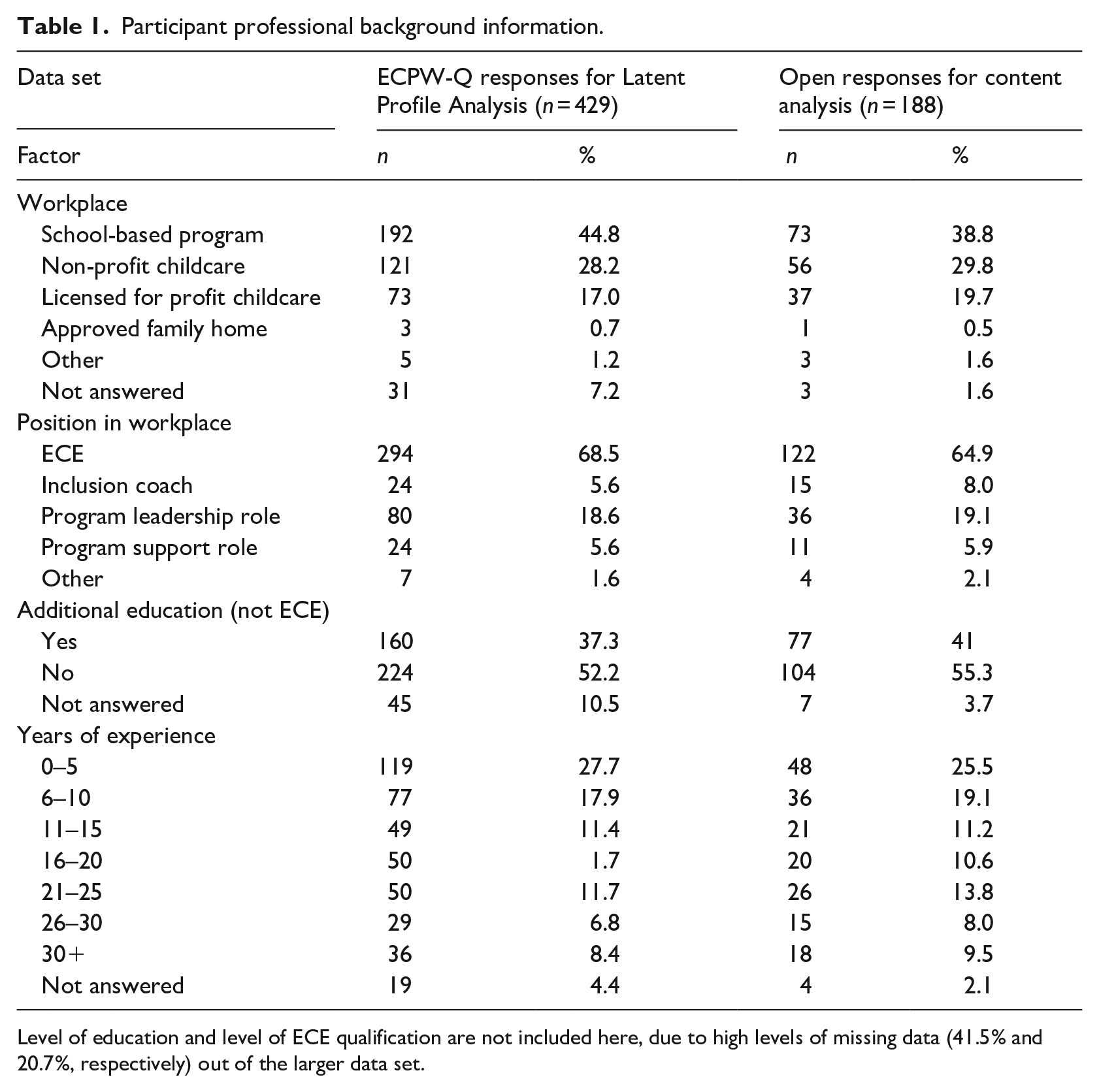
Level of education and level of ECE qualification are not included here, due to high levels of missing data (41.5% and 20.7%, respectively) out of the larger data set.
Recognizing the importance of understanding intersectionality in ECP well-being, as different aspects of our identity impact our health and mental health (Brown and Moloney, 2019) we also asked participants to discuss other aspects of their personal identity (Table 2).
Participant personal identity information.
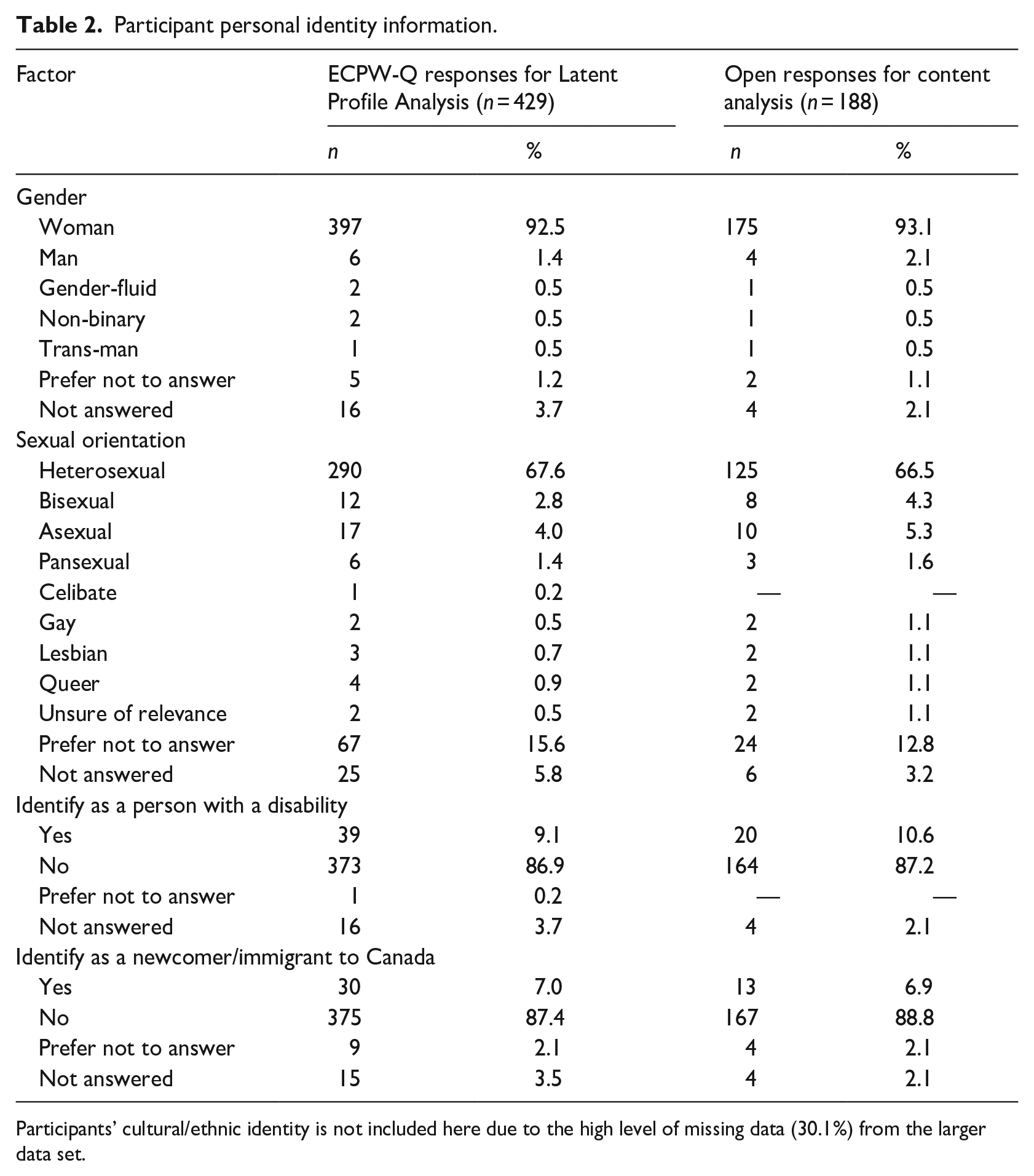
Participants’ cultural/ethnic identity is not included here due to the high level of missing data (30.1%) from the larger data set.
Measure
The online survey asked participants context-specific questions about aspects of their professional development as well as questions pertaining to their ECP well-being. To understand the current state of professional wellbeing among ELCC professionals, our survey incorporated all items from the Early Childhood Professional Well-being Questionnaire (ECPW-Q; McCormick et al., 2021; McMullen et al., 2020) The ECPW-Q is an instrument made up of 27 items that measure 9 senses of ECP well-being: comfort, security, affinity, self-respect, communication, engagement, contribution, efficacy, and agency.
Participants responded to items on a frequency scale (ranging from Never (1) to Almost always (5)). Negatively-worded items (e.g. I feel problems in my work setting are beyond my control) were reversed-coded, in order to match the positively worded items (e.g. I feel I belong to a community in my work setting.). The summed score of these items (ranging from 0–135) indicates their current state of ECP well-being (McMullen et al., 2020), with a higher number representing higher ECP well-being. Participants were also asked to share any additional comments they had regarding their well-being as an ECP.
Analysis
To understand ECP well-being, we used a convergent mixed method triangulation design (Creswell and Plano Clark, 2017) to explore the quantitative and qualitative data from our survey questions (QUAN + qual), as closed-ended questions are, by nature, unable to fully capture the unique voices of participants. We conducted both an LPA of the 27 ECPW-Q items to determine profiles of ECPW and a conventional content analysis (Hsieh and Shannon, 2005) of one question wherein participants elaborated on their own ECP well-being. After both analyses were completed, we compared and contrasted results to create a fulsome illustration of patterns of ECP well-being in NS.
To determine profiles of ECP well-being, we conducted LPA, a probabilistic, person-centered approach to uncovering latent profiles of individuals based on patterns across individual responses (Spurk et al., 2020). Unlike other grouping methods that rely on composite or cut-off scores that can be arbitrary or misclassify individuals (Nyland-Gibson et al., 2023), mixture models like LPA allow for a more nuanced understanding of people. Thus, for our LPA we first needed to determine how best to use all 27 ECPW-Q items.
In McMullen et al.’s (2020) Exploratory Factor Analysis, items did not cluster based on the nine senses, but within three larger factors: supportive structures, collegial relationships, and professional beliefs and values. In a subsequent study with a larger sample, McCormick et al.’s (2021) factor analyses revealed three factors: community belonging, safety and security, and professional identity. They also found that items measuring the same senses did not all group together in the same factor, and concluded that each item may measure a specific type of well-being. Therefore, for our LPA we treated each item score as a separate variable. Score means ranged from 2.92 (#3- I feel problems in my work setting are beyond my control) to 4.54 (#4- I find my work to be boring). Table 3 contains the wording, means, standard errors, and standard deviation for each item.
Item wording and statistics for ECPW-Q items.
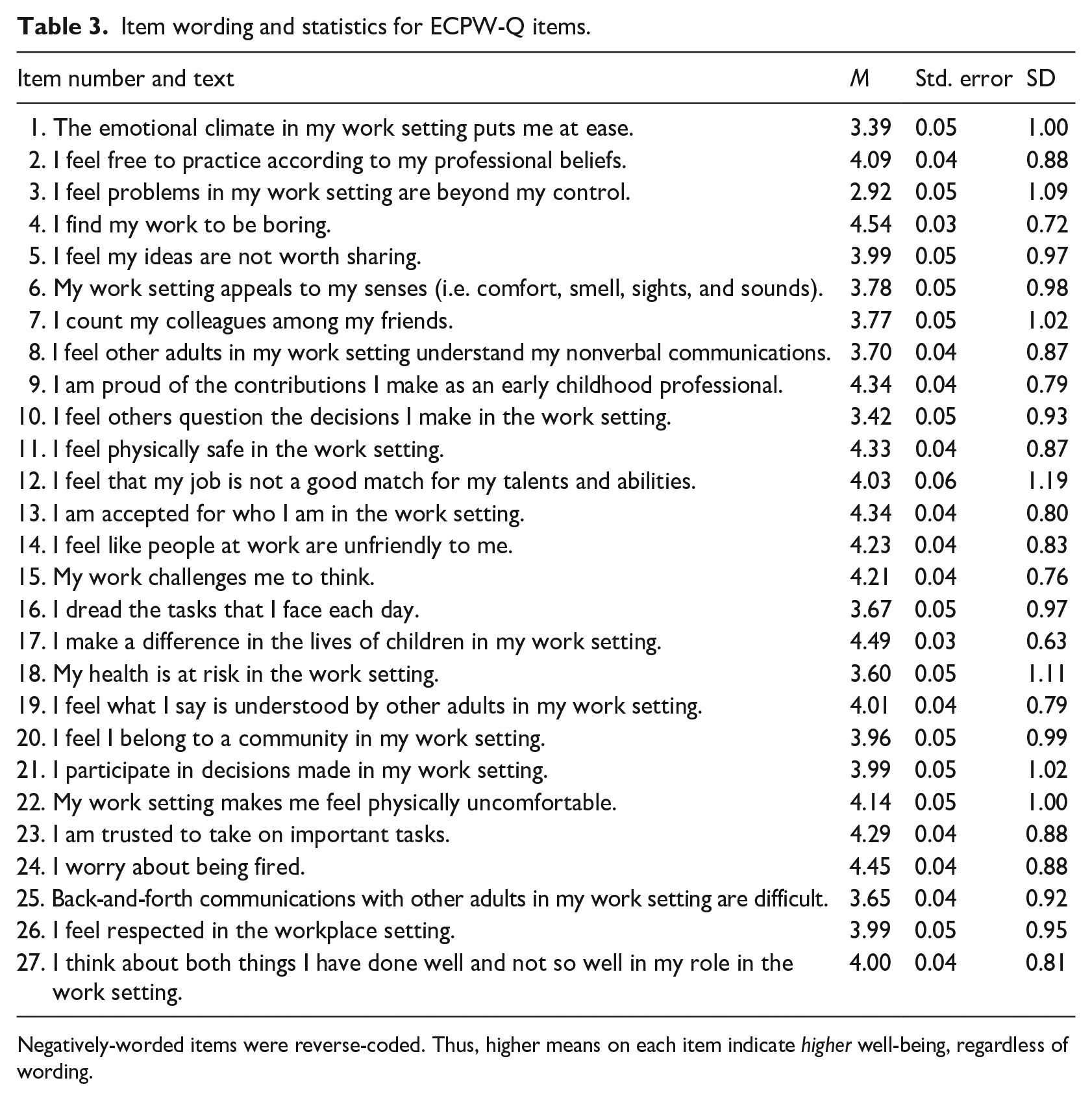
Negatively-worded items were reverse-coded. Thus, higher means on each item indicate higher well-being, regardless of wording.
As we did not have an a priori theoretical grouping, we used an inductive (or “bottom up”) approach for our LPA, letting the data define the model (Schmiege et al., 2018), using Mplus version 8 (Muthén and Muthén, 2017). We began with a one profile model and increased the number of profiles by one, checking each model for statistical strength (Nylund-Gibson and Choi, 2018).
We evaluated the following information criteria, where lower numbers show a better model fit (Weller et al., 2020): Akaike’s Information Criteria (AIC), Bayesian Information Criterion (BIC), and Sample-Adjusted BIC. We also looked at the entropy, a measure of the quality of a classification, wherein numbers closer to 1 show high accuracy (Geiser, 2013). Entropy values above 0.8 are considered high and acceptable, but there is no formalized cut-off (Weller et al., 2020).
We also conducted two tests to understand model fit, which compared the selected model to a model that is one class smaller, the Vuong- Lo-Mendell Rubin likelihood test (VLMR) and the Bootstrap Likelihood Ratio Test (BLRT). While both tests rely on a significant p-value of p ⩽ 0.05, BLRT has been found to be far superior due to consistently lower error rates compared to the VLMR (Nylund et al., 2007).
The final criterion we used in determining the best model was the sizes of each profile group. While there is no precise cut-off, Karakoyun and Başaran (2022) suggest no group should represent less than 5% of the sample.
Along with statistical strength, it is essential that models make theoretical and conceptual sense. After we compared all model fit indices, our team decided on the solution that accounted for the largest number of reasonable classes, understanding that ECP well-being is a diverse and complex construct.
Once we identified the best model, our team then sought to understand the degree to which certain background variables predict profile membership. As noted above, professional as well as personal background experiences may influence professional well-being, so we accounted for this by creating binary indicators pertaining to all variables of interest: disability, gender, newcomer status, workplace, position, additional education outside of early childhood, and number of years of experience.
We then used the 3-step approach (Vermunt, 2010) which includes estimating the latent class model and then evaluating the relationship between classes using a multinomial logistic regression analysis. We used the R-3 auxillary command in MPlus 8 (Muthén and Muthén, 2017) to execute this approach, looking at one variable at a time. We then included all variables of significance in the final model.
Conventional content analysis is an inductive approach that is useful to understanding a phenomenon that is under-researched or subject to various interpretations/conceptualizations in the literature (Hsieh and Shannon, 2005). This approach does not prescribe a particular theoretical framework, thereby providing a more direct link to the actual words of participants. We open-coded our participant responses in MAXQDA 2022 to identify relevant themes where appropriate.
Results
LPA
Model selection
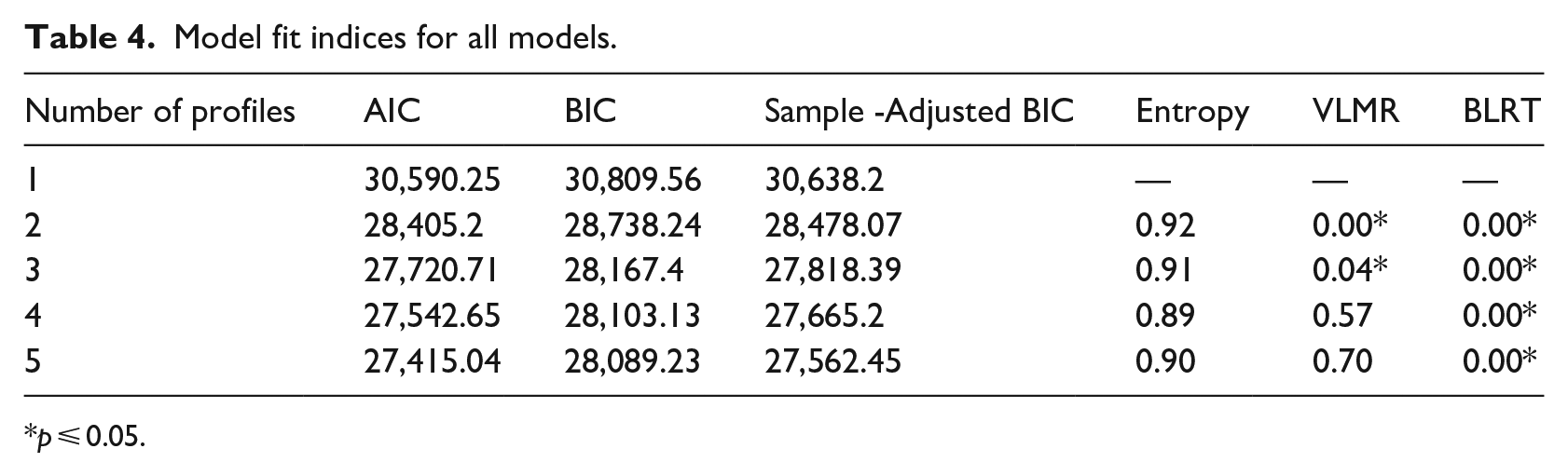
Table 4 contains the model fit indices for the 1-, 2-, 3- 4-, and 5- profile models.
Model fit indices for all models.
p ⩽ 0.05.
As illustrated in Table 4, there is high entropy across all models. The AIC, BIC, and Sample-size adjusted BIC are lowest for the 5-profile model, although quite similar for all models. After comparing these model fit indices, we then compared the levels of variation and separation amongst profiles in different models and found that the 5-profile was highest in both categories. Therefore, we chose the 5-profile model (Figure 1).
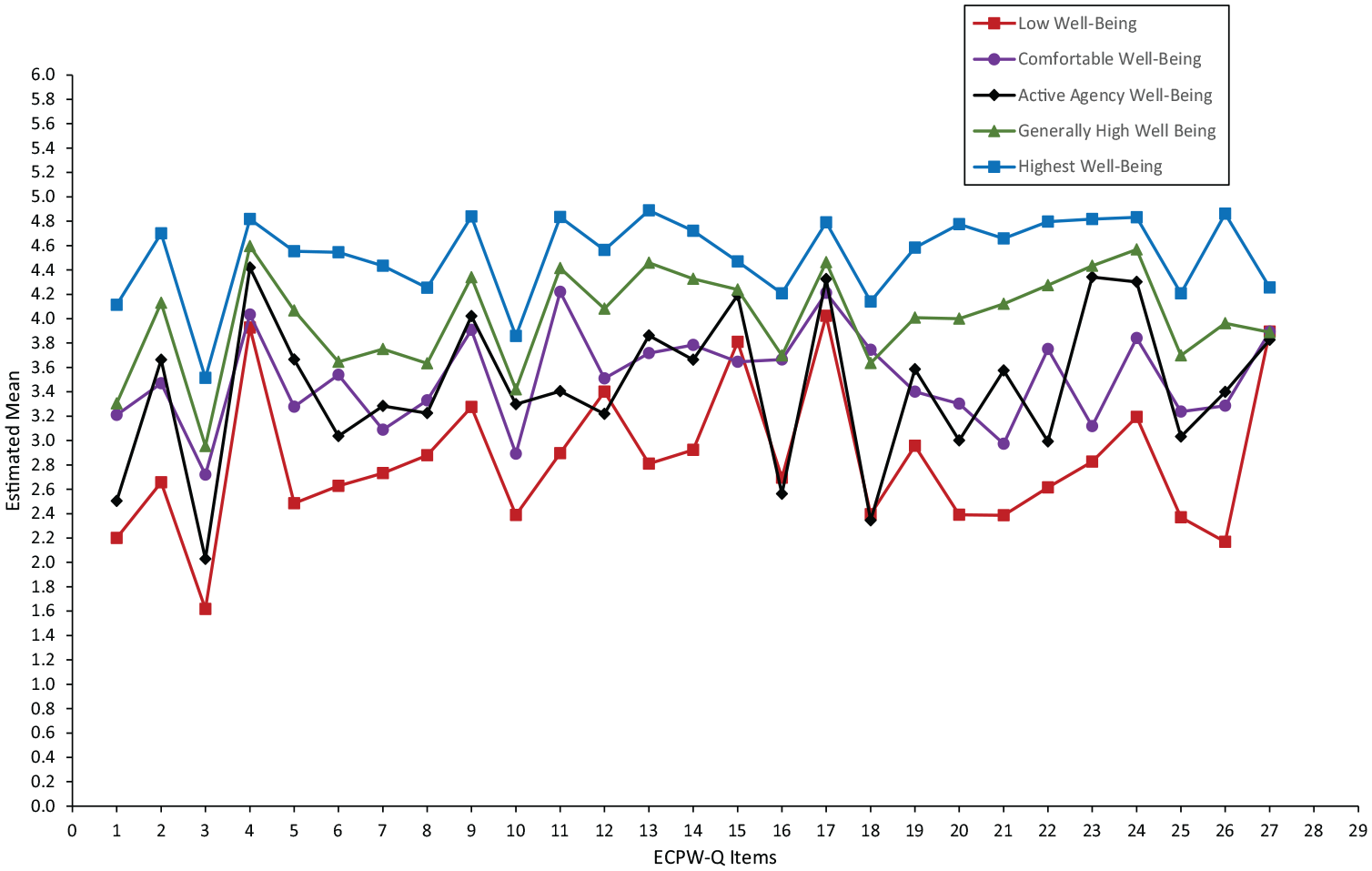
Comparison of estimated marginal means across the 5 profiles.
Description of profiles
Highest well-being
Individuals in the Highest Well-Being profile had the highest estimated means across all professional well-being items, making up 30.3% of all respondents. This profile had no areas of overlap with any other profile group.
Generally high well-being
The Generally High Well Being profile consists of 42.3% of all respondents. Individuals in this group generally had the second highest estimated means across all items, with some areas of overlap with the Comfortable Well-Being profile and the Active Agency Well-Being profile.
Generally High Well-being and Comfortable Well-being share similar estimated means for the following items: Sense of comfort (#6- My work setting appeals to my senses); sense of security (#11- I feel physically safe in my work setting and #18- my health is at risk in the work setting); and Sense of Engagement (#16- I dread the tasks that I face each day). This may indicate a similarity between these groups when it comes to physical comfort and safety.
Generally High Well-Being and Active Agency Well-Being share similar estimated means for the following items: Sense of Engagement (#4- I find my work to be boring, #15- My work challenges me to think); Sense of Agency (#10- I feel others question the decisions I make in the work setting); and Sense of Contribution (#17- I make a difference in the lives of children in my work setting, #23- I am trusted to take on important tasks). This may signify that these two groups are similar regarding a sense of pride in their role and enthusiasm for the work.
Active agency well-being and Comfortable well-being
Despite overlaps with Generally High Well-Being, both The Active Agency Well-Being and the Comfortable Well-Being profiles have mostly lower estimated means across all items compared with the previously described profiles. However, there are some interesting attributes of these lower estimated means groups, particularly if we compare them to each other. Both of these profiles have similar estimated means for items related to:
Active agency well-being compared to Comfortable well-being: Areas of strength
A total of 10% of respondents belong to this profile. Compared to Comfortable well-being, those in this profile have higher estimated means for all items associated with the
Comfortable well-being compared to active agency well-being: Areas of strength
Overall, 11.4% of respondents fit into this profile. Compared to Active Agency well-being, those in those profile have higher estimated means for all items associated with a
Low well-being
Individuals in this profile almost always had the lowest estimated means of items and made up 6.1% of respondents. However, there were a few areas of overlap with the Comfortable Well-Being profile, and the Active Agency Well-Being profile. Individuals within this profile had the same estimated means as the Comfortable Well-Being profile for sense of contribution (#12- I feel that my job is not a good match for my talents and abilities) and sense of engagement (#15- My work challenges me to think). This profile has the same as the Active Agency Well Being profile for sense of engagement (#16- I dread the tasks that I face each day and sense of security, #18- My health is at risk in the work setting).
Sense of efficacy
Items associated with a sense of efficacy had similar patterns across profiles. Two of the items associated with efficacy (#17- I make a difference in the lives of children in my child care setting, #27- I think about both things I have done well and not well in my role in the work setting) had some of the highest estimated means for each profile. For the latter, the estimated means were the same for all profiles, except for Highest Well-Being, which was slightly higher than the others. In contrast, the lowest estimated means for each profile across all items was the feeling that problems in the work setting were beyond their control (#3). This may be because this item focuses on work-related/environmental or other external factors, rather than aspects of individual’s practice.
Background variables as covariates
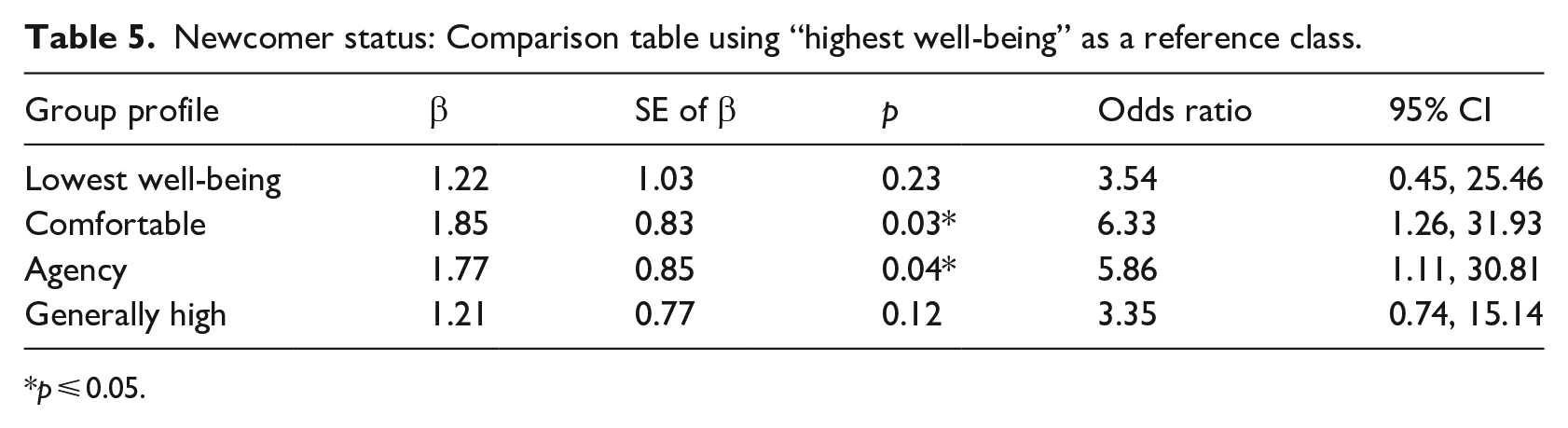
Interestingly, several background variables had no relationship to profile membership. These included: workplace, position, additional education outside of early childhood, disability status, and gender. However, both newcomer status and years of experience had a relationship to profile membership and were included in the final model. Participants who chose not to disclose information pertaining to either of these variables (n = 29), were deleted from the multinominal logistic regression, leaving the total sample at 400. Table 5 contains information pertaining to those who identified as newcomers.
Newcomer status: Comparison table using “highest well-being” as a reference class.
p ⩽ 0.05.
While only 30 (7.5%) of participants identified as being a newcomer to Canada, they were 6.3 times more likely to be in the Comfortable Well-being group profile compared to the Highest well-being group and 5.9 times more likely to be in the Active Agency Well-Being, compared to the Highest Well-being group. These results suggest that those who identify as newcomers may have lower overall well-being (across all items) compared to many of their non-newcomer peers. However, this analysis did not reveal that newcomers were more likely to be in the Lowest Well-being group,
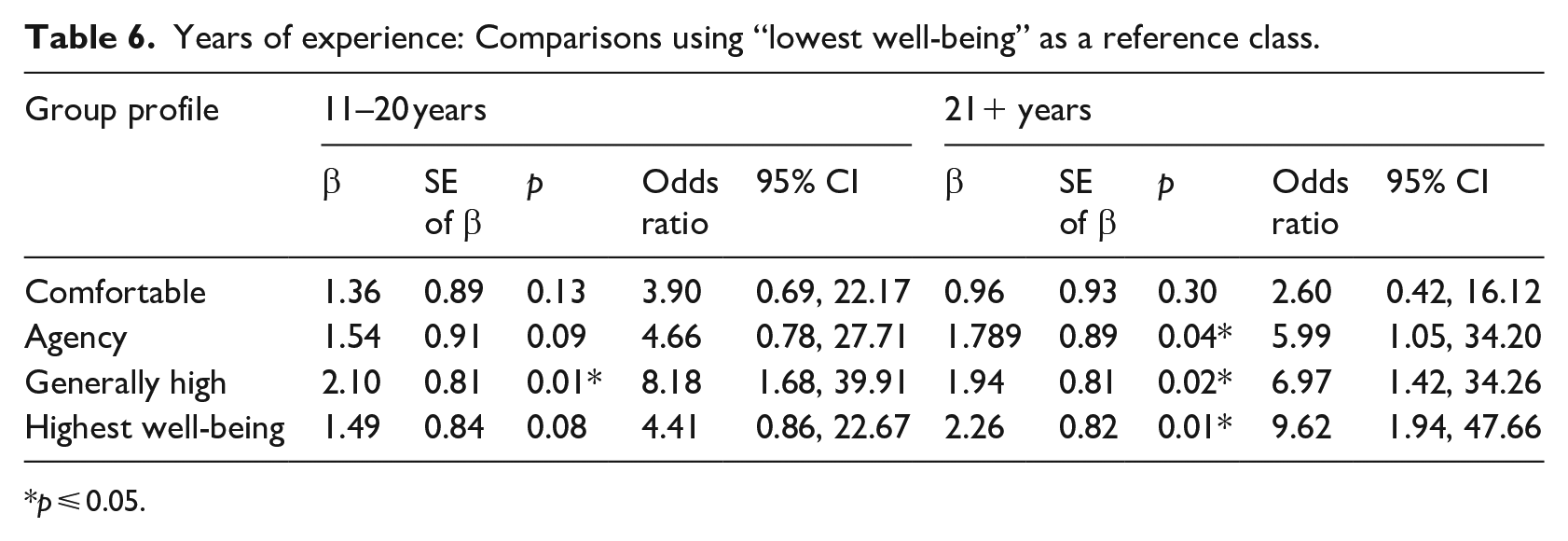
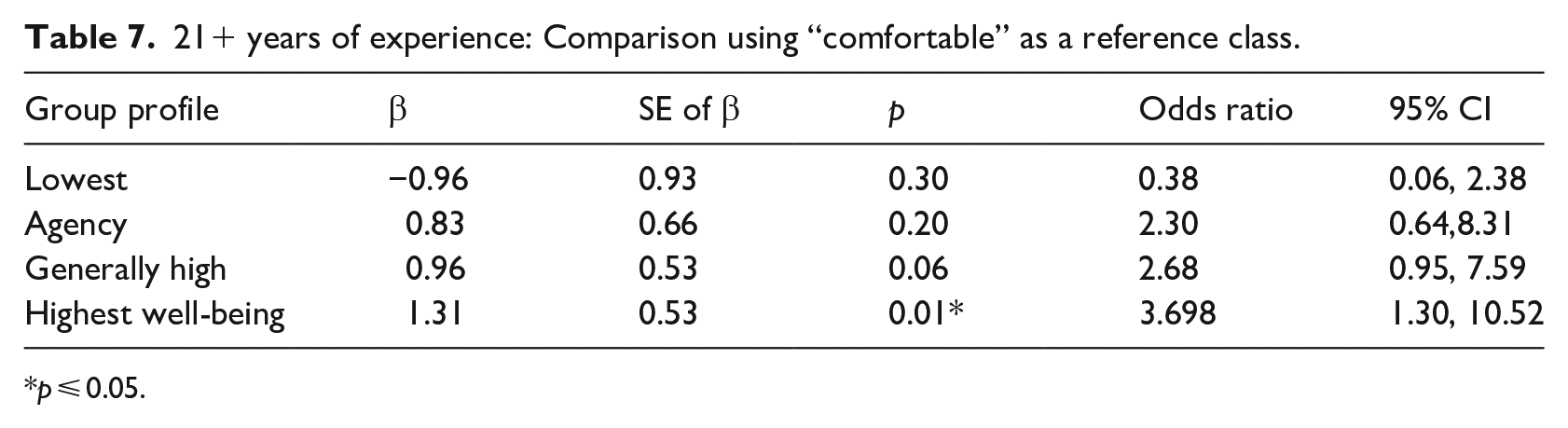
As noted earlier, although respondents had a wide range of years of experience in the ELCC field (0–53 years), a large portion (47.3%) had 10 years or fewer. McCormick et al. (2021) found that ECEs with over 20 years of experience had higher overall ECPW. Therefore, we created two variables: 11–20 years (22.5%, n = 90) and 21+ years (27%, n = 108), using those with 10 years or less as a reference class. Tables 6 and 7 contain relevant information for these groupings.
Years of experience: Comparisons using “lowest well-being” as a reference class.
p ⩽ 0.05.
21+ years of experience: Comparison using “comfortable” as a reference class.
p ⩽ 0.05.
Those with 11–20 years of experience were 8.2 times more likely to be in the Generally High Well-being group than the Lowest Well-being group. Similarly, those with 21+ years of experience were 6 times more likely to be in the Active Agency Well-Being group, 7 times more likely to be in the Generally High Well-being group, and 9.6 times more likely to be in the Highest Well-being group compared to the Lowest Well-being profile. Moreover, individuals with that level of experience were also 3.7 times more likely to be in the Generally High Well-being Group, compared to The Comfortable Well-being group. Overall, these results indicate that years of experience may have a relationship to professional well-being, with more years potentially equating to higher professional well-being.
Content analysis
A total of 188 participants commented on their well-being. Most responses shared more negative perspectives regarding well-being (across roles and other demographic variables), although there were a small number noting positive well-being. One participant stated: “My work environment is a happy healthy place that I look forward to attending daily.” (ECE, School-based program). Other participants expressed burnout, frustration, stress, and feeling overwhelmed. In most cases, the reason for their negative professional well-being stemmed from various, overlapping external factors:
There is a lot of stress in the field right now. Many problems within the field are coming to the forefront all at once. Recruitment, retention, salary scale that falls short, lack of pensions and benefit package, cost of operating. all things that have an impact on centres on a daily basis. (Director, Licensed non-profit child care centre)
Although the majority of responses expressed a low level of ECP well-being, some responses also indicated a love of the profession:
I love my job and making a difference in these children’s lives, but the stress of not being able to afford housing and the rising costs of everything weighs very heavily on me (ECE, non-profit child care centre)
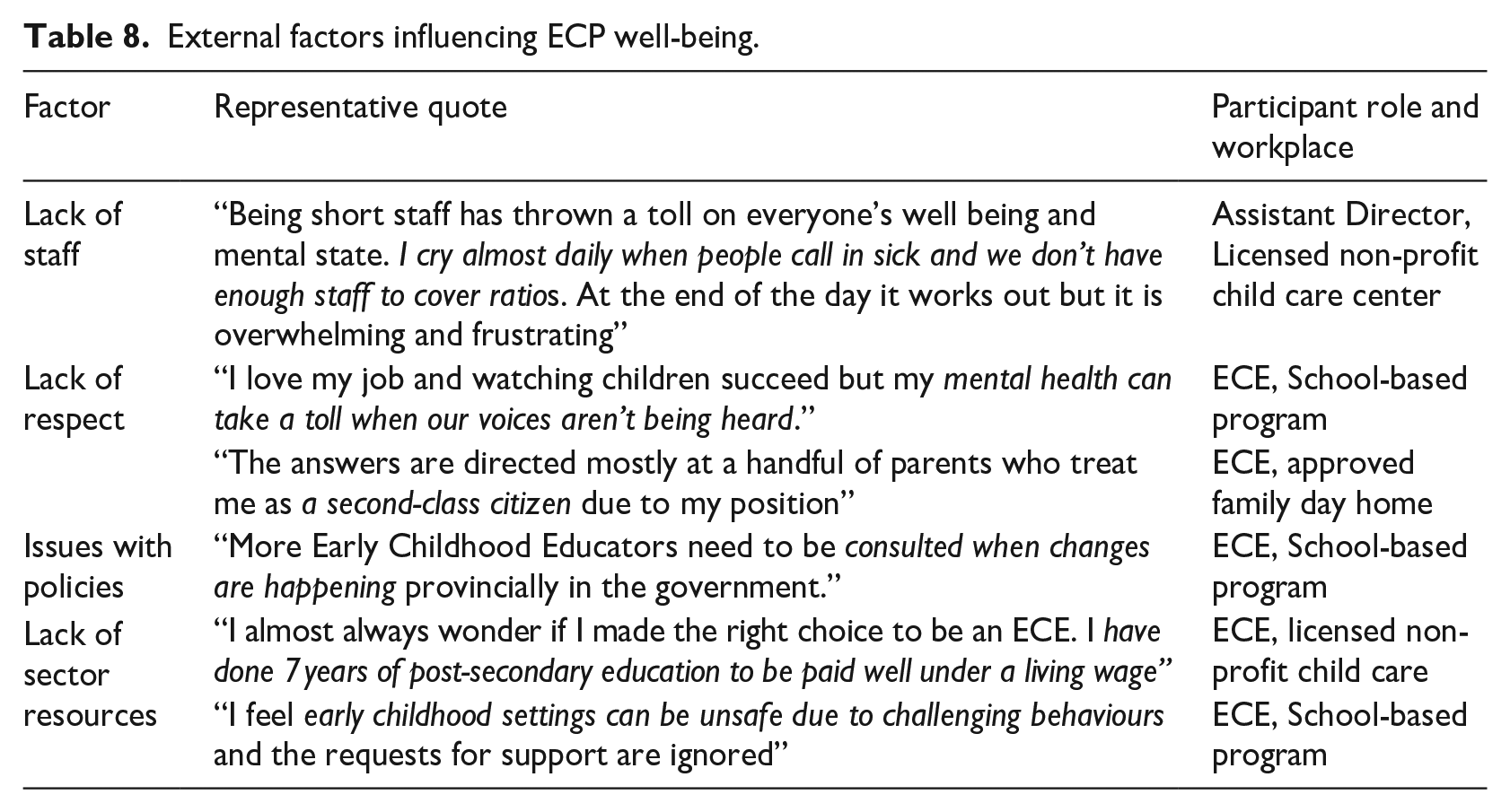
Overall, participants focused their comments on larger, external factors that related to their well-being as an ECP. The common themes identified are outlined in Table 8. We have highlighted and bolded the salient aspects of each quote.
External factors influencing ECP well-being.
Discussion
ECP well-being is a complex construct that consists of a variety of overlapping individual perspectives within the broader external context of the ELCC system. In our study, we examined patterns in both quantitative and qualitative data to better understand the well-being of our ECP participants working in NS. This investigation was timely and relevant considering the system-wide changes underway through NS agreement as part of CWELCC. The LPA in this study revealed five distinct profiles of ECP well-being with only years of experience and newcomer status having any relationship to profile membership. Through our content analysis, we also identified several additional external factors that affected ECP well-being, but did not find a difference in them based on participants’ background variables.
Our LPA revealed five distinct profiles of ECP well-being. Highest well-being was the most distinct in that it did not have any overlap with the other groups and had high estimated means for all 27 items. Generally high well-being also had relatively high estimated mean but had some overlap with the active agency well-being (both may have a strong sense of pride and enthusiasm for this work) and comfortable well-being (both may have high physical comfort and safety) groups. Active agency well-being and comfortable well-being groups overlapped with regards to senses of: self-respect, affinity, and communication, but were different regarding levels of agency (higher for active agency) and physical comfort and safety (higher for comfortable). Those in the low well-being group, while having the lowest estimated means across items did have some overlap with active agency and comfortable well-being groups, particularly with regards to some items connected to sense of engagement, sense of contribution, and sense of security. Although not in the majority, these three groups represent 27.5% of the total. The level of variation, particularly between these last three groups, highlights a number of different areas where ECPs may struggle, indicating that support for their well-being needs to be flexible to address more holistic supports for well-being. This echoes Cumming and Wong’s (2019) call for a holistic approach to ECP well-being, wherein individuals and systems have a shared responsibility to support ECP’s both directly and indirectly, across a variety of dimensions.
Experience
Similar to McCormick et al. (2021), we found that participants with much more experience (in our case 21 years) were more likely to have profiles with higher estimated mean scores on the ECPW-Q than those respondents with fewer years of experience. However, differently, our study also saw similar results for those with 11–20 years of experience, with those individuals being more likely to have mean scores that fall into Generally High well-being as opposed to a lower profile group of Comfortable well-being. There could be a variety of reasons for this difference in our study, including the unique NS Canadian policy context as compared to McCormick et al. (2021) sample of ECPs in the United States who worked in the Early Head Start/Head Start programs. Future research comparing their findings to a cross-Canada sample would provide deeper insights into similarities and differences amongst countries, states, and provinces. Identifying ways to support ECPs with fewer years of experience is an important policy consideration. For example, research has shown linkages between well-being, professional development and professional identity for teachers more broadly (Skinner et al., 2021; Zhao, 2022) and among ECEs specifically (Roberts et al., 2020).
Newcomer status
Across the four atlantic provinces, NS has the highest percentage (8%) of ECEs who identify as newcomers (Noulab, 2021). This research found that newcomer status had a direct impact on ECEs’ well-being profiles, with newcomers being more likely to be in the Active Agency Well-Being or Comfortable Well-being group than the Highest Well-being group. This finding reflects other researchers’ concerns for newcomer’s well-being after migration. According to the healthy immigrant effect, newcomers arrive with better overall health compared to their Canadian counterparts; however, their well-being tends to decline after years of living in Canada due to post-migration challenges like exposure to discriminatory practices in securing employment (De Maio and Kemp, 2010; Ng and Zhang, 2020). Further, newcomers continue to experience otherness and face discrimination and racism in their workplace due to their language differences and cultural practices (Rezazadeh and Hoover, 2018; Salami et al., 2020). Given that ELCC settings tend to adhere to white, heteronormative Eurocentric values and practices, newcomer ECEs may experience racial battle fatigue (RBF) as they navigate and confront racism (Pimentel et al., 2023; Smith et al., 2011). RBF can significantly impact ones psychosocial and emotional states, such as increased anxiety, frustration, fatigue etc (Pizarro and Kohli, 2020), which could explain the lower ECP well-being profiles of this population.
Workforce diversity is essential in ELCC, as it provides children with an opportunity to observe and interact with culturally diverse and non-culturally diverse educators as they collaborate and work together (Gide et al., 2022). Further, newcomer ECEs are uniquely positioned to bridge cultural and linguistic differences as ELCC settings are typically the first point of contact with formal institutional for newcomer families with young children (Tobin et al., 2013). However, another factor that could impact their well-being may be the conflicts these ECEs face in negotiating their responsiveness to the ELCC programs in which they are employed and to their community due to the pressure to adopt mainstream child care practices ((Tobin et al., 2013). Therefore, to better understand newcomer ECEs well-being, it is critical first to understand and unpack their pre- and post-migration journey, their experience in finding employment in early childhood settings, and what they have experienced as equity-deserving educators in ELCC.
Senses of professional well-being
We included item-level responses from all ECPW-Q items in our LPA, with an understanding that there may be as many as 27 distinct senses related to professional well-being. However, we found that, in many cases, the items did make conceptual sense when grouped under the nine senses originally described by McMullen et al. (2020), particularly with regards to items associated with: comfort, agency, self-respect, affinity, and communication.
For the remaining four senses: security, sense of efficacy, sense of engagement, and sense of contribution, it is interesting to note that two out of the three items connected with each of these senses seemed to group together well. This may indicate that these four senses are important aspects of ECP well-being, but more items are needed to support their definitions. However, there remained four items that did not adhere to their specified senses, which may mean that these items were measuring four additional constructs that are central to professional well-being. The constructs are: job security (#24- I worry about being fired), responsibility (#26- I am trusted to take on important tasks) anticipatory stressors (# 16- I dread the tasks that I face each day and external influences (#3- I feel problems in my child care setting are beyond my control). Future avenues for research into this construct could include creating more items related to these additional four senses, which would allow for a deeper understanding of the definition and dimensionality of the construct of ECPW.
External factors affecting ECP well-being
Item #3 problems in my work setting are beyond my control had the lowest estimated means across all profiles. As this item was reverse-coded, this means that a low score indicates a low aspect of ECP well-being. Compared to other items, the wording of item 3 is relatively vague in that it does not connect to a specific workplace factor (e.g., relational, environmental). As discussed earlier, this item also does not have a relationship to the other two items focused on sense of efficacy, which may mean that this item is measuring something else related to other workplace or external factors. Our content analysis showed the negative impact of various external factors on an individual’s well-being as an ECP, including a lack of staff, respect, sector resources, and issues with policy. These findings align with previous reports of the poor working conditions of ECPs in NS, including inadequate compensation and a feeling of respect and value of the profession (Saulnier and Frank, 2019) as well as the concerns that relate to staff shortages (Gorman, 2024). As the implementation of CWELCC is ongoing in NS and further investments have been made toward additional wage increases, benefits, and pension plans, it will be important to continue to monitor the well-being of ECPs given the introduction of new initiatives that influence these external factors that play a role in ECP well-being.
Strengths and limitations
ECP well-being is a relatively new construct but critically important considering recent investments in ELCC and the relationship between educator well-being and program quality. While additional research is needed to ensure its construct representation, to our knowledge this study is the first exploration of ECP well-being in Canada that provides an in-depth examination of how different types of groups experience professional well-being. The largest limitation for this study is our sample size and issues pertaining to the lack of demographic information for a large percentage of our participants. The number of working individuals with an early childhood education credential in NS was approximately 3160 in 2016 (Saulnier and Frank, 2019), so our sample-size of 429 only accounts for roughly 10% of the population. A larger sample size would be helpful in making deeper interpretations regarding profiles of professional well-being, but more difficult to obtain as there is only a membership-based professional association for ECEs in NS and not an existing provincial directory. Further, a sample of over 300 is best for LPA (Nylund-Gibson and Choi, 2018) and, while our initial sample was 429, this figure would have substantially dropped to 300 or less had we included background variables with significant missing data (e.g. ethnic/cultural background, level of education, and ECE level). While we could have made demographic questionnaire mandatory, we attempted to provide a balance in our survey to allow participants to opt out of questions they felt to be intrusive. Additional qualitative research (e.g. in-depth interviews) would also help to further illustrate how well-being is experienced by ECPs.
Conclusion
ECP well-being is intrinsically connected to quality and, in turn, positive outcomes for children, families, and the broader community. Finding and describing the variations in ECPW, in terms of differing profiles, is one way of deepening our collective understanding of well-being of ECPs in relation to its connection to achieving high-quality ELCC. Our research revealed five distinct profiles of ECP well-being; years of experience and newcomer status affected membership to certain profiles, which suggests specific support to these groups to enhance wellbeing among these ECPs. Future research should continue to explore these relationships alongside ongoing investments in the ELCC systems (e.g. in wages, pension, benefits) while highlighting the diverse lived experiences of ECPs and their well-being. Additional inquiry is also needed to refine the construct definition and ensure representation of ECP well-being in survey items across different ELCC system contexts.
Footnotes
Acknowledgements
We extend our sincerest thanks to the ECPs who participated in this survey. We also thank our research team at the Early Childhood Collaborative Research Center at Mount Saint Vincent University: Randi Cummings, Milena Pimentel, Nahal Fakhari, and Robyn Ashley for their insights and reviews of the literature, and Hannah Cosman for support with graphics and references.
Declaration of conflicting interests
The authors declared no potential conflicts of interest with respect to the research, authorship, and/or publication of this article.
Funding
The authors disclosed receipt of the following financial support for the research, authorship, and/or publication of this article: This work was supported by Mitacs through the Mitacs Accelerate program in partnership with the Nova Scotia Early Childhood Development Intervention Services, Nova Scotia Department of Education and Early Childhood Development, and the Margaret and Wallace McCain Family Foundation. This research was also undertaken, in part, thanks to funding from the Canada Research Chairs program.
