




Abstract
This paper reports on an investigation into the potential effects of the Symbol Literacy Approach (SLA) on the metaphorical reasoning of 25 five-year-old children attending a Maltese Catholic School. This was implemented via six pedagogical activities comprising the ‘St. Michael Project’, which sought to prompt the children’s symbolic engagement with the Judeo-Christian myth concerning the triumph of Archangel Michael against Lucifer. In the final activity, the children’s observation, role-play and conversation were prompted in relation to a 17th-century Flemish painting depicting St. Michael, after which the children were invited to draw pictures of anything the activity had made them think about. The research data comprised video recordings of conversations held with the children during the drawing process as well as photographs of the finalised pictures. Thematic analysis subsequently revealed that the SLA had supported most of the children to engage in metaphorical reasoning, while illuminating various facets of this pivotal cognitive process.
Keywords
Introduction
This paper reports on an inquiry into the potential of the Symbol Literacy Approach [SLA] (Gellel, 2018) to support the development of metaphorical reasoning in young children. 1 The study included a pedagogical intervention by the name of the ‘St. Michael Project’, which was implemented as part of a broader investigation into the effects of the SLA on the overarching skill of ‘Symbol Literacy’. However, because of the central yet often elusive role of metaphorical reasoning within the process of symbolic engagement (Crisp, 2005; Modell, 2009), this paper is specifically focused on children’s engagement with metaphor.
This inquiry is framed by Conceptual Metaphor Theory [CMT], which positions metaphor as a pivotal cognitive faculty (Lakoff, 1993; Lakoff and Johnson, 1980) in the development of abstract thought, which therefore underpins all knowledge domains. Nonetheless, research into the development of metaphorical thinking in early childhood is limited – and even more so, in terms of its pedagogical implications. Moreover, as Alessandroni (2017) noted, most available research tends to focus exclusively on the linguistic expressions of metaphors. Thus, the present study seeks to understand: How might the Symbol Literacy Approach support the metaphorical engagement of 5-year-old children?
The symbol literacy approach
According to Gellel (2018), the SLA aims to help children to interact with cultural artefacts (narratives, rituals and art) and their meanings, as produced by and sieved through different generations. In this context, symbols are understood to extend the underlying meaning of signs for the purpose of accessing a more abstract and profound form of reasoning. This is made possible through imagination, which when used by the collective, helps to overcome the limitations of the individual (Cassirer, 2021 [1944]; Tateo, 2015). The symbolic thus allows for the simultaneous experience of concrete and abstract realities, thereby enabling humanity to satisfy its universal quest for meaning, order, and connection in life (Gellel, 2018).
The key to this endeavour is the ‘universal’ human feature (Cassirer, 2021 [1944]) of symbolic reasoning, which the SLA aims to support pedagogically through the teaching and learning of ‘Symbol Literacy’. According to Gellel (2018), this cross-curricular domain incorporates the higher-order, hierarchical and sociocultural processes of:
Engaging with symbols by recognising and ‘reading’ them in order to make meaning;
Using such symbolic engagements to build a symbolic repertoire, for future reference; that is, a personal archive of cultural elements in the long-term memory; and
Mindfully retrieving knowledge of artefacts and their symbolic connotation from this repertoire to apply or ‘reconstruct’ their meanings in pursuit of life’s ‘deeper reality’
The overlapping definitions between symbols and metaphors makes it hard to draw distinct boundaries between the two. In agreement with the work of Kress and Jewitt (2003), SLA holds that symbol-making is actually a metaphoric process in itself. Therefore, in seeking to support children in their ability to transform ‘cultural elements’ into ‘symbolic resources’ (Zittoun et al., 2003: 415), the SLA targets the acquisition of cultural capital while refining metaphorical reasoning (Gellel, 2018), which it approaches via the CMT perspective.
Conceptual metaphor theory
In CMT, metaphors are those human experiences that are mainly abstract in nature but that are expressed through concrete realities (Kövecses, 2017). Building upon the seminal work by Lakoff and Johnson (1980), Lakoff (1993: 2) explains how the term ‘metaphor’ has in fact ‘come to mean “a cross-domain mapping in the conceptual system”’. This conceptual mapping consists of fixed correspondence between two entities that are understood to have ontological affinities (Lakoff, 1993). Thus, while traditional theories conceive metaphors as mere figures of speech, CMT approaches metaphors as cognitive processes that make use of conceptual systems (Alessandroni, 2017; Lakoff, 1993; Landau, 2018). In so doing, CMT firmly embeds metaphors in the way we act, reason and express ourselves.
Some metaphorical mappings are rooted in the body’s sensorimotor experiences (Lakoff, 2014; Modell, 2009); for example, through the perception of sadness as ‘feeling down’ or of happiness as ‘on a high’, which directly reflect their respective bodily manifestations. These ‘embodied’ metaphors enable the brain to connect as well as differentiate between experiences in the concrete world and those in the mind (Lakoff, 2014), while also supporting the categorization of emotional experiences, bridging of the past and present, retrieval from the unconscious, and empathy with others (Modell, 2009).
However, this emphasis on the conceptual underpinnings of metaphor is not to say that its linguistic or non-linguistic expression should be overlooked. Lakoff (1993) identifies linguistic metaphorical expressions as the outward expression of cross-domain mappings, offering a direct reflection of an understanding of metaphor in its cognitive form. Moreover, the CMT perspective provides insight into the expression of metaphor through other modes (Alessandroni, 2017). This includes rituals and images, both of which have shaped this inquiry from the development of the activities to the interpretation of the findings.
Pedagogical intervention
Due to the relationship between metaphor and symbol, we decided to investigate children’s metaphorical reasoning through their engagement with a 17th-century artwork of St. Michael and the narrative at its basis (see Figure 1). The painting is rooted in the Judeo-Christian narrative (see Isaiah 14:9-15 and Revelations 12: 7-9) that tells how Lucifer rebelled against God together with a third of the angels, only to be fought and defeated by Michael, who hence became God’s champion and the protector of his people.
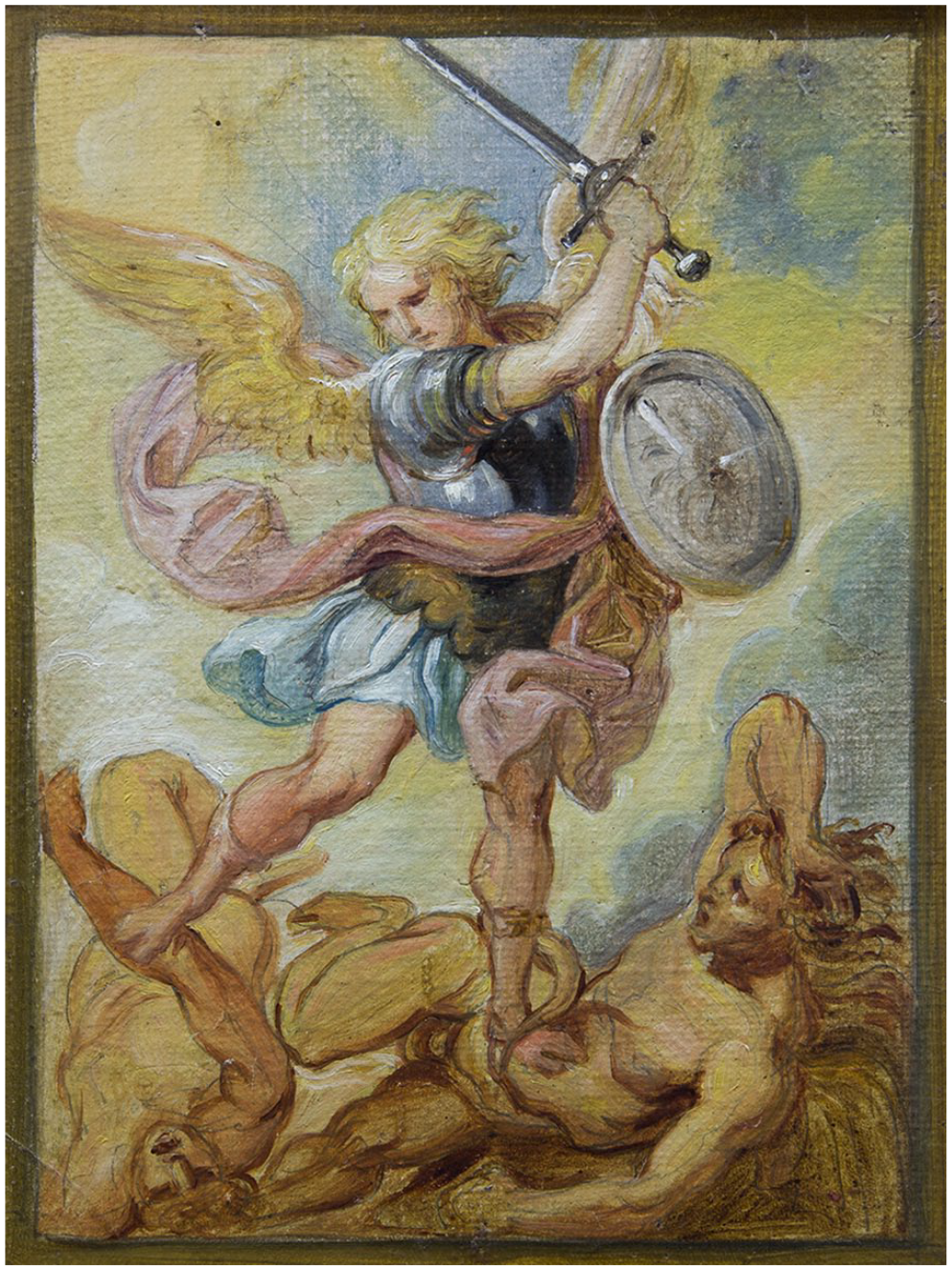
St Michael, Flemish 17th century painting – reproduced with the permission of the Mdina Cathedral Museum, Malta 329 × 457 mm (300 × 300 DPI).
There are a number of reasons behind this choice. First of all, the painting’s overall simplicity and the relative non-importance it gives to the figures of the devils, rendering it appropriate for young children despite the depth of its meaning. Additionally, its incorporated imagery and narrative are prominent within the Maltese context, where Michael is honoured through the names of numerous streets, buildings and institutions and symbolised through various statues, paintings and icons.
Furthermore, this narrative holds universal mythical appeal, creating significant potential for meaning-making. Besides being revered across the three main monotheistic religions, Michael and his narrative reflects a universal concern with the perceived battle between goodness and evil, as indicated through its underpinning metaphors (such as Goodness As Hero/Defender or Morality As Battle), 2 which respectively attempt to explain the cosmic origins of the strife between good and evil and of the choice that creatures make between the two. The groundedness of this myth within such universal realities might explain why its underlying metaphors feature in myriads of myths and folk tales stemming from different cultures and eras, to as far back as the first recorded myths/narratives.
Implementation
The pedagogical intervention conducted prior to the collection of data was implemented via a total of six, pre-planned learning activities. These, targeted the development of Symbol Literacy skills through various pedagogical engagements.
The first five activities were implemented over as many days in the children’s regular classroom, with each lasting around 30 minutes (see Table 1). These were led by the class teacher under the guidance of the teaching manual, which was designed by the first researcher to ensure appropriate scaffolding of the signs and narrative related to the central symbolic element (Gellel, 2017). A total of five signs, revealed progressively over the 5 days leading up to the final activity, were presented as cardboard props hidden in a ‘Mystery Box’ to foster curiosity and wonder (see Table 1). However, the signs’ meanings could only be speculated upon at this point, since St. Michael’s identity and background were only revealed during the sixth activity at the Mdina Cathedral Museum. The Mystery Box was decorated to look like the Museum, with the outside featuring a photo of its façade and the inside featuring photos of its interior, thereby familiarising the children with the context in which the project would reach its culmination.
Key activity features.
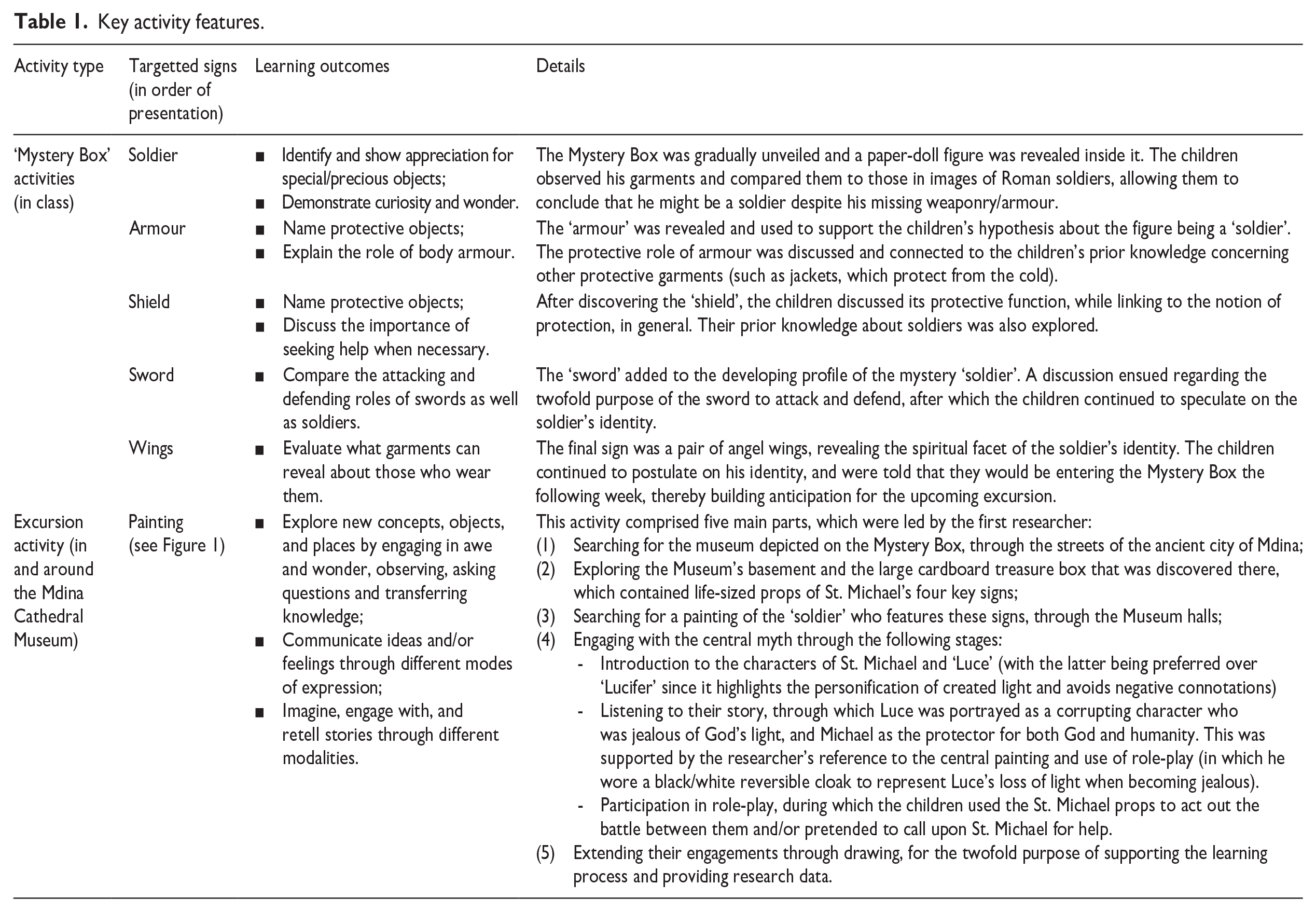
Through observation, role-play and drawing, the sixth activity targeted the children’s engagement with the museum space and with the central signs, painting, and narrative associated with St. Michael. In this way, we made sure that the interaction with the painting and its narrative is more authentic by including ritual (Brown and Dissanayake, 2018) in view of the underlying universal mythological theme that has to do with identity and was of experiencing reality. By supporting the artification process we hoped to strengthen children’s cognitive processes (Brown and Dissanayake, 2018). We implemented the activity ourselves so as to personally gauge the children’s prior knowledge, enhance their familiarity with the pedagogical context and establish a sense of rapport with the children, prior to the collection and subsequent analysis of the data.
Methodology
This study is informed by the ontological and epistemological assumptions of Vico (1999 [1744]), who in reacting against Cartesian absolutism, claimed that humans can only fully understand what they themselves create (such as narratives, history, institutions and culture). This is only possible because of the human faculties of imagination and metaphorical reasoning (Tateo, 2018; Vico, 1999 [1744]), through which we not only understand and shape immanent reality, but also transcend it (Mali, 2002). This study thus seeks to gain insight into children’s experience of this transcendental realm between the imminent and absolute realities, which is explored via a qualitative, interpretivist approach, on account of its consideration of subjective interpretations and ways of creating meaning.
Data was collected through two methods: (i) video recording of the children’s drawing process and the developing narratives that children expressed in conversations while drawing, and (ii) the photographic recording of the drawings. The selection of these methods was based on the understanding that the child’s progressive meaning-making developed over the drawing and the drawing itself (Einarsdottir et al., 2009).
In this study, we position ourselves within a children’s participatory approach, where we consider children as active participants in the research process (Harcourt and Einarsdottir, 2011). Given that drawings and narratives are child-familiar means of communication, (Gallacher and Gallagher, 2008; Hall, 2010), we video-recorded the process to make sure that we give a voice to children. The drawings, done at the end of the activity in the same hall where painting was displayed, allowed children to communicate their views, thoughts and understanding of the whole learning experience (Dahlberg et al., 2007). We conducted research ‘with’ children (Mayall, 2000) where, during and after the drawing process, we engaged in conversations and careful observations of their actions, while listening to their utterances, responses and narratives (Dockett and Perry, 2004; Einarsdottir et al., 2009; Sommer et al., 2013). Paying attention to their interpretation of their drawings, we were able to gain their ‘own expressions’ (Koch, 2021: 385) and thus, the meaning they attributed to the painting and related activities, while allowing their ideas to emerge. As a result of this co-constructive process of shared meaning-making, we considered children ‘powerful contributors with unique expertise’ (Tay-Lim and Lim, 2013:70) in the research process (Wood, 2015). On account of the children’s bilingualism, we made use of translanguaging to facilitate communication. However, all data was translated into English since each one of us are fluent in both Maltese and English and did not identify any significant meaning loss in doing so.
Recruitment and sampling
The participants were selected via non-probability, convenience sampling due to the practical considerations of the study’s pedagogical component. Although the project may be conducted with children from different religious/spiritual backgrounds, it was anticipated that the central narrative would hold particular appeal within the Catholic Church School sector, from which a class of 25 five-year-old children (13 boys and 12 girls) volunteered for participation. Data collection was only initiated once permissions, consent and assent were received from the institutions, parents and children respectively. All of the parents and children in the selected class voluntarily accepted to participate in this research. Adhering to the ethical principles and guidelines issued by BERA (2018), we also considered the use of children’s drawings and the video-recording of their narratives in a ‘positive, respectful and empowering manner’ (Hall, 2015: 141). In order to safeguard their identities, all children’s names were pseudonymised in the transcripts, which did not refer to any sensitive data, while the video cameras were focused on the children’s drawings rather than on the children’s faces. Children’s assent was requested before the onset of the study and before video-recording the drawing process. Moreover, children were informed that they could refuse to be video-recorded and/or stop the recording of the drawing process at any time. The video-recording was used as a means of data collection, recording and analysis of what the children said, did and drew, and will not be used as data representation.
Analysis
Following familiarisation with both the visual and verbal sets of data, these were collectively analysed via thematic analysis. This involved the inductive coding of meanings within the transcriptions, with codes being grouped into Overarching and Secondary Themes, as presented in Table 2:
Emergent metaphors and themes.
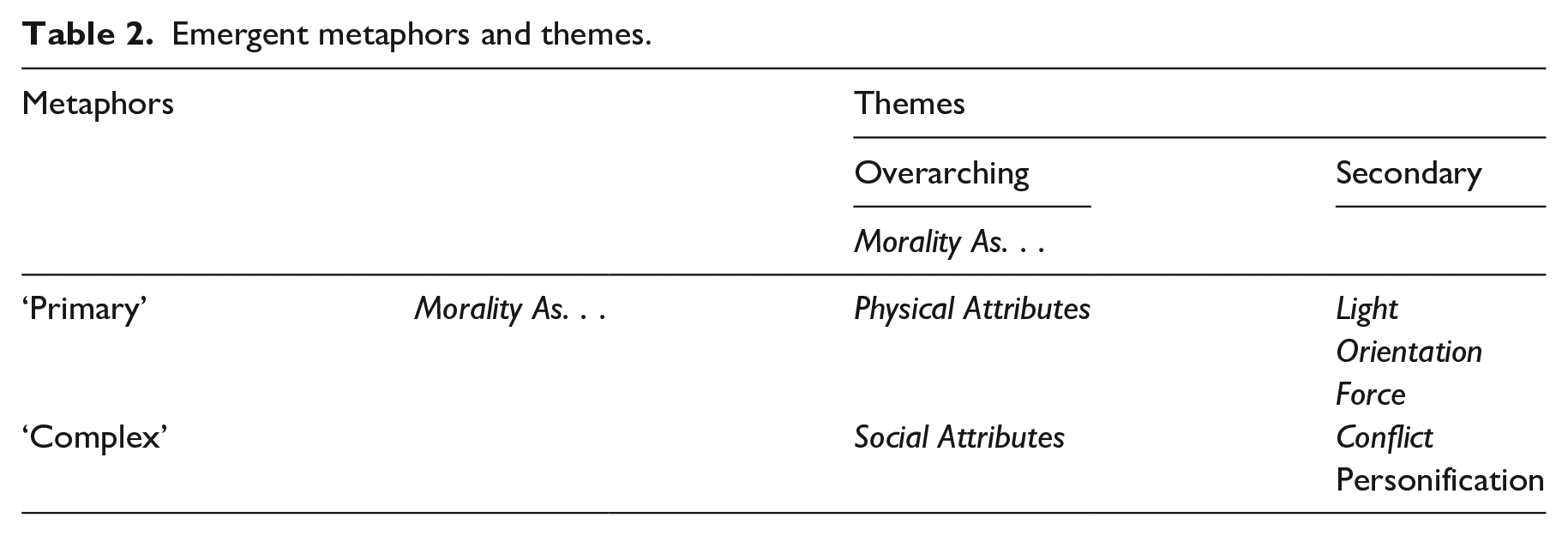
The analysis revealed that children engaged with the notion of morality via their physical as well as social understandings, thus implying their underpinning engagement with ‘primary’ as well as ‘complex metaphors’ (Lakoff and Johnson, 2003: 254–255). This not only supports Lakoff and Johnson’s (1980) theory that metaphors and conceptual systems are the result of our ontological makeup and how we interact with our physical and cultural contexts, but it also indicates that this process is already evident in early childhood.
Findings
Metaphorical engagements were identified among all but five of the children, who were still able to recall and reproduce some of the key signs that had been presented during the activities. Due to the lack of explicit metaphorical engagement, their responses did not contribute to the emergence of the overarching themes. It should however be noted that these five children may still have engaged through metaphors without expressing it externally. The inability to identify any such processes may be due - but not restricted - to the misalignment of the research methods with these children’s individual expressive preferences or abilities, their mood or frame of mind during the data collection, or their lack of familiarity with the research context and researchers.
The other participants revealed their continued exploration of the presented dichotomy between good and evil (or their subtler manifestations as ‘goodness’ and ‘badness’) through the overarching themes of Morality as Physical Attributes and Morality as Social Attributes. Due to their presence in the St. Michael myth and across cultures, the respective metaphors had also underpinned the pedagogical activities and were likely to have additionally been encountered through various other aspects of the children’s lives. The active contextualisation of these metaphors reflected different engagements by the children, with some only featuring recall and comprehension, and others also incorporating higher forms of reasoning, as explored below.
Theme 1: Morality as physical attributes
The first theme revealed that the children’s conceptualisation of morality was supported by its mapping onto the three physical attributes of Light, Orientation and Force. This illuminated their engagement with the primary metaphor of Morality as Physical Attributes, whilst also revealing the respective secondary themes.
Light
The Morality as Light metaphor was implicitly conveyed during the role-play activity when the lead researcher flipped his cloak from white to black in portrayal of Luce’s loss of light following his jealousy at God’s unrivalled brightness. Reflecting its inherently visual nature, the children’s engagement with this metaphor was primarily identified through the visual data (albeit supported by the verbal data).
Of the 13 children who engaged with this metaphor, one demonstrated the perception of evil as a form of opposition to light, in saying, ‘"The bad guy is mad about the sun because it’s bright’. The remaining 12 also appeared to perceive morality in terms of light, although this was done more specifically in relation to its manifestation through colour. All 12 of these children presented evil through notion of darkness, as inferred through their colouring-in of the ‘bad’ characters in their drawings using black or grey (whose immoral positions were explicitly identified by 10 children but contextually implied by two). However, in contrast, there was only one bad character who was coloured-in using bright colours, while none of the good characters were coloured-in using dark ones.
The conceptualisation of evil as darkness is exemplified through Figure 2, which depicts an unnamed character standing between two ‘angels’. Indicating an understanding of their incorporated signs. The child described the shield-yielding angel on the far left as ‘good’ and the one on the far right (outlined in black) as ‘naughty’. However, echoing the central myth through a basic religious narrative, the child explained that while ‘the light used to make (the naughty angel) good’, he ‘bec[a]me. . . bad’ when caught by the middle character, thereby revealing an understanding of the corrupting nature of evil. When asked why she was shading the background of the naughty angel in black, the child revealed a metacognitive awareness of her metaphorical use of colour by stating directly, ‘So he will be a bad guy’. During this conversation, the middle character did not yet feature a black background, but in light of this comment, its subsequent shading also appeared to reflect this metaphor.
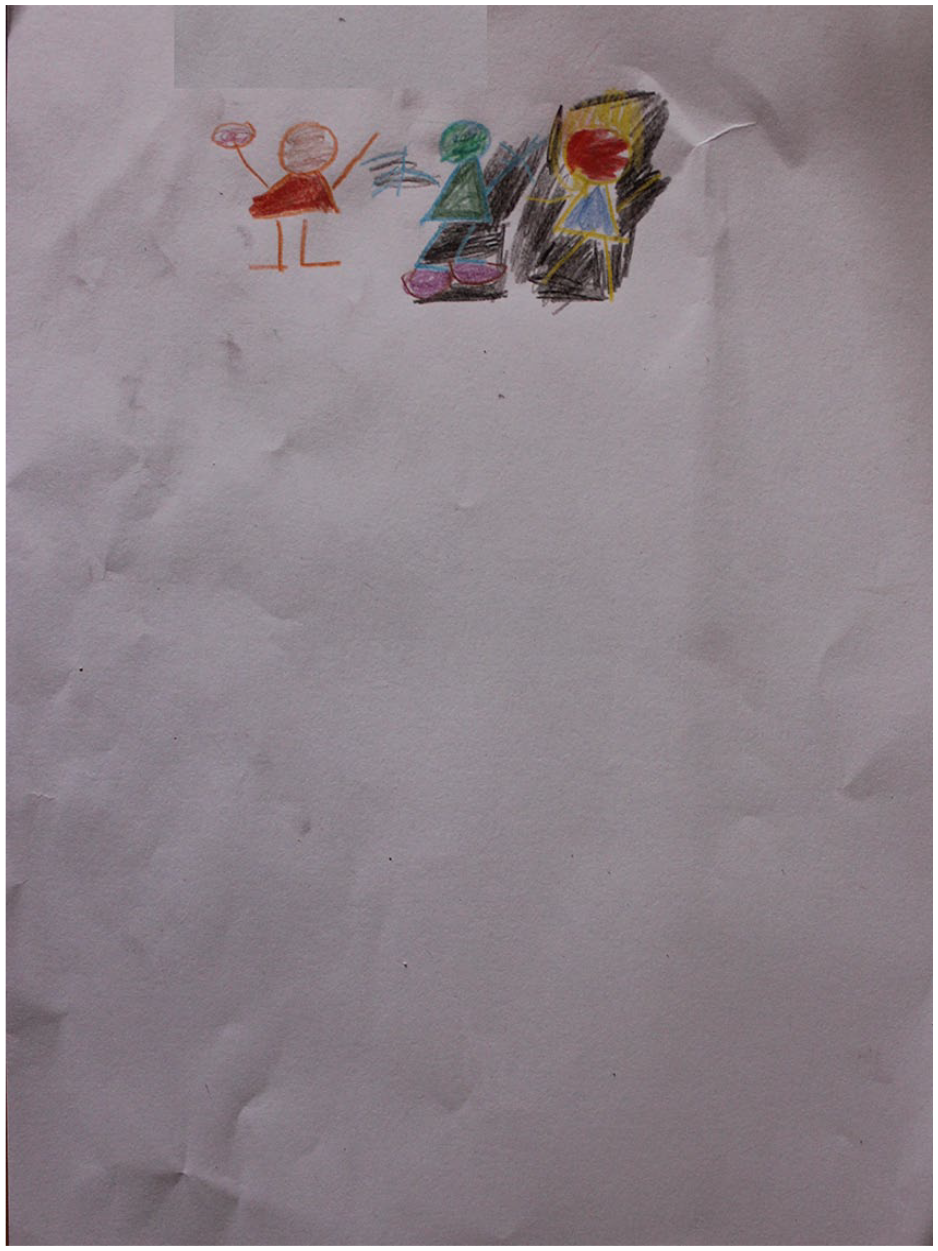
The corrupting nature of evil as represented by dark shading.
Orientation
Similarly to the previous theme, the visual data revealed the engagement of 13 children with the Morality as Orientation metaphor. This metaphor had also been conveyed visually, through the vertical orientation of the good and bad characters in the painting and the lead researcher’s diminishing stature when portraying Luce’s fall from grace during the role-play. Since neither of these aspects were verbally highlighted to the children, this supports the notion that metaphor can operate non-linguistically (Alessandroni, 2017), while specifically pointing towards the potential of the visual and dramatic modalities to support research and pedagogy within this field.
This ‘orientational metaphor’ (Lakoff and Johnson, 1980: 14–21) indicated the association of good with an upper vertical orientation and of evil with a lower vertical orientation. In fact, out of the 14 drawings that featured both good and bad signs/characters oriented at different positions along a vertical plane, 10 of them depicted good components in isolation at the highest position and six of them depicted evil ones in isolation at the lowest position, in comparison with only one drawing in which these patterns were reversed.
This metaphor is exemplified by Figure 3, in which the first characters to be depicted were ‘Michael’ - as the ‘good guy’, who was drawn at the highest position - and a ‘bad angel’, who was drawn beneath him. Other characters were added to the drawing alongside the progression of the narrative. However, the initial correlation between good and evil and their respective orientations emerged clearly through the observation of the drawing process.
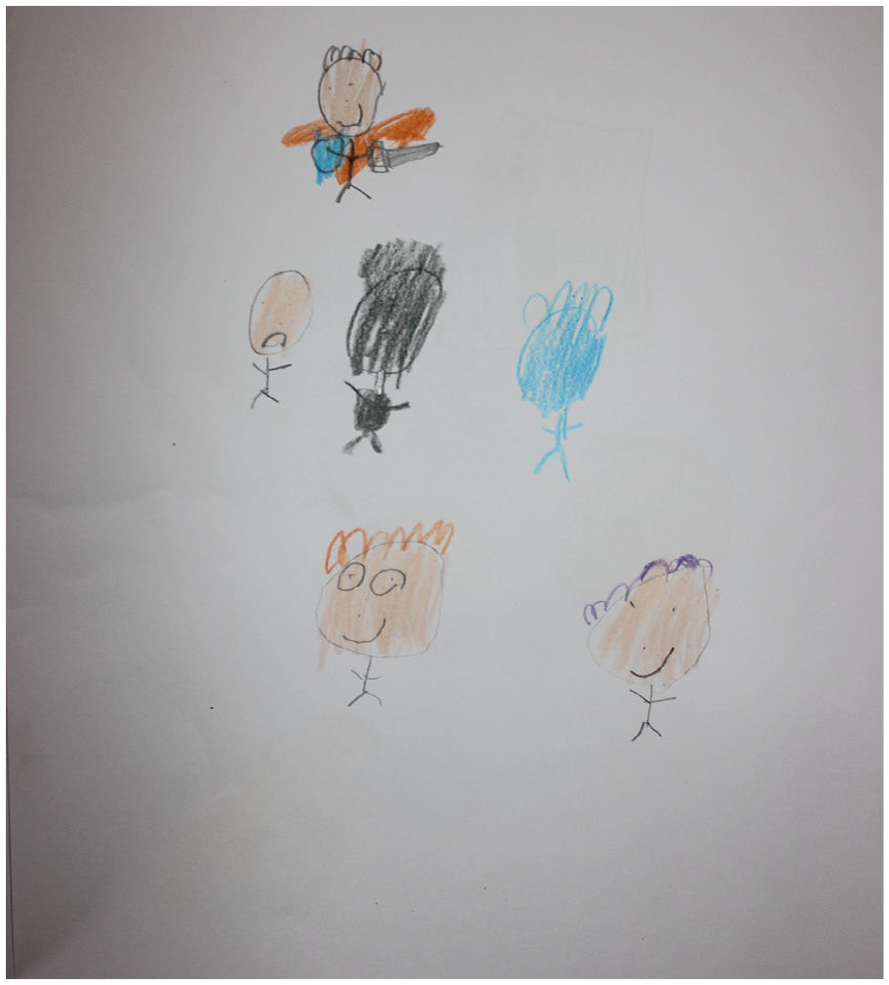
The respective upper and lower orientations of good and evil (elements vertically aligned).
The association between morality and vertical orientation was also identified in a drawing where the good and bad elements were aligned horizontally (see Figure 4). While the child did not explicitly comment on the picture’s moral dimension, this was implied through its contextualisation, which juxtaposed a stooped figure wearing black and a negative expression, against a brightly coloured ‘church’ and sunny country scene, thus interpreting the church and surrounding beauty as representing ‘goodness’ and the figure as representing ‘badness’. The towering height of the church building and flowers contrasts with the figure’s small, hunched form. This representation appears to reflect the association of good with higher vertical orientations and of bad with lower ones.
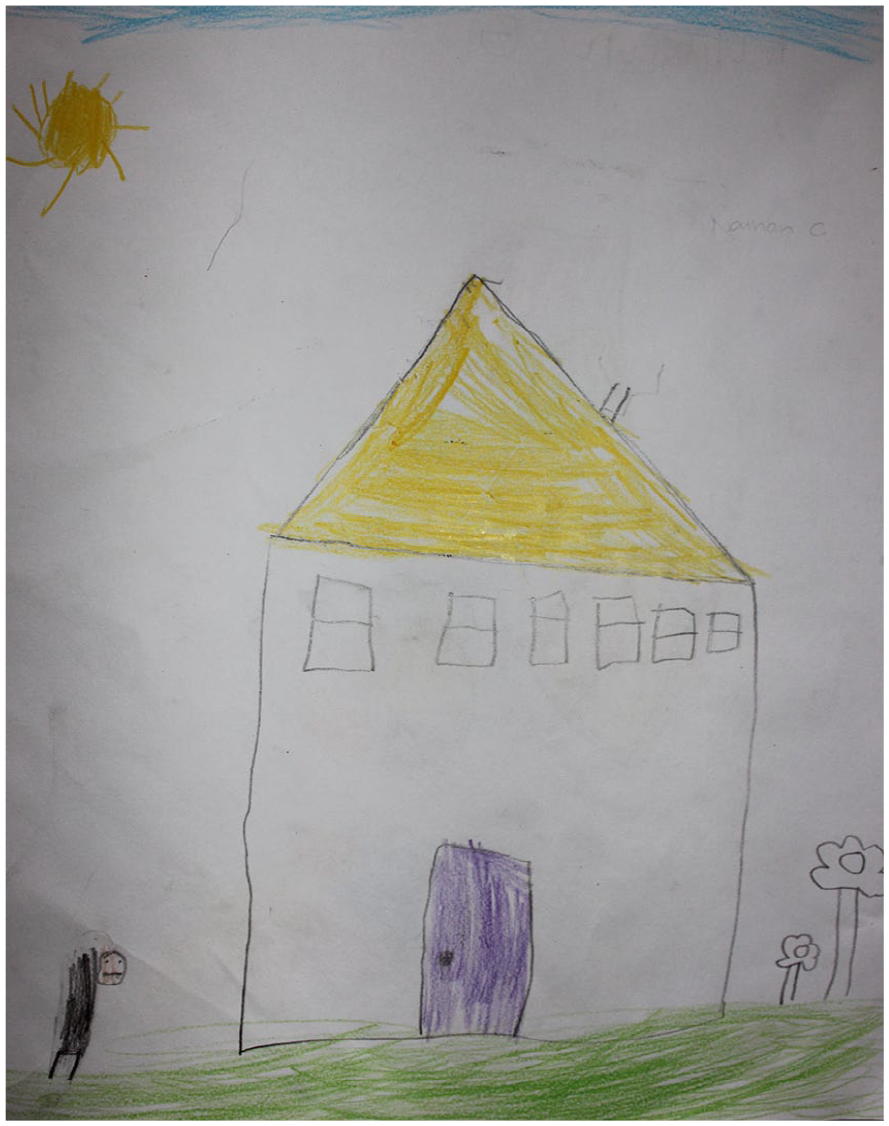
The respective upper and lower orientations of good and evil (elements horizontally aligned).
Force
The Morality As Force metaphor emerged from the engagements of four children, revealing their apparent perception of evil in terms of the active application of physical force, and/or of the physical strength required for its resistance. This metaphor may also be implicitly identified within the Morality As Conflict metaphor that is discussed under the upcoming theme. However, a distinction is made between the two, since they respectively constitute ‘primary’ and ‘complex’ metaphors on account of the respective physical and social dimensions of their source domains (see Lakoff and Johnson, 2003). In the pre-drawing activities, this metaphor emerged from the role-play, in which the children (taking the role of ‘St. Michael’) chased away the lead researcher (as ‘Luce’) by actually hitting him with the sword prop.
Within the data, this metaphor was recontextualised both verbally and visually, by means of drawings and narratives that all revealed the retrieval of ‘novel’ elements (i.e. those not manifestly related to the central myth) from the children’s symbolic repertoires. Three of these drawings and their accompanying narratives were particularly complex, as exemplified through Figure 5, which depicts a battle between the illustrator himself as the ‘good guy’ [lowest figure to the far left] and an ‘angel’ as the ‘bad guy’ [centre-right figure at the lowest position]. A number of other elements are included, such as a ‘sword’, ‘shields’, ‘armour’, and even a ‘kite’ [shape to the right of the ‘good guy’] and a ‘crocodile’ (larger figure at the upper left (drawn in red)), among other unidentified markings.
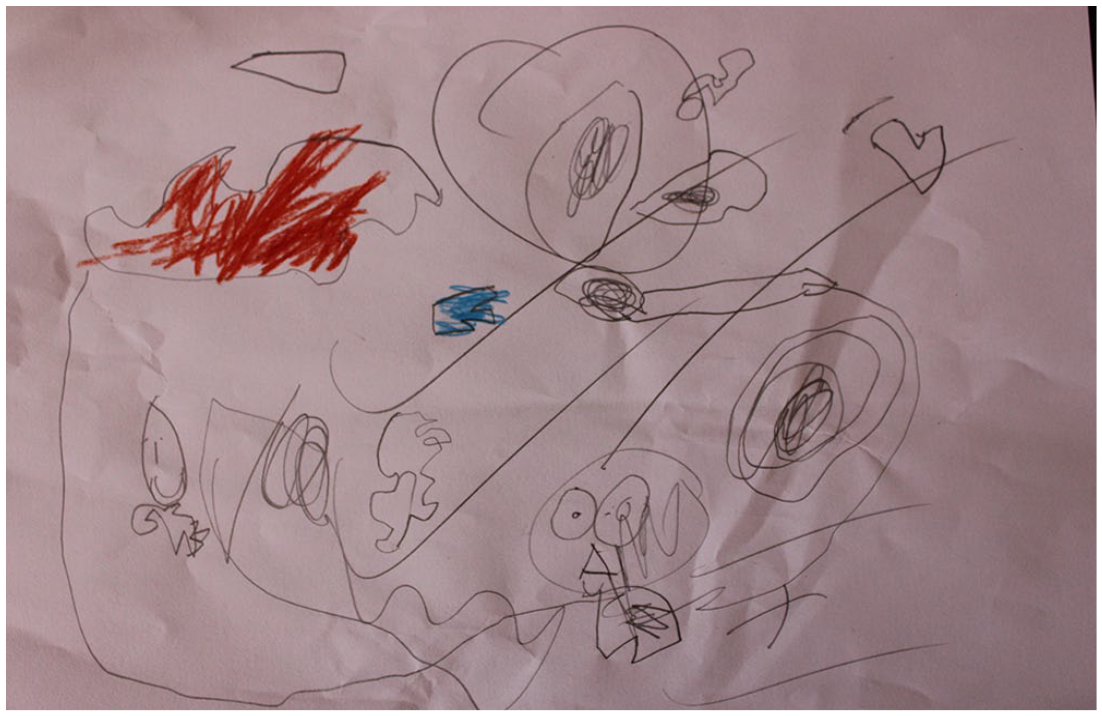
The conceptualisation of morality through applied force.
The child’s engagement with this metaphor emerged primarily through his contextualisation of the novel signs in the narrative, through which he explained that the purpose of the kite was ‘to hold [the bad guy] back’, thus implying the conceptualisation of evil as an active force that requires physical restraint. He also appeared to perceive a need for significant physical strength in order to overcome evil, as suggested through his inclusion of a crocodile in the narrative, which was described as ‘biting’ the bad angel. The force of the attack was underscored by the child’s use of paralinguistics to show the crocodile ‘going for’ the angel, in which he drew a line from the crocodile to the angel, scribbled over the angel’s neck area while making an apparent gobbling sound, and then re-traced over the line once again.
At a second point in the conversation, the child again made use of paralinguistic elements, this time in reference to the images he had already drawn. Through his attempt to explain what ‘he’ (as the protagonist) had done to the bad angel. The child first pointed at the sword, saying, ‘The sword is over there’, and then at the angel, saying, ‘And over here, in his neck. . .’; however, his speech trailed off into silence that was only broken by the researcher 10 seconds later. During this time, the child repeatedly tapped at the angel’s neck area, which yet again indicated his neck as the target for an attack, reinforced his engagement with Morality as Force metaphor, and pointed towards an apparent sense of hesitation to reveal the full details of his narrative.
Theme 2: Morality as social attributes
The children’s engagement with the notions of good and evil was also identified vis-a-vis their social understandings. This revealed the complex metaphor of Morality As Social Attributes, as well as the encompassed secondary themes of Conflict and Personification, which are explored below.
Conflict
The children demonstrated an engagement with the Morality as Conflict metaphor that had underpinned the pre-drawing activities, central painting, role-play and narrative. Fourteen children appeared to engage with this metaphor, each of whom included at least one character in their respective drawings who was explicitly identified as good or bad and depicted/described as being in conflict with another character of an opposing moral position (which may have been either explicitly or implicitly identified as so). Novel elements were identified through this theme, as illustrated in Figure 6, which depicts a ‘soldier’ [left-hand side] and a ‘naughty man’ [right-hand side] ‘fighting’. Featuring a black cape, horn-like protrusions and red eyes, the latter’s depiction appeared to be influenced by the child’s symbolic repertoire, which in turn suggested the influence of fantasy imagery from popular culture (such as that characterising a number of infamous villains including ‘Dracula’, ‘The Horned King’, ‘Maleficent’ and ‘Jafar’).
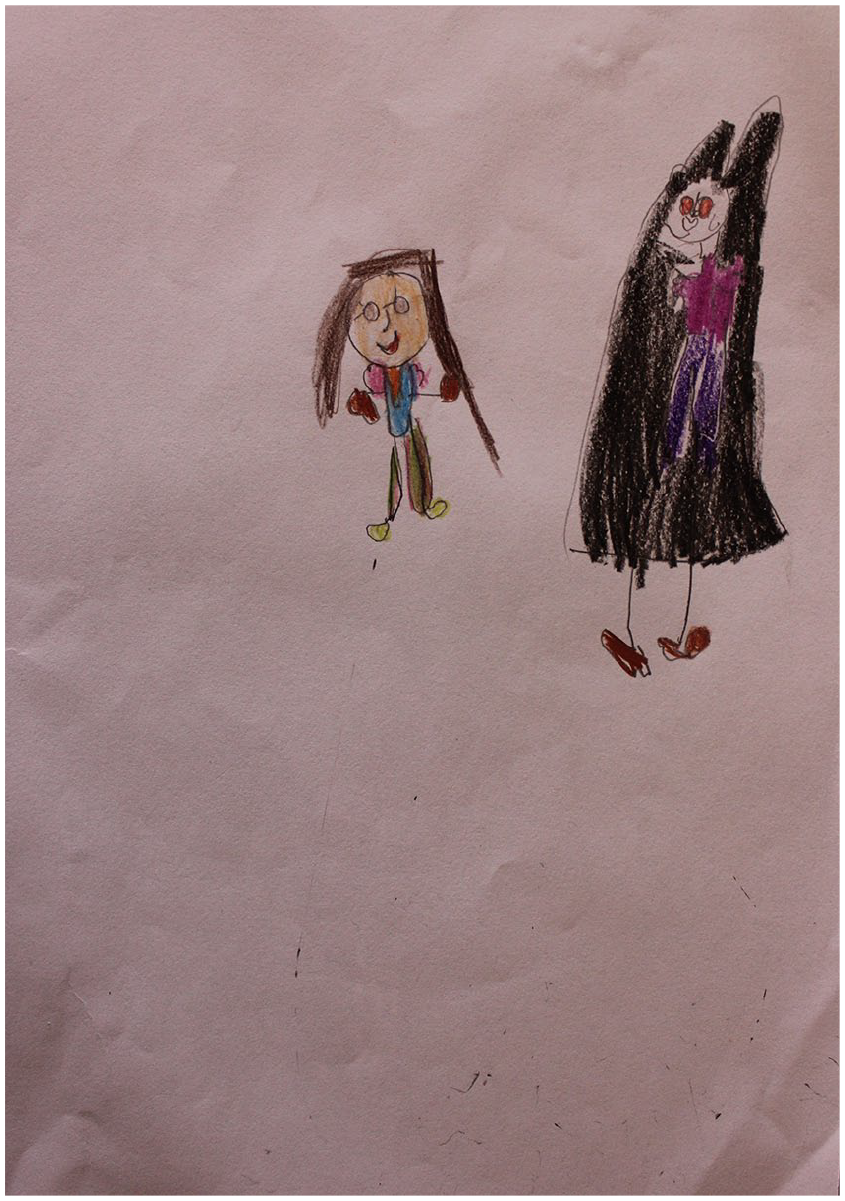
The portrayal of morality as a fighting contest.
There are indications that the child also drew upon more personal aspects of her memory, for example through her contextualisation of the fight in a specific local town when asked where the narrative was taking place, and its inclusion of the naughty man’s ‘brothers’, who are reported as calling out, ‘Hurrah’ in support of the soldier. This loyalty towards the soldier by the man’s own siblings suggests a possible underlying belief that good is justified in its fight against evil and deserving of allegiance, even at the expense of other allegiances. These insights additionally reinforce the value of recording children’s construction of narratives alongside their drawings (Einarsdottir et al., 2009), since the brothers’ role in the narrative was only expressed verbally but was not evident through the drawing.
Personification
The final and most prominent of the secondary themes concerns the Morality As Personification metaphor, which emerged from the engagements of 18 children. Following their exposure to the metaphor through the different modalities incorporated in the final activity, the children appeared to perceive morality via the characterisation of various personas within narratives that were seen to be rooted in a range of contexts/genres.
Figure 7 illustrates one such narrative, expressed through the integration of verbal, visual, and paralinguistic modalities and built upon the retrieval and ‘bricolaging’ (Lévi-Strauss, 1966) of a rich variety of symbols from the child’s symbolic repertoire. The complex, novel narrative was initially introduced through an element of fantasy, via an unnamed character ‘blowing everything away with circles’ [lowest upright figure, centre-right], immediately portraying a sense of protection and setting the scene for a conflict, which indeed was subsequently contextualised as a ‘fight’ between ‘good soldiers’ (figures not coloured in (drawn with an orange outline)) and ‘bad guys’. The child identified himself as one of the former, however, he did not convey the same sense of hesitation shown by the illustrator of Figure 4, since he openly stated, ‘These are going to be the bad guys, and I have to kill them’. This was said in reference to the ‘minions’ (‘regular’ coloured-in figures (completely grey)) of a ‘bad. . .king’ named ‘Slender Man’ (centre-right figure with spider-like limbs (body also completely grey)), who is an evil character in digital popular culture. However, the reference to the minions appeared to reflect a historical rather than popular interpretation, since they did not feature any of the imagery introduced through their characterisation by Universal Pictures, thus suggesting multigeneric underpinnings to the child’s symbolic repertoire and narrative construction.
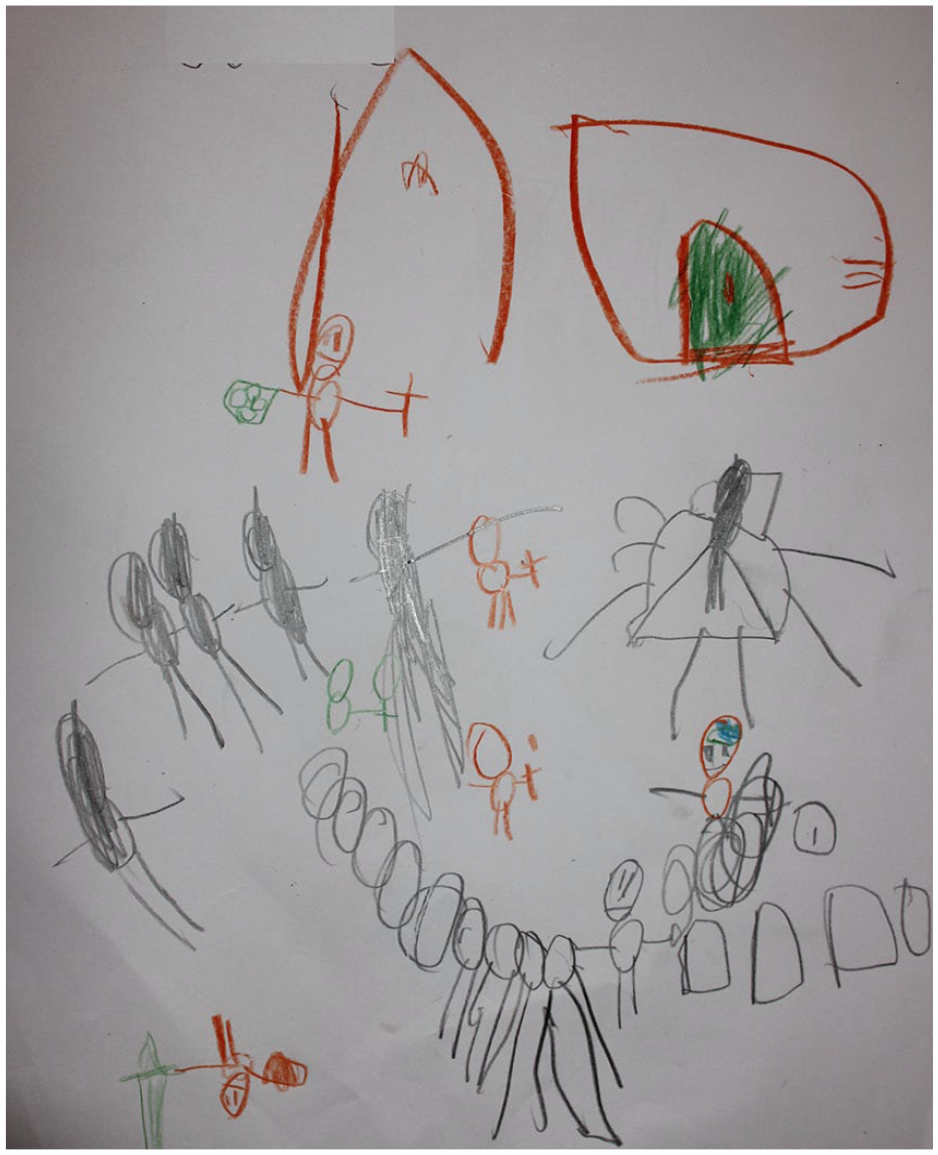
The personification of morality through the ‘bricolaging’ of cultural elements.
Reflection on the Slender Man reference reveals further engagement with the overarching metaphor on account of the child’s evident familiarity with the narrative that underpins his characterisation, which is rooted in horror, paranormal and fantasy genres (Davey and Yaccino, 2014). This is indicated through the child’s depiction of and/or references to Slender Man’s ominous ‘spider things’, featureless face, and ‘disappear[ance]. . . in the forest’, as well as to the renowned YouTuber ‘DanTDM’ [also drawn in orange, beneath ‘Slender Man’] who has provided running commentary to videos featuring Slender Man (among others). In fact, in contrast with the active roles of the other characters in the plot, the child initially described ‘DanTDM’ as ‘doing nothing. . . only doing some stuff’, indicating that his role in the drawing was somewhat removed from its underpinning narrative, as is the case in much of the online content that he uploads.
However, as the narrative continued to evolve, the child later reported that DanTDM ‘has a chest’ containing ‘weapons’ for him to use in fighting the bad guys, thus suggesting that he had repositioned the character within a good role, in reflection of the ‘fluidity and flexibility of children’s meaning-making’ (Einarsdottir et al., 2009: 219) that was identified through other conversations, too. In fact, we understand and underscore that the ‘meanings’ identified in this research are not fixed, but refer to those expressed and interpreted at a given point in time, while remaining subject to change. However, the temporality and fluidity of these meanings is not seen as a limitation, but merely as a reflection of the nature of children’s metaphorical engagement, which is precisely what this research set out to explore.
Discussion and conclusion
The specific purpose of this study was to enquire into how a Symbol Literacy Approach might support the metaphorical engagement of 25 five-year-old children. This prompted the children’s verbal, visual and dramatic engagements with the St. Michael myth, following which, all of whom were able to recall and reproduce some or all of its incorporated signs. The study supports the notion that 5-year-olds are able to reason metaphorically, thus reinforcing our claim that the five children who did not demonstrate an underlying metaphorical engagement with the myth may still be able to reason through metaphors. While their inability to reason metaphorically is nonetheless still a possibility, the lack of identification of such processes could be the resultant of other reasons. This highlights an opportunity to amend, refine or extend upon the chosen research methods through subsequent research, which should also seek to compensate for this study’s limitations that resulted from the specificity of its sample and context, chosen project, and participants’ age/developmental stage, which restrict the generalisability of the findings.
Notwithstanding, the identification of metaphorical engagement among the vast majority of the children in the sample revealed their underlying attempts to engage with the abstract reality of ‘morality’ through more immediate realities that they had encountered through first-hand experience (Lakoff and Johnson, 1980). This resulted in the emergence of the two overarching themes of Morality As Physical Attributes and Morality As Social Attributes, with subsets of those metaphors also being revealed through their respective secondary themes. Some of these appeared to have been engaged with and/or expressed via specific modalities, in apparent reflection of their respective source domains (e.g. with the Morality As Light metaphor emerging through the visual rather than verbal data, in reflection of the visual nature of light). This finding reinforces the notion of metaphorical engagement as a multimodal activity (Alessandroni, 2017), supports prior research findings regarding the value of multimodal approaches to teaching and learning (Crane-Deklerk, 2020; Khanum and Theodotou, 2019; Papageorgiou and Lameras, 2017) and indicates the possible value of incorporating additional modalities into the research methods of subsequent studies in the area.
Two types of metaphorical engagement emerged, with some children demonstrating either one or the other in isolation, and others demonstrating a combination of both. The more basic type of engagement featured the contextualised reproduction of the myth’s underlying metaphors via the presented signs and/or narrative, which was seen to align with the first two levels of Symbol Literacy engagement (Gellel, 2018). However, a higher-order form of engagement also emerged through the recontextualisation of these metaphors via ‘novel’ signs and/or narratives, which appeared to align with the third level of Symbol Literacy engagement (Gellel, 2018). This implies an interrelationship between metaphorical and symbolic engagements, thus supporting their dual consideration within the SLA (Gellel, 2018). These processes appear to have supported the children’s mapping of ‘morality’ - as the target domain - across various source domains that were retrieved from a range of contexts and genres within their personal memories and symbolic repertoires. In fact, we hope to explore these different mappings in more detail through an upcoming paper.
However, even at this stage, the current findings illustrate the ability of, at least some, children to retrieve and use the cultural elements available in their own repertoire to extend their metaphorical engagements. Although the learning activities, narrative and painting were focused on Michael and his battle with Luce, a considerable number of children were able to extend this analogically to alternative situations and cultural elements, through the process of engaging and thinking metaphorically. This may indicate the direct impact that exposure to different cultural elements may have on children’s perception of and interaction with reality, as well as their ability to ‘bricolage’ (Lévi-Strauss, 1966) and reconfigure metaphorical reasoning to new contexts.
The results thus indicate the potential of the SLA to provide an appropriate pedagogical context through which to prompt, sustain, and even extend the pivotal process of metaphorical reasoning in support of cognitive development. Additional efforts are hence warranted with respect to the development of metaphorical reasoning through the SLA, which the authors recommend should be targeted through multimodal resource development, additional pedagogical interventions, and further research initiatives.
Footnotes
Acknowledgements
The authors wish to express their gratitude to the Mdina Cathedral Museum for allowing us to develop and research this pedagogy and for opening their doors to thousands of children. A word of thanks also goes to the National Literacy Agency that has supported the project by publishing manuals and training teachers.
Funding
The authors received no financial support for the research, authorship, and/or publication of this article.
