




Abstract
Mathematical competence in school-related contexts is a multidimensional construct that encompasses several content areas and cognitive components. Kindergarten children have experiences with different types of mathematical content. However, empirical research has focused mostly on children’s numerical skills, and less is known about their development in other mathematical content areas and interdependencies between areas, especially when it comes to less-structured approaches to early childhood education. The study investigated two research questions: (1) What is the structure of kindergarten children’s mathematical competence? (2) How do the different dimensions of mathematical competence develop over time? One-to-one interviews were completed with 442 kindergarten children to assess their mathematical competence at three measurement points. The results indicate that mathematical competence among kindergarten children should be treated as a multidimensional construct. Furthermore, the results indicate that skills in different content areas affect later skills in the same and in other content areas. Therefore, the results highlight the importance of addressing multiple mathematical content areas in early childhood.
Introduction
In school-related contexts, mathematical competence has been described as a multidimensional construct encompassing several mathematical content areas as well as mathematics-specific cognitive components (Mullis et al., 2012; Neumann et al., 2013; OECD, 2013). Such a division into different facets is also assumed for early childhood (Clements and Sarama, 2007). Nevertheless, research has mainly focused on the level, development and predictive function of children’s knowledge and skills within the content area of numbers (e.g., Duncan et al., 2007; Nguyen et al., 2016), with other mathematical content areas hardly examined (MacDonald and Carmichael, 2018).
The presented longitudinal study investigates the development of different mathematical content areas and their interrelationships in German kindergarten children aged four to six. The study therefore has the potential to extend existing research mostly from educational contexts with more standardized and structured opportunities to learn mathematics early childhood (e.g., the United States). Supplementing existing findings from a study in the German educational context with less-structured opportunities to learn at the kindergarten stage, our study provides an opportunity to strengthen the empirical arguments for considering mathematical competence in early childhood as a broad construct encompassing more than just the area of numbers.
Theoretical background
Structure of mathematical competence
From a theoretical perspective, mathematical competence is commonly understood as a multidimensional construct consisting of different content areas as well as different cognitive components (Mullis et al., 2012; Neumann et al., 2013; OECD, 2013). Although slight differences in the theoretical descriptions of mathematical content areas exist depending on the age level or country, there is a consensus on the relevance of the following content areas: numbers, measurement, space and shape, changes and relationships, data and probability (e.g., Mullis et al., 2012; Neumann et al., 2013; OECD, 2013). Still, few empirical studies examine the relevance of different mathematical content areas and their interdependencies for pre-school-aged-children’s development of mathematical competence.
The role of different mathematical content areas for mathematical development
Taking into account different dimensions of mathematical competence presents new opportunities to analyse the development of mathematical competence in early childhood. How children’s mathematical development might be affected by competences in different content areas remains insufficiently answered.
Based on a study from the United States, LeFevre et al. (2010) reported that kindergarten children’s skills in numeracy and calculation are predicted by earlier quantitative knowledge. The study also indicates that this early quantitative knowledge has no effect on skills in geometry and measurement. In contrast, children’s spatial attention predicts their skills in numeration, calculation as well as geometry and measurement. In a study from the United States focusing on the development of mathematical competence during kindergarten, children’s patterning skills were identified as a stable predictor of general mathematical competence (Rittle-Johnson et al., 2019). Wijns et al. (2020) found relationships between patterning skills and children’s mathematical competence in Belgium. Additionally, in a longitudinal study from kindergarten to Grade 5 in the United States, Rittle-Johnson et al. (2017) found that children’s early patterning skills affect their mathematical competence in Grade 5. They reported a small effect of children’s patterning skills in predicting their mathematical competence in fifth grade, whereas children’s ability in dealing with shapes had no effect on the Grade 5 competence. Based on data from the UK Millennium Cohort Study, which includes participants from England, Scotland, Northern Ireland and Wales, Gilligan et al. (2017) found that spatial skills at ages five and seven explained about 8.8% of variance in children’s mathematical competence at age seven, even controlling for individual characteristics like gender, socioeconomic status or language skills.
An intervention study from the U.S. focusing on skills in measurement and geometry provided evidence that it is possible to foster kindergarten children’s skills in these content areas as well as their general mathematics competence measured via a standardized national assessment (Casa et al., 2017). Jensen and Sjö (2022) investigated skills in numeracy and geometry among children in Denmark, a country that places less emphasis on mathematical skills in kindergarten. They offered a general, not domain-specific professional development program for kindergarten educators that applied the child-centred approach and targeted skills in three domains (language, mathematics and socio-emotional skills). Despite the general character of this professional development program, Jensen and Sjö (2022) found small positive effects on changes in children’s numeracy and geometry skills.
To sum up, initial evidence from international studies shows that even at the kindergarten level, one can differentiate between different content-related dimensions of mathematical competence. Initial indicators suggest a relationship between a early skills in different content areas, like patterning skills (Rittle-Johnson et al., 2017), and children’s later mathematical competence. However, most of these results are from contexts with structured math-related opportunities to learn in early childhood education, like the U.S. or the U.K. (Department of Education, 2023; NCTM, 2006). It remains undetermined whether the multidimensional structure of mathematical competence can be replicated for children learning mathematics in an educational context without structured opportunities to learn. This question is relevant because there is an ongoing discussion about whether and how (domain-specific) learning can be implemented in EC education. Should it be child-centred, where children’s activities form the basis for learning, or curriculum-based, where learning goals are defined and play as well as other methods like guided play are used to support children’s mathematical learning (Baroody et al., 2019; Husein, 2020)? Jensen and Sjö (2022) indicated that child-centred approaches have at least some potential. Moreover, studies examining several mathematics content areas simultaneously are missing. This approach will allow for analysing the development of different content areas and controlling for possible cross-lagged dependencies.
Mathematical competence as a broad construct in early childhood
Clements et al. (2008) developed a test (the Research-Based Early Maths Assessment, REMA) measuring mathematical competence among five- to seven-year-old children including the content areas (1) numbers; (2) geometry; (3) measurement and (4) patterns. Their results indicate that overall, four- and five-year-old children show meaningful differences in their mathematical achievement as well as in their achievement regarding different mathematics content areas. Two further studies provided evidence that children’s achievement in different content areas can be fostered by implementing a domain-specific kindergarten curriculum (Building Block curriculum; Clements et al., 2011; Mattera et al., 2018). The REMA has been further validated and is also available as a short form (Dong et al., 2021). The assumption that mathematical competence should be represented as a multidimensional structure was also supported by a recent study with 4-year-old children from low-income families (Milburn et al., 2019). This study used the Child Math Assessment (CMA) (Starkey et al., 2004), which covers the content areas of numbers, geometry (shapes), measurement and patterns.
However, the previously reported studies and instruments were developed and administered in contexts where children experience structured opportunities to learn mathematics based on a mathematics curriculum (Baroody et al., 2019; NCTM, 2006). Hence, it remains unanswered whether the relevance – and possible added value – of a multidimensional model of mathematical competence among kindergarten children also applies to educational contexts with less structured opportunities to learn mathematics in kindergarten, as is the case for Germany.
The context of German kindergarten
In educational research, mathematical competence is considered a domain-specific and learnable construct. Hence, one can assume that the development of mathematical competence – including in kindergarten children – depends on domain-specific learning opportunities (Baroody et al., 2019). Kindergarten children come across different opportunities which might stimulate domain-specific learning (Bronfenbrenner and Morris, 2007). Most important are the family (Thompson et al., 2017) as well as institutional settings like kindergarten, where children spend a great amount of time (Casa et al., 2017). The studies reported on in the previous sections stem from educational systems where even in kindergarten structured and teacher-centred opportunities to learn are well-established (Baroody et al., 2019; Husein, 2020). It is well-known that structured opportunities to learn promote the development of competence (Engel et al., 2016; Klibanoff et al., 2006; Piasta et al., 2015).
However, several countries’ educational systems follow a more child-centred and less structured approach in kindergarten also known as the social-pedagogical approach for example, Australia or Sweden (Clements and Sarama, 2016; OECD, 2018). This is also true for German kindergartens, the setting of the present study (Anders et al., 2012; OECD, 2018). Focus is not set on structured domain-specific opportunities to learn implemented by the teacher but on child-oriented activities, such as everyday situations and play (Anders et al., 2012). German kindergartens have traditionally followed a social-pedagogical approach focusing mostly on children’s general development and promoting mostly social competence instead of domain-specific competences like mathematical competence. After Germany’s mediocre PISA 2000 results, which shocked the country’s educational system, this social-pedagogical tradition was supplemented by some basic aspects of domain-specific competences (Diskowski, 2009). As part of this reform, so-called Bildungspläne (kindergarten curricula) were introduced in every federal state, providing a framework for the areas of language, mathematics and science (Diskowski, 2009). The federal states’ Bildungspläne are much less detailed than curricula in other countries (Diskowski, 2009). All have in common that they do not stipulate detailed aims for early education, but rather identify domains relevant for kindergarten children and can be addressed in activities in kindergarten (Diskowski, 2009). The Bildungspläne address mathematics in a manner differentiating between content areas as well as cognitive components. The child-centred social-pedagogical approach of German kindergarten also makes it very challenging for educators to identify and use domain-specific opportunities to teach mathematics in everyday situations. Kindergarten educators are invited to do this, but existing empirical evidence indicates that they lack professional competence, especially in early mathematics education, which may result from the lack of domain-specific professional training for kindergarten educators (Blömeke et al., 2017). Accordingly, the current assumption is that mathematics-related opportunities to learn are rare and unstructured in German kindergartens (Kluczniok et al., 2016), in contrast to the more structured learning opportunities in the U.S.
The test for the kindergarten cohort from the National Educational Panel Study (NEPS, Neumann et al., 2013) and the Kieler Kindergarten Test (KiKi, see methods) are initial tests measuring mathematical competence as a broad construct in the context of German kindergartens. Two studies have indicated that the KiKi yields a multidimensional representation of mathematical competence for 4- and 6-year-old children, with different structures for both age-groups children (Dunekacke et al., 2018; Jordan et al., 2015). The age-dependent results might be explained by a different competence structure for different age groups or by methodological artefacts, for example, different samples (Dunekacke et al., 2018).
Nonetheless, German as well as U.S. studies indicate that young children’s mathematical competence covers more than just numbers and involves different content areas (Dunekacke et al., 2018; Jordan et al., 2015).
Research questions and hypotheses
In summary, alongside research investigating children’s mathematical competence as a broad construct (Clements et al., 2008, 2011; Grüßing et al., 2013; Mattera et al., 2018), few studies distinguishing different mathematical content areas exist. These studies illustrate that children’s competence within one content area is more predictive for the same area than for other content areas (e.g., Casa et al., 2017; LeFevre et al., 2010). However, to some extent these studies also have contradictory outcomes and operationalize mathematical competence and the content areas differently. Therefore, additional studies are needed empirically validating the multidimensional structure of early mathematical competence and examining the development of competence in different mathematical content areas over time. Further, most of the available studies are from countries like the U.S., where domain-specific education is an area of focus in kindergarten (NCTM, 2006). In countries with less emphasis on domain-specific education in kindergarten, a different competence structure and temporal development might arise due to fewer systematic opportunities to learn mathematics. With this in mind we conducted a study in Germany where mathematics education in kindergarten is organized in a less formal and systematic manner. Our study was guided by two research questions:
RQ 1: What is the structure of German kindergarten children’s mathematical competence? We assume that, in line with existing research and theoretical assumptions about mathematical learning for 4-, 5- and 6-year-old children, different mathematical content areas can be empirically identified (H1). However, due to the less structured learning opportunities in German kindergartens, it is unclear which specific content areas will be identified.
RQ 2: How do the different dimensions of mathematical competence develop? Based on previous research, we assume that the empirically distinguished content areas from RQ 1 will exhibit stronger autoregressive effects longitudinally than mutually influence each other (H2a) (Casa et al., 2017; LeFevre et al., 2010; Rittle-Johnson et al., 2017). In particular, we assume a relationship between different mathematical content areas (Rittle-Johnson et al., 2019) (H2b).
Methods
Design and sample
The present study is based on data collected within the KOMPASS Project (KOMPetenzen Alltagsintegriert Schützen und Stärken; Protecting and strengthening competences as part of everyday routines) by the University of Rostock (Jungmann et al., 2012). KOMPASS was an evaluation study of in-service kindergarten educators’ professional development with respect to fostering children’s socio-emotional skills, language and mathematics within everyday situations in kindergarten. The mathematical competence of two cohorts of children was measured using the Kieler Kindergartentest (KiKi) at three measurement points (t1, t2 and t3). In Cohort 1, data collection began in fall 2012 (t1), continued throughout winter 2013 (t2), and ended in spring 2014 (t3). Cohort 2 began one year later in fall 2013 (t1) and followed the same route, ending in winter/spring 2015 (t3).
Overall, N = 442 children (53% boys; 47% girls) participated in the study. The sample is a convenience sample from Northern Germany, specifically the city of Rostock and surroundings. All children attended a kindergarten within the described region. The children’s age at t1 was 35 to 67 months (see Table 4). Testing at t3 was carried out half a year before the transition to primary school.
Instrument
The Kieler Kindergartentest (KiKi) is a standardized one-on-one interview for preschool children aged four to six that measures their mathematical competence in different content areas. The interview takes about 30 minutes. Three different age-specific, interlinked versions of the KiKi are available (easy, medium and difficult) and cover the mathematical content areas (1) numbers; (2) shapes and space; (3) changes and relationships; (4) units and measurement; and (5) data and probability (Grüßing et al., 2013). Items that address the content area numbers include different counting activities as well as cardinal and ordinal aspects of numbers. Aspects of spatial thinking, perspective-taking, dealing with coordinates and two-dimensional shapes comprise the content area space and shapes (see example in Figure 1). The content area changes and relationships address dealing with patterns as well as basic numerical relationships. In the content area units and measurement, children have to compare different lengths to each other or measure with unstandardized instruments. In the domain of data and probability, children have to interpret and use data visualizations and work with probability. We did not include the content areas units and measurement and data and probability in our analyses for the present study. The low number of items in these areas makes it difficult to represent these content areas validly, and the absence of common items means the tests cannot be linked for a longitudinal analysis. Table 1 summarizes the items for the different content areas.
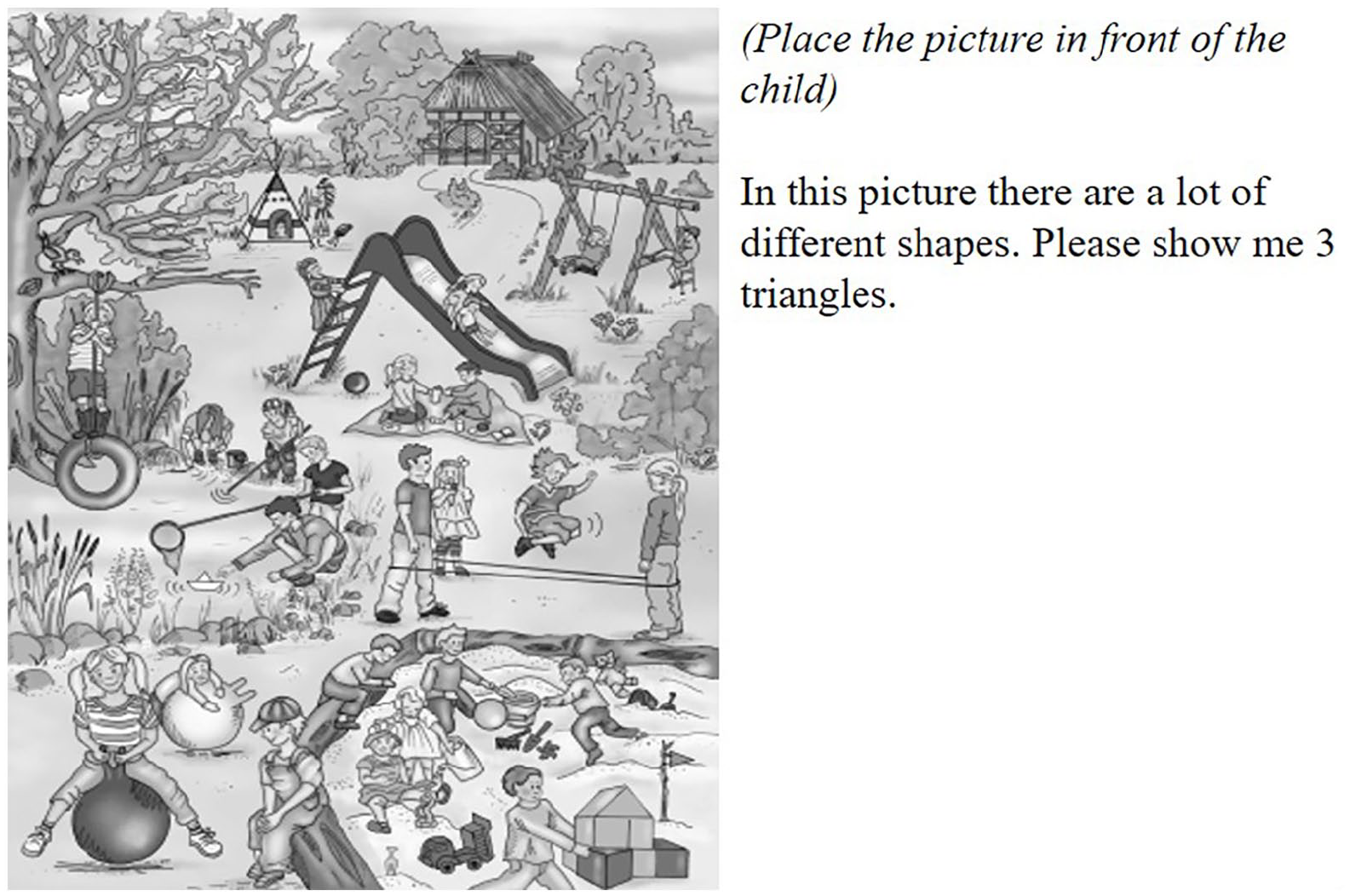
Sample item ‘Playground’ from the content area space and shapes (Dunekacke et al., 2018).
Number of items.
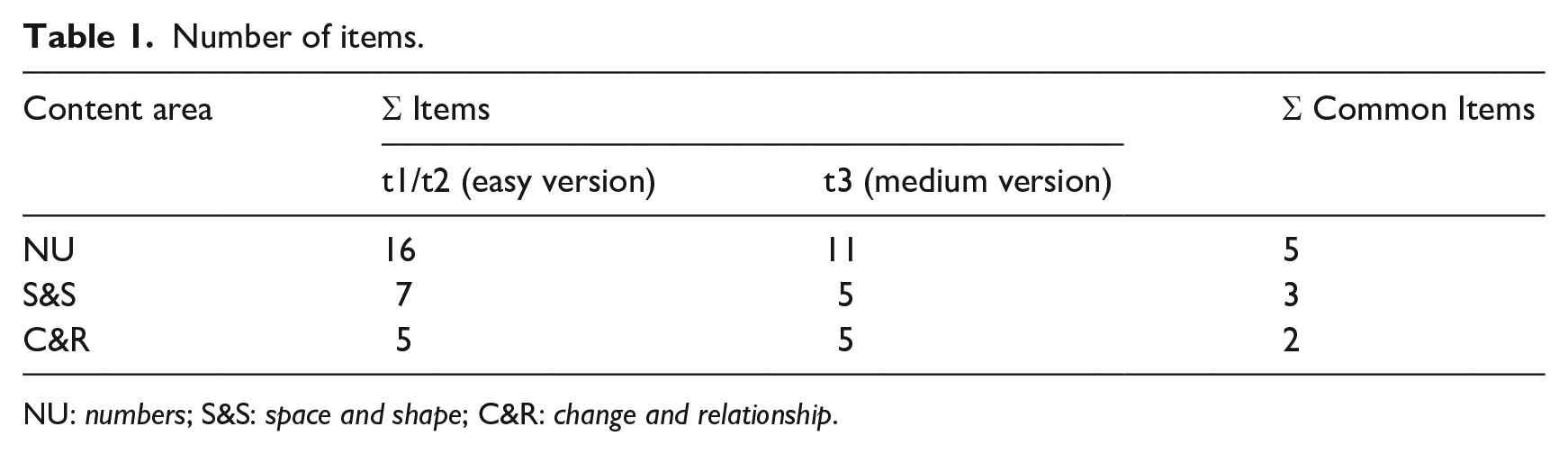
NU: numbers; S&S: space and shape; C&R: change and relationship.
All test versions consisted of different materials. There is a precise manual for test administrators including the items themselves and instructions to be read aloud as well as instructions on how the materials should be used (see Figure 1, on the right). Children answer the items by taking an action or providing a verbal answer. All answers are also documented on a standardized sheet. These procedures allow for high objectivity and standardization with respect to test administration and test scoring. Most items consist of pictures or materials as item stimuli. Furthermore, a puppet called ‘Kiki’ is used. The puppet operates as an ‘ice-breaker’ and allows communicating with the children ‘eye-to-eye’. For example, for some items Kiki makes mistakes that the children have to identify: for example, Kiki counts some dots and forgets to count one dot. Kiki is a common German name for girls and boys. The puppet itself cannot clearly be identified as a girl or a boy, so we expect Kiki to speak to girls and boys in the same way.
Data analysis
We used confirmatory factor analyses (CFA) to answer the first research question concerning the structure of young children’s mathematical competence. A CFA was run separately for each measurement point (t1, t2 and t3) to validate the structure of mathematical competence for different age cohorts. First, a one-dimensional model was estimated where all items load on one general factor. This model did not allow for differentiating between the content areas and produces only one global mathematical achievement score. In the next step the domain of numbers was empirically distinguished. From previous research we know that children’s skills in the domain numbers can be measured reliably and validly for different age groups and are highly predicting for later skills. This resulted in a two-dimensional model distinguishing between numbers and a combination of all other mathematical content areas. Finally, a three-dimensional model was empirically tested, distinguishing between the mathematical content areas of numbers, space and shapes as well as changes and relationships. Because all items were categorical, we used the WLMSV estimator in the CFA (Muthén and Muthén, 1998-2017). To assess the fit of each model, chi-square statistics were used (Schermelleh-Engel et al., 2003). To compare the different models within each measurement point, we used the usual model fit indices (CFI, RMSEA, SRMR, Schermelleh-Engel et al., 2003) as well as chi-square difference testing via the DIFFTEST option implemented in Mplus (Muthén and Muthén, 1998-2017). All CFAs were run with the Software Mplus Version 8 (Muthén and Muthén, 1998-2017).
To answer the second research question concerning the development of young children’s mathematical competence, we used cross-lagged panel models to evaluate the meaning of mathematical content areas for young children’s mathematical development. Cross-lagged panel models estimate parallel autoregressive effects, that is, testing the effect of the same construct measured at an earlier time point. In addition, cross-lagged panel models estimate so-called cross-lagged effects which capture the effect of other variables measured at an earlier time point on the construct of interest.
In our case, we are interested in the effect of earlier achievement in one content area on later achievement in the same area (autoregressive effects). Furthermore, we want to analyse to what extent early mathematics achievement in one content area affects later mathematics achievement in a different mathematical content area (cross-lagged effects). The cross-lagged panel model was based on the identified dimensions from the CFA and estimated with the software Mplus Version 8 (Muthén and Muthén, 1998-2017). In all models we controlled for children’s sex and children’s age at the particular measurement point. For the cross-lagged panel models, we used standardized scores for the dimensions of children’s mathematical competence identified in the confirmatory factor analysis. Scores for t1 were z-standardized and scores for t2 and t3 were standardized using the mean and standard deviation at t1.
Results
Structure of early mathematical competence
As described in the method section, three different models were estimated for each measurement point. Table 2 presents the model fit of each estimated model. At t1 and t3, all models achieve a good to acceptable model fit, whereas at t2, all models achieve an acceptable fit (Schermelleh-Engel et al., 2003). To achieve an acceptable model fit, we excluded one item (item: number line) from the content area numbers at t1 and additionally a second item (circle) at t2. Both items were either extremely easy or extremely difficult.
Model fit for confirmatory factor analysis.
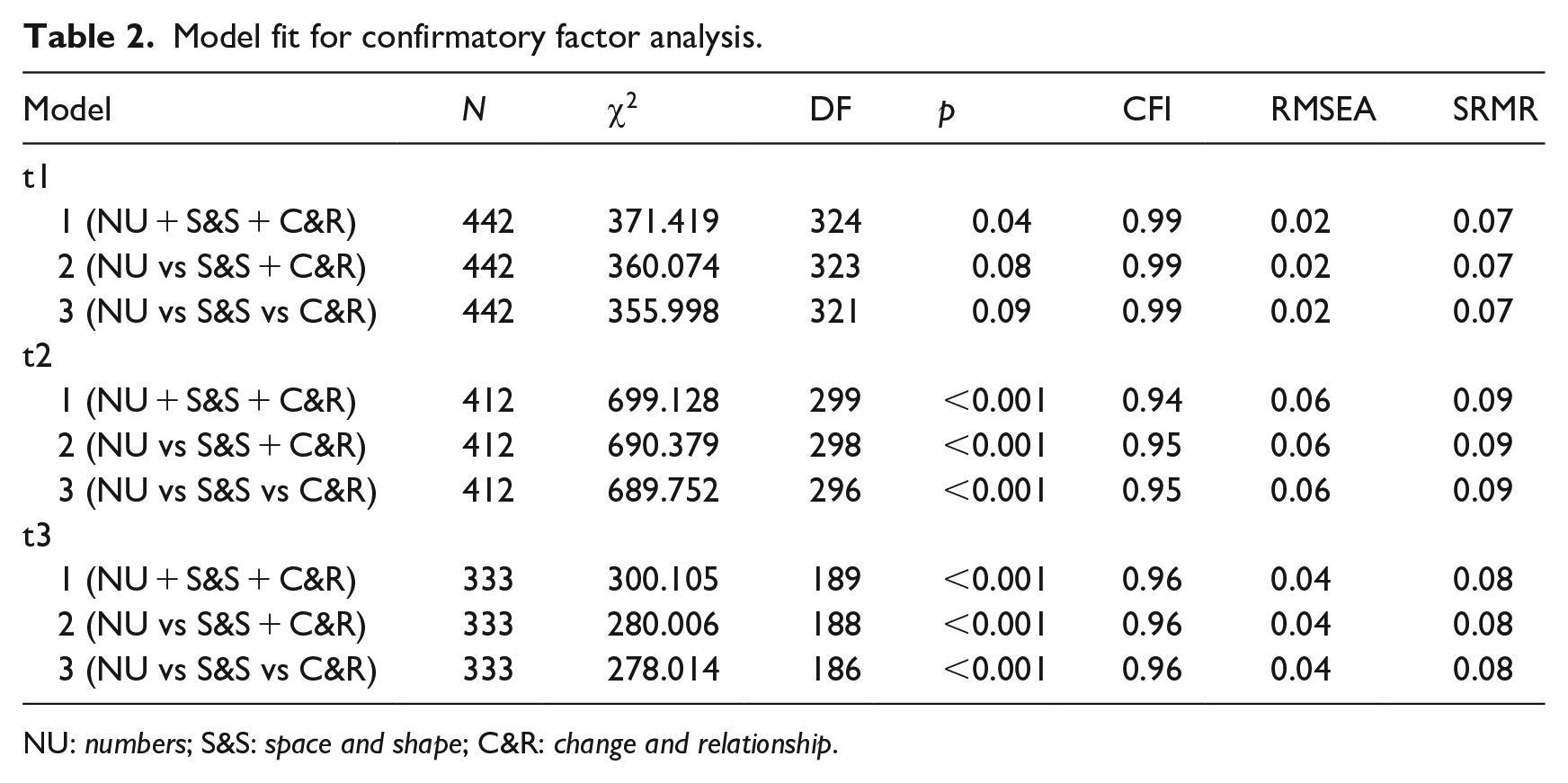
NU: numbers; S&S: space and shape; C&R: change and relationship.
As can be seen in Table 2, the one-dimensional model achieves the worst fit compared to the other models. The two-dimensional and three-dimensional models show almost the same model fit for each measurement point. Therefore, we used chi-square difference testing to evaluate which model fit best. The results are presented in Table 3. The one-dimensional model can be rejected for each measurement point, and the two-dimensional model is favorable compared to the three-dimensional model. The results support our first hypothesis that different mathematical content areas can be empirically distinguished. Furthermore, the results indicate that the structure of early mathematical competence is stable across the three measurement points. The two-dimensional model distinguishing between the content areas numbers and a combined content area for shape & space and changes & relationships was the simplest model with a good fit to the data for all measurement points. Accordingly, we report the following results for the two-dimensional model of children’s mathematical competence. However, since the theoretically assumed three-dimensional model also revealed an acceptable model fit, we report these results as well.
Results of chi-square difference testing (DIFFTEST).
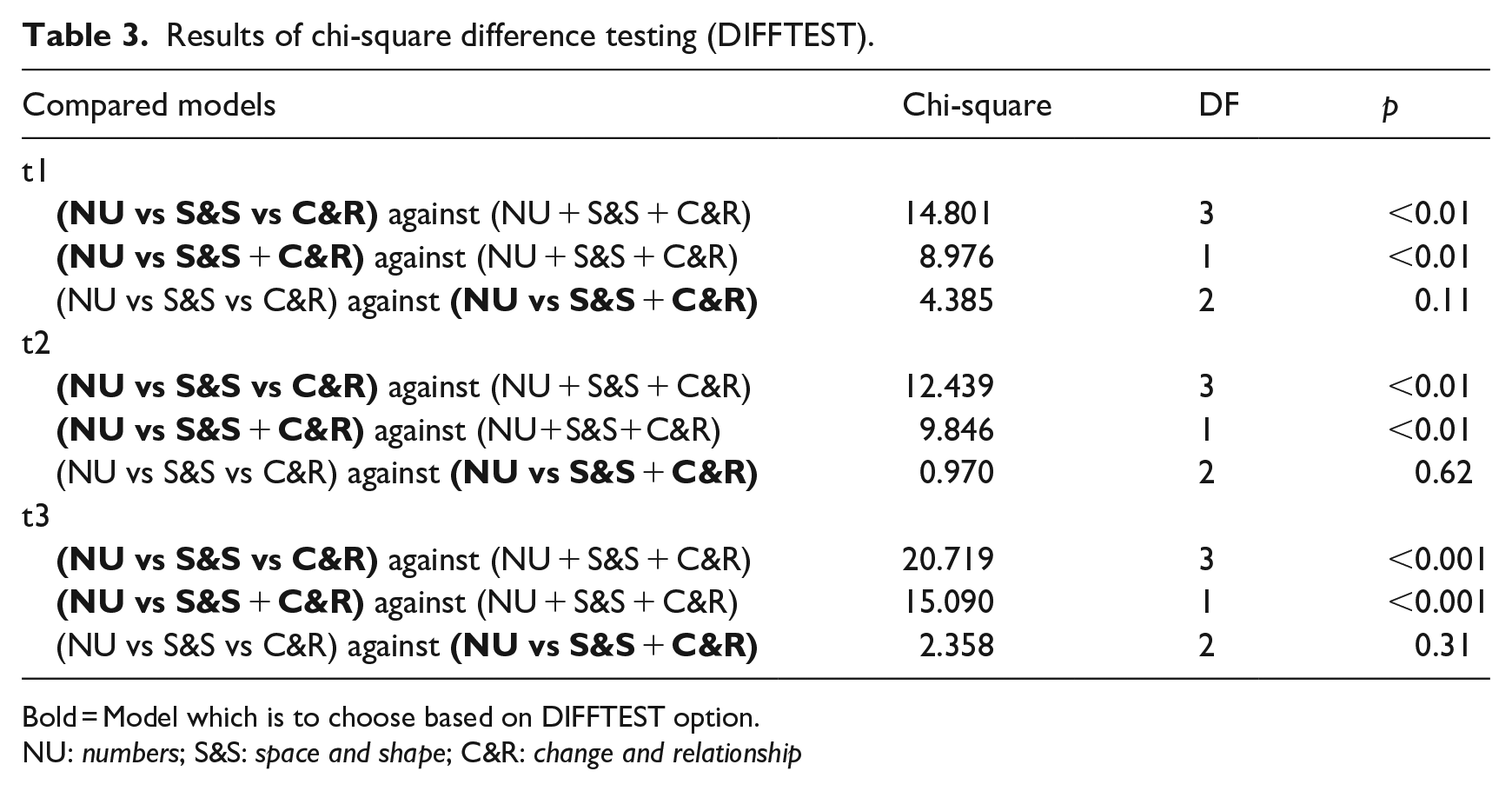
Bold = Model which is to choose based on DIFFTEST option.
NU: numbers; S&S: space and shape; C&R: change and relationship
Descriptive results
Table 4 presents the descriptive results and reliability. Reliability was good at all measurement points for the content area of numbers as well as for the combined dimension of space and shapes and changes and relationships. When looking on the dimensions of space and shapes as well as changes and relationships separately, the reliability is satisfactory at t1 and t2. At t3, the reliability is very low, which will be covered in the discussion section.
Descriptive statistics.
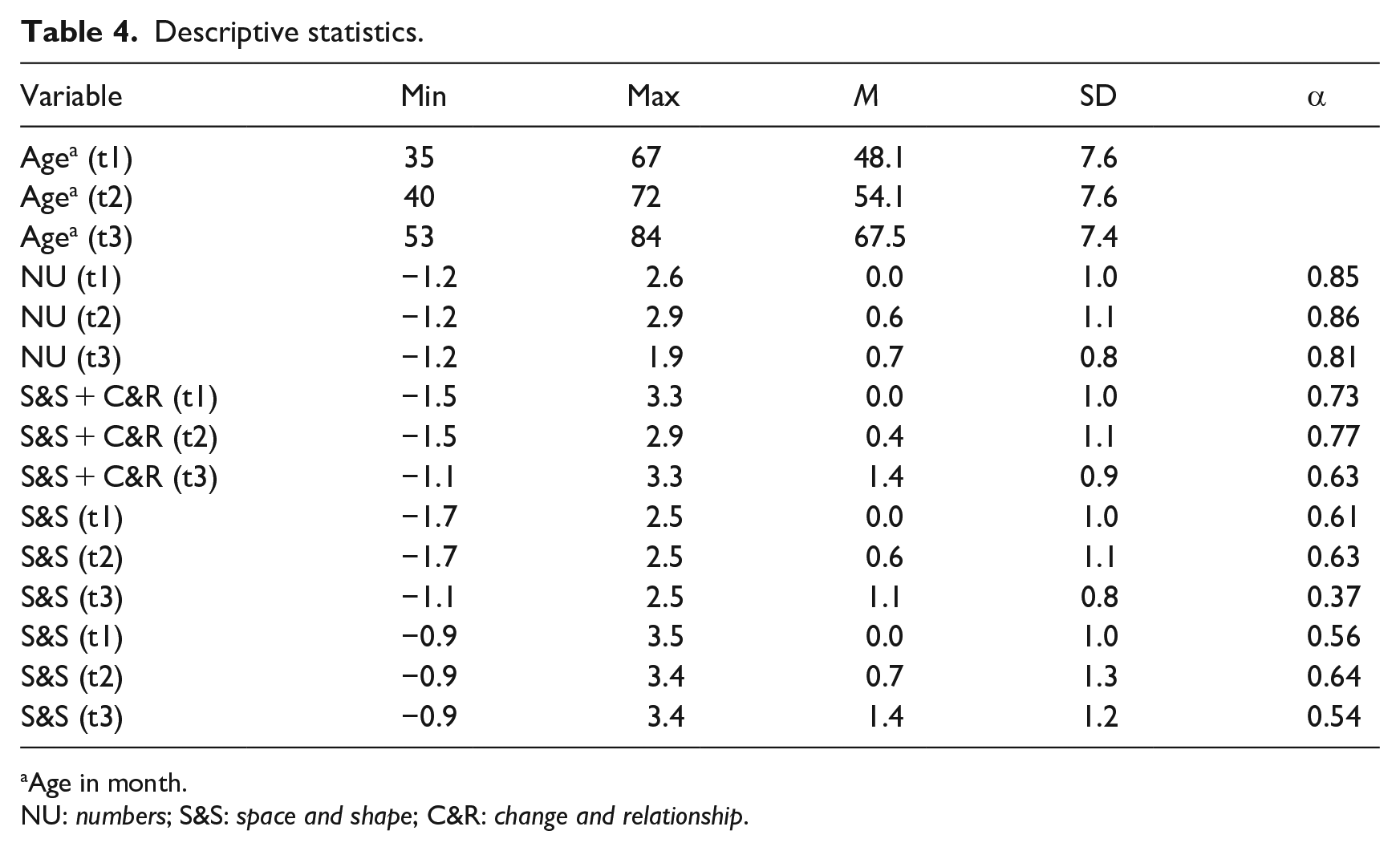
Age in month.
NU: numbers; S&S: space and shape; C&R: change and relationship.
Development of early mathematical competence
Our second research question addresses the development of mathematical competence across children’s kindergarten years and the interplay of different content areas. We report the results regarding the development of early mathematical competence for the two- and three-dimensional models of early mathematical competence. According to Table 5 both models achieved a satisfactory model fit. Comparing the findings of the two cross-lagged panel models reveals that the three-dimensional model of early mathematical competence provides additional insights.
Model fit for cross-lagged panel models.
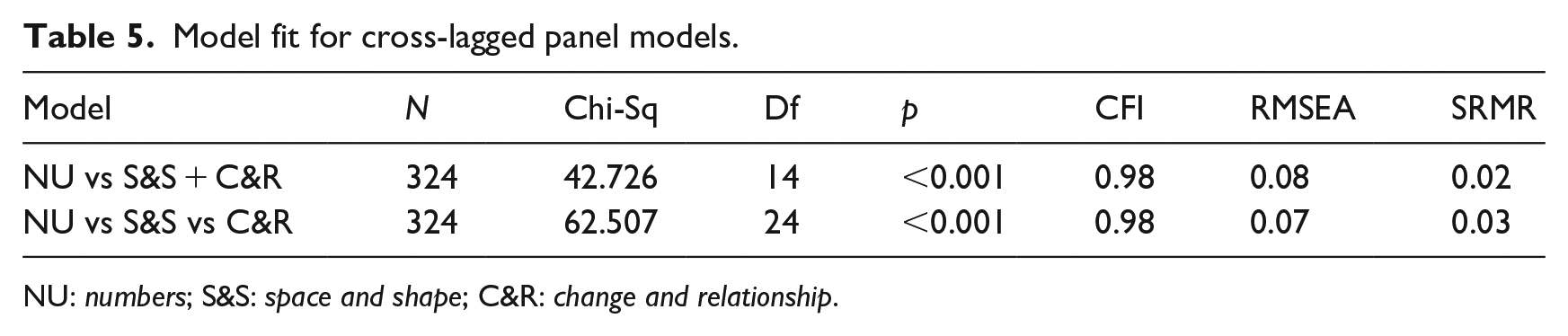
NU: numbers; S&S: space and shape; C&R: change and relationship.
Figure 2 presents the cross-lagged panel model for early mathematical competence as a two-dimensional construct. Both content areas show significant low to medium autoregressive effects. In addition, the second-order autoregressive effects from t1 to t3 are significant for both dimensions, but stronger for the combined area of space and shapes + changes and relationships. The cross-lagged effects between t1 and t2 also reach significance and exhibit a low effect size. In contrast, the cross-lagged effects between t2 and t3 are not significant. Regarding the covariates, only age had a significant but small effect (.01 to .09).
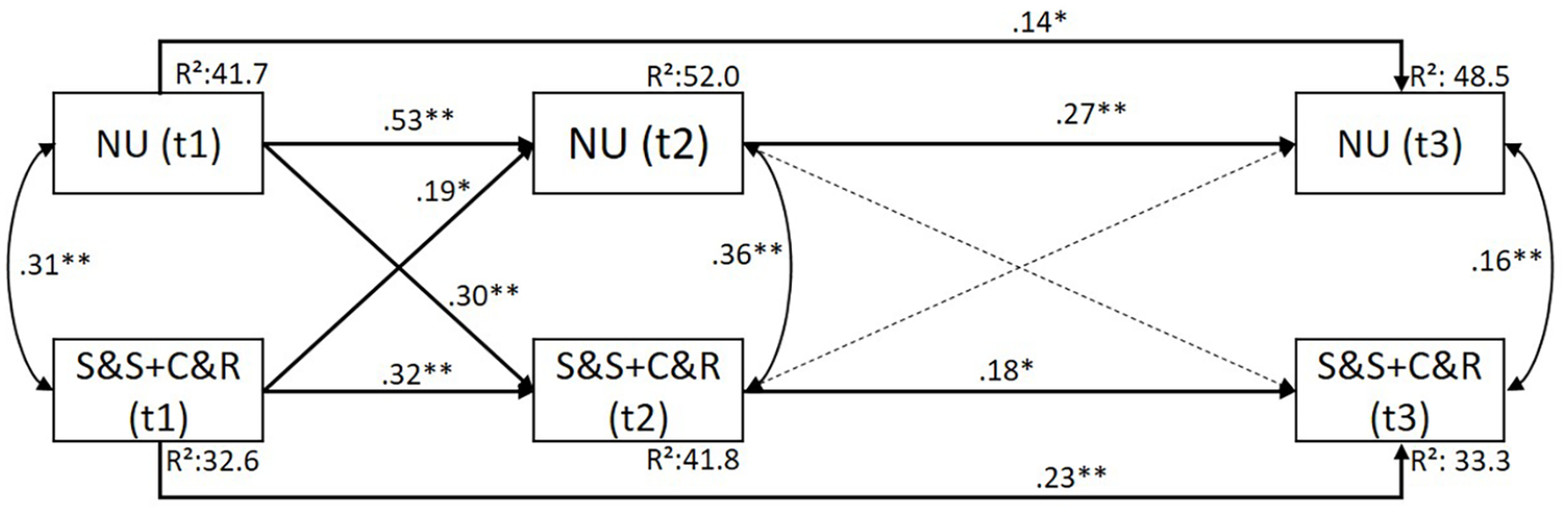
Cross-lagged panel model of mathematical competence as a two-dimensional construct.
Figure 3 presents the cross-lagged panel model of early mathematical competence modelled as a three-dimensional construct. The content areas of numbers as well as space and shapes show significant autoregressive effects. For the content area of numbers, the second-order autoregressive effect is also significant, in contrast to space and shapes. For the content area of changes and relationships, the pattern is not clear, as scores at t1 are significantly associated with scores at t3 but not at t2.
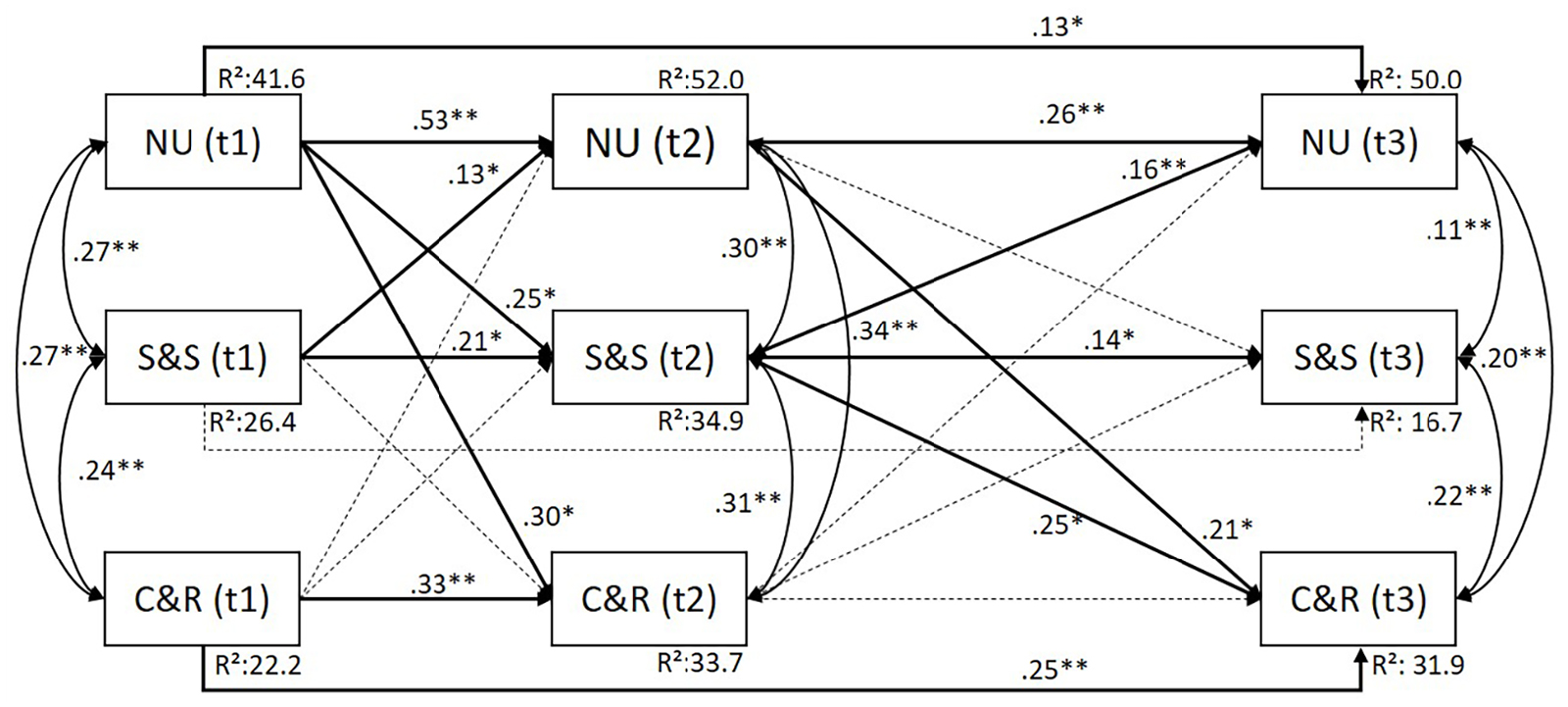
Cross-lagged panel model of mathematical competence as a three-dimensional construct.
In contrast to the cross-lagged panel model of early mathematical competence modelled as a two-dimensional construct (Figure 2), this more fine-grained model with three dimensions provides additional information. The model in Figure 3 indicates significant cross-lagged effects of competence in the content area of numbers on competence in the content area of changes and relationships over the full approximately 1.5-year period from t1 to t3, whereas there is a significant cross-lagged effect of numbers on space and shapes only in the first year between t1 and t2. Competence in the content area of space and shapes shows a significant cross-lagged effect on competence in the content area of changes and relationships only between t2 and t3. Hence, compared to the findings presented in Figure 2 without cross-lagged effects between t2 and t3, the findings in Figure 3 suggests cross-lagged effects between content areas across all measurement points.
Overall, our findings support the second hypothesis that competence in the empirically distinguishable content areas exerts autoregressive and cross-lagged effects, with the autoregressive effects of the content areas usually stronger than the cross-lagged effects on other content areas.
Discussion
Summary and discussion of the results
This study investigated the mathematical competence structure of children in pre-school-age and its development over the course of the kindergarten years. Previous studies on the development of kindergarten children’s mathematical competence indicate that addressing different mathematical content areas has added value in early childhood (e.g., Casa et al., 2017; Clements et al., 2008; Mattera et al., 2018; Rittle-Johnson et al., 2019). However, most of the existing research is from educational contexts having structured mathematics learning opportunities in early childhood. Replicating the results in settings with less structured opportunities to learn would encourage greater focus on a broad understanding of mathematics even in early childhood. Testing young children’s mathematical competence in a broad manner presents an ethical challenge in part because testing takes longer. We therefore use the KiKi, a child-centred test which uses materials, like a picture from a playground or a hand puppet. In addition, all parents and children were informed about the project and gave informed consent, which could be revoked at any time (Böhm et al., 2016: 116).
Our results support the hypothesized multidimensional structure of kindergarten children’s mathematical competence. This competence structure was identical for all three measurement points. The two-dimensional and three-dimensional models of children’s mathematical competence achieved a similar, acceptable model fit. Further research – possibly with different test items – is necessary to validate the structure of mathematical competence. Overall, this result implies that early mathematical competence is more than just the domain numbers, even in Germany, a country that provides no systematic domain-specific education in mathematics in kindergarten.
Our second research question concerns the development of the empirically distinguished dimensions of mathematical competence over the three measurement points. The results indicate that the dimension of numbers has a strong autoregressive effect. This means that children’s number skills at an earlier measurement point strongly effect the temporal development of their skills. This is in line with previous research on the development of children’s skills in this dimension (e.g., Jordan et al., 2007). In the two-dimensional model of mathematical competence, the combined dimension of space, shape, changes and relationships also shows a significant, but less strong autoregressive effect. For both dimensions, the autoregressive effect is much stronger between t1 and t2 than between t2 and t3. This might be due to the two different test versions (easy version t1/t2 vs medium version t3). Although the two versions are linked by common items, they may measure different aspects of the particular mathematical content to a certain extent (see limitations). We also estimated a cross-lagged panel model based on the three-dimensional model of children’s mathematical competence (Figure 3). In terms of autoregressive effects, this model revealed similar results for the content area of numbers, finding strong autoregressive effects. The autoregressive effect for the content area space and shapes was much weaker than for the content area numbers and there was no second-order autoregressive effect. For the content area changes and relationships, there was again a divergent relationship, with strong effects of children’s skills at t1 on skills at t2 and t3, but no autoregressive effect between t2 and t3. All in all, the results for both the two- and three-dimensional cross-lagged panel models indicate differences between the content areas on the level of autoregressive effects.
With respect to the two-dimensional cross-lagged panel model, the results indicate significant cross-lagged effects between t1 and t2, but not between t2 and t3. From a content-related perspective, this might be an indication that in early childhood the relation between different mathematical content areas gets weaker as children grow older. When looking at the correlations between the two identified dimensions, we found a medium correlation for t1 and t2 and a reduced correlation for t3. Like the cross-lagged effects, this might be another indication that the content areas gradually become more distinct over time, or it could be a methodological artefact, as explained above. From educational practice, we know that German kindergartens provide more domain-specific activities for older children than for younger children as they get closer to entering school.
Overall, in the three-dimensional model, the three content areas behave differently in terms of cross-lagged effects. This might support the hypothesis that mathematical competence is not clearly differentiated into different content areas in the early stages of children’s mathematical development. As the children grow older, however, shifts occur in the three-dimensional model. On the one hand, this can be seen in the correlations, which decrease over time. Between t1 and t2, the content area numbers has cross-lagged effects on the other two areas. Between t2 and t3, however, the content area space and shapes becomes more relevant for the other content areas, whereas numbers tends to split off. It is noticeable that the content area changes and relationships is rather independent of the other two at all measurement points.
In sum, we can conclude that even in an early childhood educational context with less structured opportunities to learn mathematics, children’s competence in different mathematical content areas can be distinguished and affect later competences in the same and in other content areas. Furthermore, our results highlight that early competences in content areas other than numbers play an important role in children’s development of mathematical competences. We recommend, a broad view on early mathematical competence in research and in early childhood education.
Limitations
Our study has some limitations to keep in mind when interpreting the results. First, the data was collected in only one region of Germany (Rostock and surroundings) and from two cohorts of children. Nevertheless, the cohorts were from two consecutive kindergarten classes (2012 and 2013), we do not expect that innovations or shifts in the educational institutions took place that led to different patterns of competence development in the two cohorts.
A second limitation is that we unfortunately have no additional information on the participating children. There is no information available as to when children started attending kindergarten or what kind of primary school preparation took place in kindergarten close to t3. This helpful information may better explain the development of mathematical competence within the study.
Third, the data was collected with two different test versions. As explained above, the two versions are linked by common items and were constructed by the same group of people based on the same theoretical model (Grüßing et al., 2013). However, this limitation might influence the difference in results between t1 and t2 (same test versions) compared to between t2 and t3 (different test versions).
Finally, we should mention the limited and different number of test items in each content area. The different numbers of items might affect the content validity of the score interpretations and the results of the confirmatory factor analysis (e.g., the decision between the two-dimensional and the three-dimensional model).
Conclusion and implications for educational research and practice
To sum up, our research investigating mathematical competence structure and development among German kindergarten children illustrates that even in a less-formalized institutional environment, kindergarten children develop a multidimensional structure of mathematical competence, and that early skills in different mathematical content areas predicting future skills in the same area.
Future research needs to further examine the effects of children’s opportunities to learn on the development of mathematical competence in different content areas. Experimental studies would aid in investigating the differential impact of structured learning opportunities (e.g., Mattera et al., 2018) in comparison to play-based mathematical learning in everyday settings. An experimental study demonstrated the effectiveness of the play-based approach for children’s competence in the domain of numbers (Vogt et al., 2018), and it would be fruitful to adopt this approach in other mathematical content areas.
If the results of our study were to be replicated, in some ways they would both underpin and challenge pedagogical practice. They support practice in relation to a range of projects and literature already focusing on a broad understanding of early mathematical competence. These are currently based on theoretical assumptions and everyday experience. The present study supports these assumptions and experience. The findings may also pose a challenge given the need to consider early childhood mathematics literacy in a broad framework that encompasses more than just numbers. Especially in child-centred and play-based kindergarten settings (Baroody et al., 2019; Wood, 2020) as in Germany, this implies new challenges, such as identifying appropriate situations for mathematical learning as well as using and documenting children’s learning opportunities and learning progress. It requires kindergarten educators to be aware of different mathematical content in order to identify meaningful opportunities to learn and make these fruitful for the children. This in turn requires opportunities to learn that address a broad understanding of early mathematical education in kindergarten educators’ pre- and in-service training (Blömeke et al., 2017; Lindmeier et al., 2016). Furthermore, it will be challenging to provide a stimulating learning environment to all children that addresses different mathematical content areas. Presently, some materials and descriptions of best-practice situations exist for mathematical learning in everyday situations. However, most of the empirically evaluated programs focus on the domain of numbers (Vogt et al., 2018). Further collaboration between research and practice will be necessary in the future to (further) develop and empirically evaluate these programs.
