




Abstract
The socio-emotional experiences of infants during transitions to early childhood education and care (ECEC) and across their first year in these out-of-home contexts are not well known. In an international project across five countries (New Zealand, Finland, Australia, Scotland and the United States), observational data, video of key moments, plus re-probing interviews with parents and teachers concerning 10 infants (six females) aged 5–13 months were collected across the first year of ECEC. An embedded case study design was used to analyse infant experiences from both quantitative and qualitative perspectives. Findings indicated low positive affect on infants’ first day of ECEC that increased after the first week and throughout the first year of ECEC. Drop-off periods remained a time of negative emotionality for the first month of ECEC. Over time more positive emotional experiences were evident, with peer interactions fostering positive affect, activeness and involvement, while one-on-one interactions with teachers were an important context for interpersonal engagement and well-being. These findings shed light on the highly charged emotional experience for infants when they transition to institutional care, and how these might be ameliorated in practice.
Earliest transitions to ECEC represent a time of significant social change for infants and young children (Benson McMullan et al., 2016; Fleer and Linke, 2016; Jackson and Forbes, 2015; Lucas Revilla et al., 2022; White et al., 2020). In many cases this represents a change from spending nearly all of their time with a primary caregiver within their home to spending long hours under the supervision of non-familial adults in unfamiliar locations (Fleer and Linke, 2016). When transitioning from home to a new ECEC setting, infants must become accustomed to new routines, spaces and complex social interactions with others (Monk and Hall, 2017) – at a time of significant and rapid developmental change (French, 2019). It is important to both understand how these transitions are experienced as well as identify ways to smooth or improve these transitions, for infants (and their parents).
While research has loosely identified the structural and dynamic aspects of ECEC settings that are more likely to support infant development (e.g. Dalli et al., 2011), very little research has focused on the initial transition of infants into ECEC. This is surprising given the increasing rates of out-of-home care for infants worldwide (OECD, 2021) and the knowledge that smooth transitions to new educational settings (i.e. primary school) are critical to children’s long-term learning and development (OECD, 2017). A substantial body of research now exists examining children’s transitions to primary schooling (e.g. Hirst et al., 2011; OECD, 2017), yet there remains a paucity of information concerning infants entering their first educational institution – now at a much earlier age than before. The lack of research in this area is due at least in part to the methodological and technical challenges and ethical considerations that surround measurement of infant emotional experiences (Sumsion et al., 2011).
Parental leave policies and work demands on families nowadays require that many infants enter ECEC during a developmental period of their lives that is already emotionally intense (French, 2019; Waldfogel, 2002). Psychological studies by Bowlby and others suggest that the period of time between 8 and 10 months is a time of heightened separation anxiety when infants are separated from their primary caregiver (Bowlby, 1960; Cassidy and Shaver, 2008; Howes et al., 1998) – calling for close and stable one-to-one caregiving relationships (Benson McMullan et al, 2016; Dalli, 2014; French, 2019). Once infants are able to build a strong, secure bond with an ECEC teacher, impacts on negative emotionality may be ameliorated (Ahnert et al., 2006; Benson McMullan et al, 2016; Dalli et al., 2011; Jackson and Forbes, 2015). As Coelho et al. (2019) noted, ‘infants. . .would seem to adapt to a new care environment more readily with frequent and good communication between parent and teacher regarding feeding, napping, preferences, dislikes, and activities’ (p. 2127). The importance of this sensitivity and responsiveness from carers has been highlighted in numerous studies (Benson McMullan et al., 2016; French, 2019; Jackson and Forbes, 2015; McCartney, 2007). Indeed, there is evidence to suggest that infants and toddlers can thrive within the context of supportive relationships and responsive interactions with ECEC staff and peers (Fein et al., 1993; Fleer and Linke, 2016; French 2019).
Some initial work on infant transitions to ECEC has been done by Klette and Killén (2019) who observed the separations and reunions of twelve 1-year-old infants and their mothers in Norway after infants had been attending childcare for 1 month. Their observations indicated signs of separation anxiety during times of separation (such as crying, clinging to their mother and despair) and sometimes during reunions (e.g. crying when they saw their mother). Further, Ahnert et al. (2004) assessed 11- to 20-month-old infants over the initial period of transition to out-of-home care and again 5 months later. Crying was most prevalent on the first day of separation from parents, but declined over the next week and was nearly non-existent 5 months after the start of child care. Finally, Schwartz et al. (2016) used both quantitative and qualitative data to examine infant transitions to ECEC in the United States. Their results indicated that an easier child transition to care was associated with younger child age, low maternal distress reactions to child distress and children’s low social fearfulness.
Studies of infant transitions, to date, tend to highlight common experiences of painful separation, struggle and distress, continuing for as long as 6 months after the transition (Cryer et al. 2005; Datler et al. 2012). Researchers have consistently shown that infants’ cortisol levels are heightened during the first weeks they are left at child care without their primary caregiver (Ahnert et al. 2004; Johnston and Buzzelli, 2010; Nystad et al. 2021). Importantly, research has shown that cortisol levels are related to the quality of child care centres, with declines in cortisol levels seen across the child care day in high-quality centres (Sims et al., 2006). When effects of contextual aspects of child care experiences (i.e. quantity, type, caregiver responsibility and peer exposure) on children’s cortisol levels in child care were measured, greater peer exposure was associated with lower cortisol levels, regardless of exposure to differing levels of environment risk (Berry et al. 2016). These findings indicate the important contribution that peers may play in transitional experiences. Overall, research highlights the subtleties of understanding young children’s social and emotional experiences, particularly in new environments (Benson McMullan et al, 2016; Datler et al. 2012; Johnston and Buzzelli, 2010; Seligmann, 2012).
The study
Given the significant need for greater understanding of both the experiences of infants and the impact of various practices surrounding this significant event in their lives, we sought to better understand the social and emotional experiences of infants during the transition to ECEC and across their first year of care. Our investigation took place across five countries, as part of a wider international collaboration investigating the social and emotional experiences of transitions to and out of early childhood education and care (ISSEET – International Study of Social Emotional Early Transitions; White et al., 2022). In this paper we report on observations of 10 infants across five countries – Australia, Finland, Scotland, New Zealand and the United States – in the first year of transition only. Our results provide insights from a diverse sample of infants from different backgrounds and across a range of ages, and represent the first cross-cultural analysis of the socio-emotional experiences of infants’ early transitions.
A feature of our investigation lies in its longitudinal and multi-method approach to transition. While previous studies have observed infants and children at one particular point in their transition (such as one month after starting ECEC), we observed infants on their first day of ECEC and then at regular intervals over the first year. This provided us with the unique ability to examine trends and changes over time. Thus, we aimed to capture the social and emotional aspects of infant transitions and ECEC experiences that are held in common across diverse, international settings, shedding light on those that were more likely to generate a positive experience. Moreover, our multi-method approach provided opportunities for triangulation of discoveries across observed and reported accounts of emotional impacts for infants during these transitions.
Infants were observed and filmed during key moments of transition within ECEC contexts to identify and code aspects of their behaviour, emotions and interactions (e.g. Cote and Bornstein, 2021; Reeb-Sutherland et al., 2022). The key dependent variable of our analysis of coded observational data was infants’ positive affect (emotionality); however, we were also interested in the secondary outcomes of interpersonal engagement, activeness and involvement. The video data generated provides rich contextual layering to our discoveries through lived experiences of infants, and was further supported by interviews with parents and teachers to clarify their meanings. Our work was guided by the following research questions:
(1) What is the emotional experience of early transition to ECE for infants?
(2) How does infant affect change over the transition to early childhood education and care (i.e. from the first day to the end of the first year)?
(3) What are the contextual factors that influence children’s affect, interpersonal engagement, activeness and involvement during their first year of early childhood education and care?
Analytical approach
To answer these research questions, we used an embedded case study design including both quantitative and qualitative data (i.e. mixed-methods). Embedded case studies allow for the use of multiple methods to be applied within cases, including the sampling of quantitative data and application of statistical analyses (Campbell et al., 1963; Scholz and Tietje, 2002). The use of both quantitative and qualitative research methods helps to increase transparency, in particular the reliability and objectivity, of a case study (Scholz and Tietje, 2002). Further, we used a joint multiple-case design, with cases from five different countries, and aimed to synthesise the rich data collected across cases to understand the emotional and social experiences of infants entering ECEC.
Method
Ethical approval for the project was granted by ethics committees of each participating university who shared the same methods and processes, irrespective of geographical context. This included consent applications, recruitment of participants, methods and analysis. Across countries and over the period of study since initial design (not least the onset of COVID-19 and European Union constraints for data sharing) the capacity for achieving joint analytical outcomes across countries was greatly diminished (see Rutanen et al., 2018) – though fortunately by that time the first year of data generation was complete. As a consequence, each country subsequently led a small team of researchers who generated and independently analysed qualitative data that was then selected for sharing with other countries and for publication. Video data was shared through selected vignettes, and interview data was selected in relation to the identified themes for analysis. Due to the anonymous, de-identified, nature of the observational data, it was still possible to synthesise these for statistical treatment. Coded observational data was combined into a single dataset and analysed by a data analyst in relation to key variables that relate to the topic of emotional well-being.
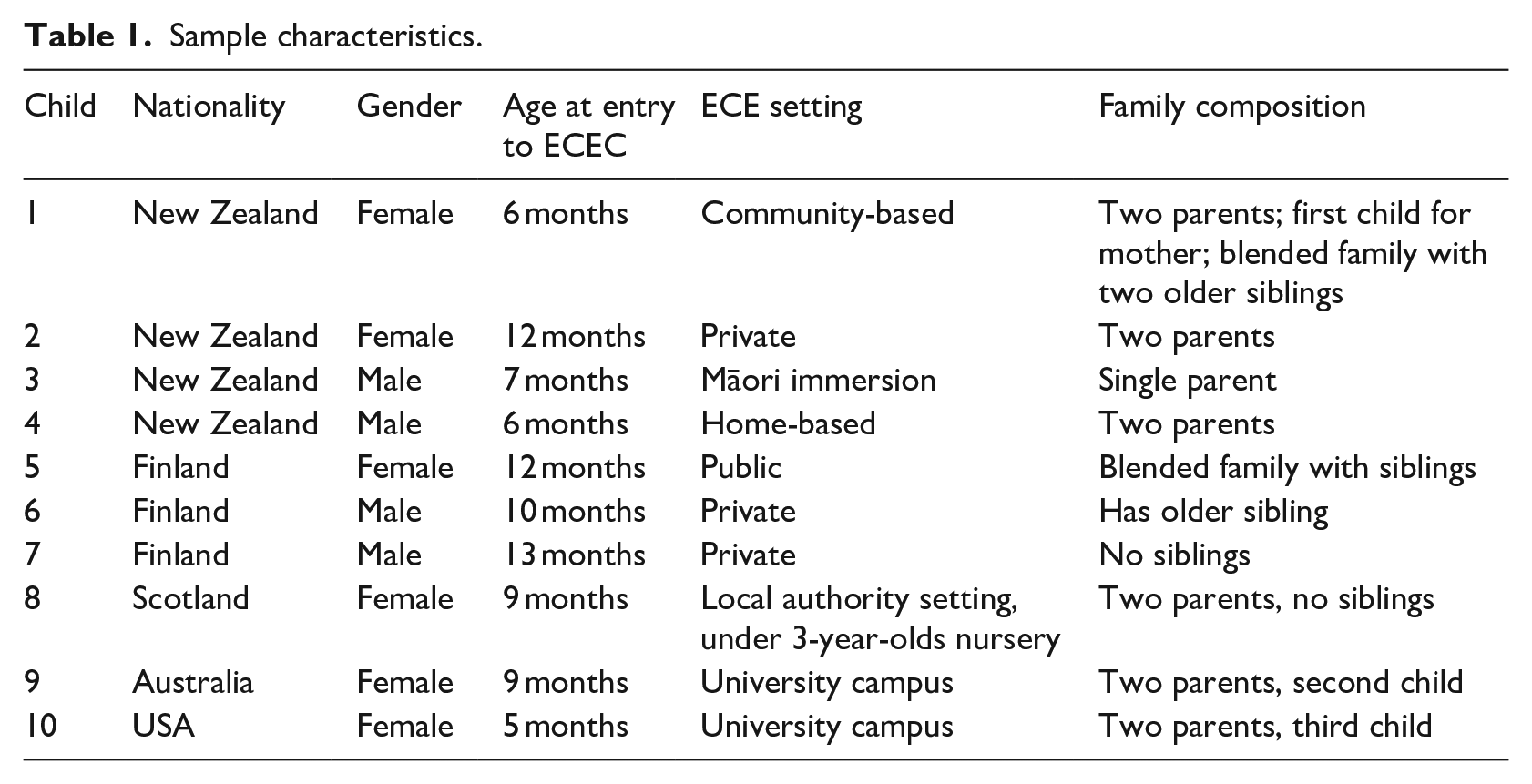
ECEC services were recruited by the lead researcher of each country, who all had research and development background in ECEC and had previously worked extensively within their local communities. The intimate and longitudinal nature of the study meant that existing relationships and familiarity with settings were essential. Participation in the study required each service to have an infant enrolled who was about to transition into their service and a family willing to give consent to close-by-eye and videoed observations (White et al., 2022). As such, one infant aged up to 1 year of age from each ECEC service was the primary subject of the research. The countries included in the project were those where a lead researcher resided, and infants were selected largely based on pragmatics (i.e. an infant under the age of 1 who was starting ECEC within project timeframes). Table 1 provides the sample characteristics of the 10 infants included in the analyses. Age at entry to ECEC is a reflection of the socio-political locale in which their transitions took place.
Sample characteristics.
Observations
Infants were observed at multiple times across their first year of ECEC, with emphasis placed on the first few weeks and months of transition from home to ECEC. While inevitable disruptions occurred (e.g. child illness), as closely as possible all infants were assessed at the following points in their transition to ECEC: the first day, 1 week, then monthly intervals across 7 subsequent months (although there were some variations by country; White et al., 2021). Table 2 shows the observation days for each infant as a function of time since their first day of care.
Observation schedule based on time since first day of care by child.
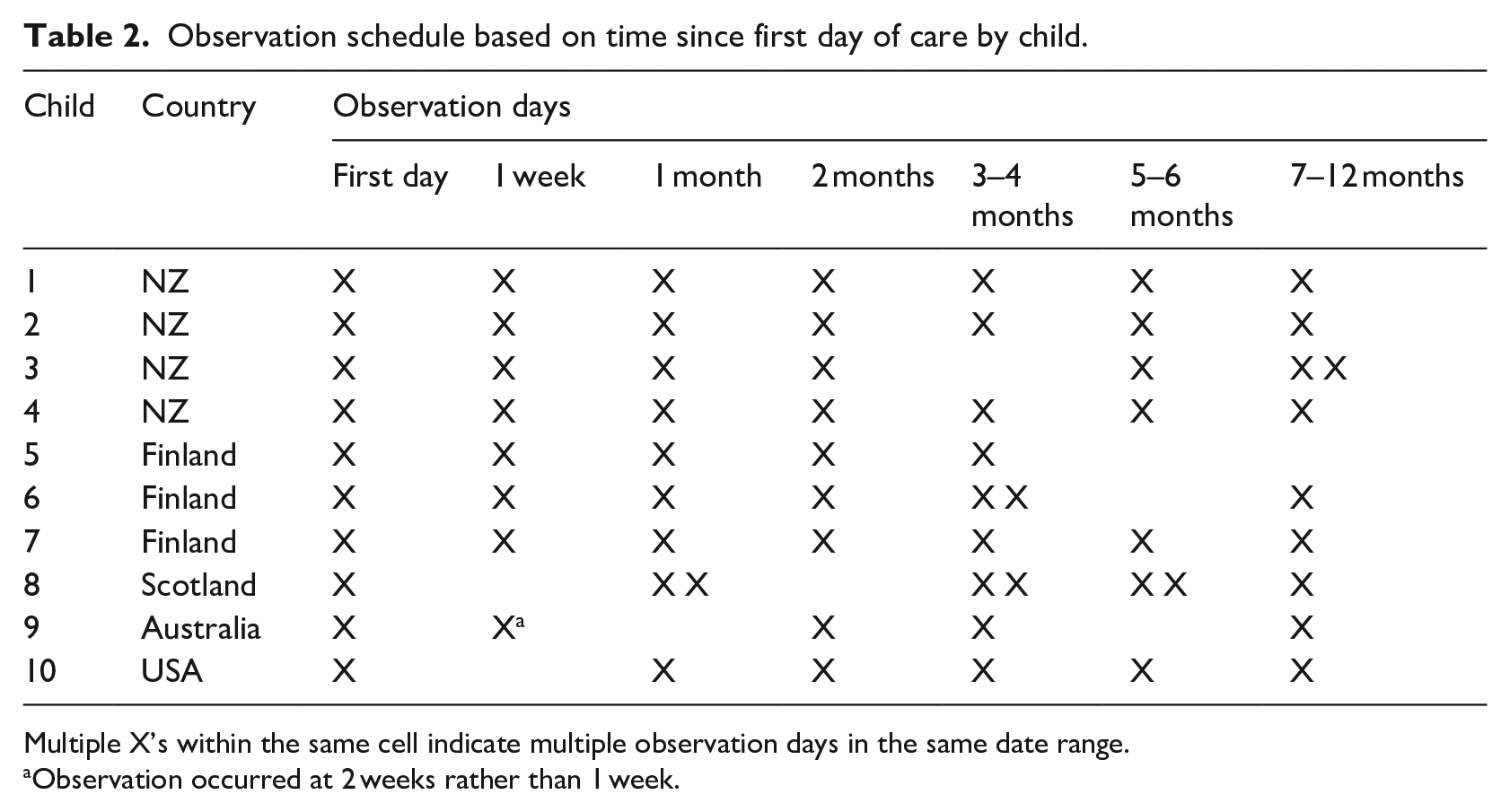
Multiple X’s within the same cell indicate multiple observation days in the same date range.
Observation occurred at 2 weeks rather than 1 week.
The plan was to capture the emotional and social events that took place for the infant at regular intervals across 8 months with the intent to understand the meanings these transitional experiences held for the infant, their parent and teacher (White et al., 2021). Note that we define the ‘first day’ as the first day the infant was ‘officially’ left in the care of an educator at the centre without their parent present, excluding any pre-settling visits that occurred prior to this first day.
Each observation day included both video capture and observational coding by a trained researcher. Videos were taken at arrival and pick up, and during routine, play and peer events for up to 2 hours over the observation day. Vignettes were then written up by the lead researcher in each country based on video data. Interviews with parents and teachers were also conducted at observation points, but these are reported elsewhere (White et al., 2020).
Fine-tuned observational codes and notes were collected using an event recording sheet that spanned the entire day of observation, from the moment the infant and parent arrived at the ECEC centre to the moment they left at the end of the day. The coding criteria draws from Marwick et al. (2013) and is described in more detail below.
Prior to beginning data collection, a pilot phase was undertaken that included training for observational fieldwork. Time was taken to explore the nuances that inevitably arise when working across diverse contexts and to ensure a minimum 80% reliability across all observations (White et al., 2022). Within each country, reliability sessions took place whereby researchers coded video recordings from the pilot data, achieving 80% inter-observer reliability prior to collecting data in the field.
Coding
Each observation day was broken down into hundreds of observation events. Each unique event was determined by changes to any aspect of the situation, including participants in the interaction, object use, movement across space and emotional states. As soon as any change to the situation occurred, the previous event ended and a new one began (White et al., 2022). The researcher observers timed each observation event and made notes about the contextual aspects of the event. They also categorically coded each observation event according to a number of dimensions as outlined in Table 3.
Contextual coding categories.
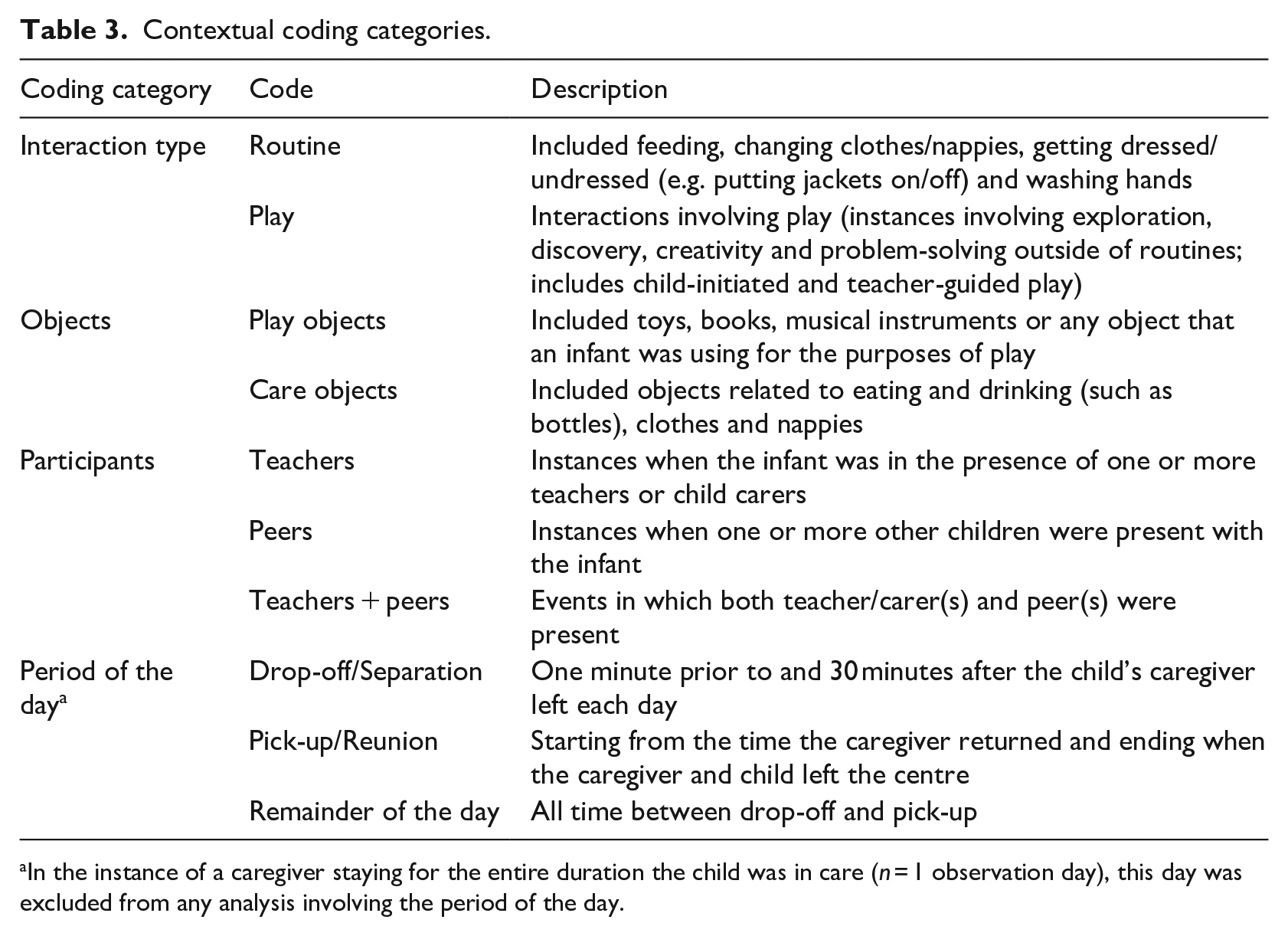
In the instance of a caregiver staying for the entire duration the child was in care (n = 1 observation day), this day was excluded from any analysis involving the period of the day.
Further, the observers rated the infant on four scale variables: positive affect, interpersonal engagement, activeness and involvement. Each of these variables were rated on a scale of 1–5 for each observation event (scores of 0 were given if children were sleeping).
Indicators of positive affect included smiling, laughter and playfulness, while indicators of negative affect included frowning or crying. The absence of positive or negative affect would be scored as a 3 (neutral affect).
Interpersonal engagement was focused on the extent to which the infant was engaged with another person. It was a judgement of the overall contingent responsiveness of the infant to an interaction partner (e.g. teacher, peer), such as whether they were responsive to the expressiveness and communication of the other.
Activeness reflected the overall activity level of the infant throughout the event, including energy and movement.
Involvement related to the level of focus the infant displayed towards a task or the focus on activity during the observation event. In other words, this reflected how engaged the infant was in their activity.
Analysis
As part of the larger project, an extensive amount of qualitative analysis was undertaken and is reported elsewhere (e.g. White et al., 2021, 2022). In this report, we used quantitative statistical analysis to identify patterns across the 10 cases and then corroborated these findings through synthesis with the qualitative findings, consistent with an embedded case study approach (Scholz and Tietje, 2002).
Our quantitative analyses first examined trends in infant affect by plotting mean levels of affect over time, and through Pearson correlation coefficients between infant affect and child age, length of time spent on the first day of ECEC and length of time in ECEC. Our second set of analyses used hierarchical linear modelling (HLM) to model aspects of observation units across time nested within children (Hox et al., 2018; Raudenbush and Bryk, 2002). In other words, moment-by-moment observations were our Level 1 units and infants were our Level 2 units. For these analyses we grouped time since start of ECEC into the following categories: first day, 1 week, 1 month, 2–6 months and 7–12 months.
We then looked to the qualitative vignettes and observational notes to identify points of synergy – where the patterns identified through our analysis of coded data were also exemplified by the social and emotional experiences of the infants as observed and captured qualitatively. Each country research lead and their teams took responsibility for identifying these from their video data in tandem with interviews (parents and teachers) following transition events.
Results
Sample
Observational data was collected from 10 infants across 5 countries (New Zealand, Finland, Australia, Scotland and the United States of America). On their first day of ECEC, infant age ranged from 5 months to 13 months of age (M = 8.3 months, SD = 3.34). In total, these 10 infants were observed across 66 different observation days (range 5–8 days per child; M = 6.6, SD = 0.97) across their first year in early childhood education and care (ECEC). A total of 10,264 observation events (our unit of analysis) were recorded and coded, which equated to 322.5 hours of time.
Below we present the key patterns that emerged by reporting our statistical testing alongside relevant qualitative vignettes. Participants are referred to by pseudonyms.
Longer first days resulted in more negative emotions
Our first analysis focused on the first day infants spent at their ECEC centre (n = 1408 observations). We found a negative correlation between the length of time infants spent at the centre on their first day and their affect across the day (r = −0.23, p < 0.001), indicating that infants who had a longer first day in ECEC showed more negative affect. Child age was not associated with the length of time infants spent on their first day (r = −0.02, p = 0.44) or their affect on the first day (r = −0.03, p = 0.42).
This finding was exemplified by the first day for Celia. On her very first day of care, she spent nearly 8 hours at the centre with no settling in period prior to this day. The parting from her mother was not particularly fraught. However, as the hours went by, Celia became increasingly distressed, as these summary notes of her experience illustrate:
At around 9:30 in the morning, Celia is carried into her new classroom asleep, having dozed off in the car. She does not seem distraught by her mother leaving, and directly thereafter her teacher sits with her on the floor and offers her a variety of toys to play with. Her teacher intentionally engages with Celia during this time. However, as the day progresses Celia has many periods of crying. At the outset, these are either instances of emotional contagion related to the fact that every other infant in the room is also experiencing their first day, or are intense crying episodes focused around feeding. Celia does not seem able to latch on to the bottle of breastmilk offered by her teacher, and drinks a total of an ounce or so at each attempt to feed her. As the hours pass, Celia’s overall mood and positivity continue to become more negative and increasingly characterized by crying. At times, her moods lift when a peer is nearby or when her focus is gained by something of interest to her. However, despite enormous efforts on the part of her teacher to support her drinking from a bottle and to comfort and distract her over the course of the day, Celia experiences a lengthy and difficulty first day. [USA: first day observation]
In this case, it appeared that the total length of time that the infant was in the classroom influenced on observed levels of negativity. In Celia’s case, hunger, compounded by exhaustion from bouts of crying over time, appeared to be contributing factors to Celia’s low levels of mood and positivity on her first day. These averaged a 1.9. The lack of familiarity between the educator and the infant in this case also appeared to play a part in the emotional experience, as pointed out in our post-transition interview with the educator.
Infant affect was lowest on the first day and increased over the first year of ECEC
We next examined the pattern of infant affect over the first year of ECEC.
We found a significant trend of increasing positive affect across the first year of ECEC (r = 0.19, p < 0.001). Figure 1 shows the mean levels infant affect over the first year of ECEC across our 10 cases.
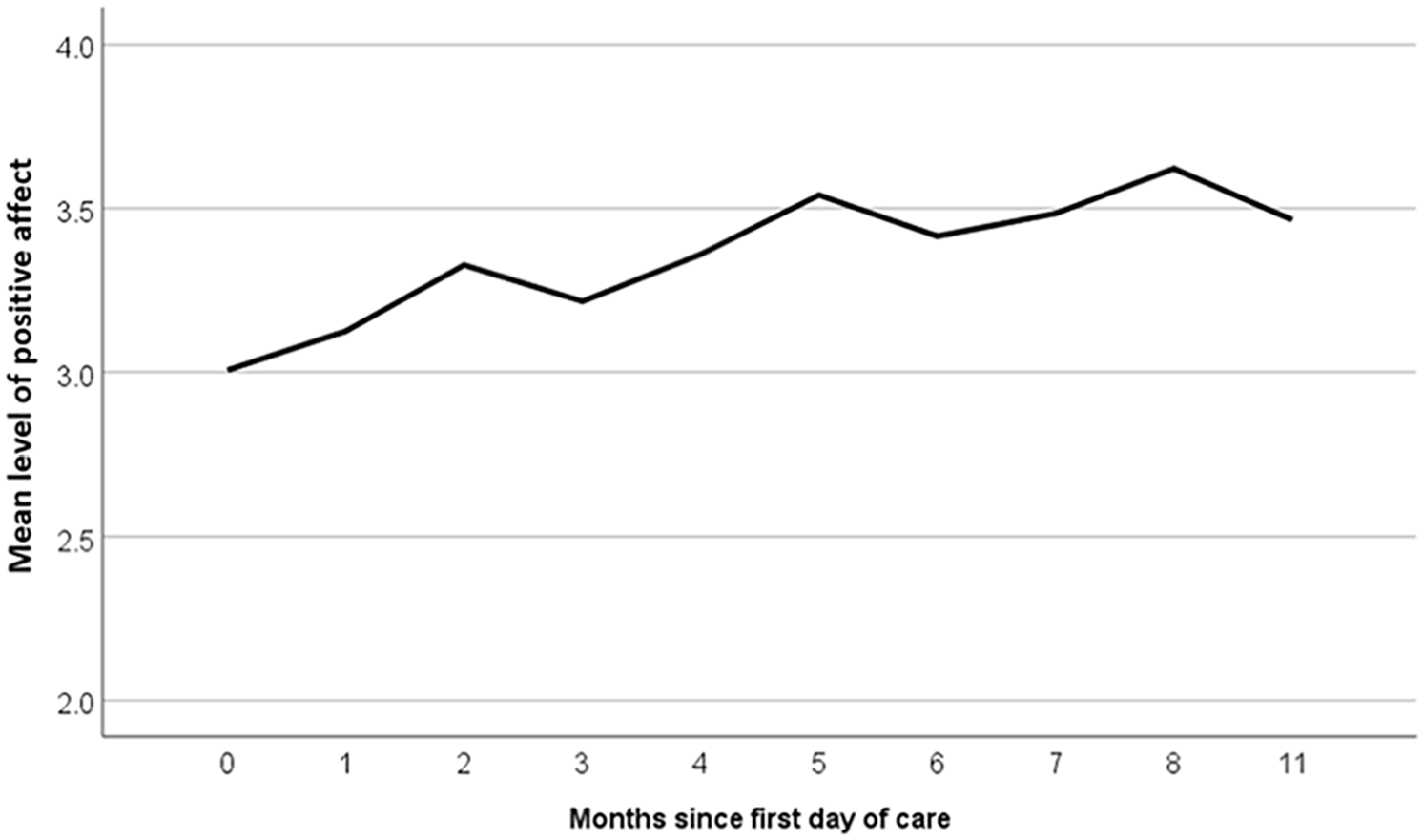
Infant affect over the first year of early childhood education and care.
Child age was not correlated with affect (r = 0.03), indicating that the increase in positive affect over the first year of ECEC cannot be explained by increasing child age.
This pattern was typified by Emily, who was 12 months old when she started ECEC. She cried throughout her first day, and a short summary from the notes on that day follows:
Emily arrives just before 9am, and leaves around 3pm. Throughout the day, she cries a lot. The teacher is close to her, holding her on the lap and engaging with her in a playful way, offering toys to direct or draw her attention to something. Throughout the day, her mood seems to improve momentarily, and there are moments of observations where shows interest to her new surroundings momentarily, but these are soon replaced with a sad expression. When viewing the minute-by-minute recording of mood, expressions of sad faces and crying characterizes her first day. During the more intense routine events that could provide a moment for close one-to-one interactions, such as the nappy [diaper] change, or dressing for outdoors, the crying intensifies even more. [Finland: first day observation]
In the observation after 1 month from the first day (third observation day), we could observe how Emily’s mood was more positive. She was accompanied with another newcomer, who did cry in the morning. This seemed to influence Emily’s mood, as she cried a bit in the morning while being present with the newcomer. Emily was calm and with relatively neutral expressions throughout the day, including during routines such as breakfast, lunch and snack. After a long nap in the afternoon she was joyful and smiling.
On the observation days that followed (2 and 3 months after her start in ECEC, on the fourth and fifth observation days), Emily continued to have either neutral expressions or she expressed joy and happiness. Her mood did not become negative or sad even when there were new substitute teachers present, new children and new activities taking place. She allowed older children to approach her and play with her, and also approached the new adults and allowed them to take care of the routines, such as diaper changes. All this showed a remarkable difference compared to the first day, when her mood was more negative, and when routine events in particular were accompanied by louder and/or longer crying. We can only surmise as the significance of this change – it may be that Emily was more settled or that she was merely reconciled to her new situation.
Looking in more detail at affect over the first year of ECEC, our HLM analysis indicated infant affect was predicted from the length of time since they had started ECEC. Affect was lowest on the first day than any other time point (all ps < 0.001), increased significantly at the 1 week point (p < 0.001) and then remained stable until a significant increase during the months 7–12 (p = 0.002).
The experiences of Ayla provide one example of this relatively quick change in emotions. After drop-off on the first day, the infant cycled between brief upturns due to distraction by transitions or interactions (such as with an educator, peer and/or object) then back to low affect (1–2), typically accompanied by crying. As an example, notes from that day describe how
Shortly after Dad left the key teacher took Ayla to change her nappy in the bathroom. During this time Ayla became visibly upset and began to cry. Returning from the bathroom, the key teacher placed Ayla in a highchair (all the other children were already in highchairs that are lined up against the wall for morning tea). Ayla was still crying on and off and had not settled since the bathroom. Placed in the highchair, the key teacher smeared the banana on the child’s mouth- which was refused by Ayla who was very upset–crying and moving as if to resist. The key teacher returned to the kitchen and during this time Ayla began to eat some of the banana that was still on the highchair tray table. [Australia: first day observation]
In response to Ayla’s persistently low and unsettled affect, the key teacher phoned to ask a parent to return to the service after 3 hours in care. However, at the next observation point (which occurred at 2 weeks), Ayla was remaining at the service for a full day and showing signs of increased activity and affect. Mid-morning observations noted that:
After having some close contact with a buddy teacher, Ayla sat by herself and had a very strong gaze that scanned the room and the teachers, her interpersonal was very high. After gazing at the room consistently for about 20 minutes Ayla began to crawl in the centre. This is significant as although she crawls at home Ayla had never crawled in the centre before. Crawling and orienting/becoming more comfortable to explore the ECE space had also been mentioned as key in going forward for by the key teacher in the second interview. Ayla continued to crawl around the room and had interactions with peers and teachers on her travels. She also began to smile and even one or two small laughs during these interactions, which is uncharacteristic happiness so far at the centre. The teachers all remarked that this was the turning point of Ayla’s transition. They took videos and pictures to write a learning story about her progress. [Australia: 2-week observation]
Ayla was observed with an affect score of 5 (not present on day 1) when her mother joined her at the service. During play (exploring the environment and objects), Ayla’s affect sits at 3, and only drops below (2 or 1) during diaper change, meal and sleep transition points. Again, we ask – is this reconciliation or recovery?
Drop off periods remained a time of negative affect for longer than other periods of the day
The HLM analysis indicated that affect was lower during drop-off periods than the other times of the day and affect at pick-up times was higher than the other times of the day (all ps < 0.02); however, there was also a significant interaction between time in ECEC and period of the day [F(8,1e4) = 4.51, p < 0.001]. In other words, the impact of period of the day on effect depended on how long children had been in ECEC.
Inspection of the interaction effect indicated no significant differences in affect based on the period of the day on the first day (ps > 0.41). At the 1-week point however, the drop off time was associated with significantly lower affect than pick up time (p < 0.001) and the remainder of the day (p < 0.001), while affect at pick up did not differ significantly from the remainder of the day (p = 0.11). At 1 month, drop offs remained more negative than pick-ups (p < 0.001) but no longer differed from the remainder of the day (p = 0.18). At 2–6 months and 7–12 months, there were no significant differences in affect based on the period of the day (all ps > 0.06). Figure 2 shows the mean level of infant affect by period of the day and time in ECEC.
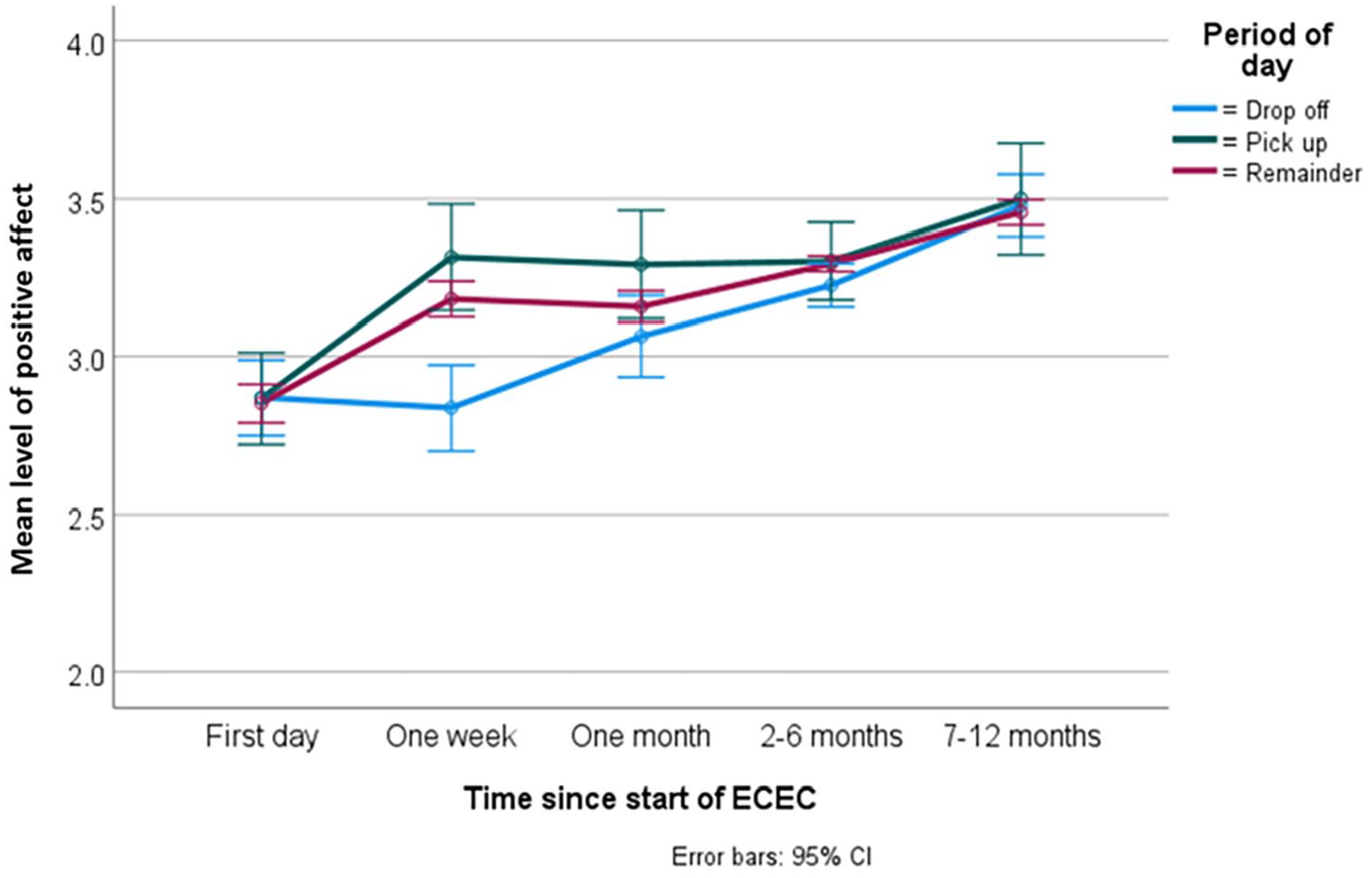
Child positive affect by period of the day over first year of early childhood education and care.
For Esther, who attended a private ECE centre in New Zealand, drop offs tended to be times of negative emotionality during her transition. Esther’s first day at the centre was not a happy event for her, or for her key teacher, as during preparatory visits she had observed other infants in distress (according to her mother). Drop offs continued to be times of low levels of interpersonal engagement and remained stressful periods of the day until after the second month of being at the centre. The following vignette demonstrates the negative affect experienced by Esther at the 1-week observation point, when Esther does appear to settle more quickly compared to the first day of transition to the centre:
Esther arrives at the centre held by her mum, her embodied language expresses the distress and anxiety she is feeling reflected in the way she physically pulls back on entering the room and grimaces her face. Greeted by her educator, she sits on her mother’s lap, thumb in mouth, and nestles her body into her mum’s as they sit on the couch. The drop off is not rushed, parent and educator spend time discussing Esther’s morning routine while Esther sits comfortably and quietly on her mum’s lap – watching. Preparing to leave, the parent places Esther on the floor between her educator’s legs. Immediately Esther turns to face her mother, raises her arms and returns to the security of her mum’s lap. Another parent arrives with her infant and engages the educator in conversation. Esther’s mum exchanges pleasantries, and then picks Esther up and puts her bag away. On returning to the couch with her parent, Esther is greeted by the educator who extends her arms signalling to Esther that her mum is about to leave. Esther immediately responds by moving her body toward her mum who lifts her into the arms of the educator and walks out of the room. As she leaves, Esther cries loudly. The educator walks around the room, holding Esther in an embrace that is not too tight, using a soothing, calm tone to speak, Esther’s sobs lessen. The other parent is close by and continues to try and hold a conversation with the educator who continues to give Esther her full attention. When this teacher, holding Esther, does move closer to the other parent, her attempt to sit on the couch is foiled by Esther who starts to cry again – visibly upset by her mum’s departure. [New Zealand: 1-week observation]
Here we see the persistent efforts of the adults to support Esther in moving her emotional attention towards another person – in this case the educator. It highlights the agency of the infant in expressing her preferences, even when they cannot always be held up on her own terms.
Presence of peers was associated with higher levels of affect, activeness and involvement
We ran an HLM model investigating the contextual aspects associated with each dependent variable (affect, interpersonal engagement, activeness and involvement). The models predicting affect, activeness and involvement demonstrated a similar pattern of results, whereby the presence of peers (either peers only or teachers + peers) was associated with higher levels of these variables than when infants were with teachers only (all Fs > 6.72, ps < 0.001). All three variables (affect, activeness and involvement) were also higher during play interactions than routine interactions (all Fs > 33.55, ps < 0.001), and higher when objects were involved in the interaction than when no objects were involved (all Fs > 6.25, ps < 0.002).
High positive emotions in the presence of peers can be seen in these notes for Jack, during a day which including lots of running, laughter and playing together with other children:
Jack is with two children. After running with the one of them, the other starts to grab and pull them to the ground. When he leaves the scene, Jack and the other children continue their joyful movements. Jack and peer are running from a table to a shelf laughing, smiling, and vocalizing. Hitting the furniture together as if playing drums, then running to the other location and doing the same. [Finland: 4-month observation]
Another example comes from Elias, during an episode in which the children are taking off their outdoor clothing to come inside. Elias interacts with a peer and this moment includes positive emotions, mutual gazes and smiles, with high ratings of activeness and mutual involvement:
The teacher tells the peer to wait. He goes next to Elias who’s by a chair by the window and climbs on to the chair. Elias looks at him. The boy points out of the window. Elias bangs his hands against the radiator. Elias grabs the boy’s arm, the boy looks at him and smiles. The teacher removes Elias’s hand. Elias and the peer bang the radiator and the window together. [Finland: 2-week observation]
Presence of a teacher was associated with higher levels of interpersonal engagement
The pattern of results differed for interpersonal engagement as compared to the other dependent variables. In this case, it was the presence of a teacher that was associated with higher levels of interpersonal engagement than when teachers were not present (either with or without peers also present; F(2,6553) = 6.72, p = 0.001). Further, there was a significant interaction between participants and objects [F(4,6553) = 3.48, p = 0.008] that indicated interpersonal engagement was highest when infants were interacting with teachers and care objects were involved. This interaction is shown in Figure 3.
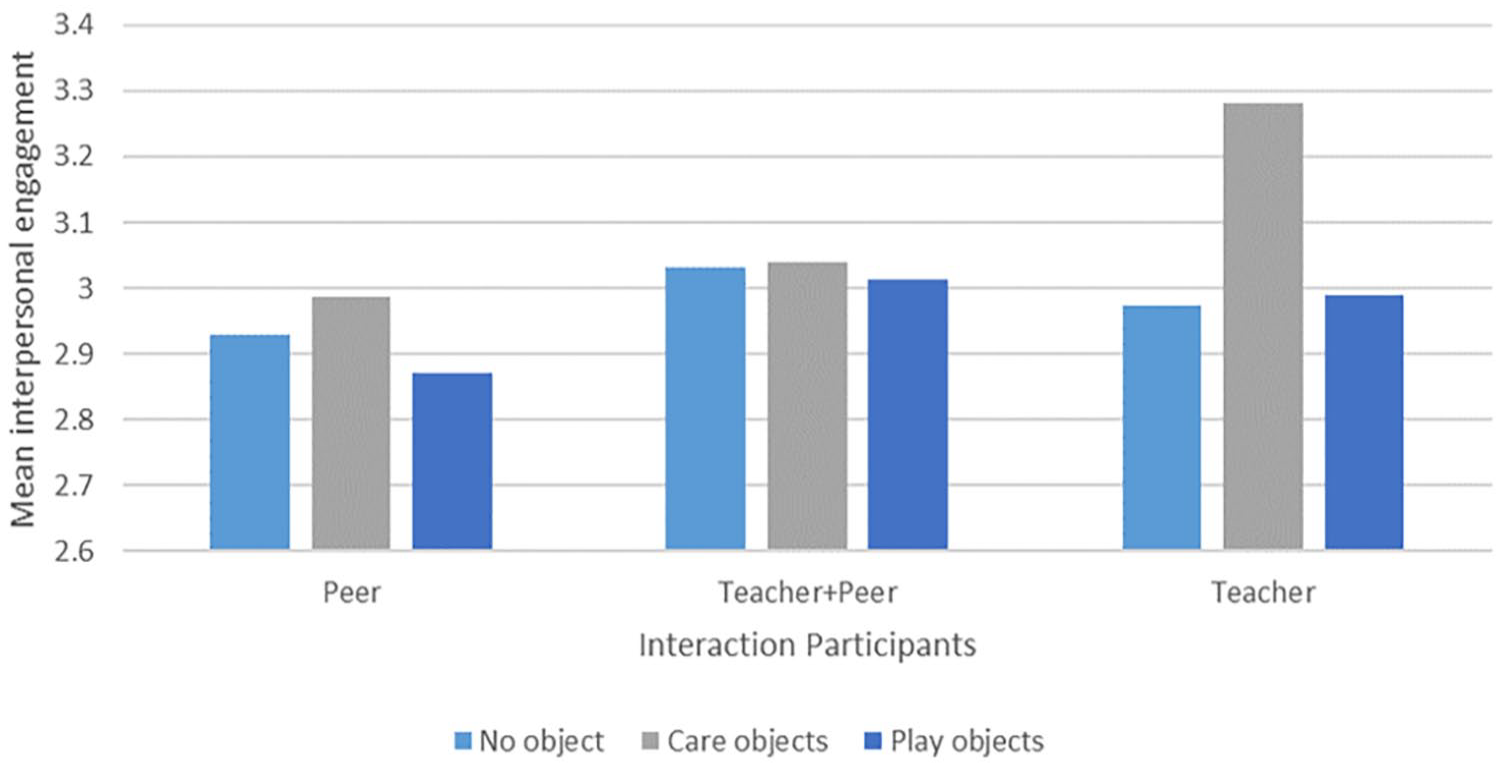
Interpersonal engagement by objects and participants in the interaction.
To demonstrate how the presence of a teacher was associated with higher levels of interpersonal engagement we turn to one of the centres in New Zealand. The following event from week one highlights how play encounters with just the teacher present provided an opportunity for the infant to engage with her teacher in ways that were uninterrupted and strengthened their developing interpersonal relationship:
Willa is positioned on her stomach on the floor beside the educator with several play objects close by. Moving closer to Willa, Janet remarks in a playful tone ‘Uooo, Hiiiyi’ as she lowers her head and makes eye contact with Willa; who lifts her head, raises her shoulders, holds the educator’s gaze, moves her legs and smiles. ‘Is that the dog’ says the educator. Pushing the toy dog away Willa looks up at the educator and flashes a smile playfully that expresses the joy she is feeling in this moment. Momentarily, both explore other objects until the educator settles her finger on a toy budgie, already established as a favourite toy (written about elsewhere). Picking up the budgie Willa moves her legs excitedly. As the interaction unfolds the educator moves Willa onto her back, this provides Willa with a different view of the educator and enables her to respond by using her legs and feet in different ways as she pushes against the educator’s hand and curls her toes around her finger. This is not the first time Willa has cushioned her foot in the educator’s hand, she knows this way of being with this teacher invites an affectionate response – fostering the social and emotional closeness between them. [New Zealand: 1-week observation]
The connection between high levels of positive affect with high levels of interpersonal engagement suggests that interpersonal experiences between infant and teacher enhance their relationships with one another. Some play events produced higher levels of interpersonal engagement when Janet greeted Willa on her arrival at work or return from a break demonstrating the importance of close interpersonal relationships for establishing trust and subsequent infant social and emotional wellbeing.
The pivotal role care objects played in supporting interpersonal engagement could be seen on Willa’s first day. Very high levels of interpersonal engagement and positive affect (as indicated through the numeric coding system) were observed during one of Willa’s first diaper changing events at the centre where care objects both familiar (her bag) and not so familiar (the mobile above the changing table) were at play. As Willa was introduced to the care objects close at hand, she was afforded the opportunity to engage interpersonally with Janet. The mobile was not only an object of interest that captured Willa’s attention once set in motion by Janet, but it was also a talking point as Willa’s points were interpreted by Janet as a request to continue moving it. As peers entered the bathroom to wash their hands the mobile offered Janet fleeting moments to acknowledge peers without losing the thread of the conversation she and Willa were having.
Discussion
In this research, we sought to better understand the social and emotional experiences of infants during their transition to ECEC and across the first year of care. We wanted to focus on understanding what makes for a positive experience, in terms of the initial transition and ongoing care. Very little is known about the social and emotional impacts of earliest transitions, and there are no existing cross-cultural studies that examine these. Thus, the present results provide insights from a diverse sample with diverse heritages, nationalities, ECEC settings and family contexts. We consider early transitions as a socio-political as well as a cultural event. As such we do not set out to procure a single narrative experience of transition but instead consider features held in common across these diversities.
We used a mixed-methods approach to understand infant experiences, by first examining patterns in the vast amount of coded observational data and then looking to see where these patterns coincided with the vignettes identified as meaningful episodes of the social and emotional experiences of the infants during their transition.
Our findings provide insights and implications relevant to both the initial days and weeks of infants’ transition from the home to out-of-home care, and to the contextual factors relating to positive social and emotional well-being for infants in their first year of ECEC. These are each discussed in turn.
Infant transition to ECEC
Our results show that positive affect was lowest on infants’ first day of ECEC. The vignettes presented for Celia, Emily and Ayla all depict negative emotionality on the first day of transition, such as sadness, crying and distress. All three infants were observed with more positive affect overall at later observation points, consistent with the pattern we found of increasing positive emotions over the first year of ECEC.
Our results also show that drop-off periods remain a time of negative emotionality for longer than other periods of the day. This was exemplified by Esther, who at the 1-week observation settled better at drop-off than on her first day, but was still visibly upset and distressed when her mother left. However, by the time infants had been in ECEC for 2+ months, positive affect was high across all periods of the day. This finding suggests that during the transition to ECEC it can take children a month or more to emotionally adjust to their new routine, particularly in terms of drop-offs at ECEC. A focus on strategies to ease infant stress and distress at drop-off during the first month of ECEC attendance appears an important goal for improving infants’ experience of the transition. These results are highly consistent with those of Ahnert et al. (2004) who measured toddlers’ (11–20 months of age) crying during the adjustment to child care. Crying was most prevalent on the first day of separation from parents, but declined over the next week and was nearly non-existent 5 months after the start of child care.
Given the developmental stage during which infants enter ECEC, the experience of separation anxiety when children are apart from their primary caregiver(s) is expected (Bowlby, 1960; Cassidy and Shaver, 2008). Our observations reflect the persistence of infants in having their emotional needs upheld, even when their preferences cannot be upheld (i.e. to be with their parent). However, on a positive note, our results indicate that this experience of emotional distress disappears after the first couple months. As infants grow more comfortable in their ECEC settings and begin to build attachment relationships and connections with others at their centre, particularly their teachers (Ahnert et al., 2006; Howes et al., 1998; Datler et al., 2012), this may help to alleviate any negative emotionality as a result of caregiver separation.
Contextual factors during the first year of ECEC
Our second aim was to examine the contextual aspects of infant interactions over the first year of ECEC in relation to affect, interpersonal engagement, activeness and involvement. We found that positive affect was highest when infants were engaged in play and when either play or care objects were part of the interaction. Similarly, activeness and involvement were highest during play interactions and when objects or peers were involved in the interaction. The vignettes of Jack and Elias provided a window into a couple moments in which these infants experienced positive emotions while being actively involved with peers. Little research has explored peer interactions in very young children (e.g. under 2-year-olds; Dalli et al., 2011; Datler et al., 2012); however, a key finding from our research is the importance of peers within ECEC settings. When peers were present in observed interactions, levels of positive affect, activeness and involvement with activities were higher than when peers were absent. This is consistent with Datler et al. (2012) and suggests that more research is needed to investigate the importance of peer interaction in quality education and care settings for your children. Berry et al. (2016) found that peer exposure in child care was associated with decreased cortisol levels in infants and young children, and this is consistent with our findings of higher positive affect when peers are present. Peer interactions may be particularly important for fostering children’s agency and exploration, as they engage in highly active, very involved activities with peers.
Interestingly, we found a different pattern for interpersonal engagement, as compared to our other social and emotional variables. Interpersonal engagement was highest when children were interacting with teachers alone (i.e. not in the presence of peers). These interactions with teachers were particularly engaging when the interactions involved care objects, or when they involved play with teachers. Thus, while interactions with peers appear important for children’s positive affect, activeness, and involvement in activities, interactions with teachers may provide different benefits, such as building a close connection with high interpersonal engagement. Times when teachers’ interactions with children are based around care objects, such as feeding and diaper changing, appear to be particularly important times for high interpersonal engagement. This was exemplified in the case of Willa. On her first day of transition to ECEC (as seen earlier, a day of typically low positive affect), her first diaper change provided a chance for one-on-one engagement with her teacher and she was observed to have high levels of positive emotion and interpersonal engagement in this moment, demonstrating the important opportunities provided by teacher-child interactions involving care objects.
Limitations
The limitations of this research include the small number of infants included in our sample. While an immense amount of data was collected and analysed in this project (10,264 unique moments that equate to 322.5 hours of time), the results only represent the experiences of the 10 children included in our sample. No claims are made for generalisability. Further, the results of this research are correlational and we are unable to make any causal inferences.
Conclusions
The findings of this research provide insights and implications relevant to both the first day of infants’ transition from the home to out-of-home care, and to the contextual factors relating to positive social and emotional well-being for infants in their first year of ECEC. The results provide insights from a diverse sample with diverse heritages, nationalities and family backgrounds, and represent the first cross-cultural analysis of the socio-emotional experiences of infants’ early transitions. We found evidence of low positive affect on infants’ first day of ECEC, suggesting that the first day of transition for infants is one of tremendous emotional upheaval, irrespective of culture or ECEC setting. Negative affect was also seen after 1 week of ECEC, but only at drop-off/separation times. Over the first year, affect became more positive across all times of the day. Thus, while the first day of transition was emotionally intense, infants appeared to quickly adapt to their new ECEC setting and routines as evidenced through increases to positive affect after only a week.
While the transition to ECEC was found to be one of emotional intensity for infants, our research also identifies ways to ameliorate infant distress during this time. Examination of the contextual aspects of interactions indicated the importance of peers, play and objects to infants’ social and emotional well-being over their first year of ECEC care. Interpersonal engagement was fostered through one-on-one interactions with teachers, particularly when these interactions included care objects (e.g. feeding, or changing nappies/clothes) or play. Peer interactions appeared particularly important for fostering infants’ positive affect, activeness and involvement with the focal task/activity. These findings shed light on what makes for a positive experience for infants transitioning to out-of-home care, in terms of the initial transition and ongoing care, and provide insights relevant to families of young infants and ECEC teachers and staff.
Footnotes
Acknowledgements
The ISSEET team is extremely grateful to all the families, children, and educators who allowed us to follow their everyday life during the first months of first transition to ECEC in Australia, Finland, New Zealand, Scotland and the USA. We are also grateful to the administrative bodies, such as ECEC centre and local authorities, who supported us in building these partnerships with the teams and educators in the many ECEC centres and services involved.
Funding
The authors disclosed receipt of the following financial support for the research, authorship, and/or publication of this article: Funding for this project was provided by Pedagogies of Educational Transitions (POET); RMIT University in Melbourne’s Enabling Capability Platform fund; Cognition Trust, NZ; University of Waikato, NZ; University of Canterbury, NZ; Te Rito Maioha, NZ; Inspired Kindergartens; Academy of Finland; University of Arkansas Delta Kappa Gamma Educational Foundation. The Finnish subproject was funded by Research Council of Finland (project no 321374).

Data,code and materials transparency
The data necessary to reproduce the analyses presented here are not publicly accessible. The analytic code necessary to reproduce the analyses presented in this paper is not publicly accessible.
The materials necessary to attempt to replicate the findings presented here are publicly accessible. Materials are available from the last author.