




Abstract
Early childhood development is considered a crucial component for sustainable development, and parents’ roles in this regard is unambiguously acknowledged. However, the evidence is sparsely available from developing countries like India on how parents can influence access to the early childhood development program. This study, based on an empirical footing, investigates whether parental attitude may lead to unequal opportunities in children’s access to preschools in India. The study portrays that the negative or indifferent attitude of parents predicts significantly lower access to preschools. Also, parents’ education can be held responsible for the variation in parents’ attitudes toward early education and care. A two-prong policy measure is thus suggested by educating parents on one hand and involving them in the implementation process of childhood development programs on the other.
Introduction
The global debate on development discourses is not complete without paying attention to child development and ensuring inclusive and equitable education for all. That is why early childhood development is set as a crucial component of the Sustainable Development Goals (SDGs). Early childhood education and care (henceforth ECEC) is recognized as one of the most important interventions in human life (Evans et al., 2000; UNICEF, 2017), and attending preschool is particularly beneficial for children from the disadvantaged section of society and the developing world (Blau and Currie, 2006; Heckman, 2000).
Yet, worldwide, only half of all 3–6-year-olds have access to pre-primary education and the rate is even lower in low-income countries. For example, India is currently homing about 164 million children in the age group zero to six years but the gross enrollment ratio at the pre-primary level in India is about 12.92%, which is one of the lowest among South Asian countries (UNESCO Institute for Statistics [UIS], 2018). Despite the availability of different ECEC provisions across the country, there is still a substantial number of children not enrolled in any preschools in India (UNICEF, 2019; Ghosh, 2019). The number of children receiving preschool education has been falling over the years. Between 2014 and 2019, there was a decline of 14% in the number of children availing preschool education (Kapur and Shukla, 2019). Considering a steady increase in the percentage of children (in the age group of 0–6) in the total population over the same time frame (Census of India, 2011), the low enrollment in preschools implies that a significant number of children may not have access to ECEC. This is therefore problematic since experience from India shows the positive impact of attending preschool (i) on health and nutritional aspects of children (Dixit et al., 2018; Dutta and Ghosh, 2017), (ii) on school enrollment and dropout (Jain, 2018; Kaul et al., 2015; Nandi et al., 2020), and (iii) on skill development of children (Dean and Jayachandran, 2019; Singh and Mukherjee, 2019; Vikram and Chindarkar, 2020). Thus, a low ECEC attendance rate may pose a threat to the child development situation, and thus, human capital accumulation in India.
Studies from around the world show that parents play a significant role in child development, and in different contexts (Joussemet et al., 2005; Mattanah et al., 2005; Zadeh and Im-Bolter, 2006). Parents have differential ideas about child-rearing, about what they feel must be an essential part of their children’s lives, about the goals and values that they consider important about children (Tuli, 2013). Parents’ attitudes are considered decisive for the educational attainment of children (Boonk et al., 2018; Shute et al., 2011). For example, Evans and Kelley (2002) demonstrate that Australian mothers’ reservations about institutional childcare for young children are mainly related to worries about the toddler receiving insufficient attention in childcare centers. Besides, another study by Einarsdóttir (2010) showed that Icelandic parents’ main expectation of preschools was that they should support children’s social development. Similarly, the study by Petrie and Holloway (2006) showed that preschools were primarily viewed by parents as a place for their child to gain social skills, less emphasis was given on the academic aspects of preschool. In the Indian context, apart from social competencies, parents expect school readiness from attending preschools (Qadiri and Manhas, 2009). Further qualitative research on India shows that parents consider it important for their children to acquire skills such as literacy and discipline early to succeed in the school system (Sriprakash et al., 2020). Parents’ selection of institutional child care relates to their socio-economic background, beliefs and attitudes, birth order of children. (Sylva et al., 2007).
However, in India parents’ roles in universalizing access to ECEC seems largely undermined. Although existing ECEC programs such as the Integrated Child Development Scheme (ICDS) included activities such as (i) eliciting community support and participation in running the program, and (ii) visiting homes for educating parents to enable them to play an effective role in the child’s growth and development (Govt. of India, 2011); there is hardly any information available on whether this has been carried out at all, and, if yes, then how this has been carried out. Given this backdrop, this study, the first of its kind in the Indian context, tried to investigate: (i) whether parental attitude toward ECEC has any impact on children’s access to preschool? And (ii) whether parental attitude toward ECEC varies depending on their socioeconomic status?
Theoretical background
Most theoretical approaches related to child development acknowledge the great impact of parental characteristics in defining, shaping, and affecting the entire journey of the child (Tocu, 2014). Among available theoretical explanations, the expectancy-value theory developed by Eccles and colleagues (Eccles and Wigfield, 2002; Eccles et al., 1983; Wigfield and Eccles, 2002) can be used to explain the association between parental characteristics such as their beliefs, attitudes, and their preschool decisions for their children. The theory postulates that achievement-related choices are driven by a combination of people’s expectations for success and subjective values related to an educational domain. For example, parents are more likely to send their children to preschool if they expect that it will help children to perform better at the later stage in formal schooling. Besides subjective values are decomposed into attainment value, intrinsic value, utility value, and cost. According to the model, expectations for success and subjective values are shaped by a combination of factors including parental and child characteristics, the cultural and social setting of the household, etc. Therefore, several parental characteristics seem to influence their expectation from formal ECEC as well as different values attached to it, and that, in turn, affect the preschool attendance of their children.
Given this background, van Gameren and Ooms (2009) directly considered the role of attitudes and opinions regarding childcare and maternal work in selecting ECEC among Dutch mothers with preschool children. Their results show that the likelihood of ECEC take-up rises when mothers agree that leaving children under the care of others is acceptable, whereas the attitudes toward work as well as the price of childcare appear not relevant for this decision. A later study by van Gameren (2013) enhances this result providing evidence that modern attitudes have a strong impact on the decision to take up childcare. Moreover, research shows that emphasizing a caring and learning environment for their child is more widespread among parents with higher incomes and higher levels of education (Kim and Fram, 2009). Accordingly, Geier and Riedel (2009) find different expectations regarding the effects of early childcare on children’s development among low- and highly-educated parents in Germany. Their results indicate that parents with a higher educational background generally have more positive attitudes toward childcare institutions as well as higher educational expectations compared to parents with a lower level of educational attainment. The authors link this association to childcare usage arguing that, due to more positive attitudes toward ECEC, highly educated mothers use childcare more often. Similarly, research shows that mothers with a high prioritization of school readiness are more likely to combine institutional and home-based childcare than to use only home-based care (Gordon et al., 2013).
Furthermore, parents with more traditional child-rearing attitudes were found more likely to choose a nanny or father to care for their children (e.g. Sylva et al., 2007). Besides, Evans and Kelley (2002) find that the perceptions on whether institutional childcare can provide enough individual attention and affection cause the largest impact on the approval of institutional childcare. In the same vein, Monna and Gauthier (2008) conclude that next to socio-economic characteristics also norms and values about parental involvement are important factors regarding the decision about the time parents devote to their children.
Data and methodology
Institutional background
ECEC in India is provided through different channels such as public, private, and non-government organizations. The public ECEC model is known as the Integrated Child Development Scheme (ICDS) and is one of the world’s most extensive child development program named, in operation since 1975. The beneficiaries under the Scheme include children in the age group of 0–6 years and they receive supplementary nutrition, pre-school non-formal education among other facilities which are free of any financial cost to parents. Besides, there also exist unregulated and privately sponsored and NGO-operated ECEC provisions in different parts of the country (for an overview, see Prochner, 2002; Rana and Sen, 2008; Rao et al., 2021). One important aspect of the ECEC in India is that, without the presence of any legal obligations, parents are free to decide whether and when to send their children to preschool until they attend obligatory elementary school.
Data
This study is based on primary data of 1369 households, collected from two provinces of the eastern state of India named West Bengal. The choice of the state was for pragmatic reasons such as language spoken in the region, approval received from the respective state and regional administrations to conduct the field-work, available funding and time frame, etc. Table 1 provides a comparative overview of the sampling area based on major macroeconomic parameters. Although the preschool scenario varies considerably across states, West Bengal does not seem to differ much from the national average concerning these parameters.
Comparative statistics of the study area.
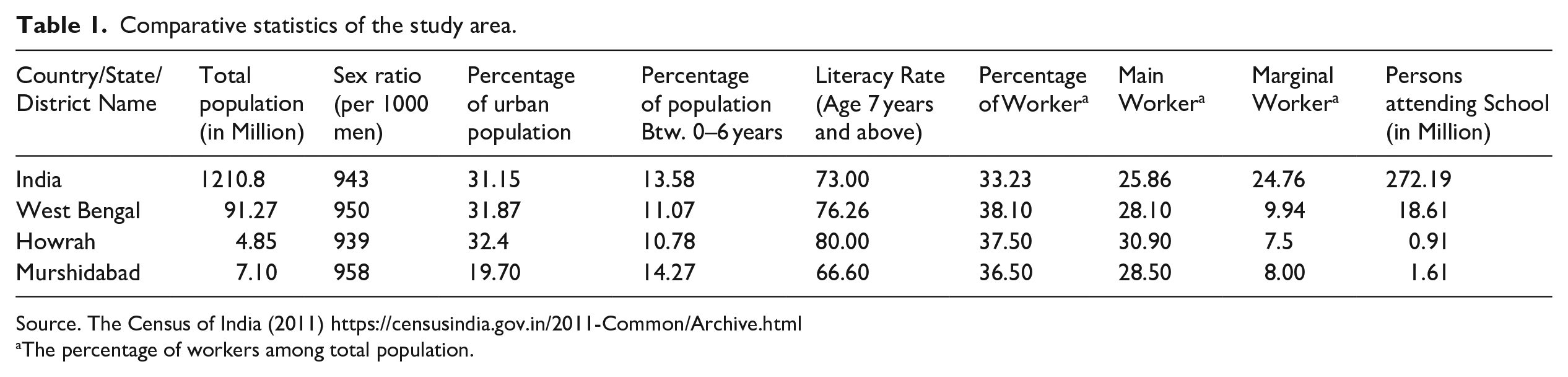
The percentage of workers among total population.
Two districts were chosen: Howrah district with a literacy rate of over 80% which was above the state average, and Murshidabad district with a literacy rate of about 67% which was below the state average (source: the Census of India, 2011). Furthermore, rural and urban sub-districts with the highest population in each district were chosen to have a representative sample.
Finally, 84 primary schools, both public and private, were randomly selected from a list of over 3000 primary schools in these two districts, and children in the first grade were sampled. Since the prime objective of the research was to explore the disparity in preschool attendance due to varying parental attitudes, it needed a sample that contains households who sent their children to preschool and also those who did not. For that purpose, children from the first grade in primary schools were included in the sample as this group comprises children with and without preschool experience. The final sample consists of 1369 children and the data shows a great deal of variation concerning preschool attendance where about 66% of the sample children attended preschool. Among those who attended preschool, 88% were from public, and 12% were from private primary schools. The households of the sampled children were then tracked using the secondary information available for primary school registers and the household survey was conducted using personal interviews based on a questionnaire that consists of three sections: household information, information on the sample child, and information on ECEC experience. Among the respondents, 83% were the mother of the child and the rest were either father (12%) or any other relative of the child (5%).
Great attention was given to ethical considerations in this study. Participation in the project was completely voluntary on the part of the households, and each of the households was included in the study after providing written consent. The individual identity of the participants and their families were kept anonymous, and the information provided was kept confidential. During the personal household interviews, participants were free to choose whether to answer (or refuse) any of the questions asked. Prior approval was obtained from the respective State Government to conduct the study in the region and the information received during the study was used only for the research and to provide policy advice.
Parents’ attitude toward ECEC was instrumentalized by asking parents whether they consider institutional ECEC (in the form of preschool or kindergarten) as an important intervention for children. The response was categorized into three groups viz. (i) ECEC is important for children, (ii) ECEC is not important for children, and (iii) indifferent about ECEC. A majority of the parents, that is, about 76%, considered that attending preschool is important for the development of children, whereas the rest of the parents either consider ECEC not important or were indifferent. Besides, parents’ preschool decision was measured by asking whether they sent the target child to a preschool at any point in time before the child started formal schooling. To better understand parents’ attitude toward ECEC they were asked why they considered it important that children should attend preschool centers.
Identification strategy
Considering the nature of the variable of interest in this study, that is, parents’ attitudes toward ECEC and the outcome variable, that is, preschool attendance, there could be few identification issues. First, factors that are influencing the decision of parents in sending their child to a preschool, may also directly affect parents’ attitudes toward ECEC. This typically makes our main explanatory variable viz. attitude as endogenous. Second, there could be unobserved heterogeneous factors that could influence a preschool decision and thereby causing typical omitted variable bias. As we are dealing with an observational cross-section data, therefore set of variables influencing parental attitudes for ECEC and the set of variables influencing preschool decision will not be orthogonal to each other and causing a classical endogeneity problem. Given this data structure, the possibility to tackle the first and second issues would be to consider the instrumental variable (IV) regression. We estimate the impact of parents’ attitudes on children’s preschool attendance using a heteroskedastic-based instrumental variable regression (Lewbel, 2012). This technique allows the identification of structural parameters in the regression model with endogenous regressors in the absence of traditional identifying information. In this form of Lewbel’s method, instruments would be constructed as simple functions of the model’s data (Baum and Schaffer, 2012; Lewbel, 2012). Since the two sample districts were substantially different in terms of socioeconomic status, a sub-sample analysis was also performed for each of the districts to investigate any inter-district variation (refer to Appendix 2).
Furthermore, for robustness and consistency check, the same model was estimated using IV-Probit regression (refer to Appendix 1). In both, the estimation processes mother’s level of education was considered as the primary instrument. The idea is that in the Indian context, mothers may play an important role in child development as they are the primary caretakers of children at home. Therefore, their level of education may directly influence their attitudes toward ECEC, which in turn, affect their preschool decision for their children. Besides in the current study, most of the respondents were mothers and, therefore, parents’ attitude toward ECEC in the study may reflects mainly that of mothers’. Studies already revealed that parents’ education influences parents’ skills, values, and knowledge of the educational system, which in turn, influences parents’ ability to intervene in the educational system on their children’s behalf. At the second level of the analysis, the role that maternal education (and other socioeconomic aspects of the household) plays in shaping their attitude toward ECEC was examined by estimating the effect of a mother’s education on parents’ attitude using multinomial logit regression strategy.
Control variables
Drawing from the literature and considering the Indian context, controls for child and household characteristics were introduced in both regression equations. Both the father’s and mother’s level of education was considered and was divided into six categories ranging from “no education” to “graduate and above.” Monthly household income (in Indian Rupees) was included as an indicator of the economic status of the household. Furthermore, the father’s and the mother’s occupational status were also included as an indicator of their social status. Occupational status was categorized into five different groups viz. no employment, self-employment, regular employment, casual employment, other employment. Parents were defined as regularly employed if they worked at least three months, as casual employed if worked less than 3 months but more than a month, as others employed if worked less than 1 month in the last 6 months. To characterize the households by social group and religion, dummies for caste and religion have been used. The distribution of the religion was as follows: 77.5% Hindu, 22% Islam, and 0.05% any others. Therefore, households were categorized based on religious origin as “Hindu,” and “Islam and other” religion. Furthermore, families were also categorized into different castes such as “Scheduled Caste” (S.C.), “Scheduled Tribes” (S.T.), and “Other Backward Classes” (OBC), as defined under Article 366 (24) and (25) of the Indian Constitution respectively. The caste-wise distribution of the sample was as follows: General Caste (71%), S.C. (23%), S.T. (3%), and OBC (3%). Apart from these, child characteristics such as the sex of the child, that is, “male” or “female,” child’s general health status, that is, “average or good health” and “poor health,” the total number of children in the household are used. Parents were also asked if any of the other children in the household has ever attended preschool. Furthermore, whether the household belongs to a “rural” or “urban” area, and their residing districts, that is, “Howrah” or “Murshidabad” was included to observe any location fixed effects. In the absence of any provider information, parents’ reported approximate distance of the nearest preschool from the household was used to capture the variation in preschool provisions. It was categorized as “within 500 m” or “over 500 m” from the household.
Results
It is evident from the descriptive statistics presented in Table 2 that there was significant variation in parents’ attitudes toward ECEC based on the components of their socioeconomic status, especially parents’ education, ethnic background, and employment. Relatively higher educated parents were more frequent to consider the importance of ECEC for the development of their children.
Socioeconomic status and parents’ attitudes toward ECEC.
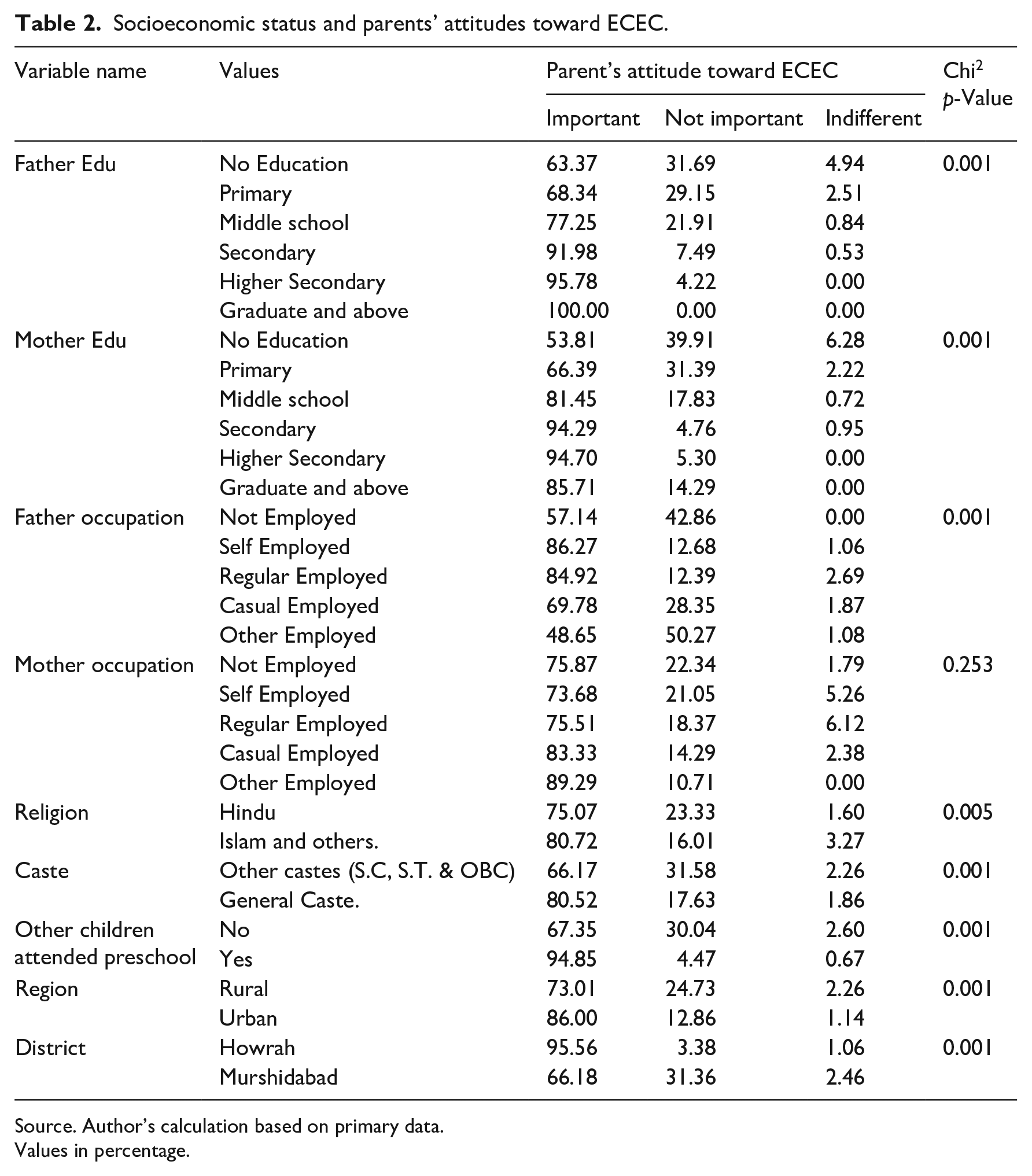
Source. Author’s calculation based on primary data.
Values in percentage.
Furthermore, Figure 1 indicates that parents who did not consider ECEC as important for children were less likely to send their children to preschool. A chi-square test of independence was performed to examine this association between parents’ motivation for ECEC and children’s preschool attendance and it was found significant with X2(1, N = 1369) = 657.29, p < .001. However, parents who did not consider ECEC important (5%) or were indifferent (29%) were found to send their children to a preschool. Exploring the reasons for sending a child to preschool shows that about 10% of the sample parents sent their children to preschool either for a free meal at the Center or any other reasons such as taking part in any informal economic activities or getting free time for household work etc. Moreover, it was found that mothers with a relatively lower level of education were more likely to send children to preschool for any such reasons (X2(6, N = 1369) = 116.90, p < 0.001).
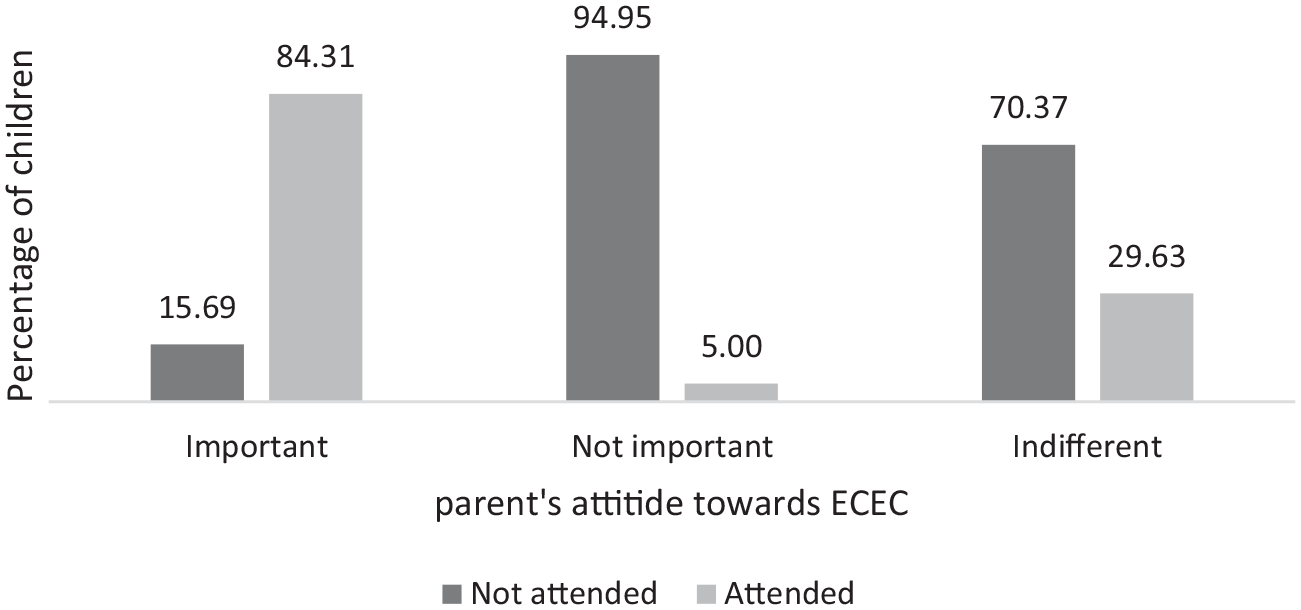
Parents’ attitude and children’s preschool attendance.
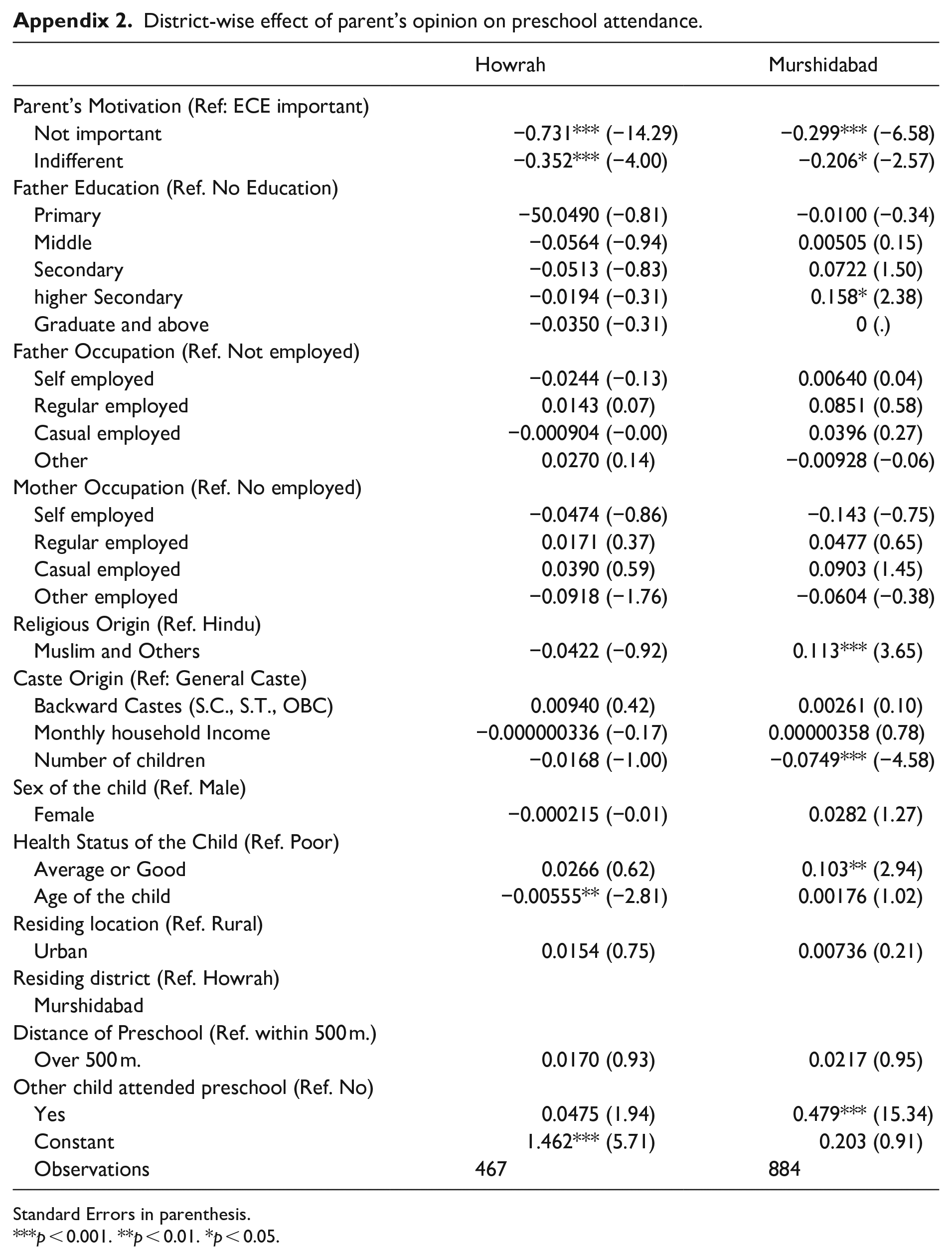
Findings from the confirmatory analysis are presented in Table 3. The F-statistics generated from the first stage of the 2 stages least square estimation were greater than 10, and the coefficients for mother’s education were statistically significant which suggests that the instruments used were not weak. The result shows a significant association between parents’ attitudes and children’s preschool attendance. Those parents who did not consider ECEC as important for their children or were indifferent about it were, in general, statistically significantly less likely to send their children to preschool. This association between parents’ attitude toward ECEC and children’s preschool attendance was confirmed by the findings from the IV-Probit analysis (refer to Appendix 1) where it is also found that children were statistically significantly less likely to attend preschool if parents’ consider ECEC as not important. However, unlike our initial finding, the coefficient of indifferent attitude from IV-probit estimation was not statistically significant. Besides, the district-wise analysis (refer to Appendix 2) shows a similar trend and in both the districts negative or indifferent attitude predicts significantly lower preschool attendance. However, even after controlling for different aspects of the socioeconomic status, the effect size was relatively stronger for the Howrah district. This inter-district variation advocate for further research in this regard.
IV regression of preschool enrollment.
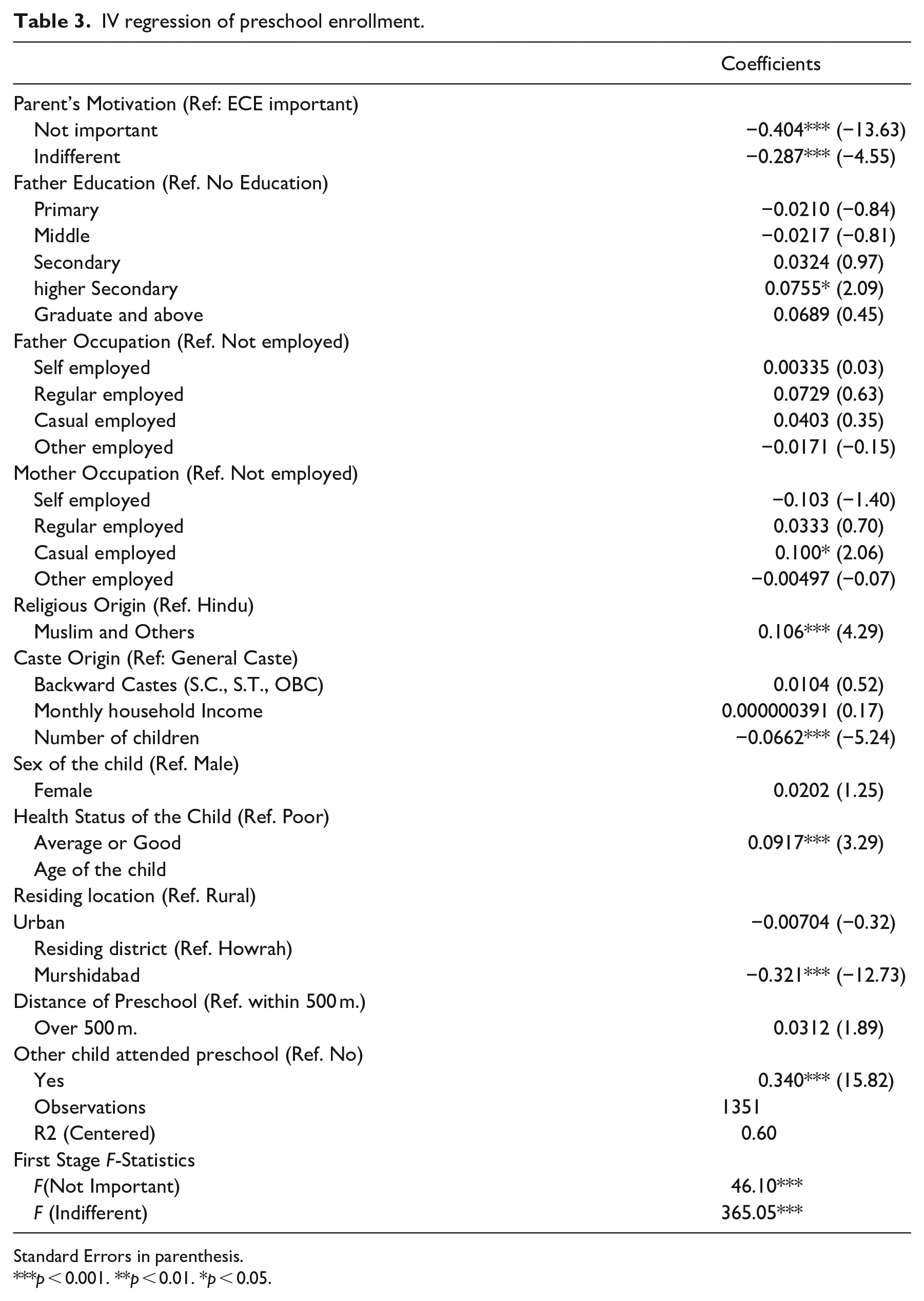
Standard Errors in parenthesis.
p < 0.001. **p < 0.01. *p < 0.05.
Among other covariates in Table 3, children from minority religious origin and children with relatively better health conditions were, in general, more likely to attend preschool. However, religion was a significant predictor only for the Murshidabad district (refer to Appendix 2). Besides, having a greater number of children in the household reduces the probability of attending preschool, and this effect was significant only for the Murshidabad district. Children from the relatively lower SES district, that is, Murshidabad were less likely to attend preschool compared to children from the Howrah district. If any of the children in the household already attended preschool then the chances were significantly higher for the sample child to attend preschool.
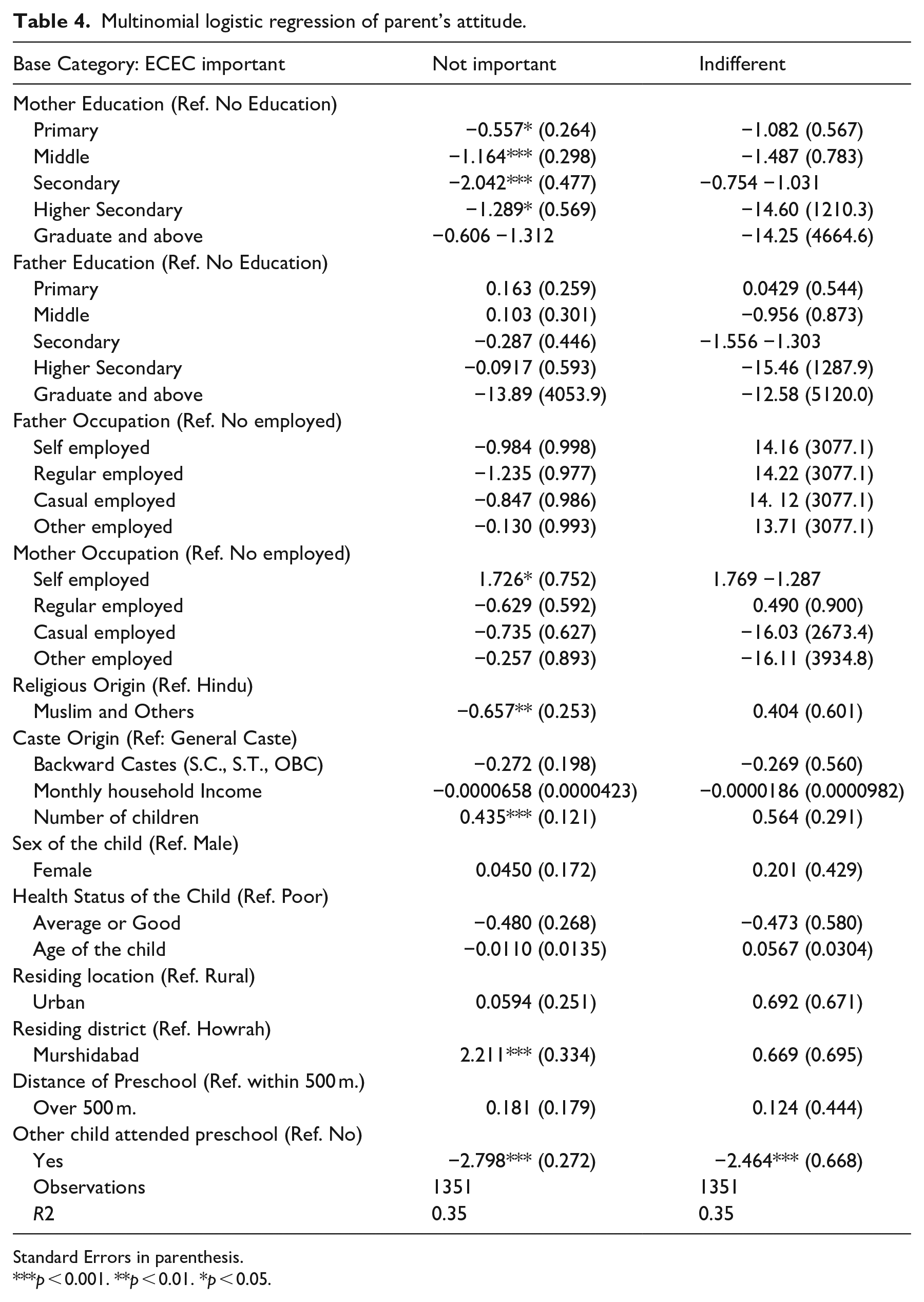
Table 4 shows the association between parents’ attitude toward ECEC and their socioeconomic status. Results show that mother education significantly influences parents’ attitude toward ECEC and higher educated parents were less likely to belong to “not important” or “indifferent” groups. There was no statistically significant association between a father’s education and a parent’s attitude. Also, parents from the Murshidabad district, where the adult literacy rate was relatively lower, were found more likely to belong to the group of parents who considered ECEC not important. Another important aspect is that parents were more likely to consider ECEC important for the sample child if any other child in the households already attended preschool.
Multinomial logistic regression of parent’s attitude.
Standard Errors in parenthesis.
p < 0.001. **p < 0.01. *p < 0.05.
Figure 2 depicts that majority of the parents, about 87%, considered ECEC important because of its early education and school readiness components. Whereas, a small proportion also thinks that children will get a greater chance to integrate themselves with peers and better care in preschool. Furthermore, the association between these reasons and parents’ level of education was examined using the Chi-square test and it was found significant with X2(8, N = 1041) = 34.86, p < 0.001. Besides, there were also significant religion-wise (X2(8, N = 1041) = 20.33, p < 0.01) and district-wise (X2(4, N = 1041) = 172.46, p < 0.001) variations in the reasons for considering ECEC important.
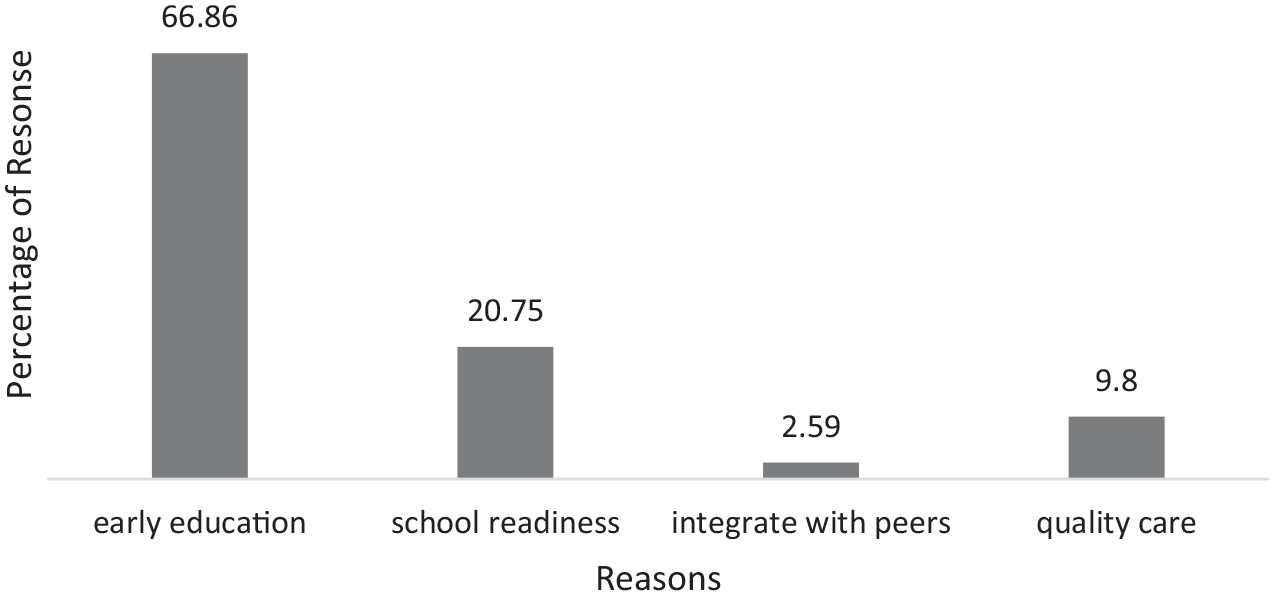
Reasons for considering ECEC important.
Therefore, the empirical analysis of the study summarizes that preschool attendance of children rests on parents’ attitudes toward ECEC. Besides, parents’ attitude toward ECEC is associated with the education level of the mother. Furthermore, if any of the children in the household already attended preschool then it significantly increases other children’s probability of attending preschool in the future as well as influences parents’ attitudes.
Discussion
Child-rearing in India is a collective experience and it heavily depends on the cultural scripts, family situations, and parents’ own beliefs and experiences (Tuli and Chaudhary, 2010). The current study provides empirical evidence showing that children’s access to ECEC is associated with parents’ attitude toward ECEC which, in turn, is influenced by the mother’s level of education. This finding not only extends the literature on the relationship between parental attitude and access to preschool but also specifies a plausible pathway through which parents (particularly mothers) can influence the development of their children. Existing evidence confirms that parents with positive attitudes try to provide the best opportunities to their children (Gordon et al., 2013) and, therefore, parents’ attitudes toward ECEC appeared as the most crucial factor for childcare participation (van Gameren, 2013).
An intriguing finding that is a significant contribution of the current study, especially in the context of the developing world, is the interaction between maternal education and parents’ (mostly mothers’) attitude toward ECEC. The importance of maternal education for children’s academic outcomes is widely recognized and maternal education is advantageous not only for mothers themselves but also for their children (Carneiro et al., 2013; Harding et al., 2015). It is well-established that children’s educational attainment and achievement are closely associated with parents’ education and beliefs (Davis-Kean, 2005; Dubow et al., 2009; Eccles, 2005). Highly educated parents show more positive attitudes toward the benefits of childcare on a child’s development (Geier and Riedel, 2009). The diffusion-of-innovation approach (Strang and Meyer, 1993; Wejnert, 2002) might be one explanation for this finding. Following this approach new societal changes are not adapted simultaneously by all groups but mostly higher status groups change their behavior first before it diffuses to all groups. Thus, highly educated mothers are not only better informed about childcare access and opportunities compared to their less-educated counterparts but following the approach, they are also more conscious about the potential benefits of early education.
Furthermore, if educated mothers wish to be employed themselves then they are more likely to need child care for their children. About 50% of the mothers in the sample with regular employment were found sending their children to preschool. Recent evidence from India found that mothers whose children received childcare were more likely to be engaged in economic activities (Jain, 2016). Besides, children’s preschool attendance increases the probability of mother’s full-time employment (Berlinski et al., 2011) and coverage of public child care was found to significantly increase mother’s probability to work (Brilli et al., 2016; Halim et al., 2019). Hence the relationship between a mother’s employment and preschool usage is reciprocal.
In addition, despite the lower educational achievements and societal status of ethnically minority parents (Ministry of Minority Affairs, 2006; Robinson, 2008), it is overwhelming to see these parents are considering ECEC as an important intervention for their children. The Census of India (2011) data shows a substantial improvement in literacy and employment scenario of religiously minority people over the decade. Therefore, it is likely that the field is now relatively “leveled” which favors the minority communities to have equal opportunity in education. Nevertheless, evidence suggests that the status of the minority religious community is space-variant (Narula, 2014), and thus, the status of Muslims in West Bengal and the educational opportunity they have may not always resemble that of other states in India.
The findings of the study trigger the question: Why parents do not consider ECEC important? On one hand, it could be the lack of enough initiative from the part of the state to make parents aware of the importance of ECEC in the first place. This can also associate with the existing literacy rate (about 74% nationwide, and 76% in West Bengal) that makes it difficult for a significant number of parents to educate themselves about the early childhood development policies and practices. On the other hand, it could also be due to the quality and accessibility of the existing ECEC provisions in the region. Existing studies (Ghosh and Dey, 2020; Govt. of India, 2011; Rana and Sen, 2008) found that parents’ concerns about the infrastructure and quality of care in preschools make them dubious about the benefits of attending preschool. This results in lower parental motivation and reduced preschool enrollment.
Conclusion
As child development is an important component of sustainable development, thus, access to ECEC programs is crucial for ensuring a strong foundation from the very beginning of life, particularly those from the developing world. Children from this part of the world are more in the need of early care and education as they are more vulnerable to risks of abject poverty and underdevelopment. Millions of children miss the opportunities to learn and are deprived of the stimulation that their developing brains need to thrive and their parents and caregivers struggle to get the time, resources, and services necessary to provide their children with nurturing care (Unicef, 2016).
There still exist challenges to the access to preschool in the form of the scale, diversity, quality of ECEC services, teacher quality, etc. (Rao et al., 2021). Although a substantial number of children in India especially those from marginalized communities are receiving preschool education under ICDS, an equally large number are not benefiting from it (Government of India, 2016; Rao et al., 2021). This study provides crucial empirical evidence that children’s access to institutional ECEC heavily hinges upon parental perceptions. Therefore, it is utterly important to include parents in the successful execution of child development programs. The barriers to access to preschool can be removed to a certain extent if parents can be made aware of the positive effects of ECEC on their children. Unfortunately, parents’ roles in child development is largely overlooked while implementing child development policies and programs in India. There are insufficient studies exploring what parents think about such a program, nor are there explicit efforts to involve them in the process.
Moreover, the evidence of a trickle-down effect of maternal education suggests that improving the female literacy scenario may also improve the preschool enrollment of the country. Considering the relatively low literacy rate among women, and other challenges faced by them in their daily living (Kundu, 2014; Nambissan and Rao, 2013; Sundaram and Vanneman, 2017), attention needs to be also given to provide them with better opportunities.
Limitations
Considering the design of the study, one might argue that asking parents post facto about importance of preschool may not always address their preschool decision taken in the past. However, given the context, it is unlikely for the parents to dramatically change their opinion about preschool within 2–3 years, neither it is possible for any major shift in their socioeconomic status within this time frame.
Besides, the preschool scenario in India is diverse causing difficulties in generalizing the results at the national level. However, given the sparse availability of evidence in this regard, the study can be considered as a starting point to initiate further research.
Footnotes
Appendix
District-wise effect of parent’s opinion on preschool attendance.
| Howrah | Murshidabad | |
|---|---|---|
| Parent’s Motivation (Ref: ECE important) | ||
| Not important | −0.731*** (−14.29) | −0.299*** (−6.58) |
| Indifferent | −0.352*** (−4.00) | −0.206* (−2.57) |
| Father Education (Ref. No Education) | ||
| Primary | −50.0490 (−0.81) | −0.0100 (−0.34) |
| Middle | −0.0564 (−0.94) | 0.00505 (0.15) |
| Secondary | −0.0513 (−0.83) | 0.0722 (1.50) |
| higher Secondary | −0.0194 (−0.31) | 0.158* (2.38) |
| Graduate and above | −0.0350 (−0.31) | 0 (.) |
| Father Occupation (Ref. Not employed) | ||
| Self employed | −0.0244 (−0.13) | 0.00640 (0.04) |
| Regular employed | 0.0143 (0.07) | 0.0851 (0.58) |
| Casual employed | −0.000904 (−0.00) | 0.0396 (0.27) |
| Other | 0.0270 (0.14) | −0.00928 (−0.06) |
| Mother Occupation (Ref. No employed) | ||
| Self employed | −0.0474 (−0.86) | −0.143 (−0.75) |
| Regular employed | 0.0171 (0.37) | 0.0477 (0.65) |
| Casual employed | 0.0390 (0.59) | 0.0903 (1.45) |
| Other employed | −0.0918 (−1.76) | −0.0604 (−0.38) |
| Religious Origin (Ref. Hindu) | ||
| Muslim and Others | −0.0422 (−0.92) | 0.113*** (3.65) |
| Caste Origin (Ref: General Caste) | ||
| Backward Castes (S.C., S.T., OBC) | 0.00940 (0.42) | 0.00261 (0.10) |
| Monthly household Income | −0.000000336 (−0.17) | 0.00000358 (0.78) |
| Number of children | −0.0168 (−1.00) | −0.0749*** (−4.58) |
| Sex of the child (Ref. Male) | ||
| Female | −0.000215 (−0.01) | 0.0282 (1.27) |
| Health Status of the Child (Ref. Poor) | ||
| Average or Good | 0.0266 (0.62) | 0.103** (2.94) |
| Age of the child | −0.00555** (−2.81) | 0.00176 (1.02) |
| Residing location (Ref. Rural) | ||
| Urban | 0.0154 (0.75) | 0.00736 (0.21) |
| Residing district (Ref. Howrah) | ||
| Murshidabad | ||
| Distance of Preschool (Ref. within 500 m.) | ||
| Over 500 m. | 0.0170 (0.93) | 0.0217 (0.95) |
| Other child attended preschool (Ref. No) | ||
| Yes | 0.0475 (1.94) | 0.479*** (15.34) |
| Constant | 1.462*** (5.71) | 0.203 (0.91) |
| Observations | 467 | 884 |
Standard Errors in parenthesis.
p < 0.001. **p < 0.01. *p < 0.05.
Declaration of conflicting interests
The author declared no potential conflicts of interest with respect to the research, authorship and/or publication of this article.
Funding
The author(s) received no financial support for the research, authorship, and/or publication of this article.
