



Abstract
The physical activity (PA) of young children is critical to their future activity, health and development, however, little is known about how the organisation of early years foundation stage (EYFS) settings impacts upon children’s PA. This study aimed to measure the PA of children in Nursery and Reception classes and to explore their PA according to learning context. Participants were 191 EYFS children (boys = 89; girls 102; Mean age M = 4.6, SD = 0.7 years) from six schools in the West Midlands, UK. Systematic observation was used to record children’s PA, learning context, adult interaction and location throughout the EYFS day. A total of 8740 observed intervals occurred. Children spent two thirds of their time being stationary (65.8% and 69.8% for Nursery and Reception respectively). Results of beta regression revealed the strongest predictors of vigorous PA (VPA) to be the learning contexts of ‘role play’, ‘physical’, ‘construction’ and being ‘outside’. Adult interaction had a negative association with moderate to vigorous PA (MVPA), and girls have 16.36% lower odds of engaging in VPA and 19.4% higher odds of engaging in stationary behaviour than boys. In order to support children’s learning and development, teaching strategies and the organisation of the EYFS environment should be adapted to increase children’s, especially girls’, active learning and to reduce sedentary time.
Keywords
Introduction
The health benefits of physical activity (PA) during early childhood have been widely reported in the literature, with early studies suggesting that insufficient PA is a risk factor for high blood pressure, weight gain, obesity, high cholesterol, respiratory difficulties, cardiovascular disease and poor bone health in young children (Janssen and LeBlanc, 2010; Poitras et al., 2016; Timmons et al., 2007). In a systematic review of the relationships between PA and health indicators in the early years (0–4 years; Carson et al., 2017), the majority (>60%) of experimental studies reported positive associations between PA and improved motor development, cognitive development, psychosocial health and cardiometabolic health. Across the observational studies in the same review, PA was favourably associated with motor development, fitness and bone and skeletal health in the majority of studies. Nonetheless, the relationship between PA and adiposity was more uncertain across study designs. Research has reported dose-response relationships between activity behaviours and psychosocial well-being in early childhood (0–5 years), more specifically, positive associations with PA and inverse associations with sedentary behaviour (Hinkley et al., 2014). In addition, associations between PA and motor skill competency in childhood have been reported (Lubans et al., 2010).
Early childhood is considered a critical period for PA behaviours to be established, as being physically active in childhood builds a strong foundation for living an active life as an adult (Public Health England [PHE], 2014). Environmental exposures to unhealthy behaviours during childhood (such as inactivity and sedentary behaviour) damage short- and long-term health more than at other times during the life course because ‘social and cognitive skills, habits, coping strategies, attitudes and values are more easily acquired than at later ages’ (World Health Organisation and the International Longevity Centre-UK, 2000, p.4). However, published statistics (Townsend et al., 2015) report that only one in ten 2–4 year olds in England are meeting the current activity guideline of 180 minutes of PA spread throughout the day. Current UK Chief Medical Officers’ PA guidelines (Department of Health and Social Care, 2019) recommend that children under the age of 5 years who are capable of walking should be physically active daily for at least 180 minutes and should ‘break-up’ the time spent being sedentary. Given that so few pre-school children meet current guidelines, it is important to find out more about when, where and how our youngest children are active.
For all children, the school environment is a constant feature and substantial part of their waking day. A study conducted amongst older primary and secondary school aged children reported that 83% of weekday waking time is spent being sedentary (Sandercock et al., 2016), and time in school contributes towards this sedentary behaviour. Indeed, a recent report by the Chief Medical Officer for England highlighted the central role that educational settings play in children’s health and concluded that ‘physical activity standards should be set and adhered to in all schools and nurseries’ (Davies, 2019, p.12). Research which objectivity measured over 200 children’s PA using activity monitors over 7 days, revealed that 3–4 year old children in England were less sedentary and engaged in more moderate to vigorous PA while in pre-school settings compared to home (Hesketh et al., 2015). However, little is known about the PA and sedentary behaviour of children while they are in early childhood settings in English Schools, and whether there are any associations between the structure and organisation of the learning environment and the activity levels in Nursery (3+ years) and Reception (4–5 years) classes. This information is required in order to target early childhood settings in the development of effective PA interventions for children (PHE, 2014). In addition to children spending a large amount of their time at school, schools also provide an infrastructure for promoting PA, due to facilities, staffing and resources (Pate et al., 2006). Early childhood settings have an important role to play in this regard as they provide children with opportunities to engage in both structured and unstructured PA. The results of a systematic review indicated that school-based interventions to improve movement competency in 3–5 year olds increased the children’s PA intensity and reduced sedentary behaviour, ‘possibly helping to reduce the burden of childhood obesity and its associated health risks’ (Engel et al., 2018, p.1845). However, such interventions in early childhood settings may not be appropriate as young children’s PA might be described more appropriately as ‘play’, broadly defined as ‘the spontaneous activity in which children engage to amuse and to occupy themselves’ (Burdette and Whitaker, 2005, p.46) or ‘activity that children engage in because they enjoy it for its own sake’ (Thies and Travers, 2008, p.219). Play reflects much of the learning that takes place within early childhood settings, with activities of differing intensities, involving both gross and fine motor control, taking place indoors and outdoors and sometimes involving increased levels of risk (e.g. through Forest School), therefore, research which explores the context for active play in early childhood settings is needed.
All early childhood settings in England are required to follow the Statutory framework for the early years foundation stage (EYFS; Department for Education [DfE], 2017). While each setting is unique, they all need to reflect the EYFS areas of learning and have a number of similar features, for example, an area where children have access to construction materials, writing areas where children are encouraged to mark make, role play areas, an area for creativity and/or messy play such as water or sand, a book corner and a carpeted area. It is also a requirement that children have access to an outdoor area or have outdoor activities planned for and undertaken daily (DfE, 2017). Such areas of learning are designed to provide young children with opportunities to learn through active rather than passive engagement, as children benefit from being involved in their own learning (Chi, 2009). Although this does not necessitate them being physically active, it is widely accepted that young children learn by being physically engaged in their environment (Cassidy and Shaver, 1999). Research into the brain development of children confirms that babies and young children learn through all of their senses and need to be able to move and learn through ‘hands on’ experiences (Lindon, 2005). They also need to develop physical confidence through both large and fine movements in order for them to learn how to manage their bodies which is key to later success in language learning (Iverson, 2010), reading and writing (Lindon, 2005).
While the importance of PA in early childhood is understood, and for EYFS settings in England there is the expectation that learning takes place through activity, little is currently known about young children’s PA while in school and how the structure and organisation of the EYFS environment can promote or inhibit PA. Therefore, this research aims to measure the school-based PA of EYFS children (i.e. children in Nursery and Reception years) and to explore their activity behaviour according to learning context.
Methods
This research was part of a larger mixed-methods study into the PA of EYFS children.
Participants
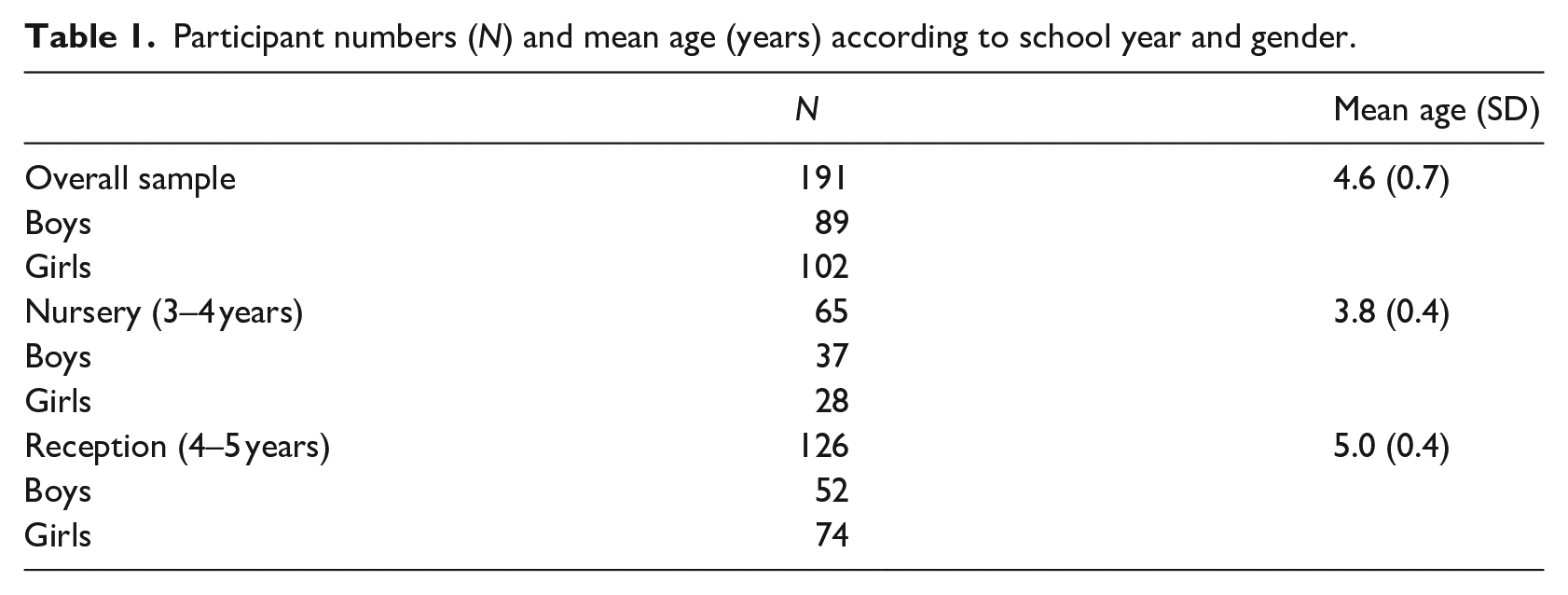
One hundred and ninety-one children from a purposive convenience sample of six schools in the West Midlands, UK participated in the research. For a breakdown of participants according to school year and gender, see Table 1.
Participant numbers (N) and mean age (years) according to school year and gender.
The inspection reports published by the Office for Standards in Education, Children’s Services and Skills (Ofsted), a department that inspects services and reports directly to Parliament, rated the early years provision in all the participating schools as being ‘good’ or ‘outstanding’. Ofsted also indicated that the proportion of pupils supported by the Pupil Premium (additional funding provided to schools for children in local authority care, those known to be eligible for free school meals and other disadvantaged groups) was above the National average. In addition, the paediatric BMI classification for the children who participated in the current study were in line with those of the National Child Measurement Programme (NCMP) data for 2016/2017 for the West Midlands region (NHS Digital, 2017), with 24.3% of the children being overweight or obese in this sample compared with 24.1% regionally.
Measures and procedures
Research ethics
Institutional research ethics approval was gained prior to data collection. Following this, the Headteachers of the schools were contacted to ascertain if they would be willing for their school to take part and their written informed consent to participate was obtained.
School staff distributed information sheets along with written informed consent forms to parents or legal guardians. Parents and guardians were also invited to meet the researchers and ask any questions about the project. Approximately 550 letters were distributed, and written informed consent was received for 204 children (response rate of approximately 37%). Observation data were collected from 191 children due to child absence during the data collection period.
Following the receipt of parental informed consent, the children’s assent was gained. There has been a gradual change in the way in which children are viewed over the last two decades and the current position is that children’s views should be sought as to whether they wish to participate (or not) in research (Greig et al., 2012). In order to gain the children’s assent, it was important to ensure that, as far as possible, they understood the nature of the research, what their participation involved and that they had the right to refuse to take part if they no longer wanted to. To facilitate this a picture book was selected as a vehicle to introduce the research to the children which allowed the researchers to communicate information in a manner which was both comfortable and appropriate for this age group (Pyle and Danniels, 2016). All of the children for whom parental written informed consent was received agreed to take part in the research. Ongoing assent was also sought each time the researchers were in settings. Children were reminded that if they did not want to participate in the research they could refuse to do so at any time. Researchers were sensitive to the child’s body language and if they indicated they did not want to be observed then the observation ceased. Additionally, researchers positioned themselves on the edge of the working area so that they could reduce any impact on children’s learning.
Systematic observation of physical activity
PA was assessed using an adapted version of the System for Observing Fitness Instruction Time (SOFIT) (McKenzie, 2015). SOFIT is a comprehensive tool for assessing PA in learning contexts as it allows for the simultaneous collection of data across activity-related variables, including the children's activity levels (i.e. lying, sitting, standing, walking or very active). The SOFIT variable of lesson context was adapted to incorporate EYFS learning contexts (i.e. books, carpet, construction, creative, role play, writing, physical and other). The SOFIT variable of teacher promotion of PA was also amended for the purposes of the current research, and the adult interaction category referred to whether the children were engaged in learning or procedural activities with an adult or not. Finally, the location of the PA, whether it was indoors or outdoors, was also recorded, as it is an expectation that learning takes place both indoors and outdoors in EYFS settings (DfE, 2017). The recording form used for observing PA in EYFS settings as adapted from SOFIT (McKenzie, 2015) is presented here as Figure 1.
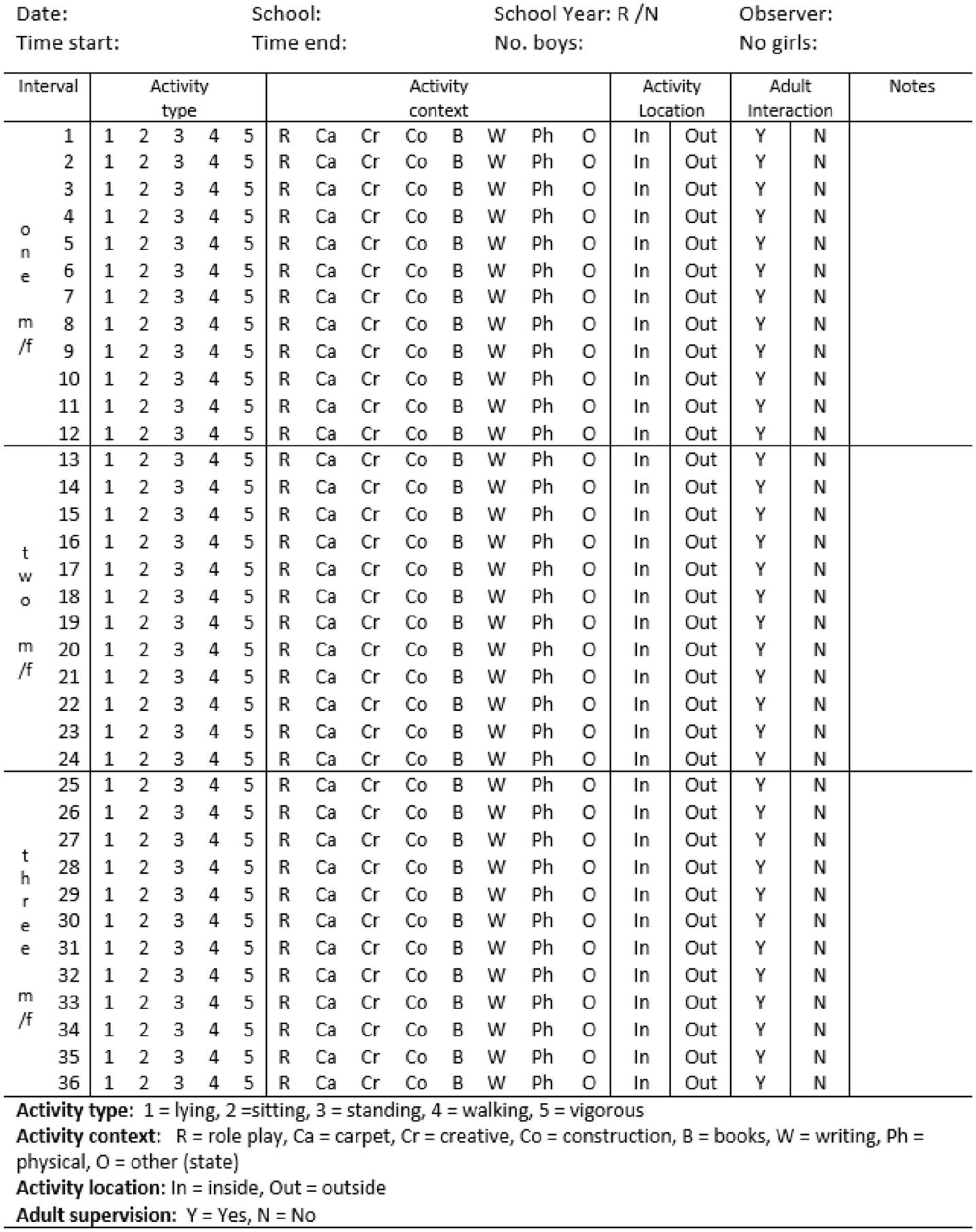
Observation recording form adapted from the system for observing fitness instruction time (SOFIT); McKenzie, 2015).
Direct observation has high internal validity and has been used as a criterion for validating other PA measures (McClain et al., 2008). Data were collected by four researchers, all of whom were trained in the use of systematic observation. Training comprised of watching SOFIT training videos, becoming familiar with the SOFIT protocols and adapted variables for EYFS setting and field practice. Two researchers were already highly experienced in the use of systematic observations using both SOFIT (McKenzie, 2015) and the System for Observing Children’s Activity and Relationships during Play (SOCARP) (Ridgers et al., 2010). Infield inter-observer reliability checks between experienced observers and other researchers took place before data were collected. Reliability checks were above 80% for each category observed.
In each setting all the children for whom informed consent had been gained, and who were present during the data collection period, were observed on a rotational basis until the end of the learning session (i.e. morning or afternoon session). The 191 participating children were observed for 8740 intervals, totalling over 48 hours of direct observation.
Data analysis
Systematic observation data were collected across the four categories: activity level (i.e. lying, sitting, standing, walking and vigorous), in line with SOFIT, as well as learning context, adult interaction and location (i.e. inside or outside). The frequencies of the recorded intervals were first calculated and then converted to percentage of observed time. Descriptive statistics were presented as means and standard deviations for percentage of observed time according to the four categories listed previously.
To determine how various environmental factors and classroom activities engaged in by Nursery and Reception children predicted observed vigorous physical activity (VPA), walking, moderate to vigorous PA (MVPA, comprising VPA and walking), standing, sitting, lying and stationary behaviour (comprising standing, sitting and lying), a series of regression models were fitted. These models ranged from standard ordinary least squares (OLS) multiple regression, through multilevel regression models, to various beta regression models. Diagnostic checks were made on each of the models to check all assumptions were met and multicollinearity was not problematic. The best models were selected using Akaike Information Criteria (AIC; Akaike, 1974). AIC uses in-sample fit to estimate the likelihood of a particular model to predict the future values. The best models have the lowest AIC values among the models considered. In the present study, the best models were generalised additive regression models using a zero-inflated, one-inflated or zero-and-one-inflated beta distributions. The beta distribution is useful for modelling data that are measured in a continuous scale on the open interval (0, 1) such as proportions and percentages (Ferrari and Cribari-Neto, 2004). The zero-inflated beta, one-inflated beta and zero-and-one-inflated beta are all similar to the beta distribution but allow zeros, ones or both in the response variable (Ospina and Ferrari, 2010). These are the models reported along with Cox and Snell’s R2 to estimate variance in the response explained by the predictors.
Log odds were reported to show the direction of the relationship between predictor and response, and odds ratios (exponentiated log odds) were reported along with 95% confidence intervals. To make interpretation more meaningful for practitioners, the coefficients of continuous variables were interpreted in terms of 10 units (10%) of the predictor variable’s influence on the dependent variable, rather than just a single unit (1%). To access evidence against the null hypothesis, exact p-values were reported for all coefficients, three stars represent the strongest evidence against the null and an interpunct the weakest plausible evidence against the null. Predictors with a p-value greater than 0.1 were reported but were considered too uncertain to be interpreted as a serious predictor so no interpretation is provided.
All analyses were conducted using R (R Core Team, 2018) with the zero-inflated beta and beta inflated fitted using the Generalized Additive Models for Location, Scale and Shape (gamlss) package (Rigby and Stasinopoulos, 2005).
Results
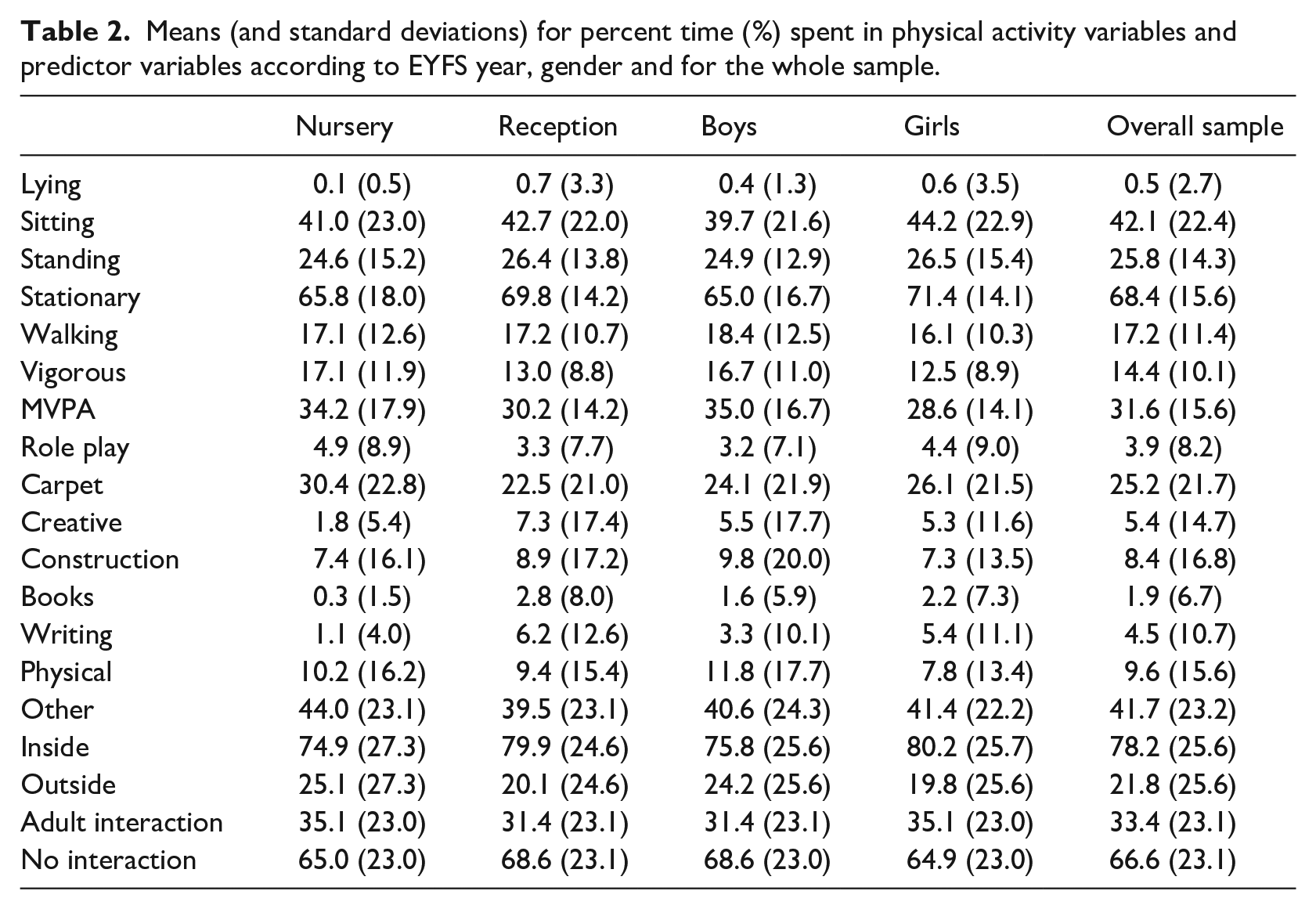
Descriptive statistics are presented as means and standard deviations for all the activity variables (i.e. lying, sitting, standing, stationary, walking, vigorous and MVPA) and predictor variables for learning context (i.e. books, carpet, construction, creative, role play, writing, physical and other), adult interaction and location (i.e. inside or outside), according to EYFS year (i.e. Nursery or Reception) and gender, as well as for the whole sample (see Table 2).
Means (and standard deviations) for percent time (%) spent in physical activity variables and predictor variables according to EYFS year, gender and for the whole sample.
Moderate and vigorous physical activity (MVPA)
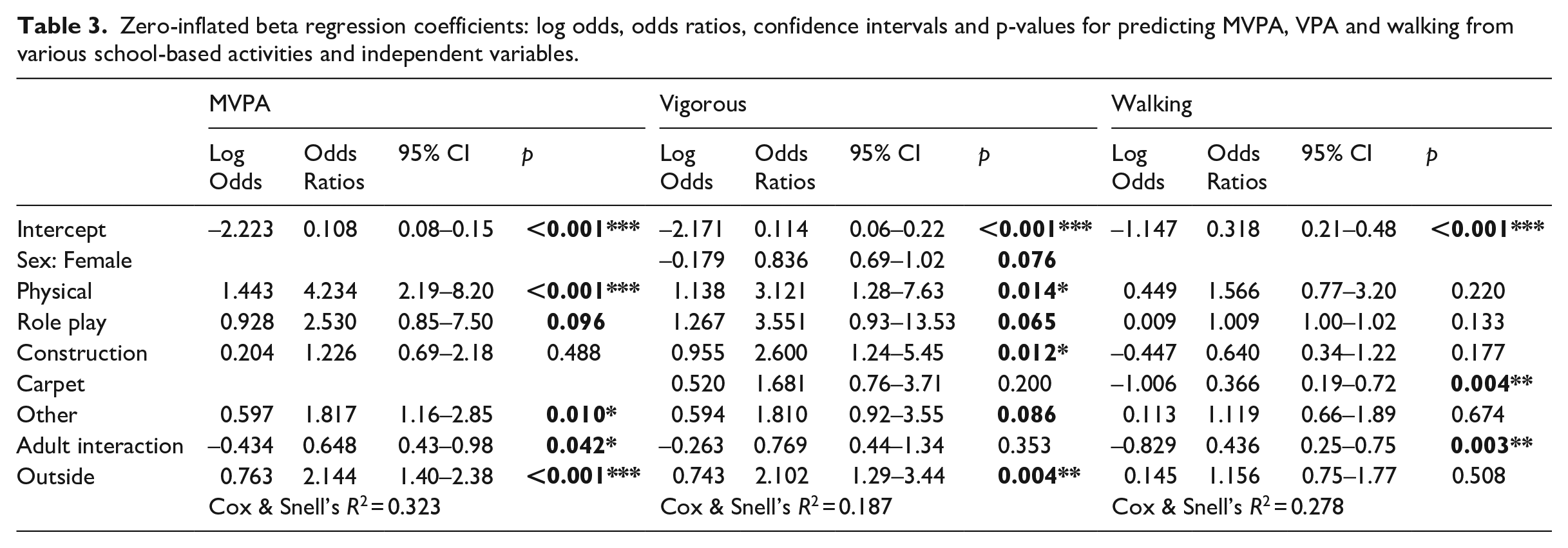
The results of the zero-inflated beta regression for MVPA suggest five key predictors are positively associated with this level of PA (see Table 3). The strongest predictor in terms of percentage increase in the odds of MVPA is ‘physical’ (see Table 4). When considering the strongest evidence against the null, ‘other’ activities (i.e. activities not captured under the general headings of predictors) provided equally strong evidence against the null but with lower impact in terms of percent increase in MVPA. ‘Role play’ resulted in the second highest percent increase but less evidence to reject the null than the other credible predictors. Conversely, ‘adult interaction’ demonstrates a negative association with MVPA providing evidence against the null at the conventional 0.05 level. While the coefficient for ‘construction’ is positive, the direction of this estimate is highly uncertain. Overall, the model suggests that the combination of predictors included explain 32.3% of the variance in MVPA.
Zero-inflated beta regression coefficients: log odds, odds ratios, confidence intervals and p-values for predicting MVPA, VPA and walking from various school-based activities and independent variables.
Percentage increases or decreases in the odds of MVPA, VPA, walking, standing, sitting and stationary behaviour as a result of a 10% increase in activity predictors.
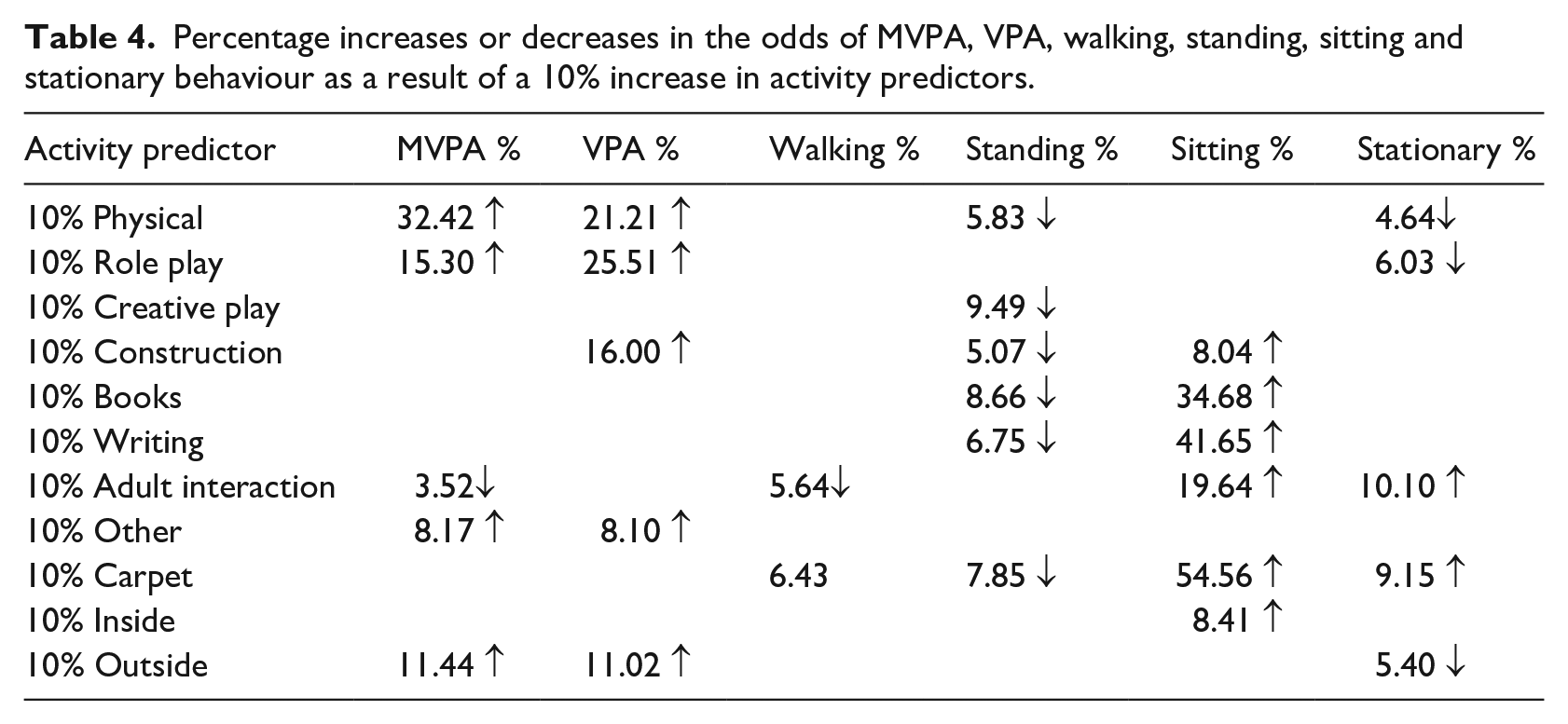
The results of the zero-inflated beta regression for vigorous PA (VPA) suggest that girls have 16.36% lower odds than boys in engaging in VPA (see Table 3). The strongest predictor of VPA is children engaging in ‘role play’. Nonetheless, the degree of uncertainty around this estimate has to be considered when drawing conclusions. ‘Physical’ and ‘construction’ learning activities, and being ‘outside’, provide stronger evidence against the null but result in a lower percentage of VPA (see Table 4). While the coefficient for ‘carpet’ suggests a positive association and ‘adult interaction’ a negative one, these estimates are highly uncertain. Overall, the model suggests that the combination of predictors included explain 18.7% of the variance in VPA.
The results of the zero-inflated beta regression for walking suggest two key negative predictors. The strongest predictor both in terms of percentage decrease in the odds of walking and evidence against the null, is for ‘carpet’ based activities. ‘Adult interaction’ also results in a decrease, albeit slightly less. Both predictors provide relatively strong evidence against the null (see Table 3). While the coefficients suggest a negative association between ‘construction’ and walking, and a positive association for ‘role play’, ‘physical’, ‘other’ activities and being ‘outside’, the direction of these estimates is highly uncertain (see Table 4). Overall, the model suggests that the combination of predictors included explain 27.8% of the variance in walking.
Stationary behaviour
The results of the one-inflated beta regression for predicting stationary behaviour identify six predictors, three with positive relationships to stationary behaviour and three with negative relationships (see Table 5). Positive relationships include sex, with girls having 19.4% higher odds than boys to engage in stationary behaviour in the context examined, activities on a ‘carpet’ and ‘adult interaction’. Negative predictors included ‘role play’, ‘physical’ learning and activities undertaken ‘outside’ (see Table 4). Overall, the model suggests that the combination of predictors included explain 38.8% of the variance in stationary behaviour.
Zero-and-one-inflated (standing and sitting) and one-inflated (stationary) beta regression coefficients: log odds, odds ratios, confidence intervals and p-values for predicting standing, sitting and stationary behaviour from various school-based activities and independent variables.
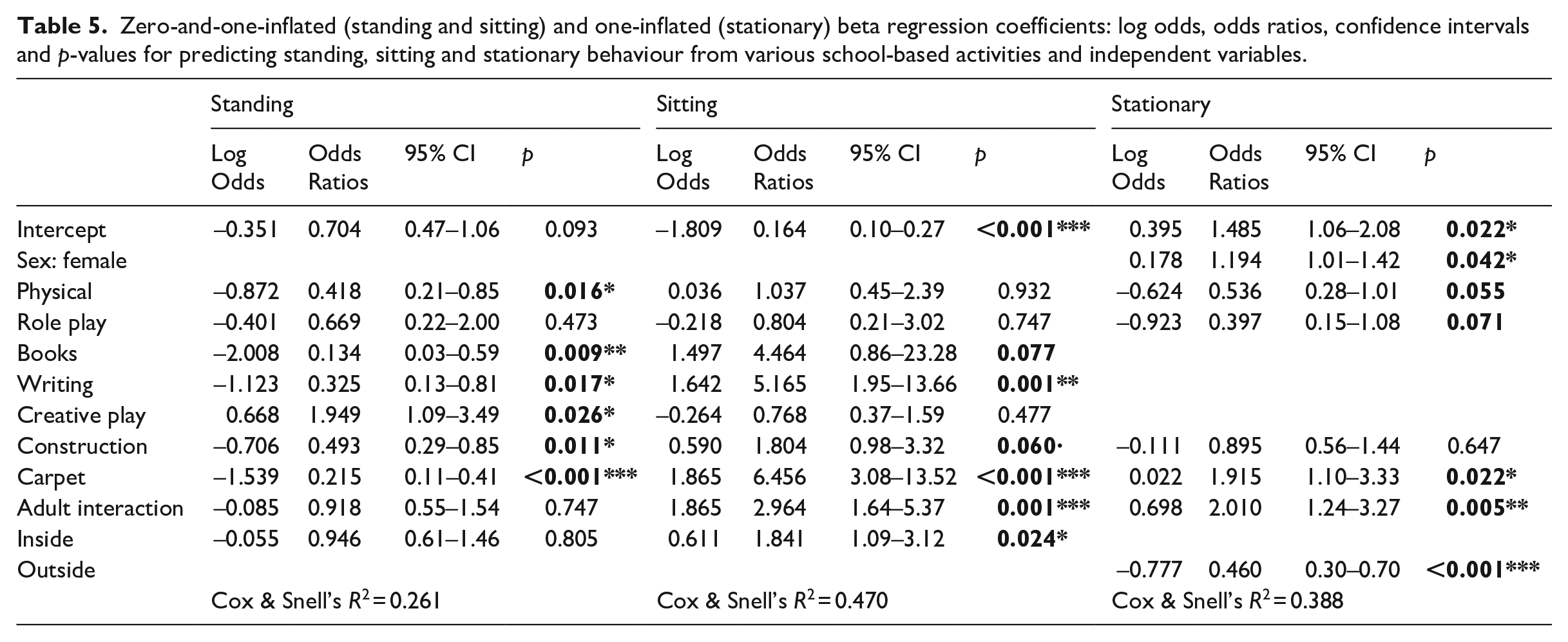
The results of the zero-and-one-inflated beta regression for standing suggests five key negative predictors and one positive predictor (see Table 5). Children engaging with ‘books’ was the largest negative predictor with the highest percentage decrease in the odds of standing along with strong evidence against the null. This was followed closely by ‘carpet’ activities with equally strong evidence against a null of no association with standing. ‘Physical’, ‘construction’ and ‘writing’ activities also had negative relationships with standing. Conversely, ‘creative’ was positively associated with standing (see Table 4). While the coefficient for ‘role play’, being ‘inside’ and ‘teacher interaction’ are negative predictors, the estimates are highly uncertain given it is not possible to credibly reject no relationship. Overall, the model suggests that the combination of predictors included explain 26.1% of the variance in standing.
The results of the zero-and-one-inflated beta regression for sitting suggests six key positive predictors. The strongest predictor in terms of percentage increase in the odds of sitting is undertaking activities on a ‘carpet’ followed by ‘writing’ activities and when the children engage with ‘books’ (see Table 5). Undertaking activities ‘indoors’, engaging in ‘construction’ and ‘adult interaction’ were also key predictors. Activities undertaken on a ‘carpet’ and ‘adult interaction’ provide strong evidence against the null, suggesting a positive relationship (see Table 4). While the coefficient for ‘role play’ and ‘physical’ are also positive and ‘creative’ negative, the direction of these estimates is highly uncertain. Overall, the model suggests that the combination of predictors included explain 47% of the variance in sitting.
As children were recorded as lying down for only 0.5% of the observed time, this behaviour was omitted from the inferential analysis.
Discussion
This study aimed to add to current knowledge on the PA of early years foundation stage children through the observation and measurement of their PA at school and to record the contexts in which their PA occurs. Findings indicate that children spent two thirds of the observed time in EYFS classrooms engaged in stationary behaviour (65.8% and 69.8% for Nursery and Reception respectively), with approximately 42% of their time spent sitting and 26% standing. Given that the EYFS Framework (DfE, 2017) advocates the need for movement in the classroom to promote learning and the development of the children’s ‘co-ordination, control, and movement’, this finding is particularly alarming as spending such a high percent of time sedentary (i.e. sitting) could not only inhibit the development of a range of motor skills but could also impair the children’s health. Previous research has reported links between higher durations and frequencies of sedentary behaviour in childhood and unfavourable body composition and cardiometabolic risk (Carson et al., 2016). Given that Nursery and Reception children can be in school for approximately 6 hours per day, 5 days a week, schools are providing environments in which young children are frequently sedentary and sometimes for extended periods of time. Furthermore, previous published work has proposed a dose-response relationship exists, whereby, PA is positively, and sedentary behaviour inversely, associated with psychosocial well-being in early childhood (Hinkley et al., 2014). This finding is even more concerning given that previous research has highlighted that children, especially boys, who attend pre-schools are more active and less sedentary than children who are not in childcare (Hesketh et al., 2015).
Walking and vigorous activity comprised approximately a third of time the children spent in the setting, with walking accounting for over half of this time. However, much of the walking undertaken by the children was incidental and not directly related to any free play or adult directed learning activity. For example, the children typically walked when transitioning between adult directed learning and another activity, but more frequently between free play activities, when fetching coats and when moving to and from the carpet area. This incidental walking was not due to children being active because of the learning experiences afforded to the children in the indoor or the outdoor learning environments. The limited amount of time the children spent engaging in structured MVPA was somewhat concerning as motor play, practicing skills such as walking, running, jumping, climbing and catching, is one of the best ways for children to learn about the world around them and gain in confidence (Palaiologou, 2010).
The types of learning activities undertaken by children in the current study positively and negatively predicted their PA and sedentary behaviour. Being outside and undertaking activities which specifically focus on physical learning (e.g. climbing, riding bikes) positively predicted VPA, furthermore, construction activities (e.g. using building blocks, Meccano) also predicted VPA. ‘Physical’ and ‘construction’ learning promote the use of large muscle groups, and for the latter children were observed crawling and bearing weight on the arms. Promoting these types of learning opportunities, not only helps young children to meet current PA guidelines (Department of Health and Social Care, 2019) through the use of all the major muscle groups in movement and the development of co-ordination, but also provides opportunities to meet the learning requirements of the EYFS framework including Physical development and Personal, social and emotional development (DfE, 2017).
Role play was a positive predictor of MVPA. Several settings had role play areas located in both the indoor and outdoor areas, however, most observations of roleplay took place indoors. Role play is known to provide many benefits to children including cognitive and language development and social development (Rogers and Evans, 2008). It is also known to support physical development in terms of the development of gross and fine motor skills. Although role play areas were generally small and did not allow children to run, children were engaged in a range of movements, such as crawling, squatting, twisting and leg swinging, where they were using large muscle groups. While roleplay was also one of the greatest predictors of VPA, it accounted for only 3.9% of the total observations, therefore, comparatively few observations were recorded of children in role play, perhaps resulting in less evidence to reject the null despite role play having the second highest percent increase. Field notes indicated that access to the role play area could be restricted to four or five children at any one time, possibly due to the confined space in which the role play area was located. One way to increase children’s PA levels within a foundation stage setting might be to extend role play areas to accommodate a greater number of children or to have more than one role play area.
Teaching strategies and the organisation of the learning environment could be adapted to both increase children’s PA, thereby reducing their sedentary behaviour in the classroom, and potentially promote learning in all areas of the EYFS Framework (DfE, 2017). The way in which EYFS classrooms are generally organised in England, and the practice adopted by schools in the current study, combines teacher-/adult-led learning time with independent (free play) learning. Teacher-led activities, which typically take place on the carpet and include phonics teaching, are sedentary with children seated, sometimes for extended periods of time. These teacher-led learning activities play an important role in children’s reading, writing and verbal communication development, all requirements of the EYFS Framework (DfE, 2017). Adult interaction was a negative predictor of VPA, walking and standing and a positive predictor of sitting. Therefore, when adults engage with the learners, the children either are seated or are required to sit. However, much of the teacher-led and ‘carpet’-based activities related to classroom management, for example, registration, waiting for learning activities to begin, waiting for parents to arrive at home time and snack time. Given that the children in the current study spent a quarter of their time standing, this sedentary behaviour is also worthy of note. While teacher interaction was not identified as a positive predictor of standing, field notes indicted that children were standing whilst queuing and lining up (e.g. waiting to exit the classroom, waiting to put their coats on). Therefore, practitioners should consider maximising learning time, including the provision of more opportunities for children to learn through movement, by minimising the amount of time spent in classroom management activities. Furthermore, practitioners should seek to ensure that they support, challenge and extend children’s learning when the children are engaging in more physical learning activities, not just when undertaking sedentary teacher-lead learning, as data from the current study revealed that for every 10% increase in ‘adult interaction’ the odds of sitting increased by 19.64%.
The current study supports previous research that has consistently identified differences between preschool boys’ and girls’ PA, with boys being more active (Dias et al., 2019; Tanaka and Tanaka, 2009; Vale et al., 2015). In the current study, the odds of girls engaging in stationary behaviour were 19.4% higher than boys, and 16.36% lower for engaging in VPA, therefore, it would appear that EYFS settings in the current study do not provide learning environments and practices that provide gender equality in terms of PA engagement. As previously stated, engaging in outdoor activities was a positive predictor of VPA and, as boys in the current study spent a greater amount of time outside than girls, this could go some way to accounting for this difference. However, it also raises questions about why girls chose to spend more time indoors and whether practitioners could promote outdoor activities to girls and provide an environment which girls might find more engaging and stimulating. Research has highlighted that generally boys are more active than girls (Telford et al., 2016), and studies have provided ideas about why this might be, including girls receiving less social support to engage in PA (Edwardson et al., 2013) and enjoying physical education less (Cairney et al., 2012). While it was beyond the remit of the current study to explore whether there were differences in the types of learning activities boys and girls engaged in in EYFS settings, future research in this area is to be encouraged. Understanding this may help interventions to target gender differences in PA, which continue throughout the life course.
Given that neither the school nor learning stage (i.e. Nursery or Reception) were identified as predictors of PA suggests children’s PA in the current study is consistent, irrespective of the school attended. Therefore, the way in which the learning environments were structured by the schools that participated in the current study, and how practitioners working in these settings organise and facilitate learning through their planning and delivery, results in similar activity behaviours. This would suggest that interventions to increase active learning could be generic, without the need for specific considerations for learning stage or school, however, the current study only involved the observation of six schools in one geographic location (i.e. West Midlands, UK). Furthermore, selection bias should also be considered as the schools may have consented to take part because they perceived themselves to provide active learning, which may not represent EYFS practice in all schools. Therefore, future research in different schools, UK regions and countries is warranted. Finally, although systemic observation is a valid measure of children’s PA behaviour (McClain et al., 2008), future research could use alternative valid and objective methods, such as accelerometry, to corroborate the findings of the current study.
In conclusion, the findings of this research suggest a high probability that Nursery and Reception children spend the majority of their time in school sitting or standing. Importantly, the findings add to existing knowledge on how the structure and organisation of the learning environment can predict physical activity and sedentary behaviour. As the decision making and the actions of early years foundation stage practitioners have been shown to predict children’s activity behaviours in school, practitioners should seek to provide all children with an environment which can further benefit holistic development and health through active learning. This is especially important for girls, who engage in more sedentary behaviour and less vigorous activity at school than boys.
