



Abstract
The safety and reliability assessment of post-tensioned (PT) concrete bridges is critical to the management of the infrastructure. Assessing the structural health condition of PT concrete bridges is challenging due to the inaccessibility of prestressing systems. In combination with visual inspections, engineers rely on partially destructive and nondestructive testing to assess the health of the prestressing system of bridges. As a consequence, test outcomes often guide operator decisions on bridge management. However, the uncertainty of testing techniques can lead to suboptimal maintenance strategies and inefficient resource allocation. Thus, it should be taken into account in the decision-making process. This paper introduces a decision-making methodology based on Expected Utility Theory (EUT) to assess the accuracy requirements of tests to be convenient to operators. A practical application of the proposed methodology is shown in a real case study of a PT concrete viaduct in Italy. In this application, the assessment of the prestressing state of the viaduct is treated through strand-cutting tests.
Keywords
Introduction
The infrastructure system is central in the organization of nations and plays a critical role in their social and economic functionality. 1 After World War II, European nations expanded their highway networks, building a large number of bridges and viaducts. 2 Many of these are post-tensioned (PT) reinforced concrete bridges 3 and are approaching or exceeding their intended service life, raising concerns about structural health and safety. 4 In recent decades, about 50 structural bridge failures have occurred, 5 including catastrophic events such as the collapse of the Morandi bridge in Genoa, Italy. 6 Furthermore, the recent event in Dresden, Germany, confirmed this trend, making PT concrete bridges especially critical. 7 Aged infrastructure, increasing traffic demand, and frequent extreme events due to climate change8,9 make the management of this infrastructure a central concern of civil society. Replacement of aging structures poses significant challenges in terms of financial, logistical, and environmental issues. 10 Therefore, infrastructure managers aim to preserve existing infrastructures through routine and extraordinary maintenance strategies.11,12
The assessment of PT concrete bridges with grouted duct is a significant issue for engineers. The main structural component of PT concrete bridges, the prestressing system, is hidden and cannot be monitored solely by visual inspections (VIs).13,14 In this context, structural health monitoring plays a crucial role in ensuring the security of these key infrastructures. Engineers can employ structural monitoring as a way to identify eventual damage conditions in these structures. 15 More specifically, damage conditions can manifest themselves in trend variation of kinematic variables, which can be identified by long-term monitoring systems. 16 Alternatively, also in combination with structural monitoring, 17 engineers can make use of partial destructive tests (PDTs) and/or nondestructive tests (NDTs) to directly identify defects in the prestressing system (e.g., grout voids, reinforcing steel corrosion, strands/wires breaks). 18 This is confirmed by national guidelines on the management of bridges, such as the U.K. guidelines on the management of PT concrete bridges 19 and the Italian ministerial guidelines on the monitoring of existing bridges. 20
In common practice, operators follow national guidelines, making use of PDT and NDT. In addition, operators tend to have high confidence in test outcomes. Therefore, test outcomes strongly influence operators’ decisions on infrastructure management strategies. In other words, test outcomes drive infrastructure management strategies. However, recent studies have highlighted that even the most commonly used tests can be inaccurate and affected by significant uncertainties.21–23 This constitutes a significant issue because the uncertainties involved could lead to suboptimal decisions, resulting in wasted time and resources. 12 Therefore, in the context of infrastructure management, the proper choice of the tests to be performed plays a key role. Accounting for test uncertainties is particularly important for the assessment of PT concrete bridges, as it is often not possible to complement test interpretation with information from VIs.
A rational approach to decision-making is the expected utility expected utility theory (EUT)24,25 that provides a probabilistic-based method to guide decision-making from an economic perspective by accounting for uncertainty. 23 According to EUT, rational decision-making should account for (i) the accuracy (or the uncertainty) of inspection testing strategies and (ii) prior knowledge on the condition state of the infrastructure (i.e., knowledge before performing the test). Following a Bayesian perspective, prior knowledge plays a crucial role in decision-making. 26 Therefore, information on structure building technology, construction period, construction phase, mechanical characteristics, and condition state should be known for a rational decision-making process. In addition, test uncertainties must be considered in decision-making to avoid suboptimal management strategies (e.g., bridge closure based on a highly uncertain diagnostic test outcome when the bridge is actually safe). 27
Based on this perspective and considering current practice in testing strategies, an important research question must be addressed: under what conditions is a testing strategy cost-effective when the decision-making process is guided by the test outcomes? Or, more simply, under which conditions does it make sense to carry out a test?
In this paper, the authors answer this relevant question which, to the best of their knowledge, represents a significant gap in the current literature. Specifically, the present paper presents an EUT-based framework for the marginal utility assessment of inspection tests. Following the proposed EUT-based framework, the present paper defines the accuracy requirements that tests must meet to be cost-effective. According to the EUT, these requirements are those that ensure that the economic gain of the test is positive. In other words, they are those that ensure that the value of information (VoI) is greater than the cost of the test.16,28 VoI quantifies the utility of additional information to improve decision-making under uncertainty conditions and, in this context, represents the economic gain of the inspection testing strategy in decision-making. 29 The present paper focuses only on scenarios with a binary state condition of the structure (e.g., normal/abnormal condition).
The application of the proposed framework is illustrated by considering a real case study, the Alveo Vecchio viaduct. In the application, the focus is on the evaluation of prestress losses in PT cables through the strand-cutting test (SCT). In the absence of more reliable information, an expert knowledge elicitation (EKE) process 30 based on the Sheffield method 31 is developed to assess the expected accuracy of SCT and the prior knowledge on the state of prestress of the Alveo Vecchio viaduct.
The present paper is organized as follows: section “Problem statement and formulation” presents the problem statement and the formulation of the proposed EUT-based framework; section “Discussion” discusses the formulation by showing the reader the influence of each variable in the decision-making problem. At the end of this section, the essential points that should be taken into account when choosing a test are emphasized; to demonstrate how the proposed framework works in practice, section “Application” presents an illustrative application in the context of pretension losses in PT bridges; Finally, in section “Concluding remarks” the concluding remarks are presented.
Although the methodology is firmly grounded on theoretical concepts, it offers a practical approach for managers and operators to properly design the testing campaign in accordance with current national guidelines.
Problem statement and formulation
The present section illustrates the research problem and the procedure developed for solving it. In very simple terms, the problem facing this paper can be defined by the following question:
Under what conditions does it make sense to carry out the test?
To answer this question, an EUT-based framework is proposed. Specifically, the test is assumed to be convenient if it is expected to bring a cost and/or loss reduction to the operator. From an EUT perspective, the test is marginally cost-effective if the
Before delving into the formal solution of the problem, the concepts and assumptions involved in this problem are presented.
Glossary
The present glossary formally defines the variables involved in the formulation.
State
The state,
Action
The action,
Consequence
The consequence is the result or effect of an action
Utility function
The utility function
Cost
The cost,
Test
In this paper, a test is defined as any procedure designed to gain knowledge on the state of the bridge. A test can consist of a single measurement of a combination of these within an experimental campaign. Examples of tests include NDTs, PDTs, and VIs. The cost of the test is
Test outcome
The outcome of the test,
Test accuracy
The test accuracy quantifies the capacity of tests to identify the state. In practice, the test accuracy can be defined as the proportion of states correctly classified by the test. In the case of binary test, outcome and binary state, the most commonly used accuracy parameters are the false positive rate (FPR) and the false negative rate (FNR). FPR measures the proportion of cases where the state is actually “normal” (

The main diagonal defines the rates of having a correct classification of the state, while the cross-diagonal defines the rates of having a miss-classification of the state. Therefore, the test confusion matrix defines the likelihood of the test. This concept will be discussed throughout the following paragraphs. Finally, the test is ideal when the confusion matrix is the identity, meaning that the test always recognizes the actual state of the bridge.
Assumptions
The assumptions based on the present paper are:
The bridge can have only two different states: “normal” (N) and “abnormal” (A). The set of states is
The operator can select only two different actions: DN or “repair” (R). The set
All consequences are monetizable in terms of economic costs,
The utility function is linear and equal to the negative of economic costs of the consequences, that is,
It is assumed that
The decision-making process in the prior stage is represented graphically by the decision tree depicted in Figure 1. A decision tree is a logic framework to concatenate states, actions, and costs. 25 It employs chance nodes (represented by circles) and decision nodes (represented by squares). The chance nodes represent the marginalization of the costs of each action given each possible state with respect to the probability of the states. In other words, in the chance nodes, the expected costs are calculated. The decision nodes represent the process of selecting the optimal action, which is the action related to the minimum expected cost (or, equivalently, to the maximum expected utility);
In the posterior stage (i.e., when it is known the outcome of the test), it is assumed that the operator will automatically follow the recommendation of the test outcome. Specifically, when the test outcome is “negative” (−), the operator always chooses the action DN, and when the test outcome is “positive” (+), the operator always chooses to R the bridge. Although the rule above is introduced here as an assumption, in Appendix C it is formally demonstrated that it is a logical necessity that follows the application of EUT. The decision-making process in the posterior stage is represented graphically in Figure 2;
The test is characterized by only two test outcomes: negative (−) or positive (+). Recall that the negative outcome (−) represents the expectation of having a normal state (
The determinant of the test confusion matrix (see Equation (1)) is greater than or at most equal to zero. In other words, the confusion matrix is a positive semi-definite matrix. The reasons behind this assumption will be clarified throughout the discussion.
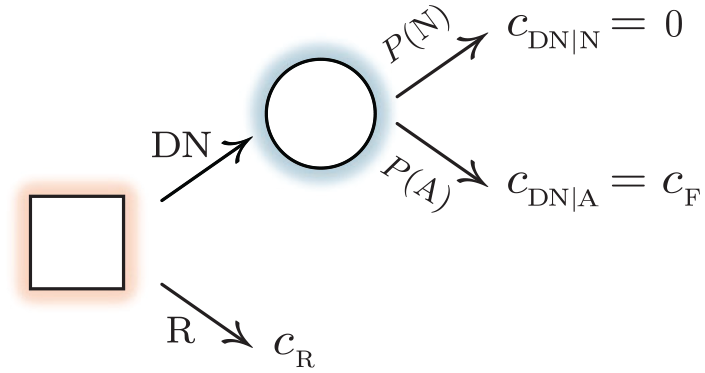
Decision tree of the EUT-based framework.
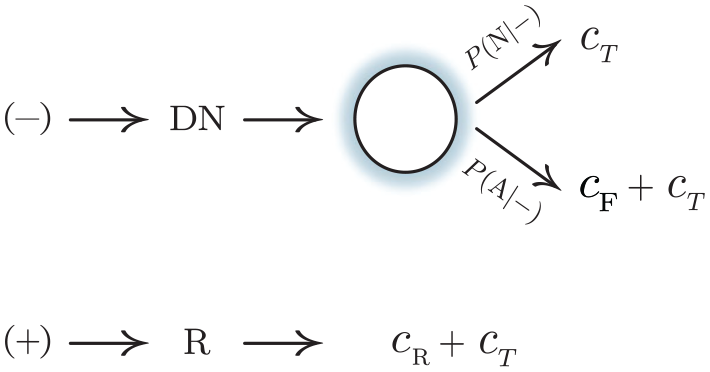
Decision-making process in the pre-posterior stage.
Prior expected cost
In the prior stage, the decision-making process is the one represented in Figure 1. Since in the prior stage, the test information is not considered, the decision is made based on the prior probabilities of the states. Specifically,

Based on

Figure 3 shows the result of the decision-making process a priori. Specifically, this figure shows
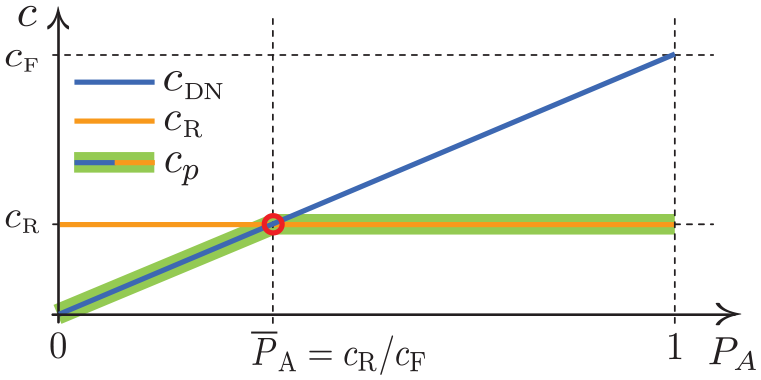
Prior expected cost
Pre-posterior expected cost
At the posterior stage, the decision-making process is the one represented in Figure 2. Unlike the prior stage, the chance nodes are now governed by the posterior probabilities of the state, which is the probability of having each state given a specific test outcome. In this case, the posterior probabilities are

In practice, with Bayes’ formula, the prior information on the state is integrated with the test information (the likelihood) in order to infer the state a posteriori. In Equation (4),
Similarly to the prior stage, the posterior expected cost of the action “repair,”


Based on Equations (4) and (6), the pre-posterior expected cost can be rewritten as

where

Please refer to Appendix A for further details on its derivation. Figure 4 illustrates the result of the decision-making process pre-posteriori.
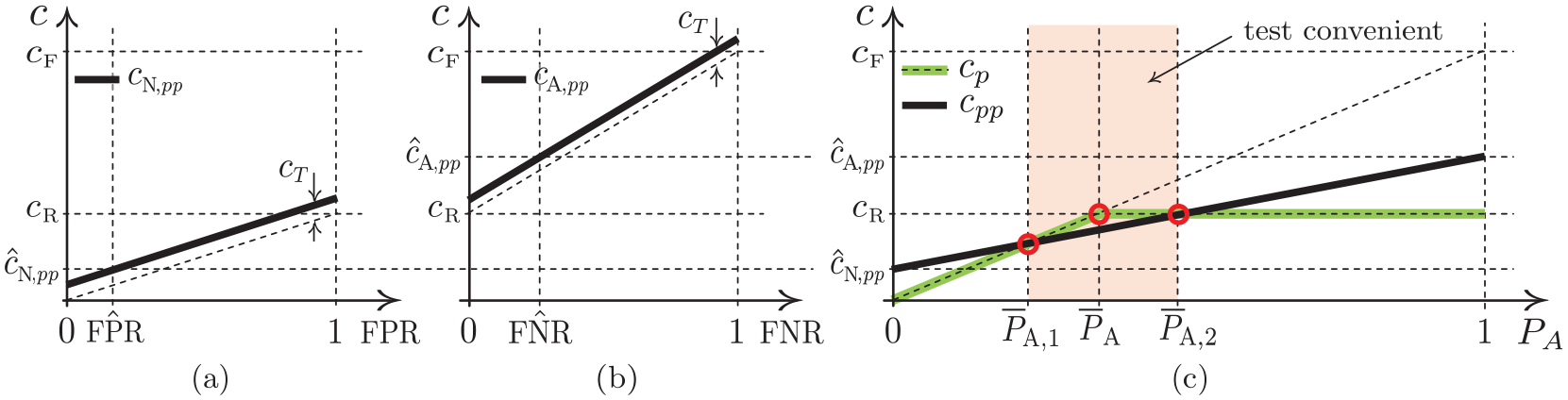
Pre-posterior expected cost,
Figure 4(a) and (b) clarifies the practical meaning of costs
Required accuracy domain
Having defined the prior expected cost and the pre-posterior expected cost, it is now possible to tackle the question posed at the beginning of the present section. As already discussed, the test is assumed to be convenient if it is marginally cost-effective to the operator; therefore, the test is convenient if the economic gain of the test is greater than zero. The economic gain is denoted by the symbol

For readers familiar with the concept of VoI,28,29 it can be observed that, under the linearity conditions of the utility function,
Now, the shaded area in Figure 4(c) represents the range of
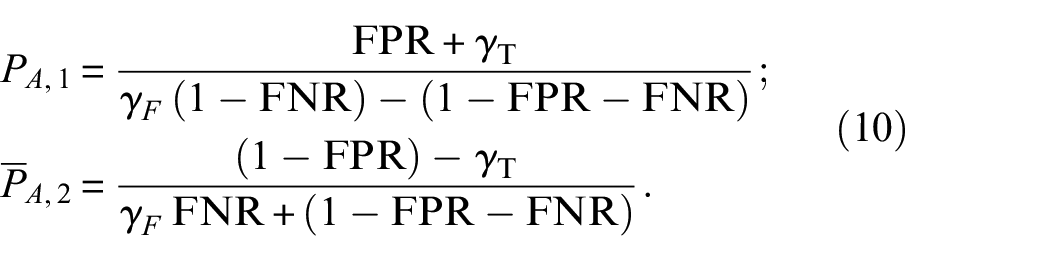
When
Based on the definition of
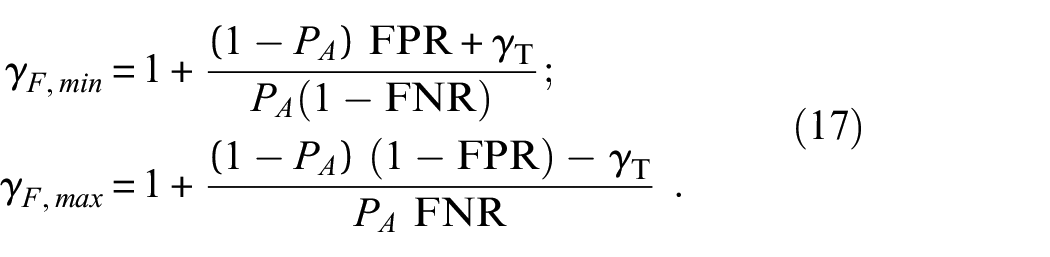
Based on Equation (9), FPR and FNR are in the required accuracy domain,

where
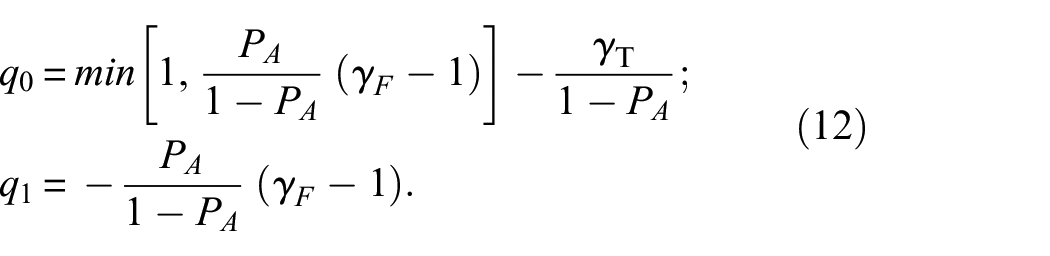
In this equation,

Appendix B illustrates the details of this derivation. In addition, the reader should remember that
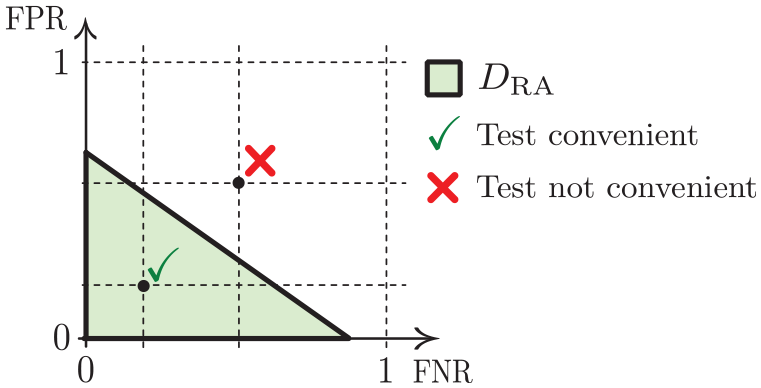
Graphical representation of the required accuracy domain,
Discussion
The present section illustrates the implications of the proposed EUT-based framework.
Figure 6 shows the possible configurations of
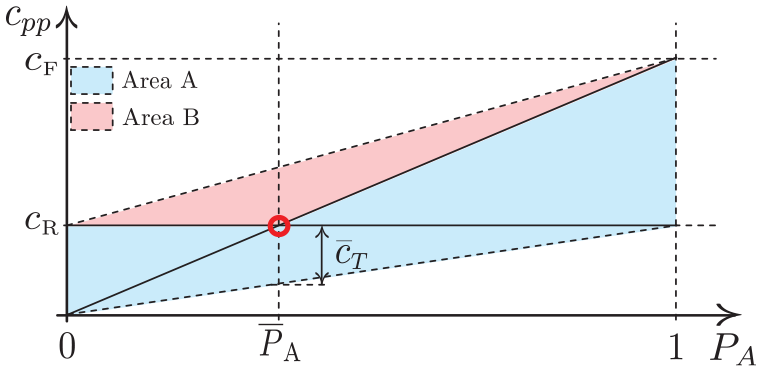
Possible configurations of
In practice, the union of Areas A and B is obtained on the basis of Equation (7), considering all possible combinations of FPR and FNR. In particular, the lower edge of Area A represents the lower bound of
Now, Figure 7 illustrates the general case where the test has a cost greater than zero. The observations and considerations regarding the trends of Figure 6 also apply to the case where

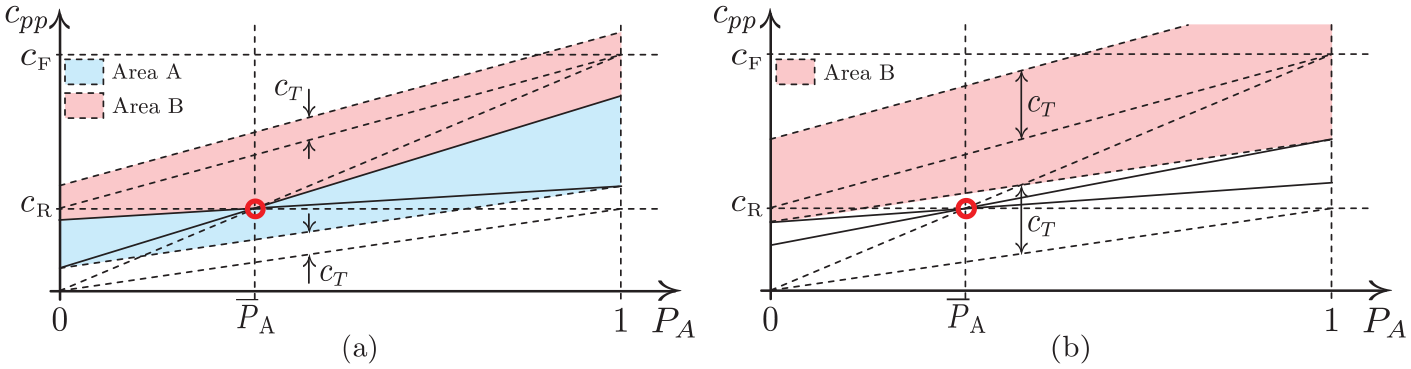
Possible configurations of
In practice, as shown in Figure 7(a), the cost of the test reduces Areas A and increases Area B. Area A completely disappears when

This upper limit cost corresponds to the upper bound of VoI obtained when, a priori, a condition of indifference occurs (see Figure 3) and the test information is perfect.
34
In this condition, as shown in Figure 7(b), the test is never convenient for the operator for any combination of
It has been shown how the parameters that govern the problem affect
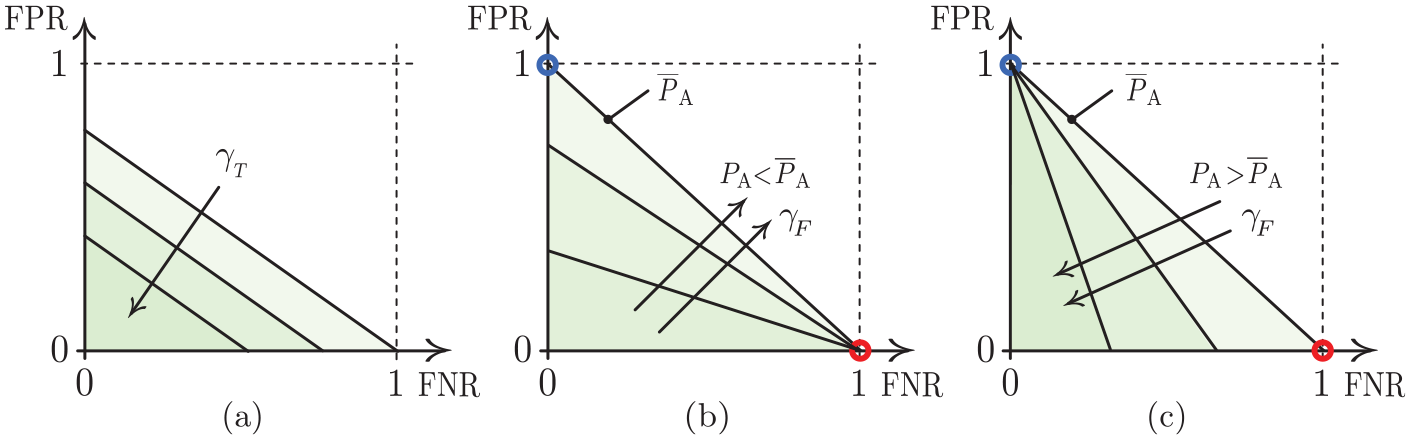
Possible configurations of the required accuracy domain,
First, note that the domain is represented by a shaded area and is bounded by a line. This is due to the assumption of a linear utility function. The influence of the cost of the test,
Developed based on Equation (11), Figure 9 provides an alternative representation of the required accuracy domain; specifically, the figure shows that domain in terms of the relative costs
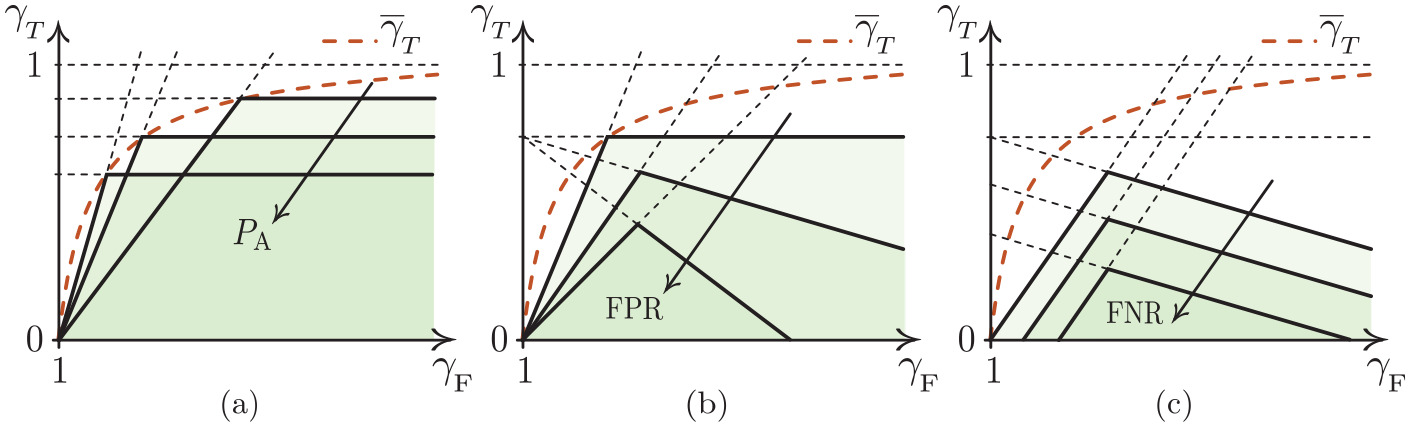
Representation of the required accuracy domain with respect to the costs given
This alternative domain can be considered to assess under what combinations of cost a specific test is convenient. This alternative domain is defined through the following inequalities:

where
Figures 9(a) to (c) show the effect of

As expected,
Summary of the discussion
In this section, the authors have been provided with a discussion of the role of all variables within the proposed EUT-based framework. The main considerations are listed:
In general, the condition for the test to be convenient is given by Equation (11), which depends on the prior probabilities and the costs. If this condition is met, the economic gain from the test is positive (i.e.,
When the test cost is zero, there is always at least a combination of
There exists an upper limit of the test cost,
The test is convenient if relative cost
If
If
In the following section, an illustrative application of the proposed EUT-based framework is presented.
Application
The present section illustrates an illustrative application of the proposed EUT-based framework to a real case study. The context of this application is the monitoring of the level of prestressing of the cables of the Alveo Vecchio viaduct girders. Among the testing technologies available for assessing the prestress state, this application considers the SCT. To the best of the authors’ knowledge, specific studies on the accuracy of SCT are lacking in the literature. To overcome this limitation, the authors employed EKE to estimate the accuracy of SCT. Before delving into the results of the application, an overview of the Alveo Vecchio viaduct, the SCT, and the EKE procedure for estimating the test accuracy is provided.
Case study: Alveo Vecchio viaduct
The Alveo Vecchio viaduct is a PT reinforced concrete bridge designed and built between 1966 and 1968 along the A16 Napoli–Canosa highway near the municipality of Candela, Apulia, south of Italy. The viaduct was decommissioned in 2005 after a landslide that caused a pier to settle and the deck across a span to collapse. The viaduct construction technique is very common and can be considered representative of approximately 50% of the viaducts built in Europe.
The Alveo Vecchio viaduct consists of two structurally independent carriageways (one for each traffic direction). The viaduct piers are 3.30 m high and have deep foundations consisting of eight 23-m-long piles with a diameter of 1.2 m. The viaduct abutments are built on six piles with a diameter of 1.2 m. Each carriageway is composed of three decks, each 35.5 m long. The decks are independent of each other and are simply supported on the piers and abutments. They are placed on a slight slope (1.45%). Each deck consists of four PT reinforced concrete girders connected by five cross-girders and a 20-cm-thick reinforced concrete slab. Figure 10 shows the structural components of the Alveo Vecchio viaduct.
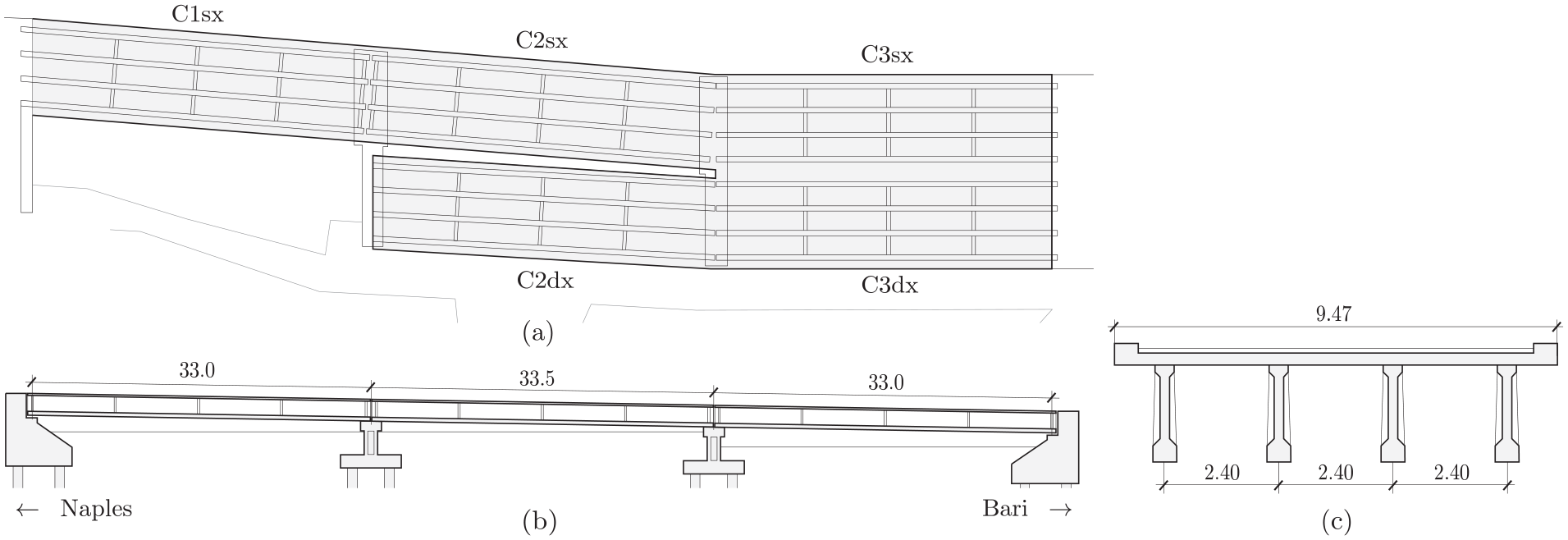
Top view (a), lateral view (b), and cross section (c) of the Alveo Vecchio viaduct.
The girder prestressing system is composed of 14 PT parabolic cables. The initial prestress amounts to 1250 MPa (average tension) and is applied on site using hydraulic jacks. Each cable consists of 12 parallel high-strength steel wires with a nominal ultimate strength of 1700 MPa and a nominal yield strength of 1450 MPa. The diameter of each wire is equal to 7 mm. The 12 wires were placed in a corrugated metal duct and bonded to the girder by high-pressure grout injection. Figure 11 presents the prestressing system.
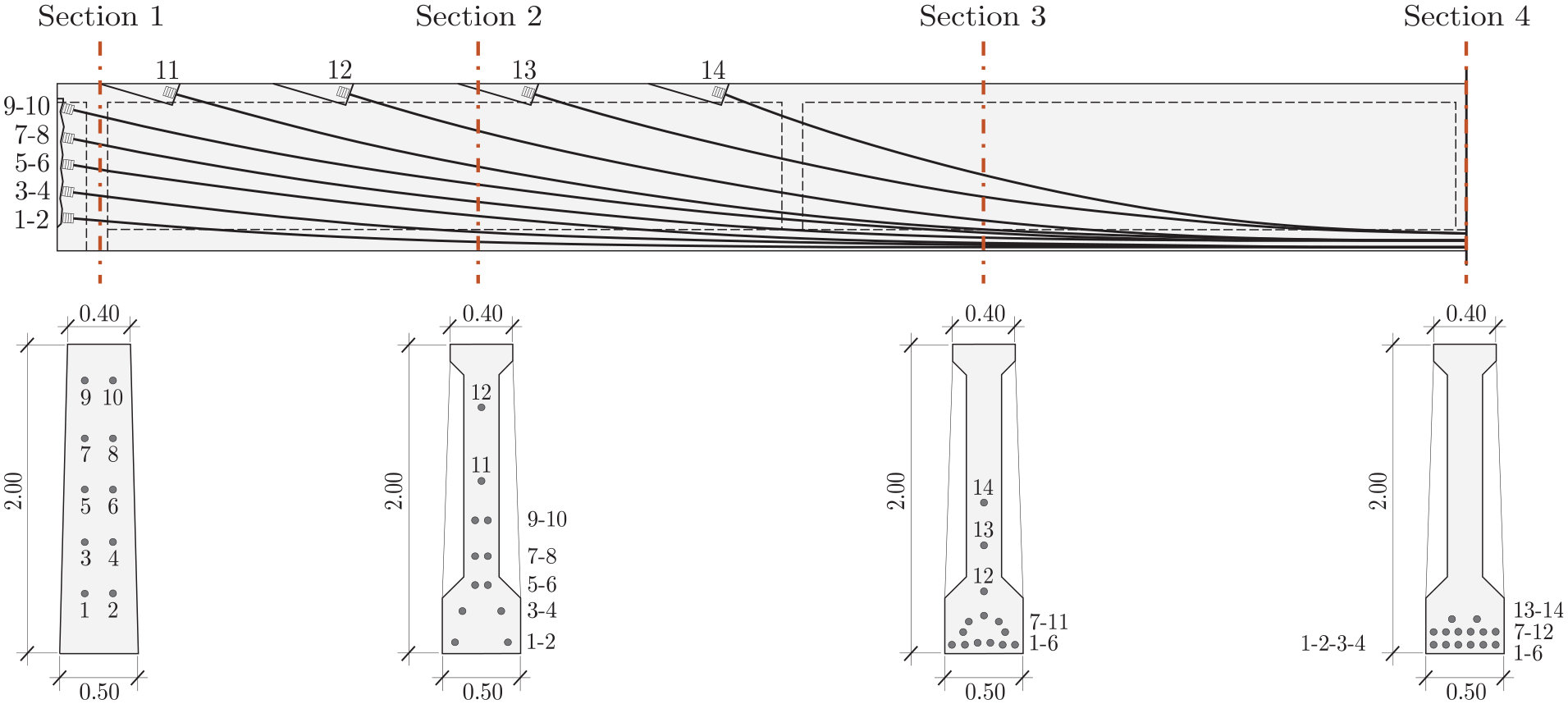
Longitudinal section and cross sections of the girders of the Alveo Vecchio viaduct.
Specifically, the figure shows the longitudinal layout of the cables within the girder and the location of the cables in four cross sections. Further details about the Alveo Vecchio viaduct are provided in the study by Tonelli et al. 35
The context of the present application is the estimation of the state of prestressing of the viaduct girders. The loss of prestress is a common and pivotal issue in PT reinforced structures, especially bridges and viaducts. 36 In fact, loss of prestress can be related to corrosion phenomena in prestressing steel 37 and can lead to excessive deformation and cracking of structural components. Cracks reduce the flexural stiffness of the deck, leading to a further decrease in service performance. 38 In addition, cracks can accelerate the degradation process of materials, particularly reinforcement steel, further compromising the long-term safety of the structure.
Actions and consequences
In this application, the authors imagine that the bridge is in an operational condition. The possible states of the bridge are two: “normal” condition (N) and “abnormal” condition (A); therefore, the set of states is
The actions that the operator can perform are DN and “repair” the viaduct (R); therefore, the set of actions is
The consequences of the action defined above are the following: “nothing happens” when the action is DN and the state is “normal” (N); “failure” when the action is DN and the state is “abnormal” (A); and “the viaduct is repaired” when the action is “repair” (R). Note that the consequence “failure” does not correspond to the “collapse” of the viaduct (of part of this). In fact, excessive prestress loss is a degradation phenomenon that does not directly result in collapse. By “collapse,” the authors refer to any mechanism that may lead to structural failure of the bridge due to excessive prestress loss, resulting in the traffic interruption. These failure mechanisms include shear and bending failures. In particular, shear failure mechanisms, which are the most relevant in the case of prestress losses, are caused by the loss of the confinement effect provided by axial prestressing forces.
39
On the other hand, bending failure mechanisms are mainly associated with local corrosion phenomena (pitting), which can be correlated with excessive prestress loss.
40
In this application, the authors assume that the probability of collapse given the excessive prestress loss,
The monetary quantification of the action “repair,”

where

where
Costs of consequences.
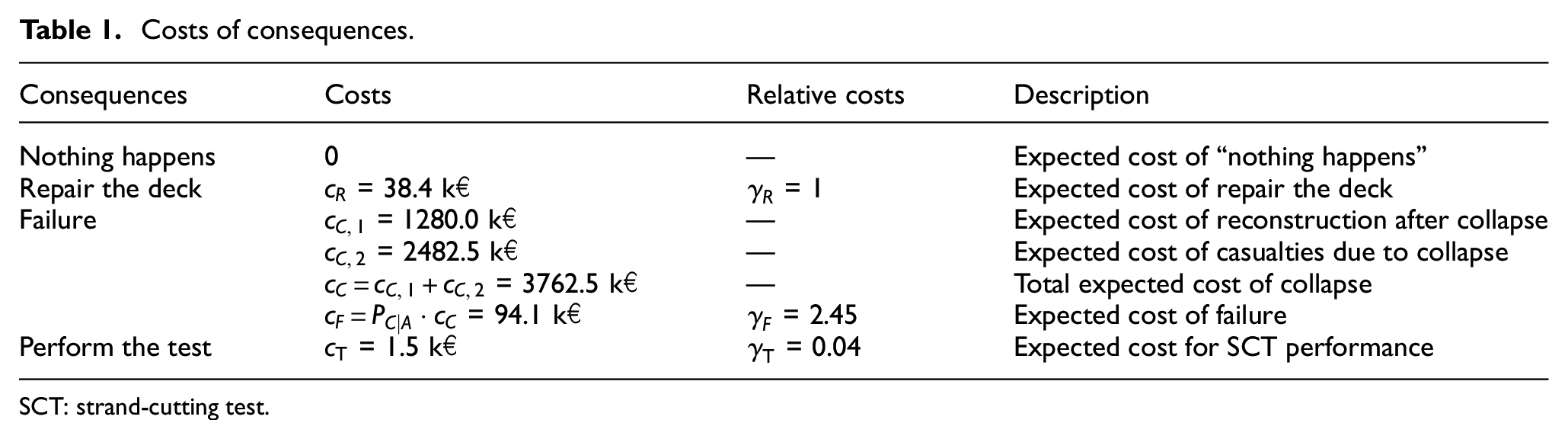
SCT: strand-cutting test.
Strand-cutting test
SCT is a widely used technique to determine the residual prestress level in prestressed concrete structures. 43 The measurement of residual prestress is performed by recording the strain release of one or more strands when they are cut. The setup of SCT is represented in Figure 12.44,45
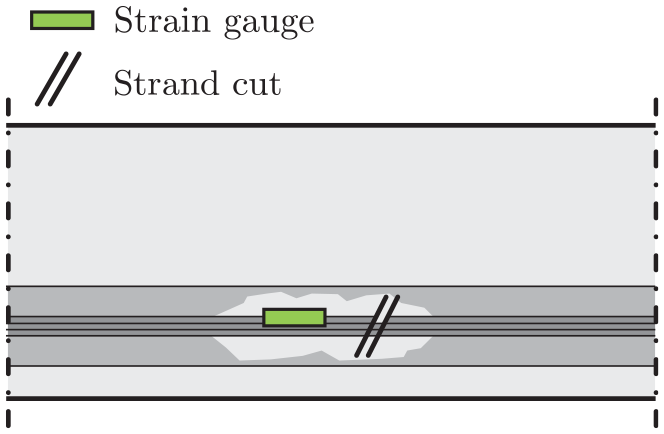
Specifically, the strain release is measured by means of one or more strain gauges glued to the surface of the wire, close to the location of the cut. This strain measurement is converted into residual prestress value by Hooke’s law as

where
SCT is classified as an indirect test, as prestress is inferred by strain measurements rather than direct assessment. Furthermore, SCT is a PDT, as its execution requires local removal of the concrete cover, exposure of the strands within the conduit, and cutting of one or more wires. 45 Consequently, SCT must be carefully designed to mitigate its impact on structural integrity.
Although qualitative concerns about the accuracy of SCT have been raised, to the best of the authors’ knowledge, no studies in the literature provide a quantitative characterization of its accuracy. Since assessing the economic value of test information is infeasible without a quantitative understanding of test accuracy, in the absence of more reliable data, the authors propose employing EKE techniques to estimate the expert expectation on SCT accuracy.
Expert knowledge elicitation
EKE is a structured process used to collect, quantify, and formalize expert judgments, particularly in contexts where empirical data are scarce, incomplete, or uncertain. It employs systematic methods to extract and represent expert opinions in a form that supports decision-making. 30
In the present paper, the authors adopt a process inspired by the Sheffield elicitation method, 31 which is based on the principles of behavioral aggregation. In this method, one or more facilitators guide a group of experts through a structured workshop to exchange information and reach a consensus on the probability distributions of the quantities of interest. The conventional Sheffield elicitation approach consists of three main phases. First, a preliminary training phase introduces the experts to the quantities of interest, outlines key assumptions, and clarifies the statistical concepts involved. Experts are also encouraged to share insights based on their domain knowledge in this phase. Next, an elicitation phase is conducted, typically using a structured questionnaire to capture expert judgments on the probability distributions of the quantities of interest. Finally, in the aggregation phase, the elicited probability distributions are shared with all experts, fostering discussion until a consensus-based pooled distribution is reached.
In the present application, the goal of the EKE process is to quantify the expert expectation on the accuracy of the SCT and the prior state of prestress in the Alveo Vecchio viaduct girders. In practice, the goal of the EKE process is to assess FPR, FNR, and

where
Unlike the conventional Sheffield elicitation method, in the present study, the pooled distributions are derived from a single questionnaire administered to experts during a single workshop. In this workshop, experts interact with each other until they converge on a pooled probability distribution. Therefore, knowledge aggregation occurs directly during the questionnaire phase through the interaction guided by two facilitators. This represents the main divergence from the conventional Sheffield elicitation method, where the elicitation phase and the aggregation phase occur at different times. The EKE process of the present application consists of three main phases:
Briefing. In this phase, experts are instructed on the context of the Alveo Vecchio viaduct (geometry, materials, structural scheme, construction period, etc.), the details of the prestressing system (technology, design tension, expected losses), and the details of the SCT (test characteristics, location, and number of tests);
Training. In order for all experts to share a common understanding of the problem, experts are informed of the quantities of interest. In addition, experts are informed of the ways in which EKE is conducted. Finally, experts are trained in the use of probabilistic quantities for defining quantities of interest (percentile concept, distribution concept, skewness concept, etc.);
Expert elicitation. In this phase, two facilitators guide experts to interact with each other in order to converge on a shared distribution with respect to the quantities of interest. First, experts are invited to introduce themselves and share with everyone their background with respect to the elicitation context. In addition, they are asked to declare any conflicts of interest. The facilitators then propose the questionnaire to the experts. The questionnaire phase is an iterative process, described graphically in the flow chart in Figure 13. First, the marginal distribution of the actual residual prestress
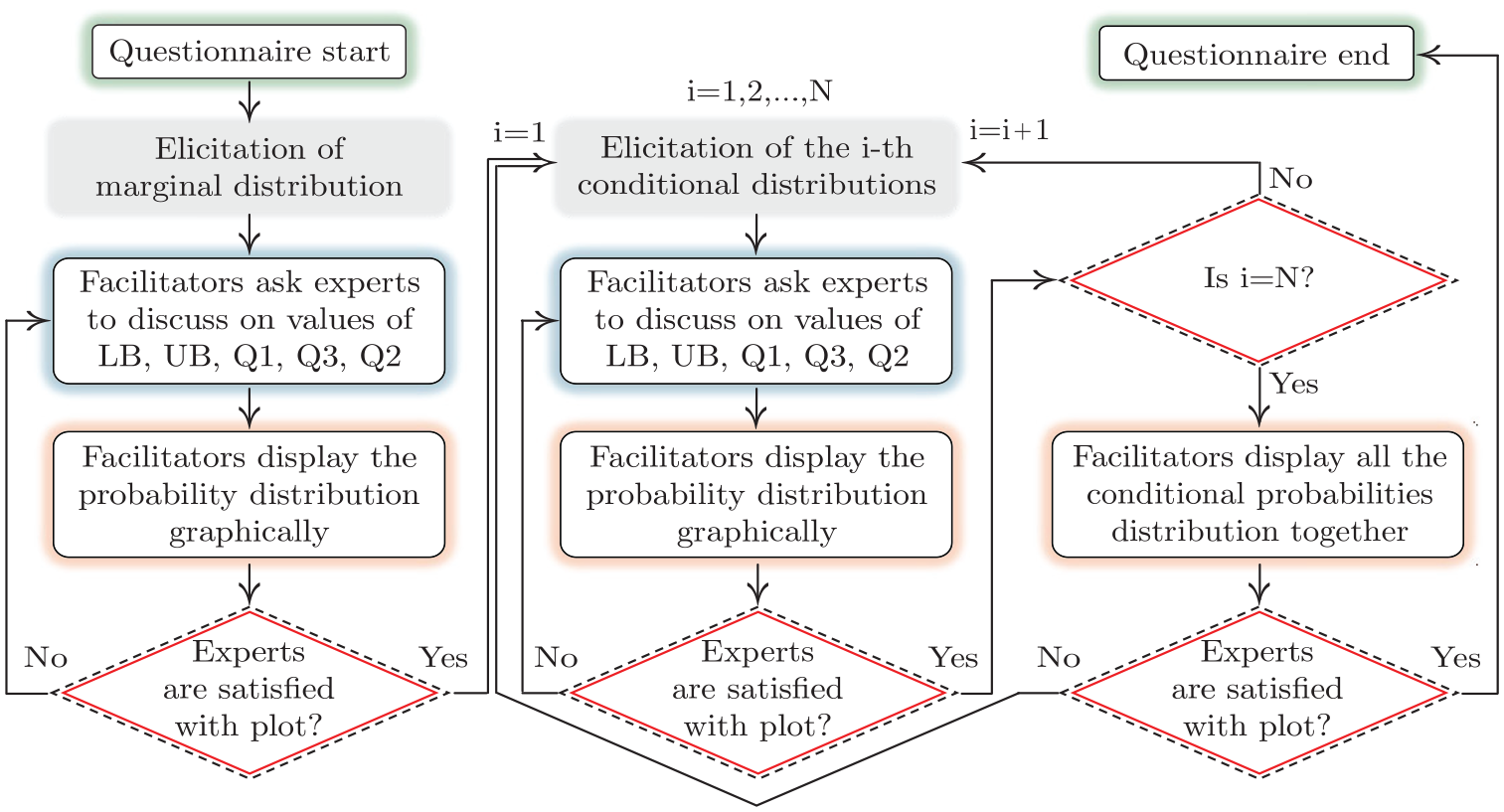
Flow chart of expert elicitation.
To ensure complete coverage of the relevant areas of expertise, 51 in the present application the following three experts were involved: (i) a Professor from the University of Trento specializing in PT structure design; (ii) a Professor from the University of Chieti-Pescara with academic expertise in the use of SCT; and (iii) an operator from a multinational company operating in engineering diagnostics, representing the practical execution of SCT in the field. Note that each expert covers a specific area of SCT accuracy knowledge.
Results of EKE and assessment of the accuracy of SCT
The results of EKE are reported in terms of quartile values in Table 2. The quartiles of each column in Table 2 are modeled using a Beta distribution,
Result of the EKE process: quartiles.
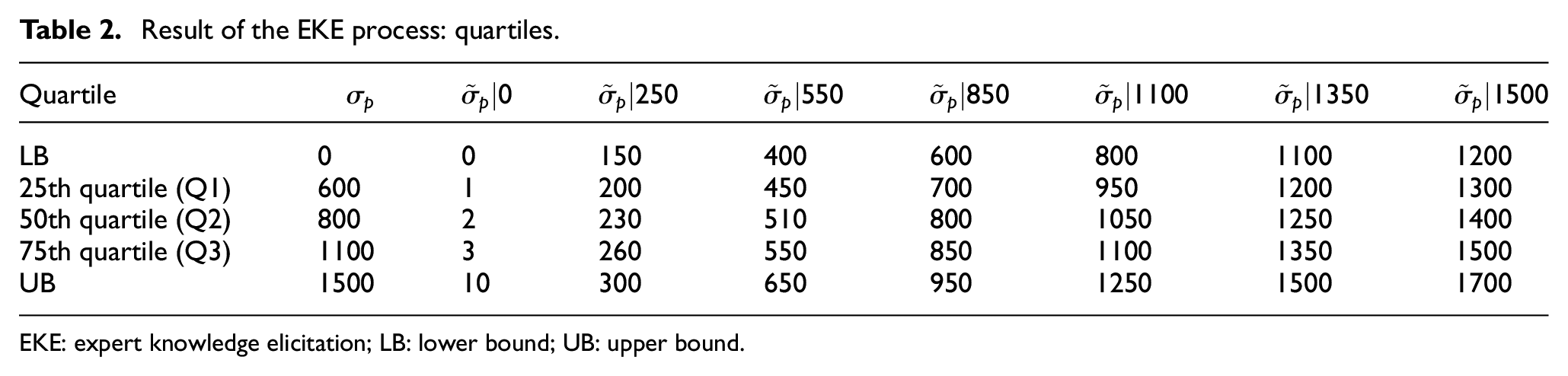
EKE: expert knowledge elicitation; LB: lower bound; UB: upper bound.
The optimal Beta distribution parameters (i.e.,
Optimal beta distribution parameters for marginal and conditional distributions.
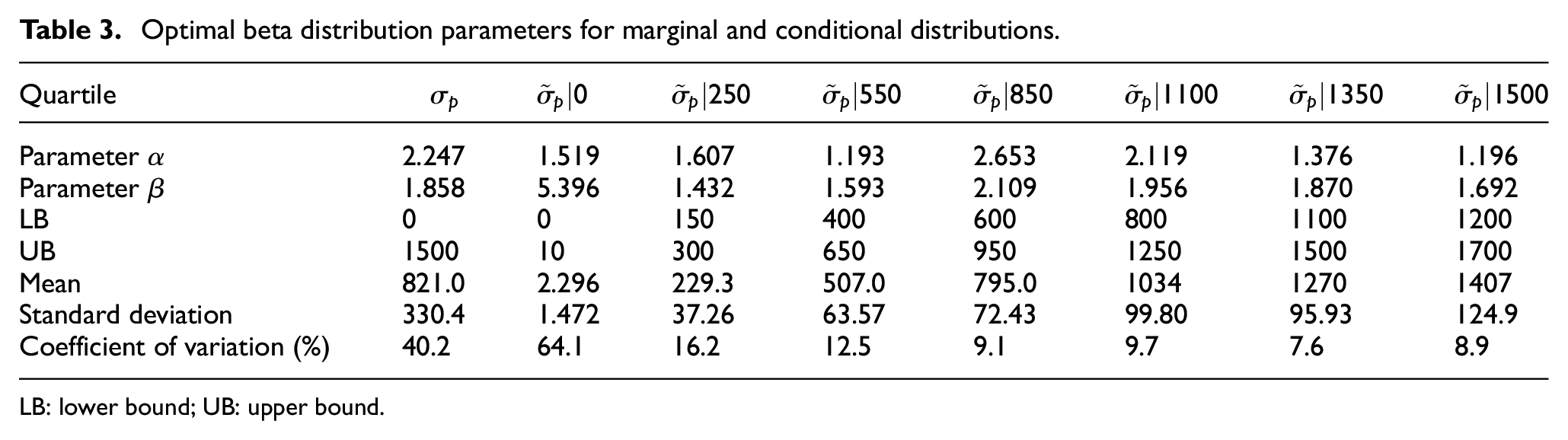
LB: lower bound; UB: upper bound.
Based on the values in Table 3, the joint distribution,
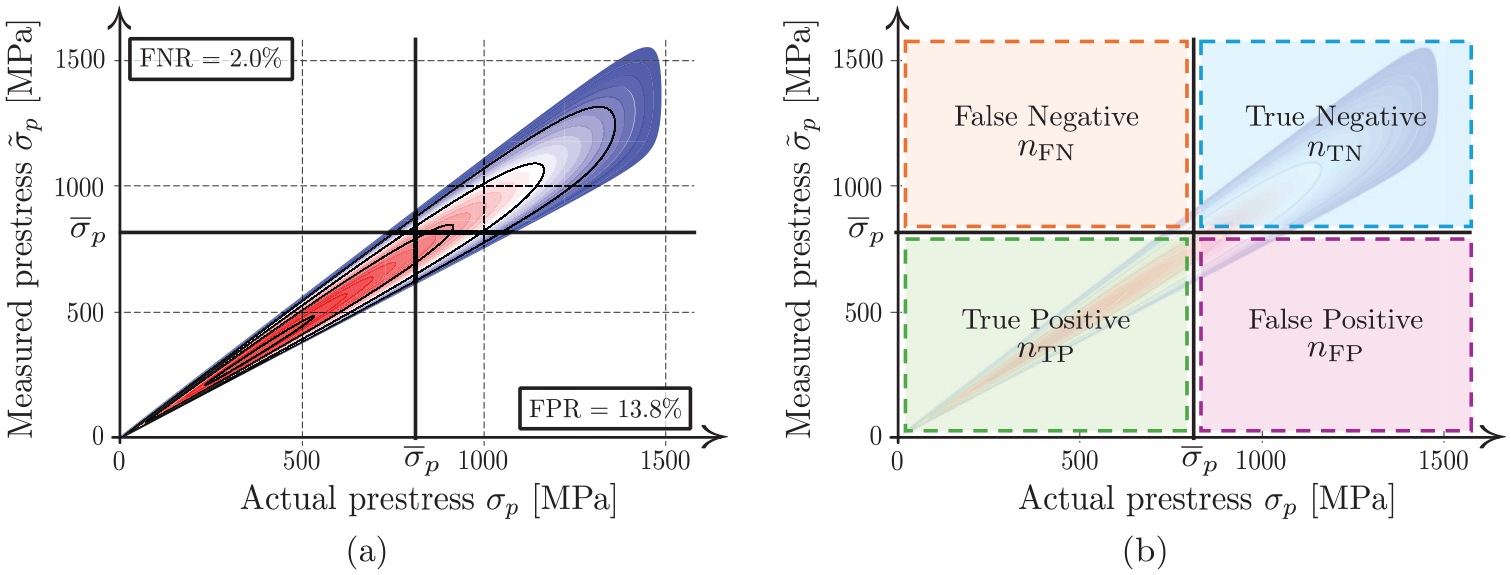
Result of the EKE process. (a) Contour plot of the joint probability distribution
It can be observed that, according to experts, the SCT is highly accurate. In fact, since the distribution seems to be very tight, there is a high correlation between
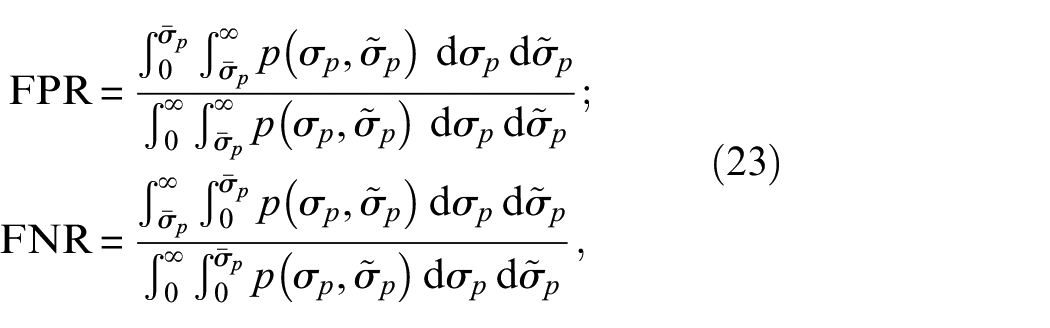
Now, based on the joint distribution
where

where, based on Figure 14(b),

As a result, the false positive ratio is equal to
Decision-making
Based on the results of the EKE process, the optimal action at the prior stage (without test information) is “repair” the viaduct (R). In fact, the expected cost of the action DN is equal to
At this stage, the operator may wonder whether performing an SCT campaign may be convenient. The cost of this test campaign is equal to
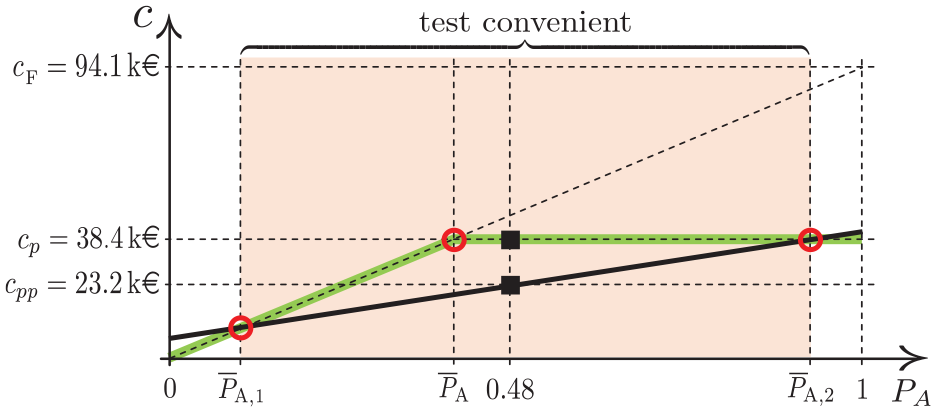
Representation of
Finally, based on Equation (11), the required accuracy domain,
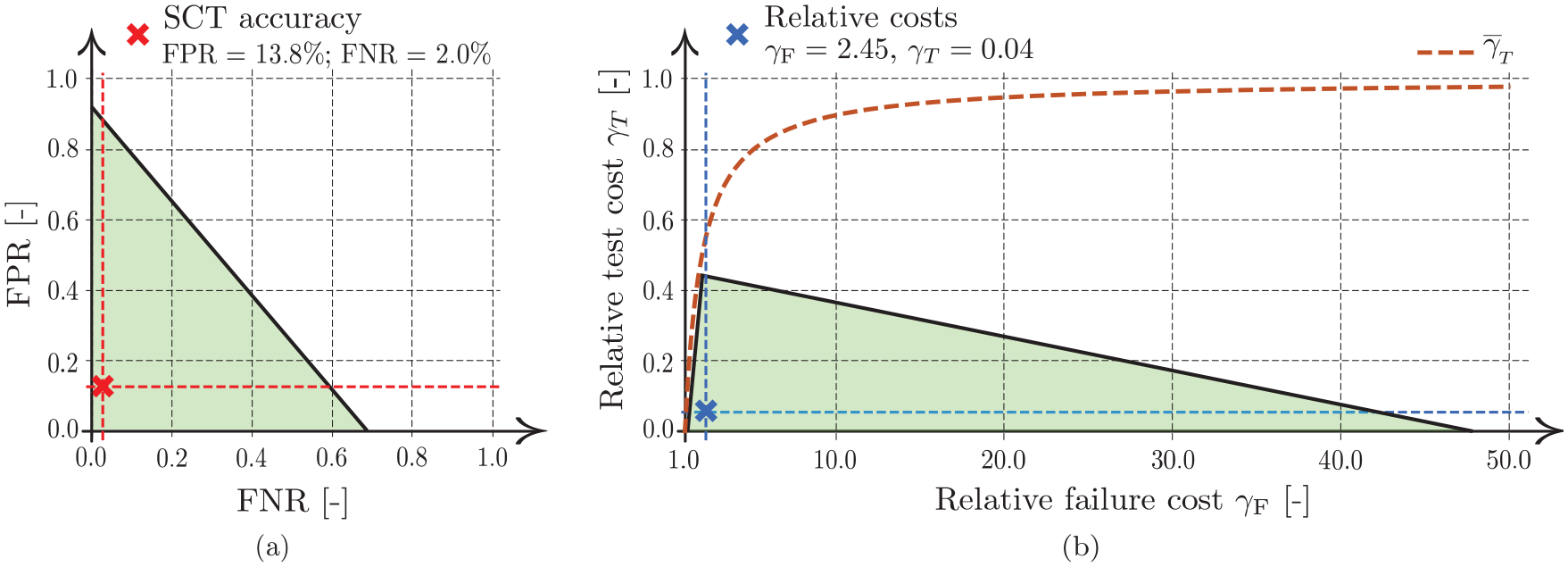
Results of the EKE process. (a) Required accuracy domain given
In this section, the authors present the application of the proposed EUT-based framework to the real case study of the Alveo Vecchio viaduct. In particular, the SCT is considered to assess the prestress losses in the viaduct tendons. In the absence of reliable data regarding the test accuracy, an EKE is carried out, through which the test’s FPR and FNR are estimated. The prestressing state is binarized using a threshold value
Concluding remarks
Partially destructive or non-destructive testing on PT concrete bridges is essential to understand the structural health of these structures, whose reliability is strongly controlled by the state of the prestressing system. The test outcomes guide the operator’s decisions on bridge management. Uncertainties in testing can lead to suboptimal maintenance strategies; therefore, these must be considered in the decision-making process. In the present paper, the authors have proposed a decision-making methodology based on EUT to assess the accuracy requirements for tests to be convenient to operators. To overcome the absence of specific studies on the efficacy of this test, an EKE process is considered for the evaluation of FPR and FNR, in addition to prior knowledge on the state of the Alveo Vecchio viaduct.
The main findings and observations of the paper are briefly summarized below:
A straightforward formula has been derived to define the test accuracy requirements for binary state scenarios. These requirements have been proposed in the form of a subspace of FPR and FNR, named the required accuracy domain. If FPR and FNR belong to the required accuracy domain, the test is cost-effective for the operator;
A discussion of the role of all variables within the proposed EUT-based methodology has been proposed. Specifically, limitations have been identified in terms of the cost of consequences arising from the test uncertainty. In addition, the conditions for which a large FPR is acceptable and those for which a large FNR is acceptable have been discussed;
A demonstrative case study application has been provided to show the reader how the proposed methodology could work in practice. In this application, the SCT has been considered for the indirect evaluation of the prestressing state of the Alveo Vecchio viaduct. Nevertheless, this framework can also be applied with other tests commonly used for assessing the condition of PT prestressed concrete bridges;
The main limitations and possible future developments of the proposed methodology are as follows:
Due to a lack of quantitative information about the prior knowledge and the accuracy of the test, recourse was made to EKE. However, this approach is difficult to apply in practice; further research is essential to obtain reliable and ready-to-use information on the test accuracy, not only for the SCT but also for other tests commonly used to evaluate the condition assessment of prestressed concrete bridges.
Limitation of the current paper is the binary representation of state and a linear utility function. Although this represents a limitation, it is a necessity in this first work. In fact, greater emphasis has been placed on the role of each variable in the decision-making process instead of the generality of the method. Future developments should consider multi-class/continuous representations of the state. Furthermore, the potential integration with degradation models should be explored in order to optimize inspections over time based on EUT. Further research could also investigate the role of aleatory uncertainties in defining test accuracy requirements.
Footnotes
Appendix
Acknowledgements
The authors wish to acknowledge S Perno (Sapienza University of Rome), G Brando (University “G.d’Annunzio” of Chieti-Pescara), A Bonelli (University of Trento), FA Faccia (SOCOTEC Italia Srl) for their collaboration in the EKE process. The authors would also like to acknowledge the people who contributed to the success of this project, including P Migliorino (Italian Ministry of Infrastructure and Transport); A Selleri, A Marchiondelli, M Cicolani, M Conte, L Tripoli, P Anfosso, M Di Napoli, M Perna, and D Sena (Autostrade per l’Italia SpA).
Declaration of conflicting interests
The author(s) declared no potential conflicts of interest with respect to the research, authorship, and/or publication of this article.
Funding
The author(s) disclosed receipt of the following financial support for the research, authorship, and/or publication of this article: The study presented in this paper was funded by: the ReLUIS Interuniversity Consortium under the agreement DPC-ReLUIS and the Superior Council of Public Works stipulated pursuant to art. 3 of the Decree of the Minister of Infrastructure no. 578 of December 17, 2020 (ReLUIS 2020-2022) and DPC-ReLUIS 2024-2026; the European Union under Next Generation EU, Mission 4 Component 2 CUP E53D23003560006 (HORUS). The views and opinions expressed are those of the authors only and do not necessarily reflect those of the European Union, the European Research Executive Agency, the Italian Superior Council of Public Works, the Italian Department of Civil Protection (DPC) or the ReLUIS Council’s position and assessments; neither the European Union nor any of the granting authority can be held responsible for them.

Data availability statement
All data generated and analyzed during the EKE process are fully available within this article. No additional datasets were created or analyzed beyond those included in the published text.