



Abstract
To promote psychological literacy (PL) in our bachelor psychology teaching, over recent years we have implemented various modifications to our curriculum at the Utrecht University psychology bachelor program, with a focus on the societal application of psychology knowledge. To support psychology programs around the world in integrating PL in their curriculum, knowledge about experiences may offer valuable suggestions for future initiatives. We therefore aim to share our experiences in implementing PL-related courses in our curriculum. We systematically explored teachers’ and students’ views and experiences, using course evaluations and questionnaires. Results showed that both teachers and students value PL as a learning objective for psychology teaching. However, they were often unaware of these learning objectives (students) or felt not enough attention was being paid to them (teachers). Teachers encountered several obstacles while integrating PL in their teaching, relating to aspects such as a lack of an explicit focus on these objectives, and felt ability. Teachers offer valuable suggestions related to being explicit about definition and goals, implementing learning trajectories, and training teachers. We discuss the main practical considerations and highlight issues of motivation and assessment that may guide future research in this area.
Introduction
The subject of psychological literacy (PL) is an emerging research field that gains increasing attention from psychology programs and educators within (higher) psychology education. An increasing amount of literature contributes to shaping an unambiguous, shared, general definition of the concept of PL and related constructs, as well as ways in which we can measure these constructs (see Cranney et al., 2022; Heritage et al., 2016; Newell et al., 2020; Roberts et al., 2015). Cranney et al. (2022), in a recent “provocation,” have updated the definition as “the intentional values-driven application of psychology knowledge to achieve personal, professional, and community goals.” They underscore the value of this ability when approaching relevant and urgent societal issues, propose a general model for the outcomes of undergraduate psychology education, and suggest ways forward through an international collaborative effort to radically change psychology education and thus the field of psychology. To obtain this overall ambition for psychology regarding teaching and learning, various steps need to be taken at international, national, and institutional level, regarding both content and focus of the curriculum. To support psychology programs around the world in integrating PL in the curriculum, knowledge about experiences with the design and implementation of such PL-related initiatives may offer valuable suggestions for future initiatives elsewhere. At Utrecht University (UU), some first steps towards the integration of PL have been taken, at both course and program levels. These steps relate to PL as “the general capacity to adaptively and intentionally apply psychology to meet personal, professional, and societal needs” (Cranney et al., 2012). A main focus was placed on improving knowledge and skills in applying psychological knowledge to societal issues (i.e., societal translation). We aim to share our experiences at UU in the Netherlands with modifying the curriculum by implementing PL-related courses in our psychology bachelor program. To do so we explore teachers’ views and experiences as well as students’ attitudes towards PL in this context.
Psychological Literacy in the UU-Psychology Bachelor
At UU we recently modified various elements of our undergraduate program, with an increased focus on promoting students’ ability to apply their knowledge and skills when it comes to relevant societal issues (one of the main aspects of PL). This is part of an ongoing process of incorporating a PL-learning trajectory throughout our program, focusing on the psychologists’ role in society as a whole, with special emphasis on three aspects: providing authentic education by using simulations to bring society into the classroom (e.g., Hulsbergen et al., 2023), community engaged learning (or derivatives thereof) connecting the students and their learning to society, and an inter(sub)disciplinary perspective. After all, most local and global societal issues require collaboration from several disciplines, and psychology as a hub-science (Boyack et al., 2005) is inherently interdisciplinary in itself.
As a first step, in 2017–2018 we added a course-transcending community engaged project (year module) spanning our (obligatory) first year program, in which students examine a sub-problem within a pre-defined societal problem-area (e.g., the refugee crisis or loneliness in society) and write and present a policy report with recommendations on how to amend the specific sub-problem. This project has been demonstrated during ESPLAT 2019 (Rahim et al., 2019).
The second step had more Impact on the organization of the curriculum. In 2021–2022, we introduced four societal-context “theme” courses in the third semester of the bachelor program (of which all students choose two). In these courses, a specific research- and societal impact-area (e.g., motivation/self-regulation; social behavior; identity and diversity; modern behavior and development) is approached from at least three different subdisciplines of psychology. Students are challenged to translate scientific knowledge into output for a broader public and to take on an inter(sub)disciplinary perspective. Students are taught to use the Repko model (Repko & Szostak, 2021; see Slot, n.d. for an explanation of its educational application) for interdisciplinary collaboration 1 and focus on the role of psychology and psychologists in related societal issues and debates. Table 1 shows an overview of PL-designated courses/elements in our program to date (a more elaborate version can be found in Supplemental Table S1).
Courses/Elements Designated as Societal Context Courses/Elements in the Bachelor Program.
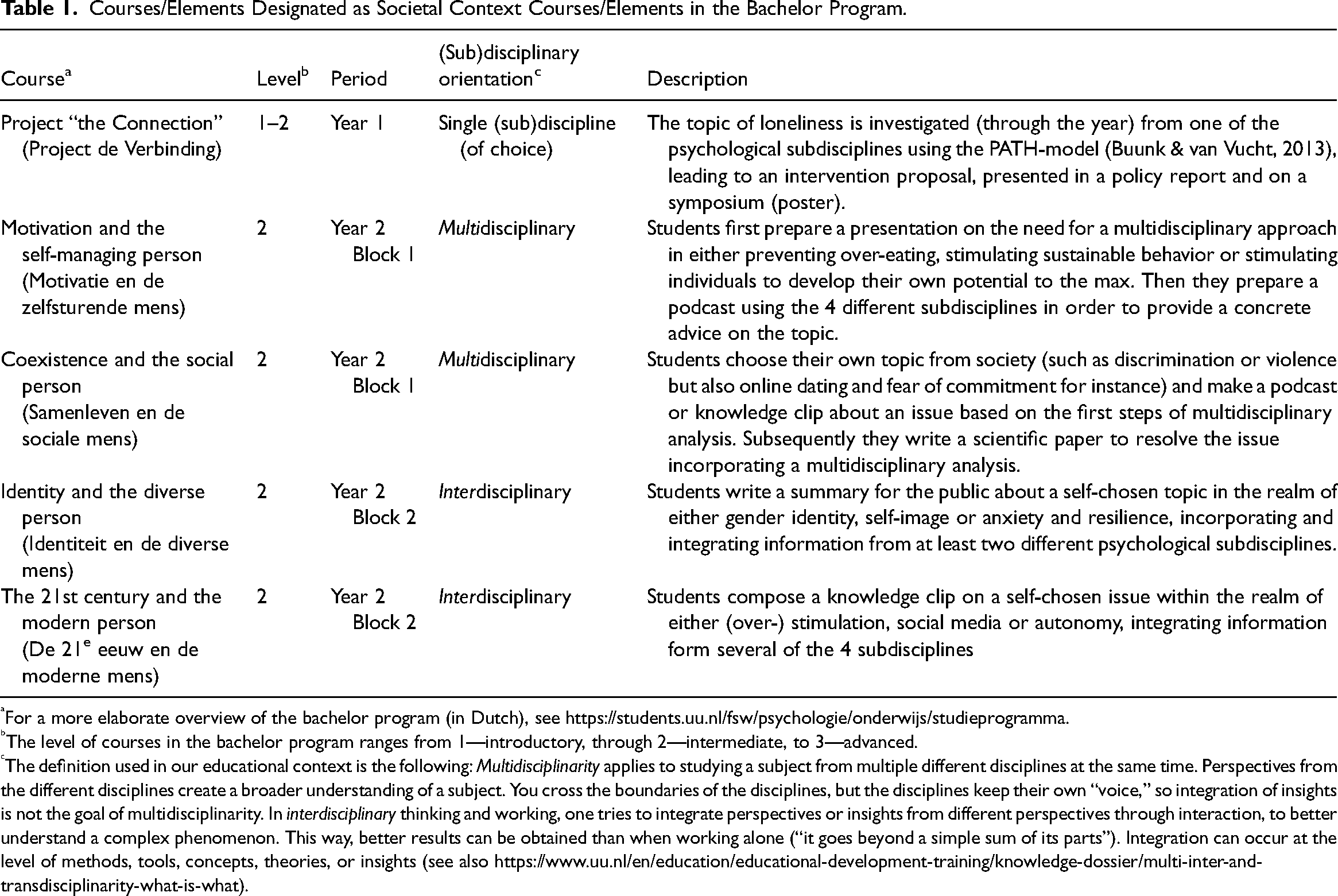
For a more elaborate overview of the bachelor program (in Dutch), see https://students.uu.nl/fsw/psychologie/onderwijs/studieprogramma.
The level of courses in the bachelor program ranges from 1—introductory, through 2—intermediate, to 3—advanced.
The definition used in our educational context is the following: Multidisciplinarity applies to studying a subject from multiple different disciplines at the same time. Perspectives from the different disciplines create a broader understanding of a subject. You cross the boundaries of the disciplines, but the disciplines keep their own “voice,” so integration of insights is not the goal of multidisciplinarity. In interdisciplinary thinking and working, one tries to integrate perspectives or insights from different perspectives through interaction, to better understand a complex phenomenon. This way, better results can be obtained than when working alone (“it goes beyond a simple sum of its parts”). Integration can occur at the level of methods, tools, concepts, theories, or insights (see also https://www.uu.nl/en/education/educational-development-training/knowledge-dossier/multi-inter-and-transdisciplinarity-what-is-what).
Finally, in the upcoming years, we aim to extend student learning on how to translate psychological knowledge to societal issues to the specialization phase of the bachelor program (last 1.5 years) and develop/include specific end-terms that are related to this. To do this effectively, we hope to learn from experiences with these first steps we undertook and see what is needed to promote future curriculum development.
Obstacles at the Student and Teacher Level
Implementing such changes at the curricular level is not without obstacles. While reorganizing the structure and setup of our bachelor program, we encountered staff who felt less comfortable teaching about the application of knowledge, as well as difficulties in organizing the collaboration between teachers from different psychological backgrounds (and even epistemologies) in developing courses around a common theme. Moreover, we had to consider the continuity of the program, its connection to the subsequent master programs and the requirements of the university and accreditation committees, as well as specific requirements from the (mental health care) work field. Teachers indicated that some students questioned the value of specific community-engaged or challenge-based assignments. However, as many of these experiences remained at the anecdotal level, in this report, we aim to explore a teacher and student perspective on this matter in a more systematic way.
A Teacher Perspective
Cranney et al. (2022) state that PL can be considered a pedagogical or teaching philosophy. This entails that PL is accepted as the desired minimum outcome of undergraduate psychology programs, a scientist-educator approach is taken by educators, and educators themselves model PL in the classroom. Although the graduate attributes of psychology, which are endorsed by many teaching in psychology, have a clear correlation to PL and can be regarded as necessary preconditions to promote PL in students (Cranney & Dunn, 2011; Morris et al., 2013), for many psychology-educators a thorough understanding of PL seems lacking. To engage teachers, it is important to learn how teachers relate to the concept of PL, and what obstacles and needs they experience when integrating PL in their teaching. We therefore explored teachers’ attitudes and experiences in relation to the PL-related modifications that were made to the psychology bachelor program at UU.
A Student Perspective
To effectively integrate PL in the curriculum, its related learning objectives should also be endorsed and valued by students. At UU, we provide a psychology bachelor program that prepares a substantial number of students for one of many subsequent one-year professionally oriented psychology master programs, in some cases preparing them for a postmaster in healthcare psychology. Other students attend a two-year research-oriented master program, whereas even other students finish master programs or professions elsewhere. Students are taught theory and academic skills, including research-, professional-, and communication-skills in specific learning trajectories throughout the program, and have various (clinical) specialization options within different areas of psychology. PL can however be considered relevant to all students, notwithstanding their future profession. However, not all students may fully realize or expect that the use of psychology knowledge goes beyond the scope of future professional practice, but has consequences for their “citizenship” as well (Cranney & Dunn, 2011). Although students have been reported to indicate to value PL in general (Green et al., 2017; Morris et al., 2013), this may be different for the three translational domains (personal, societal, and professional). The application of knowledge in the professional domain may be consistent with students’ expectation of psychology preparing them for (for instance) clinical practice (Morris et al., 2013), since there is a clear learning trajectory in relation to professional skills in our bachelor program. The translation of knowledge to societal issues (which is the central focus of the curricular PL-related modifications in Utrecht) may be less obvious. In this study, we specifically explored students’ attitudes towards these different translational domains. In line with a previous study on students’ attitudes towards PL by Green et al. (2017) based on expectancy-value theory (EVT; Wigfield & Eccles, 2000), we explored the task values that students attribute to a specific task, namely intrinsic value (do they find it interesting), utility value (do they find it useful), attainment value (do students find it important to perform well), and cost-value (how difficult and time consuming they think it is), as well as their efficacy beliefs. According to EVT, these task values play a role in student motivation to invest time and effort to learn, as well as their performance outcomes (Eccles & Wigfield, 2002).
Aims of This Paper
Here we describe teachers’ experiences with our efforts to intertwine PL concepts throughout the (first half of the) undergraduate psychology bachelor program at UU in the Netherlands and explore the students’ views on this topic. We systematically explored the obstacles that educators encountered. Subsequently, we explored suggestions for improvement in relation to the content and organization of these courses. Additionally, we focused on students’ task attributes and self-efficacy in relation to the translation of psychological knowledge to societal issues, as an important domain of PL. We further aim to translate our findings into practical considerations, that may guide future initiatives at UU and elsewhere.
Methods
Participants
We included managerial information (course evaluations), as well as online teacher- and student-questionnaires in our analysis. This research was approved by the Faculty Ethics Review Board of the faculty of Social and Behavioural Sciences (# 23-207). Course evaluations were filled out by 48–209 students per course (ranging from 20 to 63% of the students that took a particular course). The questionnaires were completed by 33 teachers who were involved in either the first-year project or in the societal-context “theme” courses (∼50% of the involved staff) and 85 students respectively. The group of students that completed the questionnaire consisted of mainly (n = 66) first year students (∼11% of the first-year cohort). The remaining participating students were second year students.
Course Evaluations
Anonymous course evaluation questionnaires were generally filled out online during the last week of a (10-week) course or afterwards. This type of questionnaire is variable in content, but always contains a course grade on a 10-point scale, using the same, single, question for each course. The evaluation also contains questions about the different parts of the course (such as lectures and assignments) that may vary per course, as well as room for tips and tops or any comment/suggestion a student is willing to make. Since the first-year project is not an official course, but a year-long module, this has been mostly informally evaluated, although the main assignment of this module (writing a policy report) is systematically graded and evaluated within another first-year course (“Psychology as a Science”). Therefore, we analysed the societal context “theme” course evaluations, both the overall course and their PL-assignments, as well as the assignment-related questions in the course evaluation dealing with the policy report in “Psychology as a Science.”
Teacher- and Student Questionnaires
We devised two short online questionnaires, one for teachers and one for students. Both were setup in Qualtrics and included a short description of the purpose of PL.
We invited all teaching staff involved in either the first-year project and/or one or more of the societal context “theme” courses to fill out the teacher questionnaire. We asked (on a 10-point Likert scale) whether they deemed the learning goal of PL important, and whether they thought PL received enough attention within the course(s) they participated in. We also asked them (open ended) to elaborate on both previously mentioned questions, and which pitfalls they encountered in working with PL (obstacles) and how they thought PL could be strengthened in these courses (suggestions). See Supplemental Table S2 for an overview of the teacher-questions.
We invited bachelor students from our programme to partake in the questionnaire through their tutors and mentors, and the tutoring page on our Electronic Learning Management System. The questionnaire included six questions (five 7-point Likert scale questions [ranging from 1 = totally not, to 7 = absolutely] and one open-ended question) within each of four domains: Personal life, society, current professional life (i.e., studying, small jobs, charities) and future professional life (after graduating). In line with EVT (Eccles & Wigfield, 2002; Wigfield & Eccles, 2000), the Likert-scale questions focused on task attributes, such as whether students were interested in learning how to apply psychological knowledge and skills (intrinsic value), how important they think this ability is (attainment value), how useful they deemed this is (utility value), how difficult they thought this is (cost value), and whether they deemed to be capable to do this (self-efficacy). In the open-ended question, the students were asked whether they could describe an example in any of our courses that dealt with PL in a good and useful way. See Supplemental Table S3 for an overview of the student-questions.
Analyses
We provide descriptive statistics (M, SD) for the Likert scale questions. This gives a reasonable indication on how courses and PL-related course elements were rated by students, whether PL was deemed important and received enough attention in the courses (teachers) and the task attributes and self-efficacy pertaining to PL (students).
Subsequently, the last author scanned the course evaluations for qualitative comments that were (to some extent) related to PL elements in the course(s). For the teacher questionnaires, the first and last author read the answers teachers provided to the open-ended questions (obstacles and suggestions) and categorized these independently. Subsequently they discussed their outcomes and discrepancies, to obtain a shared classification. For the student questionnaire, courses were listed that students mentioned as providing them with clear examples of PL. These were classified as relating to the new modules or to other courses in the bachelor program.
Results
For the description of our results, we specifically focus on the societal domain, since the aim of the modifications to our curriculum was to increase societal awareness and the students’ ability to apply psychological knowledge and skills in society (i.e., with respect to societal issues).
Course Evaluations
Our programme and programme advisory committee (consisting of students and teachers) aim for a student evaluation mark for each course of at least 7 out of 10. First year psychology courses in 2022/2023 were marked 7.2 on average (range: 6.9–7.7). As can be seen from Table 2, most PL-related courses score below that benchmark.
Overall Course Evaluation Outcomes (10-Point Scale) of the Courses in Table 1.
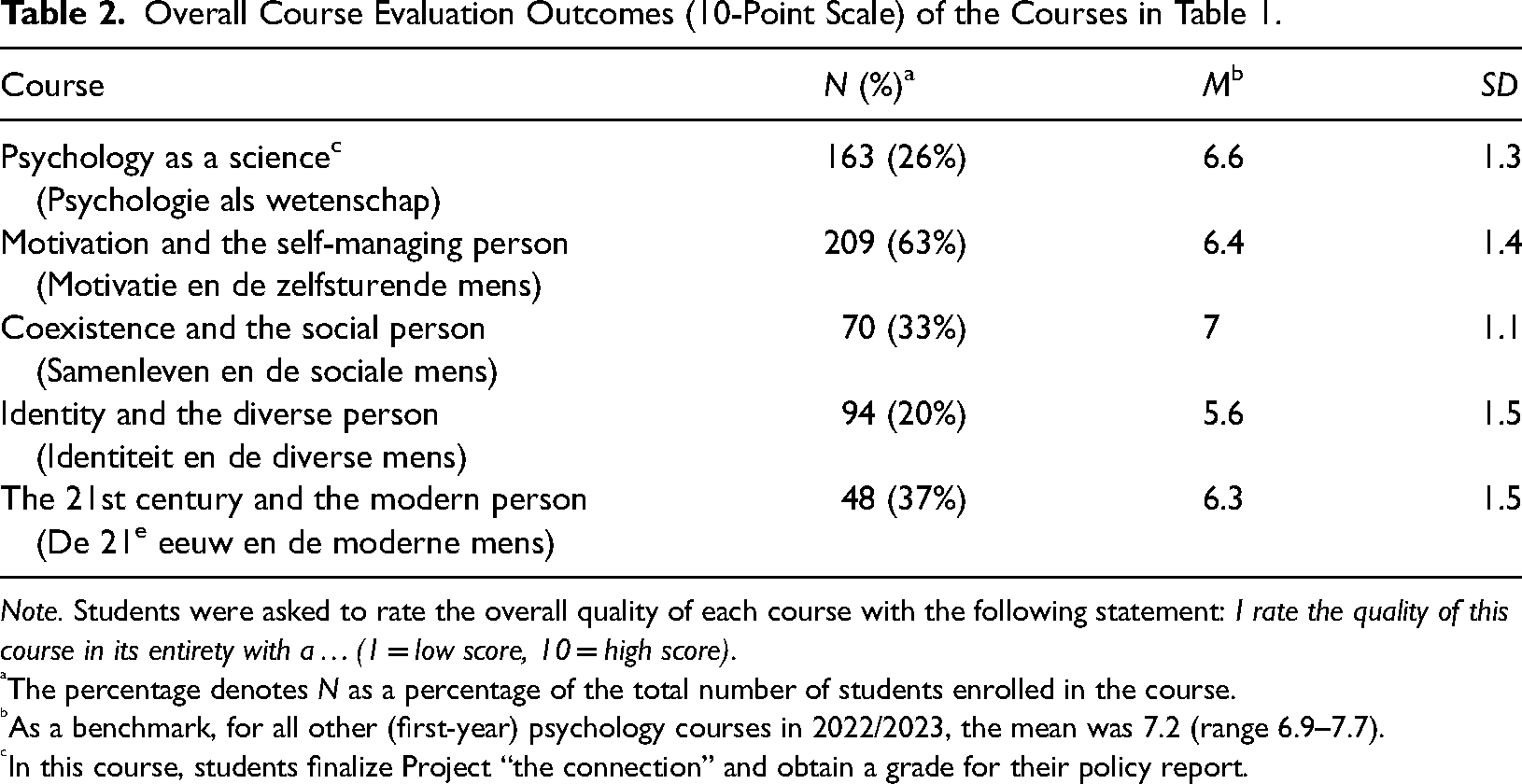
Note. Students were asked to rate the overall quality of each course with the following statement: I rate the quality of this course in its entirety with a … (1 = low score, 10 = high score).
The percentage denotes N as a percentage of the total number of students enrolled in the course.
As a benchmark, for all other (first-year) psychology courses in 2022/2023, the mean was 7.2 (range 6.9–7.7).
In this course, students finalize Project “the connection” and obtain a grade for their policy report.
The individual assignments pertaining to PL received marks in the course evaluations (see Table 3) that were similar to other assignments (also in other courses). On these questions, a 5-point scale is used (benchmark average 3.7, range 3.4–4.1). From specific individual comments about the assignments (see Supplemental Table S4) some students (∼8 comments) clearly appear to appreciate the societal focus, although others (∼2 comments) regard this to be “less scientific.” Many students (∼ 20 comments) took issue with the different style of the assignments or the focus on multi- or interdisciplinary approach (even though all was still within psychology). For one course (the 21st century and the modern person), specific questions about societal relevance were added to the course evaluation. The scores on these items were sufficient and suggest that students in general do appreciate such a focus.
Course Evaluation Scores for Individual PL-Related Elements/Assignments (5-Point Scale) of the Courses in Table 1.
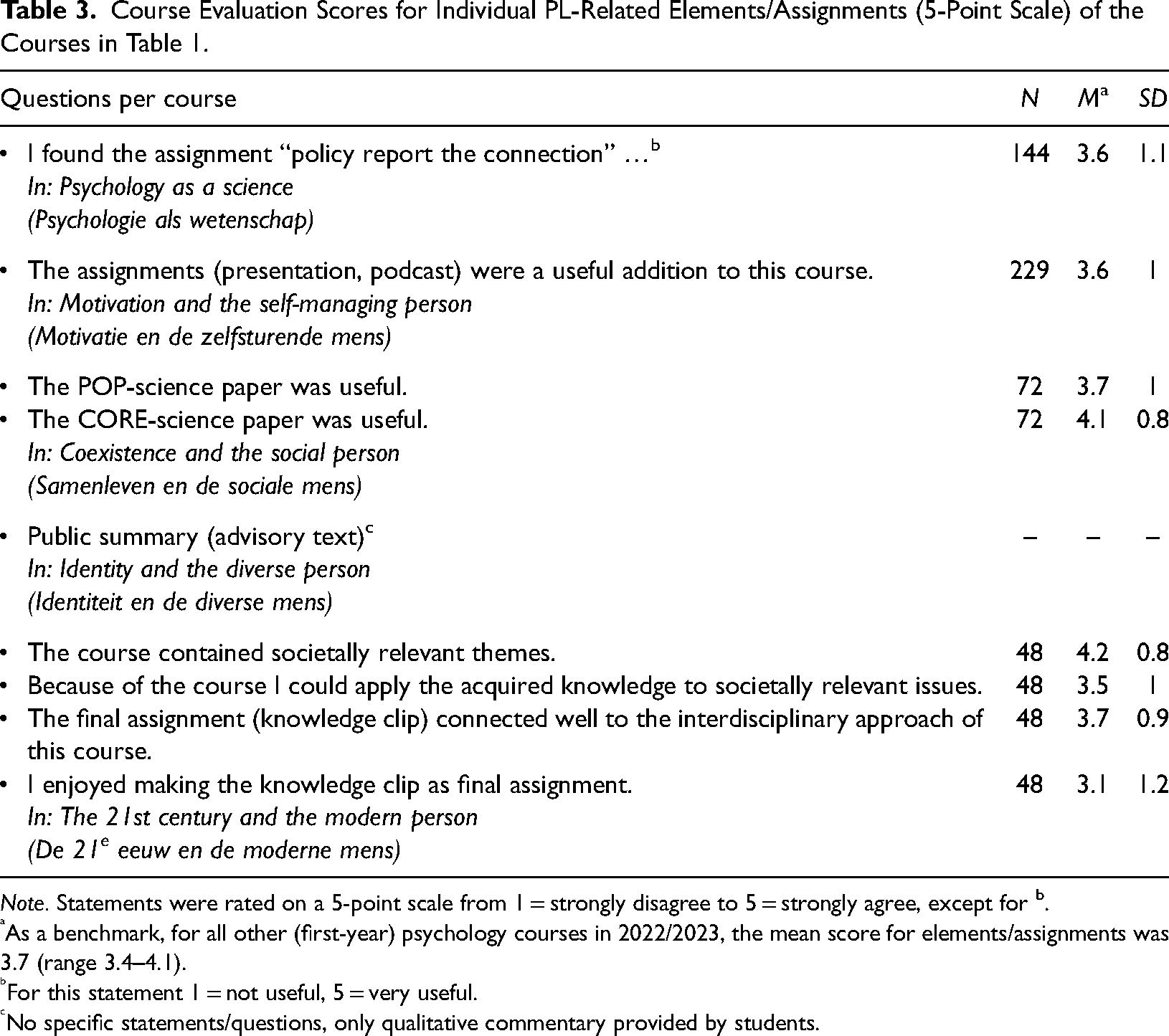
Note. Statements were rated on a 5-point scale from 1 = strongly disagree to 5 = strongly agree, except for b.
As a benchmark, for all other (first-year) psychology courses in 2022/2023, the mean score for elements/assignments was 3.7 (range 3.4–4.1).
For this statement 1 = not useful, 5 = very useful.
No specific statements/questions, only qualitative commentary provided by students.
Teacher Perspective
Table 4 shows that teachers generally think that PL should be an important learning goal within our programme. However, teachers indicate that within these specific courses PL-related goals receive varying amounts of attention. We also asked the teachers what obstacles they encountered including PL goals into their education (Supplemental Table S5). From these reports it became apparent that teachers do not always feel equipped enough to incorporate these learning objectives into their classes (n = 6), or that PL as a learning objective is not made explicit enough to teachers and/or students (n = 5). Some thought the course format did not enable acquiring PL skills enough (too little time for practice, leading to too superficial processing by students, n = 12), with too much focus on other specific (multi- or interdisciplinary) academic skills (n = 3). Additionally, some felt the students just did not have enough knowledge and skills at this moment in their studies to be able to attain the PL skills (n = 4).
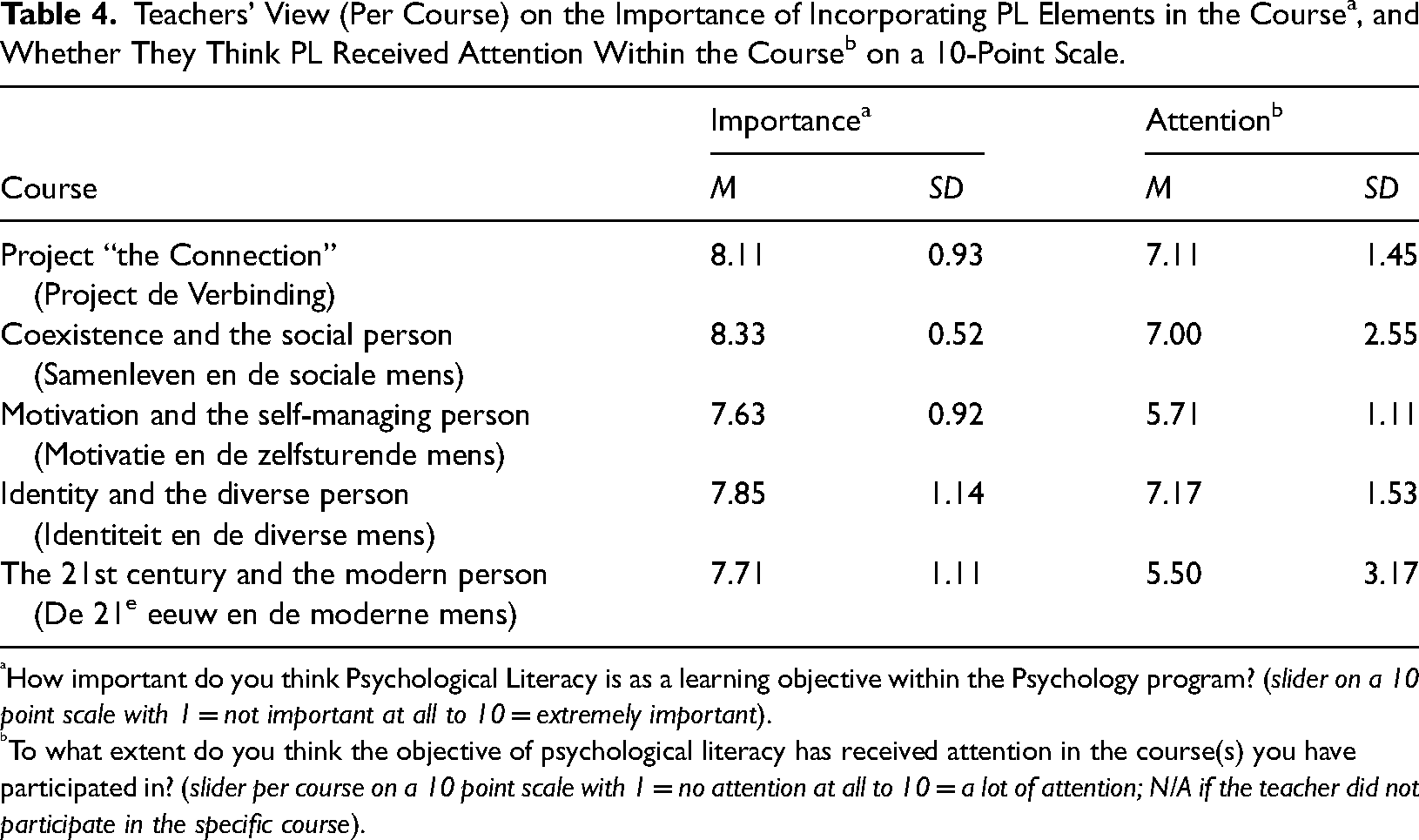
How important do you think Psychological Literacy is as a learning objective within the Psychology program? (slider on a 10 point scale with 1 = not important at all to 10 = extremely important).
To what extent do you think the objective of psychological literacy has received attention in the course(s) you have participated in? (slider per course on a 10 point scale with 1 = no attention at all to 10 = a lot of attention; N/A if the teacher did not participate in the specific course).
As possible suggestions to overcome these issues (Supplemental Table S6), most teachers mentioned that the PL-related learning objectives should be made more explicit in the course materials and across the curriculum (n = 11), including more focus on the topic in course elements and examples during teaching and possibilities to practice with these skills (n = 15). Better training for teachers (n = 4) was also mentioned, including the use of examples. A couple of smaller suggestions related to more general aspects of how our teaching is organised (such as large-scale teaching and often limited continuity among teachers).
Student Perspective
Most students that filled out the questionnaire were in their first year of psychology (66 out of 85 students), and had not experienced the second-year courses, nor finished the first-year project. The results can be found in Table 5. Looking at their mean Likert scale scores, students report it important to learn about PL in the societal, as well as other domains. They indicate that they feel able to apply psychological knowledge in these domains, and that this is useful. Students do not think that acquiring these skills is very difficult, but at the same time they do not feel particularly capable in applying them yet. When asked about examples of when and how PL was dealt with during their psychology education, examples from different courses were mentioned (see Supplemental Table S7). For the societal domain, 25 examples were mentioned. Two examples related to the theme courses, eight to the first-year project, leaving 15 examples from other first- and second year courses (11 of which mentioned the first-year course Social Psychology).
Students’ Scores on the (7-Point Scale) Questionnaire on Students’ Views Towards Psychological Literacy.
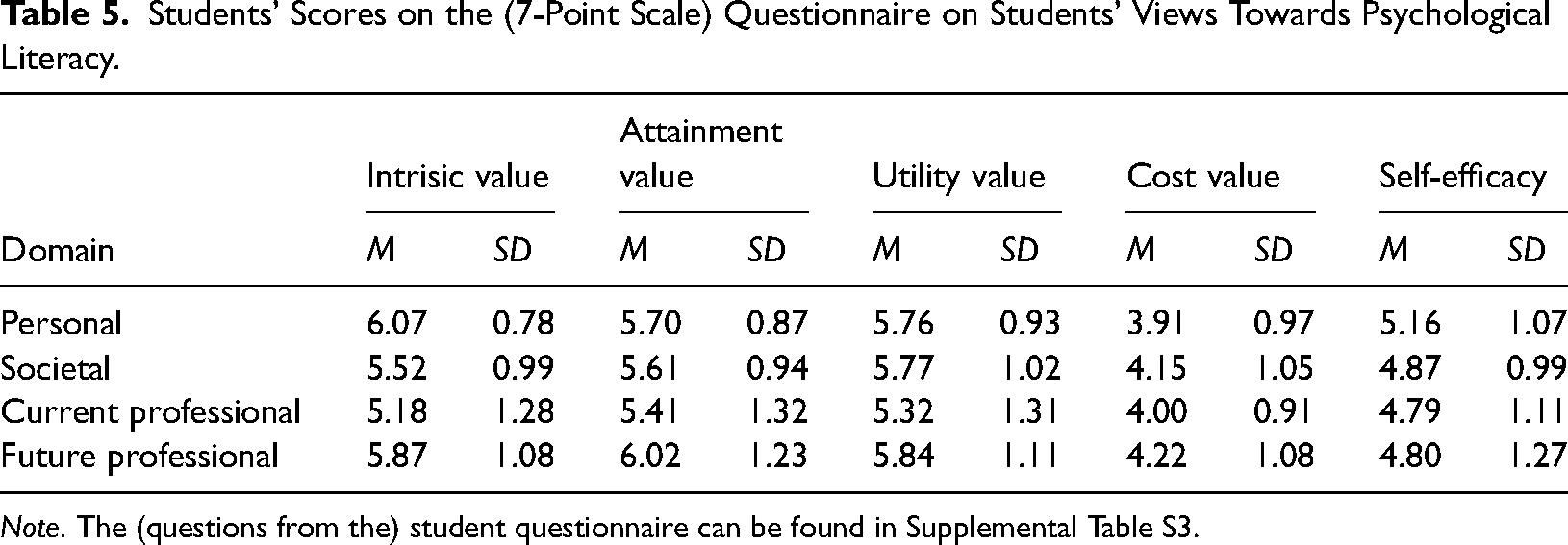
Note. The (questions from the) student questionnaire can be found in Supplemental Table S3.
Discussion
In this article, we explored teacher's attitudes, needs, and experiences with PL-related educational components that were recently integrated in the UU psychology bachelor program. We also explored students’ views on learning to apply psychology knowledge to the societal domain, by focusing on their task attributes and self-efficacy. Additionally, we explored student evaluations of the new educational components and their perspective on examples of PL in their education.
Teacher Perspective
When provided with an operational definition of PL, teachers indicated the ability to use or apply psychological knowledge and skills when it comes to societal issues to be an important objective for psychology teaching. However, even within the new courses that specifically incorporated this learning objective (the first-year module and the “theme” courses), teachers were somewhat less positive about the attention that was paid to this objective, although this varied per course. Teachers reported various obstacles that interfered with effectively integrating PL in their teaching. Most of these relate to (the preconditions for) a thorough understanding of PL and what it entails for both teachers and students. Many teachers did not feel able to guide students well enough, because of a lack of concrete examples and/or experience with such an application of knowledge themselves. Also, they thought that the PL-related learning objectives were not communicated well enough to students and to teachers, which may have led to a limited explicit and implicit focus on these objectives. Other obstacles relate to course design, such as lacking a sufficient focus on PL-related objectives in assignments and content, and not having enough time to help and supervise students or learning activities remaining too superficial.
It is important to note that several teachers have remarked students may not have had enough knowledge and skills to attain PL skills this early in the program. When incorporating PL in the curriculum it is important to consider where students do stand in terms of their knowledge, skills, and expectations. However, within our program we tried to embrace PL as a pedagogical philosophy (Cranney et al., 2022), and therefore we specifically designed to align PL skills development in tandem with research- and professional skills development, and matched them with the other courses provided to the students. This issue appears comparable to discussions regarding when to implement interdisciplinarity in a program, as interdisciplinarity is thought to contribute to the students’ employability (e.g., Goodwin-Smith et al., 2013). In other fields, early, first-year, experiences with interdisciplinarity in a program have been shown to contribute to student engagement and motivation (e.g., Koch & Vogt, 2015), which in turn may aid acquiring (interdisciplinary) skills. Nevertheless, teachers may need specific training to better be able to perceive and promote this match between PL (in assignments or by providing examples) and where students stand in their studies (see also below).
Teachers provided several suggestions to overcome the obstacles they experienced. First, they stress the need for more explicitly mentioning PL in course materials, content, and objectives, and throughout the curriculum: explain why students need to learn this and how. Interestingly, learning to apply psychological knowledge in relation to societal issues was clearly incorporated in the learning objectives, but some teachers did not interpret this as PL. It is important to note that for considering PL as a pedagogical or teaching philosophy, it should be accepted as the desired minimum outcome of undergraduate psychology programs (Cranney et al., 2022). To achieve this, the concept and definition of PL, and its meaning for our teaching and our curriculum, should be thoroughly discussed among teachers and educators. Especially as this definition of PL has been a topic of debate and varies among researchers and experts in the field (Cranney & Dunn, 2011; Cranney et al., 2022).
Teachers also suggest balancing a focus on PL with the attention that is being paid to research assignments, in terms of time, supervision, and grading. The PL-related assignments, such as writing a policy advice, giving presentations to stakeholders, making a podcast, or writing popular-scientific or related papers for a general audience, were valued by students and teachers. However, some teachers indicated lacking sufficient knowledge, and examples, on how to specifically supervise and grade such assignments. This is likely because teachers are used to an emphasis on research assignments and skills, as these are very prominent in psychology bachelor teaching (Green et al., 2017).
Structuring a clear learning trajectory throughout the curriculum can ensure that students have the basic knowledge needed. As Taylor and Hulme (2015) emphasize, PL should not be limited to elective courses, but integrated in the curriculum so all students can develop their skills. Such an increased focus on PL-skills can support both teachers and students in developing a thorough explicit and implicit understanding of what PL entails. Developing shared templates of assignments, grading forms and learning objectives may contribute to this and supports teachers’ ability to teach PL-related skills. Such efforts may also guide training and teacher development (a suggestion that several teachers provided), thereby helping teachers function as a role model, which further contributes to PL as a pedagogical and teaching philosophy (Cranney et al., 2022). Taking a more local, perhaps a SoTL-based approach (e.g., Geertsema, 2016; Healey, 2000) when exploring how to integrate PL in their teaching and teaching materials, may help teachers take a “scientist educator” approach as well.
Student Perspective: Values and Examples
Although PL extends the focus of psychology teaching beyond the scope of theory, research, and practice, which can be seen as the three content domains of psychology programs (Green et al., 2017), the (mostly first-year) students that participated in our study indicated to find the translation of psychology knowledge to societal issues important (about equally important as the application in the other domains). In line with the findings by Morris et al. (2013), they indicate to be motivated to learn, to see the utility of the topic, experience not such a high-cost value, and feel generally competent to do so. This is positive, as such task attributions and self-efficacy can, according to EVT, be seen as preconditions for motivation and performing (Eccles & Wigfield, 2002; Wigfield & Eccles, 2000). Whereas Green et al. (2017) focused on task values for research, theory, and practice from the viewpoint that a successful integration of these three domains will stimulate PL, we looked directly at how students value the applicability of knowledge in different translational domains (personal, societal, and professional). How this is supported by a good integration of theory, research, and practice to promote motivation among students needs to be further explored, as well as how task values and SE relate to student motivation for and their achievement in the domain of PL. The role of socialization, which gains increased focus in EVT (Eccles & Wigfield, 2020), should be further explored as well.
When asked which examples they remember from their classes, there is some variation among students. Some students indicate that they have not learned to do this at all, whereas others specifically describe how they used psychology knowledge in their view on situations they encountered in their daily lives. Students more often mentioned examples from lectures and topics covered in the basic courses related to the various directions of psychology (such as the course on social psychology), than the first-year module that explicitly targets PL. This could be because many of the participating students had not yet finished the first-year module, but may also touch on an observation made by one of our teachers in an exploratory interview: “if we make the application of knowledge explicit in course objectives and concrete assignments, it appears that students suddenly see less value, and the assignment becomes something they have to do for obtaining a grade.” More “controlling” rewards can reduce motivation (Deci et al., 1999), although this is not specific for PL-related assignments. The evaluation scores of the PL-assignments were on or above average. Perhaps teachers’ lack of felt ability and their lack of familiarity with PL may have contributed to students’ perception of the learning objectives. As students differ with regard to their perception of the courses and learning objectives, a more person-based view, focusing on differences between students with different characteristics, may be useful when exploring student motivation (Urhahne & Wijnia, 2023) with respect to PL.
It is important to note that student evaluations were used to gain insight into whether students considered the (elements of the) new courses useful. We did not assess whether students have truly become more psychology literate by an assignment or course. The assessment of PL and PL-related skills remains an important issue. PL has often been measured with subjective measures (Morris et al., 2013), and a more extended assessment of PL by Heritage et al. (2016) could not very clearly distinguish between psychology students and other students. Objective and valid ways to assess PL, doing justice to the complex structure of the concept, are needed both for teaching and research (Newell et al., 2020; Roberts et al., 2015; Taylor & Hulme, 2015). This may help design and assess students’ learning trajectories, and to gain knowledge on how to effectively promote this in our students and teaching. In addition, research may benefit from longitudinal assessments, which are currently lacking (Newell et al., 2020).
Limitations
It is important to note several limitations. The participation rate of students was low, and mostly first-year students participated. This may have limited the generalizability of our findings, as we may have only included the more engaged students, and students’ view on, and experiences with, PL may change over the years (Morris et al., 2013). Also, course evaluations were (per standard university policy) conducted in the last week of the course which may have limited participation, and not all theme course evaluations included specific questions on societal applicability. In addition, some of the student course evaluation questions regarding PL elements differed across courses, which limits the comparability across courses. In future research, where feasible, it is important to make use of similar questions to promote comparability. Additionally, for feasibility reasons, we developed a short questionnaire, using only one item indicators for all task attributes and self-efficacy. We did not obtain information on the reliability or validity of such a measure, which needs further exploring. Although we did provide teachers with a concise definition of PL (see also Supplemental Table S2), they may not always have had a thorough understanding of the construct. This may also have impacted the way they answered questions regarding the value and focus on PL in their courses and highlights the need for a thorough understanding of the construct when discussing and studying attitudes towards PL in our teaching. Also, in the newly developed courses and in this study, we mainly focused on the application of psychological knowledge in relation to societal issues. However, this focus may be too narrow, as PL is a very rich and complex construct (Cranney et al., 2022), and the translational domains (such as the personal, professional, and societal) cannot clearly be distinguished. Especially since examples that students provided go beyond the scope of societal applicability.
Conclusions and Practical Considerations
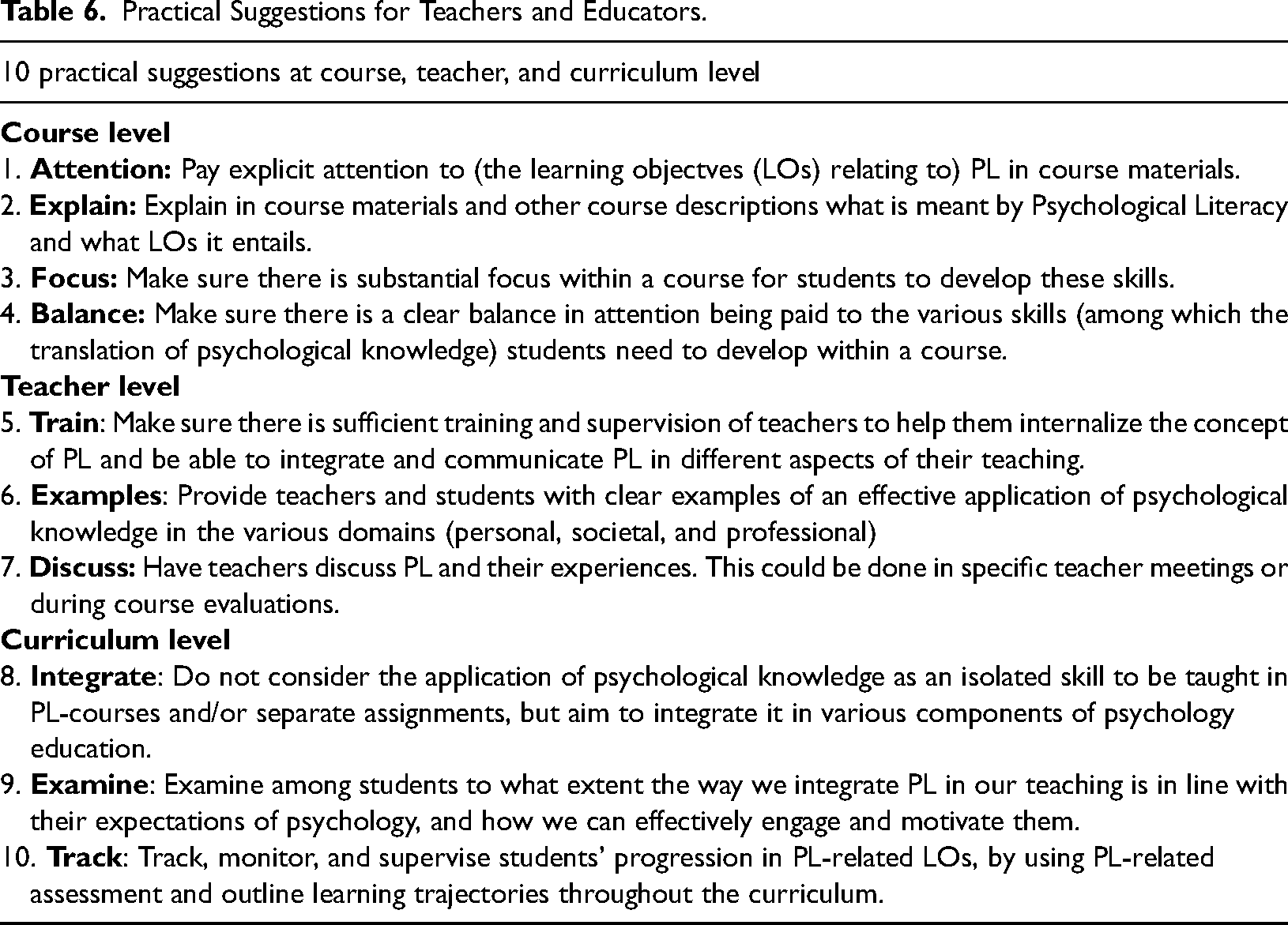
The pursuit of PL as a learning goal and direction for psychology education requires significant changes to be made in various educational practices at the level of the curriculum and courses, as well as staff and students. It is important to note that the overall ambition that drives PL-related research and practice, is much broader than the small area we focused on (Cranney et al., 2022), and many more steps need to be taken that go beyond small changes at course or track level. However, this report provides some insights and practical considerations that may help us and others implement these more effectively in the future. We summarize our insights below, and add a list of 10 practical suggestions at course, teacher, and curriculum level (see Table 6):
PL needs to “grow” on both teachers and students: in addition to inserting PL-elements into existing courses and parts of the curriculum, it is desirable to identify and design a learning trajectory that can be used to track development and leads to specified PL-related end terms. This way, PL becomes more integrated into the thinking, design, and implementation of psychology teaching. When developing and implementing PL-related courses in the curriculum, pay attention to teacher training, as these learning objectives may ask for a different skillset of teachers. Pay extra attention to what, why, and how, and provide teachers with effective examples and materials. Building a teacher community, or a community of practice (Wenger, 2011), can play a valuable role in this. Again, a scientist educator approach can help provide insight into the effectiveness of such initiatives. Be aware that for students PL can also be a relatively new and unexpected skill, which may need extra time and attention from teachers. Working with examples from students on students’ daily lives and interest (case histories, news stories, etc.) can possibly help them see the relevance and the potential of PL. In doing so, one can broaden the scope from the societal to the personal and potentially motivate students by bringing psychology to the life of students and vice versa (Hulme, 2014). More insight is needed into how specific PL components can be implemented in courses and learning objectives such that they positively impact student motivation and learning. Focus groups with students can provide insights into how teaching activities are viewed by students (Bourne & Winstone, 2021). In evaluating teacher practices and materials, a whole class approach may help to make sure that not only the most engaged and motivated students are involved in the process (Bovill, 2020). As Taylor and Hulme (2015) emphasize, an important remaining next challenge concerns the identification of specific PL-related learning outcomes and the assessment thereof. How can we validly assess students’ PL-development and gain insight into their thinking and reasoning, and changes in their perspective on societal issues they encounter in everyday life? Since assessment and measurement in PL is identified as an important question, a scientist-educator approach of teachers and educators, as suggested by Cranney et al. (2022), seems indispensable here as well.
Practical Suggestions for Teachers and Educators.
Supplemental Material
sj-docx-1-plj-10.1177_14757257231216709 - Supplemental material for Making Psychological Literacy an Integral Part of the Psychology Bachelor Curriculum: Exploring Teacher Experiences and Student Views
Supplemental material, sj-docx-1-plj-10.1177_14757257231216709 for Making Psychological Literacy an Integral Part of the Psychology Bachelor Curriculum: Exploring Teacher Experiences and Student Views by Nouchka T. Tick, Dominique N. J. Rijkelijkhuizen and Maarten J. van der Smagt in Psychology Learning & Teaching
Footnotes
Declaration of Conflicting Interests
The authors declared no potential conflicts of interest with respect to the research, authorship, and/or publication of this article.Funding
Funding
The authors received no financial support for the research, authorship, and/or publication of this article.

Supplemental Material
Supplemental material for this article is available online.
Notes
Author Biographies
References
Supplementary Material
Please find the following supplemental material available below.
For Open Access articles published under a Creative Commons License, all supplemental material carries the same license as the article it is associated with.
For non-Open Access articles published, all supplemental material carries a non-exclusive license, and permission requests for re-use of supplemental material or any part of supplemental material shall be sent directly to the copyright owner as specified in the copyright notice associated with the article.
