



Abstract
COVID-19 pandemic has affected many areas of our lives including education. In the time of designing this study most schools, colleges, and universities across Europe were closed and psychology educators were expected to change their teaching methods rather quickly. This study investigates how they coped with this situation, which technology and methods they used to teach psychology distantly, and which barriers and outcomes they found in this situation. Participants were N = 660 secondary school and university teachers from 28 European countries. The results showed that the participants across Europe face similar challenges in adopting distance teaching methods, which were technical and organizational rather than pedagogical. Despite the fact they found distance teaching of specific psychological contents challenging, psychology teachers also described positive aspects of distance teaching, examples of good practice and lessons learned that could be generally implemented in the teaching of psychology beyond the pandemic situation.
Introduction
In April 2020, about 90% of learners of all levels of education around the world were affected by the pandemic of COVID-19 (UNESCO, 2020). Most schools were closed and the educational process moved to the online environment and started to teach in distance formats. This situation had a direct impact on both psychological (methods of instruction, assessment methods, motivation, and learning strategies) and social aspects of education, for example, changes in daily routines and physical activity among both teachers and students (Maher et al., 2020), social isolation, increased level of stress and anxiety and overall impact on mental health (Cao et al., 2020; Fu et al., 2020; Savage et al., 2020).
The COVID-19 pandemic directly affected teachers of psychology at both preuniversity and university levels of education. Psychology is currently taught in the university programs for the training of professional psychologists (e.g., Stuchlíková & Sokolová, 2020), as a secondary school subject in many European countries (Sokolová & Williamson, 2020), and also as a compulsory part of the university education of nonpsychologist professions (Dutke et al., 2019). The previous studies and discussions (Dutke et al., 2019; Sokolová & Williamson, 2020) showed that teaching psychology requires specific teaching methods and approaches to facilitate students’ self-understanding, mental health, psychological literacy, practical counselling, assessment and research skills. Many of these skills and competencies are traditionally taught and developed in a face-to-face mode of education. According to pre-COVID studies, there is no consistent evidence for positive effects of distance courses in psychology (Eppler & Ironsmith, 2004; Miller & Hutchens, 2009; Murphy et al., 2007; Waschull, 2001). Therefore, it is crucial to investigate how this critical situation and distance formats of teaching and learning during the COVID-19 pandemic affected the teaching of psychology.
Distance Teaching and Learning Before and During the COVID-19 Pandemic
Triggered by the current pandemic situation, schools and universities have been offering various types of distance courses and study programs, especially with the development of the internet and digital technology. However, the evidence about their effectiveness is ambiguous. It has been suggested that technological innovation did not support learners to learn more and better than in traditional educational contexts (Penna & Stara, 2007). Moreover, during the first wave of COVID-19 pandemic, universities had to switch to online delivery almost overnight, which might have led to many barriers and problems (Liquori & Winkler, 2020). Compared to traditional education, distance education lacks personal human contact, even though students communicate with the teacher and among themselves via videoconferences, chats, e-mail, or complex learning management systems. They might feel isolated and miss the sense of belonging, community, and social dynamics in the classroom (Miller, & Hutchens, 2009), evidence lower levels of self-confidence and display a higher desire for structure in their learning materials (Kahl & Cropley, 1986). These findings are supported by Shin's study (2010), which suggests that a critical predictor of successful distance learning is the perception of the psychological presence (transactional presence) of teachers, peer students, and institution. The connectedness and effectivity in distance education can be supported by online teaching strategies including, for example, frequent interaction, collaboration, required participation, question-asking forums, topical flexibility, or minimal technology requirements (Schrum & Hong, 2002a,b).
The modality of distance education is a relevant factor too. Two modes of delivery are distinguished: synchronous and asynchronous. Synchronous distance education mode is based on videoconferencing technologies, quizzing or voting platforms, which allow students and teachers to be connected live at the same time even though they are geographically separated. The asynchronous mode covers web-based courses, prerecorded lectures, video or text-based assignments, which are used by students and teachers separated by both time and location (King et al., 2001). Lemov (2020) summarized the benefits and limitations of both modes. The asynchronous mode offers more polished products and allows both teachers and students to control their schedule with the possibility of more complex and sustained assignments. On the other hand, there is no opportunity for assessing engagement in real time, less connection, and accountability. The synchronous mode helps to maintain connections and allows checking for understanding and responding to errors in real time. It also allows for greater engagement and as such it might fulfil the need for a psychological presence in the course. Its limitations are related mostly to organizational and technical issues like the quality of internet connection, access to appropriate technology, or coordination of schedules. Both modes compared to traditional face-to-face teaching are challenged with the risk of screen fatigue, decreasing attention, and motivation for learning. While synchronous teaching was often adopted during the COVID-19 pandemic, the excitement with new platforms and teaching methods does not seem to be sustainable (Jarvis, 2020). The novelty effect of this technology might pass away due to a high level of screen exhaustion and lowered level of attention (Lemov, 2020). However, asynchronous distance education has the potential to support independent, student-centered and self-paced learning.
The current situation in education may have a long-lasting impact on teaching and learning. School closures may affect teaching and learning routines, educational outcomes and may harm both students’ and teachers’ well-being and mental health. Some authors consider these conditions as “new normal” (Lemov, 2020; Tesar, 2020). Others highlight the risk of the gap in knowledge and skills, especially in professional training and practical skills for example of teachers (König et al., 2020) or health care professionals (Boodman et al., 2020; Rajab et al., 2020). Higher education students perceived the distance teaching during the COVID-19 pandemic usually negatively. They reported higher levels of stress and anxiety caused by multiple reasons: the lack of social contacts, poor concentration, study overload, unavailability of libraries and other sources, lack of motivation, and a general higher level of negative emotions (Aguilera-Hermida, 2020; Cao et al., 2020; Fu et al., 2020; Hasan & Bao, 2020; Maher et al., 2020; Savage et al., 2020; Son et al., 2020).
This situation calls for more information on how distance education proceeds in teaching psychology during the first wave of COVID-19 pandemic. In the present study, we aimed at answering the following research questions: (a) What kind of technology did psychology educators use? (b) Which methods did psychology educators use for distance teaching? (c) What were the main barriers to the distance teaching of psychology? (d) What practices did they find useful in the distance teaching of psychology? Thus, this study aims to collect data about the experiences of psychology teachers at different levels of education from different European countries with distance teaching of psychology during the COVID-19 pandemic in spring 2020. We believe that the results will help us to provide further guidance and examples of good practice to support psychology teachers in schools, colleges, and universities.
Method
Participants
Participants were 660 psychology educators (Table 1) recruited through the contacts of three European organizations: European Federation of Psychologists’ Associations, European Federation of Psychology Teachers’ Associations, and European Society for Psychology Learning and Teaching. The individual and institutional members were approached by e-mail or other communication channels and were asked to participate in this survey. The participants represented 28 European countries (Table 2) and taught a wide range of psychological disciplines. The most frequent were research methods (26%), clinical psychology (23%), social psychology (20%), cognitive psychology (19%), developmental psychology (18%), and educational and school psychology (18%). Only the participants who taught their courses in a distant format at the time of data collection were included in the final sample (Table 1).
Sample Description for the Final Data Analysis.
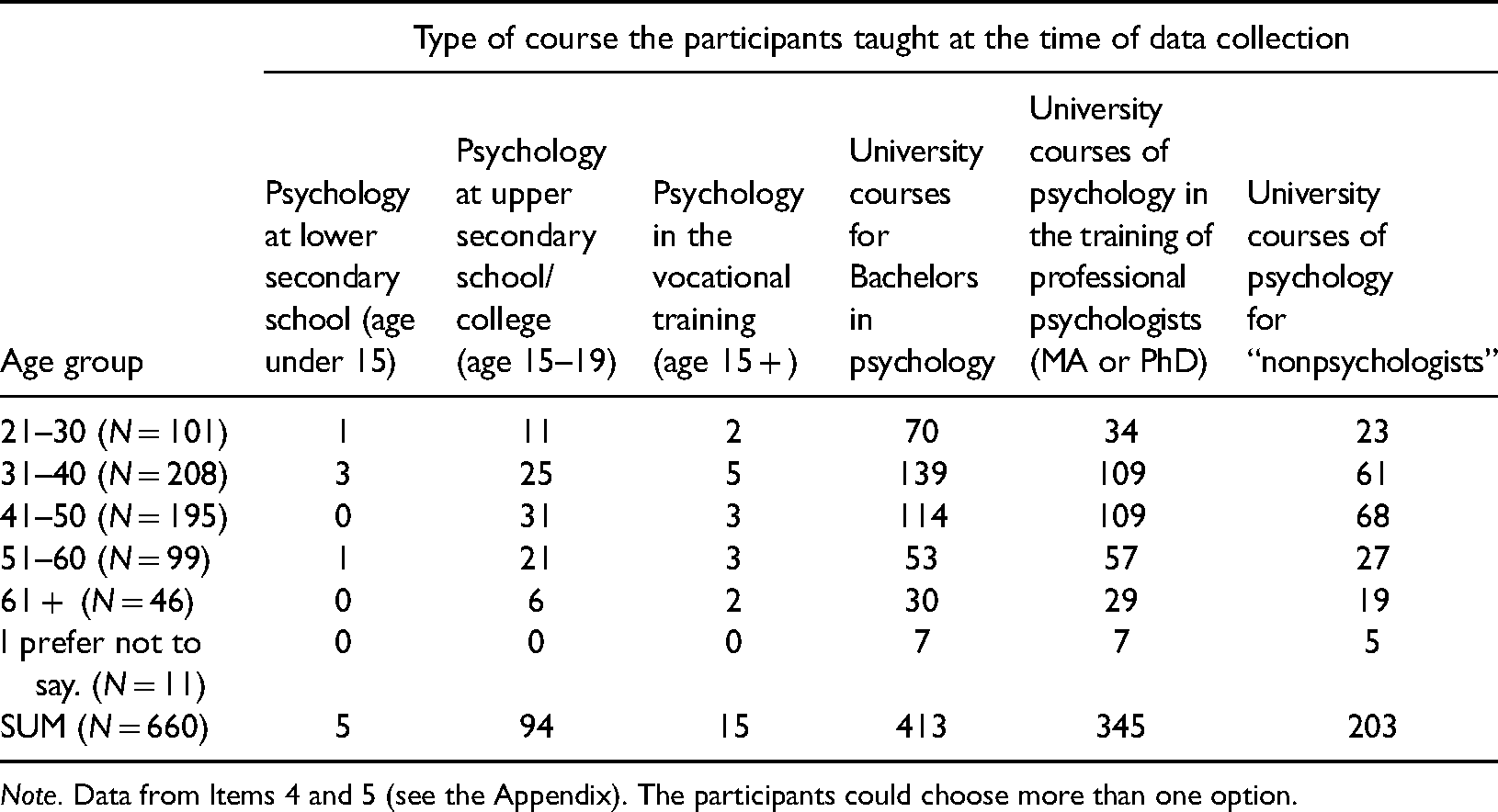
Note. Data from Items 4 and 5 (see the Appendix). The participants could choose more than one option.
Participants According to Countries.
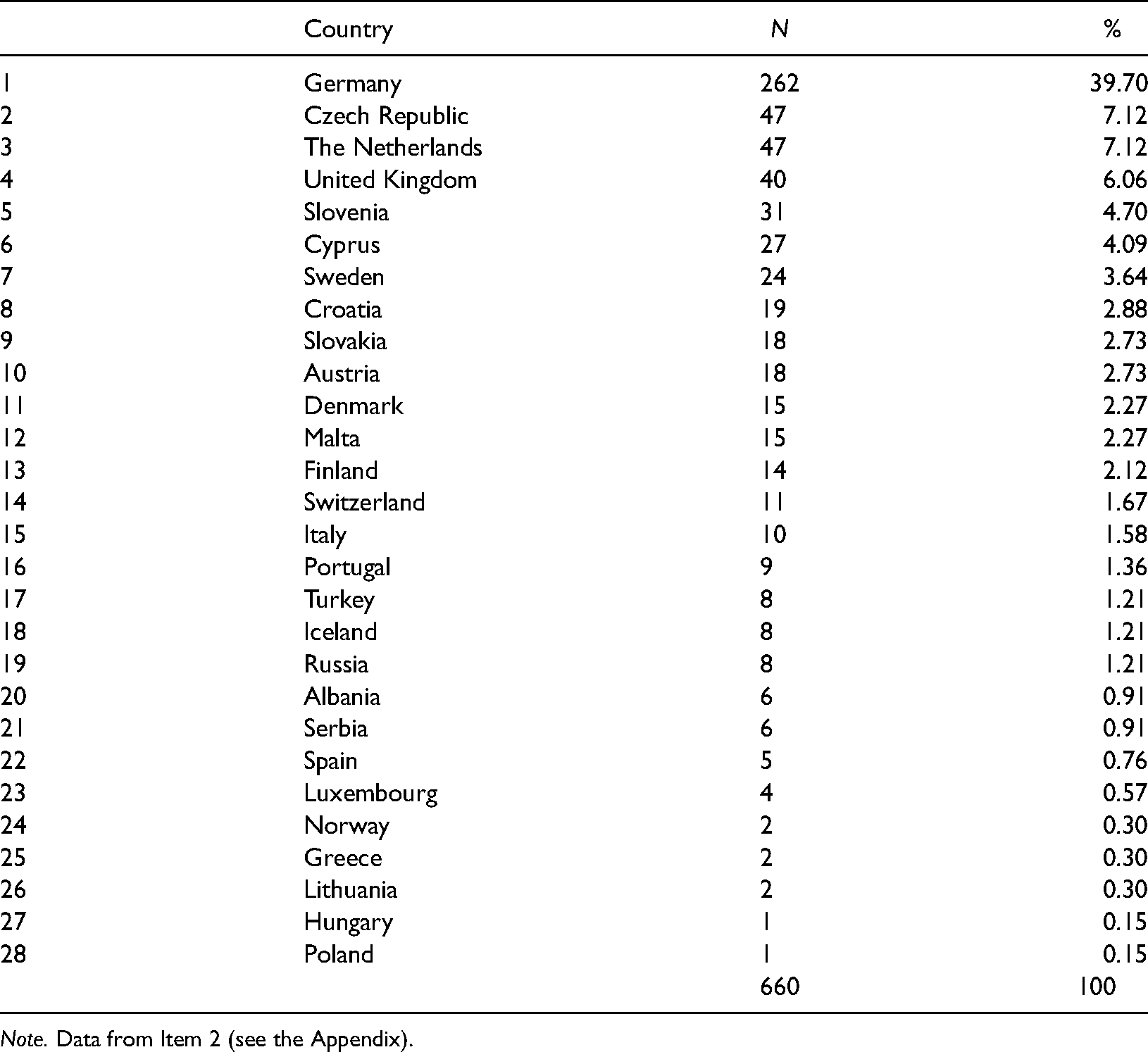
Note. Data from Item 2 (see the Appendix).
Research Ethics
The study was approved by the Cyprus National Bioethics Committee (Approval No. EEBK E∏ 2020 01 70). Participation in the survey was anonymous and voluntary. The data were handled in compliance with the EU General Data Protection Regulation (GDPR).
Instrument
The data were collected via an online questionnaire designed by the authors of this study. The instrument consists of demographic and teaching background items (country, age group, course type), six multiple-choice items, and four open items related to the participants’ experiences with online teaching of psychology during the first wave of the COVID-19 pandemic (see Appendix). The data were collected online for 16 weeks, from April to July 2020.
Results
The Use of Technology
Psychology teachers mostly used technology that was officially provided (81.96%) or recommended (47.42%) by their school or university. About one-third (29.24%) of the participants reported that they searched for technology that fits their teaching needs (Table 3).
How Did Psychology Teachers Choose Technology for Their Distance Teaching?
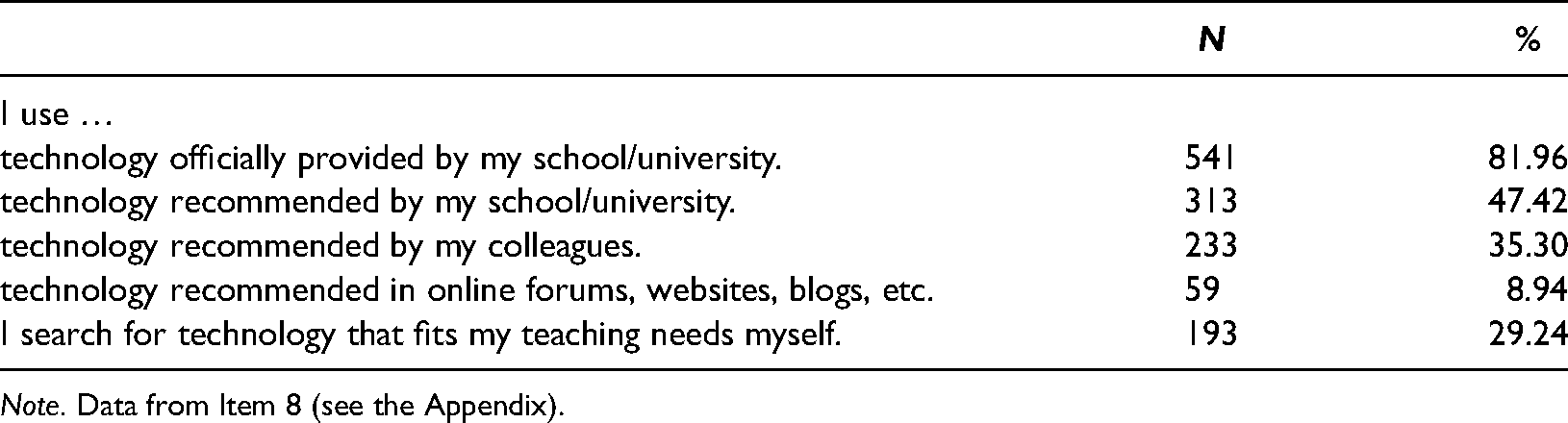
Note. Data from Item 8 (see the Appendix).
In our sample, e-mail communication (74.39%) and school or university academic systems (55.45%) were the most preferred teaching technologies used during the COVID-19 pandemic (Table 4). For synchronous teaching psychology teachers mainly used Zoom videoconferencing software (53.64%). They preferred generic software applications, among “others” participants only rarely reported the usage of psychology specific online applications.
What Technology Did Psychology Teachers Use in Their Distance Teaching?
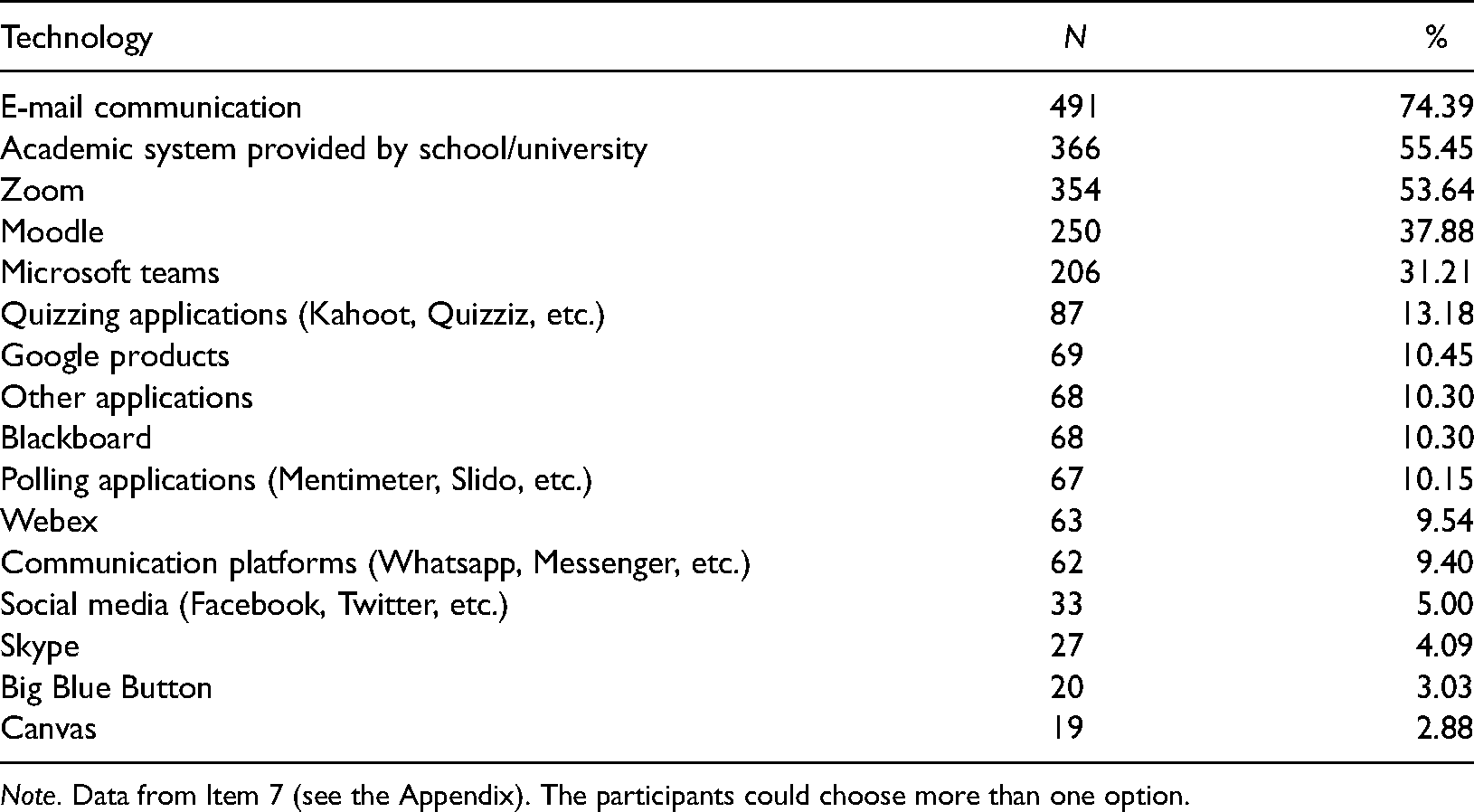
Note. Data from Item 7 (see the Appendix). The participants could choose more than one option.
Distance Teaching Methods and Their Limitations
The descriptive analysis of our data shows that both synchronous and asynchronous teaching methods were used by psychology educators (Table 5). They preferred sharing text materials with their students and also used synchronous methods (lectures and seminars) provided via videoconferencing software. Less frequently psychology educators used interactive teaching methods including quizzes, polls, or interactive online experiments and demonstrations.
Which Teaching Methods Did Psychology Teachers Use in Their Online Teaching?
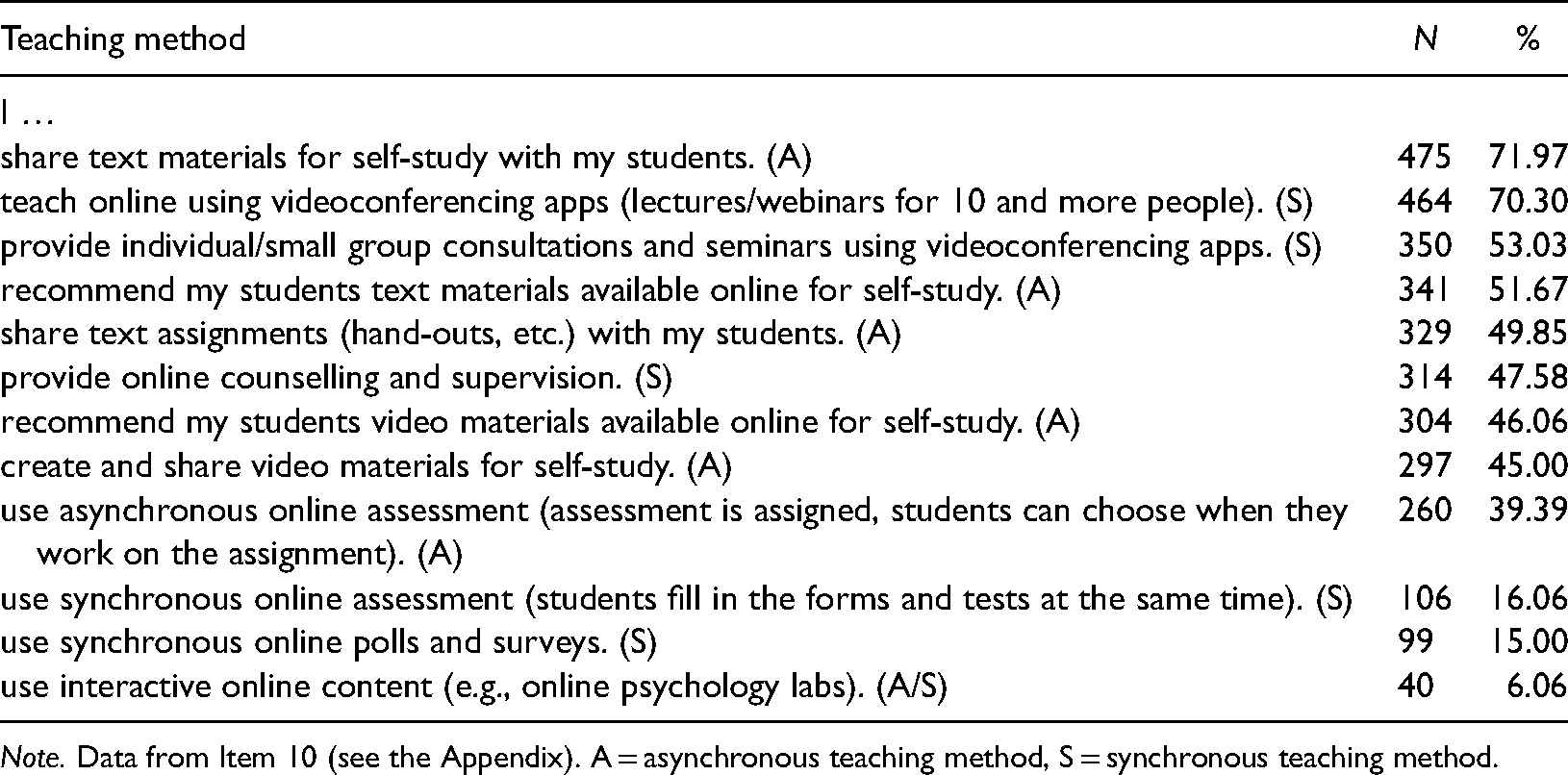
Note. Data from Item 10 (see the Appendix). A = asynchronous teaching method, S = synchronous teaching method.
Methods of distance teaching were compared across different types of psychology courses (Figure 1). For this analysis, the participants were divided into four groups: pretertiary psychology educators who taught psychology in secondary and vocational schools (N = 99, 14.75%), teachers in university courses for Bachelors and Masters in psychology as the main discipline (N = 364, 54.25%), teachers of psychology courses for nonpsychologists (N = 81, 12.07%), and those who taught any combination of courses mentioned above (N = 127, 18.93%). Pretertiary psychology teachers tended to use video materials available online for self-study more often (χ2 = 27.07, p = .000). Educators who taught university courses for psychologists or a combination of several types of courses reported more frequent usage of synchronous teaching methods including small group or individual consultations and seminars (χ2 = 20.40, p = .000).
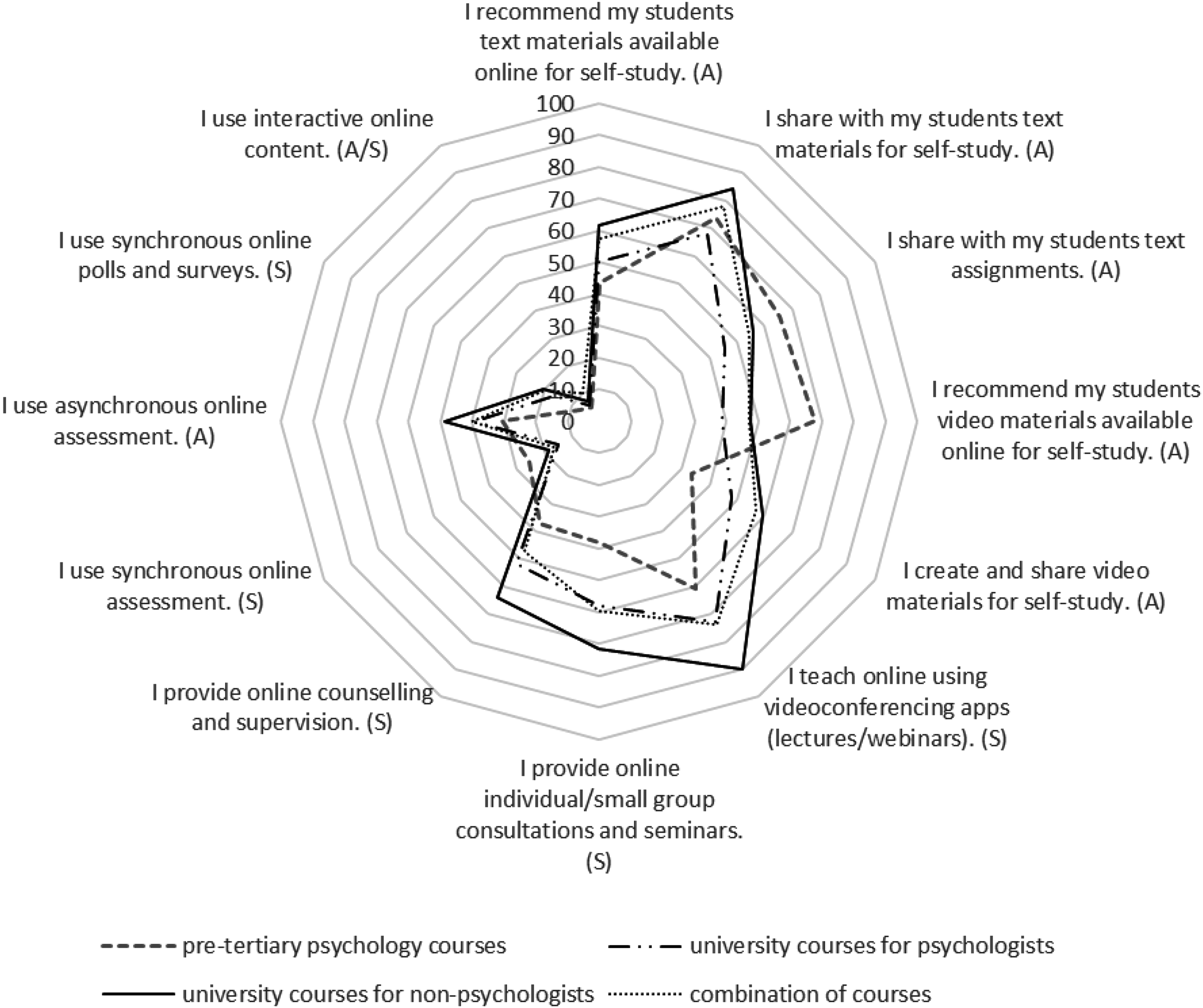
Comparison of distance teaching methods based on the type of course the participants taught at the time of data collection.
Despite common technical barriers (e.g., the quality of internet connection), the most common barrier to distance teaching during the COVID-19 pandemic was increased workload compared to face-to-face teaching. As they reported in open-format items, teachers were not prepared for this situation and needed to look for suitable sources and software, which was time consuming. The students’ participation and motivation in distance teaching seem to be another important limitation (Table 6).
Which Barriers Did Psychology Teachers Face in Their Distance Teaching?
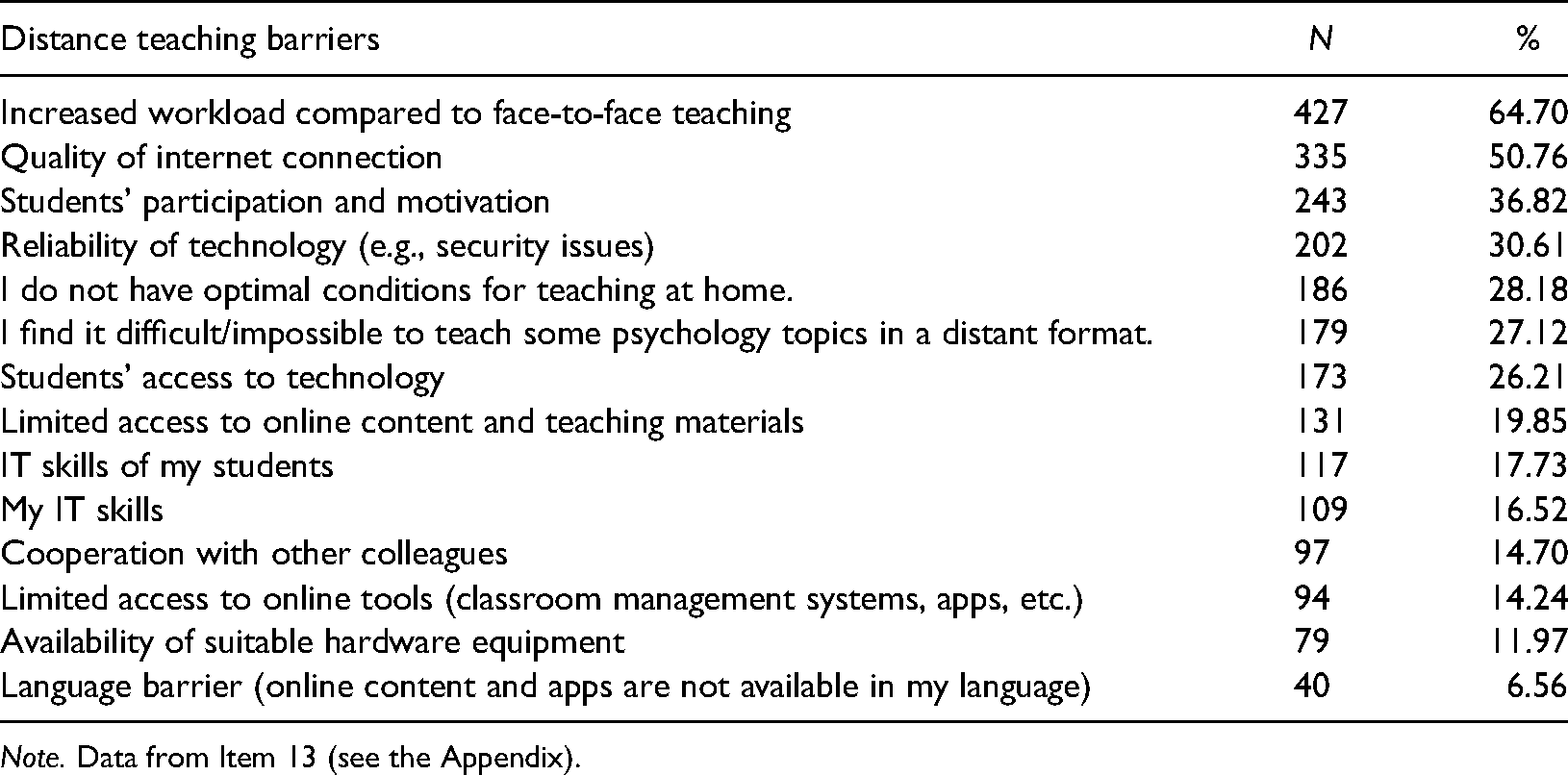
Note. Data from Item 13 (see the Appendix).
The perceived barriers of distance teaching were compared across groups of participants based on the type of course they taught at the time of data collection (Figure 2). The differences among groups were related mostly to the technology itself. Pretertiary psychology educators faced problems with internet connection (χ2 = 20.29, p = .000) and reliability of technology (χ2 = 21.61, p = .000) less frequently than other groups. However, they were also more often challenged with searching suitable teaching sources in their language (χ2 = 16.17, p = .001)
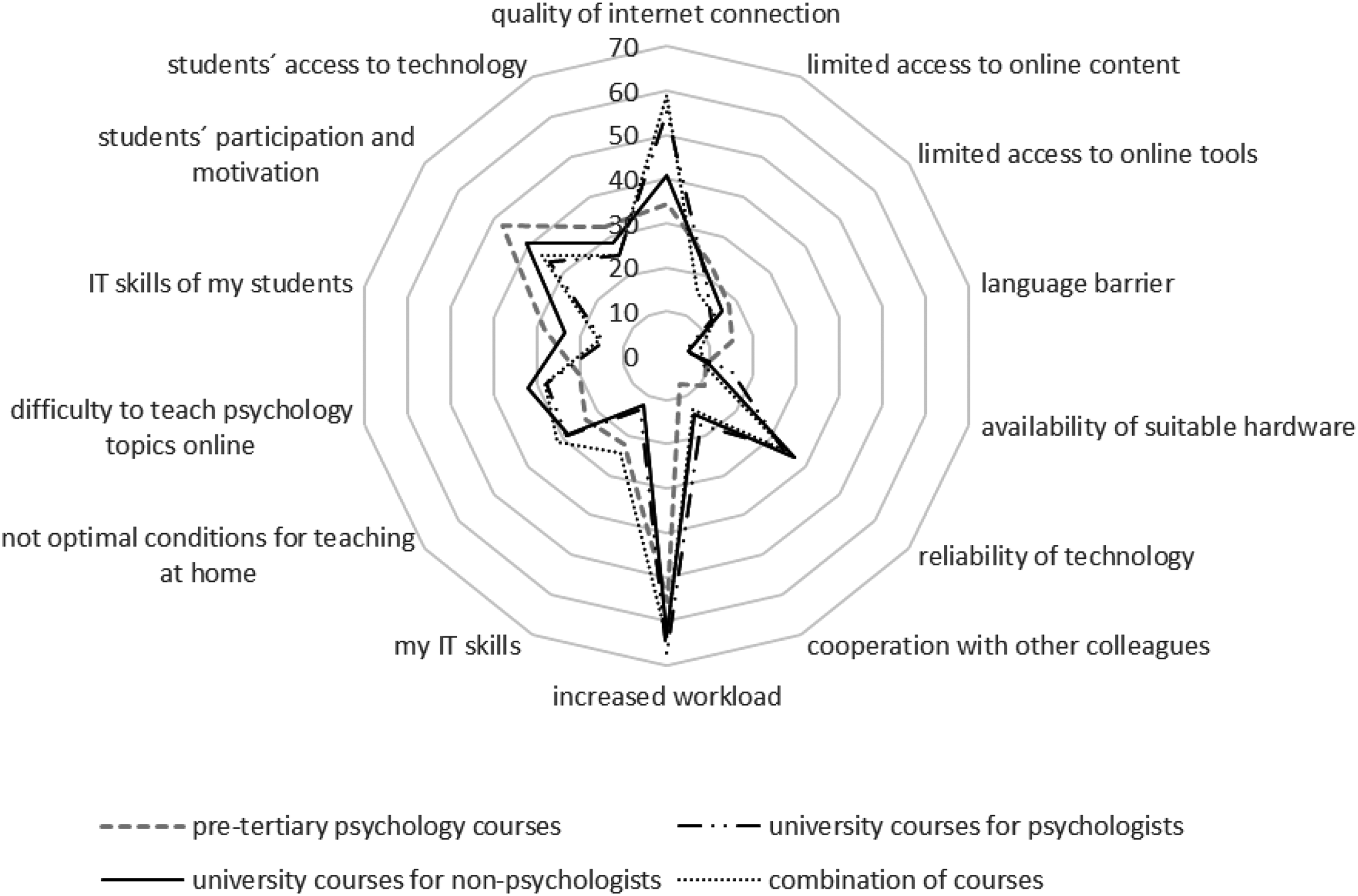
Comparison of distance teaching barriers based on the type of course the participants taught at the time of data collection.
Content Analysis of Open Items
In open format items, 30% of participants (N = 202) elaborated on the challenges. They discussed especially the lack of authentic social contact with students and the difficulties to teach some psychological topics and use some psychology specific methods online, for example, hands-on experiences and self-reflection, free discussions on counselling topics, role-plays, experiential learning, and sensitive issues discussions. Some participants also mentioned ethical issues during distance teaching, for example, the confidentiality of authentic cases they use in their teaching or the use of copyrighted material (video case studies, assessments tools, tests, etc.)
Despite these challenges, 19% of our participants (N = 127) reported also positive experiences and examples of teaching procedures they found effective and useful. We divided these comments into three content categories: social interaction, teaching methods, and assessment.
Based on participants’ experiences, social interaction is very important in the teaching of psychology. Some participants reported that students found it easier to ask questions in online teaching situations, especially when they could use chat or poll and questioning applications. To facilitate social interaction, psychology teachers recommended communicating frequently to keep students engaged and motivated, using informal communication tools too (e.g., groups on social media or communication platforms) and using polls and surveys during online lessons. Authentic social interaction seems to be important not only for motivating students but also to maintain the motivation of lecturers, who often found themselves being overwhelmed with technology, distance teaching requirements, and lacking enthusiasm for further distance teaching.
Examples of useful practices in the distance teaching of psychology cover combinations of synchronous and asynchronous teaching methods. The participants appreciated a flipped classroom model with prerecorded lectures (e.g., using voice record in a PowerPoint presentation) and following synchronous discussion or exercises via videoconferencing platforms. Such a combination allows students to proceed at their own pace concerning their actual technical conditions and also helps avoid the loss of attention and screen fatigue during long teaching sessions. Another example is the use of breakout rooms for group work, discussions, and collaborative projects. They also reported using fictive cases to avoid copyright and GDPR problems and using games and quizzes to keep students engaged. For teaching larger groups or more technically demanding sessions it is useful to teach in tandem with another colleague and to provide students with clear presession instructions. In general, setting clear, unambiguous rules and instructions with reasonable deadlines and offering optional consultations are crucial conditions in distance teaching for some psychology teachers.
Distance teaching also affected the system of assessment. Psychology teachers recommended adapting assessment methods to the current situation. They highlighted the role of continuous formative assessment. Another recommended using rubrics. A rubric contains the criteria for assignments and levels of quality for each criterion, which might help students to work on the assignment without personal contact with a teacher. Some teachers mentioned that they were unable to describe examples of effective practices in their teaching.
Discussion
This study aimed to investigate and describe how psychology educators around Europe have coped with the transition to distance teaching during the first wave of COVID-19 pandemic, which technology and methods they used in distance teaching of psychology, and which barriers and outcomes they found.
Psychology educators in our sample mostly used technology provided or recommended by their institutions. The reported barriers to distance teaching were related to three main areas. Firstly, psychology educators faced increased workload during the first wave of the COVID-19 pandemic. This might be related to the transformation of their traditional face-to-face courses into distance formats, learning how to work with new technology, and looking for resources and methods suitable for distance teaching. Secondly, the participants reported technical problems with internet connectivity, which is a common limitation especially in synchronous distance education (Lemov, 2020). Thirdly, the psychology educators found as a barrier motivation and participation of their students.
Based on the variety of technology and teaching methods used by psychology educators around Europe, we may conclude that the participants in our sample adapted their teaching to the new situation. At the time of data collection (during the first wave of the COVID-19 pandemic), our participants had limited experiences with distance teaching of psychology so many of them were not able to report best practice examples for successful distance teaching. The analysis of open items revealed the importance of social interaction and psychological presence (Shin, 2003) for the motivation of both students and teachers. Differences among groups of psychologists on the type of course they taught at the time of data collection were observed. Differences in teaching methods and perceived barriers of distance teaching of psychology were found especially between pretertiary and university psychology educators.
Even though psychology educators faced many limitations of distance teaching of psychology during the COVID-19 pandemic, this experience may help psychology graduates to develop their digital skills that might also be useful in the area of psychological services including internet-based psychological and psychotherapeutic interventions (Barak et al., 2008), telehealth and internet-enabled research (Wijesooriya et al., 2020).
The sample can be characterized as a convenience sample, neither selected randomly nor being representative for psychology educators in the different countries. Moreover, from some countries, only small subsamples could be selected. Consequently, we refrained from comparing the situation between countries as the lack of a representative sample limits the generalizability of the results. Nevertheless, the results are informative and hopefully inspire the development of effective teaching-learning arrangements and their further investigation.
Psychology educators in Europe and worldwide are confronted with similar challenges during the COVID-19 pandemic. Their role in developing professional communication, research, diagnostic, and counselling skills is impeded in the distance form of teaching. On the other hand, our findings show that psychology teachers in our sample adapted to the new situation with some success. We also see that the situation prompted innovation in their teaching practices, and this may potentially have a knock-on effect in preparing their students for innovations in the psychological professions including online counselling, assessment, research, and therapy. As the pandemic is continuing much longer than was expected, online teaching, therefore, continues to be essential. Teachers and their students can benefit from the lessons learned in this current research, and it will also be important to conduct further studies into online teaching and learning over the longer term.
Footnotes
Acknowledgment
This paper is a report of the survey provided by the Board of Educational Affairs of the European Federation of Psychologists’ Associations (EFPA) in cooperation with the European Federation of Psychology Teachers’ Associations (EFPTA), and European Society for Psychology Learning and Teaching (ESPLAT).
Declaration of Conflicting Interests
The authors declared no potential conflicts of interest with respect to the research, authorship, and/or publication of this article.
Funding
The authors received no financial support for the research, authorship, and/or publication of this article.
