




Abstract
Teachers play a key role in the development of self-regulated learning (SRL), especially in primary education. However, current results indicate that teachers are either inadequately or only moderately fulfilling this key function, as they spend little time in the instruction of SRL strategies. The objective of the current study was, therefore, to develop an intervention that guides teachers to provide students with SRL strategies and investigate if additional teacher training (ATT) can enhance the intervention effects. Data of 607 fourth-graders were used to analyze their SRL within a pretest/posttest control-group design using a questionnaire and a learning diary. Contrasting the data of the groups actively participating in the intervention (simple intervention group and trained-teachers intervention group) with the data of a passive control group revealed positive effects of the intervention in terms of an increase in their reported use of SRL strategies (questionnaire and diary data). However, we found no transfer effects on achievement, as well as that the ATT had no beneficial effect on results at the student level. For fourth-graders, the developed intervention seems appropriate to impart SRL strategies to them. For teachers, it represents a potential opportunity to instruct SRL strategies to their students in their classes.
Keywords
The transition from elementary to secondary school is seen as pivotal for the educational future of students (Schaupp, 2012) as it is accompanied by increased requirements on their learning competencies. For the habitual consolidation of beneficial learning strategies, several studies underline the efficacy of an early promotion of learning strategies (e.g., Bronson, 2000). In Germany, the first opportunity to systematically impart subject-specific as well as interdisciplinary learning strategies takes place in elementary school. Hellmich and Wernke (2009) declare such strategies as being the most essential tasks in primary education and highlight the importance of self-regulated learning (SRL), which is defined as the ability to initiate, regulate, and reflect the self-learning process through an appropriate use of strategies (Dinsmore et al., 2008; Organization for Economic Co-operation and Development, & Programme for International Student Assessment, 2004). Moreover, students’ SRL becomes increasingly important in the context of digital and distance learning: Due to less externally structured learning settings in digital learning environments, there are higher requirements regarding motivation, effort, and volitional control, which are important parts of SRL (Delen & Liew, 2016). As Winters et al. (2008) showed, learners who are able to plan, monitor, and reflect on their learning processes are more successful in autonomous learning environments.
Regarding theories of self-regulation, it is typically agreed that it represents a multidimensional construct that includes cognitive, metacognitive, and motivational processes that interact reciprocally (Boekaerts, 1999). Traditionally, rehearsal, elaboration, and organization represent cognitive SRL-strategies, whereas goal setting, planning, self-monitoring, and self-evaluation characterize metacognitive processes (Dent & Koenka, 2016). It is evident that such strategies help enhance performance by supporting cognition and emotions (Pressley & Wolloshyn, 1995). Motivational processes include motivational beliefs, such as self-efficacy, intrinsic value (Ryan & Deci, 2000), and causal attribution (Zimmerman, 2000). Furthermore, Dörrenbächer and Perels (2015) emphasized the supporting role of volitional processes, such as attention focusing (see also Hoyle & Dent, 2018).
Based on this information, self-regulated learners can be described according to “the degree [to which] they were metacognitively, motivationally, and behaviorally active participants in their own learning processes” (Zimmerman, 2011, p. 49). In other words, based on motivation and cognitive adaptation, students have the ability to set goals and accomplish these by monitoring, controlling, and altering their behavior. As an important contextual factor (Pintrich & Zusho, 2002), teachers represent a significant role model for their students, especially in primary education. However, studies suggested that teachers are only moderately fulfilling this key function (Dignath & Büttner, 2018) and that explicit strategic instruction rarely occurs in everyday teaching practice (Kistner et al., 2010). SRL interventions tend to have higher effects if carried out by researchers than by teachers (Dignath et al., 2008), who seem not able to implement interventions effectively. In order to counteract this deficiency, the present study aimed at developing an intervention that trains teachers in how to impart SRL strategies to fourth-grade students directly and indirectly.
SRL at the End of Elementary School
The development of self-regulation begins in early childhood (Eisenberg et al., 2004; Whitebread et al., 2007). For fourth-grade students, general maturational or age-related changes enable them to coordinate and modulate thinking and behavior in different life areas (Best et al., 2011) that increase with experience (Pintrich & Zusho, 2002). This age group is characterized as having a higher level of executive functioning, such as planning and monitoring (Diamond, 2016), than younger children and demonstrating a shift from an emotional and external focus to a more cognitive and internal control over their behavior and thinking processes (Montroy et al., 2016; Zelazo, 2015). According to Perry et al. (2018), primary school (PS) students have a growing (metacognitive) awareness of their own thinking processes as well as the opportunity to control such processes. Consequently, they can consciously learn and use strategies to optimize their learning. As Bronson (2000) noted, children in this age range can learn to set goals, select appropriate strategies to attain their goals, and monitor their progress. Furthermore, they can also learn to regulate motivational aspects of learning because they can focus their attention and resist distraction, for example, through delayed gratification (Wieber et al., 2011).
The SRL should not be considered as an “all-or-none phenomenon” (Schunk & Ertmer, 2000, p. 632); rather, it is a learnable ability that, depending on their developmental stage, is influenced by individuals’ cognitive, metacognitive, and motivational abilities (Bronson, 2000) and develops through practice (Hoyle & Dent, 2018). Zimmerman (2000) addressed this in a developmental model on self-regulation in which imitation of competent models (e.g., teachers, parents, and peers) is an important step to becoming self-regulated.
Promoting SRL
Interventions supporting SRL refer mostly to a social–cognitive approach (Dent & Koenka, 2016) and focus on specific (mainly cognitive) SRL strategies. The effectiveness of various approaches designed for different grades has already been reviewed (for an overview, see Dignath & Büttner, 2008; Donker et al., 2014). Following Brown et al. (1981), promoting SRL strategies can take place directly by implicit or explicit instruction or indirectly through learning environments (Benick et al., 2019).
Direct Promotion of SRL
Direct promotion via implicit instruction means teachers or other relevant persons can exemplify the use of SRL strategies without explicitly verbalizing them (i.e., blind training; Brown et al., 1981, p. 15). By contrast, explicit instruction occurs by explaining and discussing the possible use of the strategy and making the benefits of using the strategy known (i.e., informed training; Brown et al., 1981, p. 15). In this context, Veenman (2007) argued that students should learn how, when, and why to use a strategy. Support for this recommendation comes from a study on college students (Foerst et al., 2017) : Although students had quite advanced SRL strategy knowledge, they stated, for example, that they could not use the strategies effectively or that it was too arduous to use the strategies. Therefore, interventions should focus on explicitly teaching procedural knowledge on SRL (how to use a specific strategy) and conditional knowledge on SRL (when and why to use a specific strategy appropriately).
Indirect Promotion of SRL
To foster SRL indirectly, one can create learning environments that allow autonomous and self-directed learning (De Corte et al., 2004). Another possibility is using learning diaries to increase the self-monitoring ability of students (Klug et al., 2011). Pressley and Ghatala defined self-monitoring as “an executive process, activating and deactivating other processes, as a function of online evaluation of thought processes and products as they occur” (Pressley and Ghatala, 1990, p. 19). The so-called reactivity effect (Panadero et al., 2016) plays an important role here since reflections on one’s learning can already initiate behavioral changes that favor it (Fabriz et al., 2014). Due to the development of metacognitive awareness between the ages of 6 and 7 years (Flavell, 1978), the use of standardized learning diaries to record and promote SRL is already feasible and reasonable for elementary school students (Benick et al., 2018).
Promotion of SRL Through Learning Diaries
Standardized learning diaries have a questionnaire format and record the use of SRL strategies daily before and after learning. In accordance with Zimmerman’s (2000) SRL model, the first part of a learning diary covers the forethought phase, and the second part covers the action and reflection phases. Learning diaries, therefore, “serve as a self-instructional tool for documenting and reflecting learning processes” (Klug et al., 2011, p. 58) and trigger metacognitive thoughts (Schmitz & Wiese, 2006). Thus, they can be regarded as SRL interventions as well. Several studies highlighted their effectiveness if combined with a direct strategy instruction (Dörrenbächer & Perels, 2016; Fabriz et al., 2014). Standardized learning diaries allow for an analysis of the course of the intervention because they provide information about the learning process and the specific impact of individual intervention contents (Schmitz et al., 2009). The resulting time series represents a chronological sequence of measurements of interesting variables (Schmitz, 1989). By means of these data, it is possible to analyze the impact of specific intervention contents (e.g., if a new SRL strategy was introduced as part of the intervention).
Within both implicit and explicit approaches, teachers play a crucial role in fostering SRL, as they decide what instructions they give and the learning environments they provide. Models, such as teachers or parents, represent key actors within a development process that starts with observing a model, followed by imitation of the observed action and, after overcoming the level of self-control, self-regulation (Zimmerman & Kitsantas, 2002). For supporting SRL in the classroom, Moos and Ringdal (2012) as well as Kramarski (2018) emphasized this key function of teachers. Accordingly, Brunstein and Spörer (2001) argued in favor of a teacher-instructed implementation of SRL strategies, just as Perry and Rahim declared a “need to consider learners in context” (Perry and Rahim, 2011, p. 126). Because of their daily and long-term interaction with students, PS teachers are especially able to support them in their self-regulatory abilities and, therefore, need knowledge on how to do that appropriately.
The Current Study
Researchers have demonstrated fostering SRL with subject-dependent interventions as being effective for increasing the use of SRL strategies as well as students’ motivation and their academic performance (Dignath et al., 2008). Although PS provides a good contextual background for fostering SRL in a subject-independent way (PS teachers teach several subjects to their students and, therefore, could support the transfer of the strategies across different subjects), such interventions have rarely been investigated up to now. Moreover, PS students are at the beginning of their school education and have barely developed strategies that might be maladaptive or that could interfere with newly acquired strategies (mathemathanic effects; Lohman, 1986).
Despite the relevance of SRL for academic performance, previous studies have demonstrated that teachers spend little time in the instruction of SRL strategies (Depaepe et al., 2007; Dignath & Büttner, 2018; Kistner et al., 2010). Furthermore, interventions to foster such strategies seem to be less efficacious when carried out by teachers compared with external trainers (Dignath & Büttner, 2008). In addition, the effectiveness of an intervention to increase SRL competences seems to be affected by teachers’ attitudes (Hoekstra et al., 2009).
Concluding, several challenges exist when fostering SRL in PS. Therefore, the current study sought to overcome these challenges by developing and evaluating a subject-independent intervention for PS students. The intervention comprised several SRL strategies that were taught directly by teachers. As previous studies with PS students have mainly focused on cognitive aspects of SRL (Dignath et al., 2008), we aimed at imparting metacognitive and motivational strategies using the entire SRL cycle stated in Zimmerman’s (2000) model. To demonstrate in-class research (Perry & Rahim, 2011, p. 132), the implementation took place during regular lessons utilizing different materials. This explicit strategy instruction was supported using learning diaries to stimulate reflection processes in students. As teachers play a crucial role in fostering students’ SRL (Hoekstra et al., 2009), we imparted an additional teacher training (ATT) aimed at their knowledge and attitudes on SRL. On the one hand, the training should clarify the relevance and practicability of SRL strategies and consequently have a favorable effect on teachers towards the implementation process (Bitan-Friedlander et al., 2004). On the other hand, the training should make them aware of their model function as a multiplier for strategy knowledge, as PS students can learn effective strategy use from imitating a competent model (Zimmerman, 2000).
Against this background, we aimed to compare two forms of subject-independent interventions: While one group of students received a direct strategy instruction carried out by teachers in combination with learning diaries (simple intervention group, IG1), the other group received the same interventions but their teachers took part in teacher training (trained-teachers intervention group, IG2). As far as we know, only a few studies have focused on the effect of ATT (e.g., Otto, 2007). Moreover, the innovation of our study is based on the fact, that it is subject-independent and conducted in class. With this study, we aimed to contribute to the development of an optimal SRL environment that teachers can use in their daily classes. In this context, we made two assumptions concerning the effects of the intervention on fourth-graders’ SRL: Firstly, we assumed that the students of the participating IGs (simple intervention group (IG1), trained-teachers intervention group (IG2)) should report higher use of the imparted SRL strategies compared with a passive control group (CG) (contrast 1: IG1/IG2 vs. CG). To gain a deeper insight into this assumed increase in SRL, we aimed to use learning diary data reflecting the process of the intervention. Based on the corresponding data, we expected to find a weekly increase in the direct instructed strategies as well as a continuous growth for the indirect instructed strategies.
Moreover, we investigated if transfer effects of the training to school achievement existed. Secondly, we expected that the ATT should have a beneficial effect on the effectiveness of the intervention and, therefore, be more effective for participating students if their teachers took part in the training (contrast 2: IG2 vs. IG1). Following these assumptions, we aimed to answer the following research questions:
(1a) Does the combination of subject-independent direct strategy instruction and learning diaries improve students’ SRL competencies and academic achievement in comparison with a passive CG (IG1/IG2 vs. CG)? (1b) Does the intervention help to implicitly foster self-monitoring competencies and self-efficacy of students? (2a) Does ATT increase the effects of the combination of subject-independent direct strategy instruction and learning diaries (regarding SRL competencies and academic achievement; IG1 vs IG2)? (2b) How do teachers evaluate the intervention with regard to design, applicability, and comprehensibility?
Method
Participants
Twenty PS classes participated in the study working with the intervention during their regular lessons in two different conditions: (a) direct strategy instruction for students through teachers (simple intervention Group 1 (IG1), n = 178, nteachers = 10); and (b) ATT (trained-teachers intervention Group 2 (IG2), n = 161, nteachers = 9). Taking into account a passive CG (CG, n = 268, nteachers = 18) that received no intervention, 607 fourth-graders (50.3% female; mean age = 9.17 years, standard deviation = 0.63, Range = 8–11 years) participated in the study. The assignment of the classes to the IGs was randomized and no significant differences concerning age (p = 0.54) and gender (p = 0.31) were evident among these groups.
Contents and Time Schedule of the Direct Strategy Instruction
Based on Zimmerman’s (2000) model, the current intervention aimed at introducing the following strategies to the students through explicit instruction: goal setting; time and strategic planning; attention focusing; self-motivation; and causal attribution in terms of favorable attributional style (Liu & Bates, 2014). Six units in form of workbooks 1 , were presented to students once a week through explicit instruction by their teachers (workbooks were newly created in our research group for this training). Figure 1 gives an overview of the time schedule of the intervention. Each of these units referred to one SRL strategy promoted directly through explicit instruction. Table 1 gives an overview of the contents and the type of strategy.
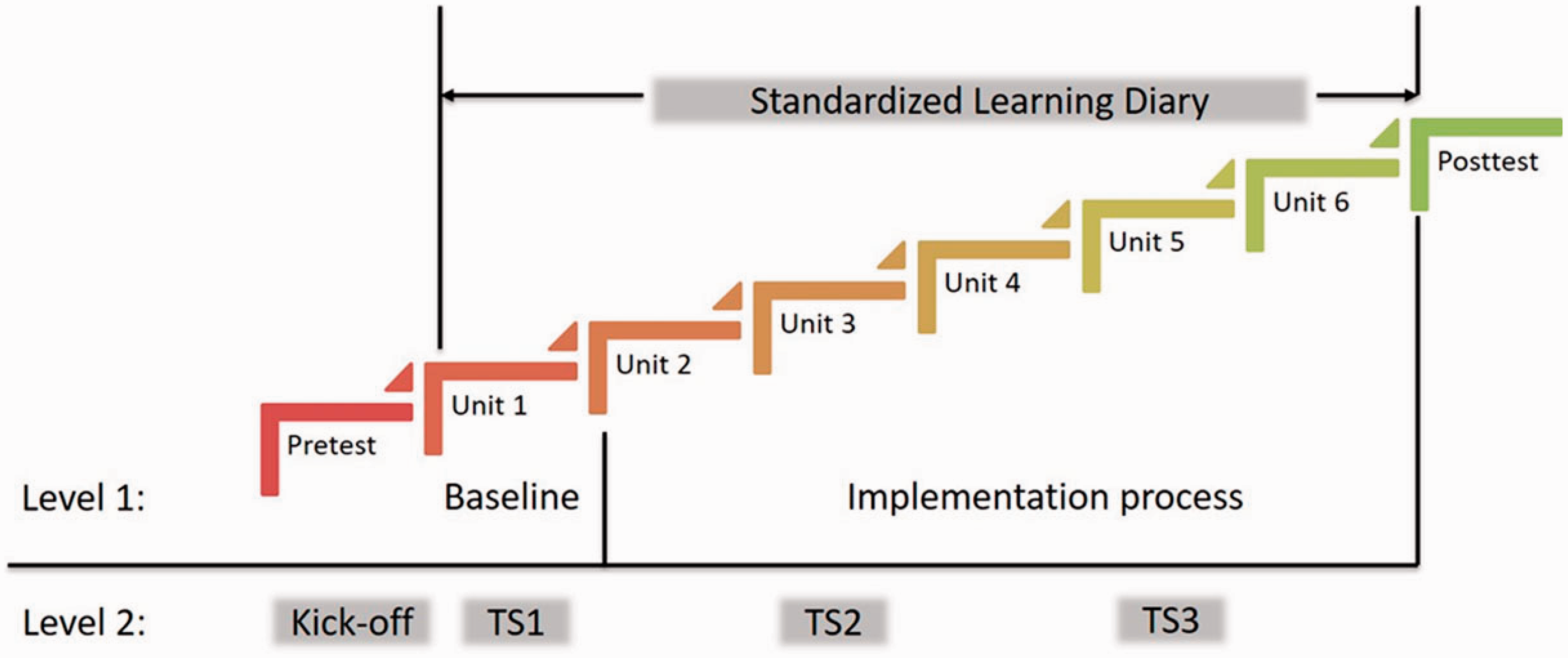
Time schedule of the intervention.
Overview of the Application and the Contents of the Direct/Indirect Strategy Instruction.
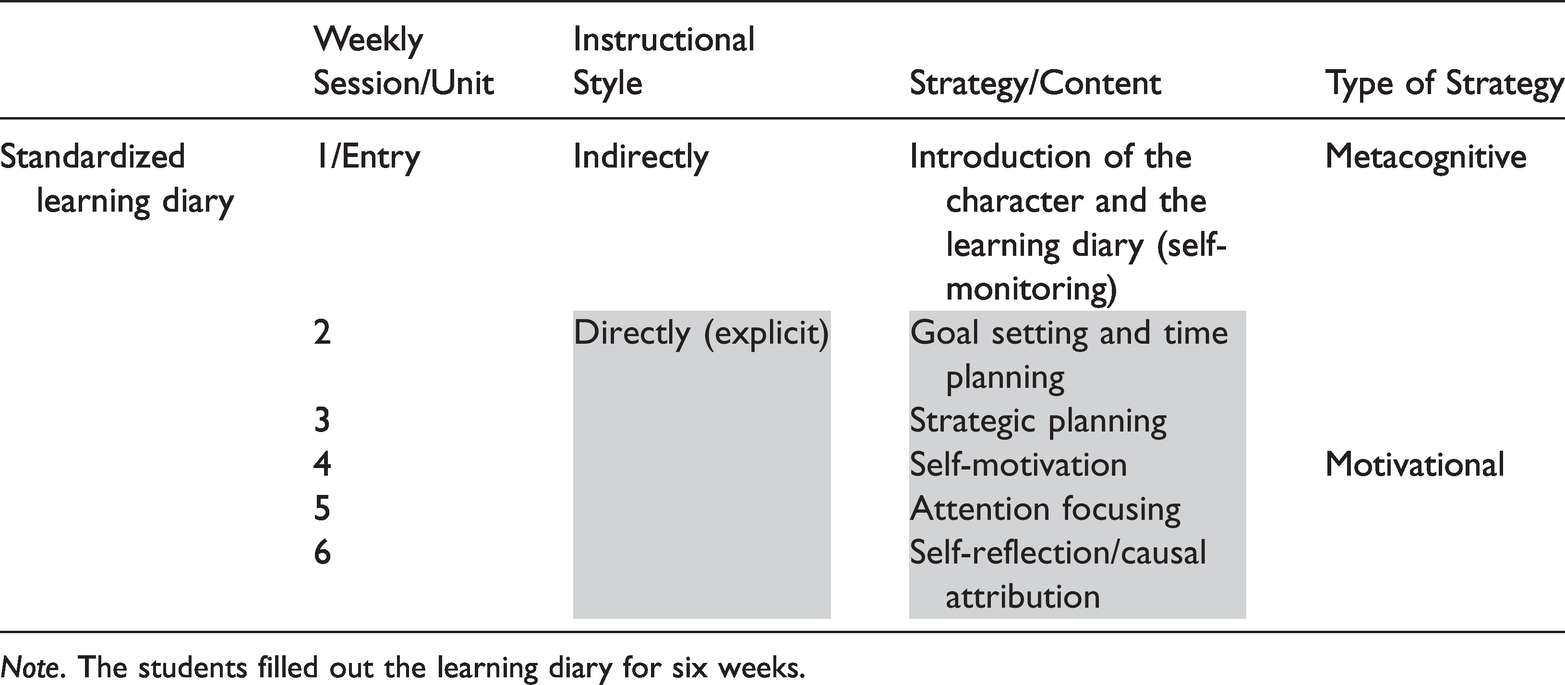
Note. The students filled out the learning diary for six weeks.
To impart these self-regulatory contents to the students in a playful and child-oriented manner, we created a fictitious character who looked like a koala with whom the students could identify and who guided them through each unit. Within the first unit, our koala introduced himself and the students were informed that the character had learned several strategies to improve his learning behavior and that he now wanted to relay this information to them. Besides the explicit strategy instruction, the intervention aimed at improving students’ self-monitoring abilities indirectly through a learning diary (Schmitz et al., 2011). Learning diaries should be filled out daily, immediately before and after learning (Roth et al., 2016). This procedure was intended to ensure that SRL strategies relevant for learning were recorded promptly and that an additional awareness of their benefits was created through reflective processes (Klug et al., 2011).
Each unit was designed for the duration of one 45-minute lesson and the unit structure was always the same: the koala was faced with a problem concerning learning (e.g., no interest in learning) and became familiar with a strategy that helped him to cope with this problem. Instructed and guided by their teachers, the students had to adapt the respective strategy to their learning process (e.g., how to avoid distractions while learning). 2 In this way, the students developed their individual strategy and learned when to use it and why it is important to their learning process.
For participating teachers, we organized a kick-off meeting to explain the materials and to clarify the implementation process. Moreover, we developed several documents corresponding to each unit: (a) a very detailed implementation manual to guide the teachers and to ensure standardization; (b) supplementary materials to understand the theoretical background as well as the practical relevance of each strategy; and (c) a logbook that served as manipulation check and as evaluation instrument. Utilizing the logbook, the teachers would record when and for how long they worked with each unit and rate its design, applicability, and comprehensibility as well as students’ motivation while working with it.
Contents of the Teacher Training
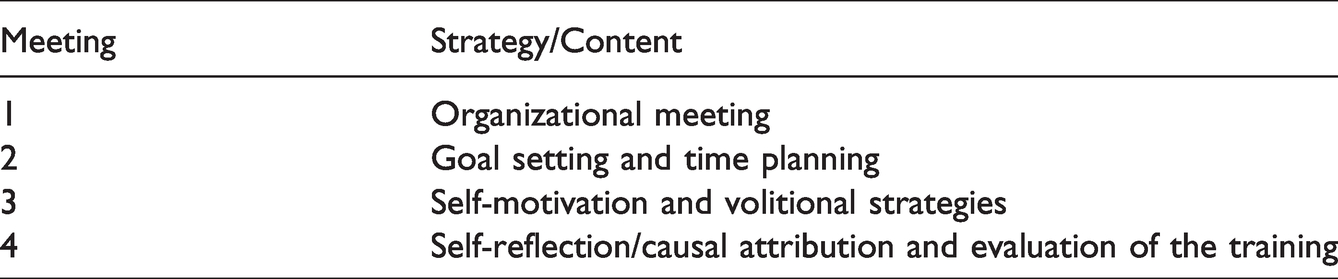
As mentioned above, one group of teachers received supportive training corresponding to the contents of the unit (trained-teachers intervention group (IG2)). As for the teachers of IG1, we organized a kick-off meeting to present and explain the materials and clarify the implementation process for teachers of IG2. Additionally, three training sessions of four hours each corresponding to the three phases of SRL (planning, performance, and reflection) took place during the implementation phase. The training sessions aimed at increasing teachers’ theoretical background knowledge on SRL strategies and clarifying the relevance of SRL strategies for successful learning. The didactical implementation of the intervention sessions was discussed with the teachers, and they worked in groups on how to implement the strategies most effectively into their regular class. Notably, teacher training should increase teachers’ commitment to the intervention contents and should influence their attitude towards SRL positively (Gräsel & Parchmann, 2004). A two-weeks period between each training session allowed teachers to integrate the newly learned SRL strategies into their regular classes using the materials described above. A time schedule is depicted in Table 2.
Overview of the Contents of the Teacher Training.
Instruments
SRL Questionnaire
We asked students to estimate their use of the instructed SRL strategies using a 29-item questionnaire (Leidinger & Perels, 2012), that also comprised four items to assess students’ self-efficacy (Bandura, 1986). As a response format, a 4-point Likert scale (1 = I disagree, 2 = I somewhat disagree, 3 = I somewhat agree, 4 = I agree) was used. The reliability of the scales was mainly acceptable for both measurement times (McDonald’s ω > 0.60). For detailed information on the instruments please see the Appendix. Because students completed the questionnaire twice, we also tested for invariance over time and could confirm metric invariance, χ2 = 2,506.13, df = 1533, p < 0.05, χ2/df = 1.63, comparative fit index (CFI) = 0.91, root mean square error of approximation (RMSEA) = 0.04, standardized root mean square residual (SRMR) = 0.06.
SRL Learning Diary
In standardized learning diaries, students were asked to estimate 19 items regarding their daily learning behavior at home, their use of SRL strategies, and their self-efficacy. Items were worded to correspond to the current learning behavior for that day and coded on a 4-point Likert-type scale. The reliability of the scales was satisfying (McDonald’s ω > 0.70).2 In order to confirm the construct validity of our measuring model, we also conducted a confirmatory factor analysis based on the diary data and received an acceptable model fit with factor loadings, ß > 0.60, χ2 = 177.11, df = 118, p < 0.05, χ2/df = 1.50, CFI = 0.96, RMSEA = 0.06, SRMR = 0.05.
Mathematics Achievement
To investigate possible transfer effects of the training to students’ mathematics achievement, we used a standardized test for this age group (DEMAT 3+; Roick et al., 2004) at pre- and posttest. Eight tasks covered the areas of arithmetic, geometry, and written math problems (maximum score of 10 points). A confirmatory factor analysis with the assumption of scalar measurement invariance yielded a good model fit, χ2 = 8.57, df = 7, p = 0.28, χ2/df = 1.22, CFI = 0.97, RMSEA = 0.04, SRMR = 0.04. Criterion validity was investigated through correlating pre- and posttest values with students’ report card grades in mathematics, T1: rs = 0.46, p < 0.001; T2: rs = 0.36, p < 0.001.
German Achievement
To investigate possible transfer effects of the training to students’ German achievement, we used a standardized test for this age group (HAMLET 3–4; Lehmann, et al., 1997) at pre- and posttest. Students had to answer four multiple choice questions on three texts that varied in length and difficulty. A confirmatory factor analysis with the assumption of scalar measurement invariance yielded a good model fit, χ2 = 10.27, df = 7, p = 0.98, χ2/df = 1.22, CFI = 0.97, RMSEA = 0.05, SRMR = 0.06. Criterion validity was investigated through correlating pre- and posttest values with students’ report card grades in German, T1: rs = 0.37, p < 0.001; T2: rs = 0.44, p < 0.001.
Teachers’ Training Evaluation
Using a logbook, teachers rated the aspects of design, usability, and understandability for all materials and student motivation weekly using a 6-point scale (1 = very good, 6 = very bad).
Results
Table 3 offers an overview of the descriptive data of the instructed variables before and after the intervention 3 . Within our analysis, we used an alpha level of α = 0.05. As our hypotheses concerning the planned comparisons were directional, the corresponding p-values were interpreted one-tailed (Rasch et al., 2010). In this regard, we calculated Cohen’s d (Cohen, 1988) as value of the effect size.
Descriptive Data for the Instructed Strategies Subdivided by Group.
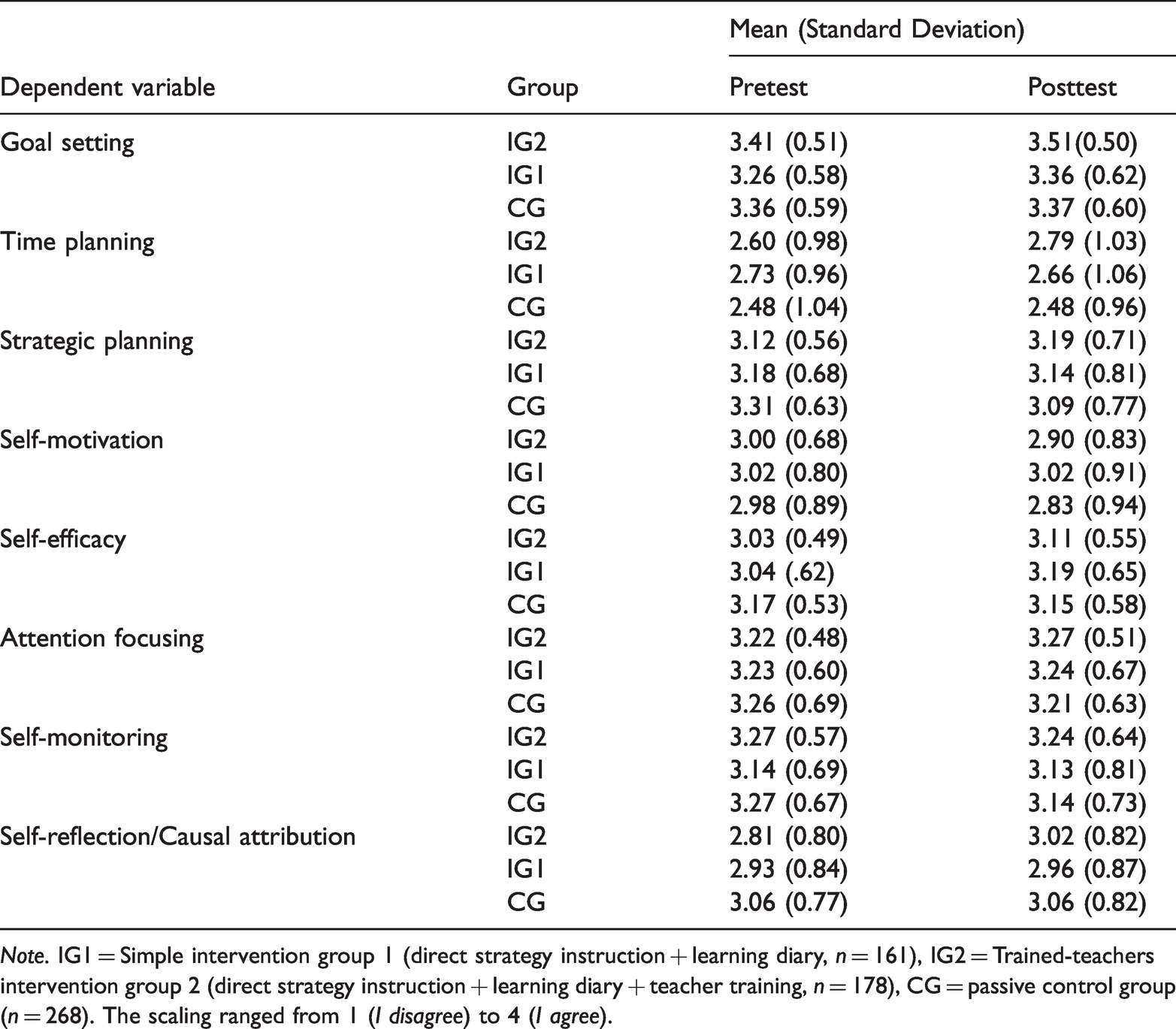
Note. IG1 = Simple intervention group 1 (direct strategy instruction + learning diary, n = 161), IG2 = Trained-teachers intervention group 2 (direct strategy instruction + learning diary + teacher training, n = 178), CG = passive control group (n = 268). The scaling ranged from 1 (I disagree) to 4 (I agree).
Evaluation of the Intervention (Combination of Subject-Independent Direct Strategy Instruction and Learning Diaries)
Questionnaire Data on SRL
Based on the a priori formulated hypotheses for the dependent variables, we conducted the comparisons between the two IGs (IG1/IG2) and the CG between pre- and posttest measurements utilizing planned orthogonal contrasts (contrast 1; Furr & Rosenthal, 2003). For this purpose, the difference values were used as a measure for the change between the pre- and posttest (Schochet, 2008). These contrasts could be confirmed for nearly all variables (except for time planning). Compared with the CG, both IGs reported an increase in their use of SRL-strategies as well as in their self-efficacy (see Table 4).
Results of the Planned Comparison between the two Intervention Groups (IG1 and IG2) and the Control Group (Contrast 1).
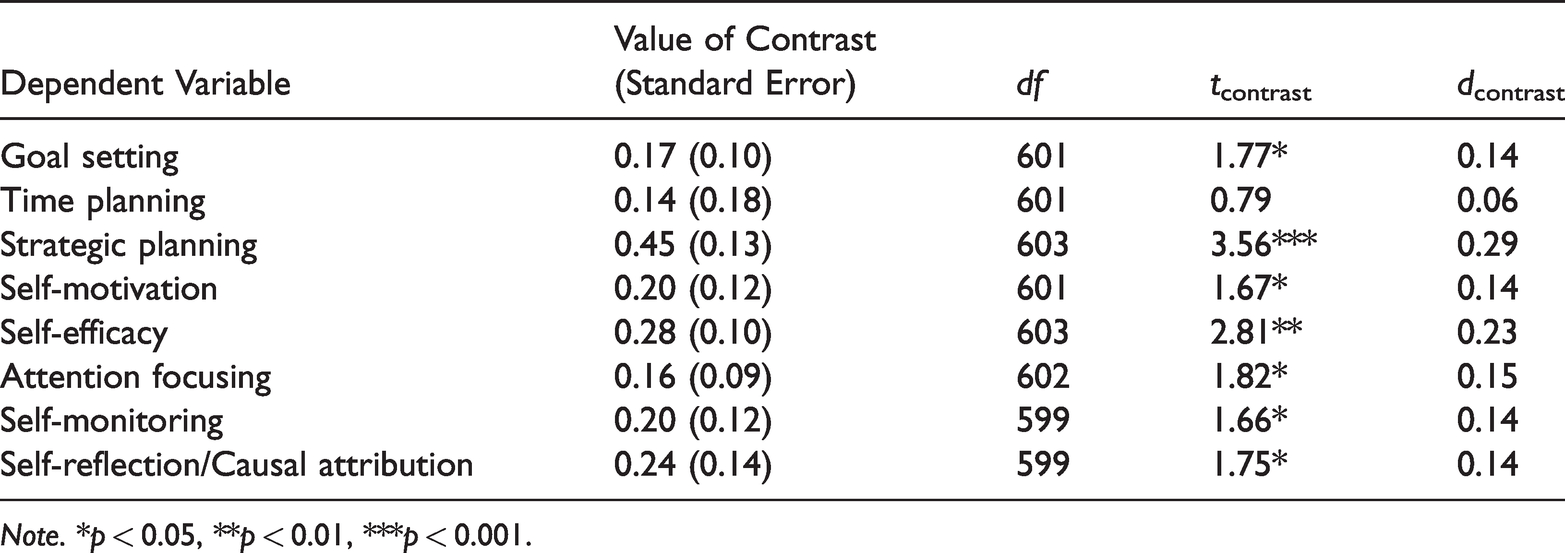
Note. *p < 0.05, **p < 0.01, ***p < 0.001.
Process Data on Trained SRL Strategies
For the explicit instructed variables, we conducted interrupted time series analyses to analyze specific intervention effects. Utilizing this method, we can analyze if and how an intervention has effects on the dependent variables, and what additional influences affect the dependent variable. The question of whether the intervention has an effect can be answered by comparing the pretraining process (baseline) and the posttraining process (intervention phase). In this context, the coefficient b1 describes the difference between the mean level before (baseline = b0) and after the intervention (intervention phase). The t-coefficient gives an estimation of this mean difference corrected for the effect of autocorrelation. If the coefficient is significant, the changes in the mean level can be interpreted. The question of how the intervention affects the dependent variable can be answered by the transfer function (see Yaffee & McGee, 2000). Additional influences (e.g., serial dependencies) can be described by the autoregressive (AR) integrated moving average (MA) model (ARIMA; for further information see Schmitz, 1990; Yaffee & McGee, 2000).
In our study, the developed units were imparted at time intervals. Consequently, there were different baselines, which were compared with the different intervention phases. The results showed that students reported an increase in using strategies for goal setting and time planning (t = 8.31, p < 0.001), strategic planning (t = 5.58, p < 0.001), and self-motivation (t = 3.83, p < 0.001). Based on the residual data, we also conducted autocorrelations and partial autocorrelations to identify serial dependencies in terms of autoregressive integrated moving average models (Tabachnik & Fidell, 2007). The results indicated significant dependencies (AR = 1) for the strategic planning, self-motivation, and attention focusing variables, which means that the previous day’s level of variables influenced the same variables at the next point in time. The results are depicted in Table 5. After the model estimation, we considered the residuals employing the Ljung-box Q-test, which revealed that the residuals were completely random (white noise).
Results of the Interrupted Time Series Analyses for the Explicit Instructed Self-Regulated Learning Strategies.
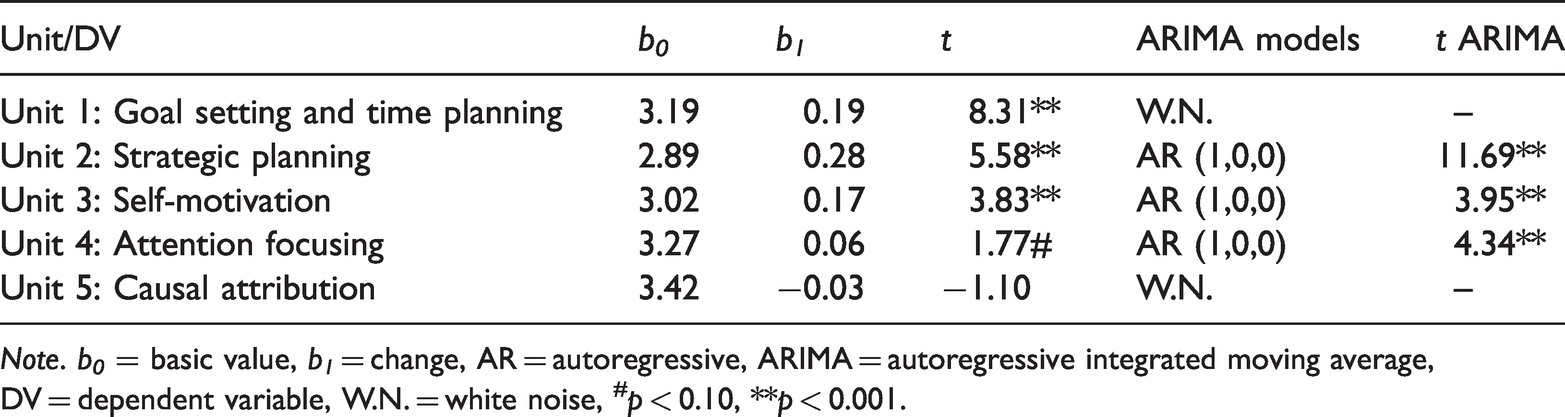
Note. b0 = basic value, b1 = change, AR = autoregressive, ARIMA = autoregressive integrated moving average, DV = dependent variable, W.N. = white noise, #p < 0.10, **p < 0.001.
Process Data on Untrained SRL Strategies
By means of trend analyses, we additionally analyzed the data for the implicit instructed variables self-monitoring and self-efficacy. Trend analyses are used to test the significance of the increase in a variable over time with time as a predictor and the interesting variable as a criterion. The trend of a time series describes the long-term trajectory. In line with our assumptions, we found a significant linear increase in self-monitoring that might be based on students’ daily dealings with the learning diary. Furthermore, there was also a significant increase in students’ self-efficacy. The results are depicted in Table 6. Here, a positive trend statistic b1 describes a continuous increase of the value of the dependent variable, whereas the b0 statistic defined the intersection of the trend line with the y-axis.
Results of the Trend Analyses for Self-Monitoring and Self-Efficacy.

Note. b0 = basic value, b1 = change, **p < 0.001.
Achievement Data
To gain insight into possible transfer effects of the intervention regarding mathematics and German achievement, we conducted a two-factorial analysis of variance (ANOVA) with time as the repeated measure. The results showed no interaction effects for time × group (math: F(2,380) = 1.33, p = 0.27; German: F(2,221) = 1.03, p = 0.36). Conversely, all groups showed an increase in their test values over time (math: F(2,380) = 96.67, p = 0.00, ηp2 = 0.20; German: F(2,221) = 6.42, p = 0.01, ηp2 = 0.03).
Effect of Additional Teacher Training
Questionnaire Data
Concerning our assumption that the ATT would increase the effects of our SRL intervention (explicit strategy instruction combined with learning diaries), we conducted another planned comparison (contrast 2) expecting that the reported SRL strategies of IG2 (with teacher training) should be superior to IG1 (without teacher training). As depicted in Table 7, the results confirmed this assumption only for the time planning and causal attribution variables. We therefore did not investigate achievement data any further, as there was no transfer to be expected without an additional effect of the teacher training.
Results of the Planned Comparison between the Simple Intervention Group 1 and the Trained-Teachers Intervention Group 2 (Contrast 2).
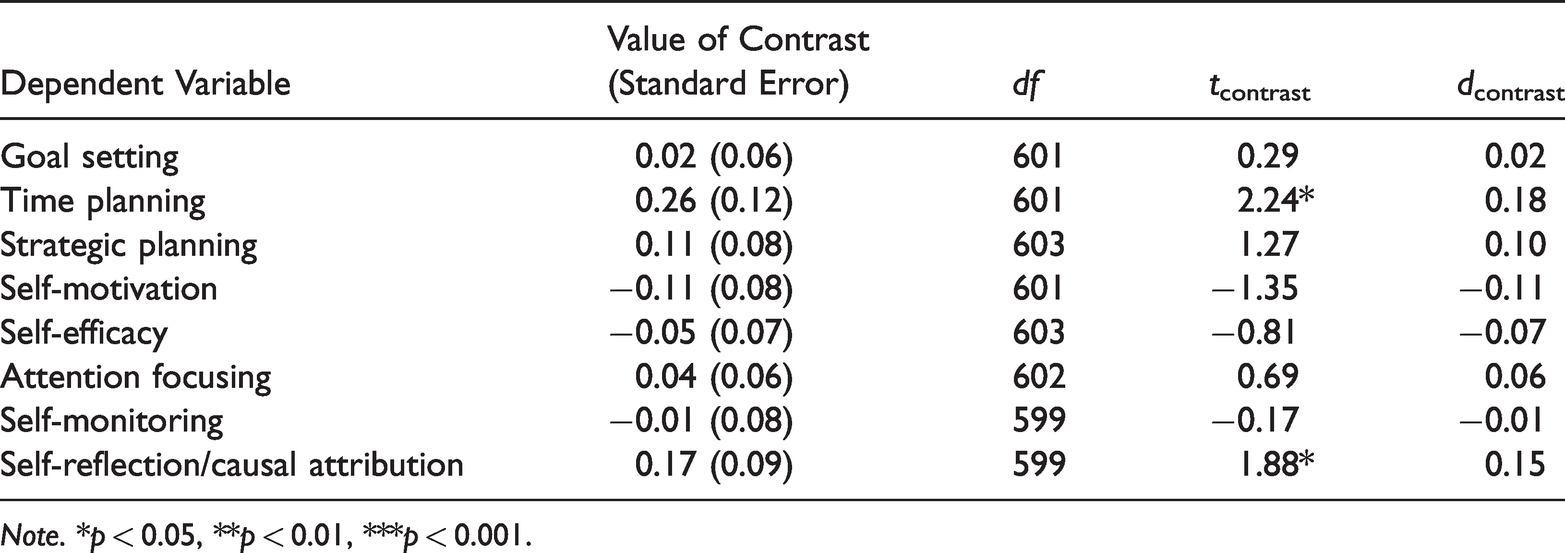
Note. *p < 0.05, **p < 0.01, ***p < 0.001.
Evaluation of the Intervention Based on Teachers
We used logbooks to gain information on teachers’ evaluations of the intervention. Table 8 shows the descriptive results of the logbook variables as well as the results of an ANOVA comparing IG 1 and IG2. The mean values show that teachers of both groups rated the intervention as “very good” or “good.” When analyzing variance, we found no differences between teachers with and without teacher training regarding the evaluation of the intervention.
Teachers’ Evaluation of the Intervention.
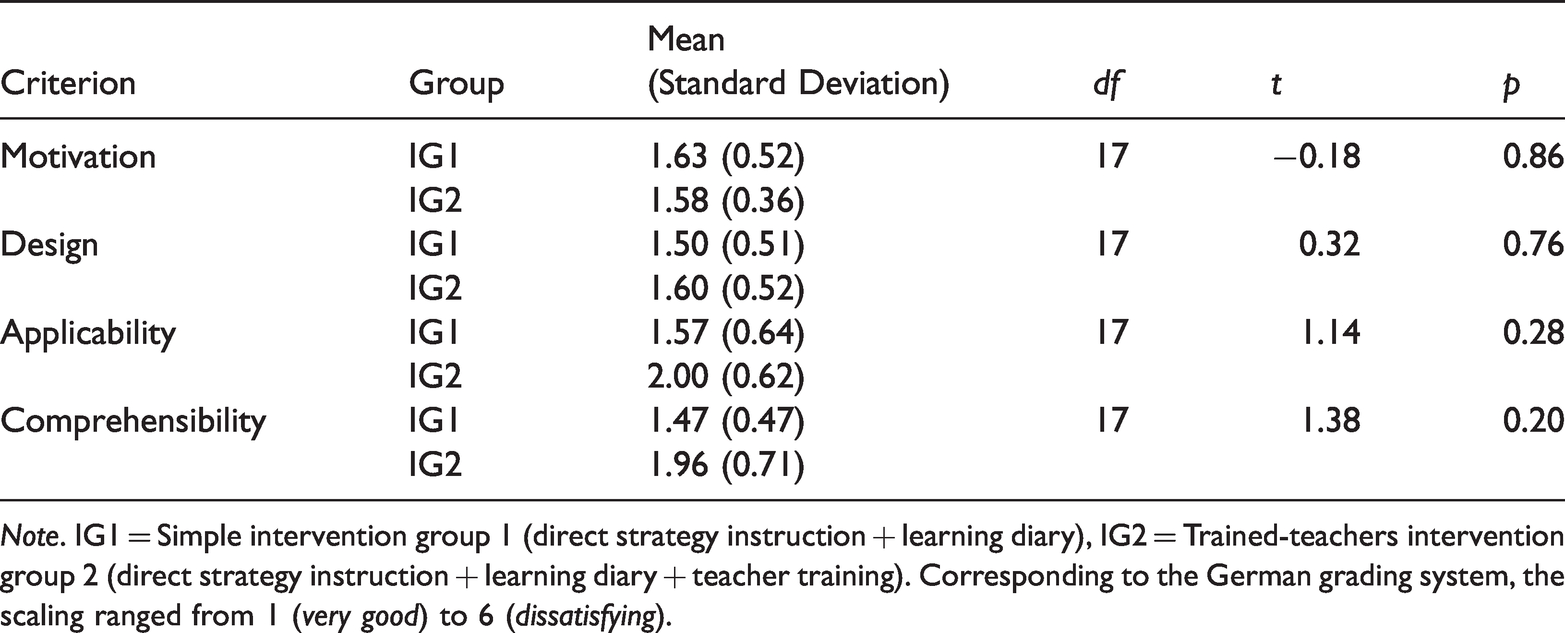
Note. IG1 = Simple intervention group 1 (direct strategy instruction + learning diary), IG2 = Trained-teachers intervention group 2 (direct strategy instruction + learning diary + teacher training). Corresponding to the German grading system, the scaling ranged from 1 (very good) to 6 (dissatisfying).
Discussion
Dignath and Büttner stressed, “teachers need training to enhance their direct and indirect instruction of SRL” (Dignath and Büttner, 2018, p. 127). With the current study, we wanted to respond to this request by developing an intervention for primary school education to support teachers’ instruction of SRL.
Evaluation of the SRL Intervention
According to our assumptions for the instructed SRL strategies, we found a benefit for students of the IGs (IG1 and IG2) compared with the CG using questionnaire data. The strongest impact was found for attention focusing, a motivational strategy, whereas the effects for the strategies of self-motivation, strategic planning, and self-monitoring were moderate. Furthermore, we saw a small increase in goal setting and causal attribution. These findings were in slight contrast to the results of the meta-analysis by Dignath and Büttner (2008), who reported that motivational variables are rather affected when interventions take place in lower classes in PSs. In this context, Schreblowski and Hasselhorn (2001) also emphasized the need for long-term interventions to influence the motivational aspect of learning. As attribution was the last component trained, we might not have found effects because they need more time to show up in students’ learning behavior.
Using diary data, we analyzed the effectiveness of the different units during the implementation process. Employing a multiple baseline design, we conducted interrupted time series analyses for the instructed strategies, which revealed an increase in the values of goal setting and time planning (unit 1), strategic planning (unit 2), and self-motivation (unit 3). After the intervention, the results indicated changes in these variables in the expected direction. Additionally, linear trends were performed for the implicitly instructed strategy of self-monitoring as well as for students’ self-efficacy. Although self-monitoring was not explicitly trained, the students were required to answer corresponding items by filling out the diary each day (reactivity effect). Because of the postulated reciprocity of the variables, we assumed an increased influence by the imparting of SRL-strategies (Zimmerman & Cleary, 2006) concerning students’ self-efficacy. The results confirmed this assumption.
Concerning achievement data for mathematics and German, we found no transfer effects of the intervention. As the training was subject-independent, the linkage of the SRL contents to subject contents was completely the teachers’ responsibility. As Dignath et al. (2008) found in their meta-analysis, SRL interventions have higher effects when linked to subject-specific contents. This fits the result that we found no effect for achievement data, and future interventions should provide help for teachers on how to transfer the SRL-strategies to their subject contents.
Although our intervention consisted of only six units represented in a relatively short time slot of six lessons, it is very gratifying that students of both IGs reported increased use of motivational strategies as well as an increase in their self-efficacy. Similar to previous SRL interventions (Glaser et al., 2009; Perels et al., 2009), the current study seemed to strengthen the assumption of Zimmerman and Cleary that “training students in self-regulation processes such as goal setting, self-monitoring, and strategic planning can increase their confidence levels to perform specific tasks in school” (Zimmerman and Cleary, 2006, p. 63). As we conducted in-class research (Perry & Rahim, 2011), these small effect sizes are not surprising due to the quasiexperimental design (Little, 2013). Nevertheless, we could use a relatively larger sample in comparison to other research conducting in-class interventions (about n = 80 in the meta-analysis of Dignath et al., 2008).
Evaluation of Additional Teacher Training
Supplementary to the working materials for the direct strategy instruction, a group of participating teachers received additional teacher training (trained-teachers intervention group, IG2), which did not have the desired effect. We only found a slight increase in two of the seven instructed SRL-strategies (time planning and causal attribution) using the questionnaire data of students. For causal attribution, ATT might be especially important as teachers adapt how they give attributional feedback, which in turn influences students’ attributional beliefs. It can be seen from the logbook data that both teacher groups (with and without training, IG1, IG2) seemed to agree with the intervention because they evaluated the units in the same way (see Table 8). This result can conceivably be interpreted to mean that our intervention, with its materials for both students and teachers, was sufficient to explain the usefulness and the application of SRL-strategies. Nevertheless, as the trained-teacher intervention group (IG2) did not show higher increases in SRL-strategies than the simple intervention group (IG1), this speaks in favor of intensifying teacher training for future intervention studies. This would also be necessary as previous studies found that SRL interventions implemented by teachers are less effective than SRL interventions implemented by researchers (Dignath et al., 2008). For future interventions, the training session might be rather helpful when presented at some temporal distance to the intervention, like the so-called booster sessions mentioned by Souvignier and Trenk-Hinterberger (2010). Furthermore, it might be enlightening to assess the data referring to the model function of teachers (Kramarski, 2018): A longitudinal self-assessment of teachers’ model function could give insights in how to foster this function in teachers (Van Beek et al., 2014). In various respects, video-based classroom observations, as used by Dignath and Büttner (2018), represent a promising approach to analyze a teacher’s behavior during regular lessons over several times.
Limitations
The current study provided interesting findings for instructing SRL-strategies to fourth-graders. However, there are also some limitations, which should be addressed in future studies. As the SRL-strategies needed to be implemented by class teachers during regular lessons, it was not possible to achieve a randomized assignment of students to the intervention group and CG. Indeed, the assignment to the conditions occurred in classes; consequently, our data were nested (Snijders & Bosker, 2012). To counteract these restrictions, students’ pretest values of the variables were controlled. Furthermore, we considered intraclass correlations, which were rather small (ICC = 0.01–0.05) or negligible (Muthén & Satorra, 1995).
Another limitation concerns the assessment of SRL-strategies by using self-report data because they were restricted to measuring SRL processes at a micro-level (Artelt, 2000). As an aptitude measure (Cleary & Callan, 2018), questionnaires represent one of the most common measurement methods for SRL strategies (Roth et al., 2016). As they assess the reported, but not the actual, use of strategies (Perry et al., 2002; Veenman, 2011) and fail to measure conditional knowledge (e.g., when and why to use strategies) validly, questionnaires are increasingly being criticized (Artelt, 2000). Strategy knowledge tests attempt to assess more specifically when and why learners use SRL-strategies (Dörrenbächer-Ulrich et al., 2021). By contrast, event measures, such as direct observation, have the advantage of corresponding to actual learner behavior while not depending on learners’ accurate self-estimation (Veenman, 2011). However, self-report measurements are considered as reliable predictors for scholastic achievement (Jamieson-Noel & Winne, 2003; McCardle & Hadwin, 2015) and can assess learners’ general aptitude when using self-regulatory strategies (Pintrich, 2003). For future research, multimethod approaches (Dörrenbächer-Ulrich et al., 2021; Veenman, 2011) should be utilized to assess SRL strategy use by the triangulation of different data (Cleary, 2011; Winne, 2005).
Future Research and Implications for Practice
The results of our study give hints on how to conduct future in-class research regarding SRL interventions in PSs. As the execution of a prepared intervention is crucial for its effectiveness, classroom observations with a focus on teacher behavior would offer the possibility of a manipulation check (Hager, 2000). According to the logbook data, the teachers carefully followed our instructions for the implementation process because no changes were reported. However, classroom observations might be a promising extension of the intervention by providing useful information about the questions of how teachers acted as role models for SRL (Kramarski, 2018) and if they modified their teaching behavior during or after their participation in the intervention (Van Beek et al., 2014). Another possibility would be gathering students’ ratings on the model behavior of their teachers. If students evaluate the degree to which their teachers behave as an SRL model, this data could help tailor future interventions for supporting teachers in their model role.
Despite the abovementioned limitations, the results of the current study are encouraging because the developed SRL intervention seemed to be beneficial in different respects. On the one hand, it provided PS teachers with direct and indirect instructions and working materials to impart metacognitive and motivational SRL strategies to their students. On the other hand, the participating students reported an increase in their use of the instructed strategies compared with students who did not participate in the intervention. Moreover, participation in the intervention seemed to be positively related to students’ self-efficacy, which represents a relevant predictor for scholastic achievement (Marsh et al., 2015; Richardson et al., 2012).
In terms of a supporting tool, the intervention should enable teachers to teach their students how, when, and why specific SRL strategies are useful. In the training sessions, teachers learned and discussed why SRL strategies are relevant, how they can be implemented most effectively and worked out when these strategies can be most usefully employed into regular class. For this reason, we did not link content to specific subjects as in previous studies (Santangelo et al., 2016; Stoeger & Ziegler, 2008; Usher & Schunk, 2018). We deliberately abstained from embedding the intervention in a subject-specific context because we know from previous studies (Dignath & Büttner, 2018) that a need exists for enhancing teachers’ instruction for SRL. Teachers should only focus on their instructional practice for metacognitive and motivational SRL strategies. Consequently, further studies are required to close this gap and extend the learning environment by referring it to subject-specific content. One possibility would be to adapt the contents to specific subjects within the teacher training. In summary, the current intervention might represent a potential opportunity for teachers to teach SRL strategies to students towards the end of elementary school.
Supplemental Material
sj-pdf-1-plj-10.1177_14757257211013638 - Supplemental material for Fostering Self-Regulated Learning in Primary School Students: Can Additional Teacher Training Enhance the Effectiveness of an Intervention?
Supplemental material, sj-pdf-1-plj-10.1177_14757257211013638 for Fostering Self-Regulated Learning in Primary School Students: Can Additional Teacher Training Enhance the Effectiveness of an Intervention? by Manuela Benick, Laura Dörrenbächer-Ulrich, Marie Weißenfels and Franziska Perels in Psychology Learning & Teaching
Footnotes
Declaration of conflicting interests
The author(s) declared no potential conflicts of interest with respect to the research, authorship, and/or publication of this article.
Funding
The author(s) disclosed receipt of the following financial support for the research, authorship, and/or publication of this article: This study was funded by the German Research Foundation (Deutsche Forschungsgemeinschaft (DFG); Grant Number: PE 1176/5-1).

Supplemental Material
Supplemental material for this article is available online.
Notes
Author Biographies
References
Supplementary Material
Please find the following supplemental material available below.
For Open Access articles published under a Creative Commons License, all supplemental material carries the same license as the article it is associated with.
For non-Open Access articles published, all supplemental material carries a non-exclusive license, and permission requests for re-use of supplemental material or any part of supplemental material shall be sent directly to the copyright owner as specified in the copyright notice associated with the article.
