




Abstract
In preparation for graduating from high school, students face the challenge of having to learn the subject matter of several school years with little guidance. The ability to self-regulate learning is conducive to this. Research has shown that students’ self-regulated learning can be successfully promoted through training. However, when such training is provided voluntarily, not all students participate and dropout rates tend to be high. Minimal interventions on utility value and implementation intention are promising approaches to increase the use of voluntary training. This study investigates whether short interventions can increase the participation in voluntary self-regulated learning training and whether differences in participation can be explained by motivation profiles. A randomized intervention study was conducted with 269 students assigned to one of four conditions: utility value, implementation intention, a combination of utility value and implementation intention, or a control condition. Regression analyses show the minimal interventions on utility value and implementation intention had no effect on training participation. Positive predictors, however, were expectancy for success and mean grade score. In addition, latent profile analyses showed a three-class model with the profiles “motivated,” “balanced,” and “unmotivated.” Motivated students participated in the training significantly more often than students with other profiles. Implications for theory development and practice are discussed.
Introduction
In preparation for graduating from high school, students have to learn and revise the learning material of their last semesters on their own, which can be seen as a great challenge. The ability to learn in a self-regulated way can facilitate the learning process because self-regulated learning (SRL) is an essential condition for studying successfully (e.g., Dignath & Büttner, 2008). However, students often show deficits in their SRL ability (e.g., Peverly et al., 2003). Research has shown that students in a school context can be successfully trained in SRL and acquired skills are associated with improved academic achievement (e.g., Dignath & Büttner, 2008) underlining the need of providing SRL training. However, voluntary training is often not used by all potential participants and dropout rates are rather high (Nistor & Neubauer, 2010). It has been shown that minimal interventions on utility value (U) and implementation intentions (I) are a promising approach to foster students’ performance and to engage in a goal-oriented behavior (e.g., Gollwitzer, 2014; Hulleman & Harackiewicz, 2009). In this study, we want to investigate how the use of voluntary online training can be increased by U and I interventions.
Minimal Interventions
Brief—also known as wise or minimal psychological—interventions are gaining importance in an educational context (Walton, 2014; Yeager & Walton, 2011). These interventions are considered efficient approaches to promote motivation and the performance of students in a school and university context and are defined as brief exercises that “target students’ thoughts, feelings, and beliefs in and about school” (Yeager & Walton, 2011, p. 268). Minimal interventions address recurring negative psychological processes to change them in a positive direction with little effort (Walton, 2014). The interventions themselves do not focus on academic content, but target the underlying processes (Yeager & Walton, 2011). Brief exercises can produce significant and long-lasting benefits when they are based on a precise, well-founded theory of psychological processes. More concretely, it is assumed their effectiveness relies on three principles (Walton, 2014). First, the intervention has to be meaningful to the applied context; second, it has to change the intended psychological process. Third, the intervention can have long-term effects if it alters recursive processes and if the context provides adequate affordances. Thus, due to their dependency on context factors, interventions should be adapted to contextual particularities such as school. Research on different minimal interventions (e.g., growth mindset, utility value, goal setting) has shown positive effects in school context (e.g., Blackwell et al., 2007; Burnette et al., 2019; Hulleman & Harackiewicz, 2009; Hulleman et al., 2017; Paunesku et al., 2015; Schippers et al., 2020). In this study, we focus on two approaches for which positive effects have already been shown: I and U (Gollwitzer, 2014; Hulleman & Harackiewicz, 2009) and examine the effectiveness in the context of voluntary SRL training.
Implementation Intentions
Individuals often do not meet their goals because they face obstacles. Advance planning of how to deal with possible obstacles is an effective strategy of supporting goal striving (e.g., Gollwitzer, 1999; Duckworth et al., 2013). Forming of I, or if-then planning, can help people link anticipated situations to goal-directed responses. That is the reason why implementation intentions (Is) go beyond the intention to meet a goal (e.g., physical activity; Bélanger-Gravel et al., 2013). An individual forming an I commits themselves to respond to a certain situation in a specific manner. As Is combine situational cues with instrumental goal-directed responses, individuals know when, where, and how one wants to act to reach a goal. For example, a student who intends to write a review may formulate the following I: “If I read the last chapter of my textbook, then I start writing the review.” Thereby, the student identifies a goal-relevant situational cue—the last chapter of the textbook—and links it to the goal-directed response of writing the review. The student could also identify an obstacle that prevents them from writing their review. Then, the student had to link it to a goal-directed response, which supports them to solve the obstacle. In both cases, when the student plans before the critical situation occurs, the intended behavior is initiated automatically, which is an effective strategy to meet the actual goal (Gollwitzer, 1999). Indeed, research shows that Is help people meet their goals in various life domains (e.g., Gollwitzer, 2014). Conducting a brief written online goal-setting intervention with first-year university students, Schippers et al. (2020) found that students in the goal-setting condition showed an increase in academic performance compared to the control condition. The specificity of students’ strategies, the extent of their participation, and the number of written words influenced the increase in academic performance whereas goal type (academic or non-academic) did not. In another study, Oettingen et al. (2015) found Is improve time management.
Utility Value
Many U interventions (e.g., Hulleman et al., 2010; Hulleman & Harackiewicz, 2009) are based on the expectancy-value model (Eccles & Wigfield, 2002), postulating that task choices, performance, and persistence are influenced by expectancy for success and value of a given task. Expectancy for success is defined as individuals’ beliefs about how well they will perform a task. Thus, students who believe they can perform well on a given task are more likely to be motivated and persistent. Four components of task value can be differentiated: attainment value (personal importance of doing well), intrinsic value (enjoyment of performing the task), U (how well a task relates to current and future goals and their relevance), and cost (effort, fear of failure) (Eccles et al., 1983).
Research has shown the importance of U for task choice and performance (Eccles & Wigfield, 2002) and that U can be fostered in students via writing interventions (e.g., Gaspard et al., 2015; Harackiewicz et al., 2014). It can be assumed that when students perceive U, their interest is fostered, resulting in higher performance (e.g., Harackiewicz et al., 2008). Students who doubt their competencies are at risk for less interest and a lower performance (Hulleman & Harackiewicz, 2009). Research indicates, however, that interventions fostering U are most effective for students showing low performance and who do not believe in their competence (e.g., Harackiewicz et al., 2016; Hulleman & Harackiewicz, 2009; Hulleman et al., 2017). It can be expected that these low-performing students become energized and more involved in learning when they make connections to the learning material (Hidi & Harackiewicz, 2000; Hulleman & Harackiewicz, 2009). For example, in a randomized field experiment with 262 high school students, Hulleman and Harackiewicz (2009) showed a U intervention that aimed at helping students make connections between science course material and their lives increased interest and learning, particularly in students with low expectations of success. Hulleman et al. (2017) were able to replicate these findings.
Canning et al. (2019) compared the effectiveness of a student-framed U writing intervention versus a teacher-framed intervention. In contrast to other studies (e.g., Hulleman et al., 2017) students with low performance showed decreased interest and perceived U, whereas high-performing students were unaffected by the interventions. Moreover, the student-framed condition differentially affected grades for low- versus high-performing students. That is, there was a negative effect for low performers and a positive one for high performers. Taken together, the research on U interventions in an educational context is ambiguous and therefore, more research is needed. In this study, we follow most intervention studies (e.g., Hulleman & Harackiewicz, 2009; Hulleman et al., 2017), which mainly focus on fostering one component of task value, namely U. U is more extrinsic (Eccles & Wigfield, 2002) and therefore easier to influence directly with extrinsic reasons to engage in a task than intrinsic value and attainment value (Gaspard et al., 2015).
The Current Study
Overall, based on the previous literature, both I and U interventions can have effects on motivation and performance in an educational context. Therefore, we implement these approaches to foster the participation in a voluntary web-based SRL training, offered to support students in their preparation for final exams. Although participation in training is voluntary, it is embedded in a meaningful context, as students are likely to seek a successful graduation. It can be assumed the interventions may increase participation rate in voluntary training, which was already proven effective for prospective and university students (Bellhäuser et al., 2016; van der Beek et al., 2019). So far, no research has been conducted comparing the effectiveness of I and U interventions or investigating the interaction between the two interventions when combined.
The aim of this study is to analyze conditions for training participation. It examined whether training participation is influenced by minimal interventions, students’ motivation (expectancy, interest, utility, cost), and grades as a covariate and a criterion for academic performance. To complement this variable-centered approach and develop SRL training, it is important to analyze which specific subgroups profit most from the interventions and participate in the training. A person-centered approach helps characterize heterogeneity between individuals, which might be unobserved by traditional variable-centered analyses as these only focus on average outcomes (Hickendorff et al., 2018). To avoid misinterpretations of global intervention success across different groups, the consideration of individual characteristics in the analysis and evaluation of training effects seems important (e.g., Lapka et al., 2011). Therefore, to contribute to the understanding of how the interventions work and detect qualitative differences between the learners, a person-centered approach was conducted by exploring motivational profiles and examining their relations to students’ training participation. Against this background, we state the following research questions and hypotheses:
Research question 1: Do minimal interventions on U and I increase participation in the training? Hypothesis 1: Students who received the U intervention will log in to the training units significantly more often than students in the control group. Hypothesis 2: Students who received the I intervention will log in to the training units significantly more often than students in the control group. Hypothesis 3: Students with low expectation of success will profit more from the U intervention than students with high expectation of success and therefore log in to the training units more often. Hypothesis 4: There is an additive effect of both interventions, such as that students who received both interventions will log in to the training units significantly more often than students who received only one intervention. Research question 2: Can differences in training participation be explained by specific profiles of students’ motivation? It is assumed that different profiles on students’ motivation (expectancy, interest, utility, cost) and academic performance as a control variable can be found. It is analyzed in an exploratory manner which specific profiles are most adaptive for training participation.
Methods
Design
Data come from a randomized intervention study conducted in German high schools. High school graduates in their final year could register for a voluntary online SRL course and were randomly assigned to the waiting control group (WCG) or one of the four experimental conditions: Utility value (U), implementation intention (I) a combination of U and I (UI), and a control condition (C). Three assessment points were scheduled. At pretest at the beginning of the school year before the online course started, background variables, motivation, and grades were collected with online questionnaires. In addition, students’ log files related to SRL training were assessed throughout the school year. There were two more measurement points, which are not part of this study: a first posttest after the course units, and a second posttest was conducted before winter break. Participation in our study was voluntary.
Participants
Participants were recruited from German high schools. Out of 58 schools, contacted via standardized invitation letters, 17 agreed to participate. Informed consent was obtained from parents and students. In total, 647 students took part in the pretest. Some participants, however, had to be excluded. Because the WCG (n = 246) did not receive any intervention and therefore not relevant for the research questions, these participants were excluded. Apart from that, in one school only six students took part and therefore they could not be randomized. Moreover, seven participants stated they had not answered the questions conscientiously and honestly at all, and 119 participants did not fulfil the assignment for their condition. The exclusion of these participants left a final number of 269 for the analyses. A multivariate analysis of variance (MANOVA) revealed the excluded individuals did not differ from the participants in the final sample concerning age, mean grade score, and gender (Wilks’ λ = .99, p = .55).
In the final sample of 269 participants (n = 102 male, n = 164 female, n = 3 unspecified; mean age = 17.77 years, SD = .71, range = 15–20; mean grade score = 9.99 (0 lowest grade to 15 highest grade), SD = 2.01, range = 5.38–14.90), 70 students were in the I condition, 75 students in the U condition, 53 students in the UI condition, and 71 students in the C condition. A MANOVA was computed to analyze differences in demographic variables (age, gender, mean grade score) between the groups (randomization check). The alpha level was set to .20 to test H0 and thereby minimize the Type II error rate (Bortz, 1999). The multivariate effect (Wilks’ λ = .98, p = .73) was not significant.
Procedure
Two research assistants visited each school and introduced the online course. During this meeting students were randomly assigned to intervention conditions. Students had to fill in online questionnaires, an introduction to the SRL course was presented online and, depending on their condition (U, I, UI, C), they had to write down a statement. Teachers were informed that the research concerned the effectiveness of an SRL training but were blinded to the hypotheses and students’ experimental conditions.
Minimal Interventions
I group. The students had to write down when they wanted to start the first unit of the training. Then they had to think about possible obstacles that could prevent them from starting, write them down, then describe solutions to overcome those obstacles.
U group. The students had to describe their typical learning problems. Then they had to describe how the learning strategies taught in the training are relevant to their life and useful to their personal learning problems.
UI group. The students received the U intervention followed by the I intervention.
C group. Students had to briefly summarize the main points of the training’s introduction.
The instructions for the minimal interventions can be found along with the dataset in the public repository https://osf.io/693am.
Course Program
A web-based training developed and evaluated by Bellhäuser et al. (2016), aimed at supporting students’ SRL, was presented to the participants. The training concept was based on the process model by Schmitz and Wiese (2006), which is an adaptation of Zimmerman’s (2000) three-phase cyclical SRL model, but specified for a concrete situation, namely learning, in which SRL is exclusively defined as a process of learning states. Six units (approximately 45 minutes each) were available for participants after completing the pretest with the recommendation to focus on one unit per week. As this study does not investigate the effects of the training, its content is not described in detail here. More information can be found in Bellhäuser et al. (2016). The course was provided in an online learning platform and the content was transmitted through different media, for example, videos, PowerPoint presentations, interactive exercises, and discussion forums. The training was accessible immediately after the pretest until the first posttest (85 days).
Measures
Course grade. Course grades were obtained from students’ self-reports. Students had to indicate the grades of their two advanced courses and their two oral examination subjects of the last and penultimate certificate (0 lowest grade to 15 highest grade). A mean grade score was used for all analyses and for profile analyses, a z-standardized score was used so that course grade and motivation fit the same scale.
Participation. Participation was operationalized via log files, which measure whether the training units were opened. The log files of each unit were dummy coded (“0” not opened, “1” opened). A total score of all six units (range = 0–6) was used for analyses.
Motivation. Motivation was measured with four scales at pretest after the students had watched the training introduction: utility value, expectancy, interest, and cost (following Hulleman et al., 2017). The participants were asked to indicate their agreement on a six-point Likert scale ranging from 1 (not true) to 6 (true). The utility value scale consists of eight items (e.g., “I can use what we learn in the online training in real life,” α = .88), the expectancy scale consists of six items (e.g., “I am confident that I will successfully complete the online training,” α = .83), interest was captured with six items (e.g., “The online training is very interesting,” α = .86), and cost was measured with seven items (e.g., “I don't have time for the online training this school year,” α = .82). For profile-analyses, z-standardized scores were used so motivation and course grade fit the same scale.
Coding of articulated U, I and summary (manipulation check). The statements of the students were dummy coded by the authors. “1” indicates a fit to the condition the person belongs, “0” indicates that no U/I/C condition was provided by the participant or that the answer substantially diverged from instruction. Inter-rater reliability was substantial to high (85%, 66%, 86%). Disagreements were resolved by discussion.
Results
Descriptive data and correlations between all measures can be found in Table 1. Students in the U condition opened the units on average 1.1 times (SD = 1.69; range = 0–6), students in the I condition on average 1 time (SD = 1.66, range = 0–6), students in the UI condition on average 1.08 (SD = 1.71, range = 0–6), and students in the C condition .97 times (SD = 1.70, range = 0–6). Table 2 shows the percentages of students per condition who participated in the training units.
Means (M), standard deviations (SD), and intercorrelations between all measures at t1.
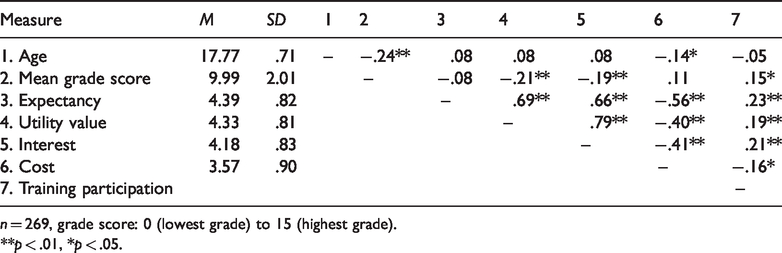
n = 269, grade score: 0 (lowest grade) to 15 (highest grade).
**p < .01, *p < .05.
Students’ participation rate per unit.
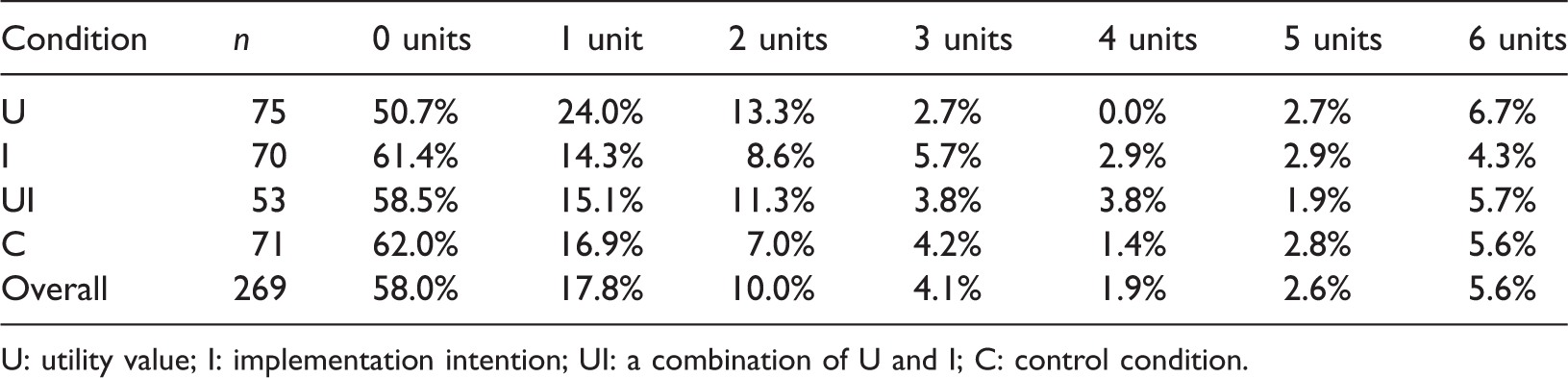
U: utility value; I: implementation intention; UI: a combination of U and I; C: control condition.
To answer research question one, whether minimal interventions on utility value and implementation intention increase the participation in the training units, regression analysis with robust maximum likelihood was conducted in Mplus (Version 7.3; Muthén & Muthén, 2014). Although students were randomly assigned to the condition at student level, “type is complex” was used to account for the nested structure of the data because the students are arranged in classes and schools. The sum of the log file entries was entered as a dependent variable. Independent variables were the dummy-coded experimental conditions (U, I, UI), the mean grade score as control variable, and the interactions between the training conditions and the mean grade score.
In the first model, the experimental conditions (U, I, UI) were entered as independent variables. In the second model, the motivation variables expectancy, utility value, interest, and cost were added. Then, the mean grade score was added. Results show that expectancy (β = .19, p < .001) and mean grade score (β = .10, p = .003) were significant positive predictors of logging into the units (Table 3). Because of these results, in a fourth and fifth model the interactions expectancy x experimental conditions, and mean grade score x experimental conditions were entered. None of these were significant predictors. Contrary to our hypotheses, none of the experimental conditions had a significant effect on training participation.
Training participation: Results from latent regression analysis.
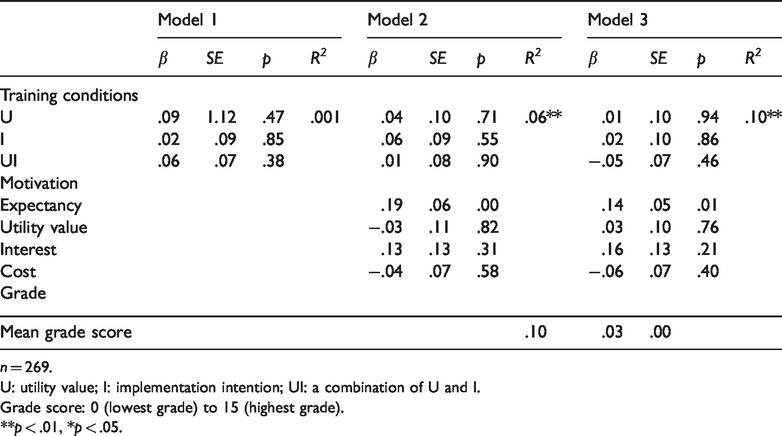
n = 269.
U: utility value; I: implementation intention; UI: a combination of U and I.
Grade score: 0 (lowest grade) to 15 (highest grade).
**p < .01, *p < .05.
Furthermore, to analyze which specific subgroups profit most from the interventions and log into the training (research question two), latent profile analyses were conducted. To define these latent profiles, scale scores for measures of the motivation variables and the mean grade score as a control variable were used (values were z-standardized). We specified models with 1–5 latent profiles and compared their model fits, which included Akaike information criterion (AIC), Bayesian information criterion (BIC), Lo-Mendell-Rubin Test (LMR), and Entropy.
The fit statistics AIC and BIC indicated improvements in model fit up to four classes, whereas the LMR and Entropy indicated improvements in model fit up to three classes. The three-class model was selected as the preferred model because it was considered plausible and more readily interpretable. Fit statistics for 1–5 class models are presented in Table 4 and the three-class model is also displayed graphically in Figure 1. Students in the “motivated” class (38%) showed high values in expectancy, interest, U, mean grade, and low values in cost. Students in the “balanced” class (51%) showed average values in all measures. Students in the “unmotivated” (11%) class showed high values in cost, average values in mean grade, and low values in the other measures. There were significant differences across classes in terms of logging into the units. The “motivated” class (M = 1.38, SD = .19) opened the units significantly more often than the “balanced” (M = .90, SD = .14, p < .05) and the “not motivated” (M = .55, SD = .22, p < .01) classes. There were no significant differences between the “balanced” and the “not motivated” classes.
Model fit statistics across five latent profile models of students’ motivation.
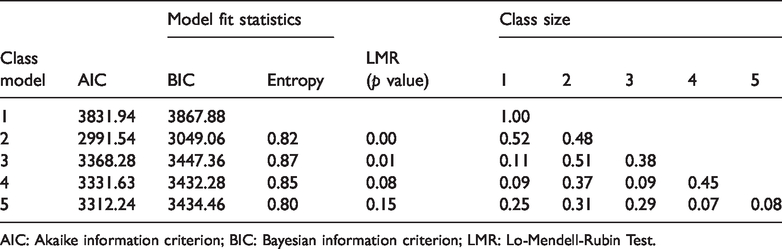
AIC: Akaike information criterion; BIC: Bayesian information criterion; LMR: Lo-Mendell-Rubin Test.
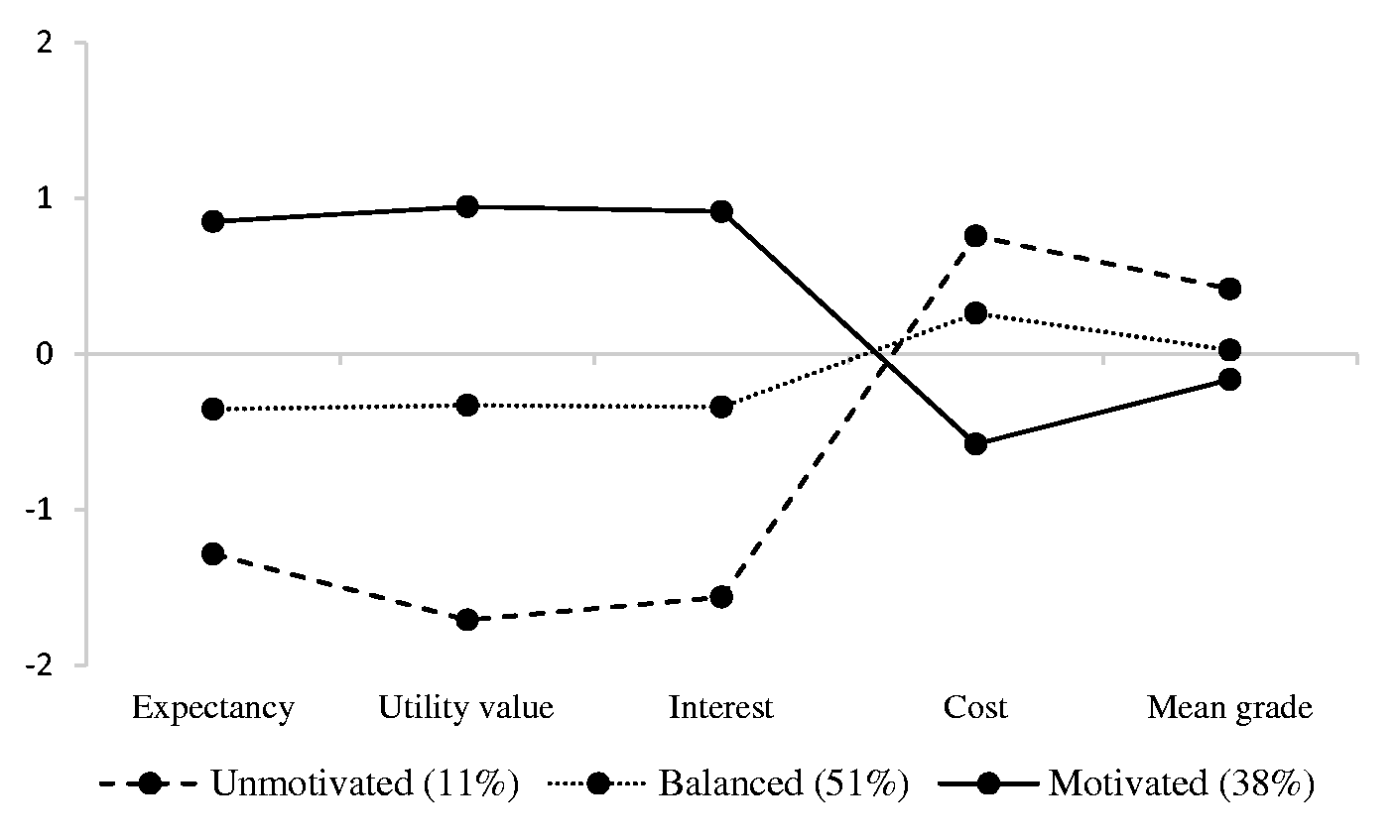
Patterns of motivation across a three-class model. Values are z-standardized.
Discussion
The aim of this study was to explore whether minimal interventions on U and I could foster participation in online SRL training. Moreover, this study takes a person-centered approach by addressing the question of whether there are different profiles in students’ motivation and grades and whether these profiles affect training use. Apart from very few exceptions (Canning et al., 2019; Hoch et al., 2020), minimal interventions seemed to have great effects. The present study, however, gives reason to critically evaluate in which contexts minimal interventions are successful.
Research Question One: Minimal Interventions
It was expected that a U intervention could foster the training participation in a voluntary online SRL training and would be even more effective for low-performing students (Hypotheses 1 and 3). Contrary to most findings in the literature, in our study the minimal interventions did not have an impact on students’ participation in training.
Our results for U, however, fit the results shown by Canning et al. (2019), who implemented a U intervention in a college class and found that struggling students became less interested and perceived less U on class content. Moreover, good students profited even more from the intervention when it was student framed, whereby struggling students showed decreased grades (Canning et al., 2019). Reasons for these unexpected results are that struggling students doubted their preparedness for the class, lost confidence about their performance, and cared less about doing well, which, in turn, led to decreased interest and perceived U. For example, Canning and Harackiewicz (2015) showed that providing students with directly communicated U examples may be threatening for students who lack confidence in their ability to do well, but that self-generated utility can have positive effects. Apart from that, the source of information may influence the effectiveness of a U intervention (e.g., Canning et al., 2019; Shin et al., 2017). When U is transmitted through peer groups instead of authorities, it may be easier for the individual to generate personal examples because they see that their peers are also able to make these connections. Our study followed the findings of Canning and Harackiewicz (2015) by letting the students formulate their own U instead of only presenting examples, which might have been threatening for low performers. The fact that research shows different pictures on the effectiveness of U interventions indicates a need for further research. However, as far as implementation intention interventions are concerned, the source of information does not seem to have any influence on effectiveness (Gollwitzer, 2014).
The I intervention in this study did not have an effect on training participation either, which was also unexpected (Hypothesis 2) because its effectiveness was already shown in many studies and meta-analyses (e.g., Gollwitzer & Sheeran, 2006; Oettingen et al., 2015). The participants in our study had to first plan when they want to start the training, then self-generate an I for the case they face an obstacle that could prevent them from acting out their plan. Maybe the effect of the I intervention was not strong enough to endure all training units. Apart from this, it could have been more effective if the participants generated if-then plans about their goal to actually participate in the training, rather than about the obstacles. Maybe, some students did not face an obstacle and therefore, they had no cue to pursue the actual goal of participation in the training. In a study in which the I intervention was successful, the students had 3-hour training on the technique with a real trainer and the students chose their own goals (Duckworth et al., 2013). Our intervention included a shorter introduction, which was presented online. A low specificity of the I (e.g., Hoch et al., 2020) may also account for our findings because the students were free to formulate their I. Literature also shows that the success of an I might be moderated by intention stability (e.g., Godin et al., 2010; Prestwich & Kellar, 2014) or peer and school norms (e.g., Yeager et al., 2019). Prestwich and Kellar (2014) discuss further potential moderators (e.g., plan reminders) to analyze for whom I interventions are most effective. Thus, further research is needed to investigate moderating effects.
In the present study, students in the UI condition received both interventions. It was expected that this condition was more effective than the conditions with only one minimal intervention (Hypothesis 4). This, however, was not the case, which is not surprising given that both interventions did not have an effect.
Furthermore, one reason why the minimal interventions did not have an effect could lay in the introduction to the training. Students only received a short overview of the SRL training. This could have been too little information for the students to have seen enough relevance to the topic. Usually, I and U interventions deal with topics that are already known to the students and are an obligatory learning content, for example, the utility of science courses (e.g., Hulleman & Harackiewicz, 2009) as opposed to the voluntary training of this study. In future research, it should be ensured that all students understand the main points of the training by having them write a short summary of the introduction, which can also foster deeper cognitive processing. In this study, only the control group had to write a short summary. Nevertheless, all U and I statements were analyzed for plausibility and completeness, resulting in excluding students. The excluded persons either did not write anything or wrote text that did not fit the task. This gives reason to critically evaluate whether the tasks were comprehensible for all students. The results of the regression analyses, however, indicate motivation is associated with training participation and has an impact beyond minimal interventions. Unexpectedly, students with a positive expectancy motivation and good grades logged into the training units the most. Students with low expectancy motivation and poor grades did not show desirable behavior to improve their performance. Although these results were unexpected, they fit the general principle of different expectancy constructs (e.g., Eccles & Wigfield, 2002; Pintrich, 2003), which postulate that people persist and perform better when they expect to do well.
Research Question Two: Motivation Profiles
In this study, we also focused on a rather explorative person-centered approach by carrying out latent profile analyses to find out whether training participation is influenced by motivational patterns. We found three different profiles in students’ motivation that indeed affected training participation. The “motivated” students logged into the training units significantly more often than the “balanced” or the “unmotivated” students. This finding indicates motivation has a positive influence on training participation beyond the effect of minimal interventions on U and I. The latent motivation profile was defined by the motivation variables expectancy, utility value, interest and cost, and the mean grade score. We included the mean grade score as a control variable for academic performance and because it was included in the regression analysis. Although the mean grade score remained stable, the motivation variables showed different patterns in the different profiles. It is important to note, however, “motivated” students had high values in expectancy, utility value, and interest and low values in cost. This indicates that in fact, expectancy, utility value, and interest positively influence training participation, which is in line with the results of the regression analysis. In this study, however, we were not able to foster these variables in students and the average participation rate was rather low even in the “motivated” group. The findings indicate, however, motivation influences voluntary training participation beyond the implemented minimal interventions.
Strengths, Limitations, and Future Research
A strength of the present study is that it was conducted in a real and relevant setting. Real behavior data from a large sample including different schools were collected and all participants were randomly assigned to the different intervention conditions. Another strength of the study is the implementation of multimethod evaluation by combining variable- and person-centered analysis methods to present a bigger picture. In further studies, however, students in different situations should be recruited to assess whether our findings remain stable. The students in our study were about to graduate from high school and our intervention was not related to a specific school subject. Studies that showed positive effects of minimal interventions, however, were not conducted just before graduation and were related to a specific subject (e.g., Hulleman & Harackiewicz, 2009). Thus, the context in which minimal interventions are implemented seems to influence their effectiveness.
Although most studies on minimal interventions show small effect sizes, the practical relevance of the interventions is high because they can be easily implemented and a great number of students can be reached (e.g., Yeager et al., 2019).
Nevertheless, in this study the participation rate in training was low. A review by Delnoij et al. (2020) analyzed which factors are (non-)modifiable predictors of non-completion in online higher-education programs. For example, academic goals and intentions belong to the most modifiable predictors. Moreover, the authors give an overview of interventions to raise completion rates with coaching, remedial teaching, and peer monitoring being the most promising approaches to increase completion rates. Some interventions were provided online and had a short duration (30 minutes). They concluded that a systematic approach is needed to analyze the effectiveness of various interventions in both traditional and online education. Although the study focused on higher education, some factors might be transferable to the school context. Thus, our study can be seen as an approach to contribute to this research gap.
In future studies, however, it would be desirable to ask students directly about their goal of participating in the voluntary training because as mentioned by Gollwitzer and Sheeran (2006) Is require goal setting and minimal interventions have to be meaningful (Walton, 2014). Students who stated they had not answered the questions conscientiously and honestly at all and did not fulfil the assignment of their condition were excluded from our analyses. This served as an indication that the included participants were conscious and took the training seriously. Although this procedure shows ecological validity, we cannot be sure the students really set the goal of participation in training, which might be one reason why the participation rate could not be fostered through minimal interventions. Nevertheless, SRL training was embedded in a meaningful context as it aims at fostering SRL, which in turn should support students in their preparation for final exams. The fact that the training was voluntary, however, seems to play an important role in the effectiveness of minimal interventions.
Another point that might be criticized is the operationalization of training participation. In this study, participation was operationalized via log files, in more detail, whether a student opened a unit. One might think the total time students spent online may be a better indicator for participation. First, the training’s platform does not automatically track the total time spent online and the students are not asked to push an “exit” button when they finished a unit. Therefore, the researcher would need to define an arbitrary termination criterion. They would also still not know what a student does between two clicks—are they really concentrating on the content or doing something else—this cannot be controlled. We decided to use the criterion “opened/not opened” for the operationalization of participation because this highly correlates with the total amount of log files (r = .95, p < .001), and can therefore serve as a proxy. Furthermore, the minimal interventions focused on opening a unit, not on willingness to persist. Moreover, in an attendance-based course one can also not be sure whether the students follow the lecturer attentively or are distracted, for example, by content from other sources such as fellow students, smartphones, or laptops.
Apart from that, in this study we focused on fostering one component of task value, U, as this seemed to be influenced easier than attainment and intrinsic value as these two rely on individual characteristics as opposed to U, which can be easier fostered by extrinsic reasons (Eccles & Wigfield, 2002). However, for example, Gaspard et al. (2015) showed that one condition of their U intervention, where students had to reflect on given arguments, also affected students’ attainment and intrinsic value. Thus, in future studies, one could also try to implement an adapted U approach in terms of evaluating quotations to also foster attainment and intrinsic value. Apart from that, one could also try to target these two components directly to foster task value and in turn participation in our training. For example, Acee and Weinstein (2010) targeted all components in their intervention study.
In the current study, however, we were not able to replicate the results of studies that have shown positive effects of the implemented minimal interventions (e.g., Hulleman & Harackiewicz, 2009). Nevertheless, the present investigation complements existing literature by showing that minimal interventions are not effective per se because they seem to be context dependent, which is relevant for the practical implementation.
Footnotes
Declaration of Conflicting Interests
The author(s) declared no potential conflicts of interest with respect to the research, authorship, and/or publication of this article.
Funding
The author(s) received no financial support for the research, authorship, and/or publication of this article.
