




Abstract
The role of learning styles in the classroom remains a heavily debated topic within education. Notable problems with using learning styles to inform classroom instruction include a lack of empirical support and potential negative effects on student learning and motivation. This content analysis focused on the presence and quantity of learning styles discussion in 20 texts commonly used in educator preparation programs (i.e., introduction to education and educational psychology texts); definitions, models, stances on usage, and recommendations for usage provided; and whether references cited in the texts were empirical studies. Eighty percent of the reviewed textbooks included a discussion of learning styles. Half of the textbooks defined learning style as a preference or approach, whereas the other half defined it as an individual style. Introduction to education texts tended toward a more positive stance on learning style usage whereas introduction to educational psychology texts exhibited a more neutral stance. A quarter of the textbooks recommended matching instructional methods to learning styles. Texts with higher numbers of both empirical and non-empirical references were more likely to describe learning styles in terms of how students prefer to gather information rather than as innate differences in information processing. Given that most textbooks did not recommend matching instructional methods to learning styles, future research should examine the source of the continued prevalence of teachers’ beliefs that student learning improves with the matching of learning styles to teaching approach.
Although there is an absence of empirical evidence that learning styles benefit student success (e.g., Pashler, McDaniel, Rohrer, & Bjork, 2009), learning styles have remained a prevalent component of teaching in many classrooms (Kirschner & van Merriënboer, 2013). We reviewed popular educational psychology and introduction to education textbooks to examine the coverage of learning styles theories in educator preparation programs. These courses often provide the foundation for future teachers’ understanding of student learning and their formal framework for understanding learning styles, specifically. This content analysis examined how textbooks defined learning styles, which models of learning styles texts provided, and whether these texts recommended the implementation of learning styles. Prior to discussion of the content analysis and implications for education practice and research, we provide a brief overview of popular learning styles models and common practices for their implementation, as well as a discussion of empirical literature examining interventions with learning styles.
Literature Review
Learning Styles Models
The term “learning styles” (also called learning modalities) generally refers to the idea that different students learn more effectively when information is presented in specific ways; however, many definitions of this concept exist, leading to a great deal of conceptual confusion (Pashler et al., 2009). According to Pashler et al., the origin of learning styles theories can be traced to a variety of different theories and related tests for grouping or classifying personality types, the earliest of these being the Myers-Briggs Type Indicator, which gained popularity in the 1940s and continues to be widely used in business and industry. The popularity of the concept of self-esteem (Dunn, Price, Dunn, & Saunders, 1979; McCarthy & Schmeck, 1988) and the field of positive psychology (Seligman, 1991) also may have contributed to the spread of learning styles, by suggesting that personal characteristics or outlooks impact individuals’ learning styles. In the 1960s, researchers continued to hypothesize about aptitude and aptitude-treatment interactions, but by the 1970s empirical research had in large part indicated that the interactions between students’ preferences and teachers’ instructional approaches did not lead to increased learning (Scott, 2010). Both then (Kavale & Forness, 1987; Tarver & Dawson, 1978) and more recently (Knoll, Otani, Skeel, & Van Horn, 2017; Rogowsky, Calhoun, & Tallal, 2014), studies that have matched students’ preferences with mode of instruction have failed to find an impact on learning. Yet, teacher beliefs in the efficacy of differential instructional approaches in accordance with individual “styles” persist. Klein (1997) suggests Gardner’s (1983) more recently proposed theory of multiple intelligences seems the likely impetus for perpetuating the belief in teaching students differently based on their learning style. However, little empirical support exists for the idea of multiple intelligences (Klein, 1997; Waterhouse, 2006), and Gardner himself (1995) insists that multiple intelligences do not equate to or provide evidence of learning styles.
Just as there are multiple potential origins for the learning styles theory, there are many conceptualizations of learning styles models. In their review of learning styles, Coffield, Moseley, Hall, and Ecclestone (2004) identified 71 different models of learning styles. Scott (2010) described several of the most widely researched theories, including Kolb’s (1984) four-way typology of learners as convergers, divergers, assimilators, and accommodators; Gregorc’s (1982) four-way typology of concrete-sequential, abstract-random, abstract-sequential, and concrete-random learners; and the Felder and Silverman (1988) four-dimension model. Dunn and Dunn (1992) propose five stimuli strands – environmental, emotional, sociological, psychological, and physiological – and describe a student’s learning style as comprising the “exact combination” of identified preferences within each of those strands.
Despite the number, variability, and nuances of the aforementioned learning styles models, the most popular models utilized in education are those stemming from the VARK model, which consists of four perceptual modalities: Visual, Auditory, Read/Write, and Kinesthetic learning (Fleming & Mills, 1992). The VAK model, a version of this theory commonly adopted by educators, includes only the visual, auditory, and tactile/kinesthetic groups (Scott, 2010). One might surmise that this model is the most popular due to its simplicity and intuitiveness.
Teachers seeking to implement learning styles in the classroom can find a wide variety of easily accessible commercial products (Cuevas, 2015). Ironically, one textbook author (Woolfolk, 2017) asserts that part of the reason learning styles are so popular, despite minimal credible evidence for their use, is because commercial educational companies devote considerable resources into promoting learning styles as a recommended tool for teaching.
Although there are a variety of recommended practices within the realm of learning styles, the most common is the meshing (or matching) hypothesis (Pashler et al., 2009). An educator embracing this model assesses students to determine their learning styles through one of several self-report measures. The educator then provides instruction to students in ways that best matches their individual style(s). For example, people subscribing to this school of thought believe that teachers should present information in a primarily visual format to learners identified as having a visual learning style (Pashler et al., 2009). Here, we have provided examples of some of the more well-known conceptualizations of learning styles. For a thorough review of learning styles, see Coffield et al. (2004). The next section examines research on teachers’ beliefs about learning styles.
Pervasiveness of Learning Styles
Numerous peer-reviewed articles (Coffield et al., 2004; Geake, 2008; Kirschner & van Merriënboer, 2013; Pashler et al., 2009; Riener & Willingham, 2010) have reported the ineffectiveness of matching students’ preferred learning styles to mode of instruction. Additionally, researchers have attempted to disseminate these findings to a wider audience by explaining the myth of learning styles in blogs (Diaz, 2018; Kirschner, 2015), popular press books (Brown, Roediger, & McDaniel, 2014; Willingham, 2009), and news articles (Willingham, 2018). In a recent report, Pomerance, Greenberg, and Walsh (2016) recommended removing learning styles from teacher education training materials. Pomerance et al. described learning styles as a “debunked theory” (p. 8) and asserted, “There is no evidence that considering learning styles in planning and delivering instruction produces learning gains” (p. 13). Pomerance et al. explained that information included on state teacher licensure tests influences what educator preparation programs teach; thus, removing references to learning styles from such tests would likely reduce the emphasis programs place on learning styles.
Despite efforts to encourage educators to question the validity of learning styles, belief in their existence and relevance persists among teachers. For example, in their survey of K–12 teachers in the midwestern USA, Snider and Roehl (2007) found that 80% of respondents “exactly” or “somewhat” believed that learning styles were relevant in “deciding how and what to teach” (p. 878). Similarly, Dekker, Lee, Howard-Jones, and Jolles (2012) found that over 90% of the teachers surveyed from the United Kingdom and the Netherlands believed “individuals learn better when they receive information in the preferred learning style (e.g., auditory, visual, kinesthetic)” (p. 4).
Within the USA, authoritative documents that guide educator preparation or delineate required knowledge and skills for teacher certification tend to reinforce teacher beliefs about learning styles. In its glossary section, the Interstate Teacher Assessment and Support Consortium’s (InTASC; Council of Chief State School Officers, 2013) Model Core Teaching Standards defines “Diverse Learners and Learning Differences” as “such areas as differing rates of learning, motivation, attention, preferred learning modalities, complexity of reasoning, persistence, foundational knowledge and skills, and preferred learning and response modes” (p. 21). Similarly, the National Board for Professional Teaching Standards (2016) mentions learning styles in its description of Core Teaching Proposition 3 – Teachers are responsible for managing and monitoring student learning. A review of three of the nation’s largest state teacher producers (California, New York, and Texas) reveals learning styles (or modalities) as codified in their teaching standards. According to the California Commission on Teacher Credentialing (2009), “The California Standards for the Teaching Profession support the creation of classroom communities and curricula in which students with varying backgrounds, learning styles, strengths, interests, needs and abilities are engaged and challenged as learners” (p. 3). Standard III, Element III.2, Performance Indicator d of the New York State Teaching Standards (Engage NY: New York State Education Department, 2011) reads, “Students understand lesson content through a teacher’s use of multiple modalities, such as oral, written, kinesthetic, and/or tactile methods” (p. 6). Likewise, Standard 1 – Instructional Planning and Delivery, section Ciii of the Texas Teacher Standards (Commissioner’s Rules Concerning Educator Preparation, 19 Texas Administrative Code Rule §149.1001, 2014) states, “Teachers integrate the use of oral, written, graphic, kinesthetic and/or tactile methods to teach key concepts” (Subchapter AA, section C, subsection iii). Thus, in terms of both beliefs among teachers and official documents that guide teacher preparation, perpetuation of learning styles and the need for teachers to differentiate instruction based on them is widespread.
Learning Styles Instruments
Most learning styles instruments are forced-choice, self-report questionnaires utilized to categorize students into one of several styles (Dembo & Howard, 2007). Many researchers criticize learning styles inventories for having weaknesses such as low reliability, poor validity, and little pedagogical impact (Coffield et al., 2004). The creation of multiple test versions further exacerbates attempts to ascertain instrument quality. For example, Dunn and Dunn (1992) have produced several self-report inventories based on their learning styles model, and the number of factors presented and the subsequent test–retest reliabilities vary between versions of those inventories. The manual for their 1996 version of the Learning Style Inventory (LSI) indicates that the test–retest reliabilities for 21 of the 22 factors were greater than .60. The overall internal consistency is estimated to be .60 or higher, but the internal consistencies of the factors range from .55 to .88 (Coffield et al., 2004). Supporters of the Dunn and Dunn inventories claim construct and predictive validity are high, but the manual does not provide these data.
Similarly, critics of Kolb’s (1984) learning style inventory (also abbreviated LSI) question why Kolb “cites many unpublished works in support of the LSI and his learning styles theory” (Stumpf & Freedman, 1981). An updated version (the LSI-1985) suffered from similar validity problems (Metallidou & Platsidou, 2008; Stout & Ruble, 1994), leading Stout and Ruble (1994) to conclude, “The evidence regarding the measurement properties of the LSI-1985 … argues for suspension of its use in accounting education research” (p. 89). Henson and Hwang (2002) examined the reliability generalization of the LSI across previous studies and found both poor internal consistency and poor test–retest reliability due to “deleterious cumulative measurement error” (p. 712). Nevertheless, Kolb published a more recent 2007 LSI version, already cited over 1000 times.
Fleming’s (2001) VARK assessment is a 16-item questionnaire available for online administration. Each question consists of four response options, each associated with one of the four modalities (Leite, Svinicki, & Shi, 2010). Although educators widely use the VARK questionnaire, minimal research has sought to establish the validity or reliability of its scores. Leite et al. (2010) analyzed the data of 14,211 participants who took the VARK online assessment in 2007 and obtained adequate internal consistency reliability estimates for the visual, aural, read/write, and kinesthetic subscales, with scores of .85, .82, .84, and .77, respectively. Yet Leite et al. found no validity information for the VARK algorithm used to classify learners. The authors noted that determining the VARK assessment’s validity as a research tool would require evidence of its testing, content, and response process consequences. Leite et al. cautioned against the use of the VARK for research purposes and pointed out potential difficulties in the interpretation of the scale items. Other learning styles instruments, such as the Revised Grasha-Riechmann Student Learning Style Scales, also demonstrate poor internal consistency (Ferrari et al., 1996).
Ferrell’s (1983) comparison of four learning styles instruments (the Grasha-Riechmann Student Learning Style Scales, Kolb Learning Styles Inventory, Dunn Learning Styles Inventory, and Johnson Decision Making Inventory) revealed substantial validity problems, as there was little overlap between the four scales. According to Ferrell, “The implication is that either the instrument or the paradigm is lacking, perhaps both” (p. 39). More recent comparisons of learning styles instruments have produced similar results, with little overlap between scales purporting to measure similar concepts (Sadler-Smith, 1997). Given the inconsistency across learning styles theories, perhaps it is not surprising that the instruments developed to measure learning styles have little in common (Ferrell, 1983).
Empirical Research Linking Learning Styles and Student Learning
Pashler et al. (2009) described the type of empirical evidence necessary to test the meshing hypothesis. To support the meshing hypothesis, studies must show that when students receive instruction matched to their learning styles, student learning is improved. A wealth of literature regarding the implementation of learning styles exists. However, few studies structured themselves in a way that could provide evidence of this interaction. In his review of approximately 1400 articles referencing learning styles published between 2009 and 2015, Cuevas (2015) found only 31 to be empirical studies relating to the interaction between learning style and instructional method.
Cuevas (2015) identified two experimental studies that utilized the VAK or VARK models in search of interaction effects. In one experimental study, Mahdjoubi and Akplotsyi (2012) administered a 39-item assessment, based on Fleming’s (1992) VAK learning style instrument but modified to include more child-friendly language, to elementary students to determine whether they were visual, auditory, or kinesthetic learners. The students participated in three tasks: one visual, one auditory, and one kinesthetic. Significant interaction effects were found between students’ identification as V, A, or K, and their level of active involvement in the corresponding condition. Although the researchers suggested that VAK styles could have an influence on learning behaviors, they did not measure learning in such a way as to support the matching hypothesis. In another study, Sankey, Birch, and Gardner (2011) assigned 60 students to six experimental learning conditions using the VARK assessment. Each group of 10 students consisted of two visual, two aural, two read/write, two kinesthetic, and two multimodal learners. The experimental data did not support an interaction effect, that is, students did not learn more when assigned to their preferred learning style. However, qualitative data revealed that participants described multimodal learning resources as the most helpful.
Rogowsky, Calhoun, and Tallal (2014) conducted a rigorous experimental investigation of the meshing hypothesis for both instructional and assessment modality using an adult version of the Dunn and Dunn inventory. Neither matching instruction nor assessment format to students’ preferred learning styles had a statistically significant impact on performance. In a recent examination of the meshing hypothesis using the revised Verbalizer-Visual Questionnaire (Kirby, Moore, & Schofield, 1988), Knoll et al. (2017) compared participants’ learning styles to their judgments of learning and recall performance. Receiving information in one’s preferred learning style was not associated with recall performance, but was associated with immediate judgments of learning (i.e., participants reported that they retained more information when the information was presented in their learning style). However, only delayed judgments of learning were significantly associated with performance, and delayed judgments were unrelated to whether presented information matched participants’ learning styles. Despite these findings, 100% of participants in Knoll et al.’s sample believed their performance improved when taught in their preferred learning style.
It is important to note the deficit of rigorous experimental studies of learning styles available. Although variations of the VAK or VARK models continue to be the most commonly accepted forms of learning styles in education, they are also the least prominent in published research. Despite advocacy for and popularity of learning styles models in the classroom, there is an absence of empirical support for their benefit to student learning, specifically with regard to the matching of instruction to learning styles. The majority of evidence on the impact of learning styles in the classroom does not support its use, and a growing number of experts explicitly recommend abandoning the learning styles paradigm due to its potential harmful effects on students (Kirschner, 2017). Thus, the body of literature on learning styles supports the classification of this idea as a neuromyth, that is, a popular, but incorrect description of brain function (Geake, 2008).
The Potential Negative Impacts of Using Learning Styles in the Classroom
Teachers face challenging demands on their time and resources. Given the lack of evidence for any learning benefits from utilizing learning styles, using classroom time to identify and accommodate learning styles is imprudent. Even more concerning are the potential negative educational consequences of learning styles implementation. A first concern involves the impact on students’ encoding of information. Encoding is the processing that allows presented information to be interpreted and understood, and, if adequately attended to, transferred to long-term memory. How students encode information affects how well they remember it (Bruning, Schraw, & Norby, 2011). Two of the primary approaches to understanding student encoding are multiple modalities and dual-coding theory.
Multiple modalities refer to the sensory system, typically auditory or visual, a student uses to receive information (Moreno & Mayer, 2007). Information can be held in the auditory register for approximately three seconds and in the visual register for less than half a second (Bruning et al., 2011). Capturing and maintaining student attention are crucial to students’ abilities to perceive and encode information. Given the brief amount of time students are able to hold information, it is more likely that students will attend to information presented in both visual and auditory formats as opposed to only one format. For example, rather than presenting information in a solely auditory format, presenting auditory information paired with visual aids is more likely to hold students’ attention. This is contradictory to what the learning styles matching hypothesis recommends, that is, presenting in just the preferred mode.
Dual-coding theory is an explanation of the mental processes humans utilize in learning and understanding experiences. According to the dual coding theory, the human mind processes and represents verbal and non-verbal information differently within two different brain systems. The mind encodes information more effectively when both mechanisms are activated and an association is made between the non-verbal and verbal systems (Clark & Paivio, 1991). Thus, dual-coding research indicates that students benefit from the addition of imagery to verbal information when compared to verbal information alone (Clark & Paivio, 1991). That is, students learn most effectively when presented with verbal and non-verbal representations of information through mixed modalities. Therefore, students’ encoding may be most effective when they receive verbal materials in the auditory modality and non-verbal materials in the visual modality (Moreno & Mayer, 2007). Research on dual-coding also contradicts the meshing hypothesis (e.g., Sankey et al., 2011).
Another concern is that the identification of students’ learning styles may also negatively affect their motivation, which is derived from their beliefs about learning (Zimmerman, 2002). These beliefs include how students interpret causes of success and failure and subsequently how they perceive their capabilities to learn. Attribution theory is the study of individuals’ perceived cause of a particular outcome and their subsequent motivation (Weiner, 1972). Ability and effort are two of the most common attributions for academic performance. Attributing success or failure to effort is more useful because it implies that when a person exerts more effort, better outcomes will be produced in the future (Stipek, 1998). In accordance with attribution theory, students who attributed failure to receiving instruction in a way that did not match their learning style would believe the teacher’s presentation style, rather than their own efforts, influenced their achievement outcome. Therefore, they attribute their success to an external factor outside of their control. This may lead students to anticipate failure on future tasks that involve information presented in a way that is contradictory to their learning style. Students’ causal attributions influence their future effort and persistence, which directly affect their learning (Weiner, 1972). Attributing poor performance to a mismatch in learning style and teaching modality would be maladaptive from a motivation perspective, providing students an invalid excuse for poor performance.
Student self-efficacy is the belief that one has the abilities necessary to demonstrate desired academic outcomes (Margolis & McCabe, 2006). When students have lowself-efficacy, or believe they cannot succeed on a given task, they likely will not put forth the effort required to do well on that task. Students’ attribution of their failure to a mismatch between their preferred learning style and teacher instruction affects their self-efficacy; that is, they believe they performed poorly on a task because of how information was presented, therefore their self-efficacy for tasks presented in a similar way in the future will be low. The attribution of their failure to not being taught in their preferred learning style reinforces the belief that they cannot succeed on those types of tasks in the future. Consequently, due to low self-efficacy they are likely to put forth less effort on future tasks or not attempt them at all. Research indicates that students who blame failure on uncontrollable factors, in this case, learning styles, develop learned helplessness and in turn give up easily when facing difficult tasks (Stipek, 1998).
In summary, the implementation of learning styles models in the classroom has continued to remain a widely accepted practice by teachers. Howard-Jones’ (2014) review of studies of teachers in five countries indicated that 93% to 97% of teachers believed people learn best when information is presented in their preferred learning style. Similarly, when 313 participants were asked to rate their agreement with a statement indicating people learn in distinctly different ways and some learn best visually, others auditorally, and other kinesthetically, the mean rating was 6.35 on a 7-point Likert-type scale ranging from 1 (strongly disagree) to 7 (strongly agree) (Willingham, Hughes, & Dobolyi, 2015).
Given the lack of empirical evidence in support of learning styles and the potential negative effects of their implementation in the classroom, why are so many teachers still utilizing them? This content analysis addressed this question by exploring the coverage of learning styles in popular educational psychology and introduction to education textbooks. Specifically, this analysis focused on the following research questions: (a) Is discussion of learning styles present in the text? (b) If discussion is present, how are learning styles defined? (c) To what extent, in terms of word quantity, are learning styles discussed? (d) Which models of learning styles are presented? (e) When learning styles are discussed, what references do the authors of the textbook cite and are those references empirical studies? (f) How does the textbook recommend implementing learning styles? For all research questions, we explored differences between educational psychology and introduction to education textbooks to determine whether students receive similar presentations of learning styles across the two text types. Alternatively, if different presentations existed, we endeavored to understand whether these differences were consistent between text types or whether they reflected other factors that would emerge in our analysis. As will be seen, one such differentiating factor – how learning styles were defined – did emerge.
Methods
Selection of Textbooks
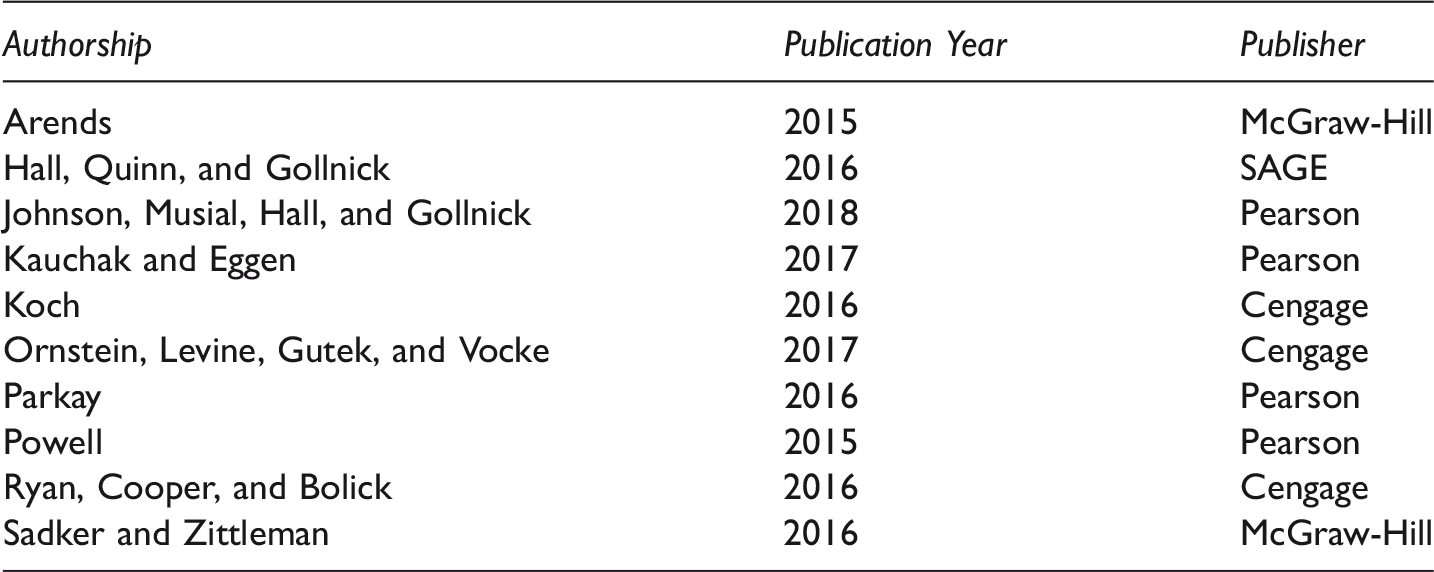
Textbooks Used for Analysis: Introduction to Education.
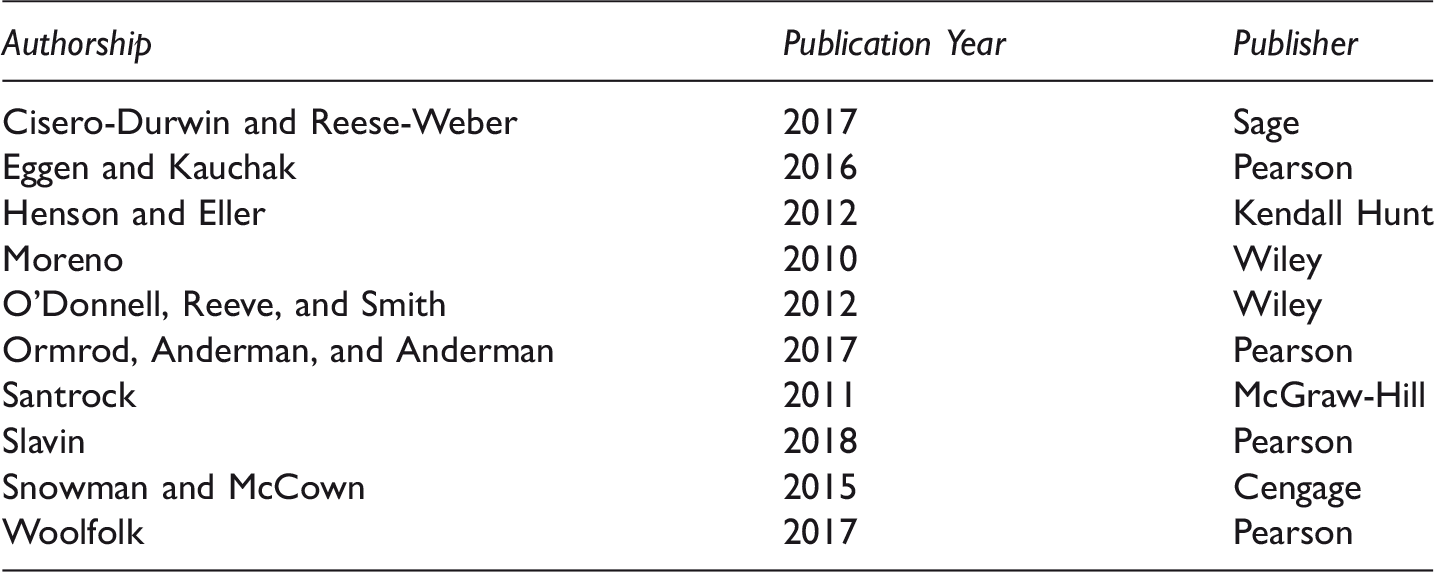
Textbooks Used for Analysis: Educational Psychology.
Coding
To design the methodology used in this review, two primary texts on content analysis were consulted (Holsti, 1969; Weber, 1990). Two content analyses of educational psychology textbooks were also referenced (Wininger & Norman, 2005; Wininger & Norman, 2010). Based on these texts and the definition of learning styles and prevalence of their application in the classroom discussed above, the content analysis protocol was created (see Appendix A). The protocol focused on the six questions discussed above. Results for introduction to education and educational psychology textbooks were compared to determine whether the discussion of learning styles was consistent between them. To develop and refine the protocol, a draft was used to code one textbook not selected for the review. Based on this draft, no revisions were deemed necessary, and the remaining textbooks were coded using the protocol.
Nineteen of the 20 textbooks were accessed electronically through the publishers’ online libraries. For these textbooks, a “find” feature was utilized to locate learning styles content. A desk copy of Arend’s (2015) textbook, Learning to Teach, was provided by the publisher. References to learning styles were located using the index of this textbook.
For the qualitative data analyses, after the categories for models, definitions, stances, and recommendations were identified, the lead author was consulted and consensus was reached on the final categories. The lead author was also consulted regarding three ambiguous responses and consensus was reached on the appropriate codes for each.
Results
The primary goals of this study were to ascertain the presence and quantity of learning styles discussion in texts commonly used in educator preparation programs. Consequently, the main results were descriptive statistics.
Presence of Learning Styles
Frequencies of Presence, Definitions, and Recommendations of Learning Styles.
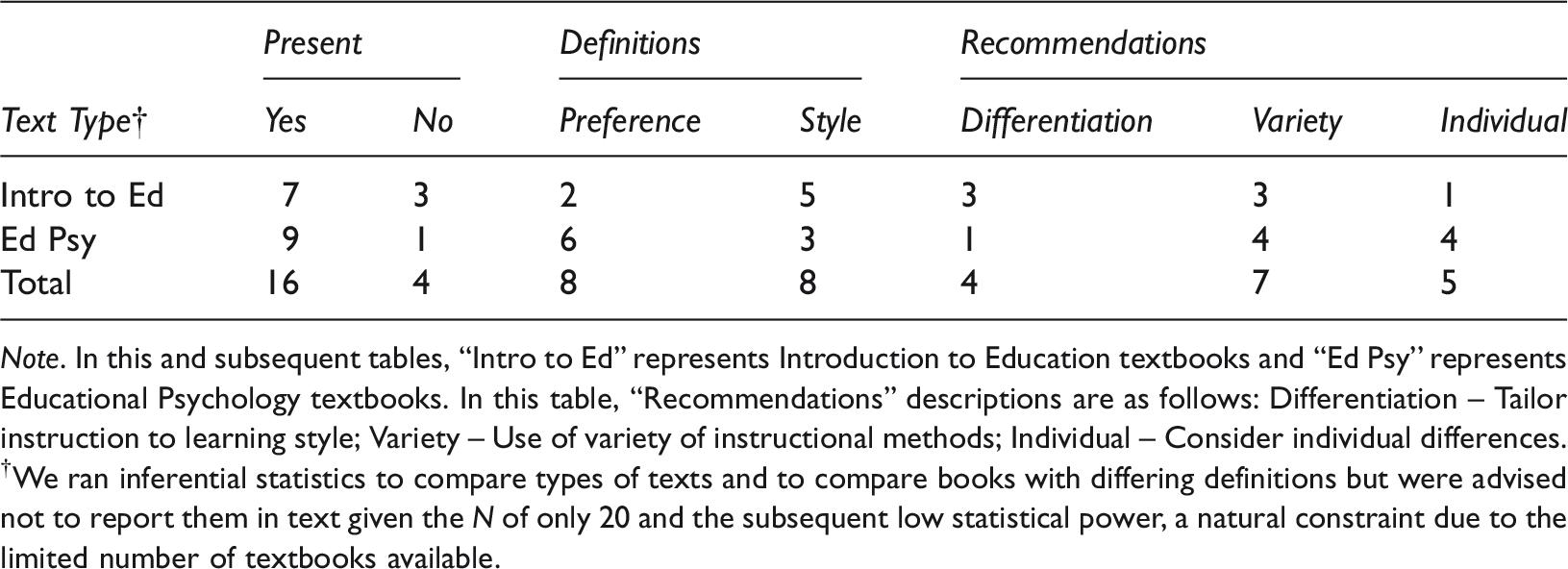
Note. In this and subsequent tables, “Intro to Ed” represents Introduction to Education textbooks and “Ed Psy” represents Educational Psychology textbooks. In this table, “Recommendations” descriptions are as follows: Differentiation – Tailor instruction to learning style; Variety – Use of variety of instructional methods; Individual – Consider individual differences.
We ran inferential statistics to compare types of texts and to compare books with differing definitions but were advised not to report them in text given the N of only 20 and the subsequent low statistical power, a natural constraint due to the limited number of textbooks available.
Definitions of Learning Styles
The next question was, “If discussion is present, how are learning styles defined?” The primary definitions varied across texts and presented learning styles as either preferences (approaches to learning and/or preferences in learning or studying) or styles (how an individual processes new information and/or learns better or more efficiently). Eight texts defined learning style as a preference and eight defined learning style as a style (see Table 3). Of the texts defining learning style as a preference, two were introduction to education and six were educational psychology textbooks. Five of the texts defining learning style as a style were introduction to education and three were educational psychology textbooks.
Words Devoted to Learning Styles
Word Count and Empirical References Descriptive Statistics for Texts with Learning Styles.
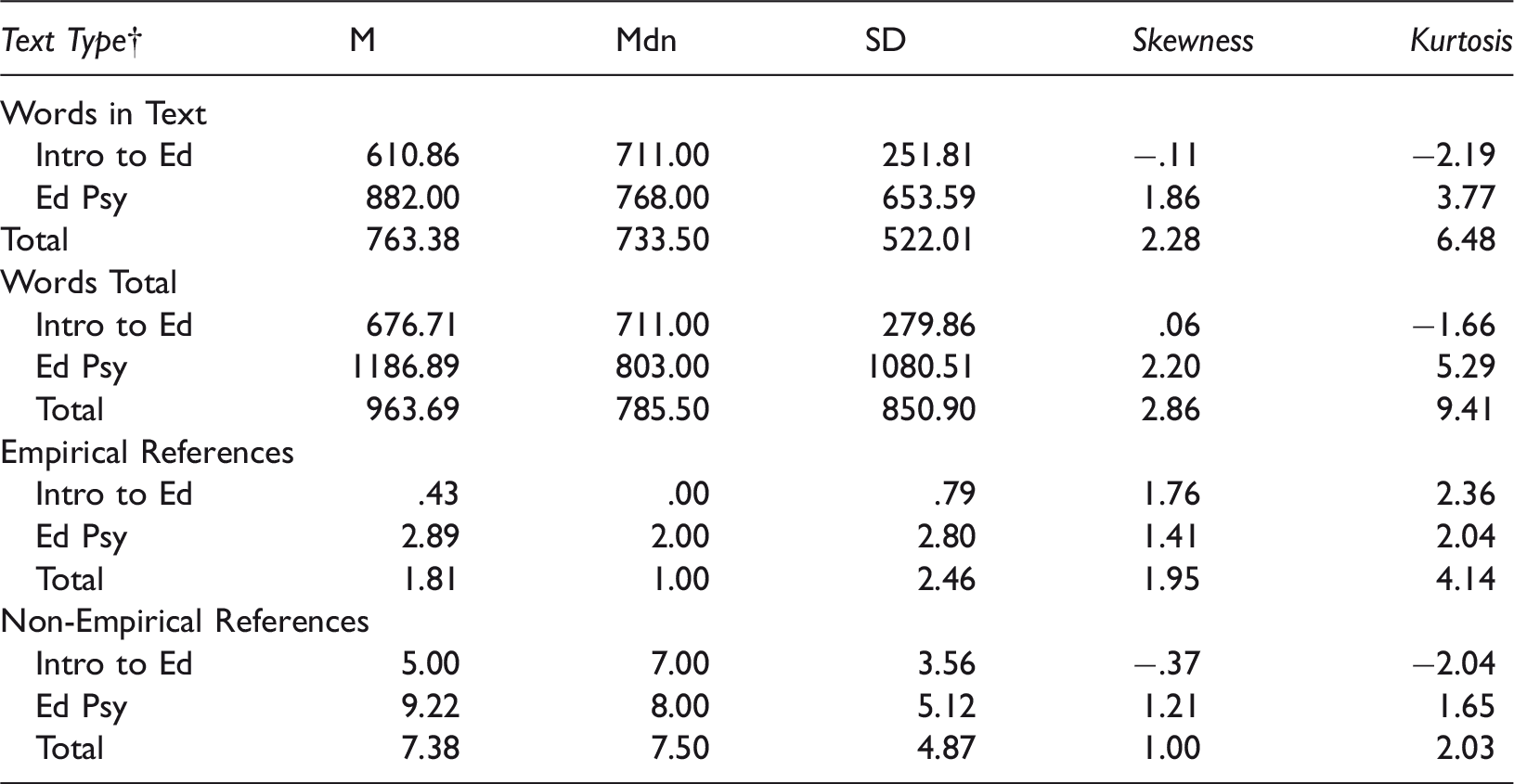
Differences were observed in number of words written about learning styles between the texts with different definition types (style versus preference). Texts that defined learning style as a preference had 1037.50 words on average versus only 489 words on average for texts with the style definition.
Models
Learning Styles Models Present in Textbooks.
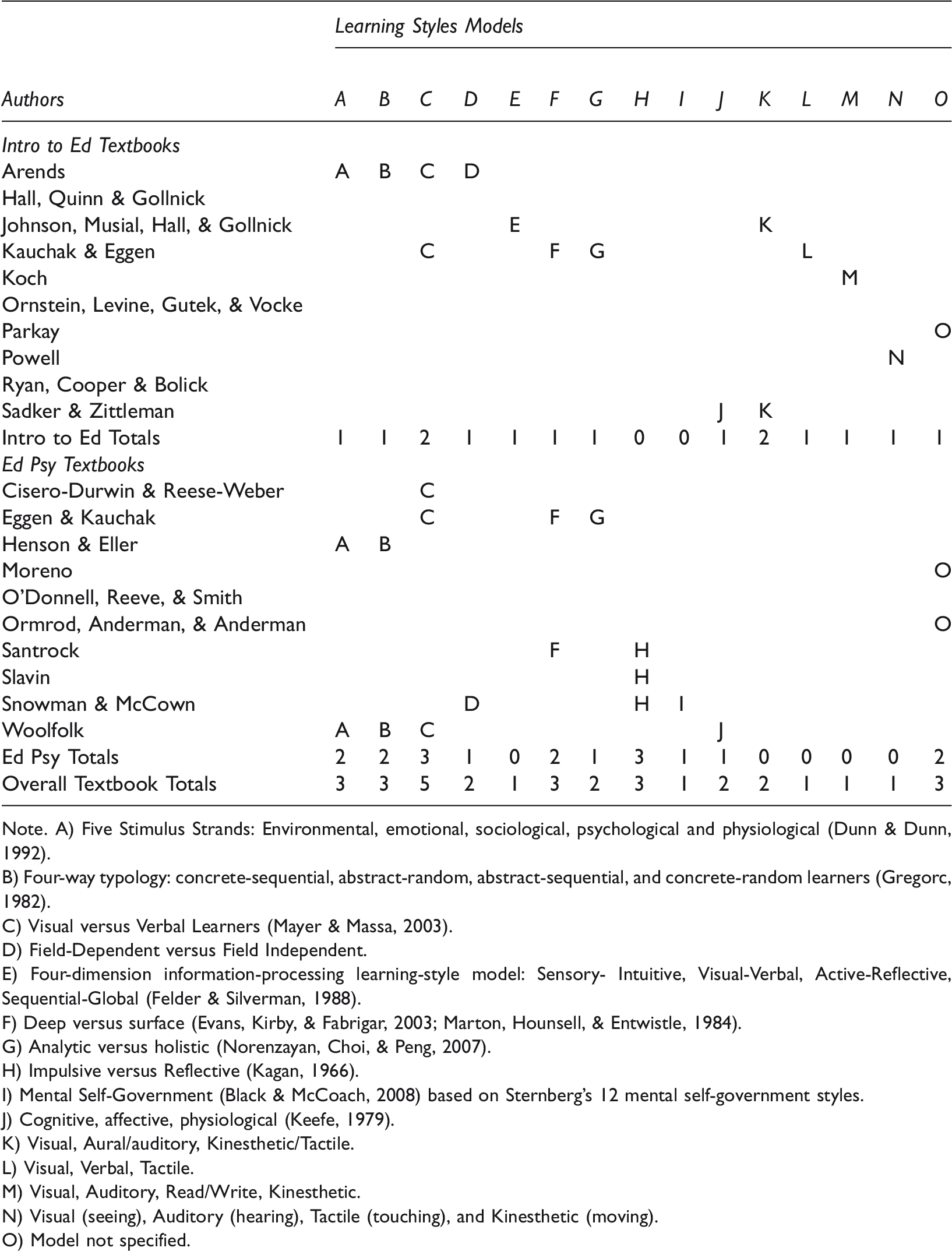
Note. A) Five Stimulus Strands: Environmental, emotional, sociological, psychological and physiological (Dunn & Dunn, 1992).
B) Four-way typology: concrete-sequential, abstract-random, abstract-sequential, and concrete-random learners (Gregorc, 1982).
C) Visual versus Verbal Learners (Mayer & Massa, 2003).
D) Field-Dependent versus Field Independent.
E) Four-dimension information-processing learning-style model: Sensory- Intuitive, Visual-Verbal, Active-Reflective, Sequential-Global (Felder & Silverman, 1988).
F) Deep versus surface (Evans, Kirby, & Fabrigar, 2003; Marton, Hounsell, & Entwistle, 1984).
G) Analytic versus holistic (Norenzayan, Choi, & Peng, 2007).
H) Impulsive versus Reflective (Kagan, 1966).
I) Mental Self-Government (Black & McCoach, 2008) based on Sternberg’s 12 mental self-government styles.
J) Cognitive, affective, physiological (Keefe, 1979).
K) Visual, Aural/auditory, Kinesthetic/Tactile.
L) Visual, Verbal, Tactile.
M) Visual, Auditory, Read/Write, Kinesthetic.
N) Visual (seeing), Auditory (hearing), Tactile (touching), and Kinesthetic (moving).
O) Model not specified.
Empirical References
The next question was, “When learning styles are discussed, what references do the authors of the textbook cite and are those references empirical studies?” The number of empirical references cited in the texts ranged from zero to nine, and the number of non-empirical references cited in the texts ranged from zero to 20. For the purpose of the protocol, a research study was identified as empirical if it reported the collection and analysis of primary data through observation or experimentation. Non-empirical references included peer-reviewed journal articles without primary data collection, review articles, books, and book chapters, but did not include cited paper presentations. Table 4 depicts descriptive statistics for empirical and non-empirical references. Educational psychology textbooks included more empirical references than introduction to education textbooks. No substantial differences were evident between text type for number of non-empirical references.
Texts that defined learning style as a preference had both more empirical and more non-empirical references than texts with style definitions. Texts with preference definitions averaged 3.13 empirical references compared to an average of only .50 for texts with style definitions. Texts with preference definitions averaged 10.00 non-empirical references compared to an average of 4.75 for texts with style definitions.
Stance on Learning Styles
An additional question 1 was the stance each text took with regard to learning styles. In other words, when discussing learning styles, did the author(s) take a stance that was (a) positive, that is, advocating for the existence of and implementation of learning styles in the classroom; (b) neutral or ambiguous; or (c) negative, that is, citing lack of evidence for, or even harm from, implementing learning styles?
An example of a positive stance comes from Sadker and Zittleman (2016): “Integrating different learning styles into instruction gives students a variety of learning experiences, builds new neural pathways, and has the added bonus of keeping instruction lively” (p. 35). An example of a neutral stance is Woolfolk (2017): Even though much of the work on matching learning styles and preferences to teaching is suspect, with unreliable measures and inflated claims, thinking about learning styles has some value. First, by helping students think about how they learn, you can develop thoughtful self-monitoring and self-awareness. In upcoming clusters, we will look at the value of such self-knowledge for learning and motivation. Second, looking at individual students’ approaches to learning might help teachers appreciate, accept, and accommodate student differences and differentiate instruction. (p. 36)
An example of a negative stance comes from Ormrod, Anderman, and Anderman (2017): Contrary to a popular belief, most measures of supposed “learning styles” merely reflect students’ self-reported preferences, and tailoring instruction to such preferences doesn’t noticeably enhance students’ learning or academic achievement. It is far more important that teachers base their instructional practices on knowledge of the cognitive processes that underlie how virtually all students think and learn. (p. 5) Frequencies of Stance on Learning Styles.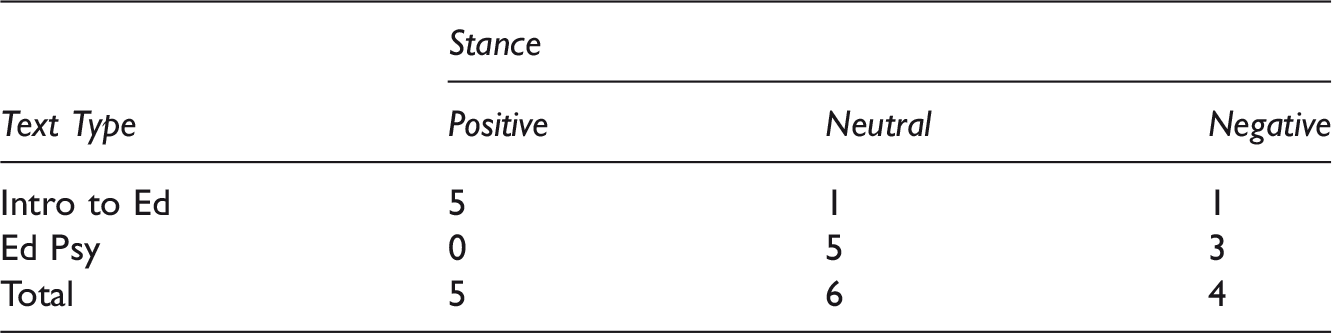
Recommendations
For the final question, “How does the textbook recommend implementing learning styles?” three themes emerged: differentiation (teachers should differentiate or tailor instruction to match student learning style), variety (teachers should use a variety of instructional methods), and individual (teachers should consider the individual differences such as need for cognition, visual-spatial abilities, open-mindedness, etc.). Based on their recommendations, texts were categorized as predominately focusing on one of these three themes. As shown in Table 3, a good number of both introduction and educational psychology texts indicated teachers should use a variety of instructional methods. Fewer, mostly educational psychology texts, recommended teachers consider individual differences. Fewer still, mostly introduction to education texts, indicated teachers should differentiate instruction based on learning styles. Regarding learning style definitions, more texts with a preference definition recommended using a variety of instructional methods, whereas more texts with a style definition recommended considering individual differences in the ways children learn.
Discussion
A review of literature indicates a lack of empirical evidence demonstrating improved learning outcomes for students whose instruction matches their learning styles. There has also been minimal research conducted to establish the validity or reliability of learning styles instruments. Additionally, the implementation of learning styles in the classroom could be detrimental to students’ encoding, motivation, and self-efficacy. Despite these concerns, the implementation of learning styles models has persisted amongst educators. This content analysis examined the coverage of learning styles in texts used for introduction to education and educational psychology courses, which often lay the foundation for future teachers’ understanding of student learning and instructional practices.
Overall, most textbooks we reviewed discussed learning styles, many at length and with a dozen or more models discussed across texts. Half of the texts defined learning style as a preference, as a student’s favored approach to learning, and the other half defined it as a style, the way a student learns. This is problematic, as it implies that a considerable number of foundational education textbooks include definitions contradicting the findings of empirical research. In contrast, only four textbooks discussing learning styles also recommended teachers differentiate or match instructional strategies to learning styles; seven textbooks recommended teachers utilize a variety of instructional strategies; five recommended considering individual differences when designing instruction. Thus, incorrectly defining the term or conceptualizing the construct does not necessarily lead to making an inappropriate instructional recommendation, that is, matching, regarding use of learning styles in the classroom. However, one has to wonder whether the incorrect conceptualization alone is enough to allow the myth and accompanying instructional practices to persist among the future teachers who read these textbooks.
For each research question, differences between educational psychology and introduction to education textbooks were explored. Overall, the results of this content analysis revealed fewer significant differences between introduction to education and educational psychology textbooks than hypothesized. With regard to the presence of discussion of learning styles and the quantity of coverage, no statistically significant differences were revealed. Although more introduction to educational texts conceptualized learning styles as styles (five versus three), the difference was not significant. The same pattern emerged for the practice recommendations with three introduction to education texts recommending differentiation based on learning styles versus one educational psychology text. Only one comparison of text types, the number of empirical references cited in the text, was statistically significant: educational psychology texts contained significantly more empirical references than introduction to education texts. Interestingly, the three most frequently cited articles in the textbooks in large part failed to support the implementation of learning styles (Kraützig & Arbuthnot, 2006; Mayer & Massa, 2003; Pashler et al., 2009). Thus, with regard to differences between texts, whether considering introduction to education versus educational psychology or preference definition versus style definition, it appears to take less coverage to simply introduce the idea without including information about the empirical evidence of its usefulness. In contrast, introducing a topic, then following up with cautionary notes on how the concept is not supported by the research literature, the dangers of using the detrimental concept, and options for better uses of a teacher’s time requires more space, and, potentially, more printing cost.
Our analysis of textbook authors’ stances on learning styles revealed interesting, and sometimes unclear, patterns. Some authors advocated for the existence of learning styles and use of learning styles to differentiate instruction. Others indicated that little or no empirical support for learning styles exists and suggested that teachers use other approaches to differentiation. A third group of authors was more difficult to classify. For example, some authors who acknowledged that evidence does not support the existence of learning styles still described it as a useful idea for differentiation. Others urged caution with use of learning styles, but still defined the concept in a way that seemed to validate their existence. In some of the texts, caveats or warnings about the usefulness of learning styles appeared in a different section (e.g., in a summary at the end of a chapter) than the main discussion of learning styles; thus, those students reading only the main section would reach a less nuanced conclusion than the author(s) intended. Interestingly, the stance on learning styles by the same authors of two different texts was not entirely consistent. Given our finding of ambiguous recommendations in many texts, we cannot help but wonder what kind of conclusions students draw about learning styles when reading them.
Implications
Despite the continued debate on learning styles in education, only three introduction to education textbooks and one educational psychology textbook did not include a discussion of learning styles or recommendations related to them. More positively, the notion that instruction should be matched to students’ learning styles was recommended by only one educational psychology textbook and three introduction to education textbooks. A majority (75%) of texts recommended that when designing a lesson, teachers should either consider incorporating a variety of instructional techniques or be mindful of individual differences rather than teaching to accommodate specific learning styles. With four textbooks not including a discussion of learning styles and 12 not recommending matching instruction to learning styles, this only further motivates pursuit of the question of why the idea of implementing learning styles models in the classroom persists. When and where are teachers acquiring these beliefs?
Although the definitions found within the textbooks could be coded into two distinct categories, no two definitions were alike. Similarly, the recommendations varied greatly between the different textbooks of the same and separate text type. For example, when reviewing the most frequently used textbooks for introduction to education and educational psychology courses at the authors’ university (where preservice teachers take both an introduction to education and an educational psychology course), the definition of learning styles is inconsistent. In the introduction to education text, they are defined as, “ways in which individuals learn most effectively and efficiently” (Powell, 2015, p. 59). In contrast, the most commonly used educational psychology textbook defined learning styles as, “characteristic approaches to learning and studying” (Woolfolk, 2017, p. 135). Both textbooks indicate that the basic information regarding learning styles can be beneficial to consider. Powell (2015) recommends, “incorporating what we know about multiple intelligences and learning styles into our plans for instruction helps meet the learning needs of more students” (p. 59). Whereas, Woolfolk (2017) explains, “looking at individual students’ approaches to learning might help teachers appreciate, accept, and accommodate student differences and differentiate instruction” (p. 135). The disparities of language and lack of clarity in the discussions of learning found in these textbooks could lead to confusion for preservice teachers, particularly among those who take both an introduction to education and an educational psychology course, making exposure to both types of textbooks likely.
Limitations
One limitation of the current study is the low statistical power generated by the number of books selected for the content analysis. Additionally, the final list of textbooks was compiled from a variety of sources. A list of the most popular textbooks according to sales numbers would have shed light on which introduction to education and educational psychology textbooks, and subsequently what learning styles content, are being taught to the majority of future teachers across the USA. These numbers were requested; however, some publishers were unwilling to provide them.
Recommendations for Future Research
Why is the idea of matching instruction to learning styles so prevalent when it is not being perpetuated in the majority of textbooks related to teacher education? Perhaps a better avenue is to explore the ways K–12 schools and districts may enculturate teachers, perhaps through peer norms or professional development, toward incorporating learning styles in their instruction. For example, what processes or assessments are readily available for and/or shared with teachers to identify learning styles, and how are teachers encouraged to use that information in the classroom? Similarly, another avenue of exploration would be in what ways are university-based educator preparation programs introducing learning styles. It would be interesting to explore the considerations professors make when selecting instructional materials and whether they value the inclusion of learning styles in their textbooks.
Another area of future research would be to explore students’ beliefs regarding learning styles prior to arriving at college. Certainly, students enter college with preconceived notions of who they are as learners. For students who have been told they learn better when taught in a certain style, are their learning outcomes negatively impacted when taught in a different style (i.e., self-fulfilling prophecy)? When they receive information contradicting the notion of matching instruction to learning styles, how hard would it be to change students’ existing beliefs? It would be interesting to explore the best mediums for changing these misperceptions.
Last, what are the beliefs of college faculty, even those outside educator preparation, with regard to learning styles and other neuromyths? If most textbooks are not perpetuating these myths, another potential source is college faculty. How prevalent are these myths among college faculty and are there differences across colleges or content areas?
Conclusion
The topic of learning styles has a long history of debate amongst educators and researchers. Despite shortcomings in research supporting learning styles, the notion of matching instruction to learning style is still propagated. The question then is where are emerging teachers developing the idea that instruction should be modified based on learning styles? Our content analysis of introduction to education and educational psychology textbooks identified only four textbooks as recommending the matching of instruction to learning styles. While the definitions and recommendations vary slightly between each textbook, overall the only statistically significant difference identified between text type was the number of empirical references present. The original hypothesis of this research was that teachers may think it is important to differentiate instruction based on learning styles because that information is presented in their textbooks; however, that hypothesis was not supported. The majority of textbooks did not recommend the practice of matching instruction to learning styles, which leads one to question whether preservice teachers are acquiring this belief from another source or if the inclusion of a discussion of learning styles in the textbooks, regardless of the recommendations, perpetuates the notion of matching instructional modality to learning styles.
Given the abundance of contradictory information regarding learning styles and the potential disparities of language and lack of clarity in textbooks, how then should learning styles be addressed by faculty in teacher preparation programs? Teachers will likely face situations requiring their understanding of learning styles; consequently, we believe this concept should be addressed in introduction to education and educational psychology courses. It is important for teachers to know the commonly used terminology and suggested application of learning styles in the K–12 setting. It is even more important that they understand what the empirical literature says about learning styles and the potential maladaptive effects that utilizing learning styles could have on their students. Preservice teachers should be made aware that not only do students learn information most effectively when it is presented in multiple modalities, but that utilizing students’ learning styles could negatively impact their learning and motivation. A careful and frank discussion of learning styles can provide preservice teachers an opportunity to think critically. Such frank and critical discussion is important regarding all available instructional techniques with an emphasis on the empirical literature supporting them, as well as both positive and negative effects each technique may have on students.
Footnotes
Author Note
This article is based on an Educational Specialist project completed by the fourth author with the first author serving as chair and the other authors serving as committee members.
Declaration of Conflicting Interests
The author(s) declared no potential conflicts of interest with respect to the research, authorship, and/or publication of this article.
Funding
The author(s) received no financial support for the research, authorship, and/or publication of this article.