




Abstract
Psychology students often feel anxious about learning statistics, which can impact their performance. However, little research has explored statistics confidence, which may be an important way to reduce the negative connotations of associating statistics with anxiety. We aimed to explore whether modifying an existing measure of statistics anxiety (the STARS scale) and reframing the questions so students rated their confidence instead, would be associated with competence, prior knowledge and experience. A total of 104 undergraduate students completed an online questionnaire comprising these measures. The factor structure of the STARS scale was predominantly maintained when wording was changed to measure confidence instead of anxiety. Confidence was related to experience and competence, but not knowledge. Two aspects of confidence (interpretation of statistics and exam confidence) plus initial experiences were significant predictors of competence. Confidence was a mediator of the relationship between experience and competence. These findings suggest statistics confidence can be measured in a similar way to anxiety, and highlight areas that could be addressed to increase competence. Future research is needed to explore the relationship between statistics anxiety and statistics confidence, as well as to determine their individual impact on performance in assessments.
Introduction
Background
Studying for an undergraduate degree in psychology involves learning and understanding a great deal of statistics. Typically psychology students struggle with this aspect of their course and statistics anxiety is widespread (Ruggeri et al., 2008). Because statistics is an essential part of the psychology curriculum, and the negative effects that high levels of anxiety have on cognitive function (Derakshan, Ansari, Hansard, Shoker, & Eysenck, 2009), it is important to explore statistics anxiety and find ways to create a more positive learning environment for students. The term ‘statistics anxiety’ (SA) has been coined to refer to anxiety caused by having to learn and work with statistics (Cruise, Cash, & Bolton, 1985). More specifically, SA has been defined as ‘apprehension that occurs when an individual is exposed to statistics content or problems and instructional situations, or evaluative contexts that deal with statistics’ (Macher, Papousek, Ruggeri, & Paechter, 2015, p. 1).
Statistics Anxiety
There is evidence for individual differences in SA. A negative relationship exists between uncertainty tolerance and SA, and a positive relationship between SA and the use of cognitive avoidance (Williams, 2015). Negative relationships have also been found between SA and commitment, self-concept and adaptability (Najmi, Raza, & Qazi, 2018). Similarly, self-concept (consisting of perceived competence and emotional reactions to the material) and intrinsic value have been shown to be negative predictors of SA (González, Rodríguez, Faílde, & Carrera, 2016).
SA is also related to feelings about studying mathematics, which seems somewhat self-evident given that statistics also involves dealing with numbers. Negative experiences with maths at school could logically increase anxiety for statistics at university. Research supports this assumption, showing SA has positive relationships with mathematics anxiety, number anxiety, mathematics course anxiety and mathematics exam anxiety (Baloǧlu, 2004). Because of this link, there has been some debate as to whether SA and mathematics anxiety are actually separate constructs. However, evidence suggests they are conceptually distinct, due to statistics tasks involving verbal reasoning and students being required to make applied inferences from their analyses (Baloǧlu, 2004). A more recent study provides further support for this claim, showing that while there was a strong positive correlation between the two, mathematics anxiety had a positive correlation with statistics performance, possibly by increasing motivation to avoid failure. On the other hand, via high statistics anxiety, it indirectly resulted in high procrastination and lower performance (Paechter, Macher, Martskvishvili, Wimmer, & Papousek, 2017). In the current study, we gave students a maths test to investigate the relationship between performance in maths, confidence and competence with statistics.
Previous experiences with statistics also impact SA. Dykeman (2011) showed that students studying for a degree in Education and taking courses on statistics were more stressed and had lower self-efficacy scores than students studying for an Education degree without statistics. However, the students studying statistics who had done statistics before reported lower levels of anxiety than those who had not studied statistics before (Dykeman, 2011). In light of these results, we expected students who have studied A-level Psychology would exhibit more confidence with statistics than those who have not. A-level exams are the university entry exams in the UK, and students study for these in the last two years of their high school, which makes A-level a transitional phase between compulsory school education and university. Some students wishing to study psychology take Psychology as one of their A-level subjects, although not all do, as it is not compulsory. A-level Psychology involves studying some basic statistics, which might lead to those individuals being less anxious.
Statistics Anxiety vs Statistics Confidence
One of the most reliable questionnaires developed to measure SA is the Statistics Anxiety Rating Scale (STARS) (Cruise et al., 1985) which Hanna, Shevlin and Dempster (2008) verified as suitable for the UK population. STARS, which includes both statistics anxiety and attitudes towards statistics, gives rise to six themes: worth of statistics, interpretation of statistics, test and class anxiety, computational self-concept, fear of asking for help and fear of statistics teachers. However, one issue that could arise from STARS is framing the questions in terms of anxiety may lead to an expectation of SA in participants and result in over reporting of their levels of this anxiety.
The problem of the self-fulfilling prophecy is well understood by psychologists. In educational settings, the teachers’ expectation about student performance has often been found to be related to their actual performance (Jussim & Harber, 2005). We argue that framing the study of statistics as something likely to provoke anxiety may, unwittingly, negatively influence student performance. Thus, in this study we sought to re-frame SA and explore confidence instead. It must be noted the authors of the study do not assume anxiety and confidence are simply two sides of the same coin. Confidence in and of itself does not automatically lead to improved performance, in the same way that anxiety does not automatically lead to poor performance. However, supporting this re-framing, confidence has been shown to be better able to predict achievement than anxiety in previous research (Morony, Kleitman, Lee, & Stankov, 2013; Stankov, Lee, Luo, & Hogan, 2012). Our rationale for re-framing the STARS scale in terms of confidence was to ascertain to what extent the original items could be used to assess confidence, given that it assesses as wide range of experiences related to the study of statistics.
In the present study, we were unable to link the survey findings to students’ actual performance on exams or coursework for ethical reasons, thus we focus on the outcome measure of perceived competence with statistical tests. This is based on the assumption that students who feel more competent in their learning generally perform better than those who feel less competent (Liu, Ye, & Yeung, 2015).
In summary, we know psychology students often feel anxious about learning statistics and these levels of anxiety and possible correlates have been widely explored in the literature. However, in our research we wished to explore confidence rather than anxiety, partly in order to remove the negative connotations associated with measuring anxiety, as well as to understand how confidence was related to experience, prior knowledge and perceived competence. Understanding more about different facets of statistics confidence is important in order to inform the development of teaching measures to enhance the learning experience and reduce the negative connotations associated with learning statistics.
Aims
Aim 1) to explore the measurement of confidence rather than anxiety using the STARS scale items and to determine if a similar factor structure would be obtained. We hypothesised that the structure would be similar.
Aim 2) to explore whether confidence as measured by the adapted STARS items is related to experience, knowledge and competence. Given the existing evidence suggesting SA is related to previous experiences, feelings about mathematics and performance, it is important to explore whether these relationships are maintained when the scale is reframed in order to establish construct validity. We hypothesised that higher levels of confidence would be related to higher scores on the other scales.
Aim 3) to explore if there are any differences on these outcome measures between students who previously studied A-level Psychology and those who did not. We hypothesised that those with A-level Psychology would score more highly on all outcome measures.
Aim 4) to explore whether confidence predicts competence over and above experience and knowledge. SA often predicts performance. If confidence predicts perceived competence, then this will provide justification for further focus on enhancing confidence rather than reducing anxiety. We hypothesised that knowledge, confidence and experience would all be significant predictors of competence, but confidence would be the strongest predictor.
Aim 5) to explore if confidence is a mediator of the relationship between experience and competence. There may be few opportunities to change students’ past experiences with statistics, or to influence teaching styles and methods outside of our own classrooms. However, if confidence is a mediating factor, we can attempt to target this factor to reduce the impact of past experience on performance. We hypothesised that confidence would mediate this relationship.
Method
Participants and Procedure
There were 104 participants (88 women and 16 men; 45 first-year students and 59 second-year students). Seventy-one students were studying single honours Psychology (Psychology as a single subject), 33 were studying a combined honours degree (Psychology with another subject as a joint degree), and only one student was studying part time. Seventy of the students had done A-level Psychology and 34 had not. The mean age was 20.4 years (median: 19, range: 18–41). The survey was created in Qualtrics (Qualtrics, Provo, UT) and the link sent to first- and second-year students via email. Some first-year students completed it in order to gain participation credits for a compulsory research methods module. The survey took participants around 20 minutes to complete. The order in which the survey measures were completed was counterbalanced. Study procedures were approved by the University Research Ethics Committee at Oxford Brookes University (ref 140850).
Measures
Confidence
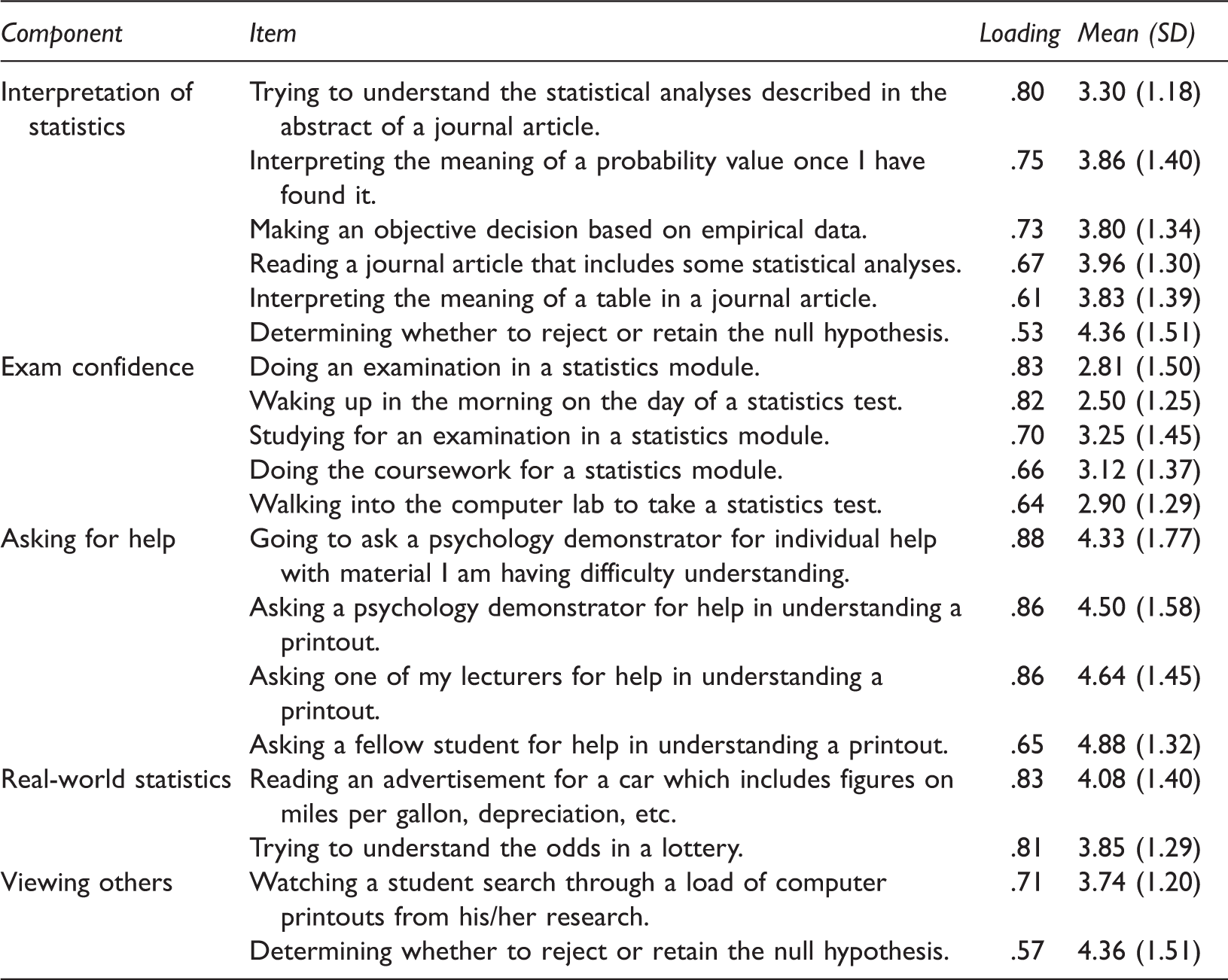
Component Loadings and Descriptive Statistics for STARS Items Adapted to Measure Confidence and Showing Only Items for Which There Were High Loadings (Over .50) on Each Component.
Experience
Experience of learning statistics was measured using 11 items. Seven were applicable to all students, and these were concerned both with prior expectations (‘I expected my degree to have the amount of statistics that it does’ and ‘I felt anxious or worried about learning statistics before my degree’) as well as the experience of learning statistics (‘I found the lectures to be enjoyable’ and ‘I avoided lectures about statistics’). These items were summed to create an ‘initial experiences’ scale (7 items α = .58). Four additional items were not relevant to first-year students as they were asked only to those students who had previously completed a statistics module (‘I enjoyed using SPSS in practical classes’). Together the 11 items were summed to form an ‘overall experiences’ scale (11 items α = .76).
Mathematical Knowledge
Knowledge was assessed using 12 questions based on the GCSE curriculum. GCSEs are compulsory qualifications taken by all school students at age 16 in the UK. Questions related to decimal places, percentages, algebra and probability. Each participant received a score out of 12.
Competence with statistics
Competence was measured using seven items asking about specific statistical tests (T-tests, Chi Square, correlations, non-parametric tests, ANOVA, regression, factor analysis, MANOVA and ANCOVA). Students were asked to rate their competence with each from 1 (not at all) to 7 (highly competent). A competence score was created by averaging the rating for each student based on the tests they had been taught so far in their programme (e.g. first-year students had not yet been taught about regression and so this was excluded from the calculation).
Analysis
To address aim one, Principal Components Analysis (PCA) was conducted on the modified items from the STARS scale. Correlations and regression analyses were used to address aims two and four. Mann Whitney tests were used to compare students with A-level Psychology with those who did not have A-level Psychology. Mediation using the PROCESS macro in SPSS (Hayes, 2012) was used to address aim five.
Results
Aim 1) to Explore the Measurement of Confidence Rather than Anxiety Using the STARS Scale Items and to Determine if a Similar Factor Structure Would be Obtained
PCA on the 23 items of the modified STARS questionnaire with mean substitution for missing values and a Varimax rotation identified five components explaining a total of 65.6% of the variance. Question loadings, means and standard deviations are shown in Table 1. In each case high scores correspond to higher levels of confidence. From now on we refer to the modified scale as ‘confidence’. There were similarities between the structures, in particular the same four items were loaded onto the factor of ‘asking for help’. Five of the original eight items pertaining to tests loaded onto the factor we named ‘exam confidence’. Six out of ten items relating to asking for help were the same as the STARS scale. However, we also found five items did not load highly enough onto any of the factors. Additionally we found two further factors with high loadings. ‘Real-world statistics’ contained two items both about using statistics in a real-world setting (relating to a car and the lottery). Two further items loaded highly together, but were not well linked (watching a student search through computer printout, and determining whether to reject or retain the null hypothesis – item 14, which was also included in the interpretation factor). The scale created by this fifth factor was thus not used in the subsequent analyses. The remaining four factors were used in the regression analyses. When all 23 items were combined into one total confidence variable for use in the mediation analysis the scale was highly reliable (nine items; α = .92).
Aim 2) to Explore Whether Confidence as Measured by the Adapted STARS Items is Related to Experience, Knowledge and Competence
Pearson Correlations between Confidence Scale Factors, Experience, Knowledge, and Competence.
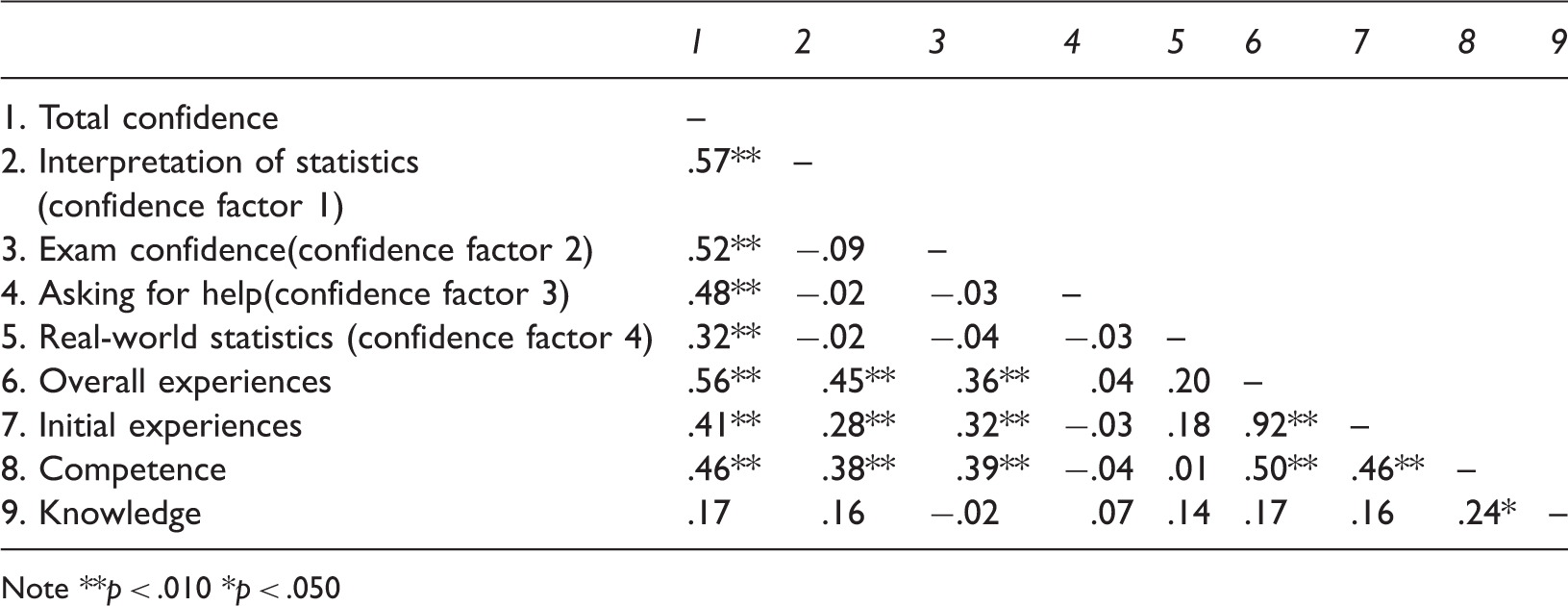
Note **p < .010 *p < .050
Aim 3) to Explore if There are Any Differences on These Outcome Measures between Students Who Previously Studied A-level Psychology and Those Who Did Not
There were no difference between students who did A-level or not on total confidence (U = 1004.5, p = .787, r = −.03) or experiences (U = 524.5, p = .954, r = −.01). However there was a significant difference on the measure of competence. Those who did A-level Psychology perceived themselves as significantly more competent than those who did not, with a small to medium effect size (U = 791, p = .030, r = −.22). However, when multiple tests are conducted there is an increased risk of obtaining a false positive result. One way of adjusting for this is to use a Bonferroni correction, which divides the accepted alpha value (usually .05) by the number of tests being conducted. In this instance there were three tests and thus this decreased the alpha level to .016. Thus the difference in competence scores could no longer be regarded as significant once this correction was applied.
Aim 4) to Explore Whether Confidence Predicts Perceived Competence Over and Above Experience and Knowledge
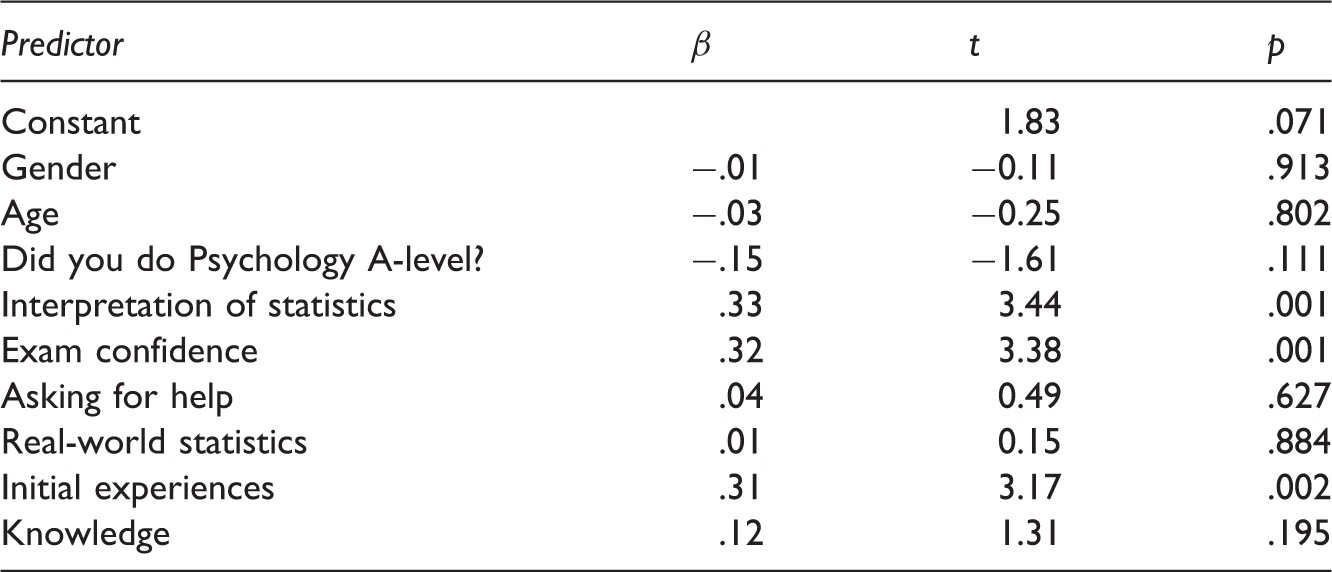
Results of Regression Model Predicting Competence from the Confidence Factors, Initial Experience and Knowledge, conçtrolling for Demographic Factors (N = 87).
Aim 5) to Explore if Confidence is a Mediator of the Relationship between Experience and Competence
To address aim five, the proposed mediation model was tested using the PROCESS macro in SPSS (Hayes, 2012). PROCESS is an add-on tool for SPSS, which uses the bootstrapping method to test estimated indirect effects. Mediation model four was used with experience as the predictor, the modified STARS scale as the mediator and competence as the outcome. The confidence intervals for the indirect effects were bias corrected and accelerated (BCa) based on 10,000 samples.
In the first model, we tested overall experience, which was significantly associated with confidence (path a; b = 1.26, p < .001). Confidence was significantly associated with competence (path b; b = 0.03, p < .001). The total effect (c path) of experience on competence was also significant (b = 0.08, p < .001). The direct effect (c’ path) of overall experience was reduced by including confidence as a mediator (b = 0.05, p = .003) but remained significant. There was a significant indirect effect of overall experience on competence through confidence, b = 0.03 BCa CI [0.01, 0.05]. This represents a large effect size (completely standardised effect size b = 0.24 BCa CI [0.07, 0.40]. This result indicates that confidence is significant partial mediator of the relationship between overall experience and competence (Figure 1).
Mediation Model of Overall Experience as a Predictor of Competence Mediated by Confidence. Confidence Interval for the Indirect Effect is a BCa Bootstrapped CI Based on 10,000 Samples (N = 60).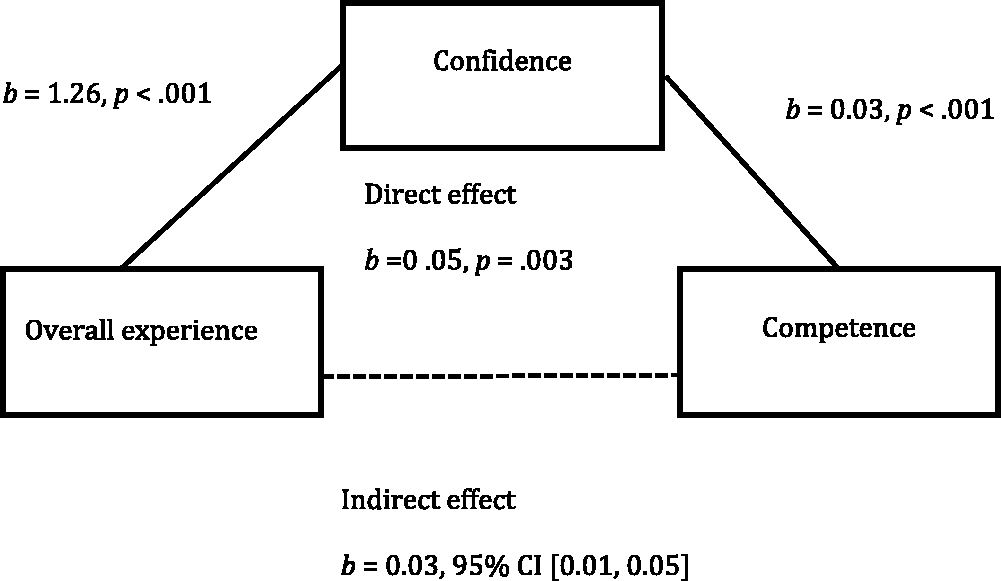
As overall experience excludes first-year students and results in a small sample size, we tested the model again with initial experiences as the predictor. Initial experience was significantly associated with confidence (path a; b = 9.43, p < .001). Confidence was significantly associated with competence (path b; b = 0.03, p < .001). The total effect (c path) of experience on competence was also significant (b = 0.79, p < .001). The direct effect (c’ path) of initial experience was reduced by including confidence as a mediator (b = 0.54, p < .001) but remained significant. There was a significant indirect effect of initial experience on competence through confidence, b = 0.25 BCa CI [0.10, 0.42]. This represents a large effect size (completely standardised effect size) b = 0.16 BCa CI [0.06, 0.27]. This result indicates that confidence is significant partial mediator of the relationship between initial experience and competence (Figure 2). The standardised effect size for initial experiences was smaller than for overall experiences indicating a greater mediation effect for the overall experiences measure.
Mediation Model of Initial Experience as a Predictor of Competence Mediated by Confidence. Confidence Interval for the Indirect Effect is a BCa Bootstrapped CI Based on 10,000 Samples (N = 91).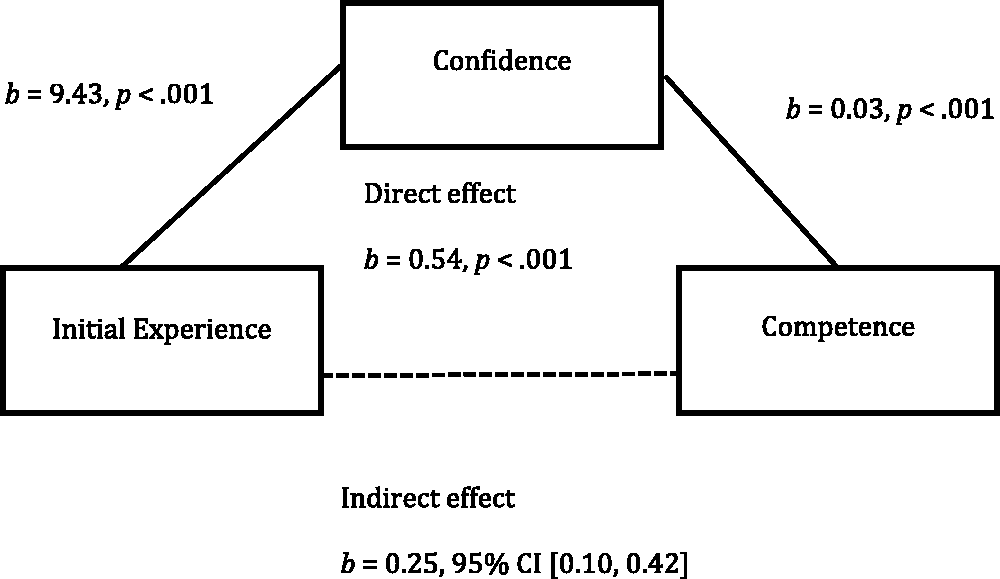
Discussion
The aim of this study was to explore the measurement of statistics confidence as opposed to anxiety, and how this measure related to experience, knowledge and competence. Our first aim was to explore the measurement of confidence rather than anxiety using the STARS scale items and to determine if a similar factor structure would be obtained. Our hypothesis that the structure would be similar was partially supported, with many items mapping onto similar factors as in Hanna et al.’s (2008) study. We then used four factors of confidence in our subsequent analyses. This finding indicates confidence can be assessed using similar items to anxiety. The mere measurement effect refers to the phenomenon of changing behaviours as a result of completing questionnaires about them (Godin et al., 2010). This powerful effect is testament to the need for caution when assessing statistics anxiety within students. We may unwittingly be creating a self-fulfilling prophecy by framing the topic in such a negative manner.
Our second aim was to explore whether confidence as measured by the adapted STARS items is related to experience, knowledge and competence. We hypothesised that higher levels of confidence would be related to higher scores on the other scales, and this was partially supported. However, confidence was not related to knowledge. The knowledge test involved mathematics and probability knowledge (GCSE level) not all directly related to statistics. It is possible a more relevant test (e.g. exams on statistics) would have shown a relationship.
In support of the reframing of the STARS scale to reflect confidence rather than anxiety, there are some similarities between the correlations found in the present study and those in the previous literature on SA. For example, the positive correlations between competence and the total confidence scale as well as the subscales about interpretation and exam confidence mirror findings showing these aspects are negatively related to performance in other studies (Hanna & Dempster, 2009; Onwuegbuzie & Wilson, 2003). We used Varimax rotation, which is orthogonal and therefore gave zero correlations between subscales (in the full sample) by design.
Only two factors (interpretation of tests and exam confidence) were significantly positively related to experience and competence. Exams are normal feature of student life and so these relationships may be unsurprising, but the fact these associations were present lends support to the reframing of the scale. Similarly, psychology students are often asked to interpret the result of tests for exams and lab reports, and they often find it challenging (Davies, Paltoglou, & Morys-Carter, 2015), so the difficulties they face presumably influence the extent to which they feel competent with statistics.
The third aim was to compare students who previously studied A-level Psychology and those who did not. We hypothesised that those with A-level Psychology would score more highly on all outcome measures, but this was not supported. There were no significant differences between students who have this previous qualification and those who did not. It is possible that some students have done A-level Maths, or another subject involving statistics, which equips them well for the statistics at university. It is also possible that the amount of statistics students study at A-level Psychology is not enough to give them an advantage (or at least, make them feel more confident with statistics). Our results support the decision of universities to not require A-level Psychology as a compulsory pre-requisite to study psychology at university.
Aim four was to explore whether confidence predicts competence over and above experience and knowledge. We hypothesised that knowledge, confidence and experience would be significant predictors of competence, but confidence would be the strongest predictor. However, knowledge was not a significant predictor. Two aspects of confidence (interpretation of statistics and exam confidence) alongside initial experiences were significant predictors, all with similar standardised coefficients.
Our final aim was to explore if confidence was a mediator of the relationship between experience and competence. The hypothesis that confidence would mediate this relationship was supported. Prior experience was expected to influence competence, as a positive experience of learning can often lead to better performance (Davies et al., 2015). However, this finding also highlights the importance of targeting the specific facets of statistics confidence in order to improve competence. It is important to note the small sample size reduced the ability to explore the subscales of confidence as multiple mediators, and this could be a focus for future studies.
How Can We Improve Confidence and Competence with Statistics?
From an educational perspective, the most important question is ‘how can we help students feel more confident and less anxious about statistics?’ Further experimental work could be conducted to explore predictors of statistics confidence. For example, there is some indication that the type of instructor is important regarding the extent to which students show SA. Williams (2010) used STARS to investigate the relationship between SA and the immediacy of the statistics instructor. Immediacy was manipulated as a between subjects variable, whereby tuition for one group included discussion of student concerns, humour and instructor sensitivity while the other group did not. Pre-test scores were included in the analysis as co-variates. The study found instructor immediacy explained 6% to 20% of the variance in the different dimensions of SA as measured by STARS. Presumably classes with high instructor immediacy led to a more enjoyable student experience, leading to positive prior experience with stats, and possibly lower SA. Future research could explore this factor in relation to statistics confidence.
Other teaching strategies could also be employed. For example, Chiou, Wang and Lee (2014) explored the extent to which ‘one-minute paper strategy’ reduces statistics anxiety and enhances learning in students in a university in Taiwan. They used a pre-test/post-test design in 77 undergraduate students studying for applied statistics courses, with half the class writing short answers on class content at the end of every session. This group scored higher in statistics tests and lower in statistics anxiety than the group that did not use this approach. This strategy may work because it contributes to confidence by building up skills step by step.
Limitations
Some of the limitations of the study include the relatively small sample and the students were drawn only from one university, as well as its cross-sectional design. The knowledge test was not entirely relevant to statistics learnt in psychology degrees and some questions were perceived as quite challenging. We did not assess performance via coursework or exam grades as this was not permitted for ethical reasons. We self-constructed the experience and competence scales, and further studies should try to employ appropriately validated measures. When comparing students who previously studied A-level Psychology with those who had not, it is important to acknowledge additional confounding factors. Some of the measures may have differentially impacted anxiety or confidence in the two groups. When developing this area of research further, this issue needs to be further explored.
Alongside addressing these limitations, the measurement of both statistics anxiety and statistics confidence together, in larger more diverse sample, is warranted in order that discriminant and convergent validity can be established. Furthermore, when comparing the two measures, it would be beneficial to assess exam and coursework performance alongside competence to understand whether there is a differential impact on student outcomes.
A further point to note is we did not obtain information from the students regarding specific learning disabilities, such as dyslexia. Previous research suggests students with dyslexia might have higher levels of maths anxiety than non-dyslexics, but levels of statistics anxiety are similar (Jordan, McGladdery, & Dyer, 2014). Thus, it may be informative to explore variations in statistics confidence between students who have specific learning difficulties, as different strategies may be needed to help them to feel more competent.
Conclusions
This study has shown that statistics confidence can be measured using an adapted version of the STARS scale, and the subsequent measure was related to experience and competence, but not knowledge. Two aspects of confidence (interpretation of statistics and exam confidence) alongside initial experiences were significant predictors of competence. Confidence was a mediator of the relationship between experience and competence. Future research should explore the links between statistics anxiety, statistics confidence and assessment performance, and also account for individual differences such as learning difficulties.
Footnotes
Acknowledgements
The authors are thankful to all the participants who took part in the study.
Declaration of Conflicting Interests
The author(s) declared no potential conflicts of interest with respect to the research, authorship, and/or publication of this article.
Funding
The author(s) received no financial support for the research, authorship, and/or publication of this article.
Statement of Contribution
All authors contributed to creation of the study, implementation, analysis and write up. All authors contributed to and agreed on the final manuscript