



Abstract
In this paper, we describe the advantages of an experiential training group, specifically conceived for psychology students, in which the goal was to activate reflection on the internalized social representations of professional identity. Our study showed the results of a pre-post comparison of a one-group intervention. It was aimed to demonstrate that group experiential learning is particularly useful in changing the basis of social representations and may contribute to the construction of a realistic image of both the profession and the professional identity. The research involved 88 students enrolled in a graduate program in clinical psychology. Before and after the experiential groups, students were asked to write a text starting from the prompt “becoming a psychologist.” These 176 texts provided the data used for this study. We carried out a text analysis using automatized software that provided hierarchical classification and factorial analysis of correspondences. The changes in the students’ representations of psychologists underline how participation in group experiential learning has allowed students to build a more realistic, less stereotypical and idealized vision of their future profession and created greater awareness of the limits of a training program based solely on the acquisition of theoretical notions. The data suggest the possibility of usefully practicing such learning activities in order to help students to reflect on their professional representations.
Keywords
Higher education (HE) is currently carried out following different learning methods (Moon, 2013). The more traditional and widely practiced method is the teacher-centered method (e.g., lecturing) based on the key role of the teacher, who purely transfers information to students without any participation and involvement (Brockbank & McGill, 1998; De Lay, 1996; Kayes, 2002; Kolb & Kolb, 2005). According to Dunn, Saville, Baker, and Marek (2013), this method seems partially ineffective in “producing the types of learning that are necessary to succeed in a rapidly changing world” (p. 6).
An important contribution to improvement of the teaching method in HE derives from psychology and by use of evidence-based teaching (EBT)—pedagogical tools and techniques carried out in an academic context that have shown through rigorous experimentation to promote learning in an effective way (Dunlosky, Rawson, Marsh, Nathan, & Willingham, 2013; Saville, 2010; Schwartz & Gurung, 2012). The testing effect, spaced learning, metacognition, interteaching, self-explanation, and rereading are some of the most important EBT techniques used in HE, which have been shown to produce effective learning outcomes (Dunn et al., 2013).
Another effective method is surely experiential learning. In this case, the teacher focuses on students and helps them build their skills by involving them in various activities and giving them the possibility to reflect upon such activities either individually or in groups (Quay, 2003; Schon, 1983; Yanow & Tsoukas, 2009). This method is partially inspired by reflective practice groups, a technique that provides a major method for professional and personal development (PPD) and for training of qualified self-reflective practitioners (Knight, Sperlinger, & Maltby, 2010).
According to Human (2008), experiential learning seems to be more effective when applied to future helping professionals (doctors, healthcare assistants, psychologists, social workers), who are required to develop self-reflective skills. As a matter of fact, an increasing number of training courses for helping professions use experiential learning. Students are actively involved through participation in interpersonal experiences that “enhance the practical understanding of the theories that are taught at the regular courses” (Nathan & Poulsen, 2004, p. 167) and contribute to personal growth and the development of a reflective approach toward their future profession (Corey, 2013; George & Christiani, 1990; Human, 2008).
The main difference between the experiential learning method and the EBT method is that the learning processes that take place through experiential learning do not have a primary and direct effect on the improvement of academic performance. This objective, although desirable, is not directly observable in an empirical way but only inferred. The increasing development of self-reflective skills can promote the construction of a strong professional identity, less unrealistically idealized or naive, which can become a motivating factor that helps the student to effectively manage the difficulties along the academic path (Johnson & Johnson, 2009).
Despite the differences between the two methods, experiential learning refers to some techniques of EBT. These include metacognition, which allows the students to be able to think critically about their thinking (e.g., regarding the representation of the professional; e.g., Briñol & DeMarree, 2012) and writing to learn to evaluate their self-skills in written expression as well as involves multiple activities that engage metacognitive processes (Berninger, 2012).
In this paper, we describe the potential benefits of an experiential learning method based on use of the “educational group” (Parcover, Dunton, Gehlert, & Mitchell, 2006) with the objective to facilitate the construction of a professional identity representation customized to the personality of each student. Our method, specifically conceived for psychology students, aims to provide a relational environment, which encourages reflection on professional identity. Attending this activity, students will face an educational experience which significantly differs from a lecture and where interpersonal confrontation leads them to explore different topics related to their disposition to becoming a psychologist.
The necessity of introducing this method within the studies course emerged after we observed how the students in their speech during the lessons were referring to an overly idealized or unrealistic image of the psychologist not coinciding much with the more concrete and realistic image proposed by the teachers, and this often caused confusion or a sense of failure. Specifically, in our experiential training group, we tried to facilitate among the students comparison and exchange of ideas, thoughts and images connected to the choice to become psychologists (Nathan, 2003). Subsequently, we tried to understand how these ideas, thoughts and images are, in turn, linked to the personal characteristics and the life stories of the participants (affective, cognitive, and social level) and to the basis for their representation of the psychologist’s role.
From this point of view, we found very useful some of the group analytic factors proposed by Foulkes and Antony (1965) and Pines (1984), used by Yalom with reference to group therapy (Yalom & Leszcz, 2005) and reinvented as important learning factors. We refer specifically to resonance (capacity of members of a group to collect and share the emotions of the other members without having to verbalize) and mirroring (the individual understands parts of himself through the image that is returned to him). Although these are therapeutic factors observed in therapeutic groups, we believe that they can be used in the training group work with students as well, when the aim is the construction of a more realistic professional profile.
According to our experience, we believe that, in many cases, a specific representation of the psychologist’s role is related to personal matters and dynamics that are not always verbalized. Through resonance, for example, the participants may help the other members to recognize what the personal experiences and emotions are that they have linked to this specific representation. At the same time, the students, through mirroring, can recognize in the verbalizations of the others the common aspects but also the differences, in terms of the motivations and processes involved in the choice to become psychologists. Both resonance and mirroring are considerable learning factors because they allow participants to become more aware of the distortion aspects of these processes that are often the basis of stereotypical or unrealistic images of the profession and fix them. Furthermore, with the helping role of the teacher/conductor, in the group experience, we also focus on the sociogenetic and cultural foundations of representations of the psychological profession.
From the 1960s onward, the theory of social representations has worked best to understand how and why social groups collectively build visions of their social environment. The social representations theory (Abric, 1976, 1994/2003; Moscovici, 1961) describes how individuals are imbued with social knowledge about the world, which they use to make sense of their environment. The concept of social representation refers to the skills, cognition, and beliefs that a particular social group constructs and uses daily whenever encountering objects that are part of their social reality (Jodelet, 1989; Moliner, 2001; Moscovici, 1961). Representations constitute the “knowledge bases” from which the process of social cognition would be drawn. The shared images that exist in one social group or society about psychology and the psychologist profession can have significant effects on attitudes toward learning and the interests of learners. These social representations are a particular manifestation of the general significance of representations in social life and interactions among social groups.
References to the concept of representation are becoming increasingly common in studies on languages and language learning and teaching (Castellotti & Moore, 2002), which state that representations and images of languages are relevant to linguistic and educational policy precisely because they play a central role in language learning processes and are malleable (such as Muller, 1998 and Perrefort, 1997). To the best of our knowledge, there are no similar studies in the field of psychology or on the psychological process of learning and teaching.
Learning specialists define social representations as a fundamental concept and have attempted to define and develop this idea from a specifically educational standpoint (Giordan & De Vecchi, 1987). Social representations are built in groups and are modified under the influence of the group/group’s membership of the subject. Py (2000) distinguishes between reference representations in the memory, which offer participants a point of reference, and functional representations, which are open-ended because they are constructed through interaction. Also, the “social knowledge” conveyed through the media and cultural objects contributes to the formation of social representations and social knowledge. It is possible to highlight differences between the social representations proposed by the media and the one individual who will be affected (Flament, 1994; Flament & Roquette, 2003; Guimelli, 1994).
Studies of representation agree on two observations. First, there is evidence (including discursive evidence) of a state of representation and of its evolution in specific contexts. Hence, (1) representations are flexible and changing, and can therefore be changed. (2) Second, representations are closely connected with learning processes, which they either enhance or hinder. Representation is consequently dual in nature, both static and dynamic (Doise, 1990; Jodelet, 1989).
According to social representations theory and in line with the definition of experiential learning, we state the presence of a marked discrepancy between the representation/image of the psychologist as presented by media and the one shared by the scientific and academic community. According to the social representation of psychology given by the media, anyone believed to possess strong empathic, listening and interpretational skills—to be simply strengthened through academic studies—may pursue the career of psychologist. In contrast with this, within the academic community is a common belief that the university should provide both theoretical and professional skills and tools for personal growth through active involvement in the learning process. This will substantially contribute to the construction of a realistic representation of professional identity, in line with personal inclinations and personality traits.
Our study aims to explore if the group experiential learning is particularly useful for changing the basis of social representations of helping professions and may contribute to the construction of realistic images of the professions’ identity, which is worthwhile for academia but also for future professional development. This research attempts to show the effectiveness of group experiential learning, which allows students to express and recognize their models of professional identity and to build more realistic representations of their profession. They would therefore be able to see their own educational growth as a more conscious intersubjective process of sense making. In particular, we hypothesized that before the group experiential learning, students had an idealized as well as naïve representation of the profession of psychologist, with very little awareness of what the job really entails (H1). Also, significant changes were expected to be produced after participation in group experiential training, resulting in more realistic representations and increased awareness (H2).
Method
Participants and Group Processes
This research involved 88 students enrolled in a Graduate Program in Clinical Psychology master’s course and who attended “experiential groups for the elaboration of professional identity”, as required by their curricula. All of the students were part of the same cohort, as all of them were pursuing a master’s degree in clinical psychology. The average age was 24.79 (SD = 3.59, ranging between 21 and 46), and 89% of them were women. Because the participants had not yet been admitted to practice, they had only carried out a few hours of traineeship and did not yet have direct experiences with clients as psychologists.
Before and after the experiential groups, the students were asked to write a text on their thinking about the profession of psychologist. The text writing was free; we did not give indications as to a minimum or maximum length to be respected, nor did we give a specific format and “guiding” questions to the drafting of the text. These 176 texts provided the data used for this study.
The course of the experiential group elapsed between the writing of the first and second texts, over a duration of eight sessions. During the groups, the participants experienced, with the help of a semi-directive conductor, a discussion about their collective representations of psychologists and psychological work. The reflective practice and metacognition technique, combined with a conduction method focused on associative communication, were developed to explore students’ representations of their profession and make them more realistic.
During the experiential group, we wanted to increase our ability to stay in groups and analyze the participants’ experiences and capacity, in relation with others, to understand and listen to their own and other people’s reactions and learn more about their own experiences in the group dynamic.
The teaching objectives were to promote the learning of social skills likely to involve the participants’ own personal resources, including their communication, listening, and empathetic attitude skills. One of the aims of the group was to increase the participants’ ability to interact with other participants to express their thoughts and opinions. This included the ability to listen, find their own time and their own space in the group, leave space for the expression of others, understand other’s difficulties and develop a cooperative and helping attitude. The experiential group was intended to open up knowledge and learning about specific relational methods in the professional work of psychologists as well as awareness of the specific tools of listening and dialogue, which are typical of the helping professions and clinical consultations.
The participants were divided into five groups, each of them meeting weekly for four hours plus a 30-minute break per session, for a total of eight group sessions (32 hours). The participants did not have a specific task at the operational level; it was a free and nondirective discussion group, in which the only input was the request to jointly reflect on the theme of professional skills.
Each group was composed of 15–18 members plus a conductor and two silent observers acting as recorders. The group’s leaders were university teachers with over 20 years of experience in clinical practice, they were recognized by students as “respected” figures but did not have a specific position of power in relation to the group process because the experiential learning did not include a final assessment or an examination, despite being essential to attend for the students to complete the course of their studies.
The observers were psychologists (the same for the entire duration of the group) involved in their personal professional training. We inserted two observers for each group in order to offer to more post-graduate students the opportunity to learn from practice and to be closely with professionals. They did not actively participate during the group sessions, but they took notes on the verbal and nonverbal aspects of interactions between group members and, during staff briefing, asked questions to the group’s leader on the group dynamics. We believe that the observers have had a positive influence on the progress of the group. Their presence was discussed with the participants during the first session, and their role was often challenged in the sessions, because the ability to observe have been recognized as key competences for psychologists.
Procedures and Data Analysis
A presentation meeting was held with the researchers in charge of the group’s experience to inform students of the group’s objectives. The students were told to write one text before and one after the experiential group starting from the hint “becoming a psychologist.” They were guaranteed that their personal data would be protected and only used for research purposes. The students signed informed consent. Several days before the start of the activities, they received an email with a description of the writing task to be sent to the researchers. This was repeated at the end of the study. Analyses of the texts produced were carried out using the IRAMUTEQ software (www.iramuteq.fr) (Ratinaud, 2009). This is free software produced by Pierre Ratinaud and a team from LERASS Laboratory of the University of Toulouse-Le Mirail that provides statistical analyses of texts (Alceste method) using the R interface (www.r-project.org).
First, all of the texts underwent descriptive statistical analysis. Afterwards, we divided the texts based on the groups that produced them and carried out descending hierarchical classification. The objective of this analysis was to sort the words into a partition of classes which were each homogeneous and as different as possible from one another.
This overlap between classes can be measured by χ2. The χ2 value for each occurrence indicates its high/low degree of belonging to a specific class, with the aim of researching, among all possible partitions in classes, the one that maximizes χ2 and therefore the extent to which every graphic form contributes to the differentiation of classes.
One advantage in using descending classification (e.g., over ascending clustering techniques) is robustness. Textual data matrices are “scarce matrices” (mostly constituted of zeros, since only a small part of the whole vocabulary is used in each sentence) and as such are very sensitive to artifacts. Several very similar sentences (e.g., using a fixed expression) will create a strong correlation that can “pull” an artifactual class. In the descending classification algorithm used by Alceste, such effects stay local and do not propagate to the whole analysis (Reinert, 1983, 1987, 1990).
Finally, new variables (namely, factors) have been identified by means of correspondences factorial analysis, a multivariate technique that can be applied to both numeric and text data and to any number of data points that detects associations and oppositions existing between data and measures their contribution to the total inertia for each factor. They briefly represent the information gained through the analysis of classes and provide a comprehensive representation of the semantic field that situates the relative positions of the classes and lexemes.
Results
Descriptive Statistics on the Global Corpus
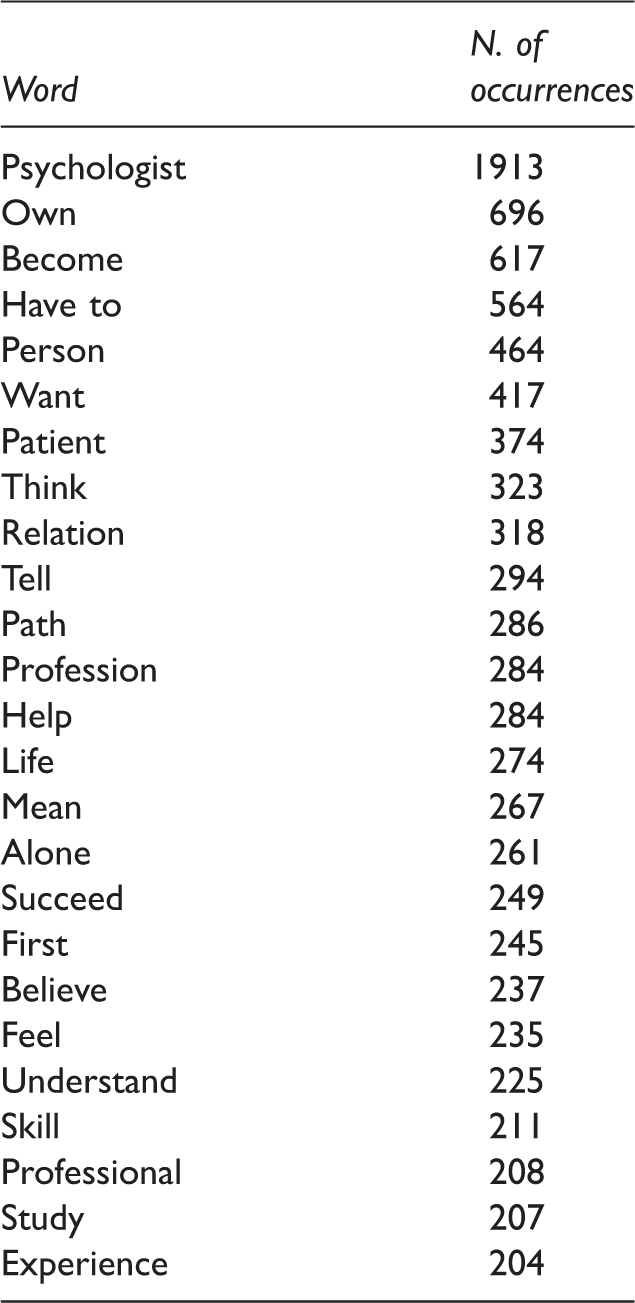
The number of hapax (words that occur only once in a text) was 2,480 (2.08% of occurrences, 41.78% of active forms). The type index/token ratio (TTR = 4.97) indicates that a colloquial and partially specific lexicon was used. This information is useful to show that the language used by students is not yet full of technical terms (which characterize the profession) but rather informal language that is not specifically characterized.
Results of Descending Hierarchical Analysis on the Global Corpus
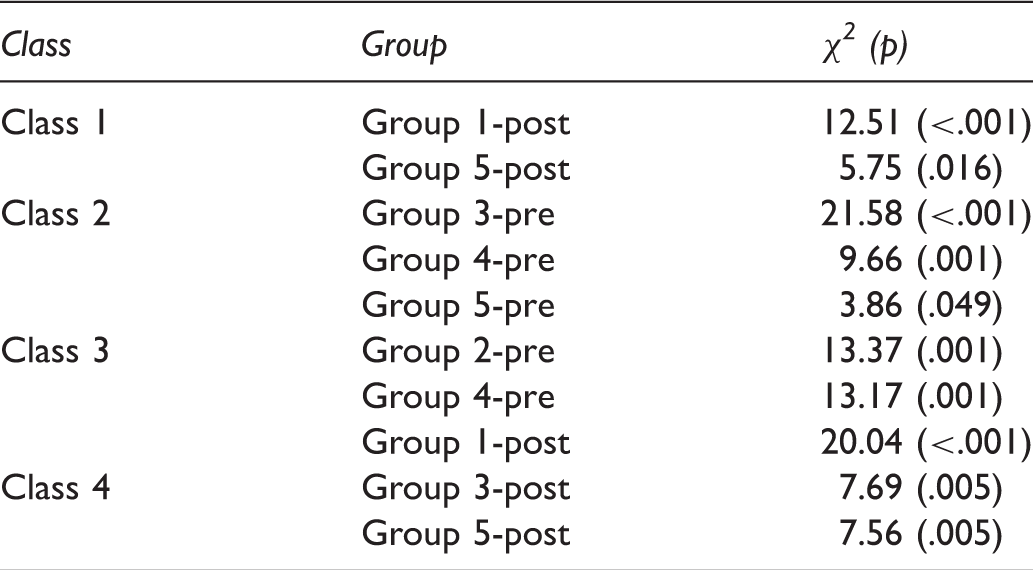
It is apparent from this table that there is a marked difference (in terms of χ2, and therefore in greater lexical similarity) between texts produced before and after the group experience. In fact, the texts produced before the group and those produced after the experience were grouped together more easily in the same classes. Classes 2 and 3 mostly collected the texts produced by the students before the group, while Classes 1 and 4 included more text material written after the group. This makes us think the group produced an effect that seemed to have modified the students’ representation of their profession and their sense of belonging to a particular professional identity. Additionally, there was a strong similarity between some of the groups, meaning that the participants shared the same process of professional growth, independently from the group they belonged to.
We could not identify a specific language for each group (otherwise, we would have between five and 10 different classes). Therefore, the groups cannot be considered as distinct “semantic units,” although they can be assimilated by stating that the underlying process, despite the differences between participants and presenters, was similar.
The analysis of the dendrogram (see Figure 1) and the value of the lexical class in relation to the corpus (expressed in percentage in the same figure) give a more detailed representation of the structure of classes and their connections, as previously mentioned, and help to better visualize this data. Indeed, we can see that the most of the connected classes refer to the same “phase” (before-/after-group experience) and that the texts produced by students belonging to different groups were grouped into the same classes, so we can say that the “pre-post” variable and not the “group” variable was predominant in the structuring of the classes.
Dendrogram give a detailed representation of the structure of classes and their connections.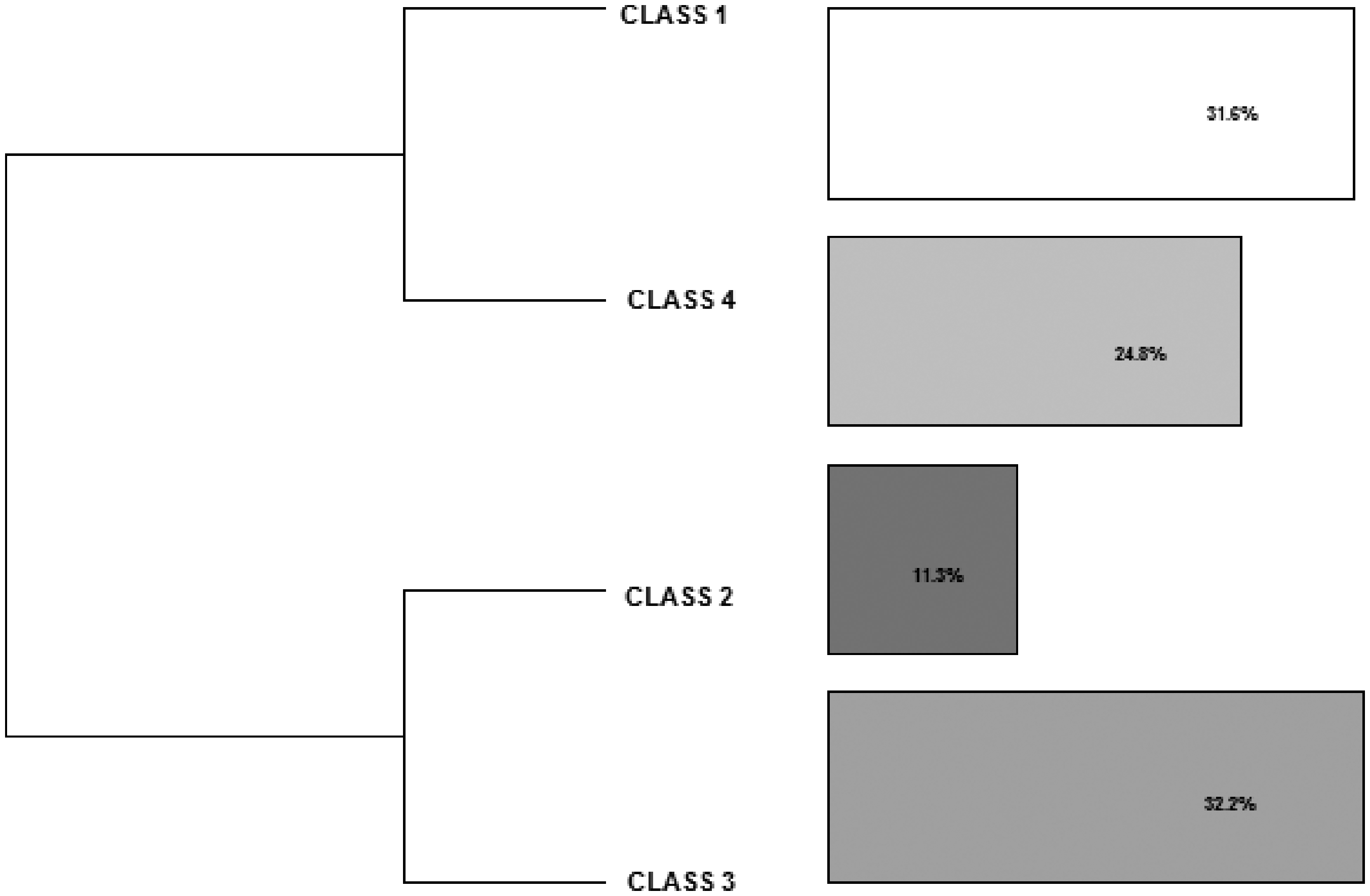
Results of the Factorial Analysis
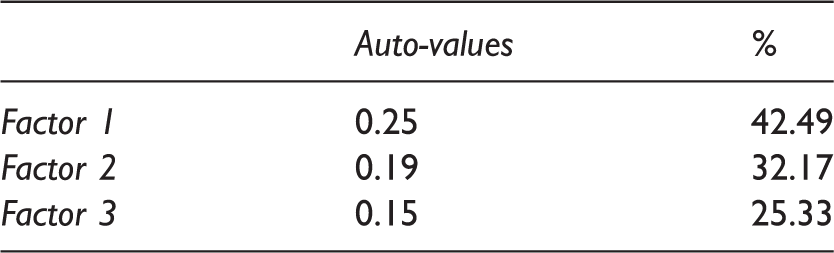
Based on the content of the classes (see Figure 2), it is possible to assume the existence of a first factor referring to the bipolarity between growing as/being a psychologist and a second one referring to the possible contents of the experience/profession and to knowledge or ability.
Factorial Analysis of Correspondences: organization and content of classes on the factorial plane.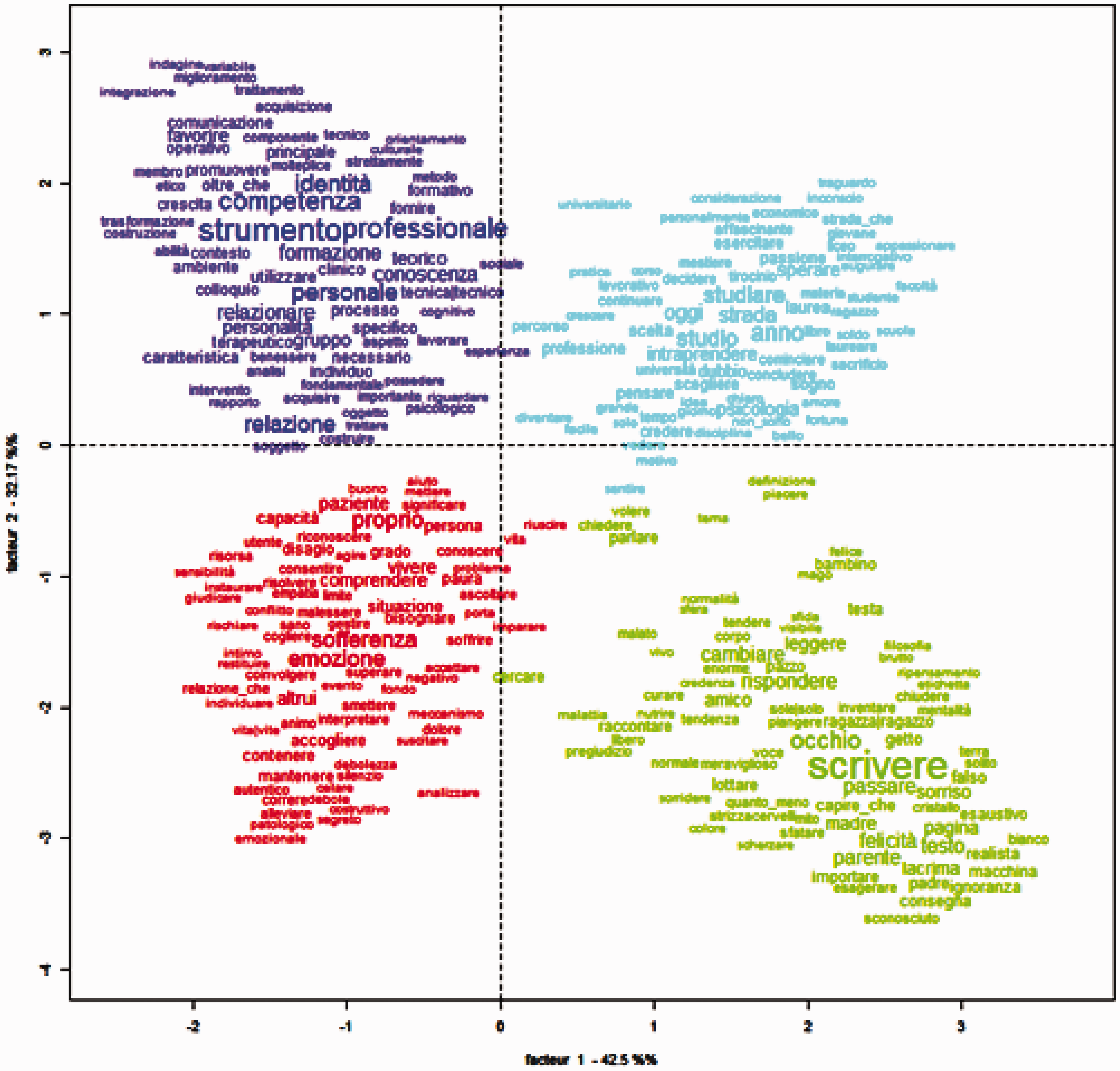
Referring to the first factor (vertical axis), we can state that the process of “becoming a psychologist” is therefore a balance between growing (in that it is necessary to gain skills, such as knowledge and competence) and being (it is necessary to be a certain kind of person, so becoming a psychologist can be considered a matter of waiting for social and institutional acknowledgment).
The second factor (horizontal axis) describes, albeit less markedly than the first one, the continuum between the more “relational” psychological profession (the belief that becoming a psychologist means to work using emotions and affects, regarding both client and psychologist) and the more “cognitive” one (the belief that becoming a psychologist means implementing the theories learned during the university course in the future specialist practice).
In observing the content of each class (with regards to the specific words produced) and the factorial structure, Figures 2 and 3 show that Class 2 seems to focus on an idea of a psychologist as having to deal with certain individual topics and personal dispositions as well as an idea of becoming a psychologist as a matter that does not require professional growth or skills development. For example, in this class, we found words like write, change, happiness, mother, tears, belief, and crazy. These words were used by students to express thoughts such as: I cannot write so much; in fact, I think that me groping for an answer is an understatement; it’s an experience that you live and cannot write, especially now that so many things have to be learned. Becoming a psychologist, for me, is to be able to change something in my life and also the lives of others, and taking responsibility for wanting this, and hopefully we can do that.
Factorial Analysis of Correspondences: position of classes on the factorial plane before and after attending the experiential group. Becoming a psychologist means being able to study, understand human behavior and the mental and affective processes that determine it and applying methods and tools, which should be applied with professionalism and dedication once studied. Only through a process of in-depth study will you be able to pursue this profession.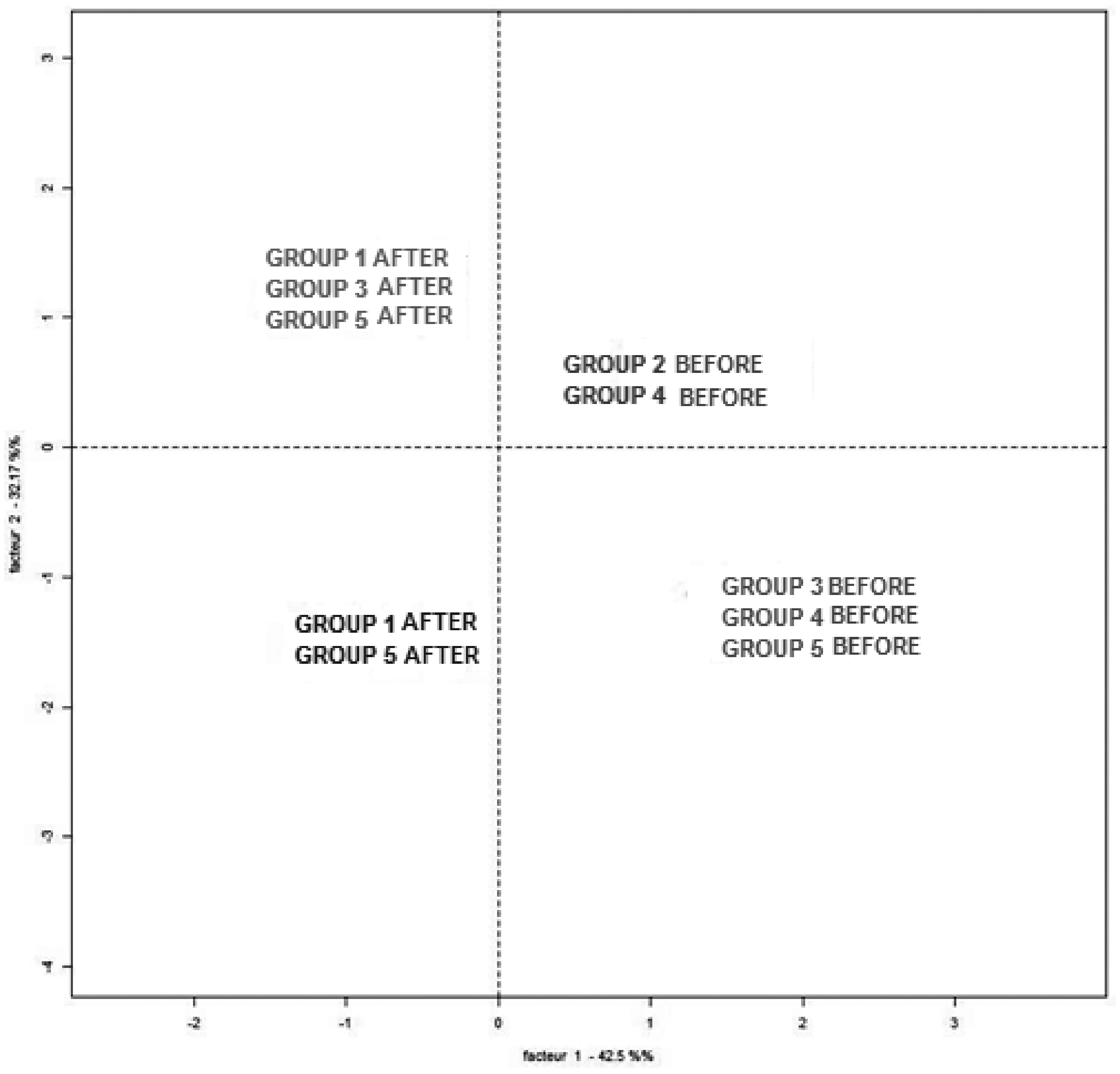
Class 1 seems to describe the emotive factors involved in the professional practice. In this area, we found those who, although permeated by a naive representation of “being” a psychologist (an expert based on “innate qualities”), developed an awareness through the group that training experience will help them to improve the abilities and qualities that they must have as a psychologist. For example, in this class, we find words like emotion, suffering, understand, accept, receive, hold, weaknesses, authentic, and empathy. These words were used by students to express thoughts such as: Becoming a psychologist means to stake themselves, their emotions, their experience and their personal suffering to understand and help the patient to deal with his problems; an introspective and reflective nature, interest in the psychological world—their own and that of others—and perhaps having lived in situations of suffering can lead to undertaking the course of study aimed at becoming a psychologist. Become psychologists is an important personal investment, and the vocational training coincides with the professional training; the psychologist became a training program that provides tools and strategies that are useful to the realization of a work of support and personal care that is professional. In parallel with this work, which is certainly tiring and challenging, one who follows the path to becoming a psychologist must also work on their personal identity. The psychologist must be able to recognize their own qualities, be able to act in the relationship and understand the dynamics that exist to know what is being done and experienced by all parties involved.
Finally, we observe that it is possible to find all of the texts produced before the experience in the right part of the factorial space, whereas all of the ones produced after the experience are in the left part (see Figure 3), suggesting that the most significant change for students occurred on the horizontal axis and was therefore related to the contents of their experience/profession. Instead, it seems more settled that (for some) an idea exists regarding an innate predisposition to certain aspects of the profession. At the beginning of the educational experience, the profession of psychologist was thought to be referred to specific issues, knowledge, and individuals, while later, experience, action, and emotions are also involved. The main trend was to order the classes from 2 to 4 (Class 4, indeed, shows a change of the representation that involved both factors traced)—that is, from “being born” as a psychologist to the acquisition of professional competence.
Discussion
As a result of the study, the changes in the representations of the psychologist’s role underline how participation in group experiential learning allowed students to build a more realistic and less stereotypical and idealized vision of their profession as well as a greater awareness of the limits of a training program based solely on the acquisition of theoretical notions. In short, in order to become a psychologist, it is necessary to deal with certain individual topics and personal dispositions (Class 2) and acquire knowledge during an educational path leading to professional practice (Class 3) but also to acquire skills and methods (Class 4) and be active in a training program that “scaffolds” the inner attitudes (Class 1).
The group experiential learning made it evident that the presence of personal qualities or abilities (such as sensitivity and/or empathy) is not enough to become a professional psychologist. More specifically, the evolution of participants’ representations of the profession that occurred during the experience affected both their personal and professional selves. On a personal level, we have evidence of a change from a vision in which the person is the foundation of the effectiveness and value of a professional intervention to a vision of the psychologist as someone it is possible to become only by following a specific educational program, with all of the hurdles that personal maturation involves.
On a professional level, our results show a change from an original vision of the psychological professional intervention as a “having value” itself, whose power of resolving problematic issues is not justified by a rigorous model that starts from predetermined assumptions to reach logical consequences. After the experience, such visions were replaced by another according to which the psychological profession may also be subject to limits and uncertainty.
The results also showed a change from the undefined initial vision to the coexistence of growth and knowledge; at the same time, action and intervention without consideration for growth have changed into the need to acquire professional competence to deal with emotions. More generally, data suggest the importance of proposing and practicing learning activities aimed at developing representations of the profession and professional identity that require the active participation of students in interpersonal experiences.
The main limitation of this study is its restriction to a single case study with one cohort, with a consequent reduction of the sample size. In addition, all the participants in the groups certainly had different cultural and personal backgrounds (personality, prior experiences), which could affect the approach of the group and introduce uncontrollable bias in the results. However, the methodology of analysis, the depth and richness of the analyzed texts allow us to propose our results as a useful perspective for those involved in experiential learning for psychologists and social workers. Another limitation is the specific context of application for our technique, which was specifically conceived for psychologists and only exploitable for social workers or helping professions.
It is important to underline that we use active learning and experiential practice with the unique aim of enabling students to develop awareness and effective professional knowledge about the psychologist’s role. Therefore, this method is not used to develop specific clinical-psychological abilities or skills.
We believe that in this phase of the students’ training, it is important for the students to work to understand how they have built their representation of the profession, from personal and social points of view. This will be the basis for continuing the academic education course in an efficacious way, while avoiding the risk of developing a sense of failure when the expectations in becoming psychologists are overly idealized.
A potential development of future research could provide an effective evaluation that demonstrates the effects of this method on academic results. Also, a comparison with students at the beginning of their degree program or with students at a postgraduate school will be useful to evaluate the long-term efficacy of experiential learning in changing the professional representations. There are clear implications for research of this kind that will allow for more structured guidance programs both before and after graduation.
Footnotes
Declaration of Conflicting Interests
The author(s) declared no potential conflicts of interest with respect to the research, authorship, and/or publication of this article.
Funding
The author(s) received no financial support for the research, authorship, and/or publication of this article.