




Abstract
The initial year of university is often a sensitive period for new students. Commencing students may lack the necessary skills and resources to adapt to unfamiliar learning environments. One intervention demonstrating academic benefits is Peer Assisted Study Sessions (PASS). PASS is a structured peer led study group where students collectively share knowledge and solve course-related tasks. To date there has been limited empirical exploration into how PASS enhances student performance outcomes. To amend this gap, the current study used both a cross-sectional (n = 264) and a matched longitudinal (n = 76) survey design, combined with PASS attendance and course performance data, to investigate three psychological mechanisms that may mediate these effects: increased academic engagement, a positive student identity, and increased statistics self-efficacy. Sampling a first-year psychology cohort enrolled in an introductory statistics course, both cross-sectional and longitudinal analyses found a positive relationship between PASS attendance and academic performance. Furthermore, self-efficacy mediated the relationship between PASS attendance and student performance.
The initial year of a university degree program can be a demanding period. Certain units generate heightened anxiety, have increased fail-rates, particularly for at-risks groups (e.g., minorities, first-in-family), and are known to affect university retention (Bronstein, 2008). This issue is one that universities globally are motivated to address. Universities implement various programs with the aim of enhancing first-year performance, such as the Peer Assisted Study Sessions (PASS) program (Dawson, van der Meer, Skalicky, & Cowley, 2014), also known as supplemental instruction [USA] and peer assisted learning [UK]. The PASS program is promoted to enhance student outcomes through such psychological and motivational mechanisms as increased academic engagement, a heightened sense of student identity, and course-specific self-efficacy. Empirical studies have demonstrated a cross-sectional and longitudinal association between PASS attendance and subsequent academic performance (Dawson et al., 2014; Miller, Oldfield, & Bulmer, 2012), yet no previous research to our knowledge has empirically tested mediation models. This study therefore aims to make two contributions to the PASS and higher education literature: Firstly, to provide a further empirical test of the relationship between a student’s PASS attendance and their academic performance and, secondly, to explore the psychological and motivational mediators of this relationship.
Peer Assisted Study Sessions and Academic Performance
PASS is a voluntary student-lead preventative intervention for difficult and demanding tertiary courses. Weekly PASS sessions consist of small groups of undergraduates led by one or two senior students, who receive training in PASS administration and non-directive leadership practices (Dawson et al., 2014). PASS differs from previous support programs: rather than simply teaching content, student-leaders empower attendees through facilitated group discussion and activities regarding course-specific learning objectives and general academic skills (Dawson et al., 2014; Miller et al., 2012). Based on the social-constructivist approach, PASS supports the collective sharing of knowledge through facilitated group discussion, thus promoting active engagement with the learning process rather than passive knowledge absorption (Miller et al., 2012; Ning & Downing, 2014).
PASS employs a pedagogical framework similar to cooperative learning programs; however, it differs in that student outcomes are not mutually reliant on the success of other students (students are individually assessed; Millis, 2012). In contrast to traditional instruction, these cooperative learning approaches offer several advantages. Groups engage in reciprocal learning, developing skills in questioning, speculating, justifying, and explaining content (Cohen, 1994; Kumpulainen & Wray, 2002). In addition, attendees benefit from exposure to deep learning strategies (Ribera, BrckaLorenz, & Ribera, 2012), critical thinking (Martin & Arendale, 1992), cultural diversity (Ribera et al., 2012), and a deeper professional affiliation (Miller et al., 2012). However, PASS attendance is often conceptualized as a dichotomous or ordinal variable, which may be problematic when testing the attendance–outcome relationships (McCarthy, Smuts, & Cosser, 1997); therefore, this study will operationalize attendance as a continuous variable. Despite this limitation, both quantitative and qualitative investigations have empirically demonstrated support for the positive effects of PASS attendance on student performance (Martin & Arendale, 1992; Miller et al., 2012; Topping, 1996). Furthermore, a recent systematic review of PASS-related interventions found support for benefits of attendance on course grades (Dawson et al., 2014).
Hypothesis 1. PASS attendance will be positively related to improved student performance.
Mediating Mechanisms
Although empirically testing the effects of a program is important, equally important is to research the processes through which programs generate these effects. Previous studies have recognized the additional benefits of attending peer led intervention programs, such as increased engagement (Ribera et al., 2012), positive student identity (Dobbie & Joyce, 2009), and increased self-efficacy (Chester, Burton, Xenos, & Elgar, 2013); yet, few empirical studies have vigorously measured these outcomes or investigated how these variables mediate the relationship with academic performance. This study will empirically examine the relationship between PASS attendance and increased academic performance, mediated by academic engagement, student identity, and statistics self-efficacy. It is worth noting that each of these variables can be conceptualized as either a state or a trait; in the current study, each is conceptualized and measured as a state, and thus is malleable. Furthermore, each variable will be targeted to the academic/statistics context, thereby recognizing the changes that can occur over a semester.
Academic Engagement
Academic engagement can be defined as positive feelings of motivation, fulfillment, psychological presence, and personal commitment to educational outcomes (Schaufeli, Salanova, González-Romá, & Bakker, 2002). According to Sonnentag, Dormann, and Demerouti (2010), exploring engagement as a state-based construct is particularly worthwhile as engagement has been demonstrated to change over days and weeks. Academic engagement has been linked to many beneficial outcomes, including persistence (Chester et al., 2013), personal growth (Lester, Leonard, & Mathias, 2013), deep learning approaches (Lizzio & Wilson, 2010), university commitment (Salanova, Schaufeli, Martínez, & Bresó, 2010), and academic performance (Kuh, Kinzie, Buckley, Bridges, & Hayek, 2006; Pintrich & De Groot, 1990).
Although PASS encourages student engagement and involvement through collective learning processes, few studies have empirically tested these relationships or adopted subjective state-based psychological measures of engagement. Student-organized study group participation significantly increases academic engagement; however, the informal nature of these groups curtails generalization to the official PASS paradigm (Kuh et al., 2006). Additional resource availability (such as peer-mentoring programs) has also been linked to enhanced student academic engagement (Salanova et al., 2010). While empirical studies attest the link between student engagement and academic performance (Pintrich & De Groot, 1990; Salanova et al., 2010), research is yet to investigate the unique role of student engagement as a mediator of the PASS–performance relationship.
Hypothesis 2. Academic engagement will mediate the relationship between PASS attendance and student performance.
Positive Student Identity
PASS may also support academic performance through enhancing attendees’ sense of student identity. Student identity refers to the extent to which an individual perceives themselves as belonging to a positively stereotyped student in-group, predicated on specific academic behaviors, knowledge, and attitudes (Burke & Reitzes, 1981). While investigating student identity and first-year success, Lizzio (2006) developed the five senses of success framework to enable measurement of this construct. The Five Senses of Successful Transition model aggregates four “senses”: connectedness (positive relationship with students and institution); resourcefulness (availability and access to school resources); purpose (perceived value of student goals); and capability (perceived ability to attain goals), which are combined to represent the fifth, global sense of student identity (Lizzio, 2006; Lizzio & Wilson, 2010). While student identity is formative during the first year of tertiary study, it also continues to develop throughout a degree program, as student identity will mature from undergraduate to graduate identity (consisting of unique norms and beliefs), towards a stable self-categorized professional identity (Burford, 2012; Wilson & Lizzio, 2011).
The relationship between positive student identity and academic success has been supported (Burke & Reitzes, 1981; White, O'Connor, & Hamilton, 2011). Proposed mechanisms for this effect include increased motivation, persistence, help seeking behaviors (Bong & Skaalvik, 2003), perceptions of education quality (Miller et al., 2012), organizational commitment (Demetriou & Schmitz-Sciborski, 2011), and a sense of connectedness (Scanlon, Rowling, & Weber, 2007). Lastly, White and colleagues (2011) showed that internalization of student identity norms led to increased persistence and commitment to proactive student behavior. In a recent qualitative investigation of the five senses of success among midwifery students, it was found that early practical experiences, opportunities to develop relationships, and programmatic values were influential in developing student’s sense of success and student identity (Sidebotham, Fenwick, Carter, & Gamble, 2015).
The relationship between PASS attendance and student identity is seldom investigated. However, research has linked attending peer study groups to similar psychosocial constructs, including social development, academic self-concept (Ginsburg-Block, Rohrbeck, & Fantuzzo, 2006), team cooperation (Cohen, 1994), academic agency (Ning & Downing, 2014), and positive attitudes towards education (Dobbie & Joyce, 2009; Ning & Downing, 2014). Similarly, it is expected that as PASS attendees collectively overcome adversity students will develop feelings of connectedness between other attendees and the educational institution, leading to a heightened sense of positive student identity (Chester et al., 2013; Dobbie & Joyce, 2009). In addition, as PASS leaders are selected from academically successful “model” students, they are ideally situated for implicit communication of positive student norms and behaviors. Based on the collaborative nature of PASS, it is proposed that as students collectively overcome scholastic adversity they also foster a sense of cultural connectedness between other attendees and the educational institution, which enhances positive student identity (Chester et al., 2013; Dobbie & Joyce, 2009). Since the five senses is a relatively recent model, explicit quantitative investigation is limited; however, as it is largely developed over the first-year experience it is ideally suited to the current study. Therefore, this study will investigate how PASS attendance is related to an increased sense of student identity, which in turn mediates the positive effects of PASS attendance on academic performance.
Hypothesis 3. Student identity mediates the relationship between PASS attendance and student performance.
Statistics Self-efficacy
The positive relationship observed between PASS attendance and student performance could also be explained through increased statistics self-efficacy. Statistics self-efficacy refers to beliefs that with sufficient effort a student can actively solve a given statistical problem or achieve desired outcomes (Pintrich & De Groot, 1990). Self-efficacy can be measured as a motivation trait or motivational state (Chen, Gully, & Eden, 2001), and is often measured as a context-specific variable (Bandura, 1997). Furthermore, state-specific self-efficacy has been demonstrated to change both naturally and due to intervention (Ouweneel, Schaufeli, & Le Blanc, 2013). Previous research has explored the beneficial effects of self-efficacy on learning outcomes (Kuh et al., 2006; Pintrich & De Groot, 1990). Highly efficacious students demonstrate increased motivation, persistence, and performance (Kuh et al., 2006; Pintrich & De Groot, 1990; Richardson, Abraham, & Bond, 2012).
Although critical to success, first-year students often underutilize self-directed learning approaches (Simeoni, 2009; Topping, 1996). Through guided discussion and attributional feedback, PASS student-leaders can promote efficacy in self-directed learning practices (Demetriou & Schmitz-Sciborski, 2011; Topping, 1996). Attendees learn that in lieu of prescriptive teaching they can take responsibility for learning, generating an internal locus of control for educational outcomes (Kuh et al., 2006). Academic self-efficacy is rapidly formed during the first year; hence, targeted interventions can produce positive effects that persist throughout the individual’s academic career (Richardson et al., 2012).
The relationship between PASS attendance and student self-efficacy may be explained through vicarious learning (Fayowski & MacMillan, 2008; Schunk, 1986). Vicarious learning occurs when problem solutions are modeled for an observer (Schunk, 1986). This implicitly generates efficacious cognitions that replicating the observed process will affect similar outcomes (Schunk, 1986). Research found that vicarious learning is most effective when the model is perceived as academically comparable, with a competence matching or slightly above the observers (Bong & Skaalvik, 2003; Schunk, 1986). PASS student-leaders fulfill this criterion; being students who are only slightly beyond the observer’s current skill level, they are ideal for modeling effective problem solving, thereby assisting the development of statistics self-efficacy (Fayowski & MacMillan, 2008; Schunk, 1986).
Hypothesis 4. Statistics self-efficacy mediates the relationship between PASS attendance and student performance.
Method
Participants and Procedure
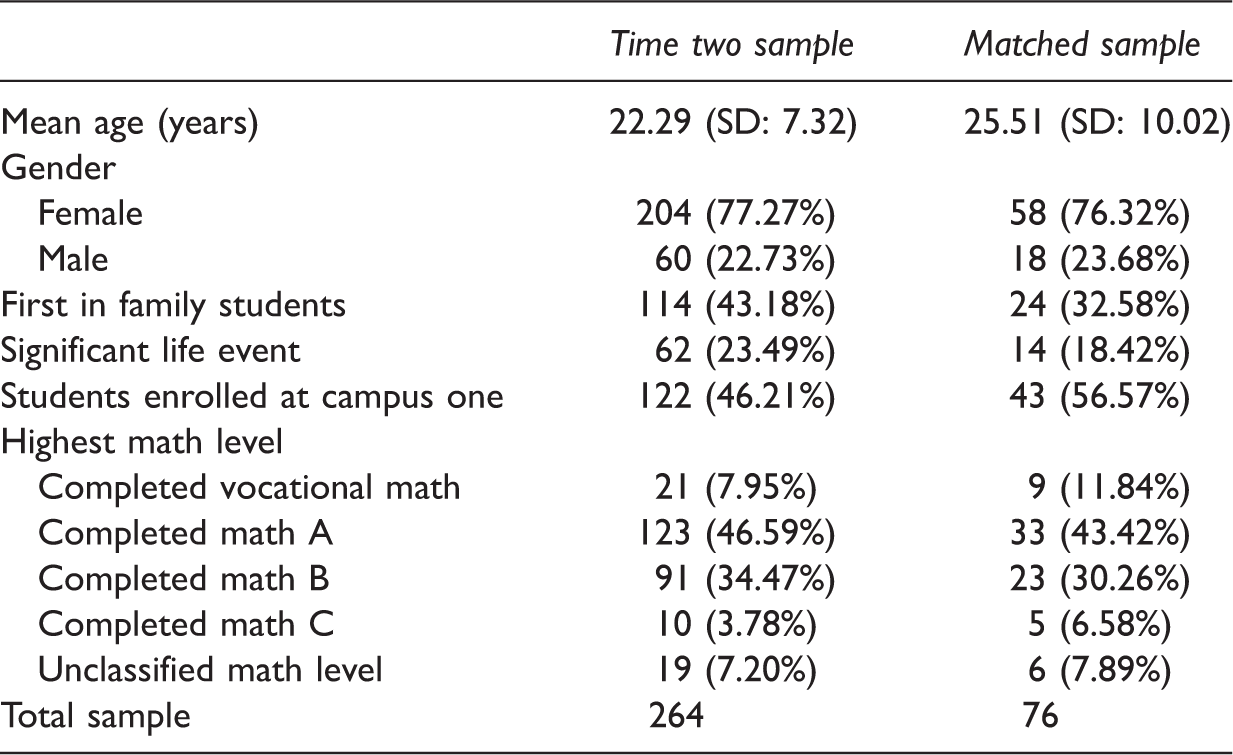
First-year psychology students enrolled in an introductory statistics course across two campuses participated in the study. Survey measures were administered at the start (teaching weeks 2–4) and end of semester (weeks 12–14). Of these, 239 completed the survey at Time 1 (T1) and 264 valid responses were completed at Time 2 (T2), of which 76 participants were matched between T1 and T2. Surveys were completed electronically via the university subject pool; questionnaires took approximately 20 minutes to complete. Survey completion was rewarded with course credit towards two introductory psychology courses.
Demographics
Frequencies for Age, Gender, First in Family, Significant Life Event, Campus Enrolled, and Math Level Attained
Cronbach’s Alpha Statistics for Academic Engagement, Student Identity, and Statistics Self-efficacy, at Time 2 and Matched Sample
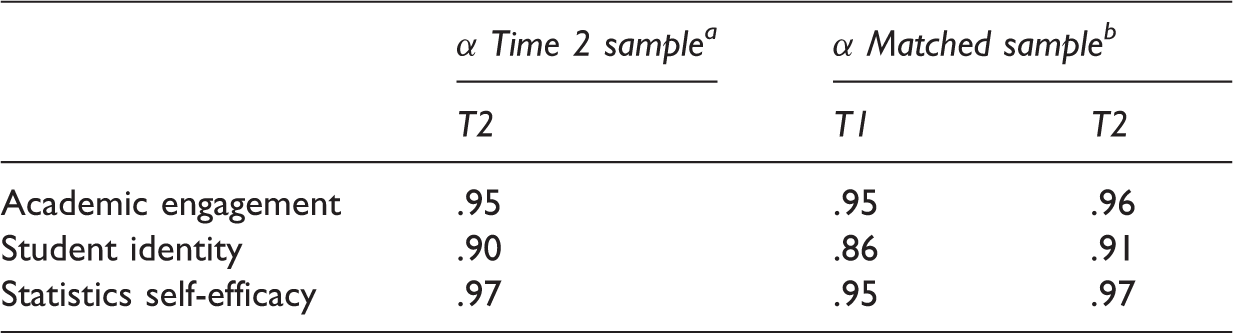
Note: an = 264; bn = 76.
Measures
PASS attendance
PASS attendance was collected by student-leaders each week. Attendance was then matched to participant survey responses using student identification numbers. Attendance scores ranged from zero to 12 sessions; the average PASS attendance at T2 was two sessions (M = 1.84, SD = 3.21) and an average of three sessions attended amongst the matched sample (M = 2.90, SD = 3.83). To better describe attendance, central tendency means were also calculated excluding PASS non-attendees (i.e., those who attended zero sessions); this produced an average attendance of five sessions at T2 (n = 99, M = 4.90, SD = 3.54) and five to six sessions for the matched sample (n = 39, M = 5.64, SD = 3.62). This attendance distribution was expected and is representative of other voluntary programs (Fayowski & MacMillan, 2008). Following the recommendations of McCarthy et al. (1997), attendance was not grouped into ordinal or binary categories, but instead was recorded as a continuous variable.
Academic performance
Course assessment marks were collected from the course convener and converted into a percentage of the maximum possible score for the introductory statistics subject (T2 sample, M = 60.65 SD = 14.15; matched sample, M = 67.46, SD = 14.36). These results were matched to participant PASS attendance and survey responses.
Academic engagement
Academic engagement was measured through the student version of the work engagement scale (UWES-S) constructed by Schaufeli and colleagues (2002). Participants rated how often they had feelings that matched each item (0 = never, 7 = always [everyday]); examples include “When I’m doing my work as a student, I feel bursting with energy.” The measure consists of 17 items that form three student engagement subscales, aggregated to form a global measure of academic engagement, which has demonstrated acceptable internal consistency (α = .73–.84; Schaufeli et al., 2002). Reliability coefficients for the current sample(s) are displayed in Table 2.
Student identity (five senses of success)
Positive student identity was assessed via the five senses of success model (Lizzio, 2006). The five senses model consists of four subscales (connectedness, capability, purpose, and resourcefulness) containing 27 items; these are averaged to represent a consolidated sense of student identity. Students self-reported their agreement to each item using a five point Likert scale (1 = strongly agree, 5 = strongly disagree). Example items include “I have a clear sense of why I am attending university.” Previous research demonstrated good internal consistency for the four subscales (connectedness, α = .91; capability, α = .93; purpose, α = .89; and resourcefulness, α = .93) and the aggregated student identity score (α = .75; Lizzio, 2006; Smith & Burton, 2013).
Statistics self-efficacy
Statistics self-efficacy was measured using the nine self-efficacy items from the Motivated Strategies for Learning Questionnaire (MSLQ) developed by Pintrich and De Groot (1990). Participants were asked to think about the first-year statistics course (motivational state-based self-efficacy) and rated how accurate each statement was regarding their individual and comparative self-efficacy (0 = not at all true of me, 7 = very true of me). For example, “I know that I will be able to learn the material for this class.” Previous research found excellent internal consistency for this subscale (α = .92; Cook, Thompson, & Thomas, 2011).
Control variables
Control variables were selected based on theoretical relationships to academic performance outcome (Becker, 2005). Controls utilized included age (Bean & Metzner, 1985), gender (Schram, 1996), the occurrence of a significant life event during the semester (Bean & Metzner, 1985), and the highest level of math achieved (Kuh et al., 2006).
Results
Data Analysis
Cross-sectional and longitudinal analyses
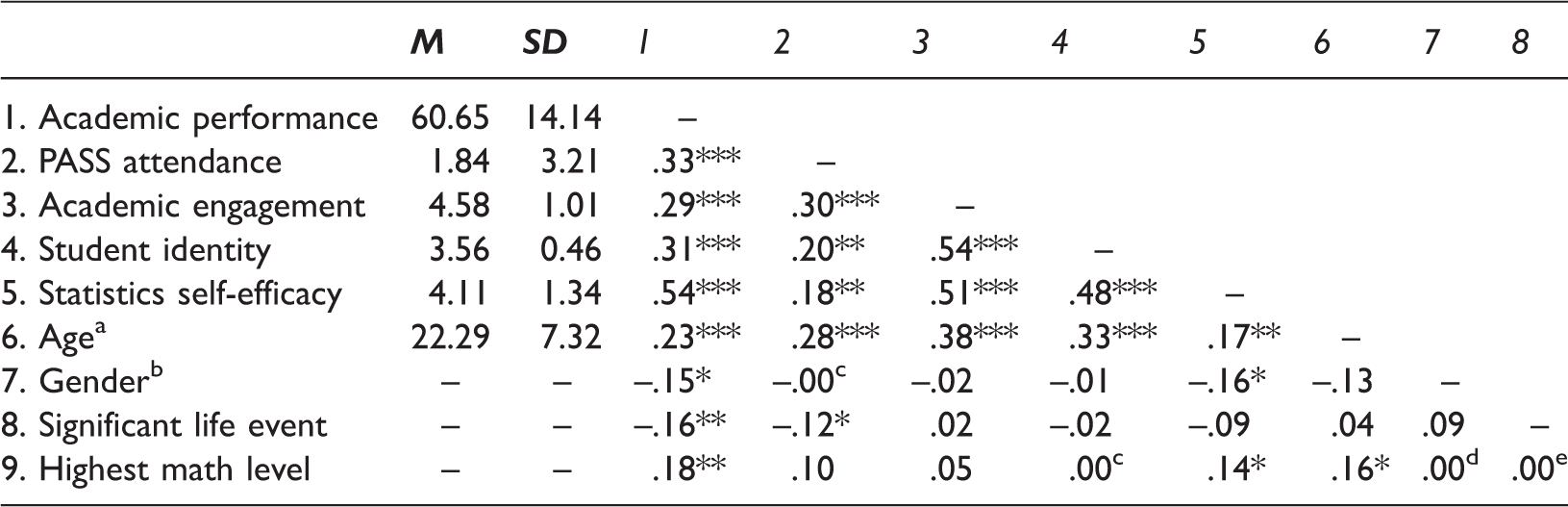
Means, Standard Deviations, and Zero-order Correlations for Dependent, Independent, Mediating, and Proposed Control Variables
Note. n = 264, highest math level coded as 1 = vocational math, 2 = math A, 3 = math B, 4 = math C, 5 = other.
Units are in full years, bgender coded 0 = male, 1 = female, c = ± .002, d = .004, e = –.005.
p < .05; **p < .01; ***p < .001.
PASS = Peer Assisted Study Session.
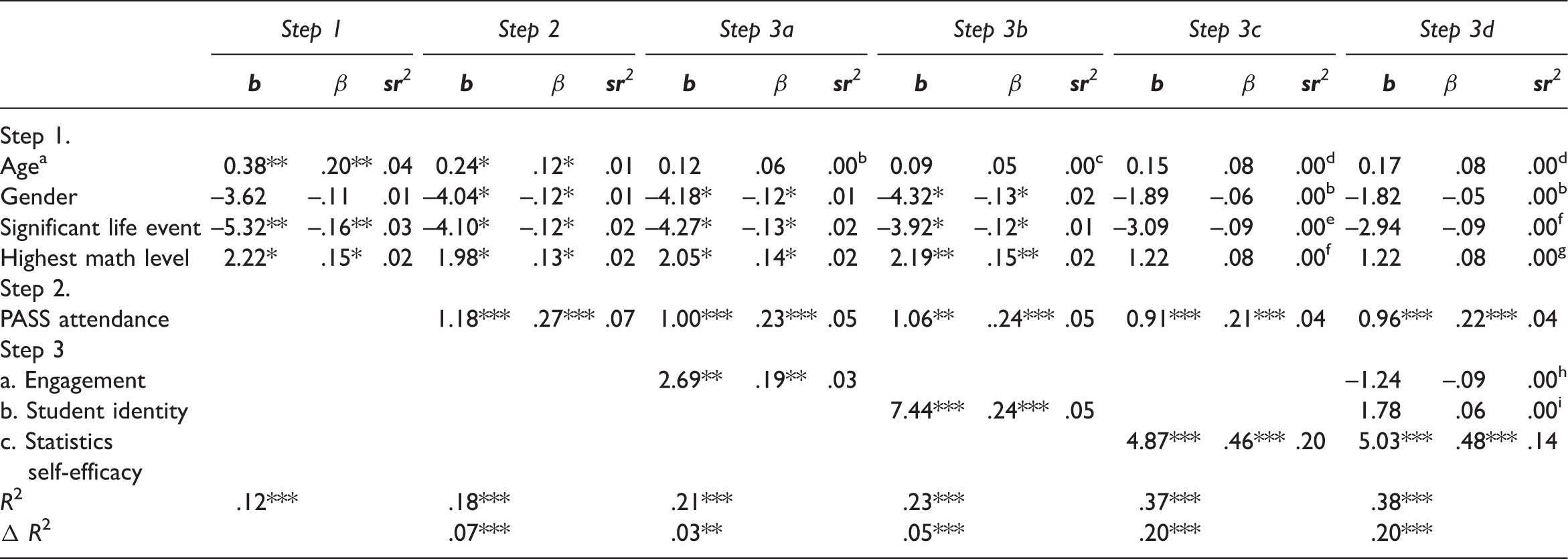
Results of Hierarchical Regression Analyses of Peer Assisted Study Sessions (PASS) Attendance, Engagement, Student Identity, and Academic Self-efficacy on Academic Performance Controlling for Age, Gender, Significant Life Events, and Highest Math Level Completed
Note. n = 264. R2 Step 1, 95% CI [.04, .19], R2 Step 2, 95% CI [.10, .26], R2 Step 3a, 95% CI [.13, .30], R2 Step 3b, 95% CI [.14, .32], R2 Step 3c, 95% CI [.28, .46], R2 Step 3d, 95% CI [.29, .47].
Units are in full years, bactual value = .003, cactual value = .001, dactual value = .005, eactual value = .008, f actual value = .007, gactual value = .006, hactual value = .004, iactual value = .002.
p < .05; ** p < .01; *** p < .001.
Means, Standard Deviations, and Zero-order Correlations for Dependent, Independent, Mediating, and Proposed Control Variables
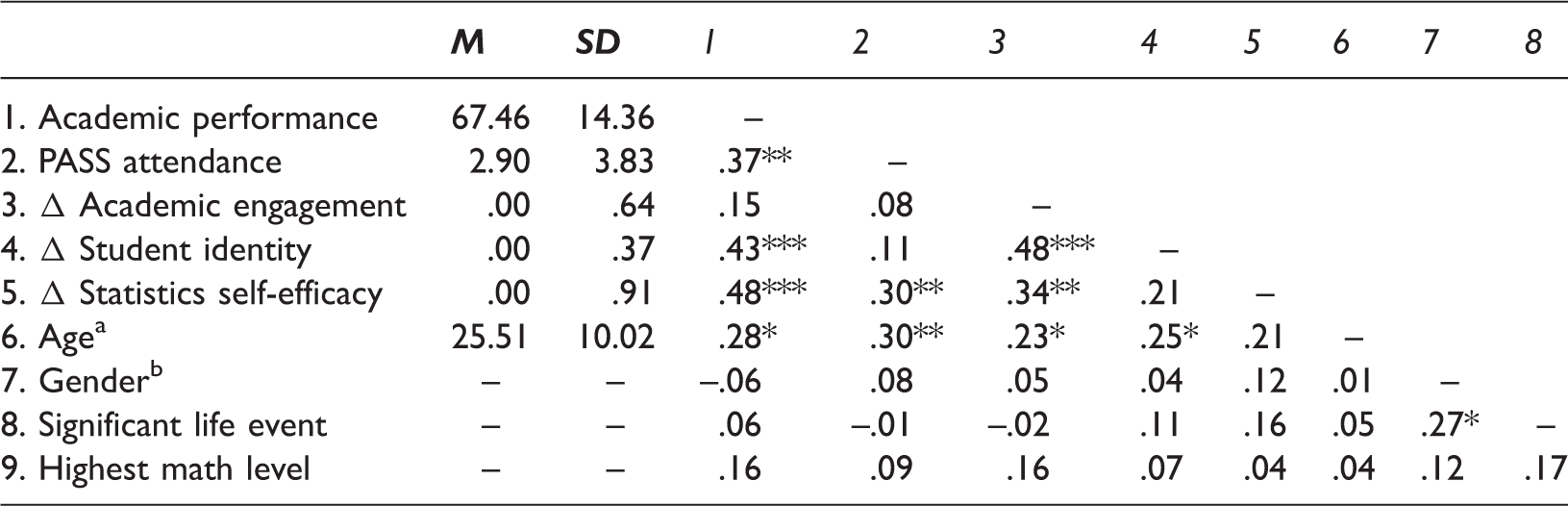
Note. n = 76, highest math level coded as 1 = vocational math, 2 = math A, 3 = math B, 4 = math C, 5 = other.
Units are in full years, bgender coded 0 = male, 1 = female.
p < .05; **p < .01; ***p < .001.
PASS = Peer Assisted Study Sessions.
Results of Hierarchical Regression Analyses of Peer Assisted Study Sessions (PASS) Attendance, Change in Engagement, Change in Student Identity, and Change in Statistics Self-efficacy on Academic Performance Controlling for Age, Gender, Significant Life Events, and Highest Math Level Completed
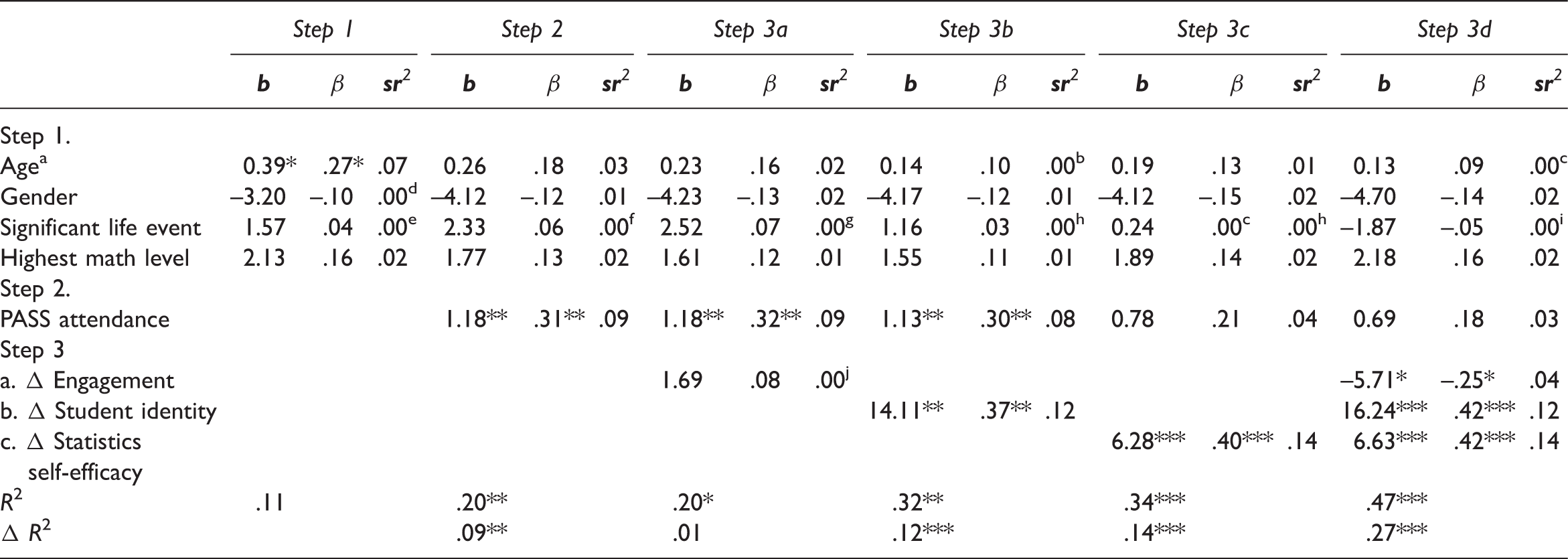
Note. n = 76. R2 Step 1, 95% CI [–.03, .21], R2 Step 2, 95% CI [.05, .35], R2 Step 3a, 95% CI [.05, .35], R2 Step 3b, 95% CI [.16, .48], R2 Step 3c, 95% CI [.18, .50], R2 Step 3d, 95% CI [.33, .61].
Units are in full years, bactual value = .007, cactual value = .006, dactual value = .008, eactual value = .001, factual value = .003, gactual value = .004, hactual value < .001, Iactual value = .002, jactual value = .005.
p < .05; **p < .01; ***p < .001.
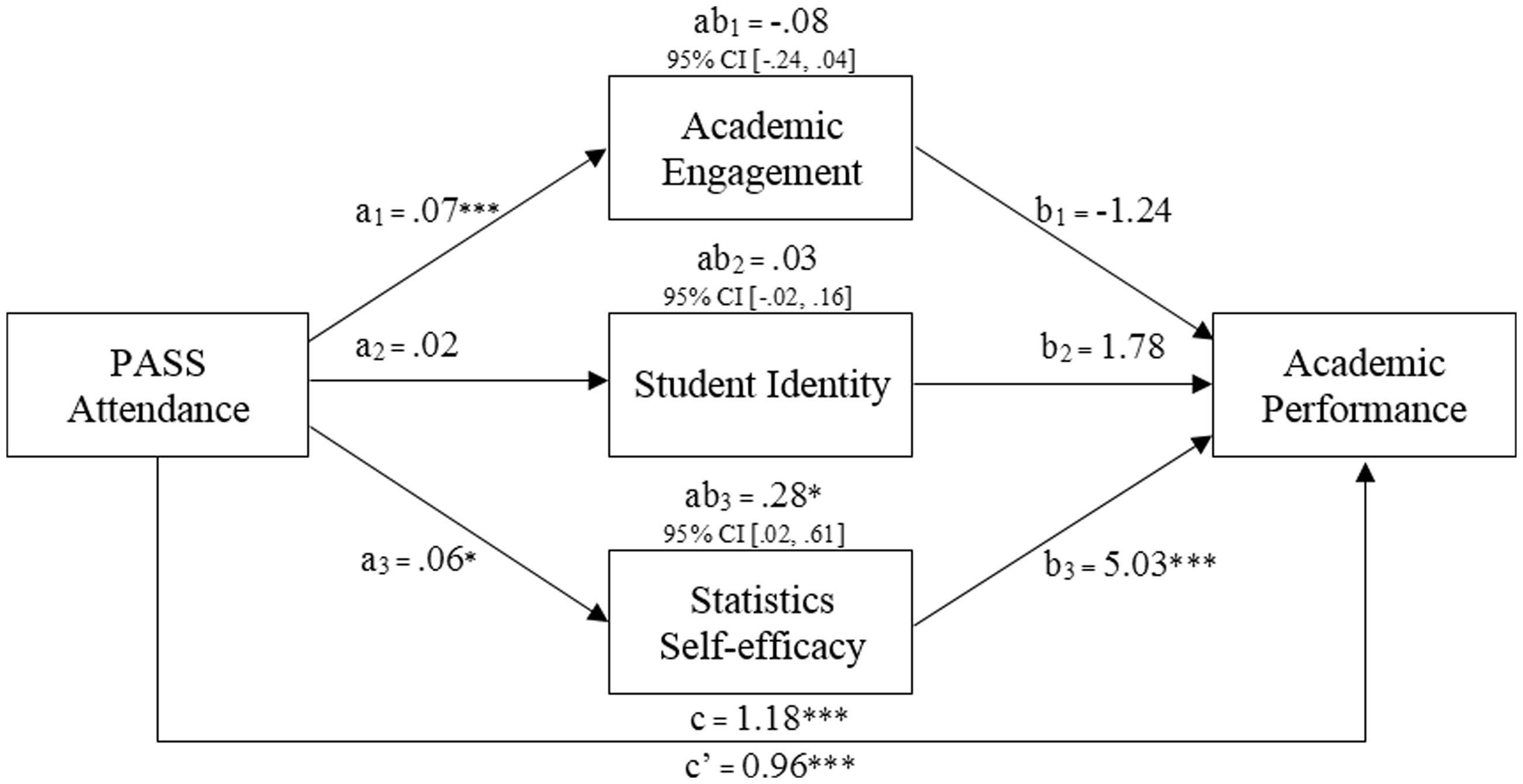
Regression derived a-path, b-path, c-path, c’-path, b-weights, and bootstrap derived ab-path b-weights for the multiple mediation model of Peer Assisted Study Sessions (PASS) attendance on student performance controlling for age, gender, significant life event, and highest math level.
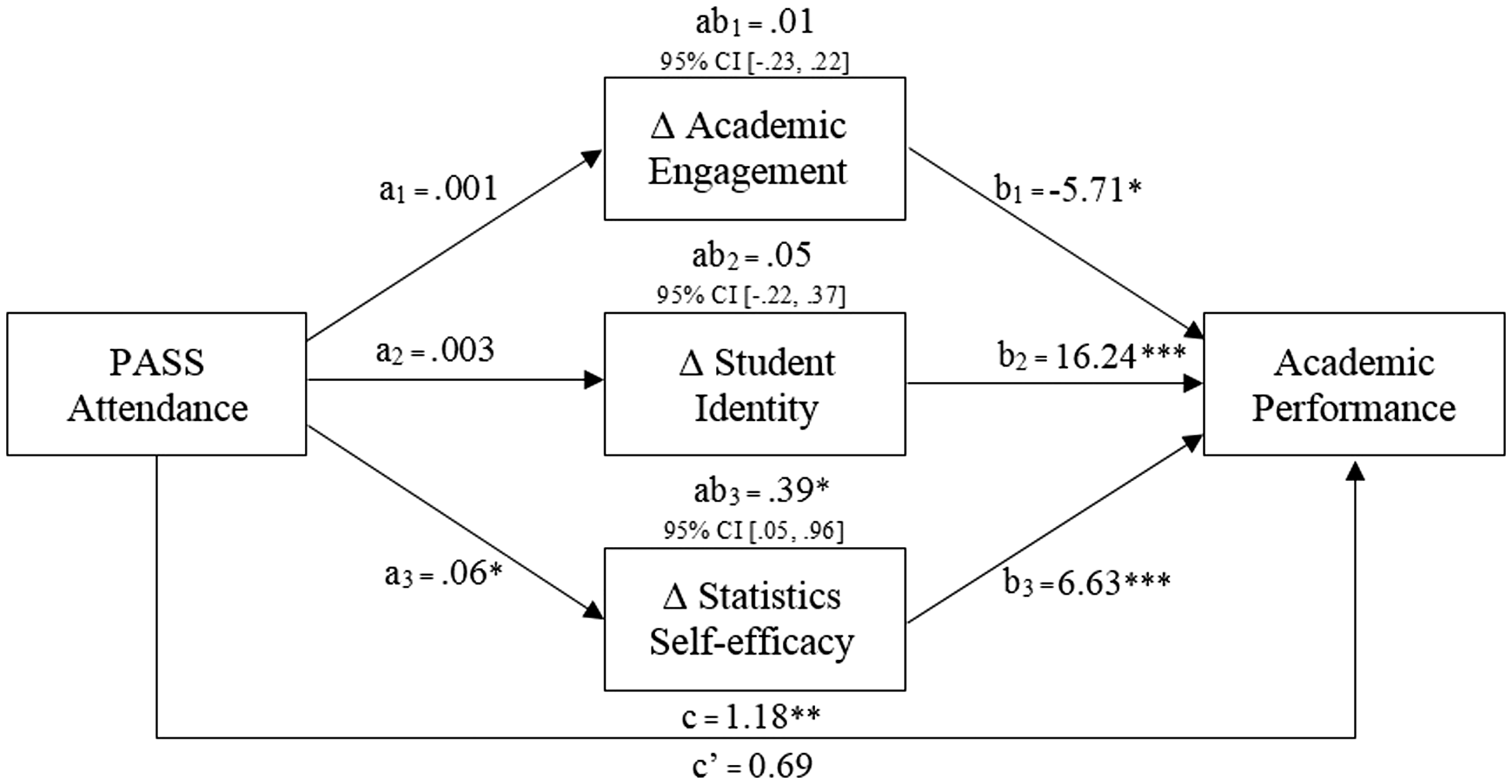
Regression derived a-path, b-path, c-path, c’-path b-weights, and bootstrap derived ab-path b-weights for the multiple mediation model of Peer Assisted Study Sessions (PASS) attendance on student performance controlling for age, gender, significant life event, and highest math level.
Bootstrap analysis of indirect effects
To test the indirect effects of PASS attendance on student performance, a bootstrap mediation analysis will be performed. The bootstrap analysis uses a resampling with replacement technique to generate a standard error of the mediation pathway, against which confidence intervals can be calculated (Hayes, 2013). As bootstrapping is a non-parametric test, it also assumes no normality of the underlying distribution; therefore, it is robust to the effects of skew within variables, such as PASS attendance and participant age. The bootstrap approach performed through the PROCESS macro can test multiple mediation pathways simultaneously (including control variables), thus curtailing type I error inflation as a result of testing multiple individual pathways (Hayes, 2013). In addition, regression-based bootstrap techniques may be conducted on samples considered too small to confidently perform structural equation modeling; on these grounds, the bootstrap analysis will be used to test the hypothesized indirect effects of PASS attendance on student performance.
Cross-sectional Data Analysis
Data were checked and screened prior to analysis following Tabachnick and Fidell (2001). Means, standard deviations, and intercorrelations are displayed in Table 3. As expected, student performance was positively related to PASS attendance, academic engagement, student identity, and statistics self-efficacy. Similarly, these focal variables were also significantly related to PASS attendance. Student performance was also significantly related to all control variables.
Table 4 displays hierarchical regression models that explore the relationship between PASS attendance, academic engagement, student identity, and statistics self-efficacy on student performance. At Step 1, age, gender, significant life event, and highest math level were entered into the regression model as control variables. These explained 12% of the model variance (Step 1) F (4, 259) = 8.39, p < .001, 95% CI [.04, .19]. PASS attendance was added at Step 2, which accounted for a significant portion of variance within student performance outcomes ΔF (1, 258) = 20.31, p < .001, 95% CI [.01, .12]. Academic engagement, student identity, and statistics self-efficacy were entered independently during Steps 3a–c; each showed a significant incremental gain to the total variance explained. Of these, statistics self-efficacy showed the strongest increase to variance explained (Step 3c) ΔF (1, 257) = 80.09, p < .001, 95% CI [.11, .28]. In Step 3d the total variance explained by academic engagement, student identity, and statistics self-efficacy was significantly different from zero ΔF (3, 255) = 27.39, p < .001, 95% CI [.12, .29]. When entered separately, both engagement and student identity were found to significantly predict student performance (3% and 5% unique variance explained, respectively); however, when self-efficacy is included the unique variance accounted by these mediators is greatly diminished (less than 01% unique variance). Supporting Hypothesis 4, statistics self-efficacy continued to explain a significant portion of unique variance both in isolation and controlling for other variables (20% and 14% unique variance explained, respectively). These regression results display the direct relationship between the included variables and academic performance; however, to test the indirect effects of the proposed mediators a bootstrap analysis must be conducted.
When entered in isolation, academic engagement, student identity, and statistics self-efficacy demonstrated a significant indirect relationship with academic performance (95% confidence intervals, which excluded zero); however, to reduce type I error inflation all mediators were tested simultaneously. Results from the bootstrap analysis (10,000 resamples) are displayed in Figure 1. Supporting Hypothesis 1, the total effect of PASS attendance on student performance was found to be significant (c-pathway; b = 1.18, SE = 0.26, p < .001); this effect was reduced when the mediators were included in the model (c’-pathway; b = 0.96, SE = 0.25, p < .001). When controlling for other mediators, only the statistics self-efficacy pathway produced confidence intervals that excluded zero, indicating a positive indirect effect of PASS attendance on academic performance through student self-efficacy (Hypothesis 4). The indirect effect of statistics self-efficacy explained 29.2% of the total relationship between PASS attendance and academic performance.
Longitudinal Data Analysis
To further elucidate the relationship between PASS attendance and student outcomes, a longitudinal analysis was performed. This analysis will utilize participant change scores (between T1 and T2) on academic engagement, student identity, and statistics self-efficacy. As recommended by Smith and Beaton (2008), participant scores at T2 will be regressed onto their respective T1 responses, with the remaining standardized residual scores utilized in subsequent correlations and regression models. These new variables represent the amount of change observed on academic engagement, student identity, and statistics self-efficacy over the semester that is not predicted by individual scores on these variables at T1 (with positive values representing an increase from T1 to T2). Unlike alternative methods (such as difference scores), this approach has been shown to increase statistical power due to reduced error variances (Schaufeli, Bakker, & Van Rhenen, 2009).
Means, standard deviations, and intercorrelations for the matched sample are displayed in Table 5. As change scores were calculated using standardized residuals, all means are equal to zero. Student performance was positively related to PASS attendance, student identity, statistics self-efficacy, and participant age; however, it was not significantly related to academic engagement or other controls. PASS attendance also displayed a positive relationship to statistics self-efficacy and participant age. Contrary to the cross-sectional analysis, no significant relationships were found between PASS attendance and participant change scores for academic engagement or student identity measures.
Results from the matched sample hierarchical regression are displayed in Table 6. The initial step contained the control variables; these failed to explain a significant portion of student performance (Step 1) F (4, 71) = 2.20, p = .08. The addition of PASS attendance produced a significant incremental gain to the total variance explained (Step 2) ΔF (1, 70) = 7.73, p = .007. Following this, each residualized mediator variable was independently added, of which two reached significance: Δ student identity (Step 3b) ΔF (1, 69) = 12.61, p < .001 and Δ statistics self-efficacy (Step 3c) ΔF (1, 69) = 14.27, p < .001. The final block included all mediators entered simultaneously (Step 3d). These accounted for a significant increase in variance explained compared to Step 2 ΔF (3, 67) = 11.35, p < .001. Although PASS attendance showed a positive relationship with student performance (Hypothesis 1), when Δ statistics self-efficacy is added into the model (Steps 3c and d) this relationship disappears (p > .05). In the final block only Δ statistics self-efficacy and Δ student identity continue to explain unique variance in the hypothesized direction (12% and 13% unique variance explained, respectively). Interestingly, when controlling for the other proposed mediators, Δ academic engagement was significantly related to academic performance; however, this was in the non-hypothesized direction, indicating students who reported decreasing academic engagement during the semester also exhibited heightened overall performance. Overall, these control variables, PASS attendance, and the mediator residual variables account for 47% of total variance in student performance. However, further analysis is required to test the indirect effects of these mediators on academic performance.
Results from the matched sample bootstrap analysis (10,000 resamples) are shown in Figure 2; as previously noted, to avoid type I error all mediators were tested concurrently. The total effect of PASS attendance on student performance was significant (c-pathway; b = 1.16, SE = 0.42, p = .007). Similar to the cross-sectional analysis only statistics self-efficacy produced a bootstrapped confidence interval that did not span zero (Hypothesis 4). This indirect relationship accounted for 55.5% of the variance in academic performance explained by PASS attendance, indicating more than half of the positive effects of attending PASS can be attributed to increased statistics self-efficacy over the semester. Contrasting the previous sample, when Δ academic engagement, Δ student identity, Δ statistics self-efficacy, age, gender, significant life event, and highest math level are accounted for, the direct effect of PASS attendance fails to meet significance (c’-pathway; b = 0.71, SE = .36, p = .06).
Discussion
The current study had a number of aims; the first was to contribute additional evidence for the benefits of PASS on student grades in a difficult core first-year statistics course utilizing a continuous operationalization of attendance. The second aim was to expand upon the extant literature by exploring psychological mechanisms that may mediate the PASS–performance relationship. Furthermore, through both cross-sectional and longitudinal investigation it is possible to explore the effects of PASS attendance on student outcomes at the end of semester, and how these same factors may change over the course of a semester.
PASS Attendance
A medium-sized positive relationship was observed between PASS attendance and student performance for both samples, supporting Hypothesis 1. Furthermore, PASS attendees demonstrated a propensity to be more academically engaged, maintain a positive student identity, and display increased statistics self-efficacy. However, when adjusted for students’ responses at the start of the semester, only the relationship between PASS attendance and increased perceptions of self-efficacy was preserved. This suggests that PASS attendance led to heightened statistics self-efficacy over the semester compared to non-attendees. Congruent with PASS objectives, attendees appeared to be empowered through the collective learning techniques and facilitated group discussions, producing heightened confidence in applying self-directed learning techniques to solve course-related materials (Dawson et al., 2014; Miller et al., 2012).
Academic Engagement
Academic engagement was hypothesized to mediate the relationship between PASS attendance and academic performance: results from the current study failed to support this hypothesis. While engagement was significantly correlated with course performance and found to be a significant mediator alone, the mediating role of engagement was not supported when controlling for self-efficacy. The significant correlation between engagement and performance in the cross-sectional data is consistent with previous research (Kuh et al., 2006; Pintrich & De Groot, 1990). However, contrary to expectations and extant research, the residualized change in engagement score demonstrated a negative relationship with performance. This negative relationship may be an artifact of the scheduled data collection points within the longitudinal analysis. At initial measurement, students had only recently commenced the semester; it seems cogent to infer feelings of academic engagement, energy, and motivation may be heightened. In contrast, student responses at the second measurement point would likely be influenced by multiple sources of potential academic stress, inducing feelings of exhaustion and burnout (Schaufeli et al., 2002). The timing of data collection is only one possible explanation for this negative relationship; further investigation is required to explore the true nature of these findings.
Student Identity
Student identity was hypothesized to mediate the relationship between PASS attendance and academic performance; results from the current multiple-mediation model failed to support this hypothesis. Congruent with prior research, a medium-sized positive relationship was observed between participants’ sense of student identity and academic performance (Ning & Downing, 2014). Interestingly, in the cross-sectional analysis this relationship disappeared when controlling for statistics self-efficacy and engagement. However, when analyzing participants’ change scores, the positive relationship between student identity and performance was strengthened. These findings indicate that participants who are socially connected with other students, aware of university resources, and maintain a heightened sense of purpose and capability also display heightened academic performance. Despite this, there was only limited correlational support for the effects of PASS to generate an increased sense of student identity in attendees.
As student identity is developing rapidly during the initial year of tertiary study, one explanation for this result is that other factors may have concurrently influenced the development of student identity (Wilson et al., 2011). Despite the limited evidence for PASS attendance to produce a heightened sense of student identity, results from the current study do support the relationship between a positive sense of student identity and increased performance outcomes, thus providing some support for the continued investigation of the five senses of success and student identity.
Statistics Self-efficacy
The hypothesis that statistics specific self-efficacy would mediate the relationship between PASS attendance and academic performance was supported. Congruent with previous research, individuals who attended PASS did exhibit heightened perceptions of statistics self-efficacy (Dobbie & Joyce, 2009; Schunk, 1986). Furthermore, increased statistics self-efficacy was strongly related to enhanced performance outcomes within both cross-sectional and longitudinal analyses. Results from the longitudinal bootstrap analysis suggest that not only does PASS attendance increase statistics self-efficacy and academic performance, but also that the relationship between PASS attendance and performance is contingent on increasing students’ self-efficacy. This indicates that PASS attendance is related to enhanced student self-efficacy, which includes positive feelings of confidence, capability, effort, and persistence; this in turn has been linked to superior academic performance.
There are a variety of reasons for PASS attendance to be related to increased self-efficacy. Compared to non-attendees, PASS students gain a heightened exposure to course content through group learning exercises and guided discussion (Dawson et al., 2014; Dobbie & Joyce, 2009). Furthermore, rather than revising a lecture or reading text that can be misinterpreted, group discussions allow participants to clarify concepts and challenge inaccuracies (Dawson et al., 2014; Miller et al., 2012). PASS student-leaders may also influence statistics self-efficacy through modeling effective problem solving techniques (Schunk, 1986). Social learning theorists posit this effect is most prominent when solutions are modeled by individuals of similar academic competence to the observer, such as student-leaders or other PASS classmates (Schunk, 1986).
Students’ confidence to utilize self-directed learning techniques may explain the positive relationships between PASS attendance, self-efficacy, and performance outcomes. Through collective learning, PASS endeavors to cultivate attendees’ trust in their ability to find solutions for themselves, leading to a heightened propensity to remain persistent and motivated, and ultimately resulting in positive performance outcomes (Dawson et al., 2014; Kuh et al., 2006; Miller et al., 2012). The ability to find solutions without direction from teaching staff is not only an advantage in tertiary studies, but arguably the fundamental aim of higher education (Lizzio & Wilson, 2010). Future research should continue to explore self-efficacy and other mediators of the PASS–performance relationship.
Limitations and Future Directions
Matching participant data over time allowed for a greater understanding of how PASS attendance was related to changes in participants’ academic engagement, student identity, and statistics self-efficacy over the semester. However, this matching process necessitates the exclusion of individuals who did not participate at both time points; this reduced sample size naturally precedes reduced power to find a statistical relationship (Tabachnick & Fidell, 2001). Despite this limitation, it is recommended that future research also utilizes a longitudinal framework. As demonstrated, the relationships between PASS attendance and student performance are highly complex; thus, it is suggested that simple cross-sectional designs are no longer suitable to capture this relationship.
Another limitation of the current study is that lecture and tutorial attendance were not measured. Additional attendance data would allow comparison between the collective learning techniques employed by PASS and the traditional teaching structure used in tutorials (Fayowski & MacMillan, 2008). Attendance information would also give insight into how students consume course-related content; for example, if students attend PASS as a substitute for tutorial attendance, or if highly motivated students were attending both. Such information would not only offer more statistical control but also could inform the design of future intervention programs (Dawson et al., 2014; Fayowski & MacMillan, 2008).
The effects of student self-selection into PASS should be acknowledged. Experimental designs require random assignment into treatment and control groups to curtail the effects of unspecified variables contaminating the analysis (Tabachnick & Fidell, 2001). Although random assignment increases the validity of findings, doing so reduces generalizability (McCarthy et al., 1997). Within a naturalistic setting, PASS attendance is a self-selection process, where students must be aware of, find value in, and have the ability to attend the program (McCarthy et al., 1997). Any experimental measures that impede this process may reduce the value of the conclusions developed from such research.
Practical Implications for Teaching Psychology
PASS is designed as a targeted intervention for traditionally difficult courses that often serve as a “gate keeper” for degree progression (Dawson et al., 2014). The negative emotions experienced by students when enrolling in these courses can lead to reduced help seeking (Miller et al., 2012), delayed enrolments, procrastination (Onwuegbuzie, 2004), and increased emotional reactivity (Ergene, 2003), leading to reduced student performance (Richardson et al., 2012). PASS offers an established, formal, empirically supported program to supplement difficult courses and is therefore uniquely suited to enhance positive student outcomes. Unlike other cooperative learning systems, which require mutual goals to be established through interdependent assessment (e.g., group assignments), PASS can be integrated into the existing course curriculum with minimal disruption. PASS may be utilized to encourage the development of social relationships between attendees, and the emergence of self-sustaining learning communities (Outhred & Chester, 2010). Furthermore, PASS attendance is related to enhanced course-related self-efficacy in subjects that are traditionally linked to student fear, anxiety, and negative student outcomes (Miller et al., 2012). To leverage the attendance–self-efficacy relationship, future PASS programs could adopt a focus on attendees’ course-related self-efficacy. Specifically, PASS leaders could utilize peer/leader modeling techniques (Fayowski & MacMillan, 2008; Schunk, 1986) or target feedback that positively acknowledges and reinforces the effort exhibited by PASS attendees in solving difficult course-specific tasks (Craven, Marsh, & Debus, 1991).
Summary
In conclusion, using both cross-sectional and longitudinal designs, the current study investigated the relationship between PASS attendance, academic engagement, student identity, statistics self-efficacy, and how these influenced academic performance outcomes. Findings indicated PASS attendees benefitted from an enhanced statistics self-efficacy and increased academic performance. Furthermore, PASS attendance was shown to increase statistics self-efficacy, which in turn supported performance outcomes. Although PASS attendees exhibited a propensity to remain academically engaged and display a heightened student identity, when controlling for responses on these measures at the start of the semester, these relationships were diminished. As demonstrated, a simple cross-sectional design does not accurately capture the full effects of PASS attendance. Therefore, it is recommended that future investigations into academic interventions adopt more advanced longitudinal designs, as it seems the true effects of PASS attendance on academic performance resist simple explanations.
Footnotes
Declaration of Conflicting Interests
The author(s) declared no potential conflicts of interest with respect to the research, authorship, and/or publication of this article.
Funding
The author(s) disclosed receipt of the following financial support for the research, authorship, and/or publication of this article: This work was supported by the Griffith Health Institute - Behavioural Basis of Health seed funding 2013.