




Abstract
To test the feasibility of Wikipedia editing in large undergraduate psychology classrooms, we engaged groups of students in a large introductory-level Human Development course (N = 110) in editing Wikipedia articles to improve psychology-related content. Students attended in-class workshops and received online support to develop skills. They demonstrated considerable engagement with the assignment, averaging 14.5 posts to Wikipedia over a span of 50 days. Most connected Wikipedia editing with other course materials and reported benefits of peer-evaluating classmates’ work. Most reported beneficial interactions with Wikipedians in the public domain, who flagged and/or reverted edits of dubious quality, while correcting errors. Students demonstrated improvements in information literacy and Wikipedia knowledge, with gains in locating and evaluating the quality of source materials.
The popularity of Wikipedia as a go-to repository for retrieving practical, encyclopedic information has grown enormously since the creation of the site in January 2001 (History of Wikipedia, n.d.; Okoli, Mehdi, Mesgari, Nielsen, & Lanamaki, 2014). Wikipedia differs from traditional, paper-based encyclopedias by relying on continuously updated information contributed by the general public (Loveland & Reagle, 2013). Wikipedia’s mission centers on empowering and engaging people to collect and develop educational content and to disseminate it effectively and globally in the public domain (https://wikimediafoundation.org/wiki/Mission_statement). In collaboration with the Wiki Education Foundation, the Association for Psychological Science (APS) launched the APS Wikipedia Initiative in February 2011 with the stated goal of making information about psychology on Wikipedia as complete and accurate as possible (http://www.psychologicalscience.org/index.php/members/aps-wikipedia-initiative). Through this initiative, APS encourages those with expertise in psychology to create new articles and improve current articles about psychological topics. Similarly, educators are encouraged to assign Wikipedia editing in their classes to help students develop skills in communicating effectively to a general audience, using appropriate citations to support statements, organizing writing for logical flow and clarity, and responding to comments from peers (i.e., fellow Wikipedians). The current study examines the feasibility of implementing Wikipedia editing assignments in a large (>100 students) introductory course in human development, and explores whether student editing of Wikipedia content promotes the development of core psychology skills in information literacy, communication, and collaboration.
Views on Wikipedia in College
Instructors often discourage students from using Wikipedia for coursework owing to inaccuracies that are prevalent on the site and the limited depth of Wikipedia articles on specific topics (Aibar, Llados, Minguillon, Meseguer, & Lerga, 2005; Halavais & Lackaff, 2008; Knight & Pryke, 2012; Kubiszewski, Noordewier, & Costanza, 2011; Meishar-Tal, 2015). Undergraduates may not know how to evaluate the quality of information retrieved from Wikipedia, and they may lack the initiative or skills needed to validate information, such as aligning Wikipedia content with more reliable information sources (Harris & Cameron, 2010; Lim, 2009). However, despite warnings from instructors and their own uncertainties about using Wikipedia, students continue to rely on Wikipedia as a resource for coursework (Harris & Cameron, 2010; Judd & Kennedy, 2011; Schweitzer, 2008). In a survey of first-year students (N = 271), 64% reported using Wikipedia in college, with 36% using it for research papers, presentations, or other assignments (Harris & Cameron, 2010). Notably, in this same study, the majority of students using Wikipedia (63%) reported that they never, rarely, or only occasionally verified Wikipedia content by checking other source materials. Another study (Schweitzer, 2008, Study 3) surveyed students in four upper-level psychology classes (N = 76) and found 64.5% to be regular users of Wikipedia. Among them, close to 80% reported using Wikipedia as a resource for papers or projects at least once. In contrast, only a handful of the students (6%) reported that they had ever edited a Wikipedia entry.
These studies characterize college students as passive consumers of Wikipedia who lack interest or initiative to contribute to improving its content. Collectively, they suggest that prior to implementing a Wikipedia editing assignment, instructors may need to consider how to effectively engage their students in thinking critically about the content of Wikipedia articles and how they, as members of the educated public, can actively contribute to improving it. With successful implementation, the editing opportunities available through Wikipedia could assist students in developing foundational skills in information literacy, communication, and collaboration that are emphasized by the American Psychological Association in their Guidelines for Undergraduate Psychology Majors (APA, 2013).
Enhancing Information Literacy
Given the convenience of Wikipedia and its popularity among undergraduates, coupled with their lack of experience in contributing content or verifying sources, active engagement with the site might serve as an educational tool for students to develop their online information literacy – defined as the ability to access, understand, evaluate, and use digital information (Harris & Cameron, 2010, p. 128). Wikipedia editing provides opportunities for students to practice synthesizing key concepts and themes, interpreting complex phenomena for a general audience, understanding concepts such as notability and information sourcing, and writing fluently and objectively with limited bias – i.e., skills characteristic of the higher-level cognitive domains in Bloom’s Taxonomy (i.e., analyze, evaluate, create; cf. Anderson & Krathwohl, 2000; Obar & Ruth, 2011). The current study explores how editing on Wikipedia might help students gain an understanding of research-related terms such as peer review and empirical study, while developing their information literacy and collaboration skills.
In response to national recommendations (e.g., American Library Association, 2000; American Psychological Association, 2013), colleges have begun promoting information literacy as a general education goal (Anderson & Bull, 2014; Jones & Allen, 2012). Undergraduates typically know how to use Yahoo or Google to retrieve information, but struggle to use academic libraries or the Internet to locate reputable sources (Loher & Landrum, 2010). When Jones and Allen (2012) conducted focus groups with undergraduate psychology majors (N = 38), students reported that their prior general education coursework had not emphasized the development of information search strategies. Students indicated that they were “spoon-fed” content required for assignments, consistently cited textbooks as reliable information sources, and were rarely asked to critique the quality of their information sources.
Wikipedia might serve as a powerful teaching tool to help undergraduates develop the information literacy skills needed for academic work. Students can begin to explore new content areas by following the Wikipedia hyperlinks that link related articles together. They may develop reference-mining skills by accessing sources listed at the bottom of each article and may consider the processes by which Wikipedia editors create and share content by examining an article’s history (Calhoun, 2014; Walker & Li, 2016). As a next step, students could then work as editors who revise articles and create new Wikipedia content based on research within a particular domain, while engaging in critical discussions about the structure and content of articles with their peers and other Wikipedians (Calhoun, 2014). In an increasingly open-sourced online world, students may find intrinsic benefits and a sense of empowerment from the opportunity to contribute to a public archive of knowledge (Miller, 2014; Ravid, Kalman, & Rafaeli, 2008). The experience of editing Wikipedia in a classroom environment in collaboration with their peers might also encourage future contributions towards public dissemination of knowledge (Lampe, Obar, Ozkaya, Zube, & Velasquez, 2012).
Although studies document frequent use of Wikipedia among undergraduates (Jones & Allen, 2012; Lim, 2009) and identify their preference for retrieving information through Wikipedia over traditional academic databases (Judd & Kennedy, 2011), few studies have assessed whether Wikipedia editing assignments improve students’ information literacy skills and/or alter their perceptions of the value of Wikipedia for coursework. In this limited literature, Traphagan, Traphagan, Dickens, and Resta (2014) found that after engaging in Wikipedia editing, students (n = 13 freshmen, n = 20 upper level students) were more likely to identify that Wikipedia should be used to obtain broad, initial information about a topic (Traphagan et al., 2014). They were also more likely to highlight the inaccuracies of Wikipedia as reasons for not using it, which suggests gains in information literacy with regards to their ability to critique the quality of online information. In another study, Chiang and colleagues (2012) asked students (N = 46) to locate and edit Wikipedia articles on chronobiology (biological clocks). Students reported feeling positive about the editing experience, with increased comfort in reading, critiquing, and summarizing source materials. At the same time, they reported struggling to edit articles owing to the complexity of the topics, as well as problems associated with simultaneous editing, perhaps a consequence of too many students editing the same articles in a collaborative space (Chiang et al., 2012).
Fostering Opportunities for Collaborative Writing
Assigning students to edit Wikipedia emphasizes the importance of learning how to write in an accessible way for a public audience (Forte & Bruckman, 2006), while providing a forum for students to negotiate the content of articles and respond to feedback from peers (Shane-Simpson, Brooks, Hotez, Sawyer, & Dow, 2015). Giving students opportunities to teach and learn from each other in small groups may increase their sense of self-efficacy while fostering the development of communication and interpersonal skills (Brown & Campione, 1994; Johnson & Johnson, 2009; Kyndt et al., 2013; Shimazoe & Aldrich, 2010). In recent years, wiki writing assignments posted to learning management systems, such as Blackboard or Moodle, have gained popularity as they provide opportunities for students to work collaboratively to generate academic content (Augar, Raitman, & Zhou, 2004; Slotter, 2010; Wheeler, Yeomans, & Wheeler, 2008); such platforms for creating wikis share common features with Wikipedia editing and suggest learning benefits associated with collaborative writing (Zheng, Niiya, & Warschauer, 2015). For example, interactions with classmates in the context of collaborative writing of wikis can encourage students to engage more deeply with learning materials, resulting in more thorough understanding of academic content (Slotter, 2010).
As an extension of wiki-based collaborative writing, Wikipedia editing offers students opportunities to share leadership, while collaborating with other Wikipedians editing the same articles (Zhu, Kraut, & Kittur, 2013). In a recent study exploring possible benefits of collaborative Wikipedia editing, Burdo (2012) assigned approximately 100 neuroscience students to edit Wikipedia stubs (i.e., entries with very limited information). When editing online, students received feedback via talk pages from Wikipedians in the public domain, in addition to engaging with classmates for feedback and support. Note that talk pages are a public online forum for Wikipedians to discuss the content of articles with other editors, e.g., by suggesting edits and possible revisions. Students evaluated the experience of editing Wikipedia highly, reporting that it improved their knowledge of neuroscience and noting a preference for Wikipedia editing over other types of writing assignments. However, they were uncertain about whether the assignment had advanced their writing skills and whether they would continue editing Wikipedia after the course.
Technical Challenges to Implementing Wikipedia in the Classroom
Ultimately, the feasibility of engaging students in online collaborative learning critically depends on students’ understanding and ease of use of the technology (Curtis & Lawson, 2001; Wheeler et al., 2008). Curtis and Lawson (2001) found that their students (N = 24) lacked an understanding of how to perform basic functions on Blackboard such as posting a new thread; similarly, Wheeler and colleagues (2008) reported problems stemming from students’ hesitation and confusion in using wikis created through open-content software. As such, it remains essential that students understand the technology and technology-specific jargon in order to successfully navigate online collaborative spaces such as Wikipedia.
A recent study by Oliver (2015) highlights the necessity of allocating class time for instruction on library resources in the context of Wikipedia editing. In this study, high school graduates (N = 60) attended a 2-hour session covering online library resources and Wikipedia editing. When asked in a post-test survey to list ways to use Wikipedia effectively in college, students indicated that Wikipedia could be used early on in research (n = 42 out of 45) with its bibliographies used to identify related source materials (n = 22 out of 45). Notably, in follow-up discussions, students cited the process of editing Wikipedia as the most “confusing thing” during the session (n = 21 out of 45), followed by academic citation procedures (n = 11 out of 45); these remarks suggest that students needed further engagement with Wikipedia to gain skills in using its editing features.
To effectively implement a new technology in the classroom, students need considerable online support to feel engaged (Shea, 2006) and, additionally, may need structured team-building activities to facilitate group-work (Rovai, 2002). Consequently, instructors need to provide both offline and online supports to scaffold student engagement and learning with technology. This includes introducing students to specific features of the software, e.g., for authentication and tracking of edits which might be used to monitor their participation (Augar et al., 2004). It is also essential for online assignments to be integrated into the structure of the course to emphasize both the value of teamwork and the benefits of using technology for learning during active online engagement (Wheeler et al., 2008).
Current Study
The implementation of collaborative Wikipedia editing assignments in psychology courses requires that students understand how to engage with the online platform and how to communicate with other editors online. Although much of the prior literature has explored student learning outcomes in small to medium size classes ( < 50 students), research has yet to identify whether (and how) Wikipedia editing might enhance learning in large introductory-level psychology courses.
The current study explored the feasibility of introducing a Wikipedia editing assignment in a large introductory-level survey psychology course, with the goals of evaluating its impact on student information literacy, collaboration skills, understanding of Wikipedia-specific jargon, and classroom culture. The following research questions guided the study.
What is the feasibility of introducing Wikipedia editing in a large classroom setting? Do students’ gain information literacy in their ability to distinguish and evaluate different types of source materials? Are students able to engage effectively in peer review and collaborate with editors from the Wikipedia community? Are students able to draw connections between Wikipedia editing and material covered in class? Does the classroom culture change after students have participated in collaborative editing?
Method
Participants
Students in an introductory-level Human Development course at a large, urban public university participated in the study, approved by the university Institutional Review Board (IRB). Study materials were fully integrated into the course; however, during the first week of classes, students could opt-out of study participation wherein their data would not be analyzed. A total of 110 undergraduates consented to participate (n = 86 women; n = 22 men; n = 2 no answer). An additional 29 students completed the course, but opted out of participation owing to age restrictions imposed by the IRB (under 18 years old, n = 2), or other undisclosed reasons (consent form was not returned, n = 27). Participants ranged in age from 18 to 54 (M = 23.50; SD = 6.91) and reported their ethnicities as Asian (28%), Caucasian/White (24%), Hispanic/Latino (16%), Other (15%), more than one (9%), African-American/Black (8%), or no answer (5%).
Procedure and Measures
Students were instructed to enroll in a Wikipedia course page, which allowed the instructor to track their Wikipedia edits. Of the 110 students who consented to participate, 106 enrolled on the course page. Students received links to materials developed by the Wiki Education Foundation, including a subject-specific handout on editing psychology articles (https://commons.wikimedia.org/wiki/File:Editing_Wikipedia_articles_on_psychology.pdf) and a handout on citing source materials and avoiding plagiarism (https://commons.wikimedia.org/wiki/File:Avoiding_plagiarism.pdf). In-class workshops, facilitated by the instructor and two Wikipedia campus ambassadors, provided guidance on editing as well as opportunities to troubleshoot technical difficulties.
Students self-selected into 25 groups of 5–6 classmates to complete the assignment, which spanned the semester. Each group selected a topic from a list of Wikipedia articles, pre-selected by the instructor on the basis of poor quality such as having limited/incomplete citations, subjective content, or limited depth of information (see Appendix 1 for list). Groups were instructed to review their selected article to identify where they might improve its content. Students attended a library workshop on how to utilize databases to locate sources, with an emphasis on effectively finding and using secondary source materials in accordance with Wikipedia guidelines (https://en.wikipedia.org/wiki/Wikipedia:Identifying_and_using_primary_and_secondary_sources). The following week students attended an in-class workshop where they were instructed on how to draft edits using the Wikipedia sandbox feature, shared Google Docs, and Word documents. Students were also shown how to edit Wikipedia articles directly online, although this option was not recommended by the instructional team. Throughout the semester, each group was instructed to incorporate at least three citations from high quality secondary sources, summarize sources appropriately without plagiarism, add at least two images that adhered to Wikipedia copyright laws, and improve grammar, punctuation, and readability of content by eliminating jargon. Over the semester, students received five additional in-class workshops (ranging from 30–50 minutes) and allocated class time (30–45 minutes) to opportunities to work collaboratively with their groups.
To reduce anxiety, students were reassured that even if their edits were removed by other Wikipedians, they would be graded based on their effort and the quality of their initial edits. In addition to editing their own articles, students engaged in a peer-evaluation assignment at midterm, where they were instructed to critically review and provide constructive feedback on another group’s article (see Appendix 2). Students’ written peer feedback was compiled by the instructor and provided to each reviewed group.
Pre-/post-assessments
Participants completed pre- and post-assessments on Blackboard. Survey questions focused on information literacy concepts and Wikipedia terminology (see Appendix 3). Information literacy items were drawn from the APA Guidelines for the Undergraduate Psychology Major (APA, 2013) and developed from recommendations of library professionals (O’Connor, Radcliff, & Gedeon, 2001). Students were asked to distinguish peer-reviewed vs non-peer-reviewed articles and empirical vs non-empirical research. They were also asked to locate a specific journal article given the authors, publication year, and article topic. An additional set of questions assessed knowledge of Wikipedia terminology. In addition to the survey questions, students completed the Classroom Community Inventory from the Classroom and School Community Inventory (classroom form) to assess their perception of the classroom culture (Rovai, Wighting, & Lucking, 2004; Appendix 4).
We used McNemar’s tests to identify changes in information literacy and knowledge of Wikipedia terminology, and paired t-tests to compare pre/post-editing total scores on the Classroom Community Inventory. A two-person team coded open-ended survey responses to identify the correct Wikipedia term definitions. To calculate reliability, each coder independently coded 20% of the data; percent agreement ranged from 81–100% across all of the questions.
Midterm and final reflection papers
Students submitted midterm and final reflection papers that addressed specific questions. At midterm and final, students were asked whether the Wikipedia editing assignment helped them to engage with the human development course materials and how. They were asked to describe how effective their collaboration had been and to identify groupwork barriers. At midterm, after having completed the peer evaluation assignment, students were asked to describe whether peer evaluation was helpful and why. At the final, students were asked how they found and assessed the quality of their source materials. They were also asked whether other Wikipedians worked on their articles and how they interacted with them.
Qualitative responses from reflection papers were coded by a two-person team using a grounded-theory approach (Draucker, Martsolf, Ross, & Rusk, 2007). The dyad reviewed the full range of responses, created codes based on emergent themes, and independently coded 20% of the data for reliability (ranging from 97–100% agreement across codes).
Results
Summary of Students’ Editing Contributions, Days Between First and Last Edits, and Days Between First Posts and Posts from Outside Editors
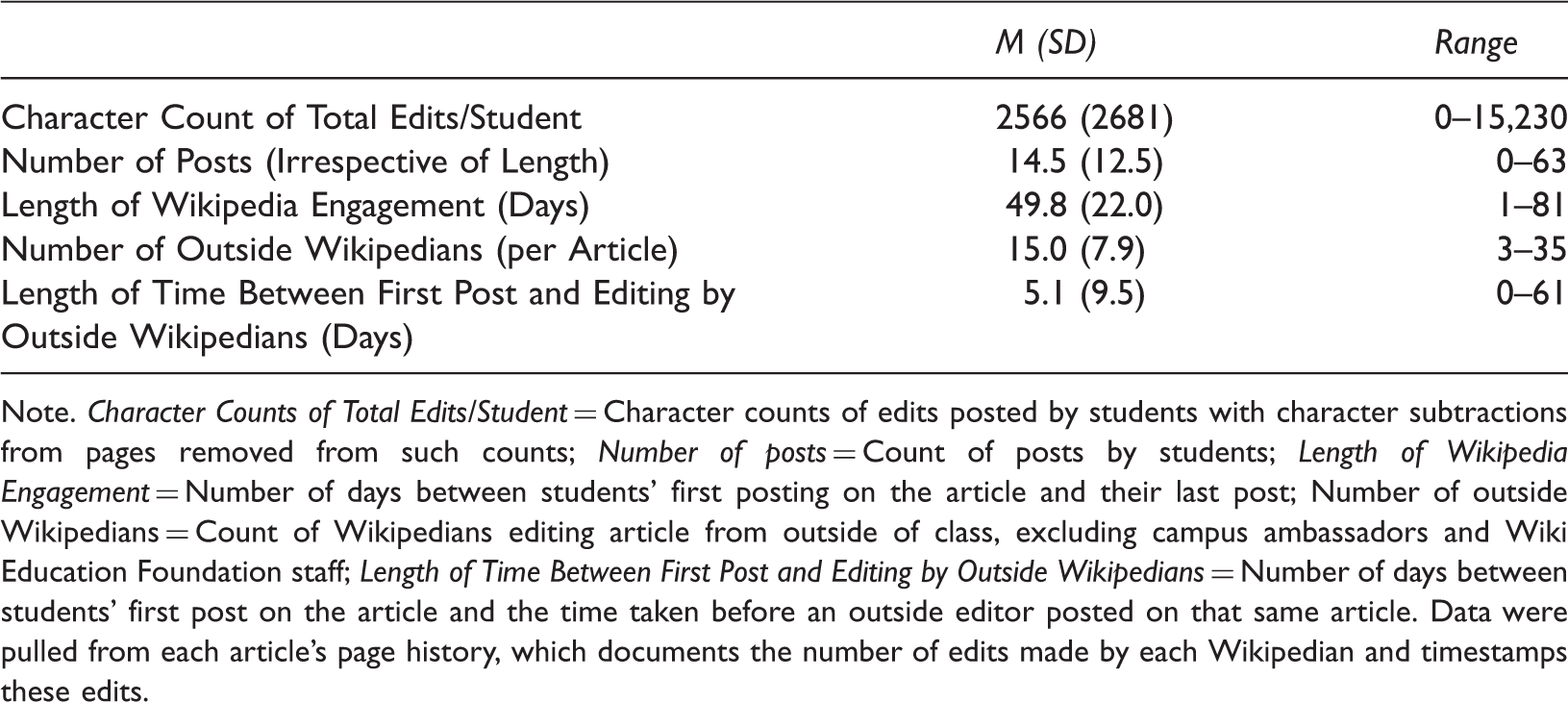
Note. Character Counts of Total Edits/Student = Character counts of edits posted by students with character subtractions from pages removed from such counts; Number of posts = Count of posts by students; Length of Wikipedia Engagement = Number of days between students’ first posting on the article and their last post; Number of outside Wikipedians = Count of Wikipedians editing article from outside of class, excluding campus ambassadors and Wiki Education Foundation staff; Length of Time Between First Post and Editing by Outside Wikipedians = Number of days between students’ first post on the article and the time taken before an outside editor posted on that same article. Data were pulled from each article’s page history, which documents the number of edits made by each Wikipedian and timestamps these edits.
Information Literacy and Wikipedia Terminology
Correct Responses in Pre- and Post-Assessment Responses to Information Literacy Questions.
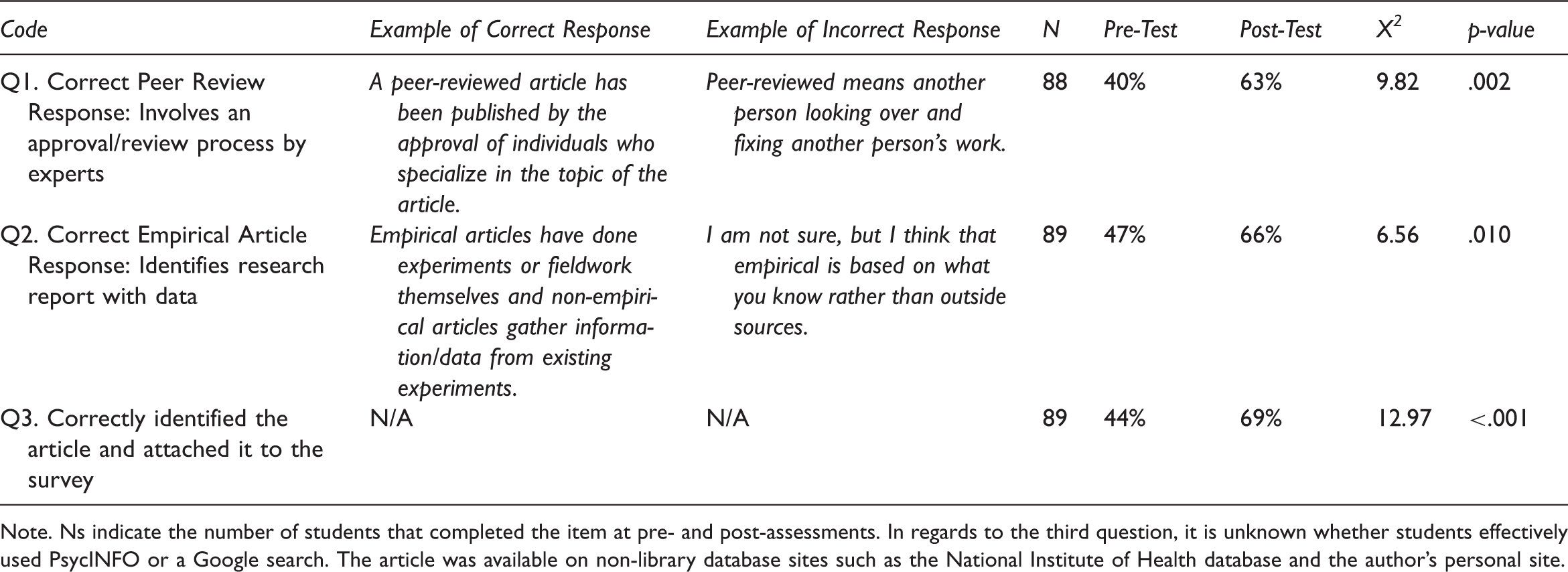
Note. Ns indicate the number of students that completed the item at pre- and post-assessments. In regards to the third question, it is unknown whether students effectively used PsycINFO or a Google search. The article was available on non-library database sites such as the National Institute of Health database and the author’s personal site.
Students’ Use of Effective Search Strategies as Reported in Final Papers
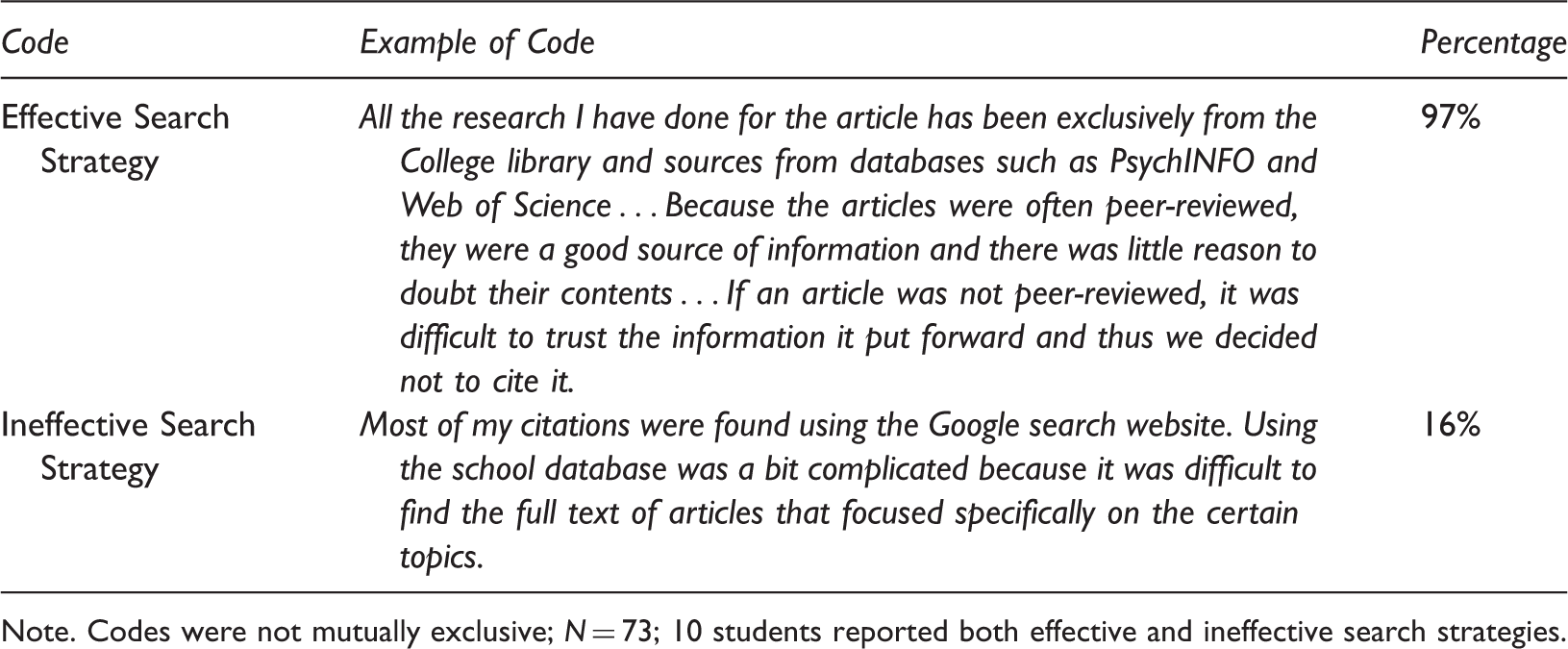
Note. Codes were not mutually exclusive; N = 73; 10 students reported both effective and ineffective search strategies.
Methods Students Used to Assess the Quality of Sources, as Reported in Final Papers
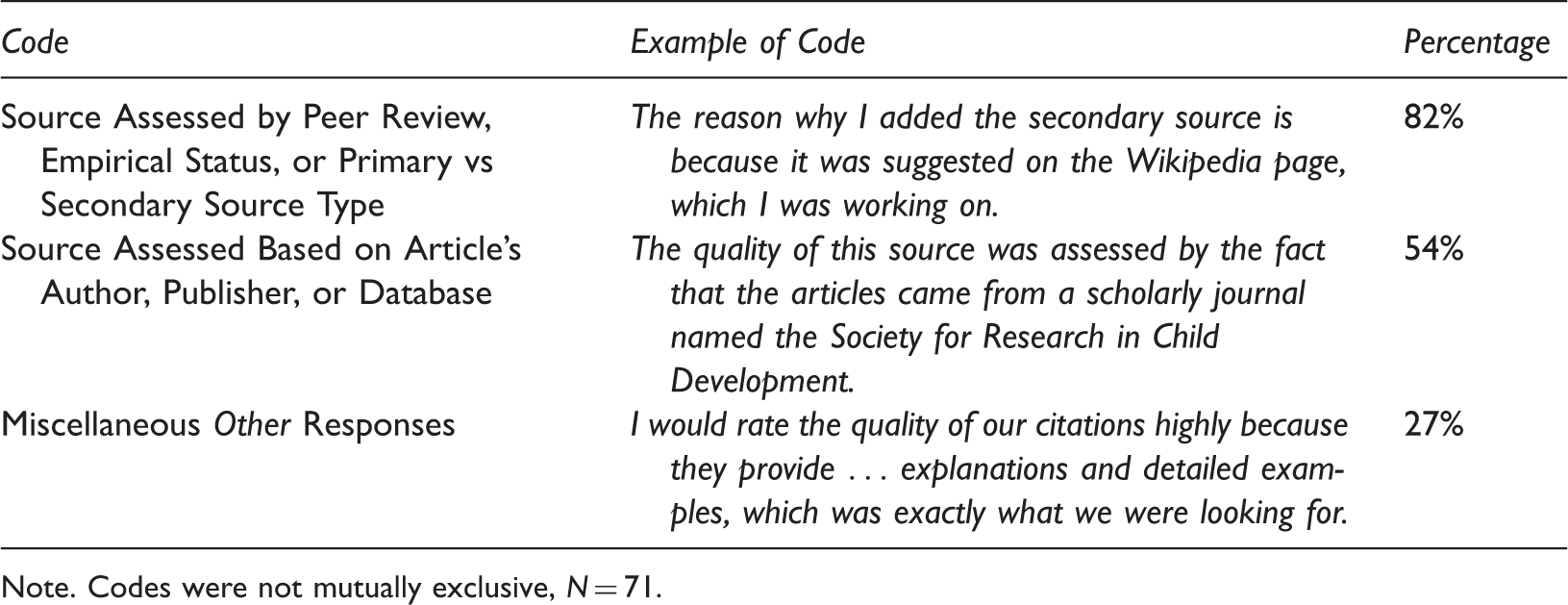
Note. Codes were not mutually exclusive, N = 71.
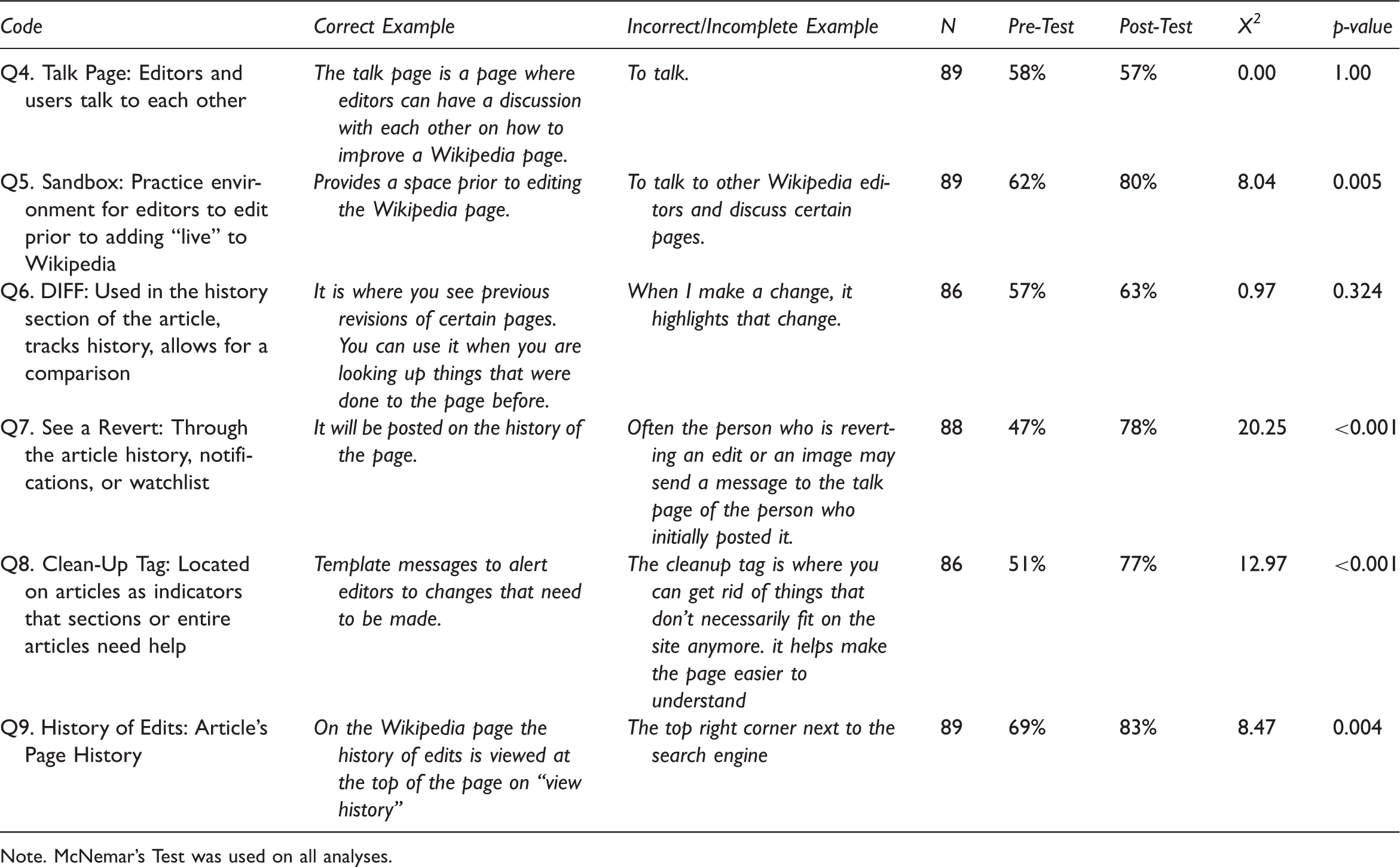
Correct Responses in Pre- and Post-Assessment Responses to Wikipedia Terminology Questions
Note. McNemar’s Test was used on all analyses.
Connecting Editing with Human Development Course Material
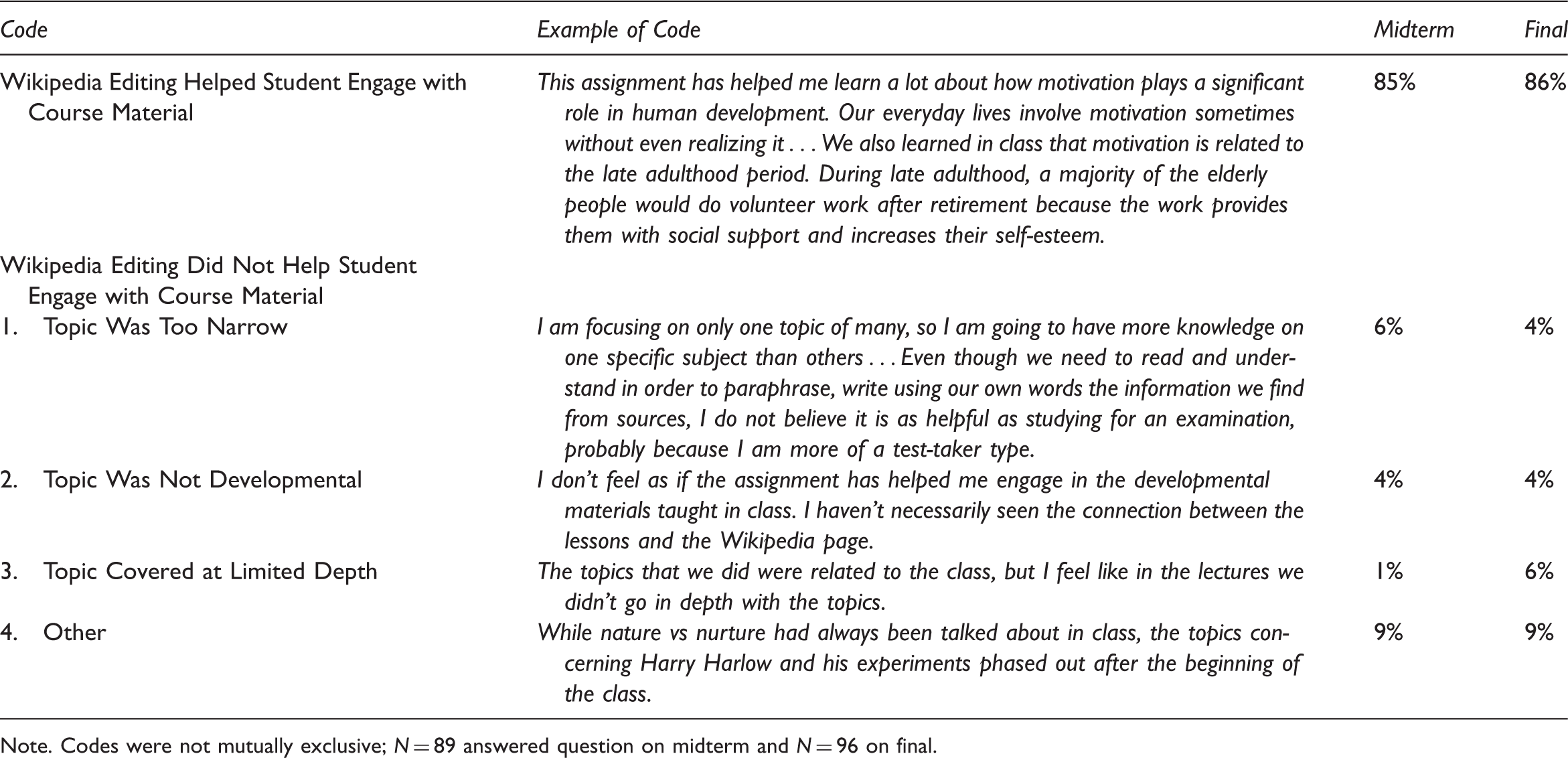
… I felt I was more engaged with learning about Wikipedia then I was with the actual course content. I think a better way of presenting the assignment would be to create a fake Wikipedia page, in a group or independently. This is also because I would then have to be more engaged with the material on my own page instead of just fixing or citing information that is already there.
Connections Made by Students Between Wikipedia Editing and Human Development Course Materials
Note. Codes were not mutually exclusive; N = 89 answered question on midterm and N = 96 on final.
We discussed Harlow briefly in the beginning of the semester. Since we did not go into much detail about him … there seems to be a disconnect between Harlow and the class lectures … However, Harlow discusses child development, neglect, and the need of material affection, which in some regard connects to the overall material we learned … we could draw parallels between Harlow’s conclusions and theory with what we discussed and learned about in biosocial and cognitive development in the first two years of a child being born.
Evaluations of the Peer-Evaluation Assignment
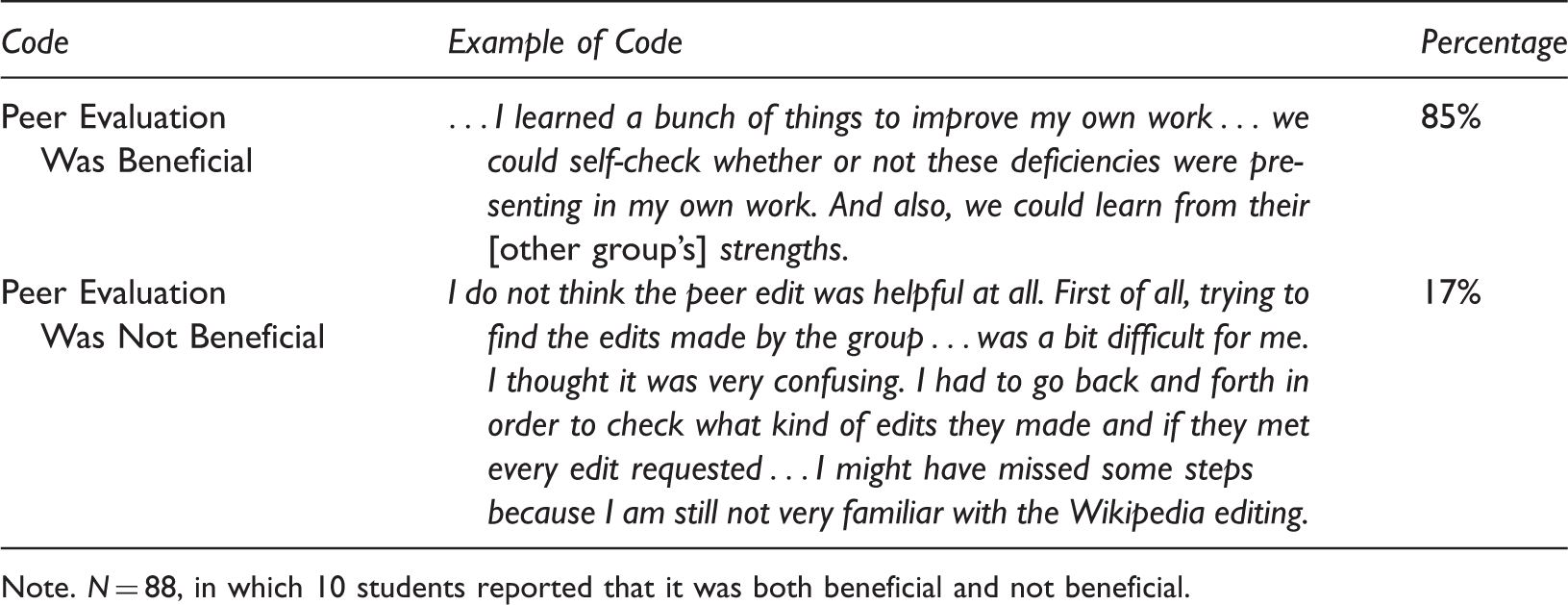
When you are editing your own page, you may bypass a few minor mistakes that you have made. But seeing the mistakes from someone else can help you to realize your own mistakes … While reading the other groups page overseeing little mistakes like this made me pay more attention to the changes that I was making on my groups page.
Students’ Evaluations of the Peer Evaluation Assignment
Note. N = 88, in which 10 students reported that it was both beneficial and not beneficial.
Group Collaboration Processes
Although we had expected collaborative editing to foster the development of peer relationships within the classroom, paired t-tests revealed no change in the Classroom Community Inventory from pre- to post-assessment, t(88) = –0.60, p = 0.548. Students’ midterm and final papers also failed to note any changes in the effectiveness of their group collaborations over time, X2 (1, N = 92) = 0.148, p = 0.700, with 76% at midterm and 72% at final reporting that their groups were effective.
Our group structure worked since we each had specific sections to work on in Wikipedia. Each of us would look for additional new information and content to add to the article, as well as correcting any errors and problems which arises on the article … This really helped because the Wikipedia page contained a lot of information, so by focusing on our own sections we can easily fix certain minor errors, add additional content and do more research for those specific sections.
Student-Id;entified Barriers to Collaboration at Midterm and Finals
Note. 70% of students identified barriers through midterms and 68% identified barriers on their finals; Codes were not mutually exclusive, N = 99 on midterms and N = 97 identified barriers on the finals.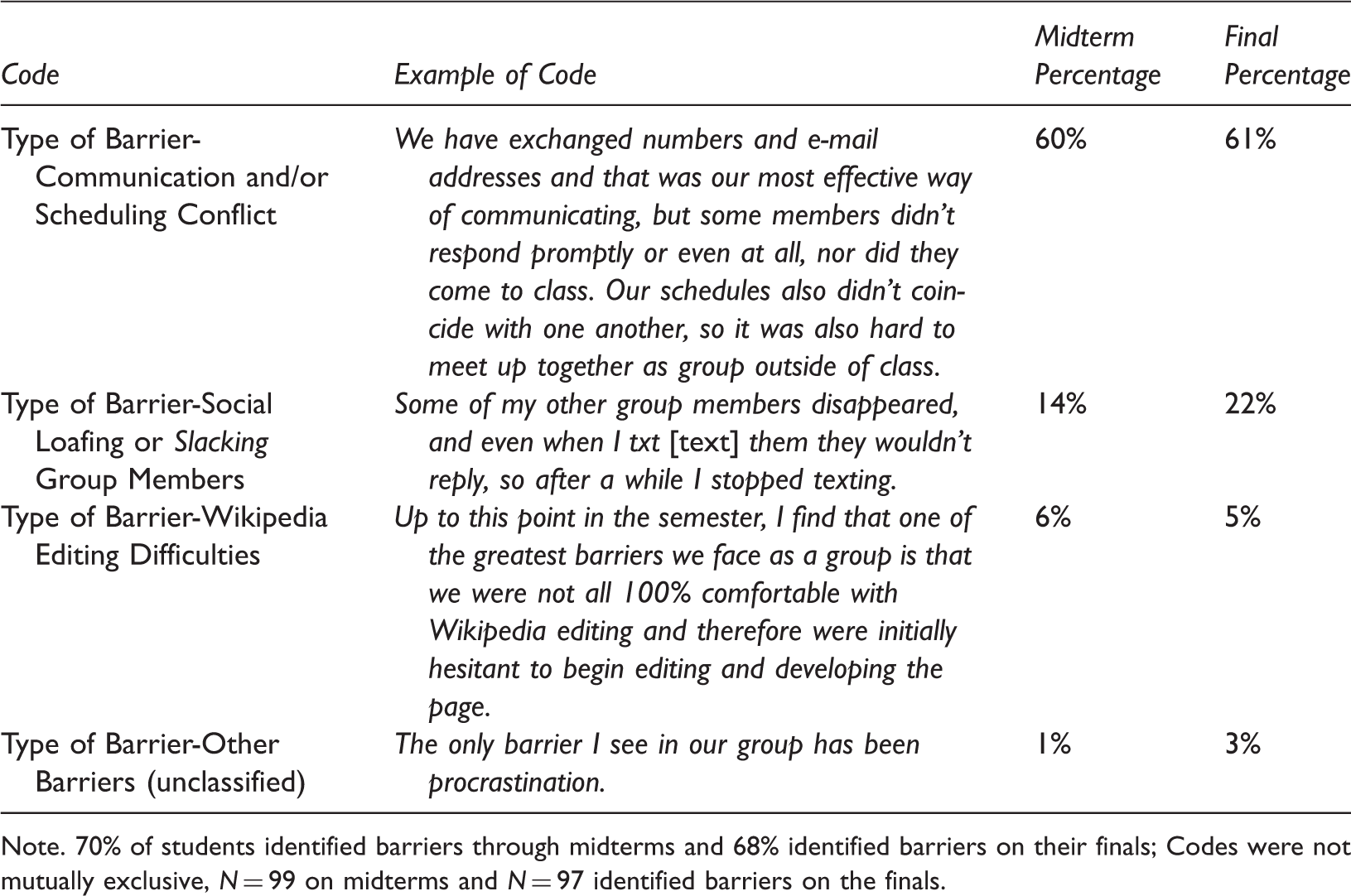
Engagement with Outside Editors
Wikipedians outside of the Human Development class edited all of the articles that students worked on, with an average of 15 outside editors per article during the semester. These other Wikipedians typically edited articles within 5 days of students posting their edits, although this timeline ranged considerably (Table 1). The following represents some of these outside editor interactions:
There were outside editors working on our Wikipedia page at the same time, however they didn’t clash with our editing too much. While we were making changes and adding more information to the page, it didn’t seem like the outside editors were adding new information but editing our revisions. Edits made early on in the stage of our project was helpful for us because we were just learning how to edit so their inputs and changes were appreciated.
Quality of Interactions Students had with Outside Editors
Note. N = 61, in which 6 students described beneficial as well as non-beneficial interactions.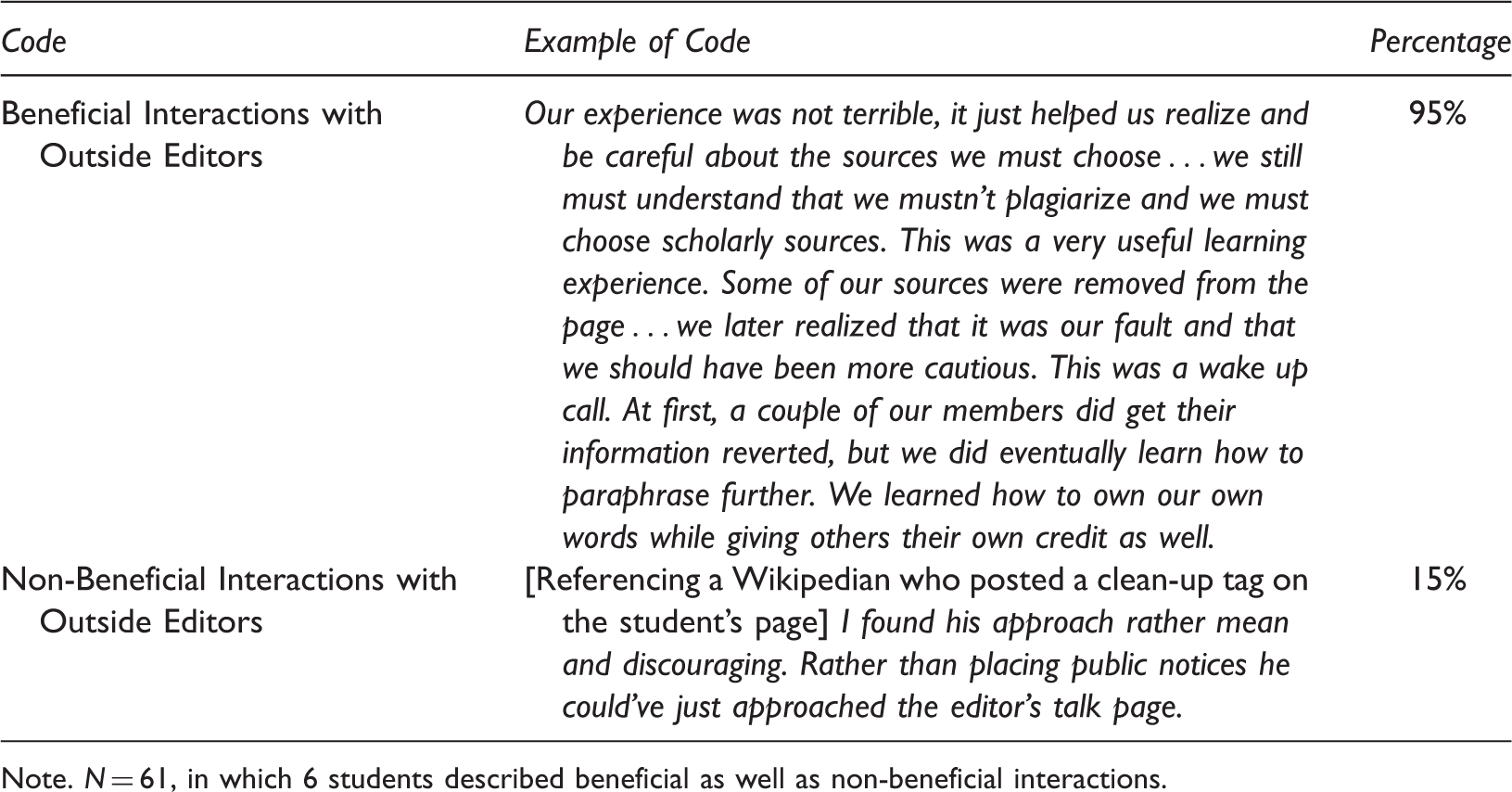
Although all groups potentially could have had contact with other Wikipedians through the talk pages, only three groups used talk pages, even though usage was covered in the Wikipedia workshops. One interaction was initiated by an outside editor on the “Compulsive Hoarding” page who addressed the improper sourcing of information, citations, and plagiarism. The editor also guided the students to review the Wikipedia guideline for reliable sources. In response, a student in the group thanked the editor for his insights and spoke of the group’s inexperience with Wikipedia editing. The other two interactions were initiated by students on the “Neurotransmitter” and “Howard Gardner” pages. One student of the “Neurotransmitter” group requested, on behalf of his teammates, editorial feedback from Wikipedians and elicited a lengthy constructive comment from an outside editor who elaborated on some flaws while praising their good work. In the third interaction, a student suggested a possible revision to the “Howard Gardener” page, but the comment did not receive any response from outside editors.
Discussion
This study explored the feasibility of a Wikipedia editing assignment in a large (100 + student) introductory-level psychology survey course. Whereas prior studies have utilized Wikipedia editing in small classrooms ranging from 9–46 students (Chiang et al., 2012; Miller, 2014; Slotter, 2010; Traphagan et al., 2014; Wheeler et al., 2008), only one has addressed the challenges of implementing such assignments in large, general education courses (Burdo, 2012). In the current study, our students averaged 14.5 posts spanning a 50-day period, with measurable improvements in their information literacy and understanding of Wikipedia terminology. Consistent with prior research, which has identified the positive impact of student editing (Farzan & Kraut, 2013), the substantial number of edits contributed by the students in the current study indicates that undergraduates were able to meaningfully contribute to the efforts of the APS Wikipedia Initiative.
Wikipedians often cite their online engagement as driven by generativity and a desire to provide accessible information to others (Schroer & Hertel, 2009). Ideally, as students learn how to create Wikipedia content that is accessible to the general public, they would develop interests in further engagement in collaborative editing (Forte, 2015; Forte & Bruckman, 2006). However, in the current study, we failed to find evidence of persistence in editing Wikipedia articles, which suggests the need to cultivate student interest in sustained participation in the APS Wikipedia Initiative.
Information Literacy and Wikipedia Terminology
Prior studies engaging students in Wikipedia editing offered preliminary reports of improvements in information literacy (Calhoun, 2014; Oliver, 2015; Traphagan et al., 2014). The current study extended these findings by linking Wikipedia editing to specific undergraduate general education skills, which included locating and evaluating the quality of academic source materials, such as finding peer-reviewed articles. Initially, many of the articles that students edited had clean-up tags indicating a partial citation or the neglect of a source citation. These tags required students to locate new sources or provide the full citation for a given source using strategies such as advanced searches on Google Scholar or other online academic databases.
Students’ understanding of some, but not all, Wikipedia terminology increased; it is likely that students became knowledgeable about specific Wikipedia terms, such as sandbox, revert, clean-up tag, and history of edits, during the in-class Wikipedia workshops and through editing. The workshops covered a range of Wikipedia features, but provided limited opportunities for students to practice using Wikipedia features, such as talk pages and DIFFs. Theories of pedagogy emphasize the practice of knowledge (e.g., Alonso, Lopez, Manrique, & Vines, 2005), and as such, students may require hands-on experience to remember the specific Wikipedia features well enough to utilize them on their own.
Wikipedia Editing in Relation to Course Material
We purposefully pre-selected articles for Wikipedia editing that were included in the textbook and lectures to provide students with opportunities to draw connections between their online editing and the broader field of human development. Most students reported that they were able to draw connections between the Wikipedia editing assignment and other course materials. Nevertheless, some students had difficulties connecting the material and expressed concerns that their topic was not covered with enough depth in class, was too narrow, or was not sufficiently developmental. This suggests that students in introductory-level survey courses may need more explicit guidance on how to bridge the broad-based course materials with more focused research on a narrow topic. Students may have viewed Wikipedia editing as unhelpful in comparison to studying for traditional exams, and may not have recognized the value of learning how to use academic resources, especially online databases, to conduct research. That is, students may have failed to note the practical application of the skills developed through editing.
Group Collaboration and Classroom Culture
The overwhelming majority of students reported that the peer evaluation assignment was beneficial for improving their Wikipedia articles, which suggests that they appreciated feedback from classmates and/or the assignment helped them to reflect on their own edits through comparison with other students’ work via the rubric. It is important for future studies to determine objectively whether peer evaluation improves the quality of student writing and its role in promoting information literacy skills.
Throughout the semester, students identified barriers to effective collaboration such as communication/scheduling difficulties and social loafing. Furthermore, as measured by the Classroom Community Inventory, engagement in collaborative editing did not increase students’ sense of trust, reliance, and belongingness over time. Although prior research suggests that students engaged in online collaborative work experience higher levels of connectedness compared to students working independently offline (Baturay & Bay, 2010), other research has found that connectedness may fluctuate based on the structure of the online coursework (Rovai, 2002). In the current study, the lack of change in classroom culture suggests that students may have needed more in-class support to improve collaboration skills, such as opportunities to strategize within their groups about how to interact with outside editors.
Interactions with other editors on Wikipedia
Wikipedians edited the same articles as students, on average within 5 days of students posting their work online. Wikipedia editors helped students improve articles by identifying problems, flagging and/or reverting text that students may have inadvertently plagiarized, correcting punctuation and grammatical errors, and reverting edits that were viewed as poor quality. Fortunately, students viewed most of their interactions with outside editors as beneficial. Only two students reported a back-and-forth edit war with an outside editor, although there were other instances wherein the instructor and/or support staff were asked to intervene to address conflicts. Despite occasional disagreements, the outside editors tended to provide a supportive environment for undergraduates seeking to improve the quality of Wikipedia articles in psychology.
Considering the prevalence of outside activity on student-edited articles (averaging 15 Wikipedians per article), relatively few groups used talk pages to communicate directly with others. This was surprising given that research has identified a recent increase in talk page discussions on Wikipedia, coupled with a decrease in direct page edits (Kittur, Suh, Pendleton, & Chi, 2007; Viegas, Wattenberg, Kriss, & van Ham, 2007). By neglecting talk pages, students failed to negotiate content with others working on the same article, and when confronted by reverted edits, they may have felt defensive rather than open to discussions about their edits. This suggests the need for instructors to scaffold talk page usage to introduce students to Wikipedia community norms. Direct instruction on channels of communication will assist students in learning to work collaboratively and more effectively within the Wikipedia community. Future research should also examine more specifically how collaboration within a public community impacts student motivation and learning outcomes, as well as their continued involvement in editing Wikipedia.
A handful of problematic interactions with outside editors highlight the need for instructors to provide consistent online and offline support by monitoring and intervening in student editing when necessary (e.g., during edit wars). As was verbally and informally communicated by students, some chose to edit live on Wikipedia, rather than coordinate edits with their group members through the sandbox feature or a shared Google Doc; this may have contributed to poor quality editing, which was often negatively received by outside editors. Considerable online support was also required at the end of the semester to ensure that last minute efforts to submit work did not result in instances of plagiarism and other errors.
Overall Feasibility of Wikipedia Editing for Large Psychology Classrooms
Building on the results found in this study, the overall feasibility of Wikipedia editing in larger, undergraduate psychology classrooms was also assessed by the course instructor. These semester-long observations of students’ engagement with the Wikipedia editing assignment guide the following recommendations for educators interested in implementing Wikipedia editing into their large (100 + student) classroom (see Shane-Simpson & Brooks, 2016 for additional recommendations).
Educators should strongly consider developing an offline and online Wikipedia editing support team consisting of social science librarians (offline workshops), Wiki campus ambassadors (Wiki workshops), the Wiki Education Foundation (assistance with course page monitoring), and other course instructors who have successfully used Wikipedia editing (personal support); Consider a modified grading criteria with a stronger emphasis on effort and lesser emphasis on actual edits. Students will likely express hesitation in their initial edits and may also rush to make (oftentimes inaccurate) edits towards the end of the semester if they are graded based on additions/deletions from an article; Scaffold student opportunities to engage with unknown editors on Wikipedia. Ask students to use the talk pages with their peers and instructor prior to engaging with other Wikipedians; Require students to work in the sandbox prior to editing directly on Wikipedia. This will reduce the likelihood of their edits being reverted and allow students to develop their editing skills in a safe environment. Implementing peer evaluations of work in the sandbox will help students identify aspects of their articles that need further attention.
Limitations
Although this study extended prior findings, there were limitations inherent in the research. Due to our use of midterm and final papers for evaluation, students may have skewed their answers to favor anticipated learning outcomes. Students who held more negative feelings about the course may have refrained from sharing their opinions if they felt their grade would be influenced. Although students were reminded that their agreeableness with the assignment was not factored into grades (based on completion, not content), students may have indicated compliant attitudes that they felt would be viewed favorably by the instructor. Future studies should strive to collect anonymous data, rather than involving the instructor directly in data collection.
Regarding learning outcomes, it remains unknown whether students gained an understanding of the types of content that are appropriate for Wikipedia articles – one approach would be to explore the content of students’ edits to determine if the quality of their contributions improved over time. The current study was limited in narrowly focusing on Wikipedia terminology rather than broader level technology skills. Future research should examine whether skills learned through Wikipedia editing carry over to other online environments and whether students’ attitudes about the assignment were linked more generally with online writing, e.g., extending to blogs and/or discussion forums.
Although our results suggest that collaborative work resulted in gains in information literacy, the lack of control group limits the conclusions that can be drawn about the role of collaboration in the learning process. As such, future research should compare individual student work with collaborative editing to determine effectiveness of each method. A comparison, non-collaborative or non-Wikipedia editing assignment would also allow researchers to draw conclusions about how the Wikipedia environment might enhance or limit student learning. However, it should be noted that such studies might be difficult to implement in large classes, as instructors may not be able to monitor 100 + students working individually on articles. From a practical viewpoint, group work made the assignment easier to implement, as feedback on articles was given to groups of students rather than individuals.
Conclusions
The APS Wikipedia Initiative resonates with George Miller’s original call for experts in psychology to give psychology away to the general public as a means to increase knowledge about the field (Tomes, 2000); see also Kaslow (2015) for a reminder of the need to translate psychological research into accessible information for consumption by the general public. Implementing this initiative in the classroom context provides unique opportunities for students to share their academic interests with interested others in the public domain. In the current study, instructing students to edit Wikipedia articles to improve the quality of citations and content led to improvements in information literacy and knowledge of Wikipedia terminology. Most students connected their Wikipedia editing directly with other course components, which suggests that they viewed it as contributing to their learning. These findings provide support for the inclusion of Wikipedia editing assignments in large psychology survey courses (100 + students).
Footnotes
Acknowledgements
The authors thank the students in the Human Development course for their participation, Wikipedia campus ambassadors Ann Matsuuchi and Richard Knipel for technical and instructional support, Jason Simpson for assistance in qualitative response coding, and Michelle Drouin and Michael Mandiberg for feedback on study design. A portion of this work was presented at the 2015 Vancouver International Teaching of Psychology Conference, and at the 2015 Convention of the Association for Psychological Science.
Declaration of Conflicting Interests
The author(s) declared no potential conflicts of interest with respect to the research, authorship, and/or publication of this paper.
Funding
The author(s) received no financial support for this research, authorship, and/or publication of this article.