




Abstract
The present content analysis examines the coverage of theoretical and methodological problems with the Stanford prison experiment (SPE) in a sample of introductory psychology textbooks. Categories included the interpretation and replication of the study, variance in guard behavior, participant selection bias, the presence of demand characteristics including the contribution of the guard orientation, and the ecological validity of the prison. In general, results revealed minimal coverage of problems with the study, with only two of the 14 textbooks citing any critical articles. The majority of textbooks presented the study in a fashion consistent with a “power of the situation” interpretation with no account of a more theoretically robust study, namely the BBC prison study, nor mention of methodological shortcomings. A review of the post-SPE criticisms and suggestions for addressing the landmark study in introductory textbooks are included.
There are few studies in the history of psychology as renowned as the Stanford prison experiment (SPE) (Haney, Banks, & Zimbardo, 1973), and few psychologists as recognizable as the study’s principal investigator, Philip Zimbardo. The SPE has influenced music, film, and art and has served as a testament to the power of “bad” systems and a counterbalance to “bad” person accounts of abuses such as those that took place in Abu Ghraib prison in Iraq (e.g. Fiske, Harris, & Cuddy, 2004; Zimbardo, 2007).
The SPE was conducted in 1971 against a backdrop of concern about the conditions of prisons and prisoner rights (Haney & Zimbardo, 1998). Newspaper ads called for volunteers for a study of prison life and of those who responded, 24 of the most “normal” applicants were selected (Haney et al., 1973). Twenty-one of these individuals participated in the study and were randomly assigned the role of either guard or prisoner in a mock prison. Guards underwent an orientation conducted by the prison superintendent, Zimbardo, in which they were told what behavior was and was not permissible. Prisoners were arrested at their homes, booked, stripped, and deloused before being taken to their cells. While the first 24 hours of the study were uneventful, the prisoners rebelled on the second day and some guards responded to the challenge of their authority with increasingly harassing and abusive behavior. The study, planned for two weeks, ended after only six days due to the abusive behavior on the part of several guards and emotional breakdown of several prisoners. Guard aggression, according to the authors, “was emitted simply as a ‘natural’ consequence of being in the uniform of a ‘guard’ and asserting the power inherent in that role” (p. 92). Prisoners, on the other hand, broke down because of the overwhelming sense of powerlessness and arbitrary guard control. The results, they suggested, demonstrated the power of the situation to govern behavior, particularly in novel situations, through the adoption of social roles (i.e. roles of guards and prisoners). Moreover, as with Milgram’s studies, participants in the SPE were by all accounts normal, and thus the results further substantiated the banality of evil notion (Haslam & Reicher, 2007).
Since the publication of the SPE, however, a sizeable and critical literature of the study has emerged, leading to its status as “one of the most researched, discussed, and analyzed studies in the history of psychology” (Hock, 2013, p. 288). Much of this critical literature challenges the assertion that the study demonstrated the “power of the situation” and the “banality of evil” and these challenges, in part, rest on numerous methodological problems inherent in the study including the authoritative influence of the prison superintendent (Zimbardo), the lack of realism of the mock prison, and the potential selectivity of the sample. Moreover, a strict situationist interpretation of the study is hindered by the inconsistency in guard behavior and failure to replicate the findings.
Theoretical accounts of the SPE
Banality of Evil
The role that personality factors play in the selection process and the strengthening or shaping of these same factors when in environments with dispositionally similar individuals is lost in the presentation of the SPE as involving “average,” “non-pathological,” “normal,” “well-adjusted,” or “ordinary” men. This tendency was also present in explanations of the Abu Ghraib atrocities as captured in the following title: “Why ordinary people torture enemy prisoners” (Fiske et al., 2004). The dispositional perspective, highlighting the role that personality factors play in determining behavior, stands in contrast to this situationist perspective and the banality of evil thesis. The dispositional argument is not that the SPE participants were “sadistic types” (Haney et al., 1973, p. 89), and the use of such labels obfuscates the true importance of dispositional factors; factors that do not preclude someone from being “normal” or “ordinary” nor require someone to have an extensive criminal background or history of mental illness. Weeding out individuals with mental health problems does not eliminate what one may assume are significant personality differences (e.g. differences in social dominance) between those who are drawn to a study of prison life as opposed to a more banal psychological study (Carnahan & McFarland, 2007). The notion that evil itself is banal was entrenched before the SPE, with Arendt’s (1963) account of the Adolf Eichmann trial and Stanley Milgram’s experiments (see Haslam & Reicher, 2007, 2012). Nevertheless, the accounts of the SPE further the compelling notion that an “ordinary” individual can be made to engage in extraordinarily evil acts. Perhaps Haney and Zimbardo (2009) explain it best in criticizing the use of vague terms like psychopathy by dispositionalists: “These labels are frequently so vague and elastic that they can be made to encompass traits and behaviors that are not remotely equivalent” (p. 808).
Situationist perspective
The banality of evil account runs parallel to the power of the situation interpretation of the SPE, and the post hoc theorizing of Zimbardo and colleagues centers on the “psychological nature of the situation” (Haney et al., 1973, p. 90). In the absence of a commanding authority figure (i.e. the experimenter in the Milgram studies) and explicit instructions on how to act, participants allegedly adopted social roles shaped by the social-psychological dynamics of the situation, including the absolute power possessed by guards used to enforce arbitrary rules, loss of personal identity achieved through deindividuating practices (e.g. referring to prisoners by number), and prisoner emasculation and dependency. Critics of the “power of the situation” interpretation have given the situation more limited power by highlighting its role in self-selection and the necessity of identifying with the group and/or leader in terms of role adoption. That is, according to Haslam and Reicher (2012), the difference between the “bad” guards and “good” guards in the SPE can be understood in terms of social identification, with those identifying with Superintendent Zimbardo more fully embracing the role of prison guard and following the directives given during a guard orientation session. As Haslam and Reicher (2012) explain, “it was only when they [the guards] had internalized roles and rules as aspects of a system with which they identified that participants used them as a guide to action” (p. 3).
Replications of the SPE
Crucial to substantiating the power of the situation and banality of evil hypotheses are replications of the key findings of the SPE. There have been two replication attempts, including the BBC prison study as well as a prison study conducted in Australia (Lovibond, Mithiran, & Adams, 1979). The Lovibond et al. (1979) study included three prison conditions varying in the amount of authoritarian control, which produced differences in interactions between prisoners and guards. The more authoritarian setting included more hostile interactions, yet guards did not behave in a sadistic fashion and no prisoners exhibited the extreme psychological distress reported in the SPE. The BBC prison study (Reicher & Haslam, 2006) demonstrated the power of the situation to reinforce dispositions. What these researchers found was similar to the SPE in that there was no uniformity of behavior among the guards. However, in the BBC study there was no abuse on the part of guards, but rather timidity was evident in their interactions with prisoners. The prisoners in the BBC study, as opposed to the prisoners in the SPE, came together as a group and their sense of ability to effect change (i.e. collective self-efficacy) increased across the study. Thus, neither the Lovibond et al. (1979) nor Reicher and Haslam (2006) prison studies produced the type of pathological guard and prisoner behavior witnessed in the SPE.
Dispositional perspective
The most damning element of the SPE to the dispositional perspective was that the pathological behavior on the part of some guards could not be attributed to individual characteristics as they were a homogenous group of “normal” young men. Though details of the selection process are lacking, Haney et al. (1973) note that “the 24 subjects who were judged to be most stable (physically and mentally), most mature, and least involved in anti-social behavior were selected to participate in the study” (p. 73). A subsequent account (Zimbardo, Maslach, & Haney, 2000) indicates that the California Personality Inventory (CPI) was used in this process. Prior to the start of the simulation, participants completed measures of Machiavellianism, authoritarian personality, and the Comrey personality scale, which measures trustworthiness, orderliness, conformity, activity, stability, extroversion, masculinity, and empathy. With few exceptions, the personality variables were not found predictive of the behavior that unfolded in the simulation; the predictive power existing in the social forces that Zimbardo and colleagues had constructed. Thus, in light of the effort to select “normal” men and account for dispositions, which, again, had little predictive ability, Haney and Zimbardo (2009) recently asserted that “we thought that these precautions, controls, and outcomes laid to rest any trait-based explanation of our findings” (p. 810). Unfortunately, a closer look at the design and results of the SPE as well as subsequent studies (Banuazizi & Movahedi, 1975; Carnahan & McFarland, 2007; Reicher & Haslam, 2006) raises serious questions about a strict situationist interpretation.
If CPI scores were part of the selection process, one would assume that through this process variance in personality scores were necessarily restricted. As Haney et al. (1973) note, of the 24 participants selected, mean scores among prisoners and guards fell within a normal range (40–60 percentile range). Considering the restricted variance in personality characteristics it is unsurprising that personality explained an “extremely small part of the variation in reactions to this mock prison experience” (p. 81). This would be akin to selecting young men with “normal” intelligence, measuring performance in the classroom and reporting that classroom practices and not intelligence predicted performance. Moreover, while the CPI was used in the selection process, an obscure measure, the Comrey personality scales, 1 with no documented ability to predict such behavior, was used after the selection process (McFarland & Carnahan, 2009).
Variance in guard behavior
Discounting any trait-based explanations of the SPE in favor of a strict situationist interpretation is dubious in light of the diverse behavior on the part of the guards and prisoners. With respect to the guards, as noted by Zimbardo (2007), only three of the 11 were clearly identified as “bad guards” or excessively abusive, with the rest labeled as either “by the book” or “good” guards.
2
If the situation completely overpowers personality in such circumstances, how would one account for this range of behavior (Fromm, 1973). Fromm (1973) explains: The authors believe it proves that the situation alone can within a few days transform normal people into abject, submissive individuals or into ruthless sadists. It seems to me that the experiment proves, if anything, rather the contrary. (p. 81)
Methodological considerations
Participant selection bias
Numerous authors have challenged the notion that dispositions are overwhelmed by situation forces even in novel, extreme circumstances (Carnahan & McFarland, 2007; Fromm, 1973; Haslam & Reicher, 2012; Newman, 2002; Oliner & Oliner, 1988; Staub, 2002). The power possessed by the situation is in terms of attracting suitable personalities (Carnahan & McFarland, 2007; McFarland & Carnahan, 2009). Carnahan and McFarland (2007) examined the potential for participant selection bias in a study like the SPE by creating an ad for participants for a study of “prison life” and an ad omitting any mention of the purpose of the study. These authors found higher levels of five traits that predict aggression (dispositional aggression, authoritarianism, Machiavellianism, narcissism, and social dominance) and lower levels of two traits inversely related to aggression (empathy and altruism) among those who volunteered for a study of prison life relative to those who volunteered for a nondescript psychological study.
Whether this was the case in the SPE cannot be determined as we do not know the personality of those who were not selected for the study. However, Carnahan and McFarland (2007) questioned the “normal” F-scale scores of those who participated, and Haney and Zimbardo (2009) acknowledged that the scores were “elevated.” Results of the aforementioned BBC prison study (Reicher & Haslam, 2006) suggested not only that certain dispositions will be drawn to certain situations, but that these situations reinforce and strengthen the dispositions. Not only did authoritarianism appear consequential in terms of selection (those with higher baseline levels preferred to assume the role of guard after the assigned structure of the prison broke down), but the disposition was also shaped by the situation, as authoritarianism increased among the participants as the study progressed.
Demand characteristics
Zimbardo’s situationist account of the SPE minimizes the role he himself as prison superintendent may have played in influencing guard behavior. Zimbardo (2005) notes that: Participants had no prior training in how to play the randomly assigned roles. Each subject’s prior societal learning of the meaning of prisons and the behavioral scripts associated with the oppositional roles of prisoner and guard was the sole source of guidance. (p. 39)
Participants in psychological studies are motivated to determine the purpose of a study and, in some cases, do their part to support the hypothesis (Orne, 1962), as seemed to be the case with guard Dave Eshelman, who explained in a BBC video: I arrived independently at the conclusion that this experiment must have been put together to prove a point about prisons being a cruel and inhumane place … and therefore I would do my part to help those results come about (Duke, 2006, 8:00 min). … questions about whether prisoners could be made more humane were being posed in the media and in which prison rehabilitation and reform were very much under active public debate and consideration. These issues were especially relevant to the college student population of that era, one characterized by student involvement and activism that challenged the institutional status quo. (p. 810)
Guard orientation
The most salient cue to SPE guards as to the expectations of the experimenter was the guard orientation. Several authors have noted the potential contribution of the orientation to demand characteristics and, in turn, have questioned the ecological validity of the study (Banuazizi & Movahedi, 1975; Haslam & Reicher, 2012; Prescott, 2005). Zimbardo (2007) noted that the guards, while discouraged from engaging in physical abuse, were not discouraged from engaging in psychological abuse. Haslam and Reicher (2003, 2007) suggest that it was Zimbardo’s leadership role and the guard orientation which laid the ground work for abuse: You can create in the prisoners feelings of boredom, a sense of fear [emphasis added] to some degree, you can create a notion of arbitrariness that their life is totally controlled by us, by the system, you, me … (Haslam & Reicher, 2007, p. 618) The guards have to know that every guard has to be what we call a “tough guard” … we need you to act a certain way. For the time being, we need you to play the role of “tough guard.” We need you to react as you imagine the pigs would. We’re trying to set up the stereotype guard – your individual style has been a little too soft. (p. 65) Being superficially tough came easily to me. For one thing, I am an authoritarian person in some ways (even though I strongly dislike the trait in myself and others). Further, I felt that the experiment was important and my being “guard-like” was part of finding out how people react to real oppression … The main influence on my behavior was the feeling, even though vague, that real prison is brutal in that it is dehumanizing. (Zimbardo, 2007, p. 188)
Ecological validity
While Zimbardo (2005) suggests that the mock prison created in the Stanford psychology department basement was functionally equivalent to a real prison, Banuazizi and Movahedi (1975) conclude, “the phenomenological significance of the loss of freedom in the mock prison and the real prison is vastly different” (p. 154). Zimbardo’s attempt to create a functional simulation of a prison was informed by ex-con Carlo Prescott, yet by Prescott’s (2005) own admission years later, the simulation and results were contrived as the sadistic behaviors of the guards were reproductions of personal experiences Prescott disclosed to the experimenters. In a 2012 interview, Zimbardo described the simulation as “a minimally adequate representation of what I knew was kind of the demonization that went on in prisons” (Drury, Hutchens, Shuttlesworth, & White, 2012, p. 162). Yet it is the “what went on in real prisons” that Zimbardo and colleagues failed to confirm (Fromm, 1973; Haslam & Reicher, 2006).
The present study
Recently, several authors have surveyed the representation of the SPE in introductory psychology textbooks (Bartels & Hernandez, 2013; Griggs, 2014; Griggs & Whitehead, 2014). Bartels and Hernandez (2013) examined the representation of the guard orientation, demand characteristics, variance in guard behavior, and self-selection in a sample of introductory textbooks with results revealing sparse coverage of such issues. Likewise, Griggs (2014) found references to SPE criticism in only six of a sample of 11 introductory textbooks that covered the SPE. Of further importance is the theoretical interpretation of the study which, as Griggs (2014) reported, included mentions of deindividuation, social roles, and conformity. However, no specific information was given about the frequency with which these explanations were represented. While Bartels and Hernandez (2013) found the majority of textbooks in their sample failed to clarify the variance in guard behavior, no such information is provided by Griggs (2014). Lastly, the results of the SPE and Milgram’s studies are often used as evidence for the “banality of evil” (Haslam & Reicher, 2012). Key to advancing this notion of evil as banal is stressing the ordinariness of the SPE participants. Thus, the present study is an attempt to, in part, replicate the findings of Griggs (2014), but also extend the analysis by clarifying the theoretical representation of the SPE and the representation of the variance in guard behavior with a more extensive and updated sample of introductory psychology textbooks.
Method
The categories included in the present analysis emerged from the post-SPE theoretical and empirical literature. In terms of the interpretation of the study, references to the power of the situation and banality of evil were examined. With respect to the latter, in addition to explicit references to this hypothesis, references to the sample as “ordinary,” “normal,” or “average” were counted as implicit references to the banality of evil interpretation. Replications of the SPE results are also key to substantiating the aforementioned interpretation of the study and, thus, the representation of replication attempts was included. The extent of guard abuse is central to the interpretation of the study in situationist or dispositional terms and, thus, the representation of variance in guard behavior was assessed by examining references to abuse (i.e. the guards versus some guards). In terms of methodological problems, participant selection bias (i.e. self-selection), demand characteristics including the guard orientation, and the ecological validity of the mock prison were included as categories.
Introductory psychology textbooks were located through the use of CourseSmart®, an online textbook evaluation service. The initial pool of available titles was checked against the sample used by Griggs (2014) to avoid duplication (duplicate titles were only retained if they were more recent editions). Textbooks with duplicated authors and international editions were also eliminated, leaving a sample of 17 introductory psychology textbooks. The content of each textbook was searched either with the print edition of the text or with CourseSmart® using the following search criteria: Stanford prison experiment, Haney, Zimbardo, deindividuation, and social roles. Content deemed redundant or summative, including references to the SPE in figures and tables, quiz questions and review questions, and chapter summaries and concept maps, were not included. 4 Three of the 17 textbooks did not cover the SPE.
Results
Theoretical accounts of the SPE
A summary of the content analysis results are displayed in Figure 1. Six of the 14 textbooks described the SPE participants directly – or indirectly through references to college students or people in general – as normal and/or ordinary, though there were no direct references to the banality of evil hypothesis or any references to publications addressing the role of the SPE in advancing this interpretation of evil (e.g. Haslam & Reicher, 2012). Two of the 14 contained citations of theoretical or empirical articles critical of the SPE and only one of them contained multiple citations. Carnahan and McFarland (2007) were cited once, Fromm (1973) was cited once, and Haslam and Reicher (2003) were cited twice.
Impicit and explicit representation of the Stanford prison experiment (SPE) in introductory psychology textbooks. This figure represents the number of texts that include direct, indirect, or no references to the categories included in the content analysis. The categories are as follows: Norm: references to normalcy; PoS: power of situation; Rep: replications of SPE; GV: guard variance; PSB: participant selection bias; DC: demand characteristics; GO: guard orientation; and EV: ecological validity.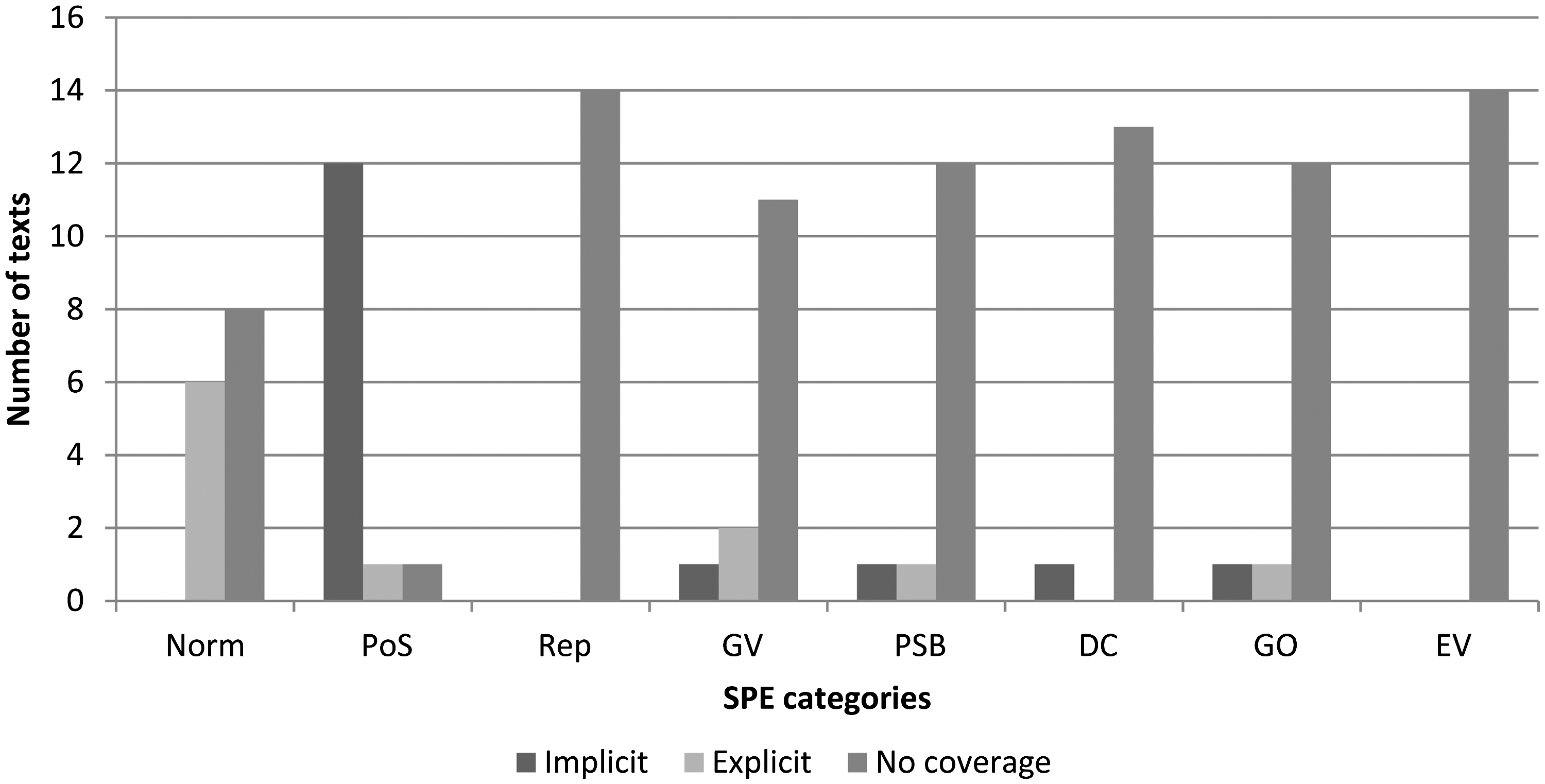
There were nine references to social role adoption, five references to deindividuation, and all but one textbook either indirectly or directly referenced the power of the situation, all of which are consistent with the SPE authors’ interpretation. Alternative accounts to this interpretation were seldom offered, with two references to obedience to authority and one reference to conformity. However, two textbooks did make reference to the importance of personality differences, with one citing the Carnahan and McFarland (2007) study. No books acknowledged attempts to replicate the SPE, including the BBC study.
Variance in guard behavior
Eleven of the 14 textbooks that included coverage of the SPE attributed the abusive behavior to “the guards,” failing to acknowledge the variance in guard behavior noted by Zimbardo (Zimbardo, 2007) and critics alike (Fromm, 1973). Two textbooks specifically noted that one-third of the guards exhibited sadistic behavior and one text made reference to the fact that some guards were nicer to prisoners than other guards but that they all to some degree abused their power.
Participant selection bias
With respect to participant selection bias, only one textbook directly addressed this and cited Carnahan and McFarland (2007) in support. The majority of textbooks made no reference to personality, though one noted there were no differences in personality among participants and one referred to “selective sampling” with no reference to the Carnahan and McFarland study. No textbook mentioned that the study did not test the dispositional hypothesis (as was done in the BBC prison study).
Demand characteristics
Though several authors alluded to instructions provided to participants (e.g. few instructions given; participants were briefed on what conditions would be like), there was only one explicit reference to the guard orientation and only one to demand characteristics. One text provided a stronger indication of Zimbardo providing direction to guards, but did not specifically reference an orientation session. One text specifically addressed the guard orientation as problematic in terms of demand characteristics (though the authors do not specifically address demand characteristics) indicating that the guards may have taken Zimbardo’s allowance for creating fear and powerlessness among prisoners as suggestions for abuse. No other textbooks made any reference or allusions to demand characteristics.
Ecological validity
No textbooks noted challenges to the ecological validity of the study, while two suggested that it did have ecological validity. One referred to the structural similarity to a real prison and one was more ambiguous, suggesting that the mock prison was able to induce behavior seen in real prisons.
Discussion
While the Stanford prison experiment has generated a great deal of analysis and debate, this discussion, based on the present results and previous research (i.e. Griggs, 2014), appears largely absent from introductory psychology textbooks.
Six of the textbooks made reference to the ordinariness of the sample and/or perpetrators of evil acts in general. Noting the normalcy of the SPE participants is crucial to advancing the banality of evil hypothesis. It is hard to argue against such an imprecise description as “normal,” particularly if normal represents a lack of pathology. But, if normal means that participants were indistinguishable or interchangeable, then this descriptor is misleading. The BBC prison study demonstrated the important role that personality traits play in determining behavior in a simulated prison among normal participants. It need not be the case that the individual is a “bad apple” at least in any extreme sense, but rather is both normal and personologically predisposed to be drawn to and shaped by situations. The “bad apple” is drawn to and contributes to the “bad barrel.”
The majority of introductory texts explained the results of the SPE in terms of situational forces producing the aberrant behavior (i.e. power of the situation), in terms of the adoption of social roles, or deindividuation, all of which are consistent with the account offered by Haney et al. (1973). Griggs (2014) also reports these three as the most frequent accounts of the SPE in his sample of introductory texts. In the present study two texts accounted for the results in terms of obedience to authority, implicitly acknowledging the influential role of Zimbardo as superintendent. Among the recent textbook content analyses studies, alternative interpretations including demand characteristics, social identity theory (i.e. BBC prison study), and the role of self-selection (Carnahan & McFarland, 2007) are infrequent.
No books acknowledged attempted replications of the SPE, including the BBC prison study. Previous analyses have revealed sparse coverage of the BBC study with roughly 18% and 29% of introductory general psychology texts (Griggs, 2014) and introductory social psychology texts (Griggs & Whitehead, 2014) including coverage, respectively. Moreover, neither textbook analysis reported coverage of the Lovibond et al. (1979) study. The importance of including these replications is underscored by recent published appeals for changes in the publication process that promote replication (e.g. Nosek, Spies, & Motyl, 2012) and an Association for Psychological Science (APS) initiative to encourage replicable findings (Simon, Holcombe, & Spellman, 2014).
Perhaps the most conspicuous result of the present analysis is the failure to clarify the variance in guard behavior in over 75% of the textbooks. While it might be argued that space constraints prevented the inclusion of details about the guard orientation, authors needed only to indicate that “some,” “a few,” of the guards engaged in abusive behavior to more accurately represent the results. 5 Zimbardo (2005) described the normalness of the study participants as key to addressing the question of the relative importance of the situation versus dispositions: “What the situation elicited from this collection of similar, interchangeable [emphasis added] young men versus what was emitted by the research participants based on the unique dispositions they brought into the experiment” (p. 39). It was clear from the results, however, that the men were not interchangeable, as Zimbardo (2007) reports three distinct groups of guards characterized by “sadistic” behavior at one extreme and doing favors for prisoners at the other. Addressing this variance in behavior is central to a more nuanced evaluation of the SPE, which includes addressing interactions between situational and dispositional factors.
One textbook in the present sample thoroughly addressed the potential problem of participant selection bias by describing the Carnahan and McFarland (2007) study. Additionally, while personality characteristics were examined in the SPE, it would not be accurate to interpret the study as a test of the relative utility of the dispositional versus situational hypothesis. As Haney et al. (1973) note, the design of the study “minimised the effects of individual differences by use of a homogenous middle-range subject population” (p. 90). In other words, restriction of range in personality would reduce any correlations between personality and behavior in the prison. No textbooks in the present study address this, nor do they describe the BBC prison study, which offered insight into the relative utility of both hypotheses.
Only one textbook in the present study directly addressed the guard orientation; a strong contributor to demand characteristics. Demand characteristics have been addressed by several authors since the publication of the SPE and even Zimbardo and colleagues (Haney et al., 1973) acknowledged their potential impact: “Although instructions about how to behave in the roles of guard or prisoner were not explicitly defined, demand characteristics in the experiment obviously exerted some directing influence” (p. 91). None of the textbooks in the present analysis directly addressed demand characteristics and none cited the Banuazizi and Movahedi (1975) study, which demonstrated the likelihood of the participants’ awareness of the purpose of the study and expectations for guard behavior. Griggs (2014) reports two of the 11 texts in his sample referenced demand characteristics and Griggs and Whitehead (2014) report one citation of Banuazizi and Movahedi (1975), yet no mention was made of demand characteristics in a sample of introductory social psychology texts. As reviewed above, there have been numerous references that would lead one to characterize the SPE participants as intelligent and politically mindful, the public as openly critical of prisons and the principal investigator as playing an active role in shaping the behavior of guards and prisoners (Banyard, 2007). In light of these considerations it may be advisable for textbook authors to consider, as has been suggested by Griggs (2014), introducing the study in the research methods section of the text and addressing the methodological problems before reexamining the study and theoretical questions in a social psychology chapter. Likewise, ecological validity, nearly entirely absent from textbooks in the present sample and those of Griggs (2014), is a topic most appropriate for a research methods chapter.
The BBC prison study (Reicher & Haslam, 2006) and the study by Carnahan and McFarland (2007), though strongly criticized by Zimbardo (Haney & Zimbardo, 2009; Zimbardo, 2006), lend credence to the power of the situation. Situations play a strong role in selecting and shaping personalities. Yet a strict situationist interpretation seems to dominate introductory psychology textbook presentations of the SPE. This is striking not only in light of the critiques of the study, but the ubiquity of interactionism in psychology (e.g. epigenetics, biopsychosocial approach to psychopathology, etc.) including in social psychology (Fleeson, 2004). Inclusion of the numerous theoretical and methodological problems with the SPE in introductory psychology textbooks would help students appreciate the complex interaction among numerous causal factors, including dispositional and situational factors. Moreover, the goal of promoting situational awareness does not seem to be truncated by heightening awareness of the interaction of these powerful situational forces with equally strong dispositions that exist within “ordinary” individuals. Students of introductory psychology courses would be better served by a consideration of the balance between personological and situational forces.
Footnotes
Funding
This research received no specific grant from any funding agency in the public, commercial, or not-for-profit sectors.