



Abstract
The international school market has grown significantly over the past two decades. This has provided tremendous opportunities for school leaders to take on leadership positions around the globe. Existing literature notes short tenure in many cases, suggesting that many international school heads may not have developed the requisite skills to successfully lead an international school. However, significant gaps in the literature exist, most notably current data on tenure and reasons for leaving the position. To address these gaps, this study, through a mixed methods design, examines the current length of tenure of international school heads and issues impacting tenure. A total of 177 international school heads completed a survey and 9 in-depth interviews with heads of school were conducted. Results from both the quantitative and qualitative components indicate that while tenure is now higher than the average of 4.8 years reported in a previous study conducted over a decade ago, heads of school face many of the same issues. The top three reasons noted for head turnover reflected issues related to i) governance, ii) salary and career considerations, and iii) family and personal issues. This study offers recommendations for current and aspiring international heads of international schools in addressing important structural challenges which may impact their ability to remain in post.
Introduction
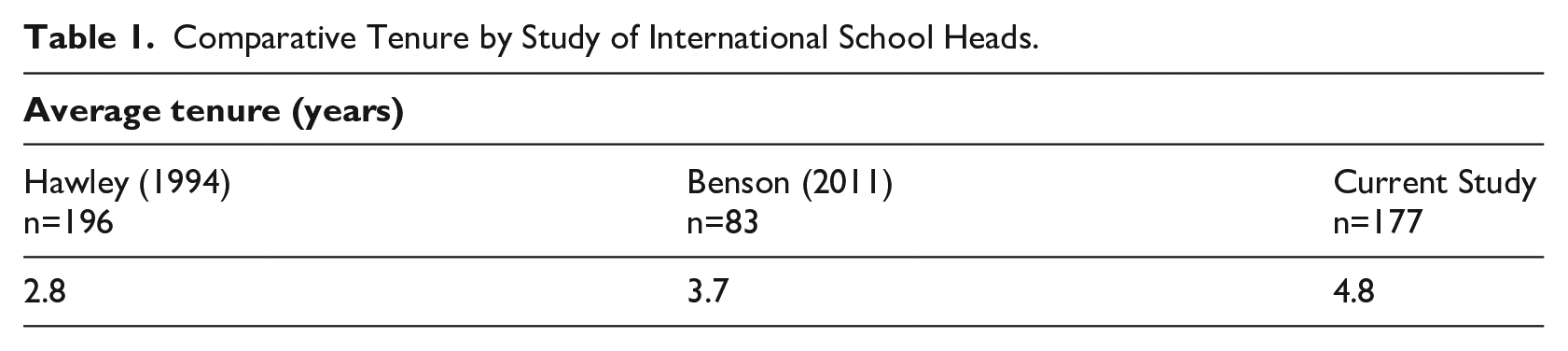
The international school market has seen tremendous growth over the past two decades. During this time, ISC Research data report that the number of international schools increased from 2,584 schools with around one million students in 2000 (ISC Research, 2020) to 13,614 schools and over 6.7 million students in 2023 (ISC Research, 2023). With this growth in the market comes a tremendous opportunity for educational leaders to take on a headship role around the globe. However, with the pressures of increasing demand, a shift in demographic composition, and the need to satisfy multiple stakeholders (Catano and Stronge, 2007), the challenges faced by international school heads can be enormous. One of the most frequently recognized challenges is the ability to retain the headship. Given that previous research suggested the average length of time in an international school headship can range from 2.8 years (Hawley, 1994, 1995) to 3.7 years (Benson, 2011), successfully navigating the waters of an international school headship and maintain one’s position would appear to be difficult.
Currently, there is limited research on this topic and much of the literature refers to short tenure of international school heads. The referenced short tenure over the past two decades is frequently referenced in international school leadership literature (Blandford and Shaw, 2001; Hayden and Thompson, 2008; Lee et al, 2012) and continues as ‘we know that the role (in any one school) is often short-lived’ (Bunnell and Gardner-McTaggart, 2022: 13). While short-lived is not defined, it typically refers to the previously noted two studies (Benson, 2011; Hawley, 1994). This paper provides a much-needed update on current tenure trends and a deeper understanding of issues impacting the tenure-termination situation. It should be noted that, while titles given to staff in leadership roles in international schools vary, this research is only focused on the top tier position, often described as Head of School, which can also be referred to inter alia as Director, Headmaster, Principal, Executive Principal, or CEO.
Leadership and factors impacting tenure
The tenure data frequently cited is now outdated. Noted gaps in the literature reflect the fact that there is a lack of research on leadership in international schools (Bunnell, 2018; Gardner-McTaggart, 2018; Hammad and Shah, 2018; Keller, 2015; Lee et al, 2012). Bunnell argues that ‘the reality of being a leader in an international school stands out as being an especially neglected area of concern’ (2018: 562). The focus of this paper, in part, is to address that concern by examining current tenure and issues impacting the tenure of international school heads. There are also recommendations, reflecting data results, to provide insights to support heads in navigating the challenges of leadership within the international school sector.
Academics have acknowledged that the international school head position can be extremely challenging (Bunnell, 2018; Hayden and Thompson, 2008; Hammad and Shah, 2018; Keller, 2015; Normore, 2004; Speirs, 2016) and that ‘this is clearly not an environment for the ambitious teacher wanting to get on the leadership ladder’ (Bunnell and Gardner-McTaggart, 2022: 12). Short tenure makes the position comparable to ‘professional sports managers in terms of short-lived careers’ (Morrison, 2018: 522). Our current reference point for the tenure of an international school head dates back anywhere from 12 to 30 years. With only 480 US overseas schools registered at the time, Hawley’s (1994) quantitative research study examined the employment period of 336 school heads working in US-accredited schools. He determined that, on average, the length of tenure was 2.8 years (Hawley, 1994: 12). In addition, and more dramatically, 15% only lasted one year, 35% for two years, and only 26% remained after six years (Hawley, 1994: 12). Variations in tenure were noted by location, with longer tenure in Europe (4.8 years) than in Africa (1.9 years); by curriculum, with tenure at schools offering International Baccalaureate programmes being longer; and by ‘prestige value’ of the school, again, also resulting in longer tenure (Hawley, 1994: 16-19). A decrease in tenure was associated with negative travel advisories among the push factors that forced school heads to leave both the school and the country (Hawley, 1994: 19; Hawley, 1995). As one would expect, ‘tenure is longer in more stable social, economic and political environments’ (Hawley, 1994: 33).
A key variable impacting tenure in Hawley’s study was school governance, with the structure and composition of the board appearing to have a direct impact on the longevity of international school heads. For example, Hawley found that where there was greater diversity in nationality representation on the board, tenure was much shorter; conversely, with only one nationality, tenure was the longest at over 6 years (1994: 15). Furthermore, he determined longevity increased when board membership had a higher number of ‘disinterested’ members, meaning not having their own children at the school (Hawley, 1994: 13). This is important as it exemplifies an inherent challenge by design when the governance model allows for divergent interests of parent groups to compete with school leadership vision and direction.
The only other research study found on the same scale focusing specifically on international school head turnover is the work of Benson (2011) who, like Hawley, is quoted extensively within the literature. Incorporating both quantitative and qualitative methods, Benson’s study found the average tenure of international school heads to be 3.7 years (2011: 93). This outcome was based on 83 surveys and 8 interviews conducted with international school leaders from across the globe who had previous experience as heads of school. Although the pool of respondents was double these figures, almost half were not included in the analysis as they were in their first post as head, which is interesting as it points to the considerable number of new heads then in post. Benson found that tenure increased when heads had prior teaching experience in international schools, leadership experience in their home country, and professional leadership qualifications (Benson, 2011: 95). In addition, tenure increased when individuals were promoted to the position from within the organization as opposed to being externally recruited (Benson, 2011: 97).
This leads to a central question that has not been fully addressed to date, that being the reasons for international school heads leaving their position. As Mascall et al argue, in relation to turnover of principals more broadly, ‘the circumstances that prompt a principal to move from the job are diverse, and often unplanned’ (2011: 89). In the context of international schools, it is important to have a greater understanding of whether heads move due to contract termination or non-renewal of contract, or are moving of their own accord for personal or professional reasons, such as better remuneration, more interesting locations, or larger, more prestigious schools.
While tenure length from the two studies noted has been often cited within the literature, subsequent studies have not thoroughly replicated the research to explore further possible root causes. For example, Stout notes that in this context ‘there is a seemingly disproportionate number of heads who are fired or replaced with varying degrees of acceptable procedure’ (2005: 16), yet use of the word seemingly may imply there lacks a solid justification for this claim. Most published researchers have accepted that tenure of international school heads will be short. Only one paper countered this with ‘despite the regularity of [short tenure], there has still been little investigation into explaining or ‘making sense’ of this situation’ (Bunnell, 2018: 553). If the duration is so short for heads of school there must be concrete reasons. Much of the research to date has focused on the challenges of working with the board of directors (see Bailey and Gibson, 2020; Benson, 2011; Gardner-McTaggart, 2018; Keller, 2015; Speirs, 2016; Stout, 2005). With the continuing growth of the international school market, a greater understanding of the challenges faced by heads of school is warranted.
Methodology
To address the research questions – what is the current average length of tenure, and what are the reasons for turnover of international school heads – this study incorporated an explanatory sequential mixed methods design (Creswell, 2009, 2016; Creswell and Clark, 2018). A cross-sectional survey was designed to capture head of school data with a focus on situations, perceptions, and experiences (non-causal). The online survey was designed and pilot-tested with seven leaders who are current heads of school at international schools in Asia, with the aim of ensuring the survey tool was clear, logically organized, readable and captured the data required to address the scope of the study as defined by the research questions.
Given there were potentially over 13,500 international school heads around the globe (ISC Research, 2023), it was not feasible to survey them all. As such, a non-probability sampling method was employed, incorporating several strategies to maximize response rate. Initially, voluntary response sampling was employed by emailing three international school accrediting agencies – the Council of International Schools (CIS), the New England Association of Schools and Colleges (NEASC), and the Western Association of Schools and Colleges (WASC) – requesting that they share the survey with member heads of school. This was expected to garner a large number of survey completions. However, it soon became apparent that not all organizations were able to respond positively to this request, with policies in place which forbade this practice, on the basis of the number of research requests they typically receive. A shift in approach was therefore required. It is important to note that there was tremendous support for this study from all organizational leaders contacted, even if dissemination of the survey could not be done.
As such, convenience sampling (placing a link to the survey on LinkedIn) and purposive sampling (targeting heads of school directly from the publicly-available membership lists of the three accrediting bodies noted above) were employed. The rationale for head of school selection from school members of these accrediting organizations reflected the importance of researching heads of school within ‘like-environments’ as schools described as international schools vary in quality, and membership of these organizations can provide a sense of quality assurance – especially if the school has also attained accreditation, which has many components connected to ensuring the highest international education standards. There was also a practicality consideration, given that access to heads of school could be obtained from the organizational members’ list.
A total of 177 completed surveys were received. The results from the survey were then analyzed descriptively to gain a better understanding of the current situation in response to the research questions. Findings from the descriptive survey statistics also provided a reference point to help guide the interviews. In addition, open-ended survey questions were analyzed thematically. The survey results were then compared, where possible, with previous data found in the literature.
In contrast to the quantitative methods approach, the selection process of interview participants was purposive sampling, seeking individuals who met specific criteria: that interviewees would be current or recent heads of international schools who had varying experiences in terms of geographic location, number of schools, and tenure length. The selection of interviewees came from: i) survey participants who responded via the survey instrument to the request to be interviewed, ii) those who replied to the request to be interviewed posted on LinkedIn, or iii) those whom I identified and short-listed after reviewing their curriculum vitae on LinkedIn. The benefit of this approach was that I gained access to a sufficient number of heads of school with a wide range of experiences. In total, 9 heads of school were interviewed, with head of school experience ranging from two to four schools, and an average tenure per school ranging from 3.25 to 10 years. With the inclusion of interviews, this approach reinforces James and Slater’s (2014) argument that ‘a snippet of qualitative data may be used to elucidate the quantitative evidence just as frequencies in responses or tests of significance may add internal validity to qualitative findings’ (p 219).
By adopting a mixed methods approach, this study benefitted from the strengths of each methodology, which together made for a sounder research design and allowed for the determination of more meaningful results. As Blaxter et al (2010) note, the benefit of a combination of approaches can increase the ‘validity of the information being collected’ (p 205).
Demographic Data
The 177 survey respondents in this study were currently employed in Asia (39.4%), Europe (21.8%), Africa (20%), the Americas (12.3%), or the Middle East (6.5%). They were predominantly white (84.9%) and male (63.0%), with 89.1% of males and 84.0% of females identifying as white. The high proportion of whiteness also observed in international schools more widely has led to recent criticism that international schools may be accused of racism (Gardner-McTaggart, 2021; Pearson, 2022; Xu, 2023). It is also consistent with the assertion that the ‘interpretation of global-mindedness and criticality is enacted by mostly white staff and leadership in individual schools’ (Gardner-McTaggart, 2021: 5).
In terms of nationality, while there were 20 nationalities represented, most heads came from the United States (41.2%), United Kingdom (21.6%) or Canada (14.2%). This parallels CIS findings of the three top nationalities for heads being the United States (51%), the United Kingdom (17%), and Canada (13%) (Neyra, 2021). The dominance of international schools by leaders from these countries is very apparent and consistent with the suggestion that ‘schools implicitly demand a person from an Anglo-Saxon nation’ (Bunnell and Gardner-McTaggart, 2022: 15).
Most respondents (93.1%) had worked in teaching for more than 16 years, and over half (59.3 %) had had a career of more than 26 years in education. This was reflected in the age range of respondents, with 84.2% over 45 years of age, including a notable 8.2% over what might be considered a typical retirement age of 65 years. In terms of leadership experience, 83.4% had been school leaders for more than 11 years and 64.6% had gained all their experience within the international school sector. This international school experience was also reflected in the fact that the majority (79.5%) had worked as a teacher at an international school before entering a leadership role, with teaching experience in international schools being higher for female heads (84%) than for male heads (76.1%). Interestingly, the high percentage of heads with previous international school career experience demonstrates that many school heads are integrated into the international school network, navigating through the ranks, and the majority are not coming to the head of school position from other national, public, or private education systems.
Findings
Tenure and factors impacting length
Central to this study was an update on the average tenure for a head of school. Much has changed within the international school sector since the previously noted studies were published. This study found that the average tenure for a head of school was 4.8 years (Table 1).
Comparative Tenure by Study of International School Heads.
What is interesting in the current study is that many of the heads were not completely new to the position. While 49.7% stated they were in their first headship (n=88), only 9.0% (n=16) were in their first year as head of school. Beyond that, 28.2% (n=50) were in their first three years, while 41.2% (n=73) were in their first 5 years (Table 2). This reflects the increasing period of time that heads remained in their position.
Number of Years as Head of School (at any international school).
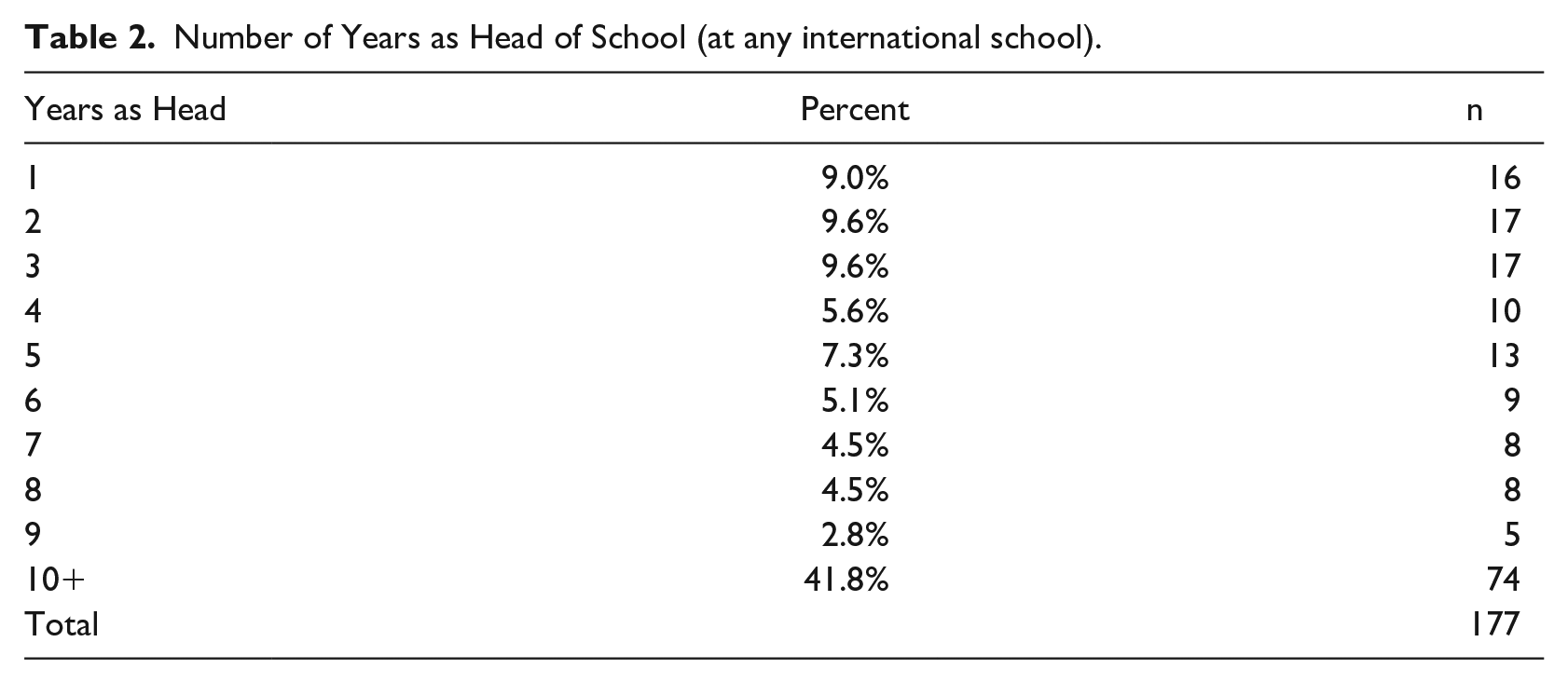
At the other end of the scale, a notable 41.8% (n=74) had been head of school for a decade or more. This demonstrates that the retention rate for school leaders as heads of school within the broader international school sector is quite high, and questions the notion of a precarious and dark industry for international school educators (Bunnell, 2018; Caffyn, 2018). They may choose to move from school to school for a variety of personal and professional reasons, which will be explored below, but it does not seem that they are leaving the international school sector due to difficulties and returning to a national or state system in their home country. This is certainly an area for potential further research in order to provide evidence rather than supposition with respect to those who exit the sector; it would be interesting to know how many are doing this and for what reasons.
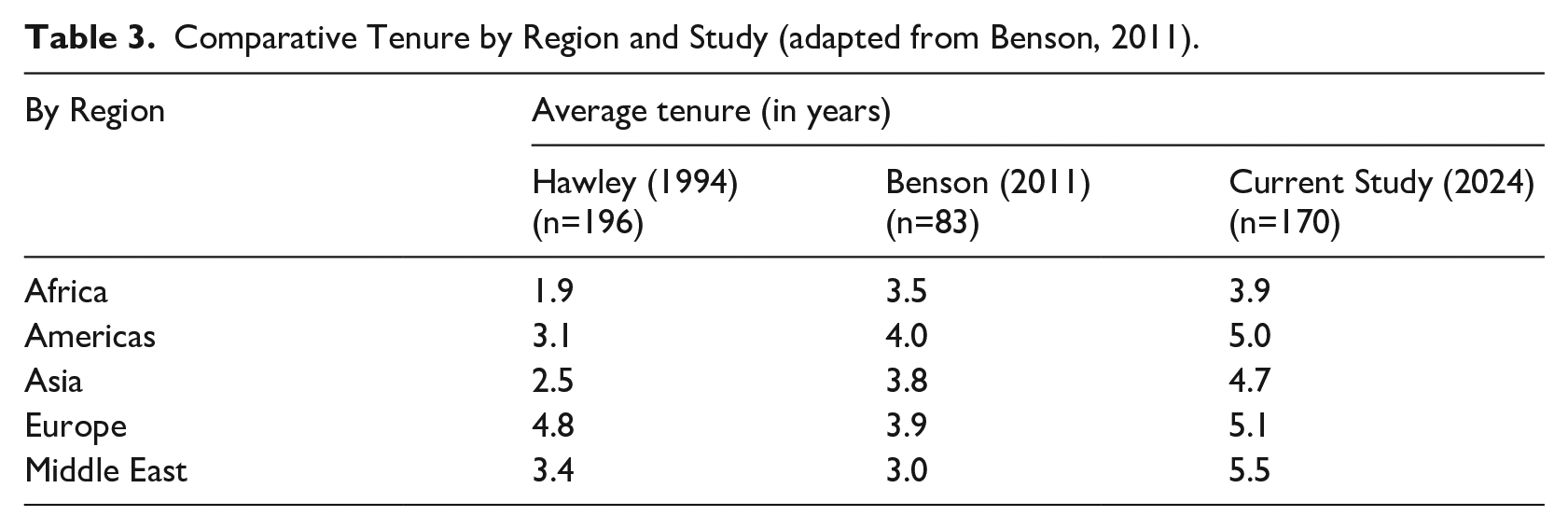
On the basis of both surveys and interviews, it was clear that many variables impact the length of tenure. For example, the geographical location of a school may impact how long a head chooses to remain in post. This is not surprising, given that some locations are just easier to adjust to and live in, based on social, political, and economic conditions. In this study, the Middle East ranked highest in terms of average tenure at 5.5 years, followed by Europe at 5.1 years, then the Americas at a very close third at 5.0 years, Asia at 4.7 years, and Africa at 3.9 years. Recognizing that there will be limitations when comparing the findings (Table 3) of Hawley (1994), Benson (2011) and this study, not least that the samples on which the studies were based were not selected in exactly the same way, and the international school sector has changed markedly in the years since Hawley’s research was undertaken, it is nevertheless interesting that between the time of Hawley’s research being carried out (1994) and the current study, some 30 years later, head of school tenure has increased for all regions; Africa (+2.0 years), the Americas (+1.9 years), Asia (+2.2 years), and the Middle East (+2.1 years) have all seen a substantial increase. Although Europe did not see a notable increase (+o.3 years), there was an increase of 1.2 years when compared to Benson’s (2011) study which found a lower tenure for this region.
Comparative Tenure by Region and Study (adapted from Benson, 2011).
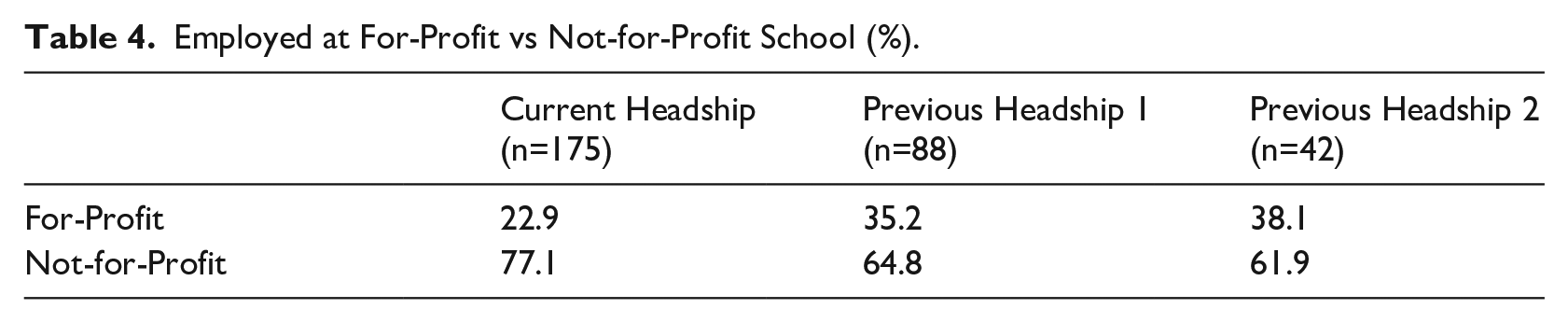
Other factors that impact tenure include the type of international school at which the head is employed. In the current study, tenure was longer at not-for-profit schools than at for-profit schools (5.4 versus 3.3 years). Furthermore, based on longitudinal data, from all heads’ first position to current position, while not-for-profit institutions remained the majority in terms of heads’ employment, there was a noticeable shift over time from for-profit to not-for-profit schools (for-profit declined from 38.1% to 22.9%) as heads transitioned to new positions along their career paths (Table 4). Based on findings from the survey and interviews, it can be seen that larger numbers of heads of school were working at not-for-profit institutions.
Employed at For-Profit vs Not-for-Profit School (%).
This is interesting, given that more international schools today are for-profit rather than not-for-profit, as ‘the growth of international schools has . . . changed the ownership landscape so that the ratio of for-profit now outnumbers not-for-profit by around 2 to 1 globally’ (Gibson and Bailey, 2021: 3). The high response rate from heads who worked in not-for-profit schools could be explained by the high level of CIS (47.3%), NEASC (20.7%) and WASC (24.3%) member schools, which may be more likely to be not-for-profit, included in the survey. It may also be that a reason why heads leave their position is that they prefer to move from the for-profit to the not-for-profit sector, which could relate to the size, history, and/or prestigious nature associated with these schools as elite traditional international schools (Bunnell and McTaggart, 2022).
This could also be related to governance differences between a school board composition at a not-for-profit school compared with that at a for-profit school. While the challenges of maintaining the head of school role may be similar, the complexities of navigating what in many not-for-profit schools may be a large, parent-led board with competing agendas and personal interests, were noted in survey responses and by all interviewees. For example, many comments from heads in the not-for-profit sector noted below focused on the negative challenges of personalities, agendas, power and control which resulted in ‘a living nightmare [with] vested interests determining decisions; everything was personal; short-sightedness and selfishness dominated’ (survey respondent). This connects directly to competing interests and boundary wars occurring at this level. It was recognized that heads wish to ensure there is a clear delineation between governance and school operations. As frequently noted, board members could cross the governance-operations boundary into the operational side of the school and undermine the head of school. At an operational level, the interaction between head of school and the board plays a fundamental role, yet the head must also be highly proficient in ensuring that efficient operational interactions on other key challenges such as staffing issues and financial profitability are successful. Heads were very familiar with these issues, as comments noted that it was important that there remained an ‘understanding of the various politics involved [and] not taking things personally’ (survey respondent) and, when dealing with the school board, the need ‘to navigate the terrain with a considerable political suaveness that was often an internal stress - but the only way to survive’ (survey respondent).
It was also clear that the overall number of headships an individual had held was related to the average tenure, with an increase in number of headships held being associated with a decrease in the overall average tenure per school. This ranged from 5.1 years for those with one headship to 3.8 years for those who had four headships (Table 5).
Average Tenure by Number of Headships.
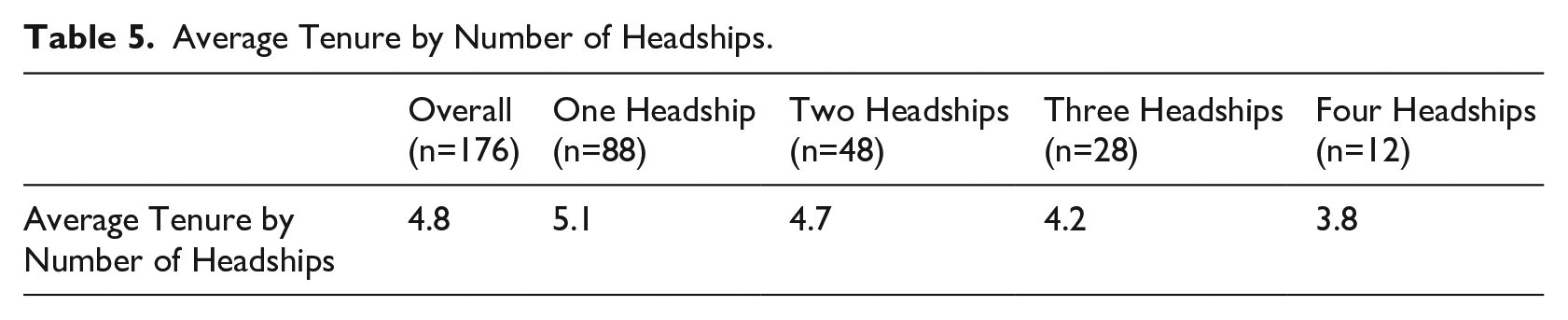
With the high percentage of international school heads in this study being in their first headship, these data seemingly contradict the argument of Bunnell and Gardner-McTaggart who suggest that their research ‘strongly implies that a process of (re)production of a ‘leadership nobility’ is occurring, since it would be highly unusual for a novice to be appointed’ (2022: 12 – emphasis added). On the contrary, in this study there is a notable number of novices being hired (almost 50%), and the data show that those hired for their first role as head of school remain the longest in the position at 5.1 years.
Hawley’s (1994) study found that two specific school head characteristics were predictive of duration. One was the head’s nationality, while the other was whether they had worked as a teacher at an international school. Hawley determined that non-US nationals remained in position longer with a ‘predicted median duration of longer than six years for the school head who is not a US citizen and 3.7 years for the US citizen’ (1994: 16). This is interesting given that Hawley’s target population was specifically those heads working in US-accredited international schools. When considering nationality in this study, the data suggest that the impact of nationality has changed, with US nationals having the longest tenure at 5.0 years. As per Table 6, American nationals lead both in number and average tenure. Heads of school from the United Kingdom and Australia were next in both respects, and Canadians had the shortest tenure. While many other nationalities were also noted, they were very small in number thus not allowing for a meaningful comparison.
Average tenure by nationality.
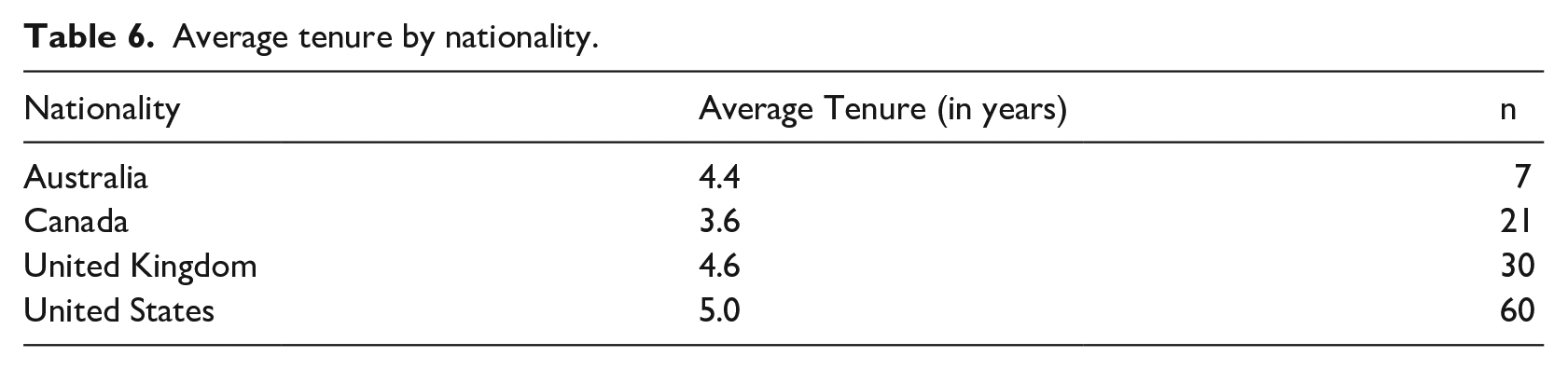
The data reflect a heavy dominance of Anglo-Saxon nationalities in heads of international schools, which corroborates findings from the literature (Bunnell and Atkinson, 2020; Bunnell and Gardner-McTaggart, 2022; Pearce, 2023).
The other key characteristic that appeared to impact tenure was whether the head of school had previously worked as a teacher at an international school. Hawley found that the ‘estimated median duration is 3.5 years for school heads who have no international school teaching experience and a median of 4.2 years for those with five years of international teaching experience’ (1994: 16). This would make sense, given that international school experience would be expected to provide heads with a better understanding of the issues impacting such schools, not to mention the typical challenges faced by their leaders. Yet the results from the current study indicate the tenure of international school heads who had no previous international school experience was 1.3 years longer at 5.9 years, compared with those with previous international school experience at 4.6 years. It is important to note, however, that those entering the sector with no previous international school experience were doing so after many years of both teaching and leadership experience in other systems. These leaders, while a minority in this study, are a cadre of professionals taking advantage of the ever-increasing international school sector opportunities, by exiting their national or state system. The fact that 62.1% of those in their first international school headship were between 45 and 54 years of age, and 24.1% were between 55 and 64 years of age, could suggest that many were deciding to finish employment in their home country’s education system in order to engage in the international school sector. This point may also reflect why such heads remain longer in their first school as a shift from a national system to the international school sector is not likely to lead to long-term career moves including progressing to larger or more prestigious schools. A process of moving up in size and prestige may be more likely to be typical of a younger, early international school career-oriented school leader.
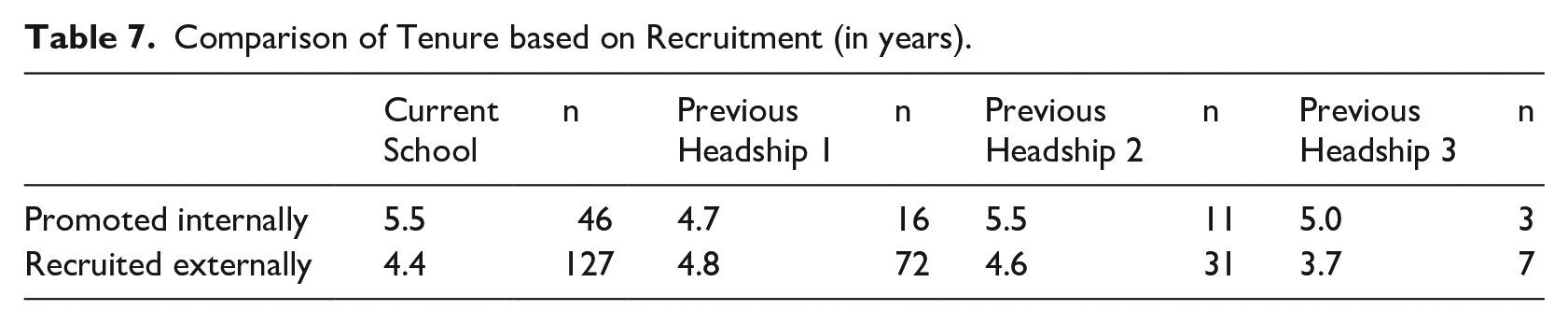
Another variable linked to tenure associated with the ‘moving on’ cycle was the very foundation of employment itself – the recruitment practice. How a person enters the headship role at an international school, whether internally promoted or externally recruited, can impact tenure (Benson, 2011). Based on the data here, it was clear that most heads of schools were recruited externally. Moving from current to the three former headships, external recruitment accounted for a 73.4%, 81.9%, 73.8%, and 70.0% recruitment rate. It can be seen, based on this data, that external recruitment for the head position is by far the norm.
When examining tenure and recruitment (Table 7), it was clear that average tenure was longer for those heads who had been promoted internally in each scenario except for previous headship 1 (the position held prior to their current role), which was very close at 4.7 compared with 4.8 years.
Comparison of Tenure based on Recruitment (in years).
This raises the question as to why so many international school boards appear to prefer external recruitment when there may be highly qualified candidates currently in their employment. Benefits of hiring internally include the person appointed understanding the school culture, vision and mission, the clientele, and them having an established working relationship with key stakeholders. As one head noted: matching a head’s style, philosophy and character to the school’s culture will be a key factor in longevity. This is why heads developed internally tend to last longer. They already fit the school culture and know where a lot of the landmines are. (survey respondent)
External recruitment could reflect the belief that new leaders will bring in new perspectives, or that they are coming in clean with no prior relationships with staff (especially important if, for instance, the board mandate is to make substantial changes including terminating some staff contracts), or they are bringing a particular skillset or experience of a program successfully implemented at their previous school which is not present at the new school. While research suggests that there are definite benefits associated with retaining the head of school for a longer period (Blackwood, 2018; Boyce & Bowers, 2016; Odland & Ruzicka, 2009), there remains a belief in at least some contexts that bringing in someone new to lead the organization is preferable (Littleford, 2019). The fact that heads in this study are predominantly recruited externally, yet stay longer when internally promoted, may represent an area of potential review for boards when appointing a new head of school. Perhaps the practice of external recruitment is perpetuating the cycle of a revolving door for heads of school. Most definitely, the reason behind this practice warrants further research.
Impact of board on tenure
The power and influence of the board on the tenure of the head of school is undeniable and may be one of the greatest challenges for a head of school. The role of the international school head is closely connected to the relationship with the board, and success may be defined and controlled by the board (Morrison, 2018; Speirs, 2016). In this study, a resounding number of heads reported to a board of directors, ranging from 80.2% based on their shortest-tenured position to 95.2% at their longest-tenured position, while the pervasive power of the board was noted in survey responses and at every interview. Repeatedly, when head of school issues were discussed, the focus was on the board. Comments such as ‘number one is relationship with the board’ (Interviewee 1) or the ‘board is the most important relationship for my success and the success of the school. So, if this is gone, if this goes south, everything’s going to fall apart [since] they have the control over your contract’ and a positive relationship with the ‘board is probably the key relationship to keep you . . . in the role’ (Interviewee 9).
Great power rests within the board, and it is important to recognize that key governing body characteristics can have an impact on the tenure of the school head. For example, board composition may impact the tenure of international school heads (Hawley, 1994, 1995; Benson, 2011). Variables such as board size, nationality, policies, and board turnover can all have an impact on tenure. One question that arose from data here was can the board size impact tenure? In this study, board size ranged from just a few members to over 16 members. One interesting outcome was that as the board size increased, there was a corresponding sizable increase in tenure for the head of school in both scenarios, ie those heads in the longest- and shortest-held positions (Table 8).
Board Size and Head of School Tenure.
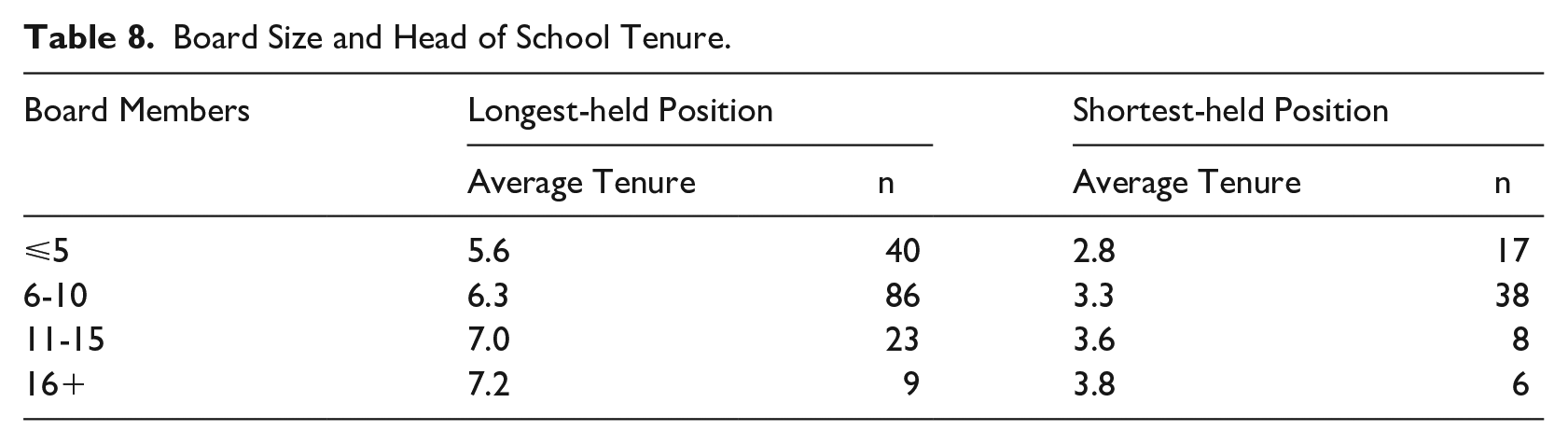
According to these results, the head of school remained in the position longer when board membership was larger. This is an interesting outcome. The opposite might have been predicted since the complexity and dynamic of more voices on the board could be expected to lead to a challenging environment in which to work and be successful. However, perhaps this reflects that there is not one consistent pattern, and some heads may be able to navigate the various interest groups more successfully than others.
Many international schools cater for students from many countries, and board membership may also be quite international. On average, heads in this study noted that there were 3.4 nationalities on the board of their current school. Yet some boards consisted of only one nationality while others had greater diversity, with 11 or more nationalities represented. Hawley (1994) found that fewer nationalities on the board increased the length of tenure of the head. However, as noted in Table 9, the current study found that the tenure of a head of school increased as the number of nationalities on the board increased, from 6.2 years with one nationality of board members to 6.9 years with five or more nationalities on the board. This was found in both data sets provided by heads for their longest and shortest-held positions.
Nationalities on Board and Head of School Tenure.
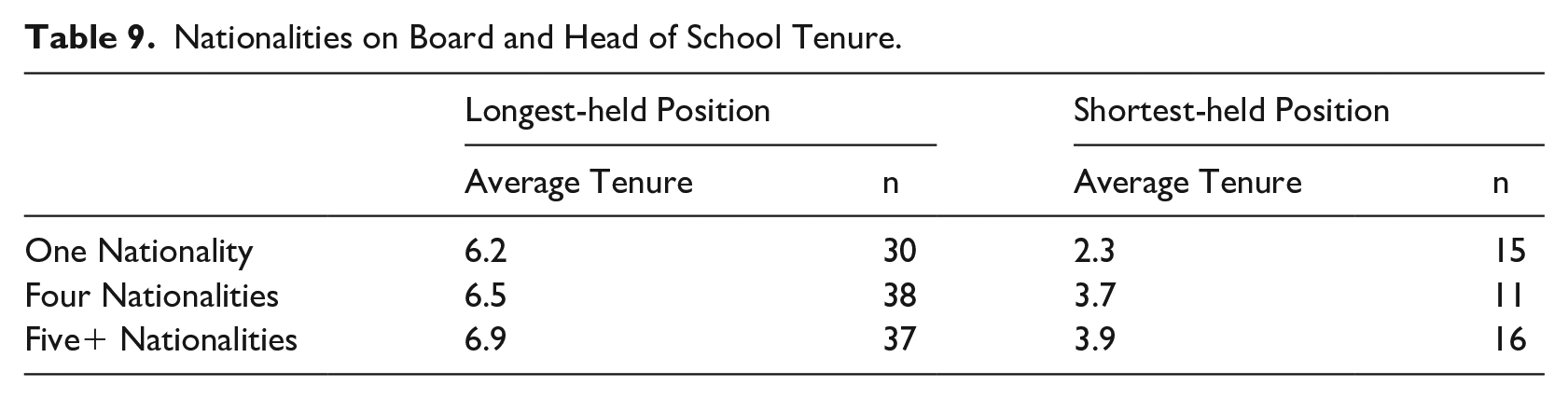
The implications of a diverse board consisting of multiple nationalities for an increase in tenure are unclear. In the context of research on the corporate world, it has been noted in relation to board composition that ‘culture affects perceptions, preferences, and behaviors’ (Ji et al, 2021: 4) and the ‘structure of the board, like any organizational structure, can be influenced by national culture’ (Ji et al, 2021: 9). While in the current study tenure increased slightly with an increase in the diversity of the board, before any definitive conclusions can be drawn, additional research, focusing on board composition and attributes beyond nationality, such as gender, age, expertise, education, and board tenure, is warranted to further our understanding of this issue.
It was also clear that the head evaluation process by the board may impact tenure. Most heads of school had an annual evaluation, whether they were at their longest- or shortest-held position. ‘[H]aving clear evaluation criteria’ (survey respondent) was deemed critical in ensuring good communication and relations with the board, and establishing a cycle for improvement. Based on the survey results, 80.5% (n=129) of those at the longest-held position had a formal evaluation conducted by the board. For those heads with an evaluation process, the average tenure was 6.3 years. Where there was no evaluative process in place at all, which only applied to 19.5% (n=31) of the respondents, average tenure dropped to 5.1 years. For those at the shortest-held position, again, while the majority were formally evaluated by the board (76.3%, n=58), tenure was much shorter at 3.7 years. If there was no formal evaluation process in place, tenure dropped to 2.9 years (n=18).
A key factor relating to tenure was the frequency of evaluations (Table 10). When the frequency of head of school evaluations was higher, the longevity of the head was lower. For example, heads who were evaluated informally had the longest tenure at 8.7 years, while repeated evaluations at 6-week intervals was associated with tenure at 2 years. Given the limited number of heads who did not have an annual evaluation, it is difficult to draw any relationship conclusions; however, this issue does warrant further research to determine if there are any connections between evaluation frequency and tenure.
Head of School Tenure by Evaluation Frequency.
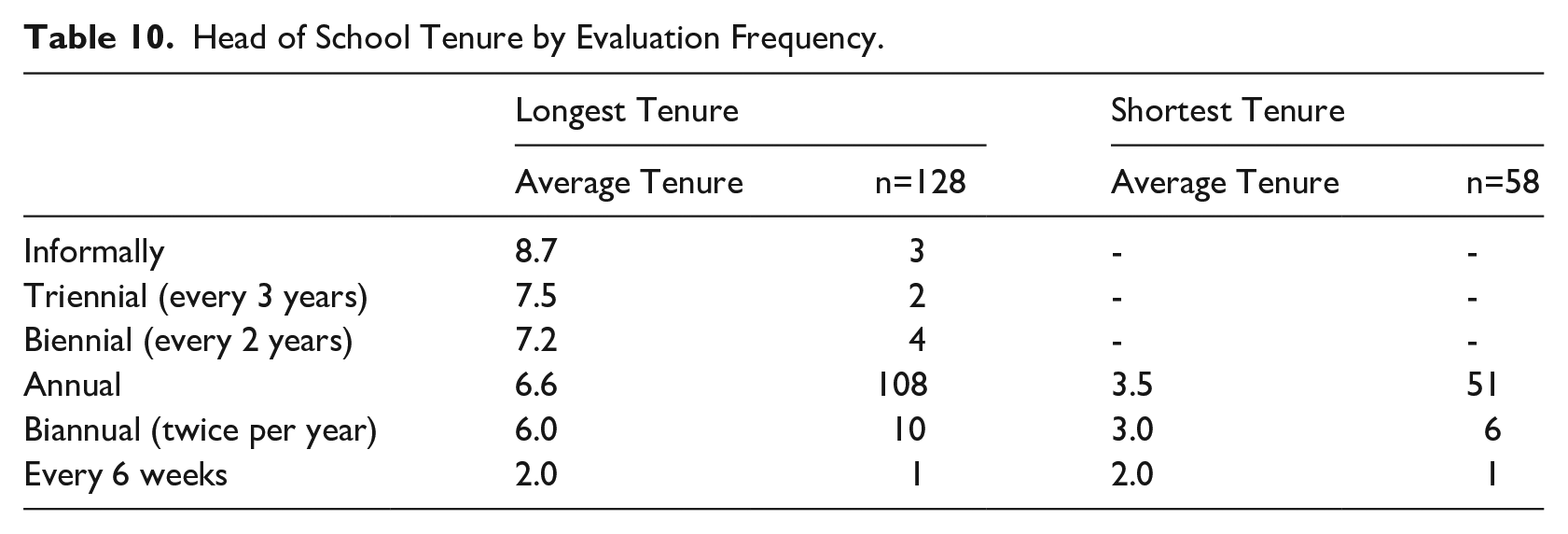
One question that arises is why is there a difference in tenure between heads who had experienced an informal frequency of evaluation, with an average tenure of 8.7 years as noted above, when compared to when there was no evaluation at all, with an average tenure of 5.1 years (n=31). Perhaps this difference reflects schools with no policies for evaluation in place representing a more challenging work environment, and an easier ability to remove a head at any point, while schools with policies but a more relaxed and informal evaluation structure reflected a positive environment with confidence in the head.
When examining the role of the board, it has been noted in previous studies (Hawley, 1994; Benson, 2011; Littleford, 2024) that board stability plays an important role in maintaining a head of school for a longer period. The data from this study indicated that board stability is an area of concern. Only 57.2% of the respondents at their longest-held position noted board turnover was stable (defined as little if any turnover within 3 years) and only 44.0% at their shortest-held position did so. In terms of head of school tenure, it was clear that, for those at the longest-held position, board stability was associated with a notable increase in tenure, from 5.6 years to 6.9 years (Table 11). Schools with a medium turnover for the board (defined here as new members every two years) were similar to those in a high turnover environment.
Board Stability – Longest vs Shortest Tenure.
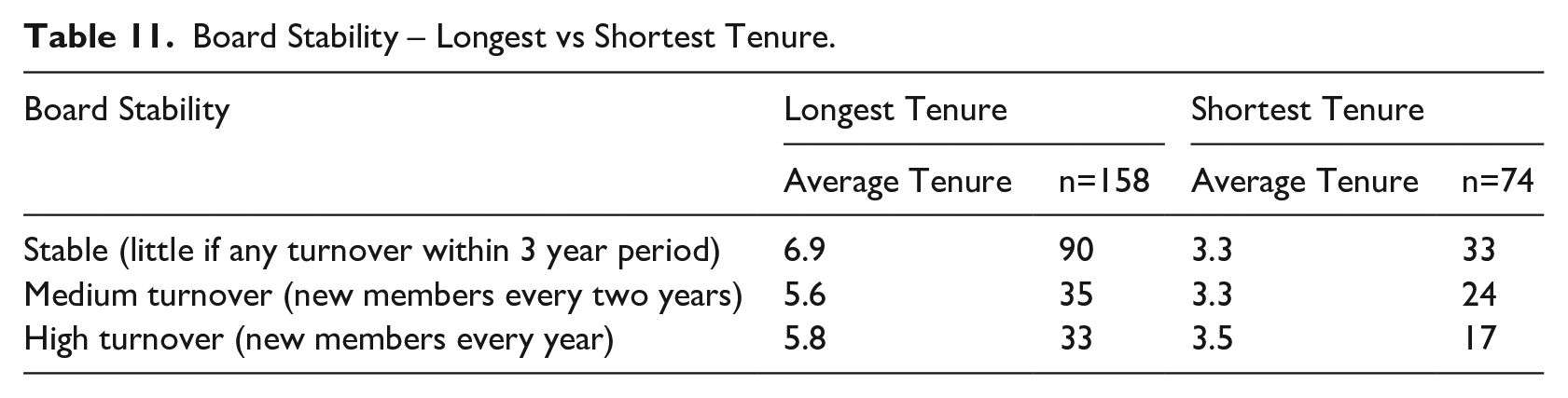
Interestingly, for those in the shortest-held position, a high turnover in board membership was associated with an increase in tenure by 0.2 years compared to a stable or medium turnover environment. While perhaps negligible, this does raise the question as to the possible impact of an ever-changing board membership. Even at the longer end, tenure at high board turnover schools was longer on average at 5.8 years compared with the overall average for tenure at 4.8 years. Perhaps any dysfunction remains at the board level so that focused attention on the head is minimized. This also corresponds to the observation by Berns et al when noting that ‘dysfunction within the board may also deter monitoring and insulate the CEO from dismissal’ (2021: 378) and ‘when boards are more powerful than the CEO, they are better positioned to dismiss the CEO when they choose; when boards are relatively weaker, dismissing the CEO becomes much more difficult’ (Berns et al, 2021: 378). High turnover may allow for greater dysfunction, increased difficulty in gaining consensus, and inefficiency as members are trained and brought up to speed. This can create a greater reliance on the head to support the board in this process. However, continuity within the board, alongside the head of school, is beneficial in terms of developing positive working relationships. This synergy between the board and head of school can be instrumental in keeping the school focused on its vision and mission and ensuring it is meeting its stated goals.
The data suggest that other board characteristics may also impact tenure. In Figure 1, these characteristics are noted in terms of their apparent impact on tenure, whether longer, shorter, or neutral. Board composition, size, children studying at school, board turnover, and frequency of head evaluation can all impact tenure. The only variable which had a neutral impact is if the board has policies in place to guide it.
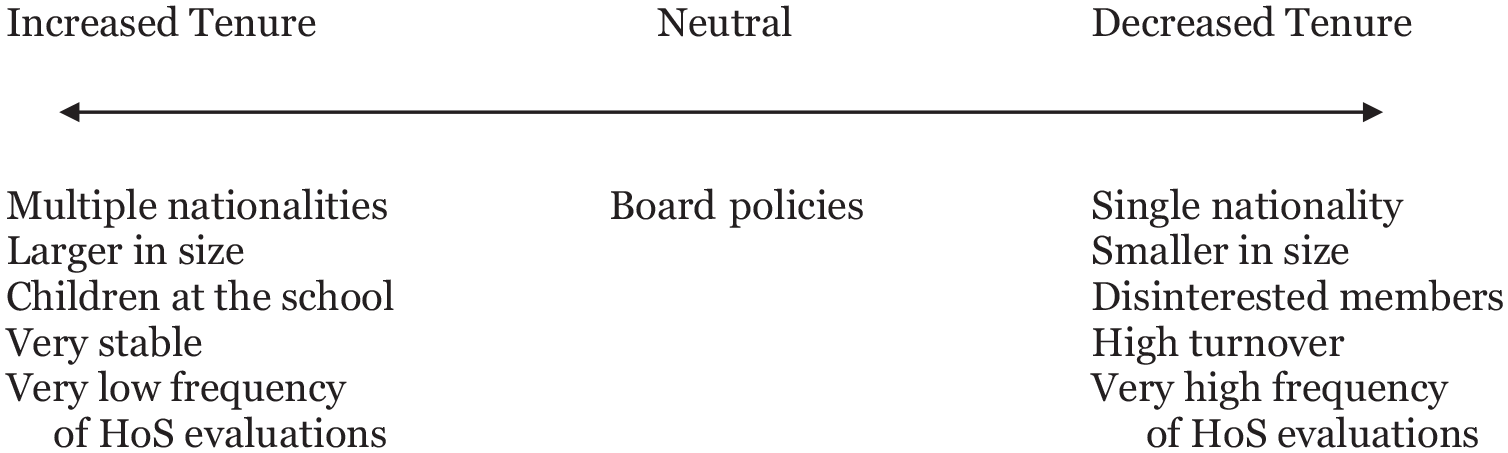
Board Characteristics and Impact on Tenure of Head of School (HoS).
The board structure and composition of board membership would thus appear to directly impact the tenure of an international school head. This creates a very interesting model if a school board were investigating which variables may potentially increase the length of tenure for their school head. Certainly, this is not a set-in-stone formula, yet it provides some surprising differences with findings from a previous study (Hawley, 1994). For example, the first three variables under decreased tenure (single nationality, smaller in size, disinterested members) were found to be linked to increased tenure in his study. One would expect that a complex board comprised of many members and many nationalities with children in the school might present challenges for a school head, with a multitude of differing agendas arising from competing sub-groups. Yet the results of this study did not support this scenario.
Why are heads leaving their position?
While the aforementioned results provide insight into current tenure and factors that appear to impact the longevity of a head of school, there is a need to better understand the motivation for a head of school to leave their position. In this study, the most noted reason for leaving a headship, based on heads referring to their experience at previous schools, was issues related to school governance (Table 12), followed by salary and career considerations, family and personal issues, political issues and social issues connected to the host country.
Reasons for Leaving Headship (in % and ranking).
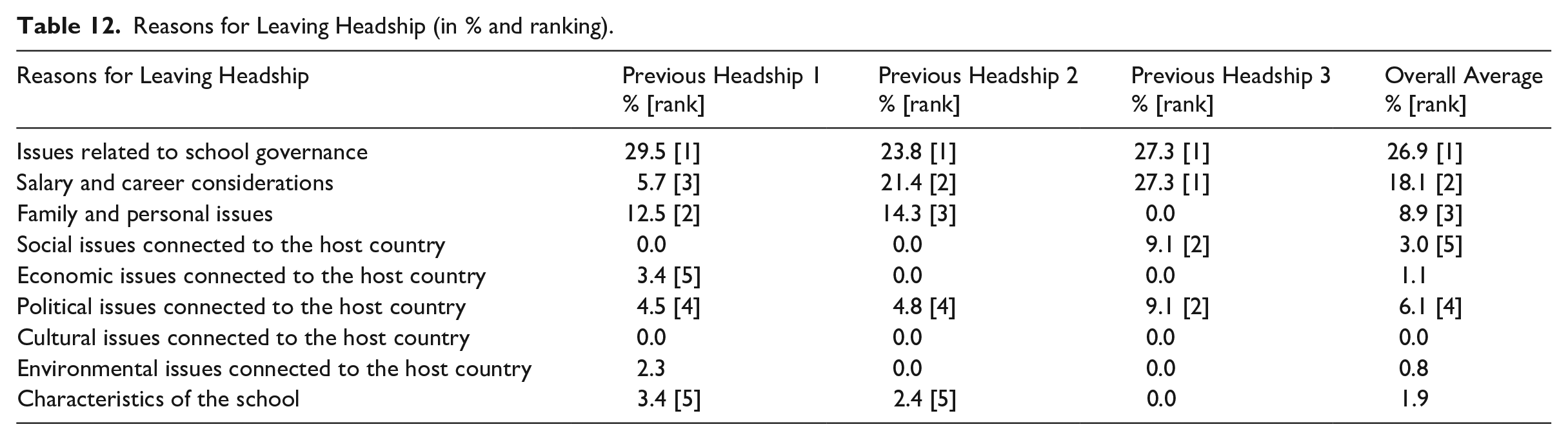
Governance reflects the relationship and challenges inherent within the board–head of school relationship and the need for the head to keep the board well-informed, to complete the board mandate in good faith, and to ensure the interpersonal interactions are both positive and beneficial. Heads were very clear that the board must ‘never be out of the loop’ (Interviewee 9). It was noted that ‘when it comes to [the head] deciding to leave or not leave, it’s almost entirely the board’ (Interviewee 9) and a ‘high percentage of times that somebody either leaves because they’re fed up or they’re fired, it’s to do with the board’ (Interviewee 4). The relationship between the head of school and the board is paramount.
Certainly, salary and career considerations impact the movement of staff in any occupation. In many cases, achieving a bigger or better position, with greater responsibility and remuneration, will require moving to another school. This movement is amplified if there is a preference for external recruitment over internal promotion. It also reflects the structural nature of the international school environment where most schools are a single organization and not part of a larger conglomerate of international schools. If an international school head is successful, there is typically nowhere to move up in their current context. They are at the top of the hierarchy. Heads seeking advancement will therefore move to other schools based on size, location, remuneration, and school reputation (Hawley, 1994; Benson, 2011). For a career professional, new opportunities, challenges, and locations may lure them to leave their current school. At some point, they may find a school, as Interviewee 8 did, which is ‘a good match . . . in terms of my ambition’. When they do, they stay. When they don’t, they leave. For a board looking to recruit long-term heads, this could remain a challenge depending on the overall school environment. However, the board could help to ensure the level of engagement is constructive and beneficial to the mission of the school by prioritizing the development of a positive working environment, with a clear delineation of roles and responsibilities, with support and training for both the head and board.
The third reason to emerge for heads leaving an international school is related to family and personal issues. If a school, location, and/or working conditions did not meet the needs of their family, heads started to look elsewhere. Family safety and a school which met the educational needs of their children were both identified as very important in the decision-making process. These push factors impacted the decision to move on, regardless of whether or not the position held by the head was rewarding.
Related here are the political and economic factors which can impact the decision to move on. International schools are found in most countries around the globe. One issue that can be difficult to avoid is political issues associated with the host country. As, usually, foreign workers within the country, heads of school are not immune to the broader social and geopolitical challenges impacting the overall quality of life. The challenges of living in some host countries should not be underestimated, with some international schools being in countries that are considered ‘tremendous hardship posts . . . [where] most directors [heads] have not even lasted up until Christmas’ (Interviewee 9). Where there is political chaos, this leaves no-one untouched, as one head referenced the urgent need to leave the country immediately, as ‘civil war closed the school permanently’ (survey respondent). It was also noted that most heads need to be cognizant of the fact that they are not operating in their home country: there may be significant differences, and ‘you’re a guest in that country, and there are laws and requirements of the country, not to mention the culture of that particular country, that you do need to take into consideration, and have to understand, and have to respect and have to be aware of’ (Interviewee 2). If the social, political, and economic conditions are not right for the head of school or their family, the need to move on and seek employment elsewhere is very strong.
Precarity and termination – is it a serious issue?
An important outcome of this study is that while heads of school transitioned from school to school, they were not exiting from the international school sector. Their career path remained as an international school head, perhaps reflecting the level of satisfaction gained from working in this field. On the basis of the data gathered in this study, international schools are not as dark and precarious as some authors argue (Caffyn, 2011, 2018), nor are they found to be a ‘largely unappealing and unattractive area of education involving much precarity and insecurity’ (Bunnell, 2021: 559). There is, however, still a perception that contract termination is endemic at this level of leadership within international schools. Littleford, a well-respected school consultant and advisor with over 30 years of experience, and whom almost all interviewees referenced, has stated that in his experience, ‘almost eighty percent of all heads of schools are fired. They do not leave of their own volition’ (Littleford, 2024). This is based on his database of some 7000 schools worldwide, of which the majority are in North America but which include a very large number of ‘so called’ international schools (J Littleford, personal communication, 29 January 2023).
Bunnell and Gardner-McTaggart refer to the ‘high mortality rate of leaders’ (2022: 4), implying that heads of school are being figuratively killed off as they are not wanted long-term. Yet based on the results of the survey and discussions with interviewees in the current study, contract termination of heads either during or at the end of a contract was not a major issue. Only 10.3% (n=9) reported that they were denied a new contract and 5.7% (n=5) that their contract had been terminated before its end. This is substantially different from the experience noted by Littleford (2019, 2024). Nevertheless, the comments from heads in this study regarding contract termination in most cases highlight the challenges inherent in the head’s relationship with the board, where the development of trust is critical, effective communication is essential, and the need to maintain a separation between governance and operations fundamental. Too often it seems board members cross the line into operations, thus making the headship a very challenging role.
Overall, it is clear that the head of school position can be considered challenging yet very rewarding. As one long-term head noted, ‘I would think there’s a very high rate of satisfaction level of working internationally . . . [and] I think there’s much more love of the job as an international school head than you know’ (Interviewee 4). This positive reflection was noted both in the survey and during interviews and can be summarized with the following comment: ‘I think your findings probably will show there’s a lot more good than bad about being an international school head’ (Interviewee 4).
Summary and Recommendations
The overall average length of tenure for international school heads found in this study was 4.8 years. There were many factors which impacted tenure, both internal and external to the school, in addition to many reasons connected to family and career aspirations of the head. Even with a challenging position, many heads remained in the international school sector and moved positions accordingly. The results would support Bunnell’s suggestion in referring to international school heads that ‘the attrition-rate could be low’ (Bunnell, 2021: 9). As one respondent in the current study noted: It’s not always an easy job, especially when your contract is cancelled or not renewed without cause or reason. However, it’s a great job and it’s a real privilege to be head of an international school. I would not change it for the world!
One of the aims of this study was to provide recommendations to better support heads in navigating the challenges of leadership within the international school sector, which may in turn help to increase the average tenure. The average tenure of international school heads appears to have increased since 2011, yet at 4.8 years it lags behind other senior positions such as corporate CEOs (Blackwood, 2018; Citrin et al, 2019).
It should also be noted that research suggests that school leaders should remain in post for between seven years (Boyce and Bowers, 2016; Odland and Ruzicka, 2009) and 10 years (Blackwood, 2018) to maximize effectiveness and for implemented changes to become well-entrenched within the school culture. So in this respect there would seem to be room for improvement.
The role of the board with respect to the head’s defined success or failure, perceived or real, necessitates a deeper review of the governance structures at international schools. Governance policies and protocols need to be clarified to ensure that boards do not extend their actions into areas intended to be controlled by the head of school. The comment noted by Benson (2011) that ‘at one level or another, many [of the chief administrators] are frustrated particularly by issues related to the board and [the fact] that they keep happening over and over again’ continues to resonate within the international school community. Heads need to be protected from boards that over-extend their sphere of influence and control. This is a governance issue, and is not new. Educational organizations supporting international schools recognize it is an issue and have developed appropriate professional development for board members. But the issue may in many cases come down to personal agendas and the need for power and control which derail collective support for school governance and improvement. Greater oversight and control mechanisms would increase the efficacy of school board governance and protect heads of school, while also ensuring that the head of school, through an effective evaluation process, is efficiently doing the work required.
In some contexts, there appears to be acceptance of the current approach to international school leadership. This is ‘not good for the school. It’s totally not right, but this is how it goes’ (Interviewee 6). However, it should be in the board’s interest, and the interests of the entire school community, to engage a candidate as head of school who will be committed to implementing the strategic plan and seeing it through. Bunnell and Gardner-McTaggart (2022: 12) observe in the context of international schools that ‘most schools did not refer to wanting anyone who might stay long term’, which may lead to a situation where the head feels a sense of success if they remain in a school for longer than one contract.
The following recommendations arise from examining the current tenure situation in conjunction with the challenges and recommendations noted by experienced heads of school. Recommendations for heads of school and international school boards appear separately.
Recommendations for Heads of School
Based on the findings in this study, key recommendations for improving the longevity of the head of school and to make the role less challenging, are that the prospective head of school should:
Conduct an extensive evaluation of the school to ensure the school is a good fit for both them and (if applicable) their family
Understand all current challenges, whether board-related, academic, operational, or financial, and review the strategic plan (or board-designated goals) to ensure their skill set matches the targeted actions in the plan
Examine board governance structure, size, stability, nationalities, policies, and other variables noted that may impact head of school tenure
Meet with the current board chair and head of school to better understand current challenges and communication protocols in place to ensure smooth and efficient working relations
Have a detailed understanding of the head of school evaluation process
If the position is offered and accepted:
The initial contract cycle should be for a 5-year term with built-in extension negotiations in year 3 to provide employment stability for the head and sufficient notice to the board if the head’s decision is to leave the position
Subsequent contract length should be negotiated between 3 and 5 years
Sufficient onboarding should be provided for the head before or very early into the commencement of duties to support not only acclimatization to the school but also acculturation to the community
Ongoing professional development should be provided in leadership and board governance
An annual head of school evaluation process should be in place as part of ongoing professional learning
The selection process of a school by a head should be as thorough and detailed as the search selection for a head by the board. If selection compatibility were stronger, perhaps heads would remain longer at the school.
The goal for international school boards should not be to hire a head of school for a predetermined short-term duration, since research has shown the negative impact of frequently changing leaders on many aspects of school. As employer of the head of school, it is incumbent on boards to ensure due diligence is implemented to hire the best candidate for the current school requirements and, once hired, to support them for the long term.
Recommendations to International School Boards
Key recommendations to improve the longevity of the head of school from the board’s perspective are to:
Consider recruiting from within and not default to external candidates – both internally promoted and first-time heads have longer tenure
Focus on prior leadership experience and successes and not necessarily previous international school teaching experience
Review the school’s governance model based on variables which impact head of school tenure, including governance structure, size, stability, nationalities, policies and other variables noted in this study
Ensure policies are in place and oversights set to keep the board’s focus on governance and not on operations of the school
Establish clear guidelines for an annual evaluation of the head of school
Implement mandatory board training and enact policies to mitigate against member self-interest and other unethical behaviours
Formalize the process of ensuring clear communications between head of school and board
Conduct exit interviews with outgoing heads to review and reflect on past interactions, including suggestions for improvement
Keep the remuneration package competitive, provide ongoing professional development opportunities, and keep the dialogue open regarding continued employment (do not leave them in the dark as to the board’s intentions)
If the international school is governed by an owner, rather than a formalized board, the owner may still benefit from these recommendations to ensure that the relationship between head and owner is positive, productive, and mutually beneficial.
Limitations
For any research study there will be limitations, in terms of both design and results. In terms of methodological limitations, while the survey was effective in attaining relevant data from a representation of school heads from across the globe, the number of responses was only 177. As such, even though there was a good representation from the many regions as noted, the sample size limits the generalizability and transferability of the findings. An additional limitation is that this study focused predominantly on heads working at the top echelon of elite traditional international schools, defined by curriculum, governance, and accreditation. As such, the findings and conclusions cannot be considered representative of the general population of international school heads. For the same reason, it needs to be acknowledged that data gathered in Hawley’s and Benson’s studies arose from contexts that were not exactly the same as that of the current study, which should be borne in mind in any comparisons made between the different findings.
Concerning the qualitative methods, given that interviewees volunteered to participate, respondent bias may be an issue. Furthermore, there is always a possibility that an interviewee will respond to questions with answers they believe the researcher is looking for. Initially, I was concerned that this factor may impact the depth of commentary. I was unsure if the fact that I, as the researcher, was a member of a leadership team at an international school and thus might be perceived as part of the group, might impact positively or negatively on the interviewer-interviewee relationship, or if responses might be less critical than they would otherwise be because I am a member of the international school leadership community. However, responses appeared to be very candid and open, and connections were made to my experience as a school leader which I felt strengthened the process.
Conclusion
With the enormous growth of international schools in the past two decades, school leaders have been provided with increased opportunities to take on headships around the globe. Yet research has shown that there are many challenges inherent in the role. One key challenge is the ability to sustain the headship. Previous studies suggested that the average tenure of an international school head ranged from 2.8 years (Hawley, 1994, 1995) to 3.7 years (Benson, 2011). The current study suggests that the average tenure for an international school head has increased to 4.8 years which, in essence, is close to completing a 5-year contract. Notwithstanding changes in the international school sector since the earlier studies were undertaken, and differences in the samples of schools and heads from which data were gathered in each case, this is nevertheless positive in the sense that short tenure for international school heads has been shown not to be beneficial. Beyond actual tenure length, many variables have been identified that impact tenure, both negatively and positively.
This study has also identified key reasons for heads leaving the position. It has added to the body of knowledge a better understanding of the tenure-contract termination situation, while at the same time providing insight into the complexity of issues facing international school heads. As such, it is hoped that the findings of this study will inform current and aspiring heads of school, as well as school boards, with recommendations to address important challenges that may impact the ability of heads to retain their position. It is the ultimate aim that there is greater stability in the international school sector and fewer avoidable challenges, so that boards and heads can focus on what is really important – and that is the students.
Footnotes
Declaration of conflicting interests
The author declared no potential conflicts of interest with respect to the research, authorship, and/or publication of this article.
Funding
The author received no financial support for the research, authorship, and/or publication of this article.
Ethical approval and informed consent statements
Approval for this research was granted by the University of Toronto’s Research Ethics Board on April 6, 2023 (Protocol Reference #44306).