




Abstract
There is growing recognition amongst scholars that addressing the current global ecological crisis requires a new ecological awareness, and a different model of education, in order to live together on a ‘planet under pressure’. Against this backdrop, several studies internationally have pointed to initiatives such as school gardens, with the capacity to address sustainability issues, enhance participation, engagement and responsibility of young people from different backgrounds and locales. However, questions remain about the extent to which garden spaces may leverage current educational discourses, and the work of schools, to meet the needs of all. This article draws upon interviews with teachers, head teachers and student teachers who had been involved in growing food with children in school garden spaces. Drawing on the concept of ‘learning ecology’, data illustrate the co-existence of multiple views and purposes of engaging children with gardening in school, and the impact of linear discourses of education framing the teachers’ gaze. Findings from the study are twofold: (i) they illustrate that gardens have the potential to interrupt economic discourses around attainment defined as cognitive gains and (ii) that such awareness is paramount to re-direct attention to that which is often marginalised and forgotten in educational policy discourses.
Introduction
In an increasingly divided world, marked by environmental instability and widening social inequalities, several authors have argued that the current economic model of education, centred upon linear trajectories of learning and measuring gains towards predefined outcomes, are insufficient to develop the skills, knowledge and attitudes that are required to live together on a ‘planet under pressure’ (Benavot, 2019; Biesta, 2022; Cairns, 2018; Sterling, 2019).
Such claims resonate with current critiques from the field of education policy, rejecting research approaches testing the status quo in order to embrace what Cornish et al. (2016) refer to as ‘prefigurative politics’: social experiments aimed at fostering alternative and radically democratic practices. The aim is to contribute to rethinking and remaking the world as it could be, not only documenting the world as it is. When translated into education, a prefigurative politics aims to transcend structural inequalities (Santos, 2014), by practically attending to a plurality of modes of being and knowing in the world. Prefigurative politics calls for re-purposing education to attend to the needs and relations of the community of humans and their environments (Sterling, 2019, 2011).
Focussing on school gardens, this paper explores the possibilities of re-thinking education as it could be. Specifically, we depart from a view of gardens as an addition to the work of schools as it is currently conducted, to cater for specific groups or to swerve specific agendas. Instead, we draw upon the work of Biesta (2022), arguing for education as a space for ‘interruption’ and re-thinking of linear discourses of teaching as the ‘delivery of learning’, in a policy context where expectations around learning as measurement have become firmly embedded (Christie et al., 2019). Building on previous work conducted by the Authors (Colucci-Gray and Gray, 2022), the school gardens in particular afford the unique opportunity to materially reconfigure the educational space by promoting encounters with a plurality of ways of being and doing, beyond the confines of the classroom but also beyond the human. We argue that in the face of a global climate crisis and a drive to meet Sustainable Development Goals both in Europe and internationally, there is an urgent need to re-orient educational discourse and the gaze of teachers away from a productivity view and towards an ecological view. Such an approach brings together ecology with equity, where collaboration and engagement with socio-environmental issues, such as food sustainability, is paramount. Here, we focus on the extent to which school gardens can facilitate the space for such awareness to emerge (Gough et al., 2020), and the discursive features such an education may bring forth.
Background: Education on the global stage
Recent decades have seen the rise of international frameworks for measuring and comparing educational outcomes across countries, commonly with a focus on measures of attainment on specific school subjects, such as mathematics and literacy (Boykin and Noguera, 2011; Portes, 2005; Rowley et al., 2020; Yeh, 2017). As a notable example, the OECD’s Programme for International Student Assessment (PISA) tracks learning outcomes globally and it is used consistently to drive policy decisions and educational reforms. For example, in the United States and Canada, disparities in attainment as measured on PISA scores have been explored with a particular focus on minority communities and African American, Latino and Asian students and between what are perceived to be high-performing and low-performing schools (Paik and Walberg, 2007). Many contributing factors reinforcing inequalities have been highlighted, including teachers’ professional development, parental engagement, school climate and leadership, curriculum, academic profiling and ‘opportunity hoarding’, to name but a few (Chitpin, 2021; Hirsh, 2005; Johnson et al., 2021; Ochoa, 2013).
Also in the European context, PISA scores and other models of measuring and ranking achievement, such as TIMSS (Trends in International Mathematics and Science Study) have been the focus of tensions and debate regarding the wider mission and purposes of education, which appears to be increasingly geared towards individualistic goals driven by the dominant logic of the market (Säfström and Månsson, 2022). In France, for example, though there has been some resistance to conforming to an ‘Europeanisation’ of educational testing, there is evidence that global trends have had some impact on the policy and practice around assessment (Pons, 2020). Furthermore, there is evidence that growing weight has been placed on assessment across European educational systems as well as globally (Grek, 2009; Lingard et al., 2013). Analysis of national testing policy in Portugal over the past two decades, for instance, shows an ‘intensification’ in the use of national assessment and increasing utilisation of test scores in relation to access to higher education, and for determining both teacher and school evaluations (Carvalho et al., 2020). Such trends are accompanied by an intensified focus on skills for employability and work-readiness, whereby across the European area, educational effort aims both for a ‘more competitive’ and a more ‘inclusive and coherent’ society (Chircop, 2021).
Such global drivers can be aligned with the growth of managerial approaches and models of evaluation in education, characterised by an increase in rational formalism aimed at meeting labour market demands and ‘the suppression of ultimate values’ (Samier, 2002: 42). The social theorist Max Weber used the terms ‘formal rationality’ and ‘rationalisation’ to describe a ‘gradual, pervasive historical shift towards the replacement of custom and tradition with calculable procedures for maximising efficiency and predictability’ (Howes et al., 2009: 127). While such moves are often predicated on the goal to improve equality in, and access to, education, they also result in ‘producing an “iron cage of rationality” that would make life routine, meaningless and devoid of ethical and emotional considerations’ (Howes et al., 2009: 127).
The use of standardised assessments is one such example of the rationalisation thesis, which Ritzer (2000) compares to the McDonaldization of Society, referring to the corporate view of McDonaldized organisations driven by four common features or purposes:
• Calculability, or an emphasis on the quantitative aspects of products and services offered;
• Efficiency, or the optimum method of getting from one point to another;
• Predictability, the assurance that products and services will be the same over time in all locales; and
• Control over people who enter the organisations through technology with no human responsibility (Johnson, 2015).
In this framework, Weber held that it was crucial to consider the value orientations and role of educational actors – school leaders, teachers, administrators – in the reinforcement of these approaches (Samier, 2002), hence this study’s focus on the teachers’ gaze.
Similarly, there are also arguments advancing a critique of research practices, which indicate that concentrating on gaps in educational attainment may actually ‘distract scholars and policymakers from identifying the root of the gap, and moving towards long-term solutions’ (Rowley et al., 2020: 461). Such is the case for the United Kingdom, where strategies aimed at addressing gaps in attainment, such as the creation of academies in England and the introduction of the pupil premium fund, have been found to be largely preoccupied with accountability and standardised assessments, failing to grapple with the underlying causes of inequality and disadvantage (Goodman and Burton, 2012). There is an argument that any approaches that aim to ‘close the gap’ are not realistic or achievable, and that they also place undue pressure on schools and teachers as ‘agents of change’, framing the teacher as the single, most important factor in determining the educational success of pupils 1 (Biesta et al., 2017), rather than viewing the wider social ecology in which students and teachers develop their practices (Mowat, 2018).
Towards widening conceptions of attainment
In this view, certain approaches in some European countries have not relied solely on ‘accountability and standards’ but looked instead to longer-term visions pivoting on sustainability in leadership and learning environments, tailored to both the individual and to the collective and which has been shown to result in steady increases in achievement across student populations (Sahlberg, 2007). There has also been growing recognition in the UK and beyond of the impact that sociocultural and transformative approaches to learning can have on achievement, and reforms in national curricula to integrate outdoor learning as a means of improving health and wellbeing, particularly in the context of the COVID-19 pandemic (Colucci-Gray and Gray, 2022; Education Scotland, 2022; Ratinen et al., 2021). Indeed, recent investigations into the impacts of the COVID-19 pandemic have drawn a link between reduced access to outdoor spaces for children living in poverty and low educational attainment (Brooks et al., 2020). Furthermore, the escalating climate crisis calls for different forms of education that not only raise awareness of key environmental and sustainability issues, but actively encourage engagement and action on these matters (Benavot, 2019). There is a need, then, for further exploration of educational discourses which can accommodate a variety of social, emotional and cognitive skills, and cultivate a broader awareness of mutual interdependencies between humans and their environments.
Reviewing educational spaces as learning ecologies
The framework of this research is informed by the concept of ‘learning ecologies’ (Jackson, 2016; Sangrá et al., 2019), proposed across multiple domains of knowledge, and of education, to help understand the relationships of people to their environs and contexts; their mutual co-constitution and patterns of interaction (Anderson, 2004). In broad terms, learning ecologies are spaces – both physical and metaphorical – of ongoing and dynamic re-configurations of meaningful relations, where participants exert their agency and diversity and undertake their life projects and achievement goals (Gray et al., 2019). They are spaces of significant social, cognitive and emotional exchanges, which play an important role in the development of language, imagination and memory (Casey, 2000), central to the development of cognitive abilities and sense of wellbeing (White et al., 2020). There is further resonance also with the new sociologies of childhood, in which learning spaces can be the locus where adult and child relations, identifications and constructions can be reconfigured (Prout, 2011). When situated in school garden spaces, for example, there is potential for children to be empowered as agents, ‘place-makers’ and ‘designers’ of their own spaces and their own learning (Green, 2014).
Understanding educational spaces not simply as places for the delivery of learning, but instead as learning ecologies, also points to a renovated critique of the purposes of education. For example, Biesta (2022: 50) argues that the process of ‘subjectification’ in education involves an ‘encounter with what is real’; it is an interruption or ‘suspension – of slowing down, of giving time’ that allows students to meet the world and meet themselves. This orientation towards subjectification acts in opposition to the more ‘quick fix’ delivery approaches (Biesta, 2022: 50) which are invoked in the name of the measurement agenda in education.
In this view, the premise of this study is that school gardens could serve two parallel purposes in education; first, they may be interrupting the discourse of learning in the fast lane; and second, they act instead as ‘learning ecologies’: spaces where a diversity of relations, encounters and correspondences between humans and more than human others could be made and explored. However, a most important feature of learning ecologies is that their nature and constitution is profoundly enacted, that is, brought forth through practices of embodied experience in shared, relational spaces (Colucci-Gray and Gray, 2022). Key to such understanding is the capacity of humans and more than humans to craft their space for co-existence, through careful attending to oneself and to each other (Colucci-Gray and Gray, 2022).
Specifically, following previous work on children’s learning in the school gardens (Colucci-Gray and Gray, 2022; Gray et al., 2019, 2021), this study focussed on understanding the impact of school garden spaces on the educational discourse, as experienced through the practices of teachers. This study is thus set to further advance the literature on sustainability and the influence of global discourses on education, by contributing further insights into how garden spaces may be shifting the discourse from education as set to education as it could be.
School garden spaces and dialectics of power
School gardens are by definition a physical area, a defined portion of the school grounds situated outside the formal, indoor classroom environment. In this sense, thinking of gardens as spaces is both visually and discursively powerful, as it surfaces hierarchies of social organisation and patterns of cultural aesthetics in schools. Typically, the inside environment (controlled and ordered) takes priority over the outside space (wild, disorderly or unkempt), a separation that resonates with the wider discourse of social exclusion affecting those children who do not fit common expectations and are kept ‘out of school’.
Educational spaces accommodate a dialectic of power forces that shape individual and collective experiences, for space is never empty but is defined by dynamic relational configurations (Postma and Koenderink, 2017; Prout, 2011; Timeto, 2011). Specifically, gardens embed and arise from a multiplicity of times and space-relations dependent upon the life-cycle of different plants coming into blossom at different times during the year, in response to their pollinators, as well as to the sunlight changing in intensity and direction. The linear time of the calendar year is continuously layered with the cyclical time of life at different stages in the garden, a process that for millennia has configured the garden both as a space for spiritual and physical growth.
Conceptualising school gardens as ‘heterotopia’ reveals the multiple functions and purposes of these spaces. The term hétérotopie is employed by Foucault to describe spaces that have more layers of meaning or relationships to other places than immediately meet the eye. Foucault stated that ‘the garden has been a sort of happy, universalising heterotopia since the beginnings of antiquity’, a microcosm of different and sometimes contradictory environments (Foucault and Miskowiec, 1986: 24–25). A garden is also a heterotopia in that it is a space that has different meanings and purposes for different people. It can be a food growing space (for nourishment), an educational space (for learning), a therapeutic space (for well-being) and an artistic or aesthetic space (for creativity and aesthetic appreciation, as demonstrated by many artists such as Freda Kahlo). It can also be a spiritual place (the Garden of Eden, the Zen Garden, meditation space and others), an environmental space (e.g. for biodiversity) and a philosophical space (Epicurus).
Gardens can also be a political space; a site for organisation and activism. The politics of school gardening (Ralston, 2011) is often referred to as a movement seeking to reconcile the health and well-being of individuals with radical forms of community participation (Green and Duhn, 2015). Ralston (2011) compares John Dewey’s educational philosophy and Mary Beth Pudup’s scholarship on the politics of gardening movements: ‘While Pudup’s and Dewey’s approaches are not identical, the comparison proves fruitful in so far as it exposes the political reasons for gardening education, relates school gardening to contemporary gardening movements and gives the call for creating more school garden projects greater normative force’ (Ralston, 2011: 1).
Studies have demonstrated how school gardens can act as a platform for learners to engage with issues related to food activism, food security, sustainability and the environment (Carlsson et al., 2016; Earl and Thomson, 2020; Gough et al., 2020; Hayes-Conroy and Hayes-Conroy, 2013; Rios and Menezes, 2017). Ray et al.’s (2016) research into the impact of garden-based learning schools in the Washington, DC area noted how the gardens could act ‘as a gateway’ for addressing race and class inequalities in urban areas. The study also found that the school gardens had the potential to address gaps in achievement, with an analysis of mathematics, reading and science standardised test scores demonstrating that learners at garden-based schools performed academically better than their peers (Ray et al., 2016). There is further evidence that developing science activities in school gardens in low-income areas can impact positively on achievement and on student engagement and motivation for learning (Williams et al., 2018). Moreover, the benefit of school gardens for experiential learning and social development has long been acknowledged (Alexander et al., 1995), though there should be some caution in drawing direct correlations between gardening and attitudinal and behavioural changes in children and young people (Blair, 2009).
From a learning ecology perspective, school gardens most fundamentally serve to ‘bring things into presence’ (Rodgers and Raider-Roth, 2006). ‘Presence’ here is conceptualised as a state of alert awareness, receptivity and connectedness to the mental, emotional and physical workings of both the individual and the group. In the context of a learning ecology, ‘presence’ is the ability to respond with a considered and compassionate best next step (Rodgers and Raider-Roth, 2006), thus bringing the body into presence in a literally physical sense that has the power to enable a deep transformation of individual and collective life (Vlieghe, 2014). Furthermore, it has been demonstrated that engagement in garden spaces can forge both connections with the more than human world, and an interconnectedness between children and the environment, where previously they were perceived as separate entities (Hipkiss et al., 2020; Mayer-Smith et al., 2007). In this sense, school gardens can act as safe spaces where learners ‘meet the world and meet themselves’ (Biesta, 2022).
However, despite the well-documented benefits of school gardens, alongside many other successful examples of experiential education projects in schools, these practices have so far failed to become widespread or integrated in education in the UK, Europe and globally. Passy’s (2014) study on the impact of primary school children’s learning in school gardens indicates that policy measures, including a focus on a ‘high stakes, high performativity agenda’ may constrain teachers from engaging in school garden activities as they are perceived as a risk, and diverting from meeting standardised ‘learning requirements.’ A lack of clear connections to school subjects and curricula, as well as issues related to school management of resources, teacher learning and school identity have also been cited as key obstacles in the development and maintaining of gardens for learners (Earl and Thomson, 2020). Thus, an exploration of the perceptions of school leaders and teachers in implementing school gardens is even more timely now than ever before, as education is critically positioned in a ‘conflicted intimacy’ with hegemonic forces of human and environmental exploitation. A study that addresses how certain conceptualisations of policy and practice may enforce or overcome barriers to the gardens surviving and thriving, but also how engaging with gardens may indeed offer a space for re-culturing and for resistance, is warranted.
The Scottish context
Scotland has been recently characterised by a plethora of educational reform policies, such as ‘Closing the attainment gap’ (Scottish Government, 2017a), Learning for Sustainability Vision 2030+ (LfS National Implementation Group, 2016) and ‘A STEM strategy for Scotland’ (Scottish Government, 2017b), all seeking to enhance opportunities for school pupils to access employment, good health and social integration. Just recently, the ‘next phase’ of the Attainment Challenge from 2022 to 2026 was launched, with the aim to ‘support recovery from the pandemic and accelerate progress in closing the gap’, with targeted funding totalling over £1 billion earmarked for this purpose (Scottish Government, 2022). Reporting on progress between 2016 and 2021, the Government maintained that ‘significant progress’ was being made in ‘closing’ the poverty-related attainment gap, while acknowledging that it remains ‘a complex and long-term endeavour’ (Scottish Government, 2021: 76).
However, as pointed out by Christie et al. (2019), the policy landscape is a contested terrain, confronting teachers with often irreconcilable expectations. Pressure to raise standards of attainment on test scores is at odds with the need for wider participation, authentic student engagement and approaches to troublesome and troubled pupils (McCluskey, 2017; Mowat, 2018).
It is this conflicted and contested scenario that provided the main drivers for this study. Responding to funding made available through the Scottish Government and Scottish Council of Deans of Education (SCDE)’s Attainment Challenge Project, which stipulated that higher education institutions devise and test pedagogies directed towards ‘closing the gap’, an opportunity also opened to gain insights into the potential of gardens for raising greater awareness of the impact of economic discourses in education.
Evidence from an earlier, pilot initiative involving schools in growing food in school gardens within a Scottish city, suggested that re-orienting the teaching focus from curriculum knowledge to action, centred on growing vegetables and caring for gardens, has significant potential to enhance engagement, responsibility and learning in young people in areas with high levels of social and economic deprivation (Gray et al., 2019). As mentioned earlier, while such experiences are in line with international studies (Chawla et al., 2014), they also press for new conversations about teachers’ understanding of education and what conceptions may be generated by teachers who are learning with pupils in the garden space.
Set within the [Scottish Attainment Challenge] project, this study focussed specifically on the views of head teachers and teachers who either had been, or sought to, become involved in the gardening initiative. In addition, we also looked at the perceptions of student teachers who had been recently involved in the piloting of a training programme related to school gardens, and to which they signed up voluntarily while enrolled in their 1-year teacher education programme.
Methodology
Research design
This study brings together experiences across several schools as part of a qualitative phenomenographic enquiry. The funding was primarily aimed at evaluating the effectiveness of initial teacher education programmes in preparing new teachers to raise attainment, as per the linear model of technical rationality critiqued by Biesta et al. (2017). However, as an addendum to that, we focussed in on how garden practices in schools could potentially reconfigure and redefine the discourse of attainment and contribute to greater awareness of the learning ecologies of the school. In line with Teff-Seker et al. (2022), our study focussed on embodied experiences, which recognise the multifunctional and multi-dimensional nature – physical, mental, social and spiritual – of educational work. Raymond et al. (2018) support this direction, arguing that investigating embodied experiences is an essential next step towards accounting for the dynamic relations between individuals, cultures and ecosystems. Thus, understanding how teachers conceptualised education through garden experiences was taken as an important starting point both to gain insights into relational values, and to advance the values of justice and equity in decision-making processes (Gould et al., 2020), as foreseen by prefigurative politics.
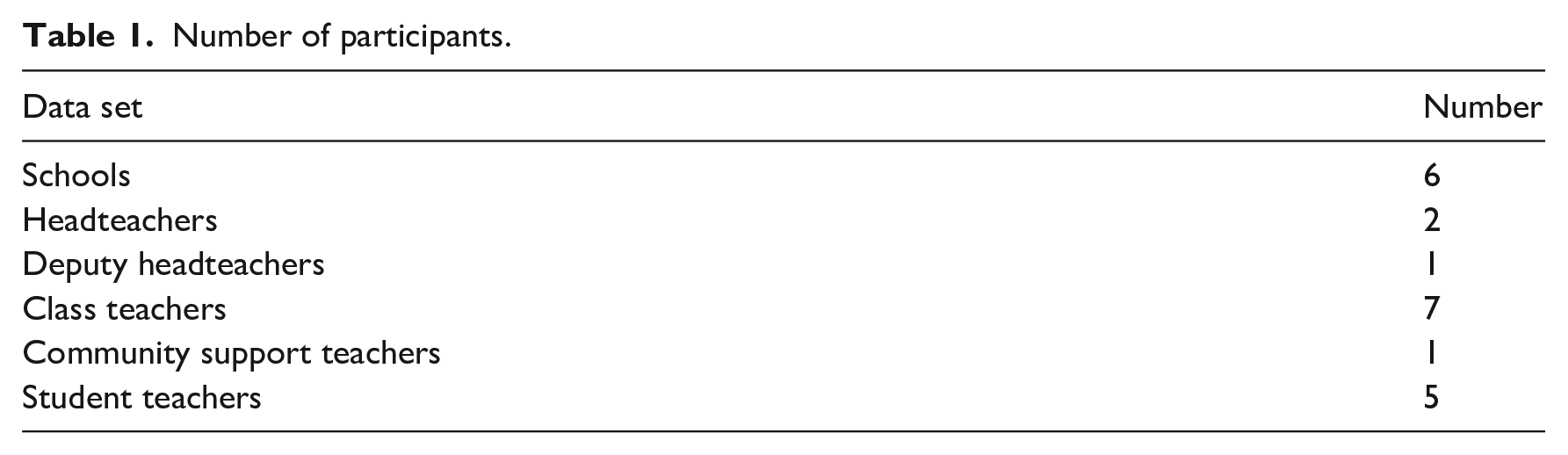
Teachers and headteachers from six schools participated (Table 1). The schools ranged in categorisation from decile 1 through to decile 10 in the Scottish Index of Multiple Deprivation 2020 (SIMD). Four of the schools were in the lower half of the SIMD with two of these being in, or bordering on and with intake from, decile 1 of the SIMD, amongst the most deprived areas in Scotland. At the other end of the scale one of the schools was in decile 10 of the SIMD, an area of relative wealth and little deprivation. From these schools the interviewees consisted of two headteachers, a deputy headteacher, seven classroom teachers of which two were newly qualified teachers (NQTs), and one community support teacher. In addition, five student teachers were interviewed as a group. Interviews were transcribed and analysed to draw out the key ideas and views presented by the different respondents and to determine if there were any commonalities, or differences, across the different contexts. Participants were all White females from a Scottish, British or Irish background. Context and positionality were considered when analysing responses, particularly around perceptions of attainment (Holmes, 2020). Our approach is further outlined in the Considering Positionality section below.
Number of participants.
All schools were at different stages of developing their school gardens. Some were in the very early stages, having only begun constructing or working in the garden during the current term. In one such school, they had heard about garden projects taking place elsewhere and this had partly convinced them to apply for funding. At other schools, the garden had been around for several years, but it was being reinvigorated and interest in the pupils using the garden was being renewed.
There were also schools that had developed the garden over several years, to the point where it was firmly established in the life of the school. In one school, it had expanded from one class using the garden to every class and all children being involved. However, the number of years that the garden project had been active did not always equate to whole-school participation or strong development of the gardens. The type of garden that schools had on their grounds varied. Some had a series of raised beds, while others had planters or a plot. One school also had an accompanying greenhouse for growing plants. At several schools the development and organisation of the layout of the gardens, and maintaining them, was viewed as a continuous process.
Analytical approach
Teachers who had been involved in school garden activities with their classes in each of the six schools were interviewed with a view to gaining insight into their experiences and their perspectives on the value of school gardens for the children in their classes.
We were particularly interested in teachers’ narratives of attainment, and the ways in which such discourses may position children in areas of social and economic deprivation. We wanted to know to what extent alternative narratives of attainment may be elaborated by teachers who have been observing the children. For example, we were interested in how teachers viewed garden spaces as offering something more or different to the more conventional classroom practices; and specifically, whether such spaces may support learning and development of children from very diverse social and emotional backgrounds.
Three questions framed our explorations:
How do headteachers, teachers and student teachers perceive and articulate their ideas of pupils’ attainment while learning in the garden?
What are the motivations of headteachers, teachers and student teachers about the educational value of the gardens?
To what extent do conceptualisations of attainment surface tensions in the perceived impact on pupils’ learning and wellbeing in the garden spaces?
A general inductive approach to the analysis of the qualitative data was employed (Thomas, 2006). The qualitative interview data were subject to close reading from which a set of broad themes emerged: conceptualisations of attainment as communicated by the teachers; the impact of learning in the school gardens on children and teachers; and the wider impact of the gardens on the local community. Subsequent coding was validated in discussion between members of the research team and conceptualised as a decision-making process where decisions were made considering the context of the individual study (Elliott, 2018). The main findings are thus presented here under three key headings: (i) Conceptualisations of attainment; (ii) Towards a re-orienting of education and (iii) Perceived barriers to longevity and sustainability.
Considering positionality
It was important at all stages of the research process to be mindful of the researchers’ and participants’ positionality as not fixed but rather changing over the course of the study and to take care to engage in reflexivity throughout. As such it was recognised through all stages that the researchers are ‘part of the social world they are researching and that this world has already been interpreted by existing social actors’ (Holmes, 2020: 3). This was of particular importance when conducting research interviews in schools and through the data analysis process, where headteachers, teachers and pupils all had existing but constantly developing notions and conceptions of the social world of the school which may differ from those of the researchers. In this context all necessary ethical procedures were undertaken in accordance with published ethical guidelines. The researchers had undertaken institutional research ethics and research integrity training, and ethical scrutiny of the research was undertaken and approved by the university research ethics committee. All participants were made fully aware of the purpose of the research, participated anonymously and were made aware that they could withdraw their responses at any time, with none doing so. Data was saved and stored on secure servers within the university.
Findings
Conceptualisations of attainment
All participants were asked about their perceptions of the attainment challenge, and whether learning in the gardens may have an impact on achievement. How headteachers, class teachers and students conceived of the attainment challenge differed across roles and schools, but one common theme among many responses was the links between outdoor learning, literacy and numeracy. Class teachers spoke of pupils ‘putting learning into practice,’ for instance measuring the area for the garden, or developing new vocabulary as they learned about what they would be planting, transferring learning to a more ‘informal context’ than the classroom. One deputy headteacher hoped that they would see the results of the work in the gardens ‘coming through with regards to their maths and literacy and other areas of the curriculum as well’ (Deputy Headteacher A). Similarly, another headteacher viewed the gardens as a vehicle to ‘support children to access the curriculum’ and linking to the Learning for Sustainability agenda: ‘sustainability is one of the key areas within our curriculum now. Gardening lends itself to that very well’ (Headteacher A).
From these perspectives, it was apparent that the garden space was seen in continuity with the curriculum but also with the ‘learnification’ agenda (Biesta, 2020, 2010); the experience in the garden is justified on the basis of being a tool for delivery of learning on specific policy outcomes. This view reduces emphasis on the experiential and embodied dimensions of education. In this respect, the experience of the gardens contributed little to an idea of prefigurative politics.
In other cases, teachers did not perceive a direct link between learning in the gardens and closing the attainment gap, or thought this was something difficult to correlate. One teacher, at a school in the least deprived area involved in the project, was not convinced that the garden was having a noticeable impact on attainment as a measurable outcome: ‘I teach literacy, numeracy, health and wellbeing, I teach them all so I couldn’t say that I noticed gardening having a huge impact on their attainment’ (Class Teacher G). Interestingly, this response positions the gardens outside the teaching of the formal curriculum, perhaps as a good experience for children to have; however, within the discourse of attainment, ‘benefits’ can only be considered as such when they are clearly linked to quantifiable outcomes (Biesta, 2010). In this sense, gardens are given weight within the current education system if they are linked to specific and measurable ‘skills.’
While many teachers focussed on the practical, ‘hands-on’ elements of work in the school gardens as a means to keep children engaged in school, some emphasised the role that gardening can play in developing pupil confidence and a sense of self-worth: ‘When the children feel good about something they're more likely to learn, they’re more ready to learn. And they have ownership of something like the garden. It enhances their creativity, and I feel therefore that it will play a part in closing the attainment gap’ (Headteacher A).
Notably, this position widens simple conceptions of ‘hands-on’, to include affordances for pupils to be agentic in their educational spaces, even though the language and terminology of attainment focusses the eye of the teachers on the children, and the impact that gardens are having on them, while little is said about the wider learning ecology that includes the teachers themselves.
Conversely, the student teachers felt that the gardens could act as an ‘equaliser’ of opportunities for pupils, in the sense that they offered pupils from all backgrounds an inclusive space to engage in outdoor learning and interact with nature: ‘If you live in a city there’s very few gardens. . . [the school gardens] is something that they’re all getting a part of together and at an equal level. . . And their background doesn’t matter in that case’ (Student Teacher C). Thus, from a policy perspective, student teachers perceived attainment beyond the gains of single individuals, and more as a challenge for society and how opportunities to learn with and from the natural world are unequally distributed across the population.
Similarly, at another school, situated in one of the most economically deprived areas, the headteacher preferred to focus on the school values of nurture and how the school garden contributed to this.
Can I say it's impacting on things like attainment? I couldn’t directly correlate that, but certainly on the kind of positive attitudes towards looking after things, nurturing things, in our own environment, that's been a real positive for us. (Headteacher B)
The headteacher also noted that changes in engagement, motivation and enthusiasm were visible in the children; the statement also points to children’s capacity to attend to things, develop and bring their ‘learning ecologies’ into being (Gray et al., 2021). This is an aspect of the school curriculum which is often overlooked for policy purposes. We will return to this point in the Discussion.
Towards a re-orienting of education
Teachers also reported on several occasions that the garden space acted as a calming environment, that benefited the health and wellbeing of pupils and teachers. Engaging in the garden space also raised awareness of issues related to healthy eating and sustainability, both in its opportunities and limits: ‘a really nice way for the kids to actually see the food that’s on their plates, it just doesn’t appear like magic. . . you’ve got to grow it, you’ve got to look after it’ (Class Teacher C); ‘it’s fun, but there’s actually a purpose to it as well, we’re making our school a bit more sustainable, a bit more environmentally friendly, we grew our own compost’ (Class Teacher E). Some teachers therefore emphasised the values generated through engagement in the gardens, rather than focussing solely on measurable skills or capabilities.
Many of the teachers highlighted the importance of pupils actively caring for and nurturing plants and the larger garden space, and the links between this and both physical and emotional health and wellbeing: ‘whether it’s their tatties 2 or their strawberries, they’re learning how to be nurturing towards something, which is hugely beneficial for them. . . when they come back, there is a readiness to learn’ (Headteacher B). The student teachers discussed how the change in environment, from indoors to outdoors, could be beneficial for emotional health and for forging closer connections to nature through the sensory and experiential (Hipkiss et al., 2020): ‘it’s the change isn’t it, too. . . you can see the changes in the outdoors and you can feel it and engage with it’ (Student Teacher B).
It also provided opportunities for pupils to take on the role of expert, deconstructing the teacher and learner ‘power dynamic.’ Teachers described positioning themselves as the learner, for example, with pupils taking the lead on researching different types of plants in the garden and making decisions about the layout of the gardens and planters. Though some teachers admitted at first feeling out of their comfort zone, they recognised the confidence it generated in the pupils, now positioned as the active holders of knowledge rather than passive recipients: ‘Gardening has helped them develop greater confidence in themselves, they see themselves as a leader’ (Class Teacher F). Such reconfiguration of roles and perspectives posit garden spaces as places where ‘different versions of child and adult emerge from. . . complex interplay, networking and orchestration’ (Prout, 2011: 12).
Engaging in problem solving activities, for instance when certain plants did not grow, gave the pupils the confidence to make mistakes, discuss them amongst peers and the teacher, learn from them and find solutions. This is indicative of the dialectic and interplay of power forces afforded by the garden space (Ralston, 2011; Timeto, 2011), which brings into focus ideas and possibilities that are often overlooked by the focus on attainment on pre-set categories: I think it did just give them that freedom, and that confidence to actually make mistakes. It was okay cos it was in the gardens, so they could go and fix it themselves, that maybe they don't have so much in the class. (Class Teacher E)
Perceived barriers to longevity and sustainability
It was clear from the interviews that despite evidence of the positive impacts of school gardens, there were significant barriers in expanding their use within and across schools and sustaining their impact in the longer-term. While student teachers were enthusiastic about the potential of school gardens as inclusive spaces, and were viewed by school staff as vital to facilitating transformational change, the students themselves noted the lack of gardens at many of their placement schools and the negative reaction of some teachers: ‘When I suggest going outdoors sometimes my teacher’s face drops a little bit’ (Student Teacher D). Class teachers spoke about a range of challenges, including time, funding, resources and lack of support from senior management.
In schools where the gardens had generated a more sustained and wide-ranging impact, ‘buy-in’ across the school, with staff on board and supportive of the aims, was seen as vital to fostering this sense of community and for sustaining the garden spaces. Strong leadership, clear strategy and creating a ‘community’ approach in schools were all viewed as essential for supporting and maintaining school gardens and realising their potential. Several of the headteacher participants noted how important it was to empower staff, pupils and community members to take on leadership and drive the garden projects.
What's really impressed me is how engaged, how on-board people have been, children and adults across the school. They've really embraced it because they can see how much it impacts on the children. (Headteacher B)
At one school, where the garden was in its third year, they viewed the complete lack of vandalism as a huge positive and linked it to the pride and responsibility children felt towards the garden space, and the community spirit that it had engendered.
We have a huge amount of vandalism in this area, very challenging. And one of the real positives about this, which I guess shows the importance of it to our children, we've had no vandalism in the garden at all. . . I do think that there's a real positive attitude about it, the children have a pride in it. We certainly share the work of the garden. . . I think there's quite a community feel to it, a community of responsibility. (Headteacher B)
However, many schools touched on the challenge of engaging with the wider community and acknowledged that links could be further improved. In some cases, wider community involvement was viewed as an add-on rather than integrated into the gardens from the beginning: ‘We’re still actually in the process of trying to get the community links at a better standard. . . I suppose it’s a stepping stone isn’t it, the next step’ (Class Teacher C).
A community support teacher at one school, that was attempting to involve parents and the community in the garden from the outset, talked about the mental health benefits for some of the adults who were helping in the gardens. Some of the parents and adult helpers, who had at first been hesitant to engage, found over time that the garden was providing a safe space and a focus for connecting with their own children, the school and the wider community. For instance, at this school, one of the parents had been volunteering for over a year. Her participation had led to her son, who had left school, also coming in to help out with the garden. The teacher commented that this parent volunteer ‘definitely gets quite a lot from it and it's definitely helpful for her mental health, just to have a focus’ (Community Support Teacher). However, the teacher also emphasised that it was a long-term process and not a quick fix: ‘to actually know if it's a long-term impact it's a much longer period of time’ (Community Support Teacher). This is perhaps indicative of some of the issues touched upon by Ralston (2011) with reference to the politics of gardening and indicating the interconnected and multiple effects of gardens impacting on health, pedagogy and communities, which we will examine further in the Discussion Section.
Discussion: Reimagining of the school environment
All teachers perceived the potentiality of the garden space for pupils to learn about the growth of the plants, but also to engage with the wider aspects of caring and maintaining the garden and collaborate with other members of the community. In this view, within the heterotopia of the garden space, attainment is viewed broadly as a set of capabilities instead of isolated cognitive gains. These capabilities included the disposition to observe, communicate and to develop practical organisational and leadership skills as noted by the student teachers: ‘you can see the changes in the outdoors, and you can feel it and engage with it’.
Taking a wider view of attainment resonates with the argument presented by Cairns (2018), who highlights the limitations of framing garden pedagogies through a ‘rhetoric of effects’. The term ‘rhetoric of effects’ is drawn from Gaztambide-Fernández’s (2013) examination of discourses around arts education, the arguments of which can also be applied to garden-based learning (Cairns, 2018), where effects are often presented as either instrumentalist arguments, for example, focussing on academic achievement, or intrinsic arguments such as aesthetic experience (in the arts), or for example food, health or environmental appreciation in gardens. But as Cairns (2018: 9) states, quoting Gaztambide-Fernandez (2017: 241) ‘there is always more to learning and teaching than what manifests in educational intentions’. In this respect, garden-based pedagogies will often have effects which are not intentional in terms of pre-conceived educational outcomes, and the danger is to dismiss them because they are not ‘measurable’. Evidence from our study indicated that this was one of the most important aspects recognised by some participating teachers and student teachers who valued these ‘effects’ as a change of attitude, or a change in relationships, with an associated change of emotional states. There was, however, a tension running across the interviews as the discourse of attainment reduced the value of the gardens to a measure of impact, rationalised through improvements in literacy and numeracy. This indicates that approaches to learning as content acquisition are firmly embedded in the educational discourse and the implementation of school gardens alone is not sufficient to shift them.
That said, it was important to note that the opportunity to engage with gardening in a school setting was a powerful device to let teachers express what might be potentially contrasting narratives. Hence in this respect, gardens may operate as a device for ‘interruption’ (Biesta, 2022). For example, one of the headteachers recognised that ‘when they come back, there is a readiness to learn’, pointing to a change in the embodied experience of children who are often impeded in their learning by behavioural issues, affecting themselves or others in the class. Interestingly, she was also quick to recognise that she could not directly correlate such successes with ‘attainment’ as a product to be measured, valuing instead the broader process of ‘nurturing’ the child, occurring over a longer period of time and involving the whole school. And similarly, student teachers spoke about gardens ‘as an equaliser’, including everyone regardless of their backgrounds. These observations resonate with literature on the positive impact of green space, or lessons in nature, on subsequent classroom engagement (Kuo et al., 2019). For example, Faber Taylor and Kuo (2009) demonstrated that children with attention deficits concentrated better after a walk in the park. The role of nature, and in our case gardens, fits very well with the idea of attention restoration theory (Kaplan, 1995) within a learning ecology that goes well beyond the human elements.
This alternative take on ‘attainment’, or what is deemed to be a success in the school context, is important as it does not mask equity with sameness, as measured on test scores. Instead, it is a stance that makes children’s needs manifest, bringing them into full presence, as suggested by Vlieghe (2014), entailing a transformation of the way in which ‘educational provision’ is viewed and implemented. In this way we begin to see the outline of a ‘pre-figurative politics’ (Cornish et al., 2016), as the experience of children learning in the gardens significantly re-configured the relational space, shifting emphasis from acquisition (of knowledge) to nurturing and supporting children in their becoming adults, themselves with the capacity to interrupt patterns of oppression and exploitation, of both humans and environments.
In one of the schools in particular, the school in the area of greatest deprivation, the headteacher was so convinced of the potential benefits of the garden space that she instigated the expansion of the available garden areas (raised beds) to a whole school programme to enable all children in all classes to engage with the garden, literally by taking responsibility for their own education and their own wellbeing. This is what Biesta (2020) also refers to as developing a ‘grown-upness’, moving out of a position in which trajectories are set in order to develop the freedom to act, in a grown up way. This is different from freedom as doing what one wants; it is a freedom that has to do with the fact that we exist, that we live and lead our lives, in a world that is not for our own advantage, but upon which we intimately depend.
In this regard we may see a ‘closing of the gap’ in the way in which schools may fill the vacuum that exists between ‘have and have nots.’ Not by increasing pressure on teachers to teach to specific outcomes, but by transforming the range of opportunities and possibilities for children to learn as part of the school community. However, it is very clear that there is a need to probe deeper into the effects of garden-based activities and how these impact on children and young people directly, which may often be much more socially and culturally constructed, rather than the simpler impacts framed by the ‘rhetoric of effects’ (Cairns, 2018). While this study is limited to a small group of teachers in one country, the findings point to key debates around the value of experiential knowing in school curricula, not simply as education for work but as a key capacity to respond to and attune with a changing environment. Future research should involve international collaborations in teacher education, focussing on gardening as an emancipatory curriculum, valuing children’s embodied experiences of being and doing at school (Gray et al., 2021). Such moves align well with lessons learned from the experiences of the COVID-19 pandemic. For example, the International Literacy Centre (ILC, 2020) at University College London suggest that there is a need to reset educational priorities to take account of challenging times, and that current testing and accountability systems do not take account of contextual factors, particularly in areas of poverty and deprivation. A key finding from this report is that policy assumptions built into current assessment and accountability systems need to change (ILC, 2020: 2)
School gardens are one example of initiatives which can serve to interrupt and re-orient education, in company with other experiential learning and community projects such as forest schools, to cite one example. With gardens in particular, as set out in this study, the evidence points to a reimagining of the school environment, connecting to and encouraging wider community engagement in the wider ecosystem of the school; as such, school garden spaces are spaces of co-existence, pushing at the boundaries of the possible and turning the educational question on its head: from delivery of a world that is already made to making worlds, across contexts, times, locales and levels of deprivation. In this way, school gardens can provide a ‘heterotopia’, where it is possible for learners, educators and the wider community to engage with the materialities of their existence, to ‘meet themselves and meet the world’ around them (Biesta, 2022).
Conclusions: School gardens as spaces to meet the world
In response to our original questions, this study outlines that garden spaces play an important role in mediating the culture of performativity in schools, by introducing alternative discursive moves that enable teachers and student teachers to express and develop different ways of thinking about education and its practice. Most significantly, our findings advance the work of Biesta et al. (2017), providing evidence that the garden is a significant mediator between the wider school ethos in which teachers work and the way they both speak of and bring about the work of education. We argue these findings, albeit drawn from a small-scale study, have significant implications for teacher education, at all career stages. An important aspect of this is that garden-based approaches should not be seen as additional novelty activities but need to be integrated with everyday practices. In this way pupils also recognise and involve aspects from their everyday experiences which have profound impacts on their social, cultural and ecological relationships (Gray et al., 2019; Williams and Brown, 2012). Rather than focussing on determining learning trajectories, or even on demonstrating positive effects at a local level as it has been done so far, this study advances the importance of garden spaces for developing ‘learning ecologies’, in which teachers, students and the wider community can address together significant questions affecting humanity in our times.
Footnotes
Declaration of conflicting interests
The author(s) declared no potential conflicts of interest with respect to the research, authorship, and/or publication of this article.
Funding
The author(s) disclosed receipt of the following financial support for the research, authorship, and/or publication of this article: This work was funded by the Scottish Government and Scottish Council of Deans of Education (SCDE)’s Attainment Challenge Project.
