




Abstract
This article recounts how municipalities from border regions in mainland Portugal interacted with the population in the face of the new social order brought about by COVID-19. Our aim is to interpret new educational spaces, beyond schools, emerging from community-level strategies to build trust during the pandemic lockdown and state of emergency. The material consists of 1503 posts from 38 Facebook pages of municipalities that were analysed and organised into dimensions: health and COVID-19; offline to online adaptation strategies; cross-border impact information; economic encouragement; care and social support; community engagement and participation. The article focuses on this last dimension given its pre-eminence.
Key findings manifested five educational narratives associated with community engagement and participation: past and memory; place; voicing and wisdom; recognition and solidarity; and participation and learning. We consider those narratives as community resilience builders, accounting for municipalities’ educational strategies that enhanced locally anchored responses. If those actions represent an opportunity for local-governing new protagonism, they also generate a footprint for encouraging transformative resilience grounded in situated literacies and new educational audiences. Municipalities were more than timely information providers – they invested in connecting with the population, an investment possibly explained by the awareness that a health crisis could easily morph into a social crisis.
Introduction
Disruptive events, such as the COVID-19 pandemic, entail a range of unforeseeable impacts on societies and in everyday lives. A disruptive event begets specific competencies to be developed, namely at the governance level, in order to respond and to build up preparedness.
The aim of this article is to explore education narratives underlying community-level strategies to build trust among populations of border regions of mainland Portugal during the pandemic lockdown and state of emergency. To achieve this, we focused on how municipalities operated under the new social order brought about by COVID-19 with the consequent social isolation. Municipalities invested in educational narratives, as discursive strategies, to foster trust, a resilience indicator fundamental for recovery, and to deal with uncertainty (Mehta et al., 2017). Our argument is that those educational narratives may contribute to communities’ transformative resilience, enhancing a grown-up relationship with the world based on promoting collective interests and public solutions (Biesta, 2017).
Most of Portugal's border regions, especially those that are rural and landlocked, are peripheral and have historical precursors of territorial disadvantages and disparities in economic development and growth compared to coastal regions (Poeta Fernandes, 2019). Border regions are unevenly developed and offer fewer opportunities in terms of employment and education, as they have the lowest purchasing power per capita (Instituto Nacional de Estatística, 2019). However, as previous studies have exposed (Silva, 2013, 2014), the border regions of Portugal and Spain are not isolated, but rather face global challenges and respond to them with socio-spatial sensitiveness and tailored responses, revealing positive affordances and resilient approaches to structural inequalities.
During the pandemic’s first lockdown, some attention was given to border regions regarding the economic consequences of border closures. Those regions were also referred to as contexts with fewer infected cases, and news about people willing to move to those areas during the lockdown, due to a sense of safety and freedom, were frequent. Less discussed was how these and other peripheral regions of Portugal were affected differently from coastal and urban areas, being exposed to specific vulnerabilities. These regions are more dependent on local small business, difficulties may affect an entire family, and people are highly dependent on mobility and crossing borders for economic, work, or educational purposes.
Municipalities, which in Portugal are the basic level of local government, were at the forefront in responding to local population needs (health, social, emotional, cultural, educational, or economically related). Municipalities were pushed to simultaneously solve immediate problems (infrastructures, social support) and to create spaces, including digital, to promote trust and togetherness. This was done mainly by developing educational opportunities of engagement around common values, solidarity and social cohesion, resilience protective factors that may be relevant to understand new eduspaces in the European educational landscape as a form of governing the social.
This present article is empirically based on the qualitative analysis of contents of publications on Facebook pages of border region municipalities (N = 38) from 10 March to 10 June 2020 during the lockdown and emergency state. The analysis was focused on identifying the main topics of the publications when interacting with community followers.
The use of social media to respond to critical events and disasters has already been studied (Reuter and Kaufhold, 2018; Reuter and Spielhofer, 2017). Municipalities have websites and usually a Facebook page that work as repositories of actions in a timeline. Those actions could be interpreted as being part of specific narratives of pedagogic governance (Kaplan, 2007), indicating that education and pedagogy involves more than what is going on inside schools (Giroux, 1994). Facebook and other social media work not only as tools but also as contexts of cultural production and learning, building trust and connectedness (Appleby-Arnold et al., 2019). In this sense, the social media context may be configuring new educational spaces and learning may be taking place in non-traditional places, as communities, among new actors, providing a predominant place for people’s learning (Brooks et al., 2012; Field, 2006; Seddon, 2014). As Landri and Neumann (2014: 1) state: It seems increasingly problematic to interpret the spaces of education and learning as enclosed, embedded, or bounded to such distinct categories as the state-nation, society, region, school, classroom etc. because its core features are related to mobility and transnational educational (re)configurations: to border-crossings, assembling people, technologies, policies and objects.
During the lockdown, there was an increasing number of municipalities from our sample that created Instagram accounts. Social media was used to provide information, create content and become the stage for numerous activities and places of learning from health behaviours and norms (Neubaum et al., 2014) to local art and history; from local products dissemination to learning crafts; from literature readings to physical activity benefits.
This is far from a romantic view of municipalities’ performances as we understand what may be underlying governing processes through pedagogic means (Pykett, 2010). However, our position is also not of scepticism regarding how those actions and attitudes may possibly generate a footprint encouraging the development of policies for resilience building based on communities’ engagement in interactive processes of learning and intra learning, demanding a new lens to understand where learning and education are taking place. As considered by Seddon (2014), schooling becomes ‘one more space for learning alongside workplaces, community settings, social webs and emergent projects at transnational and sub-national scales (e.g., lifelong learning cities and villages, learning regions and web-based learning)’ (2014: 11).
The understanding of how these peripheric regions develop resilience behaviours based on valuing local knowledge and cultural practices may indicate emerging relationships between the individual, the community and the state (Rippon et al., 2020), mediated by the reconfiguration of educational spaces.
Theory
Since the first location of resilience in the field of engineering, physics, and later ecology, several authors, although with limits (MacKinnon and Derikson, 2013), have been contributing to expand the concept beyond the capacity of a context to self-correction (Norris et al., 2008), and limited to the persistence and equilibrium of systems after change (Folke, 2006). Various studies have developed the concept of integrating the role of networks to promote resilience (Norris et al., 2008; Sherrieb et al., 2010), shifting from an individual approach to a social and community approach (Magis, 2010). Similarly, in the field of education, Ungar (2011, 2012, 2018) has been theorising resilience by incorporating social factors and a systemic approach (Ungar, 2018).
Beckoning the value of existing contributions of different approaches to the concept of resilience, the constructivist perspective of Adger (2003), Folke (2006) and Ungar (2004, 2011, 2018) brings a specific interest here as it provides an understanding of resilience as rooted in social contexts and cultural practices, distancing itself from the neoliberal perspective that considers coping and competence at the individual level of responsibility (Bottrell, 2009).
Folke et al. (2010) and Gotham and Campanella (2011) focus specifically on transformative resilience and Adger (2003), a proponent of an ecological approach based on the concept of social resilience, identifies resilient communities as those that can respond to crisis situations, unpredictability and situations of vulnerability.
Adger et al. (2009) propose the concept of transformative resilient thinking as a shift to a model that gives priority to well-being (Olsson, 2020), using different types of capital towards transformation and anticipation rather than just an immediate response to disturbances or disruptive situations (Magis, 2010).
Transformative resilience seems adequate to understand resilience at the scale of communities or regions and to understand responses during the pandemic and the consequent recreation of social and political relationships. Community resilience, and particularly collective resilience, has been a concept that is associated with global and national efforts to cope with uncertainty brought about by COVID-19. Recent articles on local strategies to address COVID-19 (Greenberg et al., 2020; Rippon et al., 2020) emphasise that those responses need to be studied to better understand future challenges and to foster models to respond, disrupt and influence systemic change. Critical events may provide the opportunity for ‘the “rediscovery” of strong resilience in glocal and relocalized communities’ (Wilson, 2012: 1229).
A community’s resilience is its social capital, physical infrastructure, and culturally embedded patterns of interdependence that give it the potential to recover from dramatic change, sustain its adaptability, and support new growth that integrates the lessons learned during a time of crisis. (Ungar, 2011: 1742)
Local governments persist as a fundamental setting to challenge the impact of disruptive events, demonstrating a relevant capacity of initiatives in response to global challenges (Cochrane, 2020). A study exploring the resilient local authority during the economic recession of 2008 identifies as one of the characteristics indicating resilience the capacity of local authorities for the socialisation of the civil society around shared priorities and promoting community resilience. As Walker et al. (2010: 24) point out: Local, collective activity has been cast as the site at which action can be the most effective, most appropriate and most lasting in generating change through empowerment of ordinary people and communities to act collectively for a better future.
During crisis situations, local authorities such as municipalities are crucial in processes of trusting because they share the same standpoint as locals and are trusted as an intermediation institution. On the other hand, as focal institutions and political arenas, municipalities may use those situations to profit, causing divisions and mistrust, which are mostly felt at the local level (Glynn, 2020).
Institutional trust, a dimension of social trust, is relevant to understanding how municipalities developed trustworthy behaviour during the lockdown, developing, as in our case, educational narratives. We consider that public trust and resilience are mutually strengthened when cultivating purposeful narratives. Social theory perspectives describe public trust as being explained by factors such as ‘shared values and perceptions of trustworthiness’ (Keating and Thrandardottir, 2017: 141) and by the development of collective actions around common goals that reduce feelings of weakness. Care and concern, reciprocity, and familiarity are aspects that a population pay attention to when trusting (Gillespie and Dietz, 2009).
Municipalities during critical situations deal with localised configurations and tensions (Ungar, 2006) demanding the construction of situated meanings. This can be done through the adoption of a socialisation governance strategy to promote trust by helping to alleviate the pandemic’s impact on social life. The educational approach may be materialised into actions to engage the community and individuals (Purcell, 2009) and into creating spaces for participation and situated learning.
In the context of a socially disruptive situation, such as COVID-19, developing an educational approach may build up social trust, and, consequently, gatekeep social cohesion, which is fundamental to the promotion of well-being, to increase levels of preparedness for future situations, and make society less vulnerable to critical situations (Helliwell and Wang, 2011; Portela et al., 2013).
A governance for social cohesion and social trust understands citizens as actors and creators of ecologies of learning and becomes a driver of social opportunities. Here we are interested in educational narratives developed by municipalities to make sense of events. Municipalities are public institutions that may lead collective educational processes around shared narratives and collective knowledge construction (Hegger et al., 2012; Molen, 2017). In a long-term perspective, these strategies may open doors for social learning, harnessed in the recognition of local practical wisdom.
Current study and research sites
This research formed part of a broader study – ‘Growing Up in Border Regions in Portugal: Young People, Educational Pathways, and Agendas’ – that sought to investigate resilient schools and communities and their impact on the development of young people’s educational pathways, engagement and sense of belonging. For this article, data (static documents) were collected on 38 Facebook pages of municipalities from 10 March to 10 June 2020.
This article aims to study educational strategies of engagement and participation, developed by municipalities during the first lockdown, to foster trust, social cohesion and resilience. To address this purpose, we will provide an examination of the nature of all posts within 38 active Facebook pages regarding the provision of collective solutions, motivations and resources for the general population during the lockdown and emergency state.
Border region municipalities are heterogenous and diverse, although the majority, especially in the centre and south, are the most sparsely populated areas when compared to the northern municipalities (Figure 1). Most of them are dedicated to the primary sector and some, close to coastal areas, also to tourism.
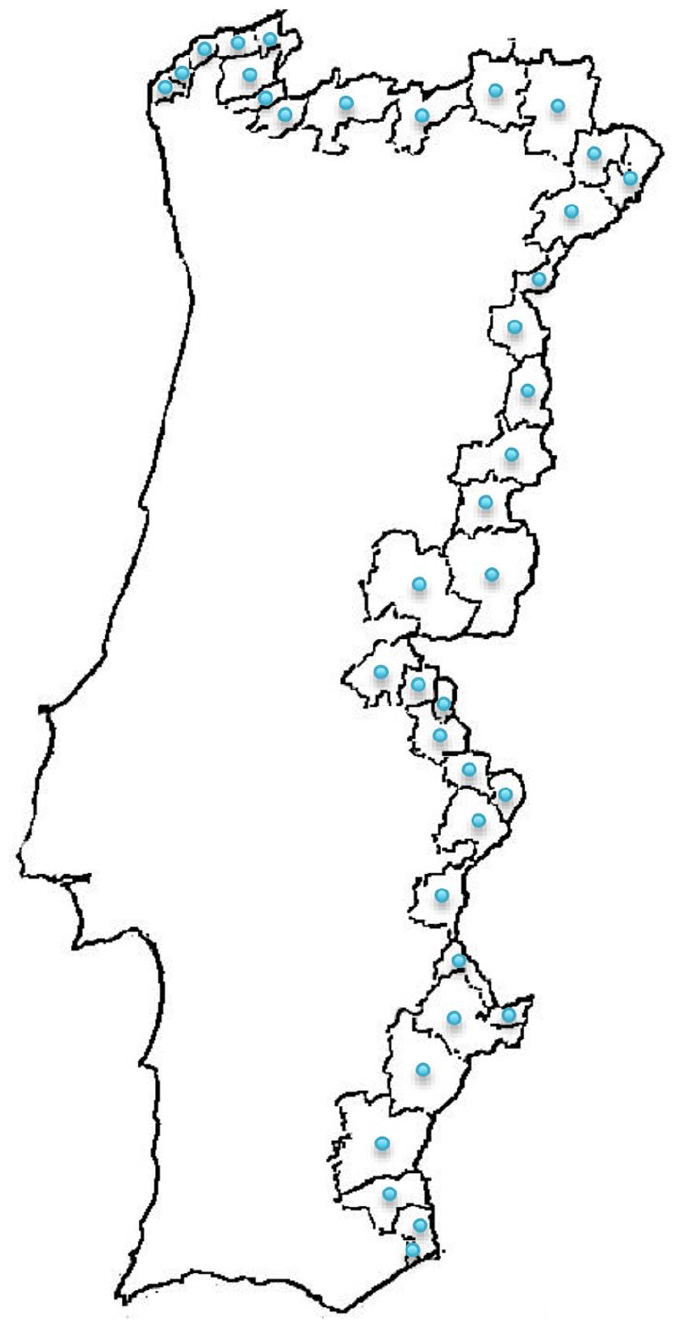
Municipalities located in border regions.
There is a growing attention to inland rural and borderland regions driven by a diversity of purposes as the promotion of economic development, revitalisation of local cultures and, lately, due to COVID-19, a sense of rediscovery has populated mediatic discourses around safeness and good conditions for distance working. Several authors have been highlighting the added value associated with Spanish–Portuguese border regions as spaces of attraction (Trillo and Lois, 2011).
The internal diversity of border regions is worthy of attention and not all exhibit borderland behaviour, usually due to geographic factors (Ferreira, 1998). This theory about the complementarity among border regions, the cultural richness and cross border cooperation has been seen as a driver to move from an idea of these regions as ‘disqualified peripheries’ (1998: 351).
The diversity of cultural and natural landscapes of these contexts has been at the centre of new policies of interest focused on memory and tradition preservation and originality protection and its association with local innovation (Augusto et al., 2010). However, the value associated with cultural heritage, memory and patrimony is part of those regions’ identity and pride, working, as we found, as a relevant factor to promote young people’s, and other generations’, sense of belonging to their community (Silva, 2013, 2014). The relationship of these populations with local culture enhanced community engagement, creating mechanisms of resilience and placing those regions as repositories of social cohesion models, counteracting the multi-peripheral condition of border regions.
In these regions, as in other peripheral places, municipalities have been assuming care and social security provisions to address needs of vulnerable groups (Pires de Almeida, 2017). The grounded leadership of local authorities has been in place more evidently since the 2008 economic and financial crisis. Municipalities’ action for the well-being and quality of life of the population has been covering different sectors: provision of education, health and care services, organisation of leisure activities, promotion of culture, local products heritage, and landscapes (Pires de Almeida, 2017). These types of action are supported by regional networks and cooperation with a diversity of stakeholders advancing new forms of participation and democracy (Pires de Almeida, 2017).
With this study, we were interested in understanding the educational configuration that existing and emerging local strategies have gained to promote trust at such a difficult time as the pandemic.
Method
The social and political significance of social media due to its communicative power (Sormanen and Dutton, 2015) has been increasingly used by local administrations to promote public engagement (Agostinho, 2013).
Digital contexts, particularly social media, offer the possibility of understanding the social dimensions of human experience as they have been influencing how people, organisations and communities interact (Ngai et al., 2015): ‘Social media use involves the sharing of both information and emotions, allowing people to feel part of a “like-minded community” and generating trust through developing shared narratives’ (Appleby-Arnold et al., 2019: 302). Social media based information used to promote trust and engagement has been noticeable during the pandemic. The online contexts, namely social networks such as Facebook, were places of online community building to promote trust and confidence. Online environments such as these have been the setting for several narratives with educational and socialisation purposes, and local governments have been using social media to enhance the engagement of the population (Guenther et al., 2020).
Data
In Internet-mediated research, new and original data are collected and presented for analysis to gain new insights on a particular research topic (Hewson et al., 2003). Facebook is of relevance for research and, particularly, for social scientists as a database of ‘social activity’ (Wilson et al., 2012: 204).
The analysis rests upon a corpus of 38 municipalities’ Facebook pages. The data consisted of wall posts and were collected between 10 March and 10 June 2020. Wall posts were extracted and collated in Word documents by theme for further content analysis. The contributions of the Facebook pages were diverse as some municipalities’ pages were more active and posted more content than others. The unit of analysis was the image – photo, video, or illustration – and texts or captions of each new image/information disseminated (Keith et al., 2009). We concentrated on posts announcing activities, actions, practices and intentions from the particular municipality, or with the direct support of those bodies of local government, when the posts were by the initiative of other organisations or the civil society.
Coding scheme and procedures
A total of 1503 posts were selected through a conventional observation methodology, extracted and coded, and the same number of units of analysis were classified. A content analysis of images and texts posted on municipalities’ Facebook pages was conducted, being one of the most widely used techniques for social media research (Snelson, 2016).
Qualitative content analysis was used as a systematic coding and categorisation to explore and interpret the content. The coding rubric followed a deductive approach, and six salient themes emerged. The formal categories (Neuendorf, 2017) for coding the most salient themes in each image and/or text were (level of the post): (a) health and COVID-19; (b) offline to online adaptation strategies; (c) cross-border impact information; (d) economic activation and encouragement; (e) care and social support; and (f) community engagement and participation (Figure 2).
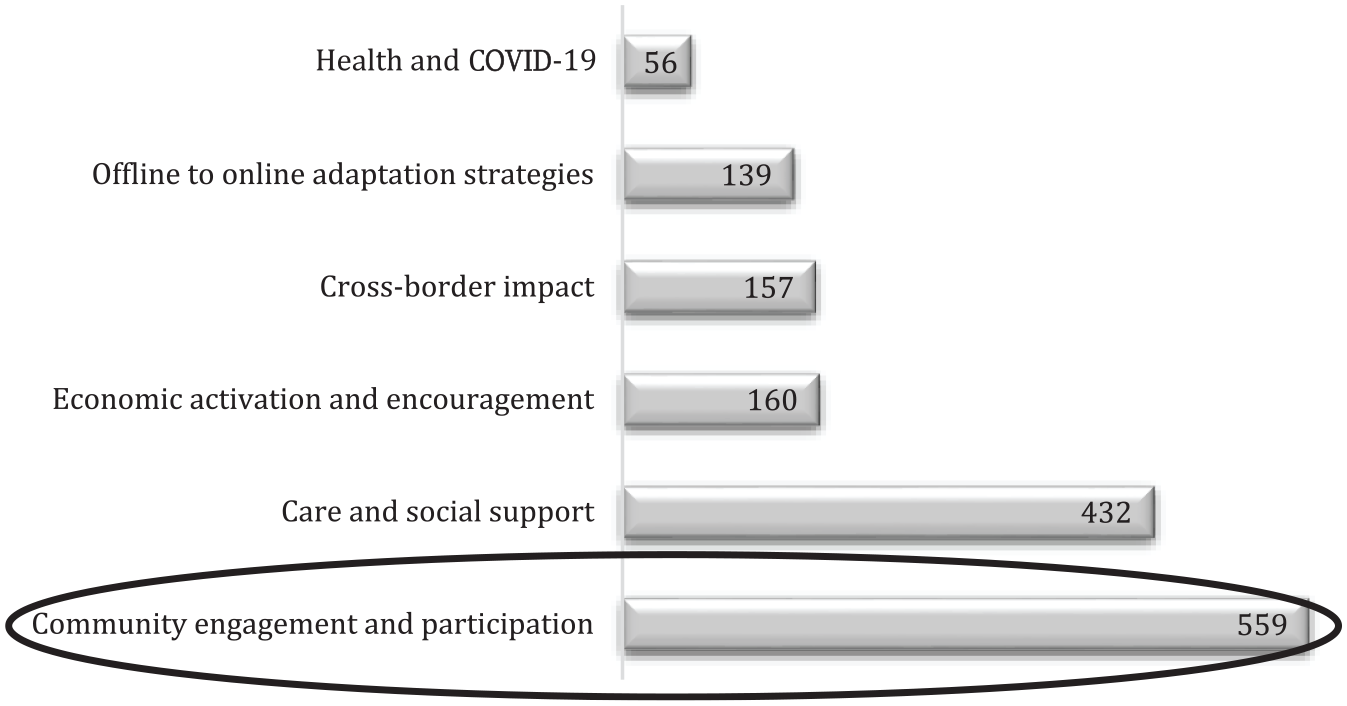
Number of posts considered per category and the selected category for further interpretation.
The themes emerging from the analysis are all to some extent related to strategies to promote trust, with higher values associated with initiatives directly related to community engagement and participation.
The category Health and COVID-19 covered images and texts that convey locally based information and did not include official health information forwarded from the Health General Directorate of the Health Ministry; it included tailored information for raising awareness or local actions and initiatives to fight the pandemic. Offline to online adaptation strategies covered posts regarding decisions about going online to continue relevant activities, and cross-border impact included expressions of concern about closing or opening borders and the economic, social and health impact. The category economic activation and encouragement covered images, captions and texts about municipalities or regional initiatives to support the local economy. The care and social support theme included initiatives from the municipality or the civil society to care for the most vulnerable. The community engagement and participation category was applied to images and texts that included initiatives of solidarity, of engaging the community through activities related to memory and patrimony.
The in-depth qualitative content analysis of the last category was performed, followed by an interpretation that originated narratives as educational tools (Miller-Day et al., 2015) to build community trust and social cohesion. Results will focus on the interpretation and discussion of this particular category. Posts were inductively clustered into five educational narratives: educational narrative of past and memory; educational narrative of place; educational narrative of voicing and wisdom; educational narrative of recognition and solidarity; and educational narrative of participation and learning.
When analysing the regional distribution of the number of posts related to community engagement and participation, municipalities located in the southern part of the country concentrate higher percentages of publications focused on that topic (Figure 3).
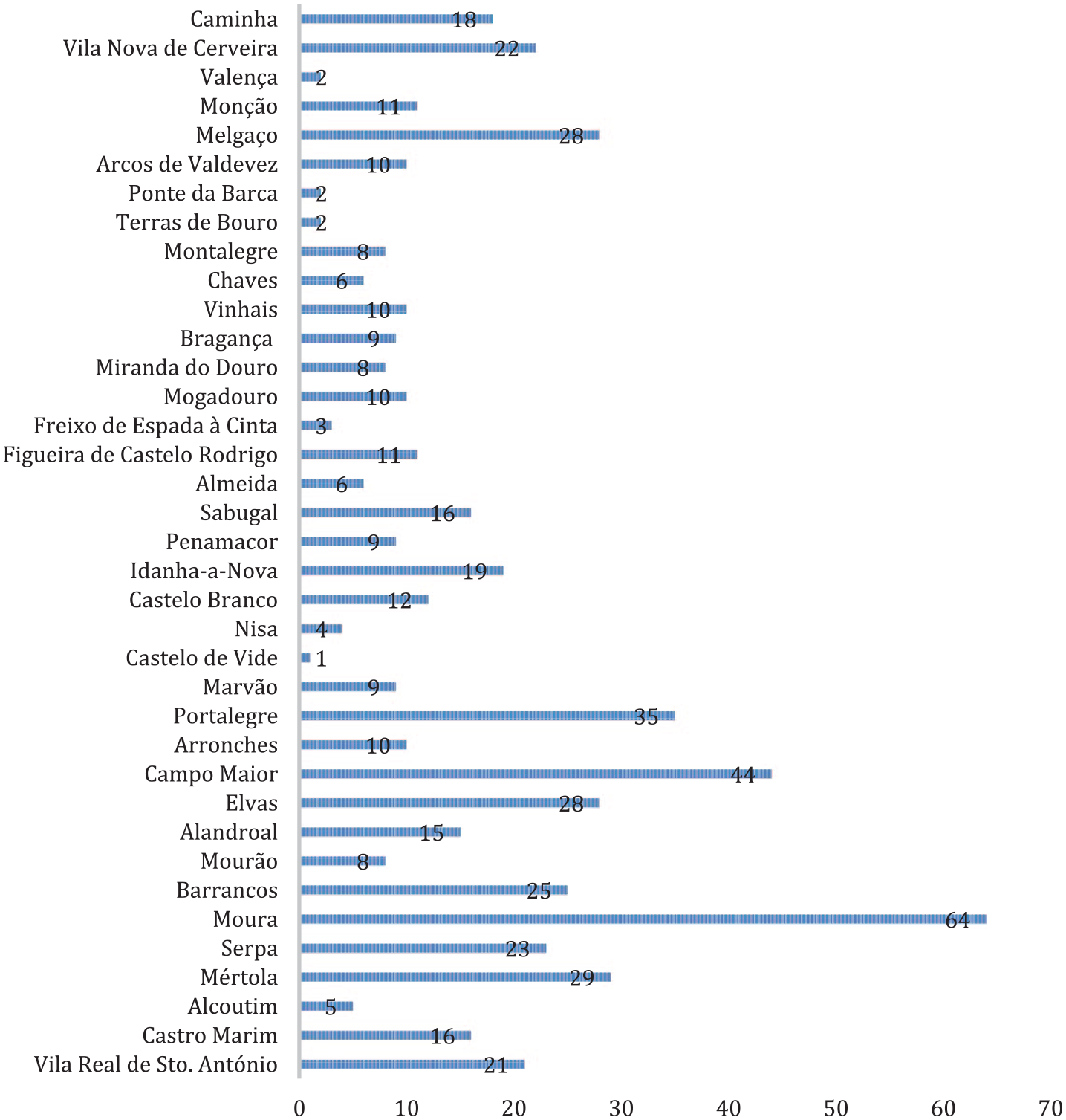
Distribution of posts related to community engagement and participation per municipality.
The investment in social ties, which promotes trust (Putnam, 1993), was transversal to many actions and measures indicating concerns with social cohesion, explaining a more intense social media activity to engage the population in meaningful activities, such as participating in traditions and celebrations, or providing online access to culture, leisure and educational activities. When compared to the other themes, posts related to engagement and participation were in a larger number in most of the municipalities.
Ethics
The research topic is not particularly controversial, and Facebook pages are public and open spaces. However, a decision was made to completely render anonymous any participant reacting to the posts.
Results
Educational narratives to promote trust through engagement and participation
Narratives to promote trust among the population emerged during the pandemic, demonstrating new forms of governance while dealing with the pandemic. They were connected to the local context and culture, highlighting commonalities and creating opportunities to participate.
According to Miller-Day and Hecht (2013: 658), narrative is a ‘talk organized around significant or consequential experiences’, promoting the capacity to identify communal aspects among experiences and capable of engaging individuals: ‘In contrast to more didactic forms, narrative messages have the potential to involve audiences emotionally as well as cognitively, shaping feelings as well as mental models’ (2013: 7).
We consider that narratives can be used as a pedagogic tool for making sense of lived experiences with the potential to explore mutual learning around shared concerns and meaningful interactions. The concept of narratives will be useful to explore how municipalities invested the most to engage the community and promote trust. In this sense, the narratives report educational practices as practices of socialisation (Biesta, 2007), and learning opportunities outside the institutional structures (Biesta, 2012, 2015). Supporting these narratives was the discourse of shared responsibility and collective cooperation. Social media worked as a means of proliferation and was a key factor in the narratives’ success (Larkey and Hect, 2010).
The analysis shows how public institutions, such as municipalities and civil society, have developed competences to engage and energise people (Glynn, 2020). The online environment emerged as vital to connect individuals and to communicate, as expressed by a mayor in a post with an Easter message: ‘[P]hysical and emotional distances may be smoothened. . . . Call your parents and grandparents, if possible, using videocalls in order to, digitally, see and feel the care from the other side’ (Mayor of Vila Nova de Cerveira (VNC)-North, 6 April).
Narratives connect people, places and circumstances, indicating possibilities of actions. These narratives, emerging from the analysis of Facebook activities of municipalities located in border regions, may contribute ‘to create a coherent and persuasive collective myth of belonging, identity or purpose’ (Ozga, 2011: 305) while solving a global problem; they may be another type of governing performativity attached to local meanings (Ozga, 2011), or they may also become indicators of new social and cultural foundations (Peters et al., 2020).
In this research we understood educational narratives as an educational work with the role of socialisation by which ‘we become members of and part of particular social, cultural and political “orders”’ (Biesta, 2009: 40).
Educational narrative of past and memory
Findings indicate that municipalities tried to engage the population around goals, celebrations, reviving (and reconstructing) local memories and supporting local identity and sense of belonging.
In several cases, we found posts with pictures taken in the past and related to significant community-based events and experiences. Those images to remember were recurrently associated with captions of hope projecting a desirable future return to traditional involvement: ‘Until there, we remember our traditions and habits, immortalized in so many ways, as this photographic album’ (Caminha-North, 12 April). This strategy of foresight is relevant to promote trust, confidence and resilience.
Narratives focused on traditions are, therefore, commonly used by municipalities to remind the population about behaviours that are needed today: ‘Stay home; We have time’, ‘Now, travel at home, it’s not time to relax’, are captions of images about postponed events:
The municipality of VNC posted an image (Image 1) from the past year with a local celebration but extended it to the larger region of Minho: ‘We are Minho. We have time! Minho will keep waiting for you. For now, travel (at home) around Minho’ (VNC-North, 15 April). This pedagogy of reminding (also emotional reminding) is also a form of cultivating connection and responsibility for the future.
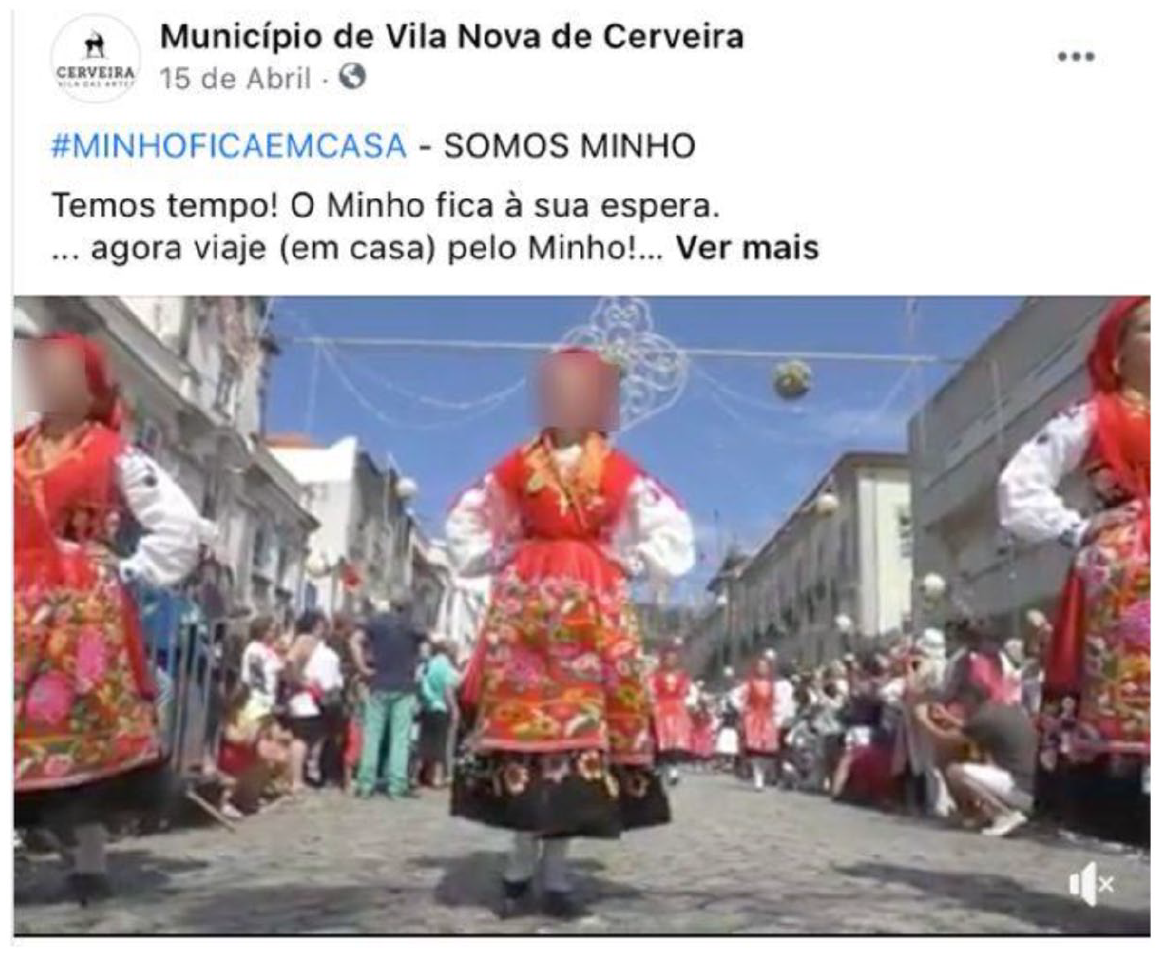
Municipality of Vila Nova de Cerveira (2020). Post with a picture of a traditional festivity. Available at: https://www.facebook.com/municipiovilanovadecerveira/posts/3355283397833171 (accessed 10 May 2020).
These transformed and reinterpreted but still traditional rituals create a ‘performative space for memory and belonging’ (Sparre and Galal, 2018: 2649), although, in some cases, there was also a commodification of memories and traditions and of nostalgia (Olick et al., 2011).
Municipalities purposefully linked past and history to the meaning-making of the present situation. Through reworking past initiatives for contemporary purposes (Linde, 2009), the population learned to interpret their vulnerability and uncertainty through comparisons with challenges from the past: ‘Portugal already lived moments of uncertainty and what today seems to be the first time it is not completely. Our history is full of events that gave place to isolation, sieges, battles, many hard moments’ (Idanha-a-Nova (IAN)-Centre, 21 March).
Another example arose during the celebration of the anniversary of Fernão de Magalhães (navigator that circumnavigated the globe), who was born in the municipality of Ponte da Barca (PDB). The mayor addressed the population by writing on Facebook: ‘Fernão de Magalhães, the man who made the Global World . . . challenged the unknown and he has asserted himself by the vision, braveness, courage, being without any doubt an example for all of us during these times of uncertainty’ (PDB-North, 27 April).
This narrative included connecting people to a shared and local past through online competitions/challenges related to it. The following case (Image 2) was a challenge to write small poems about an old local festive tradition ‘Os Maios em Santa Rita’, and it was promoted by a partnership that associated the municipality and a research centre (Vila Real de Santo António (VRSA)-South, 27 April).
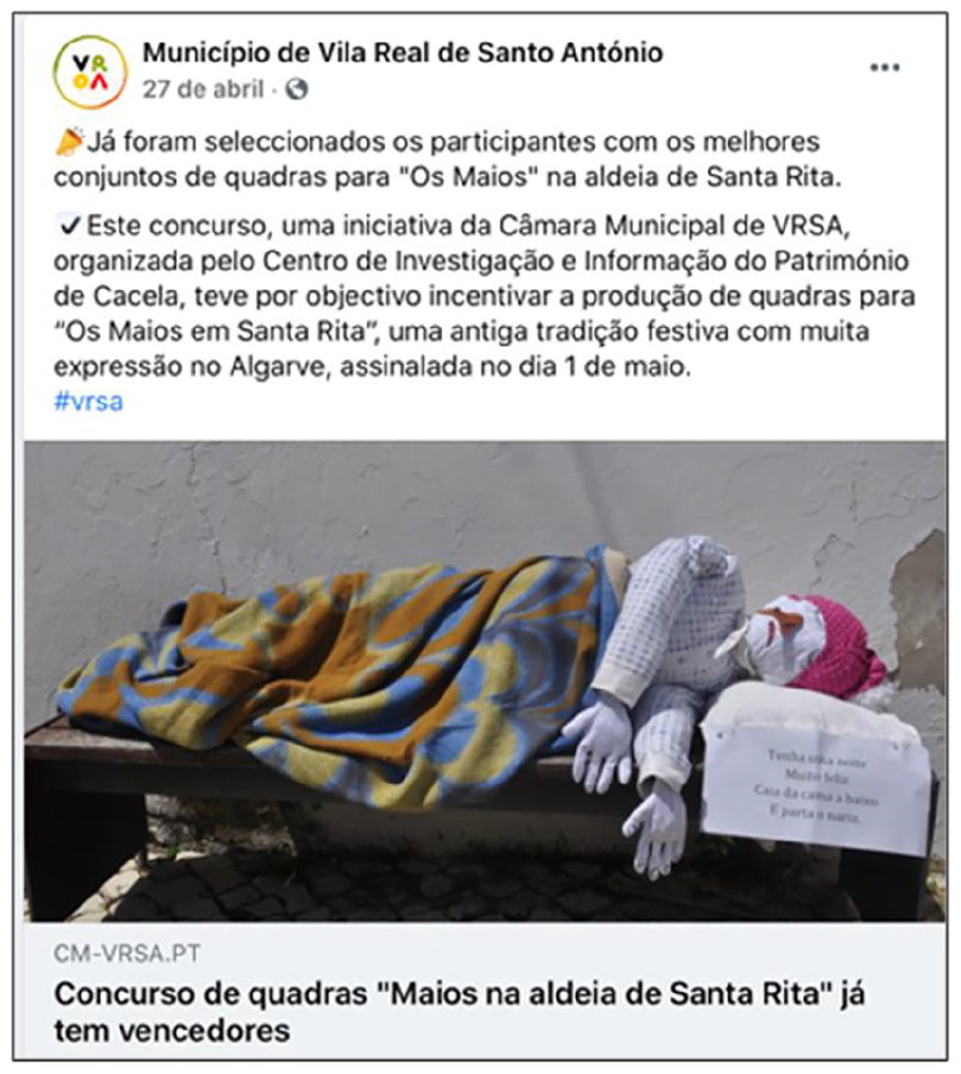
Municipality of Vila Real de Santo António (2020). Post about the selection of prize winners of the poetry competition. Available at: https://www.facebook.com/cmvrsa/posts/3431315700230941 (accessed 15 May 2020).
One other example was an initiative around making videos while reading poems and sharing them on Facebook, aimed at ‘connecting people through poetry’ (Castelo Branco (CB)-Centre, 18 March).
Another example is the invitation to post pictures from past experiences in cultural and historical places. Similarly, the initiative ‘Museu Fora de Portas 2020’ (Outdoor Museums, 2020) asked the local community this year to share photos of their past visits and interactions with local museums. In the municipality of Moura, their museums and patrimony sector created the challenge ‘The museum from home’ (see Image 3), aiming to highlight a piece that is important, especially for its antiquity. These are pieces that do not have a calculable value, on the contrary, their true value is the sentiment and knowledge that were and will be shared from generation to generation (Moura-South, 18 May).

Municipality of Moura community Moura Fica em Casa (2020). Picture of a barometer posted by Manuel Bragança, an inhabitant of Moura. Available at: https://www.facebook.com/mouraficaemcasa/posts/143960547252392 (accessed 30 May 2020).
The relationships with places assumed different nuances online. There was creation of new relationships with museums, streets, historical places, or libraries that were cultivated through online experiences. For example, invitations to participate in virtual visits to municipalities’ cultural spaces, as in the case of a cultural itinerary from CB, in the centre of Portugal: ‘The City Hall of Castelo Branco invites you to know several cultural spaces from the Municipal Museums network through virtual visits. Don’t miss it!’ (CB-Centre, 12 May; see Image 4).
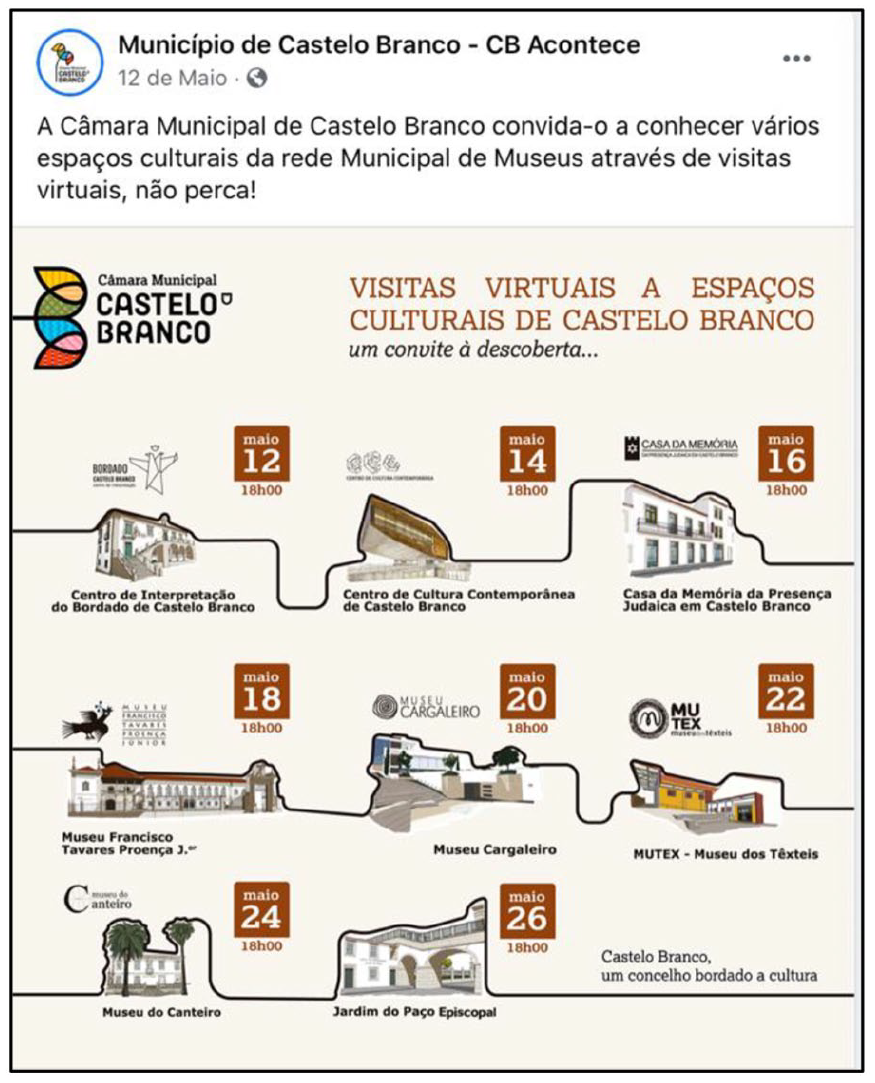
Municipality of Castelo Branco (2020). Invitation of the city hall to visit virtually the museums’ network. Facebook of the Municipality of Castelo Branco. Available at: https://www.facebook.com/cb.acontece/posts/2919970718125411 (accessed 30 May 2020).
Educational narrative of place
Place and engagement to place emerged as the reverse of a global problem. Almost all the activities to engage and promote trust were place based. One important factor towards community resilience is the meaningful connection to a place and shared culture. The place is a centre of felt values and to which a human being attaches meaning (Tuan, 2014). Some municipalities created educational videos about the region that were shared on Facebook with particular captions: ‘together we will win’ (Terras de Bouro (TB), 23 March; see Image 5). A place, contrary to space, is not abstract. The videos showed traditions and past professions and talked about what makes those places unique. The past, present and future integration was one of the strongest characteristics of the municipalities’ educational narratives with a clear intention of promoting social engagement, sense of belonging and trust by creating common spaces of meaning (Ozga, 2011).
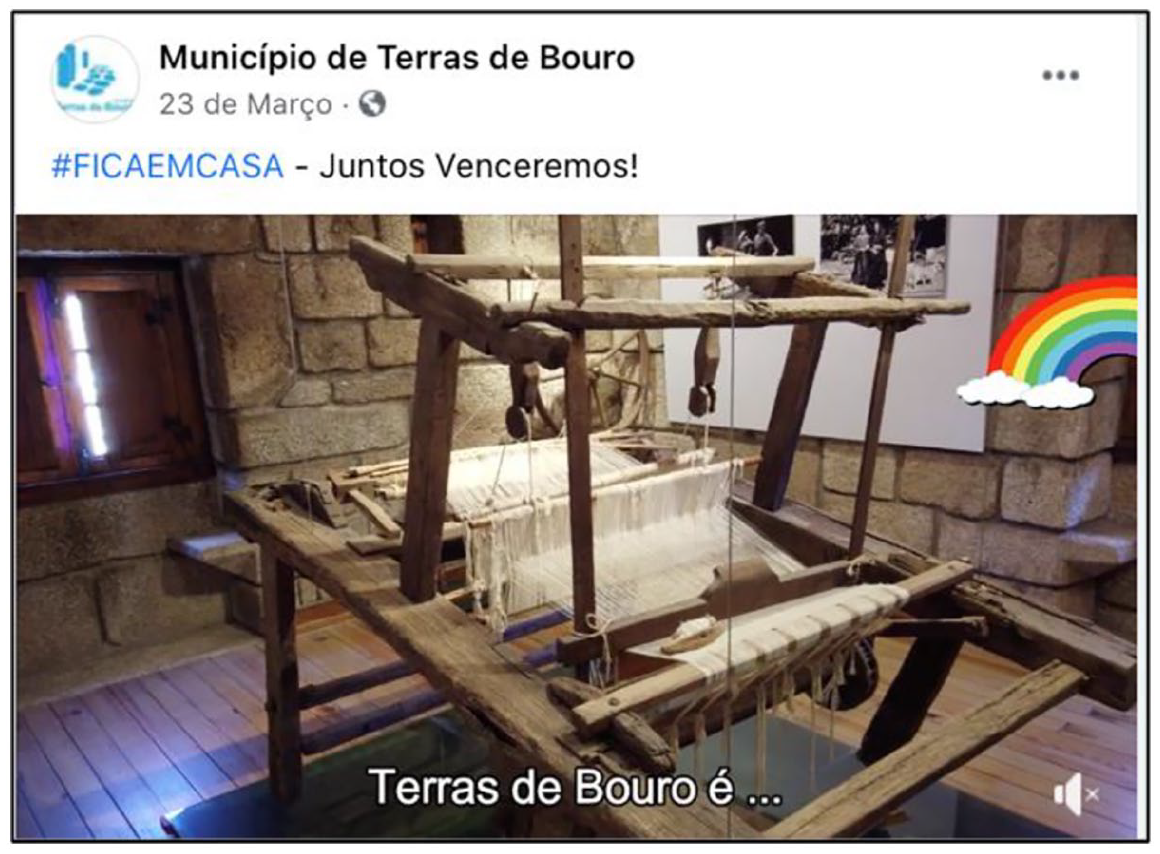
Municipality of Terras de Bouro (2020). Video ‘Together we will win’. Available at: https://www.facebook.com/municipiodeterrasdebouro/posts/1263903337145404 (accessed 8 April 2020).
These videos and documentaries about the beauty and patrimony of their regions were built around visual symbols that are easily recognised by insiders. Those visual symbols were related to nature and to old tools related to past lives and agriculture. The following example is information that was together with a video about the material and immaterial patrimony of a region with words related to the present pandemic situation as ‘we are part of a unique community’ (Arcos de Valdevez (ADV), 30 April; see Image 6): With will and hope that we will continue building the future of the municipality and the country, the City Hall launched a film about Arcos de Valdevez, inspired in the union of the local community, living here or migrant, in the excellence of the natural and cultural patrimony and in the strength of our History. The film . . . exhibits astonishing images, full of colour and emotion, of rivers, of landscapes, and of people from a unique land. Arcos de Valdevez continues to be strong, and with the determination and with all the population of Arcos de Valdevez trust, we will beat this pandemic and move on.
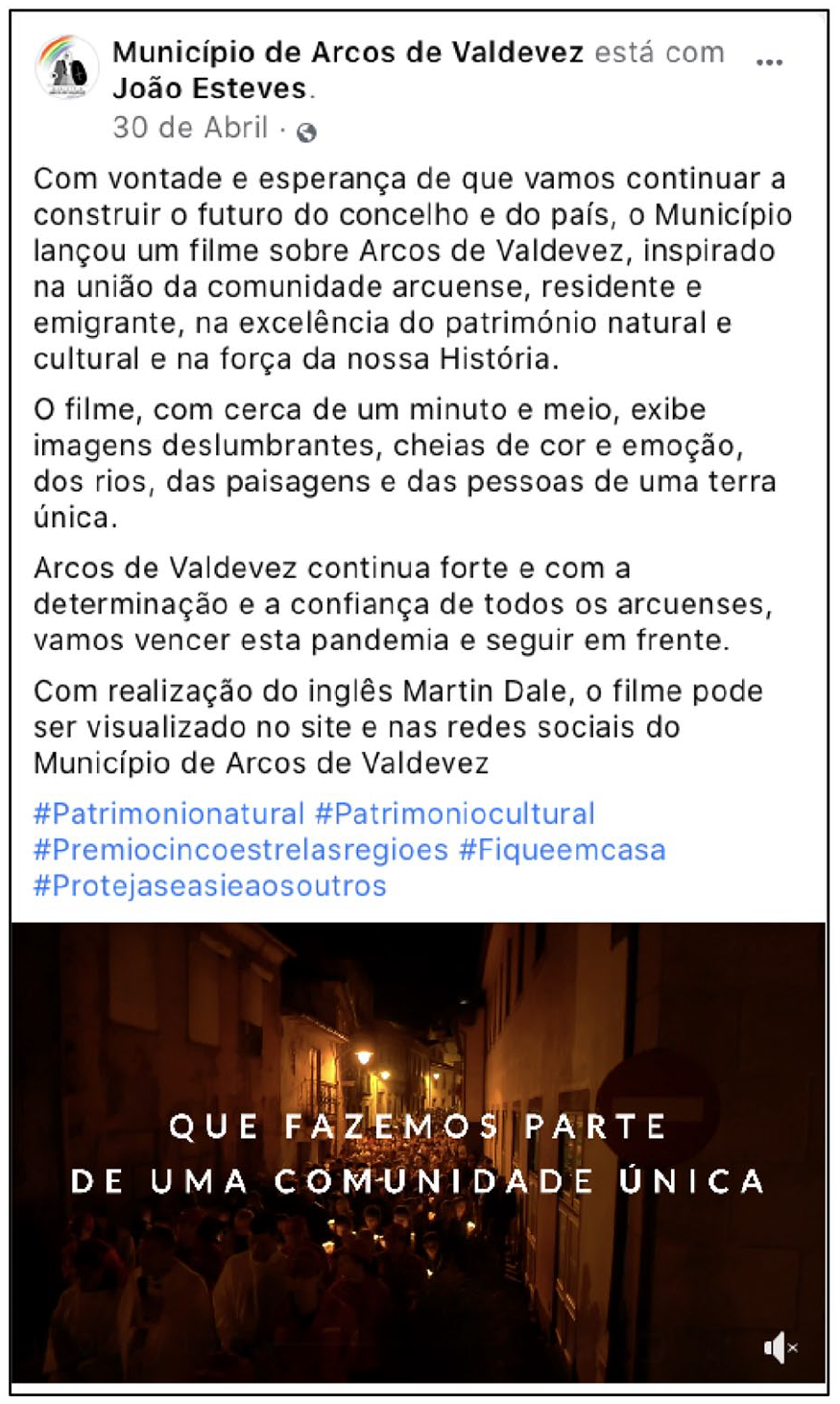
Municipality of Arcos de Valdevez (2020). Video promoting the region of ADV, including one of the sentences ‘that we are part of a unique community’. Available at: https://www.facebook.com/CmavArcosDeValdevez/posts/3149819538410656 (accessed 10 May 2020).
Adopting a strength-based approach, municipalities valued their uniqueness and used what they have best as a ‘form of energizing and growing its community power’ (Gardner and Scarth, 2020: 1).
In the centre of the country, a post from a city hall mentioned: In the old times, by the fireplace light, we shared myths and legends, histories that the time took away. Today, in a time when we ask that families stay at home, we remember those legends that, in Historical Villages of Portugal, went from generation to generation, since immemorial times. (Sabugal-Centre, 14 May)
The sense of belonging to a place is grounded in significant experiences such as those described. The specificities associated with places were used and explored in many ways, either by the local authorities or the general communities, and they caught the attention of media as they were seen as places that were experiencing the lockdown and isolation differently from urban areas and originating some mediatisation around some of these border regions.
In regions used to suffering from different vulnerabilities, isolation was understood as not such a strange reality: ‘Monsanto: a quiet confinement arrives from the village’. This was captured by journalists in a village located in the centre and familiar to isolation, being alone and quiet. However, the news highlighted that ‘the virus also steals families, friends and tourists’ visits’ (Idanha-a-Nova-Centre, 7 May; see Image 7).
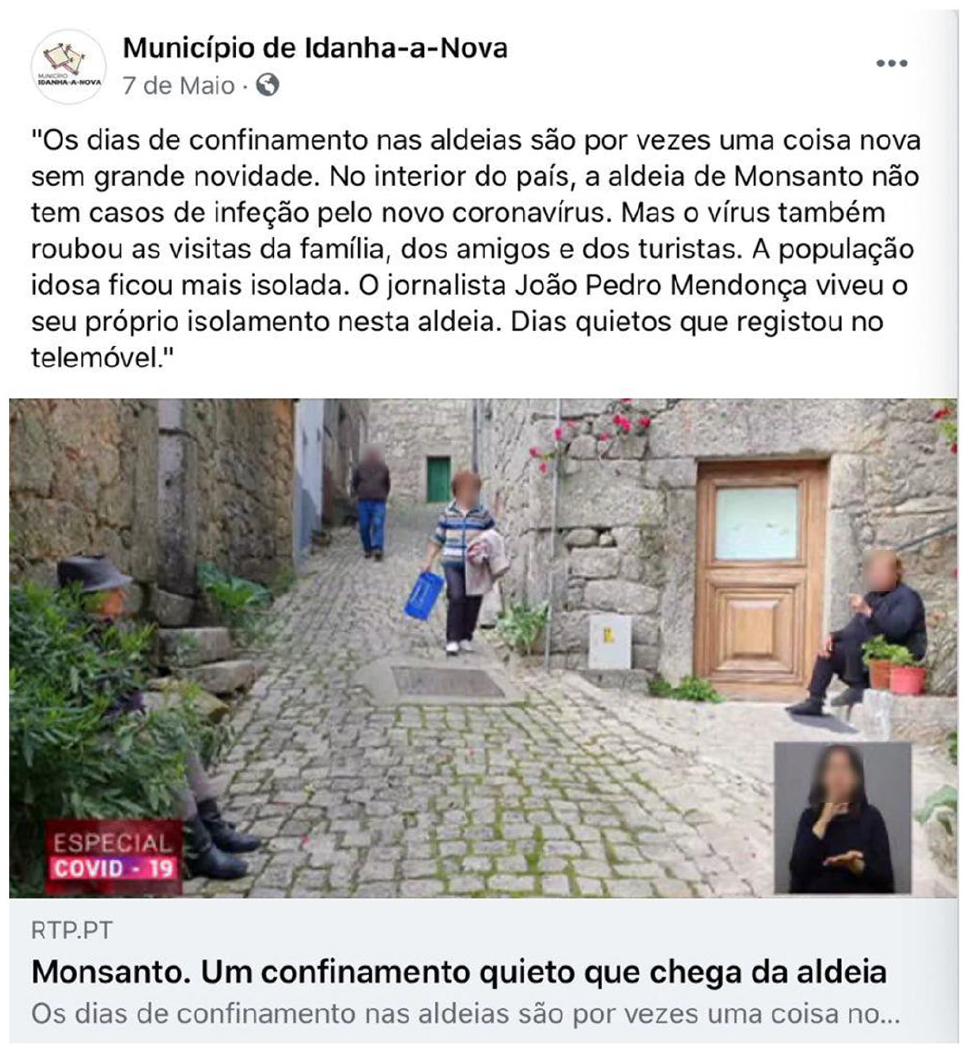
Municipality of Idanha-a-Nova (2020). Post about confinement days in the village of Monsanto. Available at: https://www.facebook.com/MunicipioIdanhaNova/posts/2991421780914955 (accessed 30 May 2020).
The pandemic originated a time–space concentration of interpersonal connection around common topics, intensifying meanings that called the attention of media to be disseminated nationally as examples on how to cope with COVID-19. Those examples created a sense of belonging to a larger community and indicated how a country could be inspired by small places from the inlands to create community bonds.
Educational narrative of voicing and wisdom
Endorsing local population wisdom was part of the engagement strategies developed in different municipalities. For example, in Sabugal, the municipality together with the Association for the Regional Development of the Côa Territories organised the initiative ‘We are waiting for you’ and disseminated statements of people from the region about their expertise and experiences. A similar initiative, addressing young people, was organised by the Young Entrepreneur Factory (CB) together with the municipality to motivate young people to participate and express their concerns. Many other examples were dedicated to voicing children’s talents (see Image 8):

Municipality of Moura community Moura Fica em Casa (2020). Post celebrating World Children’s Day with the initiative ‘What’s your Talent?’. Available at: https://www.facebook.com/mouraficaemcasa/posts/147575426890904 (accessed 5 June 2020).
Involving seniors in contributing their knowledge to future generations and becoming actively engaged in their life contexts and communities was an initiative in many municipalities that started during the lockdown and continued long after it was over. The initiative ‘Museum of Lost Sounds’ (Idanha-a-Nova, Centre; see Image 9) is an example. It was disseminated through different episodes/podcasts of testimonies of elders from small villages telling stories about their youth. Voicing older generations through digital media made visible the lives of people who are usually less visible and less participative. This experience also teaches different generations about the value of experience and local regimes of knowledge and represents a recognition of local literacies (Corbett, 2015).
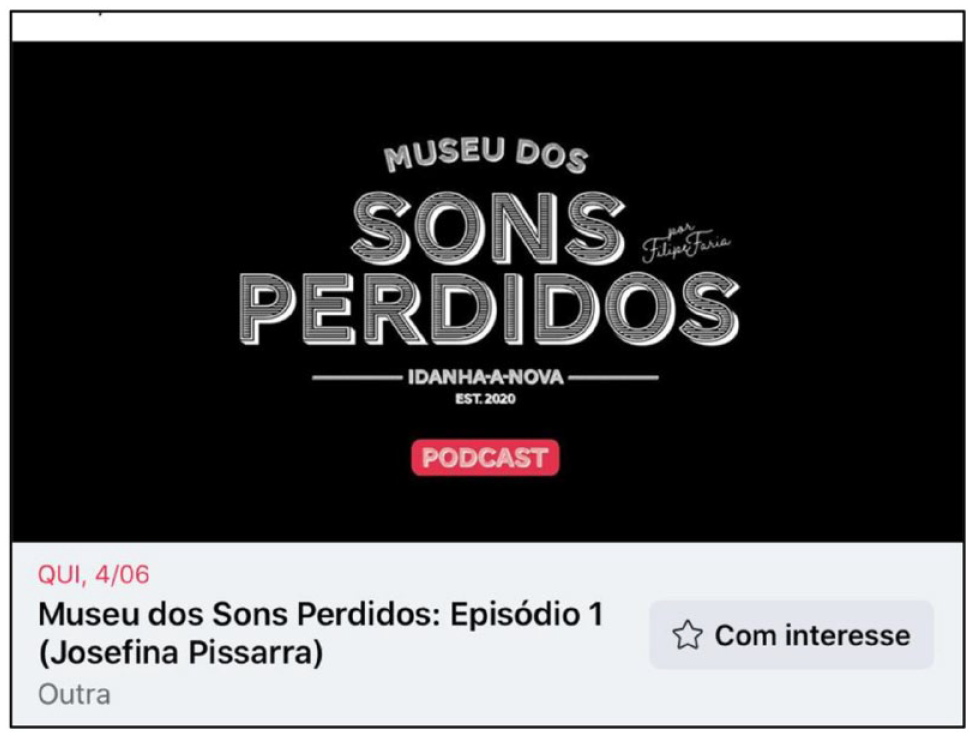
Municipality of Idanha-a-Nova (2020). Post regarding the Museum of Lost Sounds. Available at: https://www.facebook.com/MunicipioIdanhaNova/posts/3061570657233400 (accessed 8 June 2020).
These initiatives are examples of promoting engagement through knowledge sharing and production and learning. The pandemic situation generated learning communities activating and exposing different knowledge practices, in which knowledge is understood as ‘rooted in lived, localized, embodied experience’ (Gardner and Scarth, 2020: 3). Knowers are located in a diversity of places, and valuable knowledge does not rest in sacred places but uses a diversity of means of dissemination, such as social networks.
In the municipality of Melgaço, seniors were part of the dialogue even if in isolation and away from their families. In a national newspaper news story posted by the municipality, we could read about it: ‘Everything will be alright: users of the day care centre send messages to families’ (Melgaço-North, 20 March; see Image 10).
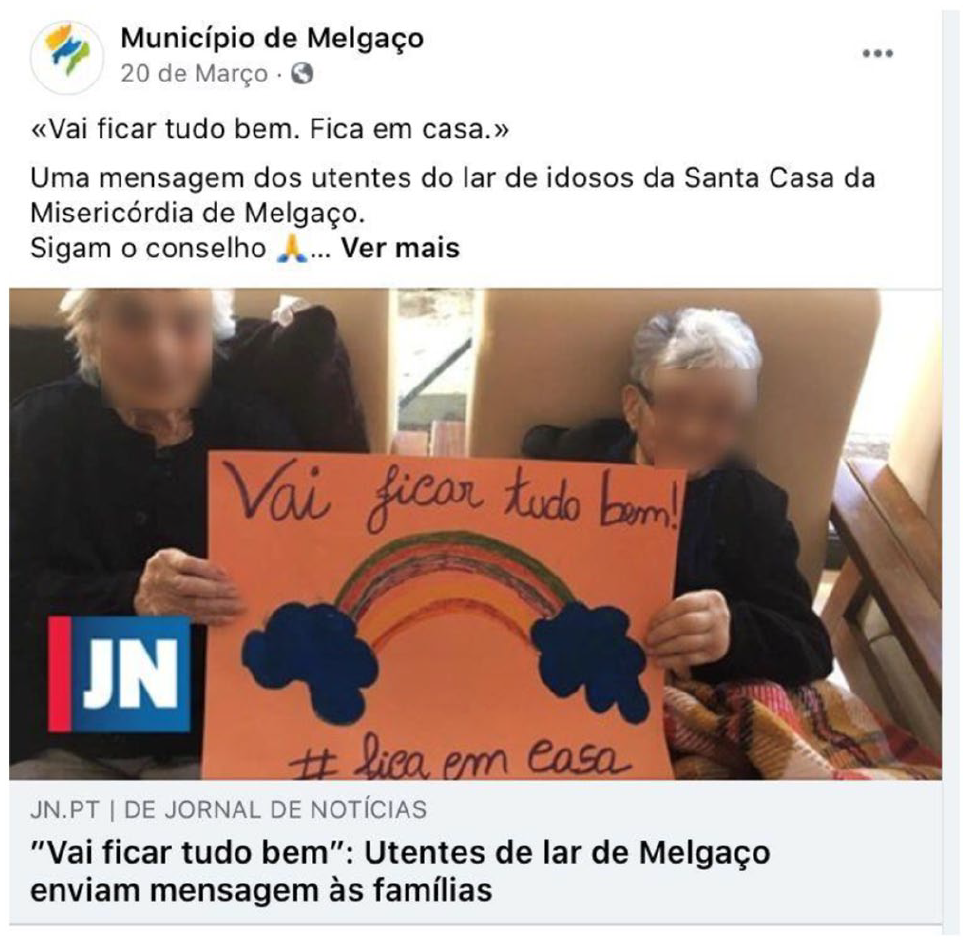
Municipality of Melgaço (2020). Post with a picture of seniors from a day-care centre sending messages to their families. Available at: https://www.facebook.com/municipiodemelgaco/posts/3105456159520364 (accessed 30 March 2020).
Exploring the value of different generations’ voices and experiences created a sense of multi-actor contribution and participation for the collective well-being.
Educational narrative of recognition and solidarity
Facebook was often the place where the efforts of different generations valuing the collective effort of handling so many changes in everyday life were publicly recognised. This was seen while celebrating Children’ Day on 1 June 2020: ‘Valença declares children as little heroes and recognises their effort’ (Valença-North, 1 June).
Acknowledging the good behaviour of the population was a regular action from all municipalities: ‘This weekend had everything to take us out to the streets, but we decided to stay home. None withstanding our difficulties and missing others, we assume our responsibility as a community. Thank you, Municipality of Caminha’ (Caminha-North, 30 March).
The discourse used is often in the third person (nós: we), indicating shared problems and solutions, which is considered one factor contributing to trust, and particularly institutional trust.
Acts of recognition were also addressed to solidarity activities and to professionals and services that collaboratively and with extra effort allowed everything to be as close as possible to normal or to guarantee the future return to normality. Thanking professionals, such as nurses or firefighters, is done through a diversity of ways and could be an online performance by artists dedicated to those professionals, or messages from the municipality, as in this example of thanking teachers that ‘through the digital, continue to be active for our students to continue learning. Identify in this post all the professionals that you know, giving them strength’ (Melgaço-North, 1 April; see Image 11).
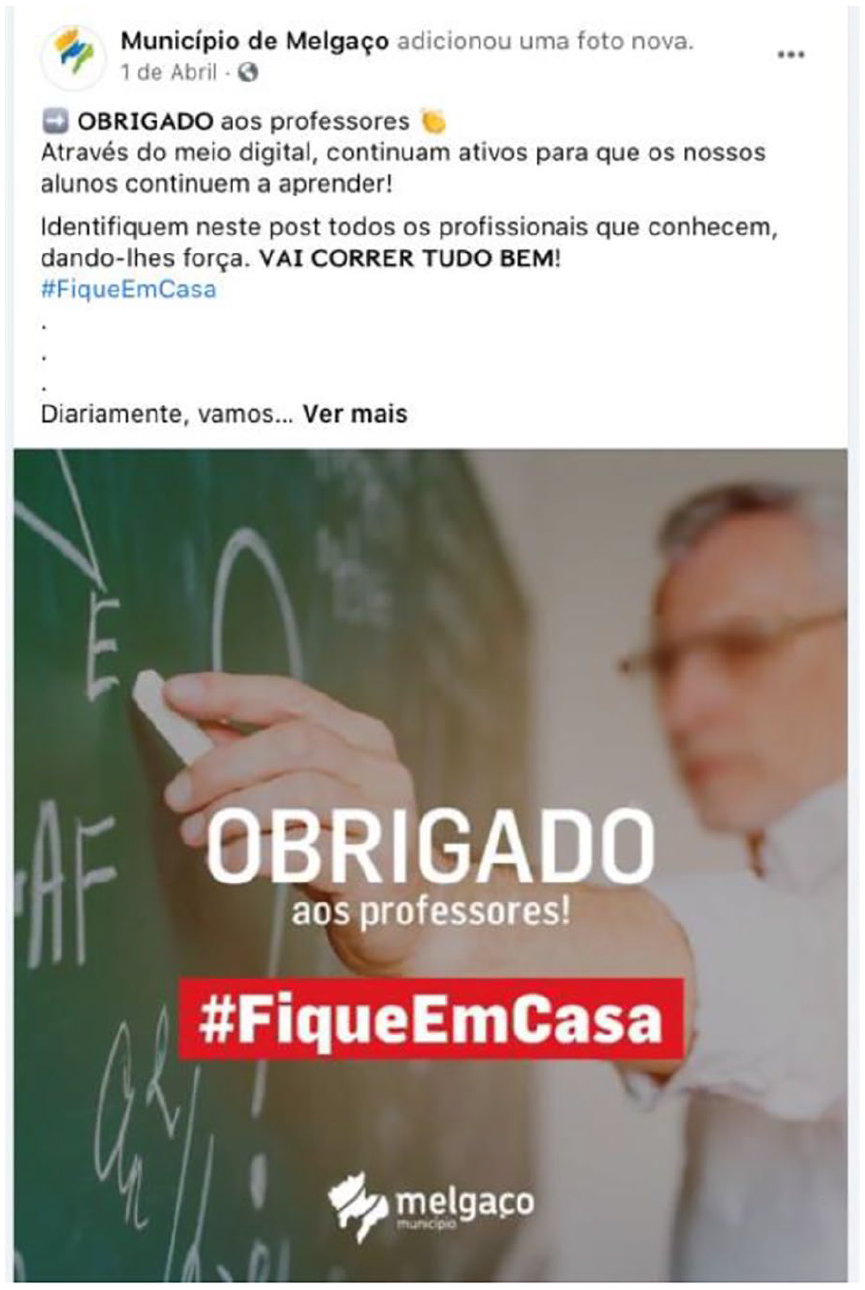
Municipality of Melgaço (2020). Post thanking teachers. Available at: https://www.facebook.com/municipiodemelgaco/posts/3133804393352207 (accessed 15 April 2020).
In another municipality, traditional Easter sweets were delivered to all social institutions to symbolically support professionals that work with vulnerable populations (ADV-North, 13 April).
Recognising all social actors provides from the outset a better ecological understanding of the community as a whole. Building trust through a narrative of support and care with concrete measures to solve the population’s problems demonstrates control over the situation and offers relief: ‘We are in the field on [a] daily basis, following all the situations, taking care that our municipality suffers the minimum impact of COVID-19’ (VRSA-South, 22 March).
In many contexts, municipalities initiated the creation of safe spaces to promote trust and a sense of being cared for and not being left alone. An example is the Population Support Zone (Zona de Apoio à População) to address emergency situations, or Social Support Phone Lines (Linha de Apoio Social) involving volunteers providing help to elders, individuals with disabilities, people with chronic diseases, or those in isolation. In one case the slogan was: ‘We are shopping for you. Do you need to go to the supermarket or the pharmacy? Are you over 65 years old? Are you alone?’ (VRSA-South, 25 March). The project ‘Capacity building+ during times of Covid-19’ addressing the disabled population is another example. These initiatives are usually from the city hall but with the support of civil society, entrepreneurs and industry, which collaboratively answer the call to donate funds or materials. Municipalities often share companies or individuals’ names describing the type of donation.
The participation of members of civil society through involvement in volunteer activities was a result of a call or was spontaneous. An example was the group ‘All Together We Will Be Stronger’ with members of the local population sewing protective equipment for professionals dealing with the vulnerable population. Giving public thanks to these citizens was a common practice by the city hall, and mayors on Facebook pages were acknowledging this: ‘Small gestures of the population of Cerveira that make a difference . . . reinvent themselves in supporting the community’ (VNC-North, 7 April). A large majority of municipalities developed volunteering initiatives, as in Sabugal: ‘COVID-19: the municipality of Sabugal creates a Voluntariat group’ (Sabugal-Centre, 21 April; see Image 12).
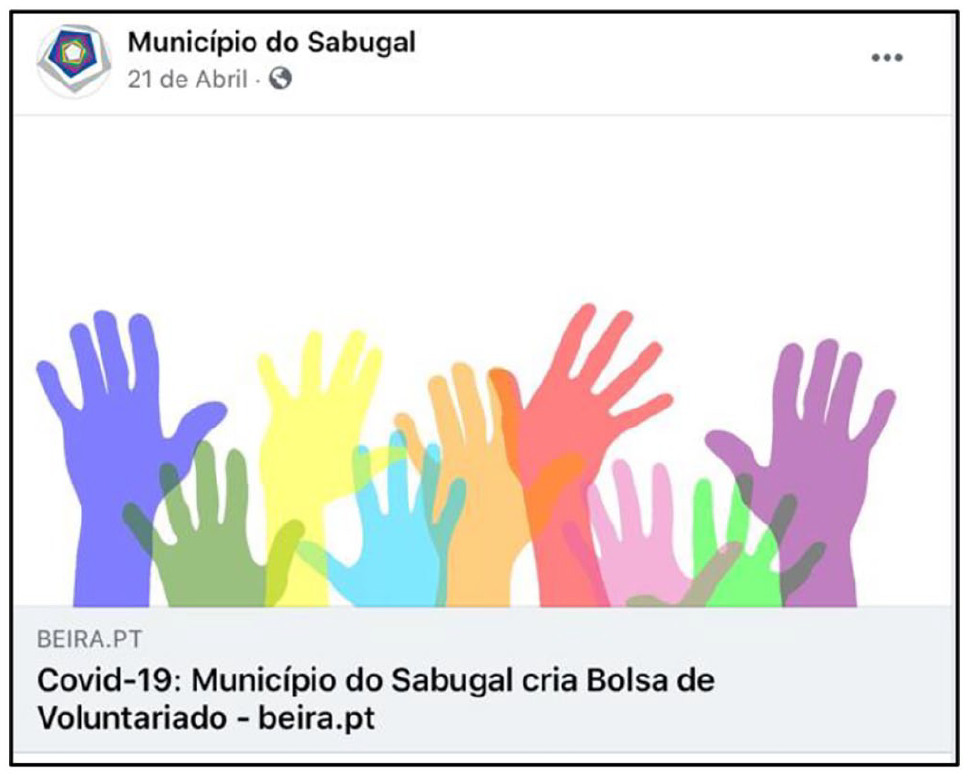
Municipality of Sabugal (2020). Announcement of the creation of a volunteer group. Available at: https://www.facebook.com/page/295470820583972/search/?q=bolsa%20de%20voluntariado (accessed 8 May 2020).
The fact that different generations of community members participated at the same time in similar initiatives may be understood as a common practice of togetherness, interconnecting to help. This type of engagement may be very powerful to promote community capital, resilience and growth that may endure after a crisis, acting as a transformative factor. The municipalities of Moura and of Castro Marim recognise volunteers’ efforts in producing protection masks: Behind this gesture of great solidarity and commitment are women aged between 10 and 77 who have actively contributed to a greater protection of the population of our council. (Moura-South, 17 April) Seamstresses of Castro Marim volunteer and make hundreds of protection materials for Faro Hospital. . . . The population of Castro Marim is proud to be able to contribute to this network of solidarity. (Castro Marim-South, 16 April)
Together with a higher education institution, a municipality created the project ‘Windows Invite’ dedicated to fighting isolation among seniors: ‘The aim is to counteract the “isolation” of the senior population through an action of proximity and support. However, the proposal is for all. Have you gone to your window today?’ (Caminha-North, 25 March). These are resilient behaviours designed by social values and motivated by self-interest and benefit.
There were also instances of cross-border cooperation and solidarity. The COVID-19 situation accelerated the need to understand regions beyond national borders. In a southern municipality, this was the message: At this difficult time for all of us, the Municipality of Arronches sends its neighbours of La Codosera a hug of friendship and solidarity. The times are of recollection, both there and here. Only in this way will we be able to win this difficult fight against an invisible enemy. We know it’s not easy. It demands from everyone a double effort to overcome this unexpected difficulty. But we will succeed! Although the borders are closed, the bonds of friendship that unite us have not been cut, and we could not fail to express the solidarity of all Arronchenses with the infected patient, wishing him a quick recovery. A greeting also to all the Codoserans who, as here, remain in recollection, avoiding the contagion of COVID-19. We also want to express our solidarity to the local authorities and especially to the Ayuntamiento (city hall), which has done everything to protect its population. Much strength is what we wish you! A fraternal hug from Arronches! (Arronches-South, 20 March)
Several news articles existed about solidarity among the populations sharing the border, to provide the elder population with goods and medicine or donations. Given the geographical location, borders take on an ancient meaning of separation. However, forms of solidarity became visible as populations on both sides found ways to communicate and exchange without crossing borders or using the old checkpoints.
There was a certain nostalgia when the borders closed with news from both sides and messages from mayors asking for closing and later for opening.
There were some reminders of the unity among countries: On 25 March 1886 was inaugurated the international bridge that, today, is a street between Valença and Tui, two cities, three languages and two peoples, united by a river, one emotion and one will. Today, we stay at home, for your health, for us all, for our land and for hope of new generations. (Valença-North, 25 March; see Image 13)
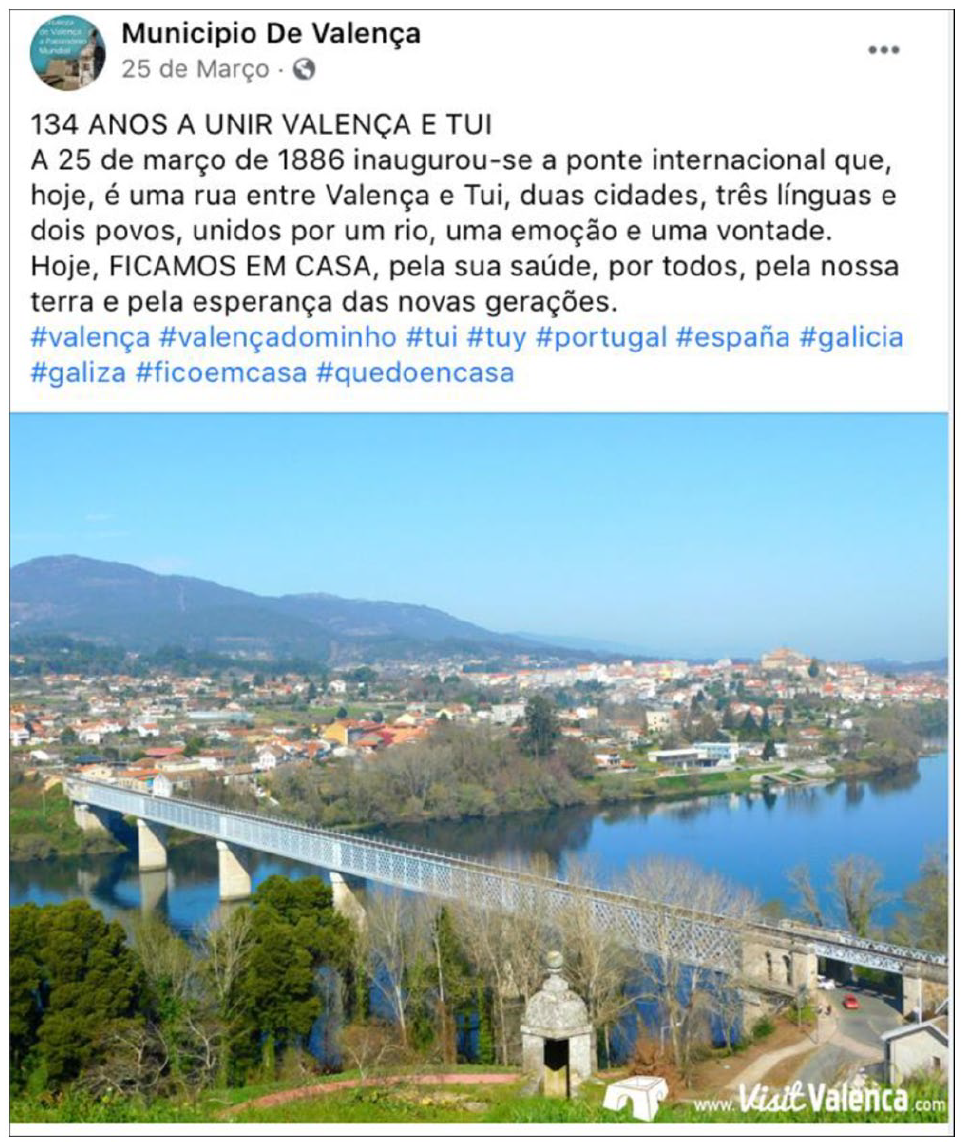
Municipality of Valença (2020). 134th anniversary of the bridge that united two cities: Tui (Spain) and Valença (Portugal). Available at: https://www.facebook.com/municipiodevalenca/posts/2843451119069578 (accessed 8 April 2020).
Therefore, we found Eurocities organisations, in their unity and diversity, gathering to solve transnational common problems, and we still found strong signs of solidarity between border places from which we all may learn. This is an interesting sign: a sign of resistance (including for economic interests, of course) that may indicate that we will not go back, and if carefully capitalised, it can be a good sign for Europe as a community of shared values (Adonnino, 1985). Border regions are interesting for this reason as they may be places to learn transcending history.
Educational narrative of participation and learning
Cultivating proximity and bonding through simultaneous shared moments of connecting individuals in the same activity was frequent and gave place to creative initiatives, such as music concerts of local orchestras or concerts on the move around the city or village streets for the population to see from their homes. These last events were an example of the hybridity of online–offline experiences as they were also available through Facebook live videos.
Inviting people to participate through their windows and balconies, in particular during the lockdown, was frequent. The image of families in their limited outdoor places was a global image. In border regions, the population responded positively to the municipality’s calls to use those limited places to express themselves, to communicate and to participate. The following post is an invitation associated with the celebrations of the April Revolution of 1974: 25 April forever! Long live freedom! Tonight, at 12pm and tomorrow (25 April) at 3 p.m. sing at the window the ‘Grândola Vila Morena’ and share it with us. Make a small video and send it. . . (Serpa-South, 24 April; see Image 14).

Municipality of Serpa (2020). Invitation to celebrate the 25 April singing at the windows. Available at: https://www.facebook.com/SerpaTerraForte/posts/10158175849267145 (accessed 30 April 2020).
Examples of this were the reminders of simple traditions, such as flower crowns in windows and balconies during May: ‘Even living [in] exceptional times, there are traditions that may be kept and give a little bit of colour to our lives’ (VNC-North, 30 April; see Image 15).
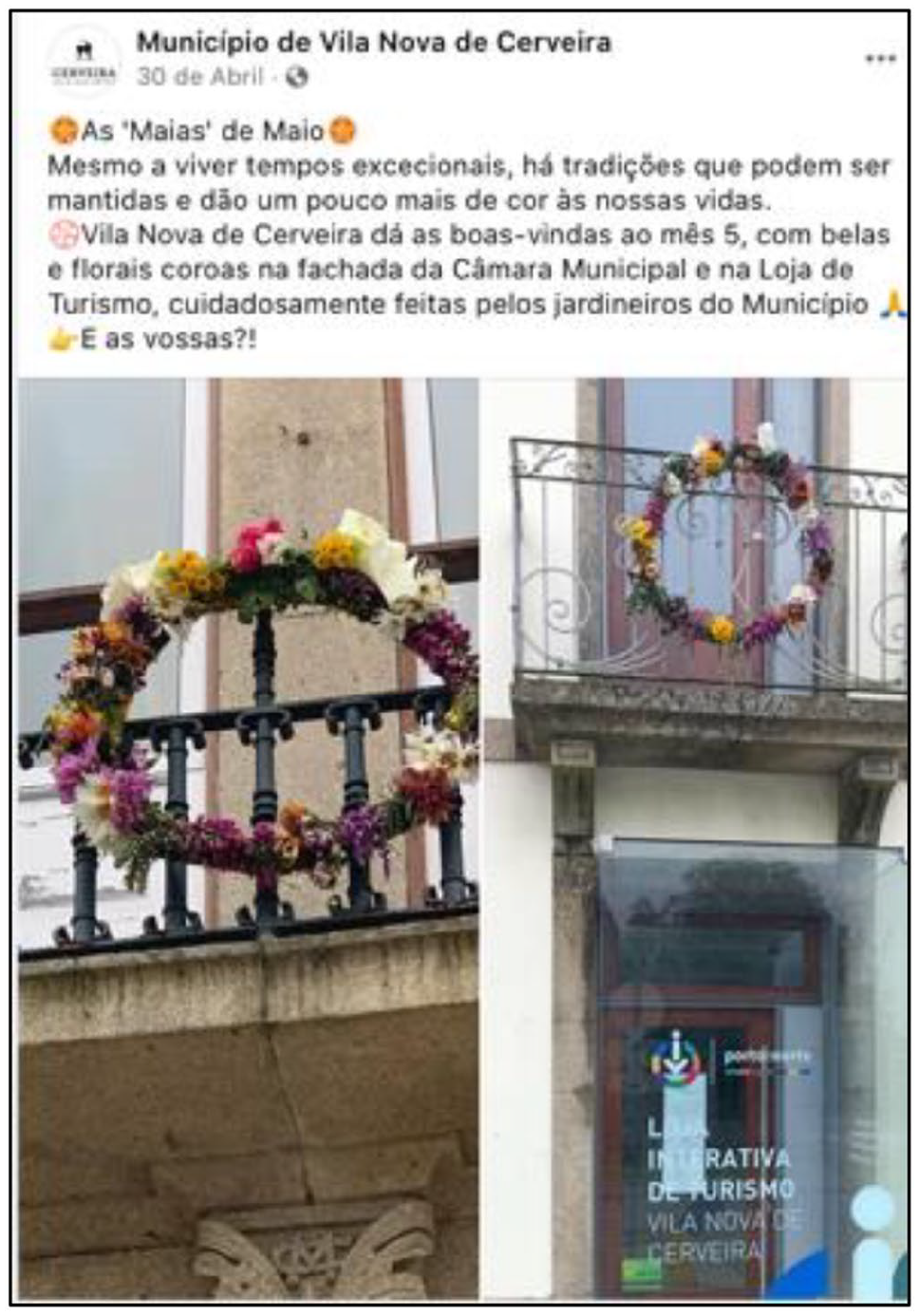
Municipality of Vila Nova de Cerveira (2020). Post with pictures of the city hall building decorated according to tradition in May. Available at: https://www.facebook.com/municipiovilanovadecerveira/posts/3394112300616947 (accessed 10 May 2020).
Other opportunities were created by local artists who invented ways to keep working and be present, such as the ‘Out of Place Festival @ Home’, reproducing the traditional festival of ancient music in a new, less corporately produced format, allowing people to participate. In another case, we found local musicians performing music on YouTube: ‘Some musicians from Elvas gathered to show the world that, even at home and with the possible resources, the union of people makes strength’ (Elvas-South, 12 May). Online art performance initiatives were an example of mutual learning, by co-creating performances visible on a screen.
Reminders about the opportunity to read books or to see on a Facebook page videos of past meaningful activities, such as past shows with dance or music performances, were usually a mechanism by the city hall to try to keep the population active and motivated. Invitations to participate in an online short story hour, in a family reading of Portuguese literature writers, were visible in the majority of municipalities. Several local public libraries opened doors online, recreating their interaction with the population: ‘The library of Vila Real de Santo António wants to continue to be side by side with readers and families’ (VRSA-South, 15 April).
For example, in the municipality of Caminha, a cultural association offered on its Facebook page the opportunity to learn how to make marionettes. The marionette construction project was extended to the general population to try, although it was mainly addressed to children (Caminha-North, 29 March).
Within the initiative ‘Castelo Branco Happens at Home’, activities such as exploring science, watching mini shows at home, and cooking recipes were offered. The caption was ‘embroidering unique moments, now at your home’ (CB-Centre, 22 April). The caption is worthy of attention as this region is known for its embroidery art craft, and this was linked to these new online activities, creating a sense of uniqueness, which was one major strategy to engage people – globally, but above all locally. These are examples of the role of municipalities in cooperation with different local organisations and services to make the most of the isolation time. The municipality of Moura created a special Facebook page named ‘Moura Stays at Home’ (Moura Fica em Casa) with a variety of activities as virtual cultural explorations and music challenges for children or recycling activities for all.
Investing in educational activities was a fundamental asset of municipalities: ‘The Castelo Branco Happens at Home [an initiative] will share tomorrow five more activities that all may do at home. Follow this initiative’ (CB-Centre, 23 April; see Image 16).
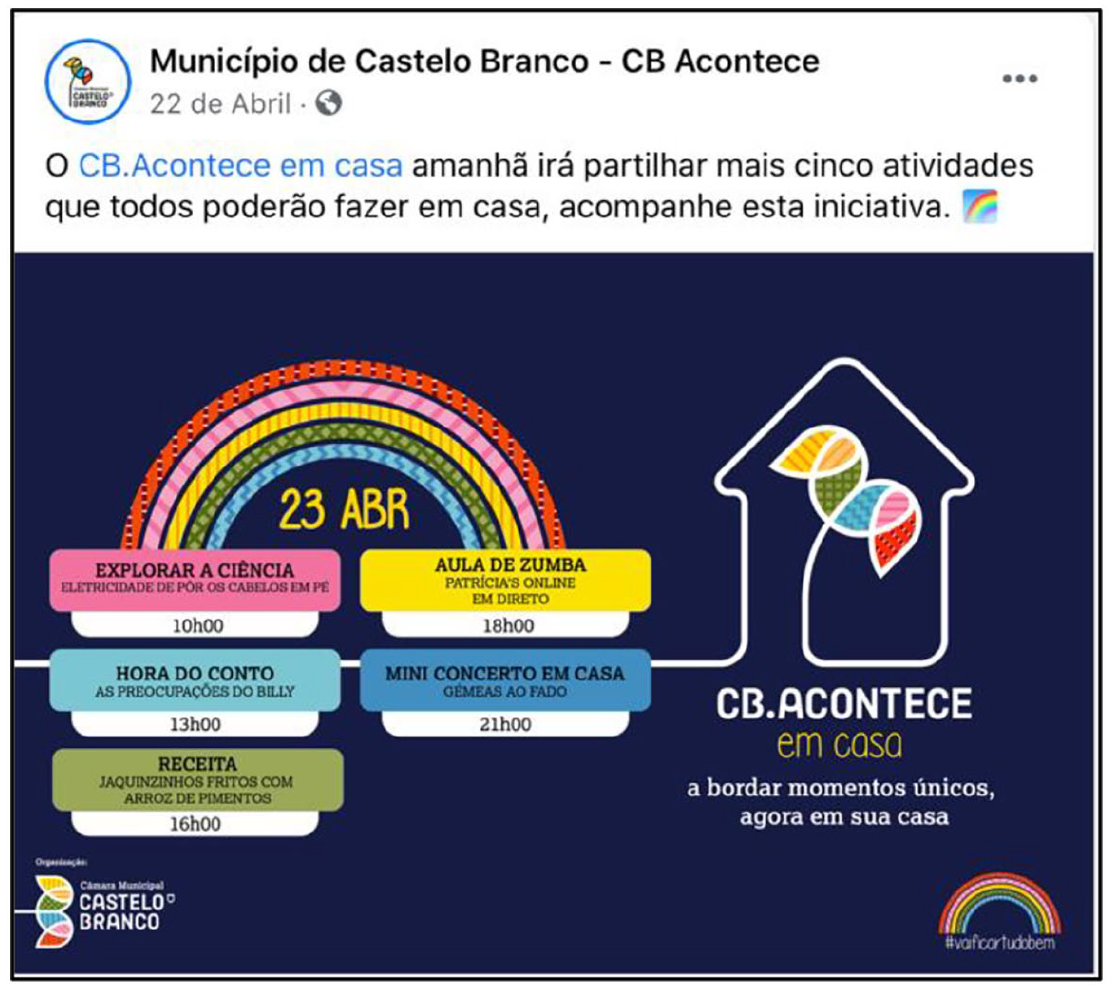
Municipality of Castelo Branco (2020). Post with information about activities to do at home. Available at: https://www.facebook.com/cb.acontece/posts/2873964512726032 (accessed 30 April 2020).
These initiatives were understood as learning opportunities, and some were used to teach about COVID-19: for example, the reading of a book with the title ‘My Grandmother Has COVID’ (VNC-North, 22 April).
There is a discourse to keep people active and keep normal routines. The proximity and interference of municipalities are in the fabric of everyday life. In some cases, those actions were close to a pedagogy for the public, in the words of Biesta (2012), in which the state tells ‘its citizens how they should behave’ (Biesta, 2012: 692). This is one example, regarding families and children: ‘Even at home, the world and the school don’t stop! Routines, homework and social relationships are issues for parents to work with in fighting school underachievement’ (Chaves-North, 15 April).
Conclusions
This paper focused on analysing the pedagogic role of border regions’ municipalities, as place leaders, while enacting educational strategies and spaces to keep the population feeling safe and engaged. During the first COVID-19 lockdown, municipalities responded quickly and revealed a capacity to respond to and address new challenges on an everyday basis, becoming repositories of trust and community connectors (McKnight and Block, 2010).
Community-based initiatives converged analytically into five educational narratives, accounting for municipalities’ provision of experiences to encourage trust through community engagement and participation. Those narratives developed around meaningful aspects of the local life as the sense of belonging to past, memory and patrimony, the relationship with place, the significance of voice, knowledge and wisdom, the meaning of recognition and solidarity and the promotion of participation and learning.
The educational narratives were grounded in everyday perceived needs and disclosed new practices of distributed knowing (Barad, 2007) that illuminated a collective value along the border regions: a clear interest in local and localism, the strong significance of local knowledge and a meaningful connection with material and immaterial patrimony. These examples of the reconstruction of local value may work as signposts for how to prioritise the strengths of local communities on their own terms (Beach et al., 2019). It is in this sense that we understand border regions’ local governance positionality, not only as trustworthy and reliable information providers, but as sources of positive meaning-making through educational narratives that contributed to communities’ resilience (Glynn, 2020). It is still too early to see how those communities developed a recovery capital (Best et al., 2017), but indicators were, in some cases, already visible.
Community resilience and local government are relevant aspects to analyse proactivity and reaction to stressful situations. However, the capacity for locally solving pressures coming from a critical and disruptive situation may decrease (Fitzgerald and Lupton, 2015). Aligned with these concerns, we acknowledge the fact that using resilience as a conceptual framework to understand how local organisations learn how to respond to stressful situations does not ignore the fact that the continuity of the burden will weaken the local capacity to respond to a permanent disruption.
This small research accounted for community-based initiatives, engaging the population in collaborative and educational actions, considered as indicators of communities’ resilience (McManus et al., 2012; Silva et al., 2017; Skerratt and Steiner, 2013). Asserting the social and local specificities in the educational strategy of municipalities to foster trust and engagement indicated a resilience approach not only to adaptation but to creating, transforming and formulating alternatives to existing constraints and uncertainty. Resilient practices were seen in many contexts of border regions either initiated or shouldered by municipalities, indicating their capacity to situate the challenges of a collective experience – the pandemic.
One evident strategy of municipalities to reconnect with the local community was made by investing in a stronger digital presence, also referred to in the study by Rippon et al. (2020). Although all municipalities have a Facebook page, which was the most used social media site during the isolation period, several municipalities additionally created Instagram pages. Local museums, libraries and initiatives to create and keep bonds among the population were suddenly online. The digital context worked as a rich learning space, a cohesion enabler, and a place for collective sense-making (Neubaum et al., 2014), fostering new institutional bridges between local government and the community (Head, 2007).
The online tools, interactions and contexts seemed to contribute as an energiser, creating public educational spaces and assemblages around new circuits of knowledge that may be interesting to further analyse within the European space of education (Landri and Neumann, 2014). These new public educational contexts with less defined hierarchical roles and with a different time and space frame allowed the emergence of learning opportunities with different types of negotiation (knowledge, knowers) and with a value that is hardly measurable. Facebook and other technologies enhanced a ‘re-scaling of sites of learning’ (Jones, 2010: 731), challenging the sacred spaces of education attached to the state or the classroom, becoming the stage of familiar performativities. These new materialities of education (Landri and Neumann, 2014) are accounting processes that combine global issues with territorialised appropriations, impressing in the population specific forms of education.
Although there were some initiatives and visible interaction and actions to promote cross-border coalition with Spain, cross-border solidarity was seasonal, with a major focus on localised responses. The educational narratives are predominantly focused on local dimensions and valuing cultures, knowledge and sense of belonging to place.
The social and educational impact of the COVID-19 pandemic has not yet been understood and measured. Besides the immediate effects on social interactions, learning new habits and adaptation, we may be confronted with conditions of structural fear and the erosion of social trust. Due to their peripheral location, some border regions have developed local strategies to deal with a shared global problem. We believe that these regions can work as a relevant analytical unit to anticipate sound policies and to understand global phenomena, as some of them have reassessed their value, creating communities and networks of trust with accumulated knowledge. The fact that most of the initiatives were responding to collective interests, in a grown-up way (Biesta, 2019), suspending or interrupting individual needs, means that it is important to understand how, in a critical situation, a society or a community rearranges priorities to become stronger.
As mentioned, this research is included in a large-scale project with a survey and case studies developed on site, which were interrupted in March 2020. This exploratory study represents an effort to keep doing fieldwork and to stay connected during the time we were in social isolation. Therefore, it may in itself represent a possibility for the study object to have new configurations and unexpected layers that resulted from conducting educational research during social confinement.
Footnotes
Acknowledgements
The author wishes to thank the Centre for Research and Intervention in Education for their technical support in formatting this article.
Declaration of conflicting interests
The author declared no potential conflicts of interest with respect to the research, authorship, and/or publication of this article.
Funding
The author disclosed receipt of the following financial support for the research, authorship and/or publication of this article: Research funding – Research Project: This work was supported by the European Regional Development Fund (ERDF), through the Northern Regional Operational Programme (NORTH 2020) of PORTUGAL 2020, and the Science and Technology Foundation, IP (FCT) [reference: PTDC/CED-EDG/29943/2017]. Project name: Growing up in border regions in Portugal: Young people, educational pathways and agendas.
